
Cuban President Diaz-Canel Arrives in China to ‘Promote the Adaptation of Marxism to Our Time’

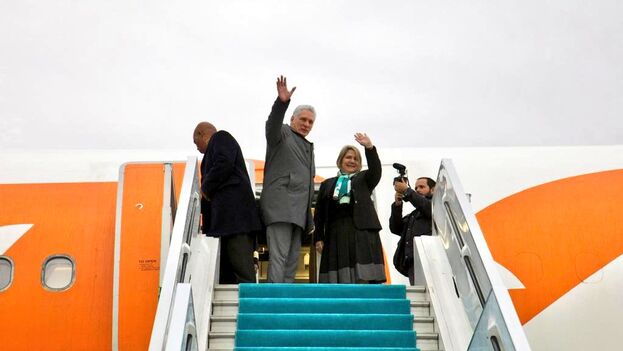
Díaz-Canel with his wife Liz Cuesta boarding the plane from Ankara to Beijing. (Cuba Presidency)

14ymedio bigger14ymedio, Madrid, 24 November 2022 — Cuban President Miguel Díaz-Canel is heading to China now. It’s the last stop of a presidential tour aimed at courting some partners to whom, in return, little can be promised except influence on the American continent and agreements in countries where the Island still retains some prestige, such as in healthcare.

On the eve of this visit, the Chinese ambassador to Cuba, Ma Hui, offered an interview to the Xinhua state agency in which he made clear the idea: “We will work together to promote the great practice of adapting Marxism to our time and, together, undertake a new socialist construction with its own characteristics, for the benefit of the two countries and the two peoples, and make new and greater contributions to the bright future of humanity.”

Ma Hui stressed that both countries have had a high level of cooperation for 10 years, the greatest example of which has been the Chinese aid sent to Cuba during the pandemic and the three great tragedies that took place in 2022: the explosion of the Saratoga hotel in Havana, fire at the Matanzas Supertanker Base and the passage of Hurricane Ian.

According to the ambassador, the areas of collaboration will be extended from this visit to energy, agriculture, biomedicine, science and technology, education and culture. Few sectors are left out of this cooperation, since some agreements were not mentioned but are already known to exist in transport and industry. Those that were named involve exports from the Island that include the typical rum and tobacco, honey and other products that have disappeared from the life of Cubans, such as sea cucumber, eel and some fruits.

It’s important to take care of the relationship, then, since it affects almost everything. Good proof of this is that even the most unsuspected things have a Chinese hand behind them. “We have been able to secure the clothing that we already have available thanks to a donation from China,” revealed the Cuban Minister of Education, Ena Elsa Velázquez Cobiella, appearing Tuesday on State TV’s Roundtable program, referring to the school uniforms.

The official explained that the start of the 2022-2023 academic year will begin next Monday, November 28, after accumulated delays due to the pandemic, and China is providing the financing. Mirla Díaz Fonseca, continue reading

President of the Business Group of Light Industry (GEMPIL), stated that the initial demand was for 2,153,310 garments, but the quantity had to be adjusted to 1,274,000 garments, of which 100% have been delivered to primary schools.

Uniforms are lacking, the officials said, basically because of the blackouts, and they have had to resort to techniques such as the blue-dyeing of the old mustard uniforms. “We have asked for help from the seamstresses in the sports industry, for example, and we are talking about using the GEMPIL carriers to distribute the fabric, pieces and buttons,” they added.

However, little would have been achieved without the aid from China, which, in addition, provided financing; however, no further details were given.

All this exchange, which has made China the second largest trading partner of the Island, provides the Asian giant with a gateway to Latin America, where it has been consolidating its influence over the years. This Thursday, the country’s state press pointed out that the volume of bilateral trade between China and Cuba increased by 7.2% in 2021. In addition, trade continued to grow in the first three quarters of this year, and China’s imports from Cuba even increased by 18.1%.

The improvement is reflected on the rest of the continent, since, according to a spokesperson of the Ministry of Commerce, 21 countries in the region have signed some type of collaboration with the New Silk Roads, also known as the Belt and Road Initiative. The Chinese plan to build roads, railways, ports, logistics platforms and other infrastructure in more than 60 countries.

“The Chinese and Latin American economies are highly complementary, and among them there is enormous potential for cooperation,” said the spokeswoman, adding that the volume of trade between the two regions “has fully recovered and already exceeds that existing before the COVID-19 pandemic.”

According to the Chinese ambassador to Havana, “China and Cuba are linked by common ideals and beliefs, and as traveling companions of socialism, they will take advantage of this visit as an opportunity to continue strengthening the relationship between the two parties and the two nations.”

Hardly any information has emerged about the official agenda, although it’s expected to develop in an “anti-covid bubble,” through which the entourage’s contact with the outside is avoided.

Carlos Miguel Pereira, Cuban Ambassador to China, just announced that Díaz-Canel “will honor Chinese heroes” and stressed that after 62 years of uninterrupted diplomatic relations, bilateral ties “have reached full maturity.”

Translated by Regina Anavy

____________

COLLABORATE WITH OUR WORKThe 14ymedio team is committed to practicing serious journalism that reflects Cuba’s reality in all its depth. Thank you for joining us on this long journey. We invite you to continue supporting us by becoming a member of 14ymedio now. Together we can continue transforming journalism in Cuba.
The United States Calls for the Release of Cuban Protesters Detained on 11 July 2021 (11J)

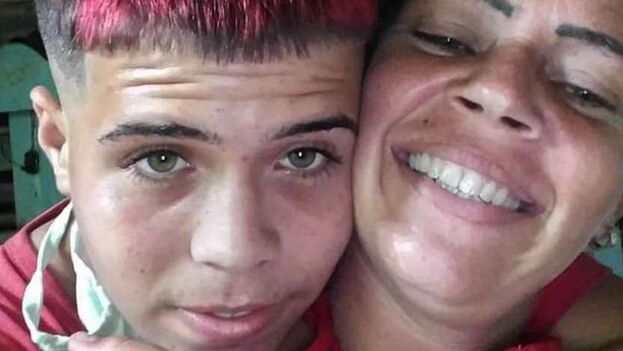
Photo of Jonathan Torres Farrat with his mother published by Nichols to demand the release of the llJ prisoners. (@WHAAsstSecty)

14ymedio bigger14ymedio/EFE, Havana/Washington, 24 November 2022 — The United States called for the release of Cuban demonstrators detained in the protests of July 11, 2021, who are being tried this Wednesday, including Jonathan Torres, a minor when the events occurred.

“We are concerned about the upcoming trial of Jonathan Torres Farrat, who was only 17 years old during the 11J protests. He faces up to 8 years in prison,” the Undersecretary for Latin America of the State Department, Brian Nichols, said on social media.

The message is accompanied by a photograph of the young man, who was accused of “public disorder” and “assault” after participating in the largest protests in Cuba in decades. “Families must be together. The Cuban government must release Jonathan and other detained protesters,” adds the head of relations with Latin America holding the foreign portfolio.

Torres’ mother, Bárbara Farrat, said she felt hopeful after the first day of the trial, speaking to the Spanish agency EFE. “There is hope that a lower penalty will be achieved,” she said.

Farrat, who defends her son’s innocence, said she observed that the president of the Havana court who judges him could opt for the penalty of “correctional work without internment.” continue reading

Torres’ mother had been summoned to testify against her own son, but refrained from doing so, she told EFE.

In the first session of the trial, the testimony of one of the witnesses for the Prosecutor’s Office — a police officer who claimed to have been assaulted by the demonstrators — was discarded after he contradicted himself and failed to identify his attackers, according to the mother and her husband, Orlando Ramírez. “They presented videos as evidence (against the 15 prosecuted), but there were times when an expert said that he could only be 50% sure that it was Jonathan. They also wanted to say that it was him because of the color of his shoes,” Ramírez said. An agent, Ramírez recalled, even said that there was a video of the assault, but this turned out not to be true.

Despite what they saw in the courtroom this Wednesday, Ramírez and Ferrat doubt that there may be an acquittal. “We all know the situation that the boys are in,” they said regretfully.

According to the letter to which EFE had access, the defendants are accused of throwing “stones, bottles, pieces of wood and other items” at the police and shouting slogans against the Government and President Miguel Díaz-Canel. According to the prosecutor’s petition, dated December 30 of last year, the defendants carried out actions “of violence without limits.”

The ages of the defendants range between 17 and 51 years old, with Torres being the youngest. He is one of the 55 protesters between the ages of 16 and 17 who face criminal proceedings for the events.

Although the Supreme Court alleges that in all cases “due process” is observed, the relatives of the convicted and some NGOs warn of the constant irregularities. In addition, access to the trials for the independent or foreign press or the diplomats who requested it has not been allowed.

After the 11J protests, about 600 sentences have been handed down, some up to 30 years in prison. Several of the magistrates who are judging these cases have been added to the list of repressors prepared by the Foundation for Human Rights in Cuba (FDHC).

Precisely, one of the people on the list is the Cuban prosecutor Vivian Pérez Pérez, who prepared the dossiers against the 15 defendants now in Havana, in addition to another for San Miguel Padrón. In both cases she requested very high penalties.

“Since June, Pérez Pérez can be found under file number 597 in the database of Cuban repressors, for having produced two unjust dossiers in the preparatory phase against peaceful 11J protesters,” said Rolando Cartaya, a specialist in the FDHC program.

“In the first, number 755, she requested penalties of between 5 and 14 years in prison for 15 of those who protested in the municipality of San Miguel del Padrón, mostly young people, accused of public disorder, contempt, assault and incitement to commit a crime. At the end of October, the relatives of these defendants received word of the final sentences: between 3 and 10 years in prison.”

“It is now announced that 15 other protesters of that popular uprising will go to trial on November 23 and 24, but in the municipality of Diez de Octubre. Prosecutor Pérez Pérez was even more severe in asking for sentences of 7 to 12 years of deprivation of liberty for the same crimes. But in this case, 13 of the 15 defendants face prosecutors’ petitions for 10 years or more.”

“Prosecutor Pérez Pérez could be accused of two malfeasance charges for requesting these sentences, obviously unfair and disproportionate,” Cartaya concluded.

Translated by Regina Anavy

____________

COLLABORATE WITH OUR WORKThe 14ymedio team is committed to practicing serious journalism that reflects Cuba’s reality in all its depth. Thank you for joining us on this long journey. We invite you to continue supporting us by becoming a member of 14ymedio now. Together we can continue transforming journalism in Cuba.
Erdogan Dispatches the Castroite Delegation at Full Speed

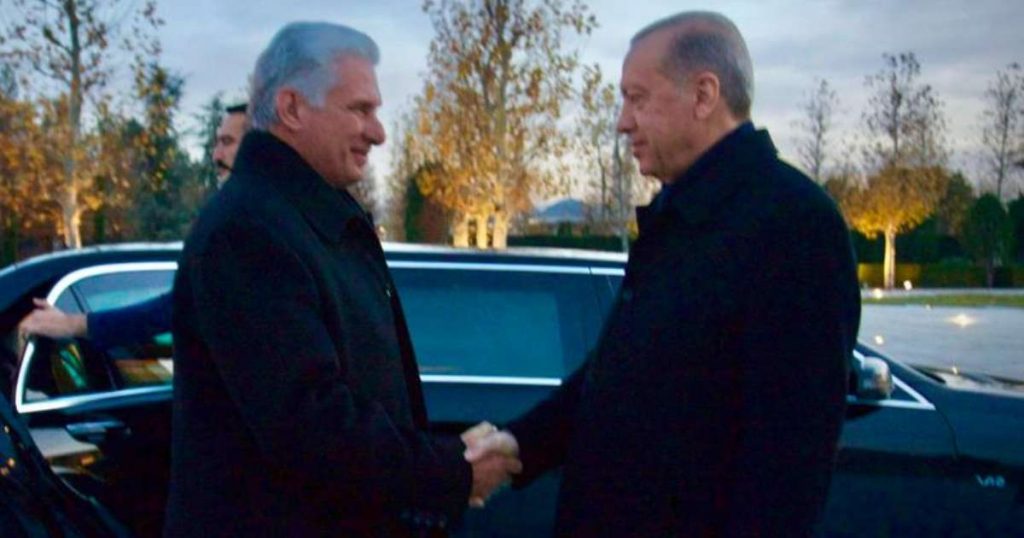
Díaz-Canel and Erdogan. (Cibercuba)

14ymedio bigger14ymedio, Elías Amor Bravo, Economist, 24 November 2022 — And Cuban President Díaz-Canel arrived with his entourage to Turkey, including a photographer-reporter on the plane with a more sanchista (Pedro Sánchez)-than-Kennedy aesthetic. This is the third stop of the economic journey that began in Algeria. And of course, as could not be otherwise, the Cuban state press praised and described it as “very fruitful and encouraging” encounter with an unimproved President Erdogan, whose face reflected the serious hardships of the Turkish economy and the political instability of the country.

Let’s take this apart. Recent economic data from Turkey are not good. Inflation in October skyrocketed by 85.5% year-on-year; the unemployment rate, 12.8%, is among the highest in the world. These two data point to a population with low purchasing power with an average salary of 8,000 euros.

Foreign trade, strongly unbalanced by imports, has a coverage rate of 82%, with a trade deficit in GDP of -5.65%. And finally, economic growth throughout this year does not exceed 2.1%. Bad data for one country to offer economic collaboration with another. The rating agencies (Moody’s S&P, Fitch) grant Turkey a B, due to doubts about its financial capacity. As for political instability, the authorities still continue to investigate the terrible attack in Istanbul a few days ago, with notable repercussions for the country’s tourism.

So Díaz-Canel’s advisor, who planned this stage of the economic journey, must not have had access to these statistical data, and if he did, or he didn’t interpret them correctly, or someone told him to forget about them, then It’s not surprising that Díaz-Canel told Erdogan that “relationships between the two countries are maintained on the basis of respect, solidarity and cooperation, for the benefit of both peoples,” and went on to add that, in economic-commercial matters, “Cuba ratifies its willingness to continue working in sectors of mutual interest, such as biotechnology, renewable energies, tourism, agriculture, livestock, health, education, sports and culture.” Or what is the same, “give me something.” Doesn’t matter what, but give me something. continue reading

And it seems that Erdogan, with little time for this kind of begging, and driven from Russia by his ally, Putin, valued the visit as “historic” and announced that it will be “a turning point in the ties between the two countries.” But how, and with what?

It seems that he intends to achieve this with investments by Turkish companies already established in Cuba; in particular, with the technical support to the Island in cooperation projects associated with agricultural development, and the realization of joint investments to produce vaccines, taking into account that Cuba and Turkey are countries that have been able to develop their own treatments against COVID-19. And little else.

This offer from Erdogan, of a small amount and little real impact, resulted in the signing of six agreements, of which four are memorandums of understanding: two between the foreign ministries, a third between the central banks of both nations and a fourth between the Ministry of Foreign Trade and Foreign Investment and the Turkish Agency for Cooperation and Coordination. Burocracy at full speed.

Erdogan quickly dispatched the Cuban communist delegation. No joke. And Díaz-Canel, seeking to extend the meeting, told the journalists who were waiting for him at the exit, that “we have just had official talks with President Erdogan. It has been a very fruitful and encouraging exchange, in which we have ratified the will to continue strengthening political relations between both countries.”

And coincidentally, no journalist asked him, as a suggestion, if what was addressed at this meeting could not have been agreed upon in a videoconference from Havana, thinking about the agonizing situation that Cubans live in. It doesn’t matter, no one asked about the cost of the trip and this delegation — as has already been seen before in Algeria and Russia — does not skimp on expenses.

Instead of hiding the waste of money for something that was already known to be agreed and closed, Díaz-Canel told journalists that “it’s an honor for us to be here and to be able to respond to the invitation given to us by the most excellent President Erdogan, to visit his country.”

And knowing that this argument for the invitation is limited, he added “it is also a great satisfaction to make this visit in the context of the celebrations for the 70th anniversary of the establishment of diplomatic relations, which have been maintained uninterruptedly on the basis of respect, solidarity and cooperation, for the benefit of both peoples.” More or less, the same. Superfluous expenditure. A videoconference would have been much more practical.

However, the journey through Turkey was once again pregnant with tourist events and of a low economic profile, such as the meeting of Díaz-Canel with members of the Cuba-Turkey José Martí Friendship Association, founded 20 years ago, and a counterpart to others in Europe, which receive the discreet support of the Cuban foreign ministries.

Díaz-Canel also visited, accompanied by his wife Liz Cuesta, the mausoleum of Kemal Ataturk, founder of the Republic of Turkey, and there he again declared something that is uncertain, “the Cuban and Turkish peoples are united by shared values, in recognition of the legacy of the founders of both nations.”

The state press reports that “the tribute had as its prelude a quiet walk along a long and wide path in which the sun reflected off the cream marble of the trail.” That is, more tourism paid for by the Cuban state budget.

Then the entourage entered the tower of Misak-I-Mili, where Díaz-Canel wrote in the book that collects the impressions of those who arrive to meet and pay honors with the consequent reference to Fidel Castro that he described as a “source of inspiration for the Cuban revolution.”

And little else remained to be done in Turkey, on a lightning visit that seems to have lasted much less than in the other two destinations. For whatever reason. Cuban communists don’t give something for nothing.

Translated by Regina Anavy

____________

COLLABORATE WITH OUR WORKThe 14ymedio team is committed to practicing serious journalism that reflects Cuba’s reality in all its depth. Thank you for joining us on this long journey. We invite you to continue supporting us by becoming a member of 14ymedio now. Together we can continue transforming journalism in Cuba.
Canada Condemns the ‘Hard Sentences’ Against the July 11, 2021 (11J) Protesters in Cuba

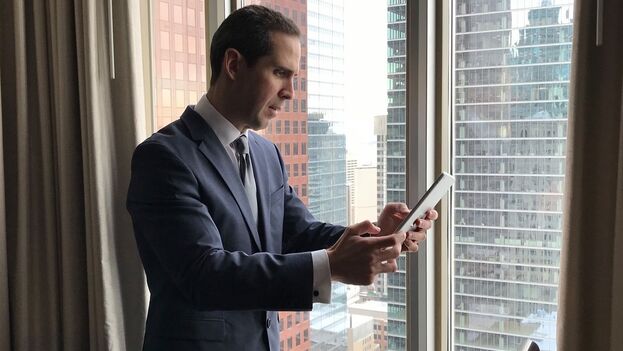
Cuban-Canadian Michael Lima, human rights activist and director of Democratic Spaces. (Facebook)

14ymedio biggerEFE (via 14ymedio), Toronto, 25 November 2022 — Canada communicated to Cuba its “great concern” about the “violent repression” of the protests on the Island and condemned the sentences against the protesters of July 11, 2021, but did not indicate whether it will sanction the Cuban regime, as human rights organizations have requested.

The Ministry of Foreign Affairs of Canada told EFE that it has transmitted “to the highest levels” of the Cuban regime its concern about the repression against protesters, journalists and activists, and that it condemns the “hard sentences” of the 11J protesters, up to 13 years in prison, according to the ruling leaked this month.

“Canada will continue to raise its concerns to Cuban officials about human rights violations,” the spokeswoman for the Canadian Ministry of Foreign Affairs, Sabrina Williams, told EFE.

Williams also confirmed that senior Canadian officials met with the NGO Democratic Spaces, which on November 14, together with the Cuba Decide organization, requested sanctions by Ottawa against Cuban President Miguel Díaz-Canel, senior officials and other entities of the regime for human rights violations. continue reading

The spokeswoman did not indicate whether Canada will sanction the Cuban regime, but added that the Canadian government considers it important to “provide a voice for human rights defenders and better understand their concerns and also to express them to Cuban officials.”

Michael Lima, a human rights activist and director of Democratic Spaces, confirmed to EFE that he met with senior officials of the Ministry of Foreign Affairs on November 16, and said that, although Ottawa has not announced sanctions against the regime, he detected a change in mentality in the Canadian authorities.

“We are pleased that Canada understands that Cuba is a dictatorship, one of the oldest in the world, and that there needs to be justice. I liked seeing the change of mentality in Canadian government officials, who understand that human rights are systematically violated in Cuba,” he said.

Lima blamed Canada’s different attitude towards countries such as Venezuela, Nicaragua and Iran, to which Ottawa has applied sanctions similar to those requested against Cuba, in the absence of information about what is happening in the country.

“We are asking for uniformity in (Canadian) foreign policy,” he explained.

The director of Democratic Spaces believes that the Canadian Prime Minister, Justin Trudeau, “admires” the Cuban regime for the friendship between Fidel Castro and his father, Pierre Trudeau, who led Canada twice, first from 1968 to 1979 and later from 1980 to 1984.

“And if the prime minister has that position, it influences the formulation of foreign policy,” he said.

Translated by Regina Anavy

____________

COLLABORATE WITH OUR WORKThe 14ymedio team is committed to practicing serious journalism that reflects Cuba’s reality in all its depth. Thank you for joining us on this long journey. We invite you to continue supporting us by becoming a member of 14ymedio now. Together we can continue transforming journalism in Cuba.

You Can Still Love and Be Happy in a Dictatorship

Pablo Milanés. RTVE

Diario de Cuba, Orlando Luis Pardo Lazo, Saint Louis, 24 November 2022 — An icon of Castroism has died. Pablo Milanés now belongs to history. May the soul of a contemporary Cuban rest in peace. Thank you for allowing us to be your exceptional witnesses. We promise to tell the Cubans to come about you, with love.

A musical work by Pablo Milanés, after his death in European exile, inevitably begins to be updated again, especially in that instantaneous civic square that is the Internet. I mean, here.

How much did he win, how much did he lose? What did he sing and what didn’t he sing, who did he sang for and who didn’t he sing for? Also, as attached to his scores and his good-natured Bayamé voice, his anthological selfies with the tyrant return, which today are part of the emotional archeology of a tyranny that at times illuminated and at times made our days unbearable.

Faced with mourning for the disappeared of the Cuban Utopia, the voiceless victims of the Paradise of the Proletariat, we always need to bet on light and compassion. We are better than our executioners, and we have known how to be reborn to a life in truth, free and good in the midst of the servile and vile. Totalitarianism is powerless before our tenderness.

Qualities and originalities apart, Pablo Milanés was a genius of our national songwriting of all time. His absence impacts us from another place that doesn’t necessarily go through reason. Just admit it. The future of free Cubans without Cuba cannot begin with a gesture of denial.

Because Pablo hurts us, he grips our hearts. A bit pathetically and provincially, it’s true, but what can we do? We are like that, half sentimental and half wise. And we feel in Pablito an existential companion that we have lost and whose loss — we all know it, knowing it or not — will be irretrievable for the rest of our biographies.

Pablo Milanés shone with his own brilliance. And also with that brilliance he kidnapped thousands and thousands of Cubans who could have been as creative and affectionate as him, but who ended up mentally and physically demolished by the dictatorship of Fidel and Raúl Castro.

Pablo Milanés knew closely those Cubans who did not fit in the Nueva Trova, but were forced to be militants of hatred until today (if they survived the olive green military). And, for decades, he delicately shut them up. continue reading

Having been one of them himself at the beginning of his career, Pablo perhaps considered that his triumph would be his best revenge against the brutes and abusers who imposed barbarism on us disguised as ideology.

Over time, the one who appeases everything, Pablo Milanés began to take a discreet distance from the ossified elite in power in Havana. We reach the 21st century together. We began to miss each other among Cubans. Until last Monday, when he died far from home — as you and I will die — the singer-songwriter had already broken rhetorically with the Revolution, from the peaceful perspective of the prophet who believes that the revolution has been betrayed by the revolutionaries themselves.

Poor for the singer and good.

It would be a mistake of the human soul to leave the remains of Pablo Milanés in the hands of local repressors, allies or renegades with him in life. It would be a mistake of political strategy to put his legacy among the icons of the international left. And it would be a mistake of Cubanness to renounce wanting to be in communion with a Cuban who, yes, was able to love and be happy in the midst of Island totalitarianism.

As you and I were able to, until we were no longer.

And that’s precisely why we left, remember? We escaped from the horror because we could still love and be happy in the Castroite prison in the open air into which they converted Cuba. And because, from that love and that happiness under surveillance, we could still make the sovereign decision to leave the Island to love and be happy at any other solitary point on the planet.

Here we are still. Together. Connected from a distance. Inconsolable, but never irreconcilable. Without Pablo Milanés.

We don’t need to make mourning another cause of combat, nor that our immemorial wrath undoes our memory of the singer-songwriter. If we could fall in love and feel happiness on the Island under the lies and violence of the military junta, it makes no sense to deny it now in the inner democracy in which each Cuban can fulfill himself.

Pablo Milanés belongs to the Cuban people. He is a treasure and a testimony in perpetuity of what we are going through. The Revolution is even running out of its dead. In addition, death is a very desolate place. Let’s not leave Pablito there, please.

Translated by Regina Anavy

Former Congressman Joe Garcia Resorts to the Figure of Mas Canosa to Justify his Trip to Cuba

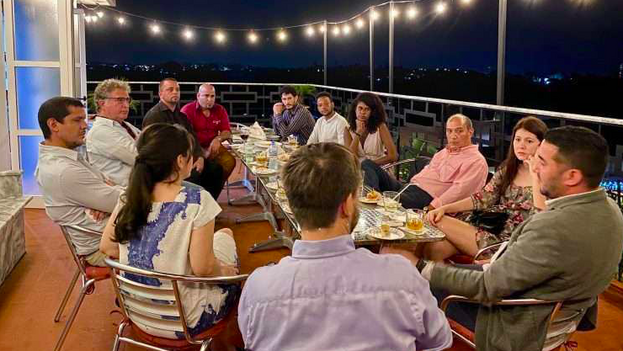
García, the second from left to right, during a meeting with Cuban businesspeople from the private sector. (Twitter/Joe García)

14ymedio bigger14ymedio, Havana, 25 November 2022 — Former Democratic congressman for Florida, Joe García, pointed out in an interview with OnCuba that the Biden government will take more steps in its policy of rapprochement with the Island, the first of which, the issue of remittances, is already underway.  In a conversation with the media he defended his controversial trip to Havana, where he met with Cuban President Miguel Díaz-Canel, and he said that it didn’t contradict the spirit of Jorge Mas Canosa, the deceased historical leader of Miami’s Cuban exile community and García’s mentor.

“It doesn’t seem to me that I did anything that wasn’t in agreement with the history of Jorge Mas Canosa. Remember that once he debated with Ricardo Alarcón,” alleges the politician, whose interest is focussed on promoting cooperation between Florida and the Island through small and medium-sized enterprises [SMEs]. He emphatically states that “Cuba’s problem cannot be solved without Miami.”

“The rules [of the embargo] that apply to the Government and Cuban companies do not apply to SMEs in Cuba,” García explains. According to him, despite not exactly being a businessman, he has been working for some time to establish relations allowed by the embargo laws and despite the obstacles in Havana.

The former congressman, born in Miami in 1963 and close to former President Barack Obama, recounted his trip last week to the Island. In it, he had the opportunity to verify that the population’s need is extreme and considers that the Cuban community abroad can help develop initiatives that improve the lives of Cubans without going through the Cuban Government, which is possible, he indicates, through private businesses.

“They can buy without restrictions. They are entrepreneurs, and the law and regulations that Obama wrote allow them to do business with SMEs,” he emphasizes. Asked about the timid progress of the current president, García says that there will be more: “[Joe Biden] has done a little and will do more. Look, he opened the embassy again, restarted the flights, not only to Havana but to the interior, and now they are working to improve the situation with remittances.” continue reading

Joe García participated in a meeting that has generated a lot of discomfort in the sector considered the hardcore of exile, which no longer makes up only the political exiles of the 1960s, as before. The Democrat reflects on the most recent wave of emigrants, many of them for economic reasons, who arrived in the United States more radicalized than before.

“That is a question that the Government of Cuba should ask itself, because these are children of the Revolution. Here you can’t blame Batista, the CIA, the US government, the Russians. Who is to blame for this reality, that mostly people between the ages of 35 and younger arrive with perceptions about their own country that could not be instilled by me, or anyone else? The question is as follows: if Cuba can’t talk to its children, who is it talking to? Who are you going to bury?” he argues.

The politician defends himself against the sector that has criticized his trip more vigorously and says that he was with an entire group of people gathered to “study the theme of SMEs and the forms of investment in Cuba.” They met in a salon where Miguel Díaz-Canel gave a speech, after which García had the opportunity to talk with him.

“There are things that I’m not going to reveal. But I told him that the issue of SMEs had to be pursued, that it was an opportunity, and that the decisions that were made had to be implemented. I also advocated for the people who are imprisoned in Cuba after the events of July last year and other events,” he says. He recognizes, however, that there was no reaction. “We’ll see if he listened to me. But he heard me.”

The former congressman insists that neither his trip, his conversations with Cuban officials or his intention to do business on the Island clash with the ideas of his admired Mas Canosa who, he says, he had in mind at this meeting.

“What I know is that I have buried many friends, men who fought with weapons in Cuba, and who impressed me with their memories, their affection, their deep love for the Cuban nation. I have buried many. Some of them, in important positions, all they want is a dignified reunion with their country. And it seems to me that it’s something that the country owes them too. No 80-year-old man, who must be the age of the youngest brigadier [of Playa Girón — the Bay of Pigs, to Americans], is a threat and something that the Government of Cuba must fear.”

Translated by Regina Anavy

____________

COLLABORATE WITH OUR WORKThe 14ymedio team is committed to practicing serious journalism that reflects Cuba’s reality in all its depth. Thank you for joining us on this long journey. We invite you to continue supporting us by becoming a member of 14ymedio now. Together we can continue transforming journalism in Cuba.
Cuba’s State Communications Company and Armed Forces Create a Cybersecurity Group

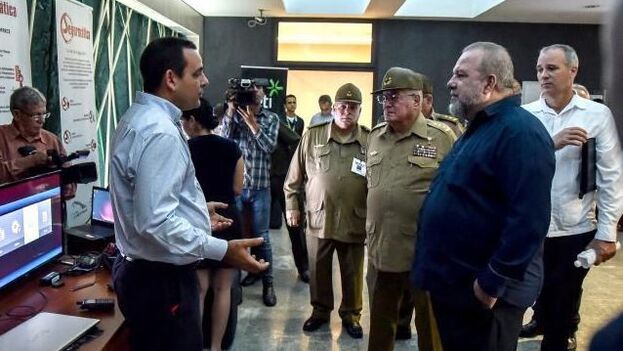
The companies participating in the workshop showed Marrero Cruz, the Minister of the Armed Forces, and other military and officials, several surveillance items. (Granma)

14ymedio bigger14ymedio, Havana, 24 November 2022 — Closely monitored by an entourage of the Armed Forces, Manuel Marrero Cruz created a National Working Group for Cybersecurity in Havana on Wednesday. Although the Cuban prime minister avoided mentioning it, this step facilitates the recent alliance of the state communications monopoly, Etecsa, with the military Information Technology Company for Defense, known as Xetid.

Xetid, founded in 2013 by a group of military computer scientists, is the technological arm of the Armed Forces. With a discreet profile, it focuses on the search for “solutions” to guarantee the effectiveness of the regime in digital surveillance and the development of Defense software, in collaboration with the University of Computer Sciences (UCI).

Xetid is responsible for the design of the EnZona electronic payment application, which requires a large amount of private information from users before allowing them to access their profile, in addition to monitoring their transactions.

Etecsa’s pact with Xetid allows the Government to unify the databases of both companies and to amplify, with the direct supervision of the Armed Forces, their control over users. Among the terms of the alliance is the joint management of EnZona and Transfermovil, created by Etecsa to guarantee the flow of telephone recharges from abroad, among other operations. continue reading

The directors of both corporations affirm that the pact aims to “make life easier for Cubans in the digital area” and invites users to trust the transactions that are made with both applications.

In addition, it allows Etecsa “to have access to Xetid’s software tools related to industry 4.0, business management and e-government, the main lines of the organization along with automation and security,” according to Cubadebate.

During the opening of the first workshop on cybersecurity, organized at the José Antonio Echevarría Technological University of Havana, Marrero Cruz applauded this alliance and pointed out that cyberspace surveillance is “a priority” of the Government.

The “identification and elimination of security breaches” was one of the concerns of the prime minister, who read his speech in the presence of a watchful minister of the Armed Forces, Álvaro López Miera, and his military group.

Marrero Cruz avoided departing from the script provided in his speech, and when he did it was to nervously mention the 11J protests, which he attributed to an “offensive” from the United States. “Let’s not forget that the US created the Internet Working Group for Cuba in 2018 with the aspiration that social networks become subversion channels,” he said, not without first describing as victims official portals “such as the Presidency, Granma, Cubadebate and the Government,” in the sights of “media bombing” from abroad.

After the speech, the companies participating in the workshop showed Minister of the Armed Forces Marrero Cruz and other military and officials several surveillance items like security cameras, identification mechanisms, alarms and defensive-use software.

Marrero didn’t specify what the functions of the National Working Group for Cybersecurity would be, although he did point out that it would operate under the direction of the President of the National Defence Council, a position held by President Miguel Díaz-Canel.

Translated by Regina Anavy

____________

COLLABORATE WITH OUR WORKThe 14ymedio team is committed to practicing serious journalism that reflects Cuba’s reality in all its depth. Thank you for joining us on this long journey. We invite you to continue supporting us by becoming a member of 14ymedio now. Together we can continue transforming journalism in Cuba.
Carlos M. Alvarez Will Return to Cuba ‘By Any Other Way’ After American Airlines Denied Him Boarding

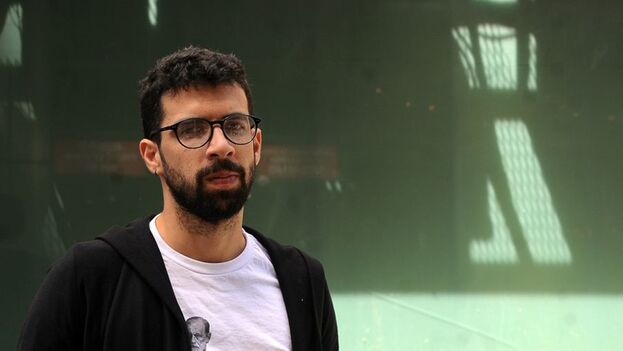
Cuban Carlos Manuel Álvarez could not board the flight from Miami. (Rialta)

14ymedio bigger14ymedio, Madrid, 21 November 2022 — Journalist Carlos Manuel Álvarez tried to return to Cuba this Sunday from Miami, but American Airlines employees informed him that he could not board the flight due to Havana’s refusal to authorize his entry into the country.

” ’You have been denied from Havana’, they told me,” the writer and independent reporter wrote on his Facebook profile, who said he felt united in fate to Anamely Ramos and Omara Ruiz Urquiola. These  two activists have also not been able to travel to the Island from the United States due to measures of the Cuban regime.

“I’m calm, the pain is now permanent. In a while I will explain the matter in more detail,” added Álvarez, who has not yet given more information about it.

The journalist, who collaborates with several international media such as El País, New York Times, BBC and The Washington Post, is one of the founders of the Cuban independent media El Estornudo and won in 2021 the King of Spain journalism prize for his report Three Cuban Girls, in which he recounted the collapse of a balcony on a street in Old Havana, which ended the lives of three minors returning from school.

“I want to believe that I have reached the limit in my confrontation with the direct injustice that has subjugated my country for decades, and that there is a secret prize in the punishment of the tyrant, because your “respectability” has revealed its true nature, something that the tyrant always wants to hide,” he stated. continue reading

The author warned that he is willing to return “by any other way” and to organize with Cubans who also want to do so. “The return of a community in full is perhaps the only way we have left. On the other hand, from Heredia to Arenas, I also belong to the exile,” he concluded.

Álvarez already mentioned on a previous occasion the option of boarding “a peaceful flotilla” to return to Cuba. “I think the moment will come when we’ll have to consider it as something imminent and inescapable. It’s a practical, feasible operation that citizens can do,” he argued.

The writer, who has been residing in the United States for several years, returned to Havana in 2020 to accompany the protests of the San Isidro Movement (MSI) and was arrested by State Security, which held him for several hours before forcibly moving him to Cárdenas, in Matanzas, where he is originally from and where his parents live. Despite this, shortly after, he was able to fullfil his intention to reach the capital.

The author described his arrest as kidnapping, since unidentified people dressed in civilian clothes put him, against his will, in a vehicle without telling him where he was going. “It’s an absolute civil death; this cannot be seen either as an arrest, or as low-intensity pressure, but as the absolute formalization of prison throughout the national territory,” he denounced.

The siege against the reporter intensified because of his support for the hunger strike that several activists of the San Isidro Movement, led by Luis Manuel Otero Alcántara began, to demand the release of Denis Solís, then in prison for contempt and currently in Germany after leaving the Island through Serbia in a forced exile agreement.

Translated by Regina Anavy

____________

COLLABORATE WITH OUR WORKThe 14ymedio team is committed to practicing serious journalism that reflects Cuba’s reality in all its depth. Thank you for joining us on this long journey. We invite you to continue supporting us by becoming a member of 14ymedio now. Together we can continue transforming journalism in Cuba.
Cuban Singer-Songwriter Pablo Milanes Will Be Buried in the Las Rozas Cemetery, Near Madrid

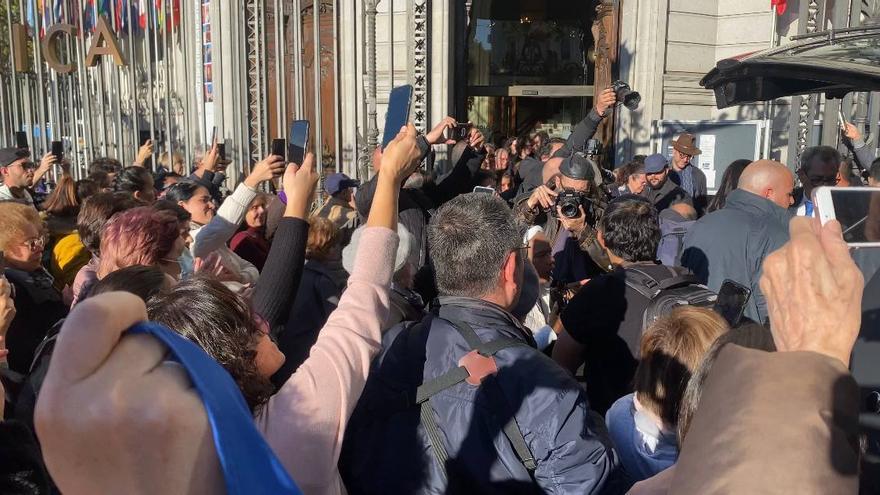
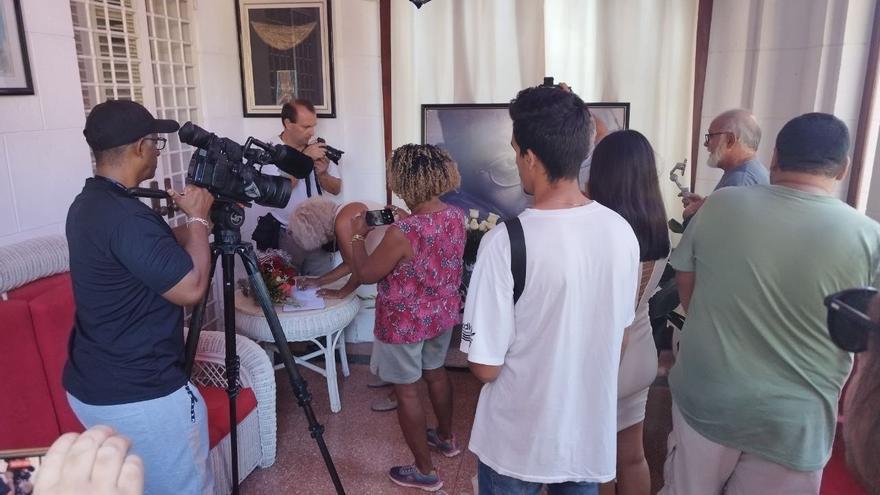
Funeral chapel for Pablo Milanés, installed in the Cervantes room of the Casa de América in Madrid. (14ymedio)

14ymedio bigger14ymedio, Madrid, 23 November 2022 — Hundreds of people approached the Casa de América in Madrid on Wednesday, where the funeral chapel of Pablo Milanés, who died early Tuesday, was installed. The musician, as confirmed to 14ymedio by family sources, will be buried near the Spanish capital, in the cemetery of Las Rozas.

At the foot of the coffin, in place from 10:30 to 15:30, people had deposited numerous bouquets of flowers, mostly white. The Cervantes room of the Casa de América was also framed by a dozen wreaths of flowers, some sent by colleagues, such as Joaquín Sabina and the Universal Music label, and others by politicians, like Podemos supporters. Workers of the institution pointed out to this newspaper that this is the first time that Casa de América prepared one of its rooms as a funeral chapel to honor a particular person.

People lined up at the main entrance when the building opened, in the central Plaza de Cibeles, despite a cold and cloudy morning. Numerous Cuban artists and journalists exiled in Madrid, such as Yunior García Aguilera, Dayana Prieto, Luz Escobar, Julio Llopiz-Casal, Yanelis Núñez and Michel Hernández, made an appearance.

Cuba’s ambassador to Spain, Marcelino Medina, also approached the Casa de América, where he spoke to the press. Milanés “was one of the founders of the Nueva Trova, that movement of young composers who with the Revolution burst onto a stage with songs that are today a symbol of an entire generation, but who was also welcomed with great respect, with great admiration by the younger generations of today,” said the diplomat.

To the question of whether there would be any official tribute in Cuba, Medina replied: “I have no information in that respect.” Similarly, about continue reading

the possibility of the musician being buried in Spain, he said: “it’s a personal wish that must be respected.”

Moment when Pablo Milanés’ coffin is taken out of the main entrance of Casa de América in Madrid. (14ymedio)

The Cuban singer-songwriter, a universal figure, died at the age of 79 after several weeks of hospitalization for several infections as a result of his illness. Milanés suffered from a type of cancer — myelodysplastic syndrome — that decreased his immune response.  He moved to Spain five years ago for medical treatment.

This Tuesday, on the Island, the Government wanted to monopolize  any kind of tribute to the artist, who in recent years had openly broken with the regime.

At the same time that all the front pages of the Cuban official press were filled with unusual praise for Pablo Milanés, the various events organised in his memory in Havana were strongly monitored by State Security.

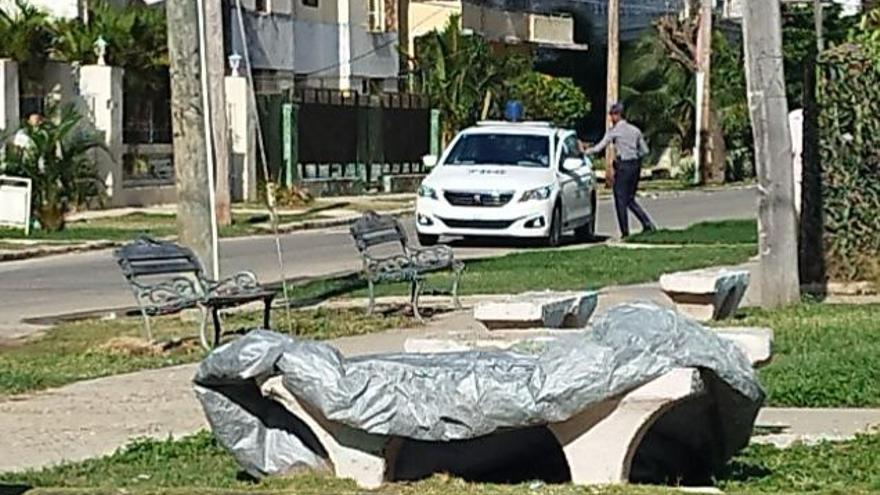
The surroundings of the park at H and 21st, in El Vedado, where a group of fans had spread the word that they would meet to honour the memory of the artist, singing his songs from three in the afternoon, were guarded by a police operation.

Like the H and 21st park, the area was under close  surveillance. (14ymedio)

State Security agents dressed as civilians were seated and scattered on the benches. Motorcycles circled around and even a bus that the Police use to load people or fill with shock troops implied that, if any action took place, they would not let it happen with full freedom. Finally, a little more than 30 people dared to make an appearance and hung a Cuban flag on the kiosk located in the centre of the park.

Meanwhile, the troubadour’s family summoned friends and admirers to sign a book of condolences at Milanés’ recording studio, on 11th street, between J and I, also in El Vedado.

In the tribute, not many spontaneous people were observed, but there were officials and media related to the regime, such as Telesur. An unknown woman did not stop taking photos of everyone present.

In the 11th Street tribute, not many spontaneous people were observed, but official journalists and media related to the regime, such as Telesur. (14ymedio)

Like the park at H and 21st, the area was under close surveillance. “You can’t even quietly pay tribute to a great artist who has died,” protested a young woman who approached to offer condolences to the musician’s relatives.

The operation, where even René González, one of the “five spies,” according to 14ymedio, appeared, was also extended to the Cuba Pavilion, headquarters of the Hermanos Saíz Association, on La Rampa, where the Ministry of Culture organized a tribute to Pablo Milanés.

No family member was at the official “cantata” disseminated on social networks by people associated with the regime.

Translated by Regina Anavy 

____________

COLLABORATE WITH OUR WORKThe 14ymedio team is committed to practicing serious journalism that reflects Cuba’s reality in all its depth. Thank you for joining us on this long journey. We invite you to continue supporting us by becoming a member of 14ymedio now. Together we can continue transforming journalism in Cuba.

Three Cubans Who Arrived in the United States a Month Ago Fear Being Deported

The exodus of Cubans to the United States continues to yield record figures: 29,872 entered illegally last October. (Facebook/Impact Vision News)

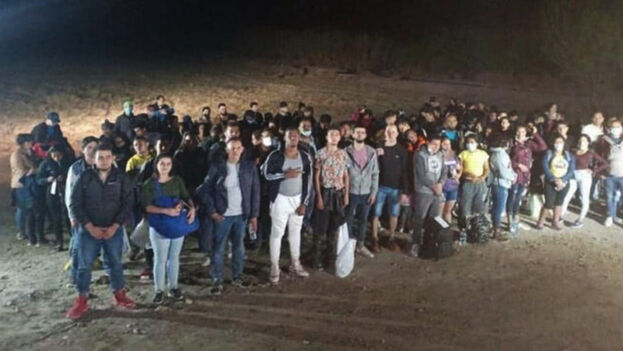
14ymedio bigger14ymedio, Havana, 20 November 2022 — Cubans Pedro Yasmani, Raúl Santana and Daisel Pons, who crossed the Rio Grande to the United States on October 17, remain in a detention centre in southern Texas and fear being “deported,” they told Univision News 23.

“They chose us at random,” Yasmani complained. The Cuban said that after surrendering to the Border Patrol, they separated him from the group of Cubans with whom he crossed the border through Mexico. There are more than 200 Island nationals on the site, all concerned about their future. “Why didn’t they free us like the others? Nobody tells us what’s going on,” he added.

Raúl Santana, another of the countrymen detained, thought that when they called him it would be to free him so he could reunite with his family, but he was handcuffed and transferred to southern Texas. “We are afraid that they will put us on a plane to be returned to Cuba without giving ‘credible fear’ a chance.”

A similar case is that of Daisel Pons, who also said that “they didn’t do any interview or check” after surrendering. “They just took me here,” to the detention center.

These complaints come a few days after the Governments of Cuba and the United States held a new meeting in Havana to address the problem of migration, which remains unstoppable.

The exodus of Cubans to the United States continues to yield record figures, with 29,872 entering illegally in October, a figure that exceeds the 26,730 who entered in September, according to data from the United States Office of Customs and Border Protection. continue reading

In the midst of the exodus, this week the death in a traffic accident of Cuban Claudia Suárez Pérez, who arrived in the United States three months ago, was announced. “My girl had an accident and it killed me,” the young woman’s mother, who did not identify herself, told journalist Mario J. Penton. “I need help to bring my girl’s body home so I can see her for the last time,” she added.

Yesi Boza, cousin of the 21-year-old girl who left her “five-month-old baby” on the Island, requested the support of any organization that is in a position to help in the repatriation efforts. “Today it was my cousin, but tomorrow it can be any of our daughters, sisters, friends, granddaughters or ourselves,” she told America TeVé.

This Saturday it was also announced that the Cuban Marcos Cabrera, who managed to reach the United States, was hit by a van while riding his motorcycle. “The doctors tell me that his brain received such a forceful blow that it burst, as they say, inside; for many it’s a miracle that the boy is still alive,” the young man’s father told América TeVé.

Due to the severity of his injury, his relatives are requesting help so that Cabrera’s mother can leave the Island with a humanitarian visa.

Translated by Regina Anavy

____________

COLLABORATE WITH OUR WORKThe 14ymedio team is committed to practicing serious journalism that reflects Cuba’s reality in all its depth. Thank you for joining us on this long journey. We invite you to continue supporting us by becoming a member of 14ymedio now. Together we can continue transforming journalism in Cuba.
At the 26th Avenue Havana Zoo Only the Harmful African Snails Are in Good Health

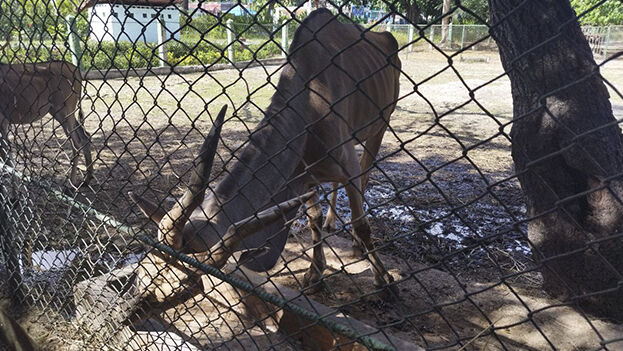
The antelope Eland, also known as the El Cabo elk, has ribs showing at the 26th Avenue Zoo (14ymedio)

14ymedio bigger14ymedio, Juan Diego Rodríguez, Havana, 23 November 2022 — The scenario at the 26th Avenue Zoo in Havana, a year after it reopened its doors after the forced closure due to the COVID-19 pandemic, is more depressing than ever. Malnourished animals, without water, with their pens full of dirt and excrement, are the general trend, as attested to on Tuesday by 14ymedio.

“The only thing that grows here are the African snails,” summarized a young man who was visiting his partner when he saw the exemplary numbers of that plague that arrived in Cuba a few years ago.

The conditions of the place, which in recent days have been denounced again on social networks, have definitely earned it a bad reputation. “There are very few people, very few children, despite it being a week of school break,” said another woman, who also complained about the high prices of food in the kiosks. Easily, people spend 700 pesos “for nonsense.” Most only manage to buy a frozen fruit.

Despite the fact that at the entrance of the zoo there is a warning that it is out of service, the train works, although a manager travels on board and gets off to push it when it runs out of fuel. Nor do the attractions for children or the electric cars work well, which barely run with their flat tires and tarpaulin covers to disguise the deterioration of the tires.

Skinny and barely moving, the leopard was moaning in his pit, which had no water. The skin of lions, which used to attract visitors more easily, is full of pustules and flea bites. All of them, just like the antelopes, have ribs showing and tired eyes. “The only ones that are well fed are the monkeys, because there are a lot of bananas, and they’re cheap,” said another visitor.

The bear area has been infested by colonies of the African giant snail, an invasive species that raised alerts on the Island as a potential risk to human health, since they carry parasites that can cause diseases such as meningoencephalitis and abdominal angiostrongiliasis. Cuba faced an outbreak of this dangerous mollusc between 2018 and 2019, but work to eradicate it was cut short in 2020 with the arrival of the pandemic. continue reading

Translated by Regina Anavy

____________

COLLABORATE WITH OUR WORKThe 14ymedio team is committed to practicing serious journalism that reflects Cuba’s reality in all its depth. Thank you for joining us on this long journey. We invite you to continue supporting us by becoming a member of 14ymedio now. Together we can continue transforming journalism in Cuba.
The Ranchers of Sancti Spiritus Try to Increase Pork Production in Cuba

The general director of the Sancti Spíritus Pork Company explained that agreements are being recovered with producers, who contributed more than 90% of the meat. (Escambray)

14ymedio bigger14ymedio, Madrid, 21 November 2022 — Pork production in Sancti Spíritus will be around 1,500 tons this year, the same figure that was obtained in a single month in 2018. That year, the province exceeded 17,000 tons, while in 2021 it remained at just 4,000, which seems even enviable today. Between January and September 2022, only 600 tons have been produced, and perhaps the forecast will not even be reached. The provincial producers are clear about it. “Reaching the production we had previously will take years. How many? We don’t know.”

A report published this Monday in the provincial newspaper addresses the situation of pork meat, a product that has gone from being the Dow Jones index of the Cuban domestic economy to being present only on the tables of the luckiest. This food is missing from state markets and, when it’s found in private markets, the price is heart-stopping.

Although the newspaper warns that there is no room for “a shred of triumphalism,” Escambray congratulates the provincial authorities for being the province that has managed to have the most breeders in the country — 4,599 as of September — and can now reactivate pig-fattening for the State.

The general director of the Sancti Spíritus Pork Company, Rolando Pérez Sorí, explains that since April the agreements with the producers, who contributed more than 90% of the meat, are being recovered, “with the entry of a certain amount of imported starter feed, which was sold in hard currency to the producers. It was used by national producers as a balanced food; the daily weight loss in the animal is lower, but the weight gain will take a few more months. The feed is reviving the animals,” he said. continue reading

The official uses the press to encourage producers to give the meat to the State through the receba — the final fattening stage. The State offers 600 to 800 pesos, depending on the animal’s weight. In the informal market “it barely exists, and when it does it costs nothing less than 4,000 pesos.” In addition, Pérez says, the initial feed is guaranteed at that stage of breeding, and a level for the feed is guaranteed.

“We agreed on the sale to the producer of starter feed in currency with a return, so he can recover the investment,” he said. The official says that some meat is already being marketed at 200 pesos per pound at the Sancti Spíritus Fair — although the amount of the product is still too small — through the purchase of backyard pigs. “This year there is no plan with Commerce and Gastronomy, and there are few orders for the meat industry,” he adds.

Pérez believes that things are going to go very slowly and that the first thing to solve is the lack of feed for the animals, although he is moderately optimistic. “There are producers motivated by the prices of corn and soy beans to sow them and contract delivery to the company; there you can see a recovery. Not the one we want, or the one the people need, but we are no longer at zero.”

In Sancti Spíritus, the authorities estimate, there are about 217 producers who meet the conditions to sign agreements with the State. Until October, only 33 had closed agreements, and although there are already 11,900 pigs on the feed, the meat is just starting to arrive.

“Complying with the state commission, the immediate thing would be to maintain offers at the Sunday Fair and sell some amount to the population by the end of the year,” says Leonardo Hernández Aulé, head of production at the company dedicated to the production and commercialization of pork meat in the province.

A producer belonging to a cooperative, Pascual Balmaseda Escobar, who has already signed two agreements with the State, admits that many of his colleagues think he’s nuts; where before producing a ton of pork cost 20,000 pesos, it now exceeds 120,000.

He, however, points out the advantages. “If you want to have pigs you have to have soil and to sow. The food from the pig doesn’t cover all the expenses and never has, but it’s realistic to think that it can happen. Now, if we want to produce pork intensively, we need to import the starter feed and some nutritional supplements, which are already produced in Cuba,” he says, defending himself.

Yurisdel Fábrega, another producer summoned to testify about the positive aspects of working for the State, affirms that without the starter feed and the protein supplement they can’t raise pigs or produce meat. “When there is feed there is pork (…) but without the protein we are nothing. No matter how much corn, bran or cassava you throw at it, the pig needs that nutritional element,” he says. In his case, he began in April with 360 pigs and then expanded to 600, which are already providing meat to the province despite the fact that, he reveals, several animals have died.

His verdict is clear: without a loan it’s impossible to raise pigs. “More producers aren’t suddenly joining because this is hard; it’s not like before; it takes a lot of money, spending about 95,000 pesos daily on food.  Now, if you don’t get credit from the bank, you can’t do it, because, seriously, there’s no one who can. Here I have 6 million pesos invested to feed 600 pigs; previously, with a credit of half a million pesos I could fatten them,” he says.

Rolando Pérez Sorí also does the math. “Spending 3,000 pesos per 200 pounds of soy, 2,500 for corn, paying the producer for a ton of meat at 220,000 pesos, comes out to about 100 pesos per pound standing, while the individual pays for that pig at more than 200 pesos. It’s very difficult to put the state sale price below 200 pesos per pound. It’s a real competition and an obstacle to developing state production in the middle of an adverse scenario,” he maintains, while he waits for pork to reach the tables of some citizens who have already lost count of the last time they tasted the animal.

Translated by Regina Anavy

____________

COLLABORATE WITH OUR WORKThe 14ymedio team is committed to practicing serious journalism that reflects Cuba’s reality in all its depth. Thank you for joining us on this long journey. We invite you to continue supporting us by becoming a member of 14ymedio now. Together we can continue transforming journalism in Cuba.
The Mexican Richmeat Company Will Have Another Factory in Cuba, Without Explaining Where the Meat Will Come From

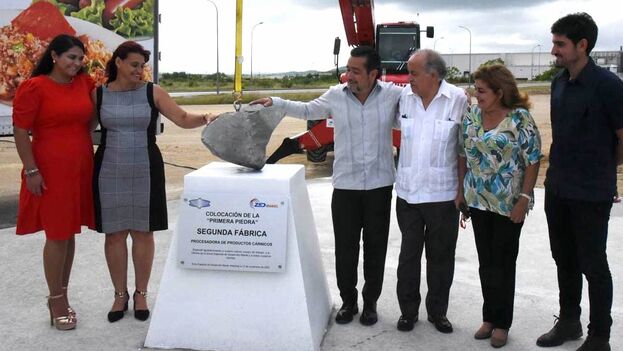
The ceremony was held in the presence of the Mexican Ambassador to the Island, Miguel Díaz Reynoso, and Déborah Rivas, Deputy Minister of Foreign Trade and Foreign Investment. (Prensa Latina)

14ymedio bigger14ymedio, Havana, 19 November 2022 — On Thursday, the directors of the meat company Richmeat de Cuba, S.A., which operates with Mexican capital, laid the cornerstone of its new factory in the Mariel Special Development Zone, with an opening expected in 2027. This is an extension of its facilities, which have been using Cuban labor and totally foreign investment since 2015.

Cuba’s Minister of Foreign Trade, Rodrigo Malmierca, had discreetly announced the expansion of Richmeat on November 9 on State TV’s Roundtable program, with the promise that Cuba would do everything possible to pay its debts to investors “gradually.”

The ceremony in Mariel was held in the presence of the Ambassador of Mexico on the Island, Miguel Díaz Reynoso, Déborah Rivas, Deputy Minister of Foreign Trade and Foreign Investment, and Carlos Luis Jorge Méndez, General Director of Foreign Investment of that ministry.

The official newspaper Granma explains that the previous Richmeat plant, also built in Mariel, was at “its highest level of production,” with a capacity for 3,000 tons per month of picadillo [mixed ground meat]. continue reading

Like other Cuban and mixed-capital companies, Richmeat sought business opportunities at the Havana International Fair (FIHAV). Luis Alberto González Hernández, President of the company, said that the new plant will be used for the manufacture of sausages, with a brand they called “La Favorita,” on which “market tests” have been performed.

The factory is expected to operate beginning in 2027, with a production capacity of 7,000 tons of sausages per month, made with the “newest technologies” and the promise of “high quality standards in their processes.”

The plant will have a workforce of 400 and will be a “continuation” of the existing one, dedicated to the seasoned picadillo. The most sensitive issue — and the one that seems to least concern current investors — is that of raw materials. González Hernández said that a part will be “of national origin,” but did not detail where Richmeat would obtain the meat to fill the supply deficit that has already been announced.

Asked by Granma about this issue, he limited himself to answering cryptically that there were “agreements” to “encourage suppliers,” and that they will be able to “grow together with the firm and increase all productions.”

The distribution of the product is another tricky situation. But the director assured that Richmeat was protected by “contracts with the chain stores of the national network,” although he avoided specifying whether Cubans would pay for the product in pesos or in freely convertible currency (MLC). Logistics, on the other hand, will be resolved by the company’s own transport network.

Without taking into account that Richmeat works with Mexican money — a country that will surely also have to send part of the raw material — González Hernández said that his company’s initiative “decreases imports.”

“Our goal was clear, very clear, to produce the largest amount possible for the tables of Cuban families,” said the manager, also ignoring the general scarcity on the Island.

The article, paraphrased by Cubadebate, was harshly criticized by readers, who noted that “from the beginning, nothing of nothing has been available” in the markets in pesos and expressed their concern about the origin of the raw materials.

“All slaughterhouses and sausage production have stopped,” said one user, while another explained that Richmeat products will only reach the west and will be insufficient for the whole country.

Some complained that only Richmeat and its partners in the Cuban government could be interested in opening a plant from scratch, when there are meat factories on the Island that are paralyzed, waiting for maintenance, or malfunctioning.

In Sancti Spíritus, for example, the sausage production plant — the only one at the moment in the country — had a meat deficit in the province. The low production added to the shortage of raw materials, caused an increase in the price of meat, and the sausages were not intended for family consumption but for hotels and the network of stores in MLC.

During 2021, pork production in Cuba fell by 53.5% compared to the previous year, with just 132,900 tons. This streak of bad luck also affected beef, with a decrease of 13.5%, lamb by 32.5% and poultry by 20.8%, according to the National Office of Statistics and Information (ONEI). For its part, in 2022 the Government predicted a total production of 26,000 tons of pork, according to the figures released by Cuban Television in April, a tiny amount compared to the 200,000 tons that were forecast in 2017.

Translated by Regina Anavy

____________

COLLABORATE WITH OUR WORKThe 14ymedio team is committed to practicing serious journalism that reflects Cuba’s reality in all its depth. Thank you for joining us on this long journey. We invite you to continue supporting us by becoming a member of 14ymedio now. Together we can continue transforming journalism in Cuba.
The Arrival of Cruiseship ‘Marella Discovery 2’ Restarts Cruise Operations in Cuba

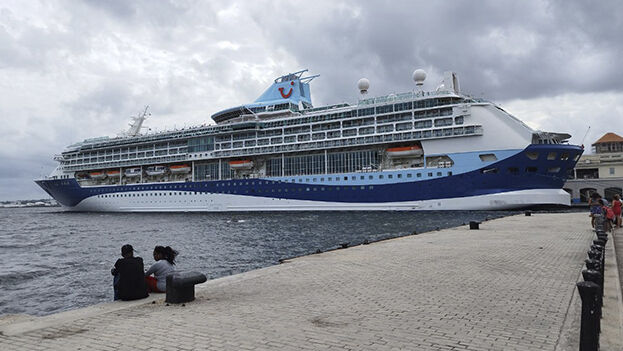
Some of the travelers toured the historic center of Old Havana, while the rest took an excursion to Pinar del Río. (14ymedio)

14ymedio bigger14ymedio, Havana, 19 November 2022 — With the arrival of the British cruise ship Marella Discovery 2 in Havana, the operations of the cruise industry in Cuba have restarted. Her landing has led the Cuban authorities to celebrate a “successful” high season, an incentive after the small numbers of visitors forced the reduction of official projections for the end of this year.

The ship, flying the flag of the Bahamas and owned by the German-British tourist group TUI UK, arrived this Friday at the Havana cruise terminal with 1,600 passengers of different nationalities, who stayed on the Island for 27 hours before continuing their tour of the Caribbean. Some of the travelers toured the historic center of Old Havana, while the rest took an excursion to Pinar del Río, to do nature tourism and visit the tobacco facilities that remain standing after the passage of Hurricane Ian.

The cruise attracted many curious people, but the police forced them to withdraw when the vacationers returned to the ship, as reported by a 14ymedio journalist. continue reading

The director of the western branch of Cubatur, Carlos Alberto Rivera, told the official press that the cruise company brought the vessel Marella Explorer 2 in March 2022 and announced that, together with Marella Discovery 2, regular trips will be maintained every 15 days in Cuban ports during the high season, from November 2022 to April 2023.

According to the Cruise Mapper page, the boat departed on November 15 from the port of Montego Bay, Jamaica. Her first stop was on the island of Grand Cayman and the second in Havana, from where she will leave for Cozumel, Mexico. Finally, on November 22, she returns to Jamaica.

The cruise industry, which was booming in Cuba, slowed down in 2018 when the Trump Administration tightened economic sanctions against the Island, in addition to the effects of the 2020 mobility restrictions due to the coronavirus pandemic. However, Rivera assured that for the rest of the year the arrival of other ships is expected, and thus will begin “a successful season for tourism” in January 2023.

The Government states that Cuba received 123,588 tourists in October alone, the fifth best data in the 10 months of 2022. The result, however, is below the initial projections and the number recorded in 2019, before COVID-19.

From January to October, 1,198,402 international tourists were received, a figure that exceeds by 540% the same measure in 2021, but that year restrictions on the entry of foreigners were still maintained due to the pandemic. Last month, the Government had to recognize that it will not reach the goal set at the beginning of the year of receiving 2.5 million visitors, and it lowered its forecast to 1.7 million.

Although November and December are two of the best months in tourism, it’s unlikely that the goal will be reached, since 250,000 tourists would have to enter the country in each of the last two months of the year. Even if this is achieved, the sector will have recovered only 40% of the levels recorded in 2019, when a little more than 4.2 million travelers arrived on the Island.

Translated by Regina Anavy

____________

COLLABORATE WITH OUR WORKThe 14ymedio team is committed to practicing serious journalism that reflects Cuba’s reality in all its depth. Thank you for joining us on this long journey. We invite you to continue supporting us by becoming a member of 14ymedio now. Together we can continue transforming journalism in Cuba.
Jose Daniel Ferrer Receives a Family Visit After Six Months of Waiting

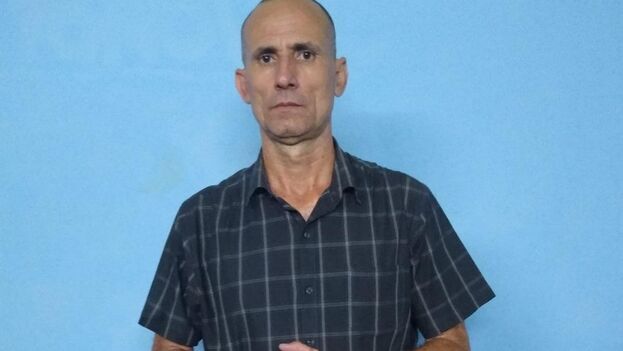
His body remains damaged by “the bites of aggressive mosquitoes” and sores from bacteria and fungi, his sister said. (Cortesía)

14ymedio bigger14ymedio, Havana, 19 November 2022 — The family of political prisoner José Daniel Ferrer, leader of the Patriotic Union of Cuba (UNPACU), was able to visit him in the Mar Verde prison in Santiago de Cuba, after six months of waiting. His wife, Nelva Ismarays Ortega-Tamayo, and their children, Daniel José and Fátima Victoria, spent two hours with the inmate and reported on his state of health.

They found him very thin but at least with better color on his skin,” his sister, Ana Belkis Ferrer García, who was not present at the visit and resides in the United States, explained in a statement on Facebook. His body remains damaged by “the bites of aggressive mosquitoes” and sores caused by bacteria and fungi, the activist said.

She added that, since this Monday, Ferrer has had access to the medicines he needs and they have allowed him to be in the sun. “He can now turn off the bulb that remained on 24 hours a day, unscrew it during the night,” she said, although she pointed out that most of the week the prison lacks electricity.

Through his family, the opponent asked that his gratitude reach “all the people in solidarity” who have been aware of his situation in the penal establishment. continue reading

The family report shocked several activists from both the Island and the exile. Political analyst Andrés Albuquerque indicated, from Miami, that one could not “stay impassive” in the face of the abuses committed against Ferrer, whom he pointed out as the only one of the “traditional opponents” who is imprisoned, and that while “everyone should be talking about him,” there has been a strange “silence” about him in the opposition.

He called for an “examination of conscience” for anyone who is not giving that family “the solidarity it deserves,” in his Citizen Approach program.

In September, the inmate’s sister reported that the family had not received any information about his condition for several months. Ferrer is one of the almost 1,000 political prisoners that the regime has detained since the mass protests of July 11, 2021, or after the demonstrations in recent months.

Since June 4 of this year, the leader of UNPACU is prohibited from making phone calls from prison. At that time, Ana Belkis Ferrer García explained that the officers kept her brother “semi-naked, only in underpants, full of mosquito bites, getting food from the bag he’s allowed to receive every 45 days and without the right to family and conjugal visits.”

According to his sister’s calculation, Ferrer has now spent “a year, two months and 12 days buried in life and slowly dying.”

Several organizations, such as the Directorio Democrático Cubano [Cuban Democratic Directory], demanded from the Cuban Government proof of life of the inmate, in the face of the regime’s refusal to grant him the family visit that he was supposed to have on August 26.

Translated by Regina Anavy

____________

COLLABORATE WITH OUR WORKThe 14ymedio team is committed to practicing serious journalism that reflects Cuba’s reality in all its depth. Thank you for joining us on this long journey. We invite you to continue supporting us by becoming a member of 14ymedio now. Together we can continue transforming journalism in Cuba.