A Florida law that tightens restrictions on companies and officials with ties to the Island takes effect.
 14ymedio, Havana, July 1, 2026 — The United States government detained three Cuban citizens after Secretary of State Marco Rubio revoked their legal status because of one of them having ties to the Cuban Institute of Friendship with the Peoples (ICAP), an entity sanctioned by Washington since early June.
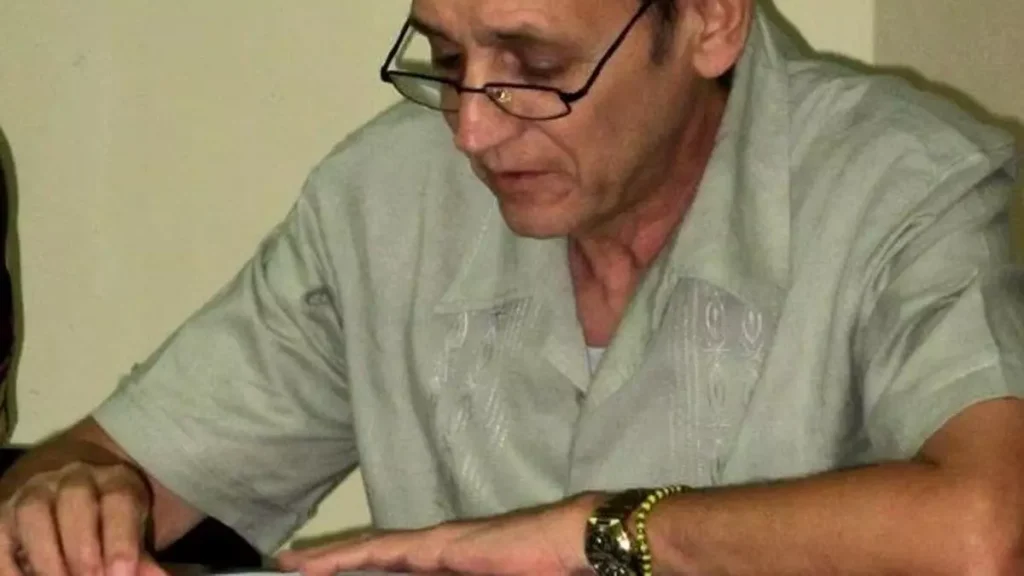
Carlos Antonio Lloga Domínguez, his wife, and his son are in federal custody awaiting deportation, according to the State Department on Wednesday. Washington accuses Lloga Domínguez of having worked for more than a decade as a “foreign subversive” for ICAP and, after settling in the United States, of maintaining ties with the “transnational communist subversion network” linked to that institution.
The statement does not explain what specific activities the Cuban allegedly carried out in the United States, nor were criminal charges filed against him. For now, the matter is an immigration proceeding rather than a judicial case involving espionage or acting as an agent of a foreign government.
“The United States will never be a refuge for thugs of the Cuban communist regime who spread propaganda, carry out foreign influence operations, or seek to sow revolution against American civilization,” the State Department said in its statement.
The State Department also noted that the current president of ICAP, Fernando González Llort, was a member of the Wasp Network, the Cuban spy ring dismantled by federal authorities in Florida in 1998
The U.S. administration maintains that ICAP functions as the “central node” of an intelligence and influence network that claims to maintain relations with more than 2,000 organizations in about 150 countries. On June 4, the institution was added to the list of entities blocked by the Office of Foreign Assets Control, alongside the Committees for the Defense of the Revolution, the Ministry of the Revolutionary Armed Forces, and Minera La Victoria.
The State Department also noted that Fernando González Llort, ICAP’s current president, was part of the Wasp Network, the group of Cuban agents dismantled by federal authorities in Florida in 1998. González was sentenced to 19 years in prison and returned to Cuba in February 2014 after serving approximately 15 years.
Lloga Domínguez is commonly presented as a researcher and specialist in popular culture and religious traditions, having been linked for years to Casa del Caribe and the University of Oriente in Santiago de Cuba. He is the son of actor, writer, screenwriter, and radio director Antonio Lloga Simón, a well-known figure in Santiago’s cultural life. Holding a doctorate in Cultural Sciences since 2014, Lloga conducted research on popular religiosity, espiritismo de cordón (a Cuban spiritualist practice), heritage, Caribbean identity, and traditional culture.
At Casa del Caribe, he also served as an organizer of academic events associated with the Caribbean Festival, or Fiesta del Fuego. He even chaired the institution’s Technical Advisory Council and coordinated congresses and panels on spirituality, death, funerary heritage, and Afro-Cuban culture. Washington claims he worked for ICAP for more than a decade and maintained ties with its influence network in the United States.
The detention adds to other recent measures against Cubans linked to the Island’s power structure. In late May, U.S. authorities detained Alina Rosales Aguirreurreta, daughter of General Ulises Rosales del Toro, a former vice president of the Council of Ministers.
Republican Governor Ron DeSantis said the measure seeks to stop foreign governments from “infiltrating” public institutions
The case of Lloga Domínguez coincides with the entry into force on July 1 of the Foreign Interference Restriction and Enforcement Act, known by its acronym FIRE. The Florida legislation allows penalties against companies and officials connected to Cuba and other countries the state considers hostile, including Venezuela, China, Russia, Iran, Syria, and North Korea.
The law creates criminal penalties for companies based in Florida that do business with Cuba in violation of federal laws and allows municipal governments to revoke their business licenses. It also punishes the filing of false statements regarding illegal commercial operations linked to the Island.
When signing the legislation last May, Governor Ron DeSantis said the measure is intended to curb foreign governments seeking to “infiltrate” Florida’s public institutions, infrastructure, and economy.
Translated by Regina Anavy
______________________
COLLABORATE WITH OUR WORK: The 14ymedio team is committed to practicing serious journalism that reflects Cuba’s reality in all its depth. Thank you for joining us on this long journey. We invite you to continue supporting us by becoming a member of 14ymedio now. Together we can continue transforming journalism in Cuba.