
Honey, a Profitable Profession for Cuban Beekeepers When the State Deigns to Pay Them

The honey producer’s loyalty has to be absolute: he can’t sell in the informal market, nor keep too much honey for his own use. (14ymedio)

14ymedio bigger14ymedio, Yankiel Gutiérrez Faife, Camajuaní, 31 Although bee honey is one of the things that has “disappeared” from the Cuban family pantry, the State knows how to sell it abroad, and at very high prices. The purity and quality of the product have earned an international reputation for the Island’s honey, and it’s not uncommon to find it in the supermarkets of Europe and Latin America, with all kinds of packaging that advertises its origin as a sign of superiority.

Beekeeping escapes the usual rules of trade in Cuba. The State pays the farmer for honey at a better price than the informal market. The loyalty of the producer, of course, has to be absolute: he can’t sell in the informal market, nor keep too much honey for his own use. Otherwise, the inspectors can confiscate the equipment, retain the honey and make him pay an exorbitant fine.

“This profession does not take as much effort as dedicating oneself to agriculture,” says Lele, a 56-year-old farmer living in Rosalía, a rural town in Camajuaní, in the province of Villa Clara. “But not everyone has the courage to face the bee stings. To get an assistant, I have to call on several houses looking for someone who wants to work,” he complains.

Lele started as a beekeeper to collaborate with a friend of his. Over time, he acquired nine hives and had an estimated annual production of six to seven tons of honey. Everything must be delivered to the state-owned Cuban Beekeeping Company (Apicuba), which then moves it to the processing plant, evaluates the quality and determines the price.

Almost all beekeepers turn to the State instead of looking for private buyers. “It’s more profitable,” Lele explains. “The producer earns from 35,000 to 40,000 pesos per ton, and, if in Apicuba they consider the honey to be exportable, they pay him an additional 600 MLC (freely convertible currency).”

The “trick” of this added payment is that the producer must pay a “counter-value” for each MLC received. That is, in order to receive the currency you have to deduct from the 35,000 pesos of your payment the equivalent of 600 MLC, but at a favorable exchange rate of 24 pesos, which means earning 14,400 pesos. In sum, for each ton of exportable honey you can get 20,600 pesos and 600 MLC, which Apicuba will transfer to your ’credit’ card. continue reading

However, payment is frequently delayed and depends on the distribution of the lots that the State allocates for export. The farmer can deliver a certain amount of honey to Apicuba, but until it is sent abroad he will not receive the full payment.

It’s been more than a month since I paid the MLC’s counter-value to Apicuba for the honey I delivered,” complains Yaniel, a producer from Camagüey. “I know that they already sent the export shipment in September, and my money has not yet appeared on the card. The answer they give me is that it is the bank’s fault. I’m still waiting.”

Many beekeepers also complain about the bureaucracy that they must conquer before receiving their money — sometimes five or six months late. Apicuba requires having the identity card photocopied on both sides, a document that accredits the producer as part of a cooperative, and another copy of the contract signed with the State for the current year.

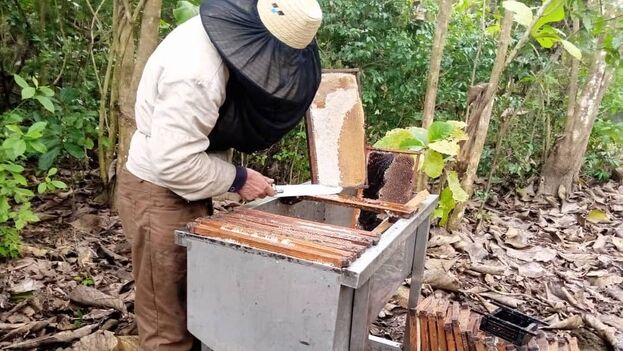
The farmer goes to work in a cart towed by oxen. He carries his instruments: a centrifuge, smoker, bellows and a tank to collect the honey. Protected by a beekeeping suit, hat and veil, Lele carefully removes the frames from each hive — the squares that the bees fill with honey. He gently removes the bees, takes off the seal (wax layer) and extracts the honey with the help of the centrifuge.

After straining the mixture, he fills the tank and returns the honeycomb to the box. This procedure is repeated with each of the hives. The purity of the final result is remarkable.

From that collection, Apicuba takes care of the rest. The Cuban State, which pays 600 MLC per ton of honey to the producer, sells it on average at more than 4,000 euros per ton to the most avid buyers: Germans, Dutch and Spanish. The price varies depending on whether it is bulk, packaged, monofloral, multifloral or pollen. Some publications have indicated that Cuban honey is sold for 20,000 euros a ton.

However, data from the Ministry of Agriculture of Spain for the 2021-2022 campaign indicate that bulk honey reached 4,620 euros per ton, while the multifloral variant was sold for a maximum of 3,620 euros. The packaged pollen was sold for 12,000 euros. In any case, the disproportion between the profit of the Cuban state and the remuneration of the farmer is enormous.

In the informal market, the sale does not reach the same level. There are few quantities available in MLC, and the one on the street has a presentation that leaves a lot to be desired, not to mention that the honey itself is of unreliable origin.

There are other advantages for the producer, says Lele. The broken and old frames of the hives can be re-used: they are placed in a boiler on the fire, and the wax that melts, once cleaned, is also bought by Apicuba to renew the boxes.

Lele’s bees collect wildflower pollen. Their hives are not sprayed with any chemical, and, when some strange body — such as cockroaches and other intruder insects — is inserted into the boxes, he himself extracts it.

Accepting the conditions of Apicuba is the only way to benefit from the sale of honey abroad, a business whose numbers are increasing, as the prestige of Cuban production grows, says Lele. “We can only keep what’s destined for our own consumption,” he says, “otherwise they can take away our means and our hives.”

But Apicuba, Lele explains, does not offer farmers the necessary resources. He has been using his own for five years, and there is nowhere to find protective equipment, tanks and even a simple mesh to make the veil, indispensable to protect the face from bites.

Leonardo, another beekeeper from Rosalía, is concerned about the incidence of tropical diseases in his bees. Their hives have been decimated by the destructive rogue mite, a species that lives parasitically from bees and exterminates them.

Purity, the first quality criterion for exports, cannot be compromised by drugs. “It does not suit the State,” says Leonardo, “because this would affect the price of Cuban honey in the world market, which greatly values everything that is processed without chemical substances.”

The mite sucks the hemolymph of both larvae and adult bees. It drains their strength and make them custodian of a virus. Then the animal’s body begins to be affected, the wings atrophy and they can’t work. “Then the workers come and end up expelling the sick bee,” Leonardo explains. “They think that one that doesn’t work doesn’t eat, and doesn’t have the right to live either.”

“When this disease enters the hive,” he says, “the only thing that can be done is to observe how the bees are dying little by little. The State is not going to sell us the medicines to cure them. The last thing they want is for us to alter the organic state of the honey.”

Translated by Regina Anavy

____________

COLLABORATE WITH OUR WORKThe 14ymedio team is committed to practicing serious journalism that reflects Cuba’s reality in all its depth. Thank you for joining us on this long journey. We invite you to continue supporting us by becoming a member of 14ymedio now. Together we can continue transforming journalism in Cuba.
With a Rate of 7.5 Deaths Per Thousand, Cuba Has Lost its Leadership in Infant Mortality

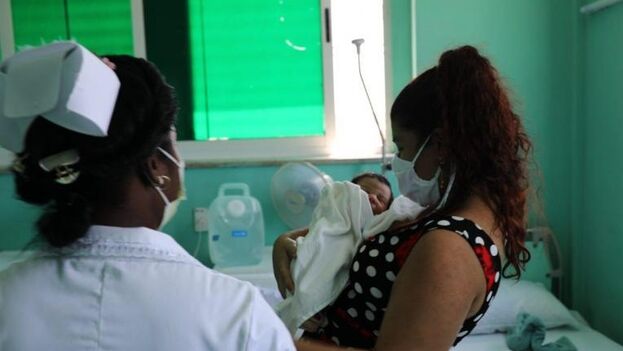
The authorities attributed the bad maternal mortality data to COVID-19 last year and the recovery could be attributed to the same. (Unicef Cuba)

14ymedio bigger14ymedio, Madrid, 2 January 2022 –The infant mortality rate fails to recover in Cuba and barely fell by a tenth compared to last year, when some of the worst data in recent decades were recorded, with 7.6 deaths per thousand live births. This year, the rate remains at 7.5, more than two and a half points above the 2020 figure, which was 4.9.

Although the Island continues to have positive indicators in the regional context, it is increasingly moving away from the positions of the rich countries with which it liked to compare itself, being at a good distance from the rates of 2 or 3 per thousand in most of Europe.

The data have been released on Monday and leave some Cuban provinces with disheartening numbers. The worst was Mayabeque with 12.2, followed by Santiago de Cuba (9.9), Guantánamo (9.7), Havana (9.5) and Camagüey (9.1). In the middle area there are Villa Clara (7.3), Las Tunas (7), Granma (6.6) and Ciego de Ávila (6.2). The best data are in Cienfuegos (4.3), Holguín (4,5), Sancti Spíritus (4.7), Matanzas (5), Artemisa (5.4) and Pinar del Río (5.9). Isla de la Juventud, the province with the lowest number of births (in 2021 there were 789, compared to 3,542 in Ciego de Ávila, the next with the lowest fertility), is 2.6.

The improvement can be seen, on the other hand, in the maternal mortality data, which last year were devastating. In 2021, 175 pregnant women died, leaving the rate at an alarming 176.6 per 100,000 live births. The increase was alarming compared to the previous year, when 40 died, leaving a percentage increase of 34.5%. This year, on the other hand, it has dropped to 39, a total of 40.9 per 100,000 live births.

According to data from the Ministry of Public Health, the incidence of COVID-19 has also decreased significantly since vaccination with Abdala began on July 29, 2021. The last death of a pregnant woman with COVID occurred in October 2021, and 9,874 infections were detected. The authorities attributed the bad maternal mortality data to COVID-19 last year, and the recovery could be attributed to the same. continue reading

There are few official responses, on the other hand, to analyzing the infant mortality data, which barely moves, although from the outside it has been stated on several occasions that the neglect of the Maternal and Childcare Programs (Pami) is the most plausible cause. The project has less funds, like almost everything on the Island, and the professionals are fewer and fewer each day, since the abandonment of the profession is massive, in some cases to leave the country and in others to dedicate oneself to another more lucrative sector, less overloaded with work and demands.

Noemí Causa Palma, national head of Pami, said, according to the official report, that “measures have been implemented for the improvement of the doctor and family nursing program and the elaboration of the development plan for the specialties of Obstetrics and Gynecology, Neonatology, Pediatrics, Pediatric Intensive Care, Pediatric Surgery and Comprehensive General Medicine,” although it doesn’t seem that these efforts to improve the situation have contributed much.

Another indicator that barely moves is that of adolescent pregnancies, which went from 18% in 2021 to 17.8% in 2022, a small shift if one takes into account that campaigns have been carried out to put an end to this problem.

The only data that give the Ministry of Public Health a respite are those of infant mortality due to congenital defects. The rate is 0.96 per thousand live births and goes from being the second to the fourth cause of deaths in children under one year of age. Ultrasound screenings are high, with responses exceeding 90%, reaching 99% in second and third trimester ultrasounds.

After all these data, there is another one that continues to highlight the demographic debacle of the Island. In 2022, 95,402 Cubans were born, 3,694 fewer than the previous year. The decline is a logical consequence of the massive Cuban emigration, which occurs especially among young people, and the aging of the population remains unstoppable. Although the census carried out in the year that has just ended has not yet been revealed, catastrophic numbers are expected.

Finally, the note reviews the assisted reproduction program. In 2022, 15,679 infertile couples were evaluated, little more than last year; however only 5,912 pregnancies were obtained, compared to 6,199 the previous year. “This decrease is due to the fact that high-tech pregnancies were not achieved in territorial centers, a result that was achieved in 2021 with the development of 316.” On the other hand, in the provincial services the data were better and went from 1,819 pregnancies the previous year to 2,113 in 2022.

“The instability of some medicines influenced the decrease in pregnancies conceived since municipal consultations, where 3,799 were conceived against 3,998 in 2021,” the note adds.

Translated by Regina Anavy

____________

COLLABORATE WITH OUR WORKThe 14ymedio team is committed to practicing serious journalism that reflects Cuba’s reality in all its depth. Thank you for joining us on this long journey. We invite you to continue supporting us by becoming a member of 14ymedio now. Together we can continue transforming journalism in Cuba.
Eight Cuban Players Who Play Abroad Have Agreed to Go With Cuba to the Classic

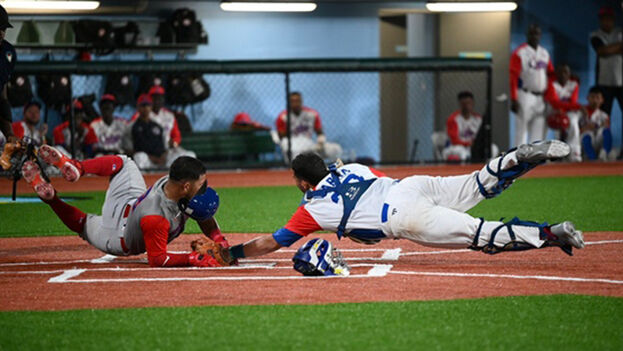
The Cuban Baseball Federation has not yet announced the group of 50 players who will leave for the World Classic. (JIT)

14ymedio bigger14ymedio, Havana, 30 December 2022 — Despite the fact that Cuba received permission from the United States to take MLB players to the World Classic, the list of baseball players from the Island team who will be at the event to be held from March 8 to 21, 2023 in the cities of Taichung (Taiwan), Tokyo, Phoenix and Miami has still not been disclosed.

So far the Cuban Baseball Federation (FCB) has only announced on its social networks the acceptance of the following players: Yoan Moncada (White Sox), Yoenis Céspedes (Cibaeñas Eagles), Onelkis García (Mexicali Eagles), Roénis Elias (Cibaeñas Eagles), Andy Ibáñez  (Tigers), Yoan López (Mets) and Elian Leyva (Naranjeros).

Based on the calendar of group A in which Cuba is located, which will compete with China, the Netherlands, Italy and Panama, the Pelota Cubana [Cuban Baseball] website considers that the Island’s team will not have the “treat” of passing the first round in the World Classic, but “it can.” It also highlights the additions of the pinareño outfielder Andy Pagés and the habanero Yasmany Tomás.

Tomás, who is a free agent, had an outstanding performance in the Mexican Pacific League. The baseball player said he is waiting for the invitation to be confirmed. With Pagés and Tomás “at least all positions will be filled with excellent players,” published Pelota Cubana.

Moncada, at 27, has played the last seven seasons with Boston and the White Sox and has 82 home runs and 299 RBIs. To this baseball player is added the experience of veteran Yoenis Céspedes with eight seasons with Oakland and the Mets, and a score of 165 home runs. The Power, as they call him, won the Homerun Derby in 2013 and 2014, being the first player born in Cuba to achieve it. continue reading

Cuba’s other hope in the World Classic is Onelkis García, who in the Major Leagues played with the Dodgers and Kansas, in addition to a stretch with the league of Japan. Also included is the left-handed pitcher Roénis Elias, who left the Island in 2010.

According to the FCB, Cuba will have as its backbone the team that won the Elite League, a tournament that just last December 24 defined the semifinals with Agricultores, Centrales, Portuarios and Tabacaleros.

Among hopes, Cuba’s team is formed for the World Classic, while the Island continues to receive news of ball players’ departures. Jorge Álvarez, La Pólvora, the Gunshot, is already in the United States. Last June he was nominated for the SN61 Golden Glove award for his arm power. In April he scored eight triples with Camagüey.

Also in the United States is the Camagüeyan receiver Julio César Nogueras. This athlete made “the well-worn crossing from Nicaragua,” according to the La Comarca de Los Toros Facebook page. In 2023 he will try to focus on his career within the world of baseball.

Before these departures was that of former pitcher Ifreidi Coss, who is in Mexico waiting to be able to reach the United States. On the Island he worked as a coach and debuted in the National Series at the age of 18. In 120 innings he had 87 strikeouts. “If the right-handed Coss didn’t get the Rookie of the Year it was because of the record season that Kendrys Morales had,” published Baseball FR!

Injuries after 2007 were the main obstacle for Coss to maintain his numbers, so after 2010 he decided to end his sports career.

“I injured my arm and then other things happened. I didn’t have enough support to rehabilitate myself well. At first Uberto Beltrán took care of me and I did well, but the required follow-up to that injury was not given, perhaps due to professional jealousy,” he once told the Escambray newspaper.

Translated by Regina Anavy

____________

COLLABORATE WITH OUR WORKThe 14ymedio team is committed to practicing serious journalism that reflects Cuba’s reality in all its depth. Thank you for joining us on this long journey. We invite you to continue supporting us by becoming a member of 14ymedio now. Together we can continue transforming journalism in Cuba.
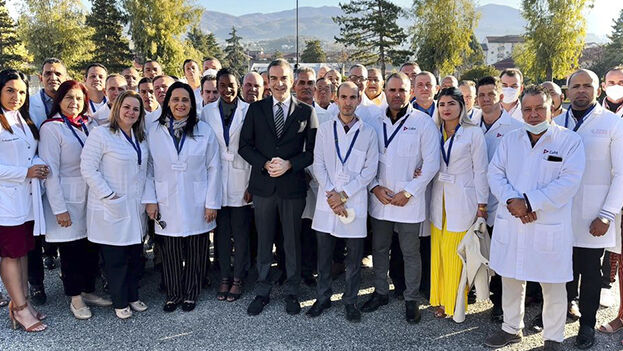
Fifty of the 500 Cuban Doctors Hired in August Arrive in Italy

Arrival of the first group of Cuban doctors in Calabria, Italy. (Facebook)

14ymedio bigger14ymedio, Havana, 29 December 2022 — A first group of 50 Cuban doctors hired by Calabria last August has arrived at their destination three months late. In an announcement through his social networks, the president of that Italian region, Roberto Occhiuto, took the opportunity to defend the controversial decision to import health workers from the Island.

“They tried to stop us, with controversies and bureaucratic setbacks, but we did it,” wrote the alderman, who belongs to the right-wing Forza Italia party, founded by Silvio Berlusconi. Doctors will begin a course to learn Italian at the University of Calabria on January 2, and, “as soon as they are ready,” the official added, they will move to the hospitals.

Last August, Occhiuto signed a healthcare agreement with Cuba’s ambassador to Italy, Mirtha Granda Averhoff, to hire 497 Cuban professionals, who were expected to start arriving from September. The decision is based, as justified by the alderman, on the fact that the European country is facing a shortage of health personnel, particularly in the region of Calabria.

In his latest statement, he insisted that the doctors “will not steal any work from Italian doctors” but “will help us keep the wards and hospitals open.” “We are still looking for Italian doctors through competitions, but now the danger was that we had to close the health facilities due to lack of staff,” he added. continue reading

The local Italian press specified that Cuban professionals will stay in a military facility where, for three weeks, they will perfect their  Italian. Then 16 doctors will be distributed in Locri, 16 in Polistena, 10 in Gioia Tauro and 10 in Melito Posto Salvo. A total of 52 professionals, two more than the official figure.

Calabria will pay 4,700 euros for each doctor, of which 3,500 will be delivered to the Cuban regime and 1,200 euros will go to maintenance, accommodation, travel and training expenses. According to calculations by the Italian press, the annual cost for hiring Cuban health workers will be 28 million euros per year.

Medical brigades are one of the main currency inflows for the Government of Havana and have been denounced as forced labor by international organizations such as Human Rights Watch and Prisoners Defenders. The United States also has Cuba on the list of countries that fail to comply with international human rights standards, precisely because of these missions.

In addition to Italy, medical brigades have arrived in Mexico and Qatar, and Cuba has sent health workers to dozens of countries such as Nicaragua, Venezuela and Angola. Within the framework of the World Cup, Prisoners Defenders accused these countries of hiring professionals in conditions of slavery since doctors are threatened with the Cuban Criminal Code that, if they do not return to the Island or leave work, they can be sentenced to eight years in prison.

Also, health workers complain that they are not allowed to participate in public events that don’t have the approval of the brigade chiefs, and that they are urged to participate in campaigns to support the Government on social networks.

The NGO, based in Madrid, noted that the European Parliament condemned the Cuban brigades in a resolution of September 2021, stating that the “Cuban State continues to systematically violate the labor and human rights of its health personnel sent to work abroad in medical missions, which makes the practice comparable to a contemporary form of slavery according to the United Nations.”

Cuba sent doctors to Italy for the first time in March 2020, at the most critical moment of the COVID-19 pandemic for the European nation. These professionals performed in the field hospitals installed in Crema and Turin.

Translated by Regina Anavy

____________

COLLABORATE WITH OUR WORKThe 14ymedio team is committed to practicing serious journalism that reflects Cuba’s reality in all its depth. Thank you for joining us on this long journey. We invite you to continue supporting us by becoming a member of 14ymedio now. Together we can continue transforming journalism in Cuba.
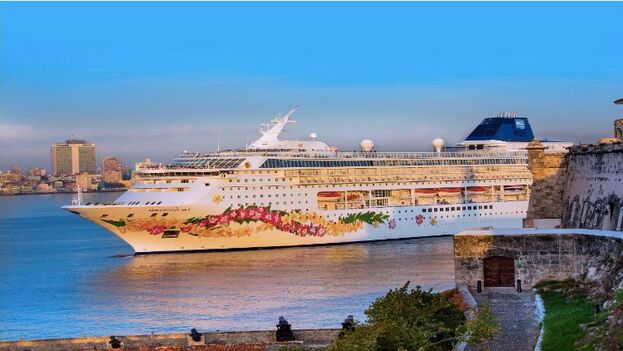
A U.S. Court Orders Cruise Ships to Pay 400 Million Dollars for Docking in Cuba

Havana Docks, the plaintiff company registered in the state of Delaware, from which Fidel Castro expropriated the port in 1960, filed the case in the U.S. courts in 2019. (Norwegian Cruise Line)

14ymedio bigger14ymedio, Havana, 31 December 2022 — On Friday, U.S. federal judge Beth Bloom sentenced the cruise companies Carnival, Royal Caribbean, Norwegian Cruise Line and MSC Cruises to pay more than 400 million dollars for docking at the Havana Port Cruise Terminal — also known as the Sierra Maestra Terminal — thereby violating Title III of the Helms-Burton Act of 1996 and activated by Donald Trump in 2019.

Havana Docks, the plaintiff company registered in the state of Delaware, from which Fidel Castro expropriated the port facilities in 1960, filed the case in the U.S. courts in 2019. Bloom herself determined, last March, that the accused committed the crime of usufruct and violated U.S. restrictions against Cuba “intentionally and deliberately.”

The ruling, signed by Bloom, states that considering the damage caused to Havana Docks and the complicity demonstrated by the companies, “the payment of just over 100 million dollars for each defendant is certainly reasonable.” In addition, Bloom said, the payment of a lower figure would not be in accordance with the seriousness of the offense by the companies, which have the right to appeal the sentence.

The judicial process against these four companies sets a precedent for future legal cases related to the properties seized by Fidel Castro. Also, Bloom hopes, it will serve as a warning for companies that continue to do business illegally with the Havana regime, which never compensated the companies whose assets were confiscated in the 1960s. continue reading

The Helms-Burton Act allows U.S. citizens to sue for monetary compensation for the usufruct of properties expropriated from their families and that have been used especially by shipping and hotel companies in third countries.

Havana Docks alleges that with these activities that occurred between 2015 and 2019, the four companies obtained up to 1.1 billion dollars in revenue and paid 138 million dollars to Cuban government entities.

The firms argued that their cruises to Cuba were part of the guidelines established by the Treasury Department within the “thaw” with Cuba established by the Administration of President Barack Obama (2009-2017), but the magistrate rejected those arguments, as reflected in the sentence.

She recalled that there were 12 categories, which did not pertain to tourism, nor could they undermine the U.S.embargo against Cuba.

Around 40 lawsuits against companies, especially those involved in tourism, many of them hotel companies, have been filed in courts in the U.S. since Title III was activated in 2019. Trump activated the rule that has allowed these legal processes and that his predecessors, Obama, George W. Bush and Bill Clinton never pursued because of the legal and commercial implications with third countries. Within the framework of a kind of thaw driven this year by the Joe Biden Administration, the conviction of the four cruise companies shows that the economic restrictions derived from the Helms-Burton Act are in full operation.

Translated by Regina Anavy

____________

COLLABORATE WITH OUR WORKThe 14ymedio team is committed to practicing serious journalism that reflects Cuba’s reality in all its depth. Thank you for joining us on this long journey. We invite you to continue supporting us by becoming a member of 14ymedio now. Together we can continue transforming journalism in Cuba.
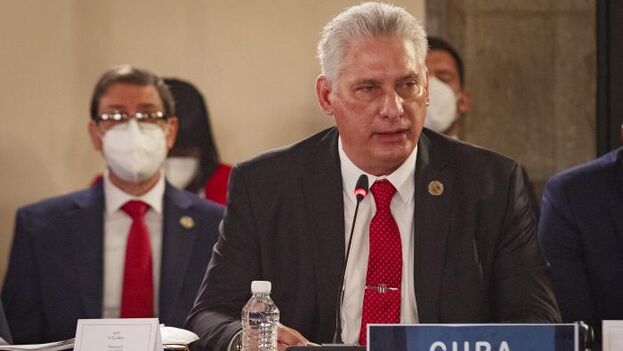
Diaz-Canel is Committed to a Marxist, Critical and Anti-Capitalist Approach, that is, Revolutionary, to Solve Cuba’s Problems

At an earlier event, in a spacious hall full of presidents, Díaz-Canel tried to project the veneer of a democratic ruler . (Granma)

14ymedio bigger14ymedio, Elías Amor Bravo, Economist, 30 December 2022 — Yes. You heard it, and it couldn’t be worse. Díaz-Canel’s last speech to the Council of Ministers has been a return to communist, Marxist and Leninist orthodoxy that has surprised everyone. Obviously, it doesn’t benefit him. A leader must be able to understand the problems of society and offer viable solutions. And Cubans are not for these ideas.

Entertaining yourself with metaphors of what could have been and was not takes it further away from the people and makes it a marketing product at the service of the state press. Only in this way is it possible to understand the phrase of the speech highlighted by the State newspaper Granma that says, verbatim, “the really important thing is to join forces in the right direction, which is none other than the one that allows us to reverse the difficult economic situation that the country is going through, even in conditions of an intensified blockade.” The return of collectivism? What does “join forces” mean, if not that?

And then he adds that all this should serve to “strengthen the certainty around the revolution, to continue consolidating the idea that the construction of socialism is the only viable alternative for the prosperity and development of our nation.” Has Díaz-Canel forgotten that we live in 2022 and not in 1961? Has he not realized that he is not Fidel Castro? What are we playing at 63 years after accumulated failures? Honestly, with this type of speech it is not surprising that international investors flee Cuba and that in 2022, more than 225,000 Cubans have left the country for the United States to achieve a better future.

The passion and desire that Díaz-Canel wants Cubans to put into work, those who have lost all hope to live in a better and prosperous country, sound false, empty and repetitive. Cuban society is bored and tired. People turn their backs on their leaders when their priorities are not considered. They distrust him and know that the chosen path will not take the Cuban economy out of the vicious circle in which it finds itself. continue reading

There is no point in incorporating into the regime’s discourse that 2022 has been a hard year, or that the situation has been complex since the second half of 2019. That complexity, which is much more serious than Díaz-Canel says, has to do with tasks of his sole responsibility: reduction of Venezuela’s oil supplies, application of the Ordering Task* and productive paralysis in the face of galloping inflation. Do you want more?

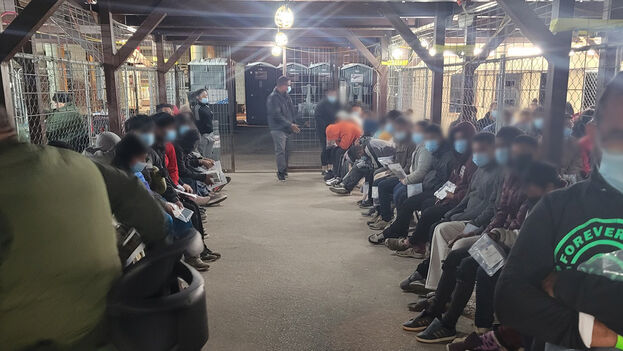
The United States Releases Cubans Who Were Going to be Deported and Whose Identities Were Leaked by Mistake

Up to 17 undocumented Cubans who remained detained at the Broward Transition Center in Pompano Beach began to be released on Thursday. (@USBPChiefEPT)

14ymedio biggerEFE (via 14ymedio), Miami, 30 December 2022 –The US immigration authorities released on Thursday a group of Cuban asylum seekers who were waiting to be deported and who were on a list with confidential data of more than 6,000 immigrants that was accidentally leaked on the Internet.

According to the Miami Herald, a group of up to 17 Cuban undocumented immigrants who remained detained at the Broward Transition Center in Pompano Beach (Florida) began to be released this Thursday and were received by their relatives.

“I am going to celebrate my freedom, something that we have, for a long time, been hoping for,” said the young Andy García, 26, one of those who were released this Thursday and who, like his compatriots, surrendered to the US immigration authorities in October after crossing the border with Mexico.

The Cubans had not been able to prove before an immigration judge that they were politically persecuted and that they feared for their lives if they were returned to the Island, a statement that in the immigration courts is known as “credible fear,” so they were waiting to be deported.

However, on November 28, the U.S. Immigration and Customs Enforcement Service (ICE) mistakenly disseminated on the Internet a document with the identities, ages and nationality, among other data, of 6,252 immigrants in their custody, who claimed to be victims of torture and persecution in their countries of origin. continue reading

At the beginning of December, government officials from the Department of National Security (DHS) told the Cuban government in a phone call that it would delay deportations to the Island due to the leak, indirectly confirming to Havana that potential Cuban deportees were fleeing persecution or torture.

The relatives of the Cubans, who in recent days had gathered outside the immigration detention center with posters calling for the release of their loved ones, received the first report about the release on Tuesday night, according to the Miami Herald.

In recent days, and after the leak, Florida Congresswoman María Elvira Salazar urged the Secretary of National Security, Alejandro Mayorkas, to stop the deportation of 46 Cubans who were asylum seekers.

“The safety and well-being of refugees fleeing the (Cuban) regime must be the guiding principle of our immigration policy on Cuba,” Salazar said in her letter.

Salazar described the leak as “dangerous for life, and unacceptable,” and urged Mayorkas to take “the necessary measures to protect these people and reconsider their asylum applications,” since the United States had no way to guarantee their safety if they were deported to the Island.

The serious situation in Cuba was addressed on Thursday by the Inter-American Commission on Human Rights (IACHR) in an assessment that the Island, Venezuela and Nicaragua close 2022 with almost 1,500 people imprisoned for political reasons.

The IACHR described the governments of these three countries as “authoritarian” in a statement and accused them of manipulating the judiciary to prosecute and imprison people for political reasons.

“The independence and autonomy of the judiciary is an essential element for the existence of the rule of law,” claimed the commission, an autonomous body of the Organization of American States (OAS), based in Washington.

In total in all three countries, the commission reported 1,467 arrests for political reasons, including civilians and military. Cuba is the country with the most prisoners of this type, with 1,034 people detained as of November 2022.

This is followed by Venezuela, with 247 political prisoners in October of this year and Nicaragua, with a total of 195 detainees.

Persons deprived of liberty under these governments, in addition, are treated differently from the rest of the prison population, the IACHR stressed, “which has caused a serious deterioration in health” in several of them.

There is little official information about the situation of the detainees, since they are isolated and find it difficult to maintain regular contact with their families. In some cases they are subjected to torture and cruel treatment, the IACHR denounced.

The women arrested also face gender-based violence, as well as “bad treatment as a method of punishment, repression and humiliation,” the commission stressed.

At the beginning of December, the President of the United States, Joe Biden, reiterated his request to the Cuban government to release the “political prisoners” arrested after the July 2021 protests on the Island, who have received sentences of up to 30 years in prison.

Translated by Regina Anavy

____________

COLLABORATE WITH OUR WORKThe 14ymedio team is committed to practicing serious journalism that reflects Cuba’s reality in all its depth. Thank you for joining us on this long journey. We invite you to continue supporting us by becoming a member of 14ymedio now. Together we can continue transforming journalism in Cuba.
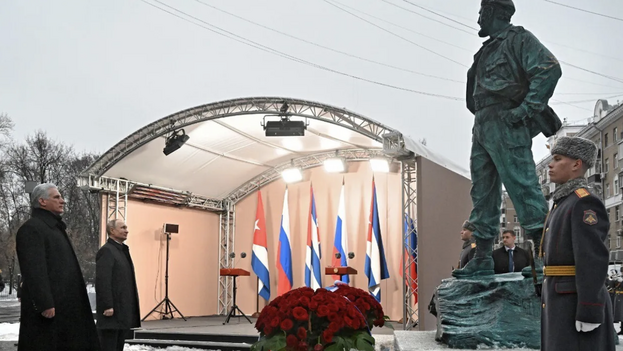
Diaz-Canel and Putin Talk About Energy and Industrial Collaboration

Miguel Díaz-Canel and his Russian counterpart, Vladimir Putin, in front of the statue of Fidel Castro inaugurated in Moscow. (EFE/EPA/Sergei Savostyanov)

14ymedio biggerEFE (via 14ymedio), Havana/Moscow, 29 December 2022 –The presidents of Cuba, Miguel Díaz-Canel, and Russia, Vladimir Putin, spoke on Wednesday about bilateral collaboration in the areas of energy and industry, Cuban official media reported.

During the dialogue — by telephone — Putin and Díaz-Canel expressed the intention to continue strengthening “in an integral way the Russian-Cuban strategic partnership,” said a statement from the Russian Government in Moscow, quoted by the state agency of the Isla Prensa Latina.

As a result of the conversation, the two presidents “agreed to intensify contacts at various levels,” the Kremlin added. “Special attention was paid to mutually beneficial projects in energy, industry and other sectors,” the official note states.

In addition to expressing his willingness to continue strengthening bilateral strategic cooperation, Putin congratulated Díaz-Canel in advance on the “Day of Liberation in Cuba,” on January 1.

The Cuban president also reported the exchange with the Russian ruler on his Twitter profile. continue reading

“I had a fraternal telephone exchange with President Vladimir Putin. We reviewed the excellent results of our recent visit to Russia and ratified the common will to deepen political dialogue and economic, commercial, financial and cooperation ties,” Díaz-Canel said.

Both statesmen confirmed their willingness to implement the agreements reached during Díaz-Canel’s visit to the Russian capital in November.

During his trip to Moscow, seeking help to overcome the energy crisis in which the Island is submerged due to the continuous blackouts, the Cuban president stressed that political relations “are excellent.”

“Cuba is willing to respect and comply with its financial obligations to Russia as soon as the economic situation is somewhat alleviated and that is possible,” he promised, referring to the 2.3 billion dollars in credits that the Island received between 2006 and 2019.

He also said that there are “wide agreements” on the main issues of the international agenda and that the “full development” of economic-commercial ties between the two countries remains pending.

Putin, for his part, attacked the sanctions and embargoes imposed on his country and the Island by the “Yankee empire,” and paid tribute to the late Fidel Castro with a statue in the heart of Moscow.

Translated by Regina Anavy

____________

COLLABORATE WITH OUR WORKThe 14ymedio team is committed to practicing serious journalism that reflects Cuba’s reality in all its depth. Thank you for joining us on this long journey. We invite you to continue supporting us by becoming a member of 14ymedio now. Together we can continue transforming journalism in Cuba.
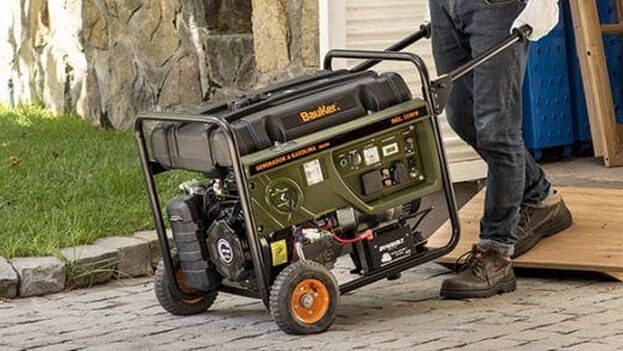
The Cuban Government Extends the Measures to Import Electric Generators for Three Months

Electric generators need fuel, which is also currently scarce on the Island. (Facebook)

14ymedio bigger14ymedio, Madrid, 28 December 2022 — The Cuban authorities extended the importation of electric generators of more than 900 watts for three months, a measure approved in August to try to alleviate the energy crisis, which was at its worst in the summer. The measure expires on December 31.

The new resolution of the Ministry of Finance and Prices extends the measure until March 31, “to provide that some of the electric generators purchased by the population will be dispatched abroad before or during this deadline, will be in transit and will arrive later in the country.”

The rule states that this grants “special treatment” to this high-production equipment.

In July, a series of measures were approved to make the import of some items to Cuba more flexible as long as they were not for commercial purposes. These include products from cell phones and computers to dozens of appliances, car parts, furniture, toys and sports items, among others.

The list also included electric generators of up to 900 watts for 200 dollars, from 900 to 1,500 watts for 500 dollars, and greater than 1,500 watts for 950. The General Customs of the Republic then established the limits in quantity and fees, including 30% of the value for items of more than 200 dollars. continue reading

The resolution entered into force on August 15, but before that the Cuban authorities had already realized the error made with the electric generators, undervalued in the document. That is why they rectified the values in another rule dated August 11 that, although it was not reported until it was published in the Official Gazette of September 5, should have been applied from the beginning of operations.

“When assessing the effects that still persist in the residential sector, as a result of the energy deficit caused by breakdowns in the national electro-energy system, it is necessary to authorize, on a temporary basis, the import of electric generators with a power greater than 900 watts, whose reference value in Customs exceeds the maximum value of two hundred (200) US dollars allowed to import through air, maritime, postal and courier without a commercial nature,” said the new text, now extended.

At that time, the price of most 900-watt electric generators that could be found online in both the United States and Panama, Cubans’ favorite markets, exceeded not just $200, but even $500. Although the winter season has reduced prices, it is not currently possible to adjust to the prices forecast by the July resolution.

The extension will allow the current imports to continue to arrive and the new ones to be arranged now, but it will be difficult to continue acquiring the equipment if the July rule is not further modified after March, unless the generators become cheaper.

The reactions to the extension in the official press faithfully reflect the concerns that this newspaper expressed in the summer regarding noise pollution: “The family of the lucky man sleeps, and the rest of the neighborhood is awake all night”; “I have not seen any document that expresses the damage that these plants are causing. If the noise is within the permissible limits, if it affects the health of the neighbors…”; and, above all, the shortage of gasoline.

As this newspaper pointed out, although many workers skip the formal limits in exchange for some financial consideration, it is common for gas stations to limit the sale of gasoline in containers due to shortages.

“What’s the point, if later they put a thousand obstacles in the way of getting fuel? It’s typical in our country; they make things difficult for the citizen,” laments one reader. Several call for the elimination of Customs limits and an end to the “internal blockade,” and although others note that all countries have regulations of this type, a commentator points out the Cuban exceptionalism. “Compadre, the Cuban situation is unique. They [referring to the government] don’t have the money to buy anything, they have an unpayable internal debt and they live on donations. Yes, it should be tax-free to make life a little more tolerable for Cubans,” he says.

Translated by Regina Anavy

____________

COLLABORATE WITH OUR WORKThe 14ymedio team is committed to practicing serious journalism that reflects Cuba’s reality in all its depth. Thank you for joining us on this long journey. We invite you to continue supporting us by becoming a member of 14ymedio now. Together we can continue transforming journalism in Cuba.
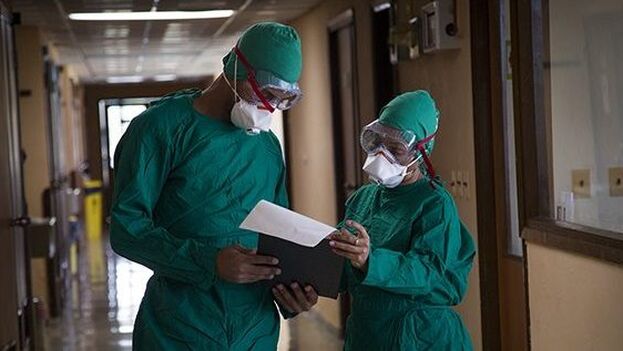
Cuba Reinforces Health Measures in the Face of the Increase in Positive Cases of Coronavirus

The highest levels of transmission during December occurred in the provinces of Havana, Matanzas, Guantánamo and Holguín. (Cubadebate)

14ymedio biggerEFE (via 14ymedio), Havana, 28 December 2022 — The increase in positive cases of COVID-19 in Cuba, with 138 patients reported last week — a figure that represents 43.8% more than the previous week — has led to a strengthening of prevention and surveillance measures, the Ministry of Public Health of the Island reported on Tuesday.

In the week of December 18 to 24, the average number of daily cases of COVID-19 increased from 3.7 to 19.1 compared to the month of November, according to data presented by the head of Public Health, José Ángel Portal, at a government meeting, reported by the Presidency’s online site.

The highest levels of transmission, during December, occurred in the provinces of Havana, Matanzas, Guantánamo and Holguín, territories where 62.4 percent of the cases diagnosed on the Island are concentrated, and the recorded infections were both local and imported.

Regarding the health measures that should be reinforced, the minister said that it is recommended to wear a mask on public transport and when visiting shopping centers, fairs, cinemas, theaters and attending activities in enclosed spaces.

He also mentioned the importance of immediately going to health services in the presence of respiratory symptoms, avoiding appearing in social spaces if contagion is suspected, and adopting distancing and personal protection measures at home. continue reading

The measures include perpetual hand washing and extreme vigilance in nursing homes, schools and other institutions that have a high concentration of people.

In addition, new booster doses of the anti-covid vaccines manufactured on the Island will be given to pregnant and lactating women, health and tourism workers, and to people over 70 years of age, as Portal explained during the government meeting. The minister pointed out that during this year, 207 deaths have been reported due to COVID-19, for a lethality rate of 0.14%, and he specified that in the last 18 consecutive weeks there have been no deaths due to COVID.

He also reported that although there is an increase in positive cases in the last two months, control of the disease is maintained in the country.

The daily report of the Ministry of Public Health confirmed on Tuesday 11 new cases of COVID-19 for a cumulative number of 1,111,898 positives since the first diagnoses were recorded in March 2020 in the country, and 8,530 deaths.

Cuba has developed its own anti-Covid immunogens — Abadala, Sovereign 02 and Sovereign Plus — with which it has vaccinated 10,003,526 of its 11.1 million inhabitants with the complete three-dose scheme. Also, more than 7 million Cubans have had booster doses, according to Health data. The coronavirus vaccination campaign also includes the pediatric population (from 2 to 18 years old). However, although the vaccines have been widely marketed in Europe, Africa and Latin America, none of the Cuban vaccines have been recognized by the World Health Organization.

Translated by Regina Anavy

____________

COLLABORATE WITH OUR WORKThe 14ymedio team is committed to practicing serious journalism that reflects Cuba’s reality in all its depth. Thank you for joining us on this long journey. We invite you to continue supporting us by becoming a member of 14ymedio now. Together we can continue transforming journalism in Cuba.
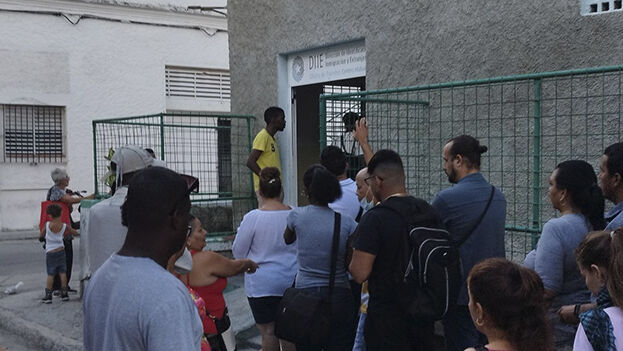
Authorization for Cuban Residents to Stay Abroad for More Than 24 months is Still in Force

Cubans line up outside a Directorate of Identification, Immigration and Aliens office to get their passports. (14ymedio)

14ymedio bigger14ymedio, Madrid, 29 December 2022 — The director of Consular Affairs and Cubans Living Abroad, Ernesto Soberón, reminded Cubans who have been abroad for more than 24 months that the measure adopted in October 2020 by which they do not lose their status as residents of the Island is still in force.

The exception to the current 2013 Immigration Law began in October 2020, during the COVID-19 pandemic, so that Cubans who had not been able to return to the Island due to border closures and the cancellation of flights did not see their status modified.

“On New Year’s Eve, it is reiterated to our nationals that the automatic and free extension of uninterrupted stay abroad remains in force beyond 24 months, without implying the loss of resident status in the national territory,” Soberón wrote on his Twitter account.

The extension of the measure, which has always been “until further notice,” has been maintained over time despite the fact that the international and Island landscape has changed as far as the pandemic is concerned. In September 2021, in his reminder of the validity of the exception, Soberón indicated:

“Given the persistence of the complex international epidemiological situation, the extension remains in force until further notice, automatic and at no cost, of uninterrupted stay abroad beyond 24 months, maintaining status as residents in the national territory.”

On this occasion, when the borders of most countries have already opened without many restrictions, there is apparently no reason to maintain the situation. The paralysis could be attributed to the possible change in the Cuban Immigration Law, which according to 14ymedio sources is being prepared for next year. continue reading

At the beginning of November, this newspaper published information from an anonymous source linked to the Land Registry which said that a commission is preparing changes to the rule to adapt to the scenario of massive departures that affects the Island and which has pushed notaries and property registrars to the limit.

“We are now in the proposal phase, but the guidance we have received is that it is about adjusting the current legislation so that it contemplates the possibility of making the issue of property and its conservation more flexible in the hands of those who spend some time abroad. We are still in the preliminary phase, although we have been told that everything could be approved very quickly,” he said.

Among the proposals is to allow the same person to own more than one home, but also to relax the status of citizen. “We have to find a solution to all this, and making the 24-month time that the person can stay out of the country without losing their property more flexible is a first step.”

Soberón himself stated on a trip to Uruguay this October that the Government is working on a “Citizenship Law and working on promoting relations with emigrants.”

Meanwhile, this Wednesday, the official added in a second tweet that “the possibility of returning to Cuba is also maintained, exceptionally and for one time, with their passport expired and without being extended, to residents in the national territory who were abroad on March 19, 2020, and have not yet returned to Cuba.”

On the other hand, Soberón still does not explain the reasons that justify the prohibition of at least three young Cuban activists — Anamely Ramos, Omara Ruiz Urquiola and Carlos Manuel Álvarez — from returning to their country. The spokesman for the regime stated that article 24 of the Migration Law* was being “applied.”

On the same day, the Ministry of the Interior wanted to stop the rumors circulating about a rise in passport prices. In a note published in the official press, the immigration authorities ask Cubans “to dismiss any ’unfounded rumor’ that is not published through official means and by the relevant authority.”

The Directorate of Identification, Immigration and Aliens (DIIE) of the Ministry of the Interior reiterates that the channels and formalities established by the Law in this regard are maintained, and no change in cost is expected immediately,” the text adds.

The Cuban passport is one of the most expensive in the world, especially if one takes into account the low mobility it provides, since fewer than 40 countries provide free visas for the citizens of the Island. With a duration of 6 years, the current price of the document for residents of the Island is 2,500 pesos, and two extensions are 500 each, while for emigrants the cost ranges from 200 to more than 400 dollars depending on the country of residence.

*Translator’s note: Article 24.1 says that Cuba “can prevent the entry of anyone who organizes, stimulates, carries out or participates in hostile actions against the political, economic and social foundations of the Cuban State.”  

Translated by Regina Anavy

____________

COLLABORATE WITH OUR WORKThe 14ymedio team is committed to practicing serious journalism that reflects Cuba’s reality in all its depth. Thank you for joining us on this long journey. We invite you to continue supporting us by becoming a member of 14ymedio now. Together we can continue transforming journalism in Cuba.
Cuba Attends to 250 Haitian Migrants Detained in Ciego de Avila

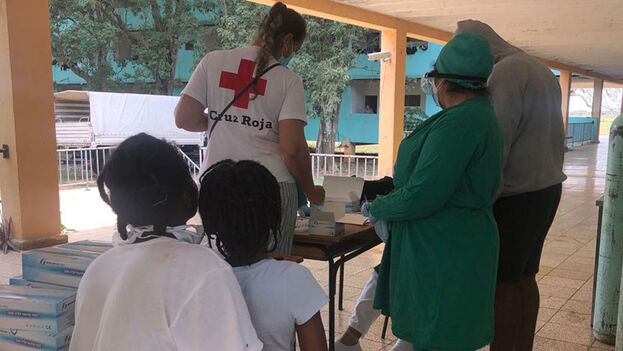
The Red Cross attended to Haitian migrants who arrived in Ciego de Ávila because of bad weather. (Invasor)

14ymedio biggerEFE (via 14ymedio), Havana, 27 December 2022 — A total of 253 migrants from Haiti are being cared for by local authorities and the Red Cross after their boat — which was headed to the United States — landed in the province of Ciego de Ávila due to “bad weather,” official media reported on Tuesday.

The Haitians are in good health and are temporarily staying in a school where provincial government officials once took classes. Of the total number of people treated, 61 are women and 31 are minors, according to the newspaper Invasor.

The Cuban Red Cross also attended to the balseros.

The Island’s official media assured that “contact with the highest Cuban authorities has already been established to ensure the organized, safe and voluntary return to the country of origin” of the migrants.

This is the second time this year that a group of Haitians landed in Ciego de Ávila after their boat went off-route on its way to the United States.

Last February, 292 migrants from that country, including 56 minors, who were on a “precarious boat,” landed at the Cayo Paredón.

On that occasion, Cubadebate reported that the boat had been in the water five days and that “they must have gone about 400 miles before they ended up landing on the Ciego de Ávila coast.”

Translated by Regina Anavy

____________

COLLABORATE WITH OUR WORKThe 14ymedio team is committed to practicing serious journalism that reflects Cuba’s reality in all its depth. Thank you for joining us on this long journey. We invite you to continue supporting us by becoming a member of 14ymedio now. Together we can continue transforming journalism in Cuba.
Lopez Obrador and Cuba, a Honeymoon that Doesn’t End

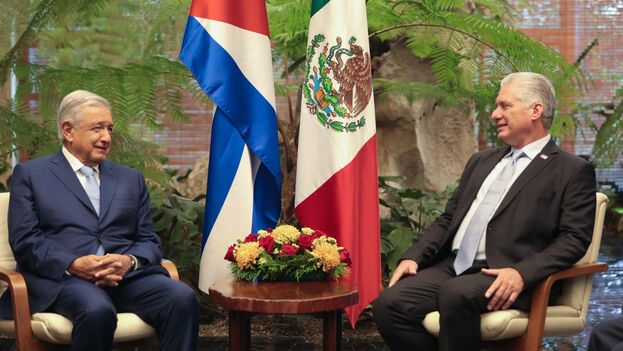
The Mexican president, Andrés Manuel López Obrador, and his Cuban counterpart, Miguel Díaz-Canel. (Presidency of Mexico)

14ymedio bigger14ymedio, Olea Gallardo, Havana, 28 December 2022 — Miguel Díaz-Canel’s first public statement on Wednesday was a message to his Mexican counterpart, Andrés Manuel López Obrador. “It was very pleasant to talk on the phone with Brother President López Obrador,” the Cuban president wrote on Twitter, reiterating “the deep gratitude to the people and Government of Mexico for the generous and supportive help provided to Cuba.” Both expressed, he said, “satisfaction with the excellent state of bilateral relations.”

Díaz-Canel did not specify what “generous and supportive help” he was referring to, but he did note one fact: despite the historic cordiality between the two countries, bilateral relations have never been so “excellent.”

The latest milestone is the hiring of 119 more Cuban doctors, as announced on Tuesday by the director of the National Social Security Institute of Mexico, Zoé Robledo, at López Obrador’s usual “morning” press conference.

These health workers will arrive in January “to provide their specialized services,” said Robledo, who recalled the 491 additional doctors who are “in 11 states, in very difficult and marginal places, helping to provide coverage every day and at all times in the hospitals where they are prominent.”

At the beginning of December, this newspaper found that one of those areas for which these doctors were promised, the inaccessible and violent Montaña de Guerrero, still does not receive Cubans. continue reading

Beyond that, neither of the two countries has made public how much money Mexico has spent on Cuba since López Obrador took office, on December 1, 2018. The Mexican president’s affinity for the Cuban Revolution is evident, in speech and in action.

The honeymoon began on another honeymoon: the one that López Obrador took with his first wife, the late Rocío Beltrán, in Cuba, in 1979, and continued with the import of the Sandino housing construction system — extended on the Island after the triumph of the Revolution — when the current president was a member of the official PRI party and director of the National Indigenous Institute of the state of Tabasco, at the beginning of the 80s.

After his election as president, the man from Tabasco gave free rein to that old love, which, in the midst of the deep crisis in Venezuela, supplier to the Island for the last two decades, was immediately reciprocated.

For example, the first official visit of Miguel Díaz-Canel after being appointed president was to Mexico, in October 2019.

Since then, the closeness has been characterized by controversy and opacity. In April 2020, medical brigades began to be sent in support, according to the Mexican authorities, of the fight against the COVID pandemic. Schools and public opinion questioned them for not being prepared to face the health emergency and for doing little work. It would then become known, thanks to the investigations of the press and the opposition, that their presence in Mexico cost almost eight million dollars. The official Cuban press itself has given the exact number of health-workers sent to Mexico for that contingency between 2020 and 2021: 1,479.

Despite the controversy over these health workers, the Mexican government won further criticism for the lack of transparency about the scholarships for medical residencies abroad, which began in 2020. The final destination would end up being only Cuba, for which Mexico paid the regime one million dollars, as revealed at the time by the Latinus portal.

Another milestone was the presence of Miguel Díaz-Canel on the presidential stand during the celebrations for the independence of Mexico, in September 2021, where he was even allowed to give a speech, something that had never happened in the country’s history with any foreign head of state.

Last May, López Obrador was reciprocated with the José Martí Order, on his official visit to the Island – one of the very few countries to which he has traveled as president. For those days, and during the Havana Book Fair, in which Mexico was the guest of honor, the opening of a branch of the legendary Mexican state publishing house, the Economic Culture Fund, had been announced,. It would end up happening in August, precariously, and again without information about the amount invested.

The list of solidarity of the current Mexican Administration with Cuba includes the sending of staff from Petróleos Mexicanos (Pemex) and the Ministry of National Defense to help put out the gigantic fire, in August, of the Matanzas Supertanker Base, and members of the Federal Electricity Commission after the passage of Hurricane Ian, in September, as well as the purchase of anti-covid vaccines — not yet approved by the World Health Organization — and the import of Cuban gravel for the construction of one of López Obrador’s emblematic projects, the so-called Mayan Train, on the Yucatan peninsula.

The romance, of which neither Mexicans nor Cubans know the total cost, is far from over.

Translated by Regina Anavy

____________

COLLABORATE WITH OUR WORKThe 14ymedio team is committed to practicing serious journalism that reflects Cuba’s reality in all its depth. Thank you for joining us on this long journey. We invite you to continue supporting us by becoming a member of 14ymedio now. Together we can continue transforming journalism in Cuba.
Cuba is Worth Less Every Day and the New Generations Will Inherit an Exhausted Country

Every day this country is worth less, because it has been decapitalized and because it continues to decapitalize. (14ymedio)

14ymedio bigger14ymedio, Reinaldo Escobar, Havana, 27 December 2022 — Reading economist Oscar Espinosa Chepe in an article published in 2003, a few weeks after his inclusion among the Black Spring prisoners, I learned and understood the importance of the concept of “decapitalization of the material base” in the Cuban economy, especially with regard to the absence of investments and modernization in infrastructure and industry that cause our economy to be less and less competitive in the international market.

Although I do not have reliable data to prove it, I could assure you that the process, instead of being reversed, has become more acute in the past 20 years. It is enough to try to travel by plane from Havana to Santiago de Cuba, to read the official data of the decreasing sugar production, to suffer the energy debacle, to go to a specialist’s office in a hospital or, simply, to try to walk along the sidewalks of a city without looking down.

The inventory of calamities is overwhelming and confirms the hypothesis that if someone added the value that everything has on the Island, they would come to the conclusion that every day this country is worth less, because it has been decapitalized and continues to do so.

To this national drama is now added another of a personal, private nature, but one which has social consequences. It occurs within families where there is an accumulation of transferable goods from parents to children, from grandparents to grandchildren. These goods have also been degraded, due to their excessive use and the diminished quality of what has been acquired.

I am talking about homes, furniture, kitchen utensils, tools, books, appliances, which are obtained with countless sacrifices and  carefully taken care of and maintained so that they will be enjoyed by those who come behind. In this way, despite their probable impairment, things achieve some transcendence because they exceed the limits of their intended use and go further. continue reading

The current migration crisis led mostly by the youngest, in addition to aggravating the human decapitalization of the nation, brings as a collateral consequence the fact that everything accumulated by the family, regardless of its market value, becomes inconsequential, and the impact of any possible improvement in social services is minimized.

To whom do we leave that collection of Latin American literature where there is almost everything written by Mario Vargas Llosa, all of Alejo Carpentier, all of Gabriel García Márquez, almost all of Guillermo Cabrera Infante and even all of Padura? To whom do we leave the Centennial Edition (1953) of the Complete Works of José Martí, the complete poetry of Lezama Lima, the recordings of Celia Cruz? Who is going to keep the drill, the polisher, the collection of screwdrivers, the microwave oven, the many-inch flat-screen TV, when there is no one left to leave it to?

How much are those things worth, already decapitalized, which have lost all significance? People are fixing up their properties to escape. The house is offered with everything inside because Cuba is becoming a country without heirs. “My house for a ticket to Nicaragua,” is said with the same gravity that William Shakespeare put in the mouth of the English king Richard III when he offered his kingdom for a horse.

And it’s worth asking, when it is verified that those in charge in Cuba only invest in hotels and golf courses while everything else is decapitalized: to whom do they intend to leave it?

________________________

This article was originally published in the magazine Convivencia.

Translated by Regina Anavy

____________

COLLABORATE WITH OUR WORKThe 14ymedio team is committed to practicing serious journalism that reflects Cuba’s reality in all its depth. Thank you for joining us on this long journey. We invite you to continue supporting us by becoming a member of 14ymedio now. Together we can continue transforming journalism in Cuba.
‘Wrapped Up Like a Tamale,’ This is How You Travel on the Cuban Roads When Temperatures Drop

The place does not have “the minimum conditions” to protect itself from the cool winds of this December, complains this 44-year-old Havana woman who was heading to the city of Ciego de Ávila. (14ymedio)

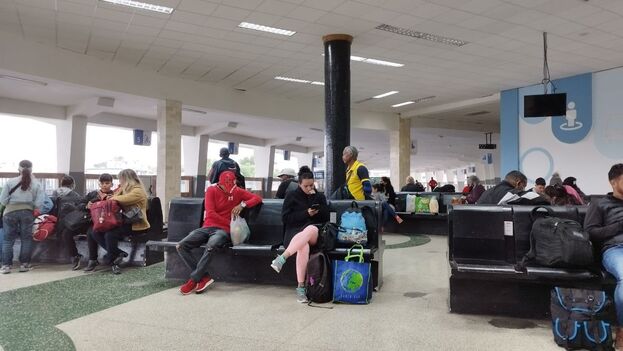
14ymedio bigger14ymedio, Natalia López Moya, Havana, 26 December 2022 — Before leaving her house, Danyelis checked everything she was carrying: the briefcase and backpack, a bottle of water, money and identity card, as well as sweaters and a snack for the road. But not even so many precautions prepared her for the cold she experienced at the Havana Bus Terminal. The place does not have “the minimum conditions” to protect itself from the cool winds of this December, laments this 44-year-old Havana woman who was on her way to the city of Ciego de Ávila.

“The station is hot in the summer and cold in the winter because when the temperatures rise, the air conditioning does not work well, but when they go down, the cold sneaks in everywhere,” Danyelis explains to this newspaper. What she experienced at the terminal was going to be a warm memory compared to what awaited her on the road trip. “People put towels, sheets and even backpacks on top of them” because the Chinese-made Yutong bus “seemed like a can of sardines full of holes.”

Just at the time when the thermometer began to plunge, the woman and dozens of passengers were traveling between the western area and the central part of the Island, a large flat area where the lowest temperatures are recorded. “It wasn’t just the cold; it was that we could hardly eat anything along the way because no one was selling food,” she warns. “The vendors who almost always go out when they make a stop didn’t even approach the bus.” continue reading

“When we arrived in Ciego de Ávila we were all wrapped up in clothes like a tamale; it was a relief to get off the bus,” says Danyelis. “People were not prepared because we don’t have good coats here, and the elderly or people who live in a home that is in very bad condition are the ones who have the worst time.” Homeless people, who usually spend the night on stairs to buildings, doorways  or parks, also experience more difficult days when winter arrives.

With temperatures below 20 degrees, Cubans have experienced a winter weekend that has coincided with the Christmas celebrations. The low temperatures have deterred many from going out on the streets, which for much of Sunday and Monday were especially empty of passers-by. However, around shops and markets, the lines for food were barely shrinking.

“As soon as I arrived in Ciego de Ávila, my family made me a hot soup. Luckily, they had been able to buy the chicken a few days ago,” the woman explains. In her neighborhood of Centro Habana, from where she began her Christmas trip, there are hundreds of neighbors who are still in long lines trying to get the pork that the State is distributing in a rationed way, between 235 and 250 pesos per pound. “My mom stood in one of those lines, wrapped in rags, and it’s still there.

Translated by Regina Anavy

____________

COLLABORATE WITH OUR WORKThe 14ymedio team is committed to practicing serious journalism that reflects Cuba’s reality in all its depth. Thank you for joining us on this long journey. We invite you to continue supporting us by becoming a member of 14ymedio now. Together we can continue transforming journalism in Cuba.