
The Youth Club in Cuba Ends a Project That Was More About Politics Than About Computers

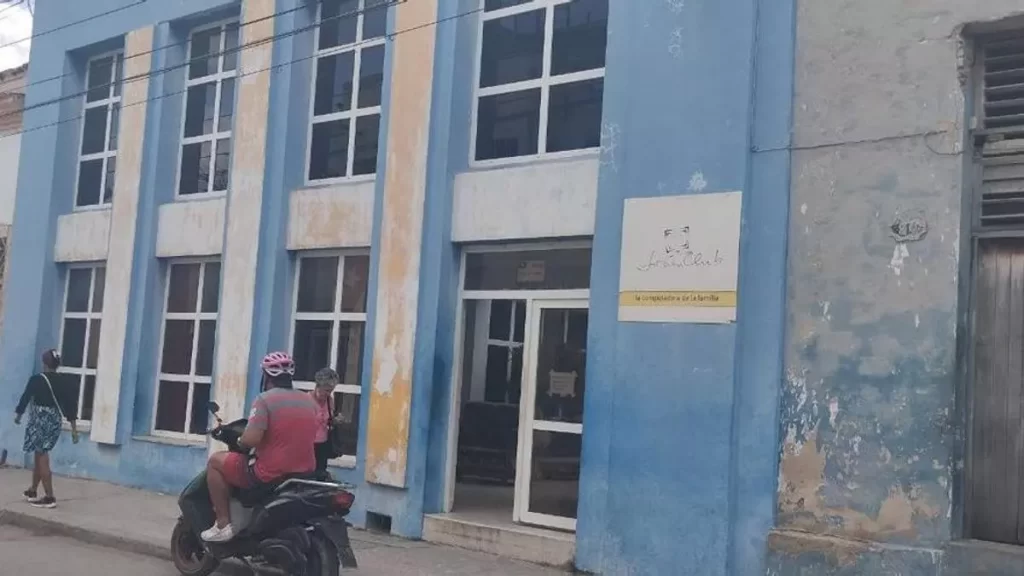
In the neighborhood of Pueblo Nuevo in the city of Holguín, another Youth Club is experiencing deterioration and no longer provides services to the public. / 14ymedio

14ymedio bigger14ymedio, Havana / Holguín, Lucía Oliveira and Miguel García, 3 March 2024 — Where before there were tables with screens and keyboards, now there are boxes of vegetable oil, piles of spaghetti packages and bags of powdered milk piled up. Two of the most important buildings of the Youth Computer and Electronics Club in Holguín have been leased as warehouses to small private companies in the city. The initiative, originally created in 1987 to be the computer spearhead of the Cuban regime, has been in frank deterioration for years.

The economic crisis has hit the Youth Club network hard, because it needs frequent investments in computer equipment. “The machines are now very old, and  we piled up some of them in a corner because they don’t even turn on,” an employee of the Lenin neighborhood premises in this eastern Cuban city tells 14ymedio.

“It’s been months since we became a warehouse for the products of private businesses in the area,” the worker admits. “The management of the Holguín Youth Club must collect eight million pesos per month for services, but since we provide fewer and fewer of our own services to the population, we have to make money in a different way.”

Previously, the money was obtained from customers who paid for “machine time” by renting a computer for a few hours, which teenagers and children from nearby neighborhoods used mainly to play video games. But most of the money came from the State budget, which thought of this initiative as the “apple of their eye.” continue reading

“Any little kid now has a mobile phone that is much better than the computers we had here”

“We also offered antivirus updates, a copy of the Ecured encyclopedia and La Mochila* (an official alternative to the ‘weekly packet’ [a collection of TV shows, music and digital material, much of it from abroad]). In recent years we didn’t have much, especially after people were able to connect to Wi-Fi networks and the internet,” he emphasizes.

The arrival, in December 2018, of the web browsing service through mobile telephony seems to have struck a mortal blow to a Youth Club network that was initially designed to centralize the use of new technologies. “Any little kid now has a mobile phone that is much better than the computers we had here. If they don’t have one, they ask their parents or a friend and can download and play whatever they want.”

Despite its loss of social importance, the Youth Club for Computation and Electronics continues to be defined on its digital site as “a network of technological centers, with computer solutions” at the fingertips of any Cuban. It adds that it has “a wide portfolio of products and services,” but a tour of its Holguin center points in another direction.

The entity’s office in the Pueblo Nuevo neighborhood is closed. “We don’t have a reopening date at the moment,” a custodian tells this newspaper. “Perhaps when we reopen  there will be a store here because that’s what is being done with the others,” he says. Outside, the unpainted facade and a sign with faded colors are far from the impeccable presence that the Youth Club once had.

“All this fell out of favor with the departure of Fidel Castro from the leadership of the country, because everyone knows that this was a project of his”

“All this fell out of favor with the departure of Fidel Castro from the leadership of the country, because everyone knows that this was a project of his,” María Victoria Contreras, a worker for two decades at the Havana Youth Club, tells this newspaper. “I was among the founders, and I can say that here the resources were endless. Unlike other sectors, we lacked nothing.”

Contreras says that at first they had a lot of demand, “even a line outside, because almost no one had a computer at home, and the kids wanted to sit in front of a screen, touch a mouse. I saw many children play with a keyboard for the first time when I worked at the Club;  there are things you never forget.”

“The first Youth Club that was inaugurated was the one on N Street, between 21st and 23rd next to the Cuban Pavilion in Havana,” recalls the retiree. “The technology we had at that time was keyboards with monochrome screens, which was a success for us.” However, “now investments are needed to build this network, and the money no longer arrives as before.”

Yordanis, a teenager in the 80s, discovered his passion in those places after spending several hours in line to gain access. Now a graduate of computer engineering, he recognizes the importance of the Youth Club in his life but considers that the project “was not updated at the same pace as the technologies.” For this professional, “the infrastructure has not been modernized, internet access is poor,  and the user experience leaves a lot to be desired.”
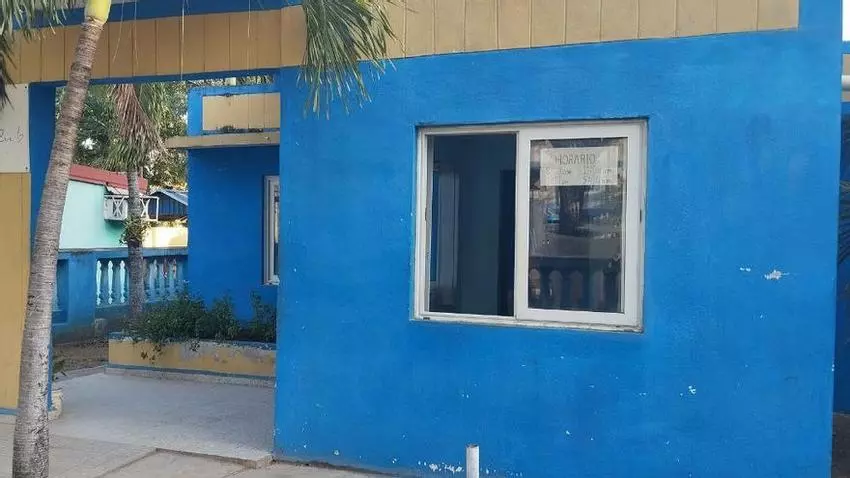
The Youth Club of the Lenin neighborhood in Holguín has been converted into a merchandise warehouse for private businesses/ 14ymedio

“You can’t start a state-of-the-art video game on a computer where the mouse doesn’t work well, the keyboard lacks letters or the screen can’t support the definition of graphics for the current interfaces. It’s frustrating and, in addition, people don’t want others to be looking over their shoulder at what they’re doing,” he adds.

The Central Palace of Computing and Electronics, located at the intersection of Amistad and Reina streets in front of  Fraternidad Park, in Central Havana, is the largest installation of this type in the whole country. The property has undergone all kinds of transformations and different uses throughout its more than six decades of existence.

First, the colossal building was the headquarters of the American Sears chain in Havana. Nationalized after the coming to power of Fidel Castro in 1959, the place spent years closed to the public and converted into bureaucratic offices. In the 1980s it was inaugurated as the Centro market, a free trade experiment that lasted a short time and fell out of favor during the process of Rectification of Errors and Negative Tendencies of 1986.

The old Sears building experienced another period of closure until 1991, when it reopened its doors as a Computer Palace. “Its huge rooms and many floors were always too complicated for this new function because it has always seemed more like a large store than a place to go to use a computer,” acknowledges a founding worker of the place.

“As he did with other emblematic buildings of Havana, he decided that the old Sears was not going to be dedicated to consumption nor was it going to give one more peso to anyone”

“But Fidel wanted to teach a lesson to all those people who were going to stand in line at the Centro market in the early hours of the morning to buy and resell the jams, beers and tins of cumin on the black market,” he says. “As he did with other emblematic buildings in Havana, he decided that the old Sears was not going to be dedicated to consumption nor was it going to give one more peso to anyone.”

“In those days we also gave courses to learn how to use programs and other tools, we even had a Geroclub for older people who wanted to approach a computer for the first time, but that is no longer done,” the former employee tells 14ymedio. “This was a political project rather than a computer project. It was designed to create the “New Man” in computing, and that objective was lost.”

The former worker of the Youth Club believes that the extension of new technologies “changed everything.” Cubans “prefer to enjoy a movie, a game or a videoconference at home with some friends or sitting in a park, but those facilities are more and more abused every day and don’t even make you want to sit in one.”

“Now there are other priorities,” the employee summarizes. In the list of preferences, the new forms of economic management are winning over the old official programs, marked by massiveness and bulky budgets. The city of Holguín is going at full speed in that reconversion; where before it was about getting online to play games or program, now it’s about buying rice and liquid detergent.

*Translator’s note: *La Mochila (Backpack) contains official State content as opposed to El Paquete (the Weekly Packet), which contains non-political content and is bought on the black market.

Translated by Regina Anavy

____________

COLLABORATE WITH OUR WORKThe 14ymedio team is committed to practicing serious journalism that reflects Cuba’s reality in all its depth. Thank you for joining us on this long journey. We invite you to continue supporting us by becoming a member of 14ymedio now. Together we can continue transforming journalism in Cuba.
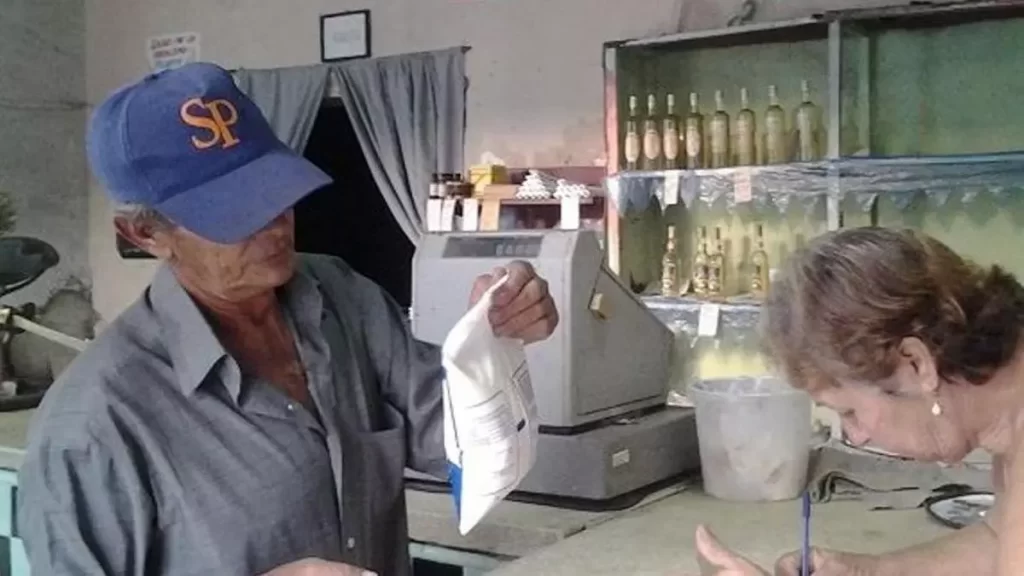
Cuba Buys 500 Tons of Powdered Milk From the United States

The authorities talked about how expensive milk powder is in the international market / Escambray

14ymedio bigger14ymedio, Madrid, 1 March 2024 — It has been two days since the Spanish agency EFE released the news that Cuba had asked, for the first time in history, for help from the United Nations World Food Program in the face of the milk shortage, but the Government still does not say a single word. This Thursday, the Minister of the Food Industry, Alberto López Díaz, gave a press conference to reassure the population that children up to to seven years old are guaranteed powdered milk in the coming days, although the explanations were confusing.

The arrival of a Brazilian ship with 375 metric tons of the product “guarantees the distribution” for that group for an unspecified number of days. The minister also cited several contracts that add up, if the figures are correct, to 1,750 tons of powdered milk. He added that, since the country consumes 2,000 tons per month for children, medical diets, pregnant women and “social consumption,” these imports “guarantee stability in the distribution for March and April.”

The figures weren’t released immediately, but it was striking to begin with that, among the imported products, are 500 tons coming from the United States, “by virtue of the exceptions established by that Government to sell certain products to the Island, through immediate payment and in cash.” Although the authorities have recognized that they are allowed to buy certain products from the U.S., denouncing at the same time that the conditions are anomalous in international trade, they rarely refer to a specific acquisition through the exemptions from the embargo, in force since 2001. continue reading

He added that, since the country consumes 2,000 tons per month for children, medical diets, pregnant women and “social consumption,” these imports “guarantee stability in the distribution for March and April.”

The other contracts cited by the minister and disclosed by the official press consist of another 500 tons from Brazil, 245 tons from Canada and 600 tons from “other suppliers.”

López Díaz said that the problem is being progressively solved thanks to the “interest of the country’s top management in such a sensitive issue,” and stressed that powdered milk is marketed at high prices in the international market. Residents of Villa Clara, Sancti Spíritus and Camagüey were more fortunate, he said, since there were no “affects” in these territories because they have fresh milk available.

The shortage of milk became more pressing last year, when almost all the provinces had to adjust their quotas, reduce the number of prioritized groups or replace the milk with products that were sometimes only remotely similar. The farmers complained about the “ordering task”* of January 2021 and the high inflation, which has devastated what was left of the Cuban economy.

Most say that the State does not compensate them or even cover the expenses generated by raising livestock, and they are paid little, late and poorly. Added to this are the consequences of non-compliance with the contracts for reasons beyond their control. The Government can impose fines and sanctions if the agreed-upon quota is not delivered, which is sometimes impossible due to the malnutrition of livestock from the lack of feed and the shortage of fuel for transport. There is also the general economic insecurity, which has caused an increase in the theft of animals.

“If you paid the farmers more and on time, you would see better results, but hey, they work and aren’t paid, and you can see the results today,” a user on social networks responded to the ministry’s note.

In mid-February, complaints from the population about problems with milk powder reached Cuban television. The Minister of Internal Trade, Betsy Díaz Velázquez, explained that most of the product is acquired in “distant markets, which makes the price more expensive and the delivery delayed.” The current distribution of this product to children up to seven years old comes from the country’s reserves, “the valuable contributions of the World Food Program (WFP) with donations, and loans from economic actors (private companies).”

The minister made a reference that at that time went unnoticed, since the WFP’s collaboration with Cuba – as with all countries with food needs – is historic. However, what had never happened and what the Government continues to avoid talking about is the request for urgent help.

“We confirm that the WFP has received an official communication from the (Cuban) Government requesting support to continue the monthly delivery of one kilogram (2.2 pounds) of milk for children under the age of seven throughout the country,” the delegation on the Island told EFE, which had access to the information through its sources.

The agency added that “it is the first time that Cuba has requested support by issuing an official communication at the highest level of WFP management” and did so, according to the agency, by sending a letter from the Ministry of Foreign Trade and Foreign Investment to the executive management of the WFP in Rome at the end of last year. Thanks to that, “144 tons of skimmed milk powder were sent, benefiting almost 48,000 children between seven months and three years old in Pinar del Río and Havana,” 6% of the minors that the Government wants to reach.

This Thursday, BBC World tried to obtain a statement from the Cuban Government, which so far will not discuss the issue.

In his press conference this Thursday, Minister Alberto López Díaz also mentioned the situation of the rationed bread, which is scarce if not absent “in the face of the unavailability of flour,” although, “according to the productions of each territory, the local authorities have been making determinations.”

Flour is abundant in Cuba, as 14ymedio reported yesterday, thanks to imports from private companies, some of which are linked to the State itself. With milk, the situation is the same. The private and informal wholesalers dominate the social networks, but to obtain the products you have to be able to pay for them, exposing the increasingly visible gap between the social classes that the Revolution supposedly abolished.

*Translator’s note: The Ordering Task that came into effect in 2021 eliminated the Cuban Convertible Peso (CUC), leaving the Cuban peso (CUP) as the only national currency. It raised the prices of basic goods and services, generating inflation, and created stores that take payment only in hard currency, which must be in the form of specially issued pre-paid debit cards. Other measures targeted different elements of the economy.

Translated by Regina Anavy

____________

COLLABORATE WITH OUR WORKThe 14ymedio team is committed to practicing serious journalism that reflects Cuba’s reality in all its depth. Thank you for joining us on this long journey. We invite you to continue supporting us by becoming a member of 14ymedio now. Together we can continue transforming journalism in Cuba.
Cuba Has No Bread, but ‘You Can Drown in All the Flour’

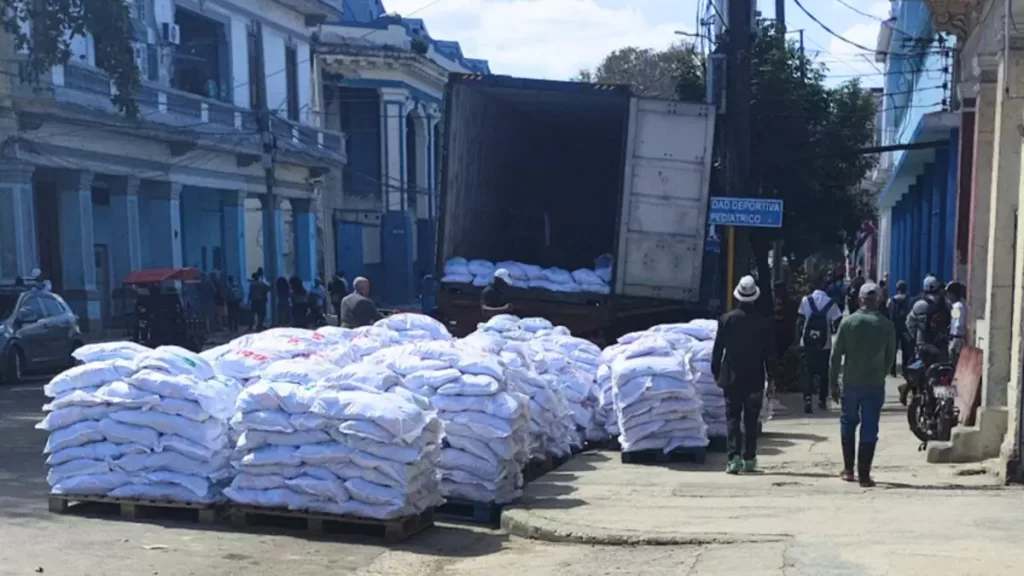
Once it arrives on the Island, the product is unloaded in full view of the population, as happened this Wednesday on Ayestarán Street, in Havana / 14ymedio

14ymedio bigger14ymedio, Madrid, February 29, 2024 — “In Cuba there is enough flour to drown in, but the State doesn’t have any.” Everyone knows it, and María confirms it. She spends the morning sending messages to several contacts – found through social networks –  to buy the raw material, with which she makes bread, pizzas, cakes and all kinds of sweets. The offers are so overwhelming that she only has to find the best one, economically and logistically, to be able to continue supplying her business.

Emerio González Lorenzo, president of the Food Industry Business Group, admitted over the weekend that the “complex situation” – a concept applicable to transport, fuel, electricity, chicken and everything that goes wrong in the country – will produce “affectations” in the basic basket that began to be “reflected” this Saturday, according to the official, even in tourist establishments.

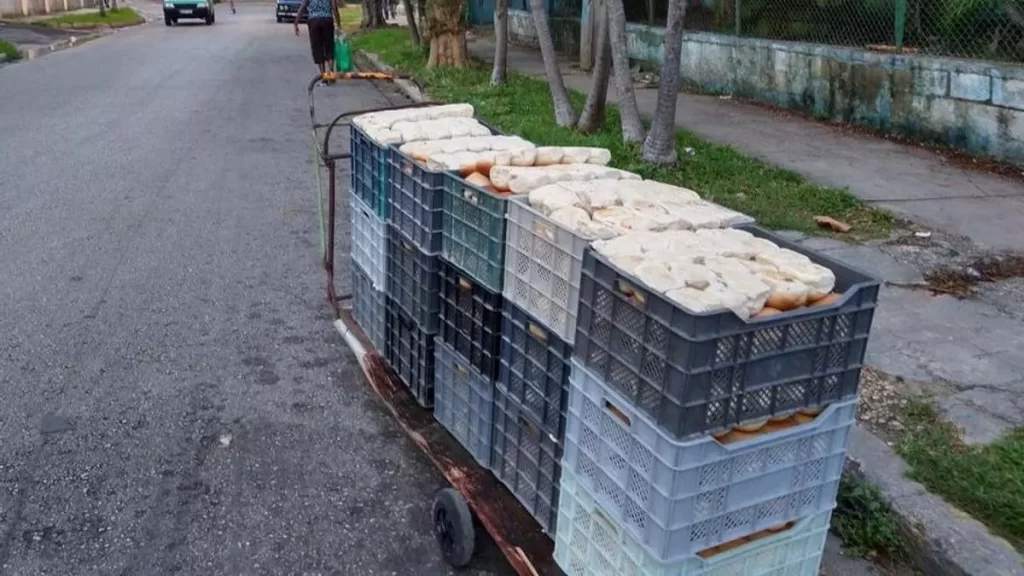
Although Cubans have been struggling more than a year to find anything other than small, hard and tasteless bread, the news has made them tremble. Several provinces have announced changes in distribution, from Pinar del Río, where bread has been reserved for children up to 14 years old, to Sancti Spíritus, where sources of this newspaper report that it will be available only on Tuesdays, Thursdays and Saturdays. continue reading

The Government says that the “financial restrictions basically due to the intensified blockade” are to blame

The Government says that “financial restrictions, due basically to the intensified blockade and the logistical limitations that Cuba suffers to bring wheat from distant markets” are to blame, and its efforts to circumvent them do not work. Sources in the import sector tell 14ymedio that the State uses mipymes that are connected to the Regime to get the product without restrictions, even if the amount isn’t enough to feed the population.

“Here is a large private MSME [Micro Small Medium Enterprise], which has several gastronomic businesses: a paladar [privately run restaurant], two candy stores…,” says the source, who asks to protect his identity and location, but has documentation that supports what he says. “They rented a place and are setting up another bakery. They are supposedly “private,” but when you look at the import papers and trace the funding, you realize that there is money that comes out of State accounts,” he says.

The State uses them, he continues, to import goods under the cover of private companies, which act legally and comply with the rules and tariffs on all imports. At the end of 2023, the Government announced the increase in import tariffs for final products and a decrease in those for raw materials, in order to encourage the manufacture of consumer goods in the country.

To date, only alcohol and tobacco have suffered the tax increase, because the authorities specified that it would be necessary to define precisely when a product is final and another intermediate. The example of flour was the one used by the Minister of Finance and Prices, Vladimir Regueiro Ale, who showed how it would depend on whether payment is for a direct sale to the consumer or to a food processing business.

Be that as it may, and while the Official Gazette publishes the set price, the MSMEs continue to buy flour from Ukraine, Russia, Spain, Colombia and, above all, from Turkey. The informal market is overflowing with offers.

“Bags of flour of 55 pounds each are available. The container has 960 bags, at 9,000 pesos or $30.50 in US dollars. The complete container is sold,” says a seller. “Russian flour. Payment in dollars or euros by transfer abroad and a percentage in dollars in cash,” specifies another that delivers to the warehouses for Havana, Cienfuegos and other provinces. In this case, the cost is $1,200 per ton, and the commission is $100 more.

The payment methods are very diverse, but most of them require a deposit of a good part of the amount in dollars or even in banks outside Cuba. It is also not uncommon to ask for an amount in cash, pesos in that case, to ensure the day-to-day on an Island devoid of liquidity and where the ATMs work only when they want.

“To say they can import anything they want without the State intervening is a lie”

Those ads, on pages and social networks, mostly talk about contracts and documentation, but when contact is made in private, the transparency is diluted, despite the fact that, according to the source, it is almost impossible to get the merchandise into the country illegally. “To say they can import anything they want without the State intervening is a lie,” he says emphatically.

“The State places the order through an importer, either CubaExport or Alimport. Those MSMEs that are combined, half-private, half-State, which are actually fronts for the Regime, have direct contact with the Government, which is behind the business.”

The private businesses do more work because they find their own suppliers and take care of the whole process, before going to the Government and delivering all the information for import authorization. 

“It is mandatory to contact an inspection agency, either Intermar or Cubacontrol, to be able to bring in the merchandise, but they still have to contract with the health services, with the whole Health network,” he explains. Once it arrives on the Island, the product is unloaded in plain sight of the population, as happened this Wednesday on Ayestarán Street, in Havana.

In Santiago de Cuba, subsidized bread in the ration book has been suspended until the end of March

“The MSMEs, in fact, are overflowing with flour, and there is bread at 20 and 100 pesos, whatever you want,” says a neighbor from Santiago de Cuba, where the subsidized bread in the ration book has been suspended until the end of March. The problem, rather, is the blackouts, which prevent the ovens from working well.

When it arrives, nothing gets in the way of a Cuban and his bread. Except for a minor issue: no money. “Guarantee your monthly bread with payments from the outside. Offers for 30 days for your family to have their daily bread,” says a Havana MSME, which sells 2.8-ounce hamburger buns for $0.19, 28.2-ounce sliced bread for $1.50 and even combos of 10 hamburger buns a day plus a package of cookies for 86 dollars.

Nor do they lack the product in a candy store in El Vedado. “Right now we are fine with flour because there are many offers. We got ten bags at 20,500 pesos each, which a MSME that can import sold us. As we need to have all the paperwork and records for the inspectors, we prefer to buy like this and not on the street,” says the owner, who already talks about a similar situation for another product, sugar, for which an alarming shortage is feared, especially if one takes into account the catastrophic sugar harvest that looms over the country.

“The flour they sold me is Turkish and expires in June of this year; it is multipurpose flour, and the bags weigh 110 pounds. With that same MSME we got a sugar that is very good from the Caña Brava brand, Peruvian, which cost 24,000 pesos a bag.”

Translated by Regina Anavy

____________

COLLABORATE WITH OUR WORKThe 14ymedio team is committed to practicing serious journalism that reflects Cuba’s reality in all its depth. Thank you for joining us on this long journey. We invite you to continue supporting us by becoming a member of 14ymedio now. Together we can continue transforming journalism in Cuba.
Gas Stations Closed and Others With Long Lines Before the New Prices of March 1

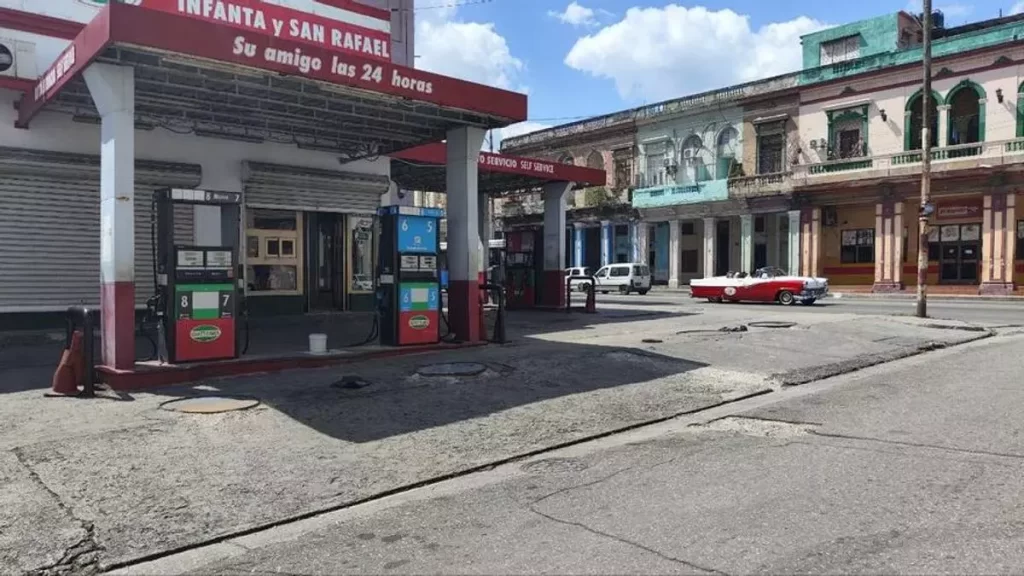
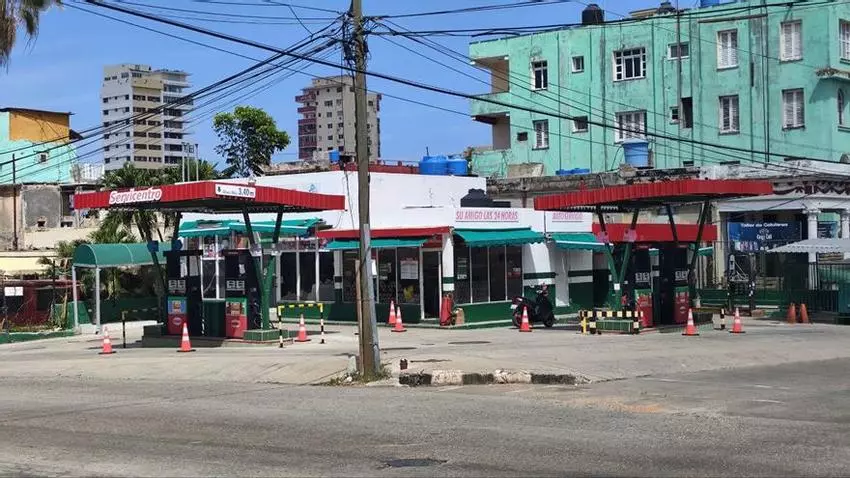
The San Rafael and Infanta gas station was closed in this photo taken this Wednesday, February 28 after the announcement of the price increase / 14ymedio

14ymedio bigger14ymedio, Havana, 28 February 2024 After being postponed due to an alleged cyber attack on the state financial company Cimex, two days before the dismissal of the Minister of Economy, Alejandro Gil Fernández, the new fuel prices, public transport and electricity rates will go into effect on March 1. Havana residents were trying to refuel this Wednesday but several gas stations were closed and a few others had long lines.

The service centers on 17 and L, in the municipality of Plaza de la Revolución, and San Rafael and Infanta, in Centro Habana, are not even dispensing fuel. The one in Tángana, also in Plaza de la Revolución, only had one dispenser working to serve the customers they have listed on a list of buyers.

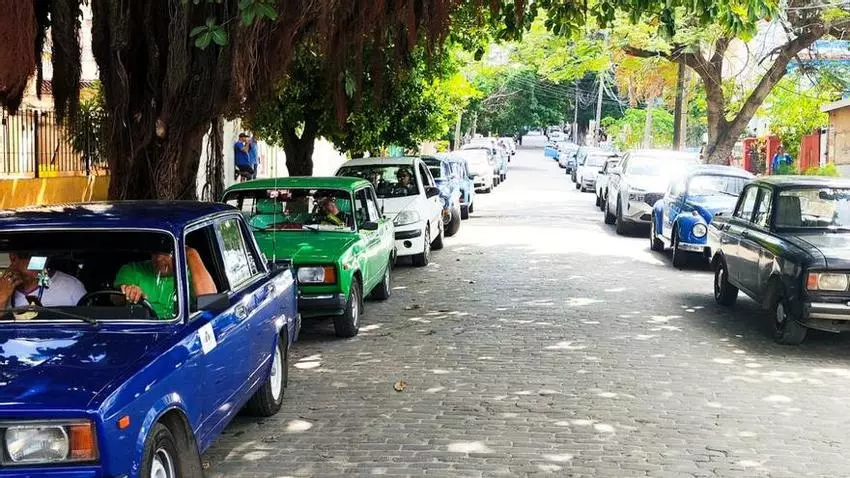
Of the gas stations that this newspaper was able to visit in Havana, only the one on 25th and G was selling fuel and the drivers were milling around in a long line. On the outskirts of the capital, the person in charge of the Los Paraguas de Guanabacoa service center reported on her Telegram account that “the 8 thousand liter regular supply truck,” which should have arrived at 10:30 pm on Tuesday, ultimately did not arrive.

The ministers of Finance and Prices, Energy and Mines, the vice minister of Economy and Planning and the vice president of Cimex appeared before the official press this Wednesday to announce that the new prices will apply only to fuel sold retail: 156 pesos or 1.30 dollars per liter for special gasoline instead of 30 pesos; regular and diesel at 132 or 1.10 and engine at 114 pesos or 0.95 dollars (instead of 25 and 20 pesos, respectively). As wholesale rates remain intact, private transportation prices should not increase, they stressed. continue reading

At the service center on 17 and L, in the municipality of Plaza de la Revolución, they are not providing service this Wednesday / 14ymedio

“In the case of liquefied gas, the application of price increases is postponed,” Cubadebate explained in an article that summarized the statements.

According to Mildred Granadillo, Vice Minister of Finance and Prices, the Government chose the date of March 1 after Cimex managed, during the last month, to restore “the affected computer systems.”

For his part, the head of the same portfolio, Vladimir Regueiro Ale, assured that the Government is aware “of the impact that (the new rates) have” and admitted that they will affect “the entire economy.”

“To date, prices do not recognize the real costs the country incurs. They were outdated prices and generated subsidies for the State Budget. We know that this has consequences on the costs of production processes. The measure in itself has an inflationary impact,” the minister admitted, adding that “there is a group of decisions that mitigate its impact,” although he did not explain which ones.

These “corrections” were also mentioned by the Cuban economist Pedro Monreal, who, following the announcement, criticized the measures on his social networks. “A distortion is ‘corrected’ – energy prices misaligned with the real cost – that would have transversal effects, increasing the distortion of salaries misaligned with the cost of living. Whatever they say, the ‘corrections’ impoverish the citizen,” he stated.

At the gas station on 25th and G, where they were delivering, the line of vehicles occupied several blocks. / 14ymedio

The intervention of the Minister of Energy and Mines, Vicente de la O Levy, was, for his part, a string of justifications about the State’s need to increase prices. “This measure is not to raise money, nor does it eliminate subsidies,” he assured, adding that “it is an issue that seeks savings,” while explaining that the way to guarantee the “resupply” of gas stations is to establish “a small chain of service centers in dollars for tourists and foreigners and eliminate the subsidy for foreigners.”

Fuel shortages, however, remain the main problem for the portfolio. “Cuba had these demands assured by international agreements, but import volumes have decreased for different reasons,” said De la O Levy. According to state data that were taken up by the minister during the conference, the Island needs about 8 million tons of different fuels annually, of which about three million are produced in national refineries, the rest is imported.

A critical case is that of gasoline, the import of which has been increasing in recent years – 126,000 tons of gasoline imported in 2021, 192,000 tons in 2022 and about 203,000 in 2023 – but it cannot cover the annual demand, which amounts to 360,000 tons.

In turn, this fuel is the one most demanded by the private sector, which consumes 71.5% of the 21,700 tons that were imported on average each month during the past year. Another need “impossible to cover” for the State. Diesel imports, with greater state consumption, have also fallen, “and that is felt in the economy,” declared Cubadebate.

Regarding the increase in the electricity rate for “high consumers,” the 25% increase is maintained for those who consume more than 500 kilowatt hours, said the minister.

Translated by Regina Anavy
____________

COLLABORATE WITH OUR WORKThe 14ymedio team is committed to practicing serious journalism that reflects Cuba’s reality in all its depth. Thank you for joining us on this long journey. We invite you to continue supporting us by becoming a member of 14ymedio now. Together we can continue transforming journalism in Cuba.
At a Gas Station in Havana, Esther’s Fans Support Her in Her Criticism of the New Fuel Regulations

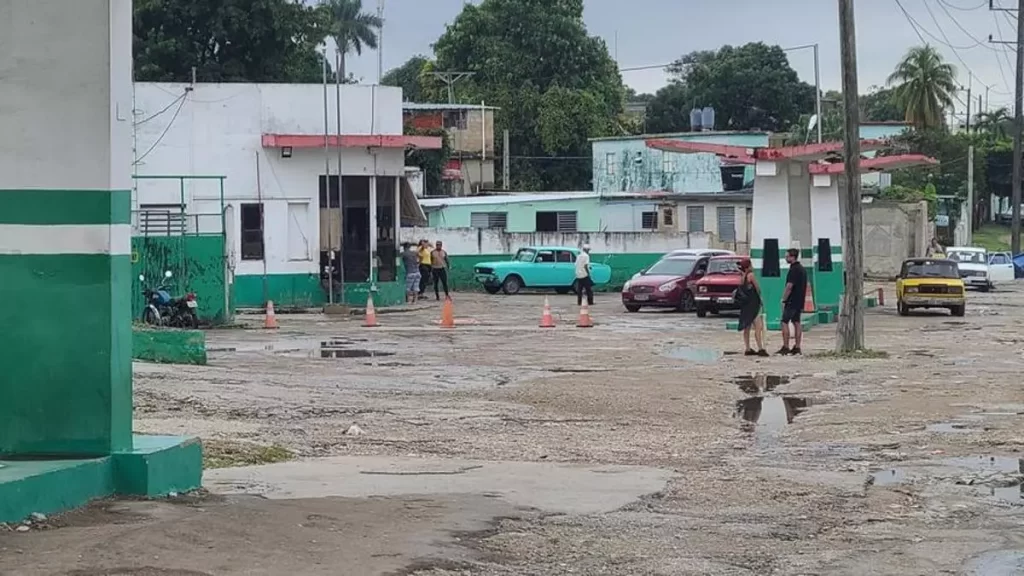
At dawn, Los Paraguas received a tanker with 6,500 liters of regular gasoline and when the morning shift started, only 2,000 liters remained. / 14ymedio

14ymedio bigger14ymedio, Havana, February 27, 2024 — Esther Pérez Trujillo, who is entrusted by the government of Guanabacoa with the organization of the lines at the gas stations of that Havana municipality, does not like the new rules for the distribution of fuel. And she doesn’t hide it. This Tuesday, in one of the Telegram groups that she administers, she called for the “opinion of the people” in order to send it to the Municipal Board of Directors.

In a message sent early in the morning, Esther explained why she did not summon the buyers on her list  to the Cupet Los Paraguas gas station. According to her, the service center received 1,717 gallons of regular gasoline at 2:41 in the morning, and at the beginning of the morning shift, there were only 528 gallons left. There was also an “unconvened” line.

Accompanying the text with emoticons of disgust, she added: “That is, between the time of rest and the change of shift, 1,189 gallons were sold,” and “the next call will be when another fuel truck arrives.”

“Public opinions. Group open,” the text ended, inviting a conversation. The comments did not take long to arrive, almost all in favor of the work of Esther and her subordinates. “It shouldn’t happen with the good work that you and your team are doing. It’s true that they shouldn’t save the fuel, but at that time of day people don’t deserve it,” said Roiber Danger Salazar. continue reading

“This is the most organized system and you have done a good job”

According to Mijail Fernández, “I am of the opinion that your system should be extended to all gas stations, and they should not be sending fuel to Cupet at such early hours of the morning.”

“This is the most organized system and you have done a good job, but if it is not widespread it will fail, because sometimes disorganization suits some,” said José Luis Castillo, as did Izzet: “I don’t understand why, if you and your team do such good work to avoid coleros [people others pay to ‘stand in line’ for them] and the resellers from hoarding fuel, they do that. It’s true that the gas stations can’t refuse to sell, but what they did showed a lack of respect toward you, who have worked so hard, and the people who wait their turn in a disciplined manner.”

The same user asks them to “take measures,” and as an example mentions the Cupet El Tángana, in El Vedado, where “they do not retain fuel but there is a schedule so that someone who can’t come at the time of his turn can go later.” And he ends by encouraging Esther: “We continue to ride, with you as the leader of the troop.”

“Congratulations, don’t give up, let the dogs bark, I support you”

Many of the comments allude to the danger of having to refuel late at night. “For those of us who have motorcycles, early morning shifts have become somewhat dangerous,” explained Alberto Borrego. More clearly, Abdel Pérez, also a motorcyclist, said that “early morning calls are VERY DANGEROUS, as we know there is crime and violence on the street.”

For her part, Zayda Suárez questioned that given the time at which the fuel arrived, “they should have waited for dawn and called those of us who are on the list. The fuel doesn’t usually arrive that early, and the administration of the service center should respect the established order.”

Until a little less than a month ago, the gas stations organized by Esther seemed to have the privilege of receiving more fuel than others in the capital. Esther and her two subordinates managed “the lists” of customers through Telegram with an iron hand. However, last week the boss of Guanabacoa informed her followers that the rules of the game had changed. By orders “from above,” gasoline would not be saved for those who did not come when it was their turn, and, if someone who was not registered on the list arrived at the service center, they would have the possibility of refueling.

During these days, Esther has continued with discipline, coordinating users via Telegram without any protest.The arrival of the fuel in the early hours of the morning, out of turn, with the consequent disappointment of the buyers, seems to have tried her patience.

Of course, it is clear that the customers are with her: “Congratulations, don’t give up, let the dogs bark,* I support you.”

*Translator’s note: A quotation from the novel Don Quixote, by Miguel de Cervantes. 

Translated by Regina Anavy

____________

COLLABORATE WITH OUR WORKThe 14ymedio team is committed to practicing serious journalism that reflects Cuba’s reality in all its depth. Thank you for joining us on this long journey. We invite you to continue supporting us by becoming a member of 14ymedio now. Together we can continue transforming journalism in Cuba.
Discreet Visit to Cuba by a Delegation of the U.S. Progressive Caucus

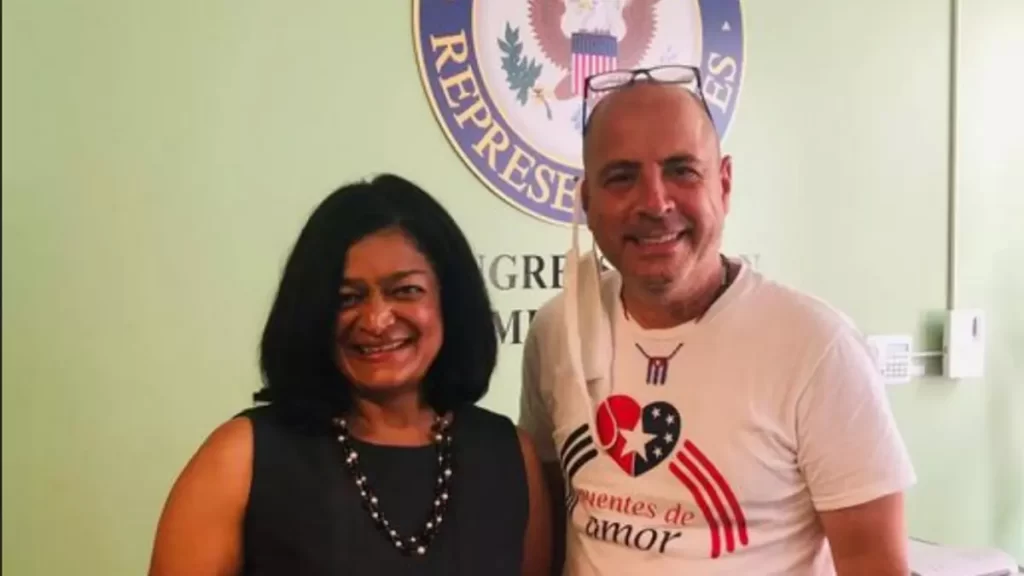
Congresswoman Pramila Jayapal, leader of the progressive ‘caucus’ of the Democratic party, with the leader of Puentes de Amor, Carlos Lazo. / Pramila Jayapal/

14ymedio bigger14ymedio, Madrid, February 28, 2024 — Two Democratic congresswomen, Pramila Jayapal and Ilhan Omar, led a delegation of members of the progressive caucus of the U.S. House of Representatives to Cuba last week, according to el Nuevo Herald. They were joined, according to sources in the Miami newspaper, by the congressional representative for California, Barbara Lee.

The information, which has not been disseminated in any Cuban media, was confirmed by the progressive caucus, which contains more than 100 legislators. Jayapal, from the state of Washington, is the president of the caucus.

“Representatives Jayapal and Omar traveled to Cuba last week, where they met with people from Cuban civil society and government officials to discuss human rights and the bilateral relationship between the U.S. and Cuba,” said a spokeswoman for the group. continue reading

“Representatives Jayapal and Omar traveled to Cuba last week, where they met with people from Cuban civil society and government officials”

The offices of the three congresswomen, for their part, refused to comment.

The trip took place on an unspecified date, but el Nuevo Herald places it at the beginning of last week, and the group was made up of a dozen people, although only the names of the two congresswomen were given. Both are critical of the U.S. embargo on Cuba.

Both Jayapal and Omar, a representative for Minnesota, have supported bills to normalize relations with the Government of Cuba. This January, Jayapal, on her X account,  requested that Cuba be removed from the list of countries that sponsor terrorism. “Today marks three years since Cuba was included on the list, a Trump-era policy that has devastated the Cuban economy and made the life of its population more difficult. It’s time for Biden to eliminate that designation, lift sanctions and reopen relations with Cuba.”

“Being on this list has made it almost impossible for Cuba to do international business, which has caused an economic crisis that has led residents to flee the country,” she added.

In November 2021, the U.S. Congress approved a symbolic resolution in support of the 11J protesters and “the immediate release of arbitrarily detained Cuban citizens.” Likewise, the regime of Havana was urged to allow the march called for that month by the Archipelago collective. Previous repression ended up leading to the exile of its visible leader, the playwright Yunior García Aguilera.

That text was supported by 382 votes in favor and 40 against, among which were those of the two congresswomen. Although none expressly detailed at that time the reason for her vote against, the representative for Massachusetts, Jim McGovern, did so, arguing that the document did not recognize “the role played by the U.S. when it comes to contributing to the suffering of ordinary Cubans.”

In mid-January, there was a meeting between American and Cuban officials in Havana. The meeting was confirmed by the White House, which indicated that representatives of the Justice and National Security departments were going to participate in the Dialogue between the United States and Cuba on Law Enforcement. In that forum, they will address “topics of bilateral interest” and will seek “greater international cooperation in law enforcement,” a spokesman for the federal government previously said.

Jim McGovern, argued that the document did not recognize “the role played by the U.S. when it comes to contributing to the suffering of ordinary Cubans”

Just a week ago, the Deputy Undersecretary of Public Diplomacy, Politics, Planning and Coordination of the State Department also visited Havana. Kerri Hannan met with members of Cuban civil society, black activists, human rights defenders and independent private businessmen, as confirmed by the U.S. Embassy in Havana. The official also spoke with members of the Government of Cuba and, as she explained, “pressed for the release of the political prisoners.”

At the beginning of February, the Special Advisor of the State Department on International Rights of Persons with Disabilities, Sara Minkara, was on the Island. During her stay, she held meetings with “representatives of the Government of Cuba, independent Cuban businessmen, former students of programs sponsored by the Embassy and students of educational institutions in Havana,” said the diplomatic headquarters.

The meeting of the members of the progressive caucus, on the other hand, has not been disclosed by any of the parties, at least until the news was released, at which time they  confirmed it. Neither the Cuban Government nor the official press, very active in reporting on this type of event, has pronounced itself.

On February 19, approximately the same date that el Nuevo Herald places the trip of the progressive caucus to Cuba, Miguel Díaz-Canel met in Havana with a delegation of American farmers, on their first visit to the Island, organized by the National Association of Departments of Agriculture of the United States. “If it were not for the blockade, we would have many mutual opportunities for work, to move forward for the benefit of both peoples,” said the president.

Translated by Regina Anavy

____________

COLLABORATE WITH OUR WORKThe 14ymedio team is committed to practicing serious journalism that reflects Cuba’s reality in all its depth. Thank you for joining us on this long journey. We invite you to continue supporting us by becoming a member of 14ymedio now. Together we can continue transforming journalism in Cuba.
Jamaica and the Cayman Islands Deport Irregular Migrants to Cuba, Totaling 257 in 2024

In 2023, Cuba received back a total of 5,253 nationals, mostly from the United States. / EFE/File

14ymedio bigger14ymedio(EFE), Panama, February 26, 2024 — Jamaica returned 10 irregular migrants to Cuba, and the Cayman Islands returned another 4, along with  257 citizens of the Island deported from several countries in the region so far in 2024, according to official media reported this Sunday.

The group of Cuban migrants returned by the Jamaican authorities on a flight that arrived this Saturday in the eastern city of Santiago de Cuba had left illegally by sea, according to a report from the Ministry of the Interior.

This week, the United States also reported the deportation of two groups of Cuban migrants. One was made up of 16 men, eight women and a minor, delivered on Wednesday by the U.S. Coast Guard Service, and another 51 were deported by air on Thursday. continue reading

This week, the United States also reported the deportation of two groups of Cuban migrants

To date, in 2024 there have been 21 returns with 257 irregular migrants, according to the Ministry’s report.

In 2023, Cuba received a total of 5,253 nationals, returned mostly from the United States but also from Mexico, the Bahamas, Belize, the Cayman Islands and the Dominican Republic.

Cuba is experiencing an unprecedented migratory wave, due to the serious economic crisis on the Island, with a great shortage of basic products (food, medicines and fuel), a galloping inflation, frequent power outages and a partial dollarization of the economy.

The 2022 estimates indicate that around 4% of the Cuban population left the country, and last year’s figures could be similar according to the accumulated recorded.

This Sunday, Panamanian authorities warned of the great increase in migrant crossings through the Darién jungle, the dangerous border between Panama and Colombia. More than 68,400 migrants have crossed it so far in 2024, about 22,673 more than in the same period last year.

The increase in migrants through the Darién on their way to the United States or Canada in search of better living conditions has been progressive since 2021

The increase in migrants through the Darién on their way to the United States or Canada in search of better living conditions has been progressive since 2021, reaching the record number of more than 520,000 last year.

For this year, an increase in migrants in transit on that dangerous route of up to 20% is expected. Faced with this, Minister Pino has previously warned that in order to “counter this action,” Panama’s security agencies have reinforced a campaign – which began in December 2023 and extends until next July – with more “land, naval and air assets, to create a greater blockade on the border with Colombia.”

Panama’s immigration authorities have also warned that they will continue deporting migrants who “have a criminal record.”

The route through the Darién is plagued with dangers such as attacks by wild animals, snake bites, floods due to torrential rains, robberies and rapes.

On February 14, at least five Afghan and 22 Venezuelan migrants, including a minor, died when their boat sank in the Caribbean. They were trying to avoid crossing the Darién. The rescuers found their bodies “stuck” in a rocky area.

The Panamanian authorities said that the precarious wooden boat was recklessly sailed by criminals, during bad weather in a very complex area for navigation “due to the strong waves.”

According to figures from the Ministry of Security of Panama, illegal migration is a “business” of organized crime, which last year made a profit of 820 million dollars by moving migrants through the Darien Jungle.

Translated by Regina Anavy
____________

COLLABORATE WITH OUR WORKThe 14ymedio team is committed to practicing serious journalism that reflects Cuba’s reality in all its depth. Thank you for joining us on this long journey. We invite you to continue supporting us by becoming a member of 14ymedio now. Together we can continue transforming journalism in Cuba.
Prison Sentences of 2 to 22 Years for Corruption for 203 State Employees in Cuba

“This phenomenon created shortages in consumer offerings and undue enrichment,” according to the article in ‘Granma’ /14ymedio

14ymedio bigger14ymedio, Madrid, February 26, 2024 — A total of 203 workers of Commerce and Gastronomy companies have been tried for crimes related to corruption, including embezzlement, bribery, falsification of documents, theft and damage of documents or other objects in official custody and violation of official seals. The sanctions imposed cover a wide range of years, from two to 22, depending on the severity.

The data appear at the end of a long article published this Monday in the official newspaper Granma, which is preceded by an extensive moral reproach against all those involved, along with their superiors for negligence, superficiality, and lack of transparency, supervision and ethics. In total, 383 disciplinary measures have been applied for administrative responsibilities, 95% of them firings – “final demotions from the position (9.6%), final separations from the entity (42%) and final separations from the sector (44%),” says the article.

The balance is huge, taking into account that it is the result of audits carried out only in the provincial companies of Food Processing, Gastronomy of Havana and its basic units of La Lisa, Playa, Plaza de la Revolución, Habana del Este, Cerro, San Miguel del Padrón, Centro Habana; and of those subordinate to the Food Business Group, Wholesaler to the Parallel Market and Cigars, Cigarettes and Matches. continue reading

In total, 383 disciplinary measures have been applied for administrative responsibilities, 95% dismissals

The article adds that two audits have been concluded “recently” in the Provincial Commerce Company of Havana and its subsidiary of the municipality of Plaza de la Revolución, with results that, although not detailed, are equally catastrophic since “they show the repetition of the same ways of operating, which allowed the appropriation of large sums of money by the commercial units subordinate to the basic business units of Puentes Grandes, Rampa and El Vedado, through the falsification of bank slips not issued by the bank to mask the theft of financial resources from the sales, which include those corresponding to the marketing of products released at differentiated prices to the population, which the Government allocated to complement, in part, the regulated family basket.”

In this case, also, it is expected that there will be administrative and criminal sanctions.

The article also explains the way of operating of some of the workers involved, from the aforementioned falsification of bank documents to declaring false sales to meet the targets of the plans but without being able to deposit the corresponding money, because they balanced the accounts “through totally arbitrary accounting adjustments.”

The article also highlights the serious inconveniences generated by these cases of corruption because, in addition to economic appropriation, they occur in an area where there are great deficiencies. “That phenomenon created shortages in consumer offerings and undue enrichment,” it reproaches.

According to Granma, the situation reveals “the superficiality and lack of investigations in the selection process of those who occupy key positions in management,” although it is well known that there is a shortage of workers on the Island due to an exodus, aggravated since 2021, reaching 4% of the population according to some calculations.

The official press claims the role of the officers and officials who have intervened in the detection of the problem and considers that a “resolved confrontation” has been made, although it is difficult to believe, due to the high number of people involved, that these events have gone unnoticed during the long period in which, presumably, they have occurred.

The article considers that there is a visible “lack of effectiveness of the measures contained in the Risk Prevention Plan” and that the controls are not applied properly

The article considers that there is a visible “lack of effectiveness of the measures contained in the Risk Prevention Plan” and that the controls are not applied properly. In addition, it attributes the beginning of the audits to the complaints of the population, which indicates an evident lack of internal surveillance, if not connivance.

Miguel Díaz-Canel asked for “zero tolerance” of corruption last week in a meeting with Cuban prosecutors, whom he urged to face these facts that “delay social development, growth and economic development.” “Corruption can be so devastating that it can lead a country to poverty, moral poverty and material poverty. Corruption can destroy a country,” he said.

His words came a few days after the theft of at least 133 tons of chicken from a state company.

This Monday’s Granma article does not skimp on scolding and speaks of an emerging “loss of ethical and moral values of managers, specialists and workers involved, who appropriated resources from the people to obtain personal benefits or for third parties, on the basis of deception and disloyalty.”

Translated by Regina Anavy

____________

COLLABORATE WITH OUR WORKThe 14ymedio team is committed to practicing serious journalism that reflects Cuba’s reality in all its depth. Thank you for joining us on this long journey. We invite you to continue supporting us by becoming a member of 14ymedio now. Together we can continue transforming journalism in Cuba.
Lobster and Bread Are ‘Affected,’ the Formula To Tell Tourists in Cuba ‘We Don’t Have Any’

Although it is targeted at tourists, La Imprenta suffers from the same shortcomings as other state-managed establishments / 14ymedio

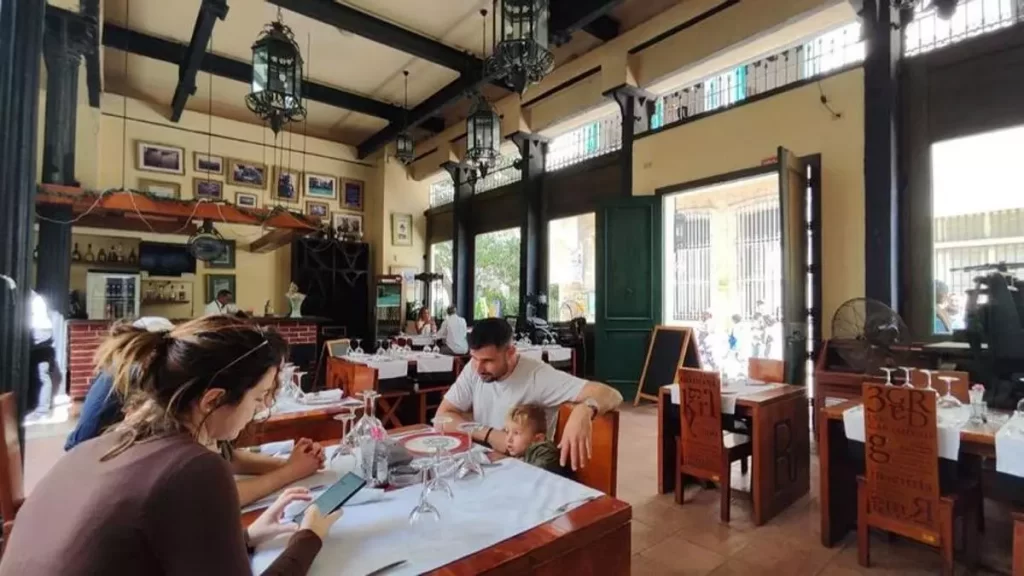
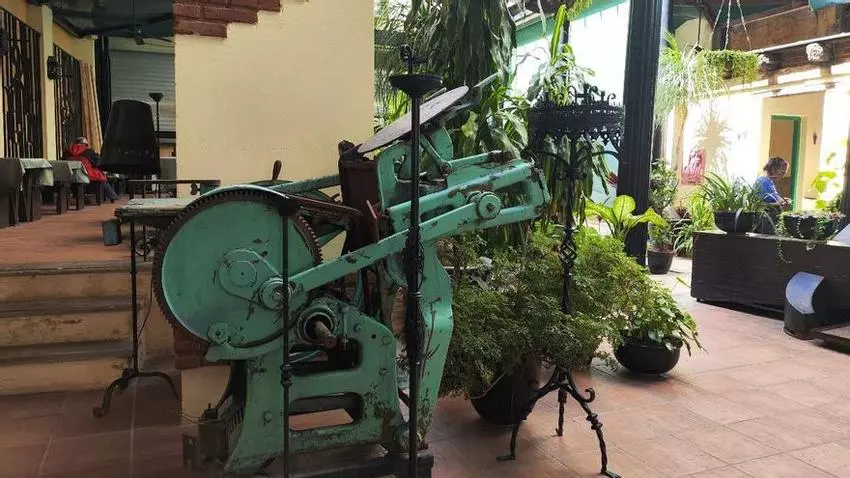
14ymedio bigger14ymedio, Juan Diego Rodríguez, Havana, February 22, 2024, Juan Diego Rodríguez  — Old newspaper presses, paper cutters, cast iron poles and typographical motifs on the walls in the La Imprenta (The Printing Press) restaurant located at Mercaderes 208 in Old Havana, show the stamp of the late Eusebio Leal. The Historian of the City did not spare  any expense to turn a demolished 19th century workshop into a place that, at the height of his career, strived to emulate the Floridita and the Bodeguita del Medio.

The waitresses still have the same delicacy with foreign clients that Leal demanded, and they now use a resounding euphemism: lobster and bread are not lacking but are “affected”. Although aimed at tourism, La Imprenta suffers from the same shortcomings as other state-managed premises, and diners soon realize it.

The smartest take a quick look at the menu by the door, and, before it’s too late, make a decision. “Are you going?” one of the employees asks an Italian tourist who disappeared up Mercaderes. 

In a hurry to leave, those who eat lunch almost never pay attention to the machines at La Imprenta / 14ymedio

Those who stayed for lunch this Wednesday can order a glass of juice stuffed with ice, a tuna tower with vegetables and some dishes that the habaneros have started calling “gourmet,” not because of their quality but because of their small size. The chairs of La Imprenta have different type faces on the back and the names – such as Bodoni or Garamond – of their inventors. continue reading

The tablecloths have patches,” noted a Cuban diner, avoiding resting his elbows on the stains of the fabric. A group of Canadians occupied a table near the window and asked for some starters. The waitress brought flakes of discolored ham and cheese, but they were denied the bread. “It’s ‘affected’,” she said.

Other dishes began to parade around the table. Potato puree with sweet potato flavor, yellow rice with a kind of ham and very little salt, a minimum portion of ropa vieja*, fish. “Any wine?” the Canadians ask. With pedagogy and some English, the waitress explains: “In Cuba there are no wines; the ones we have are Spanish.”

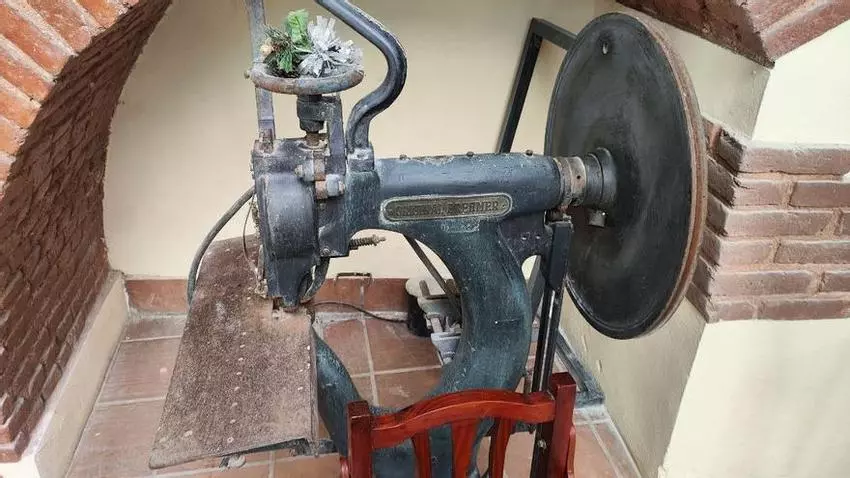
Artifacts from the early 20th century, from the Oswego and Brehmen brands, the restored presses pay tribute to a trade that already belongs to another era / 14ymedio

At the end of the meal, they wait for the dessert, fried ice cream. “The ice cream is delayed,” the employee warns once again, “and the fryer does not want to fry. It’s done working.” Canadians, of course, look at each other without understanding. “The bill, mi amor?” says the waitress, concluding the banquet.

The total is more than 5,000 pesos and brings a new dilemma. As soon as one of the diners draws a colorful Canadian bill from his wallet, the waitress grimaces and calls her boss. “Only euros or green [U.S. dollars]; we can’t accept Canadian dollars,” he explains. Resigned, the customers pay in Cuban pesos.

In a hurry to leave, those who eat lunch almost never notice La Imprenta’s machines. Artifacts from the beginning of the twentieth century, the restored presses of the Oswego and Brehmen brands pay tribute to a craft that now belongs to another era, and whose mythology Leal hoped to translate into foreign currency.

In 2010, the Historian’s Office mobilized a team of architects, joiners, blacksmiths and artists to remodel the old printing establishment, La Habanera, active from the 19th century until the triumph of Fidel Castro in 1959. The painter Juan Carlos Botello and his assistant Yailín Pérez Zamora were in charge of creating an immense mural on the main wall of the restaurant, and two lieutenants from Leal’s investment department – Loreta Alemañy and Yaumara Fernández – gave the go-ahead to the project.

Professional cooks and baristas were also hired to create a “thematic and emblematic” cocktail, in the style of the mojito or the daiquiri, that would characterize La Imprenta and make it internationally famous. To this day, the restaurant with the “affected” products has not found its brand or a particular flavor, and the Historian who created it no longer roams the streets of Havana.

*Translator’s note: Ropa vieja means “old clothes” but the dish is shredded beef.

Translated by Regina Ananvy
____________

COLLABORATE WITH OUR WORKThe 14ymedio team is committed to practicing serious journalism that reflects Cuba’s reality in all its depth. Thank you for joining us on this long journey. We invite you to continue supporting us by becoming a member of 14ymedio now. Together we can continue transforming journalism in Cuba.
Cubans and Tourists Are Without Bread Until the End of March, Despite a Donation of Russian Wheat

The “extension products” added to bread – such as cassava, pumpkin or rice – are not a solution, since they make up only 15% of the total necessary to make it / 14ymedio

14ymedio bigger14ymedio, Havana, 25 February 2024 — Once again, there is no bread in Cuba due to a lack of flour. The “complex situation,” as defined by the official press, will last until the end of March, according to Emerio González Lorenzo, president of the Food Industry Business Group.

Although the state media say that the “affects” to the basic basket began to “be reflected” this Saturday, it is something that consumers have noticed every day for months, even in establishments targeted to tourists.

Similarly, the report on national television indicates that the last shipments of raw material arrived at the end of January “and ensured the activity of mills and bakeries for most of February.” At no time does it mention that in the middle of last month, 25,000 tons of wheat donated by the Russian Government arrived.

That amount exceeds the 20,000 tons that, the authorities reported this Saturday, are necessary to cover the “standard basic basket” for a month. If this is the case, the shipment of Russian wheat should have been enough to supply the warehouses for the rest of this month and the next. continue reading

The Government, as usual, blamed the situation on the “financial restrictions basically due to the intensified blockade and the logistical limitations that Cuba suffers to bring wheat from distant markets.” However, the president of the Food Industry himself said that of the five mills that the Island has, only one, that of Cienfuegos, is operating, and it cannot produce more than 250 tons per day, of the 700 demanded by the rationed market.

The “extending products” added to bread – such as cassava, pumpkin and rice – are not a solution, since they make up only 15% of the total needed to make the food, the official media reports. Nor can they buy bread from private individuals, although the report says that “the purchase of imported flour by non-state forms of management is negotiated.” This contribution means only 3,000 tons per month, and, as González Lorenzo says, “the tons that arrive at the port will not cover the needs.”

It is not the first time that flour and, consequently, bread have been lacking on the Island. At the end of last year, the regime justified this shortage by saying that the war between Russia and Ukraine had made wheat imports more expensive, something that was denied by economists such as Pedro Monreal. Based on data from the Business Insider website, the expert claimed that the price of of the grain was at its lowest point since 2020.

Translated by Regina Anavy
____________

COLLABORATE WITH OUR WORKThe 14ymedio team is committed to practicing serious journalism that reflects Cuba’s reality in all its depth. Thank you for joining us on this long journey. We invite you to continue supporting us by becoming a member of 14ymedio now. Together we can continue transforming journalism in Cuba.
In Search of ‘Feito’ and Cabezon, the Founders of Cuba’s Most Famous Hardware Store

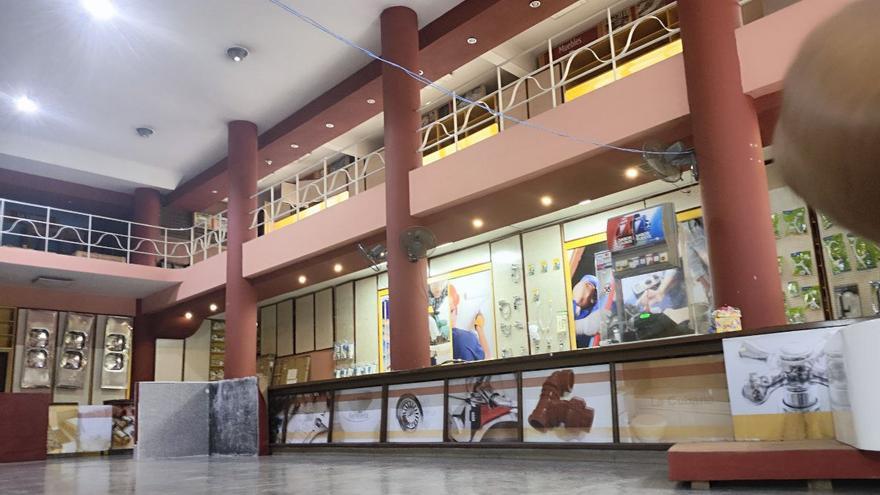
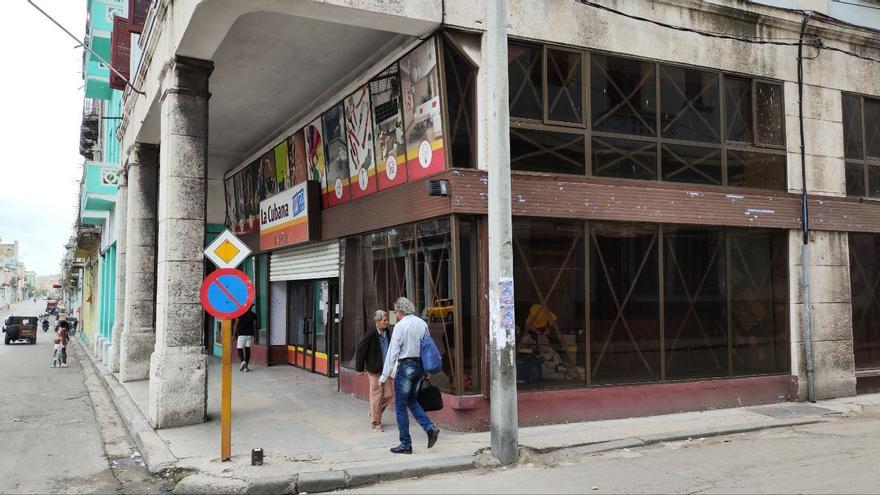
The hardware store is located on the corner of Reina and Lealtad, in Centro Habana. (14ymedio)

14ymedio bigger14ymedio, Havana, 18 February 2024 — No one calls the hardware store on the corner of Reina and Lealtad in Centro Habana by its official name: La Cubana. For all those who know the business, which was in its time the most important of its kind in Cuba, the place is called Feíto y Cabezón. The surnames of its founders, with some slight colloquial variations, transcended the nationalization, the plummet of the store’s offerings and even its reconversion to the current sales in freely convertible currency.

The documentary Cabezones, directed by the writer Luis Enrique Valdés Duarte, resident in Spain, and the actor Alberto Maceo, who lives in Germany, approaches the story of Nicolás Cabezón, a Spanish migrant who arrived on the Island with nothing but the clothes on his back and ended up creating the most famous hardware store in Havana. On February 24, the documentary will premiere at the Zorrilla Theater in Valladolid, Spain, and its filmmakers have responded to questions from 14ymedio. Both the words and the images captured in the short film speak of travel, entrepreneurship, dreams and absurdities, but also of stubborn, extremely “headstrong” people.

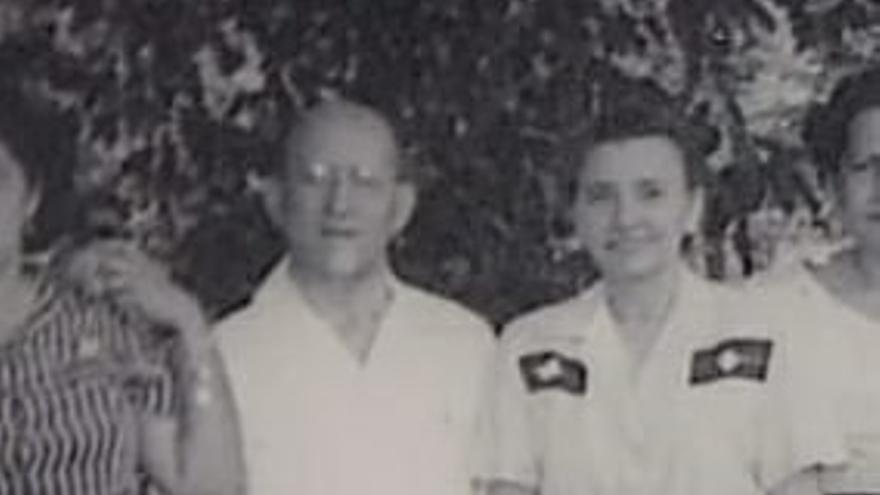
Nicolás Cabezón, in the center wearing glasses, along with his wife, Nena, and his two children, Mari and Pepito on his farm in Havana. (Courtesy)

Question. Screws, washers and nuts. Isn’t this documentary a little far from the topics that both of you have dealt with previously, closer to art, literature and theater?

Answer. In reality, it’s a documentary about memory, emigration, the effort involved in leaving your land and raising your head in another, about injustices and freedom. They are topics that interest us a lot and can be discussed, because they take place among the screws, washers and nuts, as well as between grooves and curtains or on the docks of a shipyard. It is true that we seem to have moved away from our destiny, but we have not betrayed it: this is a documentary about the emotions awakened by all the topics mentioned. continue reading

Q. Where did you begin to unravel the theads of this story? From entrepreneurship to emigration, or did it begin with suitcases and continue towards the business world?

A. Curiously, the reason was in the name of that hardware store. Every time we passed by there we asked ourselves the same thing: why is it called Feíto and Cabezón if it is on Reina and Lealtad?, assuming that perhaps it came from the name of its corner, as was the case with so many Havana businesses. We had a theory that perhaps the hardware owner had those physical characteristics (cabezón means a “big head”) and didn’t mind being called that affectionately. But nothing could be further from the truth.

Several of the descendants of Nicolás Cabezón were interviewed for the documentary. (14ymedio)

One day, now living in Urueña (Valledoid Province) we looked it up on the internet; it wasn’t easy to find something, but we did, and we were surprised: the founder of that store, whose last name was Cabezón, had been born in the next town, which you could even walk to. He had gone to Cuba in the hard years of the Spanish post-war as a poor child. There was a story to tell. There are only three or four inhabitants left in the town, but we managed to locate the descendants of Don Nicolás Cabezón, now older. What they told us, based on their faithful memories, gave substance to the film. They started with the suitcase, yes. And it was all very hard!

Q. Despite the years, the confiscation, the nationalization and the changes, people continue to call the hardware store on Reina Street “Feíto and Cabezón”. Why this popular persistence? Sound of the name or quality of the work they carried out?

A. We believe it’s both. It is striking how many places in Havana have preserved their original name. Reina Street itself is never called by its current name. The same thing happens with certain products and equipment: they have continued to be called after their most prominent and popular brands when they were in Cuba. Anyway, we know that what they built there was an empire through work.

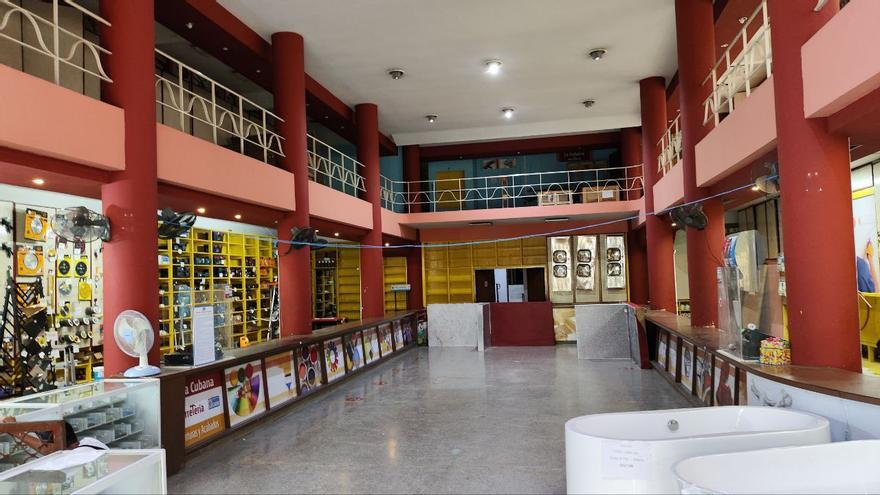
This is what the hardware store currently looks like inside. No one calls by its official name: La Cubana. (14ymedio)

The hardware store became a reference for Havana society. If you couldn’t find something in Feíto and Cabezón, it didn’t exist. The reason is everything: indeed, the name is sonorous and even funny to say. Note that the surname “Feito” doesn’t have an accent on the “i”. It comes from northern Spain and means “done,” but since “Feito” was followed by “Cabezón”, Cubans added that funny accent and have resisted calling the hardware store by its current name. The store was actually called Feito y Cabezón.

Q. What were some of the surprises that appeared during the research for this documentary?

A. The first was that simple accent that changes everything in the name. From there came many others: the great impact the significant prosperity with which, twenty years later, Nicolás returned to his town had on his family; the relationships he had established with the highest strata of Cuban society; his way of traveling… Then, his spectacular loss, so painful and so unfair, after the times he held out his hand to so many people. The greatest surprise was his family, so lucid and kind, with such clear memories. They even remember the name of the ship that brought them back to Spain for the first time. And, finally, his stubbornness, perhaps what we have admired the most: his immense will to stand tall until the end.

Q. What should viewers expect? A documentary focused on the past? Any clues about the Cuban future?

A. Look, categorical knowledge of the past is fundamental for the progress of any nation, for the most accurate understanding of the present and, above all, because it contains, without a doubt, many ways to find the solution to our current problems. We are not the ones to say. José Martí said it more clearly, in a “criticism of society and education”: “The past is the root of the present. We must know what it was, because what was exists in what is.”

On February 24, the film will premiere at the Zorrilla Theater in Valladolid, Spain. (14ymedio)

However, we know that great damage is happening to the Cuban people every day, and that is the biggest key, the main reason to react once and for all.

What the viewer will see, in any case, will be an act of deep respect for these people from the Castile countryside who did not give up, even in the hardest years, in their commitment to maintain their principles, to fight for a better future, to save their dignity, to make their way wherever they went, to face disgrace with their eyes open. It is a round trip: that of any emigrant who one day left everything behind. It is, therefore, a mirror, the mirror of our grandparents’ house in which we have looked at ourselves again. And nothing more!

Translated by Regina Anavy

____________

COLLABORATE WITH OUR WORKThe 14ymedio team is committed to practicing serious journalism that reflects Cuba’s reality in all its depth. Thank you for joining us on this long journey. We invite you to continue supporting us by becoming a member of 14ymedio now. Together we can continue transforming journalism in Cuba.
Anchored in Regla, the Mysterious Sixth Turkish ‘Patana’ Contracted by Cuba Is Called ‘Erol Bey’

Suheyla Sultan, the most visible Turkish patana in Havana, generates 240 megawatts. (14ymedio)

14ymedio bigger14ymedio, Juan Izquierdo, Havana, 15 February 2024 — Anchored in the inlet of Guanabacoa and protected from the curiosity of habaneros, the exact location of the Erol Bey Turkish floating power plant — commonly called a ’patana’ — with its four chimneys, is not known. Located next to an industrial area, a 1,476-foot esplanade separates it from the Regla generator group to which it seems connected.

The Erol Bey, which appeared on Wednesday as the “patana of Regla,” provides 63 megawatts (MW) to the Electric Union. It is the third ship of the Turkish company Karpowership currently installed in Havana, along with the very visible Suheyla Sultan, with 240 MW, and the Belgin Sultan, with 15 MW. Silos, warehouses and flour mills surround the pier where the Erol Bey is anchored, and it can be reached by Nuestra Señora de la Caridad Street, in the municipality of Regla.

According to the National Office of Statistics and Information (ONEI), the patanas contributed 2,591 gigawatt-hours (GWh) in 2022, which represents 14% of the country’s total generation (18,323 GWh).

The Erol Bay, seen from Havana, is accessible only from the industrial area that surrounds it, something only possible for those who work in the surrounding factories, as a reporter from 14ymedio was able to verify. continue reading

Neither the records of Karpowership nor its project in Cuba, where it installed floating power plants for the first time in 2019, allude to the Erol Bey

The satellite images, on the other hand, clearly show the ship, smaller in size than the Suheyla Sultan, located in the port of Havana, and with four chimneys that, this Thursday, emitted a weak smoke.

Neither Karpowership’s records nor its project in Cuba, where it installed floating power plants for the first time in 2019, allude to the Erol Bey. A report by the Turkish media Deniz Haber Ajansi mentions the acquisition, by Karpowership, of a Norwegian oil tanker manufactured in South Korea, which it called – as an “example of loyalty” – Erol Bey, in honor of the then president of the Maritime Council of Turkey, businessman Erol Yücel.

However, it is not known if this ship, transformed into a patana, is the same one that is anchored in Havana. An argument in favor of this change is that, along with this ship, Karpowership bought another “twin” oil tanker that it did turn into a patana. This is the Esra Sultan, which, in 2023, was in the Dominican Republic. For both ships, the Turkish company paid 14 million dollars.

Maritime tracking applications have not given news of the Erol Bey’s location since 2017.

The Cuban government has been hermetic about the contracting of Turkish floating power plants. To achieve estimate of the cost, this newspaper searched for the information in the Dominican Republic, which contracted for two patanas – including the Esra Sultan – for which it paid 40 million dollars for a duration of 42 months. Applying the same calculation to Cuba, the cost would be 109 million for the same period, or 31 million per year.

However, if Karpowership and Havana share anything, it is the lack of clarity about their transactions, and it is impossible to know how much the Island is paying for them. This is not only an economic issue but also an environmental one. The patanas, as the Cubans in Havana know very well, are pollution bombs.

Immersed in an energy crisis, the country suffers constant blackouts, and its facilities go from breakdown to breakdown. Given the lack of fuel, the regime turns to its allies, who do not stop sending oil tankers to Cuban ports, often at the risk of non-payments.

An emblematic case is Mexico, whose oil company, Pemex, according to the newspaper El País, has accumulated a debt of 106 billion dollars, says the credit rating agency Moody’s.

“Cuba and Mexico have not made public the financing agreement for the more than 5.5 million barrels of oil sent by Pemex to Cuba during 2023, with an estimated market value of 390 million dollars,” University of Texas expert Jorge Piñón explains to this newspaper. The quantities sent in “January and February of this year indicate that the supply of Mexican oil to Cuba will not only continue, but could also increase,” he says.

To prove it, the expert says, there are the trips from Mexico to Cuba of the ships Vilma, Ocean Mariner and Delsa – which  transported 1.1 million barrels in January and February, and the Esperanza, which joins the route. The Esperanza, one of the ships that traveled between Venezuela and the Island, is abandoning its old route in favor of Mexico. “Is this a sign of fewer supplies from Venezuela or a simple rotation of tankers?” asks Piñón.

Another important player in Cuba’s oil energy destination is Russia, whose chancellor, Sergey Lavrov, will visit Cuba soon. The diplomat will have numerous topics of conversation with Havana. Among them, the estimated debt of 566 million dollars for shipments of 7 million barrels of oil during 2022, and 1.6 million in 2023.

From that visit, Piñón concludes, many decisions will come out that will affect the geopolitical balance of the region, in particular of Venezuela and Mexico, with tense elections ahead in 2024, and of Cuba, which depends on its allies to survive.

Translated by Regina Anavy

____________

COLLABORATE WITH OUR WORKThe 14ymedio team is committed to practicing serious journalism that reflects Cuba’s reality in all its depth. Thank you for joining us on this long journey. We invite you to continue supporting us by becoming a member of 14ymedio now. Together we can continue transforming journalism in Cuba.
A ‘Ponchero’ Manufactures Blood Pressure Monitors With Tires To ‘Save Money’ for Cuban Healthcare

Arturo Batista has delivered hundreds of rubber-based automotive parts for blood pressure monitors in Las Tunas hospitals. (Periódico 26)

14ymedio bigger14ymedio, Havana, 31 January 2024 — With truck engine casings  and tire valves, a Las Tunas ponchero (tire repairer) manufactures and repairs blood pressure monitors. Given the lack of resources and the impossibility of replacing equipment, the hospitals of the province have begun to order the material from Arturo Batista, and now they give him materials so that he can produce more.

Interviewed by the State newspaper Periódico 26, Batista remembers the first time someone asked him to replace the latex  in a blood pressure monitor. “That was in 2004, and I did it based on my experience as a ponchero, and it worked and is still working after all this time.”

The story of the ponchero drew attention on social networks, and some users questioned whether the material intended for vehicle parts should be allowed in instruments for measuring blood pressure. “I am concerned about the rigidity of the bands used in this work. I am referring to the material and its thickness;  let’s remember that it will be inflated by doctors with their hand, not with a bicycle pump,” warned a user on Facebook.

We are also talking with self-employed workers who make plastic parts, to guarantee the equipment valves, a very deficient part that would be much better than the metal ones

However, anticipating the reluctance of the patients, Alberto Charles Martínez, director of the Provincial Center of Electromedicine of Las Tunas, told Periódico 26 that “the bands made by Arturo comply with the quality parameters, and we are now managing the delivery of thinner rubber bands so that he can continue his work.” continue reading

“We are also talking with self-employed workers who make plastic parts, to guarantee the equipment valves, a very deficient part that would be much better than the metal ones. The monitors would thus be more practical and of higher quality,” Charles added.

What the press has avoided mentioning at all costs is the payment given to Batista for each of the bands he manufactures when “he needs help,” because he makes them with few resources and pays high prices for the tire casings and the valves. “If I am helped with the thin truck casings and the valves, I can make them quickly, as they’re needed,” he said.

According to the newspaper, “at the moment (Batista) already has made more than 50 that are used in the municipality of Las Tunas, and he has more than 50 orders, since the entire province demands the equipment.”  The report added that Batista is waiting for more valves in order to complete the more than 150 blood pressure gauges required by the Ernesto Che Guevara hospital.

The official press doesn’t wonder why the State is not investing anything in this much-needed equipment

Since last December, the man has delivered another hundred monitors to Public Health, most of them destined for the polyclinic Guillermo Tejas, which has “saved” foreign currency for the country. The official press does not wonder why the State is not investing anything in this much-needed equipment.

Last September, another similar story was published in Periódico 26, that of Dr. Pedro Oliva, who has been manufacturing orthopedic prostheses in Las Tunas for years using the plastic of buckets and plumbing tubes. The lack of professional equipment in hospitals, which lengthens orthopedic waiting times for months and even years, was his motivation to start manufacturing them himself.

During the worst moments of the COVID-19 pandemic on the Island, the stories of people who manufactured plastic connectors so that more than one patient could be assisted with a single oxygen cylinder also became famous.

The crisis of supplies, equipment and personnel in Cuban hospitals is increasingly worrying, to the point that the Island’s own doctors sent to “missions” in poor countries of Africa have begun to send donations of syringes, gauze, gloves and all kinds of disposable material that, despite their low cost, are not frequently purchased by the Cuban Government.

Aid from countries such as Japan, Spain, Italy and several organizations such as the United Nations and UNICEF, has also been a lifeline for the destitute Cuban health system.

Translated by Regina Anavy

____________

COLLABORATE WITH OUR WORKThe 14ymedio team is committed to practicing serious journalism that reflects Cuba’s reality in all its depth. Thank you for joining us on this long journey. We invite you to continue supporting us by becoming a member of 14ymedio now. Together we can continue transforming journalism in Cuba.
15 People Are Accused in Cuba of International Drug Trafficking From the East of the Island

The detainees were seized with 300 pounds of marijuana. (Capture)

EFE (via 14ymedio), Havana, 17 February 2024 — The defendants are accused of the crimes of international drug trafficking, assault and illegal possession of firearms, in addition to other illicit acts that were not clarified.

All were tried in the Provincial Court of Santiago de Cuba on an unspecified date. The report also did not clarify when the court’s ruling will be announced.

The group, which was led by a Cuban residing abroad, tried to establish “a support base” on the Island to introduce cocaine and synthetic drugs by sea from the eastern side of the country.

The defendants are accused of the crimes of international drug trafficking, assault and illegal possession of weapons

The detainees were seized with 300 pounds of marijuana, a “large amount of money,” “satellite phones” and a “firearm.”

To avoid being detected on the roads, the accused used a car with a tourist plate, according to police information.

In recent days, Cuban officiadom has tried, through its news media and other means, to reinforce the idea that they are “cracking down” on the increased crime and “social indiscipline.”

Translated by Regina Anavy

____________

COLLABORATE WITH OUR WORKThe 14ymedio team is committed to practicing serious journalism that reflects Cuba’s reality in all its depth. Thank you for joining us on this long journey. We invite you to continue supporting us by becoming a member of 14ymedio now. Together we can continue transforming journalism in Cuba.
The Mexican Police Find 22 Cubans in a Drug Trafficking House

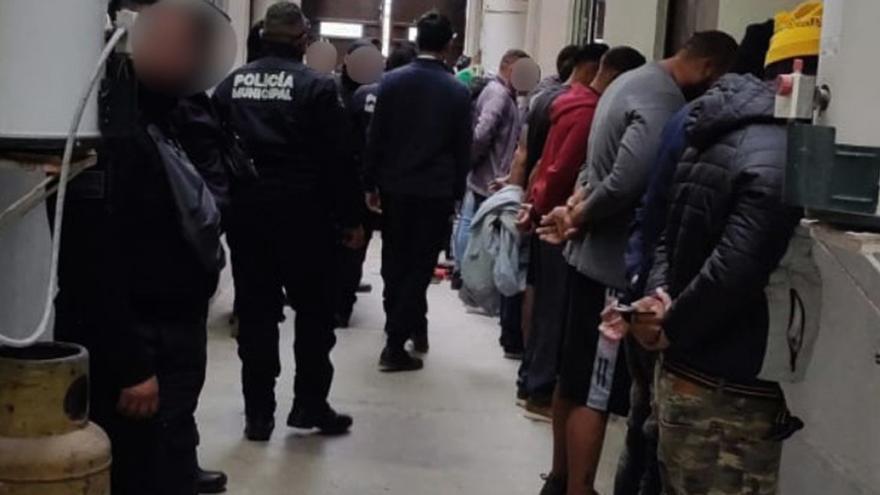
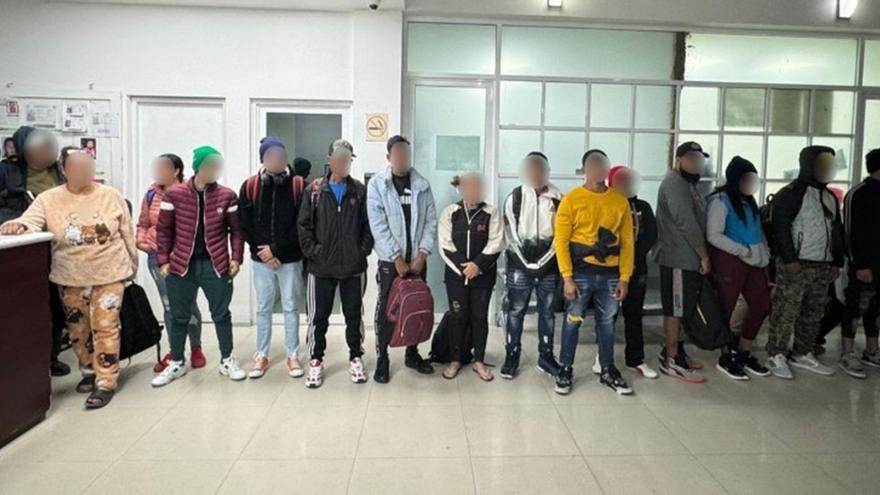
The Cubans were found during a search and seizure operation where drugs were being sold. (Municipal Police)

14ymedio bigger14ymedio, Ángel Salinas. Mexico, 1 February 2024 — A group of 22 Cubans in an irregular situation – seven women and 15 men – was found this Wednesday in a house located in Tultepec (State of Mexico), where drugs were also sold. On their journey to the United States, “the migrants sought protection in this area, not knowing that it is one of the most violent and where the sale of drugs, extortion from businesses and theft predominates,” municipal policeman Efraín Zamudio tells 14ymedio.

The officer specified that the migrants were found during a search of the house after an anonymous complaint about the sale of narcotics. The statement of the state prosecutor’s office confirms the “seizure of bags with narcotics.” Zamudio specified that “the drugs came from drug dealers who were not there at the time of the operation.”

One of the women said that they had arrived there a day earlier and paid 700 pesos for a three-day stay to someone named Fermín, who presented himself as the owner of the house. “We don’t know about drugs, we come from Tapachula,” the Cuban told the officers. continue reading

Zamudio mentioned that because drugs were found, medical tests were performed before the Cubans were handed over to the National Institute of Migration. “A simple protocol, which always respects the human rights of migrants,” stressed the official.

The municipal police of Tultepec delivered the Cubans to Migración on Wednesday, and they were transferred to the station in Las Agujas, in Mexico City, a place that several Cubans have denounced for attempts at extortion and threats by the agents.

After verifying that the Cubans were in good health, they were handed over to Migration. (Municipal Police)

Mayelín Díaz Vargas sent this newspaper a complaint last November against Jorge Rosalino Valencia, head of operational services in Las Agujas. The agent threatened her with promoting her transfer to the state of Tabasco for deportation to the Island if she did not remain silent. This woman had to pay $2,500 dollars for her release, despite the fact that she presented an amparo, which allowed her free transit.

In February of the same year, relatives of Luis Ángel Sánchez and Noelvis La O Pereira sent this newspaper information about the arbitrary detention of Cubans at Mexico City International Airport despite having safe-conducts granted by Migration. These people were kept for several days in Las Agujas.

An extortionist, pretending to be a lawyer, asked La O Pereira’s family for $5,000 in exchange for processing his release, arguing that he presented false documents. However, after several days and in the face of complaints in the media that stated that the agents were violating article 37 of the Migration Law. These people had a safe-conduct pass and also humanitarian parole for the United States, so they could not keep them imprisoned. Sánchez and La O Pereira were released and are now in the United States.

Translated by Regina Anavy

____________

COLLABORATE WITH OUR WORKThe 14ymedio team is committed to practicing serious journalism that reflects Cuba’s reality in all its depth. Thank you for joining us on this long journey. We invite you to continue supporting us by becoming a member of 14ymedio now. Together we can continue transforming journalism in Cuba.