God Bless America / Rebeca Monzo

My aunt is one of the many thousands of Cubans who never tires of thanking that nation that welcomed her and permitted her to safeguard the security of her adolescent son, giving her the opportunity to work and forge a better and more secure future.

Even so, since her prolonged exile, which began in 1961, she does not let a single day go by without thinking of that marvelous land where she was born, studied and had a beautiful family and which she never intended to abandon until she found herself forced to do it.

Within days she will turn 99 years old and still she keeps dreaming of returning to a free Cuba, although she is now aware that those who will enjoy that forthcoming moment are going to be her grandchildren.

Happy July 4th to the nation and people of the United States of America.

Translated by mlk.

4 July 2014

Lilo, An Artist Who Fed Himself From Misery / Angel Santiesteban

Lilo Vilaplana

When I began working in Cuban television, in the second half of the eighties of the past century, the first person they introduced me to was Lilo Vilaplana. He was already a star Assistant Director and they assigned him to teach me, in practice, his expertise.

We immediately became good friends, and friendship flowered as if an elf had taken us by the hand. I joined the post-production of a children’s series directed by Roberto Villar, and we would begin to produce an adventure fantasy written by the brilliant writer Daina Chaviano.

In the serial edition, we could see from our booth how they accommodated the trial of the Number One Cause of General Arnaldo Ochoa. I remember that our editor was famous for being one of the best in the trade, and he recognized that the soldier who was doing it in the other booth was excellent.

continue reading

For example, in the scenes where the Republic’s Prosecutor or Raul Castro spoke to Ochoa directly, he replaced his angry face, sometimes his ironic smile, and showed him tired, jaded and perhaps even drugged, making him appear ashamed of what the Prosecutor or Raul said to him, like someone who recognized that he had made a mistake, and he deserved it.

That which I lived together with Lilo — and which maybe was the first injustice that we attended as witnesses — was a seed of rebellion. We swallowed that, and — in our youth, at 20 — maybe had awakened our consciences. Almost thirty years later, those beginnings have made us more deeply know the pride of being friends, in spite of geographical distances.

I remember those years of human and artistic development, where we shared his theater works and my stories. Taken by the hand by the persevering elf, we went to propose characters to Lili Renteria, to Jacqueline Arenal, who rejected one princess character because she preferred to be the witch.

Once, in the “Aquelarre” Humor Festivals, I was with my partner trying to gain access and, when it seemed that it was impossible because of all the people who were still outside, I saw Lilo passing in a line of five people who made way among the tumult contained by police and ropes.

I called to him, and he stopped with a smile that even now — remembering it — moves me; I had to say nothing else, he took me by the arm and put me ahead of him.

He was always giving like this; I believe that the hardships we have experienced have placed us on the same side, that I have always recognized that I had a childhood full of poverty, my mother — alone — raised five children and sometimes we had to go to school with holes in our shoes, or in the winters, we stayed in the house because we had no coats.

Scene from "The Death of the Cat" with Albertico Pujol

I wil never forget that Lilo, when he decided to become an artist, the first thing that he understood is that he could not achieve his dreams in his native and beloved Nuevitas, so “maddened,” he arrived in Havana without knowing anyone; that was the great course of his life, since he slept in the funeral home or sneaked into hotel pools in order to bathe.

His first great triumph was to get work in the Cuban Institute of Radio and Television (ICRT); his second triumph was to rent in the building adjoining the Cathedral in Old Havana. It was a small room without either bath or kitchen, which he celebrated as if he lived in a small palace.

Entering that citadel was like arriving at a giant anthill. The bathroom was collective, and Lilo told me that when the women bathed, their husbands had to protect them so that they were not seen. The citadel that Lilo recreates in his short “The Death of the Cat,” was based on that where he lived, very close to his friend Raul Guerra, where he took me once to listen to his mastery; there also I met his daughter, who was at that time in that interval of leaving childhood and entering adolescence, and who later would become that excellent writer who today is Wendy Guerra.

Lilo Vilaplana, Director

All this preamble in the life of Lilo was knitting or rather soldering his bones, those stories that — at times — you don’t know whether to laugh or cry, because he passes through the so extreme social dramas that Cubans — and so artists imitate it — tinge with humor, in order to avoid melodrama, and which serve as a safety valve, letting pressure escape.

All those human pressures, sadnesses and miseries with which Lilo coexisted served him — besides feeding and strengthening his creation — to — for the second time — arrive at an unfamiliar city, also in a foreign country, and in Lilo’s case, overcome all the obvious obstacles for any immigrant who, by luck, arrived with two suitcases, one of a trade and the other of talent.

Angle Santiesteban-Prats
Lawton Prison Settlement, June 2014

Translated by MLK

Santa Ana In Sight / Juan Juan Almeida

How much Santa Ana day has cost us, and as always, as the date, July 26, approaches I have zero tolerance. Already this year they are announcing the celebration will be in the new Artemisa province.

Then, all the national press overflows with unending lies, and I read things like this: “In this province by the minute the work atmosphere, enthusiasm, commitments and pride are on the rise, it barely rests, daily we check the previewed works and other actions linked with the population’s quality of life, with the improvement, beautification, and sanitation of towns, cities and centers, declared Raul Rodriguez Cartaya, chief of the Provincial Administration Counsel.”

And it offends me that they keep believing that we citizens are revived by accepting as true this disrespectful stream of lies knowing that the country is falling to pieces.

Translated by mlk.

25 June 2014

Now They Will Leave, But Illegally / Juan Juan Almeida

Gelkis Jimenez, Adriel Labrada, Carolos Manuel Portuondo, Alejandro Jaime Ortiz, Yasmani Hernandez Romero and Diosdani Castillo were ballplayers excluded from a pre-selection of 43 players that was prepared to face a United States university team next July.

According to the president of the Cuban Baseball Federation himself, Higinio Velez, the reason for the elimination is that the mentioned players were caught when they tried to leave the country. More foolish than foolishness, I ask myself if instead of suspending them, if it is not better to let them go. It does not even deserve comment.

Translated by mlk.

26 June 2014

Cuban Mission in Venezuela in Danger / Juan Juan Almeida

They add up to thousands, the Cubans, health professionals, who have been sent to Venezuela since the first Cuban Medical Mission landed in Caracas December 16, 1999.

Our technicians, doctors, nurses; they continue and will continue fulfilling the Hippocratic Oath in the South American country and the sacred duty of offering medical attention to all who need it.

The enthusiasm of the first collaborations has eroded, today all the personnel of the Cuban medical cooperation seem to be transitioning to a bad moment, full of insecurity and uncertainty, because among many other situations, they confront the discontent of a wide sector of the population.

So shows a classified report dated last Friday, June 13, signed by Dr. Victor Gauter, chief of all the missions, and sent with urgency to the Cuban Public Health Ministry. continue reading

The document in question asserts that in the Carabobo state alone, located in the north central coast of Venezuela, in a central region of the country, in the first week of June, that is to say, from Sunday the first until Saturday the seventh, the following points were given which I quote verbatim because of their importance:

– Nine Cuban cooperators were threatened by Venezuelan nationals. Among the main causes of these threats are the relationship of a couple of married nationals and political issues.

– Two collaborators deserted, one stomatologist and one a rehabilitation technician from Valencia township.

– Five volunteer workers were attacked in different townships of the State.

– Two popular medical offices were stoned, one in the Valencia township and the other in the Naguanagua location.

– In the Bolivar and Marti CDI, located in the Guacara township, they hung posters that said, “Cubans out.”

– At the “La Libertad” stomatology clinic, ASIC Bolivar, also in the Guacara township, they opened a hole in the wall and they stole all the instruments and halogen light from the display case.

– Eight collaborators were urgently hospitalized on presenting symptoms of dengue fever.

It is a lot for only one state, and too much for a week. But before such concrete events, with clear traces of a serious conflict that looms, the directors from Havana responded with their habitual irresponsibility and, without abandoning the repeated formula of false humanism, they sent an official who travels states with the mission of recruiting personnel in order to form groups of Cuban computer experts linked to social networks who will flood Twitter uploading photos of achievements and “red Sundays.”

Come on, as if real problems could be controlled with visual solutions. We should not forget that the damages caused to people, with the sole objective of politicizing, have not only consequences but also guilty parties.

Translated by mlk.
18 June 2014

Cuba: The Tricks of the Embargo / Ivan Garcia

titltlelele

In Havana, the good medical specialists always have at hand two kinds of treatment for their patients.

“If it is a person with family abroad or of high purchasing power, I propose that he go to the international pharmacy to buy the medications in foreign currency because they are of higher quality and more effective. Those who cannot, then I prescribe the treatment approved by the ministry of Public Health with medicines of low quality manufactured in Cuban laboratories or of Chinese origin,” reports Rigoberto (name changed), an allergist with more than two decades of experience.

When you visit one of the 20 international pharmacies located in the Cuban capital, you can find a wide range of medicines patented by pharmaceutical companies of the United States.

From eye drops, syrups, tablets and ointments. Their prices instill fear. Lidia, an engineer, browses the shelves meticulously in search of Voltaren eye drops, indicated by the ophthalmologist to begin a treatment of her mother who underwent cataract surgery. continue reading

“It costs a little more than 10 CUC (the minimum monthly wage in Cuba). I have to buy two bottles, 20 CUC, which is my monthly salary.  Thanks to relatives living in Europe I can get it,” says Lidia.

In the same pharmacy, Yamila, a housewife, waits to pay for 15 envelopes of Inmunoferon AM3 stabilized in an inorganic matrix that doctors usually recommend for allergic patients or to raise the body’s defenses after a prolonged treatment with antibiotics.

“It is shameless of the government to sell it so high. My sister who lives overseas sends me the boxes with 90 envelopes and each one costs her 18 dollars.  In the international pharmacies they sell you 15 envelopes for 8 CUC.  And then they fill their mouths talking about the blockade (economic embargo) of the United States against Cuba,” says Yamila.

On the island, the “blockade” is at fault for almost everything that does not work:  the dirtiness of the streets, empty warehouse shelves and cracked buildings in danger of collapse. A perfect alibi where lazinesss, low productivity and the lethal Creole bureaucracy are hidden.

A government never had such a powerful weapon for justifying its impotence. “Whether lack of soap, toilet paper or condoms, the blockade is to blame. There exists a vast catalog of jokes at the expense of the blockade.  And it has become a joke,” says a newspaper vendor.

“The blockade,” says a pre-university student, “affects only people who have no access to hard currency. With hard currency everything is in the stores. From toiletries, food, computer equipment and domestic appliances.”

When you travel the stores located inside the Miramar Center complex, you will notice the wide range of products with US patents.

In a repair shop for electronic equipment, refrigeration and home appliances of the CIMEX chain, which is controlled by military firms, on San Lazaro and Carmen, in the 10th of October township 30 minutes from downtown Havana, you can see great publicity about the qualities of RCA, Hamilton Beach, Black & Decker and other brands patented in the United States and which sell like hotcakes in the hard currency stores.

Speaking of the embargo has become a cliche. People mechanically repeat the official line. I asked 7 people between ages 18 and 35 about the reasons the United States government instituted it, and they did not know how to explain it to me.

“I believe it was because Fidel promulgated socialism in Cuba.”  “I don’t really know, but it is unfair, their fault that many Cuban children do not have the medicines they need.”  “They should lift it immediately, so that these people (the Castros) will not continue the same old story (line),” were almost all the answers.

No one knew how to answer why then Coca-Cola and HP printers are sold and the regime acquires a bus with parts and additions Made in the USA.  But the average Cuban is as tired of the embargo as of his aging rulers.

They intuit that the blockade is not at fault for the marabou weed that overruns the countryside, the scarcity of oranges or the astronomical prices of meats, fruits and vegetables in the farmers’ markets. They live with their backs turned to the furious anti-embargo lobby that is happening on the other side of the pond.

Fermin, a cobbler who works in a doorway of Calzada in 10th of October, was unaware that a delegation of the United States Chamber of Commerce visited the island and, among its objectives, is to create mechanisms for granting credit to small businessmen.

“You speak seriously or it’s a joke. I cannot believe that I am a small businessman. I doubt that if they someday award loans to individuals, we will be the beneficiaries. The favored will be the same as always, the children of ministers and retired ex-military who have businesses.  We screwed will always be screwed,” vows Fermin.

What it has to do with, in this new dynamic to improve relations and relax the embargo, is that there exist multiple legal tricks and legal created by the olive green regime in order to control the emergence of a class with economic power.

In the first utterances of the Economic Guidelines approved by the last Communist Party Congress in April 2011, the government of General Raul Castro plays its cards face up, signalling that the measures are designed so that citizens involved in self-employed economic activities cannot accumulate capital.

Evidently, the “fine print” has not been read by the politicians and businessmen who in the United States are carrying out the campaign to lift the embargo.

The cobbler Fermin is clear: “Here the private worker who makes a lot of money is labelled as ’criminal.’  And what awaits him might be jail.”

Ivan Garcia

Translated by mlk.
21 June 2014

The Deluded / Regina Coyula

There are those who walk without watching who walks behind, if they seem mysterious speaking on the phone it is for the purpose of mortifying a little the listening elves, they take for granted that some neighbor(s) take(s) note of their movements and visits, but it does not interest them. They live with the decision to behave as free beings without allowing the government’s barriers, within which all that is not expressly authorized is prohibited, to constrain them in the least.

Others prefer a stealthy attitude, they communicate with signals, they have designed an alternative vocabulary and they live under the conspiracy theory in the category of major players.  They sleep with one eye open, they see ulterior motives in everything.

Not many of the first group are free, nor are many of those controlled by paranoia watched.

Translated by mlk.

18 June 2014

The Sewer Waters’ Phantom Truck / Gladys Linares

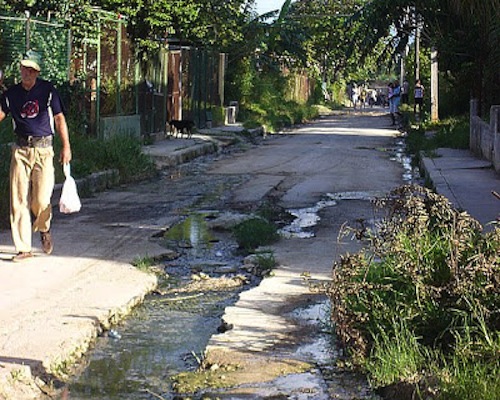
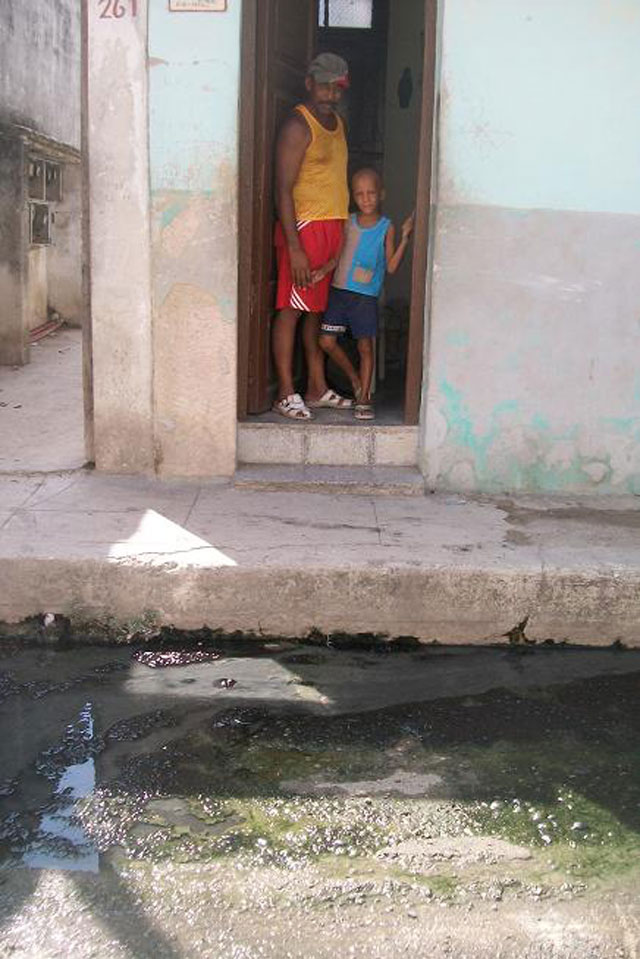
Many Havana streets barely have any pavement. The drains are clogged. With the rains the overflowing sewers allow sewage out. They try to justify these difficulties with the Special Period, everyone knows that the neglect began in 1959.

Cubanet, HAVANA, Cuba, June 13, 2014 — We residents of the capital have seen how the streets and avenues have been deteriorating for more than 50 years, arriving at the critical situation in which they are today. Although roads are an expensive activity, and the government says it has assigned millions to the rehabilitation of the capital’s main arteries, if a profound drainage restoration is not undertaken, the situation, which is critical, the problem of the floods, as well as the sewer water in our streets, will not be resolved.

The sewer system was designed for a certain number of residents, but Havana’s population has been growing by leaps and bounds, and this creates difficulties. A few days ago through the media it was announced that the government was engaged in improving the capital’s pipeline system.

Barely two years ago the official media released a lot of propaganda about the repair of the avenues, among them Calzada de Dolores, Lacret, Porvenir, Diez de Octubre. But, as is already customary, these jobs were not well done, and a few days ago it made headlines again that the avenues already need new repairs. continue reading

Today many city streets are practically back roads, full of dirt, because there is barely any pavement left. The drains are clogged, and as the sewage system networks are not rehabilitated, when heavy rains flood the streets, the overflowing sewers allow sewage waters to get out. Although there is an effort to justify these problems with the Special Period, everyone knows that the neglect dates from 1959.

Many Havana neighborhoods exemplify this reality. To just mention one, in Santos Suarez, Diez de Octubre municipality, in Rabi and Enamorados streets the situation is critical. But that is not the only place where this occurs. Today Ricardo, a young man who lives on Lagueruela street in Lawton, told me that his patio was full of dirty water that smelled like a grave, and that as the downpour got worse, more came out and ran through the halls towards the street. Also the neighbor, an older lady, called him, startled because water was coming out of her bath drain.

For some time, some people have been removing the drain covers when the streets flood. They think that this way the water will drain faster and so they will prevent the flooding of their houses. But as these grills almost always are in the middle of the streets, this constitutes a danger not only for the pedestrians who try to cross the streets, but also for vehicles like bicycles and motorcycles. Jorge, a neighbor, tells me that recently a man caught his attention and directed him to call the high pressure truck that extracts black water, and he looked at him mockingly and shot back: “Buddy, that truck is a ghost!  I’m tired of calling it and it not coming!”

Translated by mlk.

14 June 2014

Public Health In Cuba, Between Missions, Rabies and Dengue Fever / Juan Juan Almeida

The Cuban Ministry of Public Health turned 105 years old.  Congratulations. Personally I think that health is the most precious non-material heritage a human being can count on.  It should be considered a right for all citizens of the world and a responsibility of each State.

It is sad to know that in spite of the wide arsenal and enormous development that medicine world wide counts on, almost 10 million infants and pregnant women die prematurely each year for causes that, in large measure, are preventable.  Such a powerful reason leads me to applaud the collaboration that, in medical matters, the Ministry of Public Health (MINSAP) and Cuban doctors offer in different countries.

Ignoring this would be a form of blindness; but clearly, because there is always a why, we should not forget that behind this so fiercely kind action, health has also a conquistador nature. continue reading

Sending doctors to the world is a charming and very wise way of creating an army of believers comprised of grateful people.  For each cured patient, there is much more than a satisfied human being.  It seems to me a false altruism that goes in search of lights, flowers, applause and followers.

It is a subtle way of manipulating the opinion of each assisted patient, his friends, acquaintances and family members, in order to capitalize on his logical and sincere appreciation.  It is investing in publicity to provide in pills “revolutionary” ideals.  Sad paradox, because such performance is much more than a simple act of charity; it is a crude strategy to increase the influence of the Cuban government in the Americas and the world, or to change the balance of forces in certain parts of the planet.

Right now, with the purpose of silencing the students who daily protest in the streets of Venezuela, in order to promote votes in favor of the ruling government, President Nicolas Maduro, with a plain loss in popularity, asked his Cuban counterpart to increase, within the next 45 days, the personnel of the medical mission with a new campaign called “Neighborhood inside but well inside,” which is forecast to place medical clinics in places of difficult access with the help of the army, mayor’s offices, and community leaders.

In this new binge of politicized healthiness, Cuban doctors will confront very adverse scenarios, and not because of dealing with going to areas in which extreme poverty reigns, but because in these zones — according to the report that Havana’s MINSAP has — there are no guarantees of security for medical personnel who will live badly in tents where there do not even exist adequate conditions for storing medicine.  Nevertheless, this month of June will be “the month of missions” with the launch and “re-launch” of social programs to buy votes and bully hopes.

Of all this, the worst is that while they send thousands of Cuban doctors abroad, domestic health is neglected.  Some days ago, the health and epidemiological group from Havana City issued an alert that they have tried to hide; but however much they persist in regulating the contents of the national press under constant censorship; “when the press shuts up, the walls speak.”  It is rumored in the halls of the Ministry of Public Health about the recent detection of at least two cases of an illness that many years ago was eradicated on the Island, rabies in humans transmitted by ferrets, bats, and/or stray dogs.

When I say it; the Revolution’s book should be entitled “55 Years of Lies and Perversion.”

Translated by mlk.

9 June 2014

What Is Known Is Not Questioned / Juan Juan Almeida

According to Martin Pupo, director of the Holguin Operations Base Business Unit, since March 2013 they put into operation Fleet Management and Control (on board computers known as GPS) in trucks that supply the business network far and wide in the Holguin municipalities.

The idea is to stop fuel loss; but a recent inquiry carried out by MINAL found that the business in question used monthly something more than 21 tons of fuel.  And it is logical that the costly measure will not achieve its objective because the neighbors say that in reality those who know “where the bodies are buried” are the ones who are implicated, those who steal and sell petrol are not the truck drivers but the managers signing false delivery orders.  I did not tell them.

Translated by mlk.

3 June 2014

The Other Side Of The Coin / Rebeca Monzo

She is a beautiful woman, petite, friendly, very intelligent, with a great sense of humor and even a certain naivete that makes her appear still younger than she is.  Also, bachelors and masters in science, with many accumulated scientific achievements in her long career.

She lives in the heart of El Vedado, in a building from which in another epoch was observed a beautiful view of what was once one of the most architecturally important and lovely sports parks of our city, with a blue, almost always calm sea as a backdrop.

This park, like all the city, including, it is clear, the building where she resides, has been deteriorating with the passage of time and government apathy, to the point of becoming ghosts from a shining era now passed.  In any case, the same was remodeled and completed in 1960 to form five zones:  park, stadium, gymnasium, pool, children’s playground and volleyball and basketball court, with stands for 1,020 spectators, where the architect Octavio Buigas was showcased with the solution of the spectacular tiers that seated 3,150 people, covered by a light structure of concrete “domed shells” 125 meters long “kindred” to the famous Zarzuela Hippodrome in Madrid. continue reading

Her balcony is just across from this pitiful panorama today.  She lives alone and works in a hospital, so that for more than eight hours a day she is required to abandon her home, fearing the delinquents who take refuge in said tiers.  She, when she is home, usually peeks out to the balcony costumed on different occasions, sometimes as a firefighter, others with cap and sport suit and with hat and glasses, thinking in this way to mislead that element she so fears, with the objective that they believe that several people live in her apartment and so that it will not occur to them to plan anything twisted against her.

As she explains to me, there, under the tiers that are falling to pieces, live “homeless,” drug addicts, and all kinds of “characters” who even carry out clandestine dog fights, without the police trying to impede these criminal activities, given that, from what she and the neighbors have been able to observe, they are not only complicit, but also participants.  While in our country the Media “extols” discipline, order and socialist integrity, this only shows the other side of the coin.

Translated by mlk.

4 June 2014

Carolos Alberto Montaner: Someday God Will Awaken / Angel Santiesteban

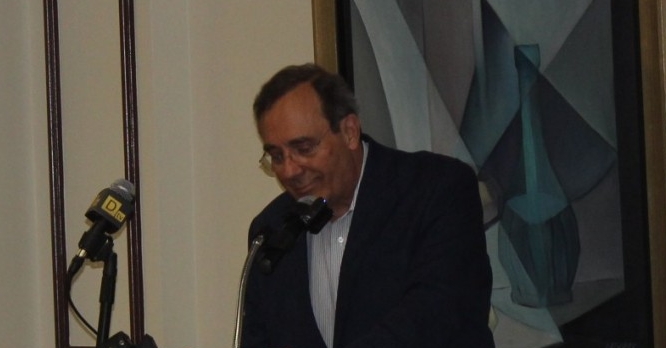
I thank Neo Club Editions, Armando Anel and Idabell, his wife; Barcardi House of the University of Miami and the Institute of Cuban and Cuban-American Studies, and the Alexandria Library for the opportunity to present this excellent novel by Angel Santiesteban Prats, The Summer that God Slept, winner of the Franz Kafka literary prize, Novels Genre 2013.

I want to especially mention the writer Amir Valle who, at the time, called to my attention Santiesteban’s human and professional quality revealing to me an exceptional writer.  Amir’s devotion to Santiesteban and his generous solidarity is good proof that communism has not been able to destroy the ties of friendship, although it has tried to control the emotional life of Cubans.

Repression as general punishment and intimidation

Santiesteban is a magnificent Cuban narrator, born in 1966.  He was incarcerated by the dictatorship and condemned to five years in prison, supposedly for a crime of domestic violence that was never proved. In reality, what they punished were his criticisms of the system and his confrontation with the regime. The accusation was only the formal alibi to hide political repression.

Naturally, the Cuban regime hides its repressive hand behind the supposed independence of a judicial power that in Cuba is only another feared expression of the apparatus of terror.

If the Castro regime, really, felt that it should pursue those guilty of great atrocities, and if it did not use the tribunals selectively in order to harass its adversaries, it would have severely punished commander Universo Sanchez when he shot to death an inconvenient neighbor. Or it would have initiated a responsible investigation into the assassination of dozens of innocents on the tug boat March 13th. Or it would have delved seriously into the accusation made by Angel Carromero about the probable execution of Oswaldo Paya and Harold Cepero in July 2012, to mention only three cases among the hundreds of unpunished crimes and abuses that Cubans have had to endure.

I have seen, lived and suffered enough to know that the dictatorship invariably lies about the nature of its adversaries. It accuses them of being terrorists, CIA agents, alcoholics, traitors, or, as in this case, even of domestic violence, in order not to have to assume an unpleasant truth: they use defamation, acts of repudiation, beatings, jail and, sometimes, the firing squad, to reign in critical people who have the audacity of saying what they think.

At the same time, those maltreated by word or deed sow terror with the objective of making an example that will not be spread. It is preventive punishment. They strike so that others will lower their heads.

Repression in Cuba, well, it has two clear purposes that Lenin was already recommending at the beginning of the Bolshevik revolution: punish those guilty of deviating from the official line and intimidate the rest of the population. They are, of course, the same mafia methods converted into government measures.

That process of destruction of the reputation of the dissident or of the simply disaffected, especially if dealing with a famed intellectual, is always the prelude to jail or physical aggression. It begins with the insult and evolves into a savage kicking, ostensible and public, aimed at “giving him a lesson” so that he does not dare to contradict the sacred gospels of the tribe of thugs who occupy power.

Angel Santiestebal has gone through all this. They have beaten him, defamed him, they have tried futilely to silence him, but what they have managed is to convert his case into what is called “a cause celebre” that has awakened the attention of half the world.

Something similar to what, in the past, happened to Heberto Padilla, Jose Mario, Armando Valladares, Jorge Valls, Angel Cuadra, Reinaldo Arenas, Rene Ariza, Hector Santiago, Maria Elena Cruz Varela, Juan Manuel Cao, or Raul Rivero, and to so many other writers and artists who suffered various forms of the same ordeal.

The novel and the escape

The Summer That God Slept tells of the flight of a group of Cubans on board a raft. The narrator relates, almost always in the first person, the ups and downs of the trip, and describes the characters who accompany him from the time they embark on the Cuban coast, full of dreams, until they return to the island, on board a ship of the US Navy which takes them to the Guantanamo camps where an uncertain destiny awaits them.

In this case, the eventful journey is less important that the author’s disquisitions on Cuban history and the failed communist government.  It is interesting to note a frequent presence in the novelist’s reflections: Jose Marti. Santiesteban, like so many Cubans, rightly, venerates Marti and uses his life and work as ideal and measure by which to judge what is happening on the Island.

The story is strong and dramatic for two reasons. The first, because thousands of Cubans have died of drowning or being devoured by sharks and barracudas in the seas near Cuba trying to escape from the communist system. That is to say, Santiesteban, in his fiction, which has so much of reality, gives a powerful voice to those thousand of victims. His novel, although the author has not proposed it, has a very important historical component.

How many Cubans have died in the attempt?  They are dozens of thousands.  It is not known exactly, but they are many.  Some speak of 75,000, others double that. Without doubt, many more than those who have died in combat in all the wars fought on the Island since Colombus set foot at the end of the 15th century.  And if they are not more, it is because Jose Basulto conceived and put in the air Brothers to the Rescue in order to help the rafters, until the dictatorship destroyed two of the unarmed airplanes that flew above international waters, killing four people who were just trying to help their fellow countrymen in danger of death.

The second reason that this novel is of notable importance is the theme of the relentless exodus of Cubans.  Why or rather from what do they flee, if since the 18th, 19th and very particularly the 20th centuries, until the triumph of the Cuban revolution in 1959, the Island had been a net receiver of hundreds of thousand of immigrants, to the point of being the American nation that received the most foreigners in relation to its population?  (More, proportionally, than Argentina and the United States).

They flee the lack of freedom, translated into lack of opportunity.  Successive generations of Cuban residents always perceived the promising experience of living better than their parents and grandparents, something that they routinely achieved.

Until the Comandantes arrived, mandated that the dreams of prosperity stop and imposed on Cubans a system of government that impedes the creation of wealth, is incapable of maintaining infrastructure, and destroys accumulated fiscal capital, as is observed in those cities devastated by the unmitigated stupidity of Castro-ism.

When you are born in Cuba, you know that, as much as you may study or try, you will not be able to improve your quality of life because the system prevents it. That is why Cuba is the only country in the world from which engineers, doctors, writers and all those who yearn to do something constructive with their lives and undertake a lucrative activity to achieve their own well being and that of their families escape on rafts, risking death.

They flee also the lying and tiresome discourse that tries to justify more than half a century of social failures with heroic references to violent activities that lost all connection with the young generation.

What the hell does the remote battle of Uvero — a shootout elevated to the category of epic combat — or Che’s disastrous adventure in Bolivia mean for some young kids who want to have fun and normal lives that permit them to spread their wings and pursue their individual dreams?

And when they achieve it, when finally, they have managed to emigrate, they experience another facet of the horror:  The State, that rancorous communist dictatorship bent on harming those who have fled and harassing and mortifying those who have stayed, denies them access to the academic titles that they legitimately acquired, sells them documents at exorbitant prices, describes them as scum or worms, treats them as enemies, and intends that the host country keep them in a legal limbo so that they cannot make their way.

While the rest of the nations of Latin America ask the United States to protect their undocumented citizens with such legal measures as the Law of Adjustment that protects Cubans when they touch US soil, the miserable State forged by the Castros tries to repeal such legislation.  Not satisfied with the damage inflicted on Cubans when they live on the Island, it tries to prolong their suffering in exile, creating for them difficulties so that they cannot adequately develop.

Nothing of what is said here is different from what is quietly muttered by Cuban intellectuals who have not been able to or desired to seek exile, including many of those miserable ones who sign letters in UNEAC to support the tyranny or to applaud executions, pressured by the political police.

That’s why a voice like that of Angel Santiesteban Prats is so uncomfortable.  Each time that a writer on the Island — and I think of Padilla, Maria Elena Cruz Varela, Antonio Jose Ponte, Raul Rivero, Yoani Sanchez, Ivan Garcia, and so many others — dares to describe reality without fear or swallowing the fear, their cowardly colleagues are victims of the disagreeable phenomenon of moral dissonance.  They think one thing but say another, while they applaud what, really, deep in their hearts, repels them.  The regime has managed to domesticate them, they know it, and they live with that annoying imprint that shackles always leave.

In the end, it must be very sad to live always masked officiating in the temple of the double standard.  Angel Santiesteban Prats freed himself from that ignominy and wrote, in order to test it, a splendid book.  Someday God will awaken, and he will come out of his cell.  Thousands of readers await him thankful to give him the embrace that he deserves.

Published in NeoClubPress.
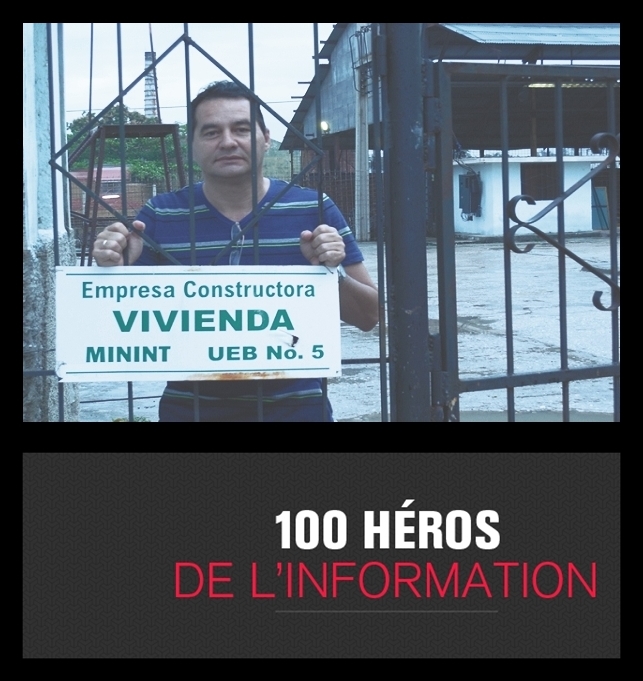
Translated by mlk.

4 June 2014

Even Toilet Paper Is A Luxury / Lilianne Ruiz

That the State sells cheap products at high prices is a dreadful cynicism.

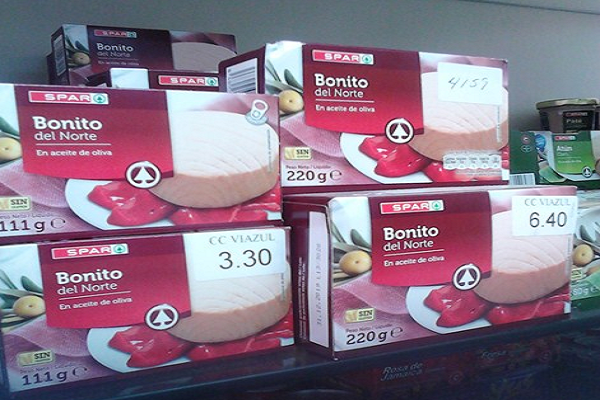
HAVANA, Cuba. — First there appeared the “SPAR” products.  Then, on a shelf of the Ultra store in Central Havana, we saw the unmistakable seal with the little red bird from “Auchan.”  Imported products from Europe, which is equivalent to saying, in political terms, from the European Union.

But the prices:

“Very expensive.  Are you looking?  Almost no one buys them,” says the grocer at a small neighborhood market that now displays, also, “SPAR” jellies, cans of bonito and tuna at astronomical prices (in comparison with the buying power in Cuba) and that people do not seem to see; committed as they often are to getting a little package of chicken thighs or some greasy alternative and so to complete the Cuban menu of more fortunate days, too distantly spaced on the calendar: rice, beans, meat, vegetables and the main course, that now cannot be fish or beef.

Everything that the State sells is so expensive that for ordinary Cubans any basic product becomes a luxury. continue reading

With toilet paper there are those who can give themselves the luxury and those who prefer to save it to buy something more urgent.

But that the State is selling “Auchan” at elite prices, a line of products for popular sectors, seems a dreadful cynicism. Because if these products have been leaked through the porosity of the Common Position it means that the Cuban people are thought of as the most affected by scarcity and need. The Cuban people are thought of as hostages to a policy that within the Island, with everyone and the Common Position, has remained immutable, in spite of any reformist makeup.

At the same time that the Cuban government tries to disguise from national and foreign public opinion its unquestionable violations of human rights, it cries, denouncing as meddlesome the position of the European Union and of the United States in defense of democracy for Cubans.

Presumably the European Union will be considering that in all these years it has not managed to benefit the population by the policy that it maintained with respect to the island’s government.

They begin to perceive the first signs of opening, changes must begin, first order products appear, by strict order of learned survival.  Because it is not the same to eat breakfast with cement-like bread and water as to make it with “SPAR” cereals.

But the Cuban government does not recognize liberties, it does not respect rights; which would also bring prosperity to Cuban homes, without exception!  Bent on its own survival, Castro-ism bets on squeezing the nut, and we Cubans pass by the shelf because those delicacies do not appear to have been made for us.

The Cuban government’s message for nationals and foreigners seems the same cynicism as always: “I keep collecting currency, I keep being the same extractor as always, the same parasite as always.”

It is clear. Human rights are the only engine for development, as much for an individual as for a country. You cannot give them up to eradicate poverty. In fact, you cannot eradicate poverty if you sacrifice human rights.

A government that hijacks freedoms should be made to change, especially when the people under its domination have been incapacitated from defending themselves after more than half a century of individual and collective denial.

May 29, 2014 / Lillianne Ruiz

Translated by mlk.

Dialogue Without Future / Juan Juan Almeida

Young historian Elier Ramirez asserts that “Dialogue, Dialogue” is a space for debate and reflection that the Cuba Pavilion welcomes each month by initiative of the Saiz Brothers Association.

What’s extraordinary is that he calls for dialogue, and I am neither adding nor removing a comma, about the exchange of necessary ideas at this moment in order to stimulate in different social circles the debate about the topics related to current national affairs in pursuit of assuring the continuity of The Revolution.  If you understood, explain it to me.

Translated by mlk.

30 May 2014

Radio Marti’s Listeners on the Central Committee of the PCC / Juan Juan Almeida

Radio Marti’s Hertz waves arrived in the Cuban ether May 20, 1985. That Monday, the island radio scene was disconfigured. Today I want to tell the same history from another perspective.

Fidel Castro, the man of pride stuck to the military uniform, hated surprises, and that’s why, long before the day that Senator Paula Hawkins presented the draft bill, he had already ordered his most loyal ears, within and outside of the United States, to obtain facts and information about what later happened. And at the same time, he installed an invisible army that, like mold spores lurked, awaiting the opportunity to act. continue reading

Havana became another battlefield, where the leader desirous of a conflict was more excited than an egomaniac passing through a hall of mirrors.

With a strategist’s skill and the tantrum of a sodomized victim, he organized a commission of shysters who, lacking no resources, came to see the transmissions as a flagrant violation of international rights and not as a simple, alternative and informative radio service directed towards a population that, if it did not want to listen, could change the dial.

On the outskirts of Havana, and with the help of Moscow, an underground center was created in San Jose, from which was transmitted a sort of rebel signal with wide programming directed towards the United States; but this Radio Answer served only to send encrypted information to their spies. The dreadful programming was unattractive, and its hidden announcers showed themselves to be “Mr. Nobodies” with more love of money than sense of ideology.

By then, and whether because of novelty or because we Cubans are like receptive sponges exposed to the adrenaline provoked by the prohibited, plus the avidity for information and the satisfaction of curiosity, Radio Marti won space within Cuban homes.

Such a fact was demonstrated in an old study commissioned by the DOR (Department of Revolutionary Orientation) to a select group of sociologists and professors from the University of Havana.

Of all that could be heard through the dark hallways of a hermetic, Pepto Bismol-taking Central Committee, Radio Marti demystified the image of its leaders and of its Commander in Chief. Then they had to punish everyone who listened to it. Here, right here, began the big problem because many leaders, impelled by the logical shock of seeing themselves reflected, or because of the dark pleasure of knowing what is said of their political colleagues, became habitual radio listeners.

The nearest example was my own father who, although it is implausible, was a fervent follower of the prohibited broadcast; that’s why when he grew old and lost his hearing, he listened to Radio Marti at such volume that, by decision of the highest management of the country, it was ordered that his bodyguards keep their distance when this occurred and so avoid hearing news that might undermine the integrity of a Revolutionary.

But ancient history to one side and with a view to the future, I believe that today Radio Marti has an enormous task; that of being the impetus that helps us, as a people, to decide whether to continue the confrontation and all that it entails; or begin to heal the wounds of our Nation in order to found a new country on the basis of respect for diversity, justice, happiness and impartiality.

Translated by mlk.

27 May 2014