To All My Friends and Readers / Rebeca Monzo

This year marks four years since I started a blog, without really knowing how to pull it off. With the help and advice of Yoani, “Through the Eye of the Needle” — the title based on a biblical phrase that was also the name I gave my first major exhibition outside “my planet,” as I refer to Cuba in my posts — went into cyberspace to describe our everyday reality.

I wanted to share this satisfaction with you, and to wish you with all my heart a 2014 of recovery of our liberty and sovereignty, as well as reconciliation, forgiveness without forgetting, and the union of all Cubans in a future homeland without charismatic leaders but with very efficient ones, where democracy reigns for everyone without any exceptions.

30 December 2013

An Odorless, Colorless and Dull New Year / Rebeca Monzo

1388171012_cena-frugalThe streets are empty and unadorned. With their paltry displays of gifts, shop windows only hint at the season, which was once so colorful. There is an absence of ornaments but also of products and resources, and 2014 is forecast to be full of hardships and difficulties. Christmas Eve and Christmas Day do not seem to exist for the media, which only makes reference to the “celebration” of the 55th anniversary of an event that brought pain to the Cuban nation.

In the early hours of the appointed day, we could not observe the old sight of happy people full of packages circulating through the neighborhood. At night the streets are dark with only a few neighbors about. Unlike us, very few people bother to decorate their balconies and doorways with garlands of lights, not only because the custom has been disappearing, but also because they are expensive and are very few shops sell them. continue reading

On the 24th the rich aromas were absent. There was nothing to remind us of those wonderful evenings when we shared with family and close friends our dreams and fantasies for the coming year at tables laden with delicacies. Back then, even the humblest home had at least a little ham or a nice piece of pork, black beans, yucca and salad to share on that magical evening.

Though our families are spread across the globe, I refuse to give up one of the few traditions we have left, so I prepared an early dinner for my husband, who is recovering from an operation, and myself. This was because, unlike other years, we were not at the home of the only family member left in Cuba or of a friend.

I prepared some black beans, yucca with garlic sauce, thin pork cutlets and a nice salad. A friend gave us some wonderful Jijona almond brittle and I allowed myself the “luxury” of buying a bottle of Spanish wine, which costs almost the same as the domestic brand but is much better. And so it was just the two of us. We dined, toasted our family members and friends, and later watched a very good English television series that we rent called Spooks from the BBC, which I highly recommend.

27 December 2013

Perspectives and Wishes for the Coming Year / Rebeca Monzo

In a country like ours, completely bankrupt, where all future promises have been broken, where the citizens have been cheated again and again, few expectations remain.

The majority of the young people with whom I have spoken would like to live in a country where their dreams and perspectives are unlimited. Sadly for them, they dream of emigrating because they know that here and now there is no other option.

Older people look forward to their retirement, a product of so many years of accumulated work. They hope it might allow them to live comfortably and treat themselves to a little luxury once in a while without having to depend on help from overseas relatives. Besides being humiliating, this is a constant reminder of the failure of their lives and the separation from family, both very painful and difficult feelings to overcome. Others even less fortunate find it necessary, in spite of their advanced age, to clandestinely sell “jabitas” (plastic bags), homemade candies and loose cigarettes outside farmers’ markets, always running away from the police who harass them.

And those of us who are no longer so young but not yet so old want freedom for Cuba and the restoration of the democracy that was lost more than half a century ago. We long for a country where the dreams and aspirations of all Cubans can be fulfilled without having to abandon the place where they were born. But it is not enough to only dream about this; one has to do something to achieve it and fundamentally it has to be done from within.

In spite of this dark present, I wish all Cubans — especially my readers, wherever they may be — a bright future in a free country, where we share joys and sorrows together in an embrace. Merry Christmas!

24 December 2013

The Electrical Re-Involution / Rebeca Monzo

In 2005, the then president and prime minister of our planet appeared before TV cameras in order to explain to the population the benefits of the hitherto despised home appliances, which from that moment would be distributed in all the country by household through the infamous Ration Booklet.

Refrigerators, air conditioners, “Queen” pots, rice cookers, personal water heaters, energy saving light bulbs, electric burners, in sum, a series of home appliances manufactured and imported from the People’s Republic of China.

I remember that, when in the 1970’s I moved to Nuevo Vedado, I had an electric stove with three burners and an oven, acquired in Paris in my diplomatic years, and each time I went to buy products with the Ration Booklet in the market that I was assigned to, they talked to me about consuming too much electricity.

Three decades later, the same people who reprimanded me came to offer to exchange my old but magnificent 1949 Admiral refrigerator for a Chinese one, which according to them would consume less. Of course I refused, because you had to give up the perfectly functional one you possessed, without getting a cent of its value, as if it were scrap, and pay an exaggerated price for the new one.

Fortunately, I maintained said negative response on repeated occasions, until they got tired and insisted no more. All those people who fell in the trap of the new appliances are regretful, because they broke after a while and there are no parts with which to fix them, but they still have to continue paying for them.

The same thing has happened with all the low quality Chinese equipment: mountains of aluminum and twisted cables fill the shelves and warehouses of the famous consolidated workshops without them being able to be repaired for lack of replacement parts.

It is shameful that some commission from the National Assembly has to spend so much time and saliva talking about “Queen” pots and broken appliances, in a country where there are so many urgent problems, like the bad state of schools and hospitals, the almost non-existent sugar production, the lack of basic necessities in the stores, problems with milk production, potatoes, in sum, with everything that is vital for the population. Gentlemen, certainly it shames the National Assembly that you have to air issues as ridiculous as the broken electric pots, already obsolete.

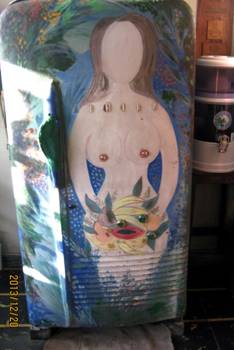
I believe that the decision I made three decades ago, not to be dazzled by the “electric re-involution” and not to go into debt buying those Chinese products, was most wise. My old Admiral refrigerator, decorated by me, continues cooling like a charm, and I do not owe a cent to the State.

Translated by mlk.

20 December 2013

Festival of Classic Latin American Cinema / Rebeca Monzo

It’s common knowledge that  our country is celebrating a so-called Festival of New Latin American Film although nothing about it seems new.  On my end, I was not able to see any screenings in person because I am caring for my husband who is recovering from recent surgery and is home-bound.

Obstacles notwithstanding, movies were brought to my home for viewing*. I felt somewhat out-of-sorts because I had no say on the days or exact showtimes, let alone movie choice.  Unwittingly, I got two flicks: “Strange Factors” and “Unwanted Visitors.

The first movie was the worst: Very crude and unoriginal. I had the first one projected on the landing of the staircase which leads to my apartment. The other was surprising but predictable because from my balcony I could see the actors’ wardrobe and wheels: Plaid shirts and a Suzuki motorbike**.

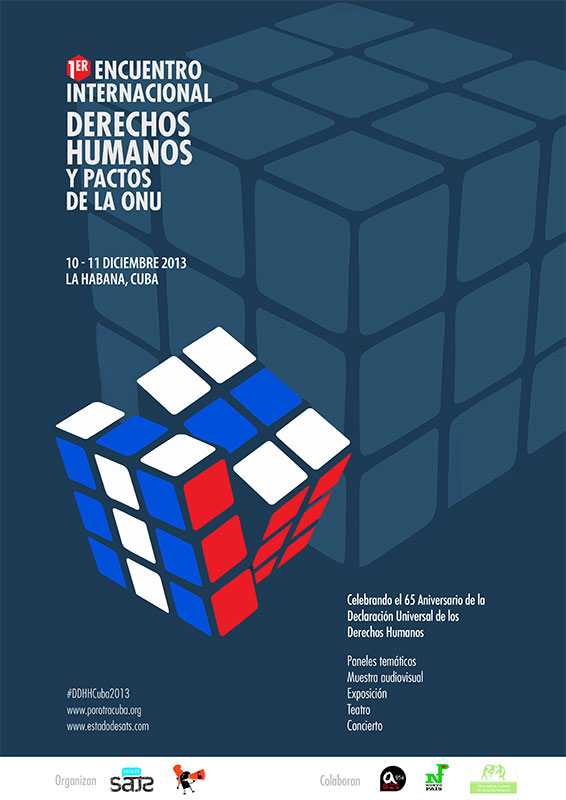
Both movies had police state settings although the second movie was filmed in our living room.  Clean and respectful language was obvious, especially in the latter of the two films.  Both films shared a common goal: To communicate that I should not try to exercise the right of free assembly and association, particularly on December 10-11, International Human Rights Day, rights granted to us under the UN Charter to which our country is a signer.

From these surprising displays of power, one thing we’d like to make clear to everyone: We are human beings who love and cherish freedom. As such, we will continue to exercise our rights yet remain respectful and consistent spectators, never forgetting this old cinema with its grotesque, crude and outdated films.  This we’ll do until the moment the big screen spells The End.

Translator’s notes:
*Rebeca is being sarcastic in this article; the two “films” were in fact two visits — from her ’neighbors’ and the police — warning her not to participate in activities on December 10, Human Rights Day. (See link to a similar post by Regina Coyula.)
** That is the “uniform” and “vehicle” of the police in plain clothes.

Translated by: JCD

9 December 2013

The Worst Tribute / Rebeca Monzo

While President Raul Castro pays homage to the late Nelson Mandela with a speech on unity, tolerance and reconciliation, acts of repression throughout the width and breadth of Cuba speak otherwise.

Antonio Rodiles’ house, headquarters of SATS, has been literally under siege since the night of December 9, Human Rights Day, by State Security, which is preventing access to it. As though that were not enough, today they mobilized neighbors and Young Pioneers from neighboring schools to liven things up with shouts, music and political slogans. They have surrounded the property with the goal of intimidating and sowing confusion so that, in the midst of this confusion, they can arrest anyone trying to approach the building.

While many have not been able get there, others have found various ways to circumvent the cordon and attend a function celebrating a day much feared by Cuban authorities. But undoubtedly the most shameful thing about all of this is their having used schoolchildren for political ends, probably without the knowledge of their respective parents, an action with should warrant the attention of UNICEF. I believe that today’s actions have been possibly the worst tribute paid to Human Rights Day or to the late African leader.

11 December 2013

A Tour through My Neighborhood / Rebeca Monzo


My neighborhood, Nuevo Vedado, was one of the last to be developed in the 1950s. It promised to be among the most modern and beautiful, with well-designed two and three-story single-family homes and large rental properties. Along with these beautiful residences were some more modest ones as well as others which displayed an outpouring of good taste and architectural distinction, designed by architects such as Porro, Cristófol, Miguel Gutierrez and Frank Martínez to name but a few. It also boasted the magnificent Acapulco park as well as wide sidewalks, streets and avenues.

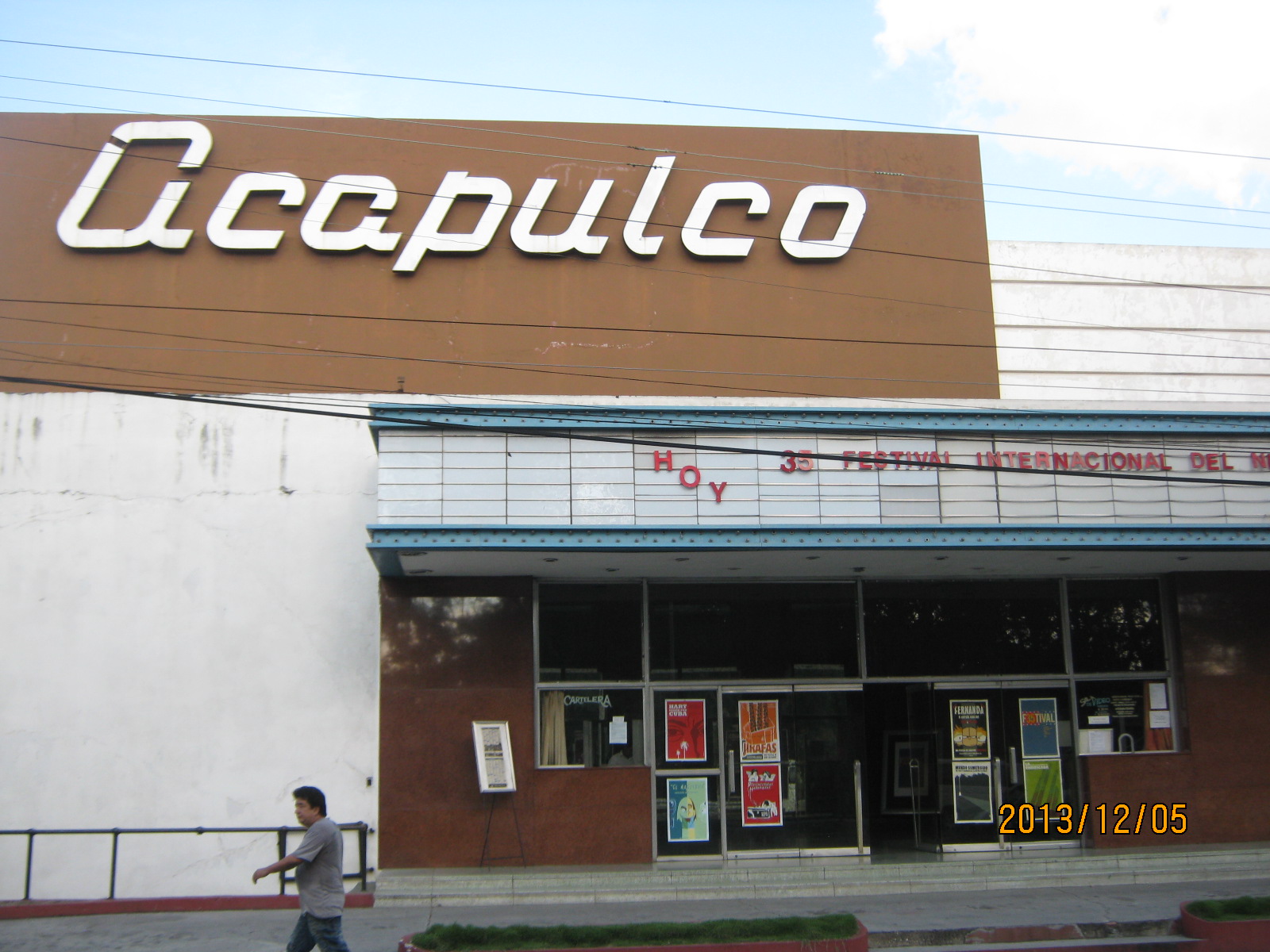
On 26th Avenue and Kohly Avenue there were some lovely planting areas filled with pink and white oleander. The beautiful Acapulco cinema, one of the most comfortable in the city, screened the latest foreign films every week.

Today, during a brief tour from the 26th and 41st to 26th and 17th in search of hair dye, which unfortunately I did not find in any of the area’s understocked stores, the images I observed left me only with worry and sadness.

6 December 2013

NONcommunal Solutions / Rebeca Monzo

“Communals” is the People’s Power Company charged with garbage collection, among other tasks.

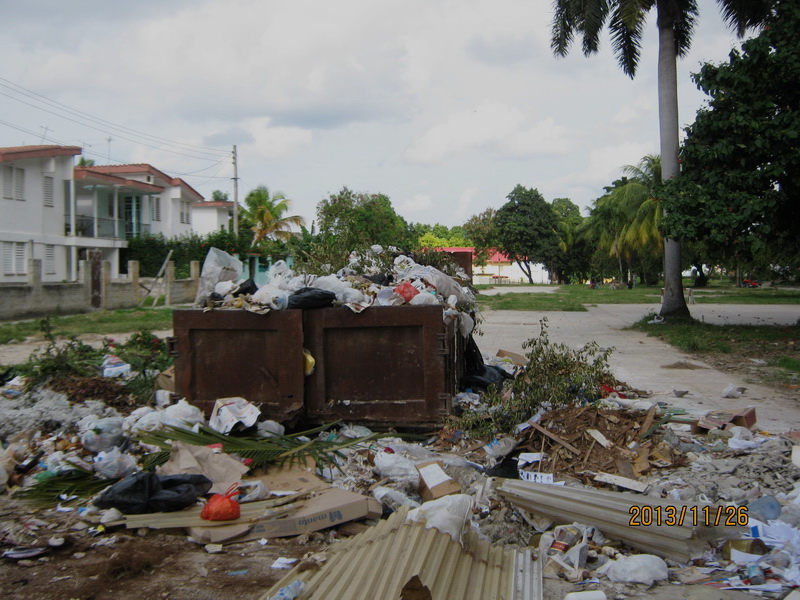
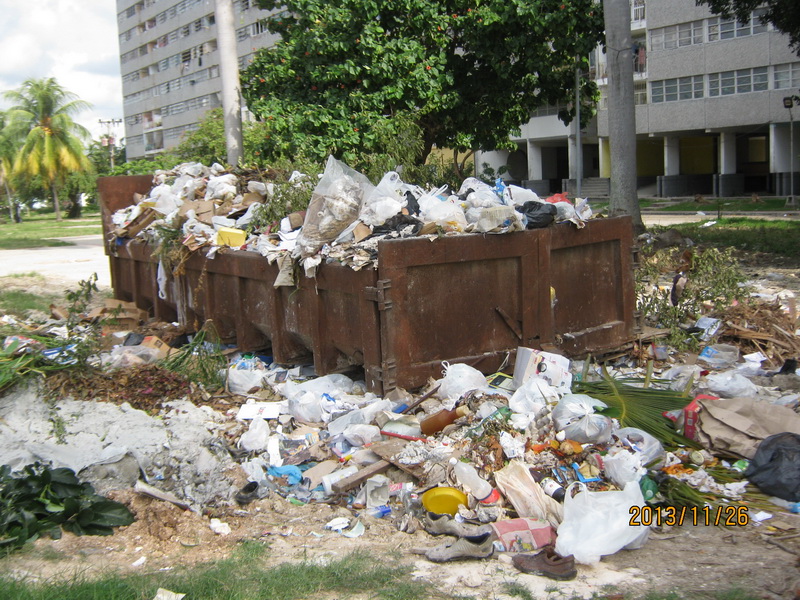
Behind the “12 Floors,” as they call the building in the block formed by Tulipán, Loma, Colón and 39th streets in Nuevo Vedado, the solution to trash collection for this gigantic apartment block, as well as for the adjoining houses, has been to place an enormous dumpster there to collect the garbage. This huge container is left uncovered, exposed to wind, rain rodents and insects. The space all around it is fulled with empty plastic bags, paper, cans and every kind of object, which the residents themselves throw there, on finding the container overflowing. This is without taking into account the stinking sewage that leaks from the sewer pipes coming out of the building itself, which leads to the subsequent contamination, which makes it almost impossible to walk by the place.

According to what some residents told me, it can take a week or more for the crane that is supposed to lift the container to come by to collect it, not to mention that in doing so, it is carried across the city to its destination, contaminating everything along its long journey. They also tell me that the garbage trucks don’t have the necessary equipment to collect what is outside the containers, so they leave this trail of filth which is gradually blown all over the pavement by the wind.

With this in the environment there is no point in going any further to invade the privacy of the residents, but the famous health brigades try to force their way into people’s apartments without any prior notice, fining those who have a bowl of water, not to mention that the fumigators, who use that annoying burning oil, tell you to close and leave your house on the pretext of eradicating the mosquito that causes dengue fever, an illness than has become endemic due to the unhealthy conditions prevailing in the city.

2 December 2013

A Hospital Under Repair / Rebeca Monzo

In “my planet” when a hospital goes under repair, it stops being a health center and it becomes a construction zone.  It has been approximately three years that the Hospital Docente Gral. Calixto Garcia has been under repair.  Some of the hospital’s pavilions have already been restored, but the work has been very slow and there are also many uncontrollable diversions of resources.  So much so that when they finish the last pavilion, they should start all over again with the first pavilions.

I have a friend who after negotiating and waiting, was finally admitted to the hospital.  He told me that when he arrived at his room with his assigned bed number, they told him that the bed was already occupied. Fortunately, the doctor that had attended him was still with him and explained that was not possible, that the bed had been reserved in advance.  They then apologized and the health workers themselves explained that the men with the stretchers were too tired to take the other patient to another floor so they decided to put the patient in that bed.

Last night, visiting my friend, he told me that he found out that when the hospital director was inspecting the floor above hours before the ceremony, there were very surprised when they checked the bathrooms to realize that the plumbing had disappeared.

During the investigations, they confirmed that their own employees, who had participated in the remodeling, had stolen the plumbing.  They stole the water faucets, the flushing systems, as well as other pieces of plumbing which they tied to a rope and dropped down through the back windows of the building, where an accomplice picked them up and took them away.

However, this was not the only incident that had occurred in his first day of hospitalization.  He told me that after settling in his bed, the nurses passed by to ask those who accompanies him and some patients who were in a condition to do so to come out to the entrance because the new director was going to visit and they needed to clean the room. After, my friend, looking into this with one of the employees, was told that “cleanings” were only done on very special occasions like that day, because they were paid a pittance and they didn’t even have adequate tools to clean, so “they didn’t stress about” hygiene.

Translated by Lourdes Talavera, Boston College Cuban American Student Association (CASA)

18 November 2013

More About Gonzalez Coro Hospital / Rebeca Monzo

1-1384189416_cable-de-la-habitacic3b3n-al-bac3b1p-copy2-1384189416_ventana-bac3b1o3-1384189417_poceta-con-tupicic3b3n4-1384189417_pantry5-1384189418_lavamanos-con-salidero6-1384189419_inodoro-y-cesto-papeles7-1384189420_espejp-y-lc3a1mparaFinally Patricia is a grandmother. Her daughter was admitted a few days ago to Gonzalez Coro Hospital, formerly the Sacred Heart Clinic, in Vedado, Havana, because her baby was born underweight, something very common lately.

She took some photos that helped me to offer this testimony with regards to the comfort and hygiene of this hospital.

Another of the surprises awaiting the new mother were the disputes between other patients, due to the theft of cigarettes. She doesn’t smoke, but she had to breathe the smoke from cigarettes shared between the mothers and the health care workers who cared for them.

11 November 2013

Never Backwards, Not Even to Gain Momentum / Rebeca Monzo

Once again this phrase, so often repeated for more than five decades now, came to my mind when I found out about another step backward, instigated by those who handed down this maxim like a precept at the dawn of the 1960s.

We now have another great setback, this time well into the 21st century and within the framework of the famous “Raul reforms.” Privately-run, home-based 3D cinemas have been closed and self-employed vendors of imported clothing have been given a deadline of December 31 to cease operations. All this has generated a lot of discontent, but that’s as far as it goes. All those affected are trying to figure out how to sell off part of their inventory and recuperate some of their sizable investments. This is especially true of 3D cinemas, which imported equipment and furniture, for the most part from Panama. Everyone is “racking his brains” but no one is going to confront the state, as it knows all too well.

It seems poor nutrition over many decades has adversely affected that part of people’s brains having to do with memory. They do not recall “Operation Bird on a Wire,” when craftspeople in Cathedral Square — from whom everyone bought, including government officials, because of the quality, originality and variety of the goods these artisans produced — were persecuted. Many ended up in prison while others went into exile in search of freedom and new opportunities. And so overnight a little marketplace — one that gave life to the city, supplied goods unavailable in state stores and provided a livelihood for many — simply vanished.

Later on, in the 1990s, came a new offensive — “Operation Potted Plant*” — that abolished the Free Farmers’ Market, which at the time was alleviating the problem of significant food shortages but whose suppliers the government accused of “illegal profiteering.” Many of these suppliers were arrested and had their assets confiscated, just as had happened years earlier to the artisans.

Let us also not forget that other great crusade at the end of the 1990s against the first paladares — home-based private restaurants which were limited to twelve seats — of which only the strongest or most “fortunate” were able to survive.

So we can see, the lack of memory of our citizens, or the desperate attempts to come out of the economic stagnation, has been what has made some take risks now and again, those “optimist” people who finally do not realize that is hard to “play capitalism”, inside a dictatorial regime with more than half of century installed in power.

Therefore, and so there are no mistakes, the government undertakes these types of “operations” cyclically so nobody forgets “who’s in charge”.  Only in a future free and democratic country, is where security will exist for those who want to start their own business.  Then, and only then, is when the private initiatives will flourish.  Perhaps in a future not too far off, we’ll give another connotation to that sadly known phrase of:  “never backwards, not even to gain momentum”, because evidently no one will want to repeat those mistakes.

*Translator’s note: In Cuban slang the term maceta, or potted plant, refers to someone with newly acquired wealth.

6 November 2013

Thankful / Rebeca Monzo

Yesterday, November 1, in the afternoon hours, once again we crossedthe now familiar threshold at Estado de SATS.  In this opportunity, I was the guest of honor, with an exposition of my art in patchwork titled “Women,” dedicated to a gender I belong to and of which I feel proud of, because each day we manage, despite the shortages and inconveniences, to integrate ourselves more into society, sharing and competing side by side, fair and square with many men, without neglecting those tasks that, as mothers, wives and daughters, ancestrally, were “assigned” to us.

I was moved by the beautiful opening words about my trajectory, spoken by my good friend Regina Coyula, but even more was the satisfaction of my friends’ presence, that despite of having work and professional relationships with the only employer of our country, had the courage of ignoring the operation orchestrated by State Security, now so habitual, and came closer, for the first time to this emblematic and “stigmatized” place.

I noticed and missed the presence of some friends that I thought would be there, above all women, the gender to which this exposition was dedicated; some were sick and some had last minute incidents, which sadly must have pleased the “comrades that were taking care of us.”  However, the exposition met its objective, and we showed once more that Estado de SATS is an inclusive place, where arts and thoughts converge, and where the common denominator is the aspiration that Cuba be again a free and democratic country, with all and for the well being of all, as our Apostle Jose Marti would have wished.

My most sincere gratitude to Estado de SATS, the organizers of this beautiful event and to all that came to provide me their support.

Translated by LYD

5 November 2013