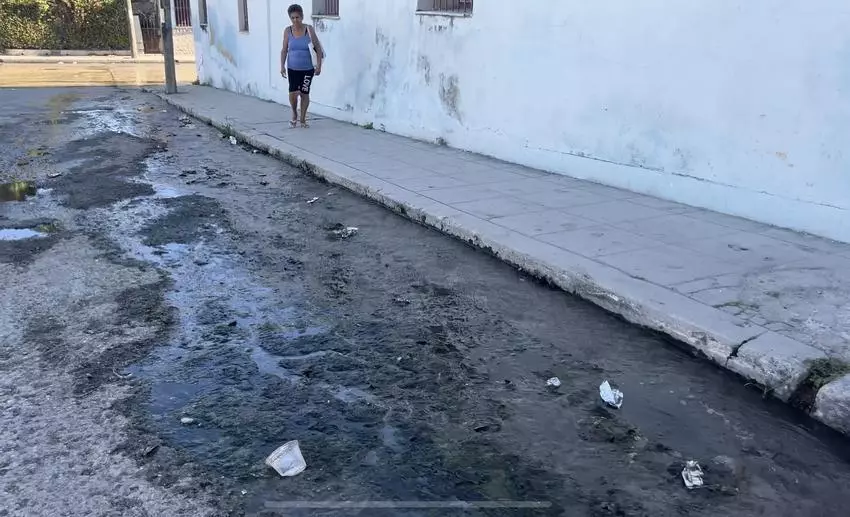
A neighbor improvised a bridge of blocks to be able to leave her house: “You can’t even go out in flip-flops if you don’t want to come back with dirty feet.”
The problem of sewage water in Havana goes back a long time. / 14ymedio
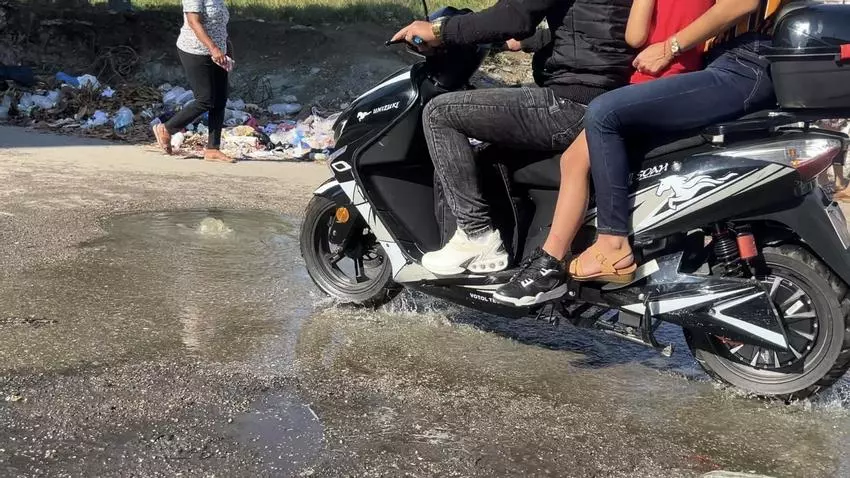
14ymedio, Darío Hernández, March 21, 2026 – Havana / Sewage water flows freely through the streets of Guanabacoa, to the point that Corral Falso, the municipality’s main avenue, is impossible to cross in stretches that span several blocks. Overflowing septic ditches have further undermined sanitation in the area, and residents are forced to live with a dark, green, viscous river up to 20 cm deep, under a blazing sun and temperatures above 30 degrees.
Overflowing drains can be seen even in the most unsuitable places. For example, on the corner by the Guillermo Tomás music school, which also has a garbage dump nearly 30 meters long in front of it. Or every weekend, around the agricultural markets, where trucks arrive and distribute food for the population on improvised platforms.
The problem of sewage water in Havana goes back a long time, and in most cases is due to breaks, lack of sanitation, and above all the poor condition of the capital’s sewer system. However, it has worsened with the unchecked proliferation of garbage dumps due to the lack of fuel.
“The stench, the flies, the mosquitoes, and everything that comes with it is something we have to live with.” / 14ymedio
“This is a never-ending war. You call Aguas de La Habana or Communal Services, and they come when they can and unclog the sewer in question, but as soon as the water starts flowing again, the blockage and the rot return,” says Zulema, who has one of those “multicolored springs,” as she ironically calls them,running in front of her doorway.
“That green stuff you see there shows you that the water stagnates here for weeks. The stench, the flies, the mosquitoes, and everything that comes with it is something we have to live with,” Zulema continues. The neighbor has had to improvise a “bridge” of blocks to be able to leave her house. “You can’t even go out in flip-flops if you don’t want to come back with dirty feet.”
Tricycles and electric motorcycles—because there are no longer cars—slow down on these blocks so as not to splash and dirty continue reading
their vehicles. On some corners and along the edges of sidewalks, plants of dubious origin have begun to grow.
Workers from Communal Services broke a pipe while carrying out cleaning work, “and now the sewer overflows more easily.” / 14ymedio
Lázaro, another affected resident, says the problem already existed before, but that “the water was more potable, not as unsanitary.” The problem worsened, he recounts, when workers from Communal Services recently broke a pipe while doing cleaning work, “and now the sewer overflows more easily.” Added to this, he continues, is that at every corner there is a “mini dump.” “If you put those two things together, the result is what we are living through,” he summarizes. “What are we living through? I can’t define it in words, but it’s profoundly immoral.”
“When the agricultural fairs began, I had my stall on that block. They were all around the Amphitheater, but we had to move over here,” says Miguel, who now sells root vegetables and produce on the block next to the Amphitheater. “There was one time when the entire fair was moved to another location, a few blocks from the Municipal Party headquarters, precisely because of this, because of the filth in this place. Apparently there were complaints from residents. It really was just one block that, although wide, was uncomfortable for everyone, and the following week we came back here. In other words, they know this is not the ideal place to sell food, but there’s no alternative.”
River of sewage in Guanabacoa: living among waste / 14ymedio
Translated by Regina Anavy
______________________
COLLABORATE WITH OUR WORK: The 14ymedio team is committed to practicing serious journalism that reflects Cuba’s reality in all its depth. Thank you for joining us on this long journey. We invite you to continue supporting us by becoming a member of 14ymedio now. Together we can continue transforming journalism in Cuba.
The FEU (Federation of University Students) tried to prevent the protest called to express “the students’ dissatisfaction with the current teaching plan”
Image of students on the steps of the University of Havana, this Monday. / X/@CNN_Oppmann
Darío Hernández/Juan Diego Rodríguez, Havana, March 9, 2026 — About twenty students are meeting with education authorities after holding a peaceful protest on the steps of the University of Havana this Monday morning. Around 3:00 p.m. on Monday, the site showed no trace of what had happened several hours earlier, except for the internet connection being blocked
The students, around 25 in number, occupied the stairs in a peaceful protest. As stated on the poster circulated through a WhatsApp group, the “university sit-in” was scheduled for March 9th at 10 am “to publicly and peacefully demonstrate the student body’s dissatisfaction with the current teaching plan.”
The situation, an eyewitness reported to the organization Ciudadanía y Libertad, (Citizenship and Freedom), “remained calm at first,” but “changed when more students began arriving, interested in joining the protest.” Then, the sources continued, State Security agents blocked more people from entering the steps and the university grounds.
Police patrols in the vicinity of the University of Havana, this Monday. / 14ymedio/Courtesy
According to CNN correspondent Patrick Oppmann in Havana, who posted a picture of the protest on his social media, the students who had previously been on the steps entered the center to meet with officials and authorities.
The rector of the University of Havana, Miriam Nicado García, and the first deputy minister of Higher Education, Modesto Ricardo Gómez, approached the place where the young people were gathered.
“How many hours of electricity did you have last week? And do you have a connection when the power is cut off?” a student asked a dean, according to EFE.
“Many students from the provinces haven’t been able to submit anything because there’s no connectivity,” another student said.
These predominantly academic demands were gradually overtaken in the conversation by complaints about how university students can raise their issues and participate in the debate on solutions and decision-making processes.
“The paths to reach the Ministry of Higher Education are obstructed,” a young woman continue reading
stated, to which a student added: “This sit-in, I’m afraid, is a last resort.”
The First Vice Minister of Higher Education directly addressed the young people in an attempt to end the sit-in: “This isn’t going to solve the problems we have. Why this, gentlemen, young men, when my whole life has been dedicated to educating you?”
The young people, around 25 in number, took to the stairs in a peaceful protest. / 14ymedio/Courtesy
“Because they haven’t listened to us from the very beginning: that’s the answer you have,” a young man retorted.
In fact, the students had started to feel sidelined last week and, faced with what they perceived as decisions made from above, they created several alternative discussion groups on social media and launched the call for the sit-in.
Both the University of Havana and the FEU quickly came out to say that this initiative was “fake” and stressed that the established dialogue spaces were working.
Several young people highlighted that part of the erosion of trust in the University and in the FEU began last June, when the students’ discontent over a very sharp increase in the rates for mobile service by the state-owned telephone company was not addressed as they wished.
On the other hand, in the early afternoon, in the WhatsApp group for the call, the students posted: “For all those who are following the situation, the group that responded to the call is in dialogue with the Minister of Higher Education, expect more information before the end of the day.”
“Defending institutional dialogue is correct, but pretending that it exhausts all legitimate forms of expression is a mistake.”
In a letter shared on their social media, the organizers addressed the Secretariat of the University Student Federation (FEU), responding to a statement in which the pro-government organization dismissed the call, calling it “completely false” and “unnecessary”.
“We feel an obligation to respectfully disagree with your posture,” the missive stated. “Defending institutional dialogue is correct, but claiming that it exhausts all legitimate forms of expression is a mistake.” In four points, the students explained why the sit-in “is both real and necessary.”
First, they said, because “it is not a denial of dialogue, but rather its deepening.” A sit-in, they explained, is a tool to demand dialogue “when it becomes insufficient or slow” and “means bringing concerns to the forefront,” so that the “actions” taken by educational authorities “do not remain in closed spaces, but rather become the focus of collective conversation.”
On the other hand, they alluded to the fact that the FEU Secretariat told them they had already been “receiving concerns.” “This is valuable, but it’s not sufficient,” they retorted. “The legitimate question many have is: what happens to these concerns once we communicate them to you?” The protest, they argued, “seeks to break down the intermediaries and create a horizontal space, student to student, to compare opinions and reach our own conclusions, unfiltered by a structure.” And they continued: “If the current channels were effective, there wouldn’t be this spontaneous need for hundreds of students to seek an alternative way to organize.”
“We appreciate your work, but the solution to the problems in teaching and the general discontent cannot simply be ‘waiting’ for them to be addressed.”
On a third point, they criticized the FEU for referring to their action as “symbolic,” “as if it were something negative.” They argued: “The history of the University of Havana is built on symbols. Sitting in a common place, looking each other in the eye, and debating the problems of teaching and the situation of the country is a profoundly transformative act.”
Finally, they referred to the “management of solutions” that the Secretariat had offered them. “We appreciate their work, but the solution to the problems in teaching and the general discontent cannot simply be to ‘wait’ for them to be managed. The university community must be an active part in creating those solutions.”
The worsening energy crisis has led to the suspension of in-person classes at all universities, a cancellation that has left thousands of students at home. Maintaining contact with teachers through WhatsApp groups and other virtual platforms is not a viable option in a country where internet access is becoming increasingly unreliable.
______________________
COLLABORATE WITH OUR WORK: The 14ymedio team is committed to practicing serious journalism that reflects Cuba’s reality in all its depth. Thank you for joining us on this long journey. We invite you to continue supporting us by becoming a member of 14ymedio now. Together we can continue transforming journalism in Cuba.
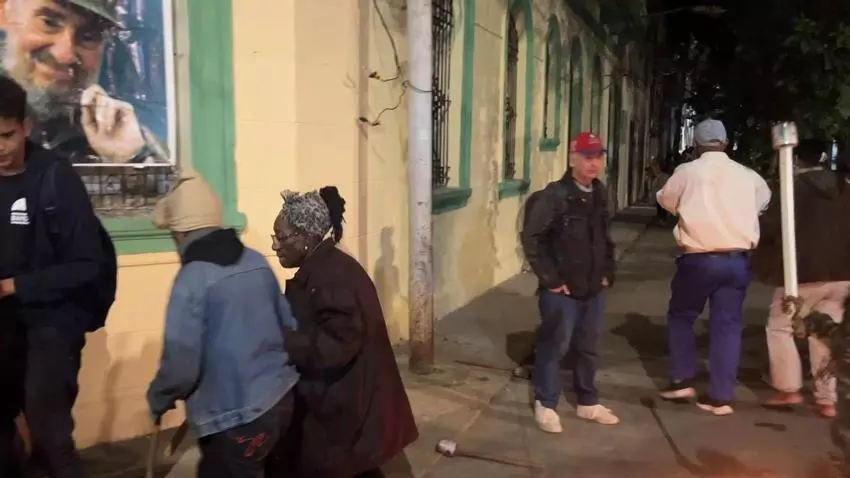
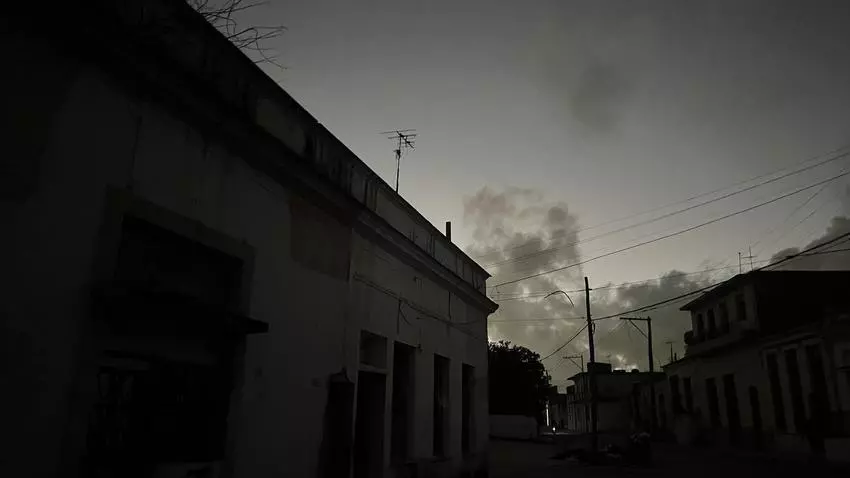
It doesn’t matter whether the neighborhoods are more central or farther out—the soundtrack of the capital at night is protest, and during the day the smell is burning garbage.
Even though they try to erase them, you can still make out a phrase written on various walls that feels like the final word: “Se acabó” (“It’s over” / “We’re done”).
14ymedio, Darío Hernández, March 9, 2026 – Havana at night these days has an apocalyptic feel. If you walk around after the sun goes down—when the fear of being recognized fades—the soundtrack is pot-banging (cacerolazos) coming from different neighborhoods. It doesn’t matter anymore if they’re more central, more touristy, or farther out, more combative or less. The noise comes from everywhere.
More and more walls are showing up with anti-government slogans. Even though they try to paint over them, you can still read—in several places—that phrase that sounds like the end of the line: “Se acabó.”
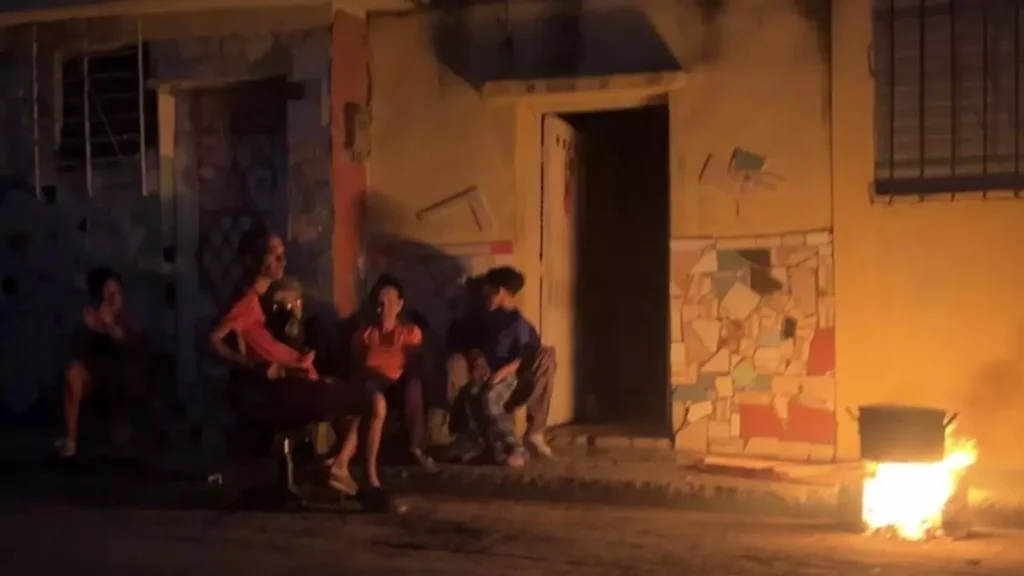
Fires are also popping up all across the capital. Some come from people burning trash piles, which has become super common because there aren’t enough trucks or fuel to collect garbage properly anymore. Others are from charcoal fires that families light to cook since there’s no electricity or cooking gas.
Sometimes those fires get out of control. Other times, with the constant power flickers and surges, you get a short circuit.
Sometimes those fires get out of control. Other times, with the constant power flickers and surges, you get a short circuit. People think that’s what caused the fire last Saturday in a pizzeria in central Santiago de Cuba, on Enramada Street between Reloj and San Agustín—it ended up burning down four houses. continue reading
No one knows yet what caused the fire at the Cubos Factory in Matanzas, located in Playa right next to the Cocal substation. Although firefighters put it out in just 20 minutes that Sunday night, people were terrified because right beside the affected area there were piles of plastic waste, neighbors warned.
Meanwhile in Granma province, El Ranchón (a traditional spot) burned down in the early morning at the Guisa lookout point. Alianna Corona Rodríguez, First Secretary of the Communist Party in the province, told the press that “the flames spread easily because this is a traditional structure made of palm thatch and wood.” While the cause is still under investigation, the official added another layer: “carteles con propaganda contrarrevolucionaria” (posters with counter-revolutionary propaganda) were found at the site.
In the capital, blackouts have got much worse over the weekend, with some neighborhoods going up to 20 straight hours without power. The lack of electricity has fuelled people’s anger, and in various parts of Havana the water supply problems have got even more serious because there’s no energy to run the pumps.
Translated by GH
______________________
COLLABORATE WITH OUR WORK: The 14ymedio team is committed to practicing serious journalism that reflects Cuba’s reality in all its depth. Thank you for joining us on this long journey. We invite you to continue supporting us by becoming a member of 14ymedio now. Together we can continue transforming journalism in Cuba.
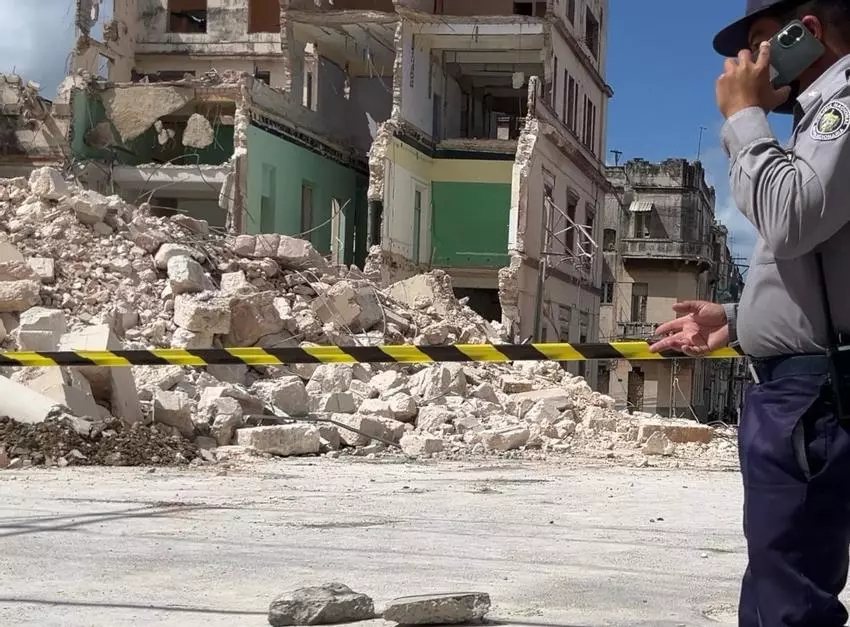
Onlookers crowd together to watch the spectacle, and some take advantage of the situation to carry off rebar and other materials.
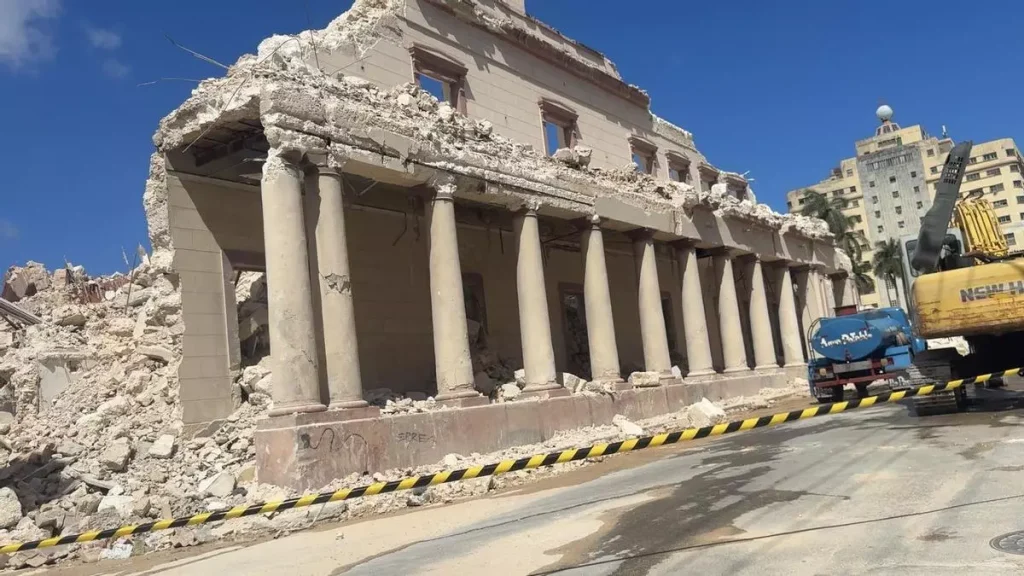
Main façade of what used to be the Higher Institute of Industrial Design (ISDi), on Belascoaín Street, Central Havana / 14ymedio
14ymedio, Havana, Darío Hernández, March 4, 2026 – The official demolition of the Higher Institute of Industrial Design (ISDi), now taking place, is in reality the final sigh of a very, very slow death. What the excavators of the Construction Materials Business Group (Geicon) are destroying at number 710 Belascoaín Street, in Central Havana, is barely what remains of the building after four years of closure, partial collapses, looting, and absolute institutional neglect.
This Tuesday, the site, very close to the busy Carlos III Avenue, was packed with people. Workers, police officers, and onlookers crowded into Carlos J. Finlay Park, which faces the building’s façade, or walked around its sides along Enrique Barnet, Maloja, and San Carlos streets. Several, as 14ymedio confirmed, were carrying away rebar under the impassive gaze of the officers guarding the site.
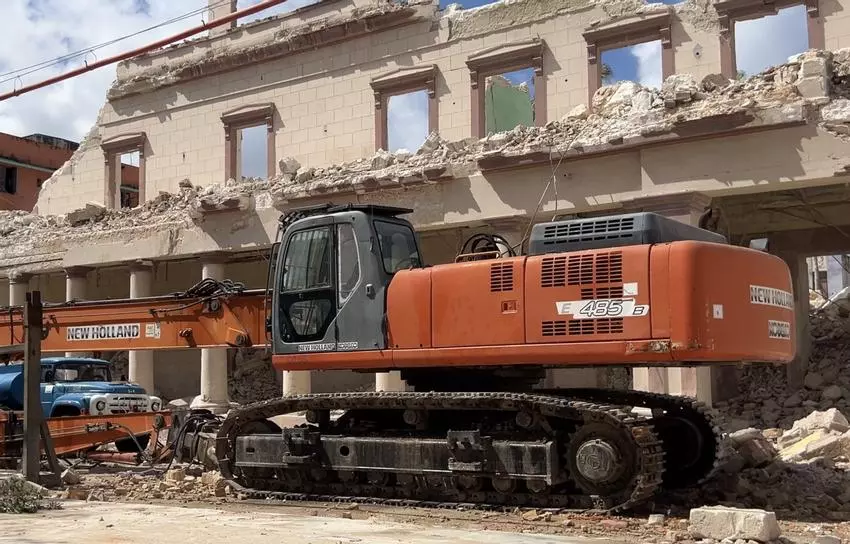
The motionless excavators show that the demolition work is being carried out at a leisurely pace. / 14ymedio
Unlike similar situations in which the police cordon off the area, even prohibiting the use of cell phones, on this occasion people approached, took photos, and recorded videos without being discreet. There were also people inside, ignoring the mandatory safety measures in such cases.
The motionless presence of two excavators, one orange and one yellow, parked in front of what used to be the ISDi, shows that the demolition work is proceeding at a leisurely pace. Many sections still remain to be torn down.
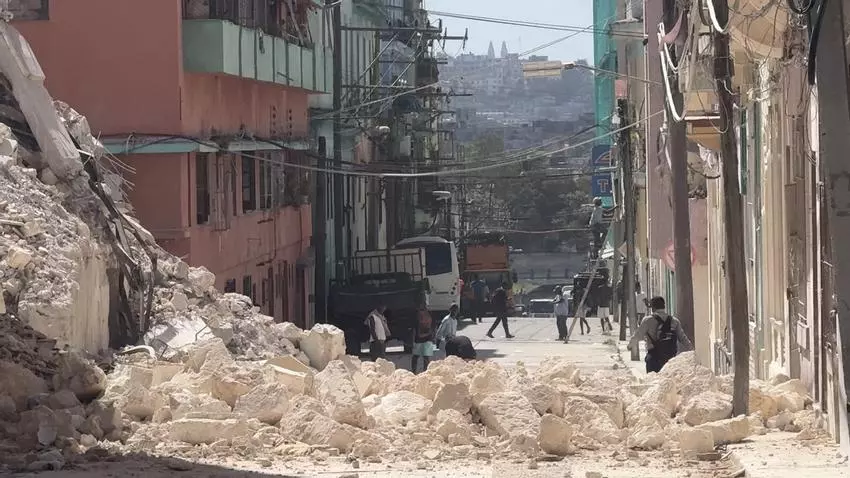
At the back, along San Carlos Street, the rubble reaches the opposite sidewalk, filling the houses across the street with dust and debris. One neighbor complained to this newspaper: “It’s clearly a poorly done job, and we don’t know how long it will last.”
Workers, police officers, and onlookers crowded into Carlos J. Finlay Park, which faces the building’s façade, or walked around its sides. / 14ymedio
Residents have been enduring the deterioration of the ISDi ruins since March 2022, when the building was closed after an “architectural flaw” was detected that endangered students and staff. Without the State taking action to resolve those “flaws,” part of the interior façade collapsed in July 2024, and half a year later, in January 2025, another partial collapse left an elderly woman injured and four families without access to their homes.
In October of last year, authorities had to assign guards after graphic designer Esteban Aquino, a former student of the Institute, reported on social media, illustrating his message with photos, that numerous institutional documents, including theses, books, and catalogs, were scattered in nearby Carlos J. Finlay Park. Not only papers were stolen from the old school but also doors and windows, as neighbors told 14ymedio at the time.
One neighbor complained to this newspaper: “It’s clearly a poorly done job, and we don’t know how long it will last.” / 14ymedio
That its empty spaces were being used as bathrooms and dumping grounds, with the resulting health consequences for the neighborhood amid an arbovirus epidemic, was the most recent episode in its agony. However, the building’s final expiration has yet to arrive. In 1982, it was converted into the headquarters of the Polytechnic Institute of Industrial Design, the precursor to ISDi. Originally, it had been a military hotel and officers club for the Spanish Army. It later served as the Cadet School (1874–1878), an Asylum for Widows and Orphans, the General Staff headquarters during the first U.S. Occupation, and even the Ministry of Public Health before the Revolution. Even the official demolition is unfolding in slow motion.
Translated by Regina Anavy
______________________
COLLABORATE WITH OUR WORK: The 14ymedio team is committed to practicing serious journalism that reflects Cuba’s reality in all its depth. Thank you for joining us on this long journey. We invite you to continue supporting us by becoming a member of 14ymedio now. Together we can continue transforming journalism in Cuba.
The island’s authorities have not reported these figures, which bring the total number of deaths to 67
The PAHO also reported 1,457 cases of chikungunya between January 1 and 31. / 14ymedio
It was the Pan American Health Organization (PAHO) — and not Cuba’s health authorities — that revealed that deaths from chikungunya have been recorded in the country in 2026. Based on the official data reported from the island, the international organization announced this Tuesday that in January there were two deaths from the viral disease transmitted by Aedes aegypti and albopictus mosquitoes, bringing the total to 67 according to the organization’s own records.
In its report, the PAHO also recorded 1,457 cases of chikungunya last month. These figures contrast with the government’s latest update on January 28, when, through Deputy Minister of Public Health Carilda Peña, it claimed that in the latter part of January the country had entered a “safety zone” regarding dengue and chikungunya infections, and only mentioned a 29.3% drop in confirmed and suspected cases of dengue and chikungunya — without providing any figures — compared to the previous week.
More than half of the nearly 70 deaths acknowledged by the PAHO are minors, and a total of 83,366 people have been infected (including those reported in January), although these figures might only be a sample. However, statistical estimates from the Cuban Observatory of Citizen Auditing (Ocac) and Cuba Siglo 21 put the death toll much higher: as of December, they estimated 8,700 deaths in the epidemic.
As for dengue, Cuba is one of the few countries (along with Venezuela, Nicaragua, Guatemala) for which there are still no 2026 data in the PAHO’s public databases.
As for dengue, Cuba is one of the few countries (along with Venezuela, Nicaragua, Guatemala) for which there are still no 2026 data in the PAHO’s public databases.
The Cuban government admitted the country was facing an epidemic on November 12 last year. However, the first chikungunya cases were diagnosed in July, and infections from both arboviruses skyrocketed in September and October. A month later came the peak, when the PAHO itself revealed continue reading
that in just one month the chikungunya infection rate had doubled in Cuba. In an early November report, the country showed a cumulative incidence of 183.43 cases per 100,000 inhabitants, the highest in all of the Americas that year. By the first week of December, the figure had climbed to 350.57, a 91% increase.
Now, although official cases have dropped, reports are starting to emerge about the aftereffects suffered by many of those infected, something that’s gotten worse with the low temperatures on the island at the start of the year. That’s the case for a resident of Centro Habana who, after spending several weeks bedridden with pain and fever, still has many lingering effects more than three months later: “I can’t sleep, I spend nights wide awake with pain in my hands and knees,” she told 14ymedio in January. In Ciego de Ávila, a neighbor also said that “in the mornings I wake up with numb hands, I have to move them a lot just to function halfway decently.”
Cuba was fertile ground for the epidemic to spread due to the country’s severe economic crisis, which limits prevention capacity
Cuba was fertile ground for the epidemic to spread due to the country’s severe economic crisis, which limits prevention capacity — mainly through mass fumigation against mosquitoes — control (with tests to confirm the type of disease), and care for the sick, due to shortages of medicines and other medical supplies. Because of those shortages, many families had to get basic medical items on their own, while others had to keep the sick at home given the rundown state of health centers.
Another factor has been the piles of garbage accumulating in the streets. Various epidemiologists agree there’s a link between the spread of filth and the rise in diseases like vomiting and diarrhea caused by flies; leptospirosis tied to rats; and dengue, zika, chikungunya, and oropouche, caused by different insect vectors.
This has led to people in Havana starting to burn garbage to get rid of it. It’s now common to see piles on fire at every corner at dawn or dusk, day or night, with municipal services and neighbors alike lighting the waste without any caution.
That’s been the “solution” to the shortage of containers in the capital, which has 10,000 but needs between 20,000 and 30,000. On top of that, only 16,000 to 17,000 cubic meters are being collected daily, when in the past it was between 25,000 and 30,000.
Likewise, other problems reported by Cubadebate in early February include not just the lack of fuel but the poor condition of the equipment: out of 106 collection trucks, only 44 are working. “We’re at 37% to 44% technical availability, way below what’s needed,” admitted Alexis González Inclán, an official with Havana’s Communal Services.
Translated by GH
______________________
COLLABORATE WITH OUR WORK: The 14ymedio team is committed to practicing serious journalism that reflects Cuba’s reality in all its depth. Thank you for joining us on this long journey. We invite you to continue supporting us by becoming a member of 14ymedio now. Together we can continue transforming journalism in Cuba.
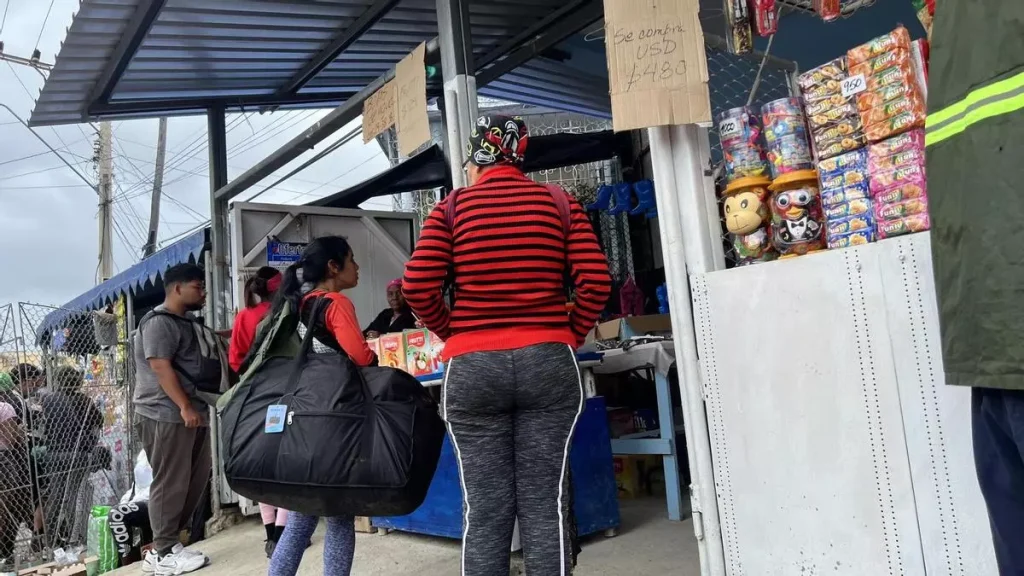
To avoid fines, private businesses stop selling products with capped prices, while State-run dollar stores are not subject to the same rules.
Customer in a private small business (mipyme) in Havana. / 14ymedio
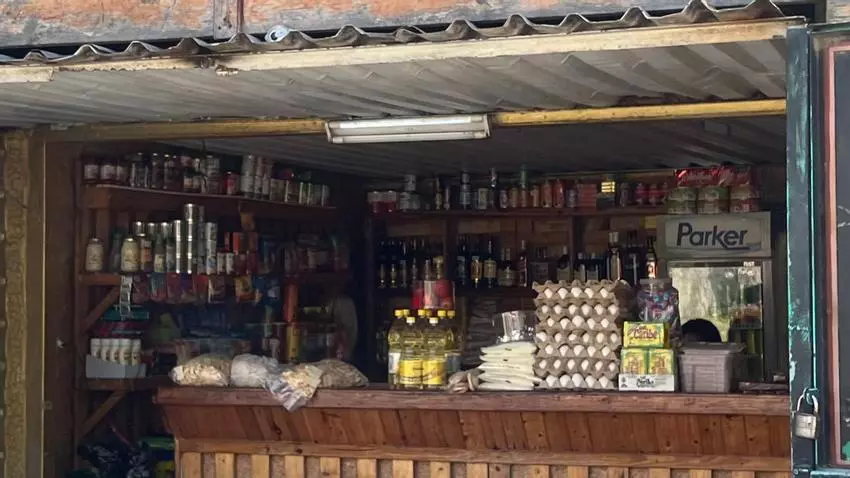
14ymedio, Havana, Darío Hernández, February 23, 2026 – Alejandro, owner of a small private business in Regla, has been fined 40,000 pesos in less than a week. His “little market” was one of the few businesses in the area that still dared to sell essential goods—chicken, cooking oil, sausage, powdered milk, pasta, and detergent—which, since July 2024, have had “agreed-upon” prices; that is, capped, but which the current crisis makes impossible to maintain.
“Last week, people came from all over the municipality looking for oil, because it’s not sold anywhere. I had it at 1,300 pesos per liter, and its capped price is 990. But how am I supposed to sell it for that, if suppliers charge me an even higher price?” says Alejandro, who prefers to use another name for this report.
The price of a dollar on the informal foreign exchange market did not exceed 400 pesos when the Government imposed, more than a year and a half ago, this limit on six products it considered essential. Today, while the dollar now surpasses 500 pesos on the unofficial market and the Central Bank of Cuba sets the rate above 460 pesos, the resolution to control prices, far from benefiting the population, has encouraged corruption and shortages in businesses.
“They’re expensive products, but at least I had them. Let’s see where people will find cooking oil at 990 now. That doesn’t exist”
“I made the decision to stop selling any price-capped products, like the rest of the businesses. Beer and snacks: that’s how I get those mafiosos off my back. I get screwed, but so do the people. They’re expensive products, but at least I had them. Let’s see where people will find cooking oil at 990 now. That doesn’t exist,” Alejandro says angrily.
His decision, he explains, comes after four inspections in one week. “The Municipal Inspection Directorate came, Hygiene, Finance and Prices… and they all fine you for the same thing: the capped prices, the profit margin, and so on. The worst part is that two and even three inspectors show up together, and you have to give each one their cut. That’s another thing: you give them something, whether cash or products, so they give you the 8,000-peso fine instead of the 16,000- or 32,000-peso fine. I swear I feel defenseless, at the mercy of a gang of mafiosos. My business right now continue reading
is ‘in check’ because of them.”
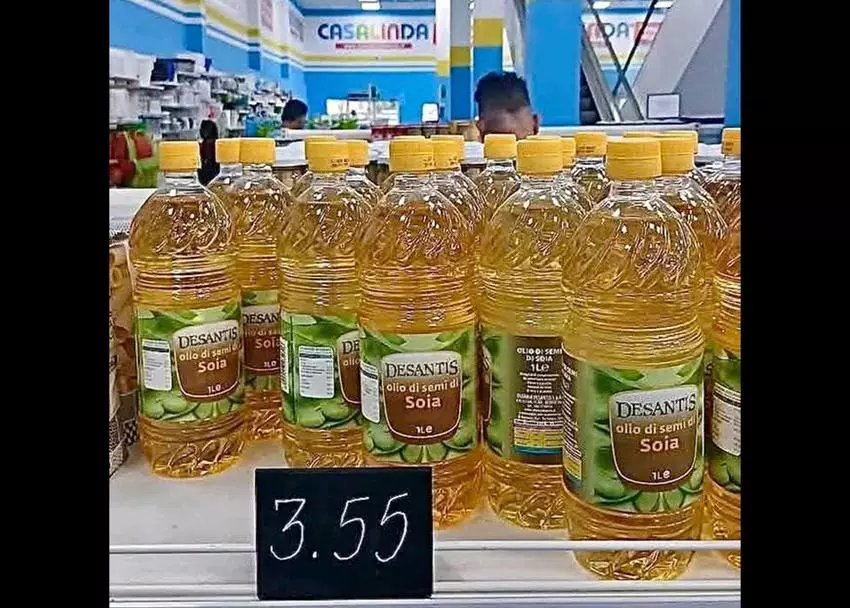
Cooking oil sold for 3.55 dollars at Casalinda, a State-run dollar store. / Image taken from social media
The Administration Council of Plaza de la Revolución, boasting of its “zero tolerance for indiscipline and illegalities,” a few days ago published on its Facebook profile a fine imposed on a business for 383,000 pesos. Among the violations mentioned were failing to display prices to the public, overcharging, and lacking cost sheets and the required paperwork for commercial activity. The post included photos of some of the business’s prices, where cooking oil could be seen priced at 1,000 pesos. Most of the comments, in a joking tone, asked where that small business was located, since its prices were lower than the current market.
“My theory is that those people live in a parallel reality. Who can afford those prices right now? Either they’re disconnected from everything—which I don’t believe, because later you see them buying the same oil and sausage at 500 pesos—or they’re cynical and have normalized that level of shamelessness,” says Alejandro.
Small private business in the Havana municipality of Regla. / 14ymedio
In a note published this Monday by Invasor, the provincial newspaper of Ciego de Ávila, the author reports that in many cases the shopkeeper openly admits that the posted price is only to pretend compliance with regulations, but if you actually want the product, you have to pay more.
Meanwhile, something very different happens in state-run dollar supermarkets, such as 3rd and 70th or Casalinda. There, a liter of cooking oil can cost as much as 3.55 dollars, which, at either the official or informal exchange rate, far exceeds the imposed cap. “What are inspection institutions for? To help the population or to sideline and control private businesses?” exclaims Alejandro. “They forget that with this ‘zero tolerance’ policy, very soon there will be nothing left to control.”
Translated by Regina Anavy
______________________
COLLABORATE WITH OUR WORK: The 14ymedio team is committed to practicing serious journalism that reflects Cuba’s reality in all its depth. Thank you for joining us on this long journey. We invite you to continue supporting us by becoming a member of 14ymedio now. Together we can continue transforming journalism in Cuba.
The building of the same name located across the street was dismantled and converted into a warehouse
The few products available are being sold at “exorbitantly high” prices, according to several shoppers. / 14ymedio
14ymedio, Dario Hernandez, Havana, 12 February 2025 — It has been just over a year since the grand opening of Havana’s 3rd and 70th Supermarket, the figurehead of dollarization in Cuba, but it feels like a lifetime. The establishment, located on the ground floor of the luxurious Gran Muthu Habana Hotel in Miramar, is a far cry from the one whose shelves were once overflowing with a wide variety of products. Although it is still clean and well-lit, it is now just a shadow of its former self.
Rows of bare shelves, other shelves repeatedly stocked with the same product, and prohibitive prices even for shoppers who receive remittances or income in foreign currency—this was the scene at the supermarket on Wednesday. “If this is empty, anything can happen, because it used to be the best-stocked store in the country,” asserted a Havana resident who had been shopping there since it opened.
“If this is empty, anything can happen, because it used to be the best-stocked store in the country.” / 14ymedio
Where canned goods, pasta, oils, and cleaning products once alternated, now only metal shelves remain. In other sections, the scarcity is disguised by an artificial overabundance, with the same item repeated again and again, as if quantity substituted for variety. “There are more empty spaces than usual,” a customer remarks as he walks through the store without a cart, aware that there isn’t much to choose from.
This scarcity of offerings is compounded by the problem of prices. The few products available are sold at “exorbitantly high” prices, according to several shoppers. These same items—or their equivalents—can be found on the street, in informal markets, and paid for in Cuban pesos, albeit at the cost of illegality and runaway inflation. The supermarket, conceived as a showcase of order and supply, has lost any advantage over the informal market. continue reading
Shelves piled over and over with the same product. / 14ymedio
One of the clearest symbols of this transformation was the closure of the market that operated in freely convertible currency (MLC) across the street from the same establishment at 3rd and 70th, bearing the same name. It hasn’t just been “dismantled,” says a local resident, but converted into a warehouse for the neighboring market that operates in dollars. “It’s like the prince and the pauper,” the man says ironically, summarizing the coexistence of privileged spaces for those who can pay in foreign currency and the growing precariousness for everyone else.
Opened on January 31, 2024, the 3rd and 70th Street Supermarket was the first of the establishments that accepted payment exclusively in dollars, a type of store that has since proliferated in Cuban cities. Intended to as a source of foreign currency for a state increasingly short of it, the store offered at least the illusion of variety and abundance. Now, it is nothing more than a shell, a stark reminder of an economic system in its death throes.
______________________
COLLABORATE WITH OUR WORK: The 14ymedio team is committed to practicing serious journalism that reflects Cuba’s reality in all its depth. Thank you for joining us on this long journey. We invite you to continue supporting us by becoming a member of 14ymedio now. Together we can continue transforming journalism in Cuba.
Desperate due to the lack of trucks, neighbors set the garbage on fire
At dawn or dusk, day or night, the neighbors set fire to the garbage without any restraint. / 14ymedio
14ymedio, Dario Hernandez, Havana, February 16, 2026 – – Just as mountains of garbage have proliferated on every corner of Havana in recent months, so too has the illegal burning of it. At dawn or dusk, day or night, neighbors set fire to the trash without any restraint. Smoke over the capital and black wisps falling like negatives of snowflakes are becoming commonplace, with the consequent health risks.
“I don’t think people are aware of how dangerous burning solid waste is,” says a nurse who lives in Central Havana. “But they don’t have any other choice. There are garbage dumps burning next to houses, parks, sports fields, everywhere.”
Another Havana resident from Guanabacoa told 14ymedio that on Saturday, returning home at night, he saw a curtain of smoke along his entire route on Vía Blanca. “At certain times of the day, the smell of burning is constant,” he said. Not only in his municipality, he explained, but throughout the city, burning trash “is now a widespread practice because the garbage trucks are delayed or simply don’t come at all.” continue reading
Returning home at night, he saw a curtain of smoke along his entire route. / 14ymedio
“The smell of burning is better than the stench of all that filth,” asserts a resident of Plaza de la Revolución. There’s no other way, she says, to light a fire to get rid of the flies.
From her tall building, she sees what she calls a “Sauron’s ring of waste,” referring to the villain from The Lord of the Rings: distinct garbage dumps that, due to a lack of trucks to collect them because of the critical fuel shortage—exacerbated by the US oil embargo in force since early January—have merged together. “The one that runs from Factor and Conill joins the one at Estancia and Conill, which in turn joins the one at Santa Ana and Estancia, which completes the circle with the one at Factor and Santa Ana,” she lists, lamenting that since the temperatures have begun to rise, the smell is unbearable. Ironically alluding to the plot of J.R.R. Tolkien’s novel, she concludes: “One ring to choke them all.”
Two weeks ago, the official newspaper Cubadebate published a report highlighting some figures on the collapse of waste collection: Havana has 10,000 garbage containers but needs between 20,000 and 30,000, and only between 16,000 and 17,000 cubic meters are being collected daily, whereas in the past between 25,000 and 30,000 cubic meters were collected.
“There’s no other way to get rid of the flies than to light a fire.” / 14ymedio
One of the main problems, the media outlet said, quoting officials, is not only the lack of fuel but also the poor condition of the equipment: of 106 collection trucks, only 44 are working. “We are between 37% and 44% technical availability, well below what is needed,” acknowledged Alexis González Inclán, an official from Municipal Services.
Another drawback is the lack of labor. There is little interest in being a street sweeper because the basic salary they received, which a few years ago was attractive, today, according to González Inclán, “is little more than 2,000 pesos,” while a carton of 30 eggs costs between 2,000 and 3,000 pesos or a pound of rice costs 300 pesos on the informal market.
In a meeting on the issue, President Miguel Díaz-Canel criticized his officials for not acting more quickly before the problem reached its current levels. The Havana government presented 49 measures to address the accumulated garbage piles, but so far, none have been implemented, either on paper or in practice.
_____________________
COLLABORATE WITH OUR WORK: The 14ymedio team is committed to practicing serious journalism that reflects Cuba’s reality in all its depth. Thank you for joining us on this long journey. We invite you to continue supporting us by becoming a member of 14ymedio now. Together we can continue transforming journalism in Cuba.
In the absence of electricity, this has become an essential resource for cooking in neighborhoods without piped gas.
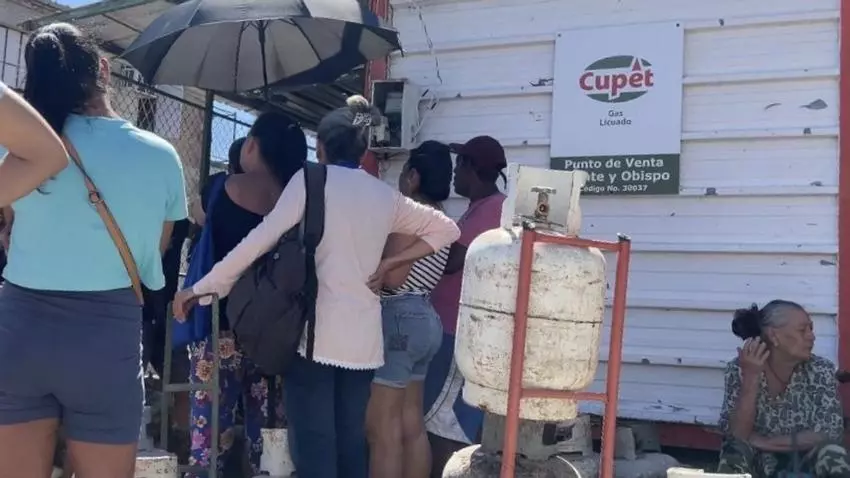
Most of those waiting to buy a small gas cylinder at Cupet establishments are elderly people. / 14ymedio
14ymedio, Havana, Darío Hernández, February 13, 2026 – As the sun begins to set in Regla, under a red sky, people remain crowded in a line that started forming well before 3:00 in the afternoon. Most of those waiting to buy a small gas cylinder at Cupet outlets are elderly; many use the empty tank or the small cart used to transport it as a seat to ease their fatigue.
At 6:00 in the evening, the truck loaded with gas arrives, and finally, two hours later, the crowd slowly begins to move forward amid arguments and commotion.
Not all lines in the capital are the same: some are better organized than others. A young woman scrolling through Facebook on her phone while she waits says loudly that “my mother in Cerro got her cylinder at 1:00 in the afternoon, just imagine,” without taking her eyes off the screen.
The protocol, published in a Telegram group, states that priority in line should be given to those who have gone the longest without refilling their cylinder; in this case, those whose last refill was in August. But in reality, organization depends on the judgment of the workers at each sales point. For example, on Obispo Street in Guanabacoa, “a huge commotion broke out,” neighbors told 14ymedio, because it was decided that only 150 gas cylinders would be sold to the first people who arrived. “Many of them have been marking their place for days or are messengers, so those from August were left without continue reading
a cylinder once again.”
The protocol, published in a Telegram group, states that priority in line should be given to those who have gone the longest without refilling their cylinder / 14ymedio
This Tuesday, the Liquefied Gas Company (GLP) announced the distribution of cylinders for residents of the provinces of Havana, Artemisa, and Mayabeque, with a projected 15,000 units per day, to be distributed “equitably,” supposedly prioritizing by geographic location the areas with the highest customer density. The document stipulates the sale of only one cylinder per contract, the organization of sales points based on customer records, and the date of the last purchase. Registered delivery agents would only be authorized to buy one cylinder per customer per day. However, the reality seen on the streets is far from what is established and reveals chaos well removed from the protocol.
Yamila, a resident of Nuevo Vedado who spoke with 14ymedio, feels very fortunate not to have to endure that “calvary”: “Luckily, the piped gas is working well; I don’t know if it’s because it’s domestically produced. It doesn’t cover the whole city or anything close to that, but for those of us who have it, it’s a blessing to count on that service.”
The growing demand for small gas cylinders, which on the informal market can now reach prices of up to 30,000 pesos, has surged over the past month as the energy crisis has worsened. Faced with shortages of both gas and electricity, many people have begun turning to charcoal and firewood for cooking, a practice long common in eastern Cuba but now increasingly frequent in some Havana neighborhoods.
Jamaica has traditionally supplied liquefied gas to Cuba, but after sanctions imposed by the Trump administration starting January 30 on any country supplying fuel to the Island, shipments were interrupted. On February 1, the Cuban tanker Emilia returned empty to the port of Cienfuegos after a failed attempt to purchase LPG in Kingston.
Translated by Regina Anavy
____________
COLLABORATE WITH OUR WORK: The 14ymedio team is committed to practicing serious journalism that reflects Cuba’s reality in all its depth. Thank you for joining us on this long journey. We invite you to continue supporting us by becoming a member of 14ymedio now. Together we can continue transforming journalism in Cuba.
Gasoline is rationed and sold only in dollars; public transportation is drastically reduced, and food prices are rising.
The near-total absence of buses is pushing the population toward private transportation, now almost the only option available. / 14ymedio
14ymedio, Havana, Darío Hernández, February 7, 2026 – Empty bus stops are seen across much of Havana, a city that is nearly paralyzed. In Regla and Guanabacoa, where until recently route A29 connected both municipalities, not a single bus runs today. Urban public transportation, already fragile, has practically disappeared. And the new measures announced this Friday threaten to make the situation even worse, even as authorities avoid using the word “collapse.”
In other areas, such as the Guanabacoa intersection, people do gather, but not because there are active routes. There, inspectors stop State-owned vehicles and force drivers to take on passengers. “There aren’t many State cars on the road either,” explains a woman waiting, with no certainty about how many hours it will take her to reach her destination. The result is an improvised, irregular, and humiliating form of mobility, where getting around depends on luck, charity, or administrative coercion.
The near-total absence of buses is pushing the population toward private transportation, now almost the only option available, but getting around Havana this way has become a luxury. A trip in a private car from the Guanabacoa traffic light to Parque de la Fraternidad cost 350 pesos this week; from there to El Vedado, another 200. In total, 550 pesos to cross the city. “I spent the money I had planned for this outing just on transportation,” one passenger sums up as he gets out of a taxi.
Getting around depends on luck, charity, or administrative coercion. / 14ymedio
Electric tricycles, once presented as a “sustainable” alternative, barely ease the situation. “They’re only a little cheaper, 50 or 100 pesos less than cars,” a passenger told 14ymedio. In addition, their fares are also soaring. For the past two weeks, ticket prices have been rising exponentially, and transport continue reading
operators themselves warn that the increases will continue as long as the fuel shortage persists.
These vehicles, which are lightweight and with a maximum capacity of six passengers, also have the additional problem that the configuration of their wheels prevents them from effectively navigating potholes. This forces drivers to move at very slow speeds and take dangerous detours to avoid falling into the many potholes that dot Havana’s streets.
The impact of the current restrictions is not limited to mobility. The transportation crisis is already beginning to be reflected in the prices of basic goods. A small shopkeeper in Regla reported that his suppliers raised the price of all bread by 20 pesos “because of the fuel issue,” and he fears the same will happen with other foods. The rising cost of transportation is almost immediately passed on to the cost of living.
“People think that since work hours are shortened and school is cut back, there’s no need to move around,” reflects a resident of Guanabacoa. “But what do I do if I want to see a relative, go out at night, or visit a nearby place like Havana or El Vedado?” The question sums up a reality that official discourse avoids: the city is not only about work and school; it is also about social life, relationships, and leisure. All of that is now conditioned on having enough money to pay an inflated fare.
The new restrictions have been presented as an “opportunity.” / 14ymedio
The official measures do little to dispel public fears, even though they have been presented as an “opportunity.” On the television program Mesa Redonda [Round Table], Vice Prime Minister and Minister of Foreign Trade and Foreign Investment Oscar Pérez-Oliva Fraga acknowledged the “low availability” of fuel and announced new restrictions. The Cimex Corporation reported that “until conditions allow, fuel sales in CUP and the commercialization of diesel fuel in USD to the population are postponed.”
In addition, starting February 7, the Ticket app will be implemented at service stations that sell gasoline in dollars, as had previously been done with purchases in pesos. The stated goal is to “organize the process,” but the imposed limit, 20 liters per turn, confirms the magnitude of the shortage. Far from normalizing access, the measure institutionalizes rationing and excludes those who do not earn in hard currency.
At the same time, the Ministry of Transportation has announced a drastic reduction in interprovincial services, the suspension of national routes, and adjustments to urban and worker transportation across the country. Trains with widely spaced departures—every eight days—canceled buses, and exclusive priority for sectors deemed “strategic” complete a picture of near-total paralysis.
In practice, the State is withdrawing from everyday mobility and shifting the problem onto citizens. Those who can pay can move; those who cannot, stay put. “People who don’t have money will get around through charity or won’t get around at all,” one comment concludes. This is the country’s new reality.
Translated by Regina Anavy
_______
COLLABORATE WITH OUR WORK: The 14ymedio team is committed to practicing serious journalism that reflects Cuba’s reality in all its depth. Thank you for joining us on this long journey. We invite you to continue supporting us by becoming a member of 14ymedio now. Together we can continue transforming journalism in Cuba.
It has now become nearly impossible to obtain fuel on the black market, where it’s sold at 1,000 pesos per liter.
The availability of gasoline becomes more critical every day. / 14ymedio
14ymedio, Darío Hernández, Havana, February 6, 2026 — The main partner to the shortage, corruption, has colonized the sale of gasoline at a dizzying rate. The under the table sale is a minor thing: they are now even selling turns to buy gas at service centers in dollars, and the price is no small issue. The ten dollars that it costs to move ahead in the line are, at the informal exchange rate (490 as of Thursday), more than double the minimum wage in Cuba.
“It’s no secret to anyone, and the eyes are useless when the mind is blind, fuel is extremely limited,” warned Pedro Garcés, organizer of the service stations of El Vedado and of the social group Gente del Barrio, this Wednesday, to introduce new regulations around the sale of gasoline. All service stations now deal in dollars, he explained, “a measure which we should understand the importance of in order to, in the middle of this siege, continue paying the least amount possible,” added the man who regularly brags about his loyalty to the Revolution.
Garcés explained that, for right now, the waiting lists on the Ticket app for sales of gasoline in pesos are closed, given that they are unable to serve “those that are in them, whose numbers surpass the thousands.”
One can spend up to five hours in line for gas, just to have to leave without any in the end.
The organizer insisted that the corporation Cimex – controlled by the military conglomerate Gaesa and in charge of, among other things, the management of gas stations– accepts the contributions that he himself sends based on the demands of the population. Despite this, “they are searching for solutions to avoid the long lines and the waste of time to obtain fuel in dollars, a situation which today generates growing continue reading
illegalities,” he lamented. More than the price of 10 dollars to get a turn, Garcés affirmed that the liter is being sold under the table at 1,000 pesos, more than double the price tag that it carries in dollars on the legal market.
The situation is an open secret on the streets of the capital. Regular gas in service stations costs $1.10 (equivalent to 539 pesos on the black market) and premium $1.30 (637), and now there is no way to get it in pesos on the Ticket app. “Now I don’t see the group nor the app,” said a man posted in the service station on Zapata and 4th, in Guanabacoa. “Everything is a shameless mess. The line doesn’t move. And, of course, it’s only in the gas stations in Zapata, of Línea & E, and Riviera: all in dollars. If you want to pay in pesos, pay the street rate of 1,000. If you’re lucky and you find it…” he said this Wednesday while waiting in a long line guarded by two officers. Resigned to wait hours or days to get gas in dollars.
A few meters away, in the same line, another man assured 14ymedio that the day before he spent five hours waiting for his turn and, at the end, he had to leave empty-handed because there was none left. The shortage is so bad that where before there were generators to fix the light issues they have started to install new solutions, like the purchase of electric generators, which take 2 or 3 hours to charge.
They continue dispensing fuel to state vehicles without reductions, for now.
In Vedado, they only dispense for sales in dollars, while in Tángana and the service stations at 25th & G and L & 17th they don’t have a drop of fuel. Furthermore, in Guanabacoa two gas stations are selling, but only on the surface, given that instead of the long line that would be expected in that case, there have barely been two or three vehicles, a fact that quickly raised suspicions among passers-by.
“Now with 750 or 800 pesos you can’t afford a liter,” admits another aspiring customer. “If anyone has it, in a few hours it’s already run out. It’s selling for 1,000 pesos, for example, on the Santa Fe bridge,” they added.
“My neighbor, who used to sell regularly, now doesn’t have any,” confessed another driver. “He has huge barrels in his house and people come with containers of all kinds. Cans of 1.5L, 5 liters, etc. I couldn’t tell you where he gets the gas, I only know that his daughter works with something to do with Cupet. I guess that it would be from there.”
In the gas station at Vía Blanca, the line was the usual: only state vehicles. The discomfort is heightened among the drivers, who complain that those cars still don’t have restrictions. “They haven’t cut their rations, nor reduced them. They hope that they soon will, including a 50% reduction, but until this moment, they haven’t done it. They are the only ones that you see in these gas station lines,” protested another.
Translated by Logan Cates
____________
COLLABORATE WITH OUR WORK: The 14ymedio team is committed to practicing serious journalism that reflects Cuba’s reality in all its depth. Thank you for joining us on this long journey. We invite you to continue supporting us by becoming a member of 14ymedio now. Together we can continue transforming journalism in Cuba.
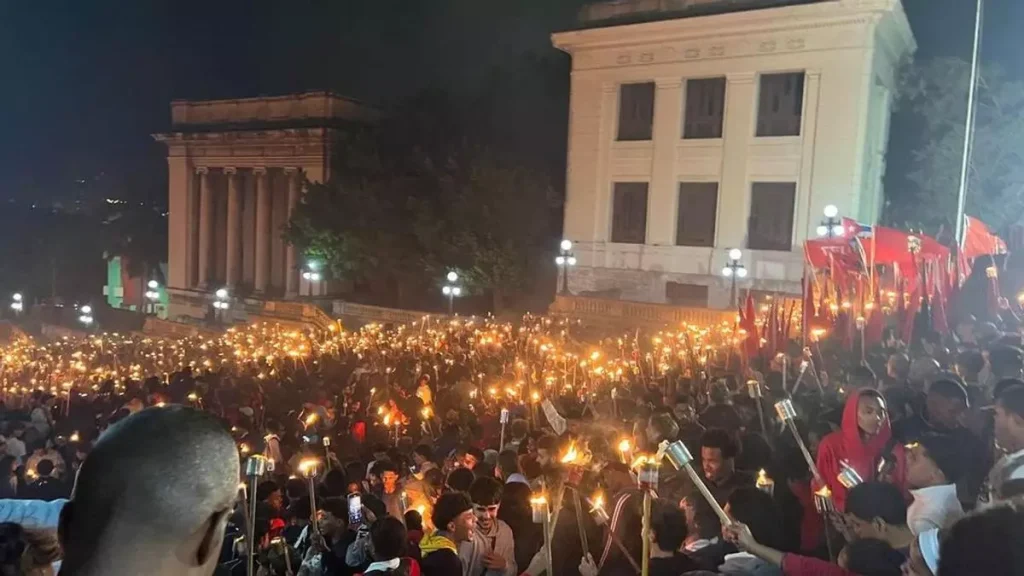
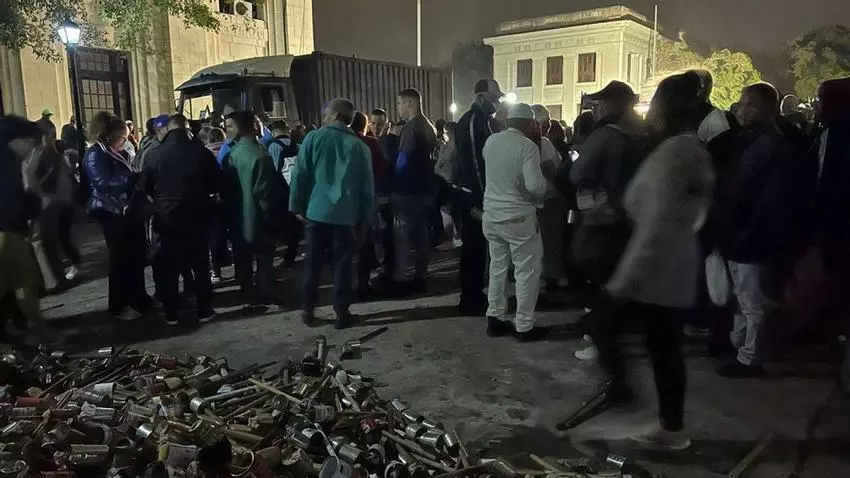
The crowd was very focused on making the steps look full, because the park, which in other years was overflowing, was empty this time. / 14ymedio
14ymedio, Dario Hernandez, Havana, 28 January 2025 — “Thousands of Cubans, led by young people, are marching tonight with torches through the streets of Havana honoring José Martí and, with him, his firm and unwavering anti-imperialist stance.” That was the response of Cuban Foreign Minister Bruno Rodríguez to US President Donald Trump, hours after the American again predicted the fall of the regime due to the lack of oil, on a day when doubts about Mexican crude shipments remained unresolved.
The reality was far less epic. Yesterday’s march drew much smaller crowds than last year, and although some young people, already hoarse, shouted slogans on street corners, indifference was widespread. “Most people leave within the first few blocks, and others throw down their torches at the first opportunity,” said Alejandro, a Havana resident who came more out of curiosity than revolutionary fervor. “It seems the security cordons, rather than protecting us, are there to prevent people from heading en masse for the buses parked on Carlos III Avenue,” he quipped.
“It seems that the security cordons, rather than protecting anyone, are there to prevent people from flocking to the buses parked on Carlos III Avenue” / 14ymedio
Heavy police presence, road closures, and a crowd intent on making the steps appear full, because the park, which in other years was overflowing, was empty this time. “While the inaugural speech was being given, people were preoccupied, not paying attention,” a Havana resident observed. The presence of workers, sports schools, and cadets was more significant this year, but there were far fewer students than usual. The conversations were almost entirely focused on one topic: the power outages, Trump, and Mexico were on everyone’s lips, and it was no surprise. continue reading
“Cuba is about to fall. Cuba is a nation that is very close to collapse,” Trump had just told the press before beginning a rally in Iowa. The president reiterated—as he did on January 9—that Havana “got its money from Venezuela, got its oil from Venezuela, but they don’t have it anymore.” Not another word about the island, although he did continue praising “the largest oil reserves in the world”—referring to Venezuela’s—and the “excellent job” being done by Delcy Rodríguez. “We have a very good relationship with the leaders of Venezuela, and we’re going to keep it that way,” he said.
The words were not well received in Havana, especially during one of the biggest propaganda events of the year, this time commemorating the 173rd anniversary of José Martí’s birth. But every cloud has a silver lining, and the incident served to invigorate the previously lackluster rhetoric. “This is not an act of nostalgia, it is a call to action,” said Litza Elena González Desdín, national president of the Federation of University Students (FEU), which organizes the march every year with the support of the Communist Party’s propaganda apparatus.
The event was attended by top government officials, who paid tribute to Fidel Castro, whose centenary is being celebrated this year. / 14ymedio
“It is up to us to defend sovereignty, build more social justice, and raise the banner of Latin American unity and anti-imperialism,” he continued, turning into an epic statement, saying that the youth “do not accept new or old chains and do not surrender or sell out.”
The event, which, incidentally, was not attended by Raúl Castro – for the first time in at least ten years – nor Ramiro Valdés, who is suffering from health problems, was attended by the top brass of the Government, who evoked Fidel Castro – whose centenary is being celebrated this 2026 – and tried, with little success, to turn it into a demonstration of revolutionary reaffirmation in the face of the unprecedented crisis the country is experiencing.
A Lackluster Torchlight March Without Raúl Castro in Response to the Cuban Regime’s Imminent Collapse / 14ymedio
____________
COLLABORATE WITH OUR WORK: The 14ymedio team is committed to practicing serious journalism that reflects Cuba’s reality in all its depth. Thank you for joining us on this long journey. We invite you to continue supporting us by becoming a member of 14ymedio now. Together we can continue transforming journalism in Cuba.
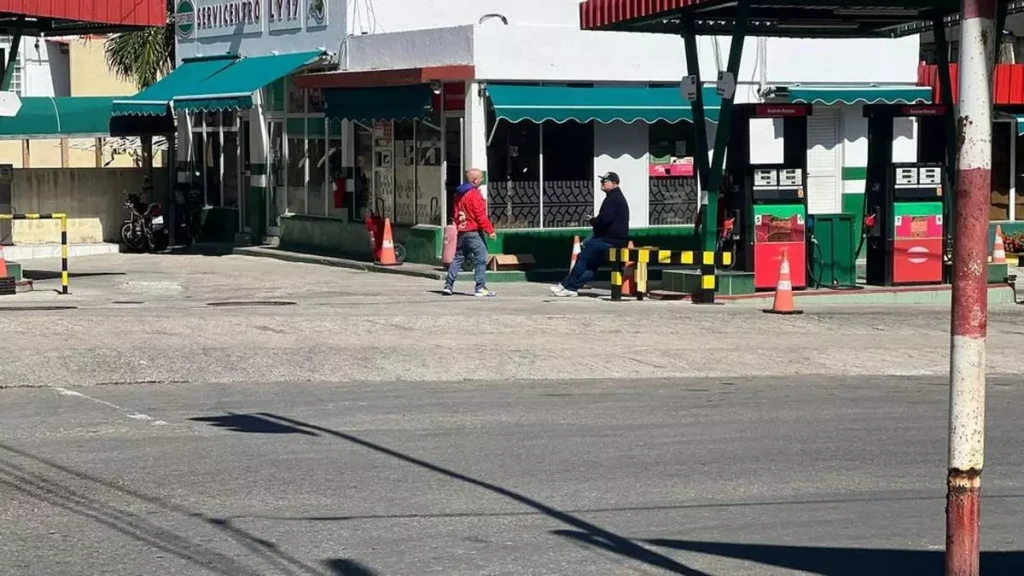
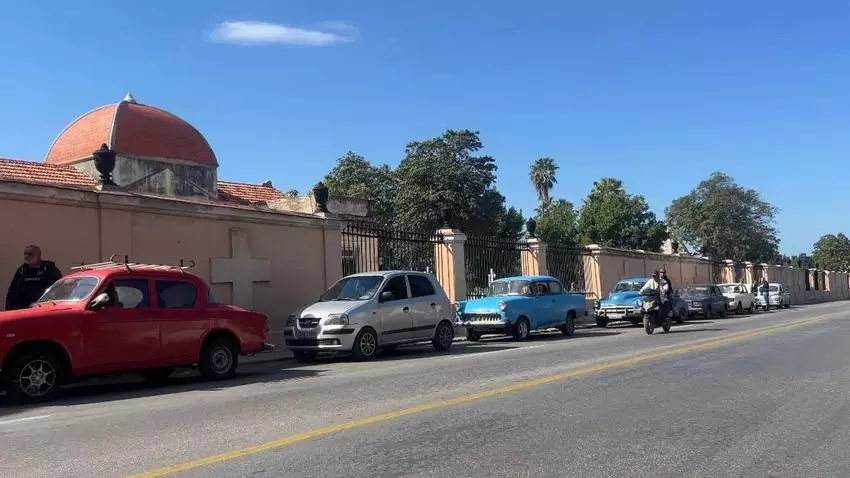
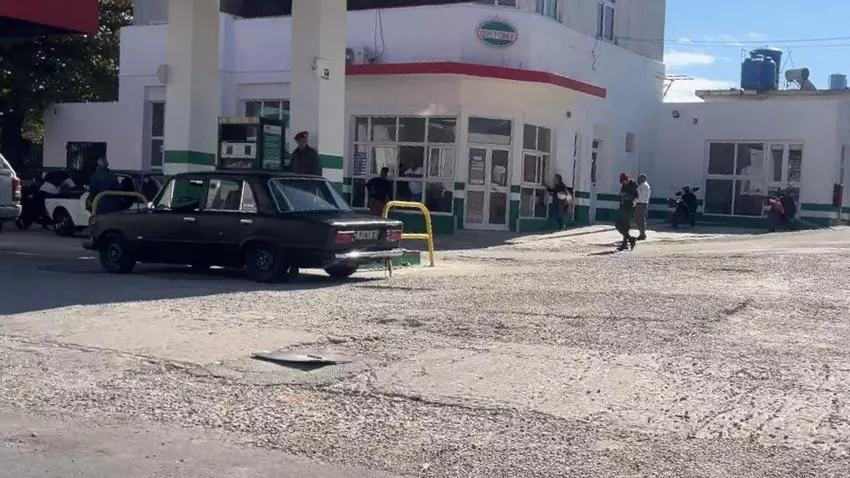
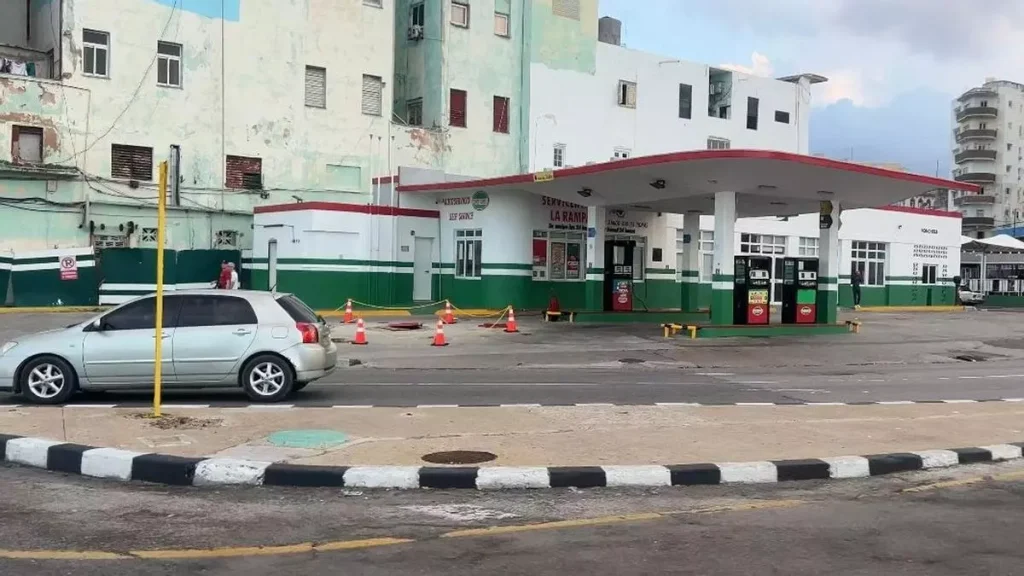
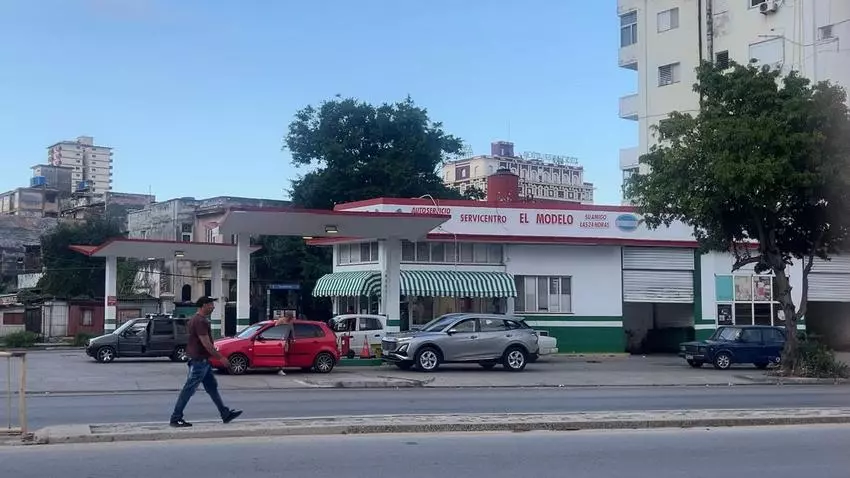
Only a few service stations that take foreign currency are operating, where a liter of regular gas costs $1.10 and premium $1.30.
The service stations were once again empty this weekend, not only of gasoline, but also of people trying to buy it. / 14ymedio
14ymedio, Havana, Darío Hernández, January 26, 2026 – When gasoline was scarce in Havana, there were always people who knew where to find it. Fuel theft is a good business in Cuba, and the market had never failed. Until now. “Even the people who sell on the side, who almost always have it, don’t have any either,” says Pedro, a street-smart habanero who knows how to get around, but who now states bluntly: “Gasoline has disappeared.”
The service stations were once again empty this weekend, not only of gasoline, but also of would-be buyers, except for the most stubborn who refused to leave the line just in case something arrived. “Being here is pointless,” said a private transport operator waiting in line.
At one of the Cupet stations reserved for state vehicles, which receive fuel by allocation, they weren’t pumping either, and drivers were waiting for a tanker truck to arrive. When asked whether there was any way to resolver (work something out), one of them replied that it wasn’t possible because what they were being given wouldn’t even last two weeks. “If I sell you any, I’ll end up stranded.”
The only station that had customers waiting on Sunday was the one at Línea and E, in El Vedado, which sells fuel in dollars. / 14ymedio
Walking past gas stations in the capital is bleak. The only one with customers waiting on Sunday was the Línea and E station in El Vedado, which sells fuel in dollars. Most of the cars were modern, and it was clear their owners were well-off. Since last year, when some service stations were dollarized in order to obtain hard currency amid the collapse of tourism, these had been the only places where supply was guaranteed. Now even that is not always enough, and prices don’t help either. A liter of regular gas continue reading
costs $1.10 and premium $1.30, paid with prepaid cards or the Clásica card.
“The situation is extremely complicated,” Pedro insists. “A friend in Matanzas who owns a car told me that over there it’s the same. The only places selling are the service stations, in dollars, end of story, because there’s nothing on the street either. He says the dollar went up to 600 pesos, but then the gasoline disappeared, and there’s nowhere to find it.”
Suddenly, a man on a motorcycle shows up. He says he managed to buy fuel on the black market because he couldn’t find any at a service station, but before that he had to make another round through the informal market to buy dollars to pay for the gasoline.
Oil isn’t arriving, and the paths are narrowing. Everyone trembled again on Friday when the Reuters agency reported that the Mexican government is evaluating whether to maintain, reduce, or suspend its crude oil supply to the Island, amid fears of direct reprisals from the United States under the presidency of Donald Trump. Added to this were statements to Politico by sources familiar with an alleged White House plan to invoke the Helms-Burton Act in order to “impose a total blockade on oil imports carried out by Cuba.” “Energy is the key to killing the regime, and this will happen in 2026, with a 100% probability,” said one of the sources.
Gasoline is on the path to disappearing in Cuba, even on the black market. / 14ymedio
The reaction in Havana was immediate. The Deputy Minister of Foreign Affairs, Carlos Fernández de Cossío, spoke on Friday, denouncing a “brutal assault against a peaceful nation that poses no threat whatsoever to the United States.” He added that these measures are irrefutable proof that the economic hardships faced by the Cuban people are mainly caused and designed in Washington.
Carlos de Céspedes, Cuba’s ambassador to Colombia, has also weighed in. In an interview on Saturday with Qatari television network Al Jazeera, he accused the U.S. of “international piracy” and said it is imposing a “maritime siege” on the Island. “Cuba is facing U.S. threats more powerful than at any time in the 67 years since the Revolution,” he asserted.
The authorities, for their part, have continued without providing public data on the fuel shortage, not even on the fuel used for distributed generation, whose specific shortfall is not discussed. This Sunday, the Island experienced another day of blackouts: with a forecast peak demand of 3,130 megawatts (MW), available capacity was only 1,325, which pointed to a shortfall of 1,805 MW, equivalent to 60% of national consumption.
Although it is not known what portion is due to the lack of fuel, it was specified that only 450 MW corresponded to the deficit at thermoelectric plants.
If in Havana power outages already exceed 15 consecutive hours, what is happening in other provinces is truly staggering: 29 hours in Pinar del Río, 40 in Matanzas, and 48 in Cienfuegos, numbers that no longer surprise anyone. “Don’t add more misfortune to what we already have in that report that isn’t true,” a user pleaded with the Electric Utility. “Look for solutions for a people who are suffocating, who are agonizing. Don’t ask for resistance because there is none left. Be capable of moving your country forward and stop justifying the atrocities you commit with the blockade, because your standard of living isn’t affected.”
Translated by Regina Anavy
____________
COLLABORATE WITH OUR WORK: The 14ymedio team is committed to practicing serious journalism that reflects Cuba’s reality in all its depth. Thank you for joining us on this long journey. We invite you to continue supporting us by becoming a member of 14ymedio now. Together we can continue transforming journalism in Cuba.
The oil tanker Mia Grace, which was heading to Cuba from Africa, will instead go to the Dominican Republic
Pots and pans bang in Havana in protest against blackouts of up to 13 hours
A family cooking with kerosene on a Havana street. / 14ymedio
14ymedio, Havana, Darío Hernández, January 23, 2026 – Havana experienced a totally dark day this Thursday, Diana, a second-year veterinary student went the entire day without eating. There is no gas left in her home, where she lives with her elderly grandparents, she tells 14ymedio. “They say pots were banging. I didn’t have the strength to listen or to bang a pot myself though I certainly felt like it,” the young woman says. “To make matters worse, I had an exam today and was hungry, because there comes a point when bread doesn’t fill you up, and it’s not that cheap either. I don’t know where this is going, but I’m exhausted.”
Irma, a 40-year-old Facebook advertising promoter, recounts her ordeal: “The power goes out and the connection disappears. I caught a cold going out onto the balcony looking for a signal and hanging laundry at night, because the clothes pile up, and when the electricity comes back, it’s rush, wash, make rice, iron the kid’s uniform.” The woman says her sister, a seamstress, is pulling her hair out because she doesn’t have light to work. “They give her power for one hour during the whole day. If this keeps up, she’ll have to sleep during the day and work at night. And the worst part is that it seems like you-know-who doesn’t care.”
“Here people live however they can. Many skip meals and baths; they resign themselves,” says a resident of Guanabacoa. “Yesterday the pots were banging in several areas here, and really loud. We’ll see what happens when the heat arrives, and on top of all this is the lack of sleep.”
“Here people live however they can. Many skip meals and baths; they resign themselves.”
On the streets at night, cooking in doorways lit by candles or by the glow of a cigarette, there are neighbors who take it with as much humor as they can. “I have no electricity, I have no soap,” sings a young woman almost melodically, to the tune of Juan Gabriel, continuing: “I have no money and nothing to give.” continue reading
Several municipalities in the capital reported more than nine hours in the dark, such as Marianao, where the power was cut at 3:00 pm and by midnight they were still without electricity. In the La Güinera neighborhood of Arroyo Naranjo, residents reported up to 13 hours without power, and in La Lisa there were protests with pots and pans. “I just confirmed by a video call that they restored electricity a few minutes after the demonstration. So, a word to the wise is enough,” said journalist Mario Pentón.
Mercedes and Antonio, two retirees who live alone, couldn’t cook their peas on Tuesday until 11:00 pm, when the power finally came back after 14 hours. “It was enough to drive you crazy,” says the man, an accountant when he was working; his wife was a doctor. However, “on Wednesday the blackout was even worse.”
The fuel shortage is also evident at gas stations. Since January 10, the Ticket system has not provided the list of the 24 gas stations open in eastern Havana, which could indicate that they are all closed. The list for the western sector is still being issued; this Thursday, 5 of the 14 stations there remained open.
Several municipalities of the capital reported more than nine hours in the dark, such as Marianao, where power was cut at 3:00 pm and by midnight they were still without electricity. / 14ymedio
Meanwhile, on the informal market fuel prices are rising at a dizzying pace. In Holguín, local sources report that a liter of gasoline has reached 1,200 pesos and a can of kerosene up to 15,000. In Havana, some users say they can find gasoline on the black market for 1,000 pesos per liter, although in most places prices range between 700 and 750. In Sancti Spíritus, the product is cheaper: five liters of “kerosene for the stove,” a resident explains, cost between 1,850 and 1,900 pesos; that is, between 370 and 380 per liter.
The situation is not easing, and the ship on the horizon fades away. In a strange twist of events, the Mia Grace, the tanker that was heading to Cuba from Togo to deliver some 314,500 barrels of diesel or 280,500 of fuel oil, according to University of Texas expert Jorge Piñón, has changed course. Geolocation data that this week indicated its departure from the port of Lomé with an expected arrival in Havana on February 4 have been modified.
The vessel, flying the flag of the Marshall Islands, now appears off the coast of Guinea after having departed on January 13 from Takoradi (Ghana), with destination Río Haina (Dominican Republic), where it is due to arrive on February 2. It is unknown why the route detected last Monday by Piñón has changed. He was alerted to the tanker’s destination and told 14ymedio that it could be a “spot purchase” by the state company Cubametales, sanctioned by the United States, “through a European intermediary.”
The expert noted that “Togo does not refine oil, but it exports refined petroleum products and has extensive logistics and maritime transit infrastructure.” Now the origin points to a port in Ghana, located about 500 kilometers from Lomé.
Most significant is that as of this week the UNE has stopped reporting the deficit by type of energy.
Ghana’s oil industry has consolidated in recent years as one of the most flourishing, along with gold, although it is still a mid-level African crude power, especially compared to Libya, Nigeria, or Algeria. The latter country, which maintains excellent relations with Cuba, has contributed a small amount of oil to the Island, but only around two million barrels annually, the equivalent of 18 days of national consumption.
After nearly reaching a 2,000-megawatt (MW) deficit during peak hours on Thursday—well above the announced 1,775 MW—a similar shortfall is expected this Friday. Officially, the Electric Utility (UNE) has forecast 1,970 MW, but even during average hours the figures are staggering, with 1,200 MW affected. This is almost unheard of in a context where solar parks are operating correctly. This Thursday the 49 parks generated 3,186 MWh, with a maximum output of 711 MW. These figures are enough to imagine what would happen if they were not contributing at all.
The thermoelectric plants are constantly going in and out, as if they spent the day revolving through a turnstile. This Thursday, the electric company’s posts announcing shutdowns were so numerous that users could take no more. “All those shutdowns are aimed directly at the people. Thank you very much for your efficiency,” one responded bitterly. Announcements of “offline” and “back on the system” multiplied, prompting some darkly humorous comments amid the desperation. “Whoever runs the UNE’s profile must enjoy their job; they work more than anyone else at the company. Incredible incompetence,” someone remarked.
Most significant is that as of this week the UNE has stopped reporting the deficit by type of energy. This Friday’s breakdown indicates breakdowns at units 5 and 8 of the Mariel thermoelectric plant (CTE), unit 3 of the Carlos Manuel de Céspedes CTE, units 5 and 6 of Nuevitas, and unit 2 of the Felton CTE. Under maintenance are unit 2 of the Santa Cruz del Norte CTE and unit 4 of the Carlos Manuel de Céspedes CTE, totaling 466 MW out of service in thermal generation. But there is a complete absence of data on the shortfall due to fuel, a figure that has been reported for months and generally exceeds 1,000 MW.
Translated by Regina Anavy
____________
COLLABORATE WITH OUR WORK: The 14ymedio team is committed to practicing serious journalism that reflects Cuba’s reality in all its depth. Thank you for joining us on this long journey. We invite you to continue supporting us by becoming a member of 14ymedio now. Together we can continue transforming journalism in Cuba.
Economist Pedro Monreal points to the failure of the floating exchange rate created by the government a month ago in its latest attempt to revalue the national currency
At the La Cuevita market in San Miguel del Padrón (Havana), the dollar was being bought at 480 CUP. / 14ymedio
14ymedio, Holguín/Sancti Spíritus, Havana, Miguel García, Mercedes García, and Darío Hernández, January 22, 2026 – Just over a month after the official floating exchange rate went into effect, promising to revalue the national currency, the dollar has soared to 500 pesos in some parts of Cuba, such as Holguín. That is 10 CUP more per USD than the rate reported this Thursday by the independent platform El Toque (490) in its daily tracking of informal-market currency trading.
This was confirmed by a resident of Holguín who owns the electric tricycle he uses for work, whose electronic control box burned out. When he asked about prices, a private seller told him it cost $190. “I asked him what that was in pesos, because I didn’t have USD and had no way to get them, and after insisting that he preferred dollars, he told me the dollar was at 500 pesos.”
At the same time, mipymes [‘MSMEs’ — micro, small and medium-sized private enterprises] in the eastern city have raised prices for basic goods such as cooking oil, spaghetti, and chicken. “Starting this week, it’s going to be huge,” a Holguín resident laments ironically. Some merchants argue that inflation is precisely due to the new price of the dollar. “Due to the rise of the USD, there may be some price changes in certain products, but it’s nothing serious; we’re making an effort to keep prices as fair as possible,” they promise in a WhatsApp group.
“It’s not at all fair. They say they made the last purchase at one price for the dollar, but the next one will more expensive, so they’ll have to raise prices”
“Can you imagine? It’s not at all fair. They say they made the last purchase at one price for the dollar, but the next one will be more expensive, so they’ll have to raise prices,” the same woman says. continue reading
In Sancti Spíritus, most informal stalls are offering the dollar at the rate reported by El Toque, 490 CUP, but according to a source in the city, “there’s a mipyme that’s taking it at 500.” Meanwhile, in Havana, in most neighborhoods the dollar can be found at 490 pesos, but two days ago, at the La Cuevita market in San Miguel del Padrón, it was being bought at 480.
That same Tuesday, Cuban economist Pedro Monreal documented the failure of the most recent exchange-rate measures, comparing them to preparations for the “war of the whole people,” announced after the capture of Nicolás Maduro by the U. S. in Caracas and the death of 32 Cuban soldiers in the operation. “Exactly one month passed between the announcement of a new official floating exchange rate and the notification of the analysis and approval of plans and measures for the ‘transition to a State of War’ in Cuba,” tweeted the specialist, who lives in Spain. “So far, the floating rate is fighting a losing battle.”
For now, Monreal continued, the peso “has depreciated 3.9% against the USD under the floating rate, failing to meet the government’s expectation that the ‘new official foreign-exchange market’ would help restore the purchasing power of the national currency.”
In effect, when the Central Bank of Cuba (BCC) launched without prior notice an official floating exchange rate on December 18, to be added to the other two operating in the country: one at 1×24 for centralized state allocations for goods and services deemed essential, and another at 1×120 for certain “entities with the capacity to generate foreign currency,” such as tourism. The government presented it as the start of a transformation of the foreign-exchange market aimed at “bringing order” to the economy and moving toward future monetary unification.
In practice, however, the Island entered an even more complex stage of exchange-rate segmentation amid the worst economic crisis in decades. It quickly became evident that the population was ignoring the official rate, which was paradoxically very close to El Toque’s, against which the government had waged a harsh propaganda campaign months earlier, and they continued exchanging dollars on the informal market.
The peso “has depreciated 3.9% against the USD under the floating rate, failing to meet the government’s expectations”
In the following weeks, it could be seen that at state-run currency exchange offices (Cadeca), where dollars are virtually nonexistent and where the dollar was theoretically selling this Thursday at 457.92 pesos, only elderly people came to collect their pensions.
On January 9, yet another policy was added to the already convoluted exchange-rate market. The BCC opened a banking channel allowing private mipymes to legally purchase foreign currency through banks, but under very strict rules.
Thus, purchases by these private entrepreneurs can only be made based on the new floating rate, only once a month, and without being able to choose the amount. The amount is calculated by the bank by taking the average of what the mipyme deposited into its tax account over the previous three months, using only half of that money and converting it at the floating exchange rate in effect at the time.
In practice, this means that if a mipyme has had low or irregular income, it will be able to buy very few dollars, even if it urgently needs them to import raw materials, pay for services, or fulfill contracts. And if the business is just starting and does not yet have an income history, it could simply be left out altogether.
The BCC also made it clear that the entire process would be “bankarized.” Cuban pesos must be debited from the tax account, and the purchased foreign currency can only be deposited into the economic actor’s own foreign-currency account. No cash, no informal transfers, and no room for maneuver. Before approving the transaction, the bank will review the client’s identity, accounts, and the origin of the funds, as part of the controls that currently weigh on any economic activity on the Island.
Translated by Regina Anavy
____________
COLLABORATE WITH OUR WORK: The 14ymedio team is committed to practicing serious journalism that reflects Cuba’s reality in all its depth. Thank you for joining us on this long journey. We invite you to continue supporting us by becoming a member of 14ymedio now. Together we can continue transforming journalism in Cuba.
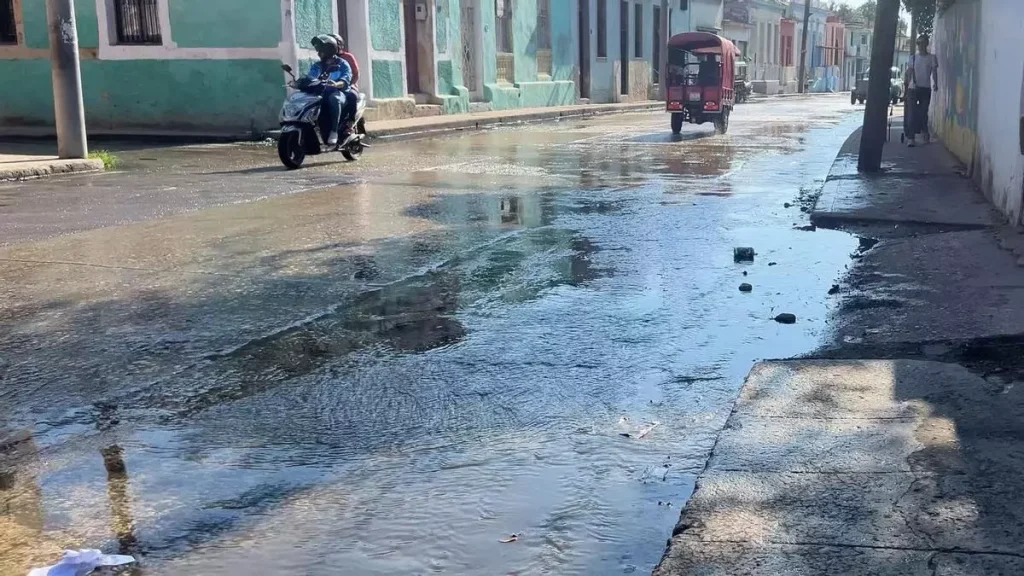
 14ymedio, Darío Hernández, March 21, 2026 – Havana / Sewage water flows freely through the streets of Guanabacoa, to the point that Corral Falso, the municipality’s main avenue, is impossible to cross in stretches that span several blocks. Overflowing septic ditches have further undermined sanitation in the area, and residents are forced to live with a dark, green, viscous river up to 20 cm deep, under a blazing sun and temperatures above 30 degrees.