Guanabacoa, Land of Rivers and Hills, Is Running Out of Water

In Centro Habana, neighbors use buckets to block Reina Street in protest at the lack of supply.
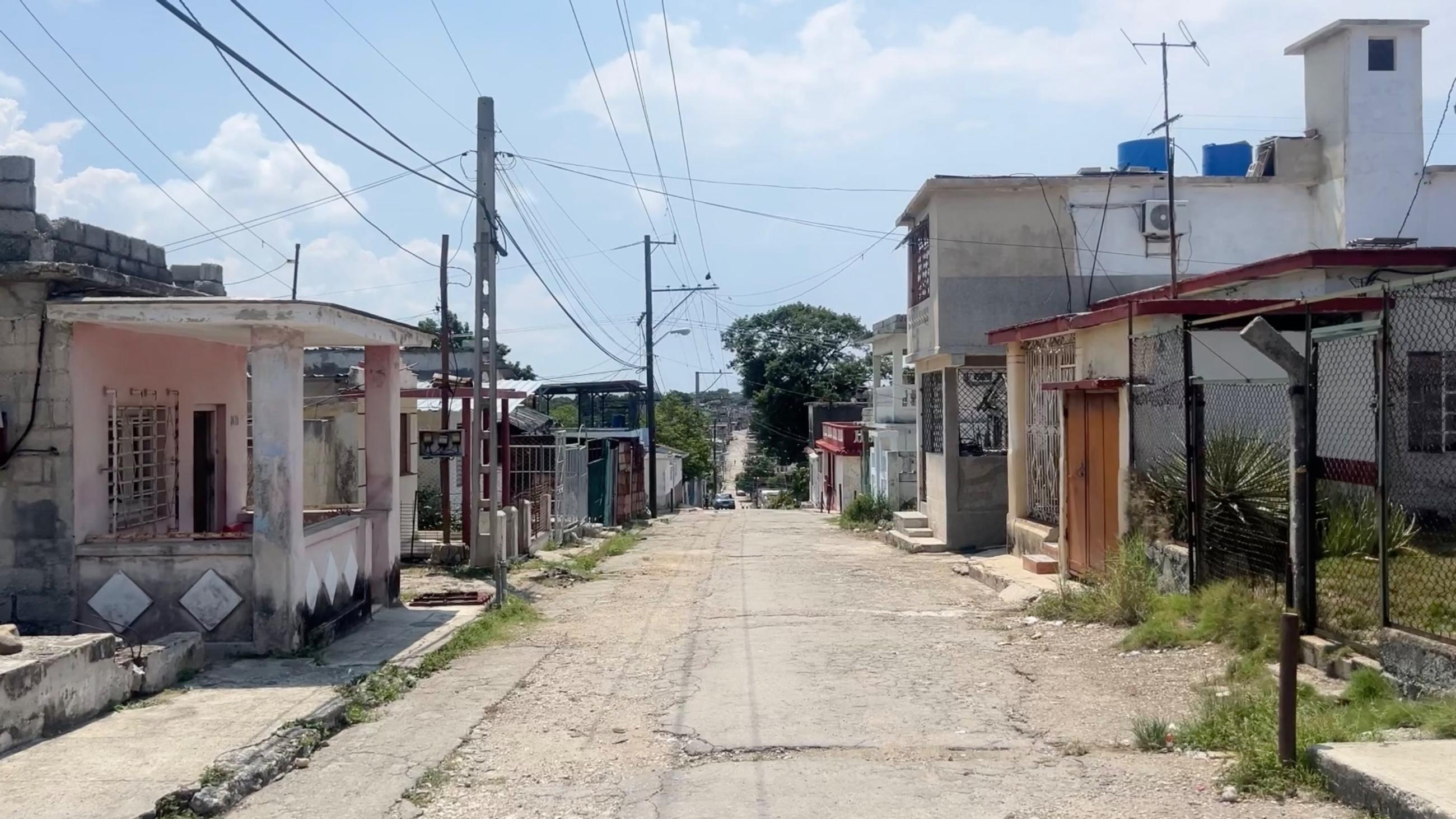

La Loma de Corrales, Corrales Hill, which gives its name to the street, is an insurmountable obstacle for the old water pipes that have little pressure. / 14ymedio

14ymedio bigger14ymedio, Darío Hernández, Havana, August 20, 2025 — Guanabacoa evokes the orishas, Catholic processions and water, a lot of water, as reflected by the Taína word that gave it its name: land of rivers and hills. Although its springs remain part of the collective and religious imagination, dry water pipes are changing the way many residents perceive one of the most dilapidated municipalities in the Cuban capital.

“Here in my house we are lucky because the water sometimes arrives, but it’s been months since that block has had it,” says Carmita, a neighbor who lives a few meters from Calle Corrales, epicenter of the most serious supply problems in the area. “People have to come here to fill their buckets,” she says, adding “not that much comes in, you have to have a pump to get it out.”

La Loma de Corrales — Corrals Hill — which gives name to the street, is an insurmountable obstacle for the old water pipes that have little pressure. To the law of gravity are added problems with the electricity supply, the poor state of the pumping equipment in the aqueducts and, especially, the chaotic handling of the valves that allow water to reach the neighborhood.

“This problem has been going on for over 20 years, but it got more complicated when they did some work in 2022,” adds Carmita.

“This problem has been going on for more than 20 years, but it got more complicated when they did some work in 2022,” adds Carmita. She is referring to works that enabled a new continue reading

route for supply to other areas of Guanabacoa. However, the so-called bypass, directed by Rosaura Socarrás Ordaz, deputy director of operations of the Havana Water Company, brought relief to some and an ordeal to others.

“Since then, water has stopped coming in frequently,” says a neighbor. The lack of pressure that the whole area suffers forces residents, like Carmita, to have a ‘water thief ‘ able to suck the pipes to extract every last drop. But in the houses on Calle Corrales, not even the most powerful pump can get anything out most of the time.

“Right now we have gone 20 days without having any water,” says a young man who has just returned this Monday from the municipal office of People’s Power where complaints and claims about the water supply are coming more often. “”When they send a water truck, it is barely enough for three houses, and that is every 20 days or more. No one can live like this,” he emphasizes.

This Tuesday, in Centro Habana, a group of people protested by blocking Reina Street with buckets after going seven days without water. Their complaints even reached the international press, while Guanabacoa, with very few investments in infrastructure in recent decades, is still considered by many to be the most forgotten municipality of Havana. Its historic center has suffered numerous building collapses; its rivers are visibly polluted; many streets lost
their asphalt years ago; and demands on the hydraulic system, installed in the first half of the twentieth century, have grown along with the emergence of slums. The urgency of a renovation project is obvious, but the Havana Water Company does not have the resources to tackle it.
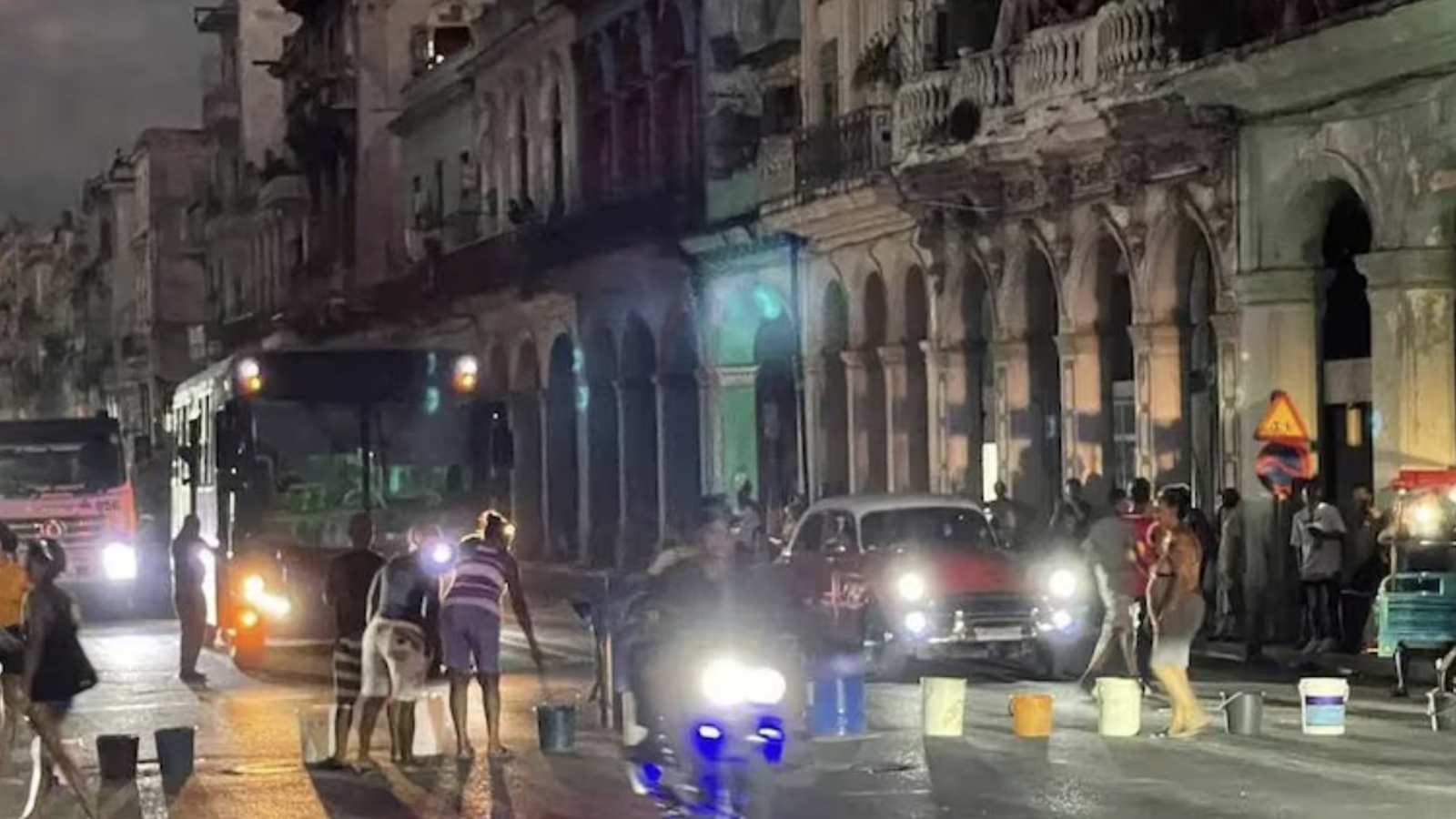
This Tuesday, in Centro Habana, a group of people with buckets protested the lack of water and blocked Reina Street. / OCDH/X

“They blow us off, tell us that the country lacks currency to buy what’s needed abroad; it’s the same speech as always,” complains a resident from inside her doorway, where she takes shelter from the strong August sun. “The water trucks they send are small, and the water, when it arrives, has a strange color, like it’s dirty.”

The protest calls out other affected people who end up improvising an assembly on a corner near Corrales. “The answer they give is that they write you down on paper and do nothing, nothing. They throw the papers in a drawer. They said that by today they would see if they could send us a water truck,” the young man complains. “They keep us guessing, because when the water comes they cut off the electricity, and we can’t fill anything. Since the 15th of last month, we haven’t had any water.”

Several residents point to a mishandling of the valves located in the area known as El Mikito as the main cause for the low pressure that prevents the inhabitants of Corrales street from having water in their pipes. They have been able to continue bathing and cooking thanks to the solidarity of those who live in areas where supplies do arrive and allow them to fill their buckets.

Several residents report poor valve management in the area known as El Mikito as the main cause of the low pressure.

“In my house we carry it from the neighborhood of Santa Maria, in buckets and small tanks. All this past year I have had to put some bottles in the same cart as the propane tank, and I go up and down that hill several times a day,” points out another resident who joins the improvised meeting where emotions run high and reports of the laziness of the institutions are repeated.

“The Havana Water Company is doing a bad job, because when they open the tap in El Mikito the water has a little more pressure. They will have to change the employee who takes care of it here. Change him or kick him out,” speculates an old woman with a face full of despair. “What they are doing is filling swimming pools and making money,” she says.

The discussion dissolves when the imperative of going out to fetch water imposes itself. One with a wheelbarrow, another with a shopping cart and a third with a backpack, they leave in different directions. They will not return until they have filled the bottles and buckets they carry. In La Loma de Corrales, whole families are waiting to start cooking, bathing and washing clothes.

Translated by Regina Anavy

____________

COLLABORATE WITH OUR WORK: The 14ymedio team is committed to practicing serious journalism that reflects Cuba’s reality in all its depth. Thank you for joining us on this long journey. We invite you to continue supporting us by becoming a member of 14ymedio now. Together we can continue transforming journalism in Cuba.
Cojímar, a Field of Illustrious Ruins in Cuba

Little remains of the luxury and comfort that attracted such prominent figures as José Martí’s widow and son at the Campoamor Hotel.

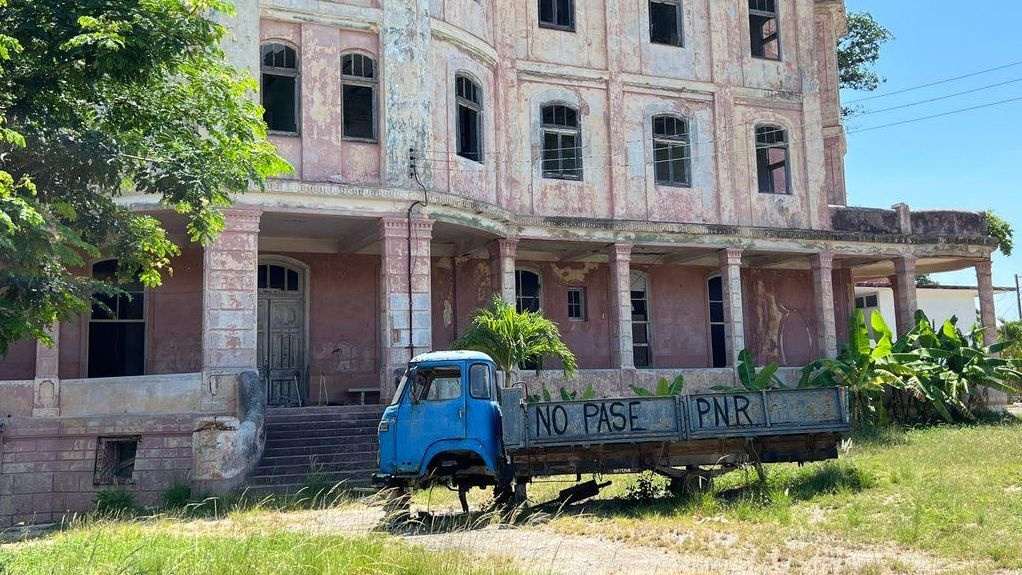
The former Campoamor Hotel has signs everywhere warning of the “danger of collapse.” / 14ymedio

14ymedio bigger14ymedio, Darío Hernández, Cojímar (Havana), 19 July 2025 — “Do not enter. PNR.” The ‘People’s Revolutionary Police’ prohibition, written in large black letters on the back of an abandoned truck, is almost unnecessary when you look up at the building. Resembling a haunted mansion, the ruins of the former Campoamor Hotel, which housed a reformatory and had many other uses in Cojímar, make it clear to the passerby what awaits them if they cross the threshold.

Similar warnings hang on pieces of zinc from the fence that protects the building, which is “in danger of collapse,” and which has been reinforced with poles and barbed wire to keep out curious onlookers. Inside, in the old garden, rest a wheelless truck and a rusty bus whose frame bears the marks of scrap metal dealers, who have left only the shell of the vehicle.

“First it was a reformatory, then it was a separate school [for students with learning disabilities], and now it’s abandoned,” Pedro, 77, “born and raised in Cojímar,” explains to this newspaper. However, the fisherman only describes the chronology he knows, which is limited to the time the building was in the hands of the Revolution.

When it was built in 1907, its owners and architects wanted it to be the jewel of the capital’s seaside resort, where wealthy Creoles traveled and where the island’s great fortunes spent their summers. The story is even recorded by Ecured, the official Wikipedia , which awards the property to Pilar Samoano, a hotel entrepreneur who owns, among other buildings, the El Telégrafo hotel in Havana, which in 2022 became the first Cuban LGBTI+ friendly accommodation thanks to the Spanish chain Axel. continue reading

When it was built in 1907, its owners and architects wanted it to be the jewel of the capital’s resort. / 14ymedio

Purchased by the government of the Republic, a few years after its opening it became a sanatorium for tuberculosis patients until Fidel Castro came to power. Today, not even the Cuban on-line encyclopedia Ecured hides its dereliction: “After 1959, this building had various uses until, unfortunately, the lack of care and maintenance led it to a completely disastrous state, from which it will probably never recover.”

“It’s a shame,” Pedro agrees. “The government is letting it fall into disrepair. It needs to be repaired, and how many families couldn’t fit there? People who are living with their in-laws or don’t have anywhere to live,” the fisherman emphasizes, pointing to the gigantic structure that still has a faint pinkish hue.

With abandonment, the building has become a kind of greenhouse. Creepers eat away at the walls, attracted by the damp, ferns hang from the cracks in the balconies, and the green branches of several trees sprout from the top-floor windows, strong from years of peace. Their roots have destroyed the floor and erased the boundary between one level of the old hotel and the next.

A rusty bus whose structure shows the marks of scrap metal dealers, who have left only the shell of the vehicle / 14ymedio

Little remains of Campoamor’s luxury and comfort, which, in its day, attracted such prominent figures as José Martí’s widow and son, the Liberation Army captain José Francisco Martí Zayas-Bazán, heir to several lines of illustrious surnames on the island. “A few years ago, there were rumors that the Historian’s Office wanted to repair the building, but they said the foundations and structure couldn’t withstand complete repairs, and the plan was to demolish it. It seems they still haven’t decided what to do,” laments Pedro.

Meanwhile, garbage piles up against the wall of the building that faces Calle Real, Cojímar’s main street. The street has become a promenade of small dumpsters that appear on every corner and potholes that cars try their best to avoid.

The same fate befell other elegant buildings and mansions in Cojímar, which during the Republic belonged to businessmen and families of Havana’s upper class. This is the case with Quinta Pedralbes, which belonged to the Catalan businessman Joaquín Boada and was built by Mario Rotllan, a prominent exponent of Art Nouveau who had several workshops on the island.

With its walls peeling and its gardens overtaken by wild plants, the mansion barely survives as a refuge for several families. Palm trees and banana trees now sprout from the former gardens, where exotic plant species brought from all over the world once coexisted.

The same fate befell other elegant mansions in the Republic that belonged to businessmen and families of Havana’s upper class. / 14ymedio

____________

COLLABORATE WITH OUR WORK: The 14ymedio team is committed to practicing serious journalism that reflects Cuba’s reality in all its depth. Thank you for joining us on this long journey. We invite you to continue supporting us by becoming a member of 14ymedio now. Together we can continue transforming journalism in Cuba.

Punta Brava, Where Maceo Died, Is Now the ‘Raggediest Little Town’ in Cuba

Once there was a cinema, shops, a boulevard; today, nothing remains.

Private cars to La Lisa cost 150 pesos. / 14ymedio

14ymedio bigger14ymedio, Darío Hernández, Punta Brava (Artemisa), 20 July 2025 — In Punta Brava, there’s nothing to see, nothing to do, and nothing that works. This small town in Artemisa, nestled right on the border with Havana, has the feel of a set for a movie Western. Dust, trash rolling in the streets, and the skeletons of unused buildings. Everything feels frozen in time.

“It’s a disaster. I think this is the raggediest little town in the entire country,” two guajiros busily husking corn on the cob under a bush told 14ymedio. Their opinion is echoed by every resident interviewed by this newspaper, without exception: Before there were “things”— a movie theater, shops, a boulevard — now there’s nothing.

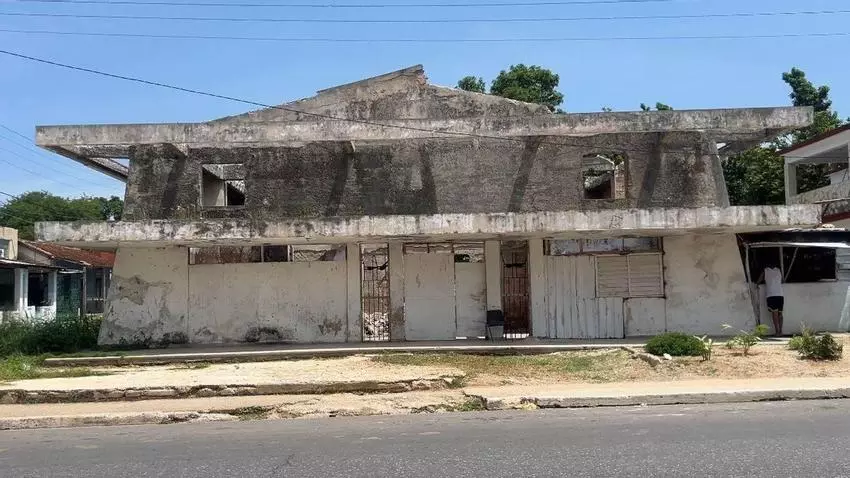
The cinema, three elderly people sitting on a balcony where they avoid the day’s heat, explain, “was gutted and everything was taken, even the tiles and the roof. No one knows who, but they stole everything.” Now, hollow inside and half-ruined, it’s Punta Brava’s public restroom. “They cleaned it up a bit, but it’s still the town’s latrine.”

History repeats itself with all the facilities and public spaces. “I was born here and I’m 82 years old, but when I was a kid, the park was in good condition. The only thing they left was the gazebo, and it’s in disrepair. The new generations have destroyed all that,” notes another elderly resident, speaking from the balcony that overlooks the park, where a bust of Maceo is located.

It was in this town that the Bronze Titan fell, they recall, and they assert, “without political fanaticism,” that the disaster it has become leaves even history in a very bad light.

The decadence of Punta Brava is easily traced: “That used to be the boulevard, now it’s not even the cemetery.” “The Cochino* River runs through there, living up to its name, and the buildings are old and neglected.” When the list ends, the retirees realize that all that remains standing in the town is the churches. “The Nazarene, the Methodist, the Evangelical, the Jehovah’s Witnesses—all the churches here are continue reading

functioning,” they emphasize.

Completely destroyed, the old cinema is now the town’s latrine. / 14ymedio

For retirees, life in the village consists of sitting in doorways amid the unbearable stench of the garbage dumps; “no one can stand it, they even throw dead animals in there,” one complains. For the younger ones, the goal is to climb on the first bus that passes along the avenue to get to Havana, where many work. But not even buses pass through Punta Brava, forgotten on the border with the capital.

“It’s very difficult to get in and out of Punta Brava. Bus 436 comes by at 8:30 am, so hold on,” the man describes, searching his pocket for his wallet. “I was a bus driver, look at my pass. What good is it if there are no buses?”

Route 180, which goes to Santa Fe, also sometimes passes through in the mornings, but other than those buses, almost nothing happens on the highway. There are private cars, but a fare to La Lisa, the nearest municipality in Havana, costs 150 pesos, so many prefer to stand on the side of the road, raise their arms, and wait for a driver who will take them as far as they can.

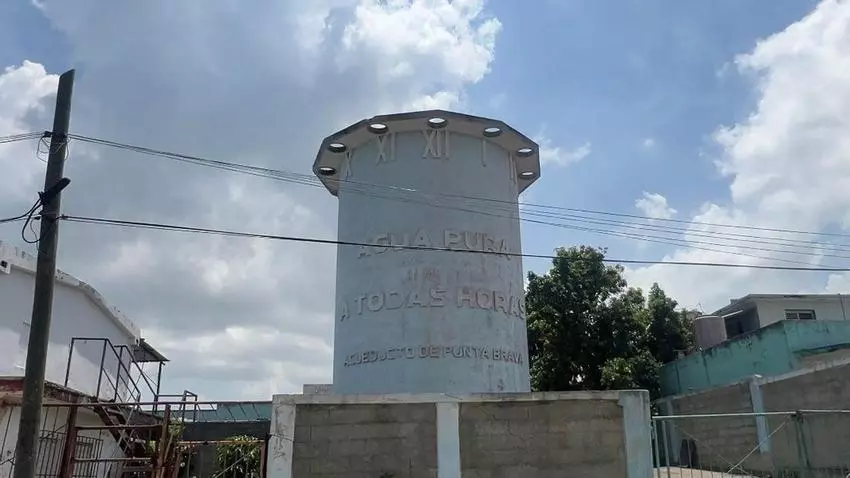
In front of the park, neighbors point out, there is an aqueduct and an elevated tank crowned by a sundial and bearing the sign: Pure water at all hours. / 14ymedio

The other means of transport is the train, which departs from Tulipán and passes through several stations such as Cien y Boyeros, El Cano, Punta Brava, Bauta, Caimito, and others until it reaches Mariel. It has about five cars and all the residents of the towns it passes through use it to travel to Havana, so it’s always full. However, to the dismay of many, “it’s been stopped for three days, and no one reports anything. It’s the only way I can get to Cerro,” says one of the Punta Brava residents.

The rest of the public services are in equally deplorable conditions. The blackouts are as annoying as in the rest of the island, and the water supply is very poor. In front of the park, neighbors point out, there is an aqueduct and an elevated tank topped by a sundial and bearing the sign: Pure water at all hours. “Before, there was water all day, but now the water comes from the fire department. It comes here every other day, but it doesn’t come to my house. I have to put the pump on the stairs to get it to the house,” he says.

The rest of the town is a picture of the same disaster. The post office is closed in broad daylight, and there are no children in the park despite it being vacation time. “Look at the state of the streets, compadre. We should put a cross in the middle of the street that says: Rest in peace,” sighs the old man.

The stench of the garbage reaches the houses and bothers residents. / 14ymedio

*Translation: pig, slob, dirty, filthy

____________

COLLABORATE WITH OUR WORK: The 14ymedio team is committed to practicing serious journalism that reflects Cuba’s reality in all its depth. Thank you for joining us on this long journey. We invite you to continue supporting us by becoming a member of 14ymedio now. Together we can continue transforming journalism in Cuba.

Performances Interrupted in Cinemas and Theaters by Blackouts, Another Frustration for Cubans

The screenings end abruptly and the spectators, resigned, leave the theaters.

Seeking emotional refuge in the cinema or theatre has become, for many, an additional source of frustration. / 14ymedio

14ymedio bigger14ymedio, Darío Hernández, Havana, July 13, 2025– On a Sunday that appeared to be a cultural normality, the Teatro Trianón in Havana had a day that crudely reflects the energy crisis that has become embedded in the daily life of Cubans. An adaptation of The Hound of the Baskervilles was again a victim of the blackouts. Saturday had already been canceled, and on Sunday, a video captured the dismay of the attendees: “Again?” they complained from the seats.

At the Trianon, actors rehearse in stifling heat. Hundreds of spectators brave the congested transport system, cross half the city, and sacrifice an entire afternoon to finally face the uncertainty of the electricity grid. Fortunately, the performance was able to resume that Sunday afternoon, albeit more than half an hour late.

In the provinces, the situation is often even more critical. Just a few weeks ago, in Santiago de Cuba, the Hermanos Saíz Association website bluntly announced: “The Teatro El Portazo performance at the Santiago Theater Council has been canceled tonight due to a power outage. We apologize for any inconvenience.”

In Camagüey, the Teatro del Viento [Theater of the Wind] has also suffered prolonged power outages that have paralyzed its performances. Its director, continue reading

Freddys Núñez Estenoz, denounced on social media that they had been “living in hell for weeks with blackouts ranging from 17 to 23 hours a day.” On July 3, he wrote: “We still can’t offer dates or times for performances. We can’t even guarantee that we’ll have performances. We’re waiting for something as simple as finding out the blackout schedule for the circuit where the theater is located. And we’re not the only ones. The Camagüey Ballet is also waiting for the premiere ofDracula.”

A screening of an adaptation of “The Hound of the Baskervilles” was once again affected by the power outages. / 14ymedio

Under such conditions, theatrical creation becomes an act of resistance. Rehearsals are interrupted, premieres are postponed, performances are canceled. This is what happened with the play Fibra [Fiber], which the Camagüey-based collective planned to premiere on its 26th anniversary but it was postponed due to the impossibility of lighting the stage and setting up the installation.

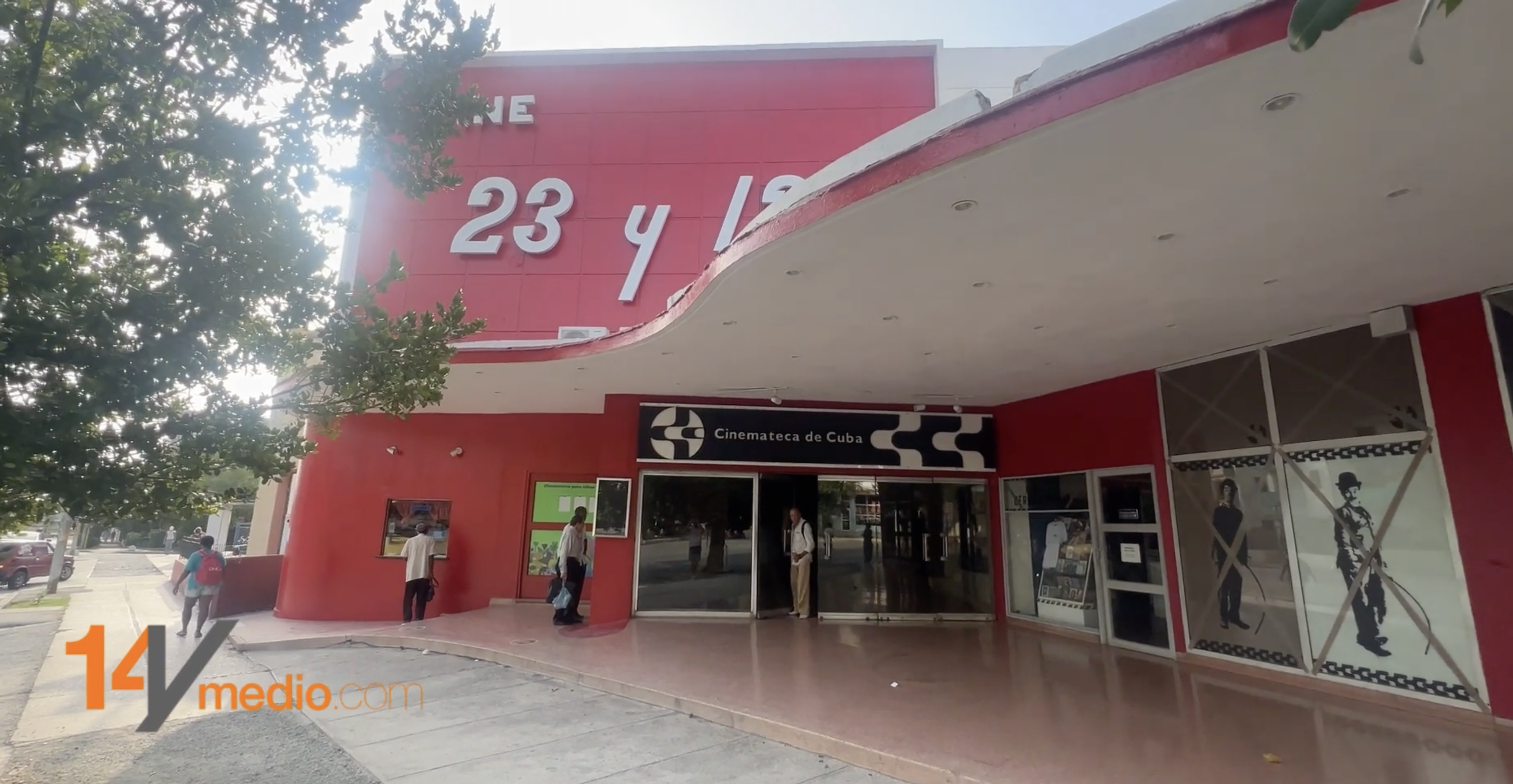
The situation is no different in movie theaters. Last Sunday, in theaters 23 and 12, they were showing a series of favorite films by the late president of the Cuban Institute of Cinematographic Art and Industry, Alfredo Guevara. But Jacques Becker’s Cascos de Oro was only halfway through when the theater went completely dark, and the screening ended abruptly. Resigned, viewers left the theater with no clear destination, adding yet another disappointment to the national routine. Seeking emotional refuge in the movies or theater has become, for many, an additional source of frustration.

The blackouts plaguing the country are not just incidental. With outages of up to 22 hours a day in several regions, even events planned months in advance are not spared. During the International Festival of New Latin American Cinema, multiple screenings were canceled due to the power outages.

In theaters 23 and 12, the film was only halfway through when the theater went completely dark, and the resigned viewers left the theater. / 14ymedio

A Cuban filmmaker described that edition as an “organizational disgrace”: dark theaters, absent signage, and makeshift restrooms on 23rd Avenue in Vedado, with an unbearable stench. The reduced capacity, last-minute cancellations, and endless lines have become an inseparable part of the country’s cultural landscape.

The only show free of blackouts, it seems, was the premiere of La Colmenita, which was attended by Raúl Castro, Díaz-Canel, and almost the entire staff of the Ministry of Foreign Affairs. Propaganda never lacks power.

In a Cuba where even art is forced to wait for the lights to come back on, theater director Freddys Núñez summed up the general feeling with a lapidary phrase: “What’s the point of continuing to play the game that something is working, when in reality everything is screwed up…? Nothing works. Nothing.”

Translated by Regina Anavy

____________

COLLABORATE WITH OUR WORK: The 14ymedio team is committed to practicing serious journalism that reflects Cuba’s reality in all its depth. Thank you for joining us on this long journey. We invite you to continue supporting us by becoming a member of 14ymedio now. Together we can continue transforming journalism in Cuba.
When the Train Arrived at Expocuba, the Passengers Discovered a Field of Ruins

The summer offer of leisure time for Havanans is a trip to nowhere

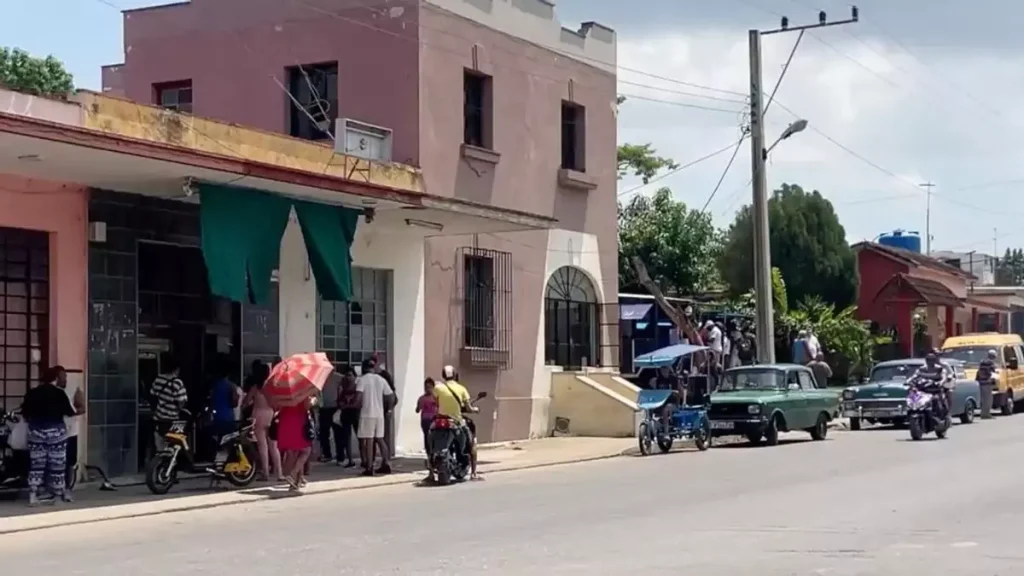
The train has three railway wagons that can accommodate about 200 passengers / 14ymedio

14ymedio bigger14ymedio, Darío Hernández, Havana, July 5, 2025 — “Hurry up, the trains waits for no one,” screams a woman on the Central Station passenger platform. This Friday, barely 20 people boarded the train bound for Expocuba, reactivated on July 2 after being paralyzed for a decade. With great fanfare, the authorities celebrated the availability of the route this summer for leisure offers to Havanans.

In the intense midday heat, the yellow and green locomotive starts; children jump from one seat to another as the blue railway wagons rattle.

“This route has been closed for more than ten years. They put it back now because of the huge deficit of buses. It is guaranteed for all the holidays and will continue for the whole year,” one of the engineers, cigarette in hand, tells 14ymedio. With three used railway wagons and a price of 20 pesos, the train was enabled to transport 204 people and makes stops in Luyanó, Dolores, La Víbora, Naranjito, Miraflores, Los Pinos, Alcázar, Arroyo Naranjo, Galapagos, Calabazar and La Piscina.

he stations through which the train now passes were closed for a long time due to deterioration and accumulation of garbage /14ymedio

The stations, he continues to explain, were closed for a long time and began to deteriorate and accumulate garbage. The section that the train covers today had to be cleaned before starting the route, and on the side of the tracks you can still see traces of waste, but “they will continue cleaning it up until Bejucal,” he adds. “They even took down several power and telephone wires that were on the tracks. On one of the trips, the neighbors had to raise a cable with a stick so that the train could pass.”

Bushes, abandoned warehouses, houses and hovels in the middle of nowhere, and a river from which some boys wave to the train is all the journey has to offer. At each stop the train loses passengers, and by the time it reaches Expocuba at 3:30 pm, there are only a grandmother with two grandchildren left. They came to spend some time at the fairgrounds and are going to be disappointed.

The park is closed because the bus carrying the workers broke down, and most of them could not get there. Inflatable toys, confesses an employee, is continue reading

the only children’s attraction available.

“Today we have hardly had any visitors,” she explains to the newspaper. “I was sitting with only two people until now,” she says. Asked about how Expocuba works when employees can arrive, the woman admits that “normally we have almost all the pavilions closed.”

With a glance at the park’s condition the reason is obvious. The deterioration of the buildings, the wear and tear of the attractions – faded by the sun and with missing pieces – and the almost zero gastronomic offers are eloquent. “There is no longer even the agricultural pavilion where they kept the exhibition animals that everyone was told to go see. They were removed because people started stealing them,” she explains.

“Yes, we do have the inflatable toys park, and all the bars function: La Solera, El Mirador, El Ranchón. The Casa del Queso has a variety of cheeses that aren’t very abundant because we have, as does the country, a shortage of many things,” she says.

Keeping the park running is no easy task. “We workers have no transport. We have a bus that leaves us off on the Calabazar bridge, and none of us lives in Arroyo Naranjo or nearby. When we get off on the bridge we have to figure out how to get home,” she complains. “What happens? The bus also broke down. So, today the famous train has arrived, and the workers are going to go on it to see how it is working”.

The condition of the buildings, the attractions with missing pieces and the almost zero gastronomic offers are eloquent / 14ymedio

On the return, the journey does not differ much from the one-way trip. The sun continues punishing the tin roof of the wagons, which are half bent, and the boys who were in the river have already left.

Expocuba is no longer an option for many in Havana, who are looking for other ways to enjoy, even briefly, the summer days. The state doesn’t offer much either: this Saturday the train to Playas del Este that takes more than an hour and a half on each trip was enabled. Transtur offers trips from Havana to the same destination, with departures every hour from 9:00 am, for 10 dollars or 1,200 pesos.

For those who can pay these prices, a day awaits in which they will have to guarantee, with their own means, everything from the food they consume to the drinking water.

Translated by Regina Anavy

____________

COLLABORATE WITH OUR WORK: The 14ymedio team is committed to practicing serious journalism that reflects Cuba’s reality in all its depth. Thank you for joining us on this long journey. We invite you to continue supporting us by becoming a member of 14ymedio now. Together we can continue transforming journalism in Cuba.