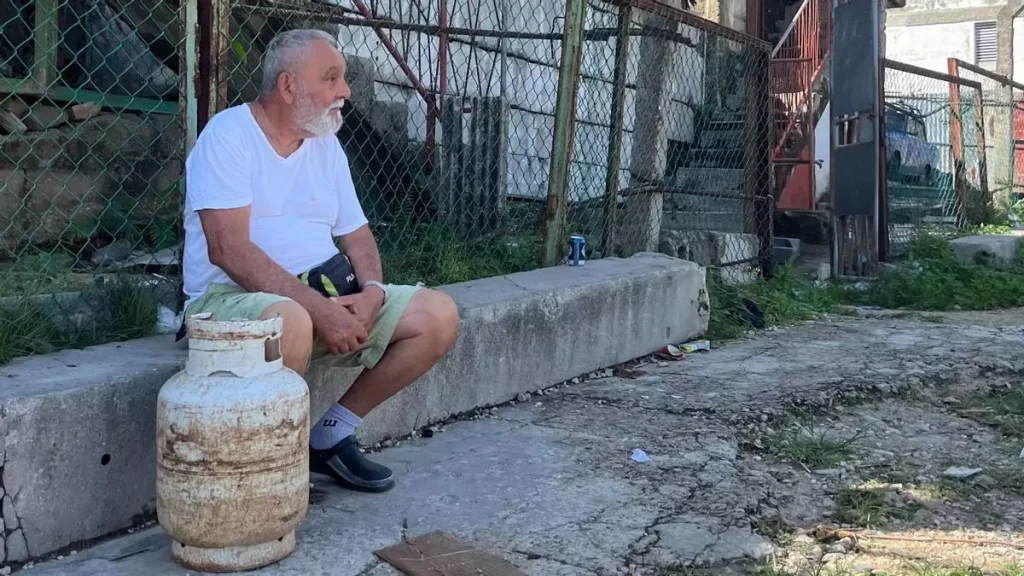
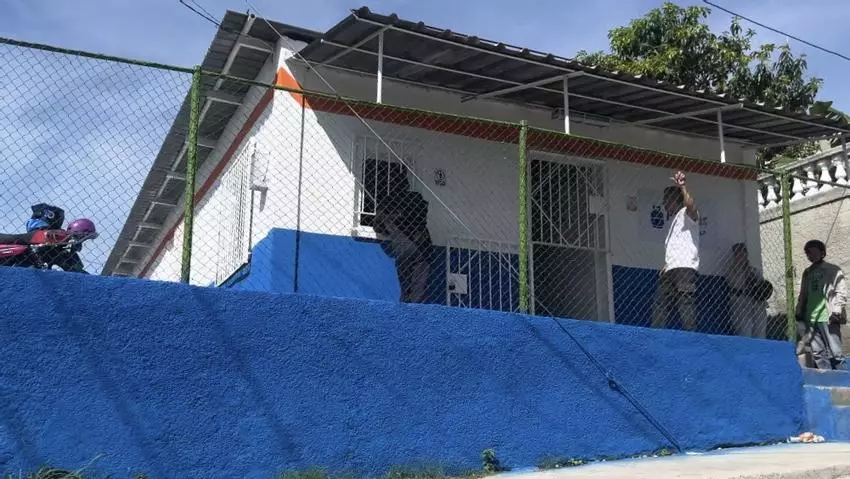
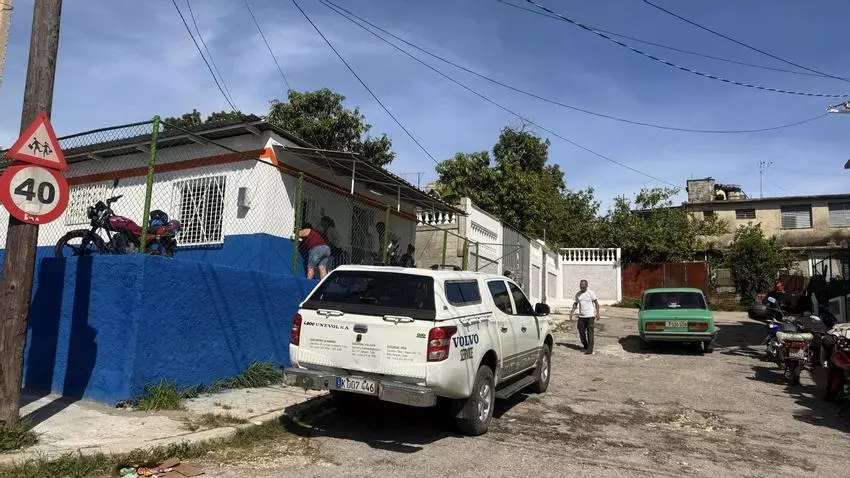
Residents report outages since Sunday, block streets, bang pots, and confront officials and police.
“The people are standing at the door because they can’t take it anymore,” says one of the protesters. / 14ymedio
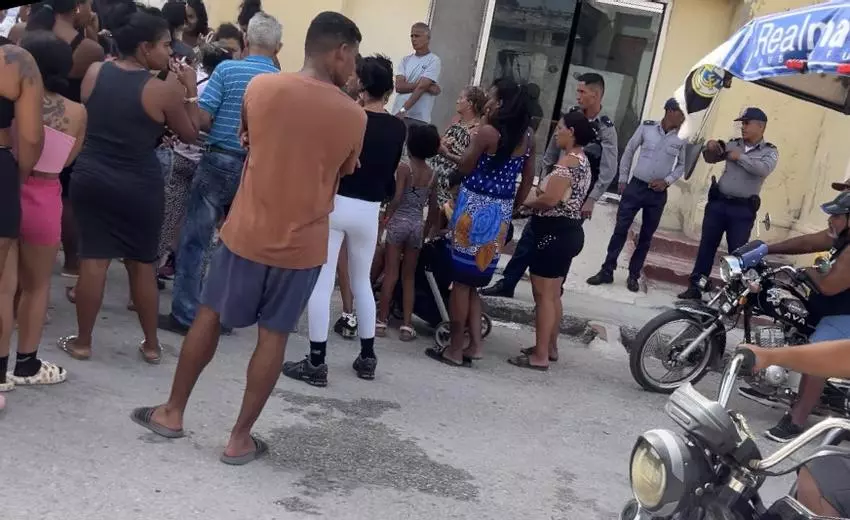
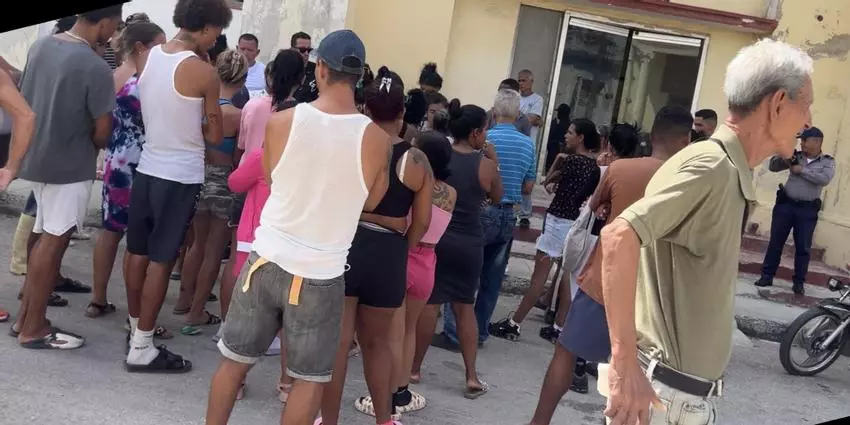
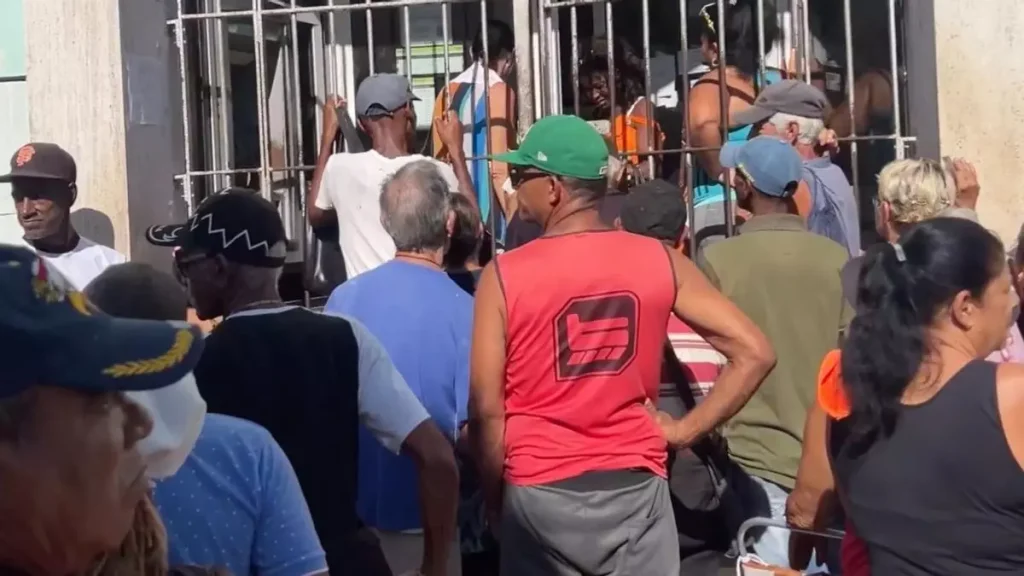
Darío Hernández, Havana, July 8, 2026 – The protest is no longer taking place on a street corner or under the cover of darkness. In Regla, a Havana municipality battered by several days of blackouts and water shortages, residents have decided to take their demands directly to the doorstep of the local authorities. Dozens of people gathered this Wednesday outside the offices of the municipal Government and Communist Party, where they demanded answers from officials and police officers deployed at the scene.
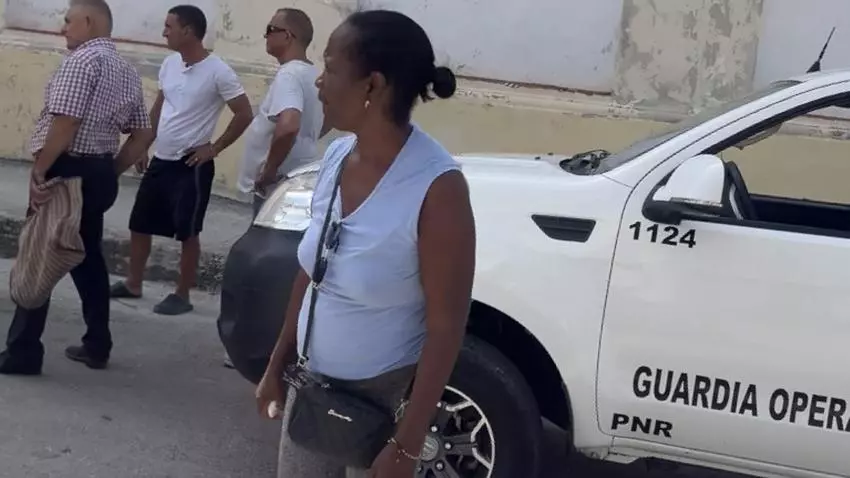
Images taken by 14ymedio show large groups of residents outside the deteriorating public building, with its windows open and its entrance packed with people. In the street, under the blazing sun, women with children, elderly residents, men in flip-flops, motor scooters, tricycles, a Police Operational Guard patrol car, and several uniformed officers can be seen trying to contain the tension.
“We block the streets and bang pots. Every day,” says a neighborhood resident. / 14ymedio
“The people are standing at the door because they can’t take it anymore,” says one of the protesters. The frustration, he says, has been building for days. “Several areas have been without electricity and water since Sunday,” he adds. According to his account, the crisis worsened after the collapse of the national electrical system. “The SEN went down on Monday,” he recalls, but in some neighborhoods the power had already been out before that.
The same scene has been repeated for several days. Residents come out, block sections of the streets, bang pots, and demand that someone take responsibility. “We block the streets and bang pots. Every day,” says another local resident.
The exhaustion is also evident in the way residents confront the authorities. “As you can see, people are shouting right in the faces of the officials and continue reading
the police,” explains another resident. Two officers remain at the entrance of the building while several people argue just a few yards away. A white police patrol car is parked in front of the crowd, a reminder that the state’s response combines promises, surveillance, and repression.
Political chants were not widespread, but they were present. A woman with a weary face, after several sleepless nights, shouted, “Patria y Vida!” The slogan, Homeland and Life,” which has become a symbol of protest against the Cuban regime since 2021, now mixes with basic demands: electricity, water, food that won’t spoil, spending the night with a working fan and refrigerator.
The heat is making the desperation worse. According to the report, another woman had to be taken to the local polyclinic after suffering a heart attack or cardiac episode in the midst of the situation. “A woman had to be taken to the polyclinic after suffering a heart attack from empingue,” another protester said, using a popular Cuban expression to convey the neighbors’ level of exasperation.
A white police patrol car is parked in front of the crowd, a reminder that the state’s response combines promises, surveillance, and repression. / 14ymedio
The lack of electricity has also brought daily life and small businesses to a standstill. “We went past several stores and nobody had cold drinks,” another witness said. Without power, refrigerators stop working, products spoil, and even finding cold water becomes a luxury. “I’m telling you, it’s been like this since Sunday,” he insisted.
“A woman had to be taken to the polyclinic after suffering a heart attack. She was completely fed up.” / 14ymedio
In the photographs, the protest bears the familiar face of Cuba’s crisis: women waiting in line with shopping bags, children standing under the sun, elderly people leaning against walls, men staring toward the building’s entrance, uniformed officers, and officials who appear to listen without offering any visible solutions. There are no open clashes, but the tension is unmistakable. The crowd is not there to carry out routine government business but to demand answers after days of neglect.
Regla, a historically working-class municipality, has experienced a rapid deterioration of its public services in recent years. Prolonged blackouts, water shortages, and inadequate transportation have turned every breakdown into a full-scale crisis. When power outages and water shortages occur at the same time, protest ceases to be a remote possibility and becomes inevitable.
COLLABORATE WITH OUR WORK: The 14ymedio team is committed to practicing serious journalism that reflects Cuba’s reality in all its depth. Thank you for joining us on this long journey. We invite you to continue supporting us by becoming a member of 14ymedio now. Together we can continue transforming journalism in Cuba.
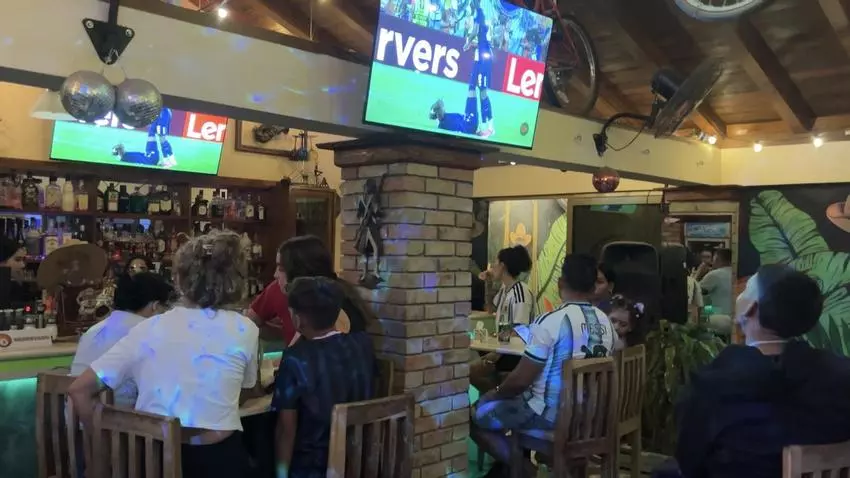
In Regla, neighbors, pedicab drivers, and even police officers stopped in front of a bar with a generator during the match between Argentina and Cabo Verde
Those who can pay sit in front of the television; those who cannot, watch from the street.
14ymedio, Darío Hernández, Havana, July 5, 2026 / “I didn’t come to buy anything. I came to watch the soccer,” says a man of about fifty, craning his neck toward the screen inside a bar. Blacked-out Havana also wants to watch the World Cup. And while much of the neighborhood remained in the dark, a bar with a generator and several televisions turned on drew neighbors, passersby, pedicab drivers, and even police officers during the match between Argentina and Cabo Verde.
On a street in Regla, this Friday, the only possible stadium was the sidewalk. Inside the establishment, the screens, the colored lights, the bottles lined up on the bar, and the seated customers offered an almost normal scene: soccer, conversation, drinks, and a festive air. Outside, however, the improvised crowd followed the game from a distance, at the edge of the street, as if electricity had drawn a border between those who could partake of the World Cup’s joy and those who could barely catch a glimpse of it.
The scene, documented by this newspaper, has been repeating these days at various points across Havana. Bars and restaurants with generators have become luminous refuges amid the blackouts, but also showcases of an increasingly visible inequality. Those who can pay sit in front of the television; those who cannot, watch from the street, amid darkened doorways and cables strung across the avenue.
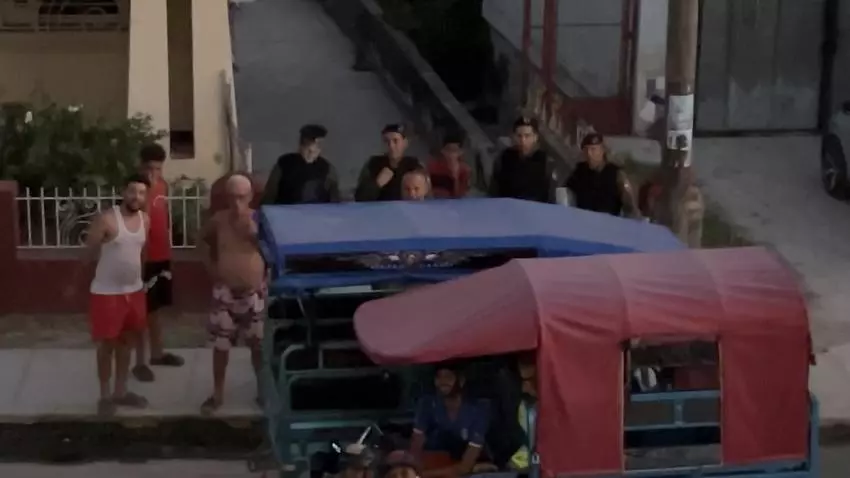
The police, deployed to control crowds and prevent protests, also find themselves caught up in curiosity about the match. In the Cuba of the blackouts, even the uniformed officers end up gravitating toward any lit screen. As long as the shouts, insults, and jeers were directed at the referee, a distracted defender, or the opposing team, no one seemed too continue reading
concerned. Sports offer one of the few spaces where people can still shout in public without every word seeming like a crime.
Bars and restaurants with generators have become bright havens, but also showcases of an increasingly visible inequality. / 14ymedio
The World Cup, one of the few truly popular and cross-cutting spectacles, arrives in Cuba amid an energy crisis that has turned basic activities – cooking, sleeping, charging a phone, cooling a room – into intermittent privileges. Watching a full match no longer depends solely on having a television, but on living in an area with electrical service, having mobile data, having access to a generator, or finding a private business that keeps its lights on.
In the Cuba of the blackouts, even the uniformed officers end up gravitating toward any lit screen.
“Before, people used to watch soccer in the living room at home,” says the fifty-year-old man, without moving from the sidewalk, as the match ends on the bar’s screens. Now, he adds, you have to go out and find where there is power, like in the 1990s. But with one difference: back then, when the power went out, it went out for everyone. “The whole block would go dark,” he recalls. Today, by contrast, some people can buy themselves their own little piece of light.
For those residents of Regla, the match between Argentina and Cabo Verde ended up being less a sporting event than a lesson in urban survival. In Cuba, even joy needs fuel.
Translated by GH.
______________________
COLLABORATE WITH OUR WORK: The 14ymedio team is committed to practicing serious journalism that reflects Cuba’s reality in all its depth. Thank you for joining us on this long journey. We invite you to continue supporting us by becoming a member of 14ymedio now. Together we can continue transforming journalism in Cuba.
The private company A granel offers diesel at $2.50 per liter starting at a certain quantity.
A granel has been operating for only a few days, but activity is evident at its facilities. / / 14ymedio
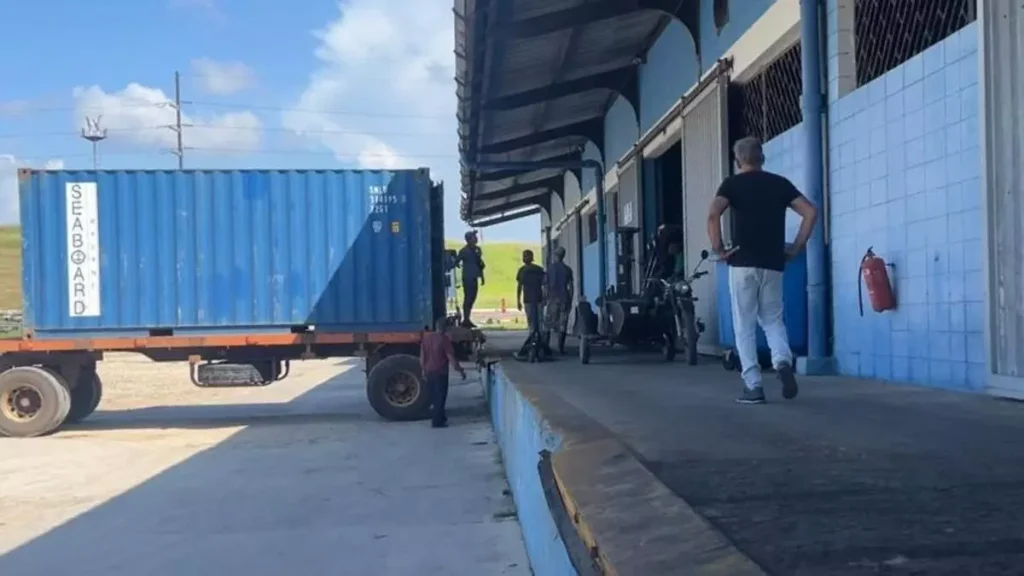
14ymedio, Havana, Darío Hernández, July 1, 2026 / There are few places in Havana right now as cool as the sales office of A Granel, a new mipyme [MSME*] selling fuel imported from the United States that has generated a great deal of talk despite its short existence. Located in Arroyo Arenas, in the Havana municipality of La Lisa, the new private company launched this past June 27 with a video on social media featuring Cuban influencer Iraisel Pintueles, which has stirred up more controversy than information.
Amid criticism and defense, the influencer explained a few details about the mipyme: most notably, that the owner is “a private entity with capital from abroad, with no connection whatsoever to any person or member of the Government, that pays taxes, and that has its documentation and permits in order to supply fuel to other private individuals and to Cubans without State intermediation,” she noted. Little else was said.
For the moment, A granel, which already has 3,333 followers on Instagram despite its first and only post having gone up just days ago, is selling diesel at $2.50 per liter, as 14ymedio was able to confirm during a visit to the industrial warehouse located at the end of Avenida del Puerto, where the business operates. The warehouse belongs to the Cuban Lubricant Company (Cubalub), which is owned by the state-run Cupet.
New vehicles fill up with fuel at the new mipyme.
An employee did not hide her expression when the more-than-obvious display of money and resources at the mipyme was mentioned. The clientele is likewise far from modest. In the loading area this past Tuesday, several tractor-trailers could be seen loading new trucks and modern vehicles. Inside the industrial warehouse, dozens of 1,000-liter tanks were stacked up, in stark contrast to the near-total lack of fuel supply at gas stations across Havana.
Although the brief promotional clip mentioned a price of $1.75 per liter, this past Tuesday the rate was $2.50, though it remains unclear continue reading
what the minimum purchase quantity is. What is clear, however, is that not just anyone can gain access. The promotion also indicated that the process was simple: “You come and you get invoiced,” says one employee of the mipyme. The truth is that payment must be made from abroad, and only private companies may buy, although nowhere is it stated that buyers cannot resell to individuals or even to the State, despite Washington’s sanctions.
According to an employee who spoke to this newspaper, the self-employed (cuentapropistas) still cannot purchase diesel, and although authorities told them that these customers would also be authorized to do so, obstacles to this remain. Nevertheless, arranging for a mipyme to act as the formal buyer is an alternative route that is already being used.
A granel’s tanks hold 1,000 liters, and although a customer can buy a full one, as the company’s own name indicates, the customer can take whatever quantity they wish.
The situation stands in contrast to the sales that had predominated until now. “One of those 1,000-liter tanks costs 30,000 fulas [dollars, in Cuban slang]” a customer who travels to Playa Baracoa (in Bauta, Artemisa province) to buy fuel tells 14ymedio. “That works out to about three dollars a liter. People resell it for five.” The buyer explains that the minimum purchase is 3,000 liters, although some mipymes manage to buy less. “I should have gone today, even though I’m tired. Still, I go there and I feel happy, because you have to buy two or three of those things, but they sell it to me at five dollars. Generally, around here people are selling it to you for more than 20.”
The U.S. oil blockade against the Cuban regime, in effect since January 29, permits only fuel imports carried out by the private sector, which is fueling the proliferation of resale businesses. This past Tuesday, another new company emerged, Gassolina importada, which is advertising itself in Havana as offering “borderless energy at only $4.85 per liter.” Here, sales begin starting at 20 liters, according to the promotion.
“Sales prices for fuel in foreign currency will be updated, upward or downward, in accordance with the actual costs of each specific transaction,” the Cuban Government announced this past May 15. At that time, 14ymedio conducted a survey and found that not all service stations were selling at the same price. On Línea and E streets, special B-94 gasoline was priced at $2, regular B-90 at $1.90, motor-grade B-83 at $1.80, and regular diesel at $2.
A month and a half later, prices remain the same, but freely available fuel sold through the Ticket app has disappeared in Havana since May 28. Only a handful of gas stations outside the capital remain open, particularly in the provinces of Matanzas and Sancti Spíritus.
Since the United States began selling gasoline to private individuals on the island, the business has flourished, and its exports to Cuba have risen from just $87,746 in January -almost entirely oils and lubricants- to $12,375,227 in April. In total, in the first four months of the year, purchases from the island grew 74% and topped more than $291 million.
*In English, “MSME” forMicro, Small, Medium Enterprise
Translated by GH.
______________________
COLLABORATE WITH OUR WORK: The 14ymedio team is committed to practicing serious journalism that reflects Cuba’s reality in all its depth. Thank you for joining us on this long journey. We invite you to continue supporting us by becoming a member of 14ymedio now. Together we can continue transforming journalism in Cuba.
Without electricity, without water, and now without the last fuel to which part of the capital’s population still had access.
In Guanabacoa, where several residents had experienced more than 28 hours without electricity by Tuesday, the day also began without power or water. / 14ymedio
14ymedio, Darío Hernández, Havana, June 30, 2026 – This Tuesday, the 14ymedio newsroom, located in Nuevo Vedado, woke up without a supply of manufactured gas. It was not an isolated situation: from several parts of Havana, residents quickly confirmed the same problem. “No electricity, no water, no connection, and no gas,” repeated a resident of Luyanó like a mantra.
A brief statement from the Manufactured Gas Company confirmed the interruption early in the morning. “Due to an unforeseen force majeure technical issue detected in the natural gas delivery and reception system, a pressure drop has occurred that has affected the distribution network,” the entity explained.
The company added that its specialized technical personnel were already “carrying out diagnostic and repair work on the issue as quickly as possible,” without providing an estimated time for restoring service.
The lack of information has left tens of thousands of Havana residents wondering how long the outage will last. The interruption affects one of the few energy services that had still been functioning with relative stability in part of the capital. Liquefied gas in cylinders has disappeared from the state supply system and can only be found for foreign currency, making it inaccessible to most Cubans.
“People can’t take it anymore. Those who ask you to ‘endure’ have electricity, water, food, everything”
In Havana, manufactured gas also powers small generators that many residents have purchased to cope with continue reading
power outages. It was the solution they had found by taking advantage of the only fuel still available. A resident of the Cerro municipality told this newspaper what consequences the sudden popularity of these generators could have: “That means that at any moment they are going to raise the price of gas on the street or simply cut it off.”
In Guanabacoa, where several residents had already gone more than 28 hours without electricity by Tuesday, the day also began without power or water. Among residents, complaints and a sense of abandonment predominate, but today any possibility of protest is being watched by police and military personnel, who patrol at night and circulate through the neighborhoods.
“There is nothing left: the only things there are are blackouts and police in the streets,” says one resident, adding: “People can’t take it anymore. Those who ask you to ‘endure’, they have electricity, water, food, everything.”
Videos recorded by 14ymedio show crowds engaged in what has become their daily routine: long lines in front of basic services. Many of those residents are simply waiting to collect their monthly salaries, which average around 3,000 pesos—approximately five dollars—at a time when a liter of cooking oil can cost as much as 2,000 pesos.
“There is nothing left: the only things there are are blackouts and police in the streets”
“Everything bad that can happen is happening,” summarizes another resident waiting in line, visibly exhausted.
Another explains how the crisis is deepening economic differences. “There are people investing thousands of dollars in solar panels. Installing a system with batteries to have electricity all day costs about $5,000. Who can afford that?”
The sustained accumulation of shortages gradually wears down the resilience of any human being. A blackout, a water outage, or a gas shortage may be bearable as isolated events. But the prolonged accumulation of these simultaneous hardships is exhausting the population’s patience.
Translated by Regina Anavy
______________________
COLLABORATE WITH OUR WORK: The 14ymedio team is committed to practicing serious journalism that reflects Cuba’s reality in all its depth. Thank you for joining us on this long journey. We invite you to continue supporting us by becoming a member of 14ymedio now. Together we can continue transforming journalism in Cuba.
After several days without service, some Havana households leave their faucets running, while neighboring districts depend on sporadic water trucks
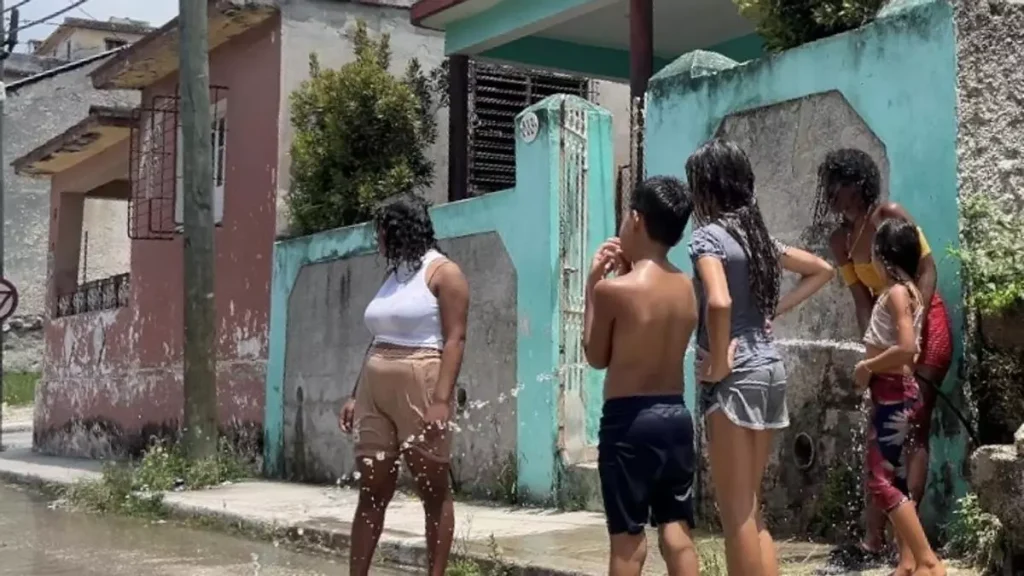
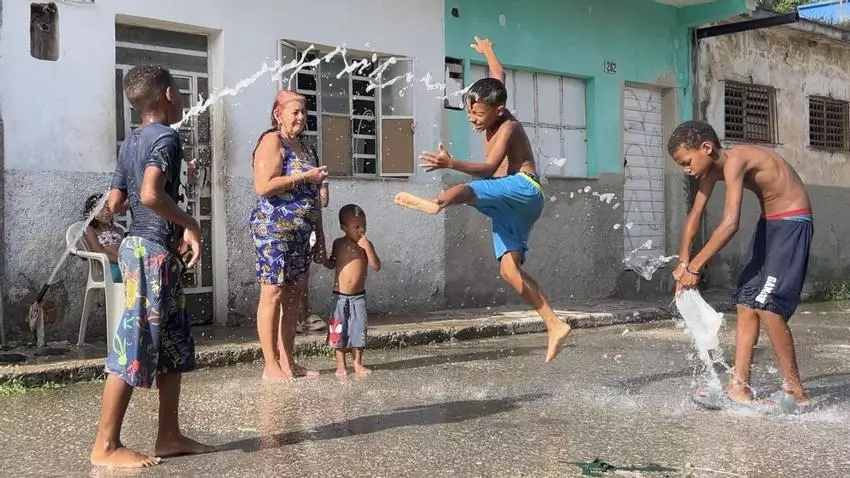
In a street in Guanabacoa, Havana, several children were spraying each other with jets of water this Wednesday. / 14ymedio
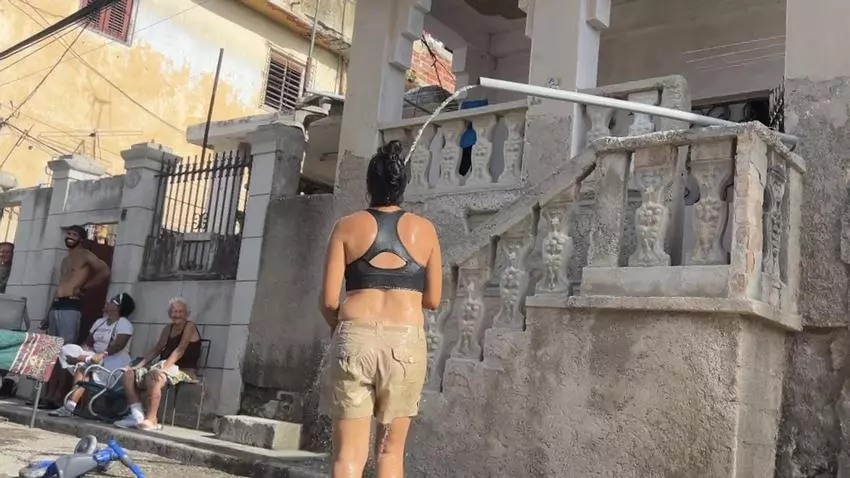
14ymedio, Havana, Dario Hernandez, June 25, 2026 / In a street in Guanabacoa, Havana, several children were spraying each other with jets of water this Wednesday and jumping barefoot on the wet pavement. For a few minutes, the return of service looked like a neighborhood party in the middle of June’s suffocating heat. When the water comes back* after so many days of absence, everything changes pace. Buckets, hoses, and basins appear. Floors are scrubbed, clothes are washed if a few hours of electricity happen to coincide, and families take the chance to bathe, fill their tanks, and take care in one go of everything that has piled up during the domestic drought.
“The waste that happens in those hours is like making up for all the days you had nothing,” a resident of the area tells 14ymedio. He understands his neighbors’ euphoria. With the blackouts, the high temperatures, and the long supply interruptions, he admits, “all you want is to stand under the tap and not move.” Yet he confirms that some people leave their faucets running even after filling their tanks or finishing their household chores.
When the water comes back after so many days of absence, everything changes pace. / 14ymedio
“I have some neighbors who just let it run for no reason. They’re not bathing, not cleaning, not watering the plants. They just leave it open for the pleasure of watching it flow,” he laments. In Centro Habana, Regla, and parts of Guanabacoa itself, many families depend on water tanker trucks or go several days without receiving a single drop. This week, residents of Regla took to the streets to protest the water shortage while demanding the arrival of a tanker. continue reading
The problem is not simply one of individual waste. On top of the power outages that shut down pumping stations, there are breakdowns and the deterioration of a water network incapable of holding the water it carries. “Every block has at least two or three leaks,” the resident says.
In earlier times, another neighbor recalls, inspectors would fine anyone who let water run needlessly.
The authorities call on people to save water, but the state’s own pipes pour out for hours quantities of water far greater than any household could waste. In earlier times, another neighbor recalls, inspectors would fine anyone who let water run needlessly. Now, she says, “there’s no oversight anymore.” The absence of enforcement combines with the erosion of a civic culture that can barely survive when every family has to fend for itself when it comes to food, electricity, garbage, and water supply.
The woman insists she is not trying to directly blame those who make the most of the brief water supply. “With this heat and no power, when the water comes it’s only natural to enjoy it,” she repeats. What she is denouncing is the loss of empathy toward those living a few blocks away who have been waiting for days.
“It hurts, because there are people who only see water when a truck comes,” she sums up. For her, the images speak to something that goes far beyond a leak or an open faucet. “In Havana, nobody lives in a community anymore. It’s every man for himself.”
*Go to the link to watch a movie, which refused to load here.
Translated by GH.
______________________
COLLABORATE WITH OUR WORK: The 14ymedio team is committed to practicing serious journalism that reflects Cuba’s reality in all its depth. Thank you for joining us on this long journey. We invite you to continue supporting us by becoming a member of 14ymedio now. Together we can continue transforming journalism in Cuba.
On unmonitored streets, enormous dumpsites grow large enough to block vehicle traffic
At the corner of San Martín and Escobar streets, ’14ymedio’ witnessed a heated argument between residents and a woman who was attempting to violate the new rules for the area. / 14ymedio
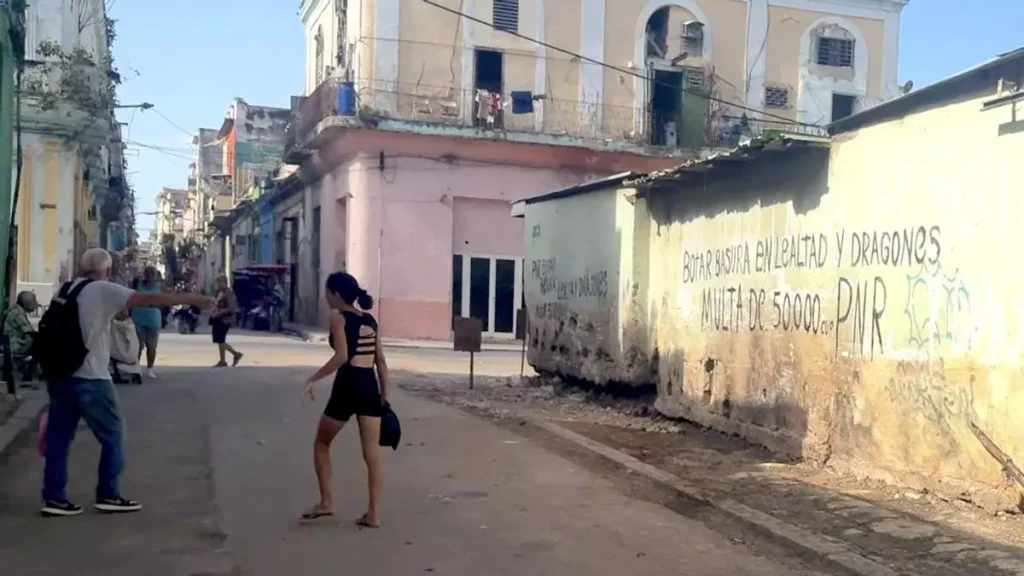
14ymedio, Dario Hernandez, Havana, 24 June 2026 / At the corner of San Martin and Escobar in Centro Habana, anyone who dares toss so much as a scrap of paper in the street is asking for trouble. After months of living alongside a dumpsite that had grown large enough to block traffic, residents cleaned everything up, posted warning signs, and hired improvised guards to stop anyone from dumping garbage there again.
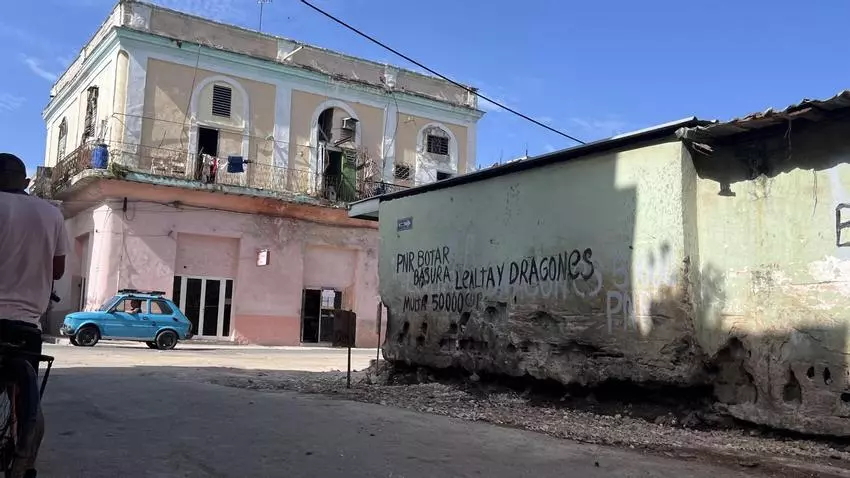
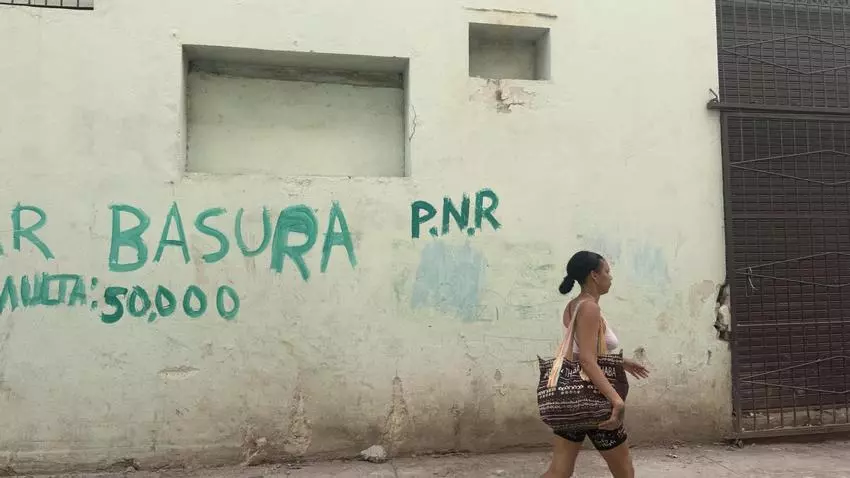
Several notices stand out on the walls: “No dumping. 50,000-peso fine.” The signs bear the signature of the National Police and add that waste must be taken to Lealtad and Dragones. With no fuel for the trucks responsible for cleaning the city, residents have taken matters into their own hands to solve a serious public health problem on their own street.
After months of living alongside a dumpsite that had grown large enough to block traffic, residents cleaned everything up and posted warning signs. .
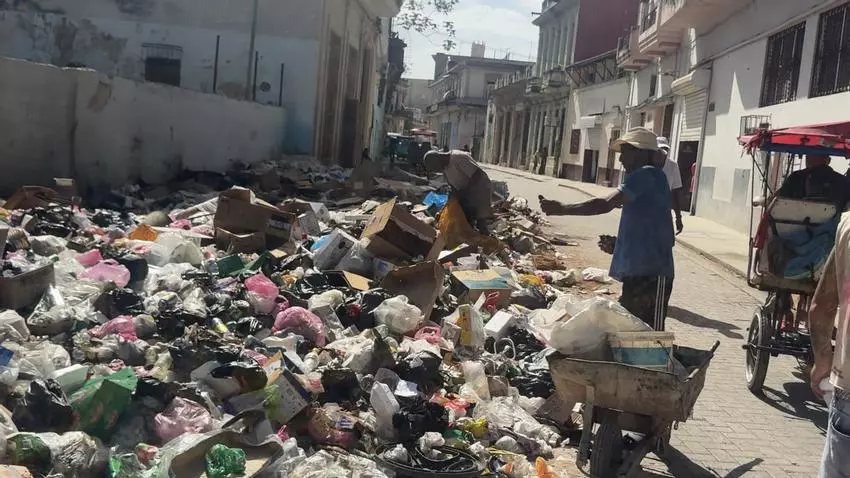
The corner referenced on the signs, just a few blocks away, sits next to the Zanja police station and hosts one of the largest dumpsites in the area. The accumulation of waste occupies virtually an entire block and in some spots reaches two meters in height. In front of the Dragon Chino restaurant, passage is impossible due to the volume of refuse, and the smell forces pedestrians to cover their faces with masks.
At San Martin and Escobar, 14ymedio witnessed a heated argument between residents and a woman who tried to ignore the corner’s new rules. The woman wanted to get rid of an old cooking pot at the spot where she used to dump her garbage. Residents confronted her. One of them grabbed her by the arm while warning her that he would alert the block supervisor and report her to the police. The argument escalated over several minutes – the woman even threatened to hit the neighbor with the same pot – until she gave up and went to dump her garbage somewhere else.
Streets without hired guards have turned into enormous dumpsites.
“We had to take care of it ourselves because nobody was doing anything,” explained one resident, still agitated from the confrontation. A bicitaxi driver passing by at that moment took the rule-breaker’s side: “What’s the big deal? If the Government does nothing…”
The garbage problem is turning neighbors against each other. Every corner tries to protect itself on its own. Those that manage to stay clean simply push the problem onto nearby blocks. Some residents hire these guards and put up signs threatening fines. On one corner, there is even a notice that security cameras are in operation. [view video here] continue reading
Faced with months of accumulated waste, residents and the Communal Services agency themselves had taken to setting it on fire, with all the toxic consequences for the population. “Now we’ve entered a new phase,” sums up one neighborhood resident: “It’s the war of the corners.”
Images captured by this newspaper reflect what has already become an everyday reality in Centro Habana. Each community has begun to invent its own ways of surviving the garbage. Streets without hired guards have turned into enormous dumpsites, and it is common to see elderly people there picking through the refuse in search of food.
Some residents hire guards and put up signs threatening fines. [Multa=fine. Basura=Trash. P.N.R. = National Revolutionary Police] / 14ymedioFacebook user Enrique de la Osa recently shared images of San Martin and Escobar before the cleanup organized by residents. The photographs show a solid mass of garbage accumulated over weeks, with fire and smoke rising from the waste, while residents try to go about their daily lives around it.
The corner is clean today, but the garbage has not disappeared – it has simply piled up somewhere else. Like the country’s structural problems, which move around without ever being solved and grow larger with each passing day.
Translated by GH
______________________
COLLABORATE WITH OUR WORK: The 14ymedio team is committed to practicing serious journalism that reflects Cuba’s reality in all its depth. Thank you for joining us on this long journey. We invite you to continue supporting us by becoming a member of 14ymedio now. Together we can continue transforming journalism in Cuba.
During an event organised by Unesco, former Republican-era palaces converted into state offices revealed stained glass, marble, staircases – and sealed-off areas
“The hardest thing is the contrast with the rest of Havana, which is falling apart.” / 14ymedio
14ymedio, Havana, Darío Hernández, 31 May 2026 — The first thing they ask of you before entering is not silence, nor respect for the heritage, nor care for the old floors. It is your identity card. At the entrance to each building, an official photographs visitors’ documents, as if a visit to a heritage property were also a bureaucratic formality – or entry to the Embassy of the Past. Only after that gesture, so routine in a Cuba under surveillance and so ill-suited to a cultural outing, does the tour of several Vedado mansions begin, opened to the public for the Open Doors Day organised by Unesco.
There were quite a few people. Families, curious passers-by, students, neighbours who had spent years walking past those facades without ever being able to cross the threshold. Some stared upwards, as if trying to take in all at once the cornices, balconies, columns and black ironwork. Others walked with the discretion of someone entering a stranger’s home – even though that home no longer has a visible owner, only acronyms, custodians, offices and official portraits of Raúl Castro and Miguel Díaz-Canel.
The Mansions of Vedado Open Their Doors, But Not All Their Secrets
In each building, students and professors of Art History were on hand to explain mouldings, stained glass, styles, dates and materials. At times the tour felt like a living lesson in Republican-era architecture; at times, like an excursion through the inventory of a private wealth converted into state heritage. The guides’ voices tried to impose order upon the beauty, but visitors could not help looking also at what was not being explained.
“The hardest thing is the contrast with the rest of Havana, which is falling apart,” murmured a man as he crossed one of the reception rooms. Outside, the city peels, is propped up, collapses, or survives patched together with breeze blocks, corrugated zinc and miracles. Inside, by contrast, there remain chandeliers, sweeping staircases, interior courtyards, gardens and high ceilings – that sense of spaciousness which today seems almost obscene in a capital where so many families live crammed together amid leaking roofs and power cuts.
Some were expropriated; of others it is said, with the convenient formula of the official narrative, that their owners left the country and “left no heirs.” / 14ymedio
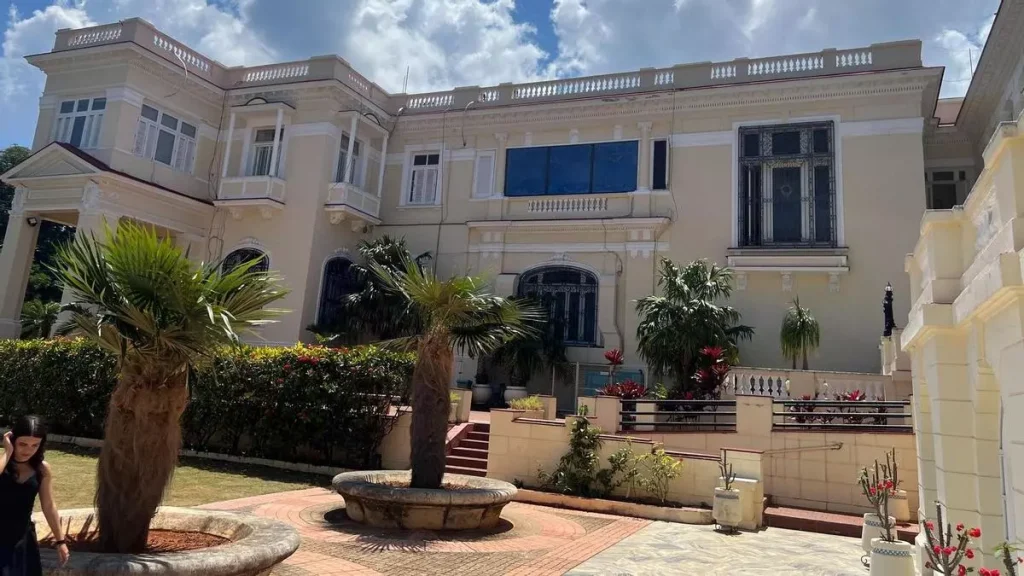
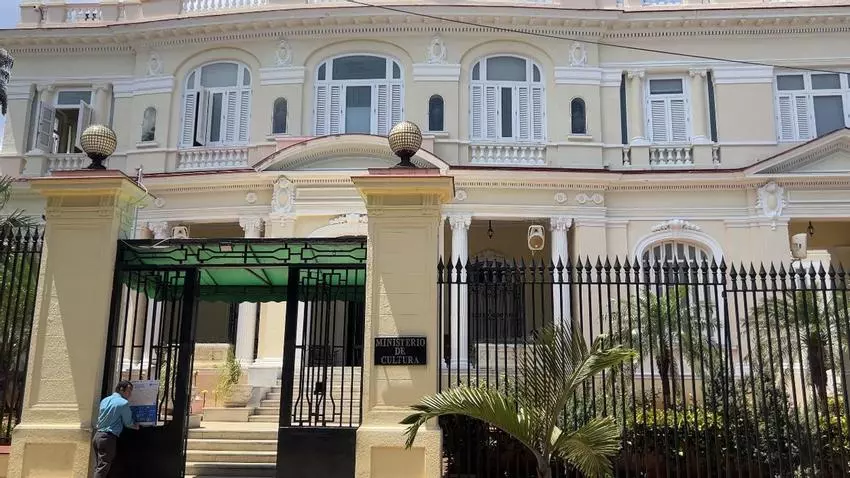
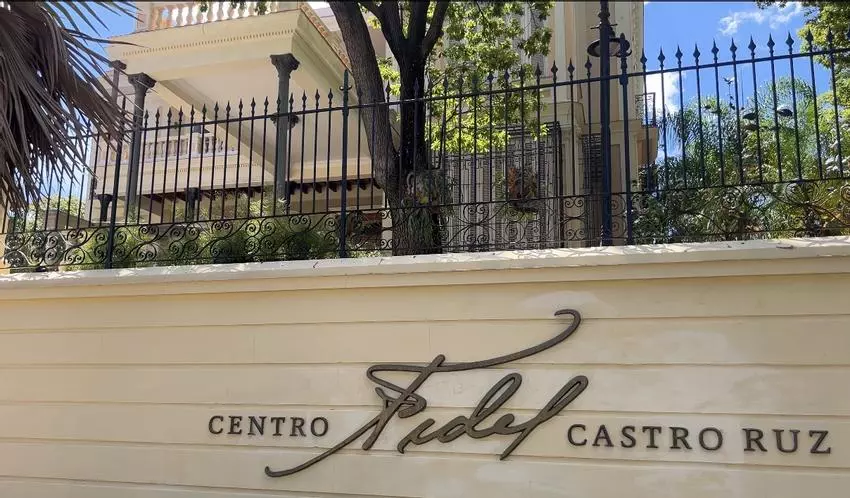
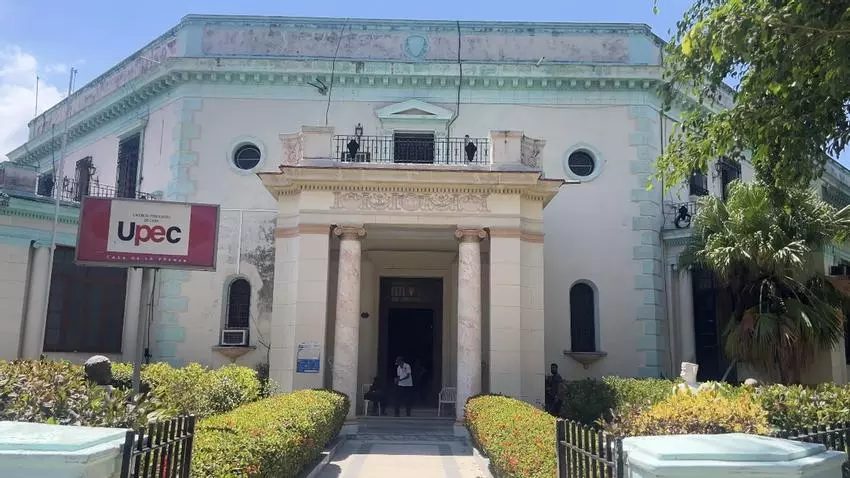
The route included some of the most imposing mansions in Vedado: the headquarters of the Ministry of Culture; the Federation of Cuban Women (FMC), on Paseo and 13th Street; the Casa de la Prensa, headquarters of the Union of Cuban Journalists (Upec), on 23rd and I; and the Fidel Castro Ruz Centre. All share the fact that they were built or inhabited by wealthy families during the Republic – many of Spanish origin or descent from Spaniards – and after 1959 passed into the hands of the new power. Some were expropriated; of others it is said, with the convenient formula of the official narrative, that their owners left the country and “left no heirs.”
At the headquarters of the Ministry of Culture, the former home of Ernesto Sarrá and Loló Larrea commands attention even before one enters. It occupies almost an entire block and still retains the air of a family palace it must have had when the owner of one of Cuba’s largest pharmaceutical fortunes lived there with his wife. From the street, the building promises a novel of money, parties, alliances, servants, china and automobiles pulling through the gateway. Inside, however, the mansion no longer functions as a home. It is a collection of offices from which the culture of the island is administered – and kept under watch.
“What beauty, and what a waste not to be able to see it in its entirety,” commented a woman as she left one of the rooms. / 14ymedio
Many areas were closed to the public. Some because they are offices; others because they are “not in a fit state.” This was a constant throughout the tour: half-open doors that could not be passed through, staircases leading nowhere, sealed-off corridors, or areas that the guide mentioned without showing them. Visitors could barely reconstruct, from fragments, the scale of what once was.
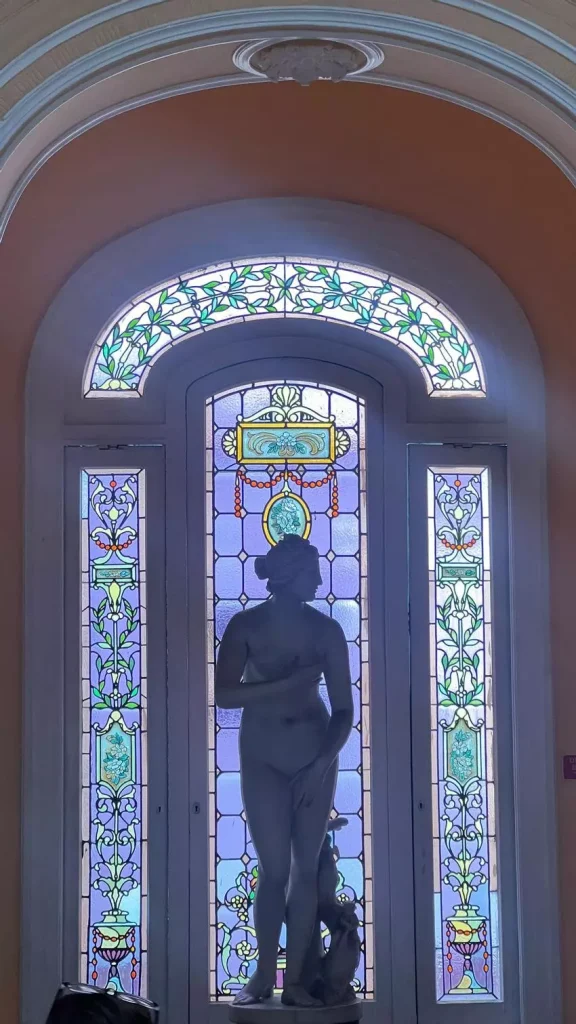
At the FMC headquarters, amid stained glass windows, a female sculpture and rooms altered by bureaucratic use, the guide explained ornamental details while visitors raised their eyes to the ceilings, the doors and the columns. “What beauty, and what a waste not to be able to see it in its entirety,” commented a woman as she left one of the rooms. The remark hung in the air with an unintentional precision. The heritage is shown, but with caution; conservation is spoken of, but the history of ownership is barely touched upon.
The Casa de la Prensa, headquarters of Upec, preserves an uncomfortable memory for official journalism. The building on 23rd and I is associated with the García Osuna family, connected to Republican-era politics. From 1963, the organisation that brings together pro-government journalists was installed there. In its salons, where private life, receptions and family conversations once took place, propaganda subordinated to the single Party is now produced. The architecture, with its ornate iron grilles and its old-world elegance, seems to retain more freedom than the institution that occupies it.
The former mansion of the Conill family has become a civic temple to the leader who governed the country in which properties such as this one were confiscated. / 14ymedio
The starkest contrast appears at the Fidel Castro Ruz Centre. The former mansion of the Conill family, with its restored grandeur, its well-kept gardens and its museum-style displays, has become a civic temple to the leader who governed the country in which properties such as this one were confiscated, seized or absorbed by the State. Official sources acknowledge that the house belonged to the Hidalgo de Conill family and that Enrique Conill Rafecas was a captain in the Liberation Army. They also admit that, after 1959, the family left the country and the property was put to uses connected with the Ministry of the Interior.
Here the paradox achieves an almost theatrical clarity. A Republican-era palace, born of private wealth, converted into a shrine of the Revolution. A building that must once have held family albums, china, bedrooms, parties and inheritances, now transformed into the stage set of a single, carefully illuminated memory. “You spend your whole life walking past this place and you have no idea what’s inside,” said a visitor standing before the mansion in which Fidel Castro’s Mercedes-Benz is displayed as if it were a relic.
That detail alone would be enough for a different tour – less ornamental and more honest: one that passes not only through the columns, the stained glass and the ironwork, but through property records, nationalisations, exiles, emptied houses and the official versions that explain too much with too little. Who exactly were the owners? What became of them? What documents prove the transfer of ownership? Was there confiscation, abandonment, donation, seizure, litigation? Where are those archives? On the visit, that part appeared only as a footnote, as if the social history of the mansions were less important than the marble.
Many entered in amazement; others, with a mixture of curiosity and suspicion.
The public, however, did not seem indifferent. Many entered in amazement; others, with a mixture of curiosity and suspicion. They walked slowly, photographed stained glass, discreetly touched a banister, lingered before a staircase, looked up at the ceilings as if discovering a hidden city above the visible one. For decades, a large part of the Republican residential heritage has remained behind railings, custodians, ministries, mass organisations, embassies and state offices.
The Unesco open day has value because it allows one to look. And in Cuba, looking inward is already something. But looking is not enough. A country that prides itself on its heritage should also account for how that heritage came into state hands, who built it, who lived in it, who lost it and through what mechanisms. Without that information, the tour remains an incomplete postcard of a Havana that is beautiful, deteriorating and under surveillance – where the visitor hands over their identity card before entering and leaves with more questions than answers.
Translated by GH.
______________________
COLLABORATE WITH OUR WORK: The 14ymedio team is committed to practicing serious journalism that reflects Cuba’s reality in all its depth. Thank you for joining us on this long journey. We invite you to continue supporting us by becoming a member of 14ymedio now. Together we can continue transforming journalism in Cuba.
The KMCERO platform appears to be a private small business, but it uses the logistics of the state company Cupet
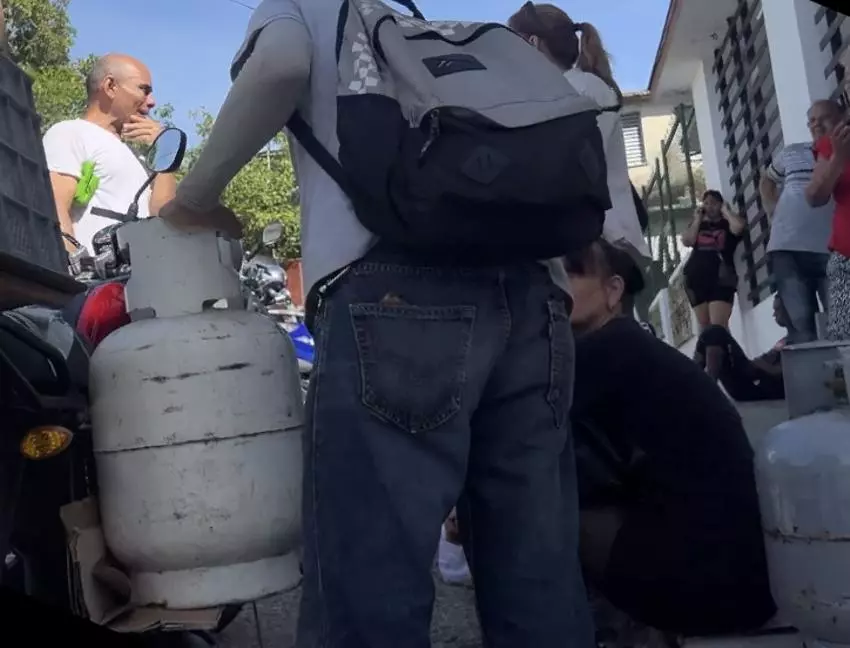
A 10-kilogram liquefied gas cylinder is being offered for 24 dollars. / 14ymedio
14ymedio, Havana, Darío Hernández, May 27, 2026 – “Those balitas, just as you see them, are from here. The same ones they distribute through the ration book system. Don’t let them fool you.” The remark came from a woman standing in line in San Miguel del Padrón, in Havana, while several customers waited to pick up a propane cylinder purchased online in dollars. She pointed to the usual balitas, the same ones that for decades have circulated through Cuba’s state liquefied gas distribution network.
In theory, that product arrives through a regulated system. Each contracted customer receives one when their turn comes, hands over the empty one, and waits for the next cycle. But delays are frequent, and many families spend weeks waiting for a delivery that can determine the rhythm of an entire household. Without propane, cooking becomes an obstacle course, especially with the increase in blackouts.
That overloaded and sluggish system now has a parallel outlet. On the KMCERO platform, presented as a digital marketplace for petroleum derivatives, a 10-kilogram liquefied gas cylinder is being sold for 24 dollars. The buyer must hand over another empty cylinder in good condition. Payment is made with Clásica, AIS, Tropical, Visa, or Mastercard cards. The operation excludes the Cuban peso, even though the product is the same one many families are waiting for through the regulated system.
When asked whether other pickup sites would be available, the person in charge replied that there were plans to open one more. / 14ymedio
The only pickup point visible so far is in a small alley at Ciudadmar and 7th Street, in San Miguel del Padrón. When asked whether other pickup sites would be available, the person in charge replied that there were plans to open one more, although it was still “in process.”
About 15 people, each carrying an empty balita, stand in a discreet line. One question circulates among them: if someone buys now in dollars, continue reading
will they later be able to use that same cylinder once distribution through the ration book system resumes?
One woman answered without hesitation. “Last time, as I remember, when they distributed balitas, nobody asked for the numbers anymore. You handed one over and that was it. Besides, if half the population is now going to buy them here, it’s obvious they’ll allow it.” She then added the detail that most concerned those present: “They’re not like the white ones that Supermarket23 used to send; these are the same ones from the regular service.”
The comparison with Supermarket23, another foreign-currency shopping platform used by Cubans inside and outside the Island, helps place the new business in context. There, a balita can cost around 30 dollars. The KMCERO one costs 24, although it requires traveling to the pickup point. For those without a compatible card, the final cost rises. A man sitting at the site explained that he had to buy dollars from a friend through a Clásica card, so he ended up paying more.
“To get a balita, you have to be ready at 7:00 am, do everything quickly, because the cylinders disappear immediately.” / 14ymedio
The website adds another obstacle: availability. According to reports collected by this newspaper at the delivery point, the cylinders sell out quickly. “To get a balita, you have to be ready at 7:00 am, do everything quickly, because the balitas disappear immediately,” one customer commented. Even after paying, customers do not receive the product right away. Pickup is scheduled for the following day.
The supplier listed on KMCERO is Progas. However, many questions surround that company. The website does not provide a clear explanation of who is behind the operation. The “Who We Are” section is either inaccessible or fails to provide enough information. The commercial brand appears on one side, the platform on another, and the promotion comes from state-linked entities.
That last detail is key. KMCERO was promoted by Tecnomática together with the state SME TM-NEXGEN as a virtual store for purchasing fuels and lubricants in Cuba. Tecnomática is part of the business ecosystem linked to Cupet, the state conglomerate that heads the petroleum sector on the Island. The platform itself markets products associated with fuel, oils, and gas, a business that requires permits, specialized transportation, secure storage, and access to infrastructure rarely available to a small private enterprise.
“What exactly does Progas contribute besides a new label and a way to charge in dollars?” / 14ymedio
Suspicion grows when examining the details closely. Customers hand over cylinders identical to those used in the state system and receive similar ones in return. The logistics point to already existing facilities. The transportation observed by neighbors and customers resembles that historically used by Cupet. None of those elements alone proves that Progas is a front for the state company. Together, however, they sketch an operation difficult to present as an independent private business.
“If the product, the cylinders, the logistics, and the promotion belong to the state system, what exactly does Progas contribute besides a new label and a way to charge in dollars?” asks one customer while waiting in line.
Progas appears precisely within a gray area that several observers of the Cuban economy have been pointing out for years: the creation or use of formally private companies to operate where state entities carry a poor commercial reputation or seek to evade U.S. sanctions. Under that model, a company with the appearance of a non-state actor can import fuel, hire services, or present itself to foreign suppliers as an independent business, even though in practice it depends on state assets, permits, logistics, or decisions.
What is clear is that the balitas can no longer be obtained in national currency. / 14ymedio
In strategic sectors such as fuel, where official control has historically been nearly absolute, an opaque brand forces observers to look beyond the commercial name. The question is not only who delivers the cylinder, but who owns the product, the containers, the trucks, the warehouses, and the money entering from each sale.
No one knows where the gas comes from, whether from the Energas plant in Varadero or from a private import operation in partnership with the Cuban state, the only economic actor authorized to charge in dollars. What is clear is that the balitas can no longer be obtained in national currency.
For Cuban families, the immediate answer lies not in corporate documents but in the kitchen. Those with cards, internet access, and foreign currency can try to buy. Those dependent on salaries paid in pesos must continue waiting for the regulated distribution. The balita that once formed part of a rationed system now appears in a digital store, with another name, another currency, and one unanswered question: who is really collecting the money for the gas?
Translated by Regina Anavy
______________________
COLLABORATE WITH OUR WORK: The 14ymedio team is committed to practicing serious journalism that reflects Cuba’s reality in all its depth. Thank you for joining us on this long journey. We invite you to continue supporting us by becoming a member of 14ymedio now. Together we can continue transforming journalism in Cuba.
“They give us 15 minutes of electricity, several times like that over the last three days, but yesterday was too much, and everyone came out together to bang their pots.”
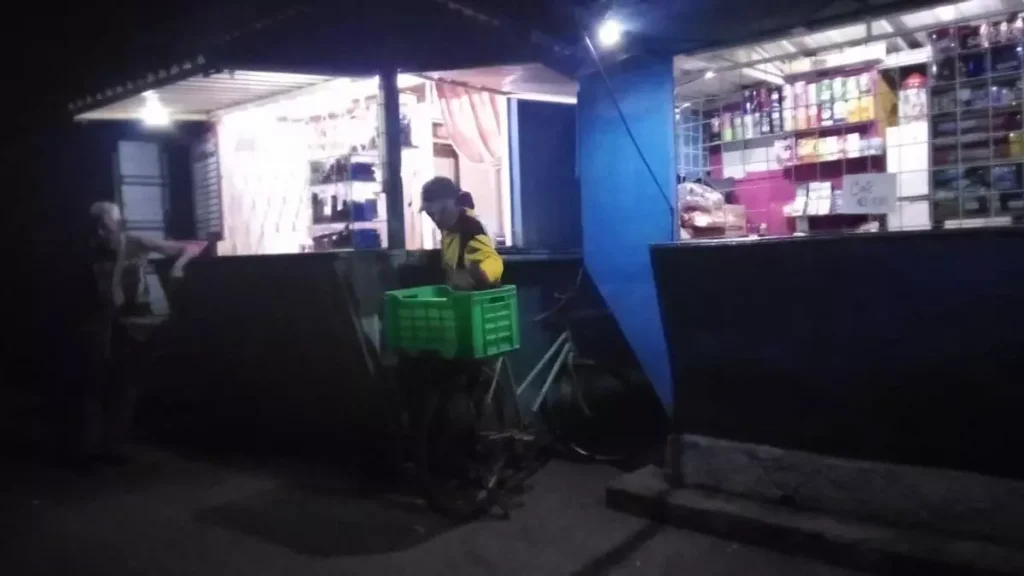
An improvised kiosk keeps a small generator running, roaring like an old engine. / 14ymedio
14ymedio, Darío Hernández, Havana, May 25, 2026 / “Havana wakes up with bags under its eyes,” says a resident of Regla, though he makes it clear he is not trying to be poetic. The bags under their eyes are not from a night out, nor from age, but from that sticky darkness that falls over homes when the power goes out and turns the night into a test of endurance.
In his neighborhood, as in so many other parts of the Island, residents came out to bang pots after 27 hours without electricity. The noise of the pot-banging is the way of raising their voices for people who no longer know what to do about the heat, the mosquitoes, the spoiled food, the children unable to sleep, and the rage.
“The pots were ringing out on every block,” the resident tells this newspaper. According to other residents of the Havana municipality, the neighborhood had been without service for more than a day. When it was supposedly time for power to be restored under the block rotation system, a fault appeared. Then came the “on and off”: a few minutes of power, another blackout, another attempt, another wait. Until patience went out too.
“In the end they were giving us 15 minutes of electricity,” says the man, with those same bags under his eyes. “Like that, several times over the last three days, but yesterday was too much, and everyone came out together to bang their pots.” continue reading
“What the Electric Union reflects in its Telegram messages does not come anywhere close to reality,” another witness says
“What the Electric Union reflects in its Telegram messages does not come anywhere close to reality,” another witness says. Out on the street, the crisis is not measured in megawatts, but in hours without sleep.
A woman from the same neighborhood sums it up without metaphors: “Sleeping in Cuba has become a privilege.” Sleep depends on having a rechargeable fan, on having been able to charge it beforehand, on the battery lasting, on having a generator, on having fuel, on living in a house where some air comes in, and on the mosquitoes granting a truce.
“The power went out at 4:30 in the afternoon and came back at 7:30 in the morning,” one Havana woman says. “The whole night without power.” She puts the rechargeable fan on the lowest speed to stretch out the battery. But the heat is already starting to bear down. She opens the windows. At one in the morning she wakes up because of the mosquitoes, even though she lives on an upper floor. She closes the windows again. She turns up the fan speed. Then another problem appears: the noise will not let her sleep. Two hours later, the charge runs out.
“Then you turn on the generator and put the fan to charge,” she says. “And that is how the whole night has gone until the power comes back, and you have slept only a couple of hours.”
At dawn there is no rest. The plans for the following day are cancelled before they even begin. “There is no way anyone can cope with this,” she says. And then she immediately qualifies it, with a mixture of guilt and clear-headedness: “I consider myself privileged. I have a fan and a generator. Most people have nothing.” The question hangs in the hot room: how do the others sleep?
A teacher gives a simple and devastating answer. Adults no longer sleep. They spend the night fanning the children with a piece of cardboard so the mosquitoes do not bite them. When the power comes back, nobody celebrates anymore. People run.
Adults no longer sleep. They spend the night fanning the children with a piece of cardboard so the mosquitoes do not bite them. When the power comes back, nobody celebrates anymore. People run
“When the power comes on, whatever time it is, there is a mad rush: to charge everything, to cook, to put the washing machine on, always with the fear that it will not last long,” says the teacher, who spent 15 hours without service. She speaks from a house that gets sun all day and where the heat clings to the walls. The night before she tried to sleep, but she could not either. “I fell asleep from exhaustion, an uncomfortable sleep, not deep at all,” she says.
“I now know almost as much as Lázaro Guerra,” the woman says ironically, referring to the official face who gives the daily report on the energy crisis. “Until a few years ago I was a complete novice when it came to megawatts, circuits, synchronizations, deficits. Now I could give the energy report myself if I set my mind to it.”
“I woke up about five times in the early hours,” the same woman says. “Each time I checked the Telegram channel, hoping to see: ‘Block 1 begins the gradual restoration of service.’” The bureaucratic phrase has become a kind of civic prayer. It is waited for the way one waits for a sign.
“Look what we have been reduced to,” she says. “I feel as though I am begging for crumbs of a service that is a right and that is not free, because I pay for it every month.” Electricity thus appears like an intermittent handout. A concession that forces people to live with body and soul hanging on a switch.
The material deterioration brings another, more silent one: damage to health. One of the accounts speaks of a stomach ache after ordering food for delivery. He suspects it was in bad condition because of lack of refrigeration. “Or who knows how many times that food was frozen and thawed,” he says. He has gone days without drinking cold water. He has no strength. He feels “wrecked.”
“After 12 hours of continuous blackout, my mood changes. All you think about is how to get out of this. You don’t feel like reading, going out, watching something. Nothing. The body goes into survival mode.”
“After 12 hours of continuous blackout, my mood changes. All you think about is how to get out of this. You don’t feel like reading, going out, watching something. Nothing. The body goes into survival mode.”
“Does anyone think about that, about the mental health of Cubans?” his partner asks. “The bags under my eyes are already part of my look, and with no cucumbers or potatoes to improve them.” The humor appears, but it does not save them. It barely lets them breathe amid the annoyance. “That is why people in the street are in a bad mood. The quality of sleep determines many things,” she insists.
“The worst thing is not the heat, or the mosquitoes, or the anxiety, or tossing and turning in bed at three, at four, at five,” the woman says. “The worst thing is opening your eyes and seeing everything dark, feeling that the night is swallowing you, along with the neglect, the lies of a Government that thinks about itself but not about its people.”
At seven in the morning, light begins to come in through a crack. But that is not a sign of relief either. It is the announcement of another day of work, queues, walking, finding something to eat, accumulated tiredness, and supposed normality. And, at the same time, the certainty that when night falls everything may happen all over again. “In Cuba you cannot sleep, much less dream,” says the resident of Regla, and he brings his fingers to the bags under his eyes, trying to rub them away.
Translated by GH
______________________
COLLABORATE WITH OUR WORK: The 14ymedio team is committed to practicing serious journalism that reflects Cuba’s reality in all its depth. Thank you for joining us on this long journey. We invite you to continue supporting us by becoming a member of 14ymedio now. Together we can continue transforming journalism in Cuba.
The main speaker was Gerardo Hernández, one of the five former spies accused in the US of participating in the conspiracy to shoot down the Brothers to the Rescue planes
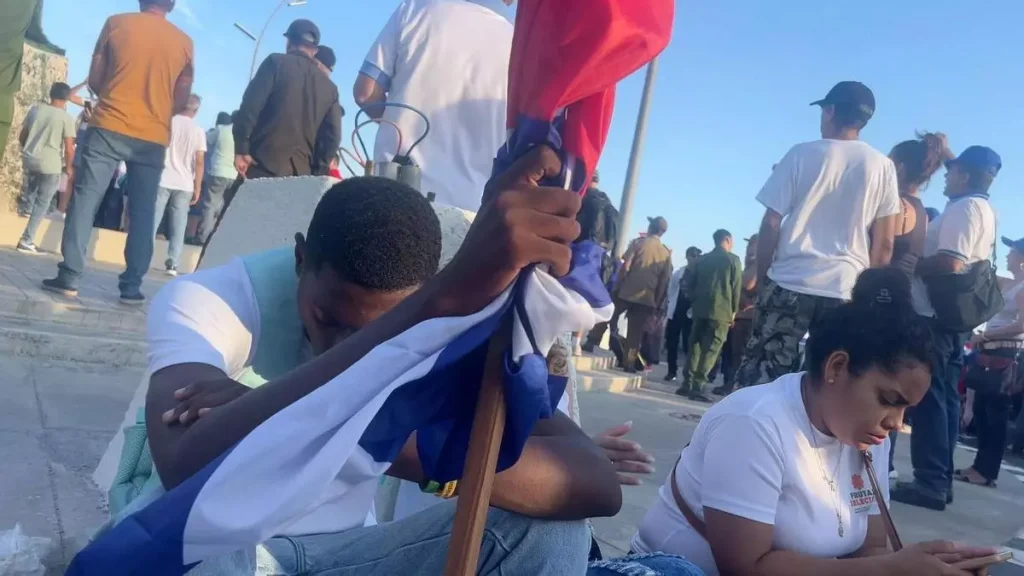
Tired and disinterested attendees during the demonstration. / 14ymedio
14ymedio, Dario Hernandez, Havana, May 22, 2026 / In a new attempt to display popular support, increasingly weakened, the Cuban government called for another mobilization this Friday at the so-called Anti-Imperialist Tribune – located in front of the US Embassy in Havana – “to condemn the despicable and infamous act of the United States Department of Justice” –referring to the indictment made this Wednesday against Raúl Castro for the downing of the Brothers to the Rescue planes – “and to support the declaration of the Revolutionary Government.”
The official media presented it as a novelty that the call for the mobilization came from the Union of Young Communists, “along with other student organizations, mass groups, and youth movements.” The official statement also framed the event within the celebrations for Raúl Castro’s 95th birthday, on June 3rd.
For these mobilizations, the government spares no resources or fuel. / 14ymedio
Despite the severe fuel crisis that the Island is experiencing and that worsens every day, the Government has found resources to organize these mobilizations, which are coordinated in a mandatory way through state institutions and workplaces.
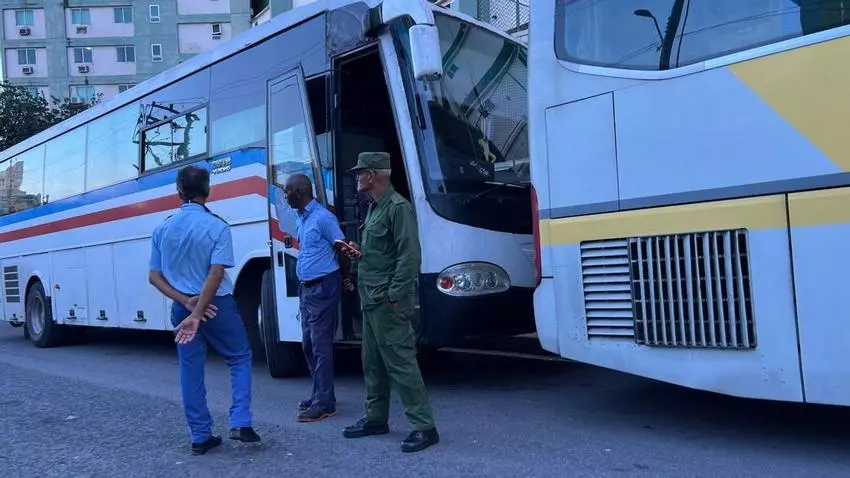
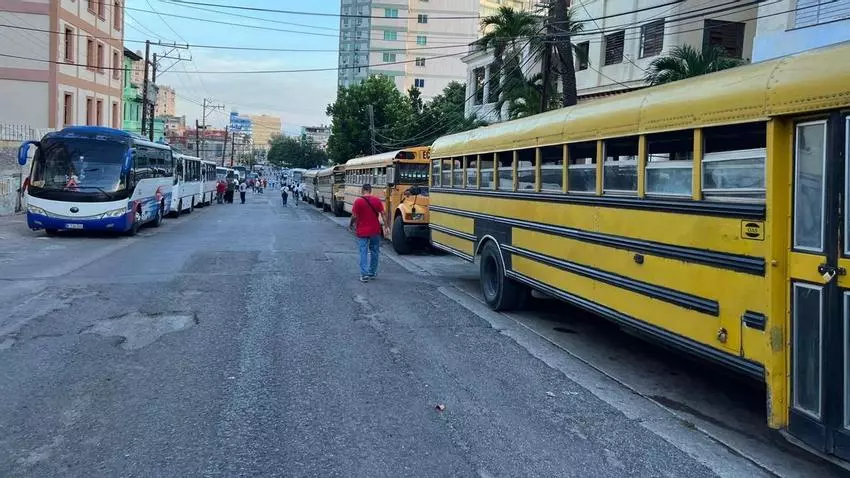
While Havana residents deal daily with the lack of transportation and authorities have applied drastic reductions to public mobility, a long line of buses waited in the early hours of this Friday after transporting attendees to the event, as shown in the photographs taken by 14ymedio.
Buses used to transport attendees during the demonstration. / 14ymedio
The leak of an internal document from the Havana Electric Union, ordering the mobilization of workers, reveals the mandatory and controlled nature of these calls, with which the regime attempts to project an increasingly less credible image of popular support.
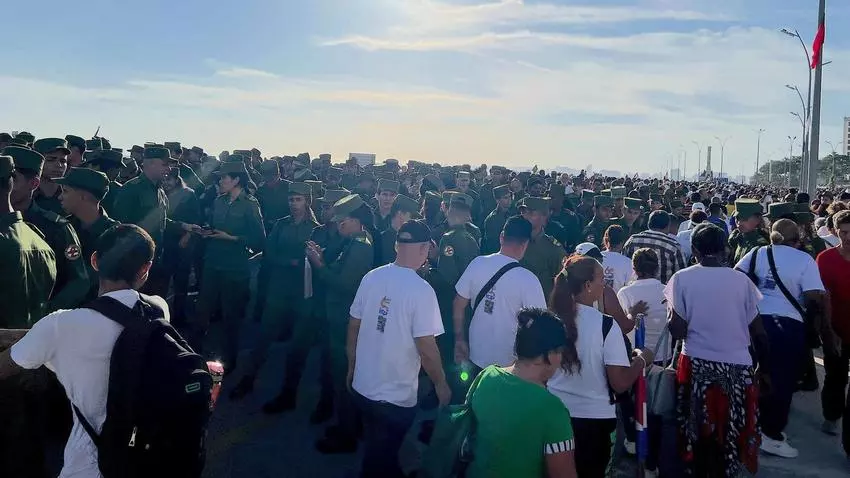
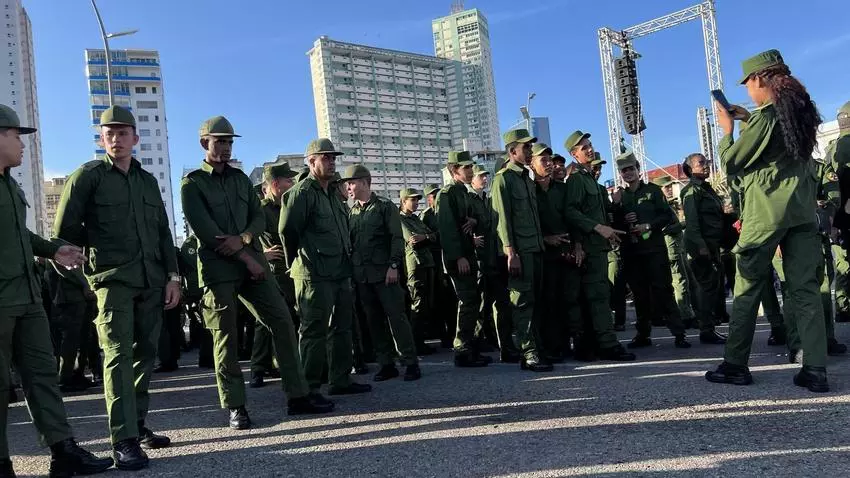
The mandatory nature of the rally is also evident in the large presence of uniformed military personnel and attendees wearing propaganda T-shirts distributed by state entities. “Raúl is Raúl” is one of the slogans of this propaganda campaign, which aims to counteract the effects of the indictment.
However, the Army general was not present at the ceremony, which has sparked speculation on social media. The nonagenarian is no longer continue reading
in good enough health to make public appearances, and his presence at the May Day parade had already drawn similar comments due to his visible physical decline.
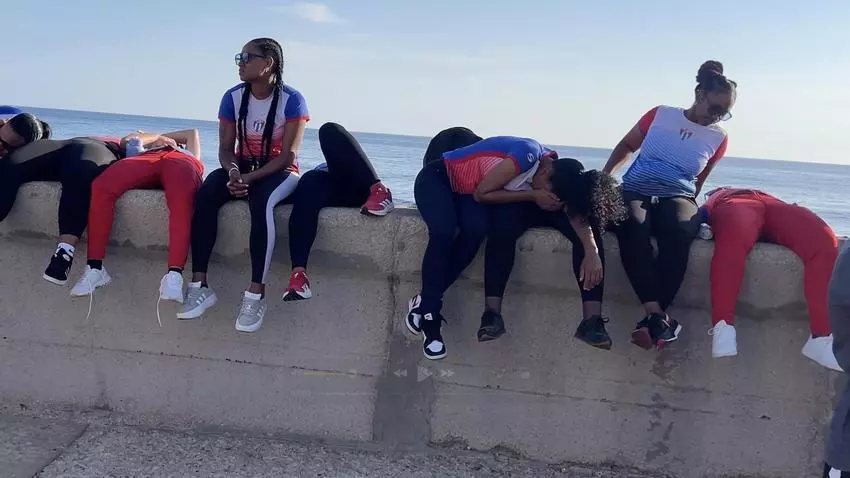
Young athletes fatigued during the mobilization, after having been called up since dawn. / 14ymedio
Miguel Díaz-Canel led the ceremony in military uniform, and among those present was the general’s grandson, Raúl Guillermo Rodríguez Castro, known as “El Cangrejo” (The Crab). Also in attendance were the president of the National Assembly of People’s Power, Esteban Lazo; the prime minister, Manuel Marrero; and the commander of the Rebel Army, José Ramón Machado Ventura.
The five former Cuban spies were also present; their activity in US territory was fundamental for Cuban intelligence services to obtain information on all the movements of Brothers to the Rescue during the nineties, until the fateful February 24, 1996, when a MiG-29 shot down two planes of the humanitarian organization in international waters, causing the death of the four crew members, three of them with US nationality and one with legal residence in Florida.
To begin, the pro-government musician Raúl Torres performed a song dedicated to Raúl Castro. Following this, the pro-government lawyer Rolando López Meriño took the floor to express, on behalf of the legal profession, their rejection of the “scoundrelly accusation” against the former president and to reiterate the regime’s arguments against the legality of the charges brought by the U.S. Department of Justice.
Attempts to chant slogans sounded half-hearted, mostly coming from the soldiers themselves. / 14ymedio
“It is absolutely fraudulent and illegitimate,” stated López Meriño, who invoked the 1944 Chicago Convention on International Civil Aviation to justify shooting down the planes as an act of defending national sovereignty. The lawyer also held the United States responsible for the incident, arguing that Washington ignored warnings from the Cuban government about alleged violations of national airspace by the Brothers to the Rescue aircraft.
López Meriño’s speech added nothing new to the official discourse, which has historically rejected Washington’s version that the downed planes were in international airspace, a conclusion supported by reports from the International Civil Aviation Organization (ICAO) and the Inter-American Commission on Human Rights (IACHR).
Gerardo Hernández Nordelo, one of the five former Cuban spies and accused in the US of participating in the conspiracy linked to the downing of the Brothers to the Rescue planes, was the main speaker at the event.
A large military presence was seen attending the demonstration. / 14ymedio
He paraphrased a “message from our comrade, the Army General,” to those present: “He tells us that he sincerely appreciates the solidarity of the people and of friends around the world, and that we can be certain that as long as he lives, he will continue marching at the head of our people, defending the revolution, with his foot in the stirrup.”
The former Cuban agent also lashed out at Cuban-American José Basulto, founder of Brothers to the Rescue and one of the figures linked to the current accusations against Raúl Castro. Hernández called him “one of the real culprits behind those tragic deaths” and accused him of seeking a confrontation between the two countries.
“Who do they think they are to judge Raúl?” Hernández Nordelo asked before launching into extensive praise for Castro. He also reiterated the official position on the downing of the Brothers to the Rescue planes, maintaining that the Cuban government had repeatedly warned Washington about violations of its national airspace. “We had and have a moral obligation to preserve the security of our people,” he said.
Hernández Nordelo questioned when US President Donald Trump will be tried “for ordering the killing of 200 people and 57 vessels in international waters of the Caribbean and the Pacific without showing evidence, solely on suspicion that they are drug traffickers.”
After the former spy finished his speech, the attendees dispersed to attend to their daily needs. / 14ymedio
As soon as the former spy finished speaking, many attendees immediately began to leave the square, tired and eager to get on with their daily needs. Attempts to chant slogans were lackluster, mostly coming from the soldiers present.
Once again, the population, already tired and desperate in these long months of scarcity and prolonged daily blackouts, has taken on the obligation of attending these types of events, in order to avoid consequences in their respective state institutions, and so that the Government can demonstrate some popular support before public opinion.
______________________
COLLABORATE WITH OUR WORK: The 14ymedio team is committed to practicing serious journalism that reflects Cuba’s reality in all its depth. Thank you for joining us on this long journey. We invite you to continue supporting us by becoming a member of 14ymedio now. Together we can continue transforming journalism in Cuba.
Residents of a street in Guanabacoa watch the Supermarket23 delivery truck with longing
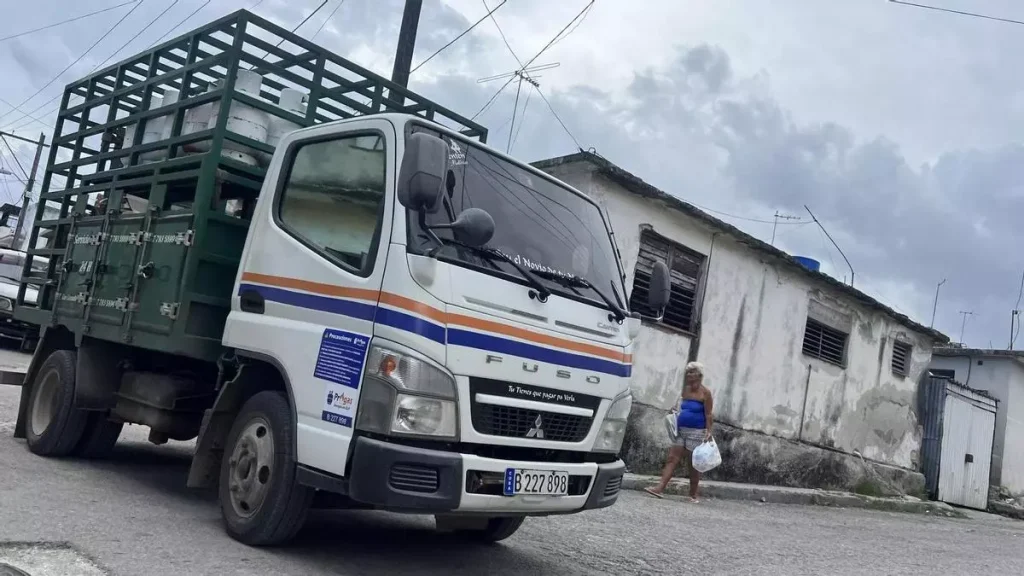
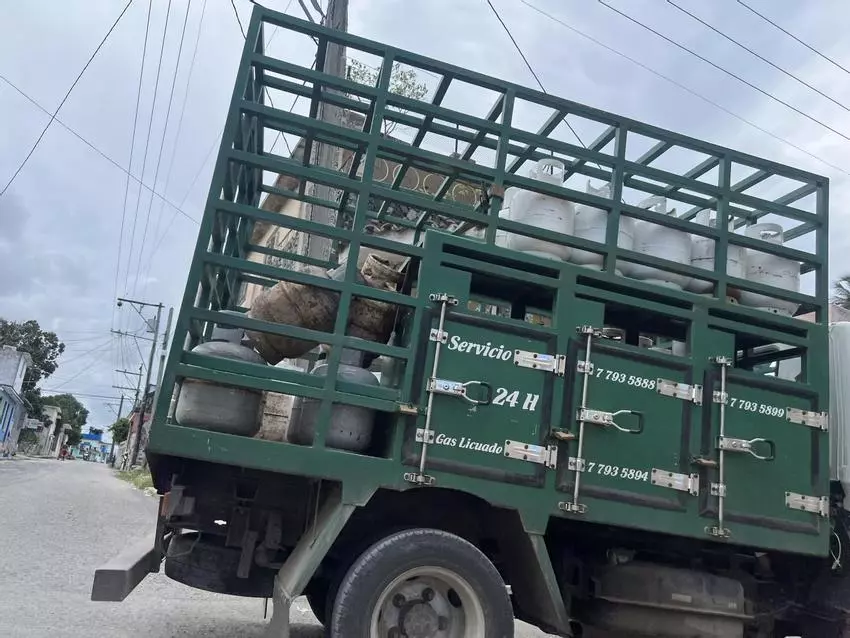
The gas cylinders it carries are not for everyone, and even less so for the impoverished pockets of most residents on that block. / 14ymedio
14ymedio, Havana, Darío Hernández, May 15, 2026 — A liquefied gas delivery truck passes through Guanabacoa, in Havana, under the longing gaze of most of the neighbors. The gas cylinders it carries are not for everyone, and even less so for the impoverished pockets of most residents on that block of Delicias Street, between Potosí and Gloria.
It is liquefied petroleum gas (LPG) that can be purchased through the online store Supermarket23, in dollars and from abroad, at a price of 29 dollars per cylinder, including home delivery. The recipient is a woman whose son lives in the United States. On the same street, people have no choice but to cook with charcoal, or eat only bread.
The sale of gas cylinders in Cuba recently took a turn when, for the first time, Supermarket23 began offering the product in dollars / 14ymedio
The sale of this fuel in Cuba recently took a turn when, for the first time, the digital sales platform began offering the product in dollars and outside the rationed system, amid this unprecedented energy crisis. This has marked a turning point in the commercialization of a product that, until now, had been tied to a state-regulated distribution system and available only in pesos.
It has also created a new social divide between those who have relatives abroad, who can avoid the long lines and uncertainty of the domestic supply system, and the rest of the population, forced to depend on a completely ineffective system. On this street in Guanabacoa, only one family is privileged.
Translated by Regina Anavy
______________________
COLLABORATE WITH OUR WORK: The 14ymedio team is committed to practicing serious journalism that reflects Cuba’s reality in all its depth. Thank you for joining us on this long journey. We invite you to continue supporting us by becoming a member of 14ymedio now. Together we can continue transforming journalism in Cuba.
The lowest price in TaTamania is $1,080 a month, but the law requires it to reserve 10% of the places for the “vulnerable” at a rate set by the State.
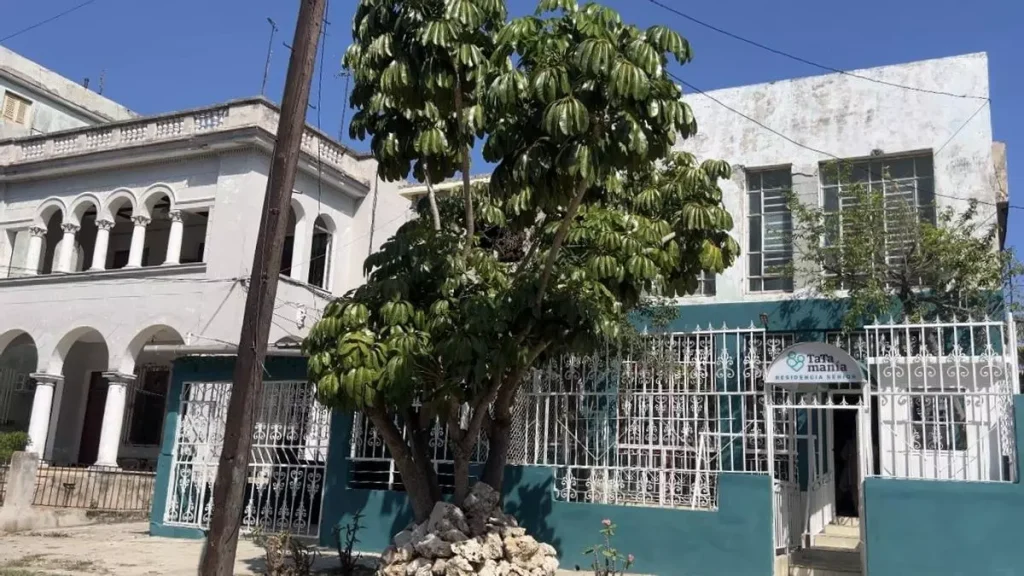
TaTamanía nursing home in El Vedado, Havana. / 14ymedio
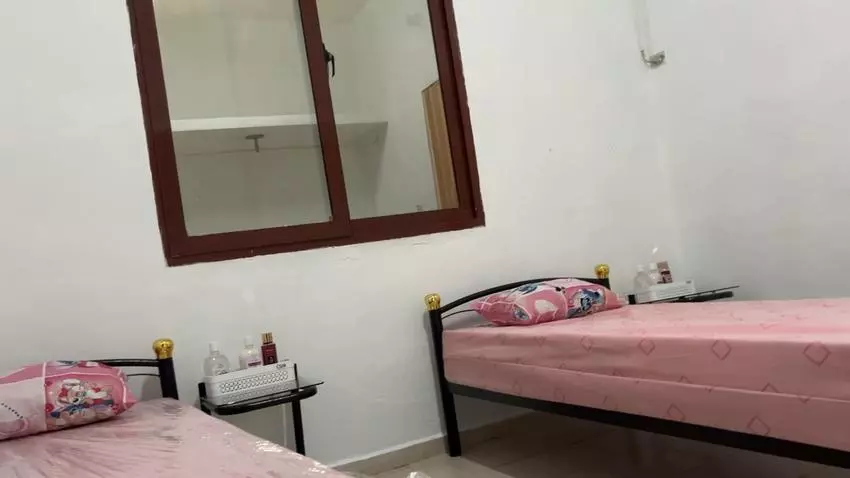
14ymedio, Havana, Dario Hernandez, May 3, 2026 / The TaTamanía Senior Residence is a hive of activity in recent days. “I’m not going to show you the whole house, I’m going to take you to a room so you can see how we have it equipped. Each room has its own bathroom, with hot and cold water. There’s a split air conditioner and a fan, because some of the elderly residents don’t like air conditioning…,” an employee of what will be the first private nursing home in Cuba tells 14ymedio.
“We are an agency that has been operating for four years. This permanent home service is a new experience for us, because we just received authorization, but we have been working in homes and hospitals for some time. So far, everything has gone well; we have quite a few clients. We are all healthcare professionals. Those who aren’t doctors are nurses, or if not they are are physiatrists. That’s why people seek us out,” the employee adds, alluding to the company’s experience in the Dominican Republic, as they boast on their social media. In fact, TaTamanía’s contact number has a Dominican country code, and the account where they request the required fee be deposited is also in Santo Domingo.
Its founders are pediatrician Yadira Álvarez and her husband, Rolando Pérez, a computer engineer
TaTamanía arrived in that country last year, opening a branch and establishing an alliance with Saritacelestec Homes, a group of senior living facilities. However, TaTamanía was founded in Guantánamo in 2023 and was the first private micro, small, and medium-sized enterprise (MSME) to offer this service on the island. Its founders are pediatrician Yadira Álvarez and her husband, Rolando Pérez, a computer engineer. It is registered with that name and purpose in the Ministry of Economy and Planning’s list of economic actors: “to provide care services for the sick, people with disabilities, and the elderly.”
On February 26 , legislation was finally approved formally authorizing the private sector to manage long-term and day care facilities after decades of state monopoly. The law was complemented by a resolution published in April —and which comes into effect on May 21—establishing the operating and oversight rules for these services, as well as the construction, personal care, and healthcare standards they must meet.
The law specifies that 10% of the places must be reserved for people continue reading
considered “of social interest due to their vulnerable status,” whose rates will be those set by the State for their own homes. If the beneficiary cannot afford the price, the Government will pay, the law states.
One of the rooms in the TaTamanía residence in Havana’s Vedado district. / 14ymedio
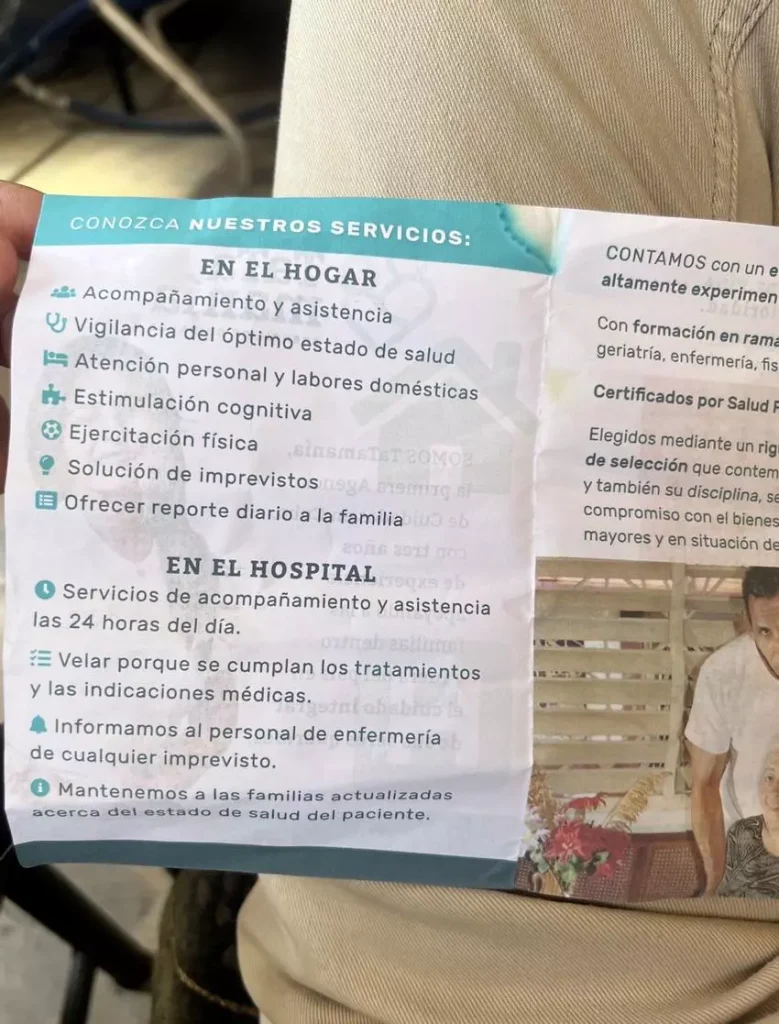
This is the Achilles’ heel of TaTamanía, whose prices are currently almost a state secret. The staff avoid answering the question of how much a private room will cost and simply hand out an advertising brochure outlining the services, which cover five main areas: accommodation, food – with adapted menus; hygiene and care – laundry, haircuts, assistance with bathing; medication and health; monitoring at the center and support outside of it; and activities – including physical and cognitive activities as well as leisure.
Finding out how much it costs is complicated, although if you search online you can eventually find the – restricted – profile that provides this information. The lowest cost is for a triple room, at $1.35 per hour, and the highest is for private rooms, at $1.75. At the Senior Residence in El Vedado, which a contributor to this newspaper visited, there are currently only double rooms available, whose price, according to this employee, is $1.50 per hour, totaling $1,080 per month if there are no additional charges.
The amount is unthinkable for any of the many elderly people living in Cuba without remittances from abroad, so the target audience can only be those with family living outside the island. Of the ten beds that TaTamanía has in its five double rooms, one would be reserved by law for a vulnerable person, who would pay the 1,260 pesos stipulated in the official rate, compared to the 535,680 pesos that — with the official floating exchange rate — the private room costs.
So far, TaTamanía has been very successful on the island. The very law that authorized the existence of private residences acknowledged in its preamble that “given the accelerated aging of the Cuban population, which demands increased care, and the need to expand the scope of social care services for older adults or people with disabilities, it is necessary to authorize the provision of such services by non-state economic actors.”
Some of the services offered by TaTamanía in Havana. / 14ymedio
This reform has allowed TaTamanía to expand services that, until now, could only be offered at home and in hospitals. “The elderly are assessed by a geriatrician who works three times a week in different municipalities, and, depending on that assessment, she determines whether or not they qualify to start here at the center. There are three options: permanent residents, daytime residents – the hours are from 8 am to 6 pm – who come and go on the same day, and temporary residents.” The latter are for those who stay for a short period of time while their caregiver is away on a trip.
It is noteworthy that the company’s advertising highlights some of its professionals as “doctors and nurses formerly employed in the public sector.” The salary of a nurse working at TaTamanía is unknown, but various accounts published in the independent press indicate that salaries in this market can range from 20,000 to 30,000 pesos for a nurse, compared to 5,000 to 7,500 pesos in the public sector. For nursing assistants, the salary can be up to five times higher in the private sector. To obtain certification, a course is mandatory, the price of which is set by the government at 500 pesos, and which TaTamanía has been offering in recent days.
The residence in El Vedado, with its ten beds, is a start, but the needs on an island where the serious problem of aging is compounded by the massive exodus of young people overwhelms not only the state sector, but also nascent private ones with serious difficulties in growing in a context of deep economic crisis.
______________________
COLLABORATE WITH OUR WORK: The 14ymedio team is committed to practicing serious journalism that reflects Cuba’s reality in all its depth. Thank you for joining us on this long journey. We invite you to continue supporting us by becoming a member of 14ymedio now. Together we can continue transforming journalism in Cuba.
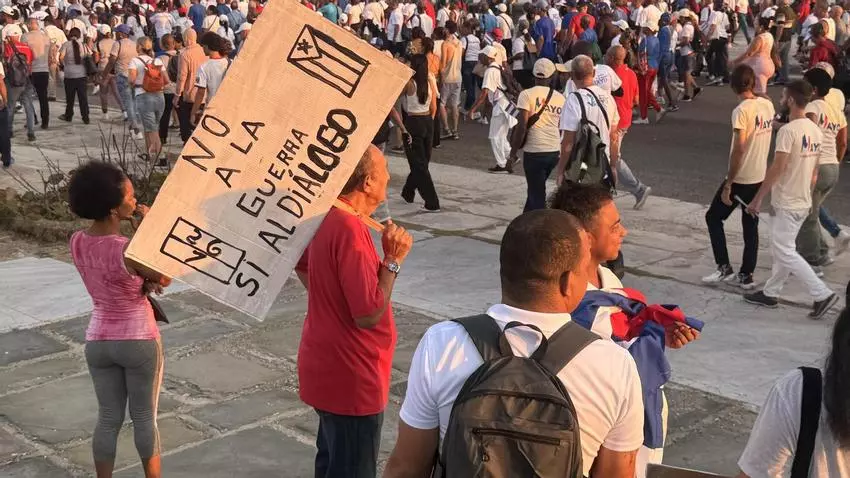
The peace petition campaign took center stage at the event, while official rhetoric alternated between calls for dialogue and threats of bloodshed and violence.
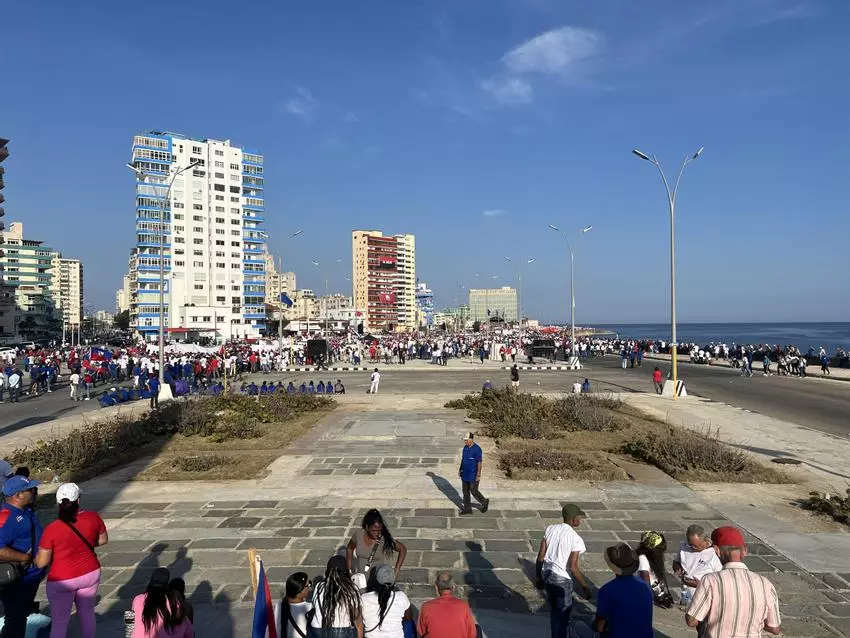
The new location offers the advantage of being easier for cameras to handle and less risky in the event of low attendance. / 14ymedio
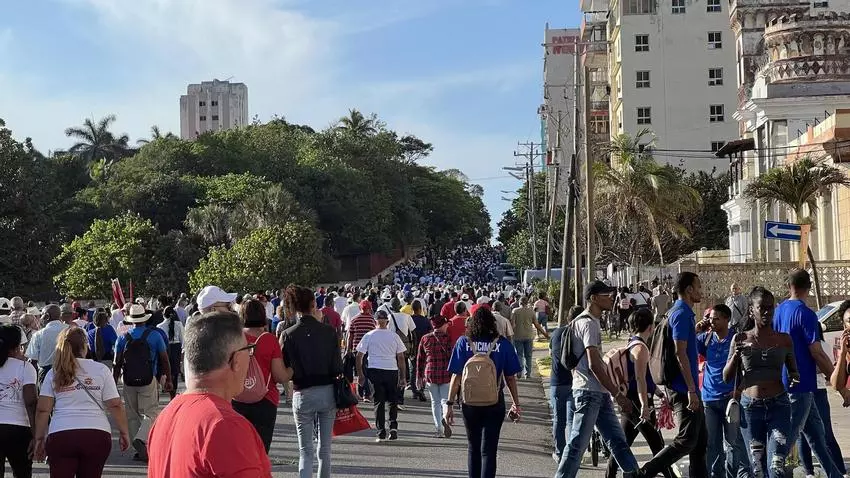
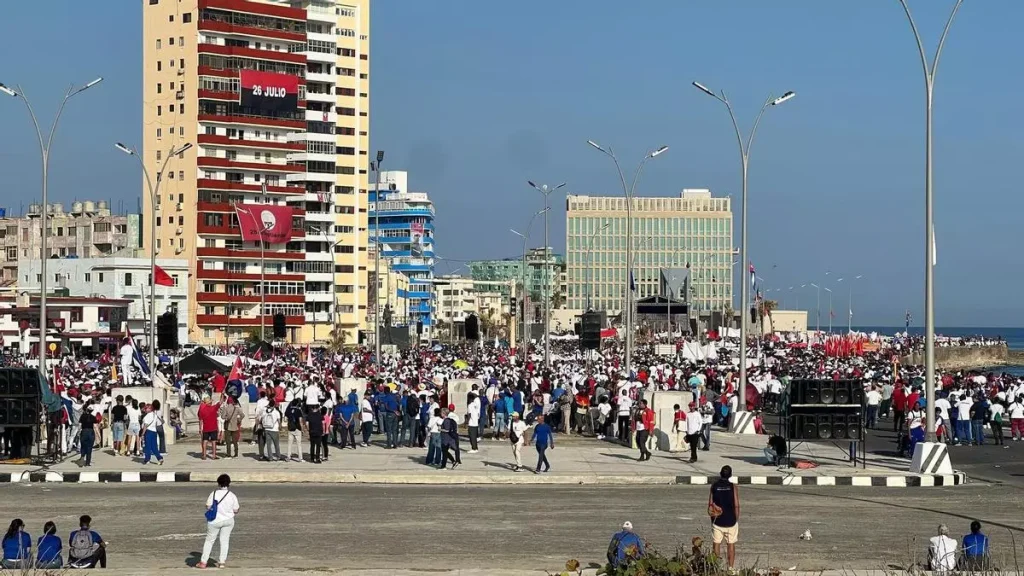
14ymedio, Dario Hernandez, Havana, May 1, 2026 / “Practically half the people had already left when it started,” says an attendee at the May Day parade in Havana. The José Martí Anti-Imperialist Tribune, in front of the U.S. Embassy, was once again this year the stage chosen by the government to represent a unanimity that is increasingly difficult to maintain.
The change of venue, traditionally the Plaza of the Revolution, was justified by the authorities as due to the energy crisis. But the new location also offers the advantage of being more manageable for cameras, less risky in the event of low attendance, and easier to transform, through close-ups and enthusiastic narration, into a picture of massive support.
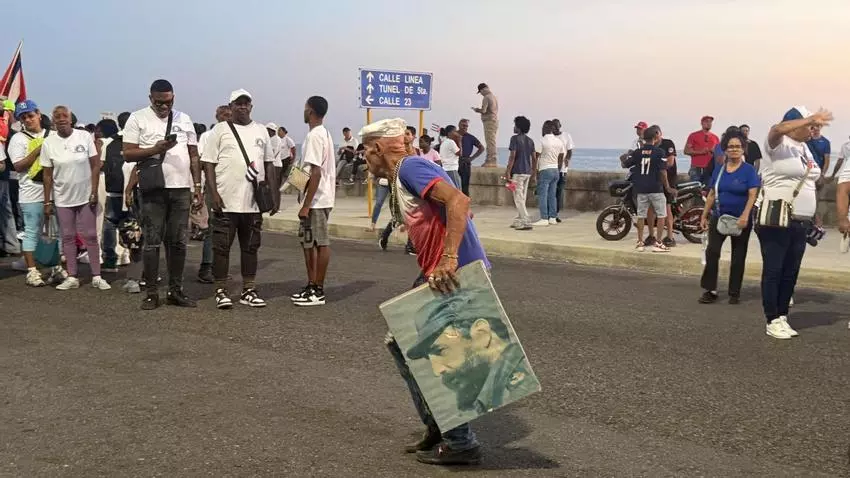
The event revolved around two obsessions: the fear of a US intervention and the desperate need to demonstrate popular support. Under the slogan “The homeland defends itself,” repeated ad nauseam, and with the centennial celebration of Fidel Castro’s birth as a backdrop, thousands of workers were mobilized from dawn toward Havana’s Malecón. The parade was presented by the official press as a combative, patriotic, and voluntary march. On the street, however, the scene resembled more of an obligation and a logistical operation than a display of civic fervor.
With the centennial celebration of Fidel Castro’s birth as a backdrop, thousands of workers were mobilized from the early hours of the morning. / 14ymedio
The demonstration had been organized from four points in Havana, culminating at la Tribuna. One of the attendees, who left from the gathering on Infanta Street around 6:30 a.m., described his experience to this newspaper: “There were mostly conga lines. I counted about five. The usual. Lots of shirts from state-run schools, and a ton of military personnel.” According to what he heard from the participants, many people had been called as early as 2:00 or 3:00 a.m.
When the main event began at 8:15 a.m., many of those invited had already left. “By the time it all started, after listening to Silvio Rodríguez’s entire discography, with the sun already beating down, easily half the people had left,” recounts one attendee. During the speeches, he adds, participants continued to leave. “When the groups came down and gathered on the stage, they stood there for almost an hour. And people were already exhausted.”
Despite this, official media announced the presence of 500,000 workers in the capital. However, the images do not support this figure. The density visible in photos and videos, the gaps in the crowd, the spaciousness continue reading
of the side areas, and the very layout of the location do not correspond to half a million people concentrated in that area, unless they spread out much more massively along adjacent avenues.
“They were stopped for almost an hour. And people were already exhausted.” / 14ymedio
“The government needed half a million. The images show considerably less,” one observer summarized. And, above all, they show something more damaging to the official narrative, because the crowd no longer seems convinced to even stay until the end.
Buses, work summonses, union orientations, and administrative pressure are all part of a familiar choreography at every political event of this magnitude. The ability to mobilize people remains one of the few organizational skills the state apparatus retains, even amidst the energy crisis and when daily public transportation continues to be a nightmare for millions of Cubans.
“Lots of people were drinking alcohol, ignoring the event,” the source said. In some sections, the honking horns seemed to be trying to compensate for the lack of enthusiasm with noise. “The avenue was empty, with the horns blaring,” the attendee summarized.
“They spoke of peace, of dialogue, and at the same time of whether the people were willing to die, of ‘give me my rifle,’ of whether they would collect blood.” / 14ymedio
The central moment of the event was the symbolic presentation to Raúl Castro and Miguel Díaz-Canel of the signatures collected in the “My Signature for the Fatherland” campaign, which, according to the state registry, totaled 6,230,973 signatures “for peace and sovereignty.” The figure was celebrated as proof of national unity. However, according to testimonies gathered, this support was not as voluntary as the propaganda proclaimed. “My neighbors and I have been practically harassed all week to sign. They came by three times in the last three days,” complained a resident of Diez de Octubre.
State television repeatedly insisted that the rally represented the true Cuba, in stark contrast to the discontent visible on Facebook, in independent media, at civic protests, and in recent polls. “On social media, they’re attacking the Revolution, but that’s not reality; this is reality,” said a commentator on Canal Caribe, while anticipating that criticisms would later emerge claiming that the attendees had been forced to go.
“The government needed half a million. The images show considerably less.” / 14ymedio
The official discourse inadvertently acknowledged the deep divide. “Everyone here is struggling: there’s no transportation, sometimes there’s not enough bread, but people keep persevering,” one commentator remarked. The statement was intended to extol resilience, but it ended up describing failure. In a country with prolonged blackouts, inflation, decimated wages, precarious transportation, impoverished retirees, and mass emigration that empties neighborhoods and families, calling on workers to celebrate their day feels somewhat mocking.
The day was also marked by a police crackdown on critical voices. The offices of this newspaper in Havana were surrounded by a police operation from the early hours of the morning to prevent journalists Yoani Sánchez and Reinaldo Escobar from leaving their homes on May 1st. This action confirms that, while the government attempted to project an image of popular support at the Anti-Imperialist Tribune, it was keeping independent journalists and dissenting citizens under surveillance and control.
The biggest contradiction lay in the language. The white shirts were presented as a symbol of peace, and the signatures as support for dialogue and sovereignty. But this pacifist appeal coexisted with a bellicose rhetoric of “the people’s war,” sacrifice, blood, and rifles. “They spoke of peace, of dialogue, and at the same time of saying the people are willing to die, ‘Give me my rifle,’ that they’ll collect blood. The discourse was quite incoherent,” the attendee concluded.
May Day parade in Havana: fewer people and more tiredness under the sun
______________________
COLLABORATE WITH OUR WORK: The 14ymedio team is committed to practicing serious journalism that reflects Cuba’s reality in all its depth. Thank you for joining us on this long journey. We invite you to continue supporting us by becoming a member of 14ymedio now. Together we can continue transforming journalism in Cuba.
A carton of 30 eggs is sold for 900 pesos, while on the street its price is around 2,800.
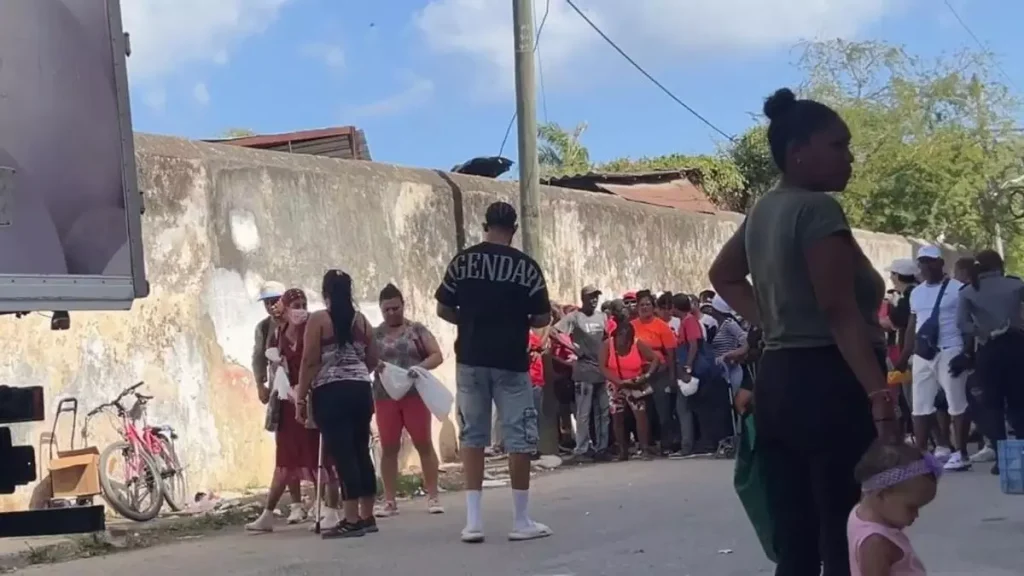
Two officers move near the line, next to the truck, making sure no one cuts in line and the disorder doesn’t escalate into a fight. / 14ymedio
14ymedio, Dario Hernandez, Havana, April 4, 2026 — The truck hasn’t even fully opened this Saturday and the line already curves around the wall that is barely standing. The scene repeats itself every time the sale appears in San Juan Bosco, between Delicias and Barreto Este, in the Havana municipality of Guanabacoa. Papers, bags, and invisible marks from other waits are scattered on the asphalt. It looks chaotic, but it is something very simple: the egg line.
In Cuba, saying it like that, in the singular, isn’t an exaggeration. It’s as if it were a mystical figure that, every so often, makes a miraculous appearance. When the egg arrives, it sets off the same stampede as always. People line up before the merchandise. First the rumor spreads, then people mark their places, then the vehicle appears; but by then everyone has to be ready hours before the product is even seen. And between one thing and another, the morning and patience are gone.
Everything happens at the corner of the Amphitheater, also known for another, less noble reason: the infamous dump across from the music school and the elementary school, the same spot where fairs are often held. There, in that stretch where garbage, children, and makeshift commerce coexist, the miracle appears.
Even with police and restrictions, more than half of those waiting will go without eggs.
This time, there are uniformed officers on site. Two agents are moving near the line, next to the truck, making sure no one cuts in line so the chaos doesn’t escalate into a fight. The last time the eggs came, there were arguments, disputes, and even pushing. Necessity can also lose its manners when the difference between buying and not buying can be measured in a family’s stomachs.
A carton of eggs [30 eggs] sells for 900 pesos, a real bargain. On the street, the same carton goes for around 2,800. It sounds simple, but that amount exceeds the average monthly pension of a retiree. The gap between the two prices accurately reflects poverty. In an economy continue reading
where almost everything is scarce, any opportunity becomes a business opportunity. That’s why, at first, some people bought several cartons. Now they only allow one per person. Even so, with police and restrictions, more than half of those waiting will go without eggs.
The line knows this, and that is perhaps the hardest part. No one is unaware that they can waste time and get stuck in that situation. That’s what happened to Mercedes the previous week. She got distracted, arrived late, and there was nothing left. “People mark their names before the truck arrives. If it didn’t show up that weekend, tough luck. If it arrived and you found out too late, even worse,” she tells this newspaper. In a matter of minutes, merchandise that in any reasonably normal country is bought without protocols, without witnesses, and without law enforcement officers, vanishes. Not here. Here, the egg is unloaded from a truck as if it were a celebrity.
Neither proximity nor waiting increases the number of egg cartons
There are children in the line. That detail, this 4th of April, carries more weight than it seems. It is Pioneer Day, a date that for years was filled with morning school assemblies, bandanas, propaganda, slogans, and promises of the future. But on this street, the future is reduced to the next meal. The children watch, get bored, run around a bit, and return to the adults. They grow up like this, among lines, learning to “mark,” “reach,” “solve,” and “wait their turn.”
The back door of the truck opens, revealing the merchandise, and people press closer, as if getting nearer might multiply the number of eggs. But neither proximity nor waiting increases the number of cartons. The math is simple and cruel. There is less supply than need.
“This is the real made marvelous,” says another neighbor who, perhaps, has never read Alejo Carpentier nor knows The Kingdom of This World. But “marvelous” doesn’t seem to be the precise word to describe the reality of the average Cuban. In San Juan Bosco, in Guanabacoa, the future fits in an egg carton.
______________________
COLLABORATE WITH OUR WORK: The 14ymedio team is committed to practicing serious journalism that reflects Cuba’s reality in all its depth. Thank you for joining us on this long journey. We invite you to continue supporting us by becoming a member of 14ymedio now. Together we can continue transforming journalism in Cuba.
Among the few options are standing guard duty and taking on garbage collection
“How are we supposed to relocate if most of our companies are affected by the lack of fuel, electricity, and transportation?” / 14ymedio
14ymedio, Darío Hernández, Havana, April 4, 2026 / “For you to tell me that after five years of university I have to go collect garbage is unbelievable.” The speaker is Miguel, a Cuban worker outraged by the government’s proposal to reassign employees to tasks such as waste collection rather than leave them “idle.” “They can go farm, produce, and collect garbage, those who are strong, healthy, and in optimal condition,” he snaps.
Barely two weeks after the Minister of Labor and Social Security, Jesús Otamendiz Campos, said that job “relocation” was the “number one priority,” complaints have multiplied, and layoffs, especially in tourism, have been massive. “That possibility isn’t for all regions,” says Yudith, from Melilla in the province of Holguín, a community that depends heavily on a sector that has been steadily collapsing over the past five years, culminating in the final blow: the suspension of the vast majority of international flights on February 11 due to a lack of jet fuel.
Most workers in that sector, she says, “were sent home as idle workers without guaranteed pay after that first month.” Ángel, formerly a bartender at a hotel in the heart of Holguín’s tourism hub, says the current situation reminds him of the worst of the coronavirus pandemic. “From working surrounded by people, making cocktails until two or three in the morning, to just watching reels on my phone, because everything here in Cayo Coco and Cayo Guillermo is closed,” he explains.
“That’s what they said during the COVID-19 pandemic, when companies and organizations did whatever they wanted. They left half the town unemployed.” / 14ymedio
“I’ve seen this movie before,” says Alfredo, also a worker in the sector. “That’s what they said during COVID-19, and companies and institutions did whatever they wanted. They left half the town without jobs,” he says. “How many people lost long-held jobs because of the so-called multi-employment policy, leaving many unprotected? Get ready for season continue reading
two.”
The good intentions expressed by the labor minister, who promised to “guarantee labor and salary protection” to safeguard workers’ rights and those of their families and to reassign as many state employees as possible to avoid layoffs, have remained just that: intentions. In that appearance on the Mesa Redonda program, Otamendiz mentioned alternatives such as remote work, telework, adjusted working hours, and reassignment to tasks like food production, communal services, and educational support amid a shortage of teaching staff.
State media, however, is trying to paint a rosy picture. This Friday, the newspaper Escambray boasted that in Sancti Spíritus more than 11,000 workers “have adopted new forms of employment included in current labor legislation.” Most of them, according to Yaiselín Quesada López, deputy director of the Provincial Labor Directorate, are “workers incorporated into remote work” (more than 2,600), followed by employees with “adjusted working hours” (over 1,440), those in “telework” (nearly 870), and only 460 in “other roles within the same entity”; that is, actually reassigned.
“My daughter hasn’t even received a call from the hotel to find out what she can do.” / 14ymedio
Revealing which sectors have been hardest hit by the crisis, Escambray also notes that the main areas where workers have been “reemployed” are tourism, transportation, the food industry, and construction.
“How are we supposed to relocate if most of our companies are affected by the lack of fuel, electricity, and transportation?” Iván asks skeptically. He points out that in the current context, telework and remote work are practically impossible, since most of these “relocations” are for jobs as guards and watchmen. “No one accepts them because of the low salaries and the risks involved, especially since most workers are near retirement age.” Very few young people, he says, are willing to take on guard duty. Nor does he see “an engineer or any professional working in solid waste collection. That’s a punishment.”
Arlenis, mother of a woman who was completing her mandatory social service in the tourism sector, suggests that managers are not transparent when assigning relocations. Her daughter, a mother of a three-year-old, still has no assignment. “Many managers are applying the rules however they want. Some prioritize years of service, favoring those close to retirement, while young people are the most affected. My daughter hasn’t even been called by the hotel to see what she can do.”
The current crisis has also led private businesses to reduce their working hours or close several days a week.
Years of service, however, are no guarantee of anything, says Lisandra. “My husband was declared idle verbally, without any official document. The first month he got 100% of his salary and nothing more. A worker with 42 years on the job and only four months away from retirement.”
In short, workers feel disappointed and warn of deception by the authorities, who force them to accept offers unrelated to their professional profiles and that are not appealing. “If you don’t accept, the State looks good, and the worker has to figure out how to survive,” Lisandra concludes. “It’s sad that the few workers who still believe in working for the State, from professionals to manual laborers, are being left out.”
The situation is not limited to the state sector. The current crisis has also forced private businesses to reduce hours or close several days a week. This is the case of the Fábrica de Arte Cubano, which has limited its opening to Fridays and Saturdays, compared to four days before. Restaurants like El Cocinero have reduced their staff, while images circulating on social media of others, such as El Sibarita, have gone viral due to the evident lack of customers.
COLLABORATE WITH OUR WORK: The 14ymedio team is committed to practicing serious journalism that reflects Cuba’s reality in all its depth. Thank you for joining us on this long journey. We invite you to continue supporting us by becoming a member of 14ymedio now. Together we can continue transforming journalism in Cuba.
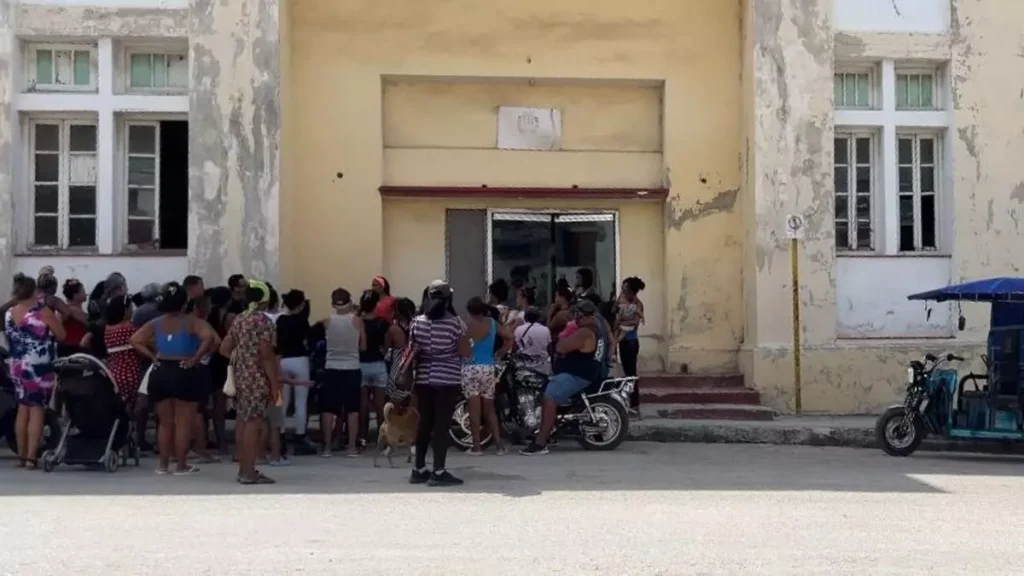
 Darío Hernández, Havana, July 8, 2026 – The protest is no longer taking place on a street corner or under the cover of darkness. In Regla, a Havana municipality battered by several days of blackouts and water shortages, residents have decided to take their demands directly to the doorstep of the local authorities. Dozens of people gathered this Wednesday outside the offices of the municipal Government and Communist Party, where they demanded answers from officials and police officers deployed at the scene.