Dialog, Why? / Orlando Luis Pardo Lazo

Screen Shot 2014-04-20 at 11.00.52 AMIn my country, for more than half a century, the government hasn’t dialogued with anyone. The Cuban Revolution doesn’t recognize any other interlocutor than itself, incarnated in the figure of the Maximum Leader, the now decrepit Fidel.

Executions, thirty-year sentences, perpetual exile. Whoever wanted to dialogue in Cuba ended up in one of these three categories of tropical totalitarianism.

Even today, in the 21st century, with a dissidence that has occupied certain alternative spaces of expression at the cost of much sacrifice, the Cuban gerontocracy has to die in power without having crossed words with anyone, except its own clan, the so-called “historic” generation.

Dialogue with the Communists, thus validating elections and other hypocrisies, is always a deception or a trick. The Communist have nothing to say, its not their international mission. They only follow the orders of a political party that incarnates their own dogma. They are soldiers dressed as civilians.

The idea is to take power at any cost and to never let it go in any peaceful way. There is a stage in which the Communists simply annihilate their adversaries. And there is another in which it is pertinent to sweet-talk the opponent with masquerade of a dialogue.

That is why Communist parties were illegal in so many countries for so long, a reasonable law by simple instinct of self-preservation. But today the democracies feel ashamed for being democracies–they carry a complex about being better in the face of the worst–such that no one is willing to defend the democratic establishment, either in the first world and in the developing nations.

So the Communists in Latin America, for example, although they are not all called that, now mine our social systems in blessed peace, and the entire continent tends as a bloc to violate citizens’ basic rights. Every caudillo legitimately holds his presidential seat for life, always with a red star in the logo of their respective parties.

Personally, I don’t believe that a party of violent inspiration and intolerant rhetoric should participate in the democratic game in any era. In Cuba, after fifty years of the Communist Party hijacking political life, it’s clear that there will be no democratic transition without the disintegration of the Party. And without making it illegal for a time perhaps similar to the despotic half-century of the Cuban Communists, whose contempt for dialogue soon became a contempt for decency.

In Cuba, a few days ago, TeleSur broadcast live and direct the dialogue between the opposition and Venezuela’s dictators. An opposition which unfortunately now has no other option than to sit at the dictatorial roundtable, provided it is authorized, and at the moment in which it best serves the powers-that-be to buy time to cauterize the popular protests, criminalize their leaders, and at the end of the day perpetuate themselves.

Venezuela’s rulers know well what they are doing. They are “dialoguing” for perhaps the last time. Soon they will not have to bother with these desperate deployments, where the entire planet is disturbed, but lazily so, by their hegemonic manias.

Soon the H in Havana will prove to be much more than a silent deadly letter. If there is no awakening among the international community, if the Venezuelan democrats who have given the best of themselves (their lives) are abandoned to their fate, as in their moment the world dismissed several generations of Cuban democrats, the made-in-Castro Communism will feel the impunity of falling, like a silent wasteland upon our future, always so futile in so many nations.

19 April 2014

Carromero’s Book and Death / Orlando Luis Pardo Lazo

The most sinister part of Death Under Suspicion is that it is the testimony of a man condemned to death, because Ángel Carromero reports that, before finally being deported to his homeland to serve the rest of his sentence in Spain (in December 2012), a Cuban State Security official warned him that if he ever told the truth, he would also be extrajudicially executed, like Harold Cepero and Oswaldo Payá.

You can believe Ángel Carromero now or not. It doesn’t matter. But there are thousands of dead for us to believe this horror of the Cuban official.

The Castro regime only lies in public. In private, never.

Read the entire article in English here.

2 April 2014

Me in Venezuela’s “El Nacional” / Orlando Luis Pardo Lazo

Yesterday, the OAS voted for much more than the silence of María Corina Machado. Yesterday the OAS sentenced her to the murderous loneliness of nasty socialism, which is the only one that germinates in America. Yesterday the OAS made itself an accomplice to a crime against morality which, like the coercive quotas of Venezuelan oil, muddies the miserable hands and tarnishes the reactionary faces of half a continent. Read the entire article here.

23 March 2014

For You, On March 9 / Orlando Luis Pardo Lazo

Washington, DC reminds me of the William Soler Children’s Hospital which, in my early childhood, was on the outskirts of Havana, until I got older and the city annexed it.

The buildings here, in places, have the same curved mystery of clinical solitude. They are made of glass instead of windows. One can look inside each room at the patients of the great little American capital. From the street, I would say that in every home here there is an oxygen tank over-illuminated to the point of sterility, like in the William Soler Hospital in Havana

The buses remind of the English Leylands from the seventies in Cuba. The Metro reminds me of the trains that back in the eighties were called “specials.” The girls in Washington are insanely beautiful. A certain Casablanca power irradiates every corner, especially now that winter is already dying and there are still enough green leaves and doors where we can find casual shelter for our hearts.

The world of the United States continues to be like an O’Henry story.

Forgive me. The truth is that it’s four in the morning and I assume it will be another sleepless night. We Cubans have provoked a massacre in Venezuela and the worst part in this sister nation is yet to come. Moreover, I am not in Cuba and so there are weeks when Havana always makes me cry at this hour.

The sky is red in DC, like that of my city illuminated by the threat of rain and the exhaust from the Nico Lopez refinery in Regla. A blazing chimney hijacked from Shell or Esso or Texaco more than half a century back: from owners who have already died at supposedly more proletariat hands, but today they, also, are dead. The refinery, like me, we have been left very alone, listing in a corner of the bay, two ghosts of insomniac smoke, inertial.

I don’t want to stay in this country. Here I’ll never watch a movie in context. Here I will never be able to stand on a corner and understand my position without turning on the GPS. Here Castro’s political police could murder me, like so many Cubans before and Venezuelans today, but at least they can’t harass or arrest me, if I’m  entirely missing the body is me. I’m tired of not being Orlando Luis. It’s even hard to write well, don’t you notice?

It’s twice as hard to be me here. The prize is that, when with you I write in Cuban, I’m back in my free Cuba mind, the same in which I was exiled these last five years, when I opened my blog in 2008 and the former Minister of Culture Abel Prieto immediately announced that I could never again publish on the Island.

Many planes fly in Washington, D.C. This is something new in Havana. Since I’ve been in the United States my asthma is cured, but every night I need air a little more. I’ve lived precisely in the air, borrowed, as in hospital rooms where there are no oxygen tanks nor memories. I know my lungs are going to close up entirely, the words, the nightmares of being back among my loved ones on the Island, the patience of never going back to see my house, of not saying goodbye because I left for just three weeks, then for three months, and then for three years. And now I understand it will be for three lives.

I know I’m surrounded by the damned circumstances of Cubans everywhere. “Damned” in the sense of “mischievous,” which was the word where we were kids and the first of our parents hadn’t died. Nor the first of us.

But I will be strong and light like a ray of sun. I will never leave you alone, it is a promise of a lost country. If I didn’t leave you alone being a prisoner there in Cuba, much less will I abandon you being free here and now. Just wait a little until this vertigo passes, this dizziness. Forgive me again, suddenly I really want to vomit.

The night is deep. The Spanish readings have something of a talisman. Every book now turns out to be a sacred object, like in childhood. A bible of truth. I believe I am more free. Expect anything from me. I love you.

9 March 2014

Venezuela Yes, Castro No / Orlando Luis Pardo Lazo

Orlando Luis Pardo Lazo

Venezuela, Life or Abyss: Let’s Not Abandon Them Now

Left-wing dictators never step down. Thus says a killer subject called Universal History.

Left-wing Latin-American dictatorships have no reason to be the exception. They institute eternal systems like the Castro dynasty to the humiliation of the Cuban people. Or they impose their feast of outrages before and after being deposed from power, such as in Chile with the radical regime of Salvador Allende. In both cases, the price of any change is criminally high.

Today, Venezuela is struggling in the streets between these two limits. They have already gone beyond both.

Translated by: M. Ouellette

8 March 2014

Let’s Go Venezuela / Orlando Luis Pardo Lazo

Beautiful Venezuela, so weighed down for such a long time with your own revolution. Is that what you wanted? No! That’s why we are going to save ourselves.

So much left wing higher education, so much nostalgia for Silvio Rodríguez and so many other dogs’ breakfasts of patriotic poetry, so much Castroism disguised as uncomfortable intellectualism, so many arms smuggled from Havana (the scroungers were previously the guerrillas), so much of our parents’ out of date Marxist social criticism. Is that what you wanted? No! That’s why we already saved ourselves.

Thanks, Venezuela.

Fidel Castro hates the Venezuelans as much as he hates Cubans a much as he hates human beings. Much more now, because he will die soon. And he hates the idea that millions and millions of people should live when he doesn’t.

The Venezuelans resisted Fidel too much, since January 1959 when the Commander in Chief proposed a diabolical pact to President Rómulo Betancourt: Venezuela will give Cuba all its oil and also its land as a trampoline for expanding the Revolution: in return, Fidel held out the promise of the destruction of the United States in a few years’ time and the damned imposition of the dream of Bolívar and Martí (he almost managed it in October 1962, at the cost of the Russian nuclear missiles, which showed that Bolívar and Martí, far from having dreams, had terrible nightmares). continue reading

Fidel tried military invasion of Venezuela several times. The continental consequences were negligible. No-one had any faith in his invasions. There were fabrications of Yankee imperialism and of national oligarchy. And the repressed people applauded that argument which seemed at the time to be conciliatory rather than totalitarian terrorism. Do you get it now, my dear Venezuela? Yes, I know, my strong and beloved little girl.

Also, it is possible that the Venezuelans felt a certain demoniacal left-wing pride at having been invaded time and again from the little island. You agree? Doesn’t matter.

Finally, when Fidel noticed that the world had changed, and that he had become older, he recruited thousands of Venezuelans, taught them his jargon of hate and thuggery, and he gave them the money to empower them (money which in fact came blood-soaked from Libya and Iran)

In this disgusting chess game, Rafael Caldera was the anonymous ally of Castroism, which cost many Venezuelan lives, including countless soldiers who were massacred in “accidents” authorised by Hugo Chavez and including later the assassination of Chavez himself when the very obedient one let the wild beasts know that he, Chavez, ought to be Fidel’s successor.

Beautiful Venezuela, so pregnant for so long, to give birth also to your own Revolution. Is that what you wanted? No! Now all of this is about to happen. Maybe it has already happened.

Today, those who don’t know about any of this, are angry on the streets in Venezuela.  They are a legion of heroes. They are life. They are beauty. They are truth. They don’t yet have the strength to give up. They are not going to surrender. Let’s not abandon them, please. We are not going to abandon them.

Those free Venezuelans don’t want to live a life without liberty until the end of time. They are as tired as the Cubans, but they still have a last breath of hope. Best of all, this little ray of light may also wake up us apathetic Cubans.

Free little Venezuelans do not want to exist in a caricature of Castroism without Castros. In Venezuela today the future is showing itself, for fuck’s sake, and they are slaughtering that future in full view of the world. Don’t abandon them, please.

Please

What do we do?

I propose some International Peace Brigades, to put together a Freedom Fleet in a couple of days, and then sail from all the ports in America to Venezuela, loaded up with all our love, and more love (and food and clothes and medicines to cure the wounds of torture, and arms to close ranks by your side, and togetherness in our looks that we will never turn our backs), and once we are there, relaunch a country where words are not a perverse parody, where despotism is just a relic of the Corpse in Chief cooking in his dreadful nearly ninety years old delirium in a buried, inhuman Havana.

Venezuela, I love you.

Venezuela, let’s go.

Translated by GH
21 February 2014

MY NAME IS WILLIAM SAROYAN / Orlando Luis Pardo Laza

Down K Street

My father had died, the good Armenak (1918-1998).

They laid him out at the funeral home at Calzada and K Street, not far from the municipal maternity hospital: the América Arias hospital.

Chapel K: it was my mother who chose the letter. It reminded her of her homeland, Armenia, which in native Armenian is actually spelled Armenika. It reminded her of my own father, the recently turned-into-cadaver Armenak. It reminded her of herself; a sudden widow named Takuji. In both cases, Saroyan.

My parents were cousins before being lovers. The Saroyan family excommunicated them: they did not tolerate such liberties within their clan. But they insisted.

Later, it was the occupied Armenika who excommunicated them: they didn’t tolerate liberties either within their false frontiers imposed by the Russians, the Turks and the Iranians. They insisted.

They crossed the continent and the ocean in one thousand and two layovers, until their ship wrecked by chance in another little homeland called Havana, bringing along with them Armenika as a stowaway, folded one thousand and two times along with the worthless currency in their pockets.

They insisted. But this time death at last excommunicated these two cousin-lovers from their so insistent passion for freedom.

At the most luxurious and lonely funeral home in Vedado, Havana, Cuba, my mother Takuji warned me:

Do not cry for your father, the good Armenak – she said. Cry for me, for not knowing how to die with him. Cry for you, for the shame that your parents have brought upon you; first, without a homeland, and now, without a family.

My mother Takuji pronounced it all in Armenian smooth and fragile, like her, a language that could not be any more dead even if no one in the world remembered it. It is the language of forgetfulness and of frustration as home: the same in the homeland as in the family, we no longer knew anything of our fate, uprooted with a country but without a destiny. continue reading

My mother Takuji continued:

-Vilniak- after centuries, she would pronounce my name in Armenian again – do not let your children get attached to their homeland, alright?

-Yes, mother- I replied.

-Vilniak- Takuji insisted- do not let your children love too much any son of the homeland, alright?

-Yes, mother – I replied.

-Vilniak -holding the weight of my head in her hands, as if she still did not give me any credit at all- do not allow your children to listen to you too much. Do not let them listen either to you nor to any of your mother’s words that will remain within you, alright?

-Yes, mother- I replied.

It was all uttered at midnight in her smooth and fragile Armenian, just like her weightless hands, just like Takuji all of my mother, just like the flaccidity of the dead man who was lying in the coffin, still, with his arrogant black tie made out of cotton from the homeland, dead, and yet actively listening to the two of us, as usual, unable to interrupt even our silence: Armenak or, as I hadn’t called him in ages, Papazik Saroyan.

At that time, my mother and I were Chapel K’s sole inhabitants, on the highest floor of Calzada and K street. In Vedado, 1998: Midnight.

It had also been centuries since the old Armenak died, just like the young Armenak. His terror of death made him play the role of a dying man for himself, even though he had always acted as a vital man in front of the others. So he exorcised his panic. So, and with the talking companionship of a sudden widow named Takuji.

My mother asked me to turn off the lights in the chapel. I went up to the light switch and jiggled it. Nothing happened. The lamp was set up to be permanently on.

With the help of a nail file, I was able to remove the only remaining screw in the breaker. I pulled the wires and they snapped easily. The light disappeared, or maybe it slipped away through the broken windows of the glamorous room.

I returned to my mother and the ceremonial candle, blended with the beeswax of our garden’s eternal beehive, it was flaming: Takuji had lit it.

-Vilniak- she had forgotten all the languages of the world and now she only counted on the Armenian: her native language, on Lake Van, 1921- no one ever dies his own definitive death. It will now be necessary to detach father from every single object, from every single space, and from every single memory, understand?

-Yes, mother- I replied.

-Vilniak-Takuji insisted- you know that no man is good as long as he doesn’t hear his name on the lips of a woman. And you know that every man ends up creating out of nothing she who will be his wife. You know it, and still, you resist. You do understand that this happens when you don’t love reality too much, right?

-Yes, mother- I replied

-Vilniak- holding with her hands the lack of weight of her own head, as if she still didn’t give herself any credit at all – why is it that we no longer speak Armenian?

She was right. We never spoke in Armenian anymore.

No, she was not right. We no longer spoke.

I raised my eyebrows. Stayed silent. I winced just to smile.

I closed my eyes. I bent over her chair and felt her breath. It was smooth and fragile, perhaps weary. Like smoked beech bark. In that precise instant I was woken by a shriek.

From the door of Chapel K, a certain functionary K was having a temper tantrum. He was shouting insults at us without restraint, pointing the rusty index finger of his left hand at us. How the hell had we turned off the light…? That was strictly prohibited by the administration. We were irresponsible, transgressors, almost to the point of deserving to be excommunicated by the funeral parlor: the sad old congenital old story of all Armenians.

Mr. K brought other Mr. K’s and together they restored the light: a lightbulb of at least one kilowatt. The big ceremonial candle was no longer shining besides the casket. Useless honey made out of processed flowers by worker bees.

My mother spit on her fingers and put it out. She thanked the State delegation in proper Cuban, and also in proper Armenian, she asked me to leave her alone for a good while. There was a mournful rancor in such propriety: a posthumous hatred that I hadn’t remembered in her.

-Yes, mother- I replied and left.

I left Chapel K for the little narrowed-shaped park on Calzada and K street, right where that republican funeral home’s building stood.

It was still El Vedado, 1998: just past midnight. Dozens of men were sleeping on the marble benches and over the lawn of dirt, all along Calzada street and almost to the Malecón. Their sleep seemed too deep for them to be able to mourn the dead bodies laid out on each floor of the funeral home.

A little old lady was selling coffee out of a thermos bottle and I went up K street, moving away from the sea. I was thinking about my parents’ life and about life in general. I remembered those books I was read to as a child about great Armenian characters. There are thirty-eight letters, and they are beauty to draw, but it’s even more lovely to pronounce them. I remembered the ever-snowy cap of Mount Ararat, just as seen from the capital city Yerevan: a now forgotten summit on the other side of the false border with the real Turkey. I remembered the genocide stories and the genetic hatred towards the word “Ottoman.”

Three blocks down I reached the grand avenue. I saw the little narrowed-shaped park nestled between Línea and K street. I got closer the bronze bust and it was, as usual, Mustafa Kemal Atatürk (1881-1938): founding father of the Turk nation and the one who grieving bade farewell to the Armenian un-nation.

Peace in the country, peace in the world: said the plaque almost unreadable due to the lack of light. I felt the Latin characters in relief. Pax turka, I thought, and I sat down under the lamppost without a bulb or maybe it was a lamppost with a broken bulb, who knows.

I was thinking and thinking and every so often a hearse without a casket would pass by heading east, via K street, illuminating me with the yellow spotlight of its headlights. It was a disproportionate and frightening peace. I was thinking and thinking about a dawn in a new world, when finally the dawn broke over the old world on this side of the Atlantic.

The sparrows were cheeping with rage, they were expiating all the frustrations from the night before. A couple of them settled over Atatürk’s metallic bald head. They were playing, and they most likely would end up making love today. Many times: quickly, but many times. Literally like sparrows.

The male sparrow wiped its beak over the bust, showed the arrogant black tie around his neck one last time and flew off to no sky in particular.

The female sparrow shook her tail feathers, dropped a copious liquid dump, and flew off as well, in the same direction previously traced by her male partner. Heading west, towards the municipal maternity hospital: the América Arias, literally from Armenika to America.

I ran back, almost galloping down K street until I reached Chapel K at the lonely and luxurious funeral home on Calzada street.

My parents wake would take place on that winter Friday at eight-thirty in the morning.

I would be the only attending mourner and I found it impossible to give up now.

That’s it.

Translated by W. Cosme 

20 December 2013
Communique from the Venezuelan Resistance / Orlando Luis Pardo Lazo

Sunday, February 23, 2014

OFFICIAL COMMUNIQUE NUMBER 1 FROM THE VENEZUELAN NATIONAL RESISTANCE

Resolution concerning the position of Venezuelan citizens who continue street protests against the Castro-Communist regime that operates illegally in Venezuela.

WHEREAS:

The noble people of Venezuela, sick of the treason by the militaristic cabal and Castro-Communism agents who control power, went out February 2, 2014 in the state of Tachira to protest against insecurity, inflation, scarcity and plundering of Venezuelan resources and were repressed and attacked by the repressive forces of the regime, causing dozens of injuries and several detentions.

WHEREAS:

The national discontent, in the face of the oppressive economic crisis unleashed by the Castro-Communist Agent Nicolas Maduro Moros, after the devaluation of the currency, permitting the monthly plundering of a billion dollars in order to maintain and reconstruct the economy of the island of Cuba, attacking and destroying Venezuelan enterprises, subjecting the people to outrageous shortages that keep them demoralized and frustrated in long lines in order to obtain basic products, caused the rest of the country and some 50 cities to join a national protest today converted into a RESISTANCE. continue reading

WHEREAS:

The military, Diosdado Cabello, which occupies the presidency of the National Assembly and the engineer Rafael Ramirez, in the presidency of the PDVSA, are co-authors of the nation’s economic damage, after being the executive arms of each measure that directly benefits them and their corrupt groups embedded in the exchange control authorities.

WHEREAS

The protests that have had a peaceful character and that have been attacked cruelly by armed groups of mercenaries and assassins in the pay of the regime, gathered in the so-called social collectives, identified as Tupamaros, La Piedrita, Carapaicas, and another 92 groups with an average of 100 to 120 members each, have caused hundreds of injuries, damage to private property and residences throughout the country, student deaths, which demonstrates a Terrorist and Assassin State with the purpose of generating fear and chaos in the civil population that today heroically RESISTS in the streets the crimes against humanity to which they have been subjected.

WHEREAS:

Already ten Venezuelan citizens, students, have been assassinated in the streets of Venezuela in the middle of civil and peaceful protests.  Crimes committed by the regime’s mercenaries, calling themselves “collectives” or the Bolivarian National Guard, bodies that act together and are what sustain the criminal and traitorous cabal clinging to power.

WHEREAS:

There are hundreds of complaints of unlawful arrests, outside the legal order, warrantless searches, torture of detainees, students subjected to reporting regimes, the illegal incarceration of the citizen Leopoldo Lopez, national leader of the Popular Will party, attacks on political parties and persecution.

WHEREAS:

Amid the regime’s desperation it has sought to develop with the political agents of the opposition, gathered in the Board of Democratic Unity, who call for deposing the civil street protests, offering A DIALOGUE as the only exit from the massive social, economic and political crisis that Venezuela is living through and that said political agents have failed in those efforts.

WHEREAS:

The regime has implemented a ferocious censorship and media manipulation in order to prevent Venezuelan citizens from being up to date on the reality of events, subjecting dailies to newsprint shortages, purchasing through intermediaries audio-visual means of communication, radio and written, using Conatel as a censor entity and repressor of radio broadcasts in almost the whole country in order to try to hide from the world the crimes they are committing.

RESOLVED:

FIRST:

We decide to maintain, intensify and redouble the efforts of the protest action, now become NATIONAL RESISTANCE, until the following objectives are reached:

a) We demand that the members of the armed collectives and those loyal to Castro-Communism be disarmed, investigated and incarcerated and that the para-military action of these groups, which has cost lives, be stopped.

b) We demand that citizens Jose Gregoiro Vielma Mora and Francisco Ameliach, both governors from the states of Tachira and Carabobo, respectively, be subject to immediate investigation for being the masterminds and around whom revolve the action orders of the collective mercenaries who kill students in cold blood.

c) The RESISTANCE in the streets will continue in protest, the petition for SURRENDER AND JAIL for the citizens mentioned in point (b) of the First Resolution.

d) We demand at stop to the regime’s attack on all the productive enterprises established in the country, in all areas. The primary sector, manufacturing and commerce, so that the lines of production may be re-established and to avoid the famine that Venezuela has entered.

e) We demand the criminal and independent investigation of citizen Diosdado Cabello who has been at the front of the military operations of the Bolivarian National Guard against the noble people of Venezuela, committing crimes against humanity, registered and documented, carried out by officials of said repressive body.

f) We demand the removal of all the high command of the Bolivarian National Guard, chiefs of the various detachments, to submit them all to investigation as being suspected of committing war crimes against the people of Venezuela.

g) We demand the removal and criminal investigation of citizen Rafael Ramirez, president of PDVSA, primarily responsible for the economic debacle that lives on in the country, who is at the head of the regime’s economic decisions by being the vice-president of the economic area of the PSUV, singled out as promoting and being part of the corruption in Cadivi, the shipment of oil tankers without any record to criminal regimes like that of Syria, producing inflation and poverty in Venezuela.

h) We demand the irrefutable and non-negotiable surrender of citizen Nicolas Maduro Moros from position as president of the Republic, who must submit himself to investigation and first of all demonstrate his authentic Venezuelan nationality, clarifying to the country with reliable proofs all the events related to the physical disappearance of Lt. Col. Hugo Chavez who held the presidency in order to clear the legality of his ascendance to power being Vice President in the administration of the deceased President.  To be investigated in relation to Cuba and the rest of the Latin countries that receive oil perks from Venezuela in order to buy political consciousness and votes in the Organization of American States (OAS). To be investigated for his participation in orders centered on the mercenary collectives to massacre Venezuelan citizens.

i) We demand the FULL LIBERTY of all fellow students and civilians detained in the protests and the investigation of each case of torture, raid or persecution and to establish responsibility and criminal punishments for each soldier implicated.

j) We demand full freedom for all citizens considered political prisoners for years, including the leader of the Popular Will and the end of the persecution of the rest of the leaders of that party.

k) We demand the dismissal of the entire board of directors of Conatel and their prosecution for violating Human Rights in accessing the information of every citizen, after the repressive censorship that it has imposed on the people in the last two weeks.

l) We demand the mass surrender of the High Military Command, generals traitorous to the people of Venezuela, repressors and assassins, suspected of being narco-traffickers, submitted by the foreign military and civil forces of occupation from Cuba.

m) We demand the immediate expulsion from Venezuela of all the Cuban Castro-Communist agents present in the operations against civil, political and economic liberties of Venezuela.

SECOND:

We demand the creation of an Independent National Commission for Criminal Investigation, legally binding, with protection so that it may carry out the investigations that they manage to take before national and international justice according to each case of those responsible for the destruction of Venezuela and the crimes against humanity.

THIRD:

We declare that the Democratic Unity Board (MUD) is not representative of the NATIONAL RESISTANCE, we hold political support in that instance, nevertheless all the protest and resistance operations do not depend on any policy of MUD, by which none is authorized by the demonstrations in the streets to establish dialogues or negotiations with the regime in the name of the RESISTANCE. Any kind of decision that MUD wants to express before the regime must be framed with these points:  a through m of the Number One Resolution of this communique.

FOURTH:

We reaffirm that the RESISTANCE will not cede before any kind of negotiation that involves the traitorous members of the country maintaining their positions in power and establishing negotiating tables to investigate and establish penalties. The people of Venezuela remember that this tactic was applied in the 2002-2003 crisis, manipulated by José Vicente Rangel, when he established the Negotiating Table, not allowing the so-called “truth commission” to investigate the events of April 2002, rather they used it to unjustly imprison scapegoats, political prisoners today.

FIFTH:

We urge all civilians, doctors, teachers, professors, public employees, workers, employees, independent civilian, grassroots residents, middle class and wealthy to  maintain RESISTANCE IN THE STREETS WITH PEACEFUL PROTEST METHODS AND THAT ARE THAT ARE PART OF THE OPERATIONS THAT HAVE BEEN DEVELOPED TO RESIST THE CRIMINAL SCHEME OF THE CASTRO-COMMUNIST REGIME WHOSE FACE IN VENEZUELA IS NICOLAS MADURO MOROS.

In the streets of Venezuela, on the 23rd of February 2014

 Translated by mlk

24 February 2014

Free Enterprise Without Freedom / Orlando Luis Pardo Lazo

FREE ENTERPRISE WITHOUT FREEDOM

Orlando Luis Pardo Lazo

“Invest in Castro, it does not matter: Castroism will condemn you. . .”

Cuban exile mogul, Alfonso Fanjul, has traveled to Cuba several times between 2012 and 2013.  Recently, he has declared that there’s a “soft spot in his heart” and that he has an “open mind” towards the prospect of investing his fortune in the Island. Given the “right circumstances”, and “legal grounds”, and on the basis of an “appropriate framework.”

That’s only one example, of course, but it is far from being the only one among millionaires in the Cuban exile. And it wasn’t long before this caused a media outrage, including at the highest levels of American politics. Republican Senator from Florida, Marco Rubio, said he was “surprised and disappointed” with Fanjul’s change in perspectives, a person who for decades supported many initiatives that were forthrightly anti-Castro.

The key question at the current historical juncture would be the following: Do human rights violations in Cuba even remotely concern the economic interests (whether foreigners or Cuban exiles) that loom over the island?  First of all, Havana’s government doesn’t even allow Cubans living on the island to invest or associate peacefully in their own country. According to foreign interests, it seems we don’t even deserve it. We’ve already waited half of century a despotism, we might as well wait out one hundred years of impunity.

European politicians take advantage of the circumstance to start asking for the same. Let’s give our support to Castro, and let Castro deal with the Cubans.

And just like that, they aim to place themselves on the best possible terms with the dictatorship, with the idea of eventually “democratizing” it through gradual blows of solvency.  They bet on the miserliness of the Chinese model based upon Raúl Castro’s stagnant reforms, supposedly with the idea of not upsetting the Moribunds-in-Chief, and avoiding radical tendencies that could end up turning the Island into a Caribbean North Korea.  Ha!


But this is a false argument, the demagoguery of the Castro lobby complicated with donations to the presidential campaign every four years. In practice, Cuba has already shown the voracity of the markets of Beijing, as well as the criminal despotism of Pyongyang. Perhaps through this justification these tycoons expiate their totalitarian guilt of ending up talking about profits with former Castro supporters and former Castro enemies, indistinguishable from each other in the face of post-Castroism.

What’s surprising is that the international entrepreneurs insist on not acknowledging that  in Cuba their investments will be more than insecure. Unless they’re all moles of State Security since the beginning of the Revolution, or they had been lured/blackmailed by it (like the Catholic Cardinal). In fact, more than a few investors have ended up being accused of corruption and had all their assets confiscated. In the best case, they were deported to their country of origin without indemnity rights. In the worst, they’re still in prison (without trial), or dead just like the mafia that was left behind by the thug Max Marambio in his stampede-like get-away.

Amassing wealth through the humiliation of others is a feudal formula. Above and beyond the rule of law, decency is the source of all legitimacy.

John Stuart Mill’s phrase is well-known: “One’s own freedom ends where the freedom of the others begin”. In the case of the foreign business dealings with the Castro regime, that quote can very well be re-inscribed as followed: “One’s own freedom ends right where the freedom of others is ended.”

 Translated by W. Cosme

10 February 2014

Please send me a picture of the city I once knew… / Orlando Luis Pardo Lazo

18a 18b You are invited to personalize my utopictures. Just @sk me which slice of Habana you want me to shoot. At the end most of your wishes will be published back in this collective bluff. Let me know what you miss most, including Habana people, and in revenge I will cut this city in pieces of pics for you. You’re welcome!
18c 18d
Hola, Orlando:
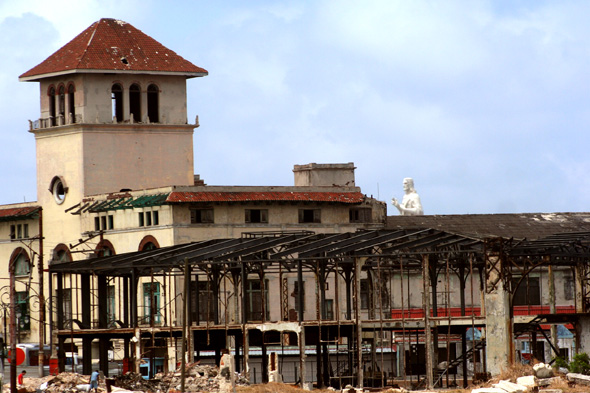
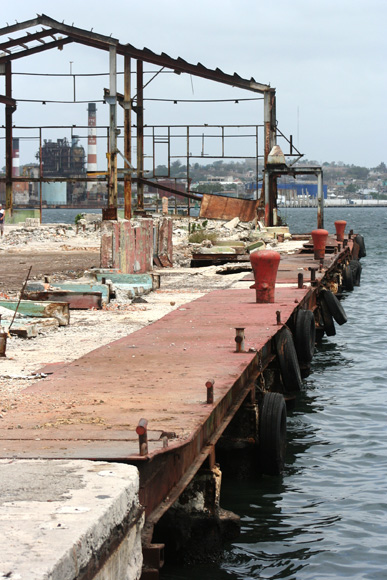
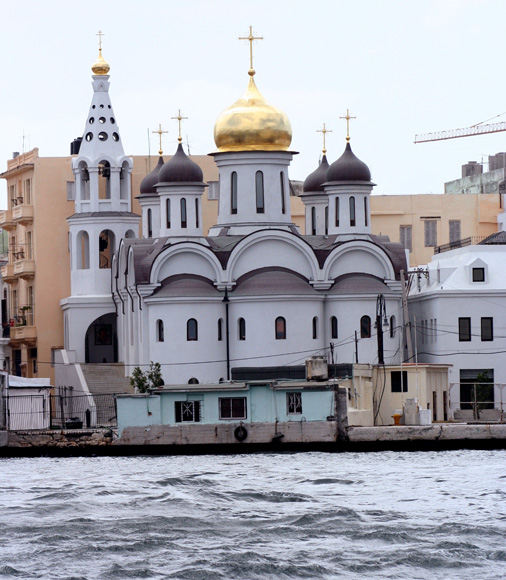
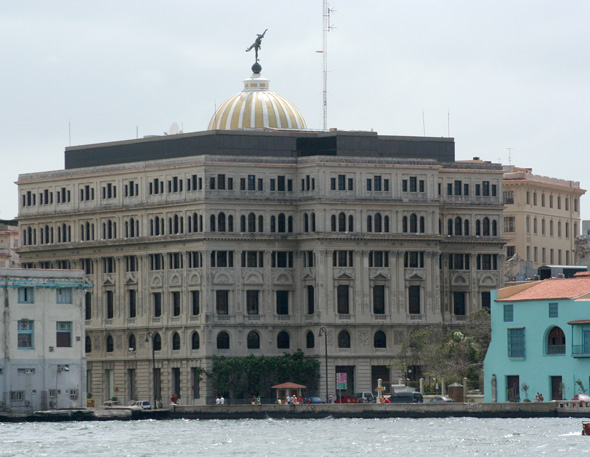
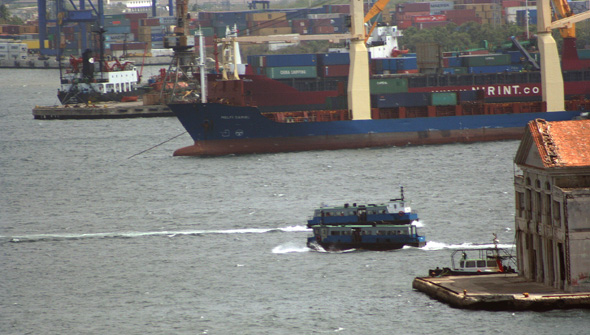
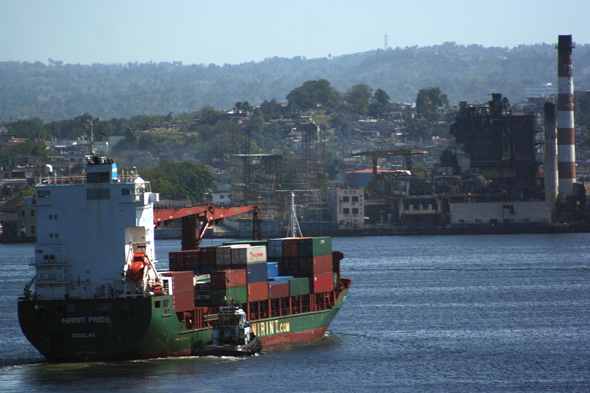
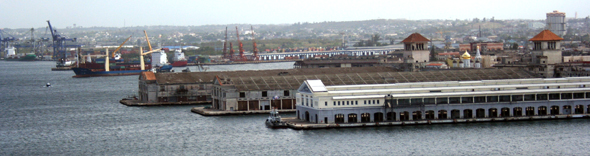
Me too, if it’s possible, I would like a little piece of your Havana for me. It would be the Port of Havana, the bay, the view of Regla, Casa Blanca, maybe from the little ferry, whatever you can.
Gracias,
Fransis.

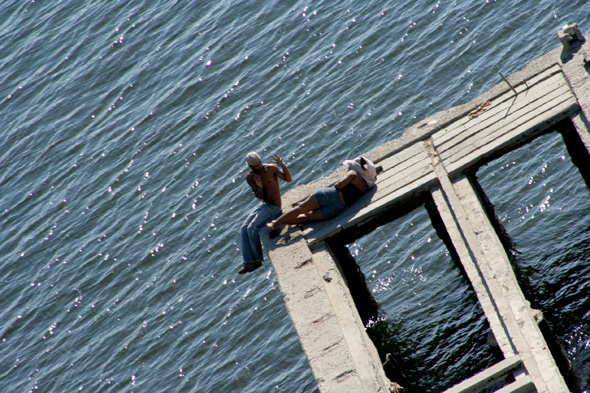
18e 18f Send me a card from Habana Bay. Just send me a card from Habayna. Untrue colors of twilight. Ruins and glam cathedrals. Tires tied with chains to the borders of this island without frontiers, hopefully to make it float astray. Nowhere isle. Ecological chimneys of Neversmoke. Hermetic Hermes on top. Madera’s marble Jesus staring us in proud abandon since December 1958. Raw architecture. Iron bones of underdevelopment. Public boats to cross from coast to coast in five definite minutes. Fuel smell. Containers. Hills as blue phantoms beyond horizon. I’ve heard it all, I even remember it well. But still send me a card from Habana Bay. You just send me a card from Habayna.
18g18h1