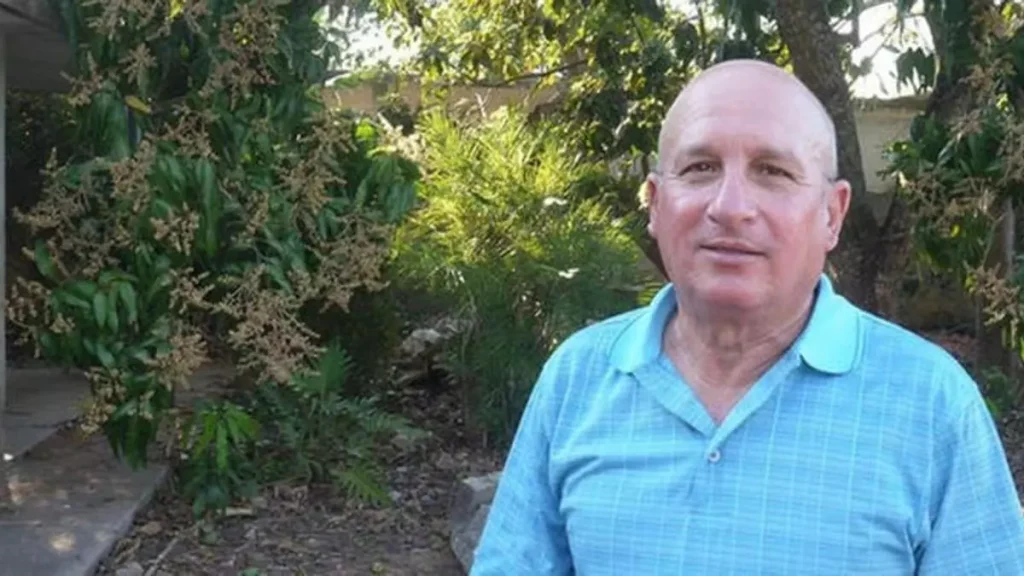
 14ymedio, Havana, October 27, 2026 – Cuban political prisoner Félix Navarro is experiencing a “serious health situation” after spending more than two months in isolation in a cell in the infirmary of Agüica prison, in Matanzas. The legal advisory organization Cubalex denounced this Monday that “his stay in that cell is not part of any medical treatment and is being used as a covert punitive measure.”
For 66 days, the organization added, Navarro has not received “the required medical attention,” and it warned that “in the case of a 73-year-old person with diabetes and other ailments, the authorities must specifically assess the risks that prolonged separation may pose to his health. If isolation does not serve a genuine medical need, if there is no adequate health supervision, or if it is used as punishment, the situation raises additional concerns about the legality, necessity, and proportionality of the measure.”
Cubalex also emphasized that medical care in prison “cannot depend on the will of officials or be used as a mechanism of pressure.” In an extensive report, it added that “people deprived of their liberty retain their right to health, and the State has an obligation to guarantee them care that is essentially equivalent to that available in the community, without discrimination based on their political opinions or the nature of the charges brought against them.”
For this reason, the NGO stressed that the treatment of Navarro “demonstrates the continued use of prison isolation and medical negligence as systematic mechanisms of repression. When a sick person remains isolated for weeks without receiving the care they need, this is not merely a disciplinary or administrative matter: their health, dignity, and right to humane treatment are at stake.”
The treatment of Navarro “demonstrates the continued use of prison isolation and medical negligence as systematic mechanisms of repression”
The organization reported that in October alone, it has documented 18 incidents involving punishment or isolation cells in the country, placing the month among those with the highest incidence this year. “A total of 95 people have been victims of these practices in Cuban prisons, with alarming repeated cases involving political prisoners such as Danisbel Labrada, Fausto René Ramos, Ediolvis Marín Mora, and Virgilio Mantilla,” Cubalex detailed. The organization insisted that these practices flagrantly violate the UN’s Mandela Rules, which guide states in the treatment of people deprived of their liberty, and the Convention against Torture.
Félix Navarro, who is serving a nine-year prison sentence on charges of “assault, contempt, and public disorder,” was the victim of a “brutal beating” last April at Agüica prison.
Saylí Navarro, the activist’s daughter, who is also imprisoned and was sentenced to eight years for the same crimes as her father, as well as for “disobedience,” disclosed in a telephone call that her father had been dragged more than 100 meters “handcuffed, with his hands behind his back, to a punishment cell in the area known as the Vivac.” There, he was beaten and kicked in his right foot. “Navarro was confined to an isolation cell for nearly two hours” afterward.
The opposition activist was left with his face “torn on the right cheek, the mark of the officer’s hand from when he tried to silence him by force, and marks on his wrists caused by the excessive pressure of the handcuffs,” his daughter described at the time in a statement published by Martí Noticias.
The opposition activist was left with his face “torn on the right cheek, the mark of the officer’s hand from when he tried to silence him by force, and marks on his wrists”
In response to the assault, Amnesty International demanded days later the “immediate and unconditional release of Félix Navarro, urgent guarantees for his life and physical integrity, immediate contact with his family, and justice for this serious human rights violation.”
The organization stated on X that repression in Cuba now has “another dimension: punishment directed at families who seek information, provide care, offer support, and denounce abuses.”
It also stated that “prisoners of conscience in Cuba face arbitrary imprisonment, incommunicado detention, threats, punishments, and other forms of mistreatment for peacefully exercising their rights. Their relatives, especially women, also often bear the burden of harassment, anguish, emotional exhaustion, and institutional abandonment.”
Both Félix Navarro, who was among the prisoners of the 2003 Black Spring, and his daughter were arrested on the morning of July 12, 2021, when they went to the police station in the Matanzas municipality of Perico to inquire about the fate of those detained the previous day, following the historic 11 July 2021 demonstrations.
Translated by Regina Anavy
______________________
COLLABORATE WITH OUR WORK: The 14ymedio team is committed to practicing serious journalism that reflects Cuba’s reality in all its depth. Thank you for joining us on this long journey. We invite you to continue supporting us by becoming a member of 14ymedio now. Together we can continue transforming journalism in Cuba.