The Castellanos project, in Pinar del Río, was operated by a joint venture involving Geominera, which was sanctioned by the U.S.
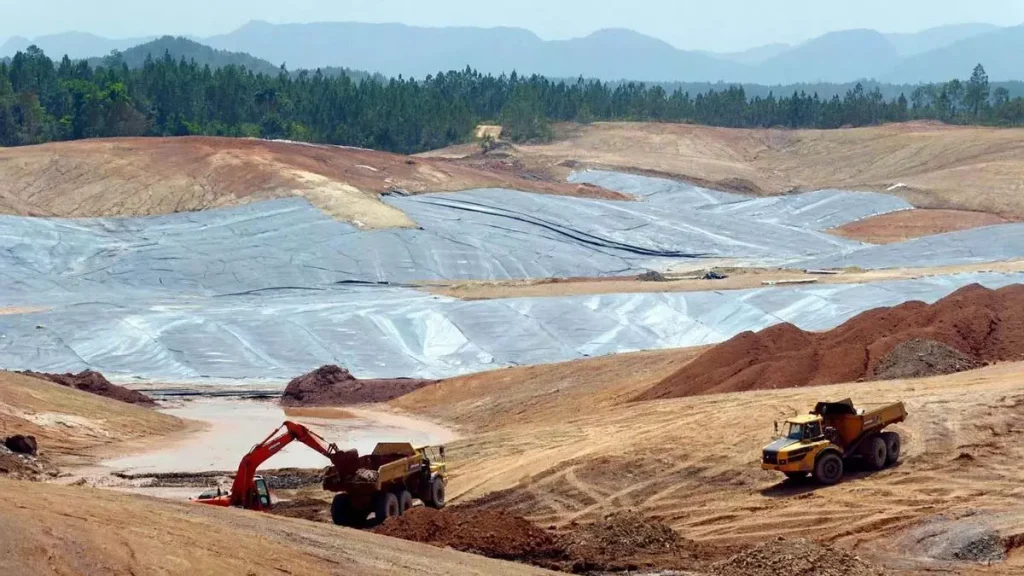
 14ymedio, Madrid, October 27, 2026 – The Ministry of Energy and Mines has ordered the temporary closure of the Castellanos-Santa Lucía Polymetallic Project, in Minas de Matahambre, Pinar del Río. The project was operated by the joint venture Minera del Caribe S.A. (Emincar), a partnership between the state-owned Geominera and the Dutch company Trafigura.
The shutdown, scheduled to remain in effect until January 30, 2027, comes four months after Trafigura stopped shipping zinc concentrate from the Pinar del Río mine to its customers, amid fears of Washington’s sanctions against foreign companies linked to the Cuban regime.
Although the closure of the mining project was announced this Monday, the Ministry’s decree was published in the Official Gazette on October 2. Resolution 49 attributes the decision to close the Castellanos mine to “external causes related to logistics, exports, and the energy deficit” that make it impossible to continue exploiting the deposit and processing the mineral.
The news has not gone down well with residents of the community. In comments on the official announcement, they complained about the loss of jobs for “thousands” of workers and the additional employment incentives provided by the joint venture. According to testimonials on social media, the project had provided jobs for many unemployed people in the area. Others criticized the environmental damage caused by the industry and the exploitation of natural resources without the population ever seeing the results of the profits, which went exclusively to the State.
The decision to close the Castellanos mine was due to “external causes related to logistics, exports, and the energy deficit”
Castellanos had an annual production capacity of approximately 100,000 tons of zinc concentrate and 50,000 tons of lead concentrate, almost all of which was destined for the Chinese market. In June, Trafigura informed Chinese smelters that it would replace those shipments with supplies from other sources because of “growing pressure from the United States.” The company said it continued to supply its customers “in compliance with the sanctions applicable to it.”
Although Trafigura was not itself directly targeted by sanctions, the Cuban state-owned company Geominera, which owns 51% of Emincar’s shares, was directly sanctioned by the U.S. Office of Foreign Assets Control (OFAC) last June under Donald Trump’s May 1 executive order, which extends the threat of penalties to any foreign company doing business with sanctioned entities.
Along with the closure of the Castellanos project, the Ministry of Energy and Mines also terminated Empresa Geominera Pinar del Río’s geological exploration concession in the Arcilla Malcasado area. Resolution 52 of 2026 declares that the area may be subject to “new applications for mining activities.”
Along with the closure of the Castellanos project, the Ministry of Energy and Mines also terminated Empresa Geominera Pinar del Río’s geological exploration concession in the Arcilla Malcasado area
Washington’s offensive against the Island’s mining sector is part of the pressure the Trump administration has exerted on the Cuban regime this year, demanding profound political and economic changes in the country.
In this context, OFAC has also sanctioned Minera La Victoria, a company equally owned by Australia’s Antilles Gold and Cuba’s Geominera. The Australian company suspended its involvement in management and financing, and the Chinese contractor halted the construction contract for the Nueva Sabana copper and gold mine in Ciego de Ávila.
Antilles has proposed to the State Department that U.S. investors purchase at least 51% of its subsidiary so that it can obtain an OFAC license and continue operating on the Island. In August, it announced a binding agreement with GEM Global Yield, a Luxembourg-based fund controlled by individuals subject to U.S. jurisdiction, which would acquire 25% of the subsidiary while awaiting Washington’s approval.
Similarly, Canada’s Sherritt International, Cuba’s partner in the Moa Nickel nickel and cobalt plant in Holguín, halted its operations on the Island in May, when Washington sanctioned the joint venture. Sherritt suspended its withdrawal plan after Gillon Capital, the firm owned by Ray Washburne, a Texas businessman close to Donald Trump, expressed interest in taking control of the Canadian company.
On October 20, Sherritt reported that OFAC had granted it a license to transport fuel, fuel oil, and sulfur to Moa. It is the first of several emergency licenses intended to restart operations. Sherritt also signed a preliminary agreement with Moa Bay Mining, which holds a certified claim under the Helms-Burton Act concerning the properties in Moa, a lawsuit that had complicated negotiations to continue operating these Cuban mines.
Translated by Regina Anavy
______________________
COLLABORATE WITH OUR WORK: The 14ymedio team is committed to practicing serious journalism that reflects Cuba’s reality in all its depth. Thank you for joining us on this long journey. We invite you to continue supporting us by becoming a member of 14ymedio now. Together we can continue transforming journalism in Cuba.