Packed onto an electric tricycle through the streets of Havana, the passengers reminisce about better times.
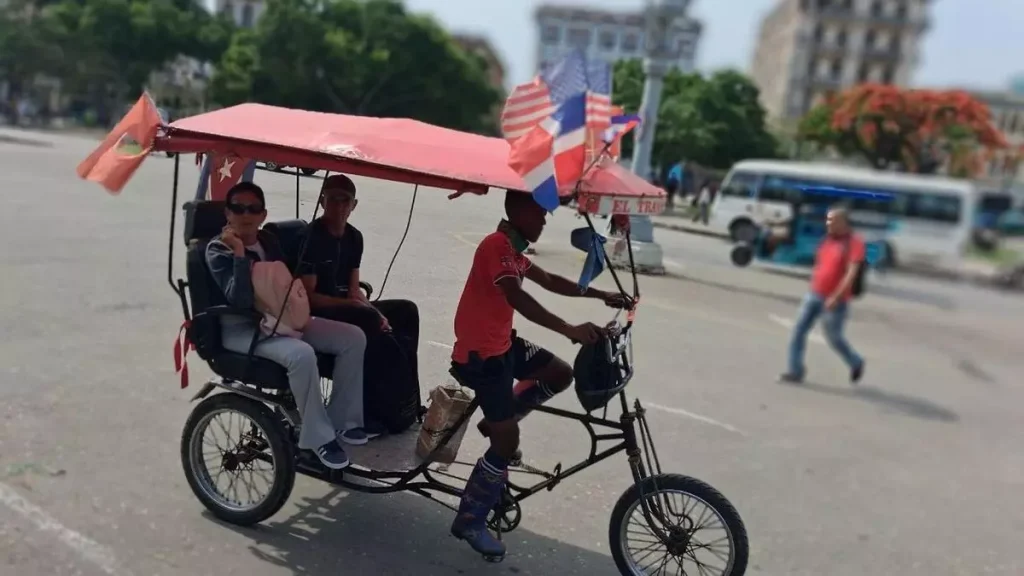
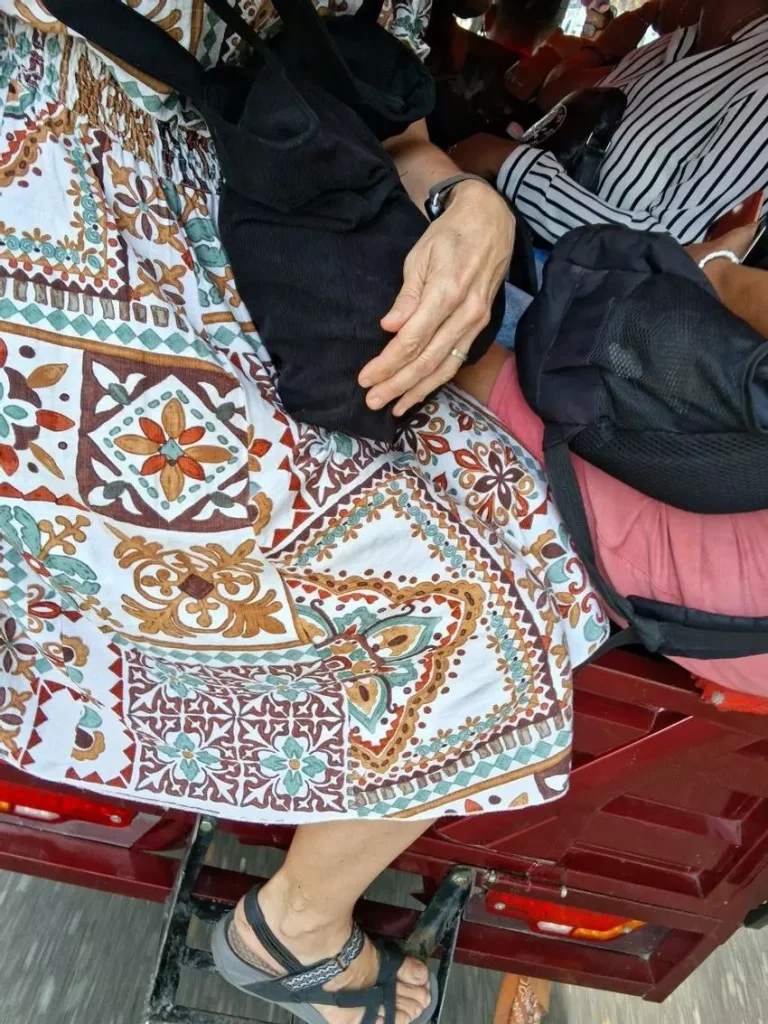
 14ymedio, Yoani Sánchez, Havana, June 5, 2026 / After waiting for ages, I manage to catch an electric tricycle on Carlos III Street. There are already five passengers, so I’m the last to get on, and my leg doesn’t fit. The only option is to leave it dangling to get anywhere in a city where every opportunity to get around shouldn’t be missed. So I travel to Fraternity Park with my thigh, calf, and foot hanging off the vehicle. I feel lucky to finally reach my destination.
Across from me, a woman with a worried expression says she can’t take it anymore. “I moved to the Isle of Youth more than 20 years ago, when it seemed like things were finally going to take off,” she reminisces, though we’re all caught up in our own dramas. Me, for example, took my first shower in three days at two in the morning this Thursday. I no longer know if it’s day or night, and sleeping at least five hours straight seems like a painful pipe dream.
“I made a little money buying good fish on the Isle of Youth for 18 pesos a pound and selling it here in Havana for two CUCs [Cuban convertible pesos],” the talkative passenger explains. The mere mention of those chavitos sets off a wave of nostalgia in the entire vehicle. “We used to complain about that currency, but now we miss it,” remarks a man sitting next to me. The times of the dual currency system looms as a new period of nostalgia, much like the 1980s once did. A decade some remember as one of abundance, but which I recall as one of strict surveillance and absolutely Orwellian.
I no longer know if it’s day or night, and sleeping at least five hours continuously seems like a painful chimera.
“With the little money I made selling fish, I bought a house in Nueva Gerona, even though I’m from here, from Cerro,” the woman adds. “Now my little house is locked up there because there’s no way to leave the island; it’s like being in a double prison.” The tricycle advances. A Lada behind us accelerates, and the driver lets it pass, but not before shouting, “Are you in a hurry?” Haste is a bad advisor in a city at a standstill. Even looking at your watch is considered bad form in a country where time is worthless.
I get off in front of the Aldama Palace. The entire area is boarded up, and sections of the roof on the upper floor of the once-imposing building have collapsed. A toothless man offers me a handful of hibiscus flowers in exchange for some money to buy food for his “little granddaughter.” I take out an Antonio Maceo, as the 50-peso bill is known, and exchange it for the bouquet of fragile petals. There was a time when I used to walk around Havana eating these flowers. It was a mixture of hunger and experimentation. I know the best part. There’s a fleshy area just below the pistil that you can chew with gusto; it has a flavor reminiscent of almond, but much milder. If the authorities at the Ministry of Domestic Trade find out, they’ll ration the hibiscus flowers too.
I jump off the tricycle, my leg completely numb. I limp like an undignified old lady crossing Fraternity Park as frail as I am. I run a few errands nearby, but almost everywhere I go, I find closed doors and a power outage. “No country can function like this,” mutters an old man as he passes me. “No country, no services, no people,” I add, amidst a yawn that reminds me I’ve been up for nine hours after barely three hours of sleep.
Returning home. There’s a green minibus at the taxi stand for the route along Rancho Boyeros Avenue to Santiago de las Vegas. In the back, a refurbished area for passengers, there are two low benches facing each other, each meant to fit ten passengers. It iss not the time to be overweight. Anyone who gets on the vehicle with a few extra pounds is looked at suspiciously. Where that man displays a broader frame, that young woman must be squeezed against the next passenger. Size matters, and so do pounds.
When we are about to depart, a woman appears carrying a framed picture, one meter wide by one and a half meters high. It’s one of those cheap prints, mounted on flimsy wooden boards, with a photo of a quinceañera. She asks us to make room for her to put the image on board, which ends up dividing the bathyscaphe in half lengthwise. The airflow between the windows on either side is cut off, the passengers are separated by the flimsy structure, and the rickety vessel starts moving.
I look at the flowing blue dress of the quinceañera in the portrait. It’s accompanied by a smaller painting of her in a swimsuit, smiling in profile at the camera. There are still people celebrating birthdays, baptisms, and weddings amidst the disaster we’re living through, I tell myself. The woman asks for help covering the large painting with a sheet and explains, “They were asking for 8,000 pesos to Mazorra, and I can’t afford that.” Once aboard the bathyscaphe, like any other traveler, she paid 1,000 pesos and treated us all to a surreal scene.
I arrive at Boyeros and Tulipán. I get down carefully so as not to spoil the image of the quinceañera that everyone inside the car is protecting, as if to safeguard this innocence that the harshness of reality will shatter. I get out, pay the driver. I turn right. I reach into my purse and find the withered hibiscus. The Ministry of Transportation’s generator is already whirring, a sign that there’s no electricity at my house. I take a bite of the bunch of flowers and head towards my own hill, towards the steep mountain that awaits me.
______________________
Previous Havana Chronicles:
The Roar of Despair of a Cuban Woman Returning to Her Country After Many Years
The Tulipán Market Closed: “They’ve Given the Order To Go to the March for Raúl”
Along Carlos III Street and towards Ethiopia
Sleeping Is Also a Privilege in Havana
A Desperate Plea in the Middle of the Dark Havana Night: ‘Light!’
Under a Picture-Postcard Blue Sky, the Country is Crumbling
Fatigue Barely Allows One to Enjoy the ‘Lights On’ in Havana
Dollars, the Classic Card, and a Havana Without Tourists
A Journey Through the Lost Names of Havana
The Shipwreck of a Ship Called “Cuba”
Havana Seen From ‘The Control Tower’
In Havana, the Only Ones Who Move Are the Mosquitoes
Reina, the Stately Street Where Garbage is Sold
Searching for Light Through the Deserted Streets of Havana
The Death Throes of ‘Granma’, the Mouthpiece of a Regime Cornered by Crisis
The Anxiety of the Disconnected Cuban
One Mella, Three Mellas, Life in Cuba Is Measured in Thousands of Pesos
It Is Forbidden To Leave Home in Cuba Today Because It Is a “Counter-Revolutionary Day”
Vedado, the Heart of Havana’s Nightlife, Is Now Converted Into a Desert
______________________
COLLABORATE WITH OUR WORK: The 14ymedio team is committed to practicing serious journalism that reflects Cuba’s reality in all its depth. Thank you for joining us on this long journey. We invite you to continue supporting us by becoming a member of 14ymedio now. Together we can continue transforming journalism in Cuba.