
Cuba’s Enemy is in the Plaza of the Revolution

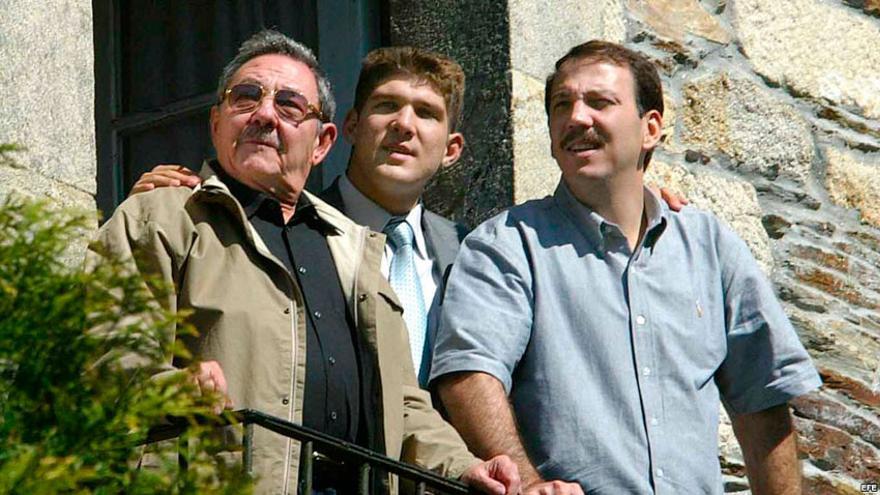
Raúl Castro placed his son Alejandro (on his left in front of his grandson Raúl Guillermo) in what he called the Commission for Defense and National Security. (Cubanet)

14ymedio bigger14ymedio, Yunior García Aguilera, Madrid, 31 August 2022 — If we take into consideration that the security of any country is based on the notion of stability, peace, development, as well as in the strategies to achieve these objectives, there is no doubt that the authoritarian powers on the Island constitute the main threat to National Security.

This concept emerged in the United States shortly after the end of World War II. In the context of the Cold War and facing the threat of nuclear weapons, the term focused on prevention, on the capacity to predict danger and strategies to mitigate its effect. Over time and as globalization erodes borders, the term has acquired other connotations.

Today, a state’s National Security does not only depend on external threats. Included in that concept are common delinquency, mafias, environmental risks, pandemics, catastrophes or uncontrolled migration.

In Cuba, Raúl Castro positioned his only son within something called the Commission for Defense and National Security. As usual, none of the delegates asked uncomfortable questions and no one questioned whether placing Alejandro Castro Espín in that area on a whim was in response to a true national interest or only had to do with having a colonel with the last name Castro mindfully watching over (with his only eye) the monarch’s sacred Family Security. continue reading

It is extremely difficult to define the Cuban system. It is not communist because communism does not exist, pure fiction, something which has never been nailed down anywhere on the planet. Socialism, on the other hand has so many definitions, it would be vague or imprecise to describe Cuba as a socialist state, especially when taking into consideration that on the Caribbean island, laborers are not a force with any political weight, nor do they have the opportunity to propel change in any way.

This small portion of the world has been a territory controlled since 1959 by a clan of individuals who have monopolized decisions, development strategies, and the notion of national security. Since then, Cuba has remained under the yoke of a gang which has used the ideologies of the day at whim to justify its empowerment. This caste has already failed precipitously in the country’s economic development, the conquest and guarantee of individual and collective rights, in achieving the wellbeing of the population and even in the state’s own survival.

The situation becomes more complex when the chiefdom, self-legitimized as a result of historical events, biologically disappears, in addition to the elimination of its contrarians or the best press any generation has had. But they’ve been replaced by a gang of legendless bureaucrats. The replacements (tombs in guayaberas) do not appear in the history books read by schoolchildren,  nor have they worked a day in their lives, and no dove ever posed on their shoulder. The forced replacements did not inherit the charisma of their models, they cannot count on popular support, they don’t even have the benefit of the doubt.

The current situation in Cuba is the worst it’s been in decades because, beyond the inflation, lack of bread, or the 18-hour blackouts, people are no longer willing to keep silent. We are the country in Latin America with the most political prisoners, we are at the bottom of most development list, and we compete with the worst countries in rankings of human rights violations.

However, the gang that has recently moved to Siboney refuses to accept democratic solutions. They continue to blame a “blockade” which collapses every time a Cuban buys chicken “made in the USA” in a freely convertible currency (MLC) store. They insist on the threat of foreign military intervention, which even the most recalcitrant opponents in Miami completely discard. They repeat like parrots that all demonstrations of discontent are paid for by the CIA, which must be bankrupt with so many accounts to settle. Officials of team Diaz-Canel beg ordinary residents for sacrifice, babble slogans that seem like tongue twisters, demand “creative” resistance. They appeal to the people to endure face slaps from police, beatings of 11-year-old girls, and all this for a bright future in which no one believes.

Silvia Rodríguez had a point when he predicted that the people will end up confronting the government. It has done so with flowers, songs. . . or stones. Tomorrow could be worse. The main threat to national secuirty is the system itself.

Translated by: Silvia Suárez

____________

COLLABORATE WITH OUR WORKThe 14ymedio team is committed to practicing serious journalism that reflects Cuba’s reality in all its depth. Thank you for joining us on this long journey. We invite you to continue supporting us by becoming a member of 14ymedio now. Together we can continue transforming journalism in Cuba.
Journalist Ricardo Fernandez Asks for Asylum in Germany with his Family

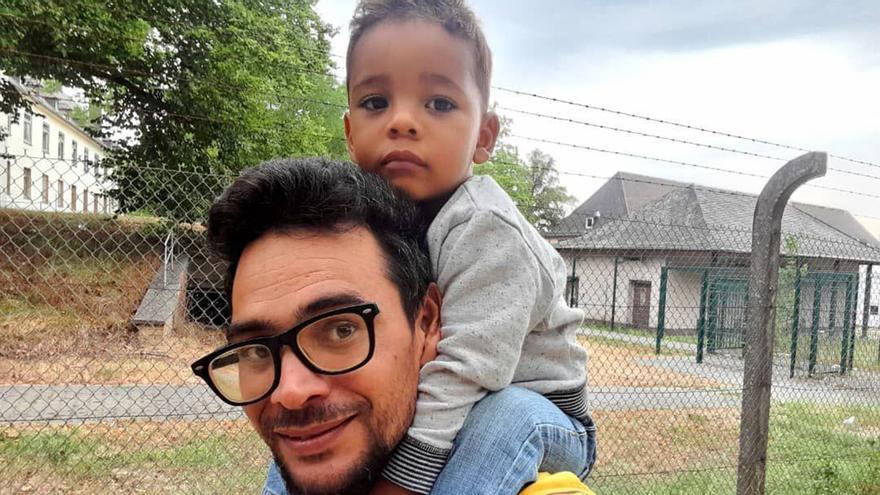
Ricardo Fernández has been in Germany with his family since last August waiting to obtain political asylum. (14ymedio)

14ymedio bigger14ymedio, Havana, 1 September 2022 — Independent journalist and collaborator of 14ymedio Ricardo Fernández has been in Germany with his family since last July waiting for political asylum. The reporter, who suffered an intense siege from the political police, recognizes that so much pressure has left him with a damaged soul.

Fernández has lived through years of harassment and arbitrary arrests. Now, from a refugee camp in Zirndorf in the state of Bavaria, he details the pressures he felt in recent months. “Until that moment I had been the one who had put myself at risk for my ideals, but since the beginning of 2022, the new objective of State Security was my wife, my mother-in-law and my eldest daughter.”

By the month of May, “the situation had already become unsustainable, and I couldn’t sacrifice my family members for a struggle that they didn’t choose.” Fernández recognizes that he didn’t have the “right to offer the lives of others” because of his personal determination to practice independent journalism under a regime allergic to freedom of information.

Once the decision was made to leave the Island, they began the procedures to obtain passports and put family matters in order. “When State Security learned that we were in that process, the harassment multiplied.” A three-hour arrest at the third Camagüey Police Unit, on July 14, confirmed the need to leave as soon as possible.

It was not the first time the reporter was arrested. In July 2019, he spent nine days in a dungeon for the simple fact of visiting the headquarters of the Ladies in White Movement in the Havana neighborhood of Lawton. From that arrest he came out with a warning report for being “illegal” in the Cuban capital, a document that he refused to sign. Last July, he also received new threats.

“I was given the ultimatum that I had a month to leave the country. I am sure that in previous years they would not have told me that way, because I would have categorically denied it, but when they saw me start the process they threw themselves at me like dogs against an injured animal.” Even so, the political police retained the family’s passports and only handed them over at the end of July. continue reading

Boarding the plane, feeling it take off and flying over the Atlantic were bittersweet moments for Fernández, his wife and his three children. On the one hand, they felt relief at leaving the police threats behind, but on the other, the question opened up to them of what would become of their lives from that day on. They didn’t carry a single euro with them.

“The asylum process in Germany, after being approved by the police authorities in charge of carrying out the express deportation of those who cannot present evidence of persecution, is quite simple, and the organization is impressive,” he explains to this newspaper. “There is a large volume of requests for refuge, mainly from Ukrainian families fleeing the war.”

In the refugee center where the reporter is waiting for a response to his case, there aren’t a lot of Cubans. The days take place there in a peculiar way: “Because of the difference in schedule with Cuba and the desire to talk to our loved ones, there is little sleep at night. During the day we are engaged in adapting to this reality.”

Although the surprises before everything new seem to have no end, Fernández and his relatives have also realized that they are “broken inside.” “When we meet to share a coffee, strained precariously, we laugh at our own wounds and compare the hoarding habits that we carry in our souls.”

“Some keep boxes of bottled water; others sleep with the goodies that they accumulate. Everyone stores what they can as if there were no more tomorrow. That’s what we laugh at, avoiding the issues that break our souls. Finally, night comes and everyone retires to connect with their loved ones who were left behind.”

Now, the emergency list is very clear to the reporter: “My priority is to get my family to heal from the psychological damage it has suffered for years of persecution, while supporting my homeland in everything that can serve it.” In the midst of the uncertainty of what will happen to him and his family in the coming days, he avoids thinking of an option in which he doesn’t receive asylum and bets that “the hope of a life in peace will flourish.”

Translated by Regina Anavy

____________

COLLABORATE WITH OUR WORKThe 14ymedio team is committed to practicing serious journalism that reflects Cuba’s reality in all its depth. Thank you for joining us on this long journey. We invite you to continue supporting us by becoming a member of 14ymedio now. Together we can continue transforming journalism in Cuba.
Instead of Facilitating the Import of Flour, the Cuban Government Lashes Out Against the ‘Resellers’

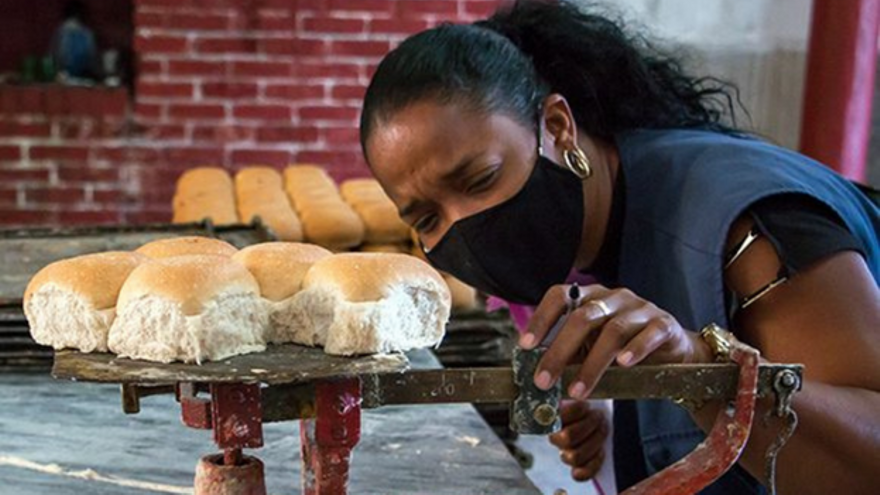
The Government has already released a pack of inspectors throughout the province, with instructions to “detect any illegality.” (Cubadebate)

14ymedio bigger14ymedio, Havana, 31 August 2022 — The shortage of wheat flour in Cuba, with the consequent increase in the price of bread and cookies on the market, has quickly reached its critical point. In addition to the difficulties in making the products, there is the absence of an effective mechanism for the import of the necessary raw material.

However, without offering solutions to the problem of hunger, which will be further aggravated by the arrival of the new school year, or facilitating imports for the self-employed, the Cuban Government, more inefficient than ever, has concentrated its efforts on a raid against food vendors.

“Any small or medium-sized business (SME) can, in theory, import products,” a cookie producer in Sancti Spíritus tells 14ymedio. “Of course as long as you can find them. What you can’t do is go to another country and bring a container of flour, for example, to sell here to producers who need it for their businesses.”

“A month ago,” he continues, “when the disappearance of flour began, I went to Cubaexport to request the import of the quantities I needed. But they can only supply small amounts, so dealing with them doesn’t work. The same thing happened to me with other state import routes: they’re a problem.”

From Havana, they told him about someone who sold flour in quantities: “They told me it was legal, but of course you always know what’s happening.” continue reading

The producer says several of them met and went to the Government to request permission to import a container of flour that they would later distribute among all. “The officials straightened us out,” he laments. “The justification was that you can make contract as a SME or self-employed person, under the terms of the Government, but that collectively you can’t. “That’s reselling,” they told us.

The sellers of Sancti Spíritus have begun to approach the official reporters on the street. “Now they say that from next week we will not be able to sell any product with bread or wheat flour. Do you know about this?” they asked the author of a chronicle published in the newspaper Escambray about the shortage of flour in the province.

The journalist, who advances along Espirituano Boulevard overwhelmed by the “stratospheric prices of almost everything,” has to admit his ignorance when citizens demand explanations from him in the face of the unstable fluctuations in bread and cookie prices.

Another seller suspects that “the provincial government banned its sale and we don’t want to take risks.” At twenty or twenty-five pesos, the packages of cookies exceed 120, that is if you manage to “capture” some improvised merchant passing by on bicycle or on foot.

The rise in prices is an expression of doubt and insecurity on the part of the self-employed, the journalist recognizes, but when he must point out a culprit, he doesn’t look for him in the bureaucracy of state trade, but in the producers themselves.

Once the “enemy” has been identified, Escambray lashes out at the private sector: “What if because of the war in Ukraine, the price of flour went up on the black market, and people could no longer could get it so easily, and if the price of the dollar on the street exceeded 145 pesos…, in short, a string of excuses to justify the rise in price.”

Not satisfied with making the increase in price and disappearance of flour clear to the official culprit, the reporter goes to the provincial authorities. Ricardo García Hernández, coordinator of Programs and Objectives of the provincial government of Sancti Spíritus — the same person who declared the “innocence” of the officials who ordered the destruction of a patrimonial locomotive of 1917 in Jatibonico — makes his position clear: “There is no justification for private companies to continue raising prices.”

The Government has not issued any prohibition, he says. It’s rather a strategy of the private sector to “manipulate the people” and justify the rise in prices.

“Here we haven’t talked about prohibiting anything; we haven’t even restricted prices, although we draw attention to some abusive prices that we’ve detected in recent days with respect to cookies and bread,” says the official, washing his hands of the problem.

He warns, however, that the government has already released a pack of inspectors throughout the province, with instructions to “detect any illegality associated with the production of such food.”

After concluding his meeting with García Hernández, the reporter ignores or pretends not to know why food prices in Cuba are rising: “If the government of the province hasn’t banned the sale of bread, cookies, sweets or any product that contains bread or wheat flour, why then do some insist on constantly raising prices? Why is it so easy to keep squeezing the already battered pocket of the workers?”

As in Sancti Spíritus, other state media have turned to local governments to repeat the pantomime of an “official explanation.” In each of the cases, the official invokes the note published by the Ministry of Internal Trade on August 23: the shortage is due to an “intensification of the blockade [i.e. the US embargo], the current international logistics crisis and the financial limitations of the country,” which has limited its imports of wheat.

On the other hand, the authorities ask for more “creative resistance” and offer examples such as that of Gabriel Pérez, a young man from Guanabacoa who makes “alternative” flour. Together with his sisters, Pérez sold an apartment in Havana and bought a plot of land to “get into the flour business.”

The farmers of the area taught them some cultivation techniques that they then took advantage of to make their brand, Bacoretto. Its product, which the Government exposes as an emblem of self-ownership, manufactures flour from carob, rice, cassava, coconut and banana. “It’s the same thing that has always been done, many years ago, in the Cuban east and in the countryside,” Pérez says, to reassure his clients.

While the official press interviews “inventors” of flour and seeks to absolve the Government of all guilt, Cuban mothers are still concerned about the coming school year and the impossibility of offering their children bread to take to school as a snack. Families continue to buy bags of cookies at inconceivable prices, and producers try to maintain a “low profile” in front of inspectors who, more than criminals, are looking for scapegoats.

Translated by Regina Anavy

____________

COLLABORATE WITH OUR WORKThe 14ymedio team is committed to practicing serious journalism that reflects Cuba’s reality in all its depth. Thank you for joining us on this long journey. We invite you to continue supporting us by becoming a member of 14ymedio now. Together we can continue transforming journalism in Cuba.
‘El Toque’ Denounces Harassment Against its Journalists in Cuba

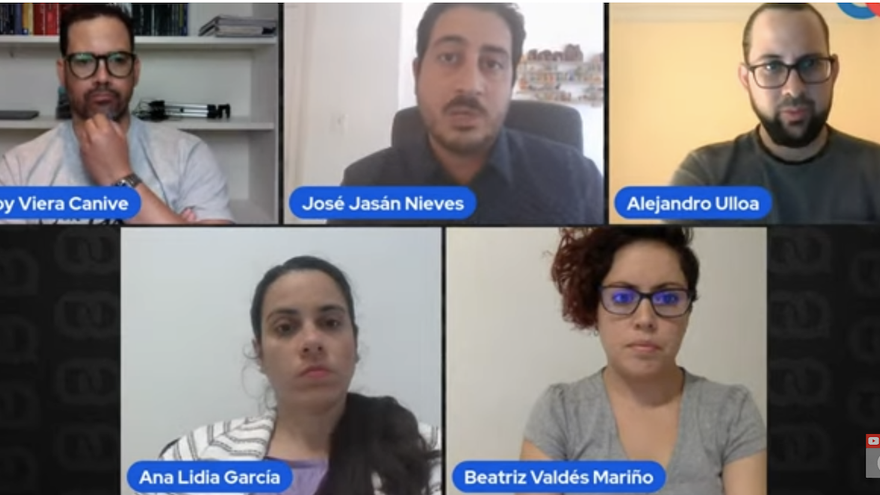
Members of El Toque during their virtual press conference this Wednesday. (Captura)

14ymedio bigger14ymedio, Havana, 1 September 2022 — The editorial team of the independent news source El Toque denounced on Wednesday, from its editorial office in Cuba, the harassment by State Security of nine young journalists, who, as a result, gave up their jobs.

During a conference broadcast on YouTube, the directors, residing abroad, answered the questions raised that same day by an editorial entitled “The night will not be eternal,” using a phrase from the opposition leader Oswaldo Payá.

Four of these young people, Mauro Díaz Vázquez, José Leandro Garbey, Aleiny Sánchez and Meilin Puertas, were “regulated” [Translator’s note: The term chosen by the regime to mean ’forbidden to travel’] before they were able to travel to Argentina, where they had been invited to participate in the Media Party, one of the most important regional journalism events.

José Jasán Nieves, director of the media, explained that on their ignoring the travel ban, State Security subjected them to “direct and indirect” pressure to give up their jobs.

Nieves describes the methods of the political police as “a mechanism of psychological torture,” a “term that may sound strong,” but perfectly describes the actions of the repressive bodies of the Cuban Government, which has declared an “open war” on anyone who contravenes official propaganda. continue reading

According to the report from these young people, they were asked to make public their resignation from El Toque, to film a video of “self-incrimination” that, Nieves alleges, has a lot to do with the famous Padilla Case for its “Stalinist resonances.” It was an exercise of “sadism,” he insists, which Humberto López or some other “person of the regime” will then use to carry out a ’disqualification’ campaign against them, that is a “character assassination.”

For his part, Eloy Viera, coordinator of the El Toque Jurídico space, mentioned that it’s difficult to “find legality” in the actions of the Cuban regime. “Only propaganda is admitted,” he said. The rest is not allowed, and there is a tendency to use the law as a mechanism to “legitimize human rights violations,” appealing to concepts such as national security.

After its denunciation, the editorial team took advantage of the moment to reflect on the context of independent journalism on the Island, from the complaints of the artists before the Ministry of Culture on November 27, 2020, and the protests of July 11 of the following year.

On the other hand, he discussed two points with which the Government usually disqualifies the work of this medium: the monitoring of currency exchange rates in the informal market and the financing of the page. On the first, he explained that transparent and public algorithms are used to reach the daily figure that is made known to users, and as for the economics of the medium, he explained that no program or institution has ever intervened in its editorial agenda.

It’s logical that “a power that needs us to live in an alternative reality” attacks the opposition “with all the repressive force of its apparatus,” added Nieves, who also lamented the exile into which the main directors of the medium have been forced.

“Thanks to technology, it’s becoming easier to continue reporting about Cuba even if we’re not in Cuba,” he said, and indicated that his team, which he described as “multilocated,” will find “ways” to communicate from abroad, “because they will not silence us.”

Nieves specified that the situation is not exclusive to El Toque, but that other media have experienced similar “repressive waves” in recent years, which “is nothing more than another expression of the circumstance and the general crisis that our country is experiencing.”

Translated by Regina Anavy

____________

COLLABORATE WITH OUR WORKThe 14ymedio team is committed to practicing serious journalism that reflects Cuba’s reality in all its depth. Thank you for joining us on this long journey. We invite you to continue supporting us by becoming a member of 14ymedio now. Together we can continue transforming journalism in Cuba.
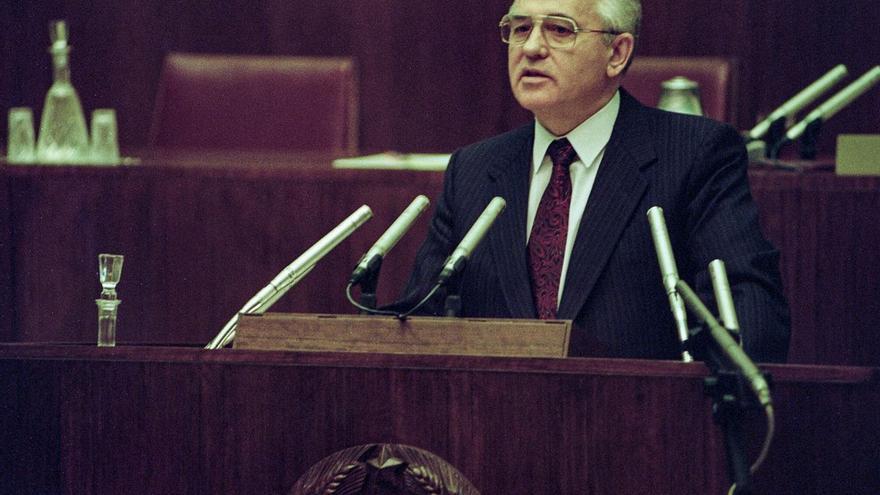
My Private Gorbachev

Mikhail Gorbachev in 1991 during the final session of the Supreme Soviet. (EFE/EPA/Vassili Korneyev)

14ymedio bigger14ymedio, Reinaldo Escobar, Havana, 31 August 2022 — In April 1985 Mikhail Gorbachev appeared before a full session of the Soviet Union’s Communist Party Central Committee to present his initial proposals for what would ultimately be known as perestroika (restructuring). My friend, the poet and journalist Julio Martinez, was the first to warn me that what was happening in the USSR was unprecedented and could have repercussions for Cuba.

At that moment we became “perestroikos,” addicted to News from Moscow, a weekly publication that for years had been sold on news stands but which overnight became a source of revelations on the failures of Stalinism and what had been known as real socialism.

The fantasy that our own country could undertake a similar restructuring, and the informational transparency that came with it (glasnost), thrilled those of us who still believed in the myth of socialism with a human face. Though we were many, few dared to publicly align themselves with this experiment.

Gorbachev’s actions, almost 10,000 kilometers from the island, had a lasting impact on me. At the suggestion from my poet friend, I decided in early 1987 to leave my comfortable position as a journalist for Cuba International, a monthly magazine dedicated to sweetening our reality, to become an op-ed columnist for the newspaper Juventud Rebelde, from where — oh, how naive! — I tried to promote a kind of tropical perestroika.

At a historic meeting with students from the University of Havana’s School of Journalism at the headquarters of the Cuban Communist Party Central Committee, the then all-powerful Carlos Adana announced that there continue reading

would be no perestroika happening here and that it had been decided to suspend distribution of News from Moscow, Sputnik and New Times, the three Soviet publications that gave breath to Cuba’s pro-reform intellectual environment.

This was in October 1988. In December of that year I was fired from Juventud Rebelde and prohibited “for life” from practicing the profession of journalism.

The politician who has died at age ninety-one did not succeed in his goal to expand socialism. Instead he caused the fall of Eastern Europe’s communist bloc while managing to turn me into a free man. I am indebted to him and to my friend Julio Martinez, who ended up committing suicide in exile.

____________

COLLABORATE WITH OUR WORKThe 14ymedio team is committed to practicing serious journalism that reflects Cuba’s reality in all its depth. Thank you for joining us on this long journey. We invite you to continue supporting us by becoming a member of 14ymedio now. Together we can continue transforming journalism in Cuba.
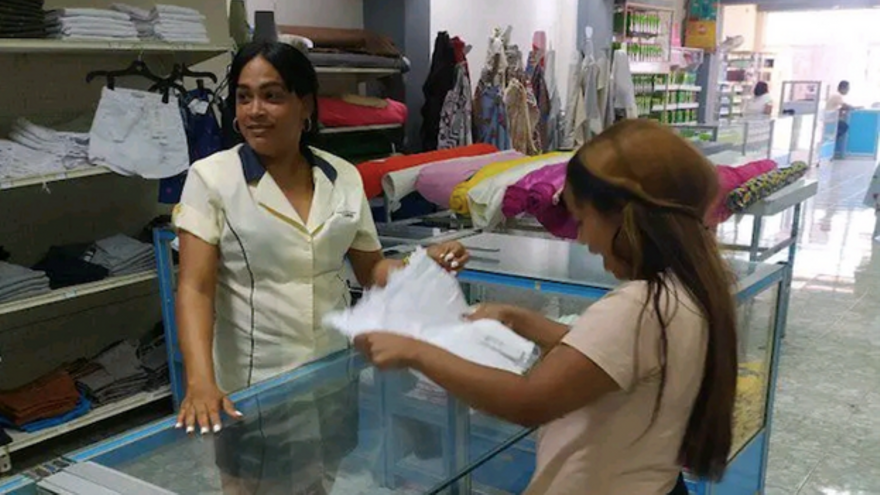
Entering, Buying and Leaving, the Great Achievement Advertised by State Businesses in Cuba

“You should have called all the world’s news agencies. For the first time, good treatment was discovered in a Cuban store.” (Facebook/Caribbean Granma Stores)

14ymedio bigger14ymedio, Daniel Wilt, Holguín, 1 September 2022 — The Facebook page of Tiendas Caribe de Granma [Caribbean Shops of Granma Province] delighted readers on Tuesday with an unusual “story of the day.” The text began by clarifying that what was coming really happened, in a store in Bayamo, and that “the words used were exactly the same.”

Next, the story presented “a young customer” who went to the El Arte store, in Bayamo, to whom “instantly,” an extraordinary event happened: “The workers of the place welcomed her as she deserved,” because, it clarified, “at that moment she was the only one who was passing by there.” This detail wouldn’t cause a peep out of the people from Bayamo, because it’s one of the stores with the lowest influx of buyers in the municipality.

Without at any time revealing a spirit of mockery in the publication, the story continued: “The young lady walked in and was very interested in one of our garments. She went directly to a spandex dress of polyester, with a white color and fringes, very much in tune with the summer season.”

And it reproduced an excellent dialogue.

“I want to try a size 7.”

“Yes, of course, I’ll show it to you right away, and you can use the changing room in that corner so you can see it and choose the one that suits you best.”

Satisfied, the customer went to the cashier “to make the payment.” Then, the clerk “proceded to accept the payment.” With this, “the sale was successful, and the clerk gave her the receipt and put the merchandise in a plastic bag.”

After being told goodbye by the employee with a “thank you for your visit, come back soon!” the young woman, the only person in the store if we look at the narration, was subjected to the scrutiny of the receipt by the doorman, to verify the merchandise that was bought, and “to review and ensure the integrity of the shop.”

It wasn’t long before the publication, offering the story as “an example of a sale to a customer with great success and satisfaction,” was plagued by humorous comments that laugh at presenting an anodyne act like buying something in a store as an unprecedented achievement. continue reading

“This writing seems too short to me. The author got the exclusive scoop out of all the world’s news agencies. For the first time, good treatment was discovered in a Cuban store,” one mocks. “The tension, the mastery of language, the development of the characters… sublime,” says another, and one of many adds, giving free rein: “I think it’s a very beautiful composition. I was eager to know more. What would be the dramaturgical continuity of the story? What did her mom tell her when she got home with the spandex dress of polyester? What dreams materialized with her dress? Under what armpit did she transport it, by bike taxi, to her abode? With which bra (the latter bought in what other state store?) did she combine it for her Sunday walk? Please, don’t delay in giving us the rest of the story, so we can keep on living.”

“As we are in prehistory, we don’t know how to communicate and are learning. This is the first class on Customer Service. Thank you. I’m waiting for the second one,” says Madelaine Verdecia Enamorado.

Jotabarrioz, for his part, jokes: “Top 5 Cuban clients with the most luck in the world,” and others, such as Yaneth CM, get serious: “The clerk did nothing more than fulfill her position profile. I don’t understand the merit. The truth is, the only thing these publications promote is mockery.”

There is no shortage of those who, in the ten photographs that accompany the writing, all with smiles and in color, observe suspiciously that everything is a fiction. And certainly, only the words “once upon a time” are missing for the unforgettable, almost fantastic adventure in the socialist paradise of the Caribbean, of a correctly made sale.

Translated by Regina Anavy

____________

COLLABORATE WITH OUR WORKThe 14ymedio team is committed to practicing serious journalism that reflects Cuba’s reality in all its depth. Thank you for joining us on this long journey. We invite you to continue supporting us by becoming a member of 14ymedio now. Together we can continue transforming journalism in Cuba.
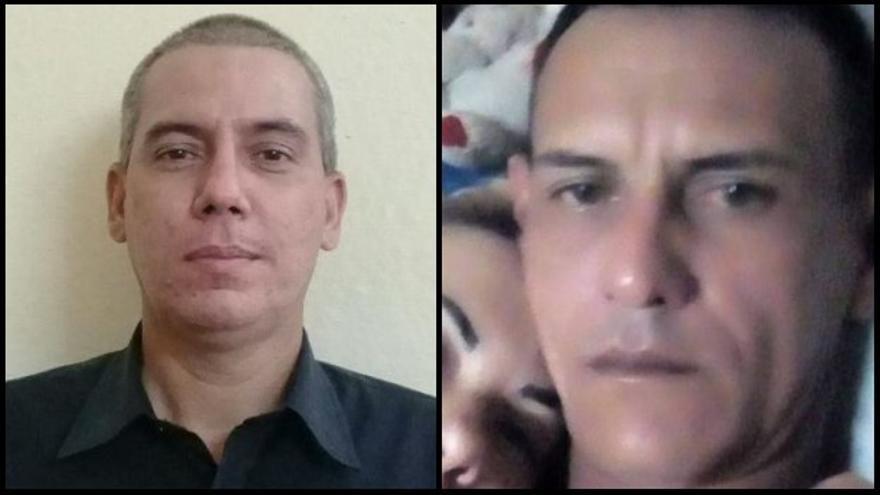
Two Officials from Nuevitas Added to the List of Cuban Repressors

The two officials on the list of repressors, Roberto Conde Silverio and Alien (or Allen) Velázquez. (Collage)

14ymedio bigger14ymedio, Havana, 23 August 2022 — On Monday, the Foundation for Human Rights in Cuba (FDHC), added to their data base of repressors the two officials who attacked protestors in Nuevitas, Camagüey, during the most recent protests.

One of them is Roberto Conde Silvierio, First Secretary of the Communist Party in that city, accused of ordering “the persecution, repression and intimidation of people” who peacefully took to the streets on August 19th and 20th.

The entry on the list of repressors states that police and paramilitary responded to a call from the official “with physical aggression against protesters, including two girls.”

The second repressor identified is Alien or “Allen” Velázquez, a State Security agent, reportedly the leader of the beatings received by two 11-year-old girls, in the Pastelillo area of Nuevitas, who were trying to prevent the repressors from arresting José Armando Torrente, one of the adults who went to protest on Saturday, August 20, 2022 against the 18-hour blackouts.” continue reading

One of the minors is Torrente’s daughter, Gerlin Torrente Echevarría.

“We warn against possible trauma as a result of the repression against the girls who were assaulted during the protest in Pastelillo on the 19th,” stated Justicia 11J in a statement published on Monday on social media. “As of now, they continue to be in pain and with a fever. According to a family member, one of the girls is suffering from insomnia due to the pain.”

At this time, the legal platform states, police were in the Pastelillo neighborhood, looking for protesters they were unable to find. “The repression continues in Nuevitas, although the state-run media insists on showing a false calm in the region,” the statement said.

In it, they also point out that Roberto Reyes Montenegro has been “forcefully disappeared” and warned that the 58-year-old man is epileptic and also has high blood pressure. “Neighbors say that on the 20th he was put on a truck which was rounding up protesters from Camalote [52 km from Nuevitas in the same province of Camagüey]. His family still has not heard from him,” they said.

Adisnel Hernández Ricardo, missing as of Monday, was confirmed to be under arrest. Similarly, the organization logged the following people as under arrest: Lester Camejo, Orlando Pérez Cruz, Yoandry Lescay, Menkel Menéndez Vargas Chicho Bonilla.

In the case of this last person, Justicia 11J denounced that on Sunday the 21st “his home was razed, an 80-year old woman (who fainted as this happened) and a one-month-old newborn girl also lived there.” “More than 20 red berets participated” in the assault, accompanied by dogs, the organization states.

The organization also reported on a complaint made by El Caimán Libre of “the beating and imprisonment of a mother who was demanding her son’s release,” in the town of Camalote, though her identity remains unknown.

Similarly, they confirmed the identity of a 17-year-old minor arrested, Kenay Perdomo Soria, who partipated in the protest in Camalote on Saturday. “Kenay will be treated legally as an adult despite the Convention on the Rights of the Child which defines a child as anyone under 18 years of age,” states Justicia 11J.

Since June 14, when the cacerolazos [banging on pots and pans] protesting the “scheduled blackouts” began, the organization has documented 77 protests, during which 49 people have been arrested. Among them 14 are from Nuevitas, the latest city to rise up against the government.

Translated by: Silvia Suárez

____________

COLLABORATE WITH OUR WORKThe 14ymedio team is committed to practicing serious journalism that reflects Cuba’s reality in all its depth. Thank you for joining us on this long journey. We invite you to continue supporting us by becoming a member of 14ymedio now. Together we can continue transforming journalism in Cuba.
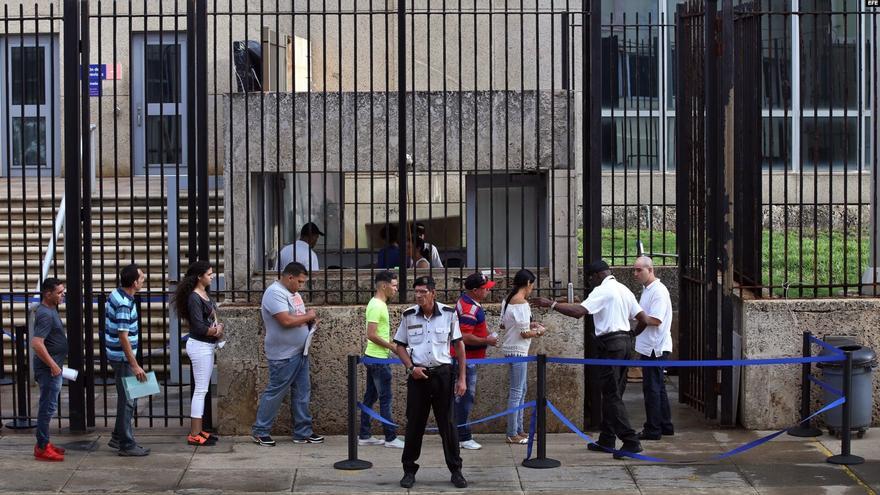
The United States Resumes Interviews for Parole for Family Reunification at its Embassy in Havana

The United States Embassy in Havana. (EFE)

14ymedio bigger14ymedio, Havana, 1 September 2022 — The United States Citizenship and Immigration Service (USCIS) reported on Thursday the resumption of the procedures for the Cuban Family Reunification Permit (CFRP) program at its embassy in Havana.

In a statement, the USCIS explains that it will process applications to the program that are pending and that it has already sent notifications to the beneficiaries, but it will not issue “new letters of invitation at this time.” In fact, USCIS started doing interviews on August 18.

The government body warns that the embassy “has limited capacity” and that applicants should not “take any action” without having received an appointment.

The USCIS also warns applicants in its text to have their postal addresses updated. “We will not send you an email or call you to ask for money or the payment of fees,” they reiterate. “Don’t become a victim of an immigration scam.”

The decision to resume the Cuban Family Reunification Program was brought forward at the beginning of last June, when the US Department of Homeland Security explained that the decision was part of the search for “safe and orderly alternatives to irregular migration and its many dangers and indignities.” continue reading

The CFRP, established in 2007, “provides a safe and orderly path” to U.S. territory for “Cuban beneficiaries of approved family-based immigrants,” the institution said at the time. The permission granted by this program allows the family member to travel to the United States and go to an immigration authority there to process their residency.

The United States reduced the staff of its embassy in Cuba in 2017, after about thirty of its diplomats suffered mysterious health incidents known as “Havana syndrome,” whose causes haven’t yet been clarified.

Since then, family visa procedures have been carried out at other embassies outside the island, mainly in Georgetown, Guyana, where hundreds of Cubans still have to wait for the resolution of their procedures, not exempt from irregularities.

The United States Consulate in Havana resumed the processing of visas for immigrants on May 3, processing only the IR-5 category. Two months later, it expanded the visa categories and began processing the immediate relatives of U.S. citizens, including spouses and children under the age of 21.

Despite this restart of procedures, the US immigration authorities have made it clear on several occasions that the headquarters in Georgetown, Guyana, would continue to be “the main place of processing for most Cuban applicants for immigrant visas.”

Translated by Regina Anavy

____________

COLLABORATE WITH OUR WORKThe 14ymedio team is committed to practicing serious journalism that reflects Cuba’s reality in all its depth. Thank you for joining us on this long journey. We invite you to continue supporting us by becoming a member of 14ymedio now. Together we can continue transforming journalism in Cuba.
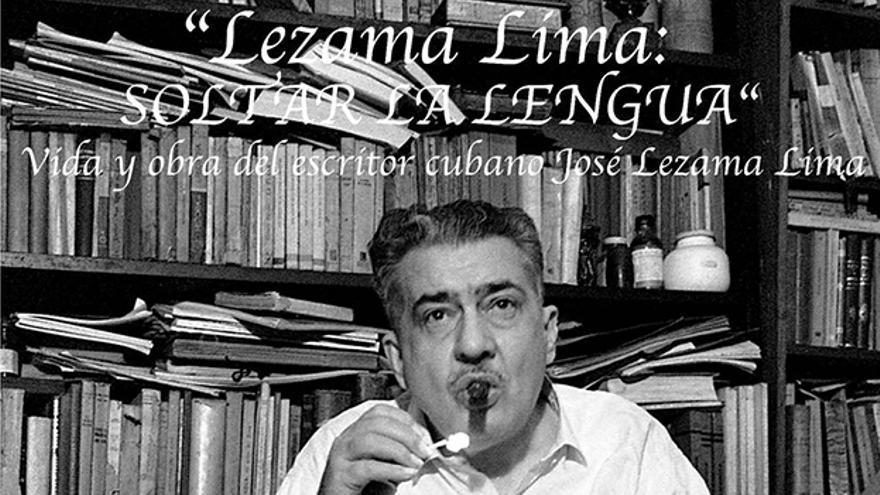
A Documentary Rescues the Writer Lezama Lima from the Clutches of the Cuban Regime

The film collects the vision of 28 ‘witnesses’ about the writer. (Ivan Canas)

14ymedio bigger14ymedio, Xavier Carbonell, Salamanca, 21 August 2022 — In order to “stir up the anthill,” on the 45th anniversary of the death of Cuban writer José Lezama Lima (1910-1976), last Sunday the filmmaker Ernesto Fundora, at the Rosario Castellanos Bookstore of the Fund for Economic Culture, in Mexico City, screened his documentary “Lezama Lima: Soltar la Lengua” [Lezama Lima: Loosen the Tongue].

The film assembles fragments of interviews with friends and disciples of Lezama, collected by Fundora between 2009 and 2015, and finally edited in 2018. Despite the fact that the post-production of the documentary is modest and that there are excessive and almost primitive visual effects, his mind does a wonderful job in remembering the formidable author of Paradiso.

Except for images of his participation in a couple of congresses and around hundreds of photographs, very little visual material on Lezama is preserved. Hence the difficulty that we get the sense that Lezama is being offered to us as something more than a voice and a presence among books. However, Fundora succeeds in having those who knew the author evoke a Lezama who is vital, convincing, and nearby.

Just when he had published one of the essential novels of the Spanish language and was getting recognition outside Cuba, death came to him

Some of the testimonies, such as those of Cintio Vitier, Fina García Marruz, César López and Antón Arrufat, shared the friendship of the Cuban teacher since the beginning and middle of the century; in others, such as those of Manuel Pereira, José Prats Sariol, Enrico Mario Santí, Froilán Escobar and Félix Guerra, his influence and teaching during his youth was essential.

For the devotees of the “Lezama Cult,” the writer is still awaiting continue reading

recognition. The 1959 cultural bureaucracy kept him in the crosshairs as “republican junk” until, after the so-called 1971 Padilla Case, he was banished from editorial and public spaces.

Just when he had published one of the essential novels of the Spanish language and was getting recognition outside Cuba, death came to him without the expected “restoration” and in almost absolute solitude.

Several young writers who accompanied him in his last days, such as Prats Sariol and Reinaldo González, recall their sadness at the empty house and the abandonment of his friends, whom State Security “recommended” not to frequent 162 Trocadero Street. He died on August 9, 1976.

During the Special Period, the movies Fresa y Chocolate and Lista de Espera recovered the Lezamian cultural imprint and were, in a way, promoters of the “liberation” of the taboo. Young people avidly sought dramas that were not only disturbing and difficult, but also marked by exclusion, such as the books by Severo Sarduy, Guillermo Cabrera Infante, and Lydia Cabrera.

The truth however, is that bureaucrats have done everything possible to bury the ‘Lezamian’ work, cancel its study and constantly define it as “hermetically sealed”

The regime and its cultural machinery then began a meticulous work of biographical rewriting, in which old colleagues such as Vitier took part, presenting Lezama as an author “of the Revolution,” an admirer of Castro and Guevara as “messiahs” of a new “imaginary era,” Latin American, according to the paradigm of Casa de las Américas, and a writer who “some officials” did not “correctly” understand.

The truth is, however, that the bureaucrats have done everything possible to bury Lezama’s work, cancel its study and constantly define it as “hermetic,” “intricate,” “incomprehensible” and “elitist.” The celebration of his centenary was mediocre and there is still no center of study named after him. His scattered and poorly organized library is inaccessible to scholars, and no Cuban publishing house has issued critical or annotated editions of Paradiso, La Cantidad Hechizada, or any of his major books.

Hence, Lezama Lima: Soltar la Lengua acquires an exceptional value as rescue and recollection. Exceptional are the last frames, which offer information and clarity about the ostracism, the false promises of rehabilitation with which the Communist Party deceived him, and the unusual conditions in which he agonized and died.

As Fundora himself states, almost half of the 28 individuals who rendered testimonies of him have died, so the film, enriched by photographs and fragments of poems, recollects the final vision of many of them about the writer.

In addition, the documentary works as an excellent initiation for those who have not read the work of José Lezama Lima and deny, through authorized voices, each of the myths with which the regime has tried to appropriate one of the greats of Cuban culture.

Translated by Norma Whiting

____________

COLLABORATE WITH OUR WORKThe 14ymedio team is committed to practicing serious journalism that reflects Cuba’s reality in all its depth. Thank you for joining us on this long journey. We invite you to continue supporting us by becoming a member of 14ymedio now. Together we can continue transforming journalism in Cuba.

A Blackout Frustrates Dozens of Customers in a Foreign Currency Store in Havana

Supermarket at 3rd and 70th, in Miramar, Havana, during a blackout. (14ymedio)

14ymedio bigger14ymedio, Juan Diego Rodríguez, Havana, 29 August 2022 — Scheduled power cuts don’t bypass even profitable businesses. This Monday, it happened in the 3rd and 70th Shopping Center, in Miramar, Havana, three times. After the power went out the first time, the center turned on a generator, but it quickly stopped working. The second time, they used another generator, which also went out quickly. The third time the blackout arrived, there was no auxiliary equipment to turn on, and the store was completely in the dark.

The explanations of the employees didn’t alleviate the displeasure of the customers. “With all the dollars they extort from people here, you’d think they’d have power,” a woman protested aloud. Meanwhile, workers shouted to the customers to go to the cash registers next to the windows, where there would be natural light.

“You can’t record here, please, you damage the image of the shop,” a cashier told a young man who took out his cell phone to photograph the corridors in the dark. “Same with the image here; it’s not very good,” the boy replied.

The 3rd and 70th supermarket is one of the largest in the city that sells its products in foreign currency. It was also one of the first stores to be dollarized when there was economic flexibility in the 90s, and nearby is an abundance of embassies, the houses of diplomats and the homes of more affluent families, so it’s considered a business with a somewhat exclusive clientele.

But not even this location and the uniqueness of its consumers has saved the place from shortages, fights in the lines and the deterioration of its facility. To prevent the semi-empty shelves from being seen, the Center’s administration places the same product repeatedly, a very common practice in Cuban state stores. This Monday, the sequence of cans of the same vegetable or the row of mustard bottles tried to hide the reality that even these markets don’t have a great variety of goods. continue reading

The butcher’s area was the one that showed the least number of options. If it weren’t for the products of private businesses, the refrigerators of the place would have been practically deserted, devoid of dairy products, frozen food or the long-awaited boxes of chicken quarters and breasts, which are so in demand in a country where no one knows when they’ll come across certain foods again.

This Monday, at one point and to the chagrin of the buyers, the employees sent everyone out. Just when almost everyone had left, the current came back, and people began a stampede. “The light came back, the light came back!”

Translated by Regina Anavy

____________

COLLABORATE WITH OUR WORKThe 14ymedio team is committed to practicing serious journalism that reflects Cuba’s reality in all its depth. Thank you for joining us on this long journey. We invite you to continue supporting us by becoming a member of 14ymedio now. Together we can continue transforming journalism in Cuba.
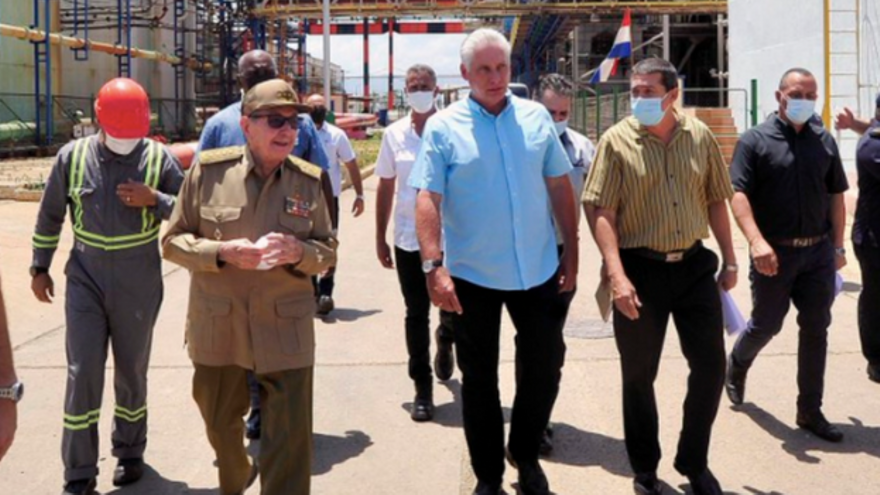
A New Fault Delays the Promise of Diaz-Canel and Raul Castro About the End of the Blackouts

“The fact that Raúl Castro shows his face can mean a warning for those foreign investors who are looking for memories with the Castros for their offices in Madrid or Paris.” (Revolution Studios)

14ymedio bigger14ymedio, Havana, 30 August 2022 — The Antonio Guiteras thermoelectric plant, in Matanzas, left the National Electric System this Tuesday, according to the Cuban Electric Union (UNE), “due to losses of turbine parameters (empty).” Although the state company then assured that “work will be done immediately on the solution to the leak in the boiler that had already been detected previously,” the news, in any case, further casts a shadow over the announcement made by President Miguel Díaz-Canel this Monday: that the blackouts will end in December.

That date would look promising if it were not for the fact that the same man stated last May that the energy situation would improve before the start of June, while just last week, on State TV’s Roundtable program, industry officials warned that the “complexity” would last at least a year.

Together with Díaz-Canel, Raúl Castro went for a walk through the Lidio Ramón Pérez thermoelectric plant, in Felton, in Mayarí. The general stood to the right of his successor during the tour of the Holguin center as a more-than-necessary support-cane for the leader.

“Felton 1 decides today the course of the recovery strategy, and its start-up is vital for the fulfillment of the outlined objectives, first, to minimize or eliminate blackouts by next December,” Díaz-Canel said. continue reading

Edier Guzmán Pacheco, director of thermal generation of the Electric Union (UNE) explained that since the beginning of August, a program is being carried out that should solve the problems of the plant this summer, with a view to starting the production and startup of the unit “very soon.”

To this end, technical modifications have been made to the machinery and the auxiliary systems, in addition to tests that guarantee “the stability, reliability and efficiency of the equipment.”

Felton, the Holguin energy colossus, with the capacity to supply about 500 MW, had a breakdown in the boiler of unit 1 at the end of July that caused its exit from the National Electrical System, while unit 2 has been disabled since it suffered a major fire at the beginning of the same month.

The machinery of the first unit, which is being repaired, must reach, according to the director of the plant, Euclides Rodríguez Mejías, 260 MW. “It would be a positive injection and would significantly reduce the effects on the population,” he said.

“We’re going to have the support we need in Felton,” Rodríguez told the official press. “It’s a commitment, but Felton is ready to take it on.”

With regard to block 2, the project manager, Eric Milanés Quinzán, said that its structure has been dismantled by 8%, and work will be done on the reconstruction of the boiler and maintenance of the high-medium cylinder of the turbine, as well as the incorporation of various equipment.

Díaz-Canel, who had also visited the Santiago de Cuba power plant, explained that the task is not only focused on quickly repairing the failures to overcome the power cuts of up to 12 and 14 hours, which has pushed citizens to their limits, but also about stabilizing the system with investments that will arrive in 2023 and change the electro-energy matrix.

These investments and their acquisition are, in the opinion of the Cuban economist living in Spain, Elías Amor, one of the possible reasons that led Raúl Castro to place himself yesterday, at the age of 90, next to his dauphin. “That Raúl Castro shows his face can be a warning for those foreign investors who scan their memories with the Castros from their offices in Madrid or Paris,” says the expert, who warns of Díaz-Canel’s low media attractiveness for businessmen who “in their youth had communist ideas and now, at the head of large corporations, feel a sickly attraction to the Cuban regime.”

And the economist considers that there is another important reason: to express the Army’s support for the head of state and, therefore, the risks faced by citizens who protest the blackouts.

“Díaz-Canel will feel calmer having obtained the explicit support of Raúl Castro, so any maneuver to relieve him of the post has been put on hold until further notice,” he adds. “The Cuban communists thus lose political initiative, if they ever had it, and instead of concentrating on changing things and preparing a viable future for Cuba, they concentrate on technical programs to solve the failures that took the different units of the power plants out of service, so they don’t raise their heads. Order and discipline, Raúl Castro’s eternal song.”

Meanwhile, the population remains desperate, and this Monday the week began with a deficit of 36%, with a generation of 2,280 MW for a maximum demand of 3,100 MW. The UNE predicted that up to 890 MW would be missing during the highest consumption period.

Translated by Regina Anavy

____________

COLLABORATE WITH OUR WORKThe 14ymedio team is committed to practicing serious journalism that reflects Cuba’s reality in all its depth. Thank you for joining us on this long journey. We invite you to continue supporting us by becoming a member of 14ymedio now. Together we can continue transforming journalism in Cuba.
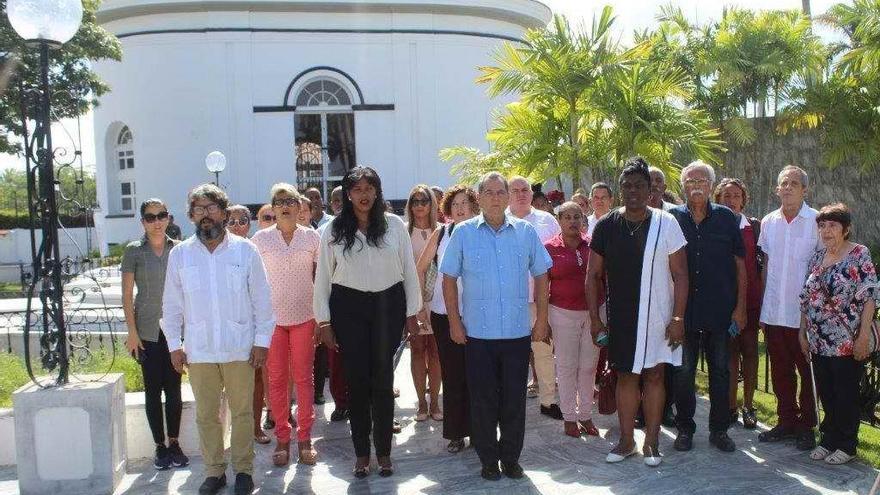
Castroism Stole the Cuban Rum Industry and Now Seeks to Appropriate the Figurehead of the Bacardi Family

Members of the Communist Party of Cuba paying homage to Bacardi at the Santa Ifigenia cemetery, in Santiago de Cuba. (Juventud Rebelde)

14ymedio bigger14ymedio, Juan Izquierdo, Havana, 29 August 2022 — The imposing funerary pyramid of Emilio Bacardí Moreau, who died on 28 August 1922, is not far from the mortuary stone of Fidel Castro, the man who dismantled the rum distillery and the cultural legacy of the Bacardí family.

One hundred years after the death of the patriot, historian and philanthropist from Santiago, the same regime that expropriated the Bacardí distilleries and buildings intends to pay tribute to the first Republican mayor of Santiago de Cuba.

Tributes and biographical notes in the official newspapers now present Bacardí as a kind of politician precursor of the revolutionary practices of 1959. He is credited with a rabid anti-imperialism, and his business and political acumen is minimized. The issue of rum is taboo, and they almost classify him as a feminist for asking the widows of the mambises to fill positions in the town hall.

Bacardí will attain everything the Cuban regime needs, including a “little war of memory” against the heirs and directors of the company, who are currently based in Bermuda.

However, investigating and quoting Bacardí means playing with fire, because not all those who have contributed to the tribute have expressed themselves in politically “desirable” terms. continue reading

Some texts recover the sappy language of the social chronicle of the Republic, in addition to making use of terms such as patrician, eminent and patriarch, inconceivable in the official organs of the Communist Party.

Censorship confronts journalists with a curious dilemma: they must reconstruct the history of Cuban rum manufactured by Bacardí, talk about it as if it were still being distilled on the Island and suspend any reference after 1960.

“If Cuban rum is the best on the planet,” Cubadebate reasons, “in Cuba the best is that of Santiago de Cuba, the one initiated by Facundo and bequeathed by Don Emilio Bacardí Moreau,” the official government site says, without mentioning the expropriations after the triumph of the Revolution or talking about “trademarks.”

In commemorating his death, Bohemia magazine repeats that the initial tomb of the patriot was “humble to the point of surprise” — the phrase is by Fernando Portuondo — but they forget to talk about the sumptuous mausoleum of a millionaire that was later dedicated to him, described as just a “symbolic pyramid structure.”

The “main course” of the tributes was the presentation, once again, of the two volumes of Emilio Bacardí Moreau: on Passionate Cuban Humanism, published in 2018 by the historian Olga Portuondo, a controversial biography of the patriot whose distribution and sale was delayed, until it was almost impossible to find in bookstores.

Successfully, but serving the official appropriation of “uncomfortable” figures, Portuondo introduces the work of Bacardí as the founder of the oldest Cuban museum, as well as the author of the monumental collection Chronicles of Santiago de Cuba and other books, fictional and historical, of smaller scope. He is presented as an intellectual and mambí conspirator, rather than a politician or entrepreneur.

During the commemorations, there was no shortage of those who remembered quietly the “prophetic coconut tree” of Facundo Bacardí. Facundo, father of the Bacardi clan, was the man who, in 1862, coined the symbol of the bat to identify his new technique for distilling rum. In the vicinity of the factory he planted a palm tree that survived earthquakes, wars, fires, independence and flag changes.

“The company will live in Cuba as long as the coconut tree,” the legend said. On October 14, 1960, on the eve of the centenary of the company, the coconut tree just dried up, and Fidel Castro expropriated Bacardi’s premises without compensation.

The family members went into exile, with the “secret recipe” of rum, honey and yeast strains. Several international legal proceedings have been brought against the Cuban government, but none have been successful.

To this day, the most emblematic brand of Cuban rum continues its production in the United States, Mexico, Puerto Rico, Italy and the Bahamas, but not on the Island.

This Sunday, numerous officials, Party leaders and historians aligned with the regime, and some workers of the Provincial Heritage Center, concluded the tribute in front of the mausoleum of the patriot in the cemetery of Santa Ifigenia.

Whipped by the sun of eastern Cuba, and after anachronistic speeches by the members of the Central Committee, none of the attendees were able to toast to the memory of Don Emilio with a drink of Bacardi rum.

Translated by Regina Anavy

____________

COLLABORATE WITH OUR WORKThe 14ymedio team is committed to practicing serious journalism that reflects Cuba’s reality in all its depth. Thank you for joining us on this long journey. We invite you to continue supporting us by becoming a member of 14ymedio now. Together we can continue transforming journalism in Cuba.
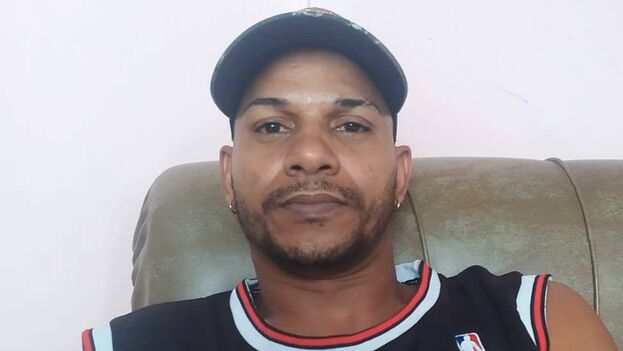
From Jail, Rapper Maykel ‘Osorbo’ Suggests He is Willing to Leave Cuba

Rapper Maykel Osorbo “began to get scared” when “his lymph nodes swelled” in prison, says Anamely Ramos. (Facebook)

14ymedio bigger14ymedio, Havana, 30 August 2022 — “If a door were opened for me right now, where I could go into exile, brother, I’d go, do you understand?” The words of Maykel Castillo Osorbo, in a telephone conversation from prison with Armando Labrador, owner of the Cántalo TV YouTube channel, suggest that the artist is willing to leave Cuba in exchange for his release.

The audio, shared Monday on that channel, by Esteban Rodríguez, who was accompanied on this occasion by other activists in exile: art curators Anamely Ramos and Carolina Barrero, actress Iris Ruiz and protest rapper Eliexer Márquez El Funky, co-author of Patria y Vida with Osorbo, Gente de Zona, Yotuel Romero and Descemer Bueno.

The plan to get Osorbo out of prison – where he is serving a nine-year sentence for contempt, assault, public disorder and “defamation of institutions and organizations, heroes and martyrs” – is part of a “very long process,” in the words of Anamely Ramos, one of the people closest to the artist.

It started when he became sick in prison and they began to fear for his life. Distrusting the medical tests carried out in prison and facing the uncertainty of a lack of diagnosis, Ramos said on Cántalo TV, that “it was evident that something had to be done to save Maykel’s life, because we don’t even know what he has.” continue reading

The curator stated to this newspaper that, although he had not said so publicly, when his lymph nodes began to swell the musician confessed that he would leave if he had “the opportunity”

The curator stated to this newspaper that, although he had not said so publicly, when his lymph nodes began to swell the musician confessed that he would leave if he had “the opportunity.”.”That’s when Maykel started to get scared,” she says. “Until that point, Maykel had kept telling me that even if they blackmailed him, he was not going to leave Cuba, that he preferred to be in prison.”

It is the same position that Luis Manuel Otero Alcántara, leader of the San Isidro Movement (MSI), maintains until now. He was sentenced in the same case as Osorbo,  to five years in prison, for disrespect against the nation’s symbols, contempt and public disorder.

Alcántara has denounced on numerous occasions that State Security, as it has done to other opponents, such as artist Hamlet Lavastida, is trying to blackmail him with the prison-for-exile ‘card’; however, in his case, he has made it clear for now that “he will not under any circumstances accept exile as an option.”

In addition, he recently denounced via MSI (the San Isidro Movement) that blackmail involved Osorbo: if Alcántara did not accept a forced exile agreement, the rapper would also not be able to leave Cuba to be treated for his health problem.

Both activists refused to appeal their convictions last July. In the case of Osorbo, he declared through his friends that “he will no longer lend himself to that circus,” referring to the trial to which they were subjected.

Despite Maykel Osorbo having already expressed his desire out loud, Anamely Ramos states that, in any case, his release depends on the regime. After alluding, without details, to “steps being taken in different countries,” she said,  “Whether those steps will give rise to results or not, we don’t know, because Maykel is in prison in Cuba, sentenced in Cuba. Ultimately, only State Security knows whether they are going to let Maykel out or not.”

Translated by Silvia Suárez

____________

COLLABORATE WITH OUR WORKThe 14ymedio team is committed to practicing serious journalism that reflects Cuba’s reality in all its depth. Thank you for joining us on this long journey. We invite you to continue supporting us by becoming a member of 14ymedio now. Together we can continue transforming journalism in Cuba.
With the New Cuban Data Protection Law, State Security Will Go Unpunished

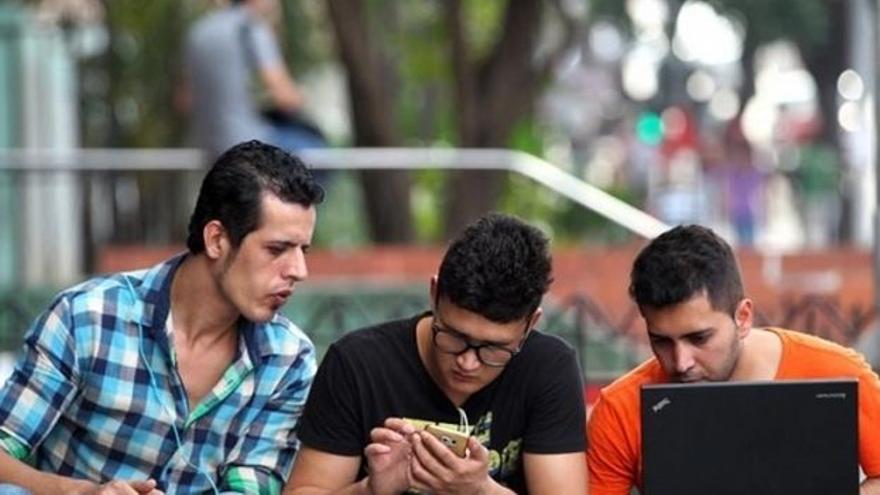
Among the rights that, according to the text, should be guaranteed is the protection of identity, immigration status and political affiliation, among others. (EFE)

14ymedio bigger14ymedio, Havana, 27 August 2022 — With the publication this Friday of Law 149 on the Protection of Personal Data, which will enter into force in February 2023, a set of rules is made official that aims to guarantee respect for “personal privacy.”

The appearance of a legal body that regulates the processing of private information, “by public and private individuals or entities,” is still controversial in a country like Cuba, where the State intervenes unscrupulously in conversations and personal databases, to manipulate them in its favor in legal processes or as a method of surveillance.

This new legislation, based on articles 40 and 48 of the Constitution of the Republic on “human dignity,” also addresses the existence of archives, information reservoirs and data storage on digital platforms, in addition to the “promotion” of a social culture of data protection.

Published this Friday by the Official Gazette, Law 149 was approved on May 14 by the National Assembly and will enter into force within 180 days. Among the rights that, according to the text, it should guarantee, is the protection of data related to image, voice, identity, religious beliefs, migratory status and political affiliation, as well as medical, judicial and administrative information.

Because the data is of a more sensitive nature, whoever requests it, whether people, companies or authorities, must clearly state the reason to the citizen, in addition to guaranteeing its security and confidentiality. The owner, in addition, must offer his express consent, “freely and unequivocally,” so that his data can be stored in any file, including government files. continue reading

“The person may not be obliged to provide sensitive personal data, nor is its processing lawful without the consent” of the owner, according to the legislation in its article 16.1, except “for reasons of general welfare, public order and the interest of defense and national security.”

As for the police and other authorities, Cubans have “the obligation to identify themselves” through their documents, but the authorities don’t have the right to demand “other data other than that reflected in those documents.”

Article 19, one of the most problematic for describing a common practice of some spaces and programs of the Cuban Information System, states that citizens “have the right not to disclose these [their data] and, consequently, to have respected their personal and family privacy, their personal honor and identity, their own image and voice.”

The use of videos, fragments of conversations, photographs, names and other sensitive data as part of the regime’s propaganda, exposed on national television by journalists such as Michel Torres and Humberto López, is a flagrant violation of a right that existed even before the drafting of this law.

In article 54, Law 149 adds that “the use of recordings of images and voices of people obtained from mobile phones, cameras, recorders and other similar devices, in no case can affect the rights protected in article 19.

This situation also contradicts the practices of the Ministry of the Interior and State Security, which have systematically used as legal evidence to hold trials after July 11, 2021, material from networks and personal devices.

Despite the fact that the articles of Law 149 are introduced as guarantees for citizens, it’s unlikely that they can be invoked against the Government during criminal proceedings. As has happened on other occasions, the National Assembly formulates laws as diplomatic tricks to cleanse the image of the regime vis-à-vis international organizations, but it gives them little real value.

The document is full of formulas that, if invoked by the defense of someone whose right to privacy has been violated, ensure the impunity of the State. The “public order and interest of defense and national security” will continue to be the regime’s alibi every time it needs to violate its own Law on the Protection of Personal Data.

Translated by Regina Anavy

____________

COLLABORATE WITH OUR WORKThe 14ymedio team is committed to practicing serious journalism that reflects Cuba’s reality in all its depth. Thank you for joining us on this long journey. We invite you to continue supporting us by becoming a member of 14ymedio now. Together we can continue transforming journalism in Cuba.
The Preparation of Cuban Lobster Destined for Export

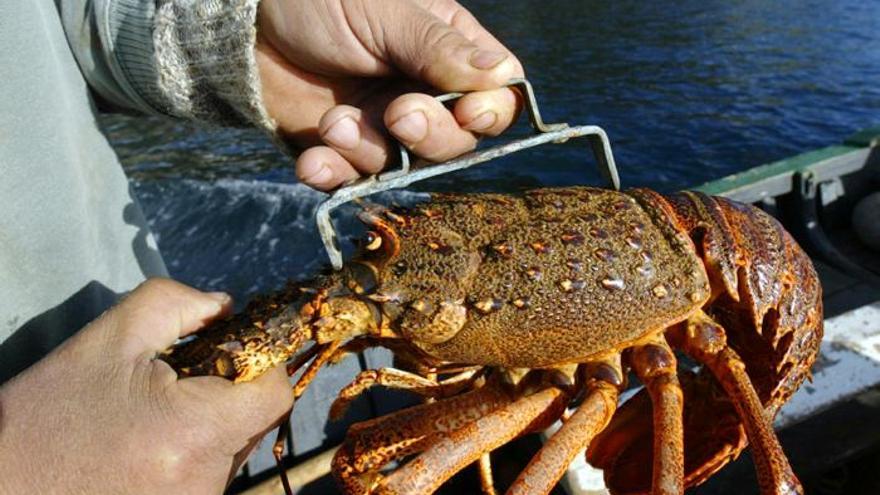
Cuba was the fifth largest exporter of lobster in the world in 2020.(El Universal)

14ymedio bigger14ymedio, Havana, 29 August 2022 — The production of lobster destined for export is one of the few things that seems to be going strong in Cuba. In Niquero, a municipality of Granma Province, the plan for July of 44 tons was exceeded in just nine days, reaching 52 tons of the crustacean.

According to Jorge Rosa Acuña, plant manager of the company InduNiq, most of the success can be attributed to the implementation of new technology: a tunnel freezer and a plate freezer that have accelerated the capacity to store the lobster.

“Previously, it took us 24 hours to freeze a production; today we need only eight. The plate freezer allows us to carry out other productions on a par,” the official explains to the local newspaper La Demajagua.

In a context of constant blackouts and energy limitations for companies, the Government seems determined to maintain a meteoric march of the lobster industry, which in 2020 — the last year for which data are available — returned an income of 40.5 million dollars. The island was then the fifth largest exporter of the product worldwide, only behind Brazil, Nicaragua, the Bahamas and Honduras.

One of the company’s workers explained to the provincial newspaper that the processing of lobster is very delicate due to the demands on foreign sales. In Cuba, the product has practically disappeared from all markets. continue reading

“There are several indispensable requirements to meet the customer’s demands. Lobster is an export product that goes to the world market: Asia, Africa and Europe. So it includes review processes and quality control,” he said.

It is the second Cuban company in just three months to report its success in this area, one of the main ones along with rum, tobacco, nickel and shrimp. Last May, the La Coloma fishery in Pinar del Río presented in the official press its lobster hatchery project for export.

“It’s a project that, more than increasing the amount of product to be exported, raises the economic value of the company and is one more selection for customers that we will offer,” said Ray Leonar Sánchez Ramírez, director of the company.

The investment in the ponds, which keep the crustacean for up to 72 hours before it is moved abroad, is two million pesos, but it would allow the production of two tons of lobster per day.

The lobster catch season runs from the beginning of June to the end of January. After the end of the season, a closure period of at least four months is established to facilitate the recovery of the species before the start of the new season.

Cubans hadn’t seen lobster for ages, until after the protests of July 11, 2021 (known as ’11J’), the Government sent to the markets some products that hadn’t been seen for a long time, in order to appease the spirits of the population. Among them were the ground beef and the reputed crustacean, which cost 200 pesos without being of excellent quality.

In the most well-known gastronomic places in Havana, a Cuban lobster dish can easily exceed 700 pesos. This is the case of the state-owned Bodeguita del Medio, where 280 grams of lobster costs 705 Cuban pesos, as well as of the private bar-café Mercy, which serves it for 990.

On the black market, prices can be more affordable. In the case of fishing towns such as Batabanó or Caibarién, they can even be less than 100 pesos, but on average, lobster can be obtained for 400 pesos a pound on the “informal” market.

Translated by Regina Anavy

____________

COLLABORATE WITH OUR WORKThe 14ymedio team is committed to practicing serious journalism that reflects Cuba’s reality in all its depth. Thank you for joining us on this long journey. We invite you to continue supporting us by becoming a member of 14ymedio now. Together we can continue transforming journalism in Cuba.