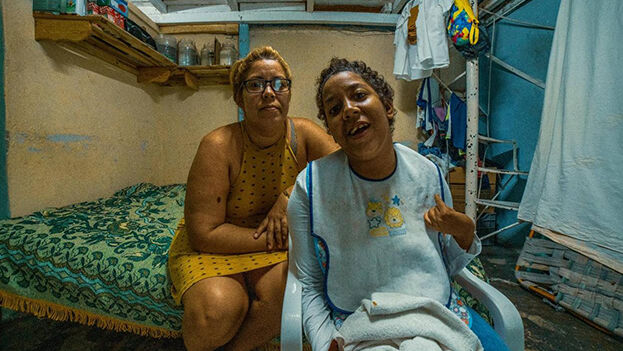
Customers in a Havana electronics store, in line to buy fans, to cool the night air and repel mosquitos. But the fans are useless when there is no electricity.
14ymedio, Elías Amor Bravo, Economist, 5 September 2022 — La Guiteras has been incorporated into Cuba’s national electricity system after overcoming the failures that caused its shutdown, news that in any other country in the world would be inconsequential. But in Cuba, in this agonizing summer of 2022, in which the alumbrones [a word coined to mean periods when the lights are on] have become a daily event in the difficult coexistence on the Island, it’s great news when a thermoelectric power plant produces electricity.
And as the communist regime enjoys the propaganda and the legendary narrative of the events that happen in the country, the article published in the State newspaper Granma is not wasted and says something like “after about four days of uninterrupted work, in which more than 200 maintenance actions were carried out, the largest unitary bloc in the country went online after ten o’clock on Saturday night, and on Sunday morning it exceeded 200 MW.” That doesn’t fool anyone and isn’t a heroic deed. This is a brief description of the usual operation in these cases, by the way, not exclusive to La Guiteras, since the rest of the plants are the same, or worse.
Granma added that “the operators solved the localized breakdown in the boiler and the vacuum damage in the condenser-turbine, and eliminated the causes that led to high water consumption, the origin of the problem that forced the plant to stop.” This is one more example of the work of informational monitoring by the regime so that Cubans understand the official version of the origin of the blackouts and attribute them to short-term or specific causes, which are resolved in this way, when the national electricity system is really a victim of the prevailing economic model, and its destiny is linked to it. That is, in order to enjoy quality electricity again and continuously, it is necessary to implement structural changes that the regime doesn’t even want to talk about. continue reading
And as the Guiteras problem will promptly return, Granma says that “to achieve greater reliability, it will be necessary, as soon as possible, to carry out the proper cleaning of the boiler and eliminate all the defects that limit its efficiency.” (so, what have they done?) and adds in this regard that “the washing of the boiler requires a shutdown of approximately ten days to increase the load to 280 MW and prolong its permanence in the system, without unforeseen exits.” Thus, a shutdown of Guiteras and a return to the blackouts are foreseen.
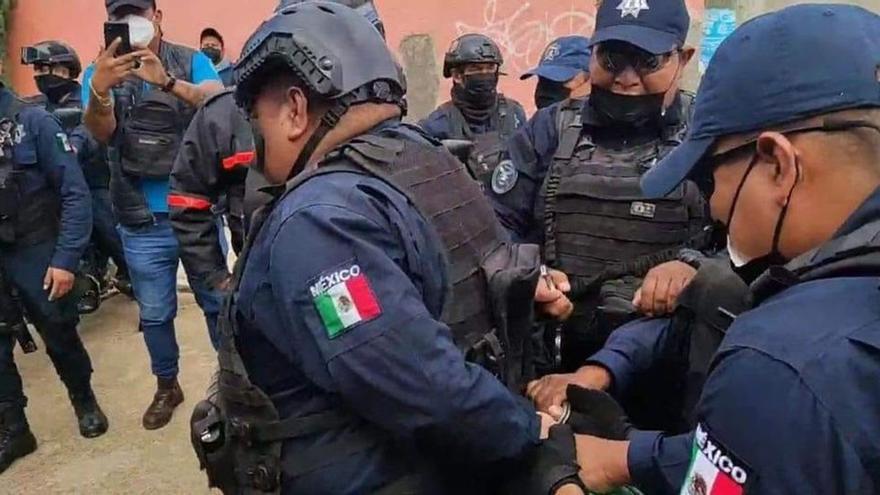
The moment when the handcuffs are placed on a municipal policeman in Oaxaca who was accused by the inhabitants of threats and extortion. (Screen capture)
14ymedio, Havana, 2 September 2022 — At least four municipal police officers from the Mexican state of Oaxaca were arrested for trying to extort money from coyotes, demanding 150,000 pesos (7,500 dollars) so as not to betray 25 migrants from Cuba, Guatemala and El Salvador who were crowded into a large house in the municipality of Pueblo Nuevo.
An argument between the officers and the coyotes alerted the neighbors, who realized that the civilians were not from the area. “They were arguing over a payment that wasn’t made,” a witness who identified himself as Felipe López told 14ymedio. “One of the cops threatened to take out his gun if they didn’t pay.”
According to the source, in the morning a patrol car was parked in front of the house where the migrants were hiding, which had been covered with sheeting the month before. “There was movement at night; they arrived in a van, but we had never seen the people who took them out,” López said. continue reading
“While these guys were arguing outside, we could hear some children crying inside, so we thought they were kidnappers,” the witness said. “With the support of drivers and neighbors, we surrounded the police and the coyotes, until the state security officers arrived. How could we imagine that they were migrants? The coyotes had put down cardboard on the floor for them to sleep.”
According to data from the Ministry of Public Security of Oaxaca, an investigation on the detained uniformed officers was opened for the alleged crime of extortion, but it will be the police unit that will define the punishment.
Oaxaca is a point of reference for Cubans. The Government of Mexico has detected several networks of coyotes in that region that charge between $4,500 and $10,000 for migrants going to the United States. In addition, the so-called central region is one of the main routes that traffickers exploit to transport the Island’s nationals in vans and cargo trucks.
The detained foreigners, including five children, were handed over to the National Institute of Migration of the state of Oaxaca. Their migratory status will be defined in the coming days.
In Ciudad del Carmen, on the Yucatan peninsula this Thursday, the National Guard arrested a group of 16 Cubans and Nicaraguans who were being transferred to the state of Tabasco in a van. A state security source confirmed to 14ymedio that these people would be expelled to their country of origin.
According to official figures, Mexico has repatriated 1,657 Cubans to the Island this year. This Friday, a group of 28 people arrived at José Martí International Airport in Havana.
Meanwhile, from the United States, the Coast Guard repatriated 95 rafters on board the ship WilliamTrump on Thursday, bringing the total to 5,086 Cubans returned since October last year.
These repatriations have not stopped the arrival of rafters from the Island. This Friday, the Coast Guard announced that a boat with at least 25 Cubans was shipwrecked in front of the Florida keys.
“Partners and crews of good Samaritans responded to the shipwreck of a boat and people in the water near Islamorada as a result of an adventure of illegal immigrants,” the Coast Guard said on its social networks. “Twenty migrants were placed in custody, four allegedly landed, and the search for one, reported missing, continues.”
The rescued rafters, the government agency said, are on board a cutter and will be repatriated to Cuba.
Translated by Regina Anavy
____________
COLLABORATE WITH OUR WORK: The 14ymedio team is committed to practicing serious journalism that reflects Cuba’s reality in all its depth. Thank you for joining us on this long journey. We invite you to continue supporting us by becoming a member of 14ymedio now. Together we can continue transforming journalism in Cuba.
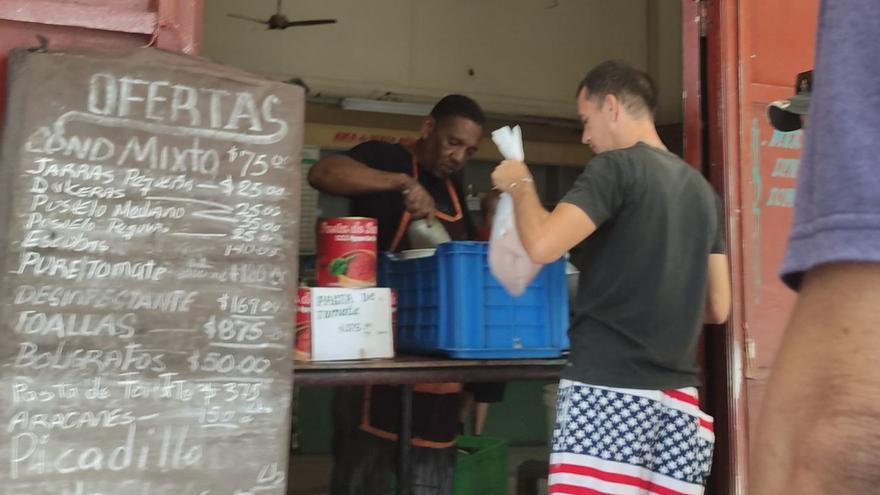
The ground meat — what else to call it? — had an almost liquid consistency, a color like vomit and a nauseating odor. (14ymedio)
14ymedio, Juan Diego Rodriguez and Juan Izquierdo, Havana, 2 September 2022 — The street is Carlos III, in Havana. The place: a hovel that is part corner store, part market stall. It could be in any town on the island. A line has formed in front. Havana’s midday sun reverberates through the listless crowd waiting to get in.
With the thriftiness of someone who has the whole day ahead of him, the vendor puts on an apron and grabs a wooden palette to use as a counter. He is a tall, sweaty man for whom washing his hands before handling the food serves as a pointless formality.
“Let’s go,” he says quietly to the first customer, who opens the mouth of his bag, as wrung out and hungry as he. The store is a hodgepodge, which is to say that its shelves display plastic pots, kitchen utensils that will not last more than a week, thick strainers and dull knives. There are also some canned goods and products sold in bulk, like the one for which people are now waiting in line.
Most know what’s to come but no one has a real sense of it until they see it, smell it and feel its texture: some kind of ground meat — what else to call it? — with an almost liquid consistency, a color like vomit and an odor as nauseating as the rest of the street, for 65 pesos a pound. continue reading
One distracted customer makes the mistake of paying for it beforehand. He cannot hide his disgust, which turns his stomach and almost causes him to utter an expletive. “What’s wrong?” asks the vendor as he gently stirs the mixture in the muddy bucket before scooping out a portion of watery ground chicken with his hand.
Nothing,” says the boy as he approaches the makeshift counter in resignation. “Toss it here.”
“They mix it with water to stretch it,” explains an elderly man who is also in line. That’s how they make a little more.” “I remember they sold slop like this during the Special Period,” says another. “And they passed it off as goose paste. The goose is a bird related to the guanajo. Ask your grandparents,” he adds, laughing at his own humor.
Next to the bucket of ground chicken is a can advertised as tomato paste. “No one buys it anymore because people know what goes into it,” says one woman. “Haven’t you seen the online videos? They use guava, banana, some kind of peel, but tomato it’s not.”
After the stench of ground chicken, the air outside has the sweet aroma of syrup and the odor that permeates Cuban soup kitchens. Local residents recognize it as a syrup made in a factory on the same block. It is sold not only at the ground chicken stall but also by a string of elderly people and beggars along Carlos III.
Well-sealed in a backpack, it is now up to Cuban mothers and fathers, armed with their arsenal of tricks, to figure out the most convenient method for cooking it.
Oblivious to all this, however, is the ever-optimistic party newspaper, Granma. As though describing a consumer’s paradise, the Thursday edition allays its readers’ fears. It promises, perhaps in time, “deliveries of rice, beans, sugar, salt and cooking oil” as well as eggs, coffee and a packets of cigarettes of one sort or another.
“Milk is guaranteed” — the paper’s favorite word — “for children, pregnant women and those suffering from chronic childhood diseases, and is encouraged in some areas in liquid form.”
For those who enjoy a nice bath after preparing a banquet from rationed ingredients, a nice “soap made from nuclei, the bimonthly toothpaste and detergent” are promised.
Granma does not ignore, however, peoples’ greatest concern. That is the current shortage of flour, the key ingredient of bread, which they are guaranteed — that word again — as part of a basket of basic foodstuffs. Of course, officials are not responsible for the “changes in hours of operation due to power blackouts or the transport of the raw material.”
The Cuban who arrives home with the “merchandise” dispatched by the tall, sweaty vendor and reads this piece by the official mouthpiece of the Communist Party will, inevitably, have to laugh. If he had known that everything — breakfast, lunch and dinner — was guaranteed, he would not have wasted 65 pesos on the disgusting ground chicken he bought on Carlos III.
____________
COLLABORATE WITH OUR WORK: The 14ymedio team is committed to practicing serious journalism that reflects Cuba’s reality in all its depth. Thank you for joining us on this long journey. We invite you to continue supporting us by becoming a member of 14ymedio now. Together we can continue transforming journalism in Cuba.
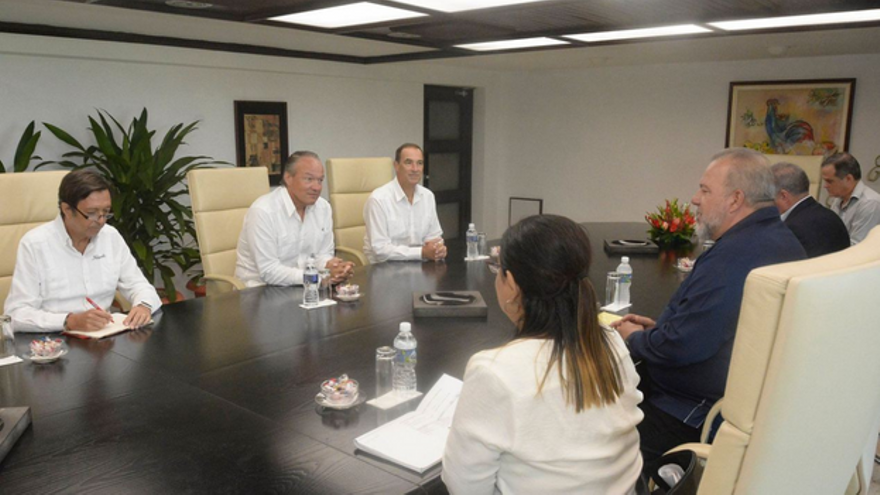
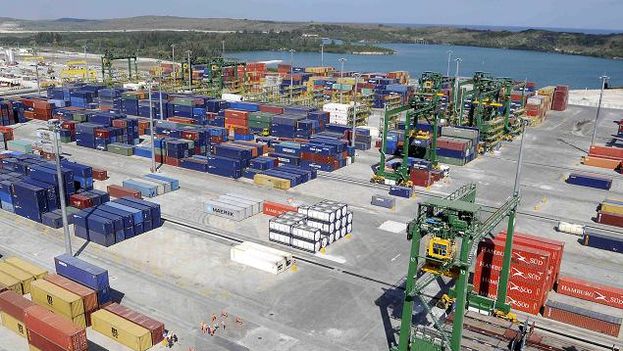
Kempinski already has two establishments in the Cuban capital: the Gran Hotel Manzana, inaugurated in 2017, and the Gran Hotel Bristol, in 2020. (Twitter/Manuel Marrero Cruz)
14ymedio, Havana, 2 September 2022 — The Cuban Prime Minister, Manuel Marrero Cruz, foresees more “business opportunities” on the Island with the luxury hotel group Kempinski. In a meeting held on Thursday in Havana with Bernold Schroeder, president of the Board of Directors of the company, Marrero negotiated the expansion of the group in Cuba.
Qualified by Marrero as a “high standard” German company, Kempinski already has two establishments in the Cuban capital: the Gran Hotel Manzana, inaugurated in 2017 with five-stars plus, and the Gran Hotel Bristol, which opened its doors in 2020.
Despite the optimistic tone of the meeting, a recent 14ymedio tour of the hotel cartography of Havana revealed that the Manzana hotel was under repair, with excavators and without customers, while the Bristol, after a brief opening, was closed to the public.
Bernold Schroeder, the manager who met Marrero, has been part of Kempinski since 2017 and has been running the company since 2020. According to the company’s official website, Schroeder boosted the growth of the group in Asia and Europe, which earned him the promotion to his continue reading
present position, and has been responsible, to a large extent, for the rapprochement with Cuba.
In 2019, the Gran Manzana Kempinski hotel was included by Donald Trump in the List of Restricted Cuban Entities, an inventory of companies that could be sued by the U.S. justice system for profiting from properties expropriated after the 1959 Revolution, although several companies registered in the European Union have legal protections against this mechanism.
In the midst of the resounding crisis that Cuba is going through, the Cuban government’s link with a high-caliber hotel company such as Kempinski arouses several controversies. For example, why is government management concentrating on unnecessary projects, when there is a moderate number of tourists entering Cuba, in addition to the hotels being excessively expensive.
Marrero, who served from 2004 to 2019 as Minister of Tourism and was part of the administrative apparatus of Gaesa, personally manages the deal with large companies, while the owner of that portfolio, Juan Carlos García Granda, occupies a secondary place in these businesses.
Reproducing topics and tropical clichés, Kempinski announces Havana as a “city stopped in time, slow,” where people “take their time.” The Cuban government has not offered additional information about the projects that the German company intends to carry out or where they will be located.
The Kempinski group was founded in 1897 and today manages 79 five-star establishments in about thirty countries. On the island, in addition to the Manzana and Bristol hotels, with 246 and 162 luxury rooms, respectively, the company opened the Cayo Guillermo Resort Kempinski, located in the north of the province of Ciego de Ávila, in 2019.
Translated by Regina Anavy
____________
COLLABORATE WITH OUR WORK: The 14ymedio team is committed to practicing serious journalism that reflects Cuba’s reality in all its depth. Thank you for joining us on this long journey. We invite you to continue supporting us by becoming a member of 14ymedio now. Together we can continue transforming journalism in Cuba.
14ymedio, Partos Rotos – a Collaboration of Independent Cuban Journalists, Havana, 30 June 2022 — On August 12, 2015, at two in the afternoon, Paloma López called the ambulance that would take her to Ramón González Coro, an OB-GYN hospital in Havana. Early that morning, she decided to start her labor at home, as she had heard about women being ill-treated at the hospital.
When she arrived, she was six centimeters dilated but her water had not broken. “They took me to the gurney to monitor me, they lifted me and took me to a strange room. Then, without any warning, (the doctor) took out a pointy object, and bam! She stuck it in me, and it hurt. I screamed, ‘what is that!’, and it was to break my water.”
The obstetrician threw all her weight on Paloma’s stomach and used her forearm to press on the uterus to push the baby down. Paloma was startled and struck away the doctor’s hand. As she was leaning on her with her feet practically up in the air, the doctor fell to the floor.
“Look at this bitch, she doesn’t want to be helped! She’s going to kill the baby,” Paloma recalls the doctor shouting.
“Doctor, don’t say that! You have to ask me for permission.”
“No, you don’t have a clue.”
The physician tried to apply the maneuver several more times. Paloma reacted in the same way and continued to push her off. Moments later, while trying to overcome the pain, she finally allowed the obstetrician to climb onto her stomach. “They pulled me. I felt the tearing of my baby girl, how they pulled her out,” she says. “Now I know that it was premature, that it wasn’t an organic birth. And I got a huge tear from the baby down there.” continue reading
A problem in Cuba and around the globe
Over the last two years, an increasing number of Cuban mothers have shared their childbirth experiences on social media platforms and independent news outlets. Their stories have unleashed an obstetric #MeToo on the island.
Some mothers report feeling verbally or psychologically mistreated. Others said they were denied information about what was happening to them or were never asked for consent to perform harsh interventions. Many described their childbirth as a traumatic event in which they were treated as if they had no autonomy and felt that their well-being was irrelevant.
For some, the problem was that they suffered excessive medicalization or aggressive practices. One of these practices is known as the Kristeller maneuver, which involves applying manual pressure on the ribs and has been questioned by the WHO since 1996. Another common procedure is called an episiotomy. It is performed by making an incision in the perineum, a tissue located between the vagina and the anus, to facilitate childbirth. This is often performed without consent and/or when it is not required.
Other patients said they felt neglected or ignored.
Their testimonies have helped shed a light on a problem that happens in most countries, but which had remained especially invisible and naturalized in Cuba: obstetric violence.
This study, Partos Rotos (Broken Births), shows this is a systemic problem in the country. Over 400 women from all provinces participated in the study. They filled out over 500 questionnaires that asked them about their births. Most of the births described were performed either by C-section or vaginal delivery and took place in the last two decades.
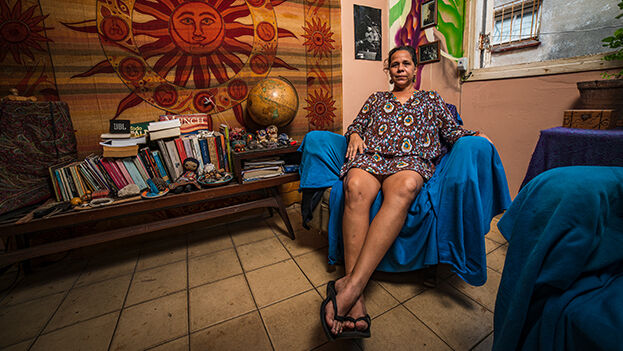
Rainys María Rodríguez. (Partos Rotos)
The research is not based on a representative sample and its results have no statistical validity. However, it is a broad enough sample to provide an overview of how obstetric violence is prevalent in the country.
The interviewees describe a health system in which their requests for pain management are ignored (86%) and aggressive procedures – that are no longer systematically performed in other countries – are still common practice in Cuba. Manual dilatation or tourniquet was performed in almost 50% of the deliveries, and the Kristeller maneuver was also applied in a similar percentage. On the other hand, episiotomies were carried out in three out of four cases.
Respondents also noted that lack of consent and ill-treatment were common. Nearly half of the women voiced that medical personnel acted without seeking their consent, which violates patients’ human rights, according to the United Nations (UN) Special Rapporteur on Violence Against Women.
In addition, 41% of the mothers interviewed reported suffering verbal or psychological violence, and that medical staff ignored their requests or even accused them of putting their babies’ lives at risk.
Cuba is not the only country where these and other violent medical practices against women are still common. This is a global phenomenon that originates in sexism and a patriarchal culture that permeates health systems.
According to Eva Margarita García, a doctor in Anthropology and author of the first thesis on obstetric violence in Europe, obstetric violence is the result of gender violence and medical malpractice. She defines it as the violence that health personnel exercises on women’s bodies and their reproductive life through dehumanized treatment, medicalization abuse, and pathologizing of their physiological processes.
García believes this violence is mediated by a gender bias that infantilizes women and serves as an excuse to treat them in a degrading manner. However, this is such a socially normalized practice that it is often difficult to identify it as a problem.
In Cuba, however, certain factors make this a particularly acute problem. For instance, according to health professionals interviewed for this research, the Cuban health system is a top-down organization in which physicians have little room for reform.
They are under strong pressure to maintain certain statistical indicators, especially regarding infant mortality, and have little incentive to improve the quality of care or consider the mothers’ well-being. Moreover, in a country that is regarded as a medical powerhouse and is under authoritarian rule, the scope for recognizing and addressing the problem is narrower than in other countries.
Sexist stereotypes
In carrying out this report, we interviewed eight medical specialists, four women, and four men, who are actively participating or have previously participated in the Maternal and Infant Care Program (Programa de Atención Materno Infantil, PAMI), a program that centralizes women’s reproductive health in Cuba. All eight specialists chose to remain anonymous for fear of reprisals, such as losing their jobs or being expelled from the Ministry of Public Health (Ministerio de Salud Pública, MINSAP).
Interviews with these physicians suggest that, in Cuba, gender stereotypes that influence how women are treated during childbirth are still very much prevalent in the health care system. For example, a general practitioner with decades of experience in the country’s central region justified several practices of obstetric violence, “especially in women with delayed labor or in women who are namby-pamby or stubborn.”
There is also an inclination to see women in labor as ignorant and/or expect them to be subordinate. Informing, asking for consent, allowing them to have companions, or simply walking around during labor is seen as an obstacle for the professionals to carry out their job. As the interviewed specialists stated, these are not common practices. “Priority is given to the baby, caring for the newborn, and that the mother does not bleed, forgetting the psychosocial being,” a gynecology and obstetrics resident in Holguín explained.
Some obstetricians also believe that childbirth is always painful, so alleviating suffering is therefore not a priority. In addition, patients who request C-sections are seen as seeking “comfort” and are “forced” into vaginal delivery.
The expectation that women obey medical indications without protesting is also common among health personnel. This notion is so deeply rooted that the women themselves have begun to tell each other that it is better to “collaborate” or “behave well” – expressions that were regularly mentioned in the questionnaires – to avoid worse forms of abuse.
Sandra Heidl, a psychologist and feminist activist who gave birth in Cuba when she was 19, believes that “the product, the fetus, is the most important thing” to the Cuban public health system, and women take a backseat as the recipient of the product. Women take or are unaware of this violence because they want the best for their unborn child, and they have been told that physicians must decide for the babies’ sake,” Heidl explains.
This subordination of the patient to the physician is a feature of what is known as the Hegemonic Medical Model (HMM). Daylis García Jordá, the author of one of the few studies on obstetric violence in Cuba, considers that the HMM tends to see the patient as ignorant or the bearer of wrong ideas, while knowledge resides only within the physician. García Jordá explains that, despite the recent criticism against this model, it continues to be in full force. As a result, it gives way to a childbirth experience in which the physician matters and the patient does not.
In fact, health systems in many countries are designed to meet the physicians’ needs, according to Dr. Matthias Sachsee, a German specialist in health care quality with experience in Mexico, and Thaís Brandao, a Brazilian researcher in sexual and reproductive health.
Yusimí Rodríguez. (Partos Rotos)
Cuban medical professionals acknowledged that certain violent practices are performed due to the physicians’ convenience, such as the indiscriminate use of episiotomy. “It’s the easy way for the specialists to perform the delivery, to do it quickly because they just want to get it over with,” said a Gynecology and Obstetrics in Holguin.
Other common practices such as prohibiting pregnant women from walking or having company, performing enemas, or denying them pain medication are also related to the needs of the system or the physician’s preferences, without consideration for women’s needs and suffering.
For all these reasons, researcher Brandao says obstetric violence has “institutional roots” and its main cause is the system’s unwillingness to address the problem. In her opinion, obstetric violence does not stem from a lack of resources. “You can promote healthy, non-violent births even without any resources, because (as a government or system) you understand that this is what’s important,” states Brandao.
A unique birth
Since 1975, almost 100% of births in Cuba take place in public hospitals. Unlike pregnant women in other countries, Cuban women have no say in where or how they give birth. They must give birth in the only existing system controlled by the Minsap. Thus, Minsap’s rules, priorities, and shortcomings broadly shape the experience of giving birth on the island.
That institution has shown that its main objective is to keep certain indicators low, especially infant mortality: the number of children who die during or shortly after childbirth. This is the rate that the authorities proudly present every year to showcase the success of their childbirth care system. “It is the best-kept statistic in the ministry,” assured one of the interviewed physicians.
“In Cuba, the system is structured in a way that responds more to numerical parameters and works in response to the professionals’ needs or those of Public Health as an entity when bringing a new life into this world, and not of the women and their families,” specifies academic García Jordá in her study.
The interviewed professionals agreed that the Minsap pressures them to deliver excellent statistics and comply with strict protocols, which discourages them from introducing changes or acting according to their medical judgment. It is also common for them to have to meet quotas, for example, on the maximum number of C-sections they can perform.
Many physicians condemn the pressure they are subjected to. Some feel the inflexibility of the protocols makes them mere executors of policies designed by bureaucrats who don’t know the reality in which they work.
“It is unacceptable that a program involving human management is based on meeting indexes and parameters. Physicians cannot be thinking about numbers, figures, or emulations while caring for a patient’s life. So, you work under a lot of pressure”, states a retired obstetrician who worked in the field for over 20 years.
A recently graduated physician agrees. “For me, (OB-GYN) is one of the specialties where you have to be most careful because heads are cut off at any moment for any reason.”
From the authorities’ perspective, the system works because they achieve the statistics they aim for. Fewer mothers and newborns die in Cuba than in most countries in the region, which allows the government to boast about its system. The infant mortality rate is very similar to the rates presented in countries such as the United States. In addition, maternal mortality, although much higher than in the countries in the Northern Hemisphere, is among the lowest in Latin America.
However, there no statistics are collected on obstetric violence or the absence of humanized childbirth. Despite the abundance of Minsap protocols, the professionals interviewed agreed that the principles of humanized childbirth, which some countries are now starting to apply, are little known in Cuba.
“If you refer to the international bibliography, you learn about it, but the practical course does not mention it. It’s not a topic that’s even discussed,” says a gynecology and obstetrics resident from Holguín.
In 2018, the World Health Organization (WHO) established a series of recommendations for labor. The first element it recognizes is that childbirth cannot be subject to strict protocols, such as those applied in Cuba. Instead, care should focus on the woman’s state and her baby’s, “their wishes and preferences, and respect for their dignity and autonomy.”
WHO recommends encouraging pregnant women to move around and give birth in an upright position. It also suggests allowing them to be accompanied, eating or drinking during labor, not separating babies from mothers right after birth, not applying techniques that artificially speed up natural processes, limiting vaginal touches to once every four hours, and performing episiotomies only if strictly necessary.
These recommendations not only respect women’s rights but also yield positive results from a medical standpoint. Multiple studies have shown that the more comfortable and accompanied pregnant women feel, the greater the probability that their vaginal delivery will be successful and, in turn, aggressive techniques will be required to a lesser extent.
However, questionnaires and interviews with professionals in Cuba show that these recommendations are blatantly disregarded in the country.
Not caring nor humane
Many women described giving birth in an environment that lacked empathy, warmth, or humane treatment. Others directly reported being mistreated, coerced, and verbally abused. Minsap professionals deprived them of the experience they wanted to have when their children came into the world. This contributed to the birth becoming a source of trauma.
Many interviewees stated that they experienced psychological sequelae after their birth. In 30% of deliveries, women were afraid of getting pregnant again or reported having repetitive images of particular moments when giving birth. In one of every four deliveries, women experienced mood swings, difficulty sleeping, or fear of confronting the health care system.
In addition, in 14% of childbirths, women stated they suffered from postpartum depression.
“You will rarely see (these sequelae) reflected as a diagnosis in the medical records,” explains one of the professionals. “These patients are seldom referred to mental health services for treatment, which ends up affecting the physical health and quality of life of the patients and their families,” they added.
The verbal or psychological violence, the lack of empathy, or the feeling of neglect described by the women in the questionnaires have deep causes related to the misogynistic culture and the Hegemonic Medical Model. The verticality of the Cuban health system only aggravates this context, according to the consulted physicians.
Several professionals admitted that they end up passing on the pressures and shortcomings they experience to the women they are treating. This issue can be expected to intensify as the country’s medical services have deteriorated due to a lack of personnel and resources.
Currently, medical personnel in Cuba earn between 190 and 320 USD per month, at the official exchange rate. To survive, some of them accept gifts or cash from patients and usually reserve the best care and the few materials available for their treatments.
“Obstetrics and gynecology are among the specialties that most rely on this informal exchange. If you don’t have your doctor and you ‘don’t go through the gutter’, as they say, you’re screwed,” a recently graduated doctor said from her own experience becoming a mother.
Despite the profusion of healthcare professionals in the country, interviewees described increasingly intense work schedules and shifts due to staff shortages. After shifts of three or four consecutive days on call, it is common for PAMI staff to have to work in health centers or make home visits.
At the same time, the demands to meet statistical targets show no signs of slowing down. “We have to produce results at the same level as countries that have services with all the proper conditions,” in the words of a specialist quoted in Lareisy Borges Damas’ thesis. Borges Damas is a doctor in nursing who has researched models of humanized childbirth.
Several professionals claimed to have lost motivation working with this framework, which negatively affects the quality of the care they provide.
As a gynecology and obstetrics resident from Holguín said, “Nobody wants to work here, so they let this violence happen as long as it doesn’t affect the statistics. There can be ill-treatment as long as the pregnant woman and the baby do not die. That’s more or less how it works.”
____________
COLLABORATE WITH OUR WORK: The 14ymedio team is committed to practicing serious journalism that reflects Cuba’s reality in all its depth. Thank you for joining us on this long journey. We invite you to continue supporting us by becoming a member of 14ymedio now. Together we can continue transforming journalism in Cuba.
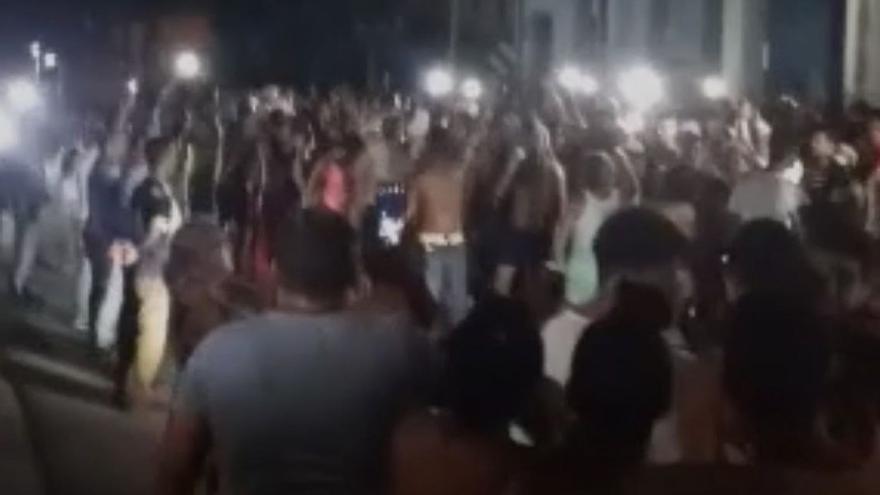
Demonstration in Nuevitas, a town in Camaguey province, on August 18. (Screen capture)
14ymedio, Madrid, 2 September 2022 — There were a total of 361 demonstrations in the country, according to the latest report by the Cuban Conflict Observatory (OCC), which was released on Thursday. This is the second highest number of protests recorded by the US-based organization, which began tracking them in September 2020.
The main reason Cubans took to the streets in August was to protest blackouts. The report notes that were as many as 79 protests of different kinds, 41 of which were cacerolazos.*
According to the OCC most protests fell into one of two categories: those for political and civil rights, and those for economic and social rights. It explains that it had to apply “selective criteria” when classifying cacerolazos, which began over a social grievance — a shutdown of the electrical power supply — but broadened over the course of the month to include political demands.
There were 219 protests over political rights and 142 over economic rights.
The report states, “The number of cacerolazos increased 145%, from 20 in June to 49 this month.” Artemesia province saw the greatest number, with eight such protests, followed by Cienfuegos with seven, then Holguin and Camaguey with six each.
The most notable of these occurred in Nuevitas on August 18 and 19, when hundreds of people took to the streets to demand not only that electrical power be restored but also to call for freedom. continue reading
The report states that protests directly criticizing the government for mismanagement grew from 85 in July to 172 in August. Although it states that many of the protests demanded the Diaz-Canel government be replaced, they also demanded the socialist system be replaced.
It mentions an increase in violent actions by unknown perpetrators as described by anonymous reports on social media. These include arson attacks at state recreation centers and stones thrown at display window of state-owned hard-currency stores.
To deal with this, the organization claims the government “apparently wanted to try an active measure by claiming there had been a firebomb attack on a state building. The fabrication of disinformation on the alleged operation was extremely crude and national public opinion immediately dismissed the news as a police stunt.”
The OCC says the number of demonstrations having to do with economic rights may also have been growing. These involve not only those related to power blackouts but also to “the collapse of the healthcare system in response to the growing dengue epidemic, shortages of food and medicine, inflation and garbage collection.”
In this monthly report, the OCC states, “Cuban protests now take a wide variety of forms: collective prayers in public places, graffiti, civic campaigns with flyers and posters, provocative religious services, and hackings of official websites and the computers of hotels associated with the military-business group GAESA
The OCC report also highlights the Matanzas Supertanker Base. Referring to it as a “disaster,” it decries “the lack of foresight on the part of the leadership and the inefficiency of the system of governance to provide internal stability, which exacerbates the crisis of legitimacy and the credibility of the government.”
The OCC argues, “Though expressions of discontent or dissent with respect to current policies are widespread, what is undeniable is that never since 1959 have they been of such size, permeating the most diverse layers of society with the exception of a tiny oligarchy, which benefits from them.” It concludes, “If the intransigence of the powerful elites persists,” this trend will be unsustainable “in the short or medium term.”
*Translator’s note: A form of popular protest which consists of a people making noise by banging pots, pans, and other cooking utensils to call attention to their grievance.
____________
COLLABORATE WITH OUR WORK: The 14ymedio team is committed to practicing serious journalism that reflects Cuba’s reality in all its depth. Thank you for joining us on this long journey. We invite you to continue supporting us by becoming a member of 14ymedio now. Together we can continue transforming journalism in Cuba.
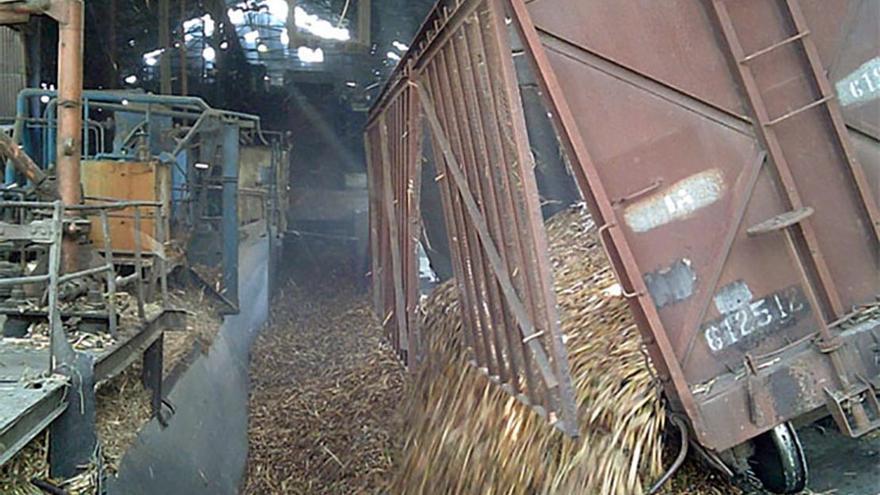
The planned harvest is half the goal of the last campaign and lower than that achieved. (Granma)
14ymedio, Havana, 2 September 2022 — The Cuban authorities have set themselves the goal for the next harvest at even fewer tons than were achieved in the previous one, which was the worst in the history of the Island. It’s true they have called it small, but it’s difficult to understand why they call it “efficient” since in no case does it even cover domestic demand.
Julio Andrés García Pérez, the General Manager of Azcuba, a group of companies in charge of sugar production, announced that 455,198 tons of sugar must be produced for the ’family basket’, tourism, medicines, industrial production and exports. It’s too little sugar for so much demand, if we take into account that domestic consumption requires around a half million tons, and, last year, 411,000 tons were committed to foreign sales.
The plan wasn’t achieved last year, since 911,000 tons had been projected and barely 473,720 were obtained. This year, therefore, officials adjusted their forecasts according to the poor production recorded in 2022, and even a little less. The figure is more realistic, although it remains to be seen if it is reached, in the midst of the current economic and financial debacle, lack of fuel, blackouts and a planting that has already started badly.
The campaign will begin in mid-November, which on this occasion will involve 23 sugar mills. In the past there were 36, but only three fulfilled their production plans, according to the authorities, who already warned that for this year the number of sugar mills would be reduced to 26. In the end, the number is even more modest.
In the meeting held yesterday between the leadership of Azcuba and the Party leadership, García Pérez explained that “it’s a matter of planning the harvest so it’s objective, flexible and, although small, with good practices, concentrating resources in fewer sugar mills to achieve greater efficiency.” continue reading
Deputy Prime Minister Jorge Luis Tapia Fonseca, who emphasized “discipline,” recalled that this year “there will be no more subsidies for losses in the sector” and fiercely placed the responsibility on the workers, whom he asked to be aware of how much they will achieve each day, because “if the mill doesn’t mill, the economic results won’t be good.”
“Indicators of efficiency are the main weapons of this harvest, which will be the beginning of the recovery of sugarcane in the country,” said Tapia Fonseca, to the astonishment even of the readers of the official media, Cubadebate.
“One of the most serious problems we have is triumphalism, which then dissolves into sad realities,” says a commentator in the article, entitled “Cuba is getting ready for a small, but more efficient harvest.” And another spits out, “That title is repeated every year.”
Meanwhile, a reader who has reviewed the accounts of the previous campaign says regretfully: “That means that the sugar production in the next harvest (455,198 tons) will be lower than in the last (480,000 tons in round numbers, the lowest production in more than a hundred years). We keep moving forward like the crab. We are already announcing that we will break the record we had ’achieved’ in the last harvest. And when I woke up, the directives were still there.”
The warning has also caught the attention of the Spanish-based Cuban economist Elías Amor. “Knowing that the economic situation is very serious, they no longer try to hide the disaster but broadcast it before it happens, so that people can prepare. It’s a change of strategy that, in the case of sugar or blackouts, is now set,” he says. The expert describes the adjective “efficient” as “a macabre joke” for the coming harvest.
Elías Amor has dedicated numerous analyses to the resounding fall of the sugar industry, which has gone through times of glory. In 1959, Cuba had 156 operational factories that produced 5.6 million tons of sugar. During the years of the Soviet subsidy, although without reaching the mythical 10 million announced by Fidel Castro, record figures were reached that exceeded eight million tons in the best harvests, between 1970 and 1989.
The root causes of the debacle in recent years are, for the authorities, the lack of fuel, breakage in machinery and transport and industrial failures, in addition to the humidity of the fields and COVID-19. According to the economist’s analysis, the greatest burdens are the absence of financing (due to the lack of access to financial markets), the impossibility of attending to domestic consumption and the little technology available to obtain sugar production byproducts* – “which is where the profitable sugar lines are.”
These causes explain the failure of one of the industries that contributed the most money to Cuba in history, well ahead of tobacco, but there will also be consequences. The lack of sugar for export will prevent the much-needed acquisition of foreign currency, and its absence for the domestic market will force the State to spend amounts of money that it doesn’t have. Meanwhile, the street finds a new reason for discontent.
*Translator’s note: The four main byproducts of the sugarcane industry are cane tops, bagasse, filter muds and molasses.
Translated by Regina Anavy
____________
COLLABORATE WITH OUR WORK: The 14ymedio team is committed to practicing serious journalism that reflects Cuba’s reality in all its depth. Thank you for joining us on this long journey. We invite you to continue supporting us by becoming a member of 14ymedio now. Together we can continue transforming journalism in Cuba.
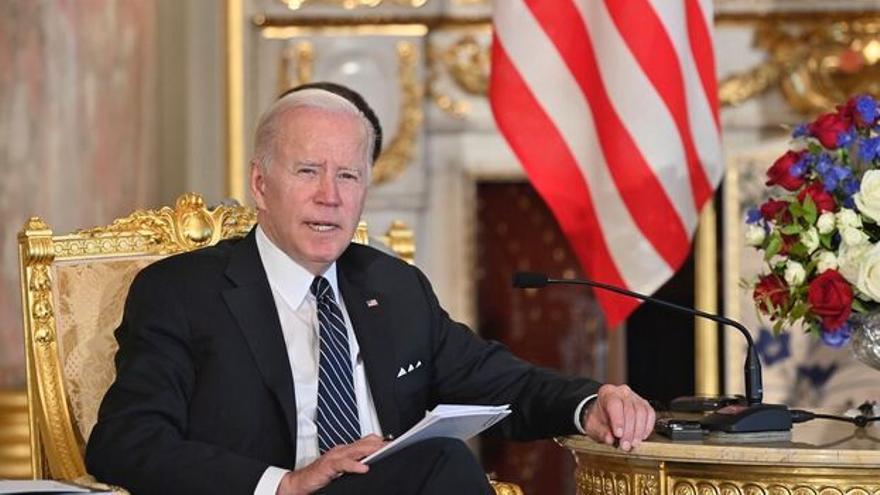
14ymedio/EFE, Havana, 3 September 2022 — The president of Cuba, Miguel Díaz-Canel, criticized the U.S. president, Joe Biden, on Saturday for renewing the Law of Trade with the Enemy, a statute of 1917 that underpins the economic embargo on the island.
“Biden didn’t dare to take away the ’pretext’ from us and signed for the continuity of the blockade,” the Cuban president wrote on Twitter, referring to the memorandum that extends that policy until September 14, 2023.
Díaz-Canel added that “the crime has lasted too long, but the Cuban Revolution will survive it.”
In the same vein, the Cuban Foreign Minister, Bruno Rodríguez, said that “Biden becomes the 12th president of the United States to ratify the framework that supports the policy of abuse against Cuba and its people.”
The policy, the Minister of Foreign Affairs added, “is rejected by almost all member countries of the international community.”
Then president John F. Kennedy resorted to the statute in 1962 to impose the economic embargo on Havana, and since then it has been renewed, year after year, by the following presidents.
Cuba is currently the only country in the world sanctioned under that law that authorizes the president of the United States to impose and maintain economic restrictions on states considered hostile. continue reading
The embargo has been widely criticized internationally and rejected since 1992 by a large majority of countries in the UN General Assembly.
Systematically called “the blockade” by the Cuban authorities, the embargo is the reason used by the regime to justify the shortage of food, medicines and other multiple problems, even though there is a law that allows Cuba to buy basic goods from the United States, as long as it pays in advance, in cash.
Most of the chicken that Cuba imports come from the United States; in the last 20 years, the United States has exported 2.78 million tons of chicken to Cuba — 39.5% of that in the last five years — for a cumulative value of 2,368 million dollars, according to data from the beginning of 2022. In addition, the Island also buys other products from the US, such as soy, fruits, coffee, ketchup, fresh vegetables and pet food.
Translated by Regina Anavy
____________
COLLABORATE WITH OUR WORK: The 14ymedio team is committed to practicing serious journalism that reflects Cuba’s reality in all its depth. Thank you for joining us on this long journey. We invite you to continue supporting us by becoming a member of 14ymedio now. Together we can continue transforming journalism in Cuba.
14ymedio, Elías Amor Bravo, Economist, 4 September 2022 — Cuban communists have failed dramatically with foreign investment. They were wrong to believe that an interventionist law and not guaranteeing property rights were going to serve to promote investment. They were wrong about the Mariel Special Development Zone, which has not been special, nor anything close. They were wrong about the devices for hiring labor, the design of joint ventures or the absence of funding. They were wrong in everything; hence, the failure.
And now, the State newspaper Granma published an article entitled “Lend a hand” to national industry and economy with foreign investment. Wouldn’t this be like going for the jugular? Nor would putting the national infrastructure that is still state-owned at the service of foreign investment make it possible to patch over a pothole that has its explanation in the desire to apply the communist model to foreign capital, an erroneous pretense that doesn’t have a leg to stand on.
The foreign investor wants freedom to decide what to do with his money. The hands of the state, the farther away, the better. This is something that the Cuban communist regime cannot understand, and that’s how it goes.
Contrary to what is stated in Granma, analysts emphasize that the framework of foreign investment in Cuba continues without undergoing the necessary changes to achieve its increase, and the recent decisions of the regime have passed without pain or glory, because they don’t go to the heart of the problem. But with these decisions, the communist state intends to solve critical problems that throw the Cuban economy into a situation of extreme weakness, such as with food or electricity, and in these matters, foreign capital seems to have little interest. continue reading
The regime intends for foreign capital to enter to operate in wholesale distribution, but this stumbles over the legal framework in Cuba. On one hand, there is no guarantee because this activity is subject to control by the regime, and on the other, why dedicate itself to distribution when the problem is that there are not sufficient products or goods?
The two vectors point to a scenario in which no matter how hard the authorities try, they won’t find a foreign distributor to provide the technology and experience that will achieve radical changes in the gray commercial landscape of the communist economy. You don’t build a house from the roof down; you need a solid foundation. As much as Minister Gil tries at the National Hotel to convince representatives of embassies, national and foreign businessmen and officials from agencies of the State, he knows that this initiative won’t go very far; and in any case, if it happens, the government will have a partner subject to communist decisions who, sooner or later, will abandon the business.
Likewise, Gil claimed the new scenario according to which, currently, both the private and state sectors have a demand for resources to produce, backed up by imports, which means a space for the participation of foreign capital in wholesale trade. But in this, he also didn’t tell the truth, since while the state sector agrees to dollar-to-peso exchanges at the rate of 1×24, others, the non-state, must get used to the semi-official rate of 1×130, or resort to the informal market rate of 1×150, and rising.
Gil said that the country has an infrastructure that is above production levels, and this is false, according to the results of 2021, but by disagreeing with it, he refused to accept the technological obsolescence of numerous sectors and companies in sugar, electricity, manufacturing, transport, etc. The minister is wrong to say these things, and the foreign investor is attentive to all this when making decisions.
It’s not surprising that other Caribbean countries, such as the Dominican Republic, benefit from this black hole of the Castro regime, which aims to trap unsuspecting investors so that they place their capital in warehouses or factories whose cost of reactivation is much higher than putting it into operation from the beginning. If you think not, look at the estimate of 255 million dollars to update the electricity sector.
Haste has never been a good adviser in economic policy decisions. In reality, attracting foreign capital to Cuba simply requires another model, another economic structure, another legal framework, and that doesn’t happen overnight. Going around in a vicious circle doesn’t lead anywhere.
Therefore, when the minister declares that he is willing “to make national infrastructure available to foreign investment,” he should clarify how he intends to do it, in terms of what model, with what instruments and within what deadlines, because that being said, in open terms, he will not be able to attract anyone; on the contrary, he will scare off foreign capital. The lost foreign exchange income in the country, which is more than 3 billion in a very short period, will never come within the current framework of foreign investments.
The minister abandons the idea of international investors deploying their structures to produce and generate employment in Cuba, seeing that this is impossible, and therefore, he now wants to make it easier for foreigners to bring products into the country, taking advantage of their experience, their financial facilities, their technology and for this, to take advantage of the communist state infrastructures. They aren’t going to be successful, not in the wholesale trade and much less in the retail trade. There are many countries to attend to first, with promising markets. Cuba lags behind in this international competition, and for Cubans things are getting worse and worse.
As always happens in these business forums, such as the one held at the National Hotel, ministers participate in the road show to present business opportunities to foreigners who then, when studied in detail, end in nothing. The five proposals offered by the director of foreign trade of Havana, Luis Carlos Góngora, surprised the attendees. First, the possibility of wholesale and retail production and marketing of consumer and intermediate goods in the capital, which are in high demand, associated with the activity of breadmaking and pastry, artisanal and industrial productions of candies and other jams, and the processing and preservation of food.
He stressed that there is a market for this, due to the growing number of micro, small and medium-sized companies that are engaged in these activities, in addition to the fact that these products and raw materials are for widespread domestic use, in family food, which also justifies a retail market. And among the products to be marketed, he mentioned sugar, salt and flour, in addition to specific mixtures, gluten-free flour, packaging, fats, oils, yeasts and dyes, among other raw materials.
The business director of the Ministry of Industries, Tomás Oviedo, proposed several areas for foreign investment; for example, the marketing of tires and rubber articles, as well as inputs and equipment related to these productions. The proposal would be in the form of a wholesale marketing company, and the opportunity lies in the high unmet demand, with potential customers such as the ministry itself, MITRANS [the Minstry of Transport], the construction sector or any other branch of the economy that owns automotive transport.
From the chemical industry, there was talk of the creation of a wholesale entity that markets flat glass and items of this material, supplies and equipment for the respective factories, which would meet the demands of that market, acquire new technologies for the development of this industry and recover and make the most of the capacities already installed.
In the field of agriculture, it was proposed to develop a chain of wholesale and retail stores, no less than five, to offer a variety of products and commodities with national reach, supported by wholesale warehouses. This proposal would be supported by a high demand in the sector for raw materials, tools and accessories, among other things, and as another potential it added the existence of underutilized logistics capabilities, with a network of establishments that are out of stock.
The question that appears in all this list of opportunities is the same: Why haven’t the Cubans done this themselves, and why do you have to resort to foreign capital? Or more importantly, why doesn’t the state do it with its state companies?
On the other hand, it abounded in several conditions and guarantees of operation, such as the “Single Window,” created to accompany investors and facilitate the entire process.
Castroite leaders have thrown in the towel, aware that the communist model can’t go on, except to highlight interventionist nonsense such as the portfolio of opportunities or the one-stop-shop. They speak of a more favorable environment for foreign investment, but they don’t realize that the current times, due to a serious global economic crisis caused by Cuba’s partner, Putin, will bring with it a collapse of markets and financing. It’s unfortunate that Cuban leaders are going to look for investments just when it can become more complicated. Always swimming against the current.
Not even letting businesses operate in foreign currency, which means taking them away from the reality of a weak and increasingly fragmented domestic market, will manage to interest any foreign investor. No one trusts these types of decisions that, at any time when the conditions of the economy change, can be reversed, and then it’s over. This lack of guarantees is what worries many investors.
The eternal bureaucracy is also frightening investors, so, when the flexibility in the requirements for proposals was announced, the reduction in the content of the documentation that is required today for approval, some rejoiced, but sadness returned when it was seen that the required paperwork remained the same and that the multiplicity of partners again casts shadows of doubt.
Finally, no one told Minister Gil and his colleagues that in order to attract foreign capital for business opportunities in the sectors of the economy, something must be done first, and that it’s very important.
And that is to pay off the debts. No attendee said anything about this issue. It’s an annoying matter for those who haven’t paid the Paris Club and other creditors for two years. And so, with that data about non-payment, they want to attract investments? Good luck with that.
Translated by Regina Anavy
____________
COLLABORATE WITH OUR WORK: The 14ymedio team is committed to practicing serious journalism that reflects Cuba’s reality in all its depth. Thank you for joining us on this long journey. We invite you to continue supporting us by becoming a member of 14ymedio now. Together we can continue transforming journalism in Cuba.
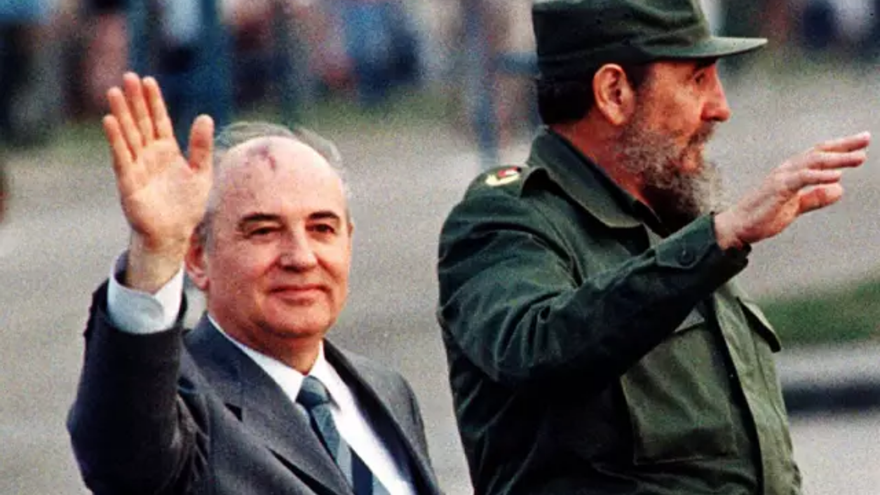
During Gorbachev’s trip to Cuba in 1989, he and Castro could not hide, despite high levels of diplomacy, the abyss that separated their ideas. (EP)
14ymedio, Frank Calzón, Miami, 3 September 2022 — Mikhail Gorbachev, the Soviet leader who wanted to salvage communism with his reforms and openings known as glasnost and perestroika, could not convince Fidel of the pragmatism of these reforms during his visit to Cuba in 1989. Fidel did not like the interest generated by the Russian — younger than he — among Havanans, nor did he like his ideas of renewal.
Now, the state-run press in Cuba has limited itself to succinctly informing about his death, which has been the subject of hundreds of articles and commentaries in the most important press outlets around the world.
In an article this week in the Washington Post, Nathan Sharansky, a human rights activist and former political prisoner in the USSR, wrote that Gorbachev, “expressed regret that the U.S.S.R. had fallen apart, but also emphasized his personal achievements, including the promotion of political and religious freedom, the introduction of democracy and a market economy, and, of course, the end of the Cold War.”
In his book titled Perestroika, published in 1987, Gorbachev — who would become the leader of the Soviet Union the following year — wrote that “the world is not what it used to be, and its new problems cannot be solved by the inherited concepts of centuries past.” Gorbechev did not want continuity. continue reading
Those ideas and his willingness to cooperate with the United States were anathema to Fidel Castro, who always wanted to be the leader of a grand anti-American coalition. The immediate result was that Havana banned the distribution of Russian publications, such as Sputnik and Novedades de Moscú [News from Moscow], and began to repatriate the Cubans who lived in Russia to avoid contagion with the dangerous reformist virus.
Among those who were later disgraced for favoring the reforms were General Arnaldo Ochoa, a national hero decorated by Fidel Castro himself and later executed on the dictator’s orders following a sham trial for drug trafficking.
Regarding Ochoa’s case, the Los Angeles Times stated at the time that “it is possible that Arnaldo Ochoa will be spared from a firing squad by his old friend and leader Fidel Castro, but . . . Castro has decided that his Island’s future lies in . . . Stalinist Communism including purges and show trials for those unfortunate apparatchiks who stray from the party line.”
After the Soviet Union disappeared, Irina Zorina, an intellectual, and a group of Russian dissidents founded the Russian Committee for Human Rights in Cuba and the Russian Embassy in Geneva responded to a call from Carlos Franqui and Freedom House, sponsoring a session to hear the grievances of former Cuban political prisoners who were visiting the United Nations Commission on Human Rights in the Swiss city.
The session was also attended by diplomats, journalists and representatives of human rights organizations. Cuba’s State newspaper Granma ran an editorial commentary illustrated with rats, vodka bottles and American flags, alleging they wanted to convert the Russian diplomatic mission into a tavern.
Sharansky’s Washington Post article comments that during Gorbachev’s, “first trips to the West. . .Gorbachev discovered that the Soviet Union had paid a heavy diplomatic and economic price for its treatment of dissidents. As a result. . .he began to release political prisoners and long-time refuseniks (Jews fighting for their right to emigrate to Israel.) ”
Shanasky also wrote in his book, The Case for Democracy, that “three things are necessary for people to achieve freedom: people on the inside willing to suffer to achieve it; people on the outside to help them; and for democracies to condition their political, economic, and cultural relationships on the regime’s implementation of specific reforms, beginning with the release of political prisoners.”
Translated by: Silvia Suárez
____________
COLLABORATE WITH OUR WORK: The 14ymedio team is committed to practicing serious journalism that reflects Cuba’s reality in all its depth. Thank you for joining us on this long journey. We invite you to continue supporting us by becoming a member of 14ymedio now. Together we can continue transforming journalism in Cuba.
“Let us do with our lives what we want,” demands the shirtless man in the center, before the strict faces of officials and police in El Cepem, Artemisa. (Screen capture)
14ymedio, Yoani Sánchez, Generation Y, Havana, 31 August 2022 — A shirtless man stands up to officials and police to prevent them from confiscating the rafts with which a group of residents of El Cepem, Artemisa, want to get out of the Cuban “socialist paradise.” A woman sits in front of her phone in Santiago de Cuba and launches an acid criticism against stores that only take payment in foreign currency. An old man walks the streets of San Antonio de los Baños shouting slogans against president Miguel Díaz-Canel. Hours before those actions, no one would have believed that either would become a leader, no one would have singled them out as ringleaders of the outrage on this Island.
For decades, Cubans have been waiting for anointed protagonists who will confront power directly and, in the style of Joan of Arc, come to immolate themselves if necessary for the cause of all. Waiting for these bold and magnetic messiahs, many citizens have parked their own civic actions. The demands from outside and within the national borders for these determined and authoritarian caudillos to appear, feared by the ruling party and loved by the people, fascinating and good orators, have also delayed change in this country.
However, life has shown that the leader emerges where forced by circumstances, that the leading role passes from one to another as reality dictates. That momentary chief is the biggest headache right now for the Cuban regime, which, when it finishes putting out the flame of rebellion in one area of the country, another more sophisticated and stronger popular fire appears. In El Cepem, a poor community near El Salado beach, Castroism faced another problem this Monday, its own lack of charismatic figures and solutions to national problems.
A man, with a speech that borders on the philosophical heights, and whose address lacks a single obscenity, has struck the Cuban system to the heart. “If they don’t want us, because we are an illegal community, if we don’t fit in this country because our wages are not enough to buy in hard currency stores, if there is no oil for the thermoelectric plants to work,” then “let us do with our own lives whatever we want,” demands this father of an eight-month-old baby in front of the strict faces of officials and police.
Microphone in hand, while another resident of El Cepem holds the speaker on his shoulder through which his flat and firm voice is heard, this man displays all the arts of a true leader: he summons, unites, protects and confronts those who want to do harm to his group, his neighborhood. What is his name? Where did he learn all those truths that he shoots like argumentative arrows, accurate and irrefutable? It is not necessary to know. The political police will now invent a past for him that is tailored to the campaigns to assassinate his reputation, to which they have appealed so often for more than 60 years. But, for a few minutes, he was the undisputed leader of national despair.
Let’s stop waiting for “the voice.” Any of us, at any given moment, can be chief, director, rector, general or president.
____________
COLLABORATE WITH OUR WORK: The 14ymedio team is committed to practicing serious journalism that reflects Cuba’s reality in all its depth. Thank you for joining us on this long journey. We invite you to continue supporting us by becoming a member of 14ymedio now. Together we can continue transforming journalism in Cuba.
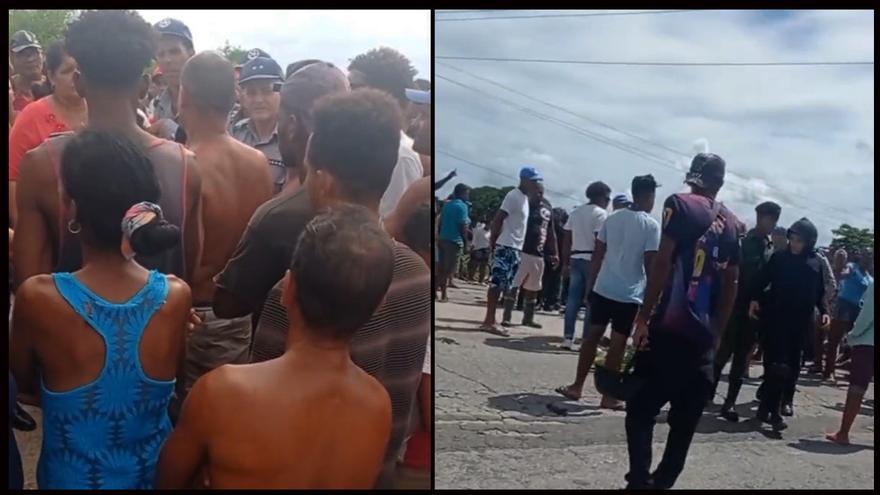
Images of the protests of residents of a settlement in Playa Baracoa. (Collage)
14ymedio, Havana, 30 August 2022 — Despite the repression in each of the places where demonstrations have taken place in recent days, dozens of Cubans staged a new protest this Monday. On this occasion, it was in the town of El Cepem, of the Costa Norte People’s Council, Caimito, in Artemisa, after the police tried to prevent the departure of several illegal rafts. The place, which has taken its name from the acronym of a nearby military unit, has become an illegal settlement with precarious housing and heavy threats from officials to punish the residents with evictions.
“If they don’t want us, because we are an illegal community, if we don’t fit in this country because our wages are not enough to buy in hard currency stores, if there is no oil for the thermoelectric plants to work, let us make the decisions for our own lives,” said one of the neighbors acting as a spokesman for the attacked residents of the place.
In a video broadcast by the exiled Albert Fonse, the moment in which special troops violently burst into several homes is observed, provoking the indignation of the residents. The altercation ended in a confrontation that left several people injured and at least six arrested, according to reports from witnesses to the events.
In the transmitted images, a man is seen who, on behalf of the residents, stood up to the officials, as was captured in another video. “Don’t treat us that way,” the neighbor tells uniformed police officers. “You are like parents who take care of the child and do not let him learn to go out in the street, so when he does go out in the street the child does not know how to express himself.” And he adds: “Allow us the opportunity to decide for our own lives.”
The man, who describes himself as the father of an eight-month-old girl, insists that they are not stealing anything from anyone, and that when they find continue reading
“one of those artifacts,” referring to homemade boats, they represent thousands of pesos raised by each family to be able to go “We don’t want to go against you, we don’t want those people to come and attack us and we have to have this response,” he reiterates.
This Cuban insisted on his request that they not be attacked when they are “making a boat, that what they should do is give us a medal… What they should make is a monument to the rafters,” making it clear that the departure of Cubans represents remittances for the Island.
The flow of rafters responds to the worsening of the humanitarian and economic crisis that the island is experiencing, with a resurgence of repression and economic deterioration, which includes a rise in the cost of living, the devaluation of the Cuban peso and an increase in uncertainty about the future. In the last ten months, almost 178,000 Cubans have entered the United States by land, surpassing the figures recorded in the Mariel Boatlift in 1980 and the Rafter Crisis in 1994.
____________
COLLABORATE WITH OUR WORK: The 14ymedio team is committed to practicing serious journalism that reflects Cuba’s reality in all its depth. Thank you for joining us on this long journey. We invite you to continue supporting us by becoming a member of 14ymedio now. Together we can continue transforming journalism in Cuba.
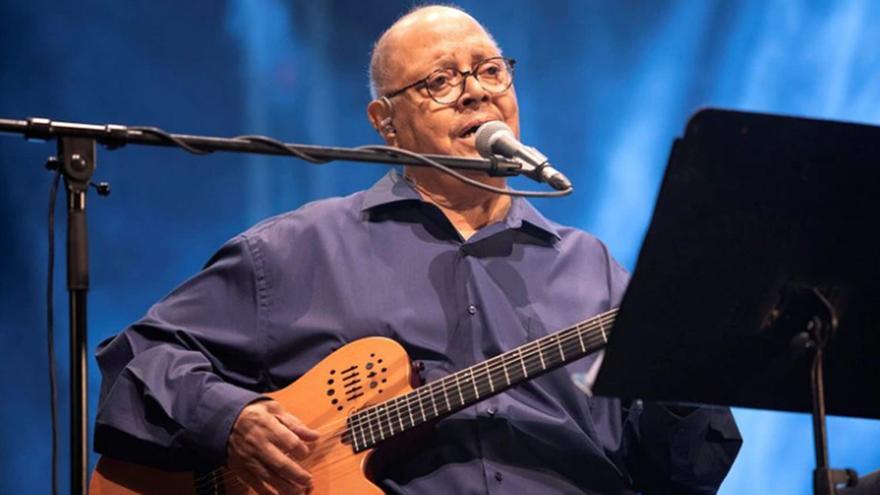
The musician Pablo Milanés in an undated photo. (EFE)
14ymedio, Havana, 31 August 2022 — Famed singer Pablo Milanés announced in a Facebook post on Monday that he had signed the Cuban Civil Society Manifesto, a document drafted by a group of Cubans, some living on the island and others overseas, which calls for change in the country.
He added a dedication “to all those who fight for freedom, and for social and economic change in Cuba.”
He goes on to note, “As I have indicated in my most recent public statements, its proposals meet the requirements of what could serve as a non-partisan effort, one without regard to trends, to old and new disagreements, which would only lead to disunity and inconsistency in any future achievements, which can only be achieved through the unity of all Cubans.”
He encourages others to read the text “in depth” to appreciate “the essential idea” of what the country needs: “new voices and new ways of thinking, which demand new laws, new freedoms, new active participation within the current society, which would lead us to a dialogue of peace and an achievable future given the dire conditions in which people find themselves, with no apparent way out.”
He reiterates his support for “this and any other manifesto that might encourage change in a spirit of sovereignty, inclusion and respect for human beings, their dignity and most basic aspirations,” no matter from where they might arise, “without prejudice and without political-ideological conditioning of any kind, to achieve what we all seek through different paths.”
The manifesto, which was released last week, calls for “profound and urgent change to wrench the country out of an unprecedented crisis and avoid confrontation.” It adds, “The state has meaning only when it represents the interests of all the citizenry, for which a consensus of Cuban civil society has a superior moral force.” continue reading
It places blame for the country’s “alarming situation” on “business centralization by the state, a source of inefficiency and corruption by bureaucratic classes, which have been dragging the population into a disastrous situation for more than two decades.” It also blames “systematic coercion of essential rights such as free oral and written expression as well as artistic creativity, the right to free, peaceful association, to free movement — in particular, the right to be able to leave one’s own country and return to it — and to citizens’ free, independent economic entrepreneurship.”
The manifesto can be signed by emailing concordiaencuba@outlook.com. It is open to those “currently living inside or outside of Cuba since the Cuban nation extends beyond the Cuban archipelago to any part of the world where there are Cubans who identify with the collective aspirations of their compatriots.”
So far more than a one hundred eighty* people have signed it. Among the signatories in Cuba are opposition figure Manuel Cuesta Morua, writer Angel Santiesteban, activist Dunia Medina Moreno and journalist Maria Matienzo. Among those from overseas are musicians Willy Chirino and Paquito D’Rivera, editor Felipe Lazaro, historian Ariel Hidalgo and activist Elena Larrinaga.
It is not the first time Milanés has spoken out against the Cuban regime. The artist, who has lived in Spain since 2004, is among former supporters of the Cuban revolution who have spoken out strongly against the repression of demonstrations that took place throughout the country on July 11, 2021.
Faced with protests after it was revealed that most of the two thousand tickets to the scheduled performance at the National Theater of Cuba had been sold to government “agencies,” authorities moved the show’s venue to Havana’s Sports City Coliseum.
Officials’ fear that Milanés would repeat on stage what he had posted on social media clouded the event. There was also fear that there would be a repeat of what happened at Carlos Varela’s concert on May 29 when some in the audience chanted “freedom” on several occasions during the performance. A heavy police presence and a very thorough check of bags and cell phones overshadowed the emotion of the audience, who that had not heard one of its most iconic musicians perform live for several years.
*Note: Signature numbers updated as of posting this translation.
____________
COLLABORATE WITH OUR WORK: The 14ymedio team is committed to practicing serious journalism that reflects Cuba’s reality in all its depth. Thank you for joining us on this long journey. We invite you to continue supporting us by becoming a member of 14ymedio now. Together we can continue transforming journalism in Cuba.
Cuban singer-songwriter Silvio Rodríguez has once again made statements questioning the Díaz-Canel government. (La Tercera)
14ymedio, Havana, 29 August 2022 — The troubadour Silvio Rodríguez has once again used his blog to complain to the Executive of Miguel Díaz-Canel about its attitude towards the protests, particularly the most recent ones, against the lack of light and constant blackouts. “I think that our government makes a serious mistake when it prevents the people from taking actions for relief. That contradiction will have to be resolved or the people will end up confronting the government,” warns the artist.
Rodríguez publishes in Otra Cita, the continuation of his previous blog, Segunda Cita, a post by the Cuban official economist Humberto Herrera Carlés. It analyzes the supposed effects of the US embargo and how these have worsened, according to his thesis, since Donald Trump expanded the sanctions.
“The blockade is what prevents us the most, what delays us the most, what confuses us the most. Because constant pain blinds us. Knowing that, they made torture a law, so that not even the torturers themselves could stop it,” Rodriguez argues in a comment.
Despite this, the artist demands that Cubans can cry out against whomever they want, which they can no longer do. “I defend the right of everyone to explode and say what they feel,” he adds.
Rodríguez attacks the way of managing that has been imposed in Cuba and stresses that, from his point of view, the country is not socialist. “Socialism is a more equitable concept of wealth distribution. It has nothing to do with the government hoarding everything. All monopolies are undesirable and even more so the absolute ones,” he points out. continue reading
Although the singer-songwriter emphasizes that the workers are striving to carry forward an energy system that is moving rapidly towards collapse – “inventing, taking even from where we don’t have” – his diagnosis is that radical changes will be necessary.
“It is obvious that our way of generating energy has no future. I think that, as it is a strategic issue, of survival, in this sense we have to be radical and even make sacrifices, because our lives depend on it. There is no other way than to put ourselves body and soul for renewable energies,” the artist states.
Despite a devastating criticism that joins the many he has made in recent years toward the Díaz-Canel government and even to the Cuban communist model, Rodríguez softens his speech at the end and asks that the world be viewed positively with the aim of mobilizing against discouragement. “It is going through so much anguish, and what we could and could not do annoys us so much, that the temptation to blame the Government for everything is latent. (…) The haters also realize it and are trying to make sure Cuba is not given the slightest respite. Let’s not help them,” he adds.
On the same day, Díaz-Canel, during a visit to the Máximo Gómez thermoelectric plant in Mariel, and the Ernesto Guevara de la Serna plant in Santa Cruz del Norte, accused the Cubans who recently demonstrated against the blackouts of behaving “indecently,” since, in his opinion they respond to the interests of the “enemies of the Revolution” by creating discouragement and uncertainty. Unfortunately, there are people who, with quite indecent vandalism, lend themselves to such actions.”
The president was referring especially to the recent demonstrations in Nuevitas, which brought hundreds of citizens to the streets on August 19 and 20. In them, the neighbors banged on pots and pans, sounded horns and raised their own voices against the current situation of hunger and crisis, as well as the lack of freedoms. Those protests were suppressed and several people arrested.
____________
COLLABORATE WITH OUR WORK: The 14ymedio team is committed to practicing serious journalism that reflects Cuba’s reality in all its depth. Thank you for joining us on this long journey. We invite you to continue supporting us by becoming a member of 14ymedio now. Together we can continue transforming journalism in Cuba.
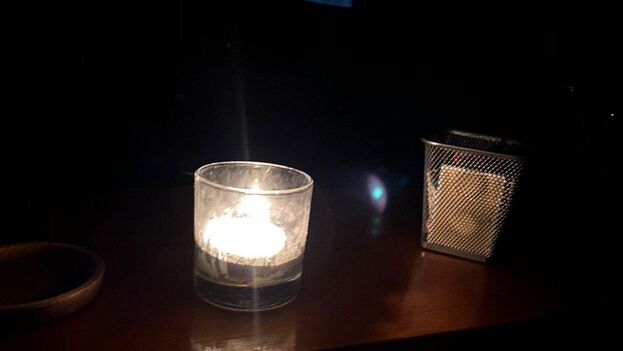
Cubans are frequently reduced to using candles as their only source of light. (Yoani Sanchéz)
14ymedio, Elías Amor Bravo, Economist, 29 August 2022 — It is one thing to say that Cuba will overcome the current energy crisis; what Díaz-Canel did is quite another matter, he insulted the Cuban people who are fed up with so many lies, and with waiting for “The New Man” who will never arrive. Even Silvio Rodríguez spoke up.
During his trip to two power plants — the Máximo Gómez plant in Mariel and the Ernesto Guevara plant in Serna, Santa Cruz del Norte — the communist ruler provided details of the strategy to overcome the national electricity system’s situation which has resulted in continuous blackouts over several months. But also, according to some, he’s freaking out. What is happening to Díaz-Canel?
Who would have predicted it? Once again the embargo or blockade appears as the justification for all the maladies that accumulate on Díaz-Canel’s agenda. That is, Cuba’s communist ruler, after acknowledging that the energy crisis has nothing to do “with enemy activity, nor with any bad behavior of the thermo-electric plant employees” he launched harsh attacks against the United States, faulting the blockade [i.e. the US embargo] for “the systematic effects it has provoked, which left the country without possible financing to carry out the maintenance work, repairs and the new investments needed in that sector.” Up until this point, nothing new.
Once again, taking the Doberman out for a walk. Maybe one of the state newspaper Granma’s journalists should have reminded Díaz-Canel of the Soviet-communist origins of the power plants that are still in operation, with several issues of obsolescence. No. Putin, Díaz-Canel’s principle associate, certainly would not like to receive this type of critique of his technology. continue reading
Without taking responsibility for a single one of the events, Díaz-Canel found a new argument, blaming some “presumed enemies of the revolution” for the whole situation, which is being taken advantage of to “create discouragement, uncertainty, to call for vandalism, to promote disorder. Sadly there are people who, with vandalism, indecent behaviors, lend themselves to these activities.” Inconceivable. What is the communist ruler acknowledging publicly?
Not content, he added that this type of behavior should be separated from “the doubt that the population may have at a certain point, of its demands or of the concerns that are channeled through the [communist] party’s system of services, the government, and the revolution’s institutions.” In fact, he did not realize, or he does not want to realize that it is the same, and he is running out of credit. On this, even Silvio Rodríguez agrees with this blog, which is not usually the case.
In addition, Díaz-Canel should understand that when faced with the dissatisfaction that exists, no party line will suffice, it’s simple, get the electricity to work. Problems are not fixed by covering them up, but rather by resolving them.
When Díaz-Canel wastes Cubans’ time by talking about “the hypocritical, double standard, genocidal, inhumane policies to which they subject the country through unjust sanctions and an intensified blockade” he only wastes energy on an argument which not even he still believes. And all he has to do is resolve, as quickly as possible, a problem which cannot last days, nor weeks, nor months because it could all blow up. When he least expects it.
To simplify Cuba’s communist leader’s statement during his trip to the two power plants in Mariel and Santa Cruz del Norte, “today we have a process of accumulated technological deterioration which cannot be resolved in short order.” And how did we arrive at this situation?
The whole situation corresponds to the communist state-run media’s new propaganda campaign which insists, once again, to a people tired of so many promises and lies, that ” Cuba will overcome the current energy crisis created by the effects over several years of the United States blockade.” Then it remains calm because, with that, it intends to buy time and return to the essence of the revolution, which they have not moved away from in 63 years. Meanwhile, Cubans are fleeing the island in one of the largest exoduses of the last 20 years. [Translator’s note: In fact, ’largest ever’.]
Díaz-Canel observed during his trip to the power plants “intense work, under very difficult conditions, over many hours and with enourmous determination on the part of the power plant employees to recover the power generation capacity as soon as possible and of course, provide more stability, and get us away from these very complex and unpleasant situations which affect our entire population.”
None of that can be criticized, far from it, but did he really expect anything else to happen? Díaz-Canel knows and the plant employees also know that this energy crisis will not be resolved overnight and that its effects will continue, unless a 180 degree turn changes everything.
Díaz-Canel recalled his television appearance in June, during which he said there would be a strategy to eliminate the blackouts by summer, and which Granma described as “a well conceived design.” However, it is evident they must have been talking of another country because this summer, which is not yet over, has been one of alumbrones* more than blackouts and the entire country has been affected by the lack of electricity.
Clearly, it is due to the “accident in the Felton 2 boiler, when the bearing at Felton 1 broke and due to the instability with which CTE Antonio Guiteras, in Matanzas, functions and we have not been able to maintain it to the degree necessary.” Events which they try to present as accidental but which have a peculiar background which should, in any case, be the subject of further investigation.
Somehow, it seems Díaz Canel is crying out for that investigation commission to establish where the responsibility lies when he declared that “for the country’s electrical energy system to function in a stable manner, it is necessary for the hard core where it is generated, which are the Felton and Guiteras plants, to be functioning at full capacity.” If this is known, then what game is he playing?
None. Selling smoke which will dissipate just like the Matanzas fire. Trying to convince Cubans fed up with the situation, that the umpteenth update to the strategy aimed at getting away from the blackouts in the shortest time possible “before the end of the year,” to develop, in 2023, an investment and maintenance group that will stabilize the system and change the energy matrix. And Cubans look at each other knowing that this blah blah blah is more of the same and the way things are going, the problems will continue.
They will continue because the electricity crisis is not resolved with strategies, but with actions. With money, which instead of being dedicated to the hotel industry, should be directed at the capital development of the economy in proportion to the GDP. If this basic infrastructure development indicator, which in Cuba barely reaches 15% compared with 25% in Latin America, there is nothing to do. It is an issue of money and profitability that cannot be repaired with a patch of a few replacement parts. Electricity is either managed profitably or it goes under. Like the rest of the sectors of the Cuban economy.
Financing, once inaccessible, now seems to come mostly to recover unforeseen thermal and distributed generating capacity; in a group of new technologies for generation. The same question then arises, why wasn’t that financing available earlier, and most importantly, from where does it come? Beware of indebtedness, these aren’t the best times for risk-taking ventures.
Díaz Canel neither takes responsibilities for this electricity disaster, nor those of his predecessors, the Castro brothers, who really did very little in all of this. One of communism’s great failures in Cuba has been forecasting, and therefore, the current situation of instability of and decline in electricity supply has not been an isolated event, but rather has been a long time coming. What happens is that when these unforeseen events arise, there is no other option but to see that the social communist system of organization does not have the capacity to confront them.
The response is to continuously follow up on the maintenance and repairs, “to prove how the capacities are being incorporated, how the rest of the system behaves, and which electricity generation results have been achieved.” That is, more of the same as always: bureaucracy and hierarchy, hopefully it will not occur to them to create an OSDE [Organization of Direct Business Services} for all of this. That would be the limit.
What was said does not have a response and now the attacks come from all directions. It’s bad.
*Translator’s note: “Alumbrones” is a word coined in Cuba in the 1990s during the so-called Special Period, to refer to the unexpected moments when the lights came ON, versus the long periods without electricity.
Translated by: Silvia Suárez
____________
COLLABORATE WITH OUR WORK: The 14ymedio team is committed to practicing serious journalism that reflects Cuba’s reality in all its depth. Thank you for joining us on this long journey. We invite you to continue supporting us by becoming a member of 14ymedio now. Together we can continue transforming journalism in Cuba.
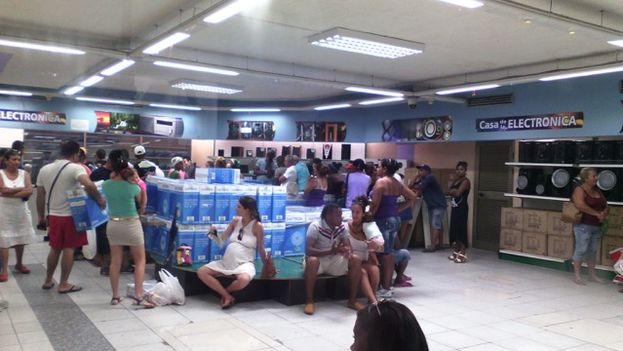
 14ymedio, Elías Amor Bravo, Economist, 5 September 2022 — La Guiteras has been incorporated into Cuba’s national electricity system after overcoming the failures that caused its shutdown, news that in any other country in the world would be inconsequential. But in Cuba, in this agonizing summer of 2022, in which the alumbrones [a word coined to mean periods when the lights are on] have become a daily event in the difficult coexistence on the Island, it’s great news when a thermoelectric power plant produces electricity.