
Researcher and Essayist Tato Quinones Dies in Havana

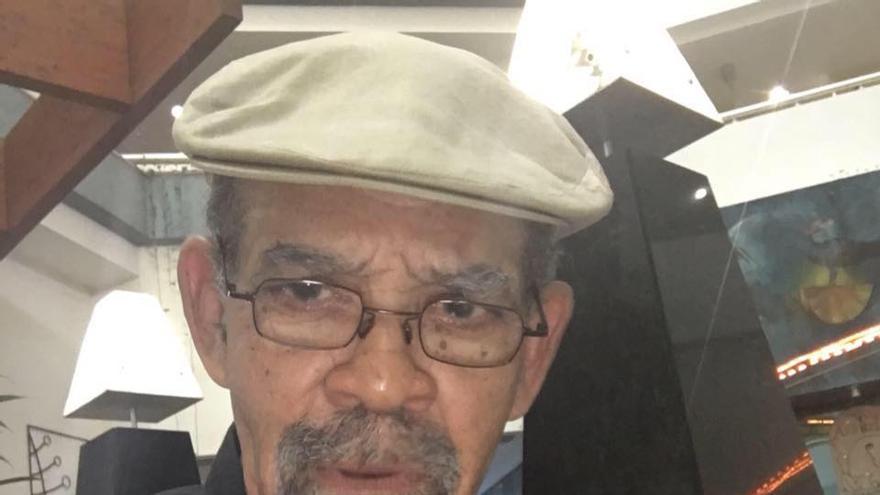
Throughout his life, Serafín ’Tato’ Quiñones dedicated himself to defending the values of Afro-Cuban culture. (Facebook)

14ymedio bigger14ymedio, Havana, January 12, 2020 — The researcher and essayist Serafín ’Tato’ Quiñones passed away in Havana this Sunday afternoon at age 77. Considered an expert in Afro-Cuban matters, the also-historian published several studies on racism in Cuban society and the Abakuá fraternity.

Born in Havana in 1942, Quiñones worked as a history professor and journalist, and was also the founder of and a contributor to numerous publications, carried out several socio-cultural investigations, and worked as a screenwriter for television programs.

Self-educated, controversial, having a deep knowledge of diverse religions and practices of African origin, Quiñones leaves a hole that is difficult to fill in the national culture. continue reading

Several of his stories, compiled under the title Al final del terraplén, el sol (At the end of the embankment, the sun) won the David Prize in 1970 and his volume A pie de obra (1990) showed his maturity as a narrator. One of his most recognized books is Ecorie Abakuá: Cuatro ensayos sobre los ñáñigos cubanos (1994), which consists of four essays of short length.

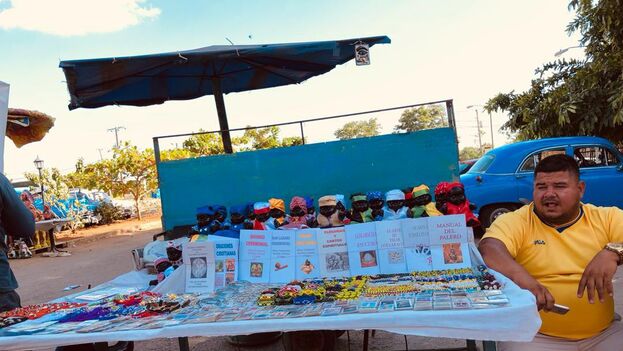
Throughout his life, Serafín ’Tato’ Quiñones dedicated himself to defending the values of Afro-Cuban culture and the participation of ñañigos and abakuá in the wars of independence. He made several documentaries that highlight the syncretic particulars of Cuban santeria, among them La magia del tambor in reference to the Batá drums.

In his book Afrodescendencias, he mixed genres like chronicle, interview, storytelling, legend, and essay to tackle the link between blackness and race, oral tradition and slavery, racism and society. A volume with a relaxed but critical tone which includes testimonies from Cubans whose activism or participation in secret societies, like abakuá, put them face to face with social and political prejudices.

After learning of his death on Sunday, on his Facebook wall, the professor and essayist Julio César Guanche published a message in homage to Quiñones. “The most learned babalawo of Cuba has died, the most complete historian of the Abakuá fraternity, a champion of the popular world.”

For his part, the professor Esteban Morales lamented the death of this “man of pure heart and commitment to the homeland… We lose him when we need him most for the decisive battle that we must fight against racism.”

One of his last public presentations happened in September when he gave the conference Addodis and Alakuata: A brief attempt to broach homosexuality seen from the Cuban popular religion of the Orishas.

His wake will be held at the funeral home at Calle 70 and 29th in the Havana municipality of Playa.

Translated by: Sheilagh Herrera

______________

COLLABORATE WITH OUR WORK: The 14ymedio team is committed to practicing serious journalism that reflects Cuba’s reality in all its depth. Thank you for joining us on this long journey. We invite you to continue supporting us by becoming a member of 14ymedio now. Together we can continue transforming journalism in Cuba.
14ymedio’s Faces of 2019: Beatriz Batista, Protecting Animals

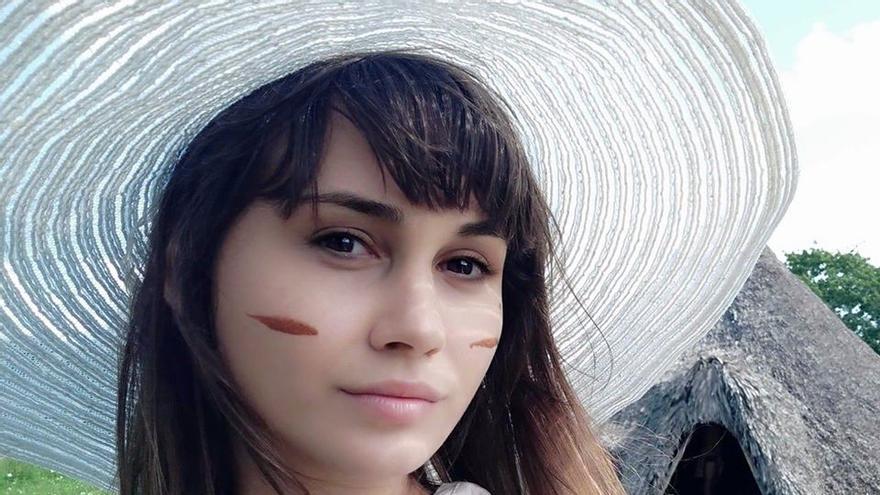
Beatriz Batista studies social communication.

14ymedio bigger14ymedio, Havana, December 25, 2019 — Beatriz Batista, a young woman of 21 years, is a student of social communication, and she gained popularity in 2019 as the principal organizer of the first demonstration for animal rights in Cuba, held in April. The demonstration took place on calle 25 in Vedado, Havana, and went from Quixote Park up to the Colón Cemetery. It was the first independent demonstration in the last half-century where signs were allowed to be carried.

Unexpectedly, the demonstration brought together more people than expected, and Batista appeared hopeful. She said this would mark a before and after in the struggle to end violence against animals.

Months later, in November, the young woman again mobilized in favor of a law to defend the rights of animals, motivated by the visit of the Spanish Royals for the 500th year of the founding of Havana. The authorities carried out massive sweeps of street dogs and killed them in order to keep the streets “clean”. Batista, together with other animal rights supporters, organized a protest in front of Animal Control and was able to get a meeting with the authorities to discuss the subject. Both parties were satisfied with the advances achieved, and in spite of slow results, already some significant commitments have been made by the Government.

Translated by Regina Anavy

_______________

COLLABORATE WITH OUR WORK: The 14ymedio team is committed to practicing serious journalism that reflects Cuba’s reality in all its depth. Thank you for joining us on this long journey. We invite you to continue supporting us by becoming a member of 14ymedio now. Together we can continue transforming journalism in Cuba.

I Have No Confidence in the Cuban Constitution / Cubalex, Julio Alfredo Ferrer Tamayo

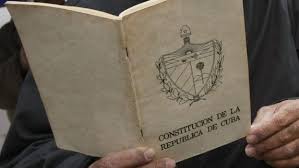
Cubalex, Lic. Julio Alfredo Ferrer Tamayo, 13 November 2019  — Unfortunately, in the Cuban legal context, there is no Constitutional Tribunal, or, to put it another way, there are no constitutional guarantees. Along with many lawyers, non-lawyers, and legislators as well, I was hoping for a change. Along with other colleagues, I had confidence in the national constitutional tradition, and especially in the milestone represented by the Constitution of 1940, recognised as the most advanced in Latin America, for its time;  nevertheless, it didn´t work out like that. Everybody, whether they voted yes or no, continues with no constitutional guarantees.
In order to be implemented, the new text, in force since April 10th, 2019, needs legislation, which hasn’t yet been prepared, and requires various time periods in which to do it. This gap has given rise to what many have called the “legislative gap”, or “legal limbo”, which is simply a period of legal system paralysis, while waiting for the legislation to be passed. At the moment, the Constitution remains an undelivered message.

To sum up, we Cubans have to wait six months for the new Electoral Law regulating election of representatives to the National Assembly, its President, Vice President, and Secretary; as well as the Council of State, and the President and Vice President of the Republic. And this is going to be delayed even further by other processes. For example, the regulations for the National Assembly will be delayed a year, and two years for the Council of Ministers, the provincial and municipal governments, and their administrative councillors. continue reading

The enactment of the law on Popular Tribunals is eighteen months away, as are also the modifications to the Laws on Penal, Civil, Administrative, Employment and Economic Procedures, and also the legislative modifications needed to effect Art. 99 of the new constitution.

As far as the Family Code is concerned, which is the window which still holds out the prospect of a marriage of equals, there are still 24 months before the start of the popular consultation process and the relevant referendum.

“The most completed and advanced of the Cuban constitutional texts”, which is what Homer Acosta Alvarez, the Secretary of the Council of State, has termed the new Constitution, will be applied bit by bit, because it needs, according to Homer himself, no fewer than 50 items of legislation. And, really, it is difficult to be optimistic about it.

The legislation which backed up the 1976 Constitution was not a happy memory. We can recall the Law on Migration (it dealt with the right to leave the country with an exit permit, a carte blanche, authorised by the Ministry of the Interior), or the Law on Association, and its Regulations (it conditioned the right of association upon prior permission of the Ministry of Justice).

We can think of other equally disastrous legislation, such as Order 149 (which violated the right oto personal property enshrined in Art. 21 of the said Constitution. And also Decree 217 of 1997 (imposed innumerable legal requirements on Cuban citizens of other provinces wanting to reside permanently in Havana).

What we can learn from such legislation is that they are a double-edged sword, holding back and restricting rights proclaimed in the text of the constitution, preventing citizens from exercising them.

Will it be the same this time around? I think so. We Cubans need to be very watchful over this legislation, because they will have been enacted without prior popular consultation, and therefore people will not be able to influence the contents, in spite of the democratic process they have been boasting about.

We remember that Art. 26 of the old Constitution recognised the right of every individual who suffers loss or is prejudiced by inappropriate action by officials or agents. Later, this right was restricted by Section 2 of Art. 96 of the Civil Code, which subordinated its exercise and implementation to declarations of illegality on the part of the superior state authorities. That is to say, if the superior state authority thinks it is not in the state’s interests, there will be no compensation, or indemnification, or any constitutional rights worth a bean.

This right, with identical wording, is anticipated in Art. 98 of the new Law of Laws. It remains to be seen if the regulations which are to enact this constitutional precept, let’s call it Civil Code, will set up a legal mandate of subordinate status, constraining the right to compensation and indemnification for damages improperly caused by state authorities.

If the new Constitution had conceived of a Tribunal of Constitutional Guarantees or other similar entity with the authority and structure necessary to protect the constitution, then those persons who had seen their rights infringed would have had an organisation to go to in order to defend the constitutional position. That organ would be a defensive wall against arbitrary action.

Translated by GH

Mexico Wants to End the Lines to Apply for Visas in Havana

The Mexican embassy has not yet shut down the previous appointment website, although it has already explained its future mechanism.

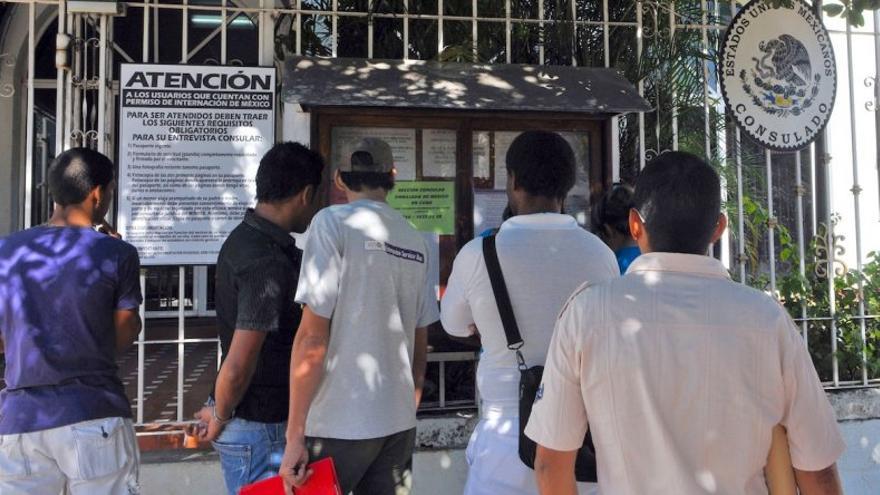
14ymedio bigger14ymedio, Havana, 10 January 2020 — The Mexican Embassy in Cuba is preparing a new system to apply for visas that will come into force soon, although it has already detailed how it will be done. Online appointments will put an end to the lines, as well as the ’business’ that some make out of the current system, hence the announcement boldly highlights the phrase “Remember that obtaining times and appointments are free.”

The new formula, Citas Cuba (Cuba Appointments), will require entering a page not yet available and the link to which will be provided to a registered user with passport data. The holder must select the procedure that he wishes to perform once he has accessed his space and there he will be assigned a turn from the list that has been digitally created.

The user will receive their turn by email and must appear on the day and time assigned with the documentation required for the procedure and the printed appointment. If they have not received it, they can enter the system and find out when the last appointment was.

In Cuba, the slowness and lack of digitalization of most procedures generates long waiting times and lines. Many people who do not have the time available to lose it in these procedures are willing to pay to save their time, which has resulted in an informal business usually covered by retirees who supplement their low pension selling places in line.

The previous mechanism to obtain a consular appointment at the Mexican embassy was harshly criticized and accused of mishandling. The applicants complained that the online registration did not work and the appointments were sold out a few minutes after each month’s places for interviews were announced.

This created another informal appointment buying system, which cost between 300 and 500 CUC (roughly the same in dollars). The digital classified sites offered the possibility of obtaining “an appointment at the Mexican consulate, without lining up and with guaranteed success.”

Outside consular headquarters, located on 12th at the corner of 7th in Miramar, west of Havana, it was also common to find people who were loitering and offering “a quick appointment for next week,” a phenomenon that was further enhanced when Mexico introduced 10-year visas and multiple entries, much requested by the mules, who travel especially to the Cancun area, with short and cheap flights.

______________

COLLABORATE WITH OUR WORK: The 14ymedio team is committed to practicing serious journalism that reflects Cuba’s reality in all its depth. Thank you for joining us on this long journey. We invite you to continue supporting us by becoming a member of 14ymedio now. Together we can continue transforming journalism in Cuba.

Cubans Must Wait Days To Take Cash Out Of Their Dollar Accounts

The authorities warn that because dollars aren’t being released by the Central Bank of Cuba, their availability in branch offices may vary. (Flickr/Maxence)

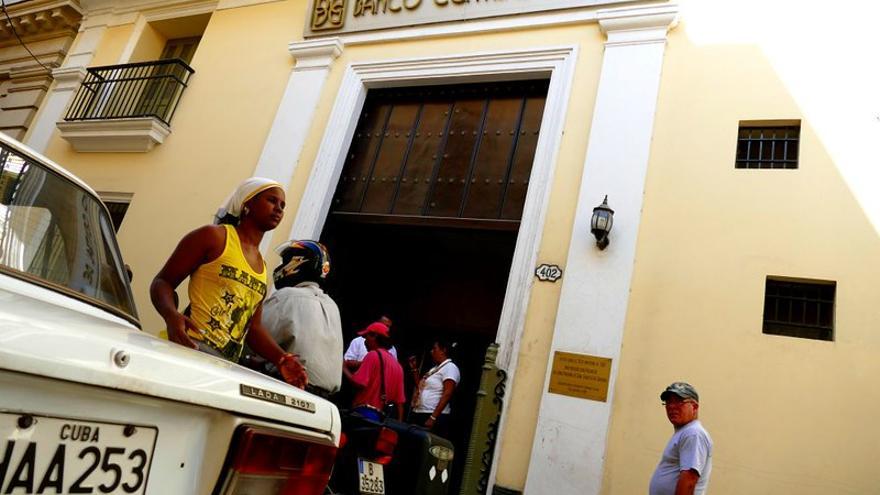
14ymedio bigger14ymedio, Havana, December 26, 2019 — Clients who have dollar accounts, which were announced with great fanfare this past October, have to wait several days to withdraw their dollars from the banks “in accordance with existing availability,” according to an announcement by the Central Bank of Cuba in the official press.

“The bank is not establishing limits for the withdrawal of cash; the amount will depend on the balance that exists in the account,” says the notice. It states that “it is not possible for the banks to pre-establish an exact date when the requested U.S. dollars can be delivered.” These limitations are also applied to other forms of hard currency associated with debit cards, like the euro, the Canadian dollar or the Mexican peso.

“Because no money is being released by the Central Bank of Cuba, availability in bank branches may vary.” However, “the bank will always try to respond to requests in the least amount of time possible,” the information says, which comes in the middle of an increase in complaints about how hard it is to withdraw cash. continue reading

For months, this problem has affected the bank accounts in hard currency that existed in the country before the opening of the new chain of shops in foreign money. Many Cubans deposited this money, fundamentally, to meet the conditions of the the consulates of several countries, which require Cubans to be able to show a bank account with hard currency in order to apply for a visa, with the amounts required varying from country to country.

But since the middle of October, and with the opening of dollar accounts associated with debit cards to use in the new hard currency shops, the difficulty of withdrawing the money, known as fulas in popular slang, has increased. This has been accompanied by an increase in the informal market of U.S. dollars due to the uncertainty that surrounds the convertible peso (CUC).

On the black market, where transactions between individuals take place, a dollar can buy 1.20 CUC, much more than the 0.95 rate that it had at the beginning of the year. The rise has motivated many clients to take their dollars out of the bank and resell them on the informal networks where they can get CUCs to resell to tourists from countries like Panama or the U.S.

Hard-currency accounts can be opened without making an initial deposit and don’t have a minimum balance requirement. They don’t earn interest nor charge a commission, explain the employees of the Central Bank. “It’s a method of payment issued by the Cuban banks, which gives them access to purchases in the authrorized stores for the sale of merchandise in U.S. dollars.”

In addition to being used in the hard currency shops, the debit cards associated with these accounts can also be used in the convertible peso shops or to take money out of the ATMs in convertible pesos or Cuban pesos.

Translated by Regina Anavy

_______________

COLLABORATE WITH OUR WORK: The 14ymedio team is committed to practicing serious journalism that reflects Cuba’s reality in all its depth. Thank you for joining us on this long journey. We invite you to continue supporting us by becoming a member of 14ymedio now. Together we can continue transforming journalism in Cuba.

14ymedio’s Faces of 2019: Guillermo Garcia Frias, Commander

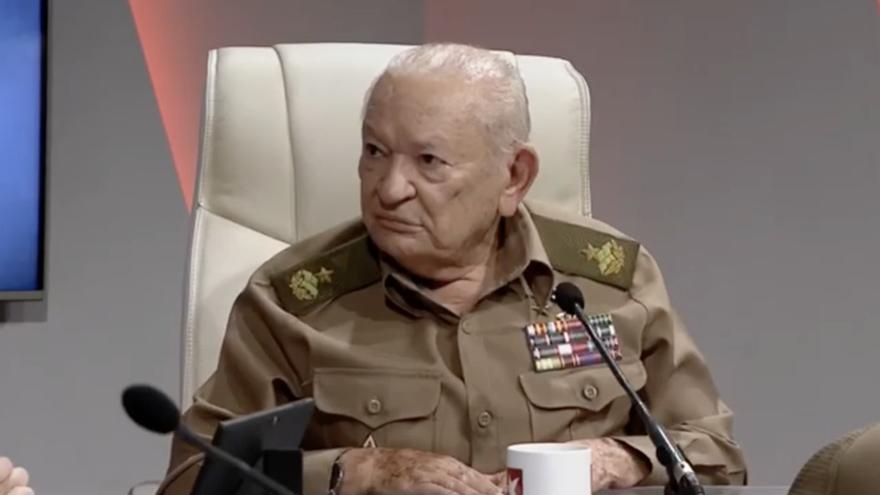
Guillermo García Frías is a Cuban soldier, politician and commander of the Revolution

14ymedio bigger14ymedio, Havana, December 25, 2019 — Born in Pilón on February 10, 1928, of peasant origin, García Frías was a muleteer for Crescencio Pérez, a peasant who collaborated with the rebels on their expedition through the Sierra Maestra, and who asked the young García Frías to do the same, guiding Castro’s men. Thus he rose through the ranks of the army, and in 1959 became a Commander of the Revolutionary Armed Forces.

He has been the head of the Western Army, Vice President of the Council of State and Ministries and the Minister of Transport and was decorated as a Hero of the Republic of Cuba. Presently he is the head of the National Enterprise for the Protection of Flora and Fauna.

In 2019, he became the focus of one of the most popular posts on social networks when he appeared on the state TV show Mesa Redonda (Roundtable) and said that the meat of the hutía, a large rodent found in the countryside, has “more protein than any meat” and a skin of “high quality.” He also praised the ostrich and said it produced more meat than a cow. These statements made him a focal point of national humor, and the words “crocodile”, “hutía” and “ostrich” started trending on social media, where an infinity of memes and jokes circulated.

Translated by Regina Anavy 

_____________

COLLABORATE WITH OUR WORK: The 14ymedio team is committed to practicing serious journalism that reflects Cuba’s reality in all its depth. Thank you for joining us on this long journey. We invite you to continue supporting us by becoming a member of 14ymedio now. Together we can continue transforming journalism in Cuba.

Crucifixes and Yoruba Bracelets Enter Cuban Schools, But Jewish Symbols Do Not

The Tejada family was warned of the possible consequences of not bringing the child to class. (Jerusalem Post)

14ymedio bigger14ymedio, Reinaldo Escobar, Havana, January 8, 2020 — Monday, January 6, the first day of classes after the brief end of year vacation, was the deadline of the ultimatum given by the District Attorney’s office of Nuevitas, in Camaguey province, for two Jewish students to agree to take off the kippah to be allowed to go to school, a requirement in line with the rules, according to the school.

The school rule relies on a 2015 resolution from the Ministry of Education that “prohibits the use of garments, adornments, accessories, and other elements not in accordance with the school uniform” but does not specify that the prohibition extends to religious symbols.

In fact many students wear crucifixes, medals with Catholic saints, and bracelets from the Yoruba religion. The head provincial education inspector in Camaguey told Olainis Tejeda, the child’s father, that “those were violations that were being committed against the school rules, but were being rectified little by little,” when he asked about the different treatment. continue reading

Tejeda has spent three years trying to make school authorities understand that his children have the right to wear this religious symbol whose use, in the case of the older son, has also been the cause of bullying from other children, without proper measures having been taken to stop it.

After a long process of complaints and appeals the “solution” was reached when the municipal District Attorney’s office warned that if the parents persisted in their intention they could commit the crime of “acts contrary to the normal development of the child” anticipated in article 315 of the Penal Code.

This article obliges parents not to neglect the support and education of their children and in its third section specifies that whoever leads a minor to “miss school, reject the educational work inherent in the national education system” can be penalized with prison from “three months to a year or a fine of one hundred to three hundred shares* or both.”

Tejeda said that the children’s maternal grandmother has also been threatened and that in the final days of the last year a State Security agent warned her that when the children’s parents were imprisoned she would have to take care of them. The official said that if she insisted that her grandchildren wear those symbols, she would also go to prison.

Tejeda argues that he is not refusing for his sons to attend the school, but rather demanding the right for them to wear their religious symbols there. “The school is the one preventing them from entering if they don’t take off the kippah,” he explained to 14ymedio.

At the end of December Liusdán missed the opportunity to take the test for Artistic Education because he was denied entry. “On top of that, they counted that day and all the others that he wasn’t able to enter as unjustified absences,” says the father.

There is no permanent rabbi in Cuba so there is no Jewish community, strictly speaking, only associations. This religion lacks an interlocutor recognized by authorities, just as nobody has the power to “officially register” belonging to Judaism.

In the 50s the Jewish population on the Island was around 15,000 people, the majority of whom lived in the capital. After 1959, 90% emigrated, mainly to the United States. Currently the number of Jews living in Cuba is approximately 1,500.

Among the main Jewish institutions currently present on the Island are the Adath Israel Hebrew Religious Community of Cuba, the Sephardic Hebrew Center of Cuba, the Chevet Ahim Hebrew Union, and the Home Board of the Hebrew Community of Cuba. Camaguey and Santiago de Cuba have synagogues.

Olainis Tejeda explains that his grandfather, of Galician origin, whom he only knew by references, was his main influence to practice this religion. “My aunts would tell me that he would recite in a language that no one understand. Later I found out that they were fragments of the Torah recited in Hebrew.”

When John Paul II made public the processes of the Holy Inquisition he was able to read about the subject “out of pure intellectual curiosity” when he saw his surname could be of Jewish origin and he continued investigating. He thus confirmed himself in that faith, identifying himself with the Bnei Anusim branch, who are the descendants of those Spaniards whom the Inquisition forced to convert to Christianity in the 15th century.

“I’ve heard that when a Jew enters a place where he can wear a kippah, he knows that he is in a safe place, if he has to take it off then that place isn’t safe for a Jew,” says Tejeda, who adds: “Sometimes I have the impression of feeling the same as our ancestors, with the difference that this time they are trying to convert us to atheism.”

*Translator’s note: The Cuban penal code defines fines in terms of “shares” with the value of a share identified in a separate section. In this way, all fines can be changed simply by changing the value of a share, without editing the entire code.

Translated by: Sheilagh Herrera

___________

COLLABORATE WITH OUR WORK: The 14ymedio team is committed to practicing serious journalism that reflects Cuba’s reality in all its depth. Thank you for joining us on this long journey. We invite you to continue supporting us by becoming a member of 14ymedio now. Together we can continue transforming journalism in Cuba.

14ymedio’s Faces of 2019: Camilo Condis, Entrepreneur

Camilo Condis questions the authorities about their exercise of power through Twitter.

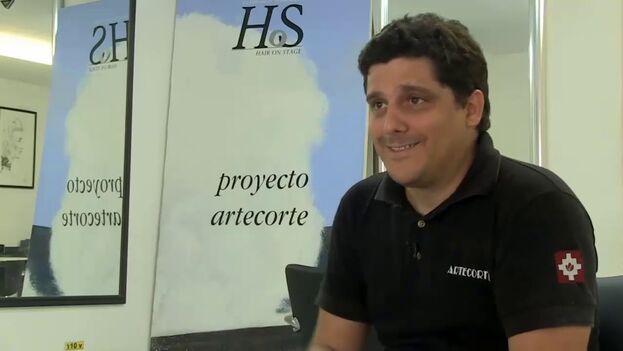
14ymedio bigger14ymedio, Havana, 29 December 2019 – An industrial Engineer from the Technological University of Havana (CUJAE) with a Master’s degree in Business Administration from the San Antonio de Murcia Catholic University of Spain, Camilo Condis is an entrepreneur and a community activist. He has worked on the Catholic magazine Espacio Laical (Lay Space) and the CubaEmprende Project, which seeks to train and support those who decide to make their way in the private sector.

Since 2011 he has worked with Artecorte, a non-profit community organization for which he serves as general administrator. Condis advocates the development of the self-employed sector in Cuba and resides in Havana.

In 2019, along with two other Internet users, he started the Radio Enjambre podcast, discussing the universe of Twitter in Cuba and other current issues. From that platform, Condis has stood out for questioning public officials about the performance of their duties, highlighting the importance of new technologies and addressing entrepreneurship issues.

See also:  14ymedio’s 14 Faces of 2019

____________

COLLABORATE WITH OUR WORK: The 14ymedio team is committed to practicing serious journalism that reflects Cuba’s reality in all its depth. Thank you for joining us on this long journey. We invite you to continue supporting us by becoming a member of 14ymedio now. Together we can continue transforming journalism in Cuba.

14ymedio’s Faces of 2019: Ricardo Fernández Izaguirre, Journalist

Independent reporter Ricardo Fernández Izaguirre was arrested twice in 2019. (14ymedio)

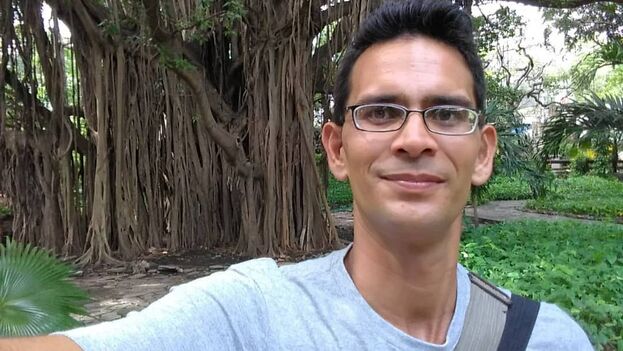
14ymedio biggerThe contributor to La Hora de Cuba and 14ymedio Ricardo Fernández Izaguirre (born Camagüey, 1983), who is also a prominent Christian activist, met all the necessary conditions to raise the Government’s anger; and so it happened in 2019.

In July, he was arrested in Havana when he left the headquarters of the Ladies in White when he was going to the bus station to return to his province of residence. The police kept him nine days under arrest and finally released him with a warning letter for an allegedly illegal stay in the capital that Fernández could prove was not, because he had travel tickets to Pinar del Río.

In November, he was arrested again, this time for 29 hours, during which he was interrogated on numerous occasions by State Security agents who warned him that this was “a lesson” while the legal process was being settled by an investigation. The police intend to take him to court for “usurpation of legal capacity” – a term they apply to individuals whom they consider to be exercising a profession without the legal right to do so. In Fernández’s case the government claims that he cannot exercise journalism; an accusation that derives from the interrogations of several people interviewed by the reporter for an article he wrote about the town of Nuevitas.

See also:  14ymedio’s 14 Faces of 2019

__________________

COLLABORATE WITH OUR WORK: The 14ymedio team is committed to practicing serious journalism that reflects Cuba’s reality in all its depth. Thank you for joining us on this long journey. We invite you to continue supporting us by becoming a member of 14ymedio now. Together we can continue transforming journalism in Cuba.

14ymedio’s Faces of 2019: Carlos Acosta, Dancer

Carlos Acosta will assume his new position at the Birmingham Ballet in January. (EFE / Eduardo Muñoz Álvarez)

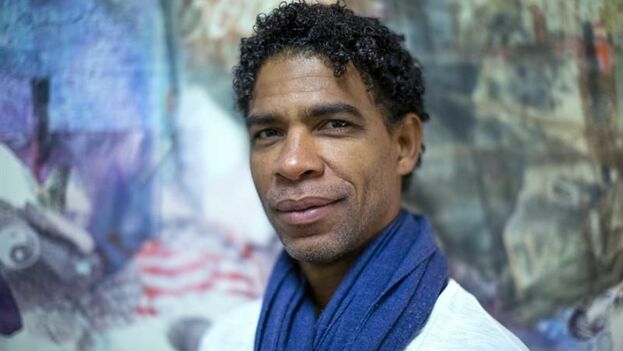
14ymedio bigger14ymedio, Havana, 30 December 2019 — The most important Cuban dancer today was born in Havana on June 2, 1973. He studied at the Cuban National Ballet School, where he graduated in 1991 with maximum qualifications and a gold medal. He has danced in prestigious companies such as the English National Ballet, the Houston Ballet and the American Ballet Theater. Since 1998 he is a permanent member of the Royal Ballet of London and principal guest dancer in the same company as of 2003.

In 2014 he received the medal of Commander of the Order of the British Empire from Queen Elizabeth II of England and a year later he retired from the Royal Ballet to promote his own foundation that supports young talents.

The year 2019 has been a great one for Acosta, as it began with his appointment in January as the new director of the Birmingham Royal Ballet, a position he will assume in January 2020. In addition, he has been nominated for best actor in Spain’s Goya Awards for his participation in the filmYuli, directed by Icíar Bollaín and presented at the Havana Film Festival, although the book which inspired the movie has not been sold on the Island. In his autobiographical book, No Way Home, Acosta denounces the racism he suffered within the National Ballet of Cuba and especially from its director, Alicia Alonso.

See also:  14ymedio’s 14 Faces of 2019

_____________

COLLABORATE WITH OUR WORK: The 14ymedio team is committed to practicing serious journalism that reflects Cuba’s reality in all its depth. Thank you for joining us on this long journey. We invite you to continue supporting us by becoming a member of 14ymedio now. Together we can continue transforming journalism in Cuba.

14ymedio’s Faces of 2019: Assel Herrera y Landy Rodríguez, Doctors Kidnapped in Kenya

The Cuban doctors Landy Rodríguez Hernández and Assel Herrera Correa. (Facebook)

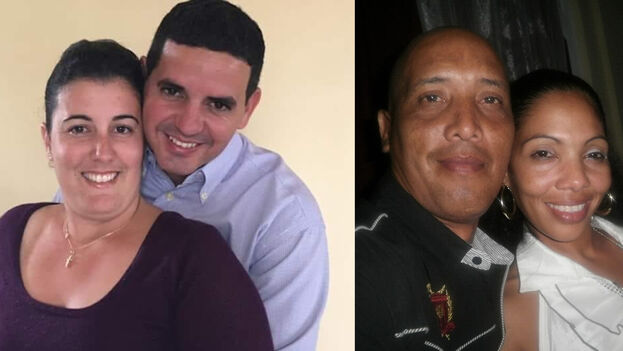
14ymedio bigger14ymedio, Havana, 27 December 2019 – The doctors Assel Herrera Correa, a specialist in general medicine from Puerto Padre, Las Tunas, and Landy Rodríguez Hernández, a surgeon from Placetas, Villa Clara, were kidnapped in Kenya on April 12, when they were traveling in an official vehicle to work in the Mandera hospital, near the border with Somalia.

Both doctors were part of the contingent of Cuban doctors relocated to Kenya when they were allegedly captured by an Islamist militia from Al Shabab. Since then, the government has opposed paying the ransom demanded by the terrorists and has chosen to send a group of elderly leaders to try to negotiate with them. The little that is known about these two Cubans is that they continue to practice medicine in their captivity and have converted to Islam, presumably because they were forced into it.

See also:  14ymedio’s 14 Faces of 2019

________________

COLLABORATE WITH OUR WORK: The 14ymedio team is committed to practicing serious journalism that reflects Cuba’s reality in all its depth. Thank you for joining us on this long journey. We invite you to continue supporting us by becoming a member of 14ymedio now. Together we can continue transforming journalism in Cuba.

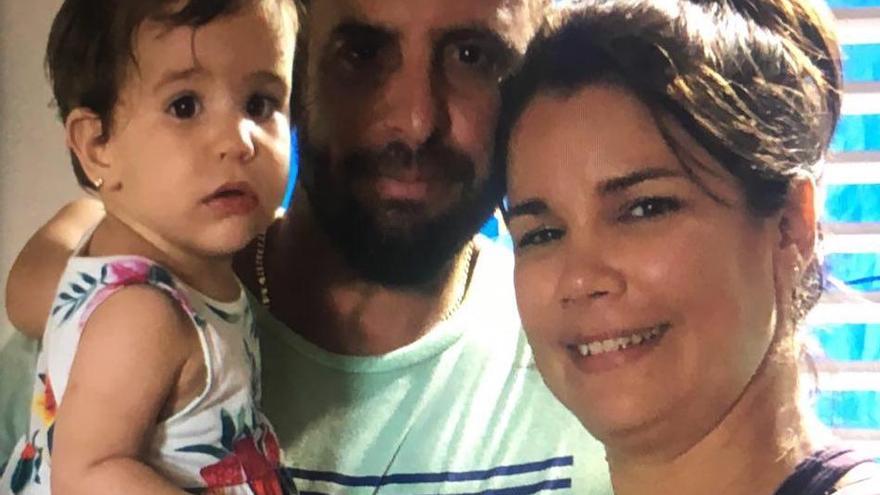
14ymedio’s Faces of 2019: Yaima Caballero, Mother of Paloma Dominguez

On October 16, 2019, Caballero and her husband were summoned by phone to appear that same day at the Ministry of Public Health in Havana. (Courtesy)

14ymedio bigger14ymedio, Havana, December 27, 2019 — Yaima Caballero’s life took an unexpected turn in a little more than two months. At the beginning of October she took her one-year-old daughter, Paloma, to a medical center in Havana for the MMR vaccine against measles, mumps and rubella. A few days later, the little girl died from complications that, for now, are attributed to an incorrect dosage.

Since then, the young woman has undertaken a personal battle to have what happened thoroughly investigated so it won’t happen again. Although Caballero never complained about the medical attention her daughter received — on the contrary, she thanked the doctors — reprisals weren’t long in coming for having raised her voice.

State Security was present at a meeting with the health authorities, and they warned her that she could go to prison if she persisted in making “false accusations.” The situation sent her and her husband into exile in México, where they had planned a trip.

See also:  14ymedio’s 14 Faces of 2019

Translated by Regina Anavy

_________________

COLLABORATE WITH OUR WORK: The 14ymedio team is committed to practicing serious journalism that reflects Cuba’s reality in all its depth. Thank you for joining us on this long journey. We invite you to continue supporting us by becoming a member of 14ymedio now. Together we can continue transforming journalism in Cuba.

In Rincon It’s August in December

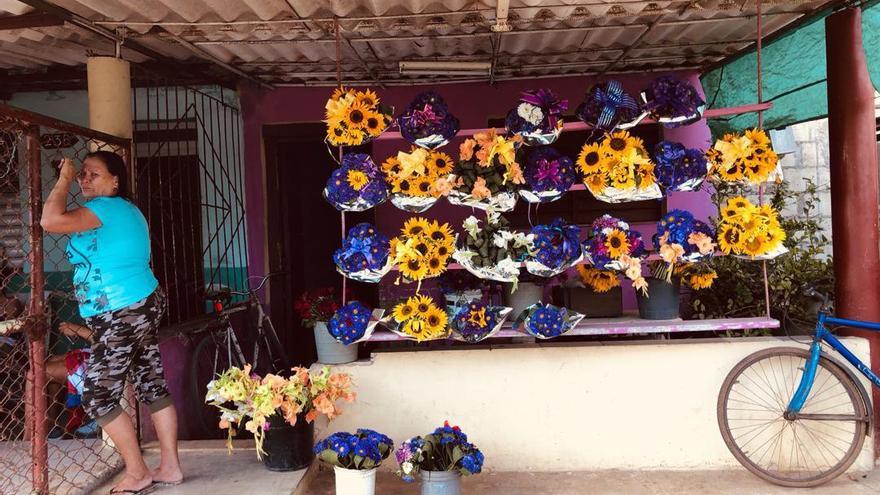
This December’s temperatures mean flowers need watering to look fresh before they are sold. (14ymedio)

14ymedio bigger14ymedio, Bertha K. Guillén, El Rincón | 18 December 2019 — For eleven and a half months nothing happens in Rincón, a town located near Santiago de las Vegas and Bejucal, at the point where Havana, Mayabeque and Artemisa provinces meet. But that all changes when, in mid-December, thousands of pilgrims make their way to the Shrine of San Lázaro (or Saint Lazarus), where the saint is venerated and whose wounds, according to the Gospel of John, were licked by dogs.

The saint, widely popular in Cuba and known in the Yoruba religion as Babalú Ayé, attracts a large number of followers. According to organizers, 85,623 pilgrims visited the shrine on December 16 and 17. All of them are potential customers for the residents of this small town.

“A lot of people come from Oriente [Province] or from the center and their trips last a week or more. And it’s always cheaper to spend the night here than in Havana,” says Irina Rodriguez, who rents rooms for ten convertible pesos a night, fifteen if breakfast is included. Those prices are double, or even triple, what they are during the rest of the year.

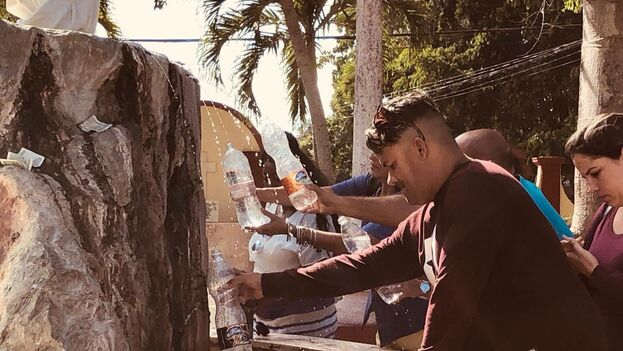
Pilgrims bathe in the waters from the shrine’s fountain, which are purported to be miraculous. (14ymedio)

The most profitable days for selling flowers, religious items, clothing and plaster likenesses are December 16 and 17, although according to Rodriguez many people prefer to come before or after to show their devotion to the saint. continue reading

“Those days are really terrible here,” she says. In addition to the closure of the main traffic artery between Santiago de las Vegas and Ceiba, medical personnel and Catholic volunteers wait at the doors of the church to assist pilgrims who have spent more than 48 hours travelling.

Residents who do not have business licences see an opportunity to make some money on those days. “The inspectors are not around and the police are more concerned about controlling drunkenness and keeping order than with the vendors,” claims a 13-year-old boy selling water and soft drinks to pilgrims for a modest price.

Maria rises early to prepare bouquets of flowers for those passing by. “We ordered fresh flowers for today. Producers bring them from Alquizar and supply almost the whole town.”

The high temperatures of recent days force Maria to water her flowers every thirty minutes to guarantee their freshness and color.

“Customers want to offer the best to their saint. On days like today the price doesn’t matter. What’s important is that the flowers are the best,” she says as her son carries a cluster of sunflowers. “Those over there, those we grew ourselves,” she says smiling. A bunch of flowers can cost between 50 and 400 Cuban pesos depending on size. A single flower goes for between 3 and 5 pesos.

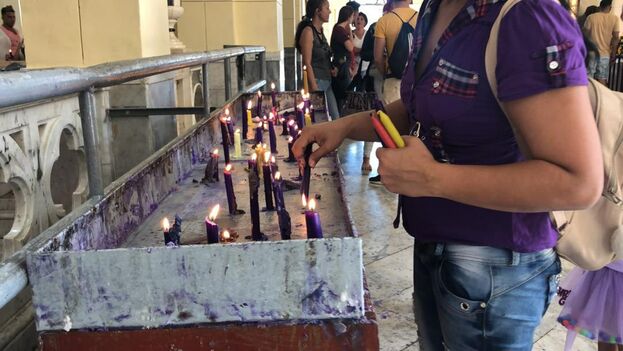
To conserve raw materials, some new candles are made from the melted wax of old ones. (14ymedio)

Privately owned restaurants, cafes and street vendors stock up in anticipation of those dates. The path to the church is traveled on foot and, during a hot December, the demand for cool drinks is high.

A few yards away, a boy repeats over and over, “Candles. Purple, yellow and red candles for Oshun, Shango* and Old Lazarus,” to whom the main altars of the shrine are dedicated.

His name is Rolando Garcia and he makes his own candles, which he later sells for 5 to 10 convertible pesos. “Sometimes I use the spent candles from the church instead of throwing them away. That way I save money on raw materials, which are never easy to find,” he explains.

There is also a small shop inside the church which sells Catholic themed souvenirs such as religious almanacs, images of saints, rosaries, candles… all much less expensive.

White doves, chickens and even goats are taken to the site. There are also Yoruba priests, known as babalawos, who offer religious assistance at the shrine. Others decide to camp outside all day, smoke big cigars and drink.

There are shops selling Catholic and Yoruba themed objects in a small marketplace near the entrance of the church. (14ymedio)

Yohana Maria strings beads at a makeshift marketplace next to the shrine, where several tables display merchandise. “Green, yellow, white, knot, turn. Green, yellow, white …” she mutters. As her Yoruba ID bracelet takes shape, her mother sews brightly colored clothing used in religious ceremonies and that go for 50 to 150 Cuban pesos. Sack garments, widely used during this holiday, are also available for 5 to 30 convertible pesos, depending on the complexity of the clothing.

There is also no shortage of “parking attendants,” who play an important role in managing the horse-drawn carts making the pilgrimage, primarily from the west. The animals, whose travels often last more than a week, need rest, water and food. Some attendants prefer to give them the water that flows from the fountain — “the source of miracles” — for good luck.

Natatcha, who is originally from Rincón  says that it has been hard adjusting to so much peace and quiet since beginning her studies at José Antonio Echeverría Technological University in Havana. For two days a year she can forget about that.

*Translator’s note: Two deities in the Yoruba religion, syncretized with Our Lady of Charity and St. Christopher respectively.

________________

COLLABORATE WITH OUR WORK: The 14ymedio team is committed to practicing serious journalism that reflects Cuba’s reality in all its depth. Thank you for joining us on this long journey. We invite you to continue supporting us by becoming a member of 14ymedio now. Together we can continue transforming journalism in Cuba.

14ymedio’s Faces of 2019: Dianelys Alfonso, La Diosa, Artist

This year Dianelys Alfonso has promoted a movement in Cuba similar to #MeToo. (Facebook)

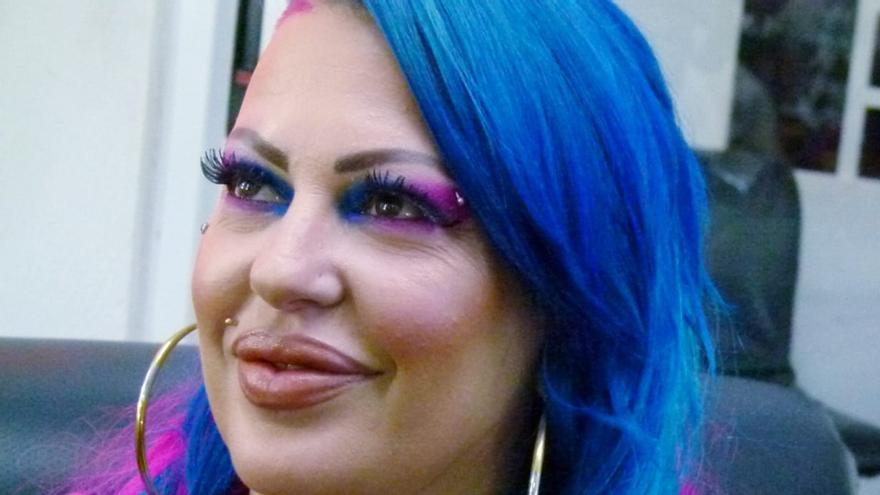
14ymedio bigger14ymedio, Havana, 30 December 2019 — The artist Dianelys Alfonso, La Diosa (The Goddess), started a Cuban version of #MeToo this year, after making public her personal history with the musician José Luis Cortés, El Tosco, a history of harassment and sexist violence.

It all started when La Diosa (b. 1981) told a Miami show that she had been beaten and raped by the artist when she was a singer in the group NG La Banda. A week later she denounced threats by El Tosco in reaction to her words. This generated a wave of solidarity and some 300 people signed a document published in June on the YoSíTeCreo (Yes I Believe You) Facebook page, one of the most frequent ways used by others to express their support.

Journalists, feminists, lawyers, actresses, university students, writers, psychologists, researchers and activists all signed the letter, in addition to men like the writer Antón Arrufat, a winner of National Prize for Literature. “Those people who have responded to the hashtag #YoSíTeCreoDiosa have helped me keep going after that day,” the artist said in thanks.

See also:  14ymedio’s 14 Faces of 2019

_______________

COLLABORATE WITH OUR WORK: The 14ymedio team is committed to practicing serious journalism that reflects Cuba’s reality in all its depth. Thank you for joining us on this long journey. We invite you to continue supporting us by becoming a member of 14ymedio now. Together we can continue transforming journalism in Cuba.

14ymedio’s Faces of 2019: Iliana Hernandez, Activist

The activist Iliana Hernández during an event in Miami. (14ymedio)

14ymedio bigger14ymedio, Havana, 29 December 2019 — The activist and journalist Iliana Hernández has been confronting the authorities for several years, who subject her to strict control and frequent short detentions. The ex-director of the program Lente Cubano (Cuban Lens) and current correspondent of CiberCuba was arrested this May during a march organised by the LGBTI community.

The march was organised by the independent civil society in the Central Park of Old Havana, and despite not being authorised it developed initially without problems, with some three hundred people marching through the centre of Paseo del Prado in the direction of the esplanade.

With rainbow flags and shouts of “Yes we could!”, the crowd marched until the end of the avenue, where various activists, among them Hernández, were violently intercepted and arrested by police agents and the Security of State.

A month later she was detained again when she was on her way to celebrate her 46th birthday and one week later, again, for organising to demand that Etecsa, a Cuban telecomunications company, lower their prices.

The activist has been one of the people that has dedicated herself the most to these campaigns that in the summer kept the authorities on tenterhooks for the quantity of people that joined them, making the hashtag #BajenLosPreciosDeInternet (Lower the Prices of Internet) a trending topic.

In October she suffered what to date is her last arrest, alongside Boris González, which coincided with the naming of Miguel Díaz-Canel as the president of the Republic.

See also:  14ymedio’s 14 Faces of 2019

Translated by Helen Brown 

______________

COLLABORATE WITH OUR WORK: The 14ymedio team is committed to practicing serious journalism that reflects Cuba’s reality in all its depth. Thank you for joining us on this long journey. We invite you to continue supporting us by becoming a member of 14ymedio now. Together we can continue transforming journalism in Cuba.