Kenyan Judge Blocks Cuban Doctors From Starting Work

Cuba exports medical services to more than 60 countries. (USAID)

14ymedio bigger14ymedio, 7 June 2018 — Fifty Cuban doctors arrived in Kenya on Tuesday, but will not be able to work, at least for now, because of a ruling on Wednesday by Judge Onesmus Makau of the Court on Employment and Labor Relations.

The controversial hiring by the Kenyan government of one hundred medical personnel from Cuba  is again confronting the demand by local doctors who say that there is no need in Kenya for foreign doctors, what is needed is to improve working conditions for local doctors. An additional 50 Cuban specialists will arrive this Thursday. continue reading

So far Cuba has not commented on the issue.

Three local doctors who are unemployed filed a lawsuit because they believe that nationals should have priority in hiring, under the Constitution. The fate of Cuban doctors in the African country will be decided on June 19.

“The laws of Kenya prohibit the issuance of work permits for non-Kenyans until the statutory mandatory provisions are met, with the central objective of protecting Kenyan citizens in relation to job opportunities,” Anangwe Maloba, attorney for the plaintiffs, told local media.

He also accused the government of discriminating against local doctors by paying more to their Cuban colleagues. According to Kenya’s Minister of Health, Sicily Kariuki, the agreement with Cuba establishes a payment of 390,270 shillings (about 3,800 dollars) for the lowest wages while the highest salary will be 450,660 shillings (4,460 dollars). A Kenyan receives an average of 150,000 shillings (about 1,500 dollars) for the same work.

The export of medical services is the primary source of foreign exchange for the Cuban Government, which has deployed health professionals in more than 60 countries. According to official sources, Cuba receives annually at least ten billion dollars for the professionals it has working in countries such as Venezuela, Brazil and Saudi Arabia.

Most of the money paid by countries or international institutions for Cuban medical services go directly to the coffers of the Cuban government, which gives doctors about a third of the amount in the contracts. Various international organizations have denounced this as a violation of human rights and a form of modern-day slavery.

Furthermore, the Cuban government punishes doctors who escape from these missions by prohibiting their return to Cuba for eight years. In addition, a portion of the money paid to them is set aside in accounts in Cuba and not paid to them until they return home at the end of their assignments. When they break the contract, they lose the right to the money they have accumulated.

__________________

The 14ymedio team is committed to serious journalism that reflects the reality of deep Cuba. Thank you for joining us on this long road. We invite you to continue supporting us, but this time by becoming a member of 14ymedio. Together we can continue to transform journalism in Cuba.


Cuban Coalition in Miami Announces Media Campaign Against Cruise Trips to the Island

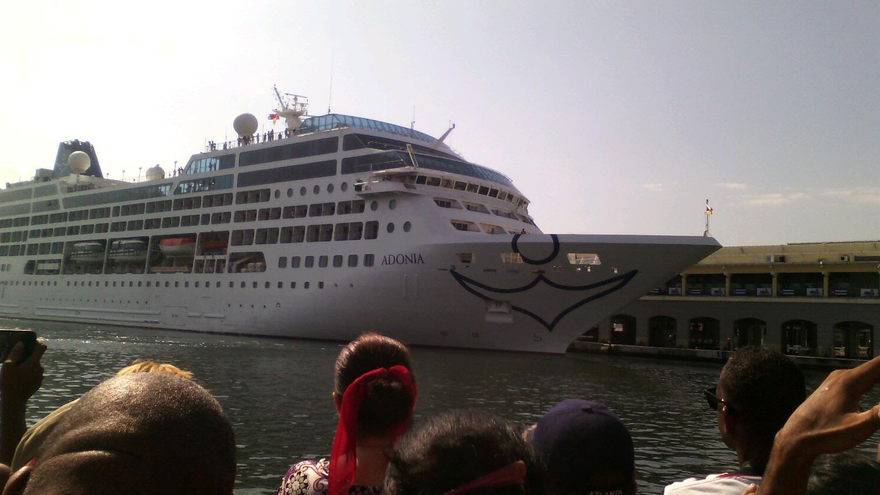
The cruise ship ‘Adonia’ has already provoked protests in Miami by anti-Castro groups. (14ymedio)

14ymedio biggerEFE, via 14ymedio, Miami, 7 June 2018 — The Cuban Resistance Assembly kicked off in Miami a new media campaign, No Colabores [“Do Not Collaborate”] against cruise-ship trips to Cuba and insisted on no support of tourism to the Island because it “directly finances the repression” of the opposition.

Orlando Gutiérrez, director of the Assembly composed of organizations within and outside the Island, explained during a press conference that this activity additionally contributes to the “exploitation” of Cuban workers and makes use of confiscated properties, e.g. the piers where the ships dock. continue reading

“Cruise ships cannot function without the exploitation of the Cuban people, who, besides, have always been harmed by Cuba’s dual currency,” Gutiérrez asserted.

The campaign includes TV spots and two billboards installed near busy avenues and streets adjacent to the Miami neighborhood of Little Havana. It calls those who travel to Cuba by cruise ship “accomplices” to the stampedes that occur on the Island towards cruise-ship travelers.

During the press conference, Sylvia Iriondo, president of Mothers and Women Against Repression (MAR), claimed that there is a direct connection between the revenue that the Cuban government receives from tourism, and the ill-treatment to which opposition members such as the Ladies in White are subjected.

“Tourism increases the repression; it is one of the major sources of income for the military,” and it is difficult to separate it from the hostilities inflicted on dissidents, Iriondo said.

She assured besides that this money, estimated at $3-billion annually, never goes to the people of the Island. “It does not better the lives of Cubans–it increases the resources for the regime to carry out repression,” Iriondo added.

Javier Garcés, who spoke on behalf of Cubans whose properties were confiscated 60 years ago “in violation of national and international laws,” said that they cannot remain “silenced” while in Cuba “they use our properties.”

Meanwhile, the Mexican judge René Bolio, who presides over the Justicia Cuba (JC) commission, stated that the functionaries who manage tourism on the Island are “directly” linked to the human rights violators under investigation by this international group of activists, with the objective of bringing them to justice.

During the press conference, Bolio mentioned Alejandro Martínez, manager of the Hotel Nacional de La Habana, as an example of individuals being investigated by JC.

On the other hand, the director of the Assembly of the Cuban Resistance announced that next Saturday they will collect signatures supporting a request to US President Donald Trump for legislative changes that would permit JC to try those responsible for repression in Cuba.

Along those lines, Iriondo pointed out that the Cuban ex-president, Raúl Castro, should be tried for the deaths of four pilots with Hermanos al Rescate [Brothers to the Rescue] who were shot down by Cuban fighter-bombers in 1996.

Translated by: Alicia Barraqué Ellison 

_____________

The 14ymedio team is committed to serious journalism that reflects the reality of deep Cuba. Thank you for joining us on this long road. We invite you to continue supporting us, but this time by becoming a member of 14ymedio. Together we can continue to transform journalism in Cuba.

Photographer and Activist Claudio Fuentes Detained in Havana

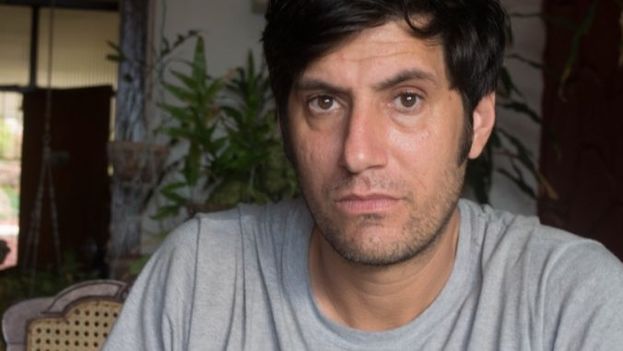
The Cuban opponent Claudio Fuentes. (María Matienzo)

14ymedio bigger14ymedio, Havana, 8 June 2018 — The photographer and activist Claudio Fuentes, a member of the Foro por los Derechos y Libertades (Forum for Rights and Freedoms), was arrested on Thursday in Havana and is in “whereabouts unknown” according to information from former political prisoner Ángel Moya speaking to 14ymedio.

“We have tried to call him starting yesterday morning and we have not been able to establish contact with him,” explained Moya. “As the day progressed we learned that he was being detained and so far we do not know the reason for that arrest,” he adds.

Moya believes that Fuentes “is ‘disappeared’ since family members and associates have not been able to see him and do not know where he is.” An officer on duty at the San Miguel del Padrón police station informed the family via telephone that the activist was being held at that station, but “when they got there, they were told he was not there.” continue reading

On several occasions Fuentes, who also edits videos and films, has been a victim of arbitrary arrests and other repressive actions, such as confiscation of the tools of his work.

Among his most famous works are the filming of several interviews with Cuban activists for the documentary Patria o muerte (2016) (Fatherland or Death), which was directed by filmmaker Olatz López Garmendia and premiered by the American production company HBO.

In an interview he criticized those artists of the Island who “spend their time, like peacocks, on their own work and generally that work has its back to a reality that has already collapsed.” A behavior that has led him to feel “shame” for that group and pushed him to “go another way.”

Fuentes also collaborated in the edition of the debate program Razones Ciudadanas (Citizens’ Reasons), which for two years issued several episodes in which activists and dissidents discussed hot topics of the Cuban reality such as the press, internet access and racism.

The Cuban Commission for Human Rights and National Reconciliation (CCDHRN) verified 128 arbitrary short-term detentions for political reasons last May.

During these arrests, “the peaceful dissidents were interned, as always, under inhuman and degrading conditions, in the police barracks designed for such ends,” denounced the independent organization.

Moya also denounced the arrest of the opponent Zaqueo Baez, member of the Patriotic Union of Cuba, who traveled to Holguín to visit the family of a political prisoner and “was arrested by police forces and beaten.”

______________________________

The 14ymedio team is committed to serious journalism that reflects the reality of deep Cuba. Thank you for joining us on this long road. We invite you to continue supporting us, but this time by becoming a member of 14ymedio. Together we can continue to transform journalism in Cuba.

Pollution Without Punishment

14ymedio bigger14ymedio, Yoani Sanchez, Generation Y, Havana, 7 June 2018 — The activists arrive in the woodlands to sink their hands in the oil spilled over the forest, thousands of miles from a hot air balloon displaying a banner denouncing CO2 emissions near a crude oil extraction platform where a group is protesting. Actions of this kind are barely seen in Cuba and it is not because the environment is respected.

Last week the people of Cienfuegos woke to the news of an oil spill in their bay. The heavy rains from subtropical storm Albert caused the pools of the nearby refinery waste treatment plant to overflow, spilling more than 3 million gallons of water mixed with crude oil into the bay. The official news programs made haste to minimize the damage and the Ministry of Science, Technology and Environment (Citma) kept a complicit silence. continue reading

No environmental group showed up with posters to stand outside the refinery, not a single chemical engineer raised their voice in the national media to warn of the danger to human health, nor were the voices of marine biologists heard detailing the negative effects on local wildlife. The official version prevailed and on television we saw a group of smiling workers cleaning the stains off the tourist boats.

The mistakes made by the authorities at the Cienfuegos refinery were not analyzed and no official journalist questioned the entity about the bad management practices over their waste that led to an ecological disaster. As in many known cases, the lack of independence of the judiciary, the press and social organizations allowed impunity to surround an event that deserved huge headlines, fines and a public commitment that such things will not happen again.

With the same state approval and “protection,” hydrocarbons are poured into the sewers from vehicle repair shops, the polyclinics throw medical waste into neighborhood dumpsters, and several companies continue to drain their dangerous miasmas into the rivers, just like the sad case of the Almendares River in Havana.

The State does not punish itself for these excesses and the lack of freedom prevents civil society from expressing itself in a clear and public manner. Despite small environmental groups that collect litter along the coastline and digital sites that promote a culture of respect for nature, Cuba lacks an environmental movement that can bring pressure, there is no seat in parliament from which to raise a complaint, nor is there the ability to demonstrate in the streets to defend our natural heritage.

In the absence of these voices, the island’s ecosystem is at the mercy of negligence, outrages and silence.

_________________________

The 14ymedio team is committed to serious journalism that reflects the reality of deep Cuba. Thank you for joining us on this long road. We invite you to continue supporting us, but this time by becoming a member of 14ymedio. Together we can continue to transform journalism in Cuba.

Arsenic, Oil and Plastics Invade Cienfuegos Bay

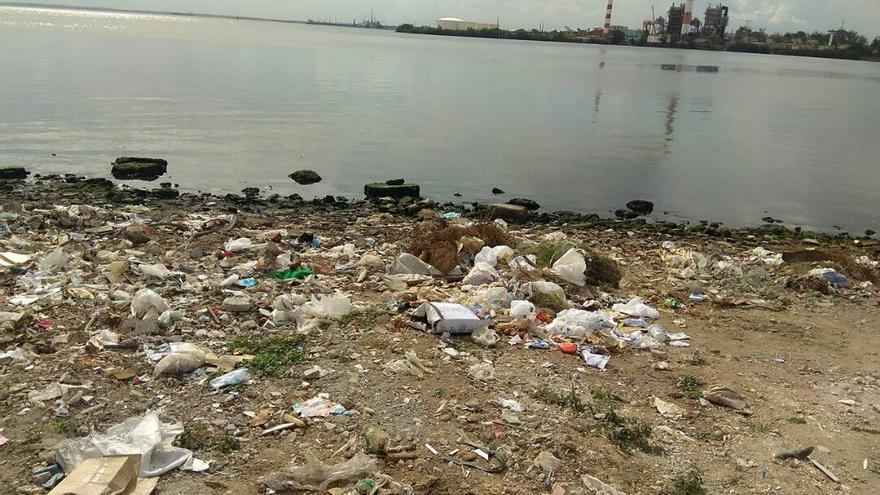
Punta Cotica, in the vicinity of the thermoelectric plant, is one of the most polluted neighborhoods in Cienfuegos. (14ymedio)

14ymedio bigger14ymedio, Justo Mora/Mario J. Pentón, Cienfuegos/Miami, 5 June 2018 — A crab covered with remnants of oil lifts a claw in a threatening gesture while sidling slowly through one of the mangroves on the banks of Cienfuegos Bay. It is rare to see seagulls crossing the bay in search of fish while some pelicans spotted in their flight over the water are stained with black.

“Since the oil refinery spilled into the bay we can no longer fish,” Eddy Alberto, a young man who lives in the Reina district just outside Cienfuegos, tells 14ymedio. On the morning of May 28, the Damují River overflowed near the refinery (recently abandoned by Venezuela), and flooded the sewage treatment pools, sending more than 12,000 cubic meters of liquids mixed with oil into the bay. continue reading

The rains from subtropical storm Alberto increased the flow in the province’s rivers, which empty into the bay, making the marine currents stronger than normal and sending the oil slick across more than 70% of the inlet. Cuba Petroleo specialists estimate that the recovery costs are on the order of a million dollars. Local fishermen fear that there will be no financial compensation for them.

“It’s not the first time they’ve polluted the bay, we live off fishing and no one will compensate us for this,” says Eddy Alberto, 30, his skin tanned by the tropical sun. The young fisherman complains that in order to support his family he now has to cut grass to sell to the drivers of the horsecarts — the main means of transportation in the city — to feed their horses. For each bag he receives 15 Cuban pesos (roughly 60 cents US).

This is not the first environmental tragedy experienced in the bay. The previous catastrophe dates back to 1986 when an oil spill seriously contaminated the inlet. The cleanup work lasted five months. In 2001, an arsenic spill caused alarm among Cienfuegans. Although the authorities never revealed how much of the poison was poured into the bay, fishing was prohibited.

At the end of 2013, Reinaldo Acosta Milán, director of the Supervision Unit of the Ministry of Science, Technology and Environment (CITMA) explained on Radio Ciudad del Mar that the waters of the bay were free of arsenic and that, with the passage time, the spill had been incorporated into the sediments. Acosta Milán recognized that of the species studied by CITMA, shrimp and some shellfish in the area had high levels of arsenic, so their consumption in a sustained manner could be harmful to human health. But many fishermen continued with the under the counter sale of seafood.

Eddy Alberto is not the only fisherman in his neighborhood. In the area known as the 100 Casitas, a settlement built by the Government to house the victims of Hurricane Lili, many are engaged in illegal fishing and they sell their products in the city.

“We do not hurt anyone with what we take from the sea, we are living day-to-day,” says a colleague who sells minutas (breaded fish fillets) and oysters. This man, who did not want to be identified, explains that some years ago he caught shrimp, but that it is more and more rare to find shellfish in the northern part of the bay, where he fishes.

A report by the United Nations Environment Program claims that the large-scale industrialization fostered in the years of Soviet influence on the island is mainly responsible for the compromised environmental condition of the bay. The scientists believe that the sediments of the bay are the second most polluted in the country, after those of the port of Havana.

In the 1980s, “the Nitrogenated Fertilizer Company alone contributed 9.7 tons per day of nitrogen,” notes the report. In those years, an average of 694 vessels passed through the waters of Cienfuegos annually, dumping 93.5 tons of garbage and more than 5,657 tons of oily water into the bay, according to the investigation.

The natural recycling of the bay’s waters is slow, which makes it easier for pollutants to remain longer. According to experts, the waters take between 39 and 59 days to clear the 34 square mile harbor.

The use of polluting fertilizers and biochemicals in the watersheds that flow into the port also contributed to the environmental imbalance. The sugar mills near the Damují and Caunao rivers, the Damují paper plant, and the industries built in the breeding zone are the main culprits of the environmental deterioration in the inlet.

Researchers detected the disappearance of the white shrimp in the northwestern zone, a species that was a symbol of the city and which, along with pink shrimp, was the main fishing resource of the bay.

“In general, in the last decades there are signs of ecological deterioration with a reduction in biodiversity, loss of benthic zone communities [starfish, oysters, clams, sea cucumbers, ophiuroids and sea anemones], a reduction in size and of the catch levels of commercial species, and the erosion and landscape deterioration of the coastline,” conclude the scientists.

Alejandro Sánchez, 23, lives in the historical center of Cienfuegos. In the evenings he takes advantage of the breeze from the west to go with his girlfriend to the Royal Pier to contemplate the sunset. Although the bay has exchanged its shades of blue-green for more of a yellow hue due to the recent weeks’ rains, he believes that “there is no place in the world more beautiful.”

“The only thing I regret is the pollution,” he says, using a green straw to sip a pina colada, prepared in a place a few yards from the dock. “This place was designed for tourism but they didn’t take into account the stench,” he laments.

Both the Muelle Real and other areas of the historic center of Cienfuegos have been recently restored after the proclamation in 2005 of areas of the city as a World Heritage Site. The influx of tourism has grown in recent years and Cienfuegos has become an obligatory stopover on the road to neighboring Trinidad.

The bad smell that Sanchez refers to emanates from a sewage water evacuation channel that flows very close to the wharf. The sewage network of Cienfuegos, built more than a century ago in the days of the Republic, throws the waste directly into El Inglés stream and into the bay without any type of processing.

“The environs of the city have the highest concentrations of fecal coliform in the bay,” according to several environmental experts, although fecal counts are currently below the established norms in the bathing areas.

Sanchez says he has heard about the danger of water pollution, but that local people “are not sensitive to the issue.”

“You can see plastics, garbage, dead animals and rubble everywhere you look, and in the absence of landfills, people throw it directly into the sea, which is very sad,” he says.

Arianna García Chamero, of the Cienfuegos Center for Environmental Studies, raised the alarm on behalf of local researchers when they discovered the presence of microplastics in the bay.

It is estimated that this type of waste represents 85% of pollution in the oceans and seas. Many bags, wrappings and similar waste end up in the sea and are ingested by animals and pass into the human food chain.

García Chamero told the local press earlier this year that the intake of microplastics and the heavy metals that often accompany them can be harmful to human health, causing cancer, among other diseases.

“The highest concentrations in the three matrices evaluated — water, sediments and organisms — are at the [environmental quality assessment] stations of the city of Cienfuegos, which leads us to assume that the city is one of the major polluters of the environment,” says the expert, who expressed her alarm adding, “I was shocked that the levels [of microplastics] are sometimes similar to, or even higher than, the ranges found in studies in ecosystems of highly industrialized sites on the planet.”

 ___________________________

The 14ymedio team is committed to serious journalism that reflects the reality of deep Cuba. Thank you for joining us on this long road. We invite you to continue supporting us, but this time by becoming a member of 14ymedio. Together we can continue to transform journalism in Cuba.

"One Day We Wake Up and ’Boom’, We’re Internauts"

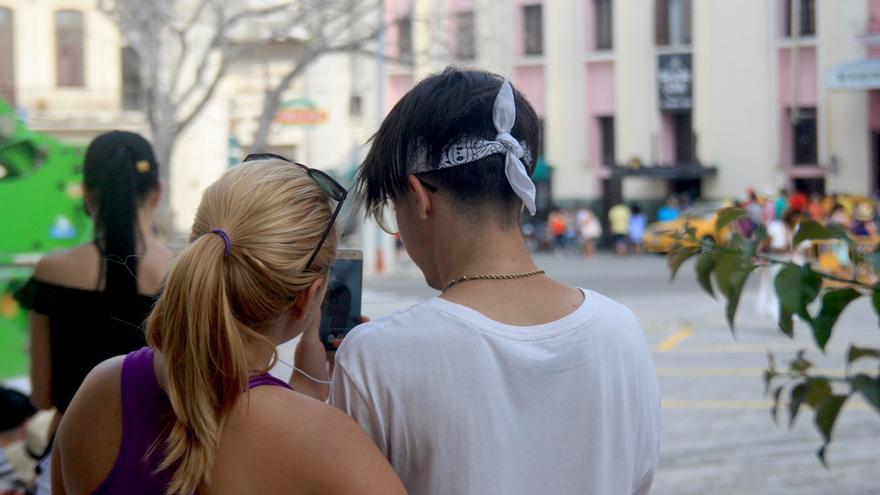
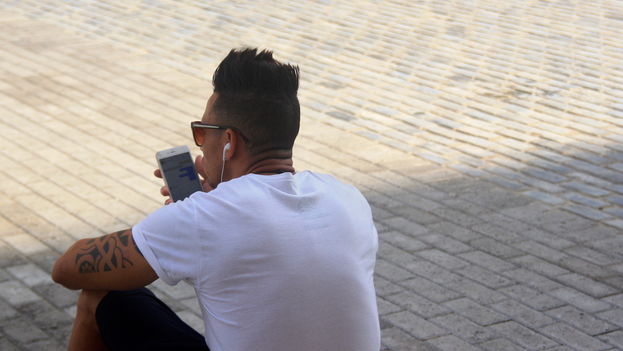
A good share of the applications for phones for Android or iOS phones that have been developed on the island in recent years are designed for users who are offline. (14ymedio)

14ymedio bigger14ymedio, Marcelo Hernandez, Havana, 6 June 2018 — An old truck passes through Havana’s Calzada del Cerro leaving a trail of smoke. From a balcony a neighbor films the vehicle and will upload the images to social networks. This is no longer science fiction.

The Telecommunications Company of Cuba (Etecsa) has insisted in the last weeks that, before the end of the year, Cubans will be able to enjoy connecting to the web from their cell phones. The service, for which neither the cost nor the conditions have been detailed, sparks the interest of many customers who want to have the internet in their pockets.

“It’s going to be like turning on the light,” says Lucio, 18, a young man who, along with his sister, runs a home-delivery service that operates by text messages and emails through Etecsa’s Nauta service, which was inaugurated four years ago by the state telecommunications monopoly. continue reading

“Right now, our customers can just send us a message with the menu item they want and the address where we need to deliver it, but when they have internet on their mobile it will be better, because it will shorten the time and they will be able to choose the dishes online, with photos and details of the ingredients,” says Lucio.

A good share of the applications for phones for Android or iOS phones that have been developed on the island in recent years are designed for users disconnected from the great world web, so the apps need all the features to work offline. With the arrival of internet service to mobiles that may change.

“We will go from zero to infinity,” jokes Rigoberto Valdés, a computer scientist who works in a small workshop that performs mobile repairs and installs apps. “Often we have to update a customer’s cell phone or download an app he has ordered and then one of us has to go to a WiFi hotspot to do it,” he explains.

According to Etecsa statistics, almost 700 wireless internet access points operate in the country. Although the installation of these WiFi areas has made a big difference in Cuba compared to the beginning of the century, when it was a privilege reserved for foreigners and officials, many Internet users are still dissatisfied.

“The price of 1 CUC for one hour of navigation is still very high and trying to carry out a professional assignment in one of those outdoor places is complicated,” says Valdés. “I participate in several programmers’ forums and it is not the same to have to wait several days to get connected as it is to have the thread of all the discussions on your mobile.”

Etecsa begun to expand the 3G mobile coverage a couple of years ago, through which the Nauta mail now works, and which will also be the path for the internet. “The signal is still bad in many places, the data cuts out as if the lines are congested and the company has to fix that before expanding the connectivity because to navigate you need good bandwidth and stability.”

The presence of Cubans on social networks will also increase. “Now there are many people who have opened accounts on Facebook or Twitter but use them very little, when notifications arrive or messages from a friend go directly to a cell phone they will spend more time on the network,” adds Valdés.

According to Etecsa statistics, more than 700 wireless internet access points are operating in Cuba. (14ymedio)

Last week the blog Tu Android reported that pages from the domain ‘cu.’ are accessible from several phones. “They seem to be tests for the deployment of the long-awaited Internet by mobile data,” said the administrator of the blog, who qualified the news by saying that it could also be “a simple error” from Etecsa.

However, a few days later, the midday edition of the state television news program confirmed that a “pilot test” for mobile web browsing among selected clients in the province of Villa Clara was underway. The announcement has triggered speculation and increased expectations about projects linked to the world wide web.

The recent meeting between Eric Schmidt, former president of the Google company and current technical advisor to the technology giant, and President Miguel Díaz-Canel has also fueled hopes that, finally, massive access to the web will be a part of daily life on the island.

“A few months ago I downloaded an application that claims to work as a Cuban Uber, but in reality all contact with the driver is through Nauta mail, which is sometimes very slow and unstable,” explains Niurka Fuentes, a tourist guide who specializes in French speaking clients. “Since I have to move around the city and also the province a lot, it is vital for me to have quick contact with the driver.”

“If the internet comes to mobile phones, then we will have something more efficient so everyone wins. I win because I can transport my clients and the taxi driver wins because he can check who I am and my record as a client,” she says. Cuba expects to have 5 million active mobile lines by the end of this year and “almost half of the population may be connected,” Fuentes said.

For activists on the island, the delay in installing the service is not a coincidence. Iliana Hernández, director of the Lente Cubano (Cuban Lens) program, believes that “the more people have access to the internet, the more diverse information they will have within their grasp, including everything the government insists on hiding and censuring.”

Hernandez thinks that being able to surf the web from cell phones “will be very beneficial for activism which, despite the current restrictions, has managed to bring to light a lot of information that otherwise would never have been known,” she says.

Despite the expectations and the customers who, in recent weeks, have pressured Etecsa through virtual forums and calls to find out when the mobile phone internet service will start, the company persists in its traditional secrecy. “One day we wake up and ’boom’ and we are Internauts,” a teenager connected in a Wi-Fi zone predicted this Thursday.

 ___________________

The 14ymedio team is committed to serious journalism that reflects the reality of deep Cuba. Thank you for joining us on this long road. We invite you to continue supporting us, but this time by becoming a member of 14ymedio. Together we can continue to transform journalism in Cuba.

Cuban Customs Threatens to Seize Goods Brought by ‘Mules’ from the U.S.

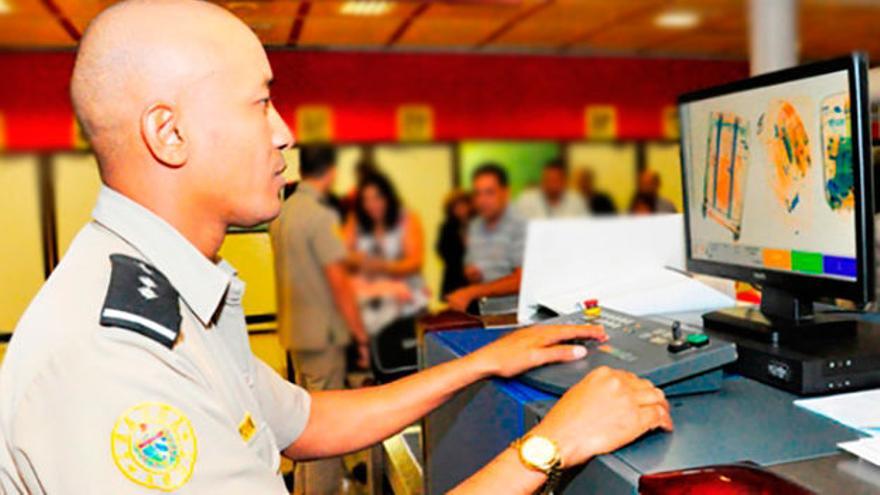
An official of the General Customs of the Republic checks the belongings of the passengers at the airport in Havana. (Customs)

14ymedio bigger14ymedio, Mario J. Pentón, Miami, 6 June 2018 — The General Customs of the Republic of Cuba threatened on Wednesday to confiscate packages sent from the United States through ‘mules’ (people who travel specifically to the island to carry merchandise) who serve shipping agencies based in the U.S..

The practice of sending goods  through agencies, which Havana considers “illegal,” has grown rapidly in South Florida as a result of the flexibilization in relations with Cuba initiated by former President Barack Obama.

José Luis Muñoz Toca, director of Technical Customs, said at a press conference that more than three tons of various products that were being brought into the country through the shipping networks were seized. So far there are four complaints of contraband associated with this phenomenon, Muñoz said, although the nationality of those involved has not been determined. So far this year the authorities have detected “113 cases of trafficked merchandise.” continue reading

Muñoz Toca said that 29 agencies based in the United States have been identified that operate “in an unauthorized manner” to send goods to Cuba “through travelers who agree to bring them in exchange for payment or compensation.”

For his part, the Deputy Chief of Customs, Wiliam Pérez González, justified the proscription against shipments because such agencies “have no official contract with the Cuban companies authorized to carry out these operations.”

Pérez González acknowledged the existence of corruption on the island with regards to packages carried by travelers. He also emphasized the warnings the agency gives to the travelers who carry the goods; even when they do not know the contents of the shipments, they take them to the island. “They may be engaged in drug trafficking or bringing other illicit materials,” he said.

Among the South Florida agencies that General Customs mentioned as a priority for their punitive actions are XAEL Habana, Va Cuba, Cubamax Travel, Viajes Coppelia, Habana Air, Blue Cuba Travels and Central America Cargo. Recently Customs updated the list of agencies it allows to send parcels to the Island.

When dealing with items sent to third parties through agencies, “their import becomes commercial,” the authorities explained, so the contents of the suitcases may be “subject to the administrative sanction of confiscation, if there is no more serious crime.”

The Cuban Diaspora uses the service of parcel delivery agencies to the Island to alleviate the shortages their relatives in Cuba experience.

According to Emilio Morales, director of the The Havana Consulting Group, based in Miami, about 90% of the shipments that arrive on the island come from the United States. The value of the goods sent to Cuba last year was in the order of three billion dollars, Morales told 14ymedio.

The measure is seen as a turn of the screw to regulate the growing black market. In Cuba, where most of the stores belong to the State and the economy is still regulated by the powers-that-be, shortages are endemic. Basic items such as toothpaste, sanitary pads or multivitamins disappear from the markets for weeks, forcing many people to buy them on the black market.

The incipient private sector on the Island also demands supplies that can not be purchased in wholesale stores and resorts to shipments as a way to ensure provisions to maintain paladares (private restaurants), tourist accommodations and small coffee shops scattered throughout the country.

 ___________________________

The 14ymedio team is committed to serious journalism that reflects the reality of deep Cuba. Thank you for joining us on this long road. We invite you to continue supporting us, but this time by becoming a member of 14ymedio. Together we can continue to transform journalism in Cuba.

Cuban Passport Still Required for All Cubans Who Want to Enter the Country

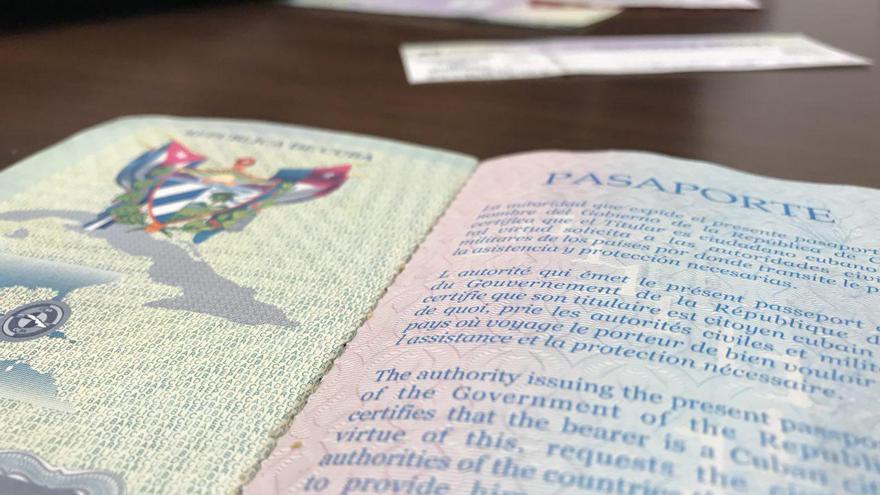
Cuban passport being stamped with Colombian visa. (14ymedio)

14ymedio bigger14ymedio, Miami, June 5, 2018 – All Cubans, even those with dual citizenship, will still be required to present a Cuban passport when entering the country. The requirement will remain in effect after ratification of a constitutional amendment by the National Assembly according to the Cuban ambassador to the United States, José Ramón Cabañas.

As reported by El Nuevo Herald, Cabañas made the comments on Tuesday during an event highlighting joint environmental and historic preservation projects between the United States and Cuba.

“For us the guiding principle is that every Cuban — whether he or she holds a second or third citizenship — when that person returns to Cuba, is on the island, is within our borders, is [considered to be] Cuban,” said the ambassador. continue reading

The creation of a commission to reform and update the law had raised hopes within the exile community, which numbers more than one million Cubans. To travel to their country of birth, Cubans with dual citizenship must apply for a Cuban passport, which involves a fee of 450 dollars as well as a costly two-year extension of 180 dollars.

Although the nation’s constitution does not specifically bar Cubans from entering the country using a foreign passport, article 32 does prohibit dual nationality, which can lead to loss of Cuban citizenship. The law addresses this prohibition by requiring the possession of a Cuban passport to enter the country as evidence that a visitor has not renounced his or her citizenship.

More than 130,000 Cubans have acquired Spanish citizenship yet still reside on the island. Additionally, there is a large number of returnees who retain citizenship from the countries where they had been living, mainly the United States. Some activists have accused the state of profiting from immigration procedures while looking the other way when this constitutional article is violated.

Last Saturday the National Assembly unanimously appointed a commission to be headed by the former president and first secretary of the Communist Party, Raul Castro, which will study the constitutional changes. At this session the deputies made it clear that any changes will preserve the irrevocability of the socialist system imposed by Fidel Castro as well as article 4, which gives primacy to the Communist Party rather than the state.

_________________________

The 14ymedio team is committed to serious journalism that reflects the reality of deep Cuba. Thank you for joining us on this long road. We invite you to continue supporting us, but this time by becoming a member of 14ymedio. Together we can continue to transform journalism in Cuba.

Cubana de Aviación Suspends Ticket Refunds Due to Lack of Cash

Outside the Cubana de Aviación agency this Tuesday in Havana. (14ymedio)

14ymedio bigger14ymedio, Luz Escobar, Havana, 5 June 2018 – Times are tense for the state airline Cubana de Aviación since the plane crash that killed 112 people on a flight between Havana and Holguin on May 18. The company has no money to continue to reimburse passengers for thousands of canceled tickets, 14ymedio was able to confirm this Tuesday.

Since last week hundreds of people have passed through the Cubana de Aviación office on Infanta Street in Havana to be repaid for the value of their tickets. The flood of returns has been such that “there is no money to continue repaying,” an employee told the frustrated passengers on Tuesday.

“You must keep in touch by phone or come after Thursday to see if the problem has been resolved and we have cash again,” he insisted over and over to all the customers who showed up. Some persist with their demands, to which the employee replies: “We went to the bank but there is no money.” continue reading

Those who inquired about possible additional compensation for the complications resulting from the flight cancellations were informed clearly that the services for the airline’s national customers are “subsidized” and they can only be guaranteed a refund for the value of the ticket. “Not one cent more.”

Cubana de Aviación is going through “an unprecedented situation in the number of returns and there is no liquidity to face these expenses,” explains an official consulted by this newspaper and who preferred anonymity. “We have no money coming in because our domestic flights are canceled and most of the international ones are too.”

The planes of the state airline that regularly fly to destinations such as Haiti, the Dominican Republic or Venezuela are not covering those routes, a situation that has forced the company to relocate customers or host them in hotels while looking for seats to travel on other airlines.

As of last Friday, the company also ruled out the possibility of transporting its customers by bus as a way to compensate them for the cancellation of flights and now offers only the reimbursement of the value of the air ticket.

A posted notice with the phone numbers that can be called is the response many customers receive to their claims at the Cubana de Aviación agency in Havana. (14ymedio)

“I came yesterday at ten o’clock and it was full of very upset people,” Enrique, a young college student, tells 14ymedio; he was among the first group of customers this morning at the agency on Infanta Street.

“Yesterday I had to leave because there were a lot of people in line and they have only been able to return the money to the first ones in line, almost at dawn,” he says. “That’s why I came early today but the situation is worse and today nobody has been able to collect even a peso.”

For Eloísa, a woman from Santiago de Cuba who has been stranded in Havana due to the cancellations, the delay in recovering her money is a source of trouble. “Without that money I can not buy a bus ticket, so I have no choice but to keep coming to see when Cubana can pay again.”

National customers must buy their plane ticket three months in advance at the Cubana de Aviación offices. For this reason most of those now seeking refunds purchased a ticket to travel during school holidays, coming up in July and August.

Cubana de Aviación domestic flights were suspended after the accident on May 18 and will not resume “until at least September” an employee of the state airline told 14ymedio last Friday.

_________________________

The 14ymedio team is committed to serious journalism that reflects the reality of deep Cuba. Thank you for joining us on this long road. We invite you to continue supporting us, but this time by becoming a member of 14ymedio. Together we can continue to transform journalism in Cuba.

Cuban Government Blames the Weather for Worst Harvest in More Than a Century

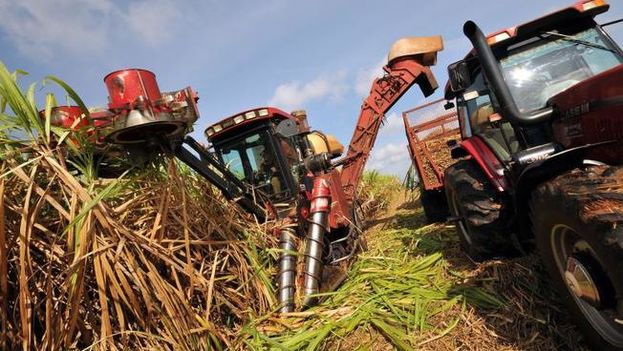
Since the end of April, the constant rains forced most of the country’s 54 sugar mills to shut down. (EFE)

14ymedio biggerEFE, via 14ymedio, Havana, 5 June 2018 – Cuba finished the 2017-2018 sugar harvest ahead of schedule and without meeting the its production targets due to the effects of weather events including an intense drought, the scourge of Hurricane Irma last year, and the rains that fell on the island in recent days.

This was reported by the directors of the Azcuba state sugar group, which heads the sector on the island, during an appearance before the Agri-Food Commission of the National Assembly of People’s Power, one of the ten belonging to that legislative body that met Monday in Havana

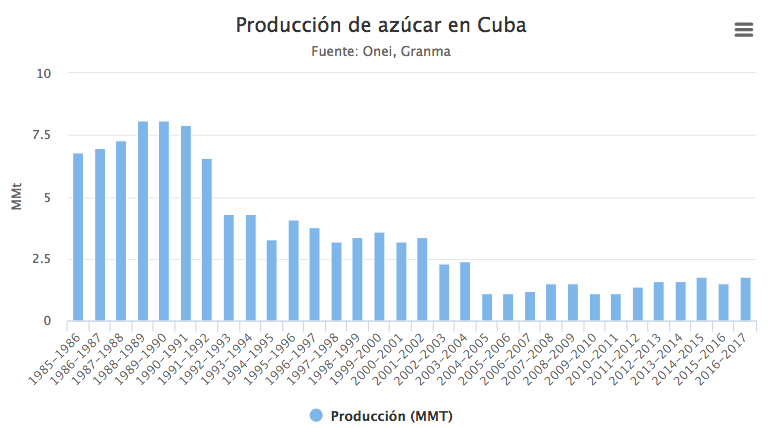
Industry experts calculate that the final harvest results, whose figures have not yet been disclosed, will be around 1.1 million tons of sugar compared to the 1.6 million tons initially forecast, which had recently been reduced to 1.3 million in response to the weather problems. continue reading

That data would match that of the 2009-2010 season, the worst in more than a century and considered the moment when this industry, which decades ago was the island’s economic engine, hit rock bottom.

Since then the sector has failed to take off to recreate the results of up to eight million tons that managed to reach in earlier years.

Adverse climate events marked this year’s sugar harvest from its beginning, causing delays and subsequently forcing repeated stoppages, poor industrial output and affecting the energy balance of the sugar factories, due to the poor quality of the cane, explained the first vice president of Azcuba, José Carlos Santos.

Sugar production in Cuba in Million Metric Tons, 1985 to 2017, from government sources.

These factors caused a “total deterioration” of the sugar plan indicators, added the executive, quoted by the state-run Cuban News Agency.

Since the end of April, the constant rains stopped the processing of the cane in most of the country’s 54 sugar mills, he said.

With regards to the situation of the main indicators of the industry, the executive said that the industrial output reached 98%, the behavior of the estimate of cane was 104% and the delivery of electricity to the national electric power system was 84%.

The head of Azcuba, Orlando Celso García, said in the parliamentary session on Monday that the preparations for the 2018-2019 sugarcane season will advance depending on the repairs of the plants, the equipment and the available resources.

He went on to say that the next harvest is expected to start early and will have enough raw material because 60% of the cane that milled is what is left from the current harvest.

Cuba produced some 1.8 million tons in the 2016-2017 sugar harvest.

____________________

The 14ymedio team is committed to serious journalism that reflects the reality of deep Cuba. Thank you for joining us on this long road. We invite you to continue supporting us, but this time by becoming a member of 14ymedio. Together we can continue to transform journalism in Cuba.

Among the "Roots" / Fernando Dámaso

Fernando Damaso, 14 April 2018 — Cuban aborigines–Ciboneys and Taínos–were at very primitive stage of civilizational development at the time of the Conquest, and barely left any important marks on the national identity.

The Spanish colonizers arrived in 1492, establishing the “primal roots” with their customs, language and culture, planting the first seeds of what, with the passage of time, would become the national identity. continue reading

It is noted that a decade later, in 1502, the first African slaves were brought to Cuba, replacing the depleted aboriginal labor force. African slaves occupied an inferior level on the social scale from that of the aborigines. It is at this time that the so-called “African root” appeared in our as-yet unformed nationality, although its influence was still rather poor, being limited to the vicinity of the barracks where the slaves were crammed and exerting no other, transcendental influence upon the life of the colony.

As the years went on, the original “Spanish roots” blend with the African, Chinese and those of other immigrants to the Island, comprising the “cultural ajiaco” of which Don Fernando Ortiz would speak. However, it should be kept in mind that, like any other good ajiaco, the “protein” came from the “Spanish roots,” and the African and other roots contributed the starchy vegetables.

In the crucible of the struggles for independence were united desdendants of Spaniards (the majority), of Africans, of Chinese and other nationalities, giving rise and growth to the national identity.

According to the 1953 Census, the last one conducted during the Republican era, 72.8% of the Island’s inhabitants comprised the white population, 14.5% the “mestizo” (mix of black and white), 12.4% the black and .03% the yellow (Chinese). In this setting, the majority religion was the Christian–primarily Catholic, with more than 70%–and the minority was composed of African religions and others. Today these percentages have changed, but the majorities are still held by whites and by Christianity in a syncretic form.

During the years of the Republic and in many of the socialist era, the black and mestizo populations were discriminated against, primarily in relation to their religious beliefs and practices, until–more for political convenience than out of a sense of justice–these stopped being an impediment to membership in certain political organizations and to occupying some official positions.

This caused the surge in Afrian culture, particularly in music, dance and the plastic arts–as well as the massive “initiation of the saints”–for snob appeal in the case of nationals, and in the case of foreigners, for tropical exoticism. It should be noted that, regarding the latter, a lucrative business has developed, charging prices that range between two and five thousand CUC to obtain the “initiation” by the “babalawos.”*

This does not mean that there have not been nor currently exist talented artistic creators who profess these religions and defend their “African roots” in their works. However, there also many merchants who have made out of “the African” the raw material for obtaining abundant and easy earnings.

The official empowerment of “African roots” to the detriment of the “Spanish” ones has always been in response to political conveniences–as well as to place them above the majority Catholic religion, which is less dependent on the economic, political and social system implanted in the country. This is the source of their national proliferation, obviating the fact that the majority of Cubans have always sung habaneras, sones, boleros, guarachas and the like, and not African chants; and they have danced flamenco, waltz, contradanse, danzón, mambo, cha-cha-cha, pilon and other dances, and not African dances. These latter, in one or another case, have been relegated to very specific folkloric or ethnic troupes in some regions of the country.

It is notable that, when thousands of Cubans in the 1990s decided to adopt a foreign citizenship, they opted for the Spanish one and not one from any African country. Nor are our Afro-Cuban women and men interested in marrying African citizens–rather, they prefer Spaniards, Europeans, North Americans and even Latin Americans.

It appears that the “African roots,” despite their imposition by the authorities and their deputies, have been unable to supplant the “Spanish roots” and what these mean to Cubans, regardless of the color of their skin.

*Translator’s Note: The practices described pertain to the Afro-Cuban religion of Santería. Babalawos are priests of this religion.

Translated by: Alicia Barraqué Ellison

Deputies Unanimously Entrust Reform of the Constitution to Raúl Castro

14ymedio bigger14ymedio, Havana, 2 June 2018 — In an extraordinary session without surprises, the National Assembly voted unanimously on Saturday for Raúl Castro to preside over the commission that will carry out the reform of the Constitution. With this decision the parliamentarians have granted the former president and general secretary of the Communist Party (PCC) the leadership role in the changes of the Constitution.

The proposal to appoint Castro as head of the constitutional reform came from the current president of the Council of State, Miguel Díaz-Canel. The commission will be composed of members from various social sectors, especially the so-called “mass organizations,” the lines of transmission of the executive branch’s power to the Cuban people.

The constitutional reform is one of the pending issues that the Government seeks to implement during the new legislature begun on April 19, when Díaz-Canel assumed the leadership of the State, replacing Raúl Castro who was in charge for twelve years. The current Constitution came into force in 1976 and underwent partial modifications in 1992 and 2002.

The reform of the Constitution was announced during the last congress of the PCC in 2016 with the declared aim of adapting the text to the changes the country has experienced in recent years, but without changing the current political system of the island. Article Five of the Constitution, which establishes the leading character of the PCC, and the “irrevocable” character of socialism, was imposed by Fidel Castro at the beginning of this century to avoid a transition from within the system.

Some of the proposals launched during Raúl Castro’s presidential mandate will be included in the reform project, among them the limitation of political and partisan positions to two consecutive terms, which has been ratified by the last two PCC congresses but has not been embodied as law. There will also be an update of the legislation on agricultural cooperatives, which account for 92% of the food that is produced in the country. The reform of the electoral system and the recognition of greater rights for the LGTBI community, including marriage between people of the same sex, are other points that will be studied in the course of the debate on constitutional reform.
____________

The 14ymedio team is committed to serious journalism that reflects the reality of deep Cuba. Thank you for joining us on this long road. We invite you to continue supporting us, but this time by becoming a member of 14ymedio. Together we can continue to transform journalism in Cuba.

‘Granma’ Erases Two Comments Critical Of Diaz-Canel’s Visit To Venezuela

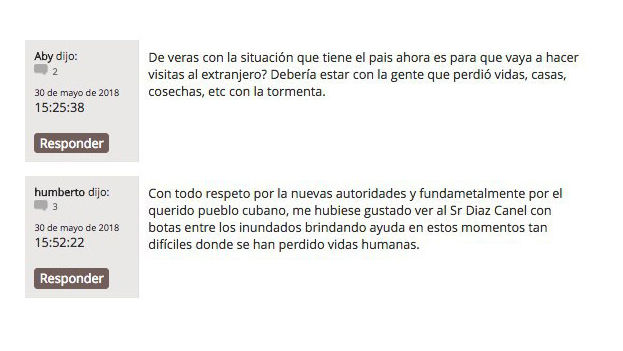
First comment: Seeing the situation we have in the country now is it time to take a trip abroad. you should be with the people who lost lives, homes, harvests, etc. because of the storm. Second Comment: With all respect for the new authorities and fundamentally for the beloved Cuban people, I would have liked to see Senor Diaz Canel with boots in the flood bringing help in such difficult times when human lives have been lost. (Screen capture)

14ymedio bigger14ymedio, Havana, 31 May 2018 – Since Wednesday, most of the talk on Cuban streets is about two things: the heavy rains that have kept the country on edge and criticism of President Miguel Diaz-Canel’s visit to Venezuela right in the middle of the floods caused by subtropical storm Alberto. The controversy has reached the digital pages of the official newspaper Granma, which censored two comments that questioned the president’s trip. continue reading

The article that announced Diaz-Canel’s arrival in Caracas was published this Wednesday shortly after 11 o’clock in the morning and by 3 o’clock in the afternoon there were at least two comments that criticized the leader’s departure from the country.

“He should be with people who lost homes, harvests,” demanded an Internet user named Aby. A few minutes later, another, under the name of Humberto, added that he preferred to see the president “with boots in the flood offering help.”

On Thursday morning, 14ymedio was able to verify that both comments had been deleted and only the favorable messages about the trip to Venezuela remained at the bottom of the article.

The official organ of the Communist Party has an ironclad moderation policy on its digital page and texts from users who question the political system, leaders of the Revolution or official functionaries are rarely published. As a rule, these comments do not even appear in the discussion thread.

In this case, however, the questions posted by Aby and Humberto did appear on-line and they remained up at least four hours before they were erased.

This is Diaz-Canel’s first official visit abroad since he took office as president on April 19. Although his rapid appearance at the site of the May 18 crash of the Cubana de Aviación flight was praised by citizens, this departure from the island in the midst of the storm Alberto, a natural disaster that cost the lives of four people, did extensive damage to homes and had serious effects on agriculture, has generated increasing criticism.

“What he did with his head he destroyed with his feet,” said an elderly man sitting on a wet bench in Havana’s Central Park. “He left when there was more to be done,” he said.

______________________________

The 14ymedio team is committed to serious journalism that reflects the reality of deep Cuba. Thank you for joining us on this long road. We invite you to continue supporting us, but this time by becoming a member of 14ymedio. Together we can continue to transform journalism in Cuba.

Hole Interrupts Traffic on the Bridge Over El Inglés Stream in Cienfuegos

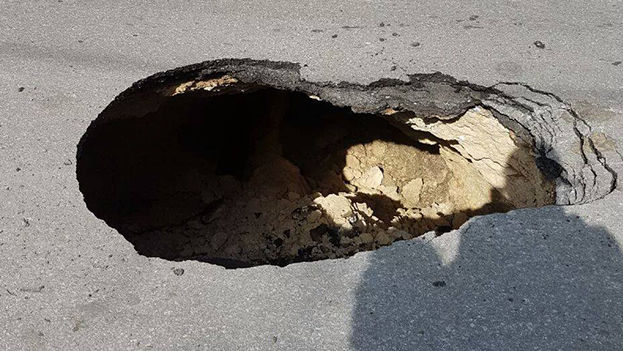
Photograph of the hole in the bridge over El Inglés stream in Cienfuegos. (14ymedio)

14ymedio bigger14ymedio, Cienfuegos, 1 June 2018 — A large hole in the pavement of the bridge that carries traffic over El Inglés stream has been one of the recent effects in Cienfuegos of the rains associated with the subtropical storm Alberto.

The road, considered important for connecting the neighborhood of Pueblo Griffo (10,000 inhabitants) with the rest of the city, was closed this Thursday after a bus crossing the bridge discovered the deep hole.

Brigades of builders appeared at the site and carried out urgent repairs. According to experts, the waters of the raging El Inglés brook removed some of the fill in the bridge and created the hole, which made travel through the site dangerous. continue reading

According to what several workers told 14ymedio, the materials used to repair the bridge were rubble and macadam. The repairs of the bridge ended late at night and as of Friday the road can again be traveled.

The subtropical storm Alberto caused severe floods in this territory in the south of Cuba, which forced the evacuation of more than 11,000 people. The pumping stations that supply water to the population were affected and more than 8,000 acres of various crops in Horquita, Juraguá, Santa Martina and the Martyrs of Barbados Agricultural Production Cooperative were under water.

Alberto’s rains were also the cause of the overflow of the wastewater treatment plants at the oil refinery that poured 12,000 cubic meters of oily water into the sea, causing ecological damage that is still being assessed. Strong currents in the bay’s inlet channel caused a ship bound for the port with 29,000 tons of rice from Vietnam to run aground.

_________________________

The 14ymedio team is committed to serious journalism that reflects the reality of deep Cuba. Thank you for joining us on this long road. We invite you to continue supporting us, but this time by becoming a member of 14ymedio. Together we can continue to transform journalism in Cuba.

In the First Month of Diaz-Canel’s Government There Were 132 Arbitrary Arrests

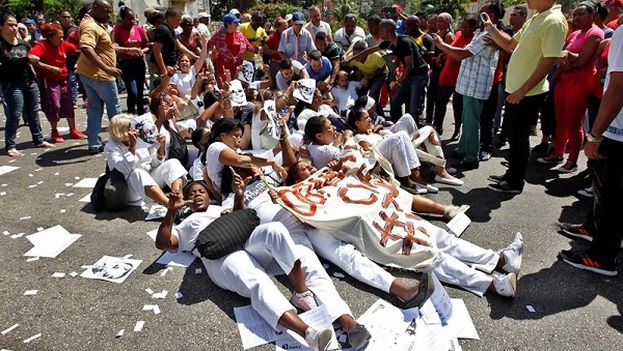
The Ladies in White during an act of repudiation against them at one of their protests. (EFE)

14ymedio bigger14ymedio, Madrid, 4 June 2018 — The Cuban Observatory of Human Rights (OCDH), based in Madrid, counts 132 arbitrary detentions on the island in May, the first month of President Miguel Díaz-Canel’s presidency.

Those arrested for political reasons this month belonged mostly to the Ladies in White, the Patriotic Union of Cuba (UNPACU), Youth Awakens, the Boitel Party and the Orlando Zapata Tamayo Civic Action Front, as well as a group of independent journalists. Of those arrested, 64 were women and 68 men. So far, the total arrests in 2018 are 1,224, according to the organization.

The Observatory called the crime of “pre-criminal dangerousness” an “aberration” which has been used to condemn UNPACU activists to two and a half years in prison and is used to “prosecute dissidents who have not committed any crime.”

Among the most common reasons for which the government has made arrests, according to OCDH, are preventing attendance at Catholic masses, travel to other countries, uploading protest videos to social networks, demanding rights or participating in civic activities. “In the case of independent journalists, at least two were arrested for trying to cover the tragic plane crash that recently occurred in Havana,” the organization denounced.

The OCDH reports that a government opponent who is a member of the Citizen Reflection and Reconciliation Movement was punished by one year in prison for allegedly “defaming the heroes.”

____________________________

The 14ymedio team is committed to serious journalism that reflects the reality of deep Cuba. Thank you for joining us on this long road. We invite you to continue supporting us, but this time by becoming a member of 14ymedio. Together we can continue to transform journalism in Cuba.