Margaret Atwood, On The Surface Of The Word

Margaret Atwood

Alas Tensas, Masiel Mateos, 6 May 2018 – Twenty-six years ago, when books cost barely two modest pesos in national currency, I acquired the book On the Surface, a novel by Margaret Atwood, then unknown in Cuba. The recommendation did not come from a bookseller, nor from a writer, much less a publisher or a promoter; but from a young doctor doing his residency in psychiatry: I was his patient because, in that year, after having attempted suicide, I had to under rigorous psychiatric treatment.

The young man, who would later emigrate after being persecuted because of the hatred against the religion to which he had converted, suggested the book not for literary reasons, but simply with these words: “Let yourself fall under the spell of the landscape, find calm in that forest.” continue reading

According to him he gave me a book of peace against my attempts to overdose, a forest against the noxiousness of the loudspeakers, he gave me nature so that my eyes read in the chapters the existence of the forest, the axes against the trunks making logs, the grass, the beauty of those trees as scarce as the whales, as the protagonist says.

So Margaret and I became the young woman who returned in search of her father, through the woods, towards a lake, seeking her roots, an origin that must persecute her until the alienation.

A spell brought my eyes to the page, and we had a confident conversation, so intimate that I could forgive myself. Perhaps inadvertently, reading the pain, the losses of others, I felt less loss, with fewer sores on my head.

While talking, she looked for her father, I lost mine, she and I walked among the trees breathing pure air, renouncing the barbiturates, the medication that was injected again and again into my thighs, she holding me after each electric shock, putting the maple leaves over the sores from the wires on my forehead. The two in crisis wanted to enter the lake like the fish; fearing what would appear in the abandoned cabin, fearing the urine after the electricity.

I never forgot the scene of the lake, of that fish throwing itself at her over and over, not Atwood’s; I enter the lake, wash my body, clear my head, fall in love with this woman and this landscape… She conquered me with her truth, of forgiving her and forgiving me, of forgiving us both in that surface filled with forests and planes, of plagues and rain, of storms and breezes.

That was 27 years ago. Now her poetry returns, her stories, her attractive eyes not looking her age, her infinite beauty in hands that refuse to use a PC as long as there are sheets of paper to rip up; the woman with the words hardened to such a degree that they say she writes like a man, as if to write like a woman were not enough to call herself a writer. Good God, like ‘La Tula’ [Gertrudis Gómez de Avellaneda] wrote as a man, like Allende, like all of us who today are here writing with an enormous vagina between our hands breaking the oldest rite of segregation, measuring ourselves at the height of a genital organ.

Many call Margaret the mother goddess of Canadian letters. I believe that like every goddess she is creative, she is great, she is the voice of otherness; not only of northern women, but of the African woman, the Latin woman; the conflicts of her work are common in our time. A young heiress of her father’s study of insects, she brings to her writing her inner naturalist, her rural and curious heritage.

Her polyphony reveals thousands of women to us; her irreverence makes us take her words to our strikes, subtle protests where rebellions are limited. Her voice is a piece of land, clock and calendar of a woman in metaphors.

“All those times I was bored out of my mind. Holding the log
while he sawed it,” says the poem “Bored.” He sawed the floor, but how many times do women saw the floor? How many times do we saw the staircase, the bridge, the fear of losing the desk, the office, the comfort of putting our feet up after dinner? No, it is only the husband; it is the director, the editor, the merchant who demands cleavage from the salesclerk; but like every one of the women in Margaret Atwood’s work, we are women who walk, climb, jump with her.

The writer defends her country, her nature; in her poetic cosmos is her mystery, air, water, forests. If the verse emits a complaint, in that complaint the woman squawks like a bird.

It is very painful that we took 26 years to rescue not only the literature of a country, but this woman who is able to join our common problems when she says: ” I wonder how many women denied themselves daughters, closed themselves in rooms, drew the curtains, so they could mainline words.” And, “A child is not a poem, a poem is not a child. there is no either/or. However.”

In this verse is my voice, or yours that you read there in apparent silence, but you think. And it is the voice of each one of we women who take up writing to exist. Because “behind the word is power” and that is the power we inherit today to ask that many things must and have to change in order to use the word equality.

We may not see these changes but we already wrote them without fear, against the patriarchy, the leadership, the societies and the time that trembles with them…

Cuba Prepares New Laws for Agricultural Cooperatives

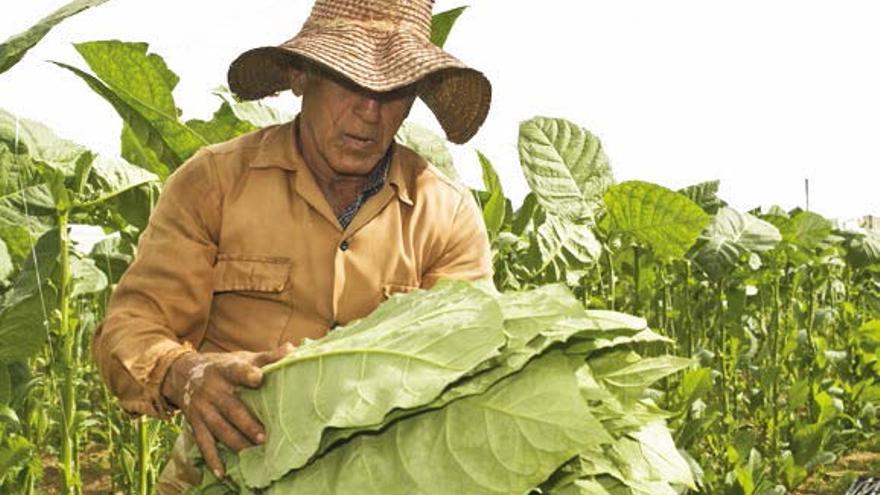
Cooperatives grow 99% of the tobacco in Cuba. (14ymedio)

14ymedio biggerEFE, via 14ymedio, 2 June 2018 — Cuba’s Ministry of Agriculture (MINAG) reported Friday that it is preparing two new legislative projects that will include legal norms governing the management of agricultural cooperatives, which are responsible for producing 92% of the food grown in Cuba, a country in which 80% of the total food consumed is imported from abroad.

The two draft decrees contain some 23 authorized policies affecting the island’s cooperatives, which are responsible for sowing 99% of the tobacco grown in the island, 100% of the sugar cane, 91% of the root crops, and also provide vegetables, fruits, rice, corn and beans. continue reading

There are currently 2,386 Credit and Services Cooperative (CCS) in Cuba, 650 Agricultural Production Cooperative (CPA) and 1,084 Basic Units of Production Cooperatives (UBPC) operating in the agricultural sector, according to official data cited by the state-run Cuban News Agency.

A CPA is a collective form of social property and is created when farmers to combine their land and other fundamental means of production, while a CCS is an organization where the individual form of ownership of the land and other productive assets is maintained, and work is organized as a family endeavor.

In the case of the UBPCs, they are created by workers from state enterprises with lands that have been transferred to them under a form of leasing known usufruct, while the means of production are purchased from the State in order to carry out joint production.

The new standards under study for future approval will update Law 95 of 2012 for the CCSs and CPAs, and the Decree-Law 142 of 1993 that establishes rules for UBPCs, still in force.

According to MINAG officials, the growth of Cuban agriculture is closely linked to the progress of the cooperatives that are its fundamental base.

Recently MINAG published a manual of good practices for the successful management of these associations, based on the experiences of a group of them that have shown outstanding results.

Agriculture is a priority issue in the process of economic reforms initiated by the former president of Cuba, Raúl Castro, starting in 2011, to update the Cuban socialist model, which includes the reordering of the agricultural sector to increase food production, which is considered a matter of “national security.”

Cuba spends about two billion dollars a year to import 80% of the food it consumes and, according to data from the Ministry of Agriculture, of the foods that are purchased from abroad, 60% could be produced on the island.

 ___________________________

The 14ymedio team is committed to serious journalism that reflects the reality of deep Cuba. Thank you for joining us on this long road. We invite you to continue supporting us, but this time by becoming a member of 14ymedio. Together we can continue to transform journalism in Cuba.

Bad, Uninhabitable and Perhaps Unrepairable

Note on the video: There are no subtitles but the video gives an excellent view of the interior conditions in the building.

14ymedio bigger14ymedio, Ignacio González, Havana, 4 June 2018 —  Residents of 1762 Calzada del Cerro have spent years denouncing the bad condition of the building, constructed in 1940. In 2005, armed with an official report that declared that the building’s technical state was “bad, inhabitable, repairable,” the mother of one of the residents sent a request to Carlos Lage, then vice-president of the Council of State, asking him to intervene. Thirteen years have passed without a solution and the residents suspect that the building is now in such a state that it can no longer be repaired.

___________________________

The 14ymedio team is committed to serious journalism that reflects the reality of deep Cuba. Thank you for joining us on this long road. We invite you to continue supporting us, but this time by becoming a member of 14ymedio. Together we can continue to transform journalism in Cuba.

More Cubans Are Entering Chile Clandestinely

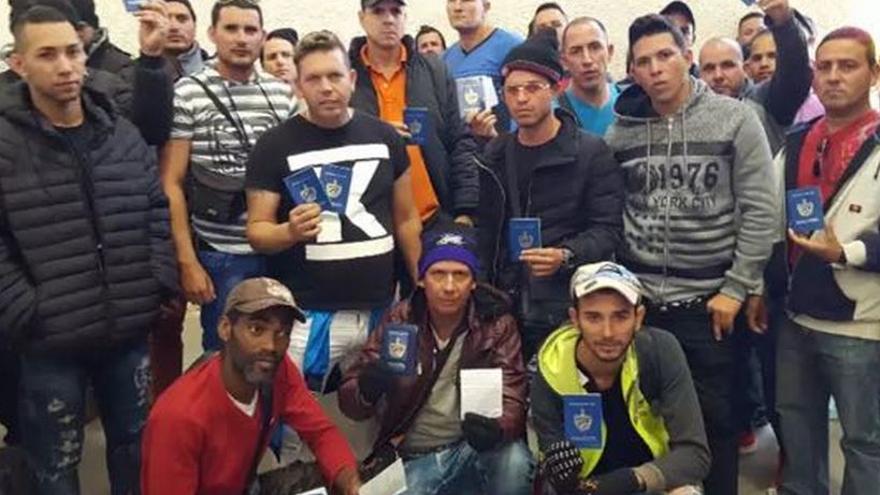
Cubans at the Chilean border (Twitter)

14ymedio bigger14ymedio, 4 June 2018 — Chilean authorities detected a total of 3,182 clandestine entries of foreigners to Chile between January and May of this year through unlicensed border crossings, according to data from the Investigative Police (PDI) published this Sunday by the newspaper La Tercera.

A large majority of these are Cubans (2,078), followed by Dominicans (856), with Colombians occupying third place, with 84 cases.

According to the PDI, there has been an explosive increase in the clandestine entry of Cubans to Chile this year, compared to only 175 cases in 2017. The authorities believe the change is related to the end of the United States’ wet foot/dry foot policy — which allowed Cubans who touched American soil to obtain legal status to remain in the country. continue reading

In the absence of this opportunity in the United States, Chile has become a destination for those wishing to leave Cuba “because of its attractive geography, politics, economy and jobs,” says PDI.

The figure, which includes the cases disclosed as of May 25, exceeds that recorded during the entire year of 2016 (2,659), while between January and October 2017, 1,594 cases were registered, according to the data.

The Chilean Police recognize the existence of gangs dedicated to human trafficking at the borders, whose preferred routes are in the north of Chile, along the coast, and the railway line between the city of Tacna (Peru) and Arica (Chile).

Immigrants also arrive through the desert, in the area of Arica and Tacna, or through the desert in the area between Colchane (Chile) and Pisiga (Bolivia).

The director of the Jesuit Migrants Service, José Tomás Vicuña, said that although Chile requires Cubans and Dominicans to have a consular visa for tourists entering the country, this requirement has not stopped the flow.

“But it has made it precarious and has led to the proliferation of trafficking networks” of migrants, who pay more than $1,000 per person to cross the border into Chile, he said.

According to figures from the population census conducted in Chile last year, there are 746,465 immmigrants in the country, equivalent to 4.35% of the population.

Last April, the government opened a process to regularize the situation of irregular immigrants, in which more than 100,000 people registered, mainly Haitians.

 __________________

The 14ymedio team is committed to serious journalism that reflects the reality of deep Cuba. Thank you for joining us on this long road. We invite you to continue supporting us, but this time by becoming a member of 14ymedio. Together we can continue to transform journalism in Cuba.

The Loneliness of Daniel Ortega and ‘La Chayo’ Murillo

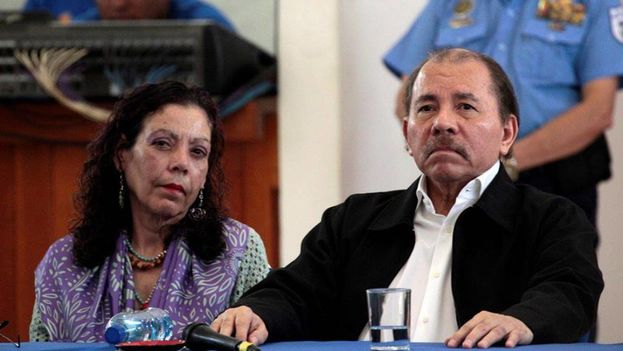
The president of Nicaragua, Daniel Ortega, and his wife Rosario Murillo. (EFE)

14ymedio bigger14ymedio, Carlos A. Montaner, Miami, 3 June 2018 — Daniel Ortega has been left alone. With only his wife Rosario Murillo, La Chayo*, who is also his vice president and whom the people like even less. Why this rejection of this extravagant but well educated lady? It is not clear, but it happens.

For the couple it is a very strange situation. They were accustomed to having a favorable sounding board built by the USSR and Havana, hiding and condoning the crimes of Sandinismo in the 1980s in the name of a mythical popular revolution that they were building.

First of all, the entire Church abandoned them. Times are not apt for the blunders of liberation theology. The bishops were not willing to play with a false dialogue. They set the table to talk, but always in good faith. It was too painful. As I write this chronicle there are already 93 people killed, almost all of them young people. continue reading

The students abandoned them. It is touching to witness on YouTube the harsh words directed to the presidential couple by the university student Lesther Lenin Alemán. He speaks, without saying so, in the name of all the universities, because the universities have also abandoned them. Daniel’s and La Chayo’s mobs and police entered the Central American University in Managua and the School of Engineering with blood and fire.

That has had repercussions outside of Nicaragua. From the prestigious Francisco Marroquín University in Guatemala, vice-chancellor Javier Fernández-Lasquetty has written a great article for the Spanish press in which he asks for solidarity with Nicaragua, the poorest nation in Central America.

The businessmen grouped in the Higher Council of Private Enterprise (Cosep) have abandoned him. A few hours ago they asked all their members to dissociate themselves from the government. They were grateful that the Ortega-Murillo couple had abandoned the stupid collectivist impulses that had destroyed the economy in that first stage of youthful fury (the country still has not recovered the growth rates of 1979, when they overthrew Somoza), but that gratitude was not enough to accept in silence the barbarous repression unleashed against a people who exercised their right to protest.

Is it worth listing all the foreign entities and people that have condemned the couple’s crimes? The US Embassy, ​​Amnesty International, the Inter-American Commission on Human Rights, the 14 countries of the Lima Group, the neighboring and very civilized Costa Rica, Ileana Ros-Lehtinen, Marco Rubio, Thor Halvorssen’s Human Rights Foundation, José Miguel Vivanco’s Human Rights Watch, and a very long et cetera.

Who supports Ortega and Murillo? Barely the stubble that remains of 21st Century socialism: the Cuba of Raúl Castro and Miguel Díaz-Canel, the Venezuela of Nicolás Maduro, and the Bolivia of Evo Morales, all in different phases of serious economic and political crises. Not even Gustavo Petro, the Colombian presidential candidate in that camp, dares to back them. What they do is too repulsive.

It is likely that Daniel Ortega and his wife still have the ammunition and lack of scruples to continue killing for some time, but if what they are trying to do is recover the legitimacy that is needed to exercise power in this era, there is no method that can deliver it.

Capital has begun to flee the country. We are seeing how the country becomes more impoverished every day. There are already reports that tourism has been paralyzed by 80%. The same will happen in other areas of the productive machinery. Nobody in his right mind would invest in such a place, where there are no vestiges of a Rule of Law.

The couple’s own daughter, Camila Ortega Murillo, and Shantall Lacayo, founders of Nicaragua Diseña, have had to withdraw from an innocent Miami Fashion Week event due to the protests of Nicaraguan exiles. That is just a symptom of the wave that is coming.

We will observe an accelerated decline of the presidential couple until they leave the government because of the violence, perhaps removed by the military, as happened in Ceausescu’s Romania, or perhaps because of an insurrectional spasm of society, as has happened in the country in the past.

The terrible thing is that this bitter end could be avoided if Daniel and his wife acted sensibly and withdrew from power before their house of cards totally collapses. Is that asking to squeeze blood from a stone? I do not know. There is not a hint of greatness in their stubborn resistance. It is very sad what happens in Nicaragua.

*Translator’s note: “Chayo” is a common Nicaraguan nickname for Rosario.

_______________

The 14ymedio team is committed to serious journalism that reflects the reality of deep Cuba. Thank you for joining us on this long road. We invite you to continue supporting us, but this time by becoming a member of 14ymedio. Together we can continue to transform journalism in Cuba.

They Were Not Criminals, They Were Students

The students have shown that they were not paralyzed by the official doctrine, according to the author.

14ymedio bigger14ymedio, Julio Blanco C., Managua, 1 June 2018 — Wednesday, 18 April, seemed to be a normal day like any other … but it wasn’t. The previous day, all of Nicaragua had listened in a stupor to the new unilateral provisions of the Government to “save” the Nicaraguan Social Security Institute (INSS) from bankruptcy.

The measures were especially draconian, even worse than the recommendations the International Monetary Fund (IMF) has been suggesting for several years.

One, in particular, caused a stir and was the subject of conversations on Tuesday night. From that moment, all retirees who receive more than 5,000 cordobas, about 160 dollars, would have 5% of their pension deducted from their monthly payments. continue reading

It was not only the measures that were news, but the fact that they had not been taken in consultation with the private company, for the first time in a little more than 11 years of Daniel Ortega’s government.

The highest levels of the private sector had colluded with him from the first moment and chose to ignore all of his abuses and excesses as long as it allowed them to do business and enrich themselves.

Vice President Rosario Murillo, Ortega’s wife, called that arrangement between power and big capital – in reality a kind of tropical neofascism – “a model of dialogue and consensus”; and it was something like a black Mass, completely exclusive, in which everyone else had no voice or vote.

On Wednesday, while I was having lunch, I watched the midday news on an independent channel reporting how the mobs (paramilitary groups related to the government) beat a small group of elderly people and others who accompanied them during a peaceful protest in the city of León.

Although it was abhorrent and grotesque to savagely beat poor old people who only claimed their rights, the truth is that these types of abuses had occurred many times over these 11 years. We breathe deeply and swallow our anger, as on so many other occasions.

Later that same day, when leaving work, while driving home, I heard on the radio that here in Managua the mobs had beaten a group of young people who had been summoned through social networks to support the protest of the elderly.

There were also elderly people who were beaten. Several journalists, including international media, suffered beatings and the theft of their work equipment.

Nobody could imagine at that moment that this was the turning point. We went to sleep with our bodies filled with rage and at dawn on Thursday, 19 April, protests broke out all over the country. Never again would anything be the same.

The people, completely fed up and indignant at so much abuse and ignominy, went out into the streets and said: Enough is enough!

Never again would they intimidate us or subjugate us so that we would not freely express what we feel and want for our country.

At the cry of democracy and freedom, hundreds of thousands of people took to the streets armed only with their flags, virtually spontaneously. The magnitude of the protests took everyone by surprise, the protestors themselves and foreigners. Especially striking has been the prominence and leadership of young university students, who we thought were domesticated and gagged by pro-government propaganda.

Who could imagine that an authentic democratic revolution was brewing in the classrooms of our universities? Those boys and girls, who have lived a large part of their lives under a dictatorship, were pounding on the table, loud and clear.

With their courage and heroism the elderly were reminding us that we have always been an indomitable people and that, despite how much we have suffered and the blood we have shed, we have not allowed ourselves to be overwhelmed by the successive tyrants who have tried enslave us.

The response of the regime was a foregone conclusion, given its despotic and bloodthirsty nature. The police took to the streets like beasts in search of their prey, the order was clear: repress, torture and murder.

During that first week the situation became more and more complicated for the government. The maneuver  of trying to sustain a dialogue with the opposition is in neutral, given that the regime has not stopped the killing.

It is known that there is confusion in the government and among its Cuban advisors because, according to their calculations, the storm should have subsided by now, and in fact the opposite has happened. Although the repression has only increased, the intensity and scope of the protests is increasing.

The strategy used so successfully in Cuba and in Venezuela is not working here. The 30 May march in solidarity with the mothers of the fallen, which ended in a new bloodbath, with a toll of 18 dead and more than 70 injured, has been the largest of those held in the last month and a half. Hundreds of thousands of people have taken to the streets all over the country to say, one more time: Here we are and we are not afraid.

The farmers who work in coordination with students have established more than 40 barriers or roadblocks across the country, which prevent the shock forces from moving from one place to another to suppress the protests.

That same day, in a disorganized counter-march, Ortega was defiant and warned that he has no intention of leaving. He was speaking mainly to high level business interests, which has begun to demand – still timidly– his exit.

The Catholic Church, which in principle seems to be on the population’s side, is not really a monolithic block, since some bishops – including Cardinal Leopoldo Brenes himself – are complacent and, to a certain extent, collaborators with the government.

Part of the arrogant attitude of Ortega and his wife is because they know they are not completely alone. The hard core of the Sandinista National Liberation Front (FSLN), which has historically been 30% of the population, remains intact. Many of these people say they are willing to die and face the ultimate consequences in order to defend the comandante and his compañera.

On the international level, although condemnation is raining down on the regime from the entire democratic world, incredibly the Secretary General of the Organization of American States Luis Almagro, who has been so harsh with the Venezuelan dictatorship, in the case of Nicaragua is doing everything he can to ensure that Ortega can finish his current presidential term which ends in 2021, and has gone so far as to attack the opposition, calling it violent and undemocratic.

Thus, although the beast is wounded, it still has an enormous amount of resources, weapons and mercenaries trained to kill.

Although there is optimism among the people, the case of Venezuela circles like a vulture over our heads. There the protests were perhaps even more intense and lasted much longer but, even so, Maduro is still clinging to power.

Regardless of what happens, the only sure thing is that from now on it will be very difficult to govern. That idyllic country that Rosario Murillo tried to sell us with her litany of love, peace and happiness, as if the people were not seeing reality every day and suffering the problems in their own flesh, no longer exists.

The mask has fallen and, although for more than a decade they managed to pass under the radar, now the world now knows the true repressive and criminal nature of this regime.

_____________________________

The 14ymedio team is committed to serious journalism that reflects the reality of deep Cuba. Thank you for joining us on this long road. We invite you to continue supporting us, but this time by becoming a member of 14ymedio. Together we can continue to transform journalism in Cuba.

Storm Leaves Western and Central Cuba Tense with Thousands of Evacuees and Large Areas Flooded

14ymedio bigger14ymedio, 29 May 2018 — Tuesday dawned in the city of Havana with intense wind gusts and a lot of rain brought on by subtropical storm Alberto.  In the center of the country the situation is much more complex with serious floods, damage to bridges and roads and extensive flooding in agricultural areas.

The provinces with the most serious problems at the moment are Villa Clara, Cienfuegso, Sancti Spiritus and Ciego de Avila, with parts of their territories flooded, thousands of people evacuated and a forecast of continued rainfall throughout the day.

In Villa Clara there are 16,000 evacuees and several towns isolated by road closures and floods.  Sixty-four homes have totally collapsed and 138 partially. continue reading

In the city of Sancti Spiritus at least 130 homes have suffered partial or total damage due to the rains and winds that accompany the first storm of this season a week in advance of the north Atlantic hurricane season which begins June 1.

From the town of Las Tozas in Sancti Spiritus, activist Aimara Pena reports 198 houses partially or totally collapsed in Foment and that ground transportation is still interrupted.  In the town of Condado, the Puerto Rico elementary school suffered the collapse of its roof.

Also in this province, agriculture has been seriously damaged, especially corn and yuca.  Authorities estimate 8,000 tons of rice ready for harvest but still uncut are under water in La Sierpe.  In Yaguajay, beans have been the crop with the most problems, with more than 800 hectares damaged by the rains, and in all of the Espirituano territory the waters have ruined 600 hectares of unharvested tobacco and some 3,000 tons of drying tobacco, reported provincial radio.

Travellers by bus and train crossing the region for other destinations in the east or west of the Island have been sheltered in the Lino Salabarria Pupo School of Sports since the highways and other means of transit have been closed.

The tourist town of Trinidad has almost-deserted streets because of the climatic situation which has required many foreign visitors to seek safety within the area’s houses.

Damages in Cienfuegos have required 11,483 people to evacuate, most of them to the homes of family and neighbors, as reported by press official Marilyn Hernandez Ferrer, vice-president of the Provincial Commission of Evacuation.

“We had to leave with the clothes on our backs because the water started to rise, and when we realized it we almost couldn’t save anything,” laments Manuel Rojas, a resident of the Cienfuegos town of Aguada de Pasajeros who says he has lost “furniture and animals,” among them pigs and chickens.

Rojas has moved into the house of “some neighbors who live in a higher area, but the water keeps advancing, and we may also have to get out of here soon,” he said by telephone to 14ymedio.

According to reports from the authorities in Cienfuegos, the pumping of water to homes will be affected by the flooding of the pumps and transformers in the Damuji plant.  Service will be available only every four or five days.  The provincial directors have said that the situation should be resolved in 72 hours after the waters recede.

The Abreus dam discharge is keeping the residents of Aguada de Pasajeros isolated.

With transportation services and sales of bread and milk interrupted, the residents of the Rodas township try to protect themselves and spend the most difficult moments with the provisions that they managed to stockpile before the weather situation deteriorated.

“We have joined three families in the top floor of this house because it is made of masonry and is quite strong,” says Osniel Sosa, area resident.  “But the biggest problem that we have now is supplies because there are several children and old people who need products like milk, and there is none.”

The Damuji River, which crosses the settlement, is out of its banks, and the houses closest to its channel have been partially or totally covered by water.

The Cienfuegos resident complains that “so far there has been no food distribution” for those who are trapped by the waters in their own homes or those of neighbors or relatives.  “We have been isolated and thanks to radios with batteries that some have and the charge that remains in some cell phones we have been able to learn that the rains will continue.”

The official media have labelled the situation “very tense” in the Cienfuegos refinery where emergency teams work through the dawn in order to prevent the continued discharge of the contents of the oil pools into the area of clean waters.

So remained the refineries’ petroleum pools of #Cienfuegos, #Cuba, when the hydrocarbons met with clean water. [Video shows people ‘fishing’ in the flooded streets]  

— Adonis Subit Lami (@asubit) 28 May 2018

Technicians are trying to install a barrier to stop the environmental disaster of the refinery’s oil winding up in the sea, and its general manager has promised before local media that the state entity will repair “any environmental damage.”

In recent hours the province received some 200 millimeters more in the rain guage, and several settlements in the mountainous region of Cumanayagua have become isolated.

The Water Resources provincial delegate, Pablo Fuentes, asserted that the six reservoirs of the Cienfuegos territory are 109.6% full and are all releasing excess water.

In the capital the weather has worsened with the dawn, and the weather forecasts point to a day of intense rains.  Rains again complicate the routine of Cuba’s biggest city and aggravate the situation of countless homes in the city that are in a state of good or bad repair.

“Yesterday we were afraid that the sun would come out, and on drying, the walls or roof would fall, but now the fear is that it will keep raining,” says Yanisbel Ponce, resident of Reina street at Escobar.

Authorities had activated the Civil Defense in the province, and most of the city’s schools have been empty or half-empty of students since Monday.  On the local Havana radio, government authorities recommend not going out to the streets because of the danger of collapse of balconies and facades or the fall of electrical cables, while in the streets the people ask why the Civil Defense did not announce in time the hurricane “alert” or “alarm” before the rains from storm Alberto.

In the area of Infanta and Manglar, an area that usually floods with strong rains, residents have been ready since Sunday for any contingency.  The majority of families in the area have spent years dealing with these types of phenomena and have created means of protection.

“Here the entrances to the houses are not at ground level, but most people have made stairs and walls that, although inconvenient, protect from the water,” says Mariacarmen Gonzalez, resident of a building located on the central corner.  “Anyway, when there are so many days of rain, it is best to evacuate the mattresses and refrigerators.”

A few meters from the place, several residents of a small, marginal neighborhood take advantage of a brief pause in the rain in order to reinforce their roofs, like a resident of El Platanito who says:  “I got a tarp that is going to help me cover a leak that I have in the roof over the bed.”

Translated by Mary Lou Keel.

______________________

The 14ymedio team is committed to serious journalism that reflects the reality of deep Cuba. Thank you for joining us on this long road. We invite you to continue supporting us, but this time by becoming a member of 14ymedio. Together we can continue to transform journalism in Cuba.

Murder of Two Women Shocks Cienfuegos

14ymedio bigger14ymedio, Justo Mora/Mario J. Pentón, Cienfuegos/Miami, 22 May 21 — It was 11:30 in the morning last Thursday when Luis Roque heard the first calls for help. He was about to go to work when his neighbor’s screams made him stop short. “Oh my little daughter, oh my little daughter,” shouted Tomasa Causse Fabat, a 64-year-old nurse on the sidewalk in front of her house in the city of Cienfuegos.

“She was bleeding, I thought something had happened and I ran to help her,” explains Roque. While he was helping Causse Fabat, the woman’s daughter left her house headed in the direction of Roque’s house, just on the other side of 66th Avenue.

“Daylín [Najarro Causse] took refuge in my house with multiple stab wounds in the stomach. My ex-wife and daughter helped her and put a sweater over her wounds to stop the bleeding, but at that moment the killer pursued her there, he continued stabbing her and finally cut her throat before the terrified eyes of my family members,” he adds. continue reading

Causse Fabat died a few hours later bleeding to death in the same ward of the hospital where she had worked, a victim of the multiple injuries allegedly caused by Rafael García, her former son-in-law. The nurse had received the internationalist worker’s medal in 2012.

Najarro Causse, 36, had been married to the man whom all the witnesses point to as her murderer and with whom she has a five-year-old girl. At the time of her death, she was three months pregnant by another man.

“I do not know if it was out of hatred or revenge but it was a massacre,” Adrián Najarro, a son and brother of the victims, told 14ymedio by telephone from Cienfuegos.

“Rafael García served a year in prison and had just left prison when he committed the crime,” explains Najarro, who had been accused of abuse and lewd touching of his own daughter.

“The little girl herself said that her father abused her, but since they did not find evidence, they only sentenced him to one year and six months in prison for a misdemeanor, something like exhibitionism,” laments the relative of the victims, aged 34, who maintains that “the laws are very weak” and that is what allowed this crime to be perpetrated.

Najarro, a teacher by profession, relates that several witnesses said that on that same Thursday the supposed culprit went to look for another ex-partner, but fortunately the woman hid, which prevented him from killing her. Other witnesses said that García also went to look for his daughter in the kindergarten, but the teachers did not hand him the girl over to him because they knew of his sentence.

“I feel bad, I do not have words to describe what I’m going through, it’s been a terrible day for me, I’m alone in the world with my niece,” she adds.

Rafael Garcia also caused minor injuries to Tomasa Causse Fabat’s husband, who tried to defend her by hitting him with a bat.

“I just want justice and for him to pay for what he did to my mother and my sister,” Najarro demands.

A neighbor of the San Lázaro district who witnessed the double crime told this newspaper that after murdering his ex-wife, García “put the knife in a black bag that he threw over his back, got on the bike and left for the Avenue as if nothing had happened.”

By then a good number of the residents of the block were crowded in front of the house where the crime had been committed and had already alerted the authorities.

“When the first patrol cars arrived, the aggressor went up the hill towards the Avenue and passed on the other side of them, people started shouting and pointing and that’s how they caught him,” said the same woman.

Another neighbor on the block who spoke with 14ymedio via telephone said she felt “extremely affected” by the crime. “We have always gotten along well on this block, we never thought we would see something like that,” she laments.

The city of Cienfuegos (150,000 inhabitants) shuddered last February with the murder of the young Luis Santacruz Labrada, aged 23 at the hands of a minor. In October of last year a young woman named Leidy Maura Pacheco Mur, aged 18, was raped by three men who later killed her.

The Cuban government does not publish official figures on the number of violent acts on the island and the crimes are rarely addressed by the official press. Mariela Castro, daughter of former Cuban President Raúl Castro and president of the National Center for Sex Education (Cenesex), said in January of this year that there were no femicides in Cuba and that this was an achievement of the 1959 Revolution led by her father and uncle.

In Cuba there is no specific legislation for sexist violence and the Cuban Penal Code does not address aggravations of this type. The cases of women who die at the hands of their boyfriends or husbands are addressed in court like any other homicide.

“A few weeks ago, another woman was murdered with machetes on 75th Street, near the Tulipán district, but unfortunately, the local media do not talk about most of the crimes that take place in the city,” says a doctor from the provincial hospital of Cienfuegos. He does not want to reveal his identity for fear of losing his job.

“Every day there are people injured with knives. This same Monday a patient arrived with several stab wounds. We need, as a society, to reflect on what is happening.”

 ____________________

The 14ymedio team is committed to serious journalism that reflects the reality of deep Cuba. Thank you for joining us on this long road. We invite you to continue supporting us, but this time by becoming a member of 14ymedio. Together we can continue to transform journalism in Cuba.

Four Cuban Projects Win the ’Oscars’ of International Cuisine

English language version of the Cubapaladar website. Click on image for link to site (Screen capture

14ymedio bigger14ymedio, Havana, 31 May 2018 — Cuba was widely represented among the 205 countries that competed in this year’s Gourmand World Cookbook Awards, considered by specialists as the Oscars of international cuisine. Four of the Island’s projects received Best in the World awards that were unveiled this May 28 in Yantai, China.

In the contest, founded in 1995, awards are given to the best books on cuisine and wines, whether printed or digital, as well as to websites and television spaces that promote gastronomic practices. Ten Cuban projects were nominated to compete in this year’s awards.

The Cubapaladar site, managed from the island by a small team of lovers of the culinary tradition recevied a “Best in the World” award and received thrid place in the category “Private Culinary Website.” continue reading

In the “National Tourism Website of the Caribbean” category, the Cubatravel-gastronomía site won the first prize, while Chef Yeikel Santos’s program, In Yeikel’s Kitchen, won in the section “Celebrities of Television outside of Europe.”

Santos has invited to his online site, where he cooks, talks and gives culinary advice, guests such as the singer Jacob Forever and the popular duo Gente de Zona.

The book Su majestad el helado (His Majesty Ice Cream), by Cuban Jorge Méndez, placed second place in the category dedicated to that dessert in which Spain took the first place with the volume 30 helados imprescindibles (30 Essential Ice Creams), while third was awarded to the United States offering, Hello, My Name is Ice Cream.

In a statement signed by Rodrigo Huaimachi, director of the Cubapaladar website, Rodrigo Huaimachi, the founder of the site expresses his pride in being part of this triumph of the Island in the international culinary universe. “We believe that when Cuba wins, we all win,” he said.

The director recalls that “a few years ago Cubapaladar was barely the idea of a small group, mainly of young people, who dreamed and ventured to develop a unique, transparent evaluation methodology, without any commercial or financial commitment; and to write reviews about different gastronomic options in Cuba.”

The digital platform began in February 2015 and its pages include representatives of the food academy in Cuba, writers, critics and journalists, chefs and food workers, as well as designers and the users themselves.

After the Government boosted the growth of the private sector in 2010, a wide variety of restaurants and coffee shops emerged from the hands of local entrepreneurs. Along with them, reference sites such as the popular application Alamesa, pioneer in creating a directory of the existing paladares in each of the provinces of the country, came to light.

Cubapaladar also has a national gastronomic inventory that registers about 1,800 establishments. For three years it has disseminated more than a hundred newsletters and regularly disseminates the data of the “Top 100 places in the Ranking of Restaurants” organized according to the scores left by Internet users who visit the site.

 _____________________

The 14ymedio team is committed to serious journalism that reflects the reality of deep Cuba. Thank you for joining us on this long road. We invite you to continue supporting us, but this time by becoming a member of 14ymedio. Together we can continue to transform journalism in Cuba.

Is the King Returning to a Lost Kingdom?

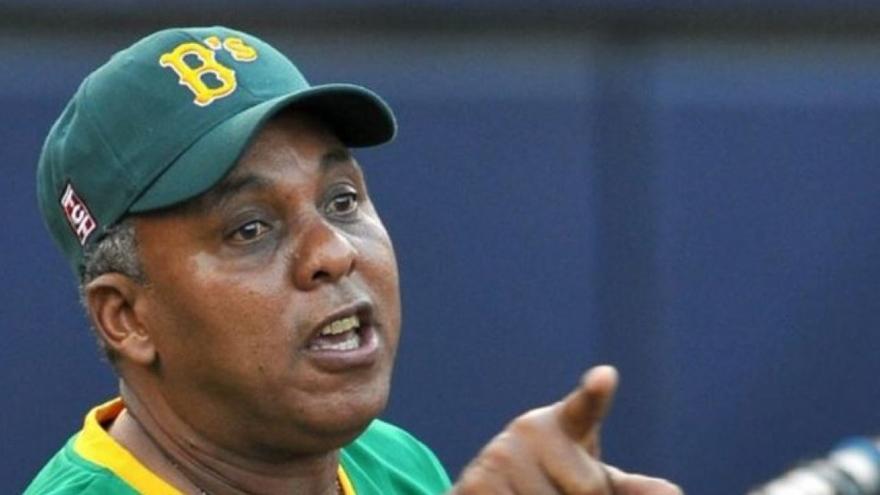
Rey Vicente Anglada agrees to return to the Industriales after a lot of pressure from the authorities. (Prens Latina)

14ymedio bigger14ymedio, Ernesto Santana, Havana, 1 June 2018 — Until just a few days ago, the situation of Industriales, one of the two baseball teams based in Havana, was similar to that of a year ago: the players began to train for the National Series without a manager. At that time, the options were Guillermo Carmona and Víctor Mesa, among a thousand rumors that no official voice silenced.

In an interview, Rey Vicente Anglada criticized that situation, which was harmful for the players. “I am absolutely against these barbarities.” To the question of whether he would be willing to return to the helm of the team, he was blunt: “I have been called several times and I always say that I will help but I will not take charge. Over my dead body would I return to managing the National Series”. continue reading

Now, after the sudden resignation of Víctor Mesa, several names were being shuffled again, especially that of Carlos Tabares, former captain of the Industrials, the “Blues.” Anglada, questioned again and again, repeated his sharp refusal. But suddenly, on Monday, the news broke: the return of the Lion King was official. The Industrialists could finally say habemus papam, since the “cardinals” had already decided.

After a 10-year absence, and after much insistence from the authorities, the mythical second baseman and successful manager returns. “We had long conversations, we met with the leaders of the Government and the Party and they raised the need for me to lead the team, especially for the 500th anniversary of the city, and we reached an agreement: I would assume that responsibility, but only for a season.”

Now 65, Rey Anglada, played for 10 seasons until he was 29, with explosiveness, intelligence and magic hands for defense. Apart from his excellent results, curiously, he was the first to use an aluminum bat in Cuban baseball — February 20, 1977 — and he has the speed record on return to the box.

In the early 80’s, scandalously, he was sentenced to prison for a crime never proven by anyone or accepted by him: selling a baseball game. It is difficult to find a comparable injustice against another Cuban athlete, but no authority has ever acknowledged the error in public. For the fans of the country his innocence is out of the question.

Reborn from his own ashes, Anglada returned to the Industriales and, for 7 seasons, guided them to winning 3 crowns and a division title. He took the gold with the national team in the Central American Games of Cartagena 2006 and the Pan American Games in Rio de Janeiro 2007. Winner of the second most titles with the Lions, after Ramón Carneado (who won 4), he is among the dozen Cuban players who were champions when they played — after starting on the team at 19 he won that same year — and also managing.

The return of the legendary Lion has raised the spirits of many fans a little, and even of their rivals, in the midst of some baseball happenings that reflect the decline of the national sport, especially the absurd Special Series, a phantom impossible to believe, even if he only serves to choose the few who have to complete the Cuba team.

The recent series has also not been very stimulating, despite some highlights. Following in the footsteps of the Las Tunas team, the Leñadores, heroic winners last season, the young players have managed to make their debut in the playoffs with Edilse Silva and now they will face the Alazanes, from Granma province, who are also following in the wake of their elders.

Unfortunately, the organizers have returned to the blunder when planning the 3 games — to win 2 — at home for the Alzanes, a flagrant iniquity for the disciples of Silva and for the fans of Las Tunas, who dream of playing the championship in the eastern zone.

In the west, although the recent flooding has interfered with playing the full series, and in Cienfuegos — the best team of the tournament, with a 28-9 record — they are waiting for the opponent that will be among the teams of Isla de la Juventud, Matanzas and Pinar del Río, still with a dozen games to dispute.

Thus, whatever the result, no winner of the four previous tournaments will be able to repeat and there will be a new champion, which will not be Artemis, nor Havana, nor Santiago de Cuba, holder of the last two titles.

In the Latin American Stadium the catchers and pitchers of the capital pre-selection have already been training since May 14. On June 4 they will join the other players selected and Rey Vicente Anglada’s delicate mission with his technical team will begin. “Now I will see what we have up close, although the team’s base is the same — six players — as last year, when I was helping Víctor (Mesa),” said the manager.

Despite the bleeding exodus of athletes to other countries and other provinces, Anglada believes that Industriales is still “one of the most complete teams in the country, although its weakest point is pitching.” First of all, the mentor gives them the possibility that Lions in other provinces will return. As for the style of play, he will insist on “speed, good defense and a lot of work with pitching, but above all with enthusiasm and with a lot of desire to go out and win.”

Although the capital fans are happy with the return of the King, some have no illusions about the blue team. The mentor himself clarified, just in case, that he is not a magician. A couple of days ago an Industrialista player said that when another expressed his joy over Anglada’s return, he just shrugged: “But he has no team!”

_______________________

The 14ymedio team is committed to serious journalism that reflects the reality of deep Cuba. Thank you for joining us on this long road. We invite you to continue supporting us, but this time by becoming a member of 14ymedio. Together we can continue to transform journalism in Cuba.

Accounts of the Aerial Disaster in Havana / Ivan Garcia

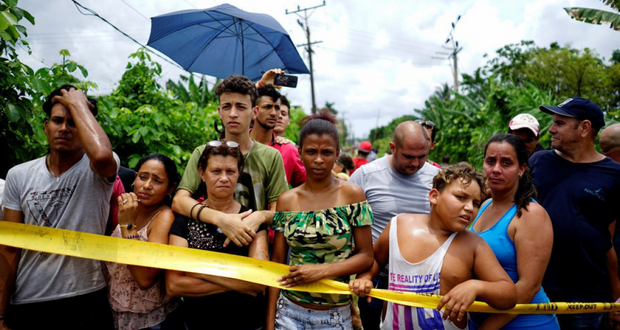
Curious onlookers near the site of the accident (Reuters, from Diario de Cuba).

Iván García,22 May 2018 — Forty-eight hours after the tragic plane crash, the area where the Boeing 727-200 went down — the airliner had been leased by Cubana de Aviación from the Mexican company Global Air — is still cordoned off with yellow ribbon as dozens of crime scene specialists and civil aeronautics experts are examining the area.

Some of the investigators wear khaki pants or fatigues and white labcoats, a sign that they are from the military. Others are dressed in civilian clothes. Access routes to the railroad tracks and field where the disaster happened are guarded by two patrol cars. continue reading

Three farm houses commandeered by investigators provide storage for possible evidence and serve as a makeshift command center. It is not difficult to find people who want to tell their version of the story.

Luis Antonio, a native of Las Tunas who has lived for five years in the village of Mulgoba, points out that he has already done three interviews: “One for Univisión, one for a Chinese news agency and one for [Spanish news agency] EFE.”

“I work at a nursery relatively close to the scene of the accident,” he says. “It was noon, so people were going to lunch. I grabbed my lunch box, which had onion omelette, white rice, pea soup and boiled sweet potato. I sat down under a tree to eat. All of a sudden I heard a loud noise. When I stopped and looked up at the sky” — he points to a field to his left — “I saw the plane passing over the trees. It was giving off black smoke and rocking from side to side like a broken toy. I lost sight of it right before it crashed. It hit the ground about two hundred meters from where I was eating. I felt a blast of heat and heard a huge roar. I started running. I thought that thing was going to explode.”

The first ones to arrive at the site were locals who live along the road that connects Boyero Avenue with the town of Calabazar as well as workers, technical school and pre-university students on their way to class, and passers-by waiting at a bus stop a stone’s throw from the domestic terminal of José Martí International Airport.

“It was a carnival atmosphere, though there was a group of people who did take it seriously and acted responsibly. Others were holding mobile phones and filming everything. It was like they were going to a party. I stayed at the bus stop because I knew from the police show on television that the scene of accident must be preserved,” says Marta, a housewife who lives near the airport and was waiting for the P12 bus to Central Havana.

On the day of the crash dozens of homemade cell phone videos were already circulating on social media and among Havana residents. Catering to a morbid curiousity befitting a serial killer, videos with raw scenes of dismembered or burned bodies were being shared on IMO and Bluetooth devices.

A young woman seated at an outdoor café on Boyeros Avenue shows a video in which a man tries to steal a wallet from a victim who was on the flight to Holguín. “He was taking advantage of the chaos. The guy was trying to steal suitcases and money. A policeman who had just arrived to help the accident victims was the one who arrested the thief,” she says while explaining the video.

The first images broadcast on national television, whose minute-by-minute coverage was unusually extensive, and others like them circulating on social media show dozens of people contaminating the crash site.

Pedro, a custodian at an auto repair shop relatively close to the crash site, observes, “The police response was slow. The people who were trying to help the ones still alive weren’t knowledgeable about first aid so they didn’t handle the wounded properly. The ones who arrived the fastest were the firefighters, who have their own base at the airport. Then two ambulances came but I don’t think the first responders were prepared for this type of accident. If they had taken the injured to Calixto García instead of National Hospital, which isn’t fully equipped, perhaps another life could have been saved.”

What is powerfully striking in the case of traffic accidents, building collapses and destruction caused by hurricanes is that there are citizens whose first response is to record the events with their cell phones rather than help the victims.

Leidis, a primary school teacher, recalls, “Two or three years ago, a young woman was hit by a train near the Café Colón in Arroyo Naranjo. Instead of helping her, many of the people gathered around her were filming. Recently, a man had a heart attack in the street and a huge crowd formed around him, not to help but to shoot photos and make videos.”

The plane crash on Friday, May 18 in Havana poses new questions about the dreadful service provided by Cubana de Aviación, which is considered one of the worst airlines in the world.

Oscar, a former pilot for Cubana de Aviación, believes, “The company should call it quits and shut down. For years Cubana has not had the necessary stockpile of spare parts. If people knew how often pilots and maintenance crew have to improvise, they would not get on those flights.”

“It’s not just a matter of modernizing the fleet. It’s about having an adequate logistical base,” he says. “Some accidents, like the one in Sancti Spiritus eight years ago and the one this time, have happened with rented planes. There is something suspicious about these rentals that I hope this investigation will shine a light on. No one knows why or how officials at Civil Aeronautics contracts with airlines that almost no one has heard of. Rumors are that money is being paid under the table.

The fact is these are companies with very limited resources and outdated airplanes. We found out through an interview with a pilot who worked for this Mexican airline that they were flying with punctured tires and defective radar. One of our pilots reported on social media that seven years ago this same company had problems on a flight to Santa Clara. He filed his report but it was as though nothing had happened.”

Cubana de Aviación has been under scrutiny for some time. One or two days before the accident involving the Boeing 737-200, First Vice-President Salvador Valdés Mesa held a working meeting with officials of the Institute of Civil Aeronautics.

Delays are routine on domestic flights. Rolando Rodríguez Lobaina, a dissident activist and director of the independent media company Palenque Visión, recalls that on one occasion “the flight to Holguín was delayed by more than fourteen hours.”

Dania, who often travels by plane to the eastern provinces, notes, “When you fly on Cubana, you have to say a prayer before you take off. Those planes are scary. In addition to delays and abuse from employees, they don’t clean the planes. A few months ago, I was returning from Guántanamo on an AN-158 and had a seat near the wing. I could see through the window that some screws had come loose. I told the purser and he tried to reassure me by telling me, jokingly, not to worry, that fortunately they had extras in the plane. I hope this accident causes some heads to roll.”

The incident occured a month after Miguel Díaz-Canel became president. We will have to wait and see if the new president, in addition to focusing on the filth in Havana, focuses his attention on conditions at this erratic state-owned company, which is also in need of a thorough cleaning. Or he could just cover up Cubana de Aviación’s garbage with a blanket of silence, as has happened so far.

Obligation and Demand / Fernando Damaso

Fernando Damaso, 30 May 2018 — In 1944, when Grau assumed the presidency, Cuba was hit by a powerful hurricane. The Cubans saw in the storm the omen of a stormy government. And so it came to pass. Now, when the new president is taking office, the tragedy of the Boeing 737-200 plane in Havana has occurred and the storm “Alberto,” with its intense and prolonged rains, has caused serious floods and destruction in the country. Is it also a bad omen?

When one carefully observes the actions of the Cuban Government, it gives the impression of being a fossilized organism, totally paralyzed, stuck in a previous historical time and incapable of facing the present. continue reading

The decisions to try to solve the urgent national problems do not appear anywhere, supposedly because everything is being studied so as not to make mistakes and make new mistakes. An old saying goes, “delay, despair” and, in this case, “the delay” lasts sixty years.

In most countries, power is exercised for periods of four, five or six years and, if re-election is allowed, it can be extended to eight, ten or twelve. During these terms governments must face and try to solve problems.

The Cuban Government, unlike the rest, has settled down to exercise power for dozens of years, and to use all the time necessary for their studies and experiments, without taking into account that every fifteen years a new generation of citizens emerges, is incorporated into the national life, while another disappears. The generations endure and suffer from this state slowness in their relatively short lives.

Today, the problems accumulated over years without solutions, plus new ones, overwhelm Cubans. The accumulated problems are the lack of housing and the poor state of the existing housing, the chaos in transportation of all kinds and the bad state of the roads, the agricultural unproductivity, the livestock crisis, the industrial obsolescence and the lack of investments, the lack of many freedoms, those that are limited by regulations and provisions that restrict them in practice, and the emigration of young people in search of new horizons, among others.

New problems are the deterioration of the health and education services, low salaries and pensions, social indiscipline, generalized violence, public unhealthiness, the loss of moral values, citizens and homelessness, corruption, theft and the lack of management by the public officials in every state apparatus, among others.

Facing this reality can not be delayed by waiting for the arrival of the “Greek calends“: it is an obligation of today and a demand for those who have claimed the right to govern us.

Cuban and Venezuelan Exiles Join Nicaraguans in Miami to Demand Respect for Human Rights

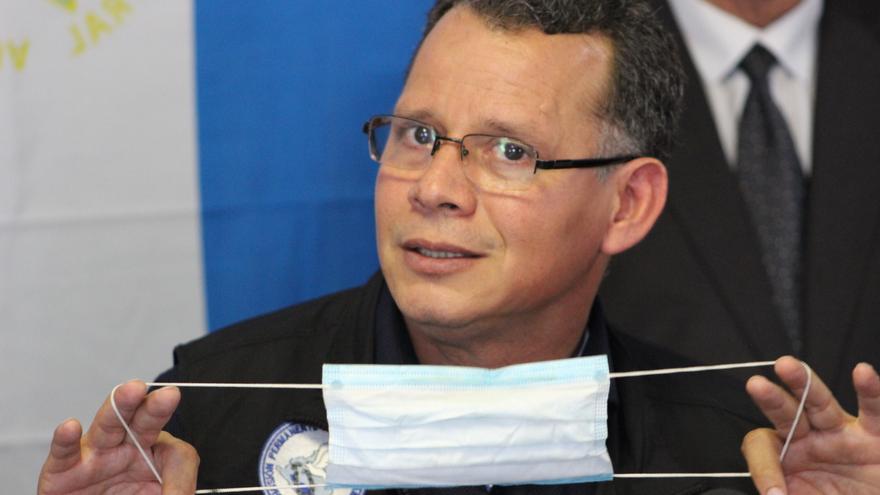
Denis Darse shows the face masks used by the protesters to cover themselves against the attacks of the Government. (14ymedio)

14ymedio bigger14ymedio, Mario J. Pentón, Miami, 30 May, 2018 — Representatives of the Cuban exile in Miami joined their voices with those of Venezuelan and Nicaraguan exiles to ask for an end to the murders of young students in Nicaragua, where there have been intense social protests for more than a month.

In a press conference sponsored by the Democracy Movement in Miami, Denis Darce, member of the Permanent Commission on Human Rights in Nicaragua (CPDH) explained that the number of murders during anti-government protests amounts to 91 and more than 100 people have been tortured.

Darce, a sociologist by profession, also said that they have documented at least a dozen disappearances. continue reading

“Today we are celebrating Mother’s Day in Nicaragua, but today is a day of mourning,” he said, adding that “right now, for the Government and the Nicaraguan State being young is a sin.”

According to this representative of the NGO founded during the Somoza dictatorship in 1977, the government of Daniel Ortega promotes hatred through institutions and uses state resources to transport vigilante gangs to repress protesters.

Since April 18 when the country erupted in protests against the president and his wife, Vice President Rosario Murillo, numerous international organizations such as the Inter-American Commission on Human Rights (IACHR) have reported allegations of torture, murder and disappearances.

“We are overwhelmed by the situation,” acknowledged Darce, who revealed that his organization is trying to coordinate a tour for a group of mothers through the main hospitals and morgues in the country where “there are bodies that are about to be incinerated without having allowed a process for family members to identify them.”

Darce said that his NGO is preparing a presentation before the Truth Commission set up by the ruling party, although he acknowledged that “the families, the victims and the majority of the Nicaraguan people do not trust that institution created by the State.” According to him, the solution would be to create another Truth Commission with international participation through the IACHR and the Human Rights Committee of the United Nations.

“We have reports of communication professionals, state workers who have been fired for “liking” a post on Facebook, contrary to government policy,” explained Darce, who called on the Nicaraguan population to report to the competent bodies violations of human rights in the country.

His voice breaking from emotion, Darce reported some of the testimonies received by his organization. “The body of the son of a lady from Ciudad Sandino was found cut into pieces. We have the case of a boy from the Cuesta del Plomo who was found dead recently: his friends testify that he was arrested by the police forces and was found with signs of torture.”

Inventing the supposed burning of institutions and falsifying the identity of the mothers of the deceased so that they give statements to the media, together with death certificates that are not consistent with the reasons for the deaths, are some of the government’s procedures denounced by Darce.

“Although there is an open dialogue, the actions of the Government have not ceased either in repression or in violence. Quite the opposite. It has developed a whole plan of terror and anxiety toward the Nicaraguan population,” he added and reported several attempts to poison the protesters.

Darce demanded that the State of Nicaragua sign The International Convention for the Protection of All Persons from Enforced Disappearance and The Rome Statute of the International Criminal Court as a guarantee that events such as those reported by the CPDH do not continue. “The dictatorship of Nicaragua is not 10 years old, it is a dictatorship of almost 40 years, which began in 1979 and continued in the 90s and is now consolidated,” he said.

The CPDH plans to present the Nicaraguan situation to the General Assembly of the Organization of American States in Washington from June 3 to 5. They also intend to visit US Congressional Representatives to pressure the Government of Managua and bring representatives of the victims to appear before the OAS.

Cuban-American congresswoman Ileana Ros-Lehtinen spoke via Twitter about the situation in Nicaragua. “One more death at Ortega’s hands is added simply because he refuses to leave power. The US must punish those responsible for the bloodshed,” Ros-Lehtinen tweeted. She is known for her critical positions toward leftist governments in the region aligned with Havana.

For his part, José Colina, president of the association of Persecuted Political Venezuelans in Exile called for sanctions and pressure on the Nicaraguan government, which in his opinion, is following the same script as Maduro followed during the student protests of 2015.

Representatives of Nicaraguan civil society in Miami summoned all their compatriots and supporters of the cause of the insurgents to demonstrate in front of the Nicaraguan consulate in Miami (1332 W Flagler St, Miami, FL 33135). “We want justice and democracy for our country,” said María Belén Ruiz, of the Nicas Unidos Movement in Miami.

“Nicaragua had its throat tied. They [the students] had value and have paid with their lives to tell the world about the atrocities that we have been experiencing for a long time,” said Raquel Pineda, a young Nicaraguan resident in Miami.

 _______________________________

The 14ymedio team is committed to serious journalism that reflects the reality of deep Cuba. Thank you for joining us on this long road. We invite you to continue supporting us, but this time by becoming a member of 14ymedio. Together we can continue to transform journalism in Cuba.

The Name Alberto is Cursed in Artemis

The greatest damages caused by the storm are to crops and homes on the outskirts of Candelaria. (14ymedio)

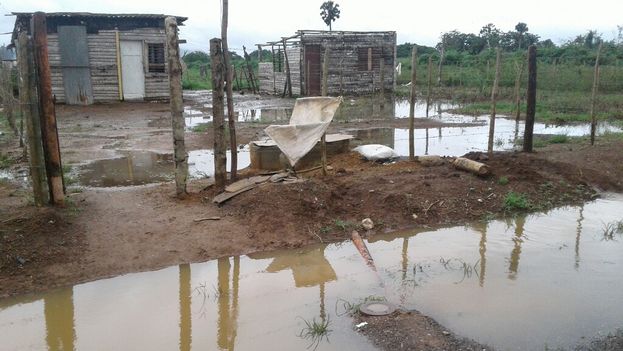
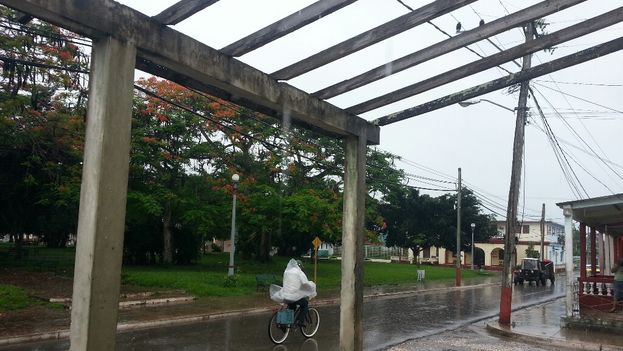
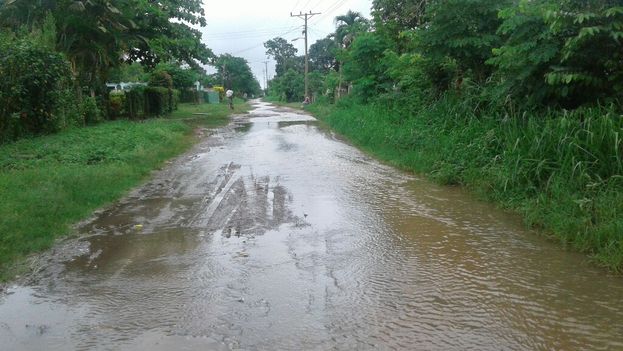
14ymedio bigger14ymedio, Bertha K. Guillén, Candelaria, 1 June 2018 — The rains of subtropical storm Alberto have focused their gaze towards the center of the country, the area most affected by the floods, but in the West the damages are also considerable. In many areas of Candelaria in the province of Artemisa residents are still “up to their ankles in water,” and are taking stock of the losses in agriculture and housing.

The town of Candelaria is mostly agriculture and the raising of small livestock, and it is one of the most important suppliers of food to the city of Havana. Along with others such as San Antonio de los Baños, Güira de Melena and Alquízar, their fields yield root crops, beans and vegetables, destined for the capital.

In mid-2017 the province of Artemisa, in which these municipalities are located, supplied about 200 food outlets in Havana, according to information provided to the official press by Tomás Rodríguez, director of the Agricultural and Forestry Group. continue reading

“When these towns can not get their produce to town, the situation becomes very difficult for them, because what is raised in these fields is what Havanans buy in their markets,” 14ymedio was told by was told by Luis Romero, the driver of a “spider,” a two-wheeled vehicle pulled by horses and used to transport goods.

Returning to normal daily routines in difficult in a village with areas still quite wet. (14ymedio)

This Thursday afternoon some anxious customers arrived in Candelaria from Havana to stock up onions, garlic and pork. “But there is not much to sell because most of the crops are still under water and others are spoiled,” laments Romero, who managed to sell some bananas before they went bad.

Among the most affected crop in the Candelarian territory is rice, with hundreds of acres still under water, while in the mountainous area of ​​Soroa crops such as corn and cassava and fruit trees, such as bananas, suffered severe damage from the heavy rains.

In the streets, sewage still mixes with the floods left by the rains and has flowed into many houses, especially in the lower lying areas. Residents have been taking their furniture and personal items outside to dry them, with the first rays of the sun in two weeks.

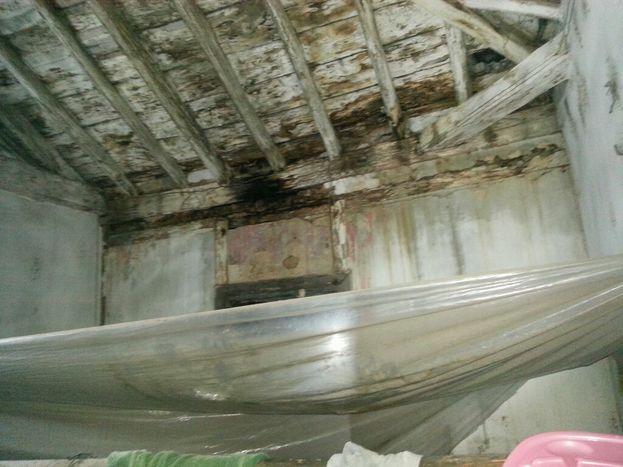
A family has hung a piece of plastic to prevent the leaks caused by the rain from falling on the bed. (14ymedio)

An unbearable plague of mosquitoes has joined the damages left by Alberto, and families with young children take precautions to avoid the spread of diseases. “We send to Pinar del Río for water because our well is contaminated and there are two small children in the house,” explains one grandmother in charge of her three grandchildren.

The situation of chronic patients was also complicated with the passage of the storm, because the nearest hospital is in San Cristóbal. Asthmatics, hypertensives and diabetics have suffered the most and, as of Wednesday, those who in the worst physical condition have begun to be transferred to hospitals.

Others are living with the anguish of a possible collapse of their homes damaged by excess wetness.

“Passed through the water” says Caridad, describing the situation of her family living in the center of town. They have placed a dozen cans, buckets and other containers to collect leaks that fall from their ceiling made up of wooden beams.” The downpour has not given us a break,” she says.

“We also put this nylon over the beds to prevent them from getting wet, but the rest of the things are piled up in the only corner that does not get wet,” Caridad explains as she points to the ceiling.

Although subtropical storm Alberto has already moved away from Cuba, the rains continue to fall in Artemisa. (14ymedio)

“I’m desperate, I sent my daughter with her child to my sister’s house and we stay here,” she says. “This construction is one of the oldest in the town, it was declared a heritage site and it costs a lot of money to fix it, in addition to the permits and restrictions on building that are imposed on us because it is a heritage site,” she complains.

In the neighboring municipality of San Cristóbal, the most damaged in the province according to the authorities, the local press reports that families lost an incalculable number of appliances and about 400 mattresses.

Most of Candelaria’s streets are not paved and the rain has made it difficult to travel on them. (14ymedio)

In the towns of Taco Taco and Santa Cruz, the mere mention of the name Alberto creates uneasiness among the residents. In 1982, a hurricane of the same name caused severe flooding and now the nightmare has been repeated.

“No one here is going to give any child born the name Alberto because people have very bad memories of that name,” says a resident of Taco Taco who still has water up to his knees in the living room of his house.

________________________________

The 14ymedio team is committed to serious journalism that reflects the reality of deep Cuba. Thank you for joining us on this long road. We invite you to continue supporting us, but this time by becoming a member of 14ymedio. Together we can continue to transform journalism in Cuba.

Bismarck, Another Young Idealist Who Dies in Nicaragua in the Struggle for Democracy

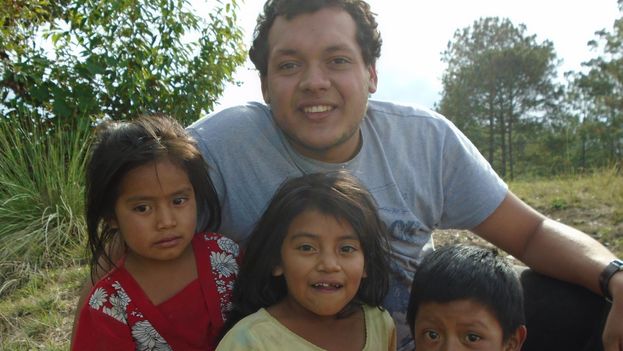
Bismarck Badilla López during the mission in the Mactzul communities of Guatemala. (14ymedio).

14ymedio bigger14ymedio, Mario J. Pentón, Miami, 30 may 2018 — “Hard news arrives from Nicaragua,” a friend writes. “Bismarck, our brother, passed away.”

Confusion, disbelief, a feeling of emptiness. These were my first reactions. It was Sunday night when I received the news from Guatemala. The next day his death was confirmed by family and close friends. Bismarck Badilla López was found hanged in one of the rooms of the house he rented in the municipality of Santa Teresa, where he served as a doctor fulfilling his social service. He was 25 years old.

“Bismarck was under a lot of pressure from the government, they threatened him,” a close relative tells me; for security reasons, I will allow him to remain anonymous. continue reading

“In these last weeks of repression I saw so many injustices inside the health center and had to remain silent for weeks, until I came to a safe place where I could scream everything that was happening,” he says.

Bismarck was originally from Estelí, a city three and a half hours from the place where he performed his social service.

Bismarck Badilla in the community of La Puya, on the outskirts of Guatemala City. (14ymedio)

“He witnessed how the boys [the students] were allowed to die because the government did not allow them to be attended to just because they thought differently: the police, the doctors and the Sandinista youth were behind causing the greatest possible harm to the wounded,” explains the relative.

Was it suicide or murder? We will probably never know. Some close friends said that he was killed and that peretrators tried to hide it by faking a suicide. It would not be the first. Since April 18 when the country erupted in protests against President Daniel Ortega and Vice President Rosario Murillo, his wife, more than 80 people have been killed, most of them young and civilians.

Allegations of torture, assassinations and disappearances have been documented by the Inter-American Commission on Human Rights, but the Ortega government remains deaf to the popular clamor and clings to power like its ideological allies in Caracas and Havana.

Bismarck’s close friends say he died because he helped “those he shouldn’t help,” that is, the protesters. Other people claim that he was present at a demonstration. How could such a generous heart deny help to those who needed it? It was serve or die. He chose the first.

I can not believe that Bismarck, El Gordo, as we affectionately called him, committed suicide. I met him in 2015 in Guatemala. At that time I had not exchanged the habits of a Marist brother for career in journalism and he was an aspirant in the community of brothers in Chinautla, Zone 6, in the Guatemalan capital.

Bismarck was a cheerful boy, very tall (over six feet), very intelligent and sensitive. We studied theology it Landívar University and, like all young people, we believed that we could change the world and make it more humane and fraternal.

I remember the endless conversations about politics, about the difficult situation of democracy in our countries. At that time, we were part of the community of brothers from Costa Rica, Guatemala, El Salvador, Spain, Nicaragua and Cuba.

Both for Bismarck and for me the support that the populist movements had among the most underprivileged social strata in Guatemala was a surprise. In a country so marked by inequality, the messianic discourse — in those years backed by Chavez petrodollars — triumphed.

Bismarck was always a boy critical of the Ortega government. He was not deceived by the Christian veneer of a disguised dictatorship that sought to permeate all the institutions of the nation to turn them into an arm of Sandinismo. That hodgepodge of Party-Nation-State, so typical of the totalitarianisms inspired by Cuba’s Plaza of the Revolution, was repulsive to him.

Like every young person he liked to enjoy life. If anything characterized him is was his loud laughter, which could be felt throughout the house. “You are a rogue,” he would tell me when we joked, taking selfies while we prayed the rosary in the hall or when we ate the olives that the good brother Jesús Balmaseda bought for us in secret.

He was also a person very sensitive to the pain of others. I remember how he was moved — to tears — on a mission we did with the Mactzules indigenous communities in the Guatemalan Quiché. In the midst of shocking poverty I had never seen him so happy. He found his raison d’être in the service of his neighbor, especially the most neglected children.

The Gospel says that if the seed does not fall to the ground and dies, it will not bear fruit, that to live fully, you must first pass through the cross and die. Bismarck knew how to die, as do dozens of his compatriots, in search of a better country, democratic, free of tyranny and oligarchies of any kind.

The blood of the martyrs is the seed of Christians, said the ancient fathers of the Church. Today perhaps we can say that the blood of the heroes who give their lives in the streets of Managua and other Nicaraguan cities is the seed of freedom.

Unlike me, who took the path of exile, my brother returned to his homeland to work for his people. He could have stayed in Guatemala, where a doctor has a better salary and living conditions, or emigrated to the United States, but he did not want it that way. He went to serve and died with his boots on.

 __________________________

The 14ymedio team is committed to serious journalism that reflects the reality of deep Cuba. Thank you for joining us on this long road. We invite you to continue supporting us, but this time by becoming a member of 14ymedio. Together we can continue to transform journalism in Cuba.