Note: This article is being republished from 2013. Rafael Alcides passed away yesterday, 19 June 2018.
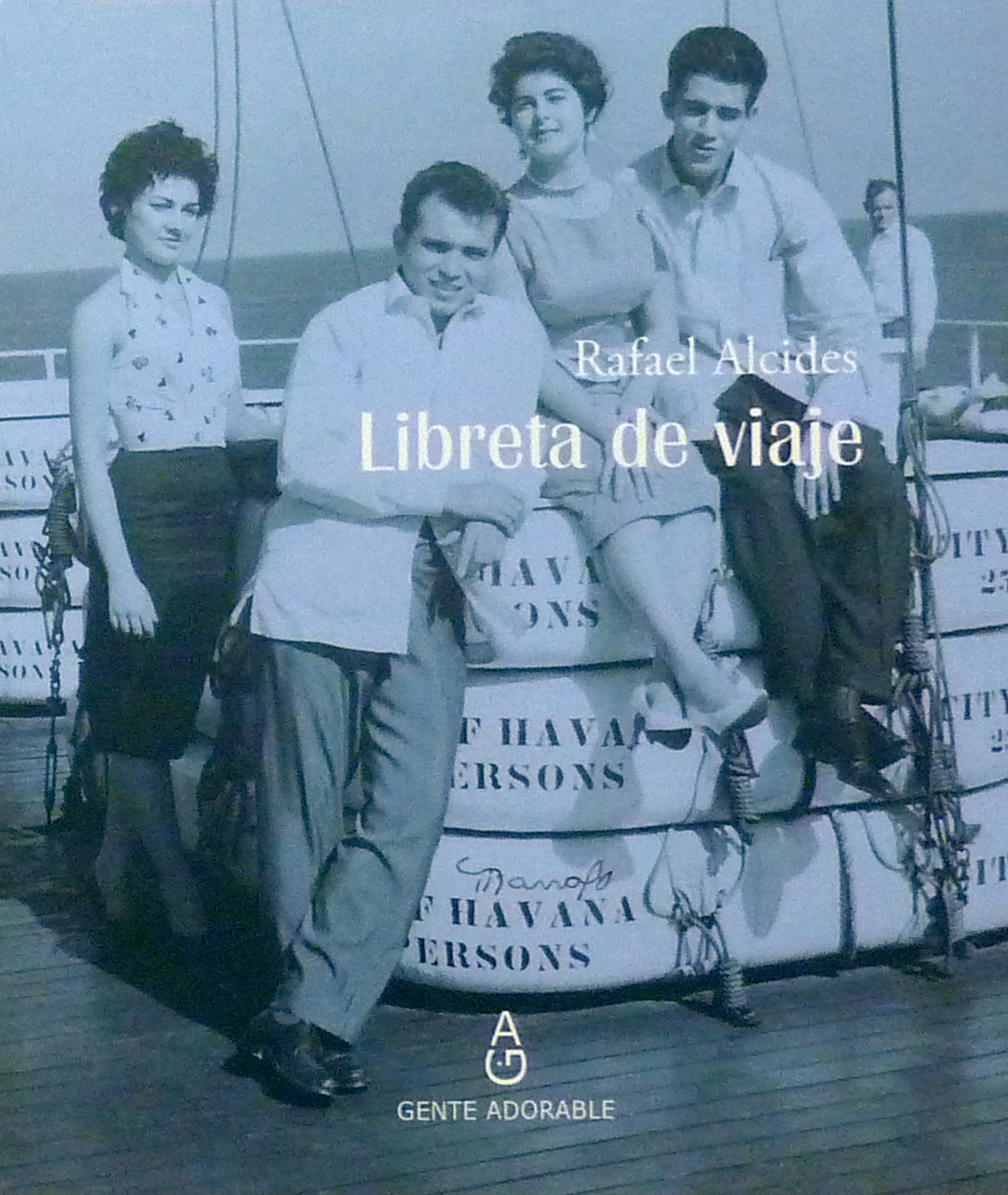
My husband is not just any writer. He belongs to the generation known as “The Generation of the ’50s,” a rather arbitrary poetic grouping that started with Carilda Oliver (1922) and ran through David Chericián (1940). His generation’s peers — if they haven’t died or emigrated — have received the National Literature Prize and enjoyed social and official recognition. This is one of the reasons he is an extraordinary writer. Not only that he wasn’t seduced by the siren song of the National Prize ten years ago. Not only that he willingly “inxiled” himself from Cuba’s cultural life for twenty years and is not published in Cuba. continue reading
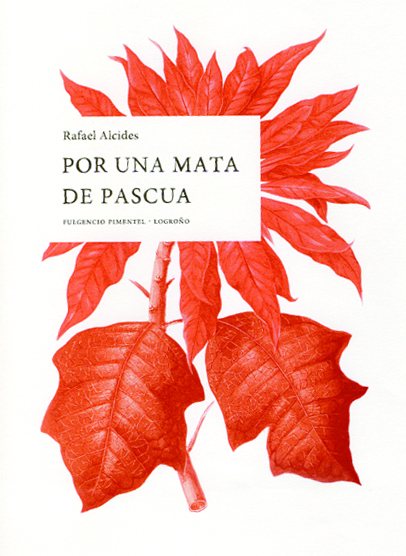
For him, the prize has been that his book Agradecido como un perro (Grateful As a Dog) was traded for cigarettes in the Combinado del Este prison in the late eighties, and asked around for; kids coming from the provinces discovered him by chance in a second-hand bookshop. His books today would be collectors’ items, of a writer unknown to the young and unpublished after 1990, if it weren’t for the Seville publisher Abelardo Linares who knocked on our door one day.
He is not a run-of-the-mill writer. Foreign publishers are highly sought after, their visits to Cuba put them in a position to receive a ton of unpublished and published texts from hopeful authors who either fete the foreign visitor or put a Santeria spell on them.
Alcides is incapable of boarding a bus, a shared taxi (almendrón), or a called taxi (panataxi); he is incapable of walking even 200 yards to meet a celebrity. Instead, he is an extraordinary host, so warm and attentive, who immediately makes even new acquaintances feel comfortable.
In this era of ideological polarization, he maintains an intact and intense affection for those he loves, whether a high government official or a senior opposition leader in exile. He forgives (but does not forget, he has excellent memory) some highbrow (?!) silliness from a fledgling poet to a functionary who from his new position has been allowed to treat him coldly. He will regrets the error of omission in the dedication to Roberto Fernández Retamar in a poem in a book just published in Colombia.
Another of the things that makes him extraordinary has to do with his appearance. When we started our relationship 24 years (!!) ago, my niece, with all the candor of ten years, wondered if he was Eliseo Diego. He was then a venerable white beard unsuspectedly balding. His contemporaries seemed like younger brothers. It turned out the joke was on them as he didn’t get any older while others lost their freshness, hair, pounds, physical and/or mental agility and for a long time the tables have been turned. That, despite a copious medical record very well concealed.
With the bias of affection, there are those who say he’s the best poet in the world. There’s no need to exaggerate, although some verses are saved for posterity.
These fires feed this man who writes and writes on a battered computer with no more to give. Leaving poetry behind he is dedicated to finishing enormous drafts, novels that became priorities in the rush of life.
No one would expect that behind this thunderous voice asking who’s last in line at the farmer’s market, this competent cook who saves me from the daily doldrums, is this Amazing Poet in “atrocious invisibility” who tomorrow, June 9th, will be 80 years old.
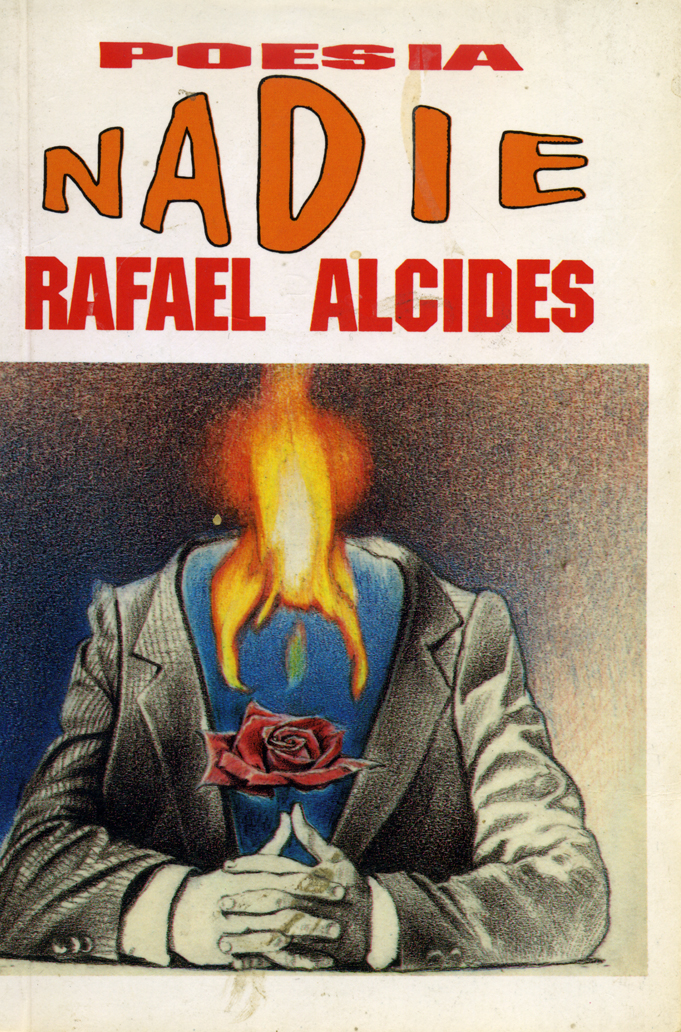
Lynn Cruz, Havana Times, 20 June 2018 — Yesterday, on June 19, 2018, in the afternoon, 85-year-old Rafael Alcides passed away. The sensualist poet, friend and main character in “Nadie”managed to do what very few can: “Live in keeping with his ideals.”
He spent his last days resting at his home in Nuevo Vedado, after having fought a long battle against cancer.
The end of his journey has left a deep abyss in not only the people who knew and admired him, but in everyone who has fought for their ideas. continue reading
He was ostracized because of his critical thinking. He was such a grand figure that he would always say that he hadn’t been censored, despite his novel “Contra Castro” and poetry collection “Nadie” being banned.
Alcides chose to distance himself from social and cultural life because he didn’t agree with the direction national politics were taking. He was referring to Fidel Castro’s treachery, to the ideas he himself had fought for as part of the underground movement before the 1959 revolution.
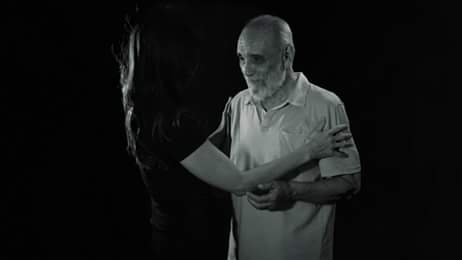
He inspired filmmaker Miguel Coyula with his eloquence and gift for speaking leading Coyula to make his first documentary “Nadie” (Nobody) about him. Coyula always says he will keep the film showing (in private in Cuba) for as long as possible, in the face of the poet’s brilliant personality.
Being a free man living in a totalitarian system has meant that this film is still banned, even today. Nobody on the island is talking about it. Not critics, or poets from his own generation, or pro-government press or the news.
However, the poet has had a taste of eternity. Governments and politicians come and go. Those of us who love him will always be “grateful like dogs” for having his work among our literature.
Alcides didn’t have an age. He was brimming with so much passion that he seemed more like a child who was stunned by a world unknown to him.
For those of us who were close to him, we also have the priestly example of how he treated his writings, unwilling to sell out.
As a friend, I know that I will always miss him and that I will have to get used to thinking, what would Alcides have had to say about this?
The poet from Bayamo asked that his ashes be scattered in Barrancas, his hometown.
The price of limes has dropped from two Cuban pesos for one fruit, to five pesos a pound. (14ymedio)
14ymedio, Marcelo Hernández, Havana | June 18, 2018 — Finally, the limes have arrived. They returned after an inexplicable absence, the result of a month’s long shortage during which they became coveted items in kitchens and bars. In the terminology of rationing, it is said that the precious citrus fruits “came to” or are now “leaving” the market stalls.
With an abundance that cannot be exaggerated, these days limes can be found on most produce market shelves, all green and glistening. From a high of two pesos for one lime, the cost has been reduced to five pesos for an entire pound. As a result, customers are taking advantage of the low prices by stocking up in anticipation of hard times ahead. continue reading
An essential ingredient in lime-based drinks, mojo criollo marinades and avocado salads is once again available.
There is a catch, however. Just as limes were making a triumphal comeback, soap began disappearing. There is no discernible cause-and-effect relationship between the recovery of the citrus harvest and the disappearance of this essential element of personal hygiene, which cannot be found even in the most expensive shopping malls.
Sometimes it is dry wine and beer, toilet paper or cassavas, matches or dishwashing detergent. It is as though it were all scientific planned. It’s like that old joke about the socialist hell: the sinners cannot be punished because some key component of torture, such as oil for the pot or wood for the fire, is always in short supply.
____________________________
The 14ymedio team is committed to serious journalism that reflects the reality of deep Cuba. Thank you for joining us on this long road. We invite you to continue supporting us, but this time by becoming a member of 14ymedio. Together we can continue to transform journalism in Cuba.
While fertility rates in Cuba decrease in most age groups, the downward trend does not occur among women who are between 35 and 39 and between 40 and 44 years old. (14ymedio)
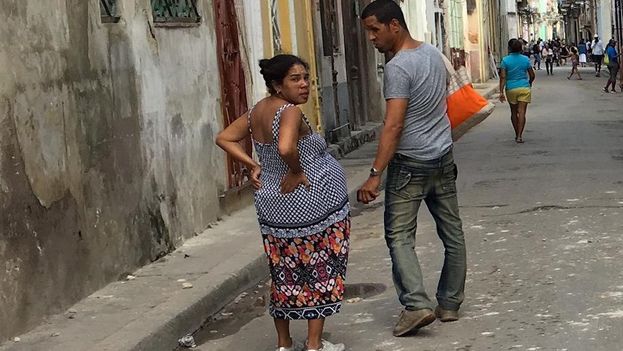
14ymedio, Luz Escobar, Havana, 16 June 2018 — Marcel runs through the park while his mother follows him everywhere and, between races, sits on a bench to rest. She is 47 with a small son who hasn’t started school yet. She is one of the many Cubans who preferred to give birth in her 40s despite the risks, social prejudice and “the fatigue that comes with age,” she tells 14ymedio.
They are women who do not have the energy of a twenty-year-old and are already combing gray hair, but have in their favor greater maturity, family stability and professional development. Many of these late mothers have been wanting to get pregnant for decades, others waited for better conditions to bring a child into the world, and for some of them, the arrival of a baby was a surprise. continue reading
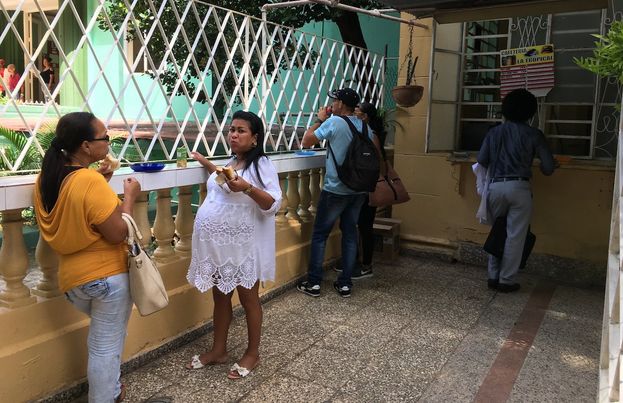
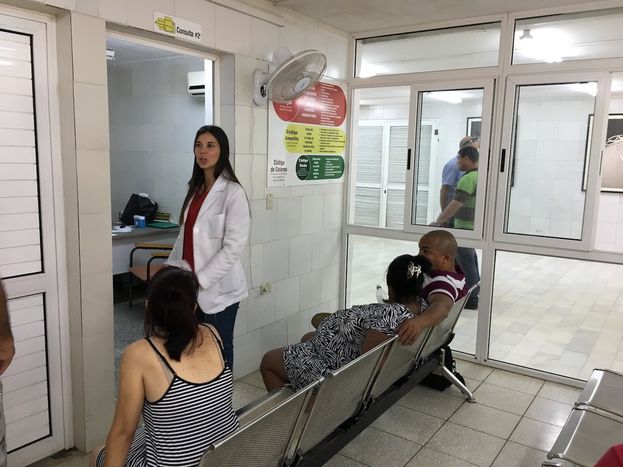
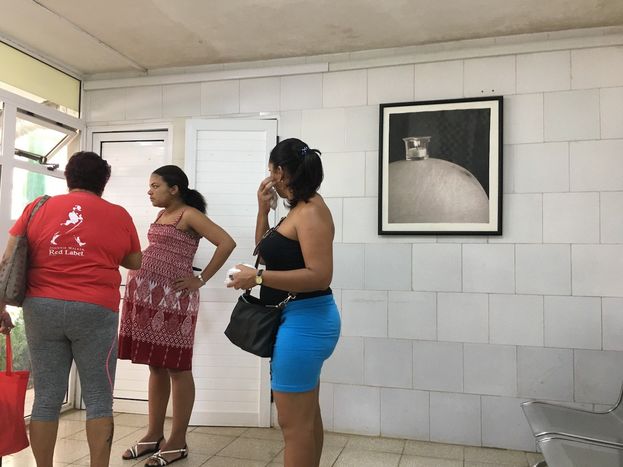
When they show up pregnant at the OB-GYN clinics they are called “elderly” and talked to about risks and problems. Because along with social prejudices that see motherhood as something exclusive to young women, they must also face a public health system that has a hard time adapting to a global phenomenon: the postponement of pregnancies.
When they show up pregnant at the OB-GYN clinics they are called “elderly” and talked to about risks and problems. (14ymedio)
Grisell Rodríguez Gómez, a psychologist and researcher at the Center for Demographic Studies of the University of Havana, has studied this trend on the island. “The fertility of women over 30 years of age began to rise” explains the specialist, who says there is currently “a greater presence of mothers in these ages,” in Cuba. The Cuban health system considers any woman who is expecting a baby after the age of 35 as a “high risk” patient, although it is not contraindicated to conceive a child at this stage of life. “My doctor at the Family Clinic cried to high heaven and predicted a rather dark picture for me,” says Marcel’s mother.
“I was the first pregnant woman in her 40s she had cared for and she was very nervous, because doctors are very demanding when it comes to a baby that is coming… There is still a very narrow mentality about motherhood at this age and they see us as a phenomenon, an abnormality, sick mothers,” she emphasized.
Little by little, society has had to get used to the presence of these mature women who push a baby stroller and are not grandmothers. The economic crisis of the 90s has been one of the triggers causing the postponement of motherhood, because many women preferred to wait for better times, according to several specialists consulted by this newspaper.
The Cuban health system has had to get used to the presence of these mature women who push a baby stroller and are not grandmothers. (14ymedio)
While the fertility rates in Cuba decrease in each age group, the downward trend does not occur among women between 35 and 39 and between 40 to 44 years old, who have steadily shown an increase in motherhood in recent decades, as proven by data collected by the National Statistics Office.
At 39, Ariadna López is preparing to enter her fourth decade of life with a newborn baby in her arms. She is now seven months along and one day she woke up with the suspicion that her second son was coming ten years after she had her first. A new relationship had started and her husband was happy with the announcement.
“The family doctor was scared at first,” recalls Lopez. “When I gave her the news, she raised his eyebrows in concern,” especially because now the Public Health authorities in the municipality of Habana del Este where she resides, “are in a tizzy because they have an old pregnant woman, which is a headache.” Lopez immediately began a strict plan of prenatal vitamins and folic acid. If it had been a planned pregnancy it would have been better to start with this regimen even before conceiving the baby to ensure the correct development and functioning of the brain of the fetus.
The feminist activist Marta María Ramírez recently announced her pregnancy on social networks. At 42, each consultation has been a battle to stop them from treating her “with fear because of the risks involved in pregnancy” at her age. She is tired of hearing phrases like “let’s have a look at your problem” and she prefers not to know the biological sex of the baby until the delivery, something difficult for the medical staff to understand and accept.
According to a study conducted by several specialists and published in the Cuban Journal of Obstetrics and Gynecology, “a woman in good health” and “with adequate prenatal care” is very likely “to have a happy delivery and a healthy child” although they clarify that the health system of the Island must prepare itself to deal with the tendency to become pregnant later in life.
Society has had to get used little by little to the presence of these mature women who carry a baby stroller and are not grandmothers. (14ymedio)
“Many of these pregnancies are not spontaneous but occur in mothers who have had fertility treatment for many years,” explains Kenia Ferrán, a Cuban obstetrician who worked for years in the public health system until in 2017 she emigrated to Ecuador. of these pregnancies begin from the beginning because there is a high rate of spontaneous abortions among women over 40.”
If they manage to overcome the first trimester of pregnancy,”they still face the high possibility of suffering from gestational diabetes and hypertension, problems that affect not only the health of the pregnant woman but also the baby,” Ferrán said. “Genetic risks are also high, such as the presence of chromosomal alterations such as Down syndrome.”
However, Ferran says that in her professional life she has treated “many women who decided to become mothers after 40 and in most cases everything has gone very well. The most important thing is the follow-up and above all, ethically, to respect the decision that the woman has made. We are here to accompany her on that trip, not to criticize her.”
Some of the women she cared for in her clinic “waited to have a place to have a child, because the housing difficulties force many of them to postpone the moment.” The economic situation and “dreams of emigrating” also influence the decision, along with “the desire to take more advantage of professional opportunities in the 20s and 30s,” she says.
Beatriz Medina, 41, has two children from a first marriage and this week she visited the Ramón González Coro Gynecology-Obstetric Hospital in Havana to ask for advice about a new pregnancy. “Among the problems they told me is the chance that the child will beborn underweight or that I deliver early,” she says, and immediately says that she is not afraid.
Medina, however, does not feel so confident about what will come next. “I estimate that at 60 I will still be taking care of a young man and the generational abyss will be tremendous.” The mother is concerned “that she she won’t live to see him develop his professional life, be an adult, have his own children,” although she believes that she will have “more maturity to educate him and more resources to support him.”
_____________________
The 14ymedio team is committed to serious journalism that reflects the reality of deep Cuba. Thank you for joining us on this long road. We invite you to continue supporting us, but this time by becoming a member of 14ymedio. Together we can continue to transform journalism in Cuba.
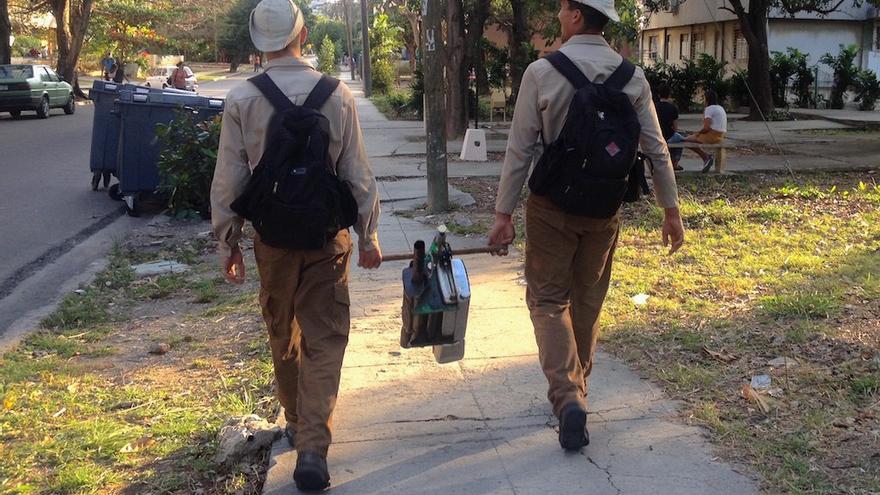
Two young people of the Youth Labor Army with the fumigation equipment. (14ymedio)
14ymedio, Zunilda Mata, Havana, 18 June 2018 — “We used to complain because they were always coming and knocking on the door every week to fumigate and make sure you didn’t have standing water, or a vase of spiritual water or a water tank without a cover,” says Diosdado, 68, who lives in La Timba neighborhood a few yards from the Plaza of the Revolution in Havana.
“But this year, from the times the rains started, they have only come by once and have not finished fumigating all the houses because they ran out of the product,” he adds. “We can hardly sleep with the bombardment from the mosquitos, because this area has a lot of vegetation and there are also many places where rain accumulates, and families with small children have to use mosquito nets all night.” continue reading
The abundant rains of recent weeks have not only left Havana with hundreds of homes at risk of collapse but also plunged it into a wave of mosquitoes that residents fear contribute to the spread of diseases such as Zika, Chikungunya and Dengue. The fumigation, which a few years ago was intense at this time of year, has decreased due to the crisis that the country is experiencing.
Until last summer, fumigations inside and outside homes were common. The image of vehicles that left a trail of smoke while driving through the main avenues of the capital became part of the urban landscape. Inspections in the residential areas were also repeated several times a month in search of the feared Aedes aegypti mosquito, a vector of these diseases.
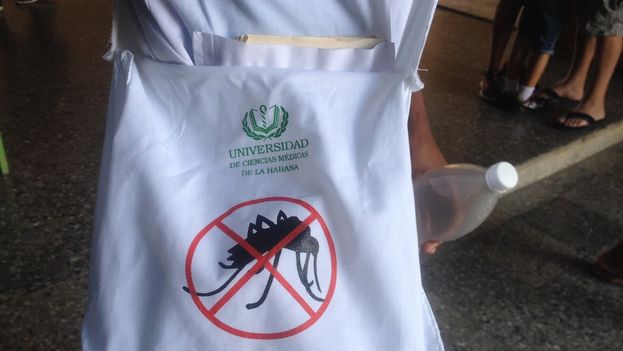
A workers’ bag for the antivectorial campaign, especially the students of the University of Medical Sciences who do the work voluntarily. (14ymedio)
La Timba is a neighborhood that is densely populated with people with low economic resources, and several residents visited the nearby polyclinic April 19. “We have gone several times but the answer is that right now there is little product to fumigate and that it is very difficult for the country, which does not have the resources to carry out massive campaigns like before,” explains Diosdado.
A source from the hospital confirms with this version to 14ymedio. “The rate of infestation in this area exceeds 0.15 and we are prioritizing the most affected parts but we can’t cover everything,” explains a polyclinic worker who preferred anonymity. “Last week they sent us some liquid to fumigate and we are administering it where it is most urgent.”
“In every municipality in the city, the presence of the Aedes aegypti mosquito has been detected,” the source points out. “We are trying to cover the entire capital in the most effective way with what little we have,” she says. “It is not only the liquid to fumigate but also the fuel to start the ‘backpack-motors’ (as the fumigation equipment is popularly known).”
The Cuban economy is still burdened by the worsening of the crisis in Venezuela, which has led to a reduction in bilateral trade and the supply of oil to the island.
Cubans identify fumigation against mosquitoes with the era when Fidel Castro ran the country, because in those years the antivector campaigns were so intense many were annoyed by them. People complained that the inspectors constantly invaded the privacy of their home in search of Aedes aegypti, and were also concerned about the other evils associated with the frequent administration of insecticides.
“The cases of allergy and asthma skyrocketed in those years when it was constantly sprayed,” recalls Yander, a nurse who worked for a decade in the emergency room in a Centro Habana hospital. “We also had several patients who arrived because they had slipped on the liquid left behind on the floor of their house after the fumigation, and one even broke his hip.”
However, Yander says that “all those evils were minor compared to the risk we now have with Dengue and Zika.” The nurse adds that “seeing less fumigation and inspections, people lower their guard and have a lower perception of risk, which is why it is important to warn of the danger.”
Many families have decided to fight the mosquito with their own resources and use small household sprays bought in hard currency stores that promise to kill all insects, or other simpler recipes to avoid bites.
“When we sit down to watch television we put alcohol on our legs and arms to scare off mosquitoes, it’s not perfect but it works,” says Maritza, a retired resident in the Cerro neighborhood, near the well-known Manila Park, an area very affected by the presence of insects.
Orders from the Island to the community of Cuban émigrés, especially those based in South Florida, have increased, asking for incense, lotions and other repellent products and there are many ways to send parcels to the Island. The black market has a wide variety of products, but the prices are out of reach for the poorest families.
“We depend on state fumigation because we can not pay for an anti-mosquito spray that costs more than 3 CUC (roughly $3 US), which is a third of my monthly pension,” says Maritza. “That’s why we use this alcohol, which can be bought in pharmacies much cheaper but it doesn’t totally protect us.”
Hundreds of workers in the antivector campaign have been reassigned to other tasks and in the Provincial Health Department complaints pour in from the residents in the neighborhoods hardest hit by the swarms of mosquitoes. Given the lack of resources, the authorities are appealing to the discipline of the population to inspect their own homes, a practice known in the bureaucratic language as “auto focal.”
A poster stuck up at the entrances of several multifamily buildings in Nuevo Vedado calls for extreme measures, “combat the mosquito” and “immediately report any symptoms” of possible infection. However, unlike other occasions, this medical warning is not accompanied by a fumigation calendar for the area.
In 2017, an extremely dry year on the Island, there was a notable decrease in confirmed cases of Dengue fever. The infections fell by 68% compared to 2016, as reported by the official media at the time. During this period, Zika virus transmission also decreased and there were no reports of a single patient with Chikungunya.
Due to its humid climate, Cuba is a country prone to the proliferation of these arboviruses, a situation that gets worse during the summer with the rains and the greater mobility of the population taking advantage of school holidays to travel between provinces and contributing* to the propagation of these diseases.
Translator’s note: The cycle of infection for dengue and chikungunya requires a female mosquito to bite a person who is infected. Within about a week, the mosquito becomes infected and can then pass it on when it bites other people. These two diseases are not contagious person-to-person or mosquito-to-mosquito. Zika, however, although it is transmitted in the same way, can also be transmitted person-to-person through sex, and it can be transmitted to a child during pregnancy potentially resulting in birth defects than can be very severe.
____________________
The 14ymedio team is committed to serious journalism that reflects the reality of deep Cuba. Thank you for joining us on this long road. We invite you to continue supporting us, but this time by becoming a member of 14ymedio. Together we can continue to transform journalism in Cuba.
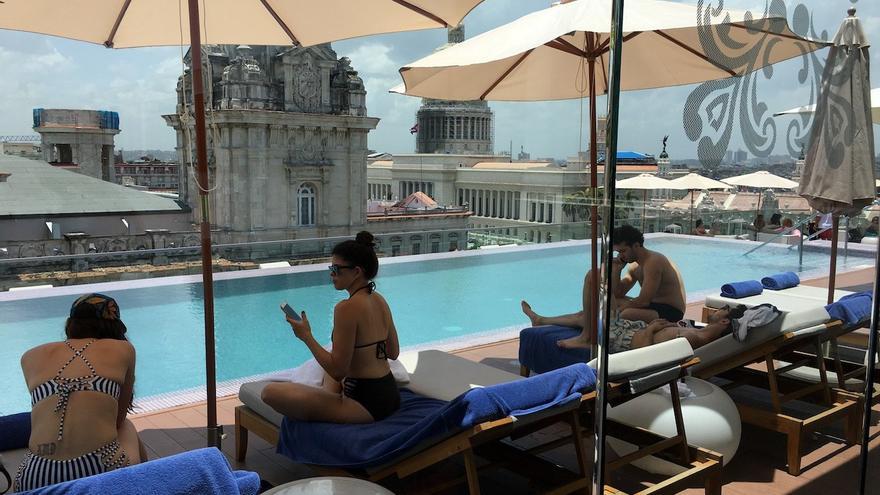
Most of the customers who come to the bar do so to admire the view of the city and the ‘infinity’ style pool. (14ymedio)
14ymedio, Marcelo Hernández, La Habana | Junio 19, 2018 — None of the customers who were enjoying the bar and pool on the rooftop of the Manzana Kempinski Hotel this Monday were staying at the accommodation. The luxurious colossus across from Havana’s Central Park is below 20% occupancy according to the calculations of its workers, due to the slowdown in tourism in Cuba and the high prices of the establishment.
Opened in May of last year, with 246 rooms, of which 172 are standard, the Manzana Kempinski is apparently performing far below its projections. Despite this, the general manager, Xavier Destribats, said a couple of weeks ago that the Swiss hotel group in working on several other projects the state-owned Gaviota company. continue reading
“We have bet on Cuba and we will continue to grow with Gaviota with a second hotel and maybe a third one,” Kempinski’s director told Cuban state television. Destribats was optimistic about the results of the luxury hotel which, he said, has customers from markets such as France, Spain, Australia, Germany, the United Kingdom, Russia and China. However, he did not provide any occupation data and the employees believe it is underperforming.
“This seems like a museum, one of those that is very beautiful but almost empty,” a waitress told 14ymedio on condition of anonymity.
“We are afraid that there will be cuts in personnel and that they will send us home, as has happened with other hotels,” explains the employee who receives a little more than 300 Cuban pesos per month (less than $ 15) for her work. “Last week several clients who came to an event saved us, but they are about to leave,” she laments.
Located in an historic area, the hotel occupied the old Manzana de Gómez shopping center, a name Havanans still use to refer to the place. After several years of repairs it went from being an aged and dirty building to emerge with all its impressive architectural details restored.
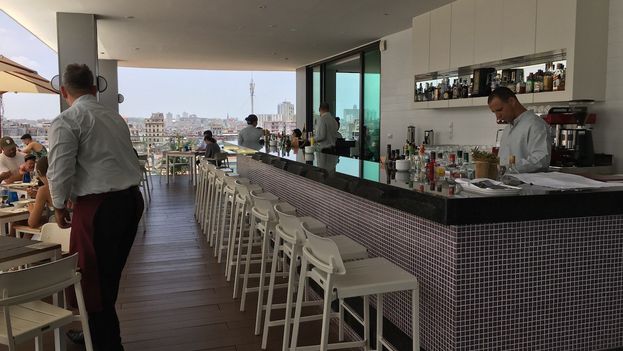
In the Manzana bar you can find cold and imported beer, a luxury difficult to locate in the rest of the city. (14ymedio)
“Most of the guests who come to the bar come to admire the view of the city and the ’infinity’ style pool that attracts many fora little refresher,” says the bartender. “It is very peaceful up here and since we are open until midnight it’s a place for the tourists to go after they leave the concerts or the cultural activities in the area.”
“Many people come to look and browse because the restoration process was very painstaking and the hotel has spaces that make you want to stay, but putting your hand in your pocket to rent a room is a real stretch,” a waitress explained to this newspaper.
“If there are few guests, it makes no sense to work here, because the most important thing for us is the tips that the workers share at the end of the day, but in the last weeks it has been very poor,” she complains.
The employee calculates that the hotel is now below 20% occupancy, which other employees of the hotel and those working in the tourism sector confirm. “At the moment this seems like an investment for the long-term, because the hotel has little demand because of its prices,” confirms Katy Ramos, tour package manager.
The clumsy launch of the Manzana is the fault of factors that go beyond its prices. “There is always someone willing to pay dearly for good service, but what is happening has nothing to do with the hotel but with the whole country,” says Ramos. “There is a fall in the number of tourists which is very worrying to all of us who live off this business.”
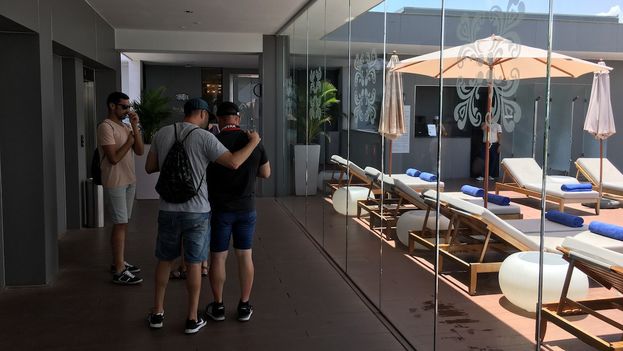
None of the customers who enjoyed the bar and pool on the rooftop of the Manzana Kempinski Hotel this Monday were staying there. (14ymedio)
Tourism is Cuba’s second largest source of income, behind the sale of professional services abroad, and contributes 10% of the gross domestic product (GDP) in addition to generating half a million jobs. For the private sector it is also an important pillar that supports everything from rental houses, to private restaurants, private taxis and guide services.
From January through May of this year, Cuba has counted more than 2.1 million foreign tourists, 93% of those who had arrived during the same period in 2017. However, the figure “includes Cuban Americans who come to visit their families and also people who come to events and congresses, but don’t otherwise engage in tourism,” says Ramos.
The Government, however, maintains the official projections for 2018 of five million visitors with the aim of breaking the previous records of almost 4.7 and 4.5 million travelers in 2017 and 2016, respectively.
But the winds that blew away the diplomatic thaw between Havana and Washington, which attracted all sorts of celebrities to the island, seem to have changed course.
At the end of 2017, the United States Government announced that it would enforce a promise made by President Donald Trump in June of that same year, to crack down on commercial and personal travel of Americans to the Island.
The US Treasury published a list of more than 100 companies, which included restaurants and two rum distilleries, that travelers from that country may not visit. Several tourism agencies and at least 84 hotels throughout the Island appear on that list and the Manzana Kempinski is one of them.
Although it is managed by the German company Kempinski, based in Switzerland, the property is owned by the Cuban military corporation GAESA, which appears on the blacklist drafted by the Trump administration.
However, even if they are not staying at the site due to lack of resources or fear of penalties, many customers come in search of good services and the impressive supplies of the Manzana.
In the midst of the shortage of food and other products that have characterized the last weeks on the island, dozens of tourists come to the hotel every day in search of a good meal or those drinks that are scarce elsewhere.
In a city “where there is a scarcity of almost everything, this is a haven of comfort,” says Empar, a Spaniard who on Father’s Day Sunday was enjoying a cold imported beer on the terrace after “having walked through several stores and markets without finding anything I wanted. “
“I came for the views but of course I can not pay what they ask for a room,” he told 14ymedio. A night in the Patio room, the cheapest in the entire hotel, cost about $440 without breakfast, while the most exclusive, the corner suite goes for $1,355.
“It’s a shame that despite being half empty they do not offer a significant reduction in prices, because that would make many customers like me feel encouraged to stay,” says Empar.
Cuba is now in its low season of foreign tourism, because in the summer months people choose destinations cooler than the hot tropical sun of the island. These are the same months when nationals have a chance to be tourists because of the school holidays.
But the Manzana Kempinski is beyond the pockets of Cubans living on the island, where an average salary does not exceed the equivalent of 30 dollars a month. “Before leaving it empty they could lower the prices and fill it with Cubans,” joked Humberto, a baseball fan reconverted to football supporter during the World Cup in Russia and a visitor to the nearby sports club, known as La Esquina Caliente.
This character of “forbidden apple (manzana)” due to its stratospheric rates, has earned the accommodation many criticisms, especially for the contrast between its luxurious conditions and the neighborhood that surrounds it, plagued with serious housing problems.
The young artist Luis Manuel Otero Alcántara put on three artistic performances at the luxury hotel. In the first of them, he questioned the disappearance of the bust of the communist leader Julio Antonio Mella, previously stationed there; in the second he brandished a sledge hammer a few inches from the window of an exclusive store in the basement of the building; and in the third he ran a raffle to win a night in the only five-star hotel in the country, which was won by a young man about to enter to Compulsory Military Service.
“That may have been the first and only ordinary Cuban who has slept in those beds,” speculates Humberto, while gazing from the Central Park toward the empty entrance of the Manzana Kempinski.
____________________
The 14ymedio team is committed to serious journalism that reflects the reality of deep Cuba. Thank you for joining us on this long road. We invite you to continue supporting us, but this time by becoming a member of 14ymedio. Together we can continue to transform journalism in Cuba.
Cubanet, Miriam Celaya, West Palm Beach, 14 June 2018 — The adversities of the lugubrious panorama of the political heirs of the latter Castro regime don’t seem to have an end. Everything seems to conspire against the confused performance of the recently inaugurated Cuban president, Miguel Díaz-Canel, including Mother Nature, who in recent days has been punishing the already suffering Island with torrential downpours, deepening the country’s economic drain in their aftermath.
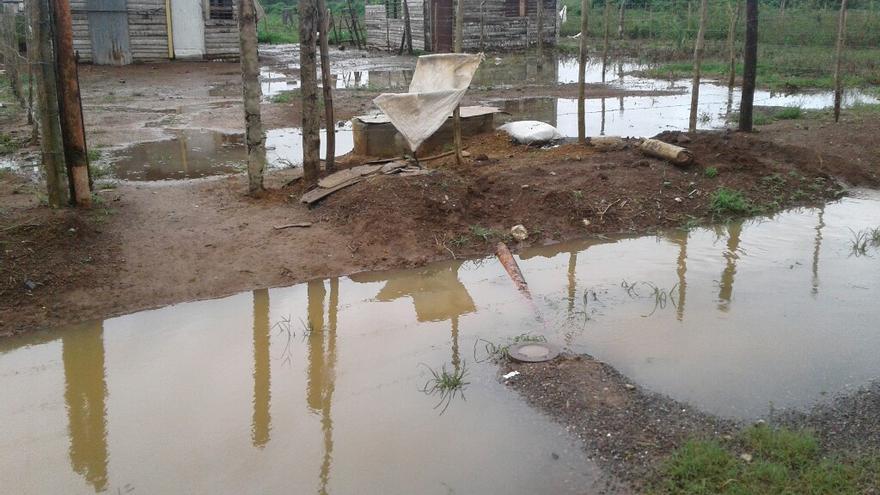
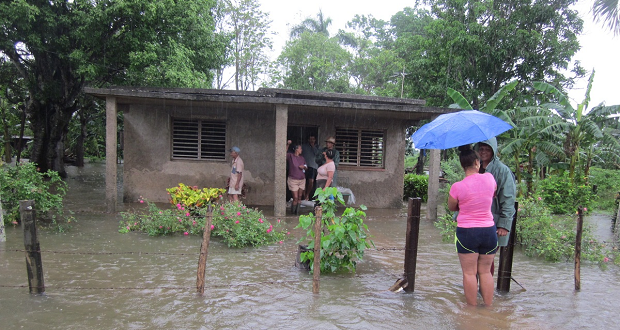
According to the schematic official reports, the territories that suffered the heaviest rain were from the provinces from Pinar del Río (western end of Cuba) to Ciego de Ávila (central region), in which “the main damages were in agriculture, roads and housing,” although “progress is being made in the recovery process.”
The cold outline, however, conveniently overlaps with the drama of those Cuban families who have lost their homes and their few assets, whose misery is in addition to that of the countless affected by other meteorological events that have plagued the island in recent years, whose claims are far from being resolved. continue reading
During the substantial analysis of our distinguished leaders, convened last Monday, June 11th, they insisted that the greatest impact “was in the municipality of Ciénaga de Zapata, mainly in Cayo Ramona, where 205 houses were still flooded, because the water is receding very slowly.” For this reason, they pointed out, “more than 3,000 people who were evacuated are still not able to return, including 219 students who are missing school.”
Such a difficult situation provoked a brilliant revelation on the part of the very sagacious Cuban president, who indicated “a detailed study would be conducted of the terrain and the reasons that have caused the area to still be flooded more than 15 days after the rains ceased.”
Obviously, not one of the smarty pants assembled there saw fit to point out to the President that it would be pointless to waste time and resources in such a “study,” since Cayo Ramona is adequately charted on the maps, where it is shown as a slightly elevated land in the midst of one of the largest wetlands in this geographical region called the Caribbean, characterized by the presence of abundant springs or “waterholes,” which causes the soil drainage to slow down even more when its islets are flooded.
On the other hand, what would the specialists propose, then? Drying the bog? It would not be a novelty either. Already in the 1960’s and 1970’s his Majesty Castro I was caressing that idea, when he dreamed to turn the huge swamp into the largest producer of rice in the hemisphere, a project that he discarded perhaps when in one of his many epiphanies he also glimpsed the creation of the largest crocodile farm in the world … “Plan Crocodile,” he called it, although in reality that hallucination was so ephemeral that it was barely given press coverage. Or maybe he had a plan that included raising crocodiles in the paddy fields. We will never know exactly how many hallucinations went through that arcane brain.
But in reality, this flood of “Councils of Ministers” and analyses of the national situation among senior leaders not only reaffirms that what is involved is to deliberately follow the traditional strategy of the Cuban government, whose representatives of the so-called historical generation continue to throw their shadowy shadow, consisting of holding hundreds of meetings from which “commissions” and “detailed studies” are derived, with the sole purpose of lengthening, over time, the solutions to the problems until, finally, the people resign themselves to living with the problem. It also evidences the uncertainty of a government, tied hand and foot, to an ideology that is no longer useful even for Power.
The current times, marked by the sociopolitical and economic crises of the allied governments of Latin America, the retreat of the left, the epidemic of widespread corruption — in Cuba and the rest of the region — the collapse of the Cuban economy, the failure of the socialist “Model,” national despair and an infinite number of reasons that encourage social discontent and the sense of fatality of a people plunged into dismay, constitute the greatest challenge for a fatigued dictatorship that seeks to perpetuate itself in spite of the reality that surpasses it.
That is why neither the fake elections, nor the “youth” of the stand-in replacement president, nor the useless Guidelines nor the projected new Constitution, weighed down by the same old precepts that led to the “revolutionary” shipwreck, will be able to stop the inevitability of the changes. Because if something is truly irreversible in Cuba today, it is the failure of the Castro regime.
Heavy rains from subtropical storm Alberto caused major loss of lives, homes and crops. (14ymedio)
14ymedio, via EFE, Havana, 6 June 2018 — Cuba reported this Wednesday the death of one of the two people who disappeared in the intense rains of last week, and 8 deaths were added to the previous total. The rains also damaged 9,972 homes, of which 486 were total collapses, according to information provided in a meeting led by Cuban president Miguel Diaz-Canel.
With the passage of subtropical storm Alberto, which caused serious flooding and left 115 communities in the eastern and central part of the Island completely cut off, the additional deaths included seven men and one woman died in the provinces of Pinar del Río, Matanzas, Sancti Spiritus, Villa Clara and Ciego de Ávila, according to official reports.
Last Saturday, initial reports from the General Staff of Civil Defense included a missing a 17-year-old from Villa Clara who might have been swept away by the Arimao River, and a 51-year-old man missing in Chambas, Ciego of Ávila. Both provinces are in the center of the country. continue reading
The state newspaper Granma did not specify today in its report of the meeting — held on Monday — which of the two is the now known to have died.
Díaz-Canel asked the interior minister, Vice Admiral Julio César Gandarilla, to carry out “a detailed analysis, case by case, to determine the causes that caused those regrettable events,” Granma noted.
The Cuban president said, “there are acts of social indiscipline and recklessness” despite “the constant calls to order” to the population by the authorities of the island, which issues warnings before, during and after the passage of meteorological phenomena.
Diaz-Canel also insisted “that the country should remain alert as intense rains have been predicted in the coming days, for which they must be prepared.”
Due to the storm, 62,000 people were evacuated in the western and central parts of the Island.
Preliminary reports put the homes affected by the rains at 9,972 — of which 486 were totally demolished — according to the Minister of Construction, René Mesa, who assured that they have already allocated resources to compensate for the damages.
In Cuba’s central zone some 700 kilometers of roads were damaged, most of them flooded, so that even today nine places in the Sancti Spiritus province remain isolated.
The “most difficult scenario,” according to the official report, is access to the community of Zaza del Medio, the bridge to which was partially destroyed by the flood waters of the Zaza River.
Due to heavy rainfall, Cuba lost 1,500 hectares of beans, while some 10,000 hectares of other food crops were affected.
“At present, everything is being harvested and taken directly to the markets,” said the Deputy Minister of Agriculture, Julio García.
There is also “intensive” work underway to minimize possible losses affecting about 5,000 hectares of rice that continues under water in the western province of Pinar del Río. In addition, 600 tons of rice under water in Ciego de Avila cannot be harvested.
In that same territory, where about 70% of the tobacco harvested on the island is produced, more than 150 hectares of the leaf have been lost, which serves as raw material for the famous Cuban cigars whose export is an important source of hard currency for the country’s coffers.
During the meeting it was also stated that the epidemiological situation on the island “is under control” and “so far no outbreak of disease has occurred,” said Health Minister Roberto Morales.
The intense rains of storm Alberto have filled Cuba’s dams, where some 5 million cubic meters of water are stored, a situation that contrasts with last year, in which the island experienced one of the worst droughts in the last 110 years.
__________________________
The 14ymedio team is committed to serious journalism that reflects the reality of deep Cuba. Thank you for joining us on this long road. We invite you to continue supporting us, but this time by becoming a member of 14ymedio. Together we can continue to transform journalism in Cuba.
Ivan Garcia, 4 June 2018 — When it started raining on May 2, Eliseo and his wife had already covered the leaks in the roof of tiles with silicone, wooden planks and pieces of plastic. On the deck, outside, they sprayed waterproof paint and reinforced the iron beams on the roof that run through the house, so they do not collapse.
Eliseo and his wife reside in a low-lying area of Old Havana, bordering a railway line, very close to the old Cuatro Caminos Market, and which usually floods any time there is a downpour of moderate intensity.
“Since I have had the use of reason, the authorities have been saying they are going to drain the area and build comfortable buildings. It is a tale. In addition to flooding immediately with any storm, 80 percent of the houses are in poor condition. continue reading
Every year, when the hurricane season arrives (from June 1 to November 30) or it rains hard, the roof of one or several houses always collapses or the walls collapse. The only thing the government does is evacuate you to a safe place. Then, when calm returns, they sell you a couple of mattresses and an electric rice cooker. People have to pay for the repairs of the houses themselves. Those who can’t, because they are subsidized by the State, have been waiting for a lot of years for a new house to be offered to them or for building materials,” says Eliseo, as he checks the walls,
Around here, families establish their own security protocols before a storm hits. “When the rains get worse, my two children go to sleep in the safest part of the house. This time the effects were minor. The roof lasted, only five or six tiles were broken,” says Eliseo, who works as a port stevedore.
Almost four weeks of constant rain in the capital caused more than 200 partial or complete building collapses in the municipalities of Habana Vieja, Plaza and Centro Habana.
“When the sun came out it was worse. In the last seven days there have been around 120 collapsed roofs or walls. Luckily, there was no need to mourn the wounded or the dead. And luckily the rains in Havana were not as intense as in other provinces such as Villa Clara, Cienfuegos and Sancti Spiritus,” says a municipal housing official.
Martí Noticias asked the official if, among the strategies of the new government there is a plan to improve the drainage in the low zones and to build houses for the thousands of Havanans living in precarious conditions and extreme poverty.
“There is talk of increasing the construction of houses. According to the government, in a decade this problem could be solved, at least in Havana. But we will have to see. Between the Yankees’ blockade and that of the Cubans themselves, along with the corruption and bureaucracy, I doubt that the deficit of a million houses can be built,” the official believes.
The problem of housing is a long-standing issue in Cuba. Fidel Castro planned different strategies. From creating brigades of builders with people who had never used a mason’s trowel to promising to build 100,000 homes per year.
The aesthetics and poor quality of most of these constructions meant that even many families residing in houses built three decades ago now need a new dwelling. This is the case for Esther, a primary school teacher, who lives in a ramshackle building built in the late 1980s in a neighborhood in Vedado.
“It was about ten o’clock at night when a piece of the ceiling fell in. Fortunately, my daughter was watching television. It’s not the only problem. Years ago, the neighbors of the building have clogs, and roof and window leaks. Some of the stair steps have collapsed and to climb to the fifth floor, where I live, you have to be an acrobat. And that’s not the fault of the blockade or bad weather,” says Esther.
On May 27, persistent rains also caused he collapse of a part of a building located at the corner of Muralla and Aguiar streets, in Old Havana. “That building had been declared uninhabitable years ago. After 6:00 in the evening, part of the roof collapsed, causing damage to other rooms. The racket was horrible, but no one was injured or killed,” says Barbara, a neighbor of the property.
The intense rains of the subtropical storm Alberto caused 7 deaths and left two missing in Cuba (see note at the end). The greatest damage occurred in the central provinces, especially in Cienfuegos, Villa Clara and Sancti Spiritus.
Thousands of hectares of rice, tobacco, fruit trees and crops were spoiled. “Enjoy bananas and pineapple now, because with the losses in Ciego de Ávila, they will be missing from the market for a while,” predicts Omar, a truck driver who transports agricultural products from the center of the island to the capital.
In the town of Ovas, Pinar del Río, 170 kilometers west of Havana, the rains were also very intense. Ovid, owner of a small farm, believes that “a lot of the responsibility for the loss of the crops belongs to the farmers. It was known that the rainy season was coming and the crops needed to be harvested ahead of time, and then the fields plowed.
But the lands that belong to the state belong to no one and no one cares that the crops are spoiled. Four drops of water fall and people stop working. If they owned the land, that wouldn’t happen.”
At present, Cubans are concerned about the prices of agricultural products will continue to rise in the markets because of Albert. “If there is a drought it is bad, if it rains a lot, it’s bad too. Let’s see how much the prices go up, any bad weather causes things to get even more expensive,” complains Irma, a housewife.
Cuba, a nation that imports everything from toothbrushes to sewing threads, is always exposed to hurricanes, external political situations or the rise or fall of oil prices in the international market. This time it was defeated by the intense rains of a tropical storm.
Note: On June 1, Civil Defense issued the names and locations of the seven deceased persons and the two who remained missing.
Alejandro Enrique Cumbrera Pérez, a native of Bayamo, Granma, disappeared in the Arimao River, Manicaragua, Villa Clara, and Ricardo Perdomo González, disappeared in Chambas, Ciego de Ávila.
The deceased, all of whom died from drowning, are: Daikel Palacios Martínez, 29, from Herradura, Consolación del Sur, Pinar del Río; Eduardo Ramos González, 35, from Sandino, Pinar del Río; Noel Aranda Guerra, 58, from the Batey Crane Nueva, Primero de Enero, Ciego de Ávila; Jailen Venegas Meneses, 26, from Batey Limones Palmeros, Majagua, Ciego de Ávila; Quintiliano Meregildo Simo Ortega, 77, from Manuel Piti Fajardo, Trinidad, Sancti Spiritu; Rosbel López Ríos, 27, from Cayos Las Vacas, Remedios, Villa Clara; and Ramón Cabrera García, 56, in the Cruceros de los Álvarez reservoir, Colón, Matanzas.
The video is not subtitled. The woman is repeating over and over “don’t ask me for a recharge.”
14ymedio, Mario Pentón, Miami | Junio 15, 2018 — “My little brother, toss me a refill.” “Asere, I need a little help.” “Compadre, they are only twenty pesitos.” These are some of the most common phrases repeated every month on the social networks of people living in Cuba. They are addressed to friends, relatives and even strangers abroad, the only ones who can take advantage of the promotions offered by the state communications monopoly Etecsa.
As if it were a hunting season, the gun is that of the telecommunications company itself. “Etecsa informs that a recharge with a bonus will be valid from June 11 to 15. If you recharge 20 you get 60,” says a text message that the company sends to its users’ mobiles on the Island. From then on, the desperate search for benefactors abroad begins. continue reading
“The refills have no name. Every month I have to get strong because if I don’t they bleed me dry,” says Yuralay Batista, a Cuban who has lived in Miami for three years. “Imagine this, the other day a woman who says she was in daycare with me, sent me a friend request, asking if I could help her with a recharge,” she said.
Another Cuban who recently exploded in response to requests for reloads was Nairovis Brooks López, a woman from Santiago who went on Facebook Live to protest against the massive number of requests she received. The video went viral and currently exceeds 360,000 views.
Cubans have had cell phone access only relatively recently. After years of its being a privilege of diplomats, tourists and top leaders of the Communist Party, in 2008 Raúl Castro allowed the use of these telephones to be extended to the population.
In just a decade the country already has more than five million cell phone lines and Etecsa has announced that in the near future it will allow users to surf the internet via smartphones, although it has not revealed the prices.
The costs of mobile phone serve are very high relative to the average monthly salary of the Island, which is just 29.5 CUC, according to official figures. Contracting for a mobile line costs about 40 CUC and a minute of conversation is 0.40 cents CUC, almost half the average wage of a full working day in state companies.
“Etecsa is growing at the expense of the work of people abroad,” said Batista.
Alain González, who resides in Hialeah, told this newspaper that he considers it “an abuse” that Cubans living on the island can not have the right to recharge their mobile phone in national currency and qualify for the Etecsa promotions.
González, who has been working in a factory for five years, travels frequently to the island and admits that he frequently recharges the cell phones of family and friends because that allows them to “keep in touch.”
“My mother lives in Centro Habana. With the recharge she calls me once a week. It’s cheaper than me calling her from the United States,” he says. “Having a landline in Cuba is a luxury. That’s my way of helping,” he adds.
Some economists have estimated that the state monopoly has realized profits exceeding 2 billion dollars from prepaid cellphone service. More than half of the country’s telephone lines are maintained by recharges from abroad, the sources add.
Etecsa does not provide data on the number of top-ups or the profits obtained through them, but Tania Velázquez, vice president of Business Strategy and Technologies for the company, told the national media that the company prioritizes services with payments from abroad to capture foreign exchange.
The official figures in just 20% of the top-ups made from abroad despite the avalanche of petitions protested by Cubans living abroad.
______________________
The 14ymedio team is committed to serious journalism that reflects the reality of deep Cuba. Thank you for joining us on this long road. We invite you to continue supporting us, but this time by becoming a member of 14ymedio. Together we can continue to transform journalism in Cuba.
EFE, via 14ymedio, Havana, 14 June 2018 — Spanish companies with a presence in Cuba seek to overcome the financial difficulties they face in order to maintain their privileged position in the market and increase investment, said visiting company representatives this Thursday in Havana.
“Cuba is a market and a country of the future, and when it is finally integrated into the global market, we Spanish companies have to be first in line,” said Alfredo Bonet, international director for the Spanish Chamber of Commerce, which organizes the XXII Spanish-Cuban Business Committee begun today in Havana.
Representatives of the Spanish business sector and its Cuban counterparts addressed, on the first day of the meeting, ways to overcome “the financial difficulties of the last two years,” according to Bonet, which affect approximately 250 Spanish companies with presence on the Island.
Specifically it has to do with the “the Cuban public sector’s unpaid debts” to these companies, explained the Spanish co-president of the bilateral committee, Jamie Garcia-Legaz, a problem that makes continued business projects as well as new investments on the Island difficult.
“The Cuban government is making every effort that is within its reach in order to make payments, although the macro-economic situation does not help either,” said Garcia-Legaz in relation to the recent bump Cuba experienced as a consequence of the deep crisis of recent years in Venezuela, its principal partner and defender in the region.
Thus, both parties have put in place financial tools in recent years, like the lines of support from COFIDES for the internationalization of small and medium businesses and especially the exchange fund created with 400 million dollars of debt that Spain forgave Cuba in 2015.
This fund, which still finances five operations and is looking at another five, “has permitted co-financing investments by Spanish companies and helping finance everything possible in local currency,” according to the international director of the Chamber of Commerce.
The Bilateral Committee meetings are held annually, though no meeting was held in 2017, and are the main channel of dialogue and connection between the Spanish businesses and Cuban authorities.
During Thursday’s work day, Garcia-Legaz and his Cuban counterpart at the head of the committee, Orlando Hernandez, signed the work program for 2018 and 2019, and tomorrow will conclude the meeting with institutional visits by the Spanish delegation made up of by 88 members.
After China and Venezuela, Spain is Cuba’s third commercial partner, to which it exports about 900 million euros’ of various products, from food to parts and machinery, according to data from the Chamber.
Translated by Mary Lou Keel
_________________
The 14ymedio team is committed to serious journalism that reflects the reality of deep Cuba. Thank you for joining us on this long road. We invite you to continue supporting us, but this time by becoming a member of 14ymedio. Together we can continue to transform journalism in Cuba.
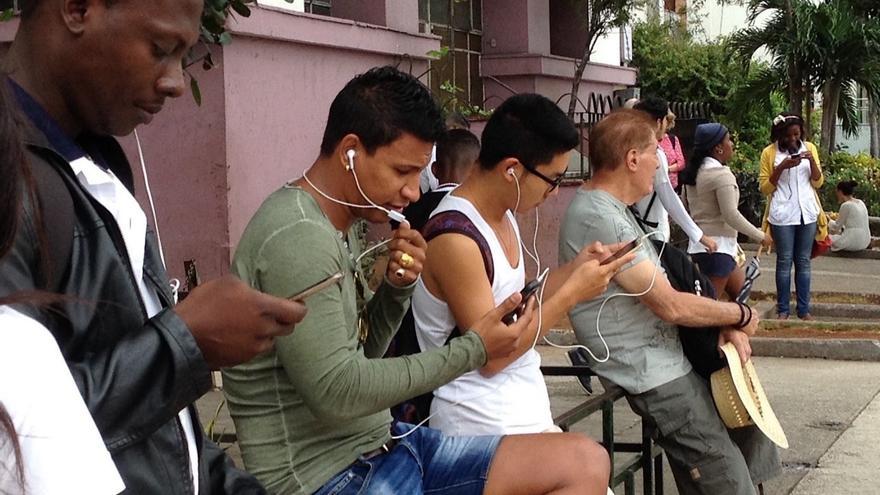
Cubans connect to the internet on state-owned Wi-Fi networks installed outdoors. (14ymedio)
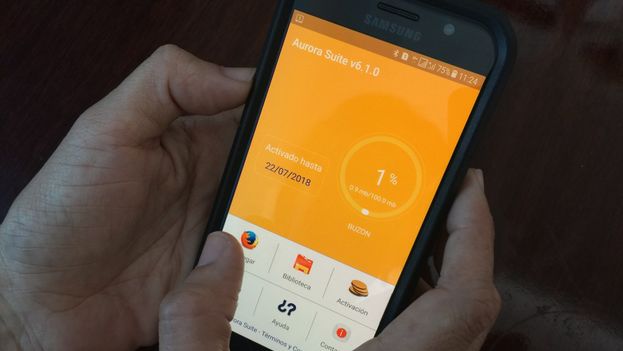
14ymedio, Havana, 8 June 2018 — Aurora Suite is one of the latest applications taking Cuba by storm. Its ease of use and its ability to circumvent censorship of digital sites on national servers have made it an excellent alternative for web browsing.
The application was created to work with the Android operating system, the most popular on the island, and uses the Nauta email service as an intermediary to connect users with the internet. All the architecture on which this ingenious application is based begins and ends in the email inbox.
Its developers take pride in producing “applications that complement the mail services of Nauta de Cuba,” bringing to email a “great added value and enriching its possibilities.” continue reading
The first contact with this application makes a good impression. The simple design guides users in the first steps to convert a mobile phone without access to the network into a terminal from which they can access any web address, even those blocked by the Cuban government.
Once the application is installed, — Version 6.1.0 can be downloaded from the developers page, the Google Play store or through any acquaintance who has it on their phone — the user will get a two-day free trial to explore its advantages and disadvantages.
A user uses the Aurora Suite ‘app’ to surf the Internet from his Nauta email. (14ymedio)
The application contains the Mozilla Firefox browser. When the desired URL is entered, in the background, Aurora Suite sends the request to load the page through the Nauta mailbox. Although a bit slower than the direct online experience, the advantage of being able to visit digital sites from a Cuban cellphone makes the delay easily tolerable.
This operation through email is what allows Aurora Suite to be unaffected by blocked sites. Censorship of content, especially news portals unfavorable to the authorities or opponents’ blogs, can be overridden and the pages can be read with this tool.
Once the 48 hours of free use are up, the customer will receive a message advising them that they must switch to a paid subscription to continue. For a price of 5 CUC per month, users receive about 100 megabytes of downloaded content, good within that month.
The use of mobile transfer as a virtual currency or cashless payment is an interesting feature of this Aurora Suite, because it allows users to renew the subscription every month. As of June 5, the government-run Telecommunications Company of Cuba (Etecsa) — the only one available to Cubans on the island — allows customers to make three daily balance transfers between cell lines instead of the previous limit of one transfer per day.
All the benefits of Aurora Suite, however, are based on a point that many users perceive as a vulnerability: the operation of Nauta mail, managed by Etecsa. With frequent service interruptions, network saturation and other technology glitches, Nauta’s service routinely fails to perform reliably.
Problems with the 3G network signal, which is not yet widespread throughout the country, also limit the reach of the app. Users moving between zones with 2G and 3G will notice data services go in and out, connections drop, and the time to download a page increases.
Another element users must keep in mind is that registering for the service requires entering into the app the access data for one’s Nauta mailbox. For those who prefer to keep a strict control of the personal information that allows them to access to their email, this is a consideration.
Some users of Aurora Suite have also reported that after registering they begin to receive unwanted emails, which apparently are generated automatically. In most cases these are messages with news taken from the Cuban press, both official and independent. Because internet time is so expensive in Cuba — roughly a day’s average pay for one hour of access — users prefer not to receive unwanted content, ads and spam.
Despite these weaknesses and the added annoyances, this application is an alternative for those who do not want to continue waiting for Etecsa to fulfill its announced promise to enable web browsing on mobile phones before the end of this year.
__________________
The 14ymedio team is committed to serious journalism that reflects the reality of deep Cuba. Thank you for joining us on this long road. We invite you to continue supporting us, but this time by becoming a member of 14ymedio. Together we can continue to transform journalism in Cuba.
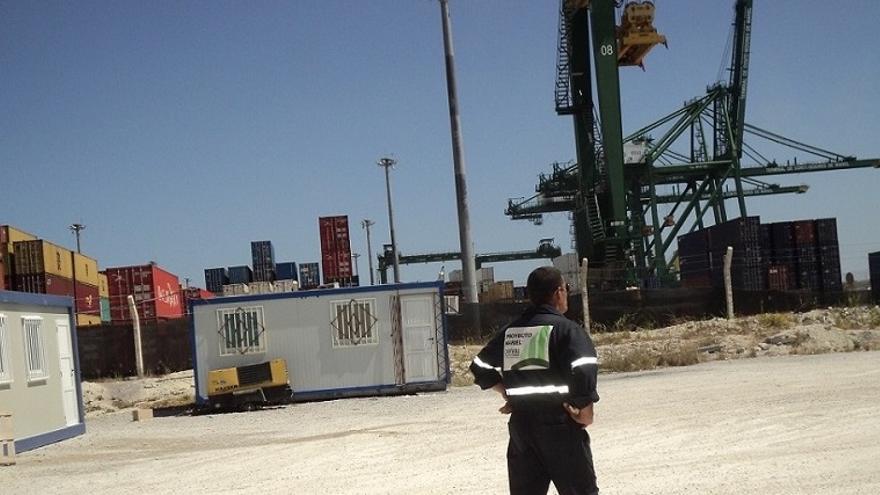
14ymedio, Mario Penton, Miami, 14 June 2018 — In 2014, Raúl Castro, who promoted the deepest economic reforms since the establishment of the socialist system in Cuba, surrounded by his allies Dilma Rousseff, Evo Morales and Nicolás Maduro, promoted the largest project of his mandate, the creation of a Special Development Zone in the Port of Mariel.
Four years and a Brazilian investment of more than one billion dollars later, the zone that promised to turn Cuba into the Caribbean Hong Kong languishes, waiting for investors, according to Emilio Morales, director of Havana Consulting Group.
“The idea of developing a special zone in the Port of Mariel is good; the problem has been in the management, and (thanks to the thaw with the United States) no Latin American country has had in just two years the number of entrepreneurs, presidents and delegations that have visited Cuba, but they did not know how to take advantage of it,” Morales said in a telephone conversation with 14ymedio. continue reading
Mariel was built at a time when the diplomatic thaw with the United States allowed one to foresee the end of the embargo. The most modern port in the Caribbean could accommodate the huge Super-Panamax ships for which the port’s entrance channel was dredged to a 60 foot depth and a modern container terminal was built.
The resistance of the Republicans in the US Congress against lifting the sanctions, the arrival of Donald Trump to the White House and the decline in trade with Caracas, which according to most experts subsidized the battered economy of the island, undid Raúl Castro’s star project.
The Cuban economy, rigidly controlled from the highest power, remains inefficient. The management of the businesses in the Mariel Special Development Zone (ZEDM) is under the control of State officials. “Private enterprise is essential for the future development of Cuba and Mariel. But because the only owner is the State, nobody pays for a wrong decision, the money is not theirs, nor the risk, therefore, it remains something abstract, which is called the State,” adds Morales.
At the end of March there were only 35 approved companies (five of them Cuban), of which 10 were in operation and 25 in the process of investment. The official newspaper Granma reported that so far the ZEDM has captured 1.191 billion dollars, only 9.5% of the 12.5 billion dollars that had been planned, at a rate of 2.5 billion per year.
The causes of the poor performance of the industrial zone that promised to accelerate the national economy have to be looked for in “an excessive bureaucracy, a complicated decision-making process that delays the follow-up of the investment offers from foreign companies, and delays in the completion of the infrastructure,” Morales highlighted in an article recently published in Martí Noticias.
The government itself acknowledged in March that the ZEDM is not going “as fast” as the country needs. President Miguel Díaz-Canel, this week, reviewed the program of foreign investments and exports together with a group of ministers and officials of the sector.
“We must make things more feasible, more viable, less cumbersome,” the president said in relation to the obstacles that delay the investment process. Díaz-Canel later expressed his bewilderment about the slowness with which decisions made in the Council of Ministers or in the National Assembly are applied to the project.
The Mariel works were financed by the Brazilian State, at that time governed by the Workers’ Party, an ally of Havana. The multi-million dollar contract was awarded to Odebrecht, the same company whose bribery practices to secure public contracts shook the foundations of many corrupt governments in Latin America. In Cuba, no investigation related to the multinational has been opened to date.
To Emilio Morales, much of Mariel’s failure can be seen in the small number of jobs it has achieved. “This state project has only created 4,888 jobs, compared to more than 570,000 that were generated by the granting of licenses to small private companies,” (cuentapropismo, or self-employment), he says, justifying his idea of opening up opportunities in the ZEDM to the private sector within the Island.
“It’s not possible that they would create a special economic zone in Mariel and leave out the Cubans themselves, without any chance of investing in it. National entrepreneurs should be privileged first, and then the foreigners,” he emphasizes.
The US company Cleber LLC, the first company with 100% North American capital that was going to be in Mariel, ended up being rejected by the Cuban government. The project of the Cuban-American businessman Saul Berenthal and his partner Horace Clemmons sought to assemble Oggún tractors, designed for small farmers to make the land more productive.
“Mariel had several prospects: first to process oil from the northern part of Cuba, to create industrial parks with import facilities and repatriate capital. In addition, Cuba’s geographical position places it at the center of major routes, which could facilitate the establishment of a free trade zone,” says Morales. All these opportunities are still present, but the weight of the State chokes them.
The Mariel Special Development Zone was inaugurated during the 2nd CELAC Summit in 2014, an international organization promoted from the socialist Venezuela of Hugo Chávez, excluding the United States and Canada. Four years later, the CELAC is being dismembered, Chávez has died, Venezuela is plunged into an unprecedented crisis and most of the governments of the region (including the Brazilian) have changed their ideological sign.
“Political decisions cannot continue to govern the Cuban economy because the market has its own rules: the State must — as the Vietnamese advised — liberate the productive forces of the nation and not want to absorb everything,” Morales says.
Video: Raul Castro during the opening of the Mariel Special Development Zone. Not subtitled.
_______________________
The 14ymedio team is committed to serious journalism that reflects the reality of deep Cuba. Thank you for joining us on this long road. We invite you to continue supporting us, but this time by becoming a member of 14ymedio. Together we can continue to transform journalism in Cuba.
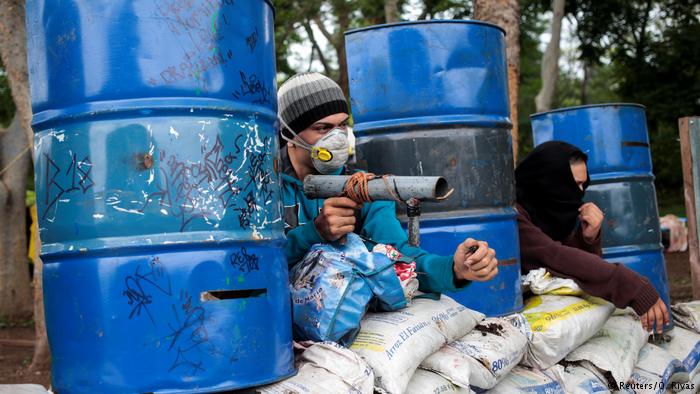
Students at the barricades in Managua. 12 June 2018.
Yoani Sanchez, The Voice of Your Rights, Havana, 14 June 2018 — With the roads cut off, the universities turned into barricades or makeshift infirmaries, and a figure of 146 people who have lost their lives in the protests that broke out last April, Nicaragua today is a nation awaiting a decision that must be taken by a single man. Daniel Ortega has in his hands the ability to allow the country to resume the democratic path or to sink into a spiral of violence and death.
The Nicaraguan Civic Alliance for Justice and Democracy, which brings together broad sectors, has called a national strike for next Thursday with the aim of demanding an end to the “repression.” Another of the objectives of this call is to demand the resumption of a dialogue that would allow ending the socio-political crisis in the country. continue reading
The strike is one more among the many signs Ortega has received in recent weeks of Nicaraguans’ rejection of the government formed by him and his wife, vice president Rosario Murillo. However, the former Sandinista guerrilla believes he is the only man capable of leading the Central American country towards a bright future that only exists in his delusions. He considers himself a kind of irreplaceable anointed.
From his Latin American allies and mentors, in the style of Fidel Castro and Hugo Chávez, Ortega learned to hold on to power no matter at what cost. The presidential chair for him is not only a post from which he controls every detail of national life, but also a fortress that protects him from the law. As long as he stays inside the palace he will be safe, he thinks. A mistake made by many of the operetta caudillos who have ruled in Latin America.
Retaining the highest office in the country and not agreeing in time to resign may be the worst of the decisions that Daniel Ortega has made throughout his long political life. The protests have touched an emotional fiber in millions of Nicaraguans, especially among the youngest. Many of them, turned into improvised street fighters, intuit that there is no turning back and that allowing the continuity of ‘Orteguismo’ will result in a prison sentence or death.
That revolutionary fervor Sandinismo once counted on and the social mysticism that elevated it to power is now in the hands of its adversaries. Ortega does not have the support born of ideological passion nor does the enthusiasm of yesteryear animate the people. That connection was broken irremediably and the repression that he has unleashed against the demonstrators has ended by crumbling the little ascendency that was left to Nicaraguans.
Every hour that passes, every second that the caudillo does not negotiate his exit from the presidency, brings him closer to a more violent end.
In Managua, a man addicted to power takes refuge in his stubbornness without being willing to recognize that if he chooses to give up power and retire, when it is still possible, he would save countless lives, including his own.
What is feared when people talk about the Special Period are the prolonged blackouts, the collapse of public transport and the closure of industries. (Havana Leaks)
Reinaldo Escobar, Havana, 14 June 2018 — The terminology of officialdom has its euphemisms and its unknowns, among the latter is whether it is politically correct to speak of the ‘Special Period‘ as a thing of the past, an question that became clear in the review published on Tuesday by the state-run newspaper Granma, that discussed Raúl Castro’s meeting with Cuban Communist Party (PCC) leaders. The article alludes to “the difficult moments experienced during the years of the special period,” with the verb in the simple past tense.
Although it is true that in none of the three PCC congresses held in the last 21 years, nor in any session of Parliament or the Council of Ministers, nor even in the ‘conceptualization’ of the country’s socialist model, has the official end of the so-called ‘Special Period’ been officially decreed. And we also know that, in practice, the terrible situation suffered in the first half of the 1990s is no longer suffered. continue reading
The reason for this limbo in definitions with regards to the finalization or the continuity of the Special Period occurs, in particular, because to decree its end it would not be enough to establish that its consequences have ceased or decreased, but it would be necessary to reverse the economic policies established at that time with the declared purpose of “saving the conquests of the Revolution.”
Either those policies — presented in provisional dress — are reversed, or the measures that were announced as temporary are considered permanent.
Reversing the policies would mean, among other things, reversing the opening to foreign capital, the permission to engage in self-employment, and the new business forms characterized by a greater degree of decentralization. It would be necessary to penalize the possession of foreign currency and to return to rigid five-year plans. But for this to happen, to return to the previous situation, the Soviet Union and Comecon would need to be resuscitated.
The problem becomes a political-ideological issue because the aspiration to return to the “promising past” is impossible; to do so it would have to be proclaimed that Cuban socialism does not intend to comply with the rules theorized by its creators and that the invisible laws of the market bring better results.
The reasons that forced Cuba’s leaders to decree the Special Period, or — and it’s one and the same — to partially accept compliance with the laws of the market, are not only the collapse of the socialist camp or the hardening of the American embargo. They respond in equal measure to the accumulation of errors resulting from voluntarism and the continued failure to take responsibility for the means of production that are described as social property, but which in reality have become the private property of the state.
When, from time to time, rumors about the specter of “a new Special Period” threaten to reappear, what is being talked about, what is feared, are the prolonged blackouts, the collapse of public transport, the closure of industries, the reappearance of polyneuritis, and the disappearance of products from the market. However, this set of damages is not the precise definition of that era, but rather the aftermath of a disaster that tried to attenuate itself through decrees of insufficient measures.
The ill-fated fruits of that policy, clinging to a refusal to make concessions on certain principles considered inviolable, are now in sight. Foreign investment has not reached fantastical heights, non-state forms of production are still tied to arbitrary guardianships that impede their full development, tourism is a mirage in which the number of visitors grows without proportionally raising profits, the Mariel Special Development Zone has not taken off, it has not been possible to eliminate the dual currency system, and salaries are further than ever from being enough to ensure the daily survival of the working family.
To all this, uncontrollable external factors are added, such as the frustration of the brief hopes that emerged with the thaw between Cuba and the United States, together with the difficult situation in Venezuela that has brought about a cut in aid flowing to Cuba from that country.
These are now, without a doubt, the least tragic moments of the late Special Period. The exhaustion of those provisional solutions, however, means that Cuba’s leaders must take responsibility and confess that the now deflated life preservers that kept the country afloat in the midst of the storm can not be the territory on which the future is built.
_____________________
The 14ymedio team is committed to serious journalism that reflects the reality of deep Cuba. Thank you for joining us on this long road. We invite you to continue supporting us, but this time by becoming a member of 14ymedio. Together we can continue to transform journalism in Cuba.


 He is not a run-of-the-mill writer. Foreign publishers are highly sought after, their visits to Cuba put them in a position to receive a ton of unpublished and published texts from hopeful authors who either fete the foreign visitor or put a Santeria spell on them.