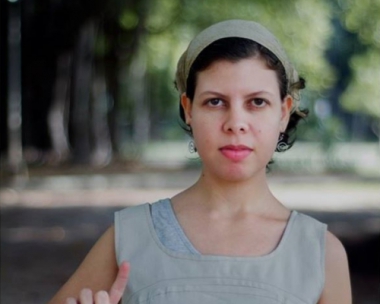
Cuban Faces 2017: Karla Perez Gonzalez, Student

Karla Pérez González

14ymedio bigger14ymedio, Havana, 26 December 2017 — When it was confirmed that Karla Pérez González (b. 1998, Cienfuegos) had earned the right to be trained as a journalist at Marta Abreu de Las Villas Central University, she had the illusion that she could remove the foundations of stagnant Cuban journalism. The young woman promised herself that she would not be intimidated and would do what was expected of an honest communicator: to tell the truth at any price.

However, Pérez González was not even able to complete the first year of her course. One star-crossed Wednesday they called her on the phone to notify her that she had been expelled from the university because they had discovered that she was publishing on sites critical of the Cuban government, and had contacts with the Somos+ (We Are More) Movement.

Then, a stream of public accusations rained down upon the young woman, including epithets such as “enemy,” and a collective intimidation of her classmates was unleashed. Instead of appealing the sentence of her expulsion, she decided to write a letter to the Minister of Higher Education but never got a response.

They accused her of manipulating her classmates and of having a strategy from the beginning of the course to subvert other young people. Overnight, and at the mere age of 18, she was turned into a monster, an enemy of the homeland, someone who had to be destroyed.

Now she is studying journalism at the Latin University of Costa Rica and working on the newspaper El Mundo in that Central American country. She insists that she will return to Cuba and put her knowledge at the service of the press within the Island.

 _________________

The 14ymedio team is committed to serious journalism that reflects the reality of deep Cuba. Thank you for joining us on this long road. We invite you to continue supporting us, but this time by becoming a member of 14ymedio. Together we can continue to transform journalism in Cuba.


Music for Everyone All the Time

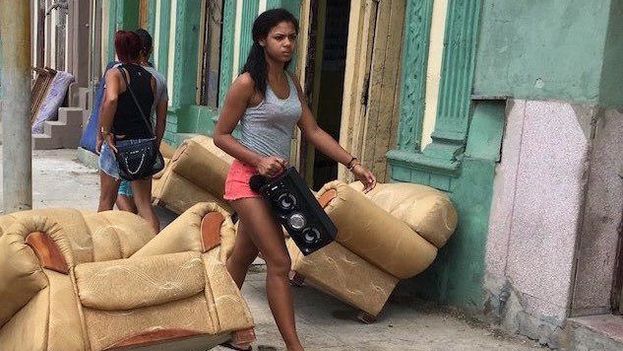
A young woman walks around Havana with her portable speaker. (14ymedio)

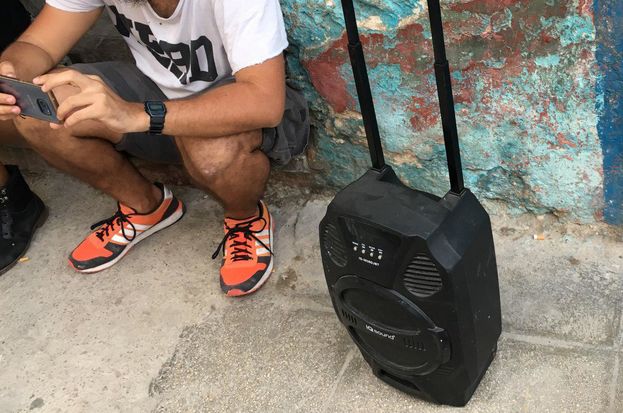
14ymedio bigger14ymedio, Zunilda Mata, Havana, 18 December 2017 — Hanging from the young woman’s bag, the small speaker radiates a trap song throughout the bus, making the trip between La Víbora and Vedado into a fun disco or an acoustic martyrdom. In Cuba, where the penal code is so strict, the lax treatment that the authorities maintain toward environmental sound pollution is surprising.

The war of the decibels has been unleashed. For decades, a status symbol has been to have powerful music equipment and devices that can play sounds with more watts. That guataje (as it is popularly called) fight becomes a real hell of a life in countless buildings, neighborhoods and public spaces.

The World Health Organization (WHO) says that the human ear can tolerate 55 decibels without damage to health. However, depending on the duration of exposure, noises greater than 60 decibels can cause physical discomfort, such as headaches, tachycardia, agitation in breathing and tension in the muscles. continue reading

In Cuba, the limits of what is allowed in terms of noise are generally not clearly defined. Although there is a proper standard on noise and the permitted levels in urban and rural areas, diverse specialists have denounced the “laxity” with which the issue is treated on the island.

The absence of a clear and inclusive law that covers the problem, as well as the lack of essential instruments to measure environmental pollution, make it difficult to confront the problem. Also, Cuba does not have a large number of people qualified to take noise measurements and so noise is addressed in a general way without establishing a relationship with mandatory regulatory standards.

The streets of the Cuban capital and of many provincial cities seem like a real orchestra of different sounds that range from shouting, parties at full volume without prior authorization from the police, and vehicles that circulate in the streets as if they were mobile clubs, blasting music out the windows.

Cuban law has lagged behind the times due to the growth of new technologies. The arrival in the country of wireless connection devices, powered by their own batteries and that broadcast of music, poses a serious challenge to laws that regulate the permissible levels of sounds and noise that date back to 1999.

The Environmental Law of 1997 prohibits, in its article 147, “producing sounds, noise smells and vibrations” that affect human health or damage “the quality of life of the population.”

“The technologies have advanced but the laws are still the same and that is generating a clear contradiction between the noise that an individual can make with one of those speakers and the penalty he receives, a fine of only 200 to 2,250 Cuban pesos,” Osmani Castellanos, a retired jurist, comments to 14ymedio.

For decades, a status symbol has been to have powerful music equipment and devices that can play sounds with more watts. (14ymedio)

Noise pollution violations are not subject to penal sanctions and the authorities consider noise to be of “little social danger,” a classification with which Castellanos disagrees. “When that law was established, we did not know all the negative health effects of noise, which is why it was taken as a social behavior rather than a physical aggression.”

Processing a complaint against a neighbor or state entity for generating noise can be a real ordeal for the victims of the cacophony.

“Between the terrible service and the noise this is intolerable,” a mother complained this Saturday, in a cafe near the National Aquarium west of Havana. The family, with two small children, decided to refresh themselves in one of the state’s food service businesses but ran into a “musical offering” that “doesn’t even let us hear each other talk,” laments the mother.

After several complaints, the employees lowered the volume a little of the reggaeton blasting from the café’s speakers, but even so it was almost impossible to converse at the tables located closer to the speakers. The children played in the middle of the revelry using their hands as megaphones to project their voices more strongly.

In the midst of such shrillness, the street vendors have also chosen to increase the decibels of their cries. It is increasingly common in the cities of the entire island for these merchants to have recorded the phrases with which they seek to attract more buyers.

“Ice cream bars!” is the proclamation that blares, again and again, from a small horn attached to Ricardo’s tricycle, as the ice cream seller travels the streets of Havana’s Cerro neighborhood. “I got tired of screaming and I looked for this, which is better and more professional,” he tells this newspaper.

The litany from Ricardo’s speaker sneaks through the doors and windows, awakens those who sleep, makes children demand that their parents buy them something cold to tickle their tongues and even generates the occasional shouted answers: “Turn that off!” yells an old woman from the balcony, glaring.

“In this country where so many things are forbidden, it’s a miracle that they let this invasion happen,” says the woman, her eyes still half closed from the nap that has been interrupted.

_________________

The 14ymedio team is committed to serious journalism that reflects the reality of deep Cuba. Thank you for joining us on this long road. We invite you to continue supporting us, but this time by becoming a member of 14ymedio. Together we can continue to transform journalism in Cuba.

Something That Can’t Be Fixed in Cuba / Juan Juan Almeida

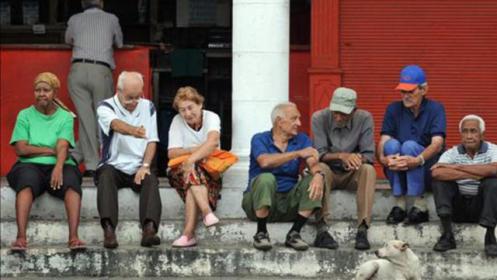
Juan Juan Almeida, 20 December 2017 — With a little money, housing can be arranged; with fiscal resolution and a legal framework that offers real confidence to the investor, the growth of the national economy is stimulated; with an effective campaign aimed at achieving social awareness, the problem of moral degradation is solved; and if our decadent politicians want to cede a portion of their political will, we will restore the civil liberties that we Cubans demand. What has no solution, at least not in the short term, is the very poor state of the national pension fund that is incapable of guaranteeing Cuban citizens a dignified old age.

In 2005, the Cuban government tried to confront the problem, or rather, tried to shake it up, when it began the so-called “updating of the socialist model” by cutting state jobs and dismissing officials who without a vocation, had no choice but to take refuge in a nascent private sector which offers no coverage in the pension system. continue reading

Thus we saw the transformation of doctors and soldiers who, taking up an abandoned line of work became farmers; and lawyers and engineers who left their professions to serve as taxi drivers or sellers of french fries.

It is true, by way of compensation, that the country’s management ordered an increase in the monthly payment to all retirees by enacting laws in this regard; but the continued devaluation of the Cuban peso reduced the real value of the amount of money received by a pensioner so that today, they receive more but it is worth less.

Without wanting to look for culprits but rather to draw attention to finding solutions, it is not difficult to understand that irresponsible policies caused our island to today have one of the oldest populations on the planet. The reasons are well known, emigration increased over time which, in parallel, decreased the birth rate and population growth.

For all elderly, retirement is a desire; except for the Cuban president who, according to the current Social Security law, exceeds his “expiration” limit by more than 20 years, the required number to retire and receive a pension.

But for the common citizen, it is shameful to know that the country exhausted the financial sustainability of the pension system, and that it stretched the fiscal deficit  so much that today there is not enough money to pay pensions throughout the years of retirement.

In the current circumstances, for the Cuban State to offer certain status to the working population near retirement, the government would have to increase the contribution paid by island workers and, at the same time, increase the retirement age to the ridiculous and extravagant age of 200 years.

To give you an idea, a strong and healthy young man, born in 1997 and with the rights of a resident on the island, would have to work more than his whole life to be able to collect a pension. Of course, the issue of the disabled is a whole other story, one which, for different reasons ,just gets worse and worse.

Christmas and New Year’s in Cuba / Iván García

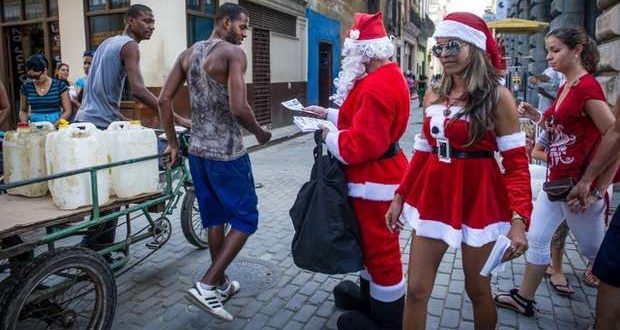
Santa Claus and company distribute advertising for a private restaurant through the streets of Old Havana. (Taken from Eju!)

Ivan Garcia, 22 December 2017 — You sense it, the penetrating smell of dead pigs, opened in the middle and showing their viscera, as soon as you enter the state-owned smoked meat production center in the municipality Diez de Octubre, south of Havana.

Four people with green surgeon hats and high rubber boots sort the pigs. Some are sent to a ramshackle refrigerator full of legs, ribs and loins. Others, after being boned, are steamed, prior to the process of making sausages.

When night falls, after the bosses leave, the under the table shenanigans begin. Owners of small businesses, before acquiring several pigs, bargain the prices with the center’s workers. Residents in the area also buy pork legs or pieces of loin. “At Christmas and New Year’s we make a nice bit of cash,” says one operator. continue reading

Josuán, the father of three children from different marriages, confesses that when December comes he feels it in his wallet. “Imagine, I have to buy pork for three houses. I always come to the processing center, because the meat sold in the market costs no less than 45 pesos per pound of loin and 25 or 30 per pound of pork. Here the legs go for 16 or 17 pesos a pound. I run my risks, because if the police catch me, they confiscate the meat and fine me 1,500 CUC. But those who don’t take risks, don’t eat cheap pork,” he says, while stacking his purchases in the trunk of a Soviet-era Lada.

December is a month of taking stock and family reunions. According to Cuban tradition, on the 24th Christmas Eve is celebrated, and on the 31st or New Year’s Eve, people say goodbye to the old year and await the new.

“I would like to have roasted turkey on the 24th and pork at the end of the year. There are families that can celebrate Christmas Eve with turkey, chicken and pork. But most people eat white rice, black beans, yucca with garlic sauce and a piece of pork. Some don’t have even that,” says Josefa, a housewife.

In the Cuba of 2017, following the custom to the letter is expensive. A frozen eight-kilogram turkey costs 45 CUC, four times the monthly minimum wage or a retiree’s total monthly pension. No less than 20 CUC or the equivalent in Cuban pesos is the cost of a leg of pork. Another 20 CUC goes to buy rice, beans, cassava, tomatoes, garlic, onion and lemon.

“Every year the price of food has gone up. To celebrate a decent Christmas, a family has to pay 100 CUC or more, not including drinks,” says Romelio, a stevedore at the port.

A week ahead of time, Olga Lidia, a hotel employee, goes through the hard currency stores in Miramar, Vedado and Old Havana, in search of nougat and trinkets. “This year I saw more assortment and variety than last year, but the prices are higher. In my house, Christmas begins on December 1st, when we put the little tree together and put it in the living room. We almost always have to buy lights or some new decorations. That’s when the meter starts running: you can spend 30 CUCs on those things. Then comes the search for food and drink, where you can easily drop 200 CUC. We buy three or four nougats and chop that into small pieces, so that everyone gets some.”

Sixty years ago, before Fidel Castro took power at gunpoint in January 1959, Marta, now retired, remembers that even the poorest Cubans celebrated Christmas and waited for the New Year. “We lived in Mantilla, my family came from the working class. On Christmas Eve, in addition to white rice, black beans, yucca with mojo, a salad of lettuce, tomato and radish, we ate roast suckling pig and turkey fricassee. For dessert, buñuelos in syrup and guava or grapefruit with white cheese.

“After the dates, figs and nougat (almond, almond-and-honey, egg and marzipan) we stayed at the table, cracking nuts and hazelnuts. On the 25th we had lunch, as we called the leftovers from Christmas Eve. On that day we exchanged gifts, each one wrapped with pretty paper and a red ribbon. We gave away cards that in Spanish said Feliz Navidad y Próspero Año Nuevo or in English Merry Christmas. On December 31, Hatuey beer, Bacardí rum, El Gaitero cider and, of course, the grapes were never lacking.”

Osviel, an unemployed worker who also sells clothes imported by the ‘mules’ and is the runner for the illegal lottery known as the ‘little ball’, has not been able to buy anything.

“It should be a special day, but when you do not have money, Christmas Eve (known as ’nochebuena’ or good night) becomes a ’nightmare’ (‘nochemala’ or bad night). If the chicken arrives at the butcher’s shop, that’s what we’ll have for dinner at my house. In this country, eating a typical menu has become a luxury.”

Since the end of the 1960s, until the early 90s, given that it was a Catholic tradition, Christmas was celebrated discreetly in Cuba. We are in the 21st century and still the regime does not celebrate it publicly.

“My mother closed the windows of the house so that the blinking lights on the tree would not be seen, although the smell of roasted pork would give us away to the president of the CDR (Committee for the Defense of the Revolution),” recalls Luis Alberto, a high school teacher.

Another Cuban custom is to wish health and that the plans are fulfilled in the new year. When the Christmas cards disappeared, it was done personally or by phone. Now, with wifi in public spaces, it is expressed through emails and text messaging.

“My wishes for 2017 were not fulfilled. I was thinking of emigrating to the United States, but Obama put a lock on that with the repeal of the wet foot/dry foot law. For 2018 I am not optimistic. Living in Cuba is very complicated, especially if you aspire to have some prosperity,” says Reinaldo, an engineer.

Alexandra, a light-skinned mixed-race woman with blue eyes, whose dream is to be an international model, at 12 midnight on December 31 will maintain the family routine.

Risueña explains that at that time “we will throw two or three buckets of water on the street, to scare away envy, bad eyes and negative vibrations. And I will once again walk around the block with a suitcase, which has to be on wheels if you want to be given a trip to a developed country. If you go with a briefcase or a normal suitcase, the trip can be to another province, to Venezuela or to a nation that is in flames.”

If something is renewed at the end of the year among ordinary Cubans, it is the hope that things in Cuba will finally begin to change. For good, because for worse, that is impossible.

Cuban Hotels Offer Terrible Service According To Spanish Tourists

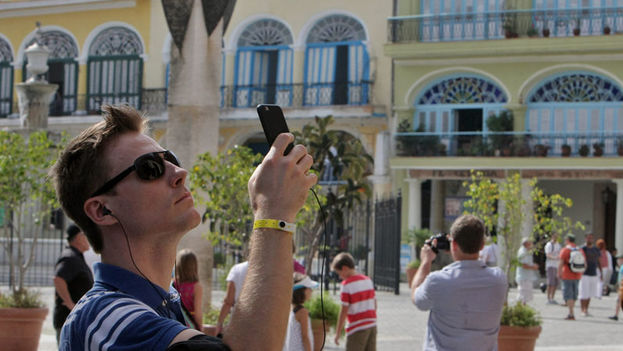
Several tourists take pictures in the Havana’s Plaza Vieja. (EFE)

14ymedio bigger14ymedio, Havana, 22 December 2017 — Spaniards show a higher level of dissatisfaction with regards to the services offered by Cuban hotels, according to a survey published on the Hosteltur website.

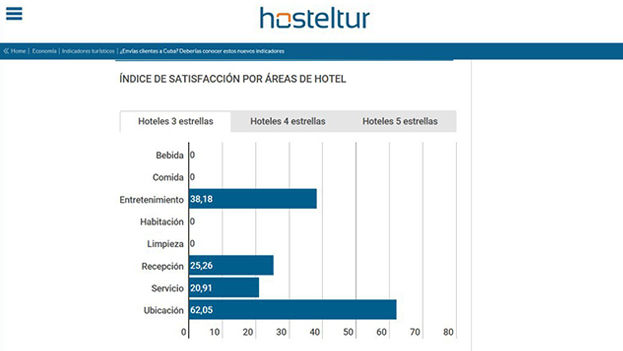
The assessment made by these visitors “does not reach the minimum required in general, highlighting especially the poor rating of three-star hotels, and an improved perception of the four-star,” reads the conclusions of the survey.

Hosteltur immediately removed the graphics illustrating their research because of the negative impact that these data could have on the Cuban tourist market. continue reading

Spaniards who stay in three-star hotels rate food and drink services very negatively, as they do the condition of the rooms and the cleanliness of the facilities. The four-star hotels also receive a negative rating, although somewhat higher, both with regards to cleanliness and in the treatment received at the reception desk.

Satisfaction index in three-star hotels. From top to bottom: Drinks / Food/ Entertainment / Room / Cleanliness/Reception / Service / Location (CC)

On the contrary, according to the data from this survey, which analyzed 122,000 user evaluations n tourist websites and more than 4.5 million mentions related to Cuban tourism on Instagram and Twitter, what customers in Spain value most in hotels of three, four and five stars is the entertainment offered by the hotels and their location.

Satisfaction index in four-star hotels in Cuba. (CC)

However, Hosteltur has noted “a general decline perception of air conditioning, security and hotel satisfaction rates,” and maintains that Spaniards continue to travel to Cuba attracted by the sun and the beach, although cultural destinations are ever more popular.

Satisfaction index in five-star hotels in Cuba. (DC)

Despite the influx of Spanish tourism, which according to the National Office of Statistics and Information was the source of 107,368 visitors to the island, Canada remains the main source of foreign tourists to the island with about one million people, representing 25% of the total international tourism to Cuba.

Unlike tourism from Spain, travel agents and visitors from Canada highlight security as one of the main attractions of Cuba as a destination, despite the travel warning issued by the United States last October.

The damage caused by Hurricane Irma meant the temporary closure of many hotels located in tourist areas, but the island hopes have received 4.7 million visitors by the end of this year, and to maintain tourism as one of its main sources of income.

__________________________

The 14ymedio team is committed to serious journalism that reflects the reality of deep Cuba. Thank you for joining us on this long road. We invite you to continue supporting us, but this time by becoming a member of 14ymedio. Together we can continue to transform journalism in Cuba.

Cuba: Faces Of The Year 2017

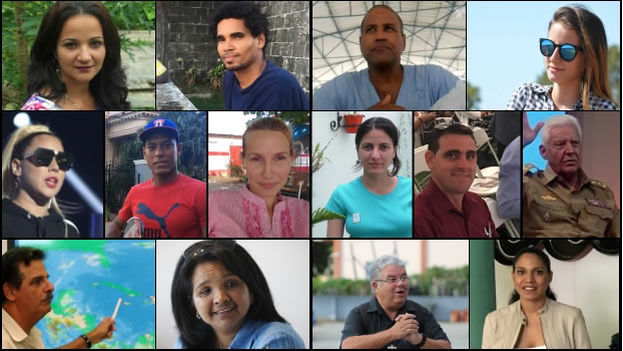
These 14 Cubans make up the great common face of the complexity that is Cuba of 2017. (14ymedio)

14ymedio bigger14ymedio, Havana, 24 December 2017 — As we do every year, we have selected a list of 14 people who have stood out over the last twelve months within the Island. People who, through art, music, activism, a sports discipline, politics or from any another sphere, have left a mark.

With their drive and determination they made the year that is about to end a unique and unrepeatable moment. These 14 Cubans, far beyond assessments of their actions, be they positive or negative, make up the great common face of the complexity of Cuba of 2017:

  • Aimara Peña, independent candidate
  • Luis Manuel Otero Alcántara, artist
  • Daniel Llorente, the man with the flag
  • Karla Pérez, journalism student
  • Dayana Chávez Victoria, ‘La Señorita Dayana’, reguetonera
  • Osleni Guerrero, badminton athlete
  • Sol García Basulto, reporter
  • Rosa María Payá, activist
  • Alexei Gámez, computer scientist
  • Joaquín Quintas Solá, General of the Army Corps
  • José Rubiera, meteorologist
  • Karina Gálvez, economist
  • José Conrado Rodríguez, priest
  • Haydée Milanés, singer

Today we begin the publication of the profiles of Cubans who left their mark over the course of the year.

_______________________________

The 14ymedio team is committed to serious journalism that reflects the reality of deep Cuba. Thank you for joining us on this long road. We invite you to continue supporting us, but this time by becoming a member of 14ymedio. Together we can continue to transform journalism in Cuba.

Riding With Calixto / Fernando Dámaso

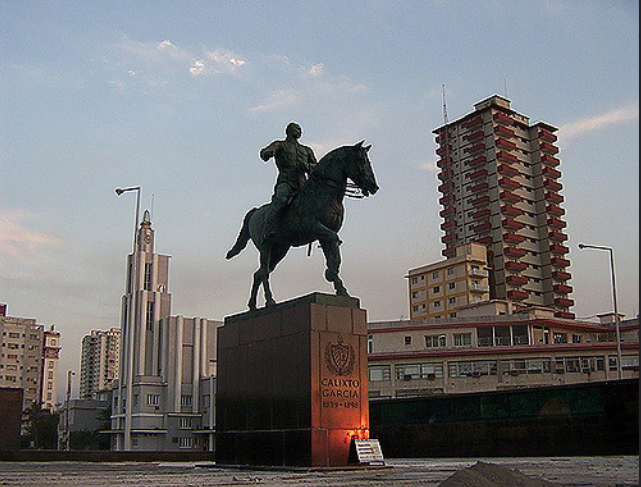
Calixto Monument in its original location (Angel Faudoa)

Fernando Damaso, 22 December 2017 — It seems that moving tombs and monuments from place to place has become a common practice. Now it turns out that, without consulting the citizen, where the real people’s power supposedly lies, the equestrian statue of General Calixto García Íñiguez which, since the 1950s, has been installed in the Malecón and Calle G roundabout (Avenida de los Presidentes) in El Vedado, has been moved from the Plaza Municipality to the Playa Municipality.

Nor have I heard or read any opinion from a recently elected deputy from these municipalities: it seems that in making the decision they were not consulted.

The public explanation given to the press is laughable: “To avoid its deterioration, due to its proximity to the sea.” continue reading

This means that for the same reason, those of Antonio Maceo and Máximo Gómez, also near the sea, will be moved. And the multiple iron sculptures installed by the Historian of the City on Avenida del Puerto along with Roberto Fabelo’s bowl on the Malecón at Galiano.

Will it also happen with the anachronistic Martí of the Anti-Imperialist Bandstand and with the bandstand itself, built by the sea, making this part of El Vedado ugly?

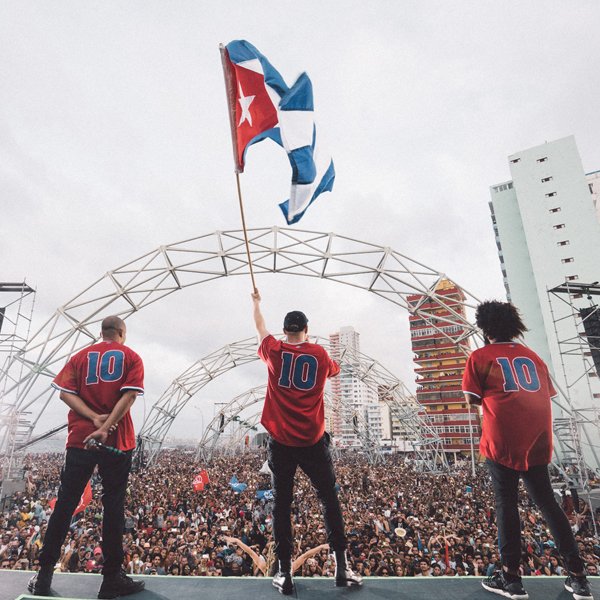
A free Major Lazer concert in the Anti-Imperialist Bandstand in Havana. (theater.acehotel.com)

It is explained that there will be a park with a star, a large Cuban flag and a bronze plaque built in the space where the monument was, explaining that the monument was here and the reasons for its move. I suppose that a budget has been established to replace the large flag from time to time, due to the effects of the saltpeter and the strong wind.

I think that maybe this is no more than a temporary park, similar to those that are built where buildings collapse. Will anyone be interested in such a magnificent place?

In short, these measures only serve to lacerate the identity of our towns and cities, depriving them of part of their architecture, which is also their history.

In Cuba the Future is More Frightening Than the Present / Iván García

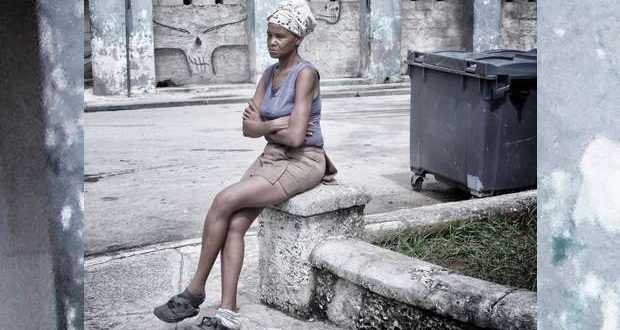
Woman in Havana. Taken from Eurweb.

Ivan Garcia, 20 December 2017 — The place where Anselmo and Yolanda prepare their food has cracked walls and soot covers the entire room. Modernity has not arrived. They cook with kerosene, wood or charcoal.

Fixed to the wall, two casserole dishes of medium proportions soaked by the excessive use of fire and blackened from the lack of detergent. Cockroaches, partying. Right now they are in the food left over from the last meal. When Anselmo, 73, sees them, he does not chase them away them with his hand.

“Do you know that cockroaches are the only living beings that would survive a nuclear war?” he says in response. And after an explanation where he mixes a fable with information read in the Granma newspaper, he grabs his gray and dirty beard, gets serious and answers my question: continue reading

“What is my future project? Gather more recycleables or that the State begins to pay a better price for scrap. Get off your cloud, pal, here things will not change. Raúl Castro and his gang have the upper hand. If nobody quits, this lasts a hundred years. Or more,” clearly shows Anselmo’s pessimism. He’s an old man who should be enjoying his retirement and who to survive walks more than seven kilometers a day, picking up empty beer and soda cans.

Anselmo and his wife Yolanda, a 70-year-old retiree, sell plastic bags outside a bakery south of Havana. They would like to have a clean kitchen and a refrigerator with beef, chicken and fish.

But the reality is quite different. They eat a hot meal once a day. And when they do not have kerosene, they cook with pieces of wood they find on the street.

The number of people living in poverty and extreme poverty in Cuba increases every year. The timid economic reforms of Raúl Castro and pharaonic economic plans projected out to 2030 do not offer solutions for Havanans like Anselmo and Yolanda.

With the arrival of a cold front, the troop of the dispossessed, who have the sky for a roof, have put on their old shirts and sweaters, one on top of the other and the luckiest wear olive green jackets, from when they were militiamen themselves or given to them by a relative who was or is one.

“When temperatures drop, we feel the hunger more,” says Germán, a guy who sells clothes collected in garbage dumps. “To deal with the cold, I drink a lot of alcohol.”

How do you see yourself in the future? Do you have a project, I ask. He shakes his head. He stares at me, as if I were a Martian or a foreigner who accidentally ended up in these parts.

“Come down to earth, man. The future is equal to or worse than the present. At least for people like us. In Cuba, the future is not to die. We poor people live adrift in Cuba,” he says.

But when you inquire of professionals, university students or private entrepreneurs, the record of opinions is also pessimistic.

Liana, a doctor, works at a clinic in the old Covadonga hospital, in El Cerro, fifteen minutes from the center of the capital. “My near future is to reach the title of specialist. Then try to get a master’s. But it is not a priority. If before I get a mission abroad, either on my own or through the State, I will look for a way not to return. In Cuba, the future is more frightening than the present.”

Even Luciano, who considers himself a bulletproof Fidelista, is not so optimistic when talking about the future. “You have to trust in the Revolution. The causes of economic stagnation or not being able to offer a good quality of life are often not the fault of the government. The Yankee blockade is not a game. Add to that that there is a caste of bureaucrats who hold back economic reforms and foreign investments. Things must change, because as Fidel said in a speech at the University of Havana, the only ones who can make the process fail are ourselves with our bad work. And the truth is that we are not doing things right.”

Discontent among Cubans, believe me, is not a minority feeling. People are tired of the triumphalist discourse. Of low wages, high food prices and living without a future project and having to turn their backs to progress.

“We live from day to day. How many people have a bank account in Cuba? How is it possible that an engineer has a salary lower than a pushcart vendor who sells fruit? There are many questions without answers. Too much official silence. I suppose that, like Newton’s Law, due to gravity, things in Cuba have to change. But at the moment, that is not a priority nor is it the government’s will,” says Lizet, an architect.

Darián, sitting in a Vedado park, considers that the worst thing is that more and more exit doors are closed. “The island has become a mousetrap. There is nowhere to go. Or you invent a legal business or one under the table. Either you steal at work or you sell the shit brought by ’mules’ from Russia. If we escape from this we are crazy.”

Joel, a historian, believes that the country, necessarily, is destined to a radical change. “The reforms will arrive by political, economic and ideological obsolescence. The theses that did not work are going to die of old age. Although if the rope keeps tightening around the neck of the people, the popular reaction could be unpredictable. Everything has a limit.”

The regime knows it. You can not govern just by selling smoke. And Cuba is that. Pure smoke.

Alcohol, Silence and Clandestine Bets

Vasyl Lomachenko (l) and Guillermo Rigondeaux (r) at the pre-match weigh-in. (World Boxing Org)

14ymedio bigger14ymedio, Marcelo Hernández, Havana, 11 December 2017 —  There are enough cigarette butts left in the room to “fill a truck,” says Roger. In the clandestine betting house that this 68-year-old man manages in the neighborhood of Cerro, this Saturday was the most intense day of the year with the fight between the Ukrainian Vasyl Lomachenko and the Cuban Guillermo Rigondeaux.

Silent, seasoned in illegal business operations, and a friend of more police officers than he wants to confess, Roger has been in the illicit betting business for two decades. He has a select clientele that is willing to risk their money to enjoy that tug of adrenaline from the mix of competition, convertible pesos and chance.

Big League baseball games, boxing matches, car races and soccer championships have shaken the place, camouflaged inside the house. Only people he knows come there, regular customers who know the rules: “No quarrels, no bad words and the loser pays immediately.” continue reading

To get to the place you have to cross the living room of the house where the grandmother is watching a boring program on national television and Roger’s grandchildren are listening to music from a wireless speaker. Down the hallway, towards the kitchen, you enter a large room that seems to belong to a different dimension.

Roger was ten years old when “the bearded ones came to power and banned casinos and gambling.” Since then, gambling and bets have been submerged in the illegality from which not even police operations, denunciations and fear have been able to eradicate them. “Cubans carry this in their genes, they can’t take it from us,” he reflects. A betting promoter faces fines or penalties of between one to three years in prison that can increase to as much eight years if there are minors involved.

Several screens show even the smallest details of each challenge. There are eight small tables with four chairs each, a bar and all kinds of posters with sports glories on the walls. A small door leads to a bathroom usually overwhelmed by the amount of beer consumed.

Before entering the room, all guests must leave their mobile phones on the kitchen sideboard, among the containers of sugar, salt and a half-empty bottle of oil. “This is a complicated and I can’t even chance going out on the roof because someone might think of taking a picture,” explains the tanned manager.

Roger met Rigondeaux when “he was a boy who did not even know what he was worth,” he says. He saw him grow in the long hours of training, take to the ring, and earn several gold medals and fall into the abyss. “That boxer had the best and worst of things that could happen to a Cuban athlete.”

In July 2007, during the Pan-American Games in Rio de Janeiro, Rigondeaux and his colleague Erislandy Lara left the Island delegation. “They were knocked out with a direct blow to the chin, bought with American bills,” said former President Fidel Castro in one of his convalescent Reflections [a newspaper column].

Fidel Castro’s political ally in the form of Brazil’s President Dilma Rousseff, deployed an operation to capture both athletes until they were pushed back to Cuba. The fate of the fighters was sealed and Castro warned that they would not get back into the ring. Rigondeaux lived long months of exclusion in which even his friends did not dare to approach him.

In 2009, he managed to escape from the island to Miami and there he began a professional career on the rise that, this Saturday, took him face-to-face with Vasyl “Hi-Tech” Lomachenko to compete in the Superfeatherweight World Championship at Madison Square Gardens in New York, in front of more than 5,000 spectators. Many miles away, in Havana, Roger’s place was the scene of pure tension.

Although people gathered throughout the city to watch the fight through illegal satellite dishes, for the official press the Santiaguan born in the same year as the Mariel Boatlift, 1980, is still a “traitor,” and so it kept a stubborn silence.

While the sports publications all over the world announced it as one of the most important matches in the last century, Cuban national television ignored its importance and preferred to dedicate its sports commentaries to the National Baseball Series. “If Fidel Castro ever cursed you, you stay cursed,” explains an local clandestine assiduous bettor.

Indoors, the clash between the Cuban and the Ukrainian was watched with great intensity. During the time the match was broadcast, passersby on the streets of the most populated municipalities of the capital, such as Central Havana, Old Havana or Diez de Octubre, could string together the trajectory of the fight from the sounds of televisions coming from doors and windows.

“Here, there is profit to be made not only on the bets, but also on the consumption,” explains Roger’s wife, who moves stealthily between the tables and the bar, serving drinks and plates with goodies to snack on. Almost all those who have arrived are men, although a couple of them are accompanied by their wives who get bored in front of the screens.

Before it starts, the bets are taken. Everything is written on a long piece of paper that bears names, quantities and other details. Each possibility is considered: number of attacks by one fighter or the other, possible counts of protection, a KO favoring the Ukrainian or the Cuban and even the number of blows against the opponent.

Both pugilists are known for their different styles but also for being “enchanted” and that adds tension among the bettors. They prepare for a transmission dotted with good times and some can barely stay seated, threatening to punch the TV as soon as the match begins.

Roger serves two Cuba Libres while periodically looking at the scoreboard. His boy is losing ground in front of the Ukrainian, but that does not worry him. Sympathy is one thing and money is another. “I bet Lomachenko since he is a safer boxer and youth is on his side because it makes him more daring,” he says.

The room is divided. Some whistle when the Cuban begins to show signs of having been dominated by the Ukrainian, others encourage him to hit harder and to not let himself “eat the coconut” with the rapid movements of his rival. The support for their compatriot is yielding before the bitter evidence that the fight is slipping away from him.

Rigondeaux, El Chacal (The Jackal), 37, came to the fight with two titles as Olympic champion, and 247 amateur fights, of which he lost only four. In his career as a professional he has fought 17 matches with an equal number of victories, 11 of them by KO. He is the world champion in super bantamweight and for Saturday’s bout he had to climb two weight classes.

The 29-year-old Ukrainian also has an impressive professional record of 10 fights, 9 wins and 7 knockouts. From the first attack this Saturday he dominated. He is faster, hits more cleanly and he can decipher the signs of his adversary, whom he pushes to the limit.

The glasses with rum and vodka pass from one side to the other in Roger’s place. One man chews his fingernails and another does not take his hands off his face as he sees how the Cuban is losing to his opponent. Nobody gets up to go to the bathroom, nobody talks. A heavy silence has settled in the room.

The fight ends in failure for Rigondeaux, who can’t fight in the seventh round due to a broken hand. The Santiagiaguan was well below his usual level and showed flaws in his technique, characterized by the power of his left foot and a great defensive capacity. He did not even manage to impress with the movement of his feet, one of the most distinctive features of his “sports choreography.”

Lomachenko rises with the triumph and consolidates his place among the best fighters in the world by defeating the Cuban in an unquestionable way. Roger smiles behind the bar and calculates that he has won about 1,000 CUC between the bets and the products he has sold.

The customers who had no luck pay out their money, one takes a ring from his finger and leaves it on the bar, while the winners smile and ask for another round. When it all ends they pick up their phones and go out one by one through the living room, where the grandmother is sleeping in front of the television.

 _________________

The 14ymedio team is committed to serious journalism that reflects the reality of deep Cuba. Thank you for joining us on this long road. We invite you to continue supporting us, but this time by becoming a member of 14ymedio. Together we can continue to transform journalism in Cuba.

My First Encounter with State Security

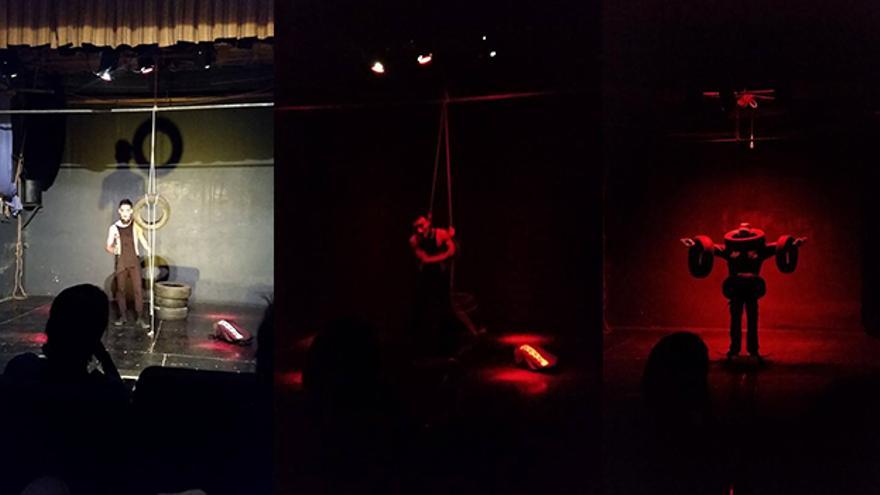
The only performance of ‘Hamlet Machine’ in Santiago de Cuba. (Facebook)

14ymedio bigger14ymedio, Adonis Milán, Havana, 6 December 2017 — For the past two years I have been directing an independent group called Persephone Theater. We recently premiered the play Hamlet Machine, by the German author Heiner Müller, with a staging that shows the overwhelming parallelism between the former German Democratic Republic (GDR) and present-day Cuba.

I traveled with this work to the province of Santiago de Cuba to give performances on November 24 and 25. When I arrived, I received a phone call from a compañero in State Security asking me if I had received a police summons. I explained that I am out of Havana and he said he would call me as soon as I return.

On the day of the first performance in Santiago, a jury of censors belonging to the Provincial Council of Performing Arts and Party cadres from that province were waiting for me in the theater. They demanded to see the work before it was shown to the public. continue reading

After countless technical setbacks to staging the performance for the censorship commission, they finally decided to let the performances go forward but said: “This is a very difficult week since it commemorates the death of the Comandante (Fidel Castro) and anything could be misinterpreted or taken as a offense to his memory.”

Despite how draining this situation was for the actor and the technicians, the performance went on as planned that night. However, the work was suspended by State Security the following day: it was November 25, the date on which Fidel Castro died.

On returning to Havana, I learned that the repression had also touched the capital. Those in charge of the Museum of Dissidence, Luis Manuel Otero Alcántara and Yanelys Núñez, were arbitrarily arrested and threatened. The police entered the house-galleryof the artists Luis Trápaga and Lia Villares where they planned to present The Enemies of the People, directed by the film director Miguel Coyula and written by the actress Lynn Cruz. In addition, they questioned artist-activist Tania Bruguera and her guests who were conducting the second stage of the Behavior Art Workshop.

On my second day in Havana, the Sate Security compañero calls me again, this time on my home phone. He summons me for a meeting at 5:00 in the afternoon at the police station on Cuba and Chacón, in Old Havana. Arriving at the station I am received by a boy in his mid-twenties, handsome and even kind, I could hardly believe it, I was expecting a troglodyte.

He leads me to the second floor of the station, an empty, cold and chilling place, nothing like the downstairs crowded with police, people and posters of the Revolution on the walls.

We entered a computer room where he introduced me to Lieutenant Colonel Carlos Muñoz, a middle-aged man. Then we go to the back of the room where there is a small office. I have to empty my pockets and remove my phone so I can not record the interrogation.

They want to know my relationships with other censored artists, warn me that Luis Manuel Otero, Yanelys Nunez, Lynn Cruz, Miguel Coyula, Lia Villares and Tania Bruguera are counterrevolutionaries, and that any link with them or their spaces would bring me problems. They warn me that my interests and needs as an artist are in danger because I see myself with these people disaffected with the Revolution.

The fundamental reason behind the citation was that a week before I spontaneously distributed a promotion for Cuba Decides at the press conference for the Biennial00, an independent event organized by the artist Luis Manuel Otero. They added the word “counterrevolution” again to describe the Cuba Decides campaign led by Rosa María Payá, whom they accused of being a “mercenary.” The whole time they tried to tear down the people who oppose the Castro regime, even demeaning the work of the opposition artists with ridicule.

The youngest of the State Security agents tells me that he had attended one of the performances of my work Hamlet Machine, that’s why his face was so familiar to me. Since when is State Security following me? They had done research among my neighbors, checked my Facebook wall and even had my phones tapped.

At the beginning of the interrogation I had shown myself before them, making jokes so as not to feel intimidated. After a few hours, all my defense mechanisms were dismantled. The fear arrived, the fatigue of revisiting the same subject, and apathy in the face of what I was hearing. All my energy collapsed.

In the end, what they wanted was for me to work for the Department of State Security (DSE) as an informant, to give them information about the censored artists with whom I relate, especially about Tania Bruguera. They wanted me to inquire about their sources of economic support because they said that someone abroad produced these dissident activities, a head that united the artists, activists and opponents against the Castro government.

If I complied with their request to be a chivato (snitch), and they would provide benefits for my theater group and they would give me a project within the National Council of Performing Arts (CNAE), where I would have a staff of actors and later an official headquarters.

They asked me to sign a document in which I committed to work for State Security. I asked that I be allowed to read the document, to which the lieutenant colonel replied “If you read it, you sign it.” Since the theater runs through my blood, I think of the most naive idea of all, to pass as a double agent and provide false information to State Security. I was playing in a scene that had nothing to do with fiction.

Finally, they take out the document, in which the heading, “Juramento” (Oath) is written in large letters, a word that made me back down. But it was too late or at least that’s how they made me feel. They had to change the paper, since the first one was stained with ink because my hands would not stop sweating because of nerves. I filled in the form, in which they asked me for for personal information and later I signed it.

Then the lieutenant colonel tells me that he is the one who attends the Book Institute and the other colleague would soon start attending the CNAE (Naitonal Theater Arts Council). They express their disagreement with the work Departures and with its director, Nelda Castillo, and ask me if I have any kind of link with her. They say that they will give me a kind of course where I would learn how to get information from people and they want me to tell them what plays have ideological problems. So the repression is beyond whether you are an independent artist or an artist who works for within an institution.

They say goodbye to me with an affectionate handshake, as if to let me know that I am part of them. Before leaving, they let me know that what we are talking about can not be communicated even to my pillow and they urge me to do theater that has nothing to do with politics. The interrogation lasted about four hours.

As soon as I am out in the street I think about everything. I see that playing double agent is not child’s play and how dangerous it can be. Of course working as a chivatón for Security goes against my principles, although they believe that being an artist, young and gay, I would be easy to manipulate. They were wrong. Because I would never betray my faith, devotion and respect towards art and artists.

We artists are and will be the true revolutionaries, we place our trust on a revolution of thought and work. We believe in freedom and respect for individuality, we believe in true democracy. We have faith in the change to come.

A few days ago, after telling all this to my friend the actress Lynn Cruz, she sent me this text message: “Adonis dear. Nobody remembers who governed in Spain when Cervantes wrote Don Quixote, but everyone knows who Don Quixote is. Governments happen but art is forever. Judas believed that betraying Christ was the thing of a single day, and you see what happened. These are moments of definitions, create, write, do work, defend your theater, resist like Carlos Celdrán, Carlos Díaz, Nelda Castillo. They all started in the rooms of their homes. The force is not in the body, but in the wonder of the minds. Live art forever! I love you so much. Work for yourself and your art.”

————————
The 14ymedio team is committed to serious journalism that reflects the reality of deep Cuba. Thank you for joining us on this long road. We invite you to continue supporting us, but this time by becoming a member of 14ymedio. Together we can continue to transform journalism in Cuba.

Cienfeugos Refinery Needs 5 Billion Dollar Upgrade

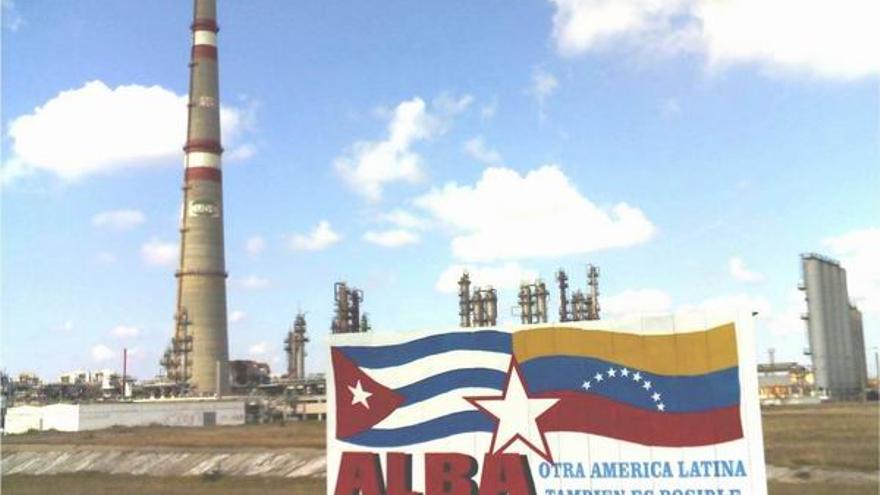
The Russian state oil company Rosneft is considering participating in the modernization of the Cienfuegos refinery. (5 de Septiembre)

14ymedio bigger14ymedio, Mario Penton, Miami, 19 December 2017 — It was December 2007 when Hugo Chávez, in the company of Raúl Castro and a dozen Caribbean leaders, celebrated the PetroCaribe summit in Cienfuegos. For this city of 200,000 that Fidel Castro wanted to turn into the industrial heart of the country, the reactivation of the Camilo Cienfuegos refinery, paralyzed since its construction in 1989, was a reason for rejoicing.

“Cienfuegos and its refinery is a jewel. A jewel that serves as a stimulus for those who doubt, serves as an example for those who fear. We are not living in times of fear, we are not living in a time of doubts. This is an example,” said Chávez in his inaugural speech.

In those days, thousands of people took to the streets spontaneously to receive a fiery Venezuelan president, political heir of the convalescent Fidel Castro, with pockets full of petrodollars to build what the Soviets had left halfway done. continue reading

“We are going to set up a large petrochemical hub here to boost agriculture, development, and food production,” said Chavez. Ten years and more than one hundred million dollars later, there is only one semi-paralyzed and unprofitable industry in Cienfuegos and, as reported this week, even Venezuela’s 49% shares in the industry have been absorbed by the Cuban side as of August, as payment for Caracas’s debt in arrears*.

“For months, we had feared that this would happen [the total transfer to the Cuban side]. The situation of the refinery was very unstable because we received hardly any crude oil from Venezuela. We even processed crude from Algeria, but the minimums for which the industry was created were not reached,” a plant engineer explained to 14ymedio.

According to official reports, Camilo Cienfuegos is refining some 24,000 barrels a day, instead of the 65,000 barrels for which it was designed. This situation is due to the fact that Venezuela, as a result of its internal crisis and its decrease in oil production, has not been able to fulfill its commitments towards Cuba. At the end of October, Venezuela extracted a little more than 1.8 million barrels per day, while in 2015 production exceeded 2.3 million barrels.

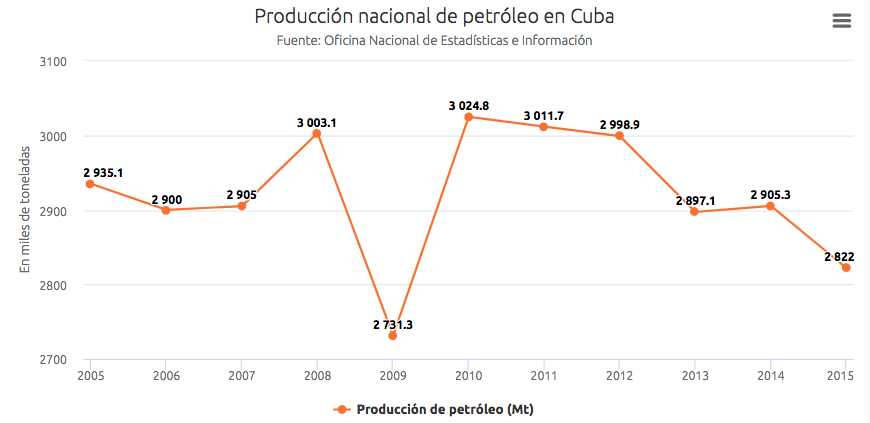
Cuban petroleum production has also decreased, from 3 million barrels in 2011 to 2.8 million according to the latest data provided by the Government.

Cuba’s National Petroleum Production

“Venezuela made a large investment in the refinery, which was aimed at creating a petrochemical hub for the Caribbean, and Cienfuegos was going to be the center for sending Venezuelan fuel to the whole basin, but those are projects of the past,” says the engineer, who traveled on several occasions to Venezuela for training courses at the state oil company PDVSA.

All this happened at a time when the price of a barrel of oil was between 80 and 120 dollars. Those were boom years in Venezuela. There was even talk of a joint investment project of 5.4 billion dollars to expand the refining capacity of Camilo Cienfuegos to 165,000 barrels of oil a day, the start-up of a supertanker base in Matanzas and the reactivation of the pipeline between both ports.

Among the industries that were projected for La Perla del Sur were petrochemical, fertilizer and paint factories. Studies were done to dredge and expand Jagua Bay’s entrance channel to adapt it to the increase in maritime traffic that was estimated to grow between 67% and 169%. There was also a plan to build a base for supertankers on the outskirts of the bay, but the projects were frustrated when the price of oil collapsed.

“The refinery is not profitable without the planned investments and it would cost more then 5 billion dollars for that and right now it does not seem that anyone wants to invest,” explains the engineer, who affirms that even allied countries such as China have given up trying.

“So far the workers of the Cuven-Petrol company earn the same salaries and bonuses as previously, but we do not know how long that can last,” he adds, worried. The factory staff totals 1,049 employees.

The executive director of the Russian state company Rosneft, Igor Sechin, said Monday in Havana that his company is interested in studying participation in the modernization of the Cienfuegos refinery, but the engineer does not believe that this initiative will materialize.

“Cienfuegos has inherited three white elephants from the era of Soviet industrial gigantism, all made in the 1980s: the Juraguá thermonuclear plant, the refinery and the cement factory. They were projected as pillars of the development of the country, but today they offer more headaches than benefits.”

*Translator’s note: In exchange for oil, Cuba sends Venezuela doctors and other professionals, including a large contingent involved in State Security.

—————
The 14ymedio team is committed to serious journalism that reflects the reality of deep Cuba. Thank you for joining us on this long road. We invite you to continue supporting us, but this time by becoming a member of 14ymedio. Together we can continue to transform journalism in Cuba.

Another Raul Castro Promise Unfulfilled

Little can be done in the 54 days that Raúl Castro has been granted to prolong his formal presence in the highest offices of the nation. (EFE)

14ymedio bigger14ymedio, Reinaldo Escobar, Havana, 22 December 2017 — With the accumulated experience of six decades in power, Raúl Castro knows the political cost of breaching the latest and most widely disseminated of his promises: to leave the country’s presidency on 24 February 2018. Each day he prolongs his presence in that position  goes against the schedule for a transfer of command that he has been preparing for years.

In a surprise although not unexpected gesture, the General has not shown any shame in blaming this change on Hurricane Irma, which allows him to spend two more months in the Island’s control room. He has done it through a legal “stunt,” which permits the Council of State to request from the National Assembly an extension of his functions.

However, the argument that this is necessary because of the damages left by the winds is weak in this case. Unlike the thousands of homes and state entities that suffered the scourge of Irma, the hurricane scarcely damaged the communication networks of the candidacy commissions, which according to the law are made up of individuals from the principal mass organizations.

continue reading

On the other hand, since neither the State itself nor the Party are committed to the task of formulating a candidacy, they could dedicate themselves full-time to repairing the results of the disasters. Instead, the organizations that make up the candidacy commissions found they had plenty of time and resources to deal with the electoral issue.

The public explanation sketched on Thursday in Parliament is very implausible, like saying that Cuban fighter jets must be repaired in North Korea, as was alleged when the ship Chong Chon Gang, coming from Cuba, was discovered in Panama with a shipment of arms hidden in sugar.

Given the lack of credibility of the justification put forward for the current legislature of the National Assembly to be held over until 19 April 2018, one is simply left to speculate about the real reasons behind this decision. Some analysts see in this adjustment a clear signal that, at this point, the essential consensus to determine who will sit in the presidential chair has not yet been achieved.

The second, more generous speculation introduces the variant of making some amendments to the Electoral Law before the time comes when voters go to the polls to approve the candidacy of the new deputies, who, according to the current legislation, elect the Council of State, which in turn appoints the president.

Little can be done in the 54 days that Raúl Castro has been granted to prolong his formal presence in the highest offices of the nation; he is president of the Council of State and also of the Council of Ministers, as well as Commander in Chief of the Armed Forces and First Secretary of the Communist Party. The anguish that comes with handing over power on 24 February will be the same on 19 April. The serious economic crisis that the country is going through will not subside at that time and it is unlikely that an ally like Venezuela will recover and increase the oil supply.

Like one who has set a date to go to the altar and at the last minute is corroded by the temptation to leave his partner stranded, Raúl Castro is experiencing days of indecision and fear. He knows that no matter how neatly and perfectly tied up he may leave everything, power is exercised in such a personal way in an authoritarian regime that the heir, whomever it may be, will end up doing things his own way.

Some believe that Castro has not even decided to state the name of his successor, while others suggest that he has already chosen his relief player but he needs more time to convince the generals, the survivors of the historical generation or the new wolves of the litter who aspire to  the position themselves.

This delay is nothing new in Castro’s career. The phrases he has most repeated since he formally assumed the presidency almost a decade ago include the words “gradual” and “step-by-step” as indispensable conditions for any reform or transformation. His hallmark has been delay, caution, and not daring to bring changes at a speed and depth that significantly impacts the lives of Cubans.

People have also become accustomed to the General not fulfilling his promises. Neither the modest glass of milk proclaimed in July 2007, nor the eradication of the marabou weed, nor the intent to make wages the main source of income, nor the elimination of the dual currency system have come to pass. Nor did he guarantee food production at affordable prices, nor the enactment of a new electoral law.

Tasks that remain pending for those who come to power next April.

Those who are placed in the highest positions after this long era of the Castros will not be to blame for the great disasters. They are not responsible for the executions of the first years of the process, they did not confiscate, they barely repressed, but neither will they enjoy that commitment of loyalty that peoples acquire with their redeemers or with those who present themselves as such.

The successors of Raúl Castro, no matter which group or clan they come from, will come to be treated by their constituents as equals. Nobody will chant their names in a square, they will not write poems or sing songs about them. They will have to govern without mystique, they will be forced to be transparent and efficient and worst of all, they will have to choose between rendering accounts or putting tanks in the streets.

___________________

The 14ymedio team is committed to serious journalism that reflects the reality of deep Cuba. Thank you for joining us on this long road. We invite you to continue supporting us, but this time by becoming a member of 14ymedio. Together we can continue to transform journalism in Cuba.

Cuban Regime Frees Activist Lia Villares

The activist Lia Villares. (FACEBOOK / MARTÍ NEWS)

diariodecubalogoDiario de Cuba, Havana, 23 December 2017 — Activist  Lia Villares was released this Friday morning after being detained since Wednesday, activist Rosa María Payá Acevedo said in her Twitter account.

Villares, in addition, was fined 500 pesos by the authorities, according to Martí Noticias.

During the arrest, “her interrogators told her that she had committed crimes, and in order to prove it to her they showed her a photograph that she had taken some time ago with two policemen. In the photo she appears with a fan with the logo of the CubaDecides opposition initiative” directed by Payá Acevedo, according to the Miami media. continue reading

In the cell where she was detained, the activist wrote with a stone on the wall “Art Yes, Censorship No. I am free.”

“They tell me that this is a damage to property and carries a fine of 500 pesos,” she explained.

Villares  was arrested Wednesday along with other artists when they tried to attend the staging of the play Psychosis.

Among those arrested and then released were Tania Bruguera, actress Iris Ruiz (protagonist of the monologue that was to be performed), Adonis Milán (director of the play), poet Amauri Pacheco, art historian Yanelys Nuñez, another person identified as José Ernesto Alonso and the artist Luis Manuel Otero Alcántara.

The plot of the piece revolves around a person enclosed in a very small space showing obvious signs of madness who wants to leave the place.

The version that was presented was inspired by the events of 2010 at the Psychiatric Hospital of Havana, popularly known as Mazorra, where  26 patients died of hunger and cold. In the monologue direct allusions were to be made to Raúl Castro and terms such as “dictatorship” were used.

The independent gallery El Círculo is subject to constant repression by the regime. State Security also closed this independent space in April to prevent the presentation of the documentary Nadie, by Miguel Coyula, which deals with the life of the poet Rafael Alcides.

Likewise, the political police set up another operation last November to prevent public attendance at the work “The Enemies of the People”  directed by the documentary filmmaker Miguel Coyula, which fictionalized the final minutes of Fidel Castro.

Cuban State Pays $560 a Ton for Honey and Sells it in Europe for $14,000

A beekeeper observes his hives in the Vertientes de Camagüey municipality. (14ymedio)

14ymedio bigger14ymedio, Ricardo Fernández, Camaguey, 20 December 2017 — Ciudad Perdida (Lost City) lives up to its name by being in an out-of-the-way spot 40 kilometers from the town of Vertientes, in Camagüey. The small settlement of houses with a palm leaf roofs has its greatest treasure in the surrounding beehives, but this year the production of the honeybees suffered a major setback and the residents are facing economic hardship.

The Camaguey fields were expected to produce 700 tons of honey this year. However, the damage caused by Hurricane Irma, the problems in accessing inputs and non-payments to producers have meant that only 490 tons have been collected. The national production, which this year, according to the official press, was forcast to be 10,000 tons, will also fall below that figure.

Ciudad Perdida has suffered a severe blow with this drop in production since most families depend on the product from the apiaries, as the groups of productive hives are called. This situation extends throughout the center of the island, the area most affected by hurricane winds and rains. continue reading

With 2,800 beekeepers throughout the country and about 180,000 beehives in operation, obtaining honey has been encouraged in recent years due to the favorable prices the State obtains when selling it in the international market, especially when it exports varieties obtained organically.

Some 90% of the honey produced in Cuban fields is exported to Europe, mainly to Germany, Holland, Spain and Switzerland, while the rest goes to the national market and the tourism sector.

Foreign trade is a state monopoly, but production is mostly carried out by beekeepers associated with cooperatives. Before leaving the island, the sweet product must trod a bitter bureaucratic path, marked by the lack of inputs, low producer purchase prices and late payments.

Any private beekeeper with more than 25 beehives is obliged to join a cooperative to deliver their honey to the State and may only keep enough for home consumption. The fruit of the work of the hardworking bees goes through the Provincial Apiculture Company, from where it is sent to CubaExport, which is responsible for its export.

“The only thing the cooperative does is to be an intermediary because we do not have legal standing to sell the honey and buy the supplies,” complains Manuel, a beekeeper from Ciudad Perdida who has been in business for more than a decade and who has chosen a fictitious name to avoid retaliation. “The payments take months and the resources we requested never arrive,” he laments.

Beekeepers are lonely people, accustomed to going into the bush to care for their hives and always attentive to the slightest signs of fatigue, disease or vandalism shown by their populations of insects. They zealously take care of their “girls,” as some call them, since they know how fragile they are in the face of inclement weather, illness and abandonment.

First the drought and then Hurricane Irma significantly affected the population of bees in Cuba. (Gailhampshire)

The work is hard and meticulous. “I’ve gotten used to being stung, but from time to time a huge swarm comes at me and they scare me, they still scare me,” says Roberto, another beekeeper from the Najasa area who inherited his father’s occupation. “I have a lot of time to think when I do this work and sometimes even sing, although lately I do not have much reason to sing,” he says.

The massive death of swarms in recent months has Camaguey beekeepers desperate. The ravages of the drought were followed by the strong winds of Hurricane Irma, which significantly affected the flowering of the so-called “Indian vine,” one of the main sources of nectar for bees in the territory of Camagüey. Without food, “the bees fall like flies,” Roberto says.

“This has been a bad year,” adds his colleague Manuel, speaking to 14ymedio. “I have lost 50% of my swarms and I am not one of the worst cases. I have a friend who had 42 hives and today he only has nine.”

Diseases have also played their part, especially the Varroa mite that parasitizes bees and ends up decimating their populations. When the mite takes over a hive, beekeepers can barely do anything more than watch the workers die one by one, until the queen finally perishes. There is also another hypothesis that points to a fungicide as a possible cause of the disease.

“We cannot provide producers with medicines and vitamins because organic honey has twice the price on the world market,” an official of the Provincial Apiculture Company of Camagüey clarifies to this newspaper. The state entity must ensure that they do not add chemicals to the process, because without them the profits are much greater.

However, the prices paid to the producer hardly vary, regardless of inclement weather or fluctuations of the value of honey on the international market, a situation that some have begun to denounce, especially after the added expenses this year associated with responding to weather problems and pests.

“They pay us when and how the company wants,” explains a beekeeper who declined to join the cooperative and sells his honey through a friend who is a member. “This year, for a ton of honey we are paid 14,000 CUP (equivalent to about 460 euros or 560 dollars) but we all know that the price has gone up in the world market.”

In 2016-2017, the price of bulk honey in reached 4,180 euros per ton in Spain, and organic honey, of the multifloral variety, around 12,000 euros (about 14,000 dollars), according to data from the Spanish Ministry of Agriculture. The profits obtained by the Cuban State when buying at low prices from domestic producers and selling at high prices in the international market are increasingly questioned.

“The inputs are expensive and do not come or when they do come are not complete, and then the work is greater and the profit decreases,” laments another producer from Ciudad Perdida. “The refractometer to check the density of honey costs 400 CUP, the boxes to assemble the beehives are 65 each and never less than 45, the trays that go in the interior cost 4 each and I need about 100 of them,” details the beekeeper.

“With all that you need 1,050 CUP to build a hive and you have to pay 50 pesos for each feeder and buy the sugar at 6 pesos a pound to feed the bees,” when the natural food is poor. “I’ve been asking the State for three years to sell me a manual centrifuge to extract the honey, but nothing. Now I’m working on a loan,” he concludes.

To that is added the fact that many times the hives are distant from the producers’ homes. To save the lease payment of tractors or trucks, they usually hitchhike or cycle, but when collecting honey or moving the hives to other sites they must rent a vehicle, which triggers more costs.

Some producers try to make up for their expenses by selling part of their honey in the ’informal market’, but the practice is greatly persecuted by the authorities and they cannot sell wholesale quantities without being discovered. “I am willing to sell under the table but nobody buys my whole crop and with intermediaries it is very risky,” laments Manuel, the beekeeper from Ciudad Perdida.

The only option that the Camagüey beekeepers have at the moment is to trade with the state and cross their fingers so that the winds, the drought and the pests bypass their hives.

—————–

 The 14ymedio team is committed to serious journalism that reflects the reality of deep Cuba. Thank you for joining us on this long road. We invite you to continue supporting us, but this time by becoming a member of 14ymedio. Together we can continue to transform journalism in Cuba.


Raul Castro Confirms He Will Leave the Presidency and Urges Elimination of Dual Currency

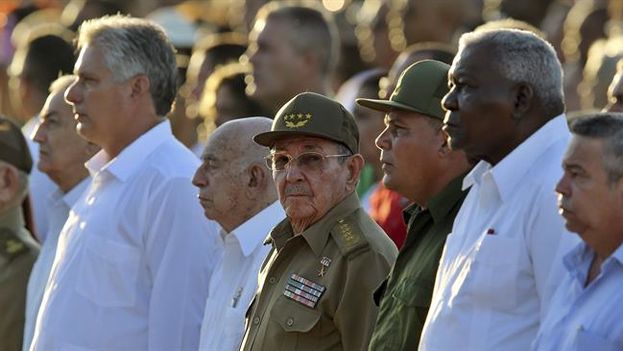
Raul Castro took a back seat to his dauphin, Vice President Diaz-Canel, who carried the weight of the event. (EFE / Alejandro Ernesto)

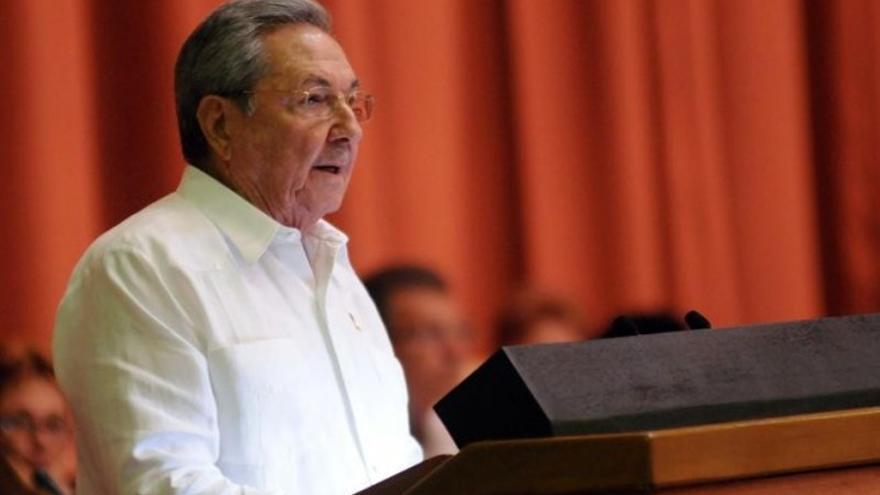
14ymedio biggerEFE / via 14ymedio, Havana, 21 December 2017 — The president of Cuba, Raúl Castro, confirmed on Thursday that he will leave office on April 21, after the Cuban Parliament extended his current mandate until that date, a mandate which was due to end on February 24.

“When the National Assembly is constituted I will have finished my second and last term at the head of the State and the government, and Cuba will have a new president,” said Castro, 86, in his speech before the plenary of the National Assembly of People’s Power, reproduced by state media. continue reading

On Thursday, the same plenary session approved the proposal of the Council of State to extend the president’s current term of office for two months and to reschedule the general elections because of the ravages caused in September by Hurricane Irma as it passed through Cuba, leaving ten dead in Cuba and causing damages exceeding 13 billion dollars.

For the same reason, the municipal elections that opened the electoral process that should be concluded in 2018 with the holding of general elections and the renewal of the People’s Power Assembly, which in turn will designate the president, had already been postponed for a month from October to November.

Although it has not been officially confirmed, it is expected that Raúl Castro’s successor will be the current first vice president, Miguel Díaz-Canel, age 57.

The president has defended the need for a generational change in the leadership of the island and on numerous occasions has insisted that he will leave the presidency of Cuba when his second term ends, in compliance with the recently imposed term limits of ten years (two terms) to remain in government positions in the country.

Fidel Castro, who died in November 2016 at the age of 90, ruled Cuba for almost five decades, until he transferred power to his younger brother in 2006 due to a serious illness.

The Cuban electoral law establishes that the president, along with the vice president and the remaining members of the Council of State are elected on the basis of a proposal drawn up by a Nominations Committee made up of deputies elected in the general elections, and the proposal is then put to the vote of the Parliament.

Raul Castro also said that “the solution to the circulation of dual currencies in the country cannot be delayed any longer” and anticipated that 2018 “will also be complicated for the nation’s external finances,” even though the country emerged from the recession this year to grow by 1.6%.

In his closing speech to Parliament’s second and last annual plenary session, Castro considered that although the monetary reunification will not solve all the problems of the economy, it is “the most decisive process” to advance in the reforms promoted during his mandate intended to update the island’s socialist model.

The crisis in Venezuela, which has reduced shipments of subsidized oil to Cuba, along with the cooling of relations with the United States after the arrival of Donald Trump, and the more than 13 billion dollars in losses due to the passage of Hurricane Irma, have sharpened the chronic economic problems of the country.

“Without solving this issue, it will be difficult to advance correctly,” said the president, whose speech was printed in full on state media.

Two currencies circulate in Cuba: the Cuban peso (CUP) and the Cuban convertible peso (CUC, pegged to the dollar and worth 24 CUP). The Cuban authorities have explained that the main objective of the unification is to restore the “value” of the Cuban peso (CUP) as a national currency and its functions as money. Most Cubans collect their salaries and pay for basic services with the CUP, also called the “national currency,” with the average monthly salary about 672 Cuban pesos (equivalent to about 28 dollars).

Although the process to reach the planned monetary unification on the island began in 2013, with the implementation of a schedule of measures, to date it remains unknown when it will occur.

“Nobody can calculate the high cost that the persistence of duality has meant for the state sector, which favors the unfair inverted pyramid, where the greater the responsibility, the lower the compensation received,” the president said.

He said he believes that the situation discourages some “able citizens” from “working legally,” while other highly qualified workers migrate to the non-state sector.

With regards to the growth of the Gross Domestic Product (GDP), which in 2017 was 1.6%, Castro said that this result “does not satisfy,” despite the fact that the country climbed out of the recession which had continued to the end of 2016 (-0.9 %).

“Next year the nation’s external finances will also be complicated,” Castro said, although he underscored the country’s intention to recover international economic credibility and meet commitments to repay its foreign debt, which was renegotiated in 2015 with the Paris Club.

He also asked for a consolidation of foreign investment in the Cuban economy, which this year exceeded the goal of two billion dollars for the first time, although he noted that this process is hindered by the economic embargo that the United States maintains against Cuba.

Regarding the development of self-employment, which is in a process of “improvement” that has led to the suspension of the most popular licenses (such as private restaurants and tourist rentals), he reiterated that the country “will not renounce the deployment and development of non-state forms of management in the economy.”

However, he insisted on the “need to ensure respect for the law, secure positive results and firmly confront illegalities and violations of the current policy,” all of which the government offered as reasons, last August, when it froze the concession of some types of license.

According to official figures, Cuba has 567,982 self-employed workers, 12% of the country’s workforce, 32% of whom are young.

Castro also described, Thursday, the setback in relations between Cuba and the United States as “serious,” and he attributed it to the “artificial fabrication of irrational pretexts.”

“In 2017 we have witnessed a serious and irrational setback in Cuba-US relations, for which our country is not responsible,” said the president during the speech that closed the last meeting of the National Assembly of People’s Power

For several months, the bilateral relationship has gone through moments of tension due to the supposed “acoustic attacks” suffered on the island by a score of US diplomats. Havana denied having any responsibility for these incidents and later questioned their veracity. Castro said Cuba is not responsible for the turnaround caused by Trump in relations and said that the United States has “artificially fabricated irrational pretexts.”

“I reiterate that Cuba did not have, nor does it have, responsibility for the alleged incidents that occurred with diplomats accredited in the country. Investigations carried out by Cuban and American experts confirm this,” he said.

Castro also reported today that last September’s scourge of the powerful Hurricane Irma left losses of $13.2 billion on the island, according to official media.

Castro offered the comprehensive quantification of the damages caused by Irma; previously only the losses in some sectors had been disclosed. The Cuban leader specified that the material and financial costs of the effects of the hurricane were calculated in Cuban pesos based on parity with the US dollar.

————————

The 14ymedio team is committed to serious journalism that reflects the reality of deep Cuba. Thank you for joining us on this long road. We invite you to continue supporting us, but this time by becoming a member of 14ymedio. Together we can continue to transform journalism in Cuba.