Camajuani in Suspense over Corruption / Juan Juan Almeida

1443142995_camajuanensesJuan Juan Almeida, 24 September 2015 — Cuba is trying to silence a national “explosion” of great intensity, which implicates officers of the Interior Ministry (MININT), the Ministry of the Armed Forces (MINFAR), the Cultural Goods Fund (a Cultural center promoting and selling art and handicrafts), the National Bank of Cuba, foreign businessmen and artisanal shoemakers in the Camajuaní municipality of Villa Clara.

According to sources inside the National Prosecutor’s office, one of those implicated was surprised overseas by the news, and in order to evade justice, prefers not to return.

Fraud, falsification, bribery, extortion, contraband, abuse of authority, illicit enrichment, tariff violation, tax evasion of the National Tax Administration and influence peddling are among the presumed crimes for more than 50 people in different training centers. continue reading

The estimated amount of bribery charges exceeds five million pesos (US$188,679) and is expected to continue being sniffed out; right now there’s an impasse in the legal process.

By decision at the highest level of Government, the affair acquired a “character of secrecy” in order to not tarnish His Holiness’s visit to the island, to not give a bad impression to possible investors, and, furthermore, because it involves several officials whose names don’t appear on the list of those implicated.

A BIT OF HISTORY

Camajuaní is a small municipality, founded in the 19th century, located in the northeast of Villa Clara, right at a crossroads and railroad lines. This easy public thoroughfare converted it into a settlement for merchants and traders.

Because of this, decades of a planned economy and “revolutionary” experiments (half revolutionary, half communist) didn’t manage to keep the entrepreneurial spirit from passing, like DNA, from generation to generation.

In Camajuaní, the footwear industry is the local engine of growth. So an important number of artisanal shoemakers are members of the Cultural Goods Fund, a State institution that has the peculiarity of permitting artisans to break the State’s monopoly on imports.

The artisans in the Fund can leave Cuba and buy raw material, machines and/or tools to use in production; they can import quantities of material from specified countries by making use of a special document called the “Importation Document;” and they can sell their products to people, businesses and/or ministries.

This may seem simple, but no: This sector of Cuban entrepreneurs also has to face the general corruption in a narrow legal framework and a widespread social prejudice. It’s very easy to offend when almost everything is prohibited.

So, faced with increasing demand, these artisans, in order to expand production, and because State procedures are so cumbersome, falsified the Importation Document.

Others, more astute, began to alter the import permit and their productive capacity by bribing Customs bosses and agents, MININT officials and important executives of the Cultural Goods Fund, who permitted them, in exchange for green bills, to change the classification “artisanal machinery” to “industrial equipment.”

A secure market. The boots bought by the Armed Forces and the Youth Labor Army normally are made by COMBELL, a depressed company that tries to guaranty a supply to the military.

But when this isn’t achieved, a practice that appears premeditated, the Armed Forces impresarios open up a bidding in which the artisans participate.

The Cuban authorities presume that these operators, now in prison, won the bidding after buttering up those in uniform with decision-making power, along with National Bank officers, who, after receiving a commission, gave preference to the Fund.

What’s bad is that the private workshops that gave a living to a good number of people, including former workers from the health industry, who before earned a laughable salary and, today, as private individuals, can earn 100, 150 and even 200 pesos daily, will have to close for lack of raw material; it’s only a question of time.

The Camajuaní municipality has a population of under 60,000 inhabitants. It’s worrisome to know that an important part of them will be left unemployed; and, logically, this will cause major problems.

Translated by Regina Anavy
El Sexto is Free! / Somos+

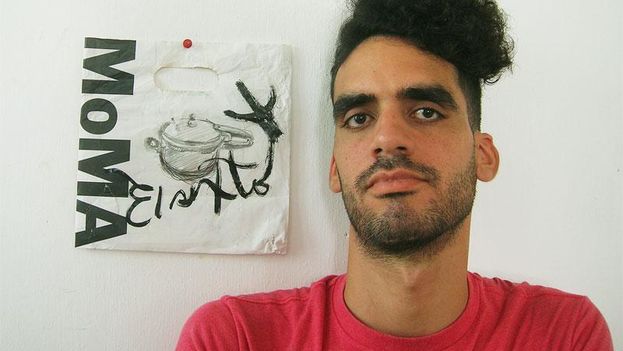
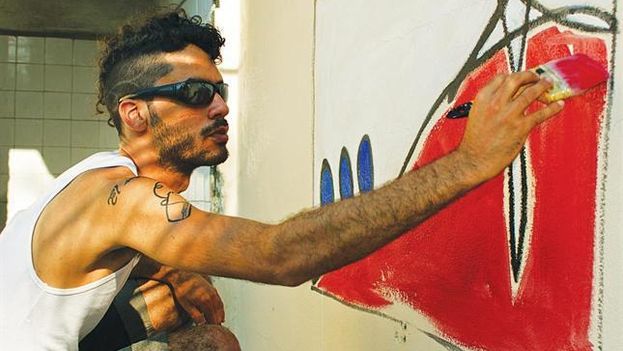
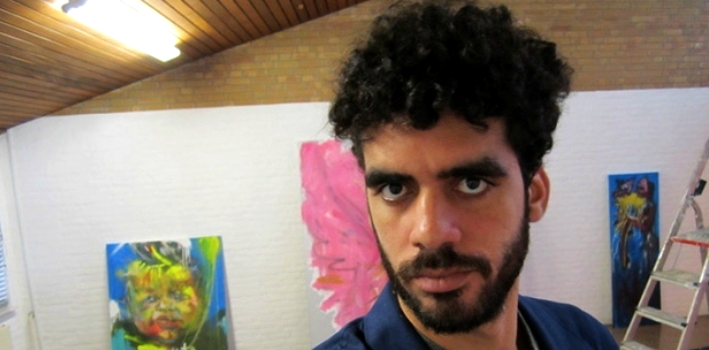
José Manuel Presol, 21 October 2015 — Yesterday we were thrilled to hear the news. Several media outlets have been in touch with the Cuban citizen, Danilo Maldonado Machado, and he himself confirmed it: He’s free and there are no charges!

Right now Danilo isn’t just any Cuban citizen. He’s known artistically as “El Sexto” (The Sixth), and he just spent 10 months as a prisoner. Ten months for having tried, only tried, to stage a public performance of his art, which someone considered offensive, and for which they detained and imprisoned him without charges. Ten months in a punishment cell, false promises of release and confronting injustice with the only weapon he had: a hunger strike. continue reading

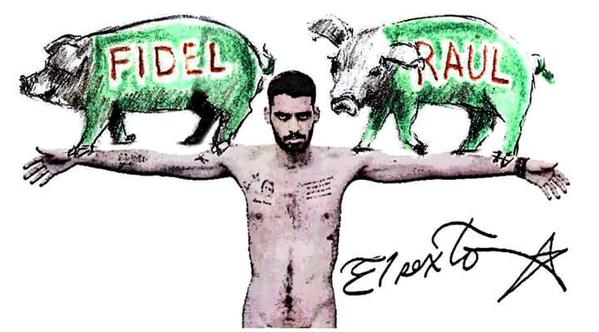
Danilo, we repeat, isn’t just any Cuba citizen. He wasn’t in prison for releasing two pigs with the names Fidel and Raúl on their backs. He was in prison for defending his right of free expression. For defending my, your, our right of free expression. Everyone’s right of free expression.

But Danilo wasn’t alone. Hundreds, thousands of Cubans raised the protest inside and outside Cuba. They demanded freedom with their voices, their letters, the Internet, new technologies, with every means within reach. They got prestigious organizations like Amnesty International to join the petition for release and to name him as a prisoner of conscience.

Finally he’s free. We don’t deceive ourselves: Tomorrow he could still be detained for any reason. Also for any reason, he could be forced to leave Cuba. The tyranny continues, but there are four things we should keep in mind:

He obtained his freedom with words, formal protests, signatures by computer,  the cell phone, and he obtained it peacefully.

He obtained it through a common objective for many, very many, Cubans and, it is known, without the participation of any foreign government.

He obtained it through the strength, even though dispersed but every time more organized, of those thousands of Cubans.

For the first time we, with our struggle, have made the present Cuban Government surrender on something basic. Up to now we have obtained other surrenders: when the Mariel Boatlift crisis happened, during the Maleconazo, etc., but there always have been surrenders of the type, “Let the worms who want to leave go!” said Fidel. Now we got them to surrender, setting someone free inside Cuba, one of our brothers. They, the Marxists, know that this wasn’t a quantitative surrender; it was qualitative!

Can this be a turning point? Let’s hope so! Can this be a sign of weakness? Let’s hope so!

This won’t be the last battle, but it’s one we won. There will be many more. We’ll win some and lose some, but this shows us the path to follow: clear goals, demands through peaceful means, confrontation through words and without violence.

Let’s prepare ourselves since the battles are going to come, are coming, in days, weeks, months and decisive years. Change is nearer every time, but we must keep the words present that our companion, Joanna Columbié, reminded us of a short time ago in this same atmosphere, referring to our Proclamation of Independence on that tenth of October:

“Perhaps the blood we have to offer in this struggle isn’t physical, like that of others, but we also are ready to follow their example and obtain a triumph that, as Martí said, costs the same as all triumphs: “…blood, from the veins or from the soul.”

Translated by Regina Anavy

‘El Sexto’ Released After 10 Months In Detention / 14ymedio

Danilo Maldonado, ‘El Sexto.’ (Artist’s File)

14ymedio bigger14ymedio, Havana, 10 October 2015 — Danilo Maldonado, El Sexto, was released this Tuesday after 10 months detention in Valle Grande Prison in Havana. Around 10 in the morning an official entered the cellblock where the artist was detained and told him to collect all his personal belongings. “They handcuffed me and outside I waited for “the negotiator,” the graffiti artist related, and that’s when they said they would release me.” Subsequently he was taken in a car to the door of his home in the Arroya Arenas.

According to a statement from the prison authorities, the artist will not be prosecuted. “They told me my immediate release is ‘without conditions’,” Maldonado told 14ymedio. In a phone conversation with this newspaper the graffiti artist, detained since last December for organizing a performance with two pigs painted with the names of Raul and Fidel, joked about a possible legal claim on his part for the police to return the animals seized at the time of his arrest. continue reading

The artist sent a message of thanks to all those “who helped” in his release, especially to the activists who continued to demand his release, the media that publicized his case and to international human rights organizations such as Amnesty International.

When asked about his immediate plans, he replied: “I have a great deal of work to do, many ideas to put into practice.”

Last week the artist had resumed his hunger strike, according to his mother, Maria Victoria Machado, insisting that he would maintain his fast until his release.

Last week El Sexto declared he would resume the hunger strike if he was not released within the first 15 days of October. He broke a 24-day fast earlier this month on being assured by a lieutenant colonel, who identified himself as a “mediator,” assured him that he would be released in “fewer than 15 days.”

This last Friday Amnesty International issued a statement denouncing the fact that the authorities in Cuba failed “miserably” in not fulfilling the promise of freedom for Danilo Maldonado. The London-based organization believes that the artist is a prisoner of conscience and maintains that the attitude of Havana is “a painful illustration of the indifference of the Cuban government for the freedom of expression.”

The Faces Of The Cuban Dream / 14ymedio, Yoani Sanchez

The musical On Your feet! based on the lives of Gloria and Emilio Estefan. (Matthew Murphy)

14ymedio bigger14ymedio, Generation Y, Yoani Sanchez, Havana, 20 October 2015 — “What is the Cuban dream?” he asked, as one inquires about the hour, the quality of the coffee, or the afternoon’s weather forecast. Around the table we all remained silent in the face of this question launched by the visitor. More than answering him about the country desired, the provocation made me think about the need for our dreams to reflect that faces of those who hold them, the people who inhabit them.

I remembered this conversation last Saturday, while enjoying the musical On your feet! in a crowded theater on Broadway in New York. Based on the lives of Gloria and Emilio Estefan, the work transcends the story of a Cuban couple making their way in the competitive world of entertainment in the United States, to become a story of nostalgia, tenacity and success. continue reading

Before the spectator’s eyes, a story develops beginning with the pain of exile and memories of a life left behind on the island. A reference that is maintained throughout this play, currently being staged at the Marquis Theater in the Big Apple. Directed by Jerry Mitchel, the musical successfully details the transformation of sadness into energy and of the melancholy of emigration into entrepreneurship.

On your feet! is primarily a celebration of Cuban identity that manages to get the audience out of their seats and dancing, with tears still running down their faces. Through the excellent musical performances of Ana Villafañe in the role of Gloria Estafan, and the rest of the cast, the play captivates without becoming cloying, and connects the audience with the culture of our country beyond the stereotypes.

Ana Villafañe and Josh Segarra in the roles of Gloria and Emilio Estefan (On Your Feet!)

The musical deserves a prolonged applause not only for its artistic virtues and superb staging, but above all, because it exalts values our society urgently needs to reclaim. It is about the lives of people who inspire in way very different from the models imposed by the Cuban government’s official propaganda. Gloria and Emilio do not provoke uncritical appreciation, fear, docile gratitude, but rather the desire to imitate them… to overcome.

Someday, when Cuban children open the schoolbooks that teach them to read, they will no longer see individuals dressed in military uniform with rifles on their shoulders. Instead of that excessive worship of men at arms, we will find real images of success, of social, scientific and cultural achievements. In those pages the real models will appear, the faces of the Cuban dream.

PIGS! / Mario Lleonart

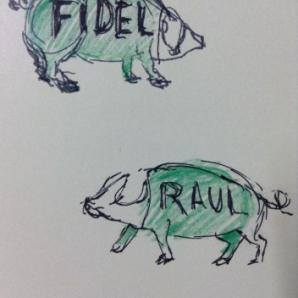
Drawing by El Sexto (Danilo Maldonado) of the piglets he intended to release in a street performance in Havana.

Mario Lleonart, 18 October 2015 — For the second time they have lied about a release date for prisoner-of-conscience (so designated by Amnesty International) Danilo Maldonado, better known by his artistic name “El Sexto” (The Sixth). First they announced his release for August 24. Then for September 15. But now we know they lied disgracefully on both occasions.

The regime’s own behavior regarding this prisoner of conscience shows the relevance of the performance that he intended to put on when they arrested him last December: “Animal Farm.” They behaved like pigs, just as he thought. His crime was to have the courage to label them with exactly that description: PIGS! There is something Biblical about this! continue reading

When Christ cast out the legion of demons in Gadara, they took over a herd of pigs that rushed into the sea, and there could not be a better judgment against the Roman Empire. Jesus himself called Herod “FOX!” The theological symbolism in the sacred texts whenever pigs are mentioned, with their classification as unclean animals, is well known.

The young graffiti artist El Sexto, detached, and sometimes even rejected from self-righteous church circles, has dared to do what all Christians should have done a long time ago—shout prophetically! But he has given new meaning to Christ’s words: if you are silent, the stones will cry out.

God bless all those who in an upcoming round of the #TodosMarchamos campaign will raise their voices for all political prisoners or prisoners of conscience who like El Sexto are victims of all kinds of harassment in Cuban prisons. God bless even more those like Danilo who dare to shout “pigs” at the tyrants. God have mercy on those who are silent and become accomplices by their silence.

The Loneliness of the Long-Distance Runner / Regina Coyula

Regina Coyula, 28 September 2015 — Since the words respect and reconciliation are so popular these days — both were mentioned in the announcement of the restoration of diplomatic relations with the United States as well as in the recently concluded papal visit and in the agreements to end of the war in Colombia — I would like to share with readers the story of my neighbor, Oscar Casanellas, a researcher at the Institute of Oncology and Radiobiology (INOR), commonly known as the Oncology Hospital.

After graduating with a degree in biology in 2004, Oscar joined the staff of INOR as a researcher in molecular biology. After winning a scholarship, he studied at the Swiss Institute of Bioinformatics from 2009 to 2011, becoming a specialist in the use of information technology in the field of immunological research related to cancer. continue reading

From 2011 and to the present, Casanellas has also taught courses and lectured at the center and at the Department of Biology at the University of Havana. He also served as executive secretary of the Forum of Science and Technology between 2011 and 2013.

Given all this information, it should be clear that there is no question as to this young man’s level of professional competence. His workplace troubles began in December 2013 after a friend, Ciro Diaz Penedo, came home during the Christmas break from his doctoral studies in Brazil and Oscar threw a party for him. Besides working with numbers, Ciro also belonged to a punk band known as Porno for Ricardo. The “official who overseas” the oncology institute brought this and other equally damaging information to its assistant director, Dr. Lorenzo Anasagasti Angulo.

Dr. Anasagasti carried out the order to isolate and constrain the wayward Oscar. Casanella’s arguments that he had never discussed his political views while at work or committed the sin of using the public health ministry’s email server (Infomed) for personal business were to no avail.

In his zeal Casanella’s boss limited his access to laboratories, excluded him from any projects involving Havana’s Polo Cientifico research center, and banned him from teaching at INOR or acting as a thesis advisor. A bio-information course that the director general of INOR had already approved was cancelled by Anasagasti under the pretext that it had to offered by the Department of Biology. Using veiled or explicit threats, he then “dissuaded” INOR workers from participating in the course.

Dr. Anasagasti’s threats led to strains in the workplace. He tried to prohibit other workers from having any interactions with Casanellas. The pressure was strongest on those closest to him, who are were torn between preserving the friendship or keeping their jobs. Some of them could not handle it and requested transfers out of the institute.

Oscar Casanellas has gone to his union and to the hospital management. He has written letters to the Ministry of Public Health, to the head of the department of the Central Committee which handles such mattes and even to the Cuban president, all without receiving a reply from any of them. When he tried to take legal action by filing a police complaint, the response from the national police force was that, since this was a personal matter, he should take it up with the police chief in his area. Casanellas knows all too well that it is not personal but work-related. Until the visit by the State Security agent, his interactions with Anasagasti were cordial.

This period of professional limbo has gone on for over eighteen months. They do not want to fire him because there is no evidence of poor workplace performance, so their intention is to make conditions so suffocating that he resigns.

Casanellas himself provides the key: “They don’t know me very well. For years I have been preparing myself and have run a lot of long distance races. If there is anything for which I am well-trained, it is endurance.”

Holguin: Cholera and Dengue Fever Patients Kept Out of Sight of Pope / Juan Juan Almeida

Juan Juan Almeida, 31 August 2015 — For the Cuban Government, the level of job insecurity, the index of diseases (above all those provoked by the deterioration in the control of hygiene, epidemiology and health) is politically sensitive information that must be hidden or, at the very least, disguised.

For that reason, and because of the epidemiological situation that exists today on the island, all the institutions and organisms of the central administration of the State, the Party and the Government worked tirelessly to ensure that the visit of the Supreme Pontiff would be a success, and this included camouflaging that which couldn’t be exposed. continue reading

His Holiness Pope Francis helped to forge the historic rapprochement between the United States and Cuba. His pastoral visit to Havana, and even more his later travels around the island, awakened special interest in all sectors of the country.

It was, undoubtedly, a delicate moment that was calculated with the precision of a Swiss watch, so that no one, beginning with the head of the sacred Catholic Church, nor any members of the retinue accompanying him, including the foreign press and parishioners, would receive more information than what was previously determined.

The priority was to hide what was ugly and shameful for the Cuban Government’s propaganda. The alarm went off when the Government-Church Commission designed the itinerary for the papal visit.

Immediately after they knew of His Holiness’ plans, on Monday, September 21, to visit the province of Holguín, there was an urgent “flash,” and as required by the Constitution of the Republic of Cuba for disasters, the Council of Defense had a meeting, and in coordination with all the competent authorities in every corner of Holguín, ordered that an exhaustive analysis be done of the health situation in the province.

And later, armed with the evidence of colossal chaos, even more with the need to hide their own responsibility, they elaborated a plan of action with specific guidelines, not to solve the problem, but to cover up that which must not be shown.

Poverty can’t be seen when it’s generalized, but the overwhelming number of those sick with cholera and dengue in Holguín’s Vladimir Ilich Lenin General Hospital, jumped out like dynamite in the middle of hostile terrain.

Controlling that immense truth necessitated something more than whitewashing the facades of the streets through which, presumably, the Holy Father’s caravan would pass. So, not to take any chances, it was also ordered that the patients be hidden by moving them to less accessible and, of course, less visible centers.

It’s been approximately a month since the dengue patients have been returned, without the required antiseptic conditions, to the poorly adapted rooms in the province’s nursing school, and to the classrooms of the ancient school for social workers.

For their part, those infected with cholera found a “new hospital bed” in one of the rooms in the old renal building, in equally bad condition, located next to the surgical clinic.

It’s a Hippocratic cataclysm and an extravagance of governmental hypocrisy; nonetheless, it’s good to know that, miraculously, in none of the cases has the relocation of patients been implicated in the elimination or loss of their records; and, according to information coming from overseas, the provincial health department’s data base from last Wednesday reports a discreet decrease in the population hospitalized for cholera and dengue in Holguín.

Luck or disinformation? I don’t know, because I don’t believe the Cuban Government even when it’s telling the truth.

Translated by Regina Anavy

Something Has to be Done / Fernando Damaso

Fernando Damaso, 16 October 2015 — Some governments declare that they are fighting and defeating the fundamentalists of the so-called Islamic State, but the facts seem to negate their words: The fundamentalists are expanding their territory, expelling the inhabitants, committing horrendous crimes, destroying architectural, religious and artistic jewels, which form part of humanity’s heritage, raping and enslaving women, girls and boys, and committing many more atrocities in an interminable orgy of blood and terror, in the supposed name of religion. continue reading

Now Russia, together with Syria, Iran and other Arab countries, is carrying out a crusade to exterminate them and re-establish peace and coexistence in the affected regions. It’s not easy to fight against an irregular army, especially if it’s made up of extremist fanatics coming from many parts of the world. Russia, when it was part of the now-extinct Soviet Union, in Afghanistan, and the United States in Iraq and also in Afghanistan, have bitter memories of their experiences.

No one doubts that we need to liquidate the Islamic State because of the present danger it represents, and for what it would mean for the world if it triumphed, established itself, and consolidated: No citizen in any country would be secure, nor live peacefully, before their rampant acts of terrorism.

What’s important is to do it well, with the effective participation of the largest number of states possible. Every government must put aside its particular interests of trying to obtain political and economic advantages or conquering zones of influence, because the Islamic State is the enemy of all of them.

Hopefully the definitive defeat will be accomplished for the good of humanity, with the least possible number of casualties.

Translated by Regina Anavy

Laughing at the Castros, a Mortal Sin / Cubanet, Victor Manuel Dominguez

Eleuterio
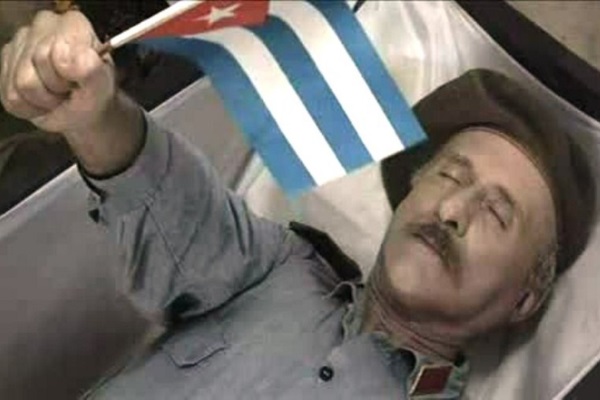
Eleuterio, character in the play “Crematorium” (archive photo)

For the Cuban government, when satire is against the “enemy,” it is useful and refreshing. Otherwise it is subversive

cubanet square logoCubanet.org, Victor Manuel Dominguez, Havana, 15 October 2015 – In a country where joking, sarcasm, satire, mockery, in sum, any kind of humor, are more daily than our stunted, acidic, furry and greenish daily bread, the authorities become tense and wage war on any joke large or small that unleashes laughter.

Apparently, political and economic control, leftovers for citizens and other deeds by a Revolution in power, prevent them from chuckling, laughing or even cracking a smile that allows them to resemble a human being and not the miserable lout who fears a raspberry more than the Devil on the cross. continue reading

According to the article, A Very Serious Joke, published in the State newspaper Granma by Sergio Alejandro Gomez, the Office of Cuban Broadcasting (OCB) from the United States, is prepared to finance an act of subversion in Cuba, in the form of a satirical program.

Mocked Mockers

For the information and serenity of the “de-humarized” spokesman, if “humor is the gentler of despair,” as Oscar Wilde said, we Cubans are the friendly gentlemen of the joke, the courteous knights of mockery, and the attentive guests of parody, in a country where one laughs in order not to cry.

And if not even Jorge Manach himself, with his Investigation of Mockery, could prevent us Cubans from laughing at ourselves, still less will a bitter dictator be able to do it, a lap dog with an anemic smile or anyone who publicly censors humor because of fear and locks himself away in order to laugh.

Besides, there is no one like the Cuban authorities for inciting mockery as long they are not mocked. From the beginning of the Revolution, the magazine Mella and the Juventud Rebelde supplement, El Sable, began to satirize the American people, their government and their way of life.

Marcos Behmaras, in his Salacious Stories from Reader’s Indigestion and Other Tales mocked them with “a fresh and suggestive humor, a tone in keeping with our character, but always provoking reflection by means of accurate, witty satire through a sense of humor that always attacks deeply, not remaining on the surface,” according to “joke-ologist” Aleida Lilraldi Rodriguez.

Which is to say that when satire is directed at the other, the enemy, it is useful and refreshing. Otherwise, it is subversive. If Marcos Behmaras had trained his satirical guns at olive-green prudishness and excessive modesty, the salacious stories would have fallen on him like a flood of party membership cards.

His brilliant satirical articles Is It Worth It Having Money?, Those Happy Ones Dead from Hunger, by “Miss Mona P. Chugga” Eisenhower’s Trip: Failure or Triumph? by “Mary Wanna,” or Are You a Potential Psychopath? by “Doctor John Toasted” would have gotten him condemned to death for joking.

A Hanging Offense

To illustrate even further what a joke, satire or any other kind of humor costs when it is aimed at a totalitarian regime, let’s remember, incidentally, that The Joke (1961), a novel by Czech writer Milan Kindera, was described as “the Bible of the counter-revolution.” Another of his works, The Book of Laughter and Forgetfulness, got him stripped of his nationality. Tolerant, no?

But Cuban rulers do not lag far behind. Like imitators of any system or religion, they consider laughter a relaxation of good customs, a lack of seriousness and from other priestly poses that bring on death by boredom, they contribute their grain of bitterness against humor.

In the 1960’s, the comedy duo Los Tadeos was expelled from Cuban television and exiled for the simple crime of asking on a live program: “What is the crowning achievement for a president?” and answering: “Starving people to death and giving them a free burial.”

Around the same time, but in the Marti Theater, a comedian as great as Leopoldo Fernandez (Three Skates), in a scene where he had to hang several paintings of famous figures on the wall, on seeing that one was the image of Fidel, he pointed at it with his finger and said: “Look, I hung him.” It was the last straw.

That joke sufficed to have him shut out of the theater, and the humorist had to leave for exile or starve at home. And although other cases right up to today attest to the rulers’ fear of mockery or satire, none remained in the popular imagination like those.

All except for a popular and prescient joke that was attributed to Cataneo, a singer with Trio Taicuba, who on seeing the Caravan of Liberty with the bearded ones pass along Havana’s Malecon on that distant January 8th of 1959, he was said to say: “Only those who know how to swim will be saved.” And so it was.

Translated by Mary Lou Keel

What Does Raul Castro Have Planned for His Youngest Child? / Juan Juan Almeida

Juan Juan Almeida, 12 October 2015 — Alejandro Castro’s role in the secret talks between Cuba and the United States was akin to that of Arnaldo Tamayo on the Soyuz 38 mission.

No crisis comes with prior warning. Just as the term “opposition leader” is used to describe people who are neither leaders nor have ever been in opposition, the government mythologizes events to find a place for slackers in the national consciousness. Following this useful tradition of political dishonesty, it seems the time has come to create a reformist profile for the most obtuse of the island’s traditionalists: Alejandro Castro Espin. continue reading

It was not enough to foist an engineering degree on him or to award him a bogus medal intended for those injured in the Angola war. It now seems that the youngest offspring of Raul Castro and Vilma Espin was one of the chief negotiators in the secret talks in Canada that brought about the reestablishment of relations between Cuban and the United States.

Please, let’s get real. Alejandro’s role in these conversations was akin to that of Arnaldo Tamayo on the Soyuz 38 mission.*

It is easy to understand. Power was transferred to Raul in August 2006. In February 2008 he was elected president of the Council of State and Council of Ministers of the Republic of Cuba. And in less time than it takes a cock to crow, Raul Castro, with relative ease, cut off Fidel’s access to power and ability to make executive decisions. It is not unreasonable to think that, if things continue as they are, history will repeat itself and in a couple of years — after the general has resigned the presidency (at eighty-seven years of age) — he will also be stripped of power along with his entire herd.

With this in mind as well as with what else was happening in the world, he made his intentions perfectly clear in his very first speech: to enter into dialogue with the Americans under what at the time he called “a foundation of respect.”

The price of oil was falling on the world market. Russia was using military power in an effort to reestablish a bipolar world. President Hugo Chavez had been operated on in Havana for what was said to be a “pelvic abscess” but which doctors knew to be terminal cancer. While Venezuela was going down the tubes, the nations of the ALBA trade bloc were becoming resentful as an economically (if not militarily) powerful China was aggressively expanding its presence in the South Pacific, Latin America and the Caribbean. Almost on the verge of a crisis worse than the “Special Period,” Raul — the man who inherited Fidel’s political base — decided to throw in the towel under the guise of dignity.

I am not questioning the positive aspects of any of his reforms, but they are too few and are being implemented at a snail’s pace. Their purpose is to stall for time in order to control the stampede.

General Castro is a hostage to himself and has an approval rating lower than a mosquito. The smartest thing he ever did was to align himself with well-organized people, intelligent assistants and outstanding advisers. But his immense cowardice evolved into paranoia and forced him to retreat into a world controlled by the most inept members of his dysfunctional family, the only people he trusts. Their personal ambitions incited infighting and intrigue that led to those by whom he was best served, his inner circle, being tossed into the trash heap.

Knowing he will leave government in 2018 and that he cannot solve the nation’s problems, the only thing he thinks about now is retiring. Of course, this is purely speculation based on my personal experience. When I was ten-years-old, Raul was forty-four, and I have been listening to him say during national celebrations since then, “This is the year I will retire.”

I dare say that he will leave Cuba and is just waiting for the moment. The general is fearful, but he is also an old man in countdown mode. That is why, with an eye towards the future, he is trying to turn his son Alejandro into a person of international standing. The point is not to permanently secure him in power; he knows that that is impossible. The point is to provide him with the immunity that worldwide visibility provides.

*Translator’s note: A Cuban cosmonaut who was part of a Soviet space mission to the Salyut space station in 1980.

El Sexto Resumed Hunger Strike Two Days Ago, According To His Mother / 14ymedio

Danilo Maldonado, 'E; Sexto.' (Claudio Fuentes)
Danilo Maldonado, ‘E; Sexto.’ (Claudio Fuentes)

14ymedio bigger14ymedio, 17 October 2015 — The artist Danilo Maldonado, “El Sexto,” resumed his hunger strike two days ago, his mother, Maria Victoria Machado, said on Saturday. By telephone from Valle Grande prison, the graffiti artist said he would maintain the strike until he is released.

Last week El Sexto declared he would resume the hunger strike if he wasn’t freed within the first 15 days of October. He fasted for 24 days, stopping earlier this month when a lieutenant colonel, who identified himself as a “mediator,” assured him that he would be released in “less than 15 days”.

In a statement on Friday, Amnesty International denounced that the Cuban authorities of failed “miserably” by not fulfilling the promise of freedom for Danilo Maldonado. The London-based organization believes that the artist is a prisoner of conscience and maintains that the attitude of Havana is “a painful illustration of the indifference of the Cuban government for freedom of expression.”

El Sexto was arrested last December for organizing a performance with two pigs, painted with the names of Raul and Fidel.

Being Successful in Cuba / Ivan Garcia

San-Cristóbal-Paladar-cuba-_ab-620x330Ivan Garcia, 13 October 2015 — When he graduated in telecommunications engineering, Enrique Nuñez — owner of La Guarida, Havana’s most famous privately owned restaurant — could never have imagined the money and success he would earn by working in a kitchen.

His dining establishment in the poor and largely Afro-Cuban neighborhood known as San Lorenzo in the heart of Havana is surrounded by potholed streets and guys who are always selling something.

In the entryway of La Guarida a group of men plays a boisterous game of dominoes while white sheets hang from the building’s balconies. Queen Sofia of Spain and US senators have dined here. continue reading

A meal will cost you at least a hundred dollars and you have to make reservations six months in advance. Nuñez, whose neighbors have out of scorn or envy pegged him as an informer for the special services, knows how to run a family business challenged by government obstacles, draconian taxes and absurd regulations.

The government of Raul Castro has relaxed some restrictions but a private businessman in Cuba must hand over more money to the state than his counterparts in northern European countries. And without a wholesale supply chain, he has to be very creative when it comes to buying foodstuffs and seasonings.

By dint of talent and fourteen-hour workdays, Nuñez has been able to make enough money to live comfortably. But Cuban laws and monitoring by a jealous police force mean private businesspeople are treated like criminal suspects.

Being rich in Cuba as not the same as being rich elsewhere in the world. Wealthy Cubans cannot buy expensive jewelry or luxurious yachts. They have to settle for living in an air-conditioned house and driving a 2013 Audi. For a variety of reasons, the military dictatorship periodically carries out sting operations against people who have acquired hundreds of thousands of dollars by legal means.

Although the prolonged economic crisis has led the military junta headed by General Raul Castro to give individuals more freedom to operate, the third paragraph of the Economic Guidelines — a kind of holy bible adopted by the last Communist Party Congress — does not recognize the right of self-employed individuals to accumulate capital.

Working under a microscope, owners of rental properties, restaurants and bars must strike a balance between legality and illegality. Yet they still manage to amass a considerable sum of money for an impoverished society like Cuba’s.

La Fontana is a gourmet restaurant popular with well-to-do Americans visiting Havana. The runaway success of the business has allowed its owner to think about opening a second location in Miami.

Bitterness and a toxic mindset have led some Cubans to see those who succeed in business as collaborators with the regime.

There are relatives of powerful government ministers who are illegally making money hand over fist. At 29th Street and B in Vedado, one of the sons of Abelardo Colome Ibarra, interior minister and a close associate of Raul Castro, has opened a high-end restaurant and registered as a corporation in Madrid.

None of them have to trek through Havana’s markets in search of food supplies, turn to the black market for beef and shrimp or evade corrupt government inspectors.

But while some entrepreneurs manage to make money in the ideological madhouse that is Castro’s Cuba, others opt for more clandestine operations.

Rodolfo, a backer of the popular numbers racket known as la bolita, is extremely skeptical. In the 1980s he pocketed a lot of money by selling handicrafts. “I was imprisoned for seven years even though the business was legitimate,” he says. “After I got out of the ’tank,’ I swore I would never again try to make money legally. Those guys are a bunch of crooks. It’s a game of cat and mouse with them. As soon as they can, they swoop down on you, take your money and property and throw you behind bars.”

For twenty years Rodolfo has been bankrolling a successful betting operation. Between bookmakers and number runners he employs a dozen people. When asked how much money he has, he smiles.

Bolita is a complicated business,” he says. You have to stash hundreds of thousands of pesos to cover any losses. The first time I took in two-hundred thousand pesos, I went on a bender that lasted a week. Now I am more responsible. This operation is illegal. I run a lot of risk. The police could launch a sting operation at any time and I’d be finished.”

Other successful businessmen like Bernardo must navigate through rough waters. Outwardly, he does not seem to be violating any laws. He owns five old cars and two jeeps with American bodies from the 1950s and modern diesel engines.

“I rent them out for two twelve-hour shifts at six-hundred pesos for each car and a thousand for the two jeeps. I report ten thousand pesos (three-hundred eighty dollars) a day. After gas and maintenance, I can earn nine thousand dollars a month. But I’m in a legal limbo because the government considers my business illegal,” he says.

According to Bernardo, there are rumors that new restrictions will require every taxi driver to carry proof of vehicle ownership. “Making money in Cuba is a high-risk operation. The best option is to move to the US. In Miami you can go to work and no one is going to hassle you if you have a profitable business.”

But on the island it is just one step from success to jail.

Ivan Garcia

Photo: San Cristobal, according to TripAdvisor one of the best restaurants in the Caribbean. Located at 469 San Rafael between Lealtad and Campanario streets in central Havana, it offers typical Cuban fare and is known for its excellent service and reasonable prices. Its decor is a mixture of vintage furniture, decorative objects and signage.

From Cuba en Miami

Reclaiming The Parental Authority They Snatched From Us / 14ymedio, Jorge Guillen

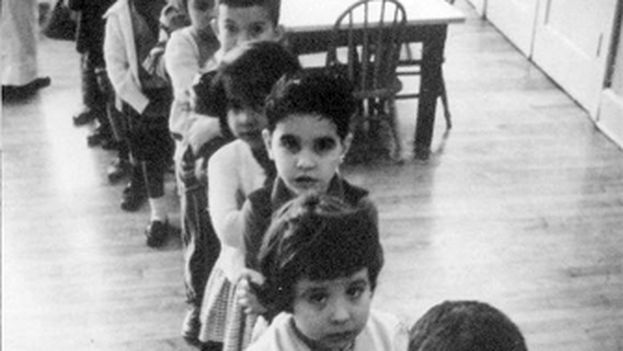
More than 14,000 children were sent out of Cuba between 1960 and 1962 in Operation Peter Pan. (Wikimedia Commons)

14ymedio bigger14ymedio, Jorge Guillén, Candelaria, Artemisa, 15 October 2015 — In the early years of the Cuban Revolution we experienced one of the saddest chapters of our history, called “Operation Peter Pan.” Thousands of parents sent their children abroad to avoid the government taking their parental authority from them and sending their children to the Soviet Union, according to the propaganda of the time. Official figures put the number of children who left Cuba via this program at 14,048, and many of them were never reunited with their families.

Although those demons against parental authority did not materialize the way in which it was thought they might, the consequence of government policies was that we Cuban parents had less and less impact on the education of our children. We could not choose what kind of education small children received, nor where they studied. All the private and religious schools were closed, leaving it to the government to impart knowledge and values and to determine the way in which this was done. continue reading

Childcare centers arose where children were taken at a very early age, many of them as young as 45 days old. In addition, schools in the countryside appeared – high schools, technical schools and junior high schools — where children boarded, spending most of their time separated from their homes. These schools only allowed students to return home on the weekends, or every 15 days, so that children and teens slept only a few nights a month under the same roof as their parents.

Then began the far-reaching process of depersonalization and uprooting. These boarding schools had a semi-military regimen, but bullying and vulgarity raged throughout. Any glimmer of culture and delicacy displayed by a student was interpreted as weakness or as evidence of being a petit bourgeoisie, which was the equivalent of being a counterrevolutionary.

Those who professed any religion were treated similarly. Thousands of people were forced to renounce their faith or their way of thinking to be allowed to study and to avoid being branded as traitors.

Brainwashing, applied from an early age to the students at these schools, also deprived parents of the chance to have more control over their children. Fidel Castro’s slogan in which he asserted “we no longer belong to ourselves, we belong entirely to the motherland” became increasingly real. Under this maxim, the government gave itself the right to break apart families in the name of the Revolution.

Meanwhile, parents were overwhelmed by “voluntary work,” military mobilizations and other ideological and work responsibilities, which also reduced the time available to spend at home with their families. Life was lived away from home, among “comrades” and colleagues, so that over time ties within the home were weakened.

These circumstances did great damage to families and, as a result, to society. In many cases parents confronted their own children and demanded that they give up their personal plans to take on the challenges of the Revolution. In this process of “massification,” the individual was degraded to the point of being turned into a puppet.

Today we are reaping the fruits of these policies. The official discourse tries to hold families responsible for the ethical and moral disaster overwhelming Cuban society when the main culprit has been the government itself, in its zeal for control and maintaining power, regardless of the effects on the dismemberment and corruption of families. The loss of values is also blamed on the hardships of the Special Period, but the reality is that this disaster began to take shape from the beginning of the Revolution.

We parents need to recover the right and the freedom to decide how and what kind of education we want for our children. Giving prominence to the family in the raising of the youngest children could begin to repair the evil that has been done. Only then, would we be reclaiming our parental authority.