



Our First Day / 14ymedio
14ymedio is blocked in Cuba within a few minutes of its birth
14ymedio, Havana | May 22, 2014
At 8:20 in the morning on Wednesday, 21 May, this digital daily was born. Like a miracle, everything worked as we had hoped. A greeting signed by several personalities from the media and literature welcomed us. Two Nobel Prize winners, Lech Walesa and Mario Vargas Llosa, headed the list of signatories. The news of the appearance of a new medium immediately popped up in the publications of several countries and generated large displays of solidarity.
A few minutes later, when someone tried to enter from the Cuban networks, instead of our homepage another web page appeared. The attack consisted of redirecting our URL to another site where one could only read texts dismissing and insulting Yoani Sánchez. Sadly, the information on our site was supplanted on the Island by the tactics of personal rejection used so often in the official discourse. continue reading
It doesn’t take much imagination to discover the identity of the aggressors but, as we have no proof, we can only conjecture that it is someone with the technological resources, access permissions and prior information, rather than animosity.
Throughout the day the telephone calls and text messages from friends congratulating the newborn never ceased. When it had already been twelve hours since someone somewhere in the world first clicked on to read us, a group of collaborators and the entire 14ymedio team celebrated the occasion watching on the screen as the pages opened through an anonymous proxy. In this way, with the PDF version and the email bulletin, we will be read in our own country. Censorship is not the most difficult obstacle we have to overcome.
Blocking 14ymedio could become a failed strategy if the objective is to silence us. Nothing is more attractive than the prohibited.
Letter to Obama Sparks Controversy / 14ymedio
14ymedio, Havana | May 23, 2014
A letter published this week, signed by more than forty American personalities, asked Barack Obama to ease measures toward Cuba. In an unusual gesture of consensus, former senior U.S. politicians, military, analysts and businessmen advocate relaxing the embargo on the Island. Among the signatories are Republicans and Democrats who regard this as a good time to support Cuban civil society and entrepreneurs.
The missive includes a set of specific requests, such as expanding remittances, easing travel to the largest of the Antilles from the United States, and strengthening business relationships between the two countries. As explained in the text, it is a petition to Obama to carry our “specific actions.” Without falling into “ideological debate,” the signers clarify, with these measures they hope these measures will contribute to a “significant change” in Cuba. continue reading
During 2009 and 2010, the U.S. Administration pushed some relaxations such as increasing remittances, expanding family travel and academic exchange. However, this policy ceased when the Cuban government sentenced the American contractor Alan Gross to fifteen years in prison.
Ending the embargo requires congressional approval, so this letter asks the president to approve executive orders that circumvent congress.
Once the document was published the controversy erupted both inside and outside Cuba. Raul Castro’s government has barely mentioned it and the official media just outlined it with a brief note lacking details. However, this hasn’t stopped the issue from being debated in many social sectors.
Voices have been heard in two directions. There are those who believe these relaxations will reduce the Cuban government’s control over society, while others insist that their implementation would provide economic oxygen to maintain the regime in power longer.
Is a unilateral lifting of the sanctions, without asking for anything in return or demanding prior compliance with human rights and citizen liberties a good idea? That is the question 14ymedio asked several opponents on the Island.
Berta Soler (Ladies in White): Now is not the time to do business with the Cuban government because it’s not going to help the people at all. We aren’t thinking about profit, but rights.
Martha Beatriz Roque (opponent): At this point it doesn’t matter, relaxation or no relaxation. The news of what happens in Cuba is presented by the regime itself, the dictatorship, and there is a total destruction, there is no organization, there is a break in the chain of command. Sooner or later the problem will explode and there’s no want they can avoid it.
Manuel Cuesta Morúa (Progressive Arc): I agree with every easing from the United States toward Cuba, my position is against the U.S. Embargo. However, I notice that the letter barely mentions the issue of freedoms. It misses an opportunity to send a message in both directions: to to the American government and to the Cuba government. This could backfire because an opening without an interior strengthening could compromise any national project.
Dagoberto Valdés (director of the magazine Coexistence): This contributes to the exchange between peoples and what John Paul II said about “Cuba opening itself to the world and the world opening itself to Cuba.” There are human rights that are universal and that should be enjoyed by both Americans and Cubans. This exchange will strengthen Cuban civil society and will allow the world and American society to be more aware of the Cuban reality.
José Daniel Ferrer (Patriotic Union of Cuba): We support whatever brings improvement to the Cuban people, but we insist that the approach also improves the situation with human rights. Whatever is done should consider our nation’s need for human rights.
Felix Navarro (former political prisoner): There are many private interests in that letter and I doubt that it puts the critical situation of Cuban civil society at the forefront. The government will use the economic oxygen it receives to grease the wheels of the machinery of repression.
30 Ladies in White Arrested / 14ymedio
Police Mount an Operation to Prevent a Meeting in Havana
14ymedio, Havana | May 23, 2014
As of midnight Thursday, the police deployed a strong operation around the headquarters of the Ladies in White in Havana. Once a month these women gather in a house on Neptune Street, for what they call a “literary tea.” This activity is frequently under pressure from State Security and groups organized by the government, who shout slogans and place loudspeakers facing the house.
In conversation with 14ymedio Berta Soler, leaders of the Ladies in White, described the situation they are facing at this time. “This is the 129th Literary Tea and we planned to have a reading of poems and letters, but the street was already closed off from the night before,” said Soler. According to her, “They had already detained some thirty women and others were blocked from getting here.” continue reading
This newspaper’s reporters confirmed the closing of Neptune Street and the diversion of traffic to surrounding roads. At least two buses with uniformed as well as plain clothes personnel had been brought to the surrounding area. Groups usually used in the so-called acts of repudiation were stationed in the capital’s Trillo Park.
Several neighbors consulted confirmed that the police forces began arriving in the early hours of the morning. “We can’t live in this neighborhood any more,” said an elderly woman who lives in Hospital Street. According to her, “When there are so many police there are a ton of things you can no longer do. Not even the pushcart vendors want to sell here.” She was referring to the roaming sellers of fruits and vegetables who pass through the city’s neighborhood’s with their merchandise.
The Ladies in White are a peaceful women’s movement created after the 2003 Black Spring, a time when Fidel Castro’s government condemned 75 dissidents and independent journalists were condemned to long prison terms.
My Bad Memory / Reinaldo Escobar

Official institutions should do what they promise they will. If this institution is the most official of all and the promises touch on essential matters, then the inescapable obligation is almost solemn.
With the members of its organization and with the people whom it governs by law, the Cuban Communist Party has at least two outstanding obligations, both of them contracted during the First National Conference, held on 28 January 2012.
One of these is already drafted, “the conceptualization of the fundamental theories of the Cuban economic model,” and the other is the renewal of the Party Central Committee by at least 20%. continue reading
This theoretical conceptualization would have to establish the nexus between the Marxist-Leninist doctrine, which charts the course of the socialist system, and the guidelines issued by the Sixth Congress.
It would have to explain that they are not using the rusty arms of capitalism to build socialism, but rather, although what they’re doing now looks like the rules of the market, in reality it is actually central planning and the profits foreign investors will earn, fruits of the labor of Cuban workers, will come not from goodwill, but something that will have to be named in some way.
With regards to the second outstanding debt, “refreshing” the Central Committee, many expect that this 20% renewal includes at least the retiring of the octogenarians and the acceptance of a different code for the new meritocracy, where the participants in the struggle against the prior dictatorship or those present in the heroic tasks for the first years would no longer appear.
Thus there would be Central Committee men and women who never fired at another human being, nor confiscated anyone’s property, nor even risked their own lives for the cause.
I wonder how many PCC militants have raised, among the Party’s core, their concern about this slowness in meeting such elevated commitments. I wonder how many Cubans remember those promises and how many see some kind of hope in their fulfillment.
Some might say I have a good memory. Actually my memory is bad. Very bad.
23 May 2014
Cuban Talent Bound for the Cannes International Film Festival / Angel Santiesteban
Movie Magic
Finally, by means of my son’s cell phone, in his visit to me in past days where they keep me locked up, I could appreciate the short film, “Death of the cat,” from the Cuban director Lilo Vilaplana, living for more than a decade in Colombia, the place where he took — in addition to his talent, profession, some friends and his family — the resentment he suffered in his own body, consistent with totalitarian processes, and that now, as a mature creator, he feels the duty to expose, first as literature, and now in film.
The traumas Lilo lived, which he carried in his soul like a pregnant mother who travels, started to emerge in that second homeland — Colombia — which opened its arms to him before his blast of talent and work in movie production.
After a decade of successes, now he can give himself the luxury of producing these shorts; this one in particular. He based the screenplay on one of the tales from the compendium, “A Cuban account,” that would see light, also, after he emigrated. continue reading
Many viewers would be confused about its geography and would think that he shot the whole film in Havana, since at the beginning you see the character Armando walking through its streets, in the brilliant interpretation of Albertico Pujol, who was filmed by another colleague, at Lilo’s request, because of his impossibility of entering Cuba.
Later the brilliant editing would splice harmonically with the rest of what was filmed in Colombia, thanks to the plausible scenery of the excellent professionals who thought about the most minute detail, and who helped give the coloring of Cuban reality at the end of the decade of the ’80s of the past century — on the eve of announcing officially the so-called “Special Period,” which would uncover the worst hardships ever experienced by the Cuban people, and which, with one sudden pull, changed the perspective of a nation deceived and repressed for decades.
In the interest of putting the story in context, it’s worth remembering that Lilo chose the day after the execution of the Hero of the Republic of Cuba, Brigade General Arnaldo Ochoa, a circus spectacle of the Castro brothers to distract the people, make them forget their hardships and so they wouldn’t take to the streets in protest. It was also a lesson for the military high command – a message, no less important – to remove the danger of those who had feathered their nests, and who imitated the habits of the Castro brothers, their mentors, for whom “life was to enjoy as it would produce.”
Ultimately, once the officials were punished for “deviating from the ethical principles that the Revolution pursues,” as the official press said, that had to stop once with the denunciations of the U.S. government, which accused Fidel Castro of being part of the international narco-trafficking that introduced drugs in his country.
Those men who could testify about the Regime’s consent to participation — and with the most distinguished “capos” like Pablo Escobar himself — sealed an ignominious chapter, and, as if it were no small matter, exterminated those who could create a seditious plan against its government, and compete with his brother, Raul Castro, for military power.
In the middle of this national paralysis, the artist that grows inside Lilo takes care of little things, apparently unimportant to most people, in order to reflect on art, as on hunger, the need for a political transition, the loss of values in society, family separation and painful scars, exposed in this case, in the character of Armando, who doesn’t have news about the son who launched himself into the sea on a raft. Much time has gone by not knowing his whereabouts, and Armando supposes that he didn’t manage to reach the coast of Miami and lost his life.
The story crosses the thin line between social denunciation and artistic setting, between melodrama and sensitivity, achieving, happily, a graceful outcome that avoids the trap of trying to tell about suffering through each actress, actor and production team, excepting the young actor, Camilo Vilaplana, who, thanks to his parents, managed to grow up far from that social catastrophe. Finally he manages to banish, although he always suggests, the conviction of those guilty of the desperate reality; that indictment is left in the hands of the public, in particular the Cuban public.
Without making it obvious, either, he arouses that fine humor inevitable in Cubans although the worst happens. The cat is the trophy for their real salvation and their goal: to incorporate meat into their source of food proves vital, and, in this case, the black pussycat is converted into a symbol of evil, because, in addition, it’s a retaliation against the oppression he feels from his owner, the neighborhood informer.
The masterful performances of Jorge Parugorria as Raul, Alberto Pujol as Armando, Barbaro Marin and Coralita Veloz, as Camilo and Delfina, respectively, raise the setting, in a joint brilliance, to a dignified height, artistically speaking, which leaves a taste of sadness and at the same time of pleasure.
We appreciate the effort of the Vilaplana family and the artist friends who joined the project, because in the death of the Armando character, we kill part of the shadow that still follows us from those hardships, and we feel the suffering and tears of Raul and Camilo, in a full exercise of personal exorcism.
During these days, the short film has been invited to participate in the Cannes Festival, in spite of the pain of seeing our lives reflected on the screen, and knowing that the dictatorship that is guilty is still in power after more than half a century. Each time that Cubans wander through the world in search of freedom and opportunities, they overcome the fear of being oppressed. In any corner of the planet where Cubans try to hide, they triumph, above all with the weapon of art, the most powerful of all.
May they receive my hug and my gratitude for the unmerited dedication, from their brother Angel, from the prison settlement of Lawton.

Ángel Santiesteban-Prats
Lawton prison settlement. May 2014.
Editor’s note: Trailer of “The Death of the Cat”
This masterful short, that I had the immense privilege to see in a sneak preview and which I predict will have an absolute success, will be released in a few days at the International Film Festival in Cannes, France, which will take place between the 14th and the 25th of May. Its presentation will be in the Short Film Festival. Before being released, it has already received excellent critiques, like this one from the prize-winning writer and journalist, exiled in Berlin, Amir Valle:
“The death of the cat is one of the most demolishing and most Cuban shorts in the history of Cuban cinematography. I can’t believe that it can say so much about the national drama of the island in such little space, since beyond the anecdote itself (which I’m not going to give away since the film hasn’t even been released), the psychological representation of each one of the characters is simply the essence of that human animal into which we Cubans were converted in the middle of that crisis, which now is becoming eternal. If you add to that the fact that the trauma occurs in 1989, just hours after the execution of General Ochoa, the keys to unraveling the story increase exponentially.
“The death of the cat is the first story of the book A Cuban tale, by Lilo Vilaplana, a book that Lilo himself knows to be imperfect: “I see it more as small screenplays, like stories for screenplays,” he told me upon giving me a copy. And although he’s right, it’s necessary to say that for any writer who is already a success (and Lilo should feel satisfied on this account) in this book of nine stories there exist three pieces that are first-rate on a literary level, like “The empty house,” “Gumara,” and “Cuban soap opera,” stories of effective forcefulness, well-narrated dramatically and with messages of a profound Cubanness.
“The atmosphere of marginal asphyxia created by Lilo in the short, The death of the cat, is reinforced by the excellent performances of four respected Cuban actors: Albertico Pujol, Jorge Perugorria, Barbaro Marin and Caralita Veloz. The tragi-comedy that hides under the skin of the characters they embody will make you believe the powerful message of that which, only in appearance, is one more of the human and heartbreaking stories that can happen in a tenement in Cuba.
“Lilo, I know fearfully, showed me a work still unfinished: ’I have to work on the colors, the light, set up the sound track,’ he told me, and although from the first moment I knew that I was seeing the skeleton of what The death of the cat would be, I felt profoundly impacted by the quality of the acting (with a thunderous applause for Albertico Pujol in the final scenes), by the accurate insight of the screenplay into the psychology of the characters, enjoying the counterpoint of the tragic and the comic of each one, but above all by the multiplicity of messages that are transmitted in so little time: something that, with apologies to other Cuban filmmakers, seems to be missing a lot in our cinema and our television, where every time (barring very rare exceptions) they impose more nonsense, sexuality for sexuality’s sake, as a hook, the censored Communist media, or simulation and deceit. The death of the cat is a short that is overwhelming by its criticism, funny but reflective. It makes you think. And we Cubans need to think to understand the causes of our misfortune.”
Have Amnesty International declare the dissident Cuban, Angel Santiesteban, a prisoner of conscience.
Translated by Regina Anavy
10 May 2014
Marrying to Emigrate / Rebeca Monzo
 A friend told me the following story about having to serve as a witness in the respective marriages of two of her friends, a Cuban brother and sister, to two unknown foreigners “recommended” to them by others who have already gone down this tortuous path:
The first wedding was between the sister and a foreigner; the second between her brother and an even older foreigner. Out of a sense of solidarity my friend, who was a witness and participant in both instances, also became involved in “set design” for both events. This included arranging for more than fifty photos portraying the wedding festivities, which meant having to assemble a tremendous array of “scenery and props.” continue reading
Since the bride and groom belong to a religion that does not allow alcohol (though apparently it does not prohibit lying), they had to find empty beer cans and fill them with water. They also had to buy two sponge cakes, cover them with some homemade meringue, put the toy “bride and groom” on top and decorate the wedding table before taking the photographs that would be presented as evidence.
She also tells me that the siblings did not have two houses in which to take family photos so, when they staged the second wedding, they were forced to borrow some of the neighbors’ furniture to decorate the living room. The also had to change pictures and accessories in the bedroom to make it appear as though it was two different houses.
In addition to all these theatrics (May is Theater Month), she told me about the fortune the sister and brother had to pay to the international notary office, which is well aware of the tricks people play and even offers “suggestions” to their clients.
Besides the “tidy sum” (all in CUC and dollars) they have to keep paying to the two respective foreigners who lent their services, there is the risk that the foreign embassy in question will not “swallow” this gimmick and might deny them their much sought-after visas.
This is but one of the many schemes employed by most of the Cubans who aspire to “escape” through a third country. They risk an enormous amount of money — almost always the proceeds from the sale of their homes — and in the worst cases their lives, to achieve the ultimate goal of setting foot at any cost on “enemy territory.” They will continue doing this until the Cuban Adjustment Act is rescinded, the prospect of which has now become an ongoing national rumor.
21 May 2014
Our Terminology / 14ymedio
 Reinaldo Escobar, 14YMEDIO, Havana | May 21, 2014
The economic restrictions imposed by the United States on the government of Cuba are called “embargo” in one political pole and “blockade” in the other one. The country where such measures originate can be called “the imperialism” (or “the empire”), or by its actual names: United States, USA, and North America. The team of people that makes the main decisions in Cuba is called “the Cuban government,” “the authorities” or the “Castroite regime,” as well as other flattering names such as “the Revolution’s historic generation” or unflattering ones such as “the Castro brothers’ dictatorship.”
The term “revolution” is sometimes written with a capital R, mostly if it has another name attached to it: French Revolution, Industrial Revolution, Cuban Revolution. In the 1980s, in order to refer to the process that Lenin headed in Russia in 1917, it was almost mandatory to use the following formula: “The Great October Socialist Revolution.” In fact, this was the name given to a sugarcane combine factory in Holguín. In our case, one can opt for the most affected formulas, such as “the process initiated in 1959” if one does not want to use the noun “revolution.” continue reading
Those of us dedicated to writing about Cuban topics are constantly subjected to the scrutiny of our critics based on the terminology that we choose. What should I call Fidel Castro Ruz? Should I call him “our invincible commander in chief”? The simple and loving “Fidel,” or the distant “Castro”? Once, in the middle of a brainstorm, someone suggested “the hyena of Birán” and the suggestion stood as a joke. Perhaps it would be appropriate to call him “the Cuban ex-president,” but neither extreme likes it.
Now that we face the prospect of beginning a new journalistic experience with intentions of objectivity and moderation, we find ourselves trapped in the damned circumstance of terminology that, like water to the island, surrounds us everywhere. It is easy for a panel member on the Round Table[1] to use labels such as “the Miami terrorist mafia,” “the media war against Cuba,” and others lacking as much imagination as they lack any sense. They are paid to do that.
Nevertheless, how could we capture in one word the millions of Cubans who for varied reasons have decided to live outside their country? Should we say “exile,” “emigration” or “diaspora”? It is obvious that we will not say “scum” no matter how unexpected (treasonous) was their leaving this oven (melting pot), where we were manipulated (formed) as trash (the New Man).
In this launch, full of mishaps and emotions, we would like to make clear that each author owns his or her own terminology, as long as it does not trespass the most elementary limits of respect. This space can accommodate passion, all passions, but not insult. To the most sensitive, we beg for tolerance, for words can be the material wrappings of thought, but not the prison of ideas.
[1] The Round Table or la Mesa Redonda de Reflexión is a political “orientation” TV program in Cuba.
Dissidents: “It implies an ignorance about how things work here.” / Manual Cuesta Morua, Antonio Rodiles, Jose Daniel Ferrer
Letter to Obama: The internal opposition questions that it doesn’t address human rights on the Island.
Manuel Cuesta Morúa, president of the Progressive Arc Party
“It is not very viable to address the proposal directly to self-employment in Cuba since it implies an ignorance of how things work here . It is the government which grants and takes away the license, which doesn’t allow loans from international banks, and which monopolizes the importation of goods and commodities. So the impact of these potential resources will always be limited.
“I find it interesting that this initiative is based in the United States and not Cuba. It is dangerous for Cuba, like the hug of a bear, because Cuba is very weak as a nation. Nor do I see in this letter a clear defense of human rights and freedoms, and that makes me a little suspicious.” continue reading
Antonio Rodiles, director of Estado de SATS
“This anti-embargo onslaught associated with the silence or support of political actors inside and outside the Island is shameful. Basic freedoms have never come from complacency with the executioners. Those who today are afraid that time is running out must hear direct words, based on the premise of respect for the rights and freedoms of citizens.
“There are times when we have to define the principles that govern us, the political chess should at least have certain basic principles. In our case, the demand for rights is elemental. Oxygen for the tyrants implies suffering for Cubans. If a blank check is given to the dictators, it does not bode well, the costs to become a democratic nation will be high.”
José Daniel Ferrer, executive secretary of the Patriotic Union of Cuba
“Every approach, every issue between whatever free country and Cuba, must have the forefront the situation of human rights. The Castro brothers’ regime is a flagrant and stubborn violator of human rights. At the point where we are today, it wouldn’t be ethical, nor politically wise, because the regime is condemned to disappear. It’s not good that people or institution, looking for economic benefits, want to approach.
“Given the current reality and the rules the Castros maintain, it would be impossible for self-employed workers or independent organizations to receive these credits or grants.
“For that to happen, Cuban must change the rules of the game. And they have to consider the organizations working for a political opening, freedom and democracy. Because as long as the regime maintains a political monopoly, the high taxes that affect every question related to the economy and the productivity of the nation will remain.”
Diario de Cuba | Havana | 20 May 2014
Editor’s note: A website with the letter to Obama is here, or you can download a PDF of the letter here.
May 20th: The Witch’s Curse / Miriam Celaya
 Cubanet, 20 May 2014 | Miriam Celaya
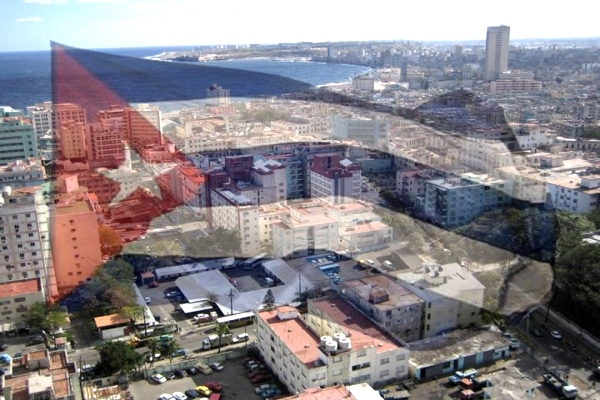
HAVANA, Cuba.12 years ago I read a beautiful article by poet and writer Rafael Alcides in honor of the Republic’s centennial. He titled it “The Sleeping Princess”, a metaphor enfolding the yearnings of many Cubans who prefer to believe that our Republic, with so much sacrifice of several generations of nineteenth century Cubans as its price, is not dead, but reposes, mired in a long and deep sleep from which on day it will awaken with a kiss of love.
Since then, every May 20th, I evoke the poet’s work, full of hope and wondering how much long longer the expected kiss, which will return the Princess Republic to us, will take. Her lethargy has gone on for too long, her absence is devastating. continue reading
Cubans in their seventies or older may remember May 20th as a national holiday when people celebrated the birth of the Republic with spontaneous joy each year. All of Cuba would dress up in flags, and there was celebration throughout towns and cities, because on May 20th, 1902, the American flag was taken down from the official poles, and, for the first time in history, our banner waved on its own.
The Witch’s Curse
But, just as in the fairy tale, our Princess-Republic also received a curse. The Witch-Revolution that took over power in 1959 was determined to rewrite the Island’s history under a new paradigm, to be followed by all Cubans henceforth. The olive green dogma, dictated from the military power oligarchy, devoted itself to mock the Republican past with unequivocal viciousness.
Since then, the autocracy indoctrinated us in denial: before January 1959, we had not had a Republic, instead –by Revolutionary-Sacred Word inflation- the period between 1902 and 1959 had been a pseudo-Republic or, preferably, a “mediated republic”, subordinated to the US and to the interest of foreign capital that embezzled the national treasure and stripped Cubans of their legitimate sovereign rights. A discourse that, paradoxically, sounds ever more like the current reality.
After half a century of “Republic” indoctrination and “revolutionary” plunder, Cuba retains just the name, which only appears in certain documents with official seals and the awful bills of a paper currency which -unlike those that circulated during the brief Republican democracy in the first half of the Twentieth Century- have no value. Thanks to the “mediated revolution” which was only a means for a military caste to assume absolute power, that buries all vestiges of Republican advances and snatches citizens’ rights, most Cubans on the Island have forgotten that the date for the celebration of democracy is May 20th and not January 1st .
A Judas for a false kiss
But, behold! the new reality that the regime is trying to build, in virtue of which the paradigm is, once again, foreign capital, requires a different image, more like prosperous societies which today are being summoned to the Island’s piñata. For that purpose, it is not enough to have the pseudo-legal deployment of a handful of “reforms” that confer doubtful rights to the plantation’s slaves and retain the droit de seigneur of the Castrocacy. It is necessary that the crew believes the discourse of the changes, the promises of a prosperity that (finally!) is just around the corner.
It is also important to stifle any scruples on the part of potential investors-saviors of the regime, so now we need to awaken the Princess-Republic, even if it is by force. In the first place, we need to start redrawing the past and reviewing History in order to prepare (repair) a discourse that, more than obsolete, is now uncomfortable. I’ll bet the Republic was not so bad after all, who knows that, after all is said and done, it was not all that mediated, but only a little.
Only thus can we explain how such a loyal herald to the Castros as the famous singer Silvio Rodríguez has brought us the novelty to propose in his blog “Segunda Cita” to recapture the May 20th celebration since -with all its flaws and virtues- The Republic of Cuba was born on that day. Obviously, the former rebel maverick troubadour turned bourgeois gentleman, because of his close links to power, has glimpsed from his vantage point the return of the Princess, and he wants her back, probably not covered in the tricolor banner, but in the trappings of the olive green of her masters. We will have to admit to Silvio that this ballad is indeed new, because to recover the celebration would be great in principle, but it is necessary to rescue the Republic first, which is not really Silvio’s intention, or that of the Castros.
I hope that the Princess does not confuse this Judas kiss in her slumber and stays asleep. Contrary to my own desires, which are those of many of my compatriots on all shores, I prefer she continues to sleep and wakes only with the caress that will bring with it the realization of a Republic that, so far, is a chimera: the cult of all Cubans to complete freedom.
Translated by Norma Whiting
A Newspaper is Born in Cuba / 14ymedio
Journalists and intellectuals sign a statement of support for 14ymedio.
14YMEDIO | 21 May 2014
“Today we welcome a new communications medium, a digital daily that is born in a country without freedom of the press: Cuba.
“The creators of this risky enterprise, directed by blogger Yoani Sanchez, share our democratic values. In their declaration of principals, the 14ymedio team is committed to promoting ‘truth, freedom and the defense of human rights, without ideological or party ties.’
“Cubans look to the future and need information media that opens respectful spaces for debate on the Island. We are sure that this initiative will contribute to the peaceful and democratic transition and the construction of a new country.
“The undersigned, writers and journalists from different countries, call on the Cuban government to respect the right of this medium to exist and be distributed. And we ask that it not limit the freedom of expression and the right to information of its citizens.”
- Mario Vargas Llosa, writer, Perú / Spain
- Rosa Montero, writer and contributor to El País, Spain
- Fernando Savater, “Claves de razón práctica” Magazine, writer, Spain
- Fernando Trueba, movie director, Spain
- Arturo Ripstein, movie director, México
- Paz Alicia Garciadiego, scriptwriter, México
- Arcadi Espada, journalist, Spain
- Arsenio Escolar, journalist, director of 20minutos, Spain
- Pablo Hiriart, journalist and conductor of Noticiero 40, México
- Moisés Naím, columnist for El País, Estados Unidos
Rafael Pérez Gay, writer and journalist in Milenio. México - Lech Walesa, ex-president of the Republic of Poland, Poland
- Vicente Molina Foix, writer, Spain
- Edward Seaton, director of The Mercury, United States
- Fidel Cano, Director of El Espectador, Colombia
- Jaime Mantilla, director of Hoy, Ecuador
- Carlos Salinas, journalist of Confidencial, Nicaragua
- Nuria Claver, editorial coordiantor of CLAVES de Razón Práctica en PROGRESA, Spain
- Juan Malpartida, Escritor and director of Cuadernos Hispanoamericanos, Spain
- Martine Jacot, journalist for Le Monde, Francia
- Pedro Zambrano Lapenta, director of El Diario, Ecuador
- Roger Bartra, sociologist and essayist, México
- Esteban Ruíz Moral, artist, Spain
- Adam Michnik director of la Gazeta Wyborcza, Poland
- Maciej Stasiński, journalist for la Gazeta Wyborcza, Poland
- Carlos Alberto Montaner, journalist, writer and politician. Cuba/United States
/Spain - Mirta Ojitos, Cuban journalist at Columbia Univeristy, NY. Cuba/United States
- Dagoberto Valdés, director of the magazine Convivencia, Cuba
Math Exam for University Entrance to be Repeated / 14ymedio
Leaking of the contents forces the Ministry of Education to cancel the results and repeat the test.
14YMEDIO, Havana | May 21, 2014
The Ministry of Higher Education and the National Admissions Committee decided to cancel the results of the Mathematics Exam for Admission to Higher Education for students in the city of Havana. The move came as a result of the leaking of the test contents, which many students in Havana had access to.
The official notice states that the exam will be repeated at 9:00 AM on 26 May. The news has caused consternation among young people who already completed the 12th grade, because access to the university requires passing exams in Mathematics, Spanish and History. Most of these students have been preparing for months, including studying with private tutors. continue reading
The exam was held on 8 May, and shortly afterwards it was learned that several of the capital’s high school students had previously obtained the questions. “Unscrupulous people stole the exam, despite the measures taken,” according to the statement by the Ministry of Higher Education.
“We have to pay for their sins,” a girl from Havana’s Nuevo Vedado neighborhood said. She had barely passed the test without having known the questions ahead of time. “Now they’re going to ‘toss a pea,’” she added, using teenage slang to suggest that the second test will probably be harder than the first.
The investigations uncovered the involvement of at least three teachers who participated in the preparation of the test; severe penalties await them. As an additional measure, the History and Spanish tests are also being modified at the last minute, for fear that they, too, could have been leaked.
First Place in Stupidity / Juan Juan Almeida
 In an interview given last week to the daily Juventud Rebelde, the minister Maria Esther Reus launched the very–in capital letters–absurd thesis that “the deficiencies in legal education are a problem now because there was never a need keep people informed about the laws that govern them.”
Truly, nothing can better illustrate for us the legal ineffectiveness of a system than the words of this minister of justice. Or is it injustice? And she said it without the least trace of shame.
Translated by mlk
20 May 2014
Cuba: Its Silent Conquest of Venezuela / Ivan Garcia

Not in his wildest dreams did Fidel Castro think he would gain political control of and derive economic benefit from a nation nine times bigger than Cuba, with two and a half times the population and with the biggest oil reserves on the planet.
Cuba’s ideological colonisation of Venezuela could go down in history as a work of art in terms of political domination. The bearded chap never ceases to surprise us.
He wasn’t a minor autocrat. For better or worse, he was always a political animal. Charlatan, student gangster and manipulator, and always audacious.
He showed his clear inability to create riches and establish a solid and coherent economy. Before he came to power, at the point of a rifle in January 1959, Cuba was the second largest economy in Latin America. continue reading
Fifty-five years later, with its finances in the red, meagre GDP, and scant productivity, the island now vies with Haiti for the lowest place in the continent.
In terms of political strategies, Castro is an old fox. He always liked planning revolutions and wars. In the ’80’s, from a big house in the Havana suburb of Nuevo Vedado, he remotely controlled the civil war in Angola.
He is an incorrigible maniac. He likes to know everything that’s going on. From the soldiers’ meals, and livestock cross-breeding, to forecasts of the path of a hurricane.
Castro was unpredictable. He was not a comfortable Soviet satellite. He plotted conspiracies, guerilla warfare, and indoctrinated some star performers of Latin American youth. Some of them now holding power, constitute a formidable political capital for the regime.
An excellent talent-spotter, when, on February 4th 1992, Lieutenant Colonel Hugo Chávez led a rabble in a coup d’etat in Venezuela, before anyone else did, Fidel Castro, from Havana, saw the potential of the parachutist from Barinas.
He invited him to Cuba as soon as he stepped out of jail. He was his full-time political manager. Just as in any alliance or human relationship, one person always tries to dominate the other.
Castro was subtle. For health reasons, he was already back. His strategy with Chavez was low profile. He didn’t overshadow him. On the contrary. The project was to create a continental leader.
Chávez had charisma and Venezuela had an interesting income stream from oil. Cuba was in the doldrums after the fall of the Berlin Wall, a crisis with a stalled economy and the disappearance of the USSR.
The guerrilla wars in America were not yet a way forward. The “disgusting bourgeois democracy”, of which the “Comandante” was so critical, was the means by which the political groups related to the Cuban regime would gain power.
Those groups came in by the back door in broken countries, where corruption and poor government prevailed. Fidel Castro’s great achievement was to colonise Venezuela without firing a single shot.
In the annals of history there have existed different forms of domination. Imperial powers were not always very large countries. Denmark, Belgium and Holland had overseas possessions.
But, in the background, there was an economic strength or a fearful military machine. Great Britain, in its golden age, could count on an impressive naval strength.
These days, the United States is the possessor of a nuclear arsenal and military technology never seen before. Castro’s Cuba is an economy heading for the fourth world.
Its previous military power, which allowed it to get involved simultaneously in two military campaigns in Ethiopia and Angola, has now reduced, following the Soviet collapse, to an army equipped with obsolete weapons.
The geopolitical logic taught in schools, that the countries which are economically and militarily strong dominate the ones which are poor and weak, has been blown to bits by the case of Cuba and Venezuela.
Castro’s trick for occupying Venezuela has been ideological complicity. According to the Venezuelan journalist Cristina Marcano — joint author with Alberto Barreras of the biography Hugo Chávez sin uniforme: una historia personal (Hugo Chávez without a uniform: a personal history) – everything started in 1997.
General Antonio Rivera, who worked as Head of Telecommunications for the President and was National Director of Civil Protection, points out that in that year 29 Cuban undercover agents established themselves in the Margaritas Islands and helped Chávez with intelligence, personal security and information areas in the election campaign.
After that the interference increased. About 45 thousand Cubans now work in the Venezuelan public administration, the presidential office, ministries and state-owned companies.
Or as bureaucrats, doctors, nurses, dentists, scientists, teachers, information officers, analysts, agricultural technicians, in the electrical services, and cultural workers and developers. Also in security, intelligence and in the armed forces.
When the Cuban collaborators arrive at the Maiquetía airport in Caracas, all the immigration formalities are dealt with by the island´s military personnel.
Cuban Ministry of the Interior specialists run the Venezuelan identification system, the ID cards and passports, commercial registers and Notary Publics.
They know what properties they have and what transactions they carry out. They also jointly manage the ports, are involved in the airports and immigration entry control points, where they can go about their business as they please.
The Cuban company Albet SA, from the University of Information Science (UCI), which runs the Information Service of Identification, Immigration and Emigration (SAIME), is so powerful that they don’t allow Venezuelans into the top floor of the headquarters of SAIME in Caracas.
The Presidential information systems, ministries, social programmes, police services and those of the state oil company PDVSA are also Cuban, by way of the joint venture, Guardián del Alba,* according to the journalist Marcano
The political influence of Cuba, as much in relation to the government of the late Hugo Chávez as now with that of Nicolás Maduro, is decisive. The strategic strings are pulled from Havana.
The Castro brothers benefit to the tune of more than 100 thousand barrels a day of oil and financial assistance estimated at $10B annually.
The PSUV (United Socialist Party of Venezuela) is so dependent on them, that the Cuban big-wigs, including General Raúl Castro, fly around in luxury executive jets with Venezuelan plates.
No other empire in the world has ever been able to conquer another nation without the benefit of economic power, or having to send troops. Cuba is the first. In private, Fidel Castro must be very proud.
Iván García
*Translator’s note: Cuban- Venezuelan information software company in support of the oil industry established to maintain the country’s independence in this field.
Translated by GH
15 May 2014
To Dream Higher / Yoani Sanchez
Yoani Sánchez, Havana | 21May2014
I don’t remember the title of the movie, nor the director, nor even if I saw it at a movie theater or on TV. I just remember the scene, a brief moment in which the protagonist takes off his coat and gives it to his friend. He confesses to him that the garment, modern, leather, was his dream. “Go, so that you can have higher dreams,” he snaps while handing over the object of his desires.
When a project that has been desired for too long is realized, we get the feeling that we must set ourselves new goals. 14ymedio.com has been my obsession for more than four years. First, I felt it needed to be born so that its information could contribute to Cubans deciding their own destiny with greater maturity. Later came the question of how to achieve it, and, from there, the drafting of a timeline as necessary as it was difficult to meet. continue reading
There was also a long period when my friends snickered as I talked about it. “The crazy newspaper woman,” more than one person called me. The most difficult part, however, was–and remains–giving this fantasy a real life. The stumbles have been innumerable. From the taxes for a power that sees in information a gesture of treason, to confronting the skepticism of some friends. But obsessions are like that, they tend not to let themselves be defeated too easily.
Today, I have achieved a dream. Unlike the character in that movie, it’s not a piece of clothing but a space for journalism in which many colleagues accompany me. Born with a desire to reach many readers within and outside of Cuba, offering a full spectrum of news, opinion columns and information about the reality of our Island. It will take a lot of work, there is no doubt. We will grow little by little, trying to ensure the quality of every published piece.
Now I can have higher dreams: in a year perhaps we will be at the corner kiosk. Who knows?