Sweating or Being Cool, the Dollar Makes a Difference in the Carlos III Shopping Center

“The fans aren’t functioning, but they are for sale so you can take your chances,” says an employee of Plaza del Calzado, which will soon be selling in dollars.
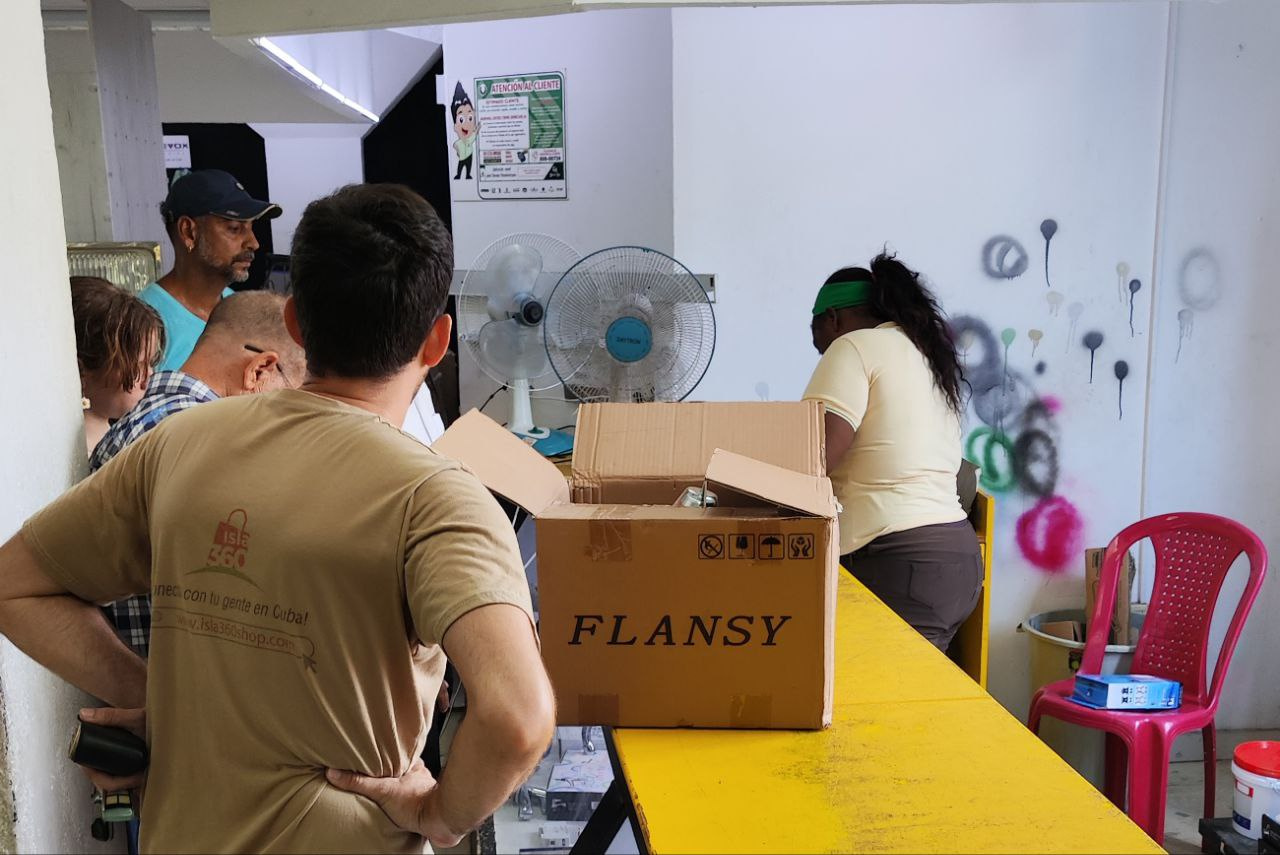

In El Taller, a hardware store nestled in the Carlos III shopping center, there are only two broken fans to buy / 14ymedio

14ymedio bigger14ymedio, Juan Diego Rodríguez, Havana, July 9, 2025 — At El Taller, a hardware store nestled in the Carlos III shopping center, a saleswoman fans herself vigorously on Wednesday morning, not so much to cool off as to shoo away the stifling steam filling the shop. Nearby are two fans, one in better shape than the other, but the weak breeze they produce is barely noticeable if you move even slightly away from the counter.

One floor below, at the Sport store, employees and customers enjoy air conditioning. The difference between one place and another mirrors the divide among Cubans in countless aspects of daily life: whether it’s food, clothing or air-conditioned spaces, in Cuba only those who pay in fulas (US dollars) can access such privileges.

“This is like a pot for steaming people,” complains a customer at Casa Nueva, another store in the shopping center that has not yet undergone dollarization and therefore lacks air conditioning. Painted a bright lime green that seems to amplify the heat, the store is supplied by Italsav, the same Italian company that stocks Casalinda, at Galiano and San Rafael. Yet this sibling relationship hasn’t ensured equal conditions: one enjoys a steady 26ºC (79ºF) while the other remains “a revolutionary oven.”

In order to survive the summer days, the employee at Casa Nueva relies on a rickety fan that “seems to be older than she is,” a customer quips. With its scorched plastic and missing grille, the fan creaks loudly every time the blades turn and seems ready to give its “last gasp.” continue reading

Painted bright lime green, Casa Nueva also lacks air conditioning

The employees are well aware of the state’s favoritism toward dollar stores. At Plaza del Calzado or “the affordable shoe store” as customers call it – comparing it to pricier dollar shops like Sport – salespeople are eagerly awaiting the day they can escape the sauna the store becomes when the sun starts blazing.

“The ACs are broken, and the ones they’ve put in are ’for where it’s needed.’ Our turn will come,” a saleswoman whispers to 14ymedio, hopeful that soon their cash register will take only foreign currency, and the air conditioning will be magically repaired. The store has even begun to clear out some of its merchandise. “They’re selling off the old and ugly stuff, and some sandals are going for as little as 4 MLC* [‘freely convertible currency’]. But besides being hideous, they’re made of plastic and look uncomfortable,” says a woman.

The discomfort and sweat that come with summer in Cuba are part and parcel of shopping in any MLC* store, or in the near-extinct peso shops. This is true not only at Carlos III, but in any non-dollarized store in Havana.” After coming here I need a proper shower,” said a customer at Isla de Cuba, on Monte Street. “With this heat, you don’t feel like buying fabric; you feel like walking around naked,” joked another shopper at Belinda Modes on the San Rafael pedestrian boulevard.

Instead of buying fabric, the heat of Belinda Modas makes people want to walk around naked

In the dollar stores, on the other hand, customers seem to be in better spirits. At least until it’s time to pay. “I can’t afford to buy anything, but I like to stand near the door of these stores to feel the cold air coming out. Nor am I the only one. People gather around, and you see them sighing. God knows how long it’s been since they last felt air conditioning,” confesses Yasel, a young Havana resident who repeats this trick every time he finds an air-conditioned space.

Compared to the lavish coolness of dollar stores, the government’s energy-saving appeals seem like a bad joke.”Its not enough to ask people to endure blackouts; they also want workers in banks, hospitals and other essential services to go without air conditioning, even when they’re stuck in offices without windows,” says Yasel.

Also, they don’t seem to care about the consequences of running air conditioners all day at very low temperatures, which affects not only electricity consumption but also increases the emission of harmful gases. The same pattern plays out in hotels and tourist facilities, highlighting the government’s overriding priority: to attract hard currency above all else.

Translated by Regina Anavy

_____________

*Note to TranslatingCuba readers: We could not constrain ourselves from sharing this completely idiotic explanation of what/why MLC is, offered by a company that operates ‘Cuban tours’. We had no idea it is simply a “hygiene” measure.

What is an MLC Card [Source – the ever resourceful internet]

“Due to hygiene concerns, the Cuban government would like to avoid cash transactions, so are offering prepaid debit cards at the airport. Known as MLC cards, these cards are being sold in denominations of $200, $500, and $1000. MLC stands for Moneda Libremente Convertible (Freely Convertible Money), which in essence means foreign currency. Although MLC can be EUR, USD, GBP, etc, it is treated as if it’s a currency itself. Bank cards are used for transactions in MLC. Many of the better stocked stores in Cuba only accept MLC. You can have the remaining balance of your MLC card refunded at the airport upon departure.”

____________

COLLABORATE WITH OUR WORK: The 14ymedio team is committed to practicing serious journalism that reflects Cuba’s reality in all its depth. Thank you for joining us on this long journey. We invite you to continue supporting us by becoming a member of 14ymedio now. Together we can continue transforming journalism in Cuba.

Following the Death of a Prisoner on Hunger Strike, Cubalex Warns of the Risk to the Lives of Two Others

At the time of his death, Yan Carlos was in the Arnaldo Milián Provincial Hospital in Santa Clara.

González was accused of setting fire to a sugarcane field and sentenced to 20 years in prison. / Facebook/Yan Carlos González

14ymedio bigger14ymedio, Madrid, 9 July 2025 — Yan Carlos González González, imprisoned for over a year in Santa Clara’s La Pendiente prison, died on Monday, July 7, due to a serious deterioration in his health, the Cubalex organization confirmed Tuesday. Accused of setting fire to a sugarcane field, the 44-year-old prisoner faced 20 years in prison at the request of the prosecutor’s office.

González, a native of Manacas, maintained his innocence from the moment he entered prison. Both he and his family had claimed there was no evidence he was responsible for the crime he was charged with. Despite this, he was arrested on May 17, 2024, and remained in pretrial detention until April 2025, when, after learning of the lengthy sentence requested by the Public Prosecutor’s Office, he began a hunger strike that lasted more than 40 days. Furthermore, in May, he sewed his eyes and mouth shut, according to sources close to Cubalex, “as an extreme form of protest to denounce his situation.”

At the time of his death, Yan Carlos was in the Arnaldo Milián Provincial Hospital in Santa Clara, with a reserved prognosis. “You said you wouldn’t serve a sentence because you were innocent, and you did, brother. We will remember you for being the wonderful person you were and will be,” said one acquaintance on social media, one of the hundreds who mourned the prisoner’s death.

Cubalex has alerted its concern that there are currently at least two other prisoners in danger for similar reasons.

Cubalex has alerted its concern that there are currently at least two other prisoners in danger for similar reasons. One of them is Miguel Alfonso Jiménez Martínez, also hospitalized at the Arnaldo Milián Provincial Hospital and on hunger strike for more than two months. He is in pretrial detention for allegedly throwing stones at a store. The organization reports continue reading

that authorities have modified his provisional measure to a less severe one due to his health. He is now expected to appear before the investigator in the case periodically.

The second is Alexander Díaz Rodríguez, a prisoner convicted of 11J in Pinar del Río, who is currently in the Kilo 5 y Medio prison, where he was transferred on July 5, and is being denied medical attention. “According to information received by Cubalex, Lieutenant Colonel Luis, head of the prison’s medical station, refuses to provide him with the essential medications for his health condition, and also refuses to authorize a medical diet, even though Alexander shows signs of severe malnutrition,” the organization reported in recent hours.

Cubalex affirms that reprisals against Díaz Rodríguez are ongoing, as he is managing to denounce his “alarming physical deterioration” and the appalling conditions in which he is imprisoned through photos on social media. “This refusal is not an isolated incident: it is part of a deliberate policy of extreme punishment against those who speak out from prison to expose the regime’s abuses,” Cubalex warns.

The three prisoners’ faces are less well-known than those of two other emblematic leaders of the Cuban opposition who are suffering under the harsh conditions of a Cuban prison: Félix Navarro and José Daniel Ferrer, vice president and president of the Council for the Democratic Transition in Cuba (CTDC), which issued a statement on Tuesday in which it made an “urgent and unavoidable” call on behalf of both of them and all other political prisoners on the island.

“Both remain steadfast, even in the face of barbarism, and represent the best of Cuba’s civic spirit. The international community can make a difference; concerted action can save lives,” they claim. In the text, they specifically call on the foreign ministries of the United States, Europe, and Latin America, and the entire international community, to “act firmly and decisively in the face of a situation that violates human rights with concrete actions,” including expressing their concern to Cuban embassies and requesting information from the Cuban Ministry of Foreign Affairs.

They also urge the Catholic Church of Cuba and international human rights associations to mobilize

They also urge the mobilization of the Catholic Church in Cuba and international human rights associations, although Amnesty International has been specifically speaking out for José Daniel Ferrer for years, whom they consider a prisoner of conscience, to no avail. Currently, he has been on on a hunger strike for two weeks, according to his wife.

“The CTDC will continue working with governments, organizations, and institutions, both inside and outside Cuba, to end the spiral of dehumanization that permeates our institutions and that particularly cruelly affects political prisoners and all Cubans deprived of their liberty,” it concludes.

In late June , the Research and Advocacy Initiative, formerly known as Justice 11J, warned of an alarming number of deaths in custody and torture within the Cuban prison system during the first half of the year. The Mexico City-based organization indicated in a report that at least 24 people died in Cuban prisons, eight of them after being deprived of medical care, while 160 acts constituting torture or cruel treatment were documented.

____________

COLLABORATE WITH OUR WORK: The 14ymedio team is committed to practicing serious journalism that reflects Cuba’s reality in all its depth. Thank you for joining us on this long journey. We invite you to continue supporting us by becoming a member of 14ymedio now. Together we can continue transforming journalism in Cuba.
The Cuban Government Minimizes Severe Toxic Dust Contamination at the Moa Nickel Plant

Reports of respiratory disorders abound, mainly in infants.

Independent studies show lower life expectancy compared to other Holguín municipalities and a high prevalence of respiratory and dermatological diseases / Facebook

14ymedio bigger14ymedio, Havana, July 9, 2025 — While dozens of residents continue to report on social media a serious pollution crisis caused by toxic dust in Moa, Holguín, the Ministry of Energy and Mines responded with a report in Cubadebate seeking to minimize the environmental impact. Its explanation points to failures in the gas cleaning system at the Ernesto Che Guevara plant, but assumes no responsibility for emissions.

The official report states that the visible increase in suspended particles was the result of a planned shutdown on July 7, to clean the ducts and repair equipment. The shutdown was estimated to last 48 hours but was executed in 24 hours. The industry is dedicated to the exploitation of nickel and cobalt. The authorities attribute the situation to “deterioration of the gas cleaning system” (electrofilters), and they envision an improvement as part of an improvement project.

The explanation does not satisfy citizens, who report a constant emission of dust, visible on streets, houses and faces, long before Monday’s incident

However, this explanation does not satisfy the citizens, who report a constant emission of dust, visible on streets, houses and faces, long before last Monday’s incident. continue reading

Authorities mention compliance with Law 150 Natural Resources and Environment and the standards on air and waste emissions. They also highlight achievements such as sleeve filters that reduced dust emissions to 1.4 mg/m³ monitoring systems and restoration projects with the reforestation of the Cuban pine and international partnerships.

But independent media testimonies and Facebook posts contradict this narrative. Testimonies abound with images of black dust on skin and clothes, and reports of cases of respiratory disorders, mainly in infants. All this describes an alarming reality despite the alleged environmental measures.

“It’s like we’re breathing poison”

Journalist Mario J. Pentón collected heartbreaking statements: “Every day we have to endure a substance that falls from the sky. You clean and then everything’s dirty again. What comes out of your throat is black. It’s like breathing poison. These people are slowly killing us,” wrote a resident of that area, in the province of Holguín. “Today Moa’s Facebook page was lit up, with many people complaining about the same thing. There is despair, frustration and a growing rage,” he added.

The ministry highlights the existence of four environmental monitoring stations in residential areas and epidemiological surveillance protocols. According to Joel Queipo Ruíz, first secretary of the Communist Party in Holguín, there has been no identifiable increase in medical care for respiratory or allergic conditions in recent weeks. But citizens claim the opposite: children suffering from chronic cough and persistent dust on their skin and clothes. The official explanation does not match the daily reality in Moa.

Allegations of a “slow death” in Moa are not new

Allegations of a “slow death” in Moa are not new. Independent studies recall years of exposure to toxic gases, lower life expectancy compared with other Holguín municipalities, and a high prevalence of respiratory and dermatological diseases. In addition, recent flood waters from the Cabaña river aggravated exposure to pollutants in neighborhoods such as Ecrin, Cabaña and La Veguita, where neighbors suffer from both the climate crisis and industrial pollution.

The response of the Ministry of Energy and Mines is simplistic and reactive. An isolated incident does not explain a chronic crisis. They talk about technology and monitoring without showing tangible results. There are no real comparisons of pollutant levels before and after, nor public health data to support their position.

Viral photos, citizen voices and local health reports reinforce the perception of being in the forefront of an announced ecocide. The government boasts about laws and open dialogue. However, the authorities’ indolence in the face of decades of environmental deterioration, the lack of verifiable data and the urgency of the testimonies reveal the absence of real commitment.

Translated by Regina Anavy

____________

COLLABORATE WITH OUR WORK: The 14ymedio team is committed to practicing serious journalism that reflects Cuba’s reality in all its depth. Thank you for joining us on this long journey. We invite you to continue supporting us by becoming a member of 14ymedio now. Together we can continue transforming journalism in Cuba.

421 Prisoners Are Still Serving Sentences in Cuban Prisons for the ’11J’ Island-Wide Protests, Prisoners Defenders Denounces

On the anniversary last June, the regime arrested eight people, several of them for protesting against the blackouts in Guanabacoa.

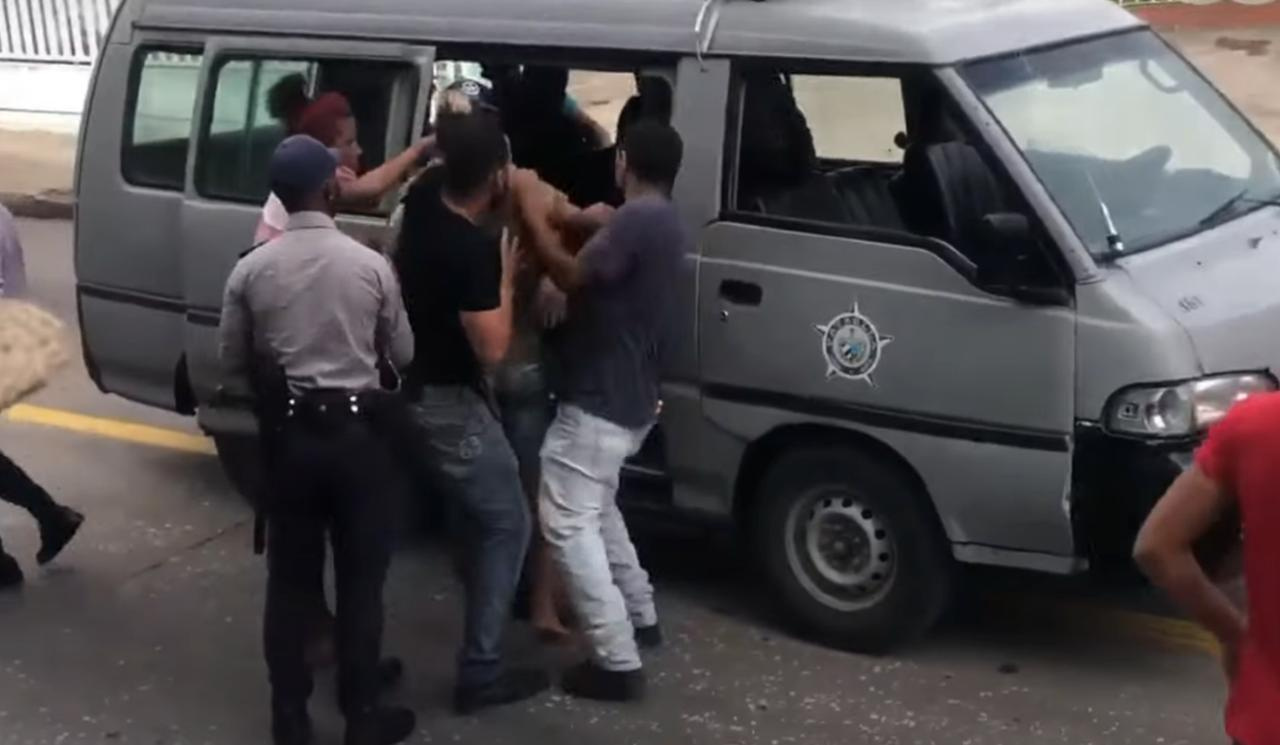
File image of protesters being repressed during 11J.

14ymedio bigger14ymedio, Havana, 10 July 2025 — On the eve of the fourth anniversary of the mass demonstrations of 11 July 2021, Prisoners Defenders (PD) has published a report denouncing that, of the 1,158 political prisoners serving sentences on the island, 65% (752) were arrested during those protests. Since then, the regime has continued to imprison its opponents with impunity—at a rate of 10 per month over the last 12 months, although several have been released. There were eight new arrests in June, at least half of them during the protests on the 29th in Guanabacoa.

The platform’s list includes only Deyanira López, Dónovan López, Hiromi Moliner, and Sunamis Quintero García, who protested against the blackouts in a neighborhood protest that ended with a fire, a dozen arrests, and an atmosphere of growing tension.

“The situation since 11 July 2021, has not only not improved: it has substantially worsened. However, the massive and brutal repression suffered then is the only factor holding the population back from further mass demonstrations, which are occurring sporadically throughout the country, albeit with much smaller gatherings due to the terror created among the population on 11 and the situation of these prisoners in Cuba,” PD reports.

The platform, in collaboration with Consorcio Justicia and the Center for a Free Cuba, has prepared a document that encapsulates updated data on the repression unleashed by the authorities during 11 June. Since then, nearly 2,000 protesters have been criminally prosecuted, of which 421 remain in Cuban prisons, with 202 of them sentenced to between 10 and 30 years. Another 331 are serving sentences outside of prison. continue reading

The organization also reported that, of the 73 women arrested during the protests, 18 remain in prison.

The organization also reported that of the 73 women arrested during the protests, 18 remain in prison. It highlighted the names of the Ladies in White, Sissi Abascal and Sayli Navarro, who are serving their sentences in La Bellotex prison in Matanzas; as well as María Cristina Garrido Rodríguez, sentenced to 7 years in El Guatao prison in Havana; and Lizandra Góngora Espinosa, who received a 14-year sentence in Los Colonos Forced Labor Prison on Isla de la Juventud, “far from and unable to receive visits from her family and her 5 children (4 of whom are still minors).”

PD also denounced the torture to which the 11J prisoners are subjected, including the prison authorities’ refusal to provide medical care. Of the July 2021 protesters who remain imprisoned, 325 have “serious medical conditions” and 34 have mental health problems “incompatible with prison.”

“A still immense number of political prisoners are seriously ill and should benefit from extra-penal parole, which the Cuban regime continually and arbitrarily denies,” the platform said, citing the case of Alexander Díaz Rodríguez, sentenced to five years in prison in Pinar del Río and suffering from “terminal throat cancer, as well as hepatitis B, anemia, and malnutrition.”

In a similar situation is Amalio Álvarez González, who has been sentenced to 15 years and suffers from “psychiatric disorders, cognitive disability, and vision loss.” He has attempted suicide four times.

On July 7, political prisoner Yan Carlos González died after a hunger strike of more than 40 days.

On July 7, political prisoner Yan Carlos González González died after a hunger strike of more than 40 days. He had been incarcerated for over a year in Santa Clara’s La Pendiente prison. Accused of setting fire to a sugarcane field, the 44-year-old faced 20 years in prison at the request of the prosecutor’s office. At the time of his death, González was in the Arnaldo Milián Provincial Hospital in Santa Clara, with a reserved prognosis.

PD also denounced the revocation by the regime of the extrapenal license of four of the 219 11J prisoners released after negotiations with the Vatican last January: Jose Daniel Ferrer, Jaime Alcide Firdó, Félix Navarro Rodríguez, and Donaida Pérez Paseiro. It added that of the political prisoners included in the agreement, 91% “had been entitled by law to an open regime, conditional release, or immediate release, including for more than a year.”

The situation of prisoners is not the only issue of concern to civil society organizations. This month, the Cuban Observatory of Human Rights (OCDH) published a tally of the “repressive actions” carried out by State Security in June. According to the report, 253 such cases were recorded, 61 of which were arbitrary detentions.

“Among the main violations are the sieges of activists’ homes, abuses against political prisoners, threats, and harassment,” the text states, adding that women “are the most affected by the repression.”

____________

COLLABORATE WITH OUR WORK: The 14ymedio team is committed to practicing serious journalism that reflects Cuba’s reality in all its depth. Thank you for joining us on this long journey. We invite you to continue supporting us by becoming a member of 14ymedio now. Together we can continue transforming journalism in Cuba.

I Want To Be a Driver for Foton, the New Chinese Vans With Air Conditioning

They have replaced the Russian ’gazelles’ and charge 20 pesos per trip.

“It was only the second day of operation and some were already starting to fail.” / 14ymedio

14ymedio bigger14ymedio, Juan Diego Rodríguez, Havana, 9 July 2025 — Today, like almost always, my journey from La Virgen del Camino to El Vedado threatened to become eternal and suffocating. But I was lucky. I caught one of those little yellow buses we used to call “gazelles” — after the Russian brand that makes them — and that some of us have now started calling “Fotons.” Honestly, I don’t care if they’re Russian or Chinese; the important thing is that they get me out of the bus stop and take me to my destination as quickly as possible.

My watch read twelve noon. I’d already calculated how many people were in front of me, and things weren’t looking good. When the Foton arrived, on its second day of release, I thought the usual rush and killing would ensue. But, strangely, some decided not to get on and push their way into the line.

“I got the impression they couldn’t afford to pay the 20 pesos the fare costs.”

The only ones who refused to get on were two elderly women. They said they preferred to wait for the inspectors to stop a state vehicle*. In reality, I got the impression they couldn’t afford to pay the 20 pesos the fare costs. Although the price of the Fotons seems affordable, for many it is still unthinkable to shell out that amount every day just to get to work.

It was a blessing to feel the blast of cool air against the sweat pouring down my face and back. The air conditioning was set to more than half its setting, which, in Havana in July, is a miracle. continue reading

A woman insisted on getting on when the minibus was full. She said she could sit on the floor, no problem. But the driver responded without hesitation: “You’re crazy! Today is the second day this has been operating. I don’t know who’s riding up here, and I don’t want to be in the newspaper.”

So we set off.

The new buses are comfortable, with fresh nylon, and have a capacity for fourteen people. Luckily, I didn’t get the seat next to the door. The person sitting there becomes the involuntary copilot. Whether they like it or not, they have to open and close the door every time someone gets on or off. And they also have to contort themselves to let someone in.

The driver had someone next to him who seemed to be training to become a Foton driver. They spoke in low voices, but I heard them whispering about their daily earnings: between 2,000 and 3,000 pesos. At that moment, I felt the treacherous urge to quit my job and learn to drive. That driver earned more in a single day than my mother receives in a month from her retirement check.

Although the trip was quick and comfortable—40 minutes from La Virgen del Camino to El Vedado—I have a feeling the service won’t last long. It was only the second day of operation, and some of the vans were already starting to break down.

“I heard them whispering about the daily earnings they made from it: between 2,000 and 3,000 pesos.”

Passing by the José Miguel Gómez monument on Avenida de los Presidentes, we saw a Foton out in the middle of a roundabout, a real hazard.

“What happened to you?” asked the driver of the van I was riding in. “It quit by itself,” replied the other driver. Our driver advised him: “Don’t do anything. Don’t touch anything. Call.”

I got off at the last stop, after falling asleep with my head pressed against the window. The brutal heat of Havana’s streets reminded me once again who I am and where I live. I don’t know if I’ll be as lucky with transportation tomorrow. In today’s Cuba, making plans for tomorrow is complete nonsense.

*Translator’s note: Drivers of state vehicles are required to stop and pick up passengers at designated stops — waved down by inspectors — although the drivers don’t always comply.

____________

COLLABORATE WITH OUR WORK: The 14ymedio team is committed to practicing serious journalism that reflects Cuba’s reality in all its depth. Thank you for joining us on this long journey. We invite you to continue supporting us by becoming a member of 14ymedio now. Together we can continue transforming journalism in Cuba.

With a Lack of Players for the Classic, Cuba Is Debating Inviting Those Who ‘Defected’

Eight months before the event, only Yoan Moncada, Andy Ibáñez, Andy Pagés and Daysbel Hernández have confirmed their participation.

Members of Team Cuba at the last World Baseball Classic. / Jit

14ymedio bigger14ymedio/Swing Completo, Havana, 9 July 2025 — The Cuban Baseball Federation (FCB) is debating changes to Article 1.6 of the National Series regulations to include players who defected or abandoned contracts with Team Cuba in the upcoming 2026 World Baseball Classic. Of the 10 major league players to whom they sent letters, only Yoan Moncada, Andy Ibáñez, Andy Pagés, and Daysbel Hernández have accepted so far.

With just eight months to go until the event, regime loyalist and newly appointed Cuban manager Germán Mesa has only managed to convince 10 other young talents playing for U.S. minor league clubs. Among them are Ernesto Martínez Jr., Omar Hernández, Yiddi Cappe, Alexander Vargas, Jan Hechavarría, and Víctor Labrada.

Despite Mesa having Naykel Cruz of the Baltimore Orioles on the roster, his inclusion was scuppered. The player’s representative, Cuban-American Gladys Alonso, said that if he did so, his employment relationship would be terminated. “All Cuban-Americans in the Major Leagues are going to undermine you, at some point they will,” she warned. continue reading

With just eight months left until the event, Cuba’s manager, Germán Mesa, has only managed to convince 10 other young talents

Last June, several members of the National Institute of Sports, Physical Education, and Recreation (Inder) expressed interest in granting Yariel Rodríguez a pardon. The player was blacklisted after breaching a contract with the Japanese team, the Chunichi Dragons, in 2023. Journalist Yasel Porto Gómez confirmed that his invitation was ready and awaiting approval.

Rodríguez currently plays for the Toronto Blue Jays and has stated that defending the Cuban flag “would be very important to him.” If there were any possibility of joining the so-called Team Asere, “I would say yes without hesitation.”

According to the specialized media outlet Swing Completo, the rule preventing Cuba from calling up players who have defected or abandoned contracts “is purely political.” However, “the current situation is critical, and they need some serious names if they want to at least advance to the second round of the tournament.”

If that key is opened, those who could be invited include Lourdes Gurriel Jr (Arizona Diamondbacks), Aledmys Díaz, Adolis García (Texas Rangers), José Iglesias (San Diego Padres); Vladimir Gutiérrez, Oscar Luis Colás (Chicago White Sox); Yoelqui Céspedes, Norge Carlos Vera (Athletics); Oscar Luis Colás (Chicago White Sox); Yoelqui Céspedes, Norge Carlos Vera (Athletics); and Andy Rodríguez, Lázaro Blanco, Luis Dani Morales, Brian Chi, Geysel Cepeda, Loidel Chapellí Jr., and Loidel Rodríguez.

Those who have announced their rejection are Aroldis Chapman, Odrisamer Despaigne, and César Prieto.

In the 2026 World Baseball Classic, Cuba is in Group A, which also includes Puerto Rico, Canada, and Panama. The host city will be San Juan.

____________

COLLABORATE WITH OUR WORK: The 14ymedio team is committed to practicing serious journalism that reflects Cuba’s reality in all its depth. Thank you for joining us on this long journey. We invite you to continue supporting us by becoming a member of 14ymedio now. Together we can continue transforming journalism in Cuba.

With Better Quality, the Private Sector Has Ended the State Monopoly Over School Uniforms

Unlike rationed sales, it is possible to purchase as many pieces as you can pay for.

[[Located in the central Paseo del Prado, this Monday the business and its workshop welcomed customers looking for the desired uniforms / 14ymedio
14ymedio bigger14ymedio, Juan Diego Rodríguez, Havana, July 8, 2025 — Tired of long lines, missing sizes and poor fabric quality, Cuban families are increasingly choosing to buy school uniforms in the private sector or abroad. The opening of Figuera, a private store that sells these outfits in Havana, accelerates the loss of state terrain in a commercial niche that until recently was an official monopoly.

Located in the central Paseo del Prado, in the Salón Smara de la Unión Árabe de Cuba, this Monday the business and its workshop welcomed customers looking for the desired uniforms. The firm also offers business clothing, and although its employees recognize that they do not have all sizes available, they can be ordered in advance and produced by the seamstresses.

Unlike the rationed sale, in Figuera it is possible to buy as many pieces as you can pay for

A line of about a dozen people were waiting outside the workshop to order or pick up clothing for the next school year. They did not have in their hands any document bearing the stamp and letterhead of any department of the Ministry of Education, which they were authorized to purchase. Unlike the rationed sale, in Figuera it is possible to buy as many pieces as you can pay for. They accept any payment, from Cuban pesos, through dollars to transfers by Zelle, the American instant payment system that is very popular among merchants on the Island.

There is no pushing in the line, no one shouting because someone has slipped in or because the end of some very sought-after size is announced. Everything goes smoothly because the clientele is already filtered by economic status. Unlike the subsidized sales, prices in Figuera have nothing to do with real wages. This is one of the last commercial sectors to have private offers, because the government has wanted for decades to prevent social differences from being expressed in the educational field.

In a country where the school uniform, according to level, is identical in each province, municipality and classroom, the loss of a monopoly on its sale is not a minor issue. Fidel Castro himself designed the clothing of some school grades and for decades penalized the use of blouses or shirts that, although similar to those prescribed, showed some mark or sign that they were made privately or had been imported from abroad. continue reading

Fidel Castro himself designed the clothing of some school grades

But the economic crisis and the inability of the State to meet the demand have been transforming the panorama and marking the contrasts between those who may have a new uniform every September and those who are obliged to reuse the previous one or alter the only size they have to fit their body.

“When I was in school, the only way to buy a uniform was in the State stores,” recalls a father who arrived this Monday with his children, two twins who will enter high school next year. ” I remember that in my teens I had a rash and had to go the whole year with pants that were short, because you had to wait for them to give you a paper so you could buy the next ones, and they only delivered it after the final exams.”

The sale of school uniforms in Cuba usually begins between May and June, but in recent years the date has been delayed due to lack of raw materials. Now the sale starts at the end of July and is marked by long lines and problems with sizes. Factory workers must extend their working hours for those dates and thus try to make the nearly 1.5 million uniforms planned for more than 1,000 schools.

A line of about a dozen people were waiting outside the workshop to order or pick up clothing for the next school year / 14ymedio

The textile workshop in Figuera has seven workers; six are women sewing, and a man at a table does the designs. Among the employees there is a doctor who attends to the public and an engineer on the preparation side. The fabrics are cut and sewn and will end up being a uniform for primary, secondary or upper secondary education. Everything works with order and an unusual efficiency when compared to the State workshops.

“I ordered my grandson his first uniform for preschool which starts in September, and today I am here to pick it up,” says a proud grandmother accompanied by a restless child who does not stop jumping and running through the narrow corridor while waiting for their turn to enter. “At the time I placed the order I had to pay the full amount, and it took about two weeks to make three shirts and two shorts.”

In total, the woman has paid 7,500 pesos for the set, three times her monthly pension. “I’m the one who looks after him because my daughter and her husband are outside Cuba. They sent me the money to buy the uniforms since it’s impossible with my pension,” she says. “I’m also glad that I could save myself from standing in line at the [State] store, because last year I was standing so long that I got dizzy.”

“I hope it’s strong and durable, does not lose color with a few washes and can be left for the younger children who come behind”

“I hope it’s strong and durable, does not lose color with a few washes and can be left for the younger children who come behind,” the grandmother resumes. “These look pretty good but the last word will be the use.” A few minutes later the woman leaves with a bag that includes the clothes that the little one will wear, almost every day, in less than two months.

Two women who are in line, with their respective children, praise the possibility of having this private shop. “Until now, when I needed to buy a uniform without spending days in a line, I appealed to a neighbor who brings them from Miami; she buys them in Ño Que Barato,” explains one of them. Cuba’s large emigrant community in Florida has also shaped commercial offerings in the US.

Some of the shops in Miami make their money in August with every need that arises on the Island, from coffee “with Cuban roast,” through plastic covers to protect ration books, to uniforms of all levels of education. Every year the Ño Que Barato chain sells thousands of clothes that will end up in Cuban classrooms. The red-wine colored pants intended for males attending primary school are $14.99, while a blouse for pre-university students is $10.99.

“The only thing missing is the police uniform,” jokes a friend, who finally gets her turn to enter Figuera. The cool atmosphere, due to the air conditioning, the clean table where a seamstress cuts the fabric and the smiling face of the employee complete the experience. Uniforms sold by the private sector are much more expensive, but it is clear that they do not come with sweat, tears and shouting.

Translated by Regina Anavy

____________

COLLABORATE WITH OUR WORK: The 14ymedio team is committed to practicing serious journalism that reflects Cuba’s reality in all its depth. Thank you for joining us on this long journey. We invite you to continue supporting us by becoming a member of 14ymedio now. Together we can continue transforming journalism in Cuba.

Mexico Paid More Than $1 Million for 25 Medical Students To Specialize

The group is part of the 428 scholarship recipients who have been on the Island since 2021.

A group of Mexicans who completed their specialty in ophthalmologic surgery in Cuba

14ymedio bigger14ymedio, Ángel Salinas, Mexico City, July 7, 2025 — A group of 25 Mexicans completed their specialty in surgery last June at the Cuban Institute of Ophthalmology (ICO) Ramón Pando Ferrer, in Havana. The students are part of the 428 who arrived in Cuba through the scholarships that have been reactivated since 2021 by the National Council of Humanities, Sciences and Technologies of Mexico (CONAHCYT). According to one source, “Mexico spent 937,500 euros ($1,098,958) on their education.”

The Mexican students are enrolled in the 2022-2025 generation, and their return to Mexico is planned, but “there is still no date for their possible incorporation into the IMSS Bienestar health system,” confirmed the health official, who requested anonymity.

The same source acknowledged that “every investment in education is beneficial, but sending students to Cuba is more expensive than sending them to the United States, Spain or Germany.” According to the database of post-graduate scholarship recipients, a student with a scholarship in the United States costs Mexico $20,970 per year, $7,000 less than in Cuba.

“I can confirm some expenses for this group, including the payment to the Cuban Medical Services Commercialization Agency of $14,648 per year for each student. In addition to $1,277 for the CONAHCYT scholarship, there is an additional one-time payment of $1,758 to prevent desertions,” said the official.

The students are part of the 428 who arrived in Cuba through scholarships that have been reactivated since 2021 by the National Council of Humanities, Sciences and Technologies of Mexico

It is cheaper for Mexico to send students abroad to the Netherlands, where the annual investment is $20,389; to Spain, $18,666; to Canada, $18,415; to Germany, $17,379; to in France, $689 dollars. continue reading

Between 2021 and 2023, the same source recalled, CONAHCYT awarded scholarships to Mexican students to study their specialty at the University of Medical Sciences in Havana, the Ministry of Public Health and the Center for Medical Surgical Research.

Despite the failure and controversy that was generated in its first edition in 2021, Mexico has maintained the CONAHCYT scholarship program to study one of the 13 medical specialties in Cuba.

According to the tab shown in euros in the call itself, the prices are: pathology, 7,800 euros; general surgery, 12,500; hygiene and epidemiology, 7,800; medical genetics, 12,500; geriatrics, 7,800; rehabilitation medicine, 9,900; intensive care medicine, 12,500; internal medicine, 9,900; pulmonology, 7,800; ophthalmology, 12,500; clinical pathology, 9,900; psychiatry, 9,900; and traumatology and orthopaedics, 12,500 euros.

The information was reported shortly after seven Cuban doctors were celebrated in Campeche for a year of providing services at the Imss hospital in Escárcega: Ángel Rondon, Jackeline Naranjo, Gricelia Elias, Isabel Toranzo, Jaqueline Baquero, Juan Alberto Tamayo and Joel Solórzano.

Translated by Regina Anavy

____________

COLLABORATE WITH OUR WORK: The 14ymedio team is committed to practicing serious journalism that reflects Cuba’s reality in all its depth. Thank you for joining us on this long journey. We invite you to continue supporting us by becoming a member of 14ymedio now. Together we can continue transforming journalism in Cuba.

Andy García Lorenzo, one of the 11J prisoners in Santa Clara, is now free

The young man was sentenced to four years in prison for shouting slogans against the regime and served his full sentence.

“Andy is free, he owes nothing to the regime, and he’s going to take his time to be with the family” / Courtesy

14ymedio bigger14ymedio, Havana, July 7, 2025 — Andy García Lorenzo was one of the most visible faces on July 11, 2021. His mother, Tayri Lorenzo Prado, confirmed to 14ymedio that the young man “has been released after serving four years in prison, without any reduction in his sentence.”

García, then 23, was arrested after peacefully demonstrating in the Leoncio Vidal park in downtown Santa Clara. He was tried together with 15 other demonstrators and sentenced to four years’ imprisonment for the offenses of public disorder and contempt.

“It was a trial without evidence, a farce,” his sister reported live on social media at the time. “Everything was based on the words of the police against his. It was a circus.”

“How am I going to regret the proudest act in my life, of all Cubans?” / CourtesyThe ruling of the Municipal Court of Santa Clara stated that the youth had met with other citizens in areas adjacent to the park to “shout slogans” such as “Díaz-Canel singado [sic] and Policía Pinga,” as well as “dance in the form of a mockery of uniformed personnel and townspeople who felt aggrieved by his rude behavior.” The prosecutor in the case, Daily Carrazana Rodríguez, even requested a seven-year prison sentence. continue reading

Despite institutional pressure, García enjoyed broad public support from the start. “They gave him a very long sentence, when in Santa Clara, as elsewhere, not even a shop window was broken and nothing happened at all,” his brother-in-law Jonatan López wrote on the social network X after hearing the sentence.

In May 2022, authorities announced that García would be transferred to an open regimen camp in El Yabú, a change that never materialized. Shortly thereafter, while going with his father Nedel García Pacheco to the prison of Guamajal to collect some belongings, both were intercepted on their way home. State Security agents transferred them to the 5th Santa Clara Unit for a “conversation,” and the minimum severity measure was revoked.

“It was a trial without evidence, a farce” / Courtesy

Throughout his sentence, García was steadfast in his convictions. In an interview with Cubanet, he said: “How am I going to regret the proudest act of my life, of all Cubans? It was the happiest day in history, the day when the people rose up against the oppressor.”

Now 27, Andy has returned home. One of his first gestures upon leaving was to visit the tomb of his paternal grandmother, who died during his imprisonment. He has also been able to rejoin his maternal grandparents, whose health has deteriorated in recent years.

“Andy is free, he owes nothing to the regime, and he’s going to take his time to be with the family,” said his mother. The family does not rule out continuing pressure from State Security, which in these cases usually tries to prevent former political prisoners and their relatives from talking to the independent press.

Translated by Regina Anavy

____________

COLLABORATE WITH OUR WORK: The 14ymedio team is committed to practicing serious journalism that reflects Cuba’s reality in all its depth. Thank you for joining us on this long journey. We invite you to continue supporting us by becoming a member of 14ymedio now. Together we can continue transforming journalism in Cuba.

The Murderer of a Nine-Year-Old Girl Whose Mother Was Also Murdered is Captured

Authorities evade all responsibility for the abandonment of Yusmila Mayo’s five children.

The official press’s silence about the mother is, in itself, a form of violence. / 14ymedio

14ymedio bigger14ymedio, Havana, 8 July 2025 — The official State media outlet Granma published a brief note on Tuesday about the arrest of Kenier Ávila Ramírez, accused of the murder of Orlis Daniela, a nine-year-old girl in the Grito de Yara community in Granma province. The article, which highlights the detainee’s “long criminal record” without providing a single detail and extols the “socialist” values ​​of child protection, completely omits a crucial fact: the little girl was already an indirect victim of gender-based violence. Her mother, Yusmila Mayo Ruiz, was murdered in 2024 by her partner.

This media blackout contrasts with the human and social dimension of the case. This is not just the murder of a minor, but the second violent crime to shake the same family in just over a year. Granma’s omission is not accidental: it avoids mentioning that Orlis Daniela was the daughter of one of the 76 victims of femicides whose cases were brought to trial in 2024, although some of the crimes were committed the previous year.

The girl lived with her grandparents, who were not home when the murder occurred.

Yusmila was murdered on February 14 in Las Tunas, a crime indirectly witnessed by her five children, who found her body. Since then, the whereabouts and situation of these children, especially Orlis Daniela, have remained unclear. According to information gathered by 14ymedio, the girl lived with her grandparents, who were not home when she was murdered on June 20. continue reading

The official handling of both crimes—that of the mother and that of the daughter—reflects a worrying lack of transparency and sensitivity. While in countries like Spain, cases of femicide are publicly recorded and updated, in Cuba, information is provided in bits and pieces, with no public access to an official registry and a persistent refusal to approve a Comprehensive Law against Gender Violence.

Granma does not mention the victim’s family background, nor of her already facing being a motherless child.

In the Granma article, there is no mention of the victim’s family background, nor of her already facing being a motherless child. The State, which proclaims itself the guarantor of children and their rights, thus ignores the accumulated pain of a girl who lived and died marked by violence.

Furthermore, by avoiding mentioning the situation of Orlis Daniela’s other four siblings—also minors and potentially in vulnerable situations—the government is evading its responsibility in the face of a multiple tragedy. Feminist groups have demanded that the State provide special attention to the children of victims of femicide, but there has been no public response.

While the State insists that “the full weight of the law will fall upon” the minor’s killer, no explanation is given as to why a man with his criminal record managed to approach her, nor are any details offered about the protection mechanisms (if any) in her environment.

The double tragedy that has struck this family is not just an individual tragedy. It is also a symptom of the institutional failure to prevent violence, protect victims, and act responsibly in reporting.

Granma ’s silence about Yusmila Mayo Ruiz is, in itself, a form of violence: one that denies victims their full story.

____________

COLLABORATE WITH OUR WORK: The 14ymedio team is committed to practicing serious journalism that reflects Cuba’s reality in all its depth. Thank you for joining us on this long journey. We invite you to continue supporting us by becoming a member of 14ymedio now. Together we can continue transforming journalism in Cuba.

‘Patria y Vida’ Hits US Theaters on the Fourth Anniversary of 11J

The documentary, directed by Beatriz Luengo, premieres this Friday coinciding with the fourth anniversary of the historic protests.

Directed by Beatriz Luengo, the film relates “the historical and social impact of the song” / EFE

14ymedio bigger14ymedio, Hugo Barcia, Miami, 8 July 2025 — Spanish composer and actress Beatriz Luengo and Cuban singer Yotuel Romero insist that the call of the song Patria y Vida, which prompted the 2021 protests in Cuba, is still alive, and they hope that the premiere this week of the homonymous documentary in the United States will open a new door to the demand for freedom.

“It is still alive, the call of Patria y Vida has a before and an after,” said Romero in an interview with EFE, in which he highlighted the historic role of the song, which he performed together with other Cuban artists. He stated that the arrival of the documentary in American cinemas will allow people to remember the milestone of a motif that took thousands of Cubans to the streets to protest against the dictatorship.

The film, directed by Luengo, will be released this Friday, July 11, in 10 movie theaters in the state of Florida, most of them near Miami, where the largest Cuban community outside of Cuba resides.

“This is a story of today, and a movie that contains a call to action. People come out of the cinema feeling that they can do something,” said Luengo

During its 90 minutes, the documentary reviews how the theme Patria y Vida was conceived, in addition to the influence it had on the anti-government protests that broke out on 11 July 2021 in Cuba, which resulted in the arrest of 1,400 people. continue reading

“This is a story of today, and a movie that contains a call to action. People come out of the cinema feeling that they can do something,” said Luengo

Although the song has already become a mass phenomenon, winning two Latin Grammy Awards – as song of the year and best urban song – both the Spanish artist and the Cuban singer agreed that it is now the turn of the documentary, which arrives in the US after its premiere in Europe.

“What we hope will happen is that thousands of people will send messages to Cuba saying ’You are bright, brave people. We’re with you’ (…), and that they identify with the pain of the people they see in the documentary,” said Romero.

“If previously the largest group that came out on the streets were Cubans, what we want to achieve is that this coming July 11 the groups that come out are not only Cubans but also citizens of every country demanding freedom for the people,” he added.

And although both argue that the musical theme “was historic” and managed to open the eyes of the world and demonstrate the strength of the Cuban people, they admit that there is still a long way to go.

“We are talking about a defenseless people, a people who have been oppressed for 56 years. Without water, without electricity, without food, it is very difficult to face a machine like the dictatorship that has all the weapons,” said the Cuban artist.

Among them are different forms of repression that the artists themselves personally suffered. It was the case of Romero, who left Cuba several years ago, and Maykel Osorbo, another of the interpreters of Patria y Vida, who was sentenced in 2022 to nine years in prison for “disobedience, resistance and contempt.”

“We are always asked at the end of the film if Maykel is still in prison,” recalled Luengo.

The documentary itself is banned in Cuba, which the Spanish artist interprets as a win: “That means we have done our job well”

The documentary itself is banned in Cuba, which the Spanish artist interprets as a win: “That means we have done our job well.”

In contrast, with the premiere in Miami they want the thousands of Cubans living in this city to go to the theaters “to feel it and mourn,” and take other people with them to show them what is happening in Cuba.

“It is a common malaise, not only of the young people, not only of the people who have left, but also of the people who are still there, practically unable to sleep [because of the power outages],” summed up Romero, before issuing a final warning to the Cuban government.

“Now the dictatorship has nothing to hold on to. Every time there are stricter laws, they inflict more and more fear, and that only makes you understand one thing: they are very afraid of the Cuban people because they know what they are capable of doing,” he said.

Translated by Regina Anavy

____________

COLLABORATE WITH OUR WORK: The 14ymedio team is committed to practicing serious journalism that reflects Cuba’s reality in all its depth. Thank you for joining us on this long journey. We invite you to continue supporting us by becoming a member of 14ymedio now. Together we can continue transforming journalism in Cuba.
The Coffee of the Poor in Matanzas, Cuba: Scarce, Cold and Bitter

Many retirees would need to invest half of their pension in a simple 284-gram package of the imported product.

The collapse of Cuban coffee is a palpable reality, evident in the disappearance of the product in the bodegas /14ymedio

14ymedio bigger14ymedio, Julio César Contreras, Matanzas, July 8, 2025 — Only the color remains in the cup of coffee that Rafael, every morning, brings to his lips, leaning on the counter of the Reparto Armando Mestre snack bar in the city of Matanzas. Unable to face the day without first taking a sip that wakes him up, this 67-year-old Cuban has come to accept that his pocket can only afford a scarce, bitter, adulterated and almost cold concoction.

“About seven o’clock in the morning I leave my house here, after loading water,” he tells this newspaper. Rafael has a routine that reminds you of those wheels hamsters spin around all day. ” From early morning I start to watch for the water truck to see if I can fill at least one bucket that will serve me for the kitchen or washing a cup.” If I’m lucky, I’ll also be able to store water in a bottle and save a little for a bath later.”

In the cheapest cafes a small cup costs 10, 20 or 40 pesos, but in the most expensive they charge up to 200 / 14ymedio

Then it’s time to go to the El Matador snack bar, managed privately, where, for 20 pesos, Rafael can have a cup of coffee that he does not enjoy, because it’s not very good. “It has a strange taste because it is very mixed, but at least it is something hot that wakes me up a bit,” he tells 14ymedio. In his home, hard hit by blackouts that often exceed 20 hours a day and without propane, it is very difficult for him to use his coffee maker.

“When I’m lucky and the light comes on, I can set up the electric coffee machine, but then there’s a blackout and I can’t keep that coffee warm, it gets cold like a dead man’s leg.” The quality of the roast is another headache for those who seek to delight in a good variety of Arabica with a pronounced aroma, mild taste and low acidity, like the one that used to come from the national crops.

“Most of the coffee that is being sold right now in Matanzas comes from Miami,” says an employee of a private cafeteria who dispatches, every morning, up to 50 small cups. Thousands of packages of coffee enter the island every day in the luggage of travelers, an import that has completely continue reading

displaced the national coffee, which is scarce due to the drop in production.

The collapse of Cuban coffee is a palpable reality. Consumers notice it in the disappearance of the product in the bodegas, in the increase of the price of the bean on the informal market and even in the quality of what they manage to buy. According to the National Bureau of Statistics and Information, production in the sector has fallen by 51% over the last five years.

“From Miami comes La Llave and Bustelo coffee, which they like very much because they have the traditional Cuban roast, and when people drink it they remember what the coffee here used to be like,” says the seller. “But also in recent years, other cheaper brands come in, and although they are of lower quality, for any Cuban they are glorious compared to the bodega coffee”.

El Morro, El Dorado, La Carreta and Cubanazo are some of the names that have also slipped from Florida into Cuban coffee shops. In the large community of Cuban exiles, the products from shops and supermarkets fill the niches that the deep economic crisis has opened up for them in Cuba. From school uniforms for all levels of education to generators for the blackouts: goods designed and intended for the consumer within Cuba have grown in recent years.

“My cousin who lives in Hialeah says that she only buys those packages of coffee to send here because they aren’t what she likes to drink every day,” the cafeteria employee admits.” But here they do very well because people don’t have the rationed coffee, which hasn’t appeared in Matanzas since February.” Mixed or low quality, the imported coffee always exceeds by far the bitter and often unnamed coffee that is distributed through the ration book.

“Before I bought the coffee that they sold in the bodega, mixed it with peas and added a little of the good coffee,” explains Rafael, but even that possibility is a thing of the past because now the rationed coffee “neither arrives nor serves. The few peas I can buy are for eating,” he adds, in allusion to the grain that for decades served both the state and consumers to stretch the monthly coffee ration.

With a pension of 2,500 pesos per month, Rafael would need almost half his retirement – about 1,200 – to purchase a 284-gram package of La Llave. Paying this amount would be a mistake, so he carries in his head a mental map of where he can still drink coffee in a cafe that has prices of 10, 20 or even 40 pesos a cup.

“If I don’t have a sip in the morning, I get a headache, but if I drink it in a state cafeteria I’ll probably end up with a belly ache”

“I have had coffee in the kiosks at bus terminals, and it was like being struck by lightning,” he explains. “If I don’t have a sip in the morning, I get a headache, but if I drink it in a state cafeteria I’ll probably end up with a belly ache,” he says, summing up his dilemma. The state premises that still distribute the popular drink have been reduced, and the volume of his laundry has also been limited. “If you get to the water truck ten minutes after they start dispensing it, it’s already gone,” Rafael complains.

There is, however, the option of going to a better place with higher prices. “I can no longer afford the coffee at the Sala White, much less the Hotel Velazco, and I do not count on those in the Paseo de Narváez. I don’t have the 200 pesos to spend,” laments Nilda, another matancera who needs her daily dose of caffeine. “It looks like they made this one early, because it’s lukewarm. That’s what there is for the poor,” she asserts.

The employee keeps the sugar bowl under the counter and administers only one spoon per cup. She is not allowed to add more because the most emblematic product that comes out of the Cuban fields also suffers a drop in production. “A pound is 270 pesos,” explains the worker. At one side of the stove, where the coffee sits on a burner, is a package with the label “Florida Crystals,” containing sugar from those cane plantations that, in Florida and at the hands of Cuban-American entrepreneurs, also supply the island.

Translated by Regina Anavy

____________

COLLABORATE WITH OUR WORK: The 14ymedio team is committed to practicing serious journalism that reflects Cuba’s reality in all its depth. Thank you for joining us on this long journey. We invite you to continue supporting us by becoming a member of 14ymedio now. Together we can continue transforming journalism in Cuba.

The Cuban Government’s Magic Statistics Erase Etecsa’s ‘Tarifazo’ in June’s Inflation Numbers

Although the cost of communications multiplied by 13, ONEI places the increase at 0.38% year-on-year and 0.02% in June.

The tomato is the product that rose the most in June, after eggs  / 14ymedio

14ymedio bigger14ymedio, Madrid, July 8, 2025 — The Etecsa tarifazo, or price increase, which came into force on May 30, was expected to raise inflation, which has remained high in recent months but is much more controlled than in previous years. The prices of the state communications company was multiplied by 13 in some options, but the consumer price index (CPI), published this Monday by the National Office of Information and Statistics (ONEI,) places the rise of this sector at just 0.02% in June.

“The price increase of Etecsa will be reflected in the June CPI and will represent a shock to the costs of operating businesses, especially in more digitized activities,” said Cuban economist Pavel Vidal, although he also hoped that, in the long run, the effect would be positive. There is no apparent explanation for this situation, which clashes with what happened in January 2024 when alcohol and tobacco prices rose, causing a tsunami in the CPI, or when in March the costs of a liter of gasoline rose, increasing by 15% the April indicator for the transport sector.

In the absence of an explanation to understand the situation, the sector that consolidates huge increases in 2025 is tobacco and alcohol

In the absence of an explanation to understand the situation, the sector that consolidates huge increases in 2025 is tobacco and alcohol. Despite the fall in prices this June (1.42%), so far this year it has accumulated an increase of 72.67% and 110.74% compared to the previous year. Nevertheless, the fact that they are not basic necessities means that there is less impact on the lives of citizens, who, however, pay more than twice as much for them as in June 2024.

The general CPI of the month rose only 0.75%, rising to 8.26% year-on-year and 14.75% year-on-year. Predictably, in the parliamentary appointment of next week, the regime will puff out its chest from an indicator that evolves favorably since, as the Spanish news agency EFE has published, it is the lowest in years: “Inflation has tripled prices on the Island since 2020, according to official statistics. The CPI closed in 2021 above 77%, while in 2022 it stood at 39.07%; in 2023, at 31.34%, and in continue reading

2024, at 24.88%”.

But EFE is fixed on a fundamental detail: these data only reflect official prices and do not take into account “the country’s black market, which is more varied and dynamic” than the state. In addition, the experts have stressed that, while at the macroeconomic level CPI control is positive in normal situations -“it reduces uncertainty for firms and investors, facilitates financial operations and helps to define contracts and make long-term decisions for greater predictability”- Vidal said recently, in Cuba it has been achieved because the impoverishment of the population has reduced their purchasing power and, thus, price pressure.

Food, one of the most influential sectors in the CPI, rose 1.28% last month – only education, with a 1.44% rise, exceeded it – resulting in a not negligible 6.77% so far this year. Despite the containment of inflation, it is very remarkable that Cubans are paying 12.79% more for food. In fact, almost all the products whose price varied substantially involved food, especially the increasingly desired chicken eggs, the scarcity of which has caused them to rise by 12.9 per cent.

It is followed by other agricultural products such as tomatos (10.13%), potatos (5.9%), peppers (3.95%), onions (3.6%) and rice. The latter, one of the most basic items in the Cuban diet, cost 3.9% more in June than in May. On the opposite side are fruits such as mango (-4.9%), lemon (-2.4%), oil (-2.16%) and raw sugar (-1.9%).

The restaurant and hotel sector, another segment to be evaluated jointly with food, also saw a significant increase last month

The restaurant and hotel sector, another segment to be evaluated jointly with food, also saw a significant increase last month. The increase is only 0.99% in June, but the annual figure rises to 11.42%, and the year-on-year figure to 21.77%, a magnitude so important as to be the second largest growth in a year. Lunch and dinner (1.53%), breakfast (1.76%) and snack (0.12%) all rose last month; also noteworthy is the impact this sector has on the increase in the price of rum, 1.63%, and soft drinks, with 0.95%.

The document closes with a sector dedicated to cleaning and hygiene products, which have had important increases. The most prominent is toothpaste, which costs 6.6% more than the previous month. Deodorant (1.85%), manicure (1.58%), shampoo (1.15%) and conditioner (0.63%) are also in this sector.

In all categories, except alcohol and tobacco, there were slight but moderate increases. Although the annual figures are better than in previous years, some sectors still reflect very significant data for the already penalized pockets of citizens: miscellaneous goods and services (14.44%), housing services (13.69%) and food and non-alcoholic beverages (12.79%). With single-digit rates, clothing and footwear (8.92%), recreation and culture (7.17%), transport (4.97%), health (0.90%) and the mystery of communications (0.38%), have been in the line for at least five years and now, despite the tarifazo.

Translated by Regina Anavy

____________

COLLABORATE WITH OUR WORK: The 14ymedio team is committed to practicing serious journalism that reflects Cuba’s reality in all its depth. Thank you for joining us on this long journey. We invite you to continue supporting us by becoming a member of 14ymedio now. Together we can continue transforming journalism in Cuba.

Health Authorities Dismantle Havana’s Only Efficient Pediatric Hospital

“They want to take away our surgical activity,” complains a doctor at La Balear Hospital in San Miguel del Padrón.

The surgical operations at the San Miguel del Padrón pediatric hospital are at risk due to a lack of staff and supplies. / Havana Provincial Health Department

14ymedio bigger14ymedio, Madrid, 8 July 2025 — The rampant crisis affecting Cuban healthcare is about to wipe out the surgical department at La Balear Pediatric Hospital in San Miguel del Padrón, Havana. According to 14ymedio’s sources, provincial health authorities have ordered the dismantling of the medical center’s surgical department, which serves patients from the municipality itself, as well as those from Regla, Guanabacoa, and Cotorro, and transfer them to other hospitals.

“They want to take away our surgical activity at our hospital and transfer the few resources we have in our warehouse to another hospital,” a doctor at the center, who requested anonymity, told this newspaper. “I know that at both Havana’s flagship pediatric hospital, William Soler, and at Juan Manuel Marqués Hospital, elective surgical activity has diminished due to a lack of material resources and a lack of (anesthesiologist) personnel. But our hospital, despite being small, has maintained surgical activity.

The specialist explains that La Balear currently performs general, orthopedic, ear, and urological surgeries and also has the only functional CT scanner for pediatrics in Havana. “They’re dismantling our hospital until nothing is left. This order comes from the provincial hospital administration, which doesn’t care at all about our hospital, its staff, or the child population, who will be deprived of the surgical services we provide.”

The doctor states that the problems are not only in the surgical side, but reach the clinical side, and, in addition, extend to other hospitals.

The doctor states that the problems are not only in the surgical side, but reach the clinical side, and, in addition, extend to other hospitals. “The problem is widespread, and has been going on for at least three months. The doctors at William Soler Hospital told me that elective surgeries were continue reading

limited due to a lack of supplies,” he points out.

Among the scarce materials he cites are everything from gauze to suture threads, trocars, pre-anesthetic and anesthetic medications, endotracheal tubes, and suction catheters. The worst part, however, is the lack of anesthesiologists. “That’s why there’s no general surgery on call at the Centro Habana Pediatric Hospital, because they don’t have a full team of anesthesiologists,” he says.

The health official complains that provincial health officials have been suggesting for some time that services need to be reorganized due to staffing shortages. The most affected positions in pediatrics are those of anesthesiologist, neonatologist, general surgeon, pediatric intensive care specialist, clinical neurology, dermatology, and cardiology, among others.

“For now, my hospital has told us that this week is the last week for operations due to a lack of medical supplies and the resources to purchase them. Where will these few resources we have in our warehouse go? They’ll go to the children’s hospitals that have medical-surgical on-call staff — William Soler and Juan Manuel Marquéz — but I assure you, the longest that will last one of these two hospitals, at best, will be a month.”

These hospitals are larger, along with the one in Centro Habana, which is also expected to be maintained, according to the interviewee. La Balear is part of what authorities consider “peripheral” centers, those condemned to be closed to concentrate resources. In 2023, 14ymedio published a story reporting the mass desertion of pediatricians at the El Cerro hospital.

Currently, there are 24,000 professionals in the sector on “international missions,” a very high number to the detriment of the National Health System

“As Prime Minister Manuel Marrero said, ‘a war economy’,” the doctor quips. This concept of a country under siege is the same one used by President Miguel Díaz-Canel last Saturday at the conclusion of the Communist Party Central Committee meeting, when he said that the island “has been living and resisting for more than 60 years under wartime conditions.” However, this hasn’t stopped the government from exporting healthcare personnel while simultaneously suffering a lack of them within the country. Currently, there are 24,000 healthcare professionals on “international missions,” a very high number to the detriment of the National Health System, although far fewer than the 30,000 who were abroad in other times.

The decline in healthcare professionals on the island is due to a combination of factors, among which miserable salaries is one of the main reasons. A junior doctor in Cuba can earn around 4,610 Cuban pesos per month, while a specialist earns around 5,560 pesos or up to 7,500 pesos if they have about 20 years of experience. Although the government approved a salary increase through supplements in 2024 to try to encourage professionals to stay in their jobs, some jobs in the private sector, which are much less demanding in terms of education, time, and commitment, are paid the same or more.

According to the latest Statistical Yearbook on Health and Social Assistance, Cuba lost 12,065 doctors, 3,246 dentists, and 7,414 nurses in one year , going from a total of 312,406 employees as medical staff in 2021 to 281,098 in 2022, a loss of 31,308.

____________

COLLABORATE WITH OUR WORK: The 14ymedio team is committed to practicing serious journalism that reflects Cuba’s reality in all its depth. Thank you for joining us on this long journey. We invite you to continue supporting us by becoming a member of 14ymedio now. Together we can continue transforming journalism in Cuba.

Cuban Television Dedicates a Program to the Corruption From Below, Ignoring the Major Cases at the Top

Everything about the embezzlement in the distribution of basic food products, nothing about the dismissal of Minister Gil or the finances of Gaesa.

The program invites citizens to report what is happening in their immediate environment / Government of Havana

14ymedio bigger14ymedio, Havana, 4 July 2025 — With a great propaganda display, Cuban television announced a “historic” program of Hacemos Cuba dedicated to denouncing cases of administrative corruption on the Island. Finally, some thought, Humberto López would lift the veil over a matter that is roiling the country. But disappointment was not long in coming. Not a single word was said about Alejandro Gil, former deputy prime minister and head of the economy, accused in March 2024 of “corruption, simulation and insensitivity.” No high-level issues were touched upon.

The guests of Humberto López’s program – officials from the Office of the Comptroller General of the Republic, colonels from the Ministry of the Interior and representatives from the Attorney General’s Office – presented an image of severe institutionalism and operational efficiency. Between impeccable uniforms and carefully measured phrases, they insisted that “there is no impunity” and that the structures of the state are designed to detect and punish any irregularities. However, their presence on the set reinforced the feeling that corruption is only pursued when it occurs at the margins of power. More than guardians of legality, the guests seemed interpreters of a libretto that carefully avoids pointing up.

Cases covered during the transmission included embezzlement in the distribution of basic basket products, misappropriation of funds in state enterprises and criminal actions continue reading

by mid- and low-level officials.

The most prominent example was that of the Base 654 Business Unit in Bayamo, where a pattern of systematic subtraction of rice, peas and sugar was detected

The most prominent example was that of the Base 654 Business Unit in Bayamo, where a pattern of systematic subtraction of rice, peas and sugar was detected. According to the authorities, those involved even filled bags with sand to hide the lack of food for more than 256,000 consumers in Granma province. Eight people are currently in pre-trial detention, including the director of the entity, a commercial specialist and other warehouse workers.

In another case, in the Suchel company, personal care products were stolen and placed on the informal market. Similar events were also mentioned in solid waste collection entities in the municipalities of Plaza de la Revolución and Centro Habana, and in a subsidiary company of Copextel in Camagüey. The authorities stated that in all these cases investigations were initiated by popular complaints or internal audits, with the participation of the Comptroller General, the Public Prosecutor’s Office and the Ministry of the Interior.

The structure of the program was more geared towards reaffirming the official narrative, which presents the state as a victim of dishonest employees, rather than providing a true exercise in accountability.

Professor Alina Bárbara López Hernández expressed her disappointment at what was presented as an “unprecedented crusade”. Although the driver Humberto López showed “almost childish enthusiasm at inaugurating this new stage of the program,” the expectation of addressing major corruption cases -such as that of former minister Gil, the shady operations of Cimex or the opaque finances of Gaesa- was quickly frustrated. Instead of digging into the heights of power, the program was limited to “exposing deviations and improper management in base entities and municipal enterprises, presented as if they were the core of the problem.”

Professor Alina Bárbara López Hernández expressed her disappointment at what was presented as an “unprecedented crusade”

López points out that the program’s approach reinforces a narrative of horizontal surveillance: citizens are invited to report what is happening in their immediate environment, without questioning the higher gears of the system. Despite some revealing assertions, such as the admission of structural failures in internal control mechanisms and the need for a “separation of functions”, she stresses that these failures are a reflection of the vertical political order where there is no “separation of powers”.

Corruption in the base is a symptom, not the source. As long as one does not look upwards with the same impetus, the attempt to show transparency will be, as in this first program, insufficient and disappointing.

Translated by Regina Anavy

____________

COLLABORATE WITH OUR WORK: The 14ymedio team is committed to practicing serious journalism that reflects Cuba’s reality in all its depth. Thank you for joining us on this long journey. We invite you to continue supporting us by becoming a member of 14ymedio now. Together we can continue transforming journalism in Cuba.