Russia Proposes a New Silicon Valley in Cuba on the ‘Island of Blackouts’

The technology hub would host 12,000 experts and 3,000 students on the Isle of Youth, which generates only 18 MW despite having an installed capacity of 48 MW.


The technology center would occupy some 450 hectares and would include offices, laboratories, educational centers, sports facilities and residences.

14ymedio bigger14ymedio, Havana, July 26, 2025 — The latest proposed joint-venture between Moscow and Havana calls for the creation of a technology hub on the Isle of Youth. The project, dubbed “Cayo Digital,” was presented by GenIT — a Russian company which has had a presence in Cuba since 2023 — and is backed by the Russian government. Its goal is to build a tropical “Silicon Valley” that would house some 15,000 residents, including 12,000 technical experts and 3,000 students, and would develop software and hardware for Latin America and the Caribbean.

The state-run news website Cubadebate reports that the technology center would occupy some 450 hectares and would include offices, laboratories, educational centers, sports facilities and residences. The project is not expected to be completed until 2032, with initial operations to begin sometime between 2026 and 2028. However, the ambitious plan is at odds with the harsh realities of the environment in which it would take shape.

The Isle of Youth, where the project would be located, only generates 18 megawatts of electricity in spite of having a capacity 48 megawatts, which has led to frequent power outages. This situation is a reflection of a broader nation-wide energy crisis. Cuba generated only 14,334 GWh in 2024, a 25% drop from 2020. Widespread power outages, lasting for months, have affected most of the country’s provinces, including the island enclave where the digital hub is now planned. continue reading

The plan is reminiscent of previous proposed joint-venture projects between Cuba and Russia which never got off the ground

The fragility of the nation’s electrical grid is not the only obstacle. Internet connectivity remains limited, with frequent outages, slow speeds and high prices, jeopardizing any serious attempt to create a competitive digital ecosystem.

The announcement harkens back to previous initiatives between Cuba and Russia such as a plan to modernize the Cuban railway system. In spite of having generated any number of headlines, the project never advanced past the planning stage or had any significant impact on daily life. In this regard, analysts and independent media outlets such as 14ymedio have repeatedly pointed out that many promised Russian investments in Cuba have stalled, with no visible impact or concrete results.

The fragility of the nation’s electrical grid is not the only obstacle. Another is Cuba’s limited internet connectivity. / Cubadebate

The Cayo Digital announcement comes at a time when the island is experiencing one of its worst economic crises in decades, with energy shortages, low productivity, inflation and a stubborn decline in foreign investment. In this context, the proposed high-tech center stands in stark contrast with the unreliability of basic services, deteriorating infrastructure and the lack of resources to keep the country’s industrial plants operational.

In spite of all this, official media outlets celebrated the announcement as a sign of cooperation with one of the country’s chief geopolitical allies. To date, however, no details have been released regarding the project’s financing, nor have any technical or energy feasibility studies been presented.

While official rhetoric paints a picture of a futuristic, connected and technologically advanced Cuba, the reality is one of a country plagued by power outages, service disruptions, poor connectivity and uncertainty over similar previous promises.

____________

COLLABORATE WITH OUR WORK: The 14ymedio team is committed to practicing serious journalism that reflects Cuba’s reality in all its depth. Thank you for joining us on this long journey. We invite you to continue supporting us by becoming a member of 14ymedio now. Together we can continue transforming journalism in Cuba.


Holguín’s Residents Catch a Thief and Uncover a Chain of Robberies

A young man was caught trying to steal an electric motorbike and held by the community until the arrival of the police.

Some wanted to beat him, but an older man stood in his way, asking for restraint / Screen capture

14ymedio bigger14ymedio, Miguel García, Holguín, 7 August 2025 — In Holguín, a city increasingly hit by violence, a group of residents decided that this Thursday they had had enough. The scene occurred in broad daylight, around 10:00 am, in the Vista Alegre neighborhood, when a young man was caught trying to steal an electric motorbike and detained by the community until the arrival of the police.

The victim, a 56-year-old man who works transporting passengers on a motorbike, picked up the young man, who signaled him from a corner and asked him to bring him near the area of Alcides Pino. The journey proceeded normally until, when arriving at Calle Colón, the passenger asked him to stop in an alley with an unconvincing excuse. The driver, already alerted by the young man’s behavior, decided to remove the key from the vehicle as a precaution.

The young man, seeing himself surrounded, changed tactics: he began to shout that he was the victim.

The assailant came back and pretended to get back on the bike but then jumped on the man and punched him in the mouth. The driver reacted, trying to defend himself and holding on to the handlebars. The noise attracted several residents who, upon witnessing the scene, were quick to intervene. The young man, seeing himself surrounded, changed his tactics: he began to shout that he was the victim. But it was too late. No one believed him. continue reading

The real victim was bleeding from the mouth, and his appearance made it clear that he was the driver of the motorbike. In a matter of minutes, the street was filled with curious people and mobile phones. Some were filming while others were indignantly recalling recent robberies. There was talk of a chain of assaults, all with the same modus operandi: a young man who approached bikers in broad daylight and then attacked them to flee with the vehicle.

“Tie him up, so he can’t get away,” can be heard on one of the videos.

One of those present brought a rope. “Tie him up, so he can’t get away,” can be heard in one of the videos. The young man, already cornered against a wall, was insulted and threatened. Some wanted to beat him, but an older man stood in the way, asking for restraint. “Wait for the patrol,” said one lady as she watched the scene from the sidewalk.

Later, when the police finally arrived, the young man was taken to the Third Unit behind the Lenin Hospital, but what looked like an isolated incident turned into a more complex case as other people began to arrive. Four more victims showed up at the station and identified him without hesitation.

One of them, assaulted on July 25, was “an elderly man, about 60 years old, very skinny,” a neighbor told this newspaper. Upon seeing the young man arrested, the victim knew immediately that it was the same one who had attacked him and beat him until he broke his jaw. The pattern was repeated: the thief acted alone, without visible weapons, and took advantage of surprise to hit his victims, almost always older men, and to flee with their motorbikes.

The victim knew immediately that it was the same one who had attacked him, beating him until he broke his jaw.

In recent months, like other cities on the island, Holguín has been the scene of a worrying increase in urban violence. Robberies with violence, holdups on public roads, assaults on businesses and street fights have been reported frequently. Residents in neighborhoods such as Vista Alegre, Alcides Pino and Pueblo Nuevo often tell similar stories. Although there are no official figures published, fear is growing at the rate that informal reports and home videos circulate on social networks.

The lack of resources and or an effective police presence plus growing poverty have been identified as some of the causes of this deterioration. There is also a widespread perception of impunity. Many offenders are not prosecuted or re-offend shortly after release. This distrust of the institutions leads to scenes like what happened this Thursday: citizens who decide to intervene on their own in the absence of security in the streets.

The community acted quickly, but also within limits. There was no lynching, but a warning. Holguín is on the edge, and its inhabitants are willing to do what the law does not seem to guarantee them.

Translated by Regina Anavy

___________

COLLABORATE WITH OUR WORK: The 14ymedio team is committed to practicing serious journalism that reflects Cuba’s reality in all its depth. Thank you for joining us on this long journey. We invite you to continue supporting us by becoming a member of 14ymedio now. Together we can continue transforming journalism in Cuba.
In the Midst of Escapes, the Cuban Government Highlights the Gold Medal for Rowing Won at the Pan American Junior Games

Cuba is in ninth place in the medal table with two gold medals, two silver medals, and three bronze medals.

Leduar Suárez, Roberto Carlos Paz, Henry Heredia and Adel Gutiérrez won the gold medal in rowing. / Jit

14ymedio bigge14ymedio, Havana, August 13, 2025 -- The official media highlighted the gold medal of the Cuban rowing team at the Junior Pan American Games II.  Jit echoed the words of Roberto Carlos Paz who dedicated the triumph to Fidel Castro on the 99th anniversary of his birth.

The quartet, in addition to Paz, was composed of Leduar Suárez, Henry Heredia and Adel Gutiérrez, who had a spectacular finish with a time of 6:01.64 minutes, ahead of Brazil (6:01.75) and Chile (6:02.93). In addition, with this first win, the team secured its participation in the 2027 Pan American Games in Lima.

“We came with a higher purpose this time and are never satisfied, but we are happy for the result; the boys made an extraordinary effort,” said the president of the Cuban federation, Ángel Luis García, at the end of the competition.

On the fourth day of competition, Cuba is in ninth place with two gold medals, two silver and three bronze, well below Brazil, with 38 gold, 18 silver places and 23 bronze. This is well behind Brazil, which has 38 gold medals, 18 second-place finishes, and 23 third-place podium finishes.

The goal of the National Institute of Sports, Physical Education and Recreation (Inder) at the event, which culminates on August 23, is that Cuba obtain as many seats as possible for the 2027 Pan American Games in Lima, out of the 231 competitors from 28 sports disciplines who will participate in the event.

This Tuesday the journalist Francys Romero confirmed the arrival in the Dominican Republic of baseball player Geovelys Poll.

While the media broadcast images of the delegation with Cuban flags and officials praise Fidel Castro as “the greatest promoter of the Cuban sports movement and architect of each of its achievements,” the resignations continue.

This Tuesday, journalist Francys Romero confirmed the arrival in the Dominican Republic (DR) of baseball player Geovelys Poll. “He joined the Cuban team in the U-18 Premundial. There are now 11 players from the Island left of the 20 who attended,” he said on his social networks.

Poll joined Marcos Fuentes, who also came to the DR last Friday looking for a chance in one of the major league teams, one day before Alejandro Cairo did the same thing.

To the resignations must be added a list of escapes. At the beginning of August, Hayla González disengaged from Cuban sports in Pamplona, Spain. Her escape represented an important loss for the national athletics, which had her as one of the figures who would intervene in the next Pan American Junior Games in Asunción 2025. She “was profiled as the protagonist of the 4 x 100 meter relay and even targeted for the title on the women’s team.”

Last June the heptathlete Marys Adela Patterson left her hotel in Austria and did not attend the opening of the Hypomeeting Gotzis. A gold medallist at the Central American and Caribbean Games in San Salvador 2023, Patterson’s escape was classified by the Cuban Athletics Federation (FCA) and the national commission as “a serious indiscipline.”

Last April, judokas Héctor San Román and Naomis Elizarde escaped and sought asylum in Chile after their delegation won silver during a championship.

Translated by Regina Anavy

____________

COLLABORATE WITH OUR WORK: The 14ymedio team is committed to practicing serious journalism that reflects Cuba’s reality in all its depth. Thank you for joining us on this long journey. We invite you to continue supporting us by becoming a member of 14ymedio now. Together we can continue transforming journalism in Cuba.

For Requesting ‘Unfair Sentences’ a Prosecutor From Artemisa Is Added to the List of Cuban Repressors

Niurka Margarita Tabares Valdés requested up to 10 years in prison for three Cuba Primero activists.

Niurka Margarita Tabares Valdés in an interview with the official press in 2019. / Attorney General’s Office

14ymedio bigger14ymedio, Havana, 12 August 2025 — Niurka Margarita Tabares Valdés, the prosecutor for the province of Artemisa, was added this Monday to the list of Cuban repressors compiled by the Foundation for Human Rights in Cuba. Just a week ago, the official requested sentences of up to 10 years in prison for three members of the Cuba Primero organization, José Antonio Pompa López, Daniel Alfaro Frías, and Lázaro Mendoza García, accusing them of crimes of propaganda against the constitutional order, association, assembly, and unlawful demonstrations.

“As in other trials in Cuba involving the crime against humanity of politically motivated persecution, Attorney General Tabares Valdés indulged in the prevarication of proposing long and unjust sentences, knowing they were just that, following the script set by the political police,” the organization said in a statement issued Monday.

The document includes excerpts from the resolution in which Tabares Valdés describes some of the items seized from the accused, including 95 stickers with the logo “Act Against Violence,” “nine membership cards of the opposition movement For a New Republic,” and seven sweaters, two of them black and five white, with the logo of the organization Cuba Primero, with the phrase “Violence” and an X above it. In addition, the Prosecutor’s Office argues that Pompa López has received funding from abroad.

The three defendants were incarcerated in the Guanajay and Combinado del Este prisons in early 2024 and spent more than a year and a half in pretrial detention without trial. The trial was finally held on August 5th and is ready for sentencing, but so far, only the Prosecutor’s Office’s request is known: 10 years for Daniel Alfaro Frías, 8 for José Antonio Pompa López, and five for Lázaro Mendoza García.

Tabares Valdés “accused the defendants, whose crime is having distributed anti-government leaflets, of being financed and directed from abroad.”

Tabares Valdés “accused the defendants, whose crime is having distributed anti-government leaflets, of being financed and directed from abroad, because it cannot be publicly admitted that Cubans on the island are rebelling against a regime that keeps them mired in the worst crisis in Cuba’s history, suffering from hunger, blackouts, lack of water, medicine, and housing, amid rampant insecurity, and that clings to power through pure repression,” the foundation’s statement added.

Dozens of Cubans have already been sanctioned for inciting against the constitutional order since the new Penal Code was approved in 2022, the text states, highlighting how it is possible to end up accused of this type of crime simply for stating their political opinions in writing on social media.

“The represorescubanos.com project aims to continue denouncing, collecting personal data, and shaming, through its interactive database, all those officials who compromise their integrity by issuing these life-destroying sentences only to continue profiting from the leftovers of the feast the regime leaves them,” the statement said, addressing citizens who collaborate with the regime in one way or another, reminding them that this is the time to say no and oppose committing irreparable injustices.

The Foundation has been compiling this list for years , which includes, among many others, prison officials who have made decisions that harmed or damaged the physical and moral integrity of political prisoners; judges and prosecutors who have made unfounded or simply unfair accusations against opponents; doctors who refused to provide treatment options in the exterior; and, of course, military personnel and members of the Party and government who form a key part of the regime’s leadership.

____________

COLLABORATE WITH OUR WORK: The 14ymedio team is committed to practicing serious journalism that reflects Cuba’s reality in all its depth. Thank you for joining us on this long journey. We invite you to continue supporting us by becoming a member of 14ymedio now. Together we can continue transforming journalism in Cuba.
On the Island of Piracy, It Doesn’t Matter if the Logo is Fake

En la Isla, la demanda se dispara por el deseo de los jóvenes de lucir logos famosos a un precio acorde con su bajo poder adquisitivo. / Facebook

14ymedio bigger14ymedio, Natalia López Moya, Havana, August 10, 2025 — “These sneakers aren’t even original,” Liuba openly admits as she stands in front of a wide variety of sneakers laid out on her table. The fact that they are all fakes does not seem to bother the freelance vendor. “They might not be authentic but I only sell G5 copies,” she says with a tinge of pride. She is referring to high-quality replicas that accurately mimic the design — and sometimes even the materials — of popular brands such as Nike.

Liuba travels twice a month to Panama to stock up. She brings back some of the merchandise in her own luggage. She ships the rest or has it carried back by third-parties who make up part of this retail network. “What I sell are high-end imitations. They look very similar to the original but the cost what people here can afford,” she explains.

The prices speak for themselves. A G5 copy of a Nike Air Max X Supreme is priced at 27,000 Cuban pesos —four times what her mother makes in month at her job in a medical lab. A pair of Adidas Campus shoes costs around 15,000 while and a pair of fake Converses goes for as much as 20,000. “It’s not dishonest,”she asserts. “Buyers know what they’re getting.”

“It’s not dishonest. Buyers know what they’re getting”

This phenomenon is not unique to Cuba. Counterfeiting — whether it be clothing, jewelry or toys — has become so sophisticated that even experts can be fooled. Despite laws prohibiting their sale, the global market for continue reading

fakes continues to grow, especially among online shoppers and young consumers, who want well-known brands at lower prices.

In Cuba, demand is skyrocketing due to young people’s desire to brandish famous logos at prices commensurate with their limited purchasing power. According to the European Union Intellectual Property Office, the value of counterfeit and pirated goods worldwide was $467 billion in 2021. China and Hong Kong lead the production.

There was a time when private-sector vendors in Cuba swore they were not selling fake goods even though everyone knew that a lot of merchandise was not original. They now openly admit it and their customers automatically assume it.

Loly, a 19-year-old Havana resident, has become a counterfeit influencer. She poses on Instagram with Prada sunglasses, a Saint Laurent bag and Adidas Samba sneakers. Her photos show her carrying shopping bags as if she were coming out of a boutique. In reality, the items are purchased on the black market, some of which she resells to her followers. “Sometimes I post a photo with a bag and in five minutes I have ten orders. There’s even a waiting list for some items,” she says.

The rise of fast-fashion platforms such as Shein and Temu has also had an impact. Many Cubans order low-cost items through intermediaries, relatives in the U.S. or frequent travelers. The merchandise comes from places popular with Cuban travelers such as Miami, Panama, Mexico, the Dominican Republic, and Venezuela. The factories, however, are much farther away, in places such as China, Turkey and Thailand.

“My daughter regularly shows up with a blouse whose color has faded after one use or pair of sneakers that has lost a sole”

Loly manages several Telegram groups with thousands of members. There, she posts photos and prices for knockoffs of things such as $5,000 handbags, sneakers, jeans, glasses and even clothes recently seen on runways or concert stages.

But there is a downside. “My daughter regularly shows up with a blouse whose color has faded after one use or pair of sneakers that has lost a sole,” complains Marilín, the mother of a teenager addicted to these shopping sites.

It is no longer taboo to be seen in knockoffs of famous brands. “A few years ago it was a sign that you were poor but now people proudly show them off,” she notes.

This is largely due to social media and influencers. TikTok is one of the island’s hubs of knockoff promotions. The state, which has never cared about the rights of copyright holders, is not concerned about this phenomenon. It is common to find counterfeit goods even in government-run stores. “I have been fined for not adding a QR code but never for selling copies,” confesses Liuba, the owner of a store in Havana’s Vedado district, whose shelves are filled with luxury caps and handbags, all fake.

In some cases the ads do not even bother to point out that the merchandise is fake because nobody expects to find anything but copies on the Island of Piracy

Only when counterfeit goods pose a threat to public health does someone sound the alarm. In 2022, the Center for State Drug Control (CECMED) warned that counterfeit drugs such as Amitriptyline and Diazepam were being sold outside of pharmacies. Beyond that, the issue has seldom come up in state media.

In sports, the market for counterfeit soccer jerseys is overwhelming. Prices range from 10,000 to 35,000 pesos, with quality ranging from flimsy to almost authentic. In some cases the ads do not even bother to point out that the merchandise is fake because nobody expects to find anything but copies on the Island of Piracy.

The logic behind this is the same. For many, a replica is a way to “belong” without having to empty their wallets. Twenty-two-year-old Kara offers a humorous take on the phenomenon. She says of her Skechers “S” sneakers, “They’re faker than a selfie with filters but I like them and my friends recognize them from social media. Nobody cares that they’re not the real thing.”

____________

COLLABORATE WITH OUR WORK: The 14ymedio team is committed to practicing serious journalism that reflects Cuba’s reality in all its depth. Thank you for joining us on this long journey. We invite you to continue supporting us by becoming a member of 14ymedio now. Together we can continue transforming journalism in Cuba.
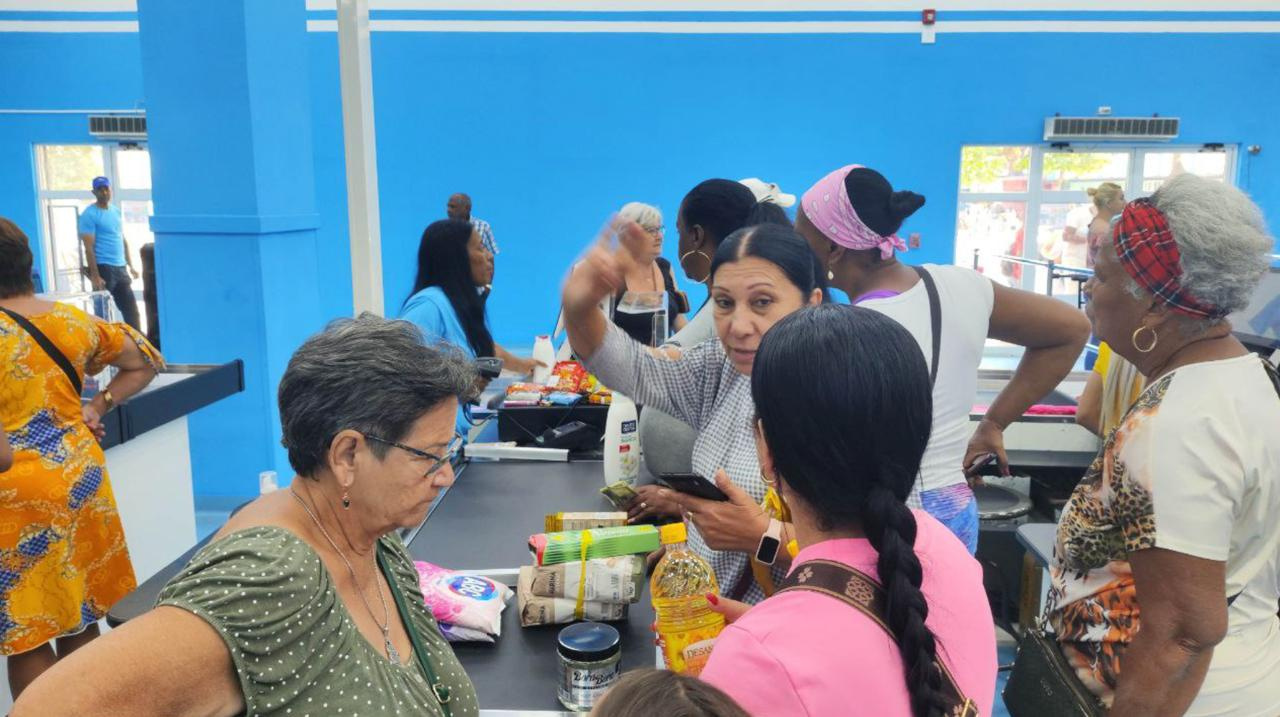
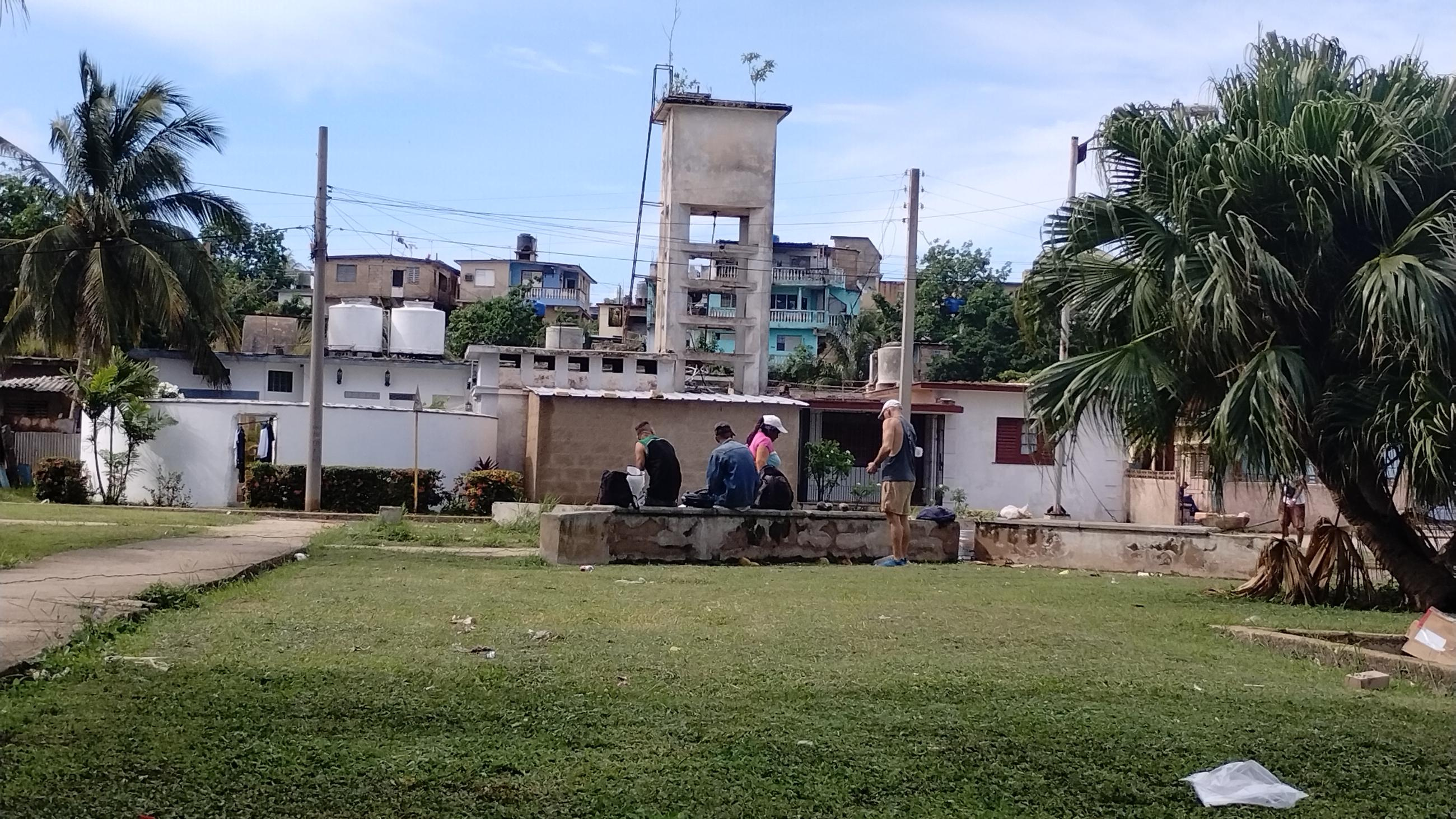
In Matanzas, Competition Is Fierce Between Licensed Pushcart Vendors and Illegal Sellers

“I can’t compete with their prices because I pay taxes,” complains a street vendor in Peñas Altas.

“Far from being bothered, it’s good that these vendors exist, because many offer more affordable prices,” says a local resident. / 14ymedio

14ymedio bigger14ymedio, Pablo Padilla Cruz, Matanzas, 12 August 2025 — Police officers and state inspectors evicted and imposed 5,000-peso fines on several street vendors of agricultural products who were operating without a license near the building known as 13 Plantas de las Panaderías, in the Peñas Altas neighborhood of Matanzas. The operation, which occurred last Thursday morning and included the confiscation of merchandise, has sparked controversy in the community over food shortages, prices, and the unequal competition between informal and licensed vendors.

“Far from being bothered, I find it convenient that these vendors exist, because many offer more affordable prices than the carretilleros [street cart vendors]. And if you arrive late, when they have little left, they offer ridiculously low prices; once, one gave me half a bag of mangoes,” says Minerva, a local resident, pointing to the exact spot where the makeshift stalls have been set up. For her, the presence of these vendors isn’t a public order issue, but rather a way out of the lack of options in the small public squares.

“And if you arrive late, when they have little left, they make offers.”

Not everyone shares her enthusiasm. El Chino, a licensed street vendor, says that unfair competition complicates his daily life. “I have taxes to pay and I fight against product losses, which are worse in the summer because of the heat. I don’t mind people fighting for their money, but when everything they sell is a profit for themselves, I can’t compete with their prices. My bunches of plantains are around 180 pesos, but theirs, which are sometimes larger, sell for 160 or less. So, I have to wait for them to sell first continue reading

and then start selling myself, or find a new place to park my cart. Everyone struggles in their own way, but these unlicensed vendors make things difficult for me.”

The Peñas Altas area, strategically located near bus stops to Limonar and other municipalities, has become a natural corridor for informal sales. From fruits and vegetables to cheese, yogurt, and smoked meats, these improvised vendors often come from rural areas where agricultural work is the main—and sometimes only—source of income. The lack of opportunities and the poor performance of state markets compel many to take the risk, despite the risk of losing their merchandise or receiving substantial fines.

“The only well-stocked plaza in Cuba was the one in Ciego de Ávila, which was reported on the news on July 26th.”

“You can go to the two nearby markets around noon and they’re already closed,” comments a group of neighbors who witnessed the operation. Another jokes: “Although it’s true that prices there are lower, they’re almost never stocked. The only stocked market in Cuba was the one in Ciego de Ávila, which was reported on the news on July 26th.”

A third adds, amid laughter and indignant gestures from the rest: “It’s true that those people were selling without a license, but how many do they help when Acopio and the State do nothing for the citizens? They think they’re doing enough with the Sunday markets. That’s why we yelled all kinds of things at the police and those two thieving inspectors who came to evict them.”

Thursday’s operation is not an isolated incident. For months, authorities have intensified controls on unlicensed street vendors, citing the need to “ensure order and combat hoarding.” However, for many residents, this policy does not solve the underlying problem: the lack of a stable and varied offering from the official channels.

State markets operate intermittently, with empty shelves and reduced hours.

In Matanzas, as in the rest of the country, obtaining agricultural products at reasonable prices is a daily challenge. State markets operate intermittently, with empty shelves and reduced hours. Prices at authorized points of sale often exceed what the average family can afford, especially after the inflation that followed the Ordering Task. In this context, informal commerce has gained a place in the neighborhood economy, offering a combination of lower prices and immediate availability that attracts loyal customers.

The tensions between authorities and informal vendors are also reflected in the social climate. While some see these raids as a way to maintain control over commerce, others interpret them as a punishment for those seeking to survive amid the crisis.

“The lack of food, along with the limited availability of water and electricity, is one of the main sources of criticism in the country,” notes another resident. “It’s possible that a group of individuals can lower the cost of agricultural products, even at the risk of severe fines, while the state entities intended to meet these needs are conspicuous by their absence.”

____________

COLLABORATE WITH OUR WORK: The 14ymedio team is committed to practicing serious journalism that reflects Cuba’s reality in all its depth. Thank you for joining us on this long journey. We invite you to continue supporting us by becoming a member of 14ymedio now. Together we can continue transforming journalism in Cuba.
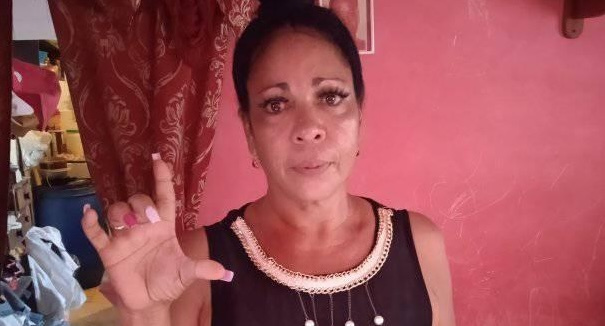
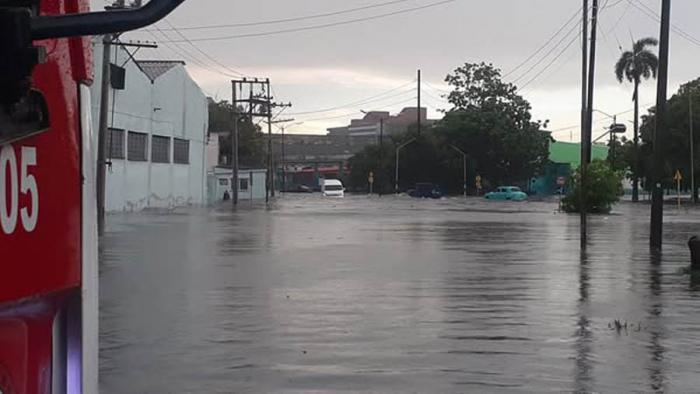
Heavy Flooding and Power Cuts in Havana After a Downpour of Several Hours

Tropical Storm Erin threatens to become the first hurricane of the season but poses no risk to Cuba.

Videos of flooded streets throughout Havana on social networks have reported the situation associated with tropical storm Erin.

14ymedio bigger14ymedio, Havana, 12 August 2025 — A torrential downpour of rain fell on Havana this Monday leaving flooding in some places, such as Luyanó, which was completely dark after the impact of a lightning strike around 6 pm in the afternoon. The residents of that municipality saw water quickly running through doors and windows, even in the houses in good condition. The electricity did not return until after 8 pm, and the fresh water, which should have been pumped this Monday, did not arrive.

“A longshoreman from a nearby company was telling another that where he lives everything was flooded, and that the pots and statues of the saints next door floated out onto the street,” a Luyanó neighbor told this newspaper. In his house, the water even destroyed the painting of the facade.

The Havana authorities analyzed the situation in a meeting on Monday and called on the population to take precautionary measures before the flood. “I have seen young people on the streets avoiding the manholes and the waves caused by some vehicles. Right now in Via Blanca and the intersection of Vento and Lacret, not only are they hooking onto cars but also openly vandalizing and harassing them,” said the first secretary of the Provincial Committee of the Communist Party, Liván Izquierdo Alonso.

The Havana authorities analyzed the situation in a meeting on Monday and called on the population to take precautionary measures before the flood.

“In the area of Port Avenue and the intersection of Fábrica Street, an extremely dangerous area, a vehicle was trapped. Despite the presence of a Fire Brigade unit, some drivers insist on driving through the danger zone, including the boteros* and buses with passengers.  I wonder: What do these drivers have in their heads and why are they unable to see the danger?” he said.

The people, however, complain that the lack of cleanliness and the poor sewer drainage in the streets of Havana turn again and again into a deadly continue reading

trap when it rains, without enough maintenance being done to guarantee safety.

Videos of flooded streets throughout the capital have reported, on social media, the situation associated with tropical storm Erin, which is forming in the Atlantic and threatening to become the first hurricane of the season. The Institute of Meteorology (Insmet) is monitoring the situation, although it considers that there is no potential risk to the Island.

On Monday afternoon Erin was located about 455 kilometers west of Cape Verde and moving west at a speed of 31 kilometers per hour. From 3 am, Insmet mentions rain and storms during the day on Tuesday, without considering that they will be severe. However, it warns that “in areas with rain and associated electrical storms, wind strength and wave height can be locally increased.”

*Translator’s note:  ‘Boteros’ refers to the drivers of what are commonly 1950s American cars used as shared taxis on fixed routes.

Translated by Regina Anavy

____________

COLLABORATE WITH OUR WORK: The 14ymedio team is committed to practicing serious journalism that reflects Cuba’s reality in all its depth. Thank you for joining us on this long journey. We invite you to continue supporting us by becoming a member of 14ymedio now. Together we can continue transforming journalism in Cuba.

The Lady in White Aymara Nieto Leaves Prison in Exchange for Exile to the Dominican Republic

Nieto leaves behind an older daughter who could not say goodbye to her, since the authorities denied her last scheduled visit on Friday, August 8.

Aymara Nieto Muñoz, member of the Ladies in White / Aymara Nieto/Facebook

14ymedio bigger14ymedio, Havana, 12 August 2025 — The political prisoner Aymará Nieto Muñoz has been forced to leave Cuba and since Monday she has been with part of her family -two small girls and her husband- in Santo Domingo, the capital of the Dominican Republic. In Cuba, she leaves an older daughter who could not say goodbye to her, since the authorities denied her the last visit planned for Friday, August 8.

According to sources close to the situation, who have collaborated for her establishment in the Dominican Republic, she was taken directly from the prison to the airport, and the phones of her relatives were tapped, without allowing calls or messages. “This has no other name than exile,” warned activist Maria Regla Castro, who says Nieto Muñoz was taken in by a family at her destination.

“I was imprisoned until the last moment I was at the airport. They were the ones who took me. There they never let me go home, knowing that I had the papers they did not want to give me a pass,” confirmed Nieto herself in an interview with Rosa María Payá, promoter of Cuba Decide and member of the Inter-American Commission on Human Rights. Right there, the Lady in White explained that her departure took place “under conditions of threat from the State Security Department: she was either a prisoner or leaving the country.”

“I was imprisoned until the last moment I was at the airport. They were the ones who sent me away.”

Aymara Nieto Muñoz, member of the Ladies in White and wife of former political prisoner Ismael Boris Reñí, was serving her second consecutive sentence at the Bella Delicia Forced Labor Prison in Havana, where she had been since this May. Her first conviction came in 2018, when she was continue reading

sentenced to four years for offenses of assault and property damage, but while serving a sentence at the El Guatao women’s prison, she was prosecuted for allegedly leading a prison riot.

At that time she received a sentence of five years and four months, and from this April she could apply for a change of measure to a regime of lesser severity. However, the Provincial Court had not yet taken a decision in this regard. Prisoner Defenders had repeatedly complained that the regime made her freedom conditional on exile. “Aymara Nieto has spent a total of eight years in prison for reasons related to her human rights activism,” the organization reported.

Translated by Regina Anavy

____________

COLLABORATE WITH OUR WORK: The 14ymedio team is committed to practicing serious journalism that reflects Cuba’s reality in all its depth. Thank you for joining us on this long journey. We invite you to continue supporting us by becoming a member of 14ymedio now. Together we can continue transforming journalism in Cuba.

Five-Month-Old Baby Dies in Havana’s Flooding Due to Rain

The child, identified as Neimar Francisco Valdés Pérez, drowned after the water burst into his home.

Furniture destroyed by floods this Monday in Havana / 14ymedio

14ymedio bigger14ymedio, Natalia López Moya, Havana, August 12, 2025 — A five-month-old baby lost his life on Monday in the El Cerro neighborhood of Havana during heavy rains that hit the capital. The little one, identified as Neymar, drowned after the water burst with force in his house when a wall came down.

The news was confirmed to 14ymedio via telephone from La Nacional funeral home, where the body of the baby was being held. According to one of the employees, the funeral procession left at 8:20 on Tuesday.

In an interview with Florida-based Cuban journalist Mario J. Pentón, Karen Rodriguez, the baby’s aunt, said in tears that everything happened “in fractions of a second and gave us no time for anything.” The wall that divided the house from the family’s workshop came down with the rain, and the water entered in a torrent.

“He was given first aid and arrived at the hospital breathing, but died.”

At the time of the incident, she recounted, “we were all in the house with the boys.” She had enough time to get her baby out, but her sister-in-law did not. Neymar was dragged behind a door, where rescuers found him. ” He was given first aid and was still breathing when they arrived at the hospital, but died,” the woman said.

Her account matches that of several people on social networks. “Fly high little one. We got you out alive, but you did not manage to survive. You don’t know how we firefighters who got you out feel,” wrote young rescuer Enmanuel Díaz Rodríguez. His message was commented on by dozens of users, many of whom sent condolences to the family and expressed outrage at the conditions that led to the fatal outcome.

On the Patria y Vida Facebook page, where reference was also made to the unfortunate event, a comment from Zulema Fuentes, neighbor of the victims, also offered an account of what happened. The little boy’s mother, she recounted, was picking up the house because everything was getting wet, while holding the baby in her arms. The wall collapsed suddenly, letting in a large amount of water whose force snatched the child from her hands. Neymar had turned five months old that same day. The current dragged away not only him but also the mother, who took a few moments to get up and realize that the child was no longer there. continue reading

Fuentes added that the moment was one of absolute despair: neighbors, friends and family began to look for him while screaming, until a neighbor found him trapped behind the door. He was immediately given first aid, and according to the story, the child opened his eyes. He was rushed to hospital, where he received medical care, but eventually died. This new account provides a more vivid picture of the chaos and helplessness experienced in the critical minutes after the collapse, and it highlights how quickly the tragedy unfolded.

The authorities have so far not provided any information on what happened.

Wall knocked down by rain near the Villanueva station./ 14ymedio

At dawn this Tuesday, the scene in some neighborhoods showed the virulence of the storm, with furniture destroyed and washed into the streets and walls demolished.

In any case, the fact again highlights the precarious conditions of many buildings in the capital, particularly in neighborhoods like El Cerro, where accumulated deterioration and lack of maintenance make each rainy season a period of extreme risk. On numerous occasions, neighbors have reported leaks, cracked walls and weakened structures without timely repairs.

Havana is a city where heavy rains often cause flash floods, especially in low-lying areas with poor drainage. The aging rain system, largely clogged by massive amounts of solid waste, is unable to evacuate water at the required speed, causing accumulations that can reach dangerous levels in a matter of minutes. In areas like El Cerro, this problem is aggravated by the proximity of some houses to streets that turn into real rivers during storms.

Translated by Regina Anavy

____________

COLLABORATE WITH OUR WORK: The 14ymedio team is committed to practicing serious journalism that reflects Cuba’s reality in all its depth. Thank you for joining us on this long journey. We invite you to continue supporting us by becoming a member of 14ymedio now. Together we can continue transforming journalism in Cuba.
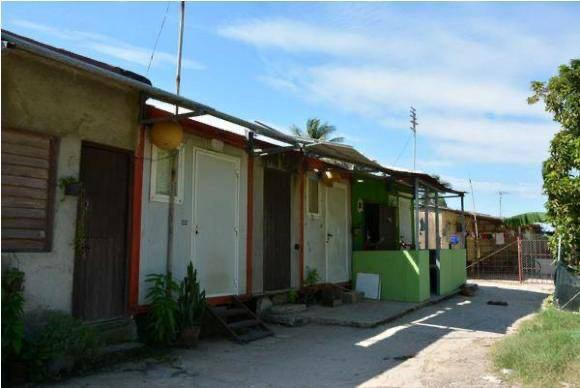
Recycled Containers and Corruption in Vivienda, Two Sides of the Housing Crisis in Cuba

In Las Tunas, authorities want to give a second life to solar panel containers by converting them into homes.

Reference image of containers converted into homes in Cuba. / Archive/Cubadebate

14ymedio bigger14ymedio, Havana, August 8, 2025 — In Las Tunas, where the housing crisis has been installed for years as an uncomfortable guest, the authorities have decided to resort to a “novel” solution: converting recycled containers into homes. The metal boxes are nothing less than those that transport solar panels to the Island, and the authorities-who assure that they are inspired by similar projects around the world-have decided to give them a second life.

Héctor Rodríguez Espinosa, provincial director of housing, announced with optimism that the first containers will be installed in the municipalities of Manatí, Puerto Padre and Majibacoa. Among their advantages are resistance, durability and low environmental impact.

“At present the province has 46 containers: Eighteen of them are assigned to the Electric Company for the construction of nine houses for its workers, and 28 are to be delivered through the popular councils by delegates, community groups and the government in each territory,” said the manager.

As for the frequent “concerns” about the metal material of the containers, which could turn them into ovens, he said that there is nothing to be alarmed about. Each improvised house will be covered inside with “anti-thermal elements,”which will also provide “aesthetics, comfort and a better continue reading

finish.”

They will have a plot of 150 square meters, so that “the family, if necessary and possible, can later expand by building other rooms.”

Each unit will have between 32 and 70 square meters-divided between bathroom, kitchen, dining room and bedrooms, according to the number of residents-and “ventilation” is assured with doors and windows, he highlighted. They will also have a plot of 150 square meters, so that “the family, if necessary and possible, can later expand by building other rooms.”

Meanwhile, the residents will have to adapt to living in the boxes of the refurbished metal containers. Some officials of the Housing Directorate itself were busy emptying other boxes, which came from the state budget.

In Matanzas, the People’s Provincial Court on Thursday tried two former employees of the sector-a director and an investor-for forging documents and embezzling funds. The trial, described as “exemplary” like so many others, ended with a sentence of five years in prison for the first and four for the accomplice, with the option to do correctional work without internment.

According to Girón, the former director had bypassed all procedures and signed a contract with a self-employed worker to rehabilitate a multi-family building known as the Transport Building, in the neighborhood of 13 de Marzo. The agreement was signed, clarifies the media, “behind the back of the unit’s Procurement Committee and without prior bidding.” The document did not contain “the work object; the person responsible for the supply; the representatives of the supplier and the customer; the terms of guarantee; the schedule of execution; and the list of persons authorized by the supplier and the customer to sign the certificates of conformity, acceptance and materials.”

There was no construction work on the building, which had “severe structural damage,” but there was a bill of more than half a million pesos.

There was no construction work on the building, which according to Girón presented “severe structural damage,” but there was a bill of more than half a million pesos for work that was never carried out. “No constructive action was taken to restore the original and functional values of this building as planned, and the property now remains in the same state of deterioration, although [the directors] arranged payment as if the construction had been carried out satisfactorily,” the newspaper said.

The investor, for his part, never verified that the construction had been completed with the desired quality nor requested the work file. He still certified the whole process.

Both were also prohibited from exercising any office related to “administration, care or availability of material and financial resources,” and their family members -it is not clear whether voluntarily- refunded the 531,486 pesos,19 centavos, so that Vivienda did not see its assets affected.

The trial, which was held in public, is yet another warning from the Government, among many that it has issued recently, to officials and low-ranking managers on the Island. However, the fact that such an obvious crime -since the building was never repaired- was ignored until the last moment casts doubt on the management and control of state enterprises over their resources. Justice was delivered, but, as is often the case, it was delayed.

Translated by Regina Anavy

____________

COLLABORATE WITH OUR WORK: The 14ymedio team is committed to practicing serious journalism that reflects Cuba’s reality in all its depth. Thank you for joining us on this long journey. We invite you to continue supporting us by becoming a member of 14ymedio now. Together we can continue transforming journalism in Cuba.
Yankiel, 13 Years Old, Student by Day and Can Collector by Night

Poverty is growing in Cuba and many families depend on their children’s work for their daily sustenance.

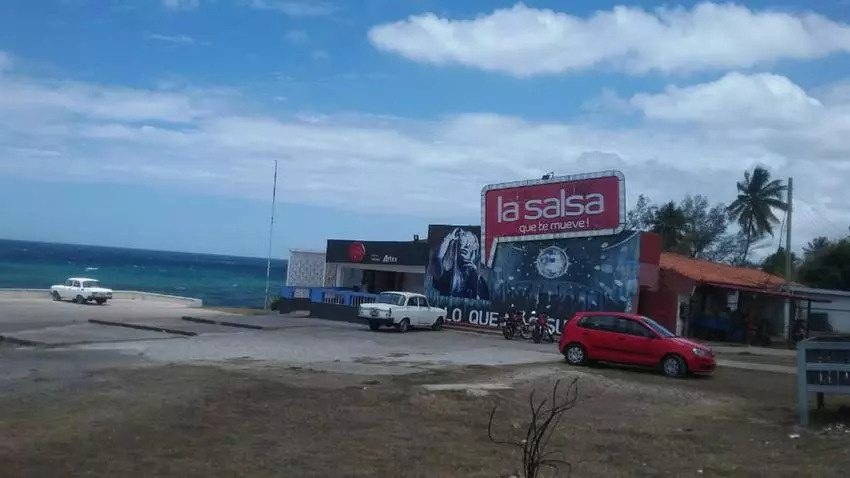
At La Salsa, Yankiel waits for the closing time, leaning on his sack of cans, to return to his work. / 14ymedio

14ymedio bigger14ymedio, Pablo Padilla Cruz, Matanzas, 11 August 2025 — In the parking lot of the La Salsa nightclub in Matanzas, a teenager sleeps next to a sack half-full of cans. He’s waiting for the party to end before continuing his collecting work. His name is Yankiel and he’s 13 years old. His mother died a long time ago. “I remember her, but not enough,” he confesses.

Recent statements by the former Minister of Labor and Social Security, downplaying the extreme poverty suffered by thousands of Cubans, sparked a debate that many consider overdue. Even in the official press, cracks are beginning to appear. The Girón newspaper, the provincial newspaper of Matanzas and a smaller sister newspaper of Granma, published a two-part photo report on the plight of street begging.

In the images, the deterioration and precariousness can no longer be hidden. However, the editorial treatment maintained the usual script. Alongside each testimony of hardship, the government’s “efforts” to provide shelter for those without a place to live are emphasized—in bold and insistently—even if that shelter is 100 kilometers from their original place of residence or is a former school building converted into a damp and continue reading

corroded shell.

Beyond what the photos showed, it was striking that there were no children in the report.

Beyond what the photos showed, it was striking that there were no children in the report. The selection of images conveyed the idea that children in Cuba were safe, as if José Martí’s phrase, “Children are born to be happy,” had been strictly adhered to. Stories like Yankiel’s, however, contradict this sugary portrait.

His father does heavy labor: masonry, clearing land, collecting animal feed scraps, and, above all, the nighttime harvesting of raw materials. This task is a family business. To cover more ground, father and son split up. One walks through the city center and Narváez Street; the other goes from the El Tenis neighborhood to the Reinol García neighborhood, known as Pastorita. Together, they fill their sacks with bottles, plastic containers, and cans, which they then sell.

During school holidays, Yankiel takes advantage of the opportunity to harvest for longer hours. “I don’t have to get up early to go to school,” he says. But when the school year starts, the routine becomes exhausting. He combines classes with street work, a kind of childhood moonlighting, one he undertakes without fully realizing it. This year, he will enter eighth grade, although his priorities seem driven by a different logic: survival.

Beyond what the photos showed, it was striking that there were no children in the report. / 14ymedio

When asked what he wants to do when he comes of age, he hesitates for a few seconds. Then, with the sincerity of someone unaccustomed to embellishing words, he replies: “I want to work in something that makes money.” His straightforward answer reveals an urgent concern for the outcome, not the path to achieving it. When the goal is solely “making money,” the alternatives can be uncertain or dangerous.

In the park, someone gives him a cola. He drinks it slowly, with a mixture of shyness and relief. The empty container goes directly into the bag, along with the other collected cans. Yankiel’s case is one among many. Neither he nor other children in similar situations have ever appeared in the reports on Girón or in the speeches of ministers. They don’t fit the narrative of a protected and happy childhood. Childhood marginalization is rendered invisible, not only by media censorship, but also by political indifference.

The images in the official photo report showed adult faces, makeshift beds in doorways and vacant lots, stoves without fuel, and peeling walls. But the omission of children was not accidental. Showing a child sleeping on the street or carrying a sack of garbage would be an admission that the State has failed in one of its propaganda pillars: the care of childhood.

In Cuba, minors working in raw material collection, street vending, or animal care are not isolated cases. It is a widespread reality, especially in cities and the less developed surrounding areas. The economic crisis, inflation, the decline in purchasing power, and the inadequacy of social programs have forced many families to rely on their children’s labor to supplement their daily livelihoods.

The language used to define places softens the edges and dilutes the State’s responsibility

Extreme poverty is no longer an issue that can be hidden behind euphemisms. What was once denied or attributed to “isolated cases” now appears in the streets in broad daylight. The fact that a media outlet like Girón, controlled by the Communist Party, publishes a report on beggars in Matanzas indicates that even the official press has had to acknowledge that poverty exists and is growing.

But recognition is partial and conditional. Each complaint is juxtaposed with a justification: the promise of a transfer, a home repair, or the delivery of mattresses. The language used to define places softens the sharp edges and dilutes the responsibility of a State that, for decades, has presented itself as the absolute guarantor of social welfare.

Yankiel will continue walking the streets, his bag slung over his shoulder, while attending eighth grade. His father will continue working the toughest jobs, combining the hours of daylight with the early morning hours. Neither of them expects a sudden change. Poverty, for them, is not a temporary circumstance but a permanent context. And what is not published in Girón, nor mentioned in speeches, is what most defines today’s Cuba.

____________

COLLABORATE WITH OUR WORK: The 14ymedio team is committed to practicing serious journalism that reflects Cuba’s reality in all its depth. Thank you for joining us on this long journey. We invite you to continue supporting us by becoming a member of 14ymedio now. Together we can continue transforming journalism in Cuba.

In Order To Avoid a Further Flight of Personnel, the Cuban Government Will Redistribute Salaries for Vacant Posts

This measure will be temporary and will apply only in the budgeted sector, in particular Education and Health

In recent years, the workforce in State-owned enterprises has been drastically reduced.

14ymedio bigger 14ymedio, Havana, 11 August 2025 — The Cuban government will redistribute wages already budgeted for unoccupied state positions among employees who are currently working. This is stated in an agreement signed by the Council of Ministers and published on Monday in a special Official Gazette.

The legal prose does not hide the fact that the measure is intended to be an “incentive for the stability of the labor force” in the face of the “sustained increase in the labor fluctuation of the budgeted sector,” which means the loss of human resources in the State sector.

“It is considered to be additional pay and salary for all legal purposes, without its application constituting a payment system.”

The decision does not imply an increase in wages, as one of the articles clarifies: “It is considered to be additional pay and salary for all legal purposes, without its application constituting a payment system.”

It will apply to all occupational categories in the budgeted sector, including units with “special treatment” (such as military personnel or doctors on missions). However, there are exceptions to this extra payment: “The bodies and agencies of the Central State Administration and national entities that have approved differentiated salary treatments of wage increases, as well as the care units and educational institutions whose health professionals and teaching staff receive the benefit of maximum effort and overload of educational work.” continue reading

According to the resolution, it will be the heads of the various entities who assess whether “the non-implementation of the salary fund is objective” and ensure the redistribution with the salary expenditure plan allocated for the fiscal year. The distribution shall be made by means of an internal regulation drawn up by the Board of Directors of each unit, which shall include the frequency of payment.

The regulation should also contain the “source of funding”; that is, the amount of “non-implemented” money to be distributed.

“It may be granted only once or for a period of time to be determined, according to the characteristics of the work or the result that is stimulated, without this being permanent or massive,” insists the text. The regulation should also contain the “source of funding”; that is, the amount of “unimplemented” money to be distributed and the procedure for granting it, which will also depend on different factors. The “high performance criteria, differences with greater recognition of highly qualified human resources, holding positions of higher responsibility, the competency management approach and the individual distribution mechanism” will mark the differences.

Similarly, states the Gazette, the amount paid to each worker “is to be approved by the Board of Management of the budgeted unit, in agreement with the trade union organization, and reported to the General Assembly of Affiliates and Workers.”

The Government sets a deadline of 30 days for each agency to carry out an “analysis.”

From the publication of the measure, this Monday, the Government sets a deadline of 30 days for each agency to carry out an “analysis” that allows knowing “which entities are able to redistribute the salary fund” and approve the “general guidelines” to allow the payment to be redistributed.

The implementation of the resolution will also be subject to review over a period of one year and every three months, requiring an outcome report to be submitted to the Ministry of Finance and Prices.

In recent years, the workforce in the budgeted sector and State enterprises has been drastically reduced, mainly due to the migratory exodus and low wages, which are barely enough in a context of widespread crisis.

Translated by Regina Anavy

____________

COLLABORATE WITH OUR WORK: The 14ymedio team is committed to practicing serious journalism that reflects Cuba’s reality in all its depth. Thank you for joining us on this long journey. We invite you to continue supporting us by becoming a member of 14ymedio now. Together we can continue transforming journalism in Cuba.
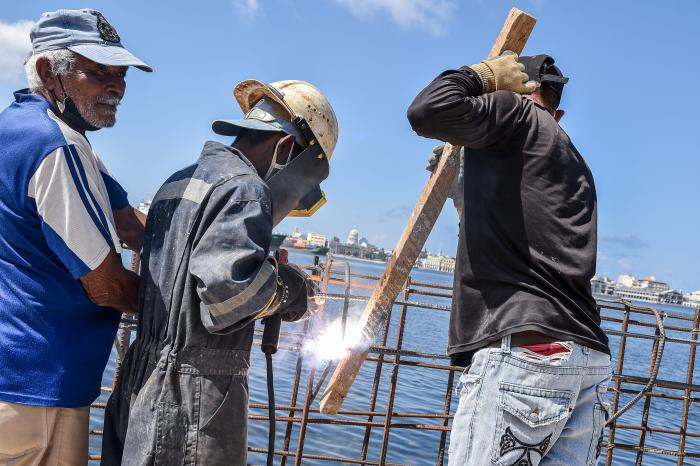
July Books: Variations on the Orishas, the Lottery and the Cuban Incubator

Katherine Perzant’s book about the Cuban countryside has just won the Franz Kafka prize for essay and testimony

‘Cubensis’ is another reflection on a lost country that we now begin to understand. / 14ymedio

14ymedio bigger14ymedio, Xavier Carbonell, Salamanca, 9 August 2025 — Katherine Perzant has rediscovered for readers the physical and spiritual desert of the Cuban countryside. A skeletal train that crosses a plain; oxen grazing casually by the road; miles of yellow grass and barren land. Anyone who says that Cuba is a tropical paradise would only have to travel through those villages of Oriente and Las Villas. “This is the Cuban nothingness,” writes Perzant.

Her book of vignettes and observations on the countryside of her childhood in Holguín during the Special Period has just won the Franz Kafka prize for essay and testimony. With a prose put at the service of reflection and charged with fatality, like that of Faulkner and Coetzee, La nada cubana (The Cuban Nothingness) evokes villages and hamlets and the distance between them. If you search the grass, you will find snakes, guinea pigs, mice and all kinds of vermin.

You will also find guajiros--farmers–in addition to country life and the women; they only know how to talk about one thing: La Charada.* If there is anything beautiful in the Cuban countryside it is La Charada,” writes Perzant in one of the best excerpts from the book. “People play the numbers and their meaning, looking for luck, although those who have played and know say that whoever plays by necessity loses by obligation. It doesn’t matter. If you grew up in the countryside, you know that a coyuyo (click beetle) turns upside down, and the number of its somersaults is the number of children you will have.” continue reading

The sacred combinational analysis leads a guajiro to place everything on five if he sees a nun and on 65 if he is pecked by a hen.

Chance is the only thing that dares to challenge nothingness: the sacred combinational analysis that leads a guajiro to play everything on the number five if he sees a nun and on 65 if he is pecked by a hen. “Number one is a horse; two, a butterfly; three, a little boy; and four, a cat,” enumerates Perzant. There has not been such a tremendous evocation of the countryside for a long time, which is the same as saying the Island, as if Havana did not exist.

Another reflection on a country that was lost and that we now begin to understand is Cubensis (Empty House), by journalist and film critic Alejandro Ríos. This collection of articles attempts to reconstruct Cuba from afar, in an exercise that the filmmaker Carlos Lechuga has described as a “rescue and salvation maneuver” for an identity that exile has not extinguished.

Mi último viaje en Lada (My Last Trip to Lada), published by the same publisher, is the first part of a collection of crime novels, la Trilogía de la Quinta Avenida (The Fifth Avenue Trilogy). Its author, Efraín Rodríguez Santana, explores the corridors of the Interior Ministry as he investigates an art theft in the 1990s. The crime novel, like other narrations of its kind, such as Leonardo Padura’s Paisaje de otoño (Autumn Landscape), is expected to be a pretext for social criticism.

Another crime novel, Lo que oculta la noche (What the Night Hides), by May R. Ayamonte, continues a tendency of popular Spanish novelists to use the Cuba of the 80’s and 90’s as an escape scenario. In 1987, a woman travels from Spain to Playa Larga with her lover and begins her initiation into santeria. Years later, a detective investigates to what extent this flight had to do with a crime that occurred in Granada, in which everyone sees the Devil’s hand, although these are innocent orishas.

Reina María Rodríguez is perhaps the most notable living female voice of Cuban poetry. With her book of poems Mazorcas (Corncobs), published by Rialta, the winner of the National Prize for Literature once again displays her intimate universe, composed of a series of images–the conversation of a poet with his daughter, a room with flowers, the corn fields in Wajda’s cinema–of a life that could not be lived.

In Salamanca, the Cuban poet Odalys Interián won the King David Award for Biblical Poetry for her poetry collection, Y la muerte se muere (And Death is Dying

In Salamanca, the Cuban poet Odalys Interián won the King David Award for Biblical Poetry for her poetry collection, Y la muerte se muere (And Death is Dying). The competition, organized by prestigious writers based in the city, like the Peruvian Alfredo Pérez Alencart, awards books in which spirituality and language are intertwined. Interián lives in exile in Miami and directs the publishing house Dos Islas.

Within Cuban literature, if there is a thunderous and unclassifiable author, it is Yoss. Nobody knows who José Miguel Sánchez Gómez is–a name that could be that of a baker or a mechanic–but everyone knows Yoss. Biochocolítica del caos (Biochocolytic of Chaos), published by Verbum and signed by Pedro Pablo Porbén, tries to get closer to the writer’s machinery without getting burned.

What is biochocolate mousse? What does it taste like? What is postmodernism? Who is Yoss? No one knows if Porbén will be lucky enough to answer those questions, but readers would do well to be afraid of the answers.

*Charada: Also called La Bolito, the clandestine game of numbers and symbols dates from the 1800s when Chinese workers arrived in Cuba. Although technically illegal, it is engrained in Cuban culture.

Translated by Regina Anavy

____________

COLLABORATE WITH OUR WORK: The 14ymedio team is committed to practicing serious journalism that reflects Cuba’s reality in all its depth. Thank you for joining us on this long journey. We invite you to continue supporting us by becoming a member of 14ymedio now. Together we can continue transforming journalism in Cuba.
A Hard-Currency Incentive Is Promised to the Charcoal Producers of Pinar Del Río, Cuba

This measure aims to increase exports to 250 tons, which barely reached 36 tons in 2024.

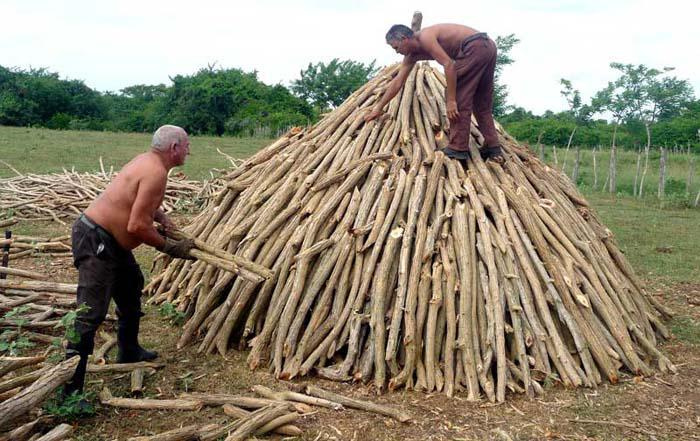
Charcoal producers in Pinar del Río / Granma

14ymedio bigger14ymedio, Havana, August 11, 2025 — The Pinar del Río Agroforestry Company only exported 36 tons of charcoal out of the 400 tons it produced last year, but it promises very different results for 2025. According to its director, Leduhan Menéndez Cardentey, it will produce less than in 2024, about 300 tons, but 250 of them will be for export.

That is, if last year only 9% of the production was destined for sales abroad, this would represent more than 83%. How will they make up that difference? Menéndez Cardentey’s explanations to the provincial press seem more voluntarism [the principle of relying on voluntary action] than reality and refer to the approval of a “financing scheme” in dollars.

Of the sales of charcoal, the official assures, most, 54%, will go “directly to the producer” (30% to the State budget and the rest to be “negotiated with the producing company and exporters”). “This can multiply the volumes of production from which the producer would have a profit in hard currency,” says Menéndez Cardentey. It is not clear, however, how and to what extent they will be able to achieve this.

At the end of last year, charcoal producers in Sancti Spíritus were complaining that they received 20 per cent of the revenue compared to 80 per cent for the State, and about the continue reading

difficulties of dealing with the government. “The company takes up to seven months to pay. They do not pay until the charcoal is sold outside the country,” a producer told this newspaper.

“Production has never been stopped, but the volumes that were previously made are not being produced.” 

On the other hand, the explanation for the drop in exports in 2024 is found, for the director of the Agroforestry Company, in the US embargo of the Island. “Production has never been stopped, but the volumes that were previously made are not being produced,” he explains to Guerrillero. “In 2024, we had a complex situation with the shipping companies because of the blockade.”

The Government made another statement to the National Assembly last July, exposing the country’s economic collapse and the fall in production in almost all areas. At that time, the Minister of Economy and Planning, Joaquín Alonso Vázquez, acknowledged that although the export figures for tobacco, lobster and other fishery products had recovered, “these increases were not sufficient to compensate for the decline in nickel and other mining products, honey, charcoal, farmed shrimp and sea shrimp, and biopharmaceuticals.”

The reasons, listed by the minister himself, included not just the “blockade” but also the lack of inputs, energy and fuel, in addition to “logistical problems and the decrease of some prices on the international market.”

In the same place, Alonso Vázquez stated that of the entire plan for exports of goods in the first months of the year had been fulfilled by only 62%, compared to 78% in the same period of the previous year. This makes it more difficult to comply with the prediction of the Pinar del Río Agroforestry Company.

Marabou vegetal charcoal was black gold for the Cuban state. The Government, until now, has been awarded 50 per cent of $340 per ton for export. An article published in Granma last year reported that for each ton of charcoal the Matanzas Agroforestal paid around 200 MLC (freely convertible currency), equivalent then to 172 dollars. This same product is sold in the US for about 400 dollars and, in the case of premium, almost 490 in Spain, where a newly created company–Entre Brasas–imports it from the port of Santiago de Cuba to Vigo, in Galicia.

The difference between the price paid to the Cuban producer and the cost to the foreign consumer is $228 per ton or, in the case of premium, $318. This includes the Cuban State’s share, transportation and the profit of the final vendor. Granma’s data showed that the Cuban State kept 168 dollars per ton, since it gave 172 to the producer, which has traditionally received better treatment than those in other agricultural sectors.

Translated by Regina Anavy

____________

COLLABORATE WITH OUR WORK: The 14ymedio team is committed to practicing serious journalism that reflects Cuba’s reality in all its depth. Thank you for joining us on this long journey. We invite you to continue supporting us by becoming a member of 14ymedio now. Together we can continue transforming journalism in Cuba.
Cuba’s Guantánamo Official Press Lashes Out Against the ‘Virus’ of Dollarization

Venceremos laments the loss in value of the MLC (Freely Convertible Currency) and its replacement by the “empire’s” currency.

In the street, a cash dollar is worth much more than a digital dollar in MLC (Freely Convertible Currency). / 14ymedio

14ymedio bigger14ymedio, Havana, 10 August 2025 — The official newspaper Venceremos, organ of the Communist Party in Guantánamo, has described the phenomenon of dollarization with an unusually critical tone. The text emphasizes the gradual disappearance of shops in freely convertible currency (MLC), as well as the prominence of bank cards, especially the Classic, which allows paying in dollars without standing in line or coming up agasint problems. Some interpret this change as the prelude to a major transformation.

What the official newspaper calls a “virus” has spread to the rest of the country from Havana. The emblematic 3rd and 70th market in the capital began to accept green banknotes, and almost immediately the MLC stores began to show more shortages than usual, while relatively well-stocked outlets operating only in physical dollars and with new cards emerged.

The informal exchange market, always sensitive to signals, reacted quickly. The gap between virtual “convertible currency” and physical currency widened, becoming a chasm. On the street, a cash dollar is worth much more than a digital dollar in MLC.

The ‘Venceremos’ report comes a little late for a problem that the independent media have already examined in minute detail many times.

The Venceremos report comes a little late for a problem that the independent media have already examined in minute detail many times. First, there are discounts on non-perishable products; then, a temporary “closed for maintenance” sign and some cosmetic touches; finally, the reopening as a dollar store. Inside, the sellers confirm what the official channels have not said: the merchandise is liquidated, and when the inventory runs out, the store reopens trading exclusively in US banknotes.

For those who still have savings in MLC or receive payments in that virtual currency, the situation is discouraging. The supply is limited to items of low demand that many buy hastily in order not to lose everything. The feeling of helplessness is growing, and with it continue reading

the perception that the MLC is doomed to disappear.

On the street, the issue is one of the most discussed topics. It is commented on in lines, public transport and social networks. At the official level, however, silence prevails. The Venceremos article criticizes, without naming, those responsible for the communication policy, pointing out that people do not receive clear and timely explanations about processes that directly affect them.

The only recent official reaction came from the Central Bank of Cuba (BCC), which denied a rumor about the imminent disappearance of this virtual currency. Speculation had circulated after a maintenance of the country’s main payment platform. In a short statement, the entity stated that operations in MLC continued and that interruptions were part of routine technical work, and it called for reporting through official channels.

The denial did not dispel the concern. As Venceremos points out, it is difficult to blame the population for believing in rumors when there is a lack of accurate and timely information. In addition, the episode highlighted a missed opportunity to face reality. In three decades, the Cuban regime has created and eliminated the CUC, allowed and banned the physical dollar, introduced and restricted virtual currencies, and is now converting the currency of the “empire” into the only valid national currency on the Island, while condemning the MLC to irrelevance, all in the midst of a sustained devaluation of the Cuban peso and an unstoppable rise in the dollar, which this Sunday is approaching 400 pesos.

A monetary “solution” is introduced, presented as stable; its use is limited, devalued and eventually replaced by another.

The historical account made by the Guantanamo media itself, unusual in a Party organ, presents a repetitive cycle. A monetary “solution” is introduced, presented as stable; its use is limited, devalued and finally replaced by another. The MLC, which was born as a digital equivalent of the dollar and with the promise of stability, is now being replaced by direct transactions in physical currency.

In Guantánamo, as on the rest of the Island, each new store closure is interpreted as another step towards total dollarization. Consumers prepare, exchange MLC for dollars in the informal market at very unfavorable rates and prioritize spending their virtual balances before they lose value. The general expectation is that, sooner rather than later, the MLC will be history.

The Venceremos article does not pronounce against this possible transition, but its tone and structure say everything. The use of expressions such as “extreme unction” and “life support” to refer to virtual currency breaks with the usual triumphalist rhetoric and suggests that, in the provincial official press, some journalists are tired of making up fictitious advances like everyone else, which also explode in their faces. .

Translated by Regina Anavy

____________

COLLABORATE WITH OUR WORK: The 14ymedio team is committed to practicing serious journalism that reflects Cuba’s reality in all its depth. Thank you for joining us on this long journey. We invite you to continue supporting us by becoming a member of 14ymedio now. Together we can continue transforming journalism in Cuba.