Acosta Dance, the Company of Cuban Dancer Carlos Acosta, Celebrates Ten Years of ‘Dedication’ Onstage

‘A Decade in Motion,’ taking place in Havana this Friday, Saturday, and Sunday
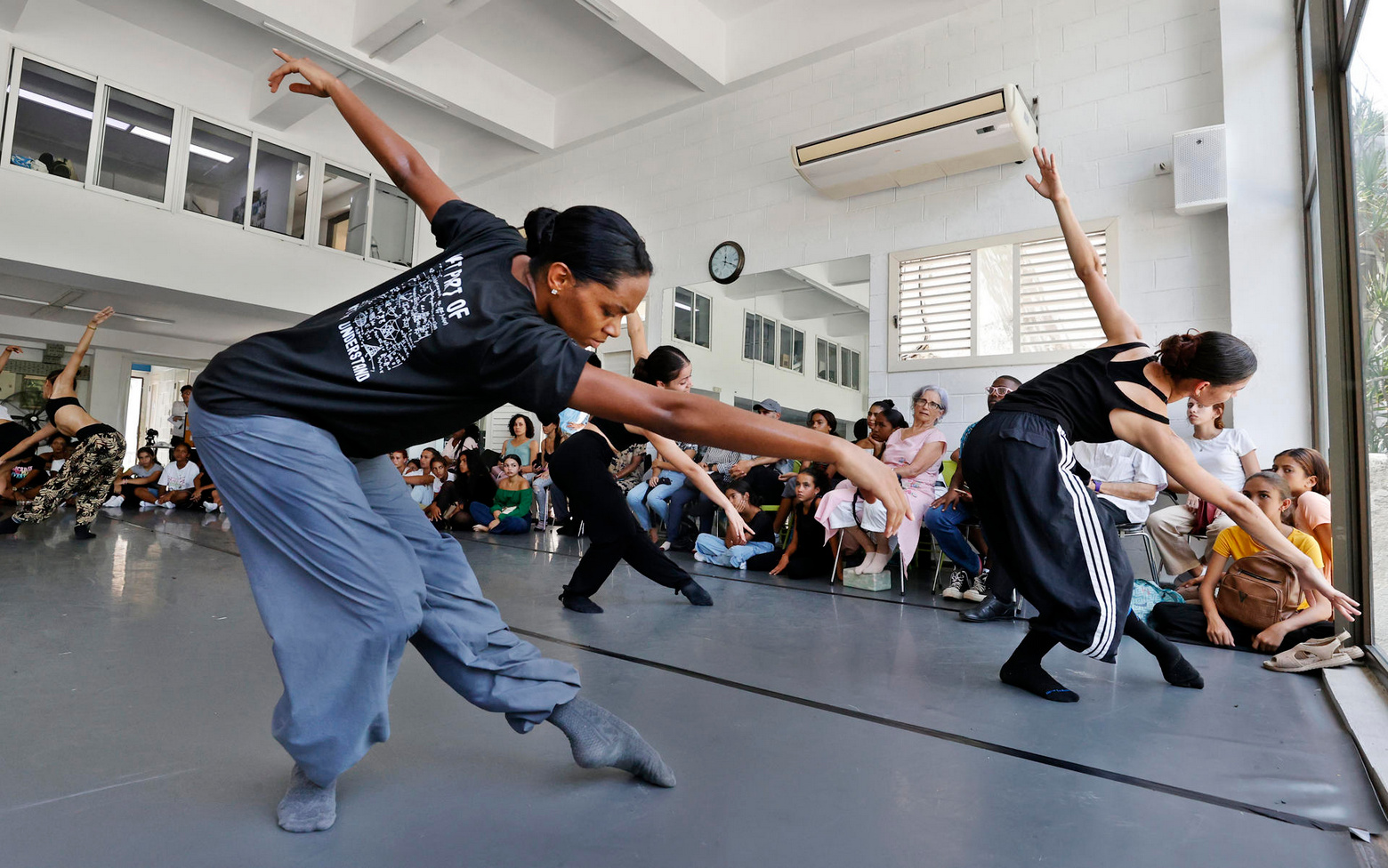

Dancers of the company Acosta Dance, pictured on August 27 during rehearsals for a show in Havana. / EFE/Ernesto Mastrascusa

14ymedio biggerEFE (via 14ymedio), Laura Bécquer, Havana, 5 September 2025 — Acosta Dance Company, under the direction of prestigious Cuban dancer/choreographer Carlos Acosta, celebrates, this weekend in Havana, a decade of “sacrifice and dedication” onstage, with its fusion of classical and contemporary dance technique.

“It’s been ten years of sacrifice, of dedication, of working alongside Carlos and making his dreams become a reality. We’re very happy with what we’ve achieved”, remarks the company’s artistic director Yaday Ponce in an interview with EFE.

Acosta (born in Havana, 1973) founded the company at the end of 2015, although it actually had its artistic debut in April 2016 during the course of a new cultural boom in Havana which was seeing a new closeness develop between Cuba and the United States.

For Ponce, “it was very difficult to begin with: getting the public to understand Carlos’s intentions – here was a classically trained dancer, forming a contemporary dance company”.

“This took quite a bit of work, but I think we managed it”, she says, from the headquarters of Acosta Dance in the Havana district of Vedado, during final rehearsals before the launch of a commemorative season, entitled ’A decade in movement’, marking the anniversary which takes place in Havana this Friday, Saturday and Sunday.

Acosta, the current director of the Birmingham Royal Ballet, is considered by critics to be one one of the foremost dance practitioners in the world 

Acosta, the current director of the Birmingham Royal Ballet, is considered by critics to be one one of the foremost dance practitioners in the world .

Trained at Havana’s National Ballet School, he consolidated, from a very young age, a career which was endorsed by numerous honours, including the Prix De Lausanne in 1990. He retired from performing in 2016 after 28 years as a professional dancer with prestigeous companies, both in Cuba and internationally.

It was at that point that he formed his own company, giving life to a personal project in which the classical ballet techniques in which he dominated were combined, with ease and imagination, with the liberty of movement of contemporary dance. continue reading

Ponce, who has accompanied the prestigeous dancer from the beginning, highlights that “he is a director who is always present”, even now when he resides in the United Kingdom.

“He’s a role model for me, not just as a dancer but as a director too. He’s very demanding: with the dancers’ precision, with the repertoire itself… everything. He’s in constant communication, present with us at all times, although he’s not actually physically present”, she explains.

Each one of the 14 dancers who make up the current Acosta Dance company – all young dancers trained in his own academy – transmits an energy and a passion to the rehearsals for the four pieces which will celebrate the ten year anniversary.

The evening includes: an interpretation of Spanish-Venezuelan choreographer Javier de Frutos’s ’98 Days’, inspired by Federico García Lorca’s visit to Cuba in 1929-30; ’The Equation’, by the Cuban Georges Céspedes; and ’The Calling’, with choreography by Goyo Montero.

The evening includes: an interpretation of Spanish-Venezuelan choreographer Javier de Frutos’s ’98 Days’, inspired by Federico García Lorca’s visit to Cuba in 1929-30

The show closes with ’From End to End’, by Ponce herself, based on the original piece by Cuban choreographer Alexis Fernández, a work nominated in 2022 for the Laurence Olivier prize in the UK.

On the subject of this final piece in particular, the young dancer explains to EFE that it has formed part of the repertory “since the company was founded, and it’s a reflection of the Cubans, a representation of what Cuba is, and of how Cubans feel, of their way of moving”.

“It’s a very integrated work because it includes dancers, musicians and audiovisual material. It’s what Carlos envisioned when he created the company in Cuba: that all the artistic elements of the show were to be integrated, to bring all this Cuban talent to the world’s attention”, she explains.

The company’s work has been endorsed through many diverse awards, among them the UK National Dance Prize (2025) for Best Medium Scale Dance Company.

For Ponce, her own “greatest personal achievement” has been in the training of her own dancers: “to be an artist-teacher for the company and for young dancers from all over Cuba”.

Translated by Ricardo Recluso

____________

COLLABORATE WITH OUR WORK: The 14ymedio team is committed to practicing serious journalism that reflects Cuba’s reality in all its depth. Thank you for joining us on this long journey. We invite you to continue supporting us by becoming a member of 14ymedio now. Together we can continue transforming journalism in Cuba.

Cuba Is Experiencing Its Third Day of General Blackout, With Sporadic Moments of Light

Authorities deny rumors about an imminent declaration of an “energy emergency” to address an out-of-control situation.

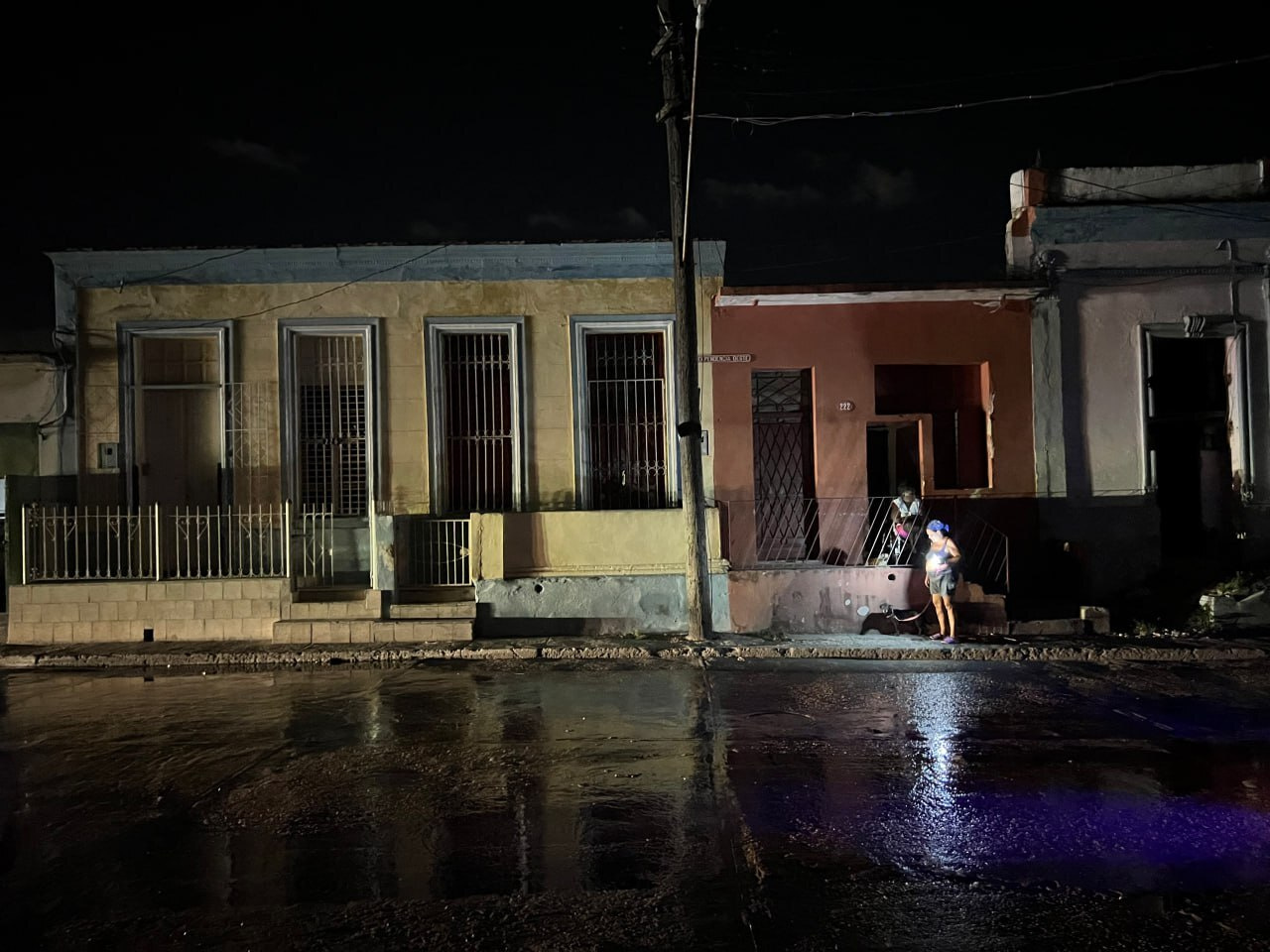
Cubans prepare for another night without power. / 14ymedio

14ymedio bigger

14ymedio, Natalia López Moya, Havana, 12 September 2025 — As of midday on the third day of the failure of Cuba’s national electricity system (SEN), it is clear that authorities were too quick to celebrate the country’s “recovery.” Many Cubans are still experiencing power outages or unreliable service, and they anticipate another night in the dark.

In Havana, authorities from the Electric Union reported that four of the city’s six power blocks are without service, including Nuevo Vedado and San Miguel del Padrón as 14ymedio was able to confirm. This newsroom also received reports of outages in Sancti Spíritus, Holguín, and Villa Clara that have lasted several hours and are accompanied by a drop in internet connection.

As if that weren’t enough, official media reported the shutdown of Unit 3 of the Carlos Manuel de Céspedes thermoelectric plant in Cienfuegos. “This incident complicates the operation of the SEN and increases the impact of the country’s generation capacity deficit,” officials admitted.

Block 5 of Renté, in Santiago de Cuba, which contributed 70 megawatts to the SEN (National Energy Service) this Friday, also went “unexpectedly off the system due to an automatic operation related to a boiler feed valve.” Authorities assured that they are working to ensure it can be brought back online this afternoon.

Block 5 of Renté, in Santiago de Cuba, which contributed 70 megawatts to the SEN this Friday, also “unexpectedly” went offline.

Ricardo is 72 years old and at his house they avoid opening the freezer so that the little bit of cold that protects the food stored in the refrigerator doesn’t escape. “My daughter had sent me a box of chicken a few days back, and now I could lose all of that if the power doesn’t come back on by tomorrow, Saturday at the latest,” this resident of the La Timba neighborhood, near the Plaza de la Revolución, told 14ymedio.

The Havana resident has taken extreme measures. “My grandchildren haven’t been to school for three days. On Wednesday, when the national blackout began, they had just entered their classrooms, and my son went and got them, brought them home, and they haven’t left the house since.” In the family home, continue reading

“you can count the hours of light” we’ve had, he laments.

The impact also directly affects the wallet. Ricardo’s son earns his living with an electric tricycle that moves goods that customers buy at a central Havana hardware store. “He has no way to charge it, and the sales of materials aren’t working because the hardware store doesn’t have a power plant,” explains the head of the family, who admits he hasn’t showered for three days due to the lack of water.

In the buildings with more than 12 stories that abound in the Nuevo Vedado area, near La Timba, residents who live on higher floors avoid going down because they’ll then have to use the stairs to return to their homes. “There are a lot of elderly people here, and they’re not up to navigating all those steps up and down,” commented a resident of the Los Pilotos building on Factor Street this Friday.

The lack of water is particularly acute at these heights because, even if the cistern has some reserves, the water pump lacks electricity to operate and fill the tanks located at the top of the building. Carrying full buckets or jugs up the stairs is also unfeasible for many of the residents on the upper floors.

This Friday, clinics at the 19 de Abril Polyclinic in the area were also suspended again. “That generator has been broken for years, but no one has reported it yet,” an employee responded to a frustrated patient who, for the second day in a row, was trying to be seen for an eye problem. The woman questioned the health center’s lack of power backup, despite the fact that a huge power plant is visible on one side of its facade. Fuel is needed to operate it, and there isn’t any.

The lack of water is especially striking at these altitudes because, even if the cistern has some reserves, the water pump does not have electricity to operate.

The critical situation has even prompted rumors circulating on social media that UNE will implement a controlled 72-hour power outage. The electric company denied that the government intended to declare an “energy emergency” and denounced a disinformation campaign.

In response to the article, reproduced by Cubadebate, the first four comments from readers of the official outlet harshly criticized the authorities. “Is there any information that correlates with the reality Cubans are experiencing today? What official reports say is one thing, but the reality Cubans are experiencing is quite another.”

Another commenter quipped: “Great, it was fake news… But we’re still without power for over 20 hours.”

The comments also reflected readers’ resignation and weariness, with phrases such as, “In short, massive blackouts across the country have already occurred five times, and not to mention that half the country is shut down every day.” It’s clear that Cubans know that the “stability” of the SEN lasts  only until “it breaks down again.”

____________

COLLABORATE WITH OUR WORK: The 14ymedio team is committed to practicing serious journalism that reflects Cuba’s reality in all its depth. Thank you for joining us on this long journey. We invite you to continue supporting us by becoming a member of 14ymedio now. Together we can continue transforming journalism in Cuba.

Elections Under Castrochavismo

The rulers of these countries tightly control the electoral mechanisms and present themselves as a bloc against a divided opposition.

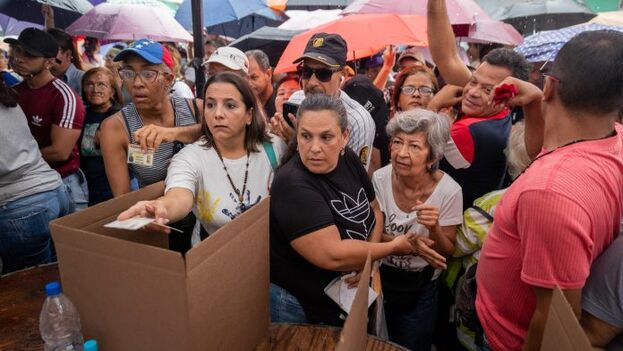
Venezuelan citizens participating in primary elections. / EFE

14ymedio bigger14ymedio, Pedro Corzo, Miami, 7 September 2025 — In all honesty, I express my deepest doubts that the peoples subjugated by what we identify as Castrochavism – in Venezuela, Nicaragua, Bolivia and Cuba, controlled by organized crime in association with “real socialism” – can once again embrace democracy through the electoral route.

The rulers of these countries tightly control the electoral mechanisms and present themselves as a bloc in the face of a fractured opposition, with the exception of Bolivia, where the ruling party is broken into anthropophagic (cannibalistic) factions, which has led to its defeat.

With this statement I am not calling for violence, but for the leaders of the opposition of those nations to seek other alternatives to achieve the long-awaited change. If they do not do so, by participating in knowingly flawed elections, they are providing legitimacy to the regime they are fighting.

It is true that not participating in elections significantly affects the democratic identity of the cause that is defended, but to assume as valid spurious processes in which fundamental guarantees are absent, is to accept being part of the oppressive dystopia. It is a very complex situation, a real trap on the part of the ruling party. continue reading

The mock elections for the Castro-Chavistas are nothing more than public maneuvering, very similar to the military maneuvers to which dictatorships periodically resort

It is a kind of electoral suicide to exercise the right to vote regardless of the doubts we may have about the fairness of the process and knowing that the Government has abused the resources of the State in its favor, has resorted to the manipulation of information held by the State. This misinformation threatens the political challengers and undecided and announced that the triumph of the opposition could lead the country to ungovernability and Civil War.

The mock elections for the Castro-Chavistas are nothing more than public maneuvering, very similar to the military maneuvers to which dictatorships periodically resort to frighten the population and energize their supporters.

In each electoral cycle, controlled before it is carried out, these regimes emerge stronger and in clear progress towards the establishment of a totalitarian system of government whose only objective is the perpetuity and absolute power of its leadership, as has happened in Cuba, the model desired by the aforementioned partners.

Socialism of the 21st Century (read “Castrochavism”), encourages a false political pluralism that in each electoral incursion loses relevance and interest for the contenders, as a consequence of the growing rigidity of the imposed social control and the constant institutional reforms of the public powers that exclusively strengthen the executive.

The citizenry in general also suffers from the repression by the ruling class. The population suffers from the ineptitude of its rulers and the deterioration of the general conditions of the community, to which is added an abusive police action that enjoys total impunity, particularly when it acts against the sectors that antagonize it.

These servile collaborators of the despots in power do the real dirty work

The temporary enjoyment of freedoms such as those of expression and information decreases drastically until it reaches its absolute extinction. Civil society organizations will be integrated as a whole into the immense government machinery and formulas will be established that seek to outlaw the most innocuous opposition, while promoting apparently contrary political groups, which in reality will respond to the government’s plans.

These servile collaborators of the despots in power do the real dirty work. The so-called organic or functional opponents are those who most contribute to the fact that the citizenry, transformed into a servile mass, adopts a double standard in which they conceal their true views, contributing to the widespread display of hypocritical moral conduct in society in which the true opinion is ignored.

For its part, Cuban totalitarianism has all these ailments and more. Fidel Castro from the same year 1959 made his supporters proclaim a slogan against the elections, “Elections? What for?”, after having promised in a public statement to go to the polls within a year under the Constitution of 1940 and the Electoral Code of 1943.

Based on the beliefs of Nicolas Maduro, Daniel Ortega, and Evo Morales, the largest island in the Caribbean enjoys a kind of paradise from repression, a perfect police state where the only existing political party doesn’t require electoral simulations and the enjoyment of citizen prerogatives is a power of the totalitarian state, the blessing of all autocrats.

Translated by Hombre de Paz

____________

COLLABORATE WITH OUR WORK: The 14ymedio team is committed to practicing serious journalism that reflects Cuba’s reality in all its depth. Thank you for joining us on this long journey. We invite you to continue supporting us by becoming a member of 14ymedio now. Together we can continue transforming journalism in Cuba.
“Someone Said That There Would Be Gas for Everyone, and There Isn’t Any”: Indignation in the Line for Propane in Matanzas

“The same person decided 20 years ago that everything should be electric, and look how that’s going” with the Energy Revolution

The sale of gas in Matanzas. / 14ymedio

14ymedio bigger14ymedio, Pablo Padilla Cruz, Matanzas, 9 September 2025 — It didn’t matter what time the gas truck arrived. Before the sun came up, Aimé and her son quickly lowered their propane tank from the 11th floor of the building where they live, hoping to reach their turn at the Peñas Altas depot. The population had not received fuel for three months, and families had to resort to makeshift strategies such as cooking in the early hours of the morning to take advantage of the electricity rotation or by using charcoal, with its health and taste problems. Finally, the propane returned this week, but the calm was short-lived.

“This situation is terrible,” says Aimé, a retiree in Matanzas. “One day you-know-who decided that everything should be electric, and look how that’s going” she recalls about Fidel Castro’s 20-year commitment to what he then called the Energy Revolution. “And another day he said that there would no problem getting gas for the population, and a couple of years later there is no gas, even though the Chinese and other companies are exploiting oil and gas just a few kilometers from here.”

The search for fuel has become an ordeal. The digital application Ticket, which organizes the sale of propane and fuel, “has not stopped sending me warning messages that it is now available, but one thing is the app and another is what happens on the ground,” explains Aimé. “A worker from Cupet told me in June, when the gas shipment stopped, that there was some, but they took it to other provinces and left us stranded, until today.” continue reading

Aimé had to wait for three hours before the truck made its entrance

The Peñas Altas collection and storage center became a scene of long waits. Aimé had to wait for three hours before the truck made its entrance. Along with her, some 200 people were waiting their turn, including 50 in the “disabled” line, designed for those who have physical difficulties or special needs.

Among the most difficult cases is Norelis, a resident of one of the buildings near the depot, whose mother, over 80 years old, lies in bed after breaking her hip. “I have been cooking with charcoal since April in the hallway of the building. The neighbors sometimes sit down to watch me cook in the style of Masterchef,” she comments, with irony and exhaustion.

“No one who is not in my situation can calculate how frustrating it is to have a sick family member these days. Now look: there are only ten tanks for special cases, and I was chasing Public Health and its committees for two months because they are the ones who give the approval to receive gas this way. I appear on the list but do not fit among the ten, so I missed the day here. The neighbors will continue to enjoy Masterchef in the hallway.”

There are two mechanisms for the care of vulnerable persons: one for special cases supervised by social workers and another for confined persons under public health regulations. “In theory it’s fine, but here we all know each other, and we know that the easiest thing is to give a gift [bribe] to someone who keeps the list. Automatically your name becomes the first, either here at the distribution center or with the social worker,” confesses a neighbor, unconvinced by the fragile legality of the processes and the discretion with which the lists are handled.

“Although the local authority announces that there will be a weekly supply, the uncertainty is constant”

The distribution in the depot is limited. On this day, 150 tanks were unloaded plus 10 intended for special cases. Andrés, who is retired and until recently earned some extra pesos as a messenger, was in the row with the number 2,545, while the distribution advanced barely to 2,190. “At this rate, three times more tanks have to come so that I get what I deserve. I’m afraid there will be trouble before my turn comes, in the meantime I’ll have to figure it out with the help of my children or do some work carrying gas to neighbors who contact me,” he says.

Although the local authority announces that there will be a weekly supply, the uncertainty is constant. Neighbors know that the situation changes from one day to the next and almost always for the worse. Maybe on Saturday or next Monday they can supply the area; maybe Norelis’ charcoal cooking show ends early; maybe Andrés will find another way to advance his shift. However, even those who manage the lists cannot confirm this with certainty.

Meanwhile, the neighborhood of Matanzas remains trapped in an endless wait, where every gas truck becomes an event and every available tank a treasure. The combination of unfulfilled promises, unreliable digital applications and local favoritism leaves many residents in a situation of vulnerability that, for some, now goes on for months.

Translated by Regina Anavy
____________

COLLABORATE WITH OUR WORK: The 14ymedio team is committed to practicing serious journalism that reflects Cuba’s reality in all its depth. Thank you for joining us on this long journey. We invite you to continue supporting us by becoming a member of 14ymedio now. Together we can continue transforming journalism in Cuba.
Electricity in Cuba Is a Prize and Life is Spent Waiting for It

People are grateful for the light bulb that turns on again, even if it goes out tomorrow.

Cubans are trapped in a cycle, veering between anxiety and hope. / 14ymedio

14ymedio bigger14ymedio, José A. Adrián Torres, Malaga, September 7, 2025 — When the lights come back on after an hours-long blackout, it is a cause for celebration in Cuba. The arrival of an oil tanker gives rise to rumors and headlines that provide some relief, if only for a few days. A package of frozen chicken at the corner store can become a neighborhood’s main topic of conversation. Now, there is even a rumor circulating about a supposed “Phase 10,” a ten-year promise that is more fantasy and metaphor than an actual plan. It feels like a sophisticated form of deferred gratification, a dangling carrot that never relieves the hunger of the present, keeping citizens trapped in an endless state of wait-and-see. The “terminal phase” of a spent regime with no exit strategy, disguised using the language of plans, stages, and that reliable catchphrase, “We are taking measures.”

The logic is simple. Complete deprivation leads to disaster but intermittent deprivation keeps hope alive. Cuba’s leaders know this. The behavioral psychologist B.F. Skinner knew this when he discovered that pigeons, pecking at a disc without knowing when they would receive food, did so more insistently than when the reward was predictable. Parents who dole out treats in dribs and drabs to encourage desired behaviors know this. So does a regime that turns everyday life into an experiment in behavioral psychology, not giving you what you deserve but offering you — from time to time — a spark, a respite, a promise. Just enough to keep you docile and expectant, and to stave off rebellion

The Cuban people, trapped in this cycle, veer between anxiety and hope. The are grateful to be able to turn on lights again but realize they might not be able to do so tomorrow. They welcome the pound of rice but they still cannot get meat. They latch onto the news of a ten-year economic plan even though they know that none of the previous plans worked. continue reading

How many times do you have to peck at the disc to before you can feel the joy of turning on a lamp, eating regularly or living with a sense of predictability?

Inevitably, the question arises: How many times do you have to peck at the disc before you can feel the joy of turning on a lamp, eating regularly or living with a sense of predictability? I feel it personally while waiting for the next call to see my “foster” nephews — ages ten and three — whom I love as if they were my own. Every encounter with them is a gift to me. But that gift does not always come when I am looking for it. Their mother manages these visits like unexpected rewards. Sometimes she gives me a last-minute heads-up. “If you want to see them,” she warns, “come now because we’re about to leave.”

I recognize this routine from my academic training as a psychologist as an example of variable-contingency reinforcement. I do not know how many times I will have to follow its rules, or when I will be rewarded with a visit with the children. While this uncertainty causes anxiety, it also makes me eager as I await the next call.

My mother used to describe something similar during her childhood in Spain in the 1940s, when a system of rationing similar to that in Cuba was in force. She would be given a doll as a Christmas present but, after playing with it for awhile, it was put away until the following year “so it would not get damaged.” The gift did actually exist but it was a thing denied her, a mixture of fantasy and frustration.

This is what an entire country is feeling today, transformed into a laboratory of intermittent reinforcement, where life is reduced to waiting for the next “prize,” which is simply the desire to live with dignity.

____________

COLLABORATE WITH OUR WORK: The 14ymedio team is committed to practicing serious journalism that reflects Cuba’s reality in all its depth. Thank you for joining us on this long journey. We invite you to continue supporting us by becoming a member of 14ymedio now. Together we can continue transforming journalism in Cuba.
Cuban Opponent José Daniel Ferrer Remains “Under Threat of Death” in Prison

Luis Manuel Otero Alcántara’s health has deteriorated significantly in Guanajay prison.

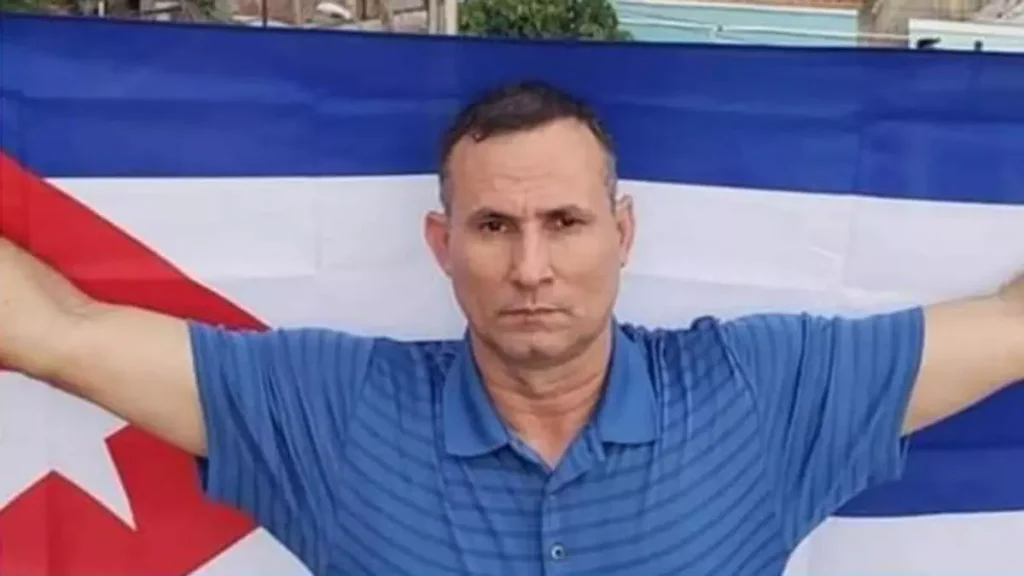
The Unpacu leader is also denied access to food and water in prison. / Facebook

14ymedio bigger14ymedio, Havana, 9 September 2025 — Political prisoner José Daniel Ferrer remains “under threat of death” in Mar Verde prison in Santiago de Cuba, where he is being held. This Monday, Ana Belkis Ferrer, the activist’s sister, denounced on Facebook that the leader of the Patriotic Union of Cuba (UNPACU) is at risk of “being subjected to the same cruel and extreme torture as in July and August.”

Last Friday, prison authorities allowed a conjugal visit to Nelva Ortega, Ferrer’s wife, for September, after denying them family visits the previous week. According to Ortega, the activist “continues to be in the same overcrowded space prepared for his torture, without receiving proper medical care.” It was also reported that the unit houses a dangerous individual known as Caney, whom she described as “one of the main criminals serving the dictatorship.”

She mentioned that Ferrer had “a persistent cough, earache, skin lesions caused by fungus, insect bites and a high temperature, as well as an infection in his big toe.” The activist remains “thin and pale, even though for some weeks now they have been taking him out in the sun two or three times a week.”

The UNPACU leader, “brutally tortured” in prison, as the NGO Prisoners Defenders reported last July, has no access to food, “because they continue stealing it, as well as hygiene products.” He also has no drinking water because of “the shortage throughout the prison,” so Ferrer tries to “survive with what a few sympathetic inmates can offer him to eat.” continue reading

Luis Manuel Otero Alcántara suffers from chikungunya, fever, diarrhea and severe weakness.

Artist and political prisoner Luis Manuel Otero Alcántara is in a delicate health situation in the Guanajay prison, Artemisa, after an outbreak of the epidemic.  In a phone call on September 9, he informed activist Yanelys Núñez that he suffers from chikungunya, fever, diarrhea and severe weakness, and that he has waived his monthly family visit in protest. 

There has been no news of him since August 21, increasing concern for his well-being in a context of harassment, abuse and inhumane prison conditions. Several organizations emphasize that the Cuban regime is responsible for his life and integrity and denounce the lack of access to medicines and medical care in the country’s prisons.

Likewise, Ferrer’s treatment in prison has been denounced, including by the U.S. State Department. Last July, U.S. Secretary of State Marco Rubio demanded proof of life from the Cuban regime for the opposition figure, following several allegations of torture in prison.

The Cuban regime continues to torture democracy activist José Daniel Ferrer. The United States demands immediate proof of life and the release of all political prisoners,” Rubio wrote at the time on his X account.

Unpacu was designated a “terrorist organization” by the Cuban regime.

Ferrer’s entourage has also suffered harassment by the regime. On September 1, UNPACU was designated a terrorist organization by the Cuban regime. In an open letter, the NGO denounced “a serious political manipulation, devoid of legal or historical basis, whose sole purpose is to discredit and criminalize a peaceful civic movement that, since its founding in 2011, has worked to promote human rights through humanitarian work, civic education and dignity for all Cubans.”

In its message, the union also demanded “as a priority” the “immediate” release of Ferrer and all political prisoners.

A month earlier, on July 1, Nelva Ortega was arrested for a few hours while demanding proof of life for the activist.

Last January, José Daniel was released from prison as part of the Vatican-brokered agreement with the U.S. to release 553 inmates, most of whom were common prisoners. However, in April, the Supreme Court revoked his release, arguing that he “did not comply with the measures imposed on him.”

Translated by Regina Anavy

____________

COLLABORATE WITH OUR WORK: The 14ymedio team is committed to practicing serious journalism that reflects Cuba’s reality in all its depth. Thank you for joining us on this long journey. We invite you to continue supporting us by becoming a member of 14ymedio now. Together we can continue transforming journalism in Cuba.
Small Private Companies Are Gaining Ground in the Shipping Business in Matanzas

Correos de Cuba partners with a small private business in an attempt to halt its own decline.

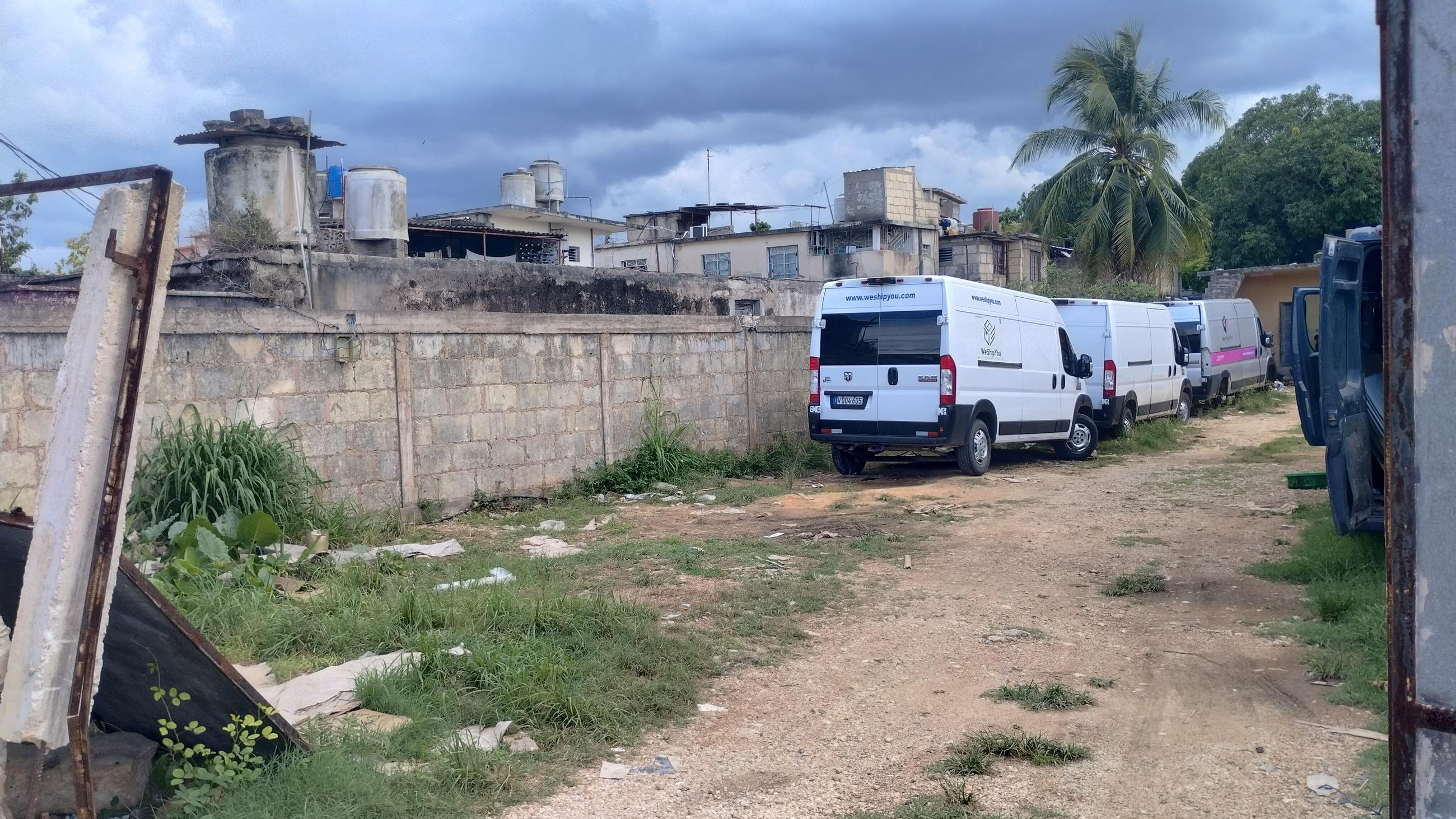
Vans from the private shipping company ‘We Ship You’, in Matanzas/14ymedio

14ymedio biggerPablo Padilla Cruz, Matanzas, September 6, 2025 — The Correos de Cuba in Matanzas announced this week the arrival of the first international shipment resulting from an alliance with the MSME* TransMiret, based in the municipality of Arroyo Naranjo. Cooperation with this private entity seeks to reverse the loss of business that the state service has suffered in recent years in the face of competition from non-state companies that have captured a large part of the clientele.

“This union responds to the constant complaints of users and the loss of confidence in the service of international shipments of Correos de Cuba,” admitted to 14ymedio an employee of the Matanzas 1 post office, located on the central Calle del Medio. “The reality is that we have had problems of precision, distribution and customer service. They now hope that this alliance will improve the situation,” added the state worker.

A citizen may import, by post, parcel or express courier, goods with a value of up to $500 and a maximum weight of 20 kilograms, according to the rules of the General Customs of the Republic, which rates each kilogram at $10. The value of shipments is subject to a duty in national currency, although products such as medicines, toiletries, food and medical supplies are exempt from this tax until the end of September.

However, the attempt by Correos de Cuba to regain control of the shipments collides with a scenario that has changed radically. In Matanzas, several private companies have gained popularity among users by offering faster services, transparent and personalized.

One of the best known is We Ship You, which three years ago opened its base of operations in the area of Peñas Altas. “They have an excellent service,” says Arnaldo, a regular customer. “With my mobile app, I can monitor the package from when it arrives at their warehouse to when it is delivered to my home. The first time I used the service the package arrived on a Sunday continue reading

and as deliveries started on Monday, I went to the base and got it in 10 minutes. Also, the heavier the shipment, the lower the price. It can cost $4 per pound if you go over 10 pounds. In less than 21 days the package is already here, something unthinkable with Correos de Cuba.”

The service includes additional services, such as the ability to hold products in the Miami warehouse for one month to group them into a single shipment and lower the cost by weight. “They even give you a bag with the company logo as a souvenir,” says Arnaldo laughing. “It’s one of the few things that makes you feel like you live in the first world.”

We Ship You, based in Homestead, Florida, is owned by the corporation of the same name. According to its co-founder, the Colombian Carlos Badel, the idea was born from his experience in logistics and the ability of his partner Johan Rodriguez to develop software. The products they ship to the Island range from electronic equipment, motorcycles and food, to Shein and Temu items. The company currently operates in several Latin American countries, including Cuba, Colombia, Venezuela, Brazil and Mexico.

“The customer chooses online what they want and we buy it, even provide advice”

In Peñas Altas, the company’s presence has generated employment and income in a community that is often forgotten by government investment. “I am the custodian of the transport base and earn 50 dollars a month, with the option to earn more if I do overtime,” says Eduardo, a neighbor. “At the current rate, that is more than 20,000 pesos. It is more than three times what any state entity would pay. And if inflation goes up, my salary keeps pace because it’s in dollars. I feel respected here and the deal is excellent.”

Another example of the private sector boom is Tu Envío Latino, an online shopping agency created by two young residents of Matanzas who took advantage of the vacuum left by the state. “We saw the opportunity and started working on it. Our family in Miami helps us; the purchases come to them and are then sent to Cuba. Gradually we have grown and now are shipping more than $10,000 worth of goods in a fortnight,” says one of the founders. “We are not afraid of competition from Correos de Cuba, because whenever the state companies do something slightly innovative the private ones beat them, since we adapt faster. With us products arrive in less than 20 days, even from China. Once a customer received his purchase from the Nike store in just 24 hours.”

The agency guarantees a full refund if the product does not arrive or presents problems. “The customer chooses online what he wants and we buy it, even provide advice. If there is a problem on our part, they can re-purchase or get 100% of their money back. I would like to see that when they start losing articles in Correos de Cuba, if they will answer for them or make excuses as they did before, without giving value to the property of the customer,” he concludes.

Correos de Cuba is trying to reactivate its business amid the disappearance of traditional agencies such as Cubamax — linked to Hugo Cancio — Tuambia and Sendity. Although the state-owned company now relies on partnerships with MSMEs to operate outside the country, it has not implemented attractive incentives for its workers or competitive offers for its customers.

“Without lowering prices or shortening delivery times, it will be very difficult to regain people’s trust,” says a worker in the sector who asked for anonymity. “Private competition has shown that things can be done differently. Correos de Cuba will have to change a lot if it wants to live up to its own triumphalism.”

*Micro, Small, Medium Enterprises [mipyme in Spanish]

Translated by Regina Anavy

____________

COLLABORATE WITH OUR WORK: The 14ymedio team is committed to practicing serious journalism that reflects Cuba’s reality in all its depth. Thank you for joining us on this long journey. We invite you to continue supporting us by becoming a member of 14ymedio now. Together we can continue transforming journalism in Cuba.
In Matanzas, a Teacher Swapped Chalk for Bricks To Build Her Own House

Yadira accepted a job as an official in the municipal construction union

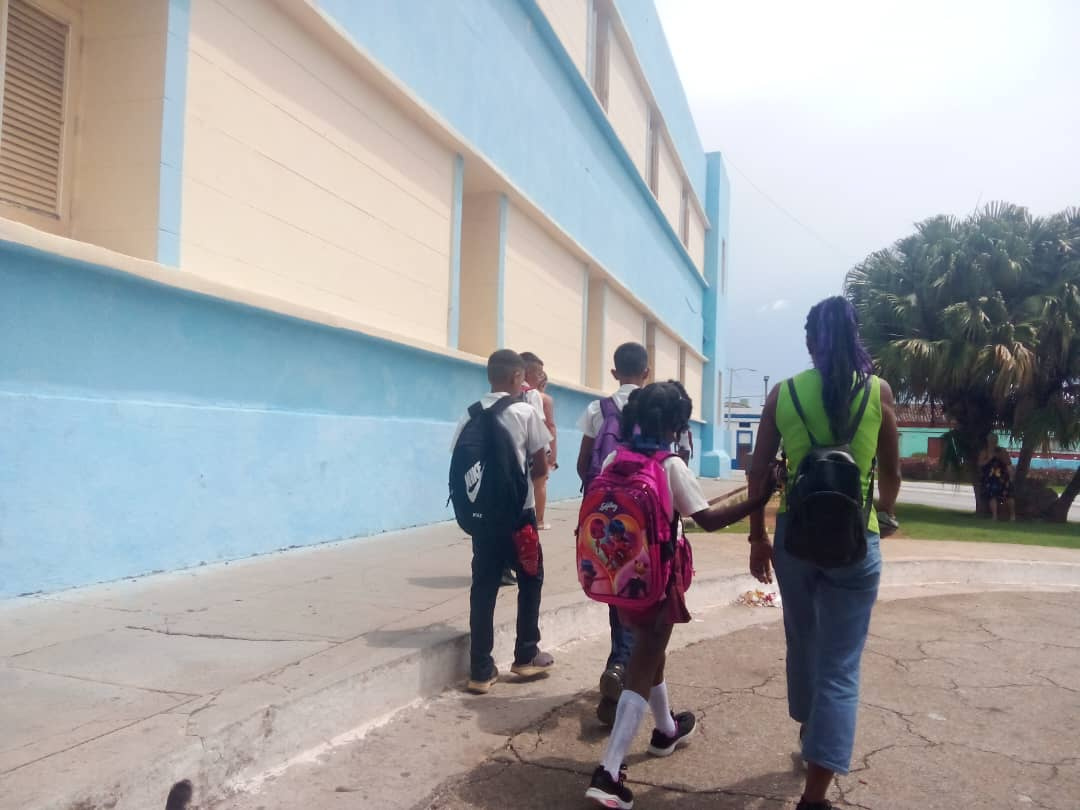
This week, 98,000 students began the school year in Matanzas, but with poor teacher coverage. / 14ymedio

14ymedio bigger14ymedio, Julio César Contreras, Matanzas, September 6, 2025 — Last Monday, Yadira was not in the classroom with her students, as she had been every year since graduating as a comprehensive general teacher in 2003. “Leaving teaching has been one of the most difficult decisions of my life, but I am tired of teaching being a profession so undervalued and poorly paid in this country,” says the teacher, who worked at two primary schools in Matanzas. After many years of sacrifice, she decided to change jobs.

Her new job as a municipal construction union employee will not earn her much more, but it will give her something she values more: free time for her family and access to building materials. She lives with her three children in Matanzas, while trying to finish her house, which was started in 2011 and still has a dirt floor. “I agreed to come in 2008 from Bayamo because they promised me a house that never arrived,” she explains to 14ymedio.

The provincial education landscape shows the cracks in the system. This week, 98,000 students began the school year in Matanzas, but with a deficient teaching coverage: of a planned staff of 9,511 places, only 7,478 have been covered. According to the provincial deputy director of education, Eledis Abreu Domech, the gap of more than 2,000 teachers is filled by hourly contracts and other patches. The most affected municipalities are Matanzas, Colón and Cárdenas.

The deficit is due not only to low wages but also to the very poor living conditions, especially the housing

The deficit is due not only to low wages but also to the very poor living conditions, especially the housing for those who have been transferred from other provinces to teach in the city. Yadira recalls spending three years in a teacher’s shelter, washing her clothes by hand and eating continue reading

whatever appeared, until members of her Baptist church helped her to get a small plot of land and to build one room of her own house.

Frustration accumulated: “It is not just the salary. Between absurd meetings and prohibitions, it is impossible to teach quality classes,” complains the woman.

According to the most recent salary scale, Yadira should receive 5,369 pesos plus an 80-peso seniority bonus. “I can’t support my children with that. I’m a single mother, and at 44 I still depend on the help of my parents,” she laments. She is thinking of doing private tutoring at home, something forbidden while working in the school.

Although in her new union job she will earn 400 pesos less, she gets more autonomy, less bureaucracy, more time for her family, and she can have time to be a leader in her Baptist Church. “I will try to continue working for the State, but I will not accept impositions against my faith or personal development. If something positive comes out of this decision it is that I will never work for someone who does not value my effort.”

As an added bonus, her new job brings her closer to a source of construction resources that can accelerate the completion of her home. As a teacher, it was virtually impossible for Yadira to buy anything, from electrical switches to sacks of cement, to complete a project that has already cost her more than a decade of work and worry.

During her work as a teacher, she felt that attention to the teaching staff was one of the great shortcomings of the Cuban educational system. The teachers’ list of duties is long, but the stimulus remains in some diploma or official act where they are given a flower or a picture with the face of some party leader. This lack of interest does not correspond to the importance that people like her have in the formation of new generations.

Yadira admits that she would like to return to teaching one day but finds it increasingly difficult: “They are running out of teachers, and the worst is that they do nothing to prevent it. It’s as if they don’t care,” she concludes.

Translated by Regina Anavy

____________

COLLABORATE WITH OUR WORK: The 14ymedio team is committed to practicing serious journalism that reflects Cuba’s reality in all its depth. Thank you for joining us on this long journey. We invite you to continue supporting us by becoming a member of 14ymedio now. Together we can continue transforming journalism in Cuba.
Cuban Dissident Félix Navarro Is Isolated in Prison in a So-Called Infirmary

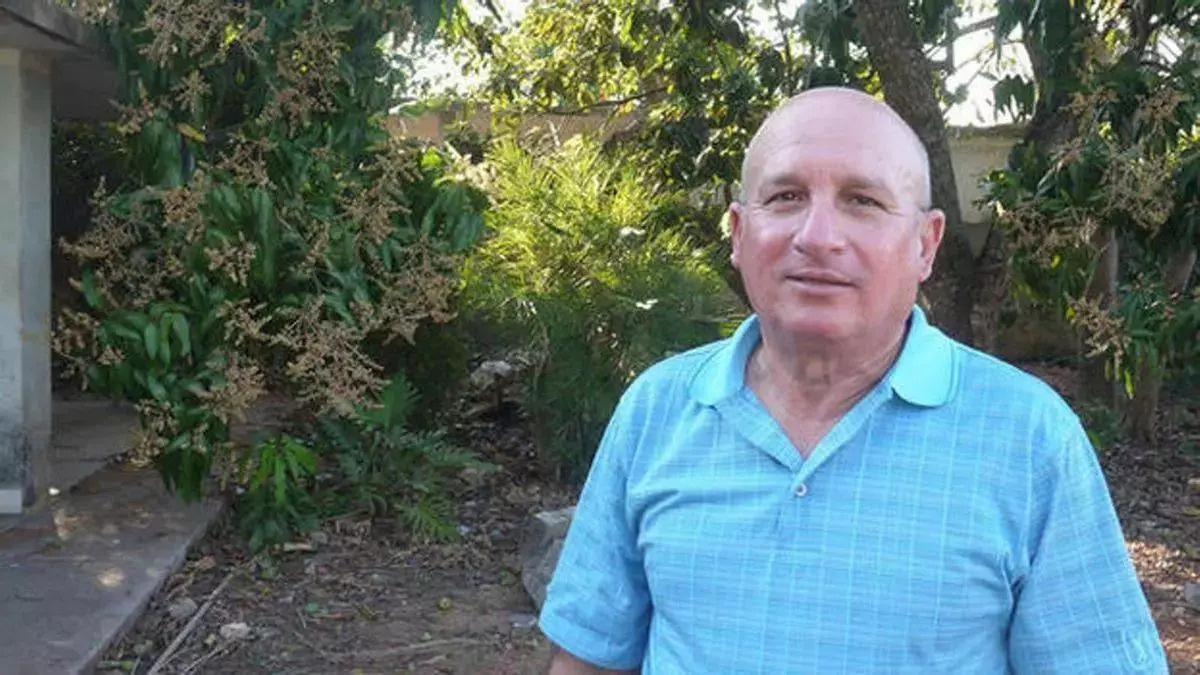
“The situation right now is very worrying,” laments a family friend. / 14ymedio

14ymedio bigger14ymedio, Havana, 6 September 2025 — The family of Félix Navarro complains that they cannot fully understand his health status in prison. The opposition leader, who has been imprisoned again in the Agüica prison in Matanzas since his parole was revoked last April, is ill and isolated.

According to activist Annia Zamora, a family friend, who spoke to 14ymedio, Navarro was given a course of antibiotics, which he has now completed, and “must continue recovering” from an infection. The problem, she warns, is that they are keeping him “in something they call the infirmary, but it’s not the infirmary.” In an area that is not for the elderly, as would be appropriate for him given his 72 years of age, without communication, without television, without being able to go out for walks in the sun, the Lady in White also claims, “they are keeping him isolated in that so-called infirmary.”

Until the next visit, which she doesn’t know if it will be in late September or early October, as the family hasn’t yet been given a date, they won’t know exactly how he’s doing. “The situation right now is very worrying,” Zamora laments.

On April 29, the Supreme People’s Court revoked the releases of Navarro and José Daniel Ferrer, leader of the Patriotic Union of Cuba (UNPACU), alleging that they “violated the law during the probationary period to which they were subject.” It also stated that “they are individuals who publicly call for disorder and contempt of authorities in their social and digital environments and maintain public ties to the chargé d’affaires of the United States Embassy in Cuba.”

Navarro, who suffers from diabetes and other health problems, was serving a nine-year sentence for public disorder, contempt, and assault following continue reading

the 11 July 2021 Island-wide protests, but had been released as part of an agreement between the Vatican and Havana. According to the court, his detention was justified by the opposition leader’s contempt for leaving his municipality seven times without the judge’s permission.

“There’s tuberculosis, bedbugs, scabies, all kinds of diseases in there.”

On the other hand, the family of musician and activist Fernando Almenares, known as Nando OBDC, denounces that the artist is being held in the Cuba Panama prison, located in Güines, Mayabeque, for HIV and AIDS patients, when he does not have this condition.

“There’s tuberculosis, bedbugs, scabies, all kinds of diseases in there, and I told Fernando not to let anyone inject him because they could give him the virus,” his mother, Eva Rivera, told Martí Noticias. The woman explained that the prison warden reproached her for her son’s refusal to receive the therapy given to other inmates. “The therapy they give to these patients, who have their treatment, their medicine,” Rivera clarified, claiming to have told the warden: “Under my responsibility, I don’t allow Fernando to inject himself or take any kind of therapy, because Fernando doesn’t have any kind of illness.”

At the end of July, the rapper went on a hunger strike to protest being held incommunicado in prison.

Almenares was arrested on December 31, 2024, at his home in the Havana municipality of La Lisa and charged with “propaganda against the constitutional order,” alleged “subversive activities,” and links to individuals promoting “terrorism against the Cuban state.”

During one of his mother’s visits to him in prison, the instructor in the case told Rivera that her son was being prosecuted for a crime related to “a fire that occurred in Lenin Park on December 30,” but the family denies any involvement by the artist in the incident.

For its part, the Prosecutor’s Office has not presented any provisional conclusions, nor has any trial been held against him after more than seven months of imprisonment. His detention is described by organizations and family members as arbitrary and unjust.

In statements published this Saturday by Martí Noticias, Eva Rivera said that the lawyer in charge of the young man’s defense filed a habeas corpus petition, but warned her that there are delays in the courts “because there are no prosecutors.” The woman is “very, very, very worried” that her son “will have a fabricated, because that’s the right word,” with an accusation against him, “because they fabricate any kind of evidence.”

For her activism as a member of Unpacu, Verdecia Rodríguez had previously received five sanctions

Another political prisoner, Alexander Verdecia, also has no trial date, and has been incarcerated for seven months. His wife, Eliannis Villavicencio, also reported the situation to Martí Noticias, explaining that her husband would demonstrate at Las Mangas prison in Bayamo (Granma) “every three or four days” until his case is processed.

Just last June, he received the prosecutor’s request: 10 years in prison for “propaganda against the constitutional order” and “incitement to commit a crime” for posting anti-regime slogans on Facebook.

One of the posts encouraged fellow citizens to demonstrate peacefully. “The Castro-Canel regime is committing genocide against the Cuban people. They are slowly annihilating them with hunger and misery. We must demand the resignation of Díaz-Canel and everyone else on social media.” And it called for the then upcoming May 1st: “What we need to do is protest peacefully for your rights, for our rights. Do not support lies, hunger, misery, and communism any longer… Use your right not to participate in this farce.”

For various crimes associated with her activism as a member of UNPACU, Verdecia Rodríguez had previously received five sanctions (two in 2015, one in 2016, one in 2018, and one in 2019). Hence, the legal document also noted a “criminal record.” All of them, her wife told this newspaper, “have to do with politics.”

____________

COLLABORATE WITH OUR WORK: The 14ymedio team is committed to practicing serious journalism that reflects Cuba’s reality in all its depth. Thank you for joining us on this long journey. We invite you to continue supporting us by becoming a member of 14ymedio now. Together we can continue transforming journalism in Cuba.
A Desperate Mother Travels Through Havana in Search of Her Daughter Who Disappeared Four Months Ago

Doraiky Águila Vázquez disappeared on March 15 during a blackout, when she was traveling along the Diez de Octubre causeway

Doraiky Águila Vázquez disappeared on March 15 during a blackout, when she was traveling along the Diez de Octubre causeway

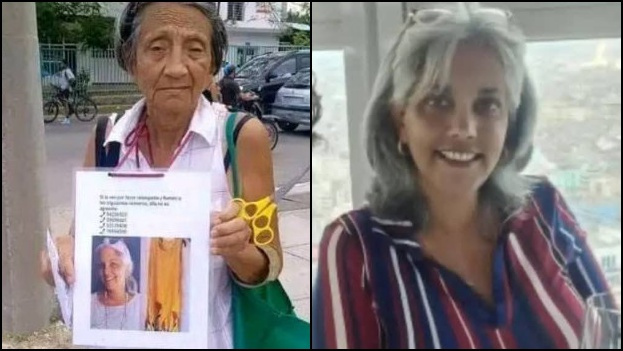
14ymedio bigger14ymedio, Havana, 27 July 2025 (delayed translation) — A Cuban woman walks the streets of Havana with a sign hanging around her neck, imploring help to find her daughter who has been missing for more than four months. Since March 15, all trace of Doraiky Águila Vázquez has been lost and, as time passes, the anguish of the family grows. “Looking at the phone is already part of my life, accompanied by pain and a lot of anguish,” wrote Maura Vázquez, the teacher’s mother, in a recent message published on her Facebook profile, where she also thanked the solidarity she has received.

“I have been able to listen to the opinions of the people… I was able to see a people (at least the ones I have encountered) that is already demanding more action to find Doraiky, which everyone is willing to support,” explains the woman, who expects more involvement from the police authorities in the search for her 48-year-old daughter.

One of the most moving testimonies that the old woman has heard came from a former student of Águila, who approached her in tears to remind her of her dedication: “I was a student of her daughter, she taught me a lot of Law… the Law that she taught so much is not being applied with her, nor the values that she always demonstrated as a human being,” challenged the young woman in the face of official inertia.

The young woman also recalled how Águila, attentive to her students, even helped with material details: “On one occasion she realized that a student did not go home because she did not have money, and she immediately bought the ticket, and even shared her soap with the students from the province.” The student is clear in her recommendation to Vázquez: “Mother, shout from the rooftops, that Doraiky deserves that the best techniques be applied, the best professionals and that the leadership of the country know and participate,” she insisted. continue reading

“I have been able to listen to the opinions of the people… I was able to see a people (at least the ones I have encountered) that is already demanding more action to find Doraiky, which everyone is willing to support”

Águila disappeared on March 15 during a blackout, when she was traveling along the Diez de Octubre causeway in Havana. She was wearing a yellow dress with red or pink flowers and suffered episodes of transient memory loss (technically “Transient Global Amnesia”), according to the family. Since then, there have been no solid clues to his whereabouts. The police report is registered with the number 19434, and the relatives have offered a reward of 350,000 Cuban pesos to anyone who provides information that leads her to be found.

The image of the missing teacher circulates on social networks, in informal messaging channels and has been shared by organizations such as Yo Sí Te Creo en Cuba and Alas Tensas. The case has been reviewed by several independent media outlets and frequently cited as an example of the growing number of unsolved disappearances on the island.

The passage of days has transformed the tone of family messages. Since June, Maura has held the State directly responsible for the lack of results. “My mood is one of criticism… I no longer ask, I do not beg, I do not implore; I hold the Cuban government responsible for the search process,” she wrote. She complains that the necessary resources have not been mobilized, despite the existence of organized bodies prepared for tracking operations. She also stresses that no state authority has offered her information on the progress of the investigations.

In the meantime, her absence is the only certainty. “Having to see my wonderful daughter only in photos does not make my tears stop,” says her mother. The search continues, in the absence of official answers, sustained by the faith of a family and the echo of solidarity of those who, without knowing Doraiky Águila, believe that her case deserves more attention and justice.

Translated by Hombre de Paz

____________

COLLABORATE WITH OUR WORK: The 14ymedio team is committed to practicing serious journalism that reflects Cuba’s reality in all its depth. Thank you for joining us on this long journey. We invite you to continue supporting us by becoming a member of 14ymedio now. Together we can continue transforming journalism in Cuba.

The Inconceivable Collection of Dr. Prat

The story of the Spanish professor who went into exile in Santiago de Cuba, fleeing Franco, and who collected nearly 500 pieces of universal art.

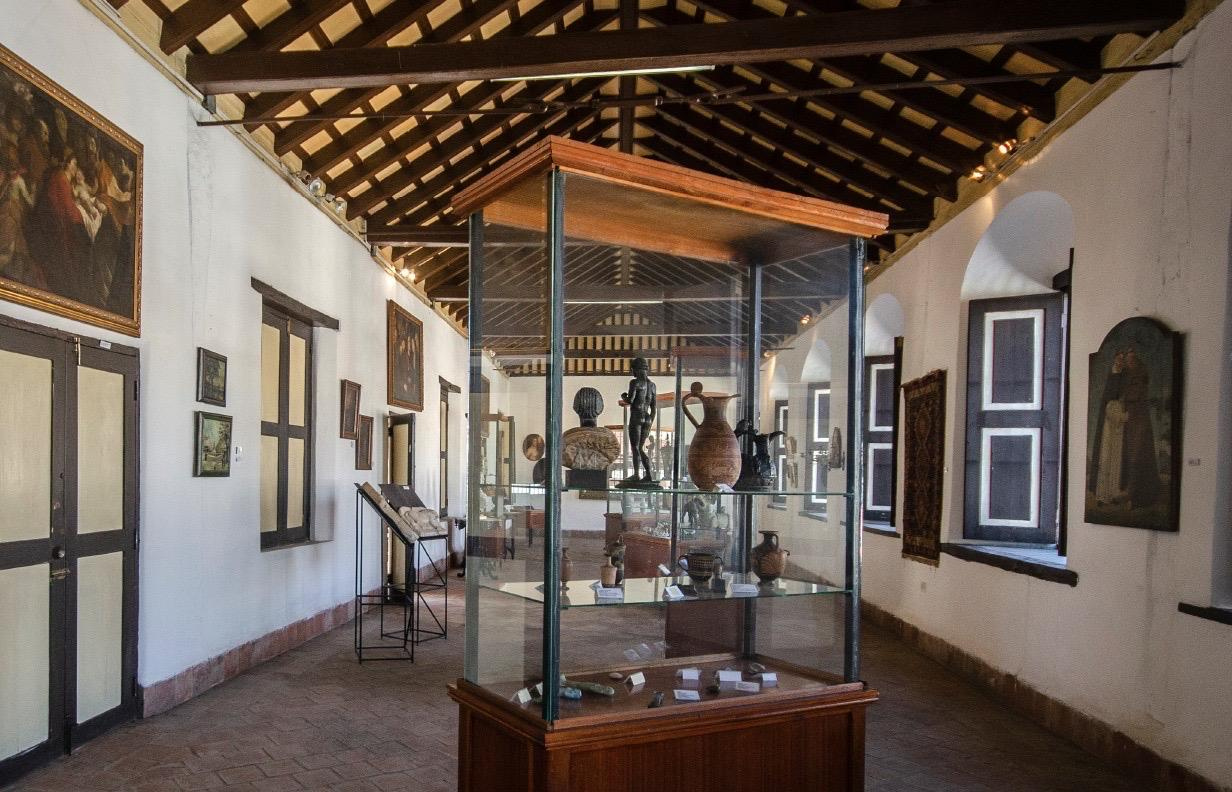
The hallway of the San Basilio Magno Seminary where the Prat collection is currently located. / Vivencia del Arte

14ymedio bigger14ymedio, Xavier Carbonell, Salamanca, 2 August 2025 — Doctor Prat was a Catalan, born in 1906, who joined the Republican militia under the name of Francesc, lived in a concentration camp where he was called François, and died in Santiago de Cuba as Francisco (that is, Paco) in 1997. Collector, professor, archaeologist, exile, skeptic, he managed to gather 478 pieces of universal art despite being, for most of his life, a poor man.

It is said that he slept for 35 years on a small bronze Apollo Cithareo—his favorite sculpture—hidden under his mattress for fear of thieves. Is there any more Spanish custom or more Creole cunning? His students remember him carrying Greek amphorae and Egyptian statuettes on the long journey from his home in El Caney to the University of Oriente.

His biography is improbable; his collection, impossible. However, there was a Francisco Prat Puig, and his inventory of wonders exists, which, after many twists and turns, ended up in the former San Basilio Magno Seminary in Santiago. I can’t say much about the state of the pieces. A photo shows the hallway where they are now: a red brick floor, damp and cracked walls, no air conditioning, no protection from light, a couple of display cases.

Many researchers have raised eyebrows upon entering that corridor. They understand that millennia of art are at risk due to a minor historical incident: the Cuban Revolution. In terms of figures, 39 pieces of Sumerian, Egyptian, Greek, and Roman art will be lost; 26 pieces of pre-Columbian art—including objects from Cuba’s indigenous people; 25 pieces of medieval and Byzantine art—the largest collection in the country; 49 paintings, some of them Cuban, from the 15th to the 20th century; 25 manuscripts, from the 15th to the 18th century; and some 300 coins of diverse origins. continue reading

What is truly disconcerting is that Prat acquired most of these objects within Cuba.

What is truly disconcerting is that Prat acquired most of these objects inside Cuba. One has to imagine what the country was like in the 1940s and 1950s, the wheeling and dealing of smugglers and millionaires, the era of the Count of Lagunillas—owner of the Greco-Roman art collection at the National Museum—Bacardi, and Julio Lobo. Prat himself had a Jew named Schneider appear at his house during the middle of World War II to sell him a Roman ritual vase.

Prat traded one piece for another, offering his services in exchange for a funerary stele or an imperial coin. He had started as an archaeologist in Barcelona and then in France, when he had to flee Franco and cross the border in 1939, to be interned in the Agde concentration camp. From there, he took some prehistoric figures, first to New York, then to Miami, and finally to Havana.

In the Cuban capital, he encountered an atmosphere of xenophobia and academic exclusion. The university didn’t hire permanent foreign professors. José Gaos and María Zambrano, to name two notables, passed through the island, but eventually left. If the Republican exiles had found a less hostile environment (it was also the era of Franco’s fanatics and the founders of the Cuban Nazi Party), perhaps Cuba could have been Mexico. Perhaps, who knows, learning from them—learning to think—might have freed us from Fidel Castro.

When Santiago founded his university in 1947, he began hiring foreigners in open opposition to the Havana prohibition (“just as the East rose up against political colonialism, it is now doing so against cultural colonialism,” declared the faculty). Prat found a rental in El Caney and never left the neighborhood.

From the beginning, Prat conceived the idea of ​​a Living Museum—what is now known as an immersive museum—an exhibition as representative as possible of all human art, accompanied by contextual explanations and learning exercises. He partially realized his dream while he was a professor, but was never able to find funding for the idea. The collection became “living,” but only because its owner constantly moved it from the classroom to his home, and from his home to temporary exhibitions.

In his possession was a 4,000-year-old Sumerian tablet, bearing a cuneiform inscription: “Six fat-tailed sheep, offerings to the god Enki, from Aba-Enlilgen.”

In his possession was a 4,000-year-old Sumerian tablet bearing a cuneiform inscription: “Six fat-tailed sheep, offerings to the god Enki, from Aba-Enlilgen.” He also possessed several Egyptian figurines known as ushabtis, metaphysical slaves who accompanied the deceased on their journey to the afterlife. One of them was instructed to speak in the name of “Osiris Padineith, righteous of voice, born of the lady of the house of Nekhbet,” and offered to “act” and say “here I am” when invoked.

Prat also had Greek pottery, vessels called olpes, lekythos, and hydrias, with black and red paintings of wild beasts and athletes. As for Roman art, he had found fragments of friezes with lions and a bust of the ill-fated Emperor Commodus.

At the end of his life, Prat had to protect his pieces from the bandits who swarmed Santiago during Cuba’s ‘Special Period’. He decided to donate his collection to the state. No one can explain why it hadn’t been confiscated sooner, as happened to so many collectors in the Soviet world (see Bruce Chatwin’s novel Utz, a small masterpiece about an obsessive collector of Meissen porcelain in Prague).

By then, he had already classified the entire collection—often inaccurately and bizarrely—on meticulous cards that he typed into his Remington typewriter.

Photos from the 1990s no longer show Prat, shovel in hand, a pose he loved, but rather as an old doctor with glasses, a cane, and the appearance of a venerable druid, a true Panoramix*. Spain paid several tributes to the Catalan, but it was too late. Francesc Prat i Puig had become Paco Prat and was Cuban. He died in Santiago on May 28, 1997.

*Getafix, in English. An Asterix character.

Anatolia criolla. / Xavier Carbonell

____________

COLLABORATE WITH OUR WORK: The 14ymedio team is committed to practicing serious journalism that reflects Cuba’s reality in all its depth. Thank you for joining us on this long journey. We invite you to continue supporting us by becoming a member of 14ymedio now. Together we can continue transforming journalism in Cuba.
In a Triumphalist Report, Canal Caribe Inflates the Data for Oil Production in Cuba

An engineer admits it will not be enough to “solve the generation deficit”

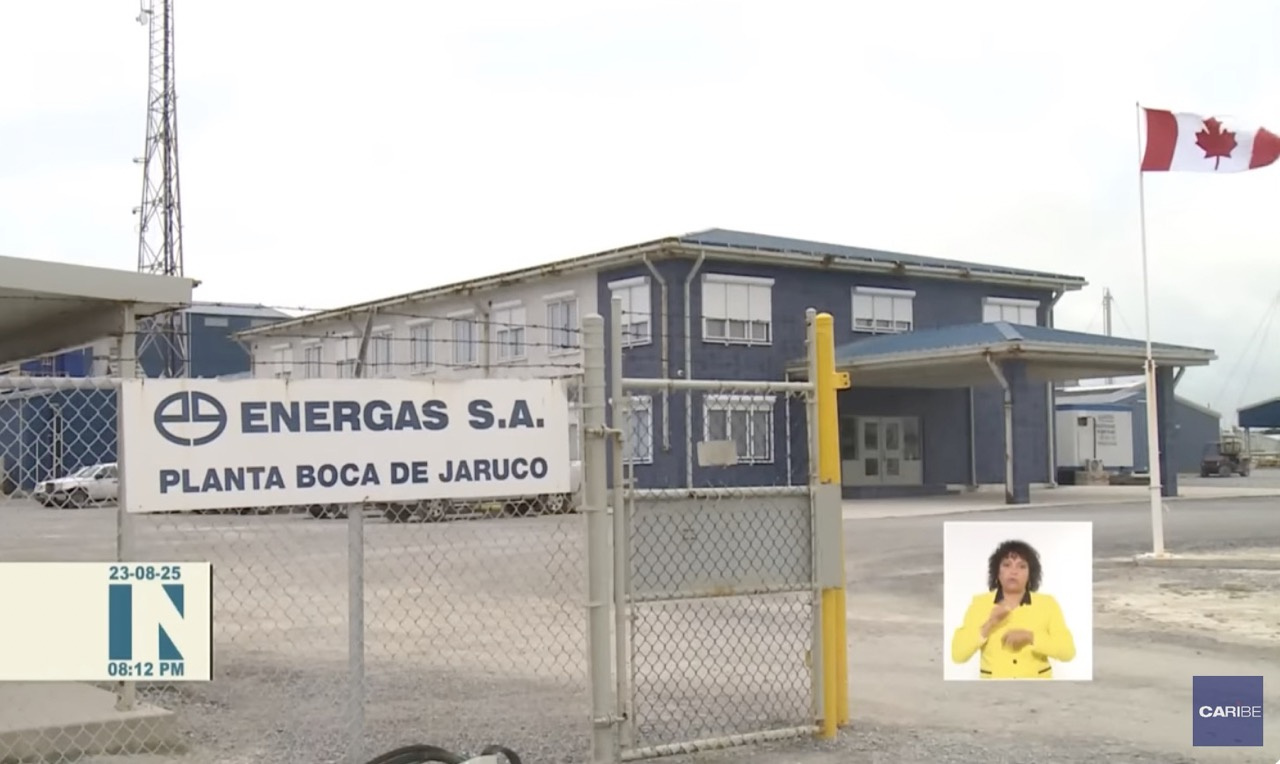
Energy plant in Boca de Jaruco, Mayabeque, operated in collaboration with Sherritt International, a Canadian company/ Canal Caribe (stock photo)

14ymedio bigger14ymedio, Madrid, 27 August 2025 — “Energas has become the largest thermoelectric power plant in the country at the moment.” Statements to Canal Caribe by Luis Rolando Eres Grass, engineer of the Western Oil Drilling and Extraction Company, show the importance for Cuba of the gas plants in Boca de Jaruco (Mayabeque) and Varadero (Matanzas), which supply the national electricity system (SEN) with 400 megawatts (MW) daily, no less than 12% of the domestic demand in high consumption season, as is the case now.

The technician is one of the experts interviewed to give a statement that the official media disseminated with enthusiasm: Cuba-Petróleo Union (Cupet) has reached two million tons of crude oil equivalent thanks to the oil and gas extracted mainly in deposits in the province of Matanzas. He himself, however, lowers the expectations of the data. “Two million tons of oil equivalent will not solve the generation deficit,” he said, adding that they represent a value of more than one billion dollars “that the country stopped investing to generate electricity” and with which diesel can be purchased “for distributed generation.”

What Canal Caribe emphasizes is not the 98% of national production, which is in the northern strip -Mayabeque, Varadero, Cárdenas- and gives a crude oil of worse quality, but the hopes placed in new deposits. Nor does it mention that the Chinese company Great Wall makes the work possible. The report speaks of the “scientific and technological feat” that involves the horizontal drilling of eight kilometers to reach “deposits located below the seabed, reached from land.” continue reading

Experts never mention that Energas’ achievement is due to collaboration with Canadian mining giant Sherritt

This new well, belonging to the Fraile block, is expected to yield around 120 cubic meters (750 barrels) of oil per day by the end of the year, a small contribution for recovering national production, which at the end of 2024 had decreased by 138,028 tons compared to the forecast.

At no time did the experts mention that Energas’ achievement was due to collaboration with Canadian mining giant Sherritt, although at the end of the TV report -just when they are talking about “reducing dependence on imported fuels” and a “gain in energy sovereignty”- the flag of Canada clearly appears next to that of Cuba and the emblem of the state gas company.

The enthusiasm with which the news is communicated through official media, in any case, contrasts with the results of Sherritt itself. The company recently acknowledged that its situation in Cuba is critical, and Archivo Cuba published just a few days ago a report denouncing the scheme of “human trafficking” carried out by the regime with workers sent to the Canadian refinery of Fort Saskatchewan, in the province of Alberta.

But above all, it contrasts with the true energy situation of the island. For this Wednesday, the Electric Union of Cuba (UNE) again predicts a deficit that is on the way to 2,000 MW at peak hours. At the peak of demand, late-night, 3,780 MW will be required and 2,080 MW will be available. The deficit of 1,720 MW will result in a real allocation of 1,790 MW.

The figures are similar to yesterday’s 1,746 MW, well above the initially planned 1,660 MW. This Tuesday, says the UNE, ” service was affected for 24 hours and remained affected throughout the morning today.”

The 26 new photovoltaic solar parks, which contributed a maximum of 562 MW during daytime hours, still do not compensate for the calamitous state of the SEN. A total of six units in thermal power plants are down for failure or maintenance, and 38 distributed generation plants are not operating due to lack of fuel.

Translated by Regina Anavy

____________

COLLABORATE WITH OUR WORK: The 14ymedio team is committed to practicing serious journalism that reflects Cuba’s reality in all its depth. Thank you for joining us on this long journey. We invite you to continue supporting us by becoming a member of 14ymedio now. Together we can continue transforming journalism in Cuba.
Venezuela Sent Twice As Much Oil to the U.S. Than to Cuba in August

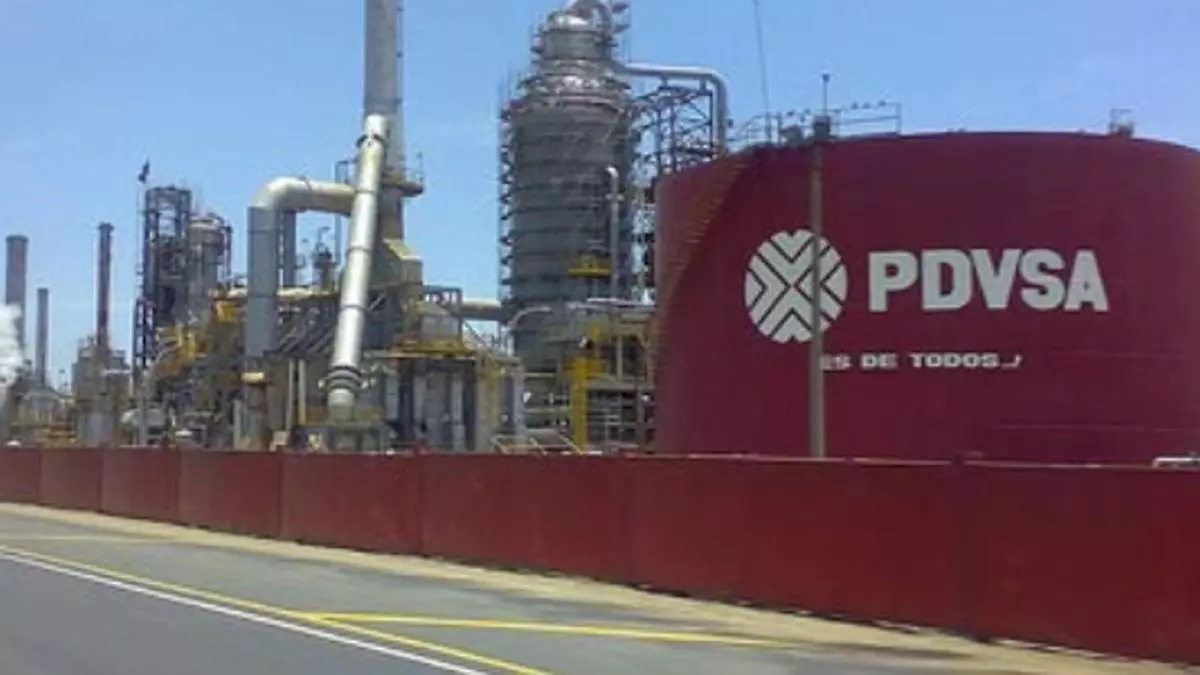
Cuba received 29,000 barrels per day (bpd) while China took 85% of the 900,000 bpd exported by PDVSA

In total, 60,000 bpd from Venezuela arrived in the U.S.

14ymedio bigger14ymedio, Madrid, September 4, 2025 — In August, Cuba received an average of 29,000 barrels per day (bpd) of Venezuelan crude oil, a quantity slightly below what arrived the previous month (31,000 bpd), although still far from the agreements signed 25 years ago by Hugo Chávez and Fidel Castro. In addition, it is half of what the state-owned oil company PDVSA sent to the U.S. this month.

Washington gave a respite by issuing a partial license to Chevron to operate in Venezuela and export its oil, which has allowed PDVSA to exceed 900,000 barrels per day, the highest volume of the year. The White House announced in July the granting of this “restricted” authorization without giving details, although it is believed that one of the conditions for using it is that the money from the sale of oil cannot be transferred to the government of Nicolás Maduro, something very complex to guarantee. In total, 60,000 bpd from Venezuela arrived in the U.S.

In total, 60,000 bpd from Venezuela arrived in the U.S.

This, together with the increase in exports to China — which took 85% of the country’s crude outflows — has left record figures for PDVSA’s coffers. The quantities of oil and its derivatives also soared, as Venezuela exported about 275,000 metric tons, compared to the 227,000 tons shipped in July. On the other hand, the country had to increase imports of light oil and naphtha, which it needs to dilute its extra-heavy oil and produce exportable crude, from 58,000 bpd in July to 99,000 bpd. continue reading

According to Reuters, which provides these data on a monthly basis, “the stability of production and the absence of interruptions in the refining process and mixing plants of the Orinoco Belt” were other factors that increased inventories and exports.

The data come amid strong tensions between the U.S. and Venezuela, which rose to a new level on Tuesday with an alleged naval attack on a drug boat in Caribbean waters. Despite this, the oil business is still standing, and as Chevron CEO Mike Wirth had predicted, “a limited amount of oil” began to flow in August, with expectations of a positive economic impact for the company in the third quarter.

Venezuela exported about 275,000 metric tons, compared to the 227,000 tons shipped in July.

Although Cuba has not received the amounts provided for in the agreements with Caracas for months, Miguel Díaz-Canel himself commented that there was an undisclosed “formula” between the two governments -“so that they do not pursue it”- through which to continue cooperation. According to some analysts, one of the solutions could be triangular agreements with Mexico.

The country has exported large quantities of crude oil to Cuba in the past two years — an estimated $1 billion so far this year — through a subsidiary of state-owned Pemex, Gasolinas Bienestar S.A. de C.V., which claims that it is complying with the U.S. embargo laws on Cuba. So far it is not known whether this is a donation, sale, barter or if Venezuela pays something to Mexico to compensate for the lack of shipments from PDVSA to the island.

Despite the fact that oil continues to flow towards Cuba, the blackouts persist, and the electricity deficit seems to increase vertiginously, having now adapted to a daily loss much higher than 1,500 megawatts (MW), reaching more than 2,000 this summer, equivalent to more than 50% of domestic demand. “The considerable increase in demand due to high temperatures and the departure of generating units due to failures and fuel shortages are the determining factors for the fact that the generation deficit in the country is higher than planned,” the State newspaper Granma said on Wednesday in a report about the energy situation of the country.

Despite the fact that the oil does not stop flowing towards Cuba, the blackouts persist and the electricity deficit seems to increase vertiginously.

On Tuesday, Energas Jaruco and unit 5 of Antonio Maceo (Renté), Santiago de Cuba, where a worker previously suffered serious burns in an accident, returned to the national electrical system (SEN). However, three more units were damaged (3 and 6 of Renté and 2 of Felton), besides two others being in “prolonged maintenance” (2 of Santa Cruz del Norte and 4 of Carlos Manuel de Céspedes, in Cienfuegos). To make matters worse, the preparation prior to capital maintenance has begun for the largest thermoelectric plant in Cuba, the Antonio Guiteras, Matanzas, which is estimated to be completed at the end of the year.

However, Lázaro Guerra Hernández, director of Electricity at the Ministry of Energy and Mines, attributed most of the deficit to the lack of fuel and lubricants, so that 703 MW were not provided, a situation that is repeated day after day.

In the midst of this situation, work is progressing at the Matanzas Supertaker base thanks to China. This Monday it was announced that a group of experts from that country placed the dome on tank 49-1, which has a capacity of 50,000 cubic meters (13,208,603 US liquid gallons). The aluminum cover is 74 meters (243 feet) in diameter and weighs 68 tons.

The work should be completed in 2026, when the construction of this tank has been completed along with tanks 86, 87 and 88, which will add up to 200,000 cubic meters (52,834,411 US liquid gallons) lost in the fire of August 2022 that left 17 dead, many of them young people who were performing military service and were sent without experience to put out the fire.

Translated by Regina Anavy

____________

COLLABORATE WITH OUR WORK: The 14ymedio team is committed to practicing serious journalism that reflects Cuba’s reality in all its depth. Thank you for joining us on this long journey. We invite you to continue supporting us by becoming a member of 14ymedio now. Together we can continue transforming journalism in Cuba.
Díaz-Canel Promises China a ‘Better Business Environment’ in Cuba, as He Did With Vietnam

Xi responds to the president that his country “is willing to continue providing assistance and support to Cuba, to the extent of its ability”

[Xi spoke of the “iron friendship” between the two countries and assured that his country “will continue to firmly support Cuba in its just struggle against interference and the blockade.”
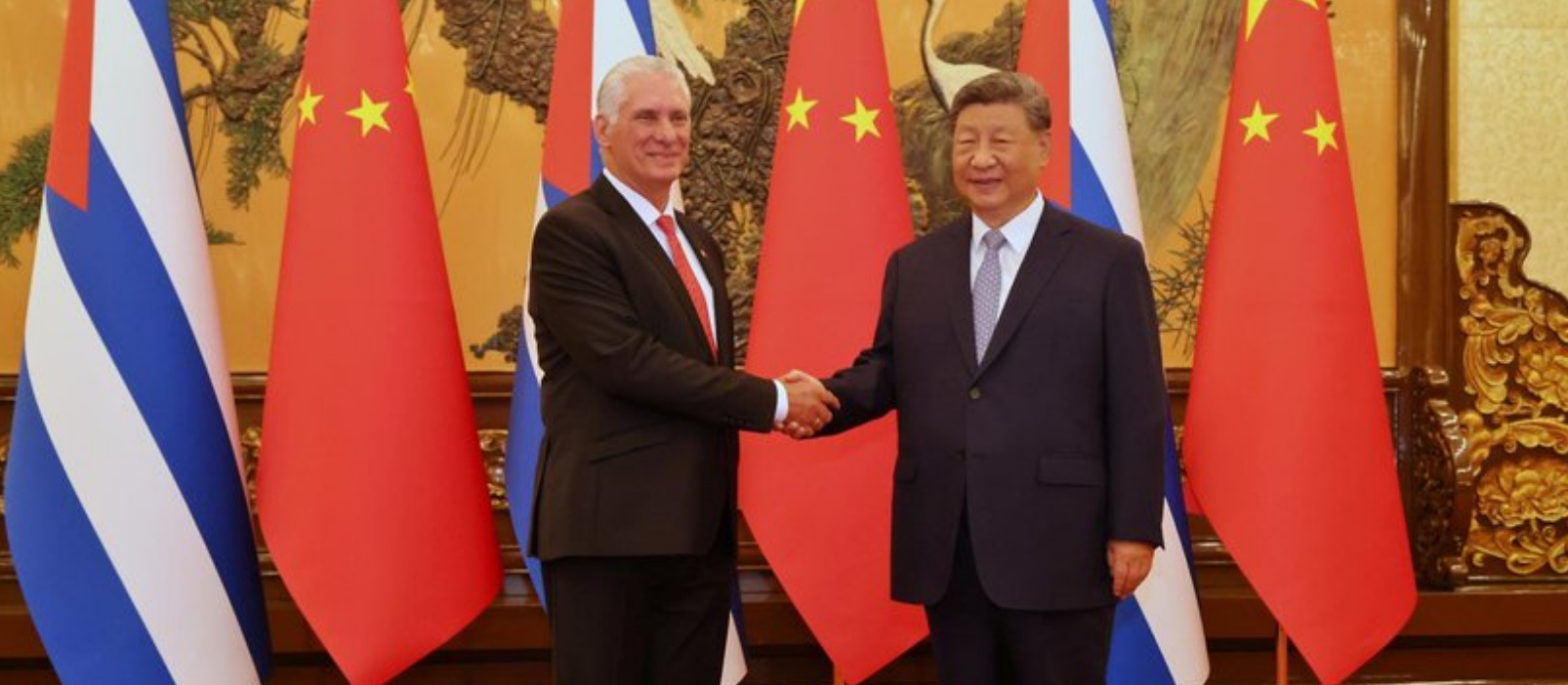
14ymedio bigger14ymedio, Havana, 4 September 2025 — Miguel Díaz-Canel made a promise to Xi Jinping this Thursday during their meeting in Beijing: “Cuba is ready to provide a better business environment for Chinese companies,” said the Cuban leader. It is the second time he commits this week, after saying the same thing in Hanoi to the Vietnamese authorities; however, China is not a country with strong growth like Vietnam, but the second world power.

More skillful than his counterparts, Xi gave a measured response: His country “is ready to continue providing assistance and support to Cuba, to the extent of its ability.”

The Chinese president called for “strengthening the integral strategic cooperation and continuing coordination and cooperation” between Beijing and Havana, according to a statement issued by state agency Xinhua. At the same meeting, the two leaders also signed bilateral agreements on agriculture, territorial cooperation, artificial intelligence, traditional medicine, infrastructure, press, cinema and television.

They also signed bilateral agreements on agriculture, territorial cooperation, artificial intelligence, traditional medicine, infrastructure, press, cinema and television

But beyond that, it was all words. Xi spoke of the “iron friendship” between the two countries and assured that his country “will continue to firmly support Cuba in its just struggle against interference and the blockade.” There was nothing new that, for the moment, suggests such good results as those obtained by Díaz-Canel in his December 2022 tour, when he obtained a donation of 100 million dollars and the cancelation of the debt. continue reading

Díaz-Canel thanked China for “its selfless support and assistance to the economic and social development of Cuba.” The Chinese ambassador in Havana, Hua Xin, already made it clear in an interview this Wednesday with the official weekly Workers that the aid of his country has a more strategic than economic reward. “Cuba is the starting point of relations between China and Latin America and the Caribbean, the cradle of the China-Celac Forum and a bridge for relations in the area,” he said.

In Beijing, Díaz-Canel attended the military parade commemorating the 80th anniversary of the end of World War II in the Pacific, together with other leaders – the Russian, Vladimir Putin, and the North Korean, Kim Jong-un, in addition to Xi himself, who reviewed the troops.

Putin and Kim had the preferred place for escorting the Chinese host, but Díaz-Canel had to settle for a discreet fifth row in the line of followers.

Following his meeting with Xi and the signing of documents, including those relating to the Belt and the Silk Road Initiative, political consultations, practical cooperation, cultural exchanges and the Global Security Initiative, the Cuban leader went to the Monument to the Heroes of the People, where he presented a floral offering. The memorial is located on Tiananmen Square, where in August 1989 there was a serious crackdown and massacre of students protesting against the communist regime.

There, Díaz-Canel placed a floral arrangement inspired by the same one that Fidel Castro placed in 1995. “To the memory of the heroes of the Chinese people, in the name of the Cuban people, Communist Party and Government,” indicates the commemorative ribbon, with the colors of the national flag.

The Cuban leader also met with Li Xi, a member of the Standing Committee of the Political Bureau of the Central Committee of the Communist Party of China, recently in China. Also in the entourage were Chancellor Bruno Rodríguez Parrilla, the head of international relations of the Communist Party of Cuba, Emilio Lozada García, and the Cuban ambassador to China, Alberto Blanco Silva.

The meeting was attended by some of the other ministers most interested in getting something from China, including Oscar Pérez-Oliva Fraga, of Foreign Trade and Investment; Vicente de la O Levy, of Energy and Mines; Mayra Arevich Marín, of Communications; and the president of the Central Bank of Cuba, Juana Lilia Delgado.

In the early afternoon, the Cuban leader also met with comrade Han Zheng, vice-president of the People’s Republic of China.

At the end of this visit, Díaz-Canel will leave for Laos on what will be the last stop of his Asian tour before returning to the Island.

Translated by Regina Anavy

____________

COLLABORATE WITH OUR WORK: The 14ymedio team is committed to practicing serious journalism that reflects Cuba’s reality in all its depth. Thank you for joining us on this long journey. We invite you to continue supporting us by becoming a member of 14ymedio now. Together we can continue transforming journalism in Cuba.
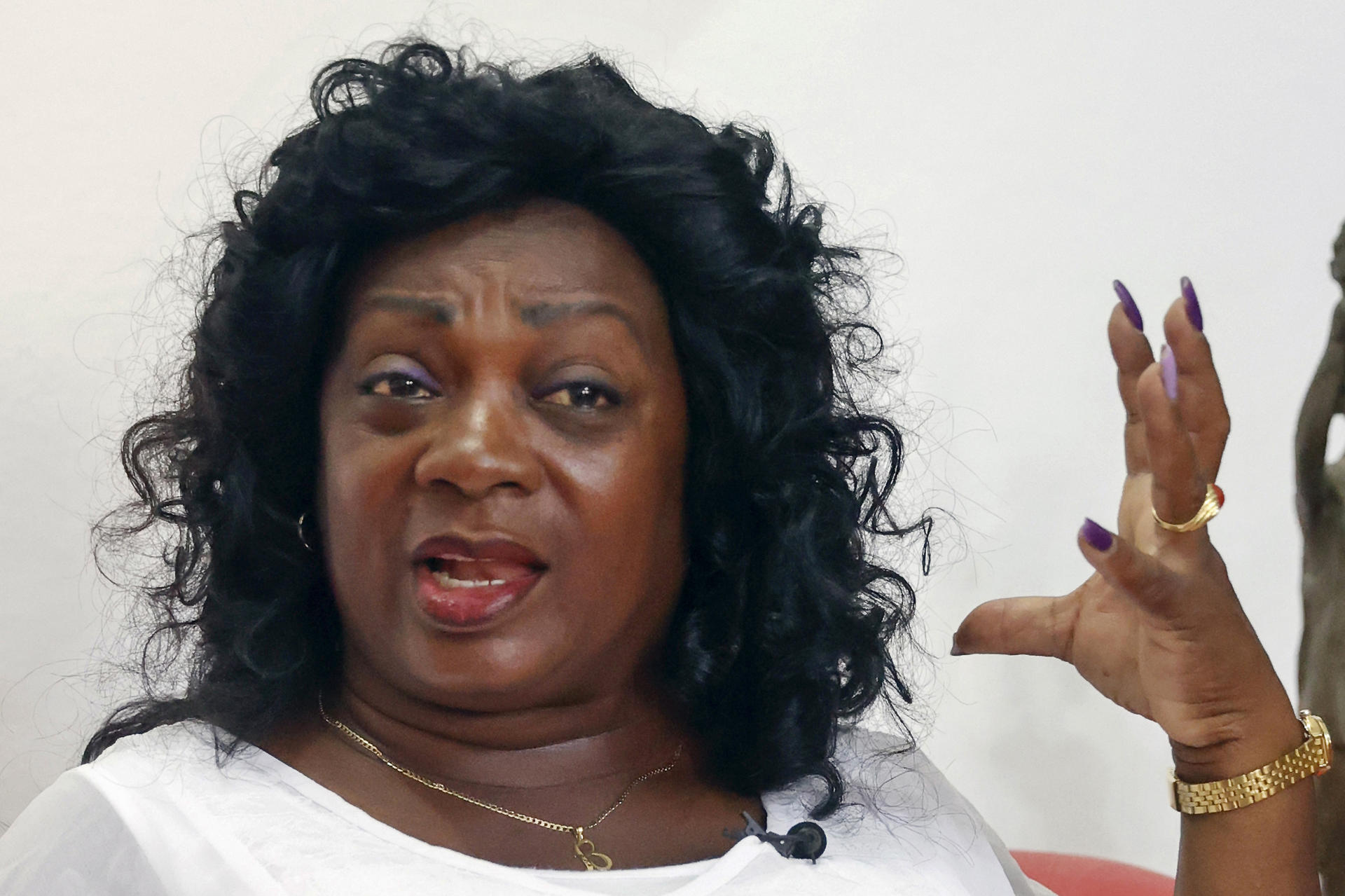
The World Sees “What We Are Suffering” in Cuba, Says Lady in White Berta Soler

In conversation with ’14ymedio’, the leader of the Ladies in White says she will support political prisoners with a portion of the Lech Walesa Prize.

Activist Berta Soler, leader of the Ladies in White / EFE

14ymedio bigger14ymedio, Havana, 3 September 2025 — The 2025 Lech Walesa Solidarity Award, presented to Berta Soler, the leader of the Ladies in White, this Tuesday in Miami, “is one more way of knowing that we are not alone.” Speaking with 14ymedio , the activist asserts, “We have people in Europe, in America, or anywhere else who are watching what we are doing inside Cuba, and we are suffering.”

Soler says she feels “honored and grateful” for the award after “22 years of fighting in Cuba for the freedom of all political prisoners and also for the rights and freedoms of all” in the country.

She adds that the award—which recognizes individuals and organizations that promote democracy and civil liberties around the world—is also a way to honor “the 66 years we have been fighting against communism and the Cuban regime.”

The award is also a way to honor “the 66 years we have been fighting against communism and the Cuban regime.”

The activist was unable to attend the ceremony to collect the award because she is “regulated” and cannot leave the country. However, her voice was heard via video at the event, which was presided over by Polish Foreign Minister Radoslaw Sikorski and U.S. Secretary of State Marco Rubio. continue reading

“I couldn’t be there because the Cuban tyranny is conditioning my departure, imposing a departure with no return, a condition I truly don’t accept, and I’m staying in Cuba,” she told this newspaper.

She adds that the funds provided by the prize ($275,000) “will be used to strengthen aid for political prisoners; another portion will be shared with the Damas de Blanco and, of course, with my family.”

This is the second internationally significant recognition received by the Ladies in White or their leader, following the Sakharov Prize for Freedom of Thought, awarded in 2005 by the European Parliament.

Soler has become a poster child for the harassment of dissidents on the island. Since 2022, almost every Sunday when she tries to attend Mass at the Santa Rita Church in Havana, the 62-year-old activist has been detained, in some cases for only a few hours, although in recent months it has been as long as three days.

Since 2022, almost every Sunday when she tries to attend mass at the Santa Rita church in Havana, the 62-year-old activist has been detained.

The leader of the Ladies in White is not the only member of the group to have experienced such State Security surveillance. Last April, the head of the U.S. Embassy mission in Cuba, Mike Hammer, escorted Soler to Mass as a show of support, although seven members of the group were detained for several hours while attempting to attend the chapel.

The Ladies in White movement emerged from the initiative of a group of women relatives of the 75 dissidents and independent journalists arrested in March 2003. The activists arrested during those days were sentenced to lengthy prison terms during the so-called Black Spring. From then on, the wives, mothers, and other relatives of those prisoners identified themselves by always wearing white and, after attending mass at a Catholic church, began holding Sunday marches to demand their release.

____________

COLLABORATE WITH OUR WORK: The 14ymedio team is committed to practicing serious journalism that reflects Cuba’s reality in all its depth. Thank you for joining us on this long journey. We invite you to continue supporting us by becoming a member of 14ymedio now. Together we can continue transforming journalism in Cuba.