Yadira accepted a job as an official in the municipal construction union
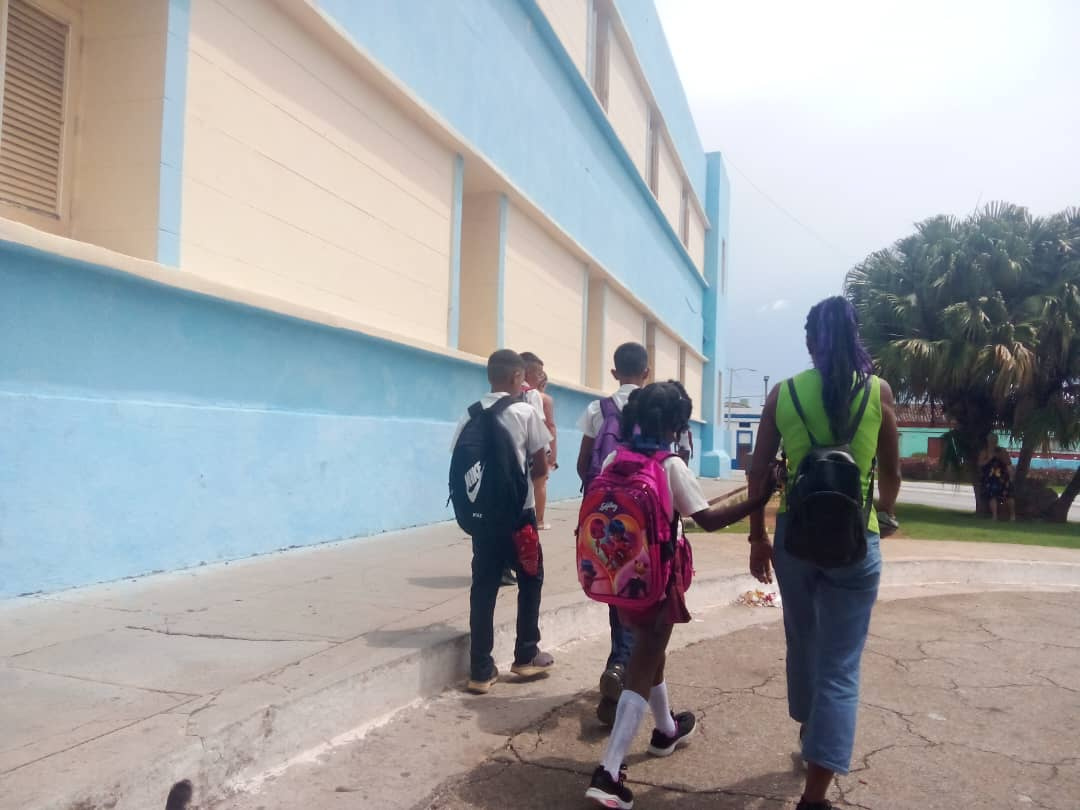
 14ymedio, Julio César Contreras, Matanzas, September 6, 2025 — Last Monday, Yadira was not in the classroom with her students, as she had been every year since graduating as a comprehensive general teacher in 2003. “Leaving teaching has been one of the most difficult decisions of my life, but I am tired of teaching being a profession so undervalued and poorly paid in this country,” says the teacher, who worked at two primary schools in Matanzas. After many years of sacrifice, she decided to change jobs.
Her new job as a municipal construction union employee will not earn her much more, but it will give her something she values more: free time for her family and access to building materials. She lives with her three children in Matanzas, while trying to finish her house, which was started in 2011 and still has a dirt floor. “I agreed to come in 2008 from Bayamo because they promised me a house that never arrived,” she explains to 14ymedio.
The provincial education landscape shows the cracks in the system. This week, 98,000 students began the school year in Matanzas, but with a deficient teaching coverage: of a planned staff of 9,511 places, only 7,478 have been covered. According to the provincial deputy director of education, Eledis Abreu Domech, the gap of more than 2,000 teachers is filled by hourly contracts and other patches. The most affected municipalities are Matanzas, Colón and Cárdenas.
The deficit is due not only to low wages but also to the very poor living conditions, especially the housing
The deficit is due not only to low wages but also to the very poor living conditions, especially the housing for those who have been transferred from other provinces to teach in the city. Yadira recalls spending three years in a teacher’s shelter, washing her clothes by hand and eating whatever appeared, until members of her Baptist church helped her to get a small plot of land and to build one room of her own house.
Frustration accumulated: “It is not just the salary. Between absurd meetings and prohibitions, it is impossible to teach quality classes,” complains the woman.
According to the most recent salary scale, Yadira should receive 5,369 pesos plus an 80-peso seniority bonus. “I can’t support my children with that. I’m a single mother, and at 44 I still depend on the help of my parents,” she laments. She is thinking of doing private tutoring at home, something forbidden while working in the school.
Although in her new union job she will earn 400 pesos less, she gets more autonomy, less bureaucracy, more time for her family, and she can have time to be a leader in her Baptist Church. “I will try to continue working for the State, but I will not accept impositions against my faith or personal development. If something positive comes out of this decision it is that I will never work for someone who does not value my effort.”
As an added bonus, her new job brings her closer to a source of construction resources that can accelerate the completion of her home. As a teacher, it was virtually impossible for Yadira to buy anything, from electrical switches to sacks of cement, to complete a project that has already cost her more than a decade of work and worry.
During her work as a teacher, she felt that attention to the teaching staff was one of the great shortcomings of the Cuban educational system. The teachers’ list of duties is long, but the stimulus remains in some diploma or official act where they are given a flower or a picture with the face of some party leader. This lack of interest does not correspond to the importance that people like her have in the formation of new generations.
Yadira admits that she would like to return to teaching one day but finds it increasingly difficult: “They are running out of teachers, and the worst is that they do nothing to prevent it. It’s as if they don’t care,” she concludes.
Translated by Regina Anavy
____________
COLLABORATE WITH OUR WORK: The 14ymedio team is committed to practicing serious journalism that reflects Cuba’s reality in all its depth. Thank you for joining us on this long journey. We invite you to continue supporting us by becoming a member of 14ymedio now. Together we can continue transforming journalism in Cuba.