Open Letter from a Doctor to a Dictator

Nelva Ismarays Ortega Tamayo addressed the letter to Raúl Castro because she attributes to him the decisions of what happens in Cuba. (Facebook)

14ymedio bigger

14ymedio, Nelva Ismarays Ortega Tamayo, Santiago de Cuba | 4 March 2019

To: General Raúl Castro Ruz, Dictador of Cuba

General dictator Raúl Castro Ruz,

The objective of this open letter is to expose, to your regime and to the world, the fundamental reasons why I have decided to renounce my work as a doctor in the service of an inhuman system that violates the most elementary rights of the citizen, that beats children, the elderly and pregnant women, and that uses medicine for political purposes, and doctors and nurses as slave labor.

My decision has been maturing for some time now. There are too many injustices, excessive lies and justifications. Always blaming others for what is the total responsibility of a cruel system that only cares for the human being, hypocritically, to the extent that is necessary for the person to submit itself docilely to the dictates and whims of the dictator of the day. continue reading

Why do I write to you and not to the Minister of Public Health or Miguel Diaz-Canel? For one simple reason: one confronts the master, one speaks with the principal party responsible for the suffering of an entire nation.

Like millions of young Cubans I was indoctrinated and deceived, I am the daughter and granddaughter of people who were also indoctrinated and used by the tyranny that your brother Fidel Castro initiated.

I militated, unfortunately, in the ranks of the Union of Young Communists, UJC. I was pressured by your political police to, as a doctor, monitor and influence peaceful opponents who only seek respect for human rights. Your agents demanded that I should collaborate with them and give them information about the health of and everything I knew about the UNPACU leader, José Daniel Ferrer García.

Drawing me closer to the UNPACU and its leader was the worst mistake they made. While it is true that I had my doubts, disagreements and concerns, it is also true that, like many other professionals, I only thought about my career as a doctor and helping my humble and sacrificed family. In order to do so, I hoped to go abroad for a “mission.” That is, travel as a political instrument and slave labor. But with UNPACU, I learned about dignity, human rights, democracy, justice, and the true and perverse essence of the regime that you lead.

For breaking with the regime, for joining UNPACU and sharing my life with their leader, a very humane and courageous man who truly loves our country, the Directorate of Public Health in the Municipality of Santiago de Cuba has taken unfair measures and sanctions against me. My family has been pressured by your political police so that they, in turn, put pressure on me so I will return to the “fold.”

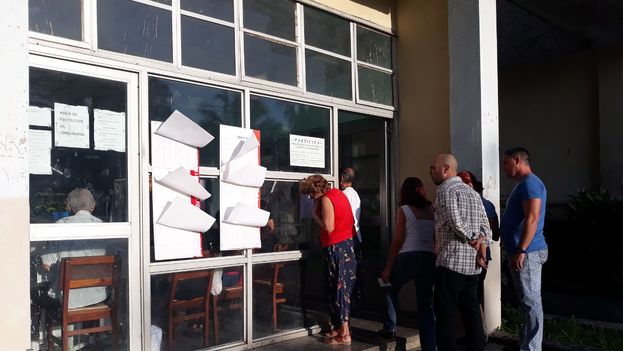
However, the straw that broke the camel’s back occurred on February 11 when dozens of agents of the Ministry of the Interior, mostly assault forces, broke into 8 homes of UNPACU members with such violence that, had I not lived it, I would not have believed it.

They beat many. They beat my grandmother, a prostrate old woman, and they beat me, five months pregnant. They stole and broke everything. Even the food and medicines, with which we cure sick people, were stolen by their agents.

They also stripped me of my means of work. All these serious actions and others like it in the following days, were in revenge because we campaigned peacefully and legally for the No vote to your Stalinist Constitution in the false referendum on February 24.

For 15 days your repressive forces completely surrounded our home and did not let me go to work. The few times I was able to go out to do personal tasks, I was the victim of violence and humiliation by your aggressive agents.

The siege continues today, and every night they pelt our home. In summary, I’ve lived and seen so much cruelty and nonsense…! I thought that this could only happen in regimes like those of Adolfo Hitler and Benito Mussolini.

I  will abandon continuing to work for the Ministry of Public Health of your tyrannical regime, they will not use me anymore, in the least, but I will never stop exercising my noble profession.

I will continue attending to the activists that are beaten, persecuted and marginalized; I will continue to care for every sick person who requests my services. I will continue to denounce the injustices of your regime against doctors and patients. I will continue to serve my people and fight for their freedom.

I am completely cured of the syndrome that has done the most damage to our people: the “helplessness syndrome” and I will be helping other doctors and health workers to free themselves from such a harmful pathology.

Your dictatorship will fall and we doctors will be able to exercise our sacred profession with dignity and freedom. We will have adequate working conditions and decent wages. Nobody will use us as political instruments. The people will have excellent health and will not have to pay for it with submission and misery.

We Cubans will live in freedom and prosperity. You can be sure of it.

Dr. Nelva Ismarays Ortega Tamayo, Specialist in Integral General Medicine, Professional Registry No.18667, Santiago de Cuba. March 4, 2019

Translated by Wilfredo Díaz Echevarria

___________________

The 14ymedio team is committed to serious journalism that reflects the reality of deep Cuba. Thank you for joining us on this long road. We invite you to continue supporting us, but this time by becoming a member of 14ymedio. Together we can continue to transform journalism in Cuba.
The Book Fair: A Communist Vanity Project / Angel Santiesteban

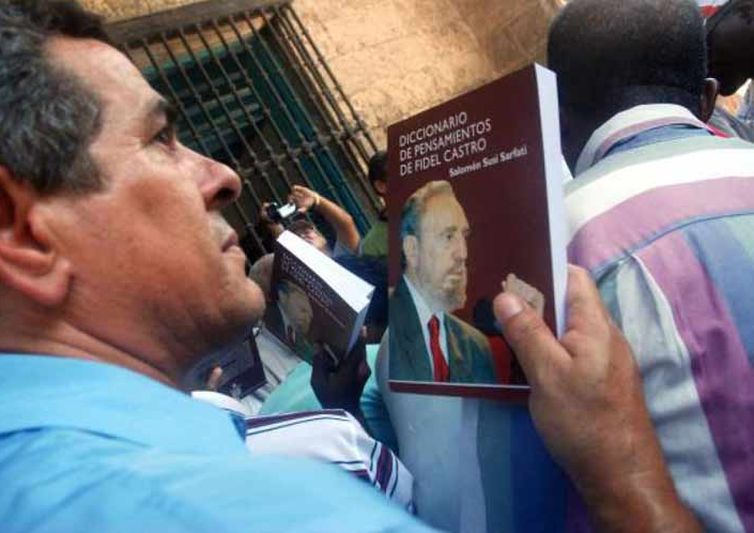
At the Book Fair holding “A Dictionary of Fidel Castro’s Thoughts” (Foto Prensa Latina)

Ángel Santiesteban, Havana, 23 February 2019 — They slammed shut the doors of La Cabaña, ending the 28th Havana Book Fair; and one which, I suppose, has been the most disturbing of all of them up until now. I can imagine everything those culture officials had to do to prepare an event scheduled for the same month as the widely-publicised constitutional referendum.

One week after the end of the public holiday, Cubans will be invited to ratify the constitutional monster, on which the government had wasted miles and miles of paper, and rivers of ink, sufficient to be able to print an infinite number of headlines, and indeed the entire output of the national press for a whole year. All in order to indoctrinate the Cuban people, and to demand that they legitimise an eternity of communism in Cuba.

The poor Cuban reader, who waits every year for that event which hardly shows any books and which silences the great writers around here and world-wide. The Censorship Fair, in its capital, Havana, slammed its doors and started its follow-up fanfares in the provinces, with identical procedures and the same limitations. continue reading

This was the same as all the ideas which came out of Fidel Castro’s head, who, although he didn’t achieve it,  dreamed of making the International Book Fair into the most important literary event in the world, more important than the ones in Frankfurt, Buenos Aires or Guadalajara. Nevertheless, in contrast to the other ones, the Fair in Havana had to face up to the real essence of these very diverse events, where you can even trade those monstrous editions of his collected speeches and interviews, which is the sign of true democracy.

This fair felt the weight of the upcoming constitutional referendum on its shoulders. Many books arrived hot off the press into the hands of their readers because all the publishers in the country were churning out hundreds of thousands of copies of the Constitution and all its accompanying bells and whistles.

This got in the way of all those books which should have been on display on opening day. But, nevertheless, all the officials said it was a success. And Alpidio Alonso, that Minister so distanced from the arts and culture, but offensively titled Minister of Culture, will have passed a trial by fire.

The Fair had to go ahead, and could not be set back by anything, not even the devastating tornado which hit Havana. Everything had to go ahead, whatever else was happening; the march for Martí’s birthday, the Fair, and everything that would show just how great, cultured and revolutionary Cuba was. And the Fair finished, with tributes to the official writers, the ones who dance to the tune of this non-government.

Havana’s fair has now closed, and the city will continue in its sad misery, with its hundreds of thousands of inhabitants who have no interest in opening a book, unless they have run out of toilet paper. The fair closed, and, with it, the tributes to the obedient writers, and the rent-a-claque of professional applauders. The doors of the fair have closed in Havana, but others will follow, with the same crap, the same arrogance and the same callousness.

But this Fair was also, in spite of the attentiveness of G2 (the State Intelligence Agency) a scene of political confrontation. One writer, taking part in a presentation, ripped off her shirt and revealed her sweater with its written message to say “No” to the Constitution.

This was met by the usual repression and hate: they harassed and insulted her; they turned violent and furious, pulled her hair, and hit her, by way of bringing to a close the proceedings and making it quite clear in passing what might happen the following Sunday, when more than a few people will say “No” to the Castro farce.

ABOUT THE AUTHOR

Ángel Santiesteban

(Havana, 1966). Graduate in Film Direction, living in Havana, Cuba. Honorable Mention in Juan Rulfo Competition (1989), National Writers’ Association UNEAC Prize (1995). The book: Dream of a Summer’s Day, was published in 1998. In 1999 winner of the César Galeano prize. And the Alejo Carpentier Prize in 2001, organised by the Cuban Book Institute, with a set of stories: The Children Nobody Wanted. In 2006, he won the Casa de las Americas Prize in the stories genre with Happy are Those Who Mourn. In 2013, he won the International Franz Kafka Novels From the Drawer Prize [given in tribute to novels that are written, but then shoved to the back of a drawer rather than published], organised in the Czech Republic, with the novel The Summer When God Slept. He has published in Mexico, Spain, Puerto Rico, Switzerland, China, England, the Dominican Republic, France, the USA, Colombia, Portugal, Martinique, Italy, Canada, among other countries.

 Translated by GH

The Result of the Referendum: Reversal or Victory?

With our heads held high, let us recognize that we did not achieve what we set out to do, that the Yes vote won widely. (14y medio)

14ymedio bigger14ymedio, José Gabriel Barrenechea, Santa Clara, 1 March 2019 – Despite the doubts generated by the data offered by the National Electoral Commission, which include significant changes in the voting rolls and irregularities detected and disseminated by the independent press, it is possible to recognize that the Yes vote exceeded 6 million and would mean between 67% and 70% of the eligible voters validated the new Constitution.

So without a doubt the Yes vote not only did win, but it did by a wide margin. Why did this happen?

Apart from the obvious reasons, such as the impossibility for those of us who advocated for the No vote to bring our reasons to the population while the regime had all the means to do so with its discourse — manipulations and half-truths included — I consider that there are two causes that contributed to a great extent to the result. continue reading

First, that the voters did not see the referendum like we did. For many of them this was not the opportunity to say to the regime Yes, or No. For the voters of the island, what happened was that they were able to say Yes to a Constitution that they perceived as more liberal and that extended the range of their rights. It must be recognized that the new Constitution gives a little more breathing space to those who intend to open, little by little, greater spaces of freedom in Cuba, but it does not matter so much if, in short, it is like that or not, but how our neighbors perceived it .

Secondly, the threat of intervention in Venezuela only served for many Cubans to reactivate the anti-imperialist sentiments that for so long have been part of their imaginanation. In this way it has been possible to bring together a considerable number of voters, probably those over 30 years of age, around a regime that understood that it should reinvent this type of discourse.  Added to this is the damage that was already caused a month earlier by the inopportune (or safe move) threat to intensify the embargo.

For many Cubans, the fall of Venezuela does not necessarily mean the fall of the government of Havana, but only a worsening of their day to day lives. For that reason, not a few of that immense majority of pessimists who maintain that “this regime will not fall” interpreted that it was necessary to show support for the regime, which in turn shored up the Venezuelan teat from which we suck.

From all this we can draw two conclusions.

The first is that the penetration of the internet is not as broad as we thought, or, more clearly, that the cost and the few minutes of connectivity do not allow the majority to use the internet to inform themselves and model their political position, but is only as a means of survival, whether to ask for remittances, manage their departure from the island, or look for a partner abroad that makes their existence in Cuba bearable.

The second is that the opposition discourse still does not reach the Cuban on the island. As I said in The Martian (referring to Jose Marti) Knot of the Opposition and the Exiled, Cubans on the Island are a kind of extraterrestrials species apart from the rest. We live in a society with an interpretation of existence that is alien, and incomprehensible, for other mortals except for the North Koreans.

This vision also works the other way around. The Cubans of the Island, locked in the Castro bubble, also do not understand the discourse from the outside. That is why, when one of us leaves that bubble, be it by emigrating or becoming an opponent, he breaks with it and tries to forget it completely, as is normally the case with anyone who escapes from such enclosures. He also loses the possibility to understand, or being understood by, those who have been left behind.

This explains for us that we have an opposition that speaks a language understandable to an American, Spaniard, Mexican or Peruvian; but that the islander only interprets because he does not understand the content of the message.

We must overcome mental laziness, political self-importance (of which there is much) and even the fear of revisiting our beliefs and feelings of when we lived inside the bubble, something we avoid for fear of being absorbed back into the bubble.

We must develop a discourse of our own, based on our exceptional circumstances, fully understandable to those neighbors we now call bootlickers, lazy bums and other such “niceties.”

We must have concrete proposals, that are not up in the air waiting for Mr. Market and Uncle Sam to get here so that happiness and abundance will ipso facto make their presence.

If we do not do all this we will remain as isolated as we have been until now from those neighbors whose interests at some point we intend to represent, and as the resounding Yes vote to the Constitution shows that we are, because although we accept that the Yes vote was not for the government, it was an outright demonstration of the irrelevance of our discourse and proposals (if there are any) for the absolute majority of the islanders.

What can we do after what has happened?

First of all, do not allow ourselves to be overcome by discouragement, much less by hysteria, which leads to nothing positive.

With our heads held high, let us recognize that we did not achieve what we set out to do, that the Yes vote won easily. Because denying it to a population that knows very well that it voted affirmatively will only serve, at the very least, to distance ourselves from them. Let us understand that the triumph of the Yes vote is not in the long term a triumph of the regime, but that the citizens preferred to say Yes to the changes that it can obtain without peril, given the adverse circumstances.

The referendum gave an opportunity to verify the existence of a broad sector of the population, in general the most educated and cosmopolitan, who want more than what the regime offered; that is to say, there is a will for movement and to see changes, which, in the long run, is fatal for Diaz-Canel’s immobilism, which will not be able to follow in step without breaking at some point with the continuity that it claims to respect.

What is needed is therefore to feed this dynamic.

We must turn to the denunciation of the characteristics of the current Electoral Law and ask that all Cubans be able to vote, regardless of where they live. We must also demand that the new Law be discussed and submitted to a referendum. The main argument must be based on the words of Raúl Castro, who affirmed that in Cuba no important decision should be made without consultations with the people.

If someone expected Castroism to fall this February 25, we had already previously warned that no such a thing would happen.

Let’s keep chipping away at the monolith. Stop thinking and acting so much for the overseas public, to win an intervention that will not come (look at Venezuela) and let’s begin to mature a discourse for the island. For the followers of Jose Marti trapped in it.

Translated by Wilfredo Díaz Echevarria

_________________________

The 14ymedio team is committed to serious journalism that reflects the reality of deep Cuba. Thank you for joining us on this long road. We invite you to continue supporting us, but this time by becoming a member of 14ymedio. Together we can continue to transform journalism in Cuba.

Former Chavista Senior Military Figure Will Tell Guaido How to "Dismantle the Cuban Intelligence Apparatus" in Venezuela

Former General Hugo Carvajal, Chávez’s trusted man, insists that the Cuban intelligence apparatus in Venezuela must be dismantled. (DR)

14ymedio biggerEFE, via 14ymedio, Caracas, 28 February 2019 —  Former Venezuelan General Hugo Carvajal, former chief of military counterintelligence, said Wednesday that the Bolivarian National Guard (GNB) and Cuban intelligence agents control the Bolivarian National Armed Force (FANB) and lead criminal activities.

The GNB “in addition to violating human rights through repression, is the real handmaiden of drug trafficking in Venezuela,” said Carvajal on Twitter, where he also expressed his support for head-of-Parliament Juan Guaidó’s assumption of the role of interim president, given what he believes to be Nicolás Maduro’s usurpation of the office.

The soldier, who until a few weeks ago was close to the highest leaders of the so-called Bolivarian Revolution, said that about 90% of the FANB “wants to comply with their constitutional duties, but the control is much stronger than you imagine.” continue reading

“The primary objective of the legitimate government is to take control of the FANB, for which it will be necessary to dismantle the Cuban intelligence apparatus and the control mechanisms that maintain the governmental structure of our country,” he commented in Twitter.

Carvajal believes that as long as these issues are not addressed, nobody could penetrate Venezuela and “neutralize elements without first waging a war.”

He also said that the majority of the members of the other three components of the FANB (Army, Navy and Air Force) are “healthy” and “would be willing to clean” the Venezuelan territory of the Colombian guerrillas, drug trafficking and other irregular groups.

“Considerations on the strategy to achieve this, together with more confidential information, I will send to the [interim] President of the Republic,” he added.

Carvajal is making these statements just when Parliament is asking the members of the FANB “to side with the Constitution” and stop supporting Maduro, despite the “fear” and “persecution” to which they may be subjected.

The Chavista leader Diosdado Cabello responded by saying that Carvajal “negotiated” his support for Guaidó with the United States because that country also recognizes the opposition leader Guaidó as president, and had also asked that the general be turned over for drug trafficking.

___________________

The 14ymedio team is committed to serious journalism that reflects the reality of deep Cuba. Thank you for joining us on this long road. We invite you to continue supporting us, but this time by becoming a member of 14ymedio. Together we can continue to transform journalism in Cuba.

Guaido Says Cuba is Terrorizing the Venezuelan Military So They Will Not Support Him

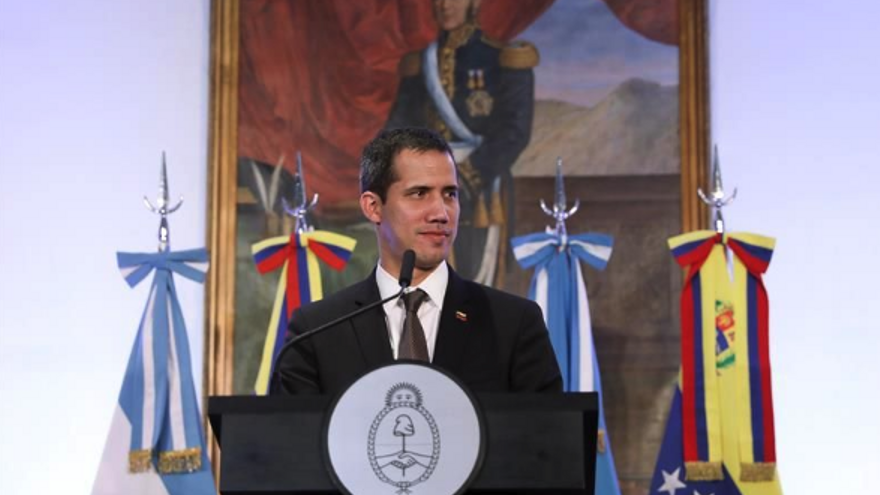
Juan Guaidó, who is recognized as interim president of Venezuela by some 50 governments, arrived in Argentina from Asunción. (Presidency of Argentina)

14ymedio biggerEFE, via 14ymedio, Buenos Aires, 2 March 2019 — The head of the Venezuelan Parliament, Juan Guaidó, said Friday in Buenos Aires that 80% of the armed forces of his country “are in favor of a change,” but he accused Cuba of terrorizing the military so they won’t show their support.

“If there is an interference in Venezuela it is Cuba over Venezuela, where they manage a part of the intelligence and counterintelligence apparatus, especially dedicated to terrorizing, mainly, the military so that they do not speak openly,” Guaidó said at a press conference after meeting in the Argentine capital with President Mauricio Macri.

Guaidó, who is recognized as interim president of Venezuela by some 50 governments, arrived in Argentina from Asunción, where he was received by the Paraguayan president, Mario Abdo Benítez. continue reading

Guaidó was also in Brazil on Thursday with its president, Jair Bolsonaro, on Saturday he was in Ecuador and, according to some media, on Sunday he might visit Peru.

“I dare to say that 80% of the armed forces are in favor of a change, and now 160 high-ranking military officers have been imprisoned since 2018,” the leader of parliament recalled.

He added, “for the first time in many years” the political leadership is speaking “clearly and directly” to the armed forces. “Establishing trust between the political sectors takes time, imagine establishing trust with the military,” whom “they persecute and torture,” he said.

Guaidó noted that his interim government has offered amnesty and guarantees to the military to support a transition and withdraw their trust from president Nicolás Maduro.

“We are in that process, but we must continue to press, we must continue to look for methods of communication,” he added and reflected: “Imagine for one second a Maduro without arms.”

On a possible military intervention in the country to expel Maduro from power, the self-proclaimed president reiterated that “the option is peace,” although he insisted that now there is no peace in Venezuela.

“We have to take a lot of responsibility with respect to this. We understand that force is a final option that nobody wants, we are working for a transition for a free Venezuela,” he emphasized, noting that his plan is to achieve the “cessation of usurpation” of power by Nicolás Maduro to start a transitional government and call for free elections.

_________________________________

The 14ymedio team is committed to serious journalism that reflects the reality of deep Cuba. Thank you for joining us on this long road. We invite you to continue supporting us, but this time by becoming a member of 14ymedio. Together we can continue to transform journalism in Cuba.

Final Figures Reduce Abstentions in the Referendum From 15.6% to Less Than 9%

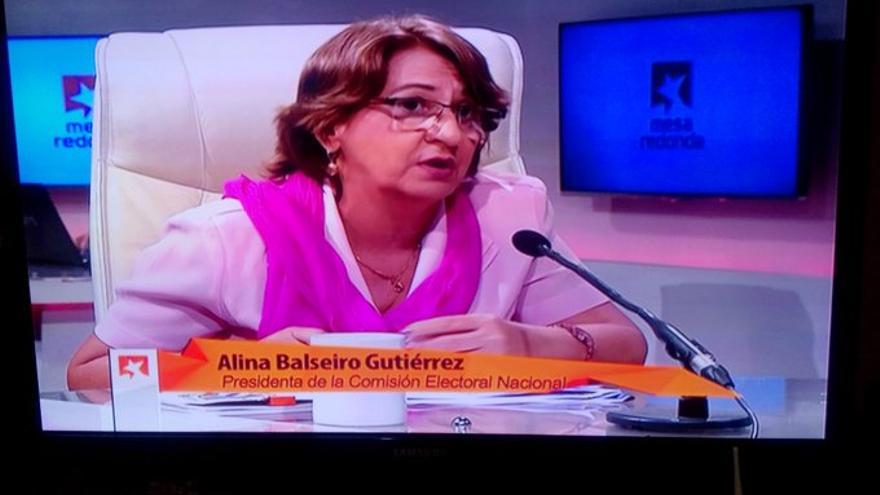
The president of the National Electoral Commission on TV yesterday reporting the final results

14ymedio biggerEFE/14ymedio, Havana, 1 March 2019 — On Thursday, the National Electoral Commission of Cuba (CEN) announced the final results of the referendum in which the new Constitution was ratified, which did not include important changes with respect to the provisional data already published, although it drastically changed the count with respect to that issued on Monday.

In the final data offered, the participation rate changed to 90.15% from the 84.4% provisionally announced one day after the vote, due to a correction in the voters lists.

On Monday, the National Electoral Commission (CEN) offered provisional data that increased the voter registry to 9,292,277 voters compared to the last elections in March 2018, when the number of registered voters was 8,639,989. continue reading

As reported yesterday by the president of the CEN, Alina Balseiro, in an appearance on state television, the final count eliminated the double-counting of 594,580 voters who were on the lists at their permanent residences but exercised their votes in a different polling station.

Also, 3,445 deceased voters were excluded after the update, which left the current voter registry at 8,705,723.

With regards to the data, the total of 6,816,169 citizens, 86.85% of the 7,848,343 million voters who exercised their right to vote, opted for the Yes to the new Constitution.

It is also repeats the number of voters for the No, which totaled 706,400 Cubans, 9% of the ballots counted.

On the other hand, the updating of the register affected the result of those voting for the Yes, which went up to 78.30% of the updated list, instead of the 73.31% announced last Monday before the filtering of the electoral lists.

The votes for No amount to 706,400, for 8.11% of the updated list and 9% of the voters who voted.

The new Constitution will come into force when it is published in the Official Gazette of Cuba — at a date yet to be decided — and with that it will replace the current one dating from 1976.

Composed of 229 articles, 11 titles, two special provisions, 13 transitory and two final, the next Constitution does not contemplate major changes outside the economy, where it recognizes private property and considers foreign investment as necessary, two precepts that have already been applied for years in Cuba under the reforms of Raúl Castro.

The most outstanding novelty in the political sphere is that it establishes the figures of the President of the Republic and the Prime Minister, and establishes a limit of two consecutive presidential terms.

However, it maintains the Communist Party of Cuba (PCC) as the “highest leading force in society” and ratifies communism as an aspiration, even though that term had been eliminated in the first draft of the constitutional reform.

______________________________

The 14ymedio team is committed to serious journalism that reflects the reality of deep Cuba. Thank you for joining us on this long road. We invite you to continue supporting us, but this time by becoming a member of 14ymedio. Together we can continue to transform journalism in Cuba.

What Will Happen With Guaido?

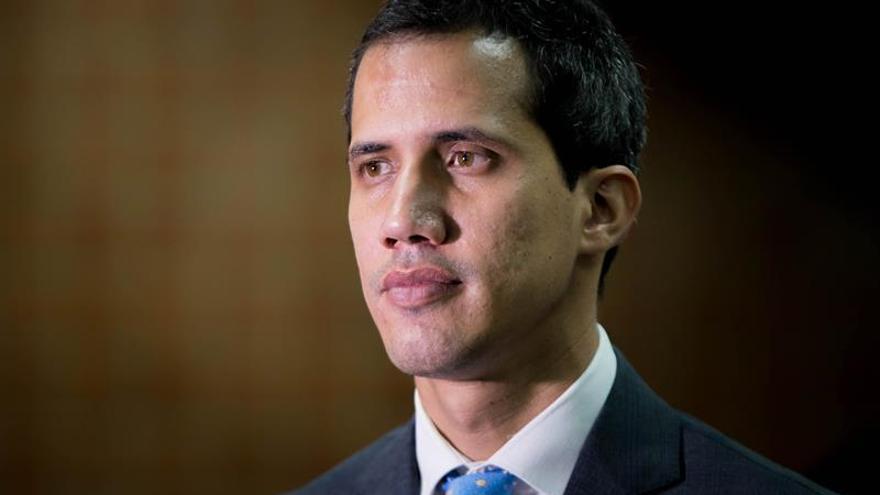
A spokesman for the US government said it clearly: “If they touch Guaidó that would be the last decision Maduro would make.” (EFE / Miguel Gutiérrez)

14ymedio bigger14ymedio, Carlos Alberto Montaner, Miami, 2 March 2019 — The Lima Group has renounced the use of force to save Venezuelans from the barbarism of the regime. Maduro is happy. That statement detracts from the Group’s credibility. There are thirteen countries, almost all of them very important. There were fourteen, but in practice there was a notable drop after the election of AMLO (Andrés Manuel López Obrador) in Mexico.

Why has the Lima Group taken this debilitating step? First, for fear of the reaction of local pro-communist groups. Second, to expand diplomatic and economic pressures. There are some European and Asian countries that would join, but only with the commitment to not resort to violence. And third, because of the resistance of local bureaucracies. Brazilian president Jair Bolsonaro, for example, has encountered the muted reticence of Itamaraty Palace, Brazil’s Ministry of Foreign Affairs.

The United States supports, but does not belong to, the Lima Group. That has allowed Washington to insist that “all options are on the table.” That phrase, reiterated by Mike Pence, means that the White House does not renounce the use of its unbeatable military force. The United States could pulverize 99% of the offensive units of the Venezuelan armed forces in the first six hours of an attack. All the aviation and the military bases of Maduro would be erased from the map. Probably most of the Chavista leaders would be exterminated. continue reading

However, the use of this military force is unlikely unless interim president Juan Guaidó is killed or detained when he returns to Venezuela. That is the “red line” drawn by the administration of Donald Trump in the Venezuelan conflict. A spokesman for the US government said it clearly: “If they touch Guaidó that would be the last decision Maduro would Make.”

As journalist Andrés Oppenheimer rightly pointed out, Nicolás Maduro faces a dilemma in which he can not win. If he kills or stops Guaidó, he will face the immediate demolition of his regime. If it does not kill or stop him, he will lose his authority and control over the country in the medium or long term.

The second is already happening. As I write this chronicle, more than 400 people in uniform have defected in Colombia. The increasing rate of leakage will soon be in the thousands. Potentially, that would be the military occupation force in the event of a war.

Maduro, who is a proconsul appointed by Havana, plays by the rules dictated by Cuba. Raúl Castro is convinced that whoever resists ends up winning the game. That is his experience. He estimates that the calendar favors it. He believes that after a certain time the relation of forces will turn the corner. He cannot solve any of the problems of Cuba denounced by himself (the rationed milk, the two currencies) but remains bolted in his post.

Maduro’s adversaries think otherwise. They believe that this time, time is against him. Every day the situation will become more critical. They will sell what is left of the gold resolves. The financial siege will fatally drown him. The lack of fuel locally will finish him off. There will not be a bunker to generate electricity. The Chavistas, used to stealing, will have no way to do so. Hyperinflation will continue and get worse. It is easier to print bills than to ask for a loan no one will grant, or to float bonds that only the demented would acquire. This would precipitate the final crisis, with the streets of Caracas overrun and the colectivos looting and facing a demoralized and disbanded army.

That is why it was a mistake for the Lima Group to renounce the use of force. It is not about Chavismo and Maduro being communists. That would be the least of it. Off one coast of Venezuela, in Guyana, at the time of Cheddi Jagan, there was also a Marxist-Leninist according to Winston Churchill’s infallible sense of smell. But they did not turn their country into a narco-dictatorship nor did they commit themselves to crime, so that nobody thought to invade them. With time they forgot about collectivism.

The problem is that Chavismo has constructed a dictatorship dedicated to drug trafficking and expanding Islamist terrorism. Thus, Humberto Belli, the former Minister of Education of Nicaragua, has raised the need to end the Maduro regime through collective arms.

His arguments are impeccable: if there is “revolutionary internationalism,” and if the left applauds “the divine presence of Commander Che Guevara,” no one can oppose the existence of “democratic internationalism,” especially when it would be acting in favor of Venezuelan sovereignty and by invitation of a legitimate government presided over by Juan Guaidó. His article ends with a salutation to “The Caribbean Legion” created by José Figueres to fight against the tyrannies of the time.

____________________________

The 14ymedio team is committed to serious journalism that reflects the reality of deep Cuba. Thank you for joining us on this long road. We invite you to continue supporting us, but this time by becoming a member of 14ymedio. Together we can continue to transform journalism in Cuba.

2.5 Million Cuban Voters Distance Themselves From the Constitution

Several voters exercise their right to vote at the Acapulco cinema in Havana. (14ymedio)

14ymedio bigger14ymedio, Reinaldo Escobar, Havana, February 26, 2019 — The preliminary results from the referendum on the new Constitution confirm what was expected: that the new Constitution was going to be approved by the majority and that the process was going to make clear the increase in citizen dissent by putting a number to that group that rejects the administration of the authorities.

More than two and a half million voters all over the country have distanced themselves from the new Constitution, between No, null, and blank votes, in addition to abstentions. Many have thus found themselves on the path to distancing themselves from the ruling political and economic system on the island.

However, it is necessary to recognize that the government managed to get the Constitution ratified, it was enough with 51% of registered voters to declare that the new Constitution had been approved in the referendum. The preliminary numbers unveiled by the National Electoral Commission show that 73.31% of citizens with the right to vote marked the Yes square. To emphasize the victory, official media outlets mention that this number is 86.85% of the votes cast, that is to say taking out of the count those who abstained. continue reading

But this is not really a victory that a decent Government can feel proud of.

Across the length and breadth of the country the official campaign to persuade voters to vote Yes was so overwhelming that there was practically no space to look where the official slogans weren’t harping at voters.

Television interviewed hundreds of people of different levels of education, race, sex, and profession who reaffirmed with arguments or emotions, or even both, their indisputable motives to ratify the new Constitution.

Indisputable, yes, because none of the more than two and a half million Cubans who did not mark Yes on the ballot had the opportunity to explain their reasons. Much less the 706,400 Cubans who overcoming fears made their cross in the No box.

What would have happened if a week before February 24 there had been a public and televised debate between the conflicting arguments? On the list of those who could have defended the negative vote would have been people like Dagoberto Valdés, Manuel Cuesta, Rosa María Payá, Juan Moreno, Julio Aleaga, Miriam Celaya, Pedro Campos, José Daniel Ferrer, and Eliécer Ávila.

But they also could have given space to those who promoted abstention, and there voters would have heard Antonio González Rodiles, Claudio Fuentes, Ailer González, Ángel Moya, and many others.

They have wanted to make people believe that the propaganda for Yes was organized by the masses, not the Government. Voters have every right to know where the budget to pay for that campaign came from. In countries with a democratic tradition it usually happens that the person who has been elected president is asked for their resignation when it is discovered that they financed their campaign with shady funds.

But this “tied-up monkey against a hungry lion” was also muzzled. Almost all of the country’s opposition organizations have denounced the persecution the promoters of No were subjected to, as were, along with them, those who wanted to have an independent observation of the process.

Not only were those who differed from the official line denied a place in public spaces, but they were also prevented from gathering peacefully to come to agreement.

Assaults on several homes of Patriotic Union of Cuba (Unpacu) activists and arbitrary detentions against different bodies of independent observers were systematic, as well as verbal threats (never written) issued by State Security officials against political activists and independent journalists. “We are not going to allow it,” they repeated, caressing the butts of their pistols.

It is basic in any electoral process to recognize the results if the previously established regulations are fulfilled or, at least, there is not evidence that they have been violated.

Those who went to vote No or those who stayed at home in order to not play into what they considered a farce knew that these were the rules. With them, the Government managed to have the electorate ratify the new Constitution and that has to be recognized even though the authorities never recognize that they played dirty. There is no proof that they have committed fraud, but there is evidence that they played a trick.

Translated by: Sheilagh Carey

___________________

The 14ymedio team is committed to serious journalism that reflects the reality of deep Cuba. Thank you for joining us on this long road. We invite you to continue supporting us, but this time by becoming a member of 14ymedio. Together we can continue to transform journalism in Cuba.

In Cuba, Markets Attract More People Than Polling Places Do

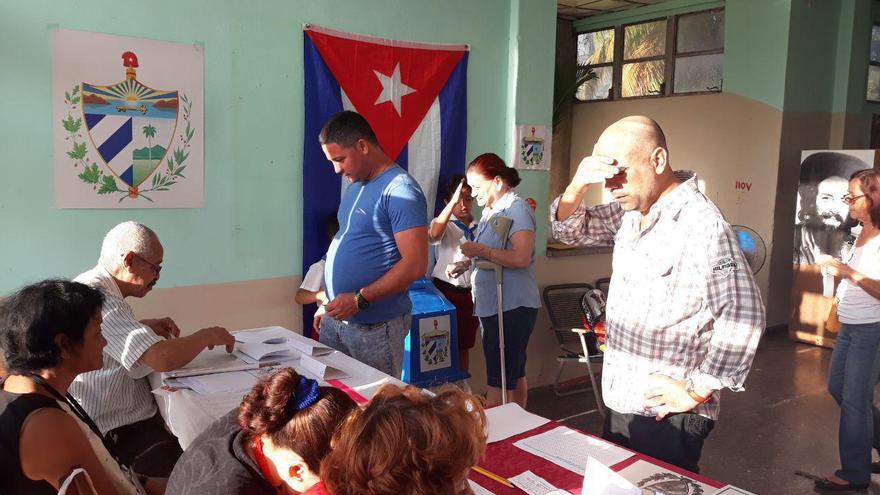
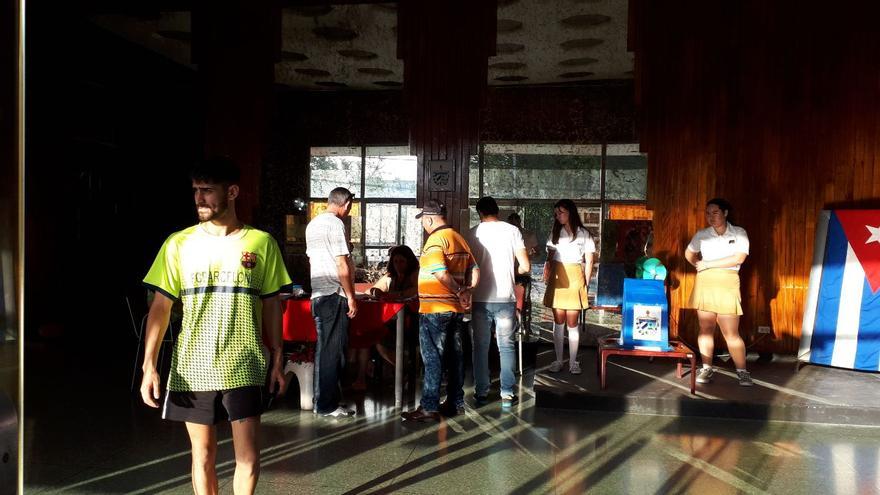
A group of voters prepares to vote in the constitutional referendum of this February 24. (14ymedio)

14ymedio bigger14ymedio, Havana, 24 February 2019 — An unusual bus procession travels around centrally located G Street in Havana starting in the morning this Sunday. Pedestrians passing through the street, also known as Avenue of the Presidents, cannot help associating the volume of buses with the electoral process that this Sunday convenes more than 8 million Cubans to the referendum on the Constitution.

Like a calculated staging, the Cuban government has prepared every detail of a process that has a symbolic character than transcends the Constitution. “This is a referendum for the Homeland, for the Revolution, and for Cuba,” they have repeated until exhaustion in national media, in which they have presented No voters practically as enemies of the country.

Along with the intense propaganda, the Government has begun the sale of several products that have been missing for weeks. In several markets unexpected supplies of chicken and ham arrived hours before the voting started. Meanwhile, the astonished residents of some Havana municipalities saw vegetable oil land on the shelves of stores after a month’s absence. continue reading

“We are going to have to have a referendum every week to see if public transportation works and there’s food in the stores,” ironically remarks Claudia, a nurse in a maternal hospital in the capital. At the health center where she works “they had a meeting this week to warn that we would have to be prepared for any provocation that the counterrevolution might attempt,” on election day.

Like a calculated staging, the Cuban government has prepared every detail of a process that has a symbolic character than transcends the Constitution. (14ymedio)

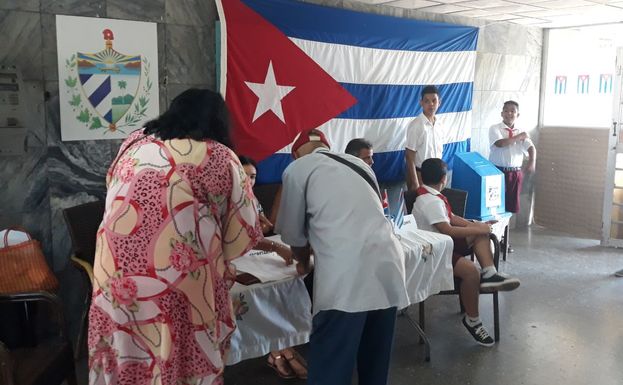
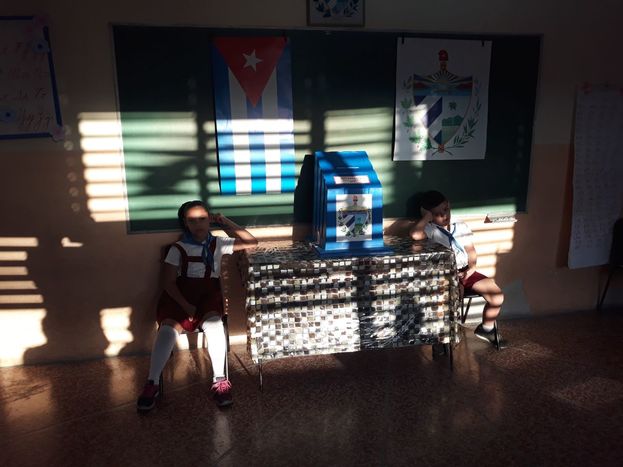
“They told us that we ourselves need to keep vigil so that everything goes well,” says Claudia, mother of a 9-year-old “young pioneer” who is today looking after a ballot box in one of the more than 25,000 polling places set up all over the country. “They’re going to give her a canned drink and a bite to eat,” the woman tells 14ymedio. “With that I no longer have to make lunch,” she adds.

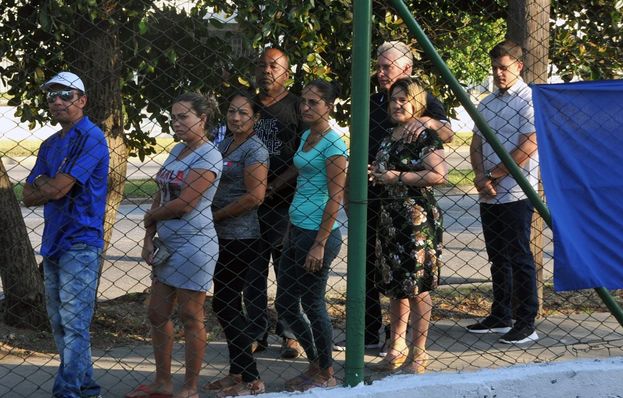
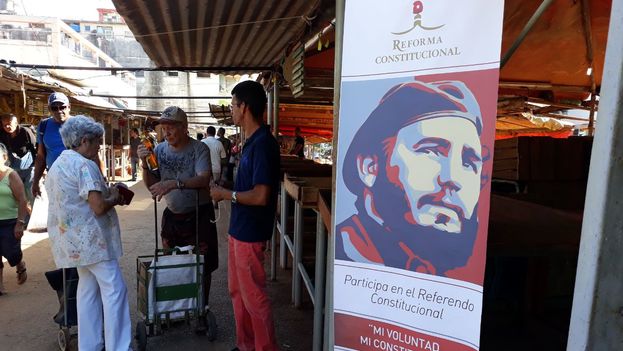
Long lines aren’t seen at the polling places, but they are in the markets. At the kiosks managed by the Youth Labor Army, on 17th street, buyers arrived early to get pork. On the other hand, few people are seen at the nearby voting center.

Several activists, among them the dissident Julio Aleaga, reported cuts to their cellphone service. Internet connection from cellphones is also suffering frequent interruptions this Sunday. The Government also cut access to independent news sites, among them 14ymedio, Cibercuba, Diario de Cuba, and Tremenda Nota. As for the ruler Miguel Díaz-Canel, official media showed him, in short sleeves, in a little line along with his wife to vote at polling place number 3, Tecnosuma, located at 140 street, between 25 and 31.

Internet connection from cellphones is also suffering frequent interruptions this Sunday. (14ymedio)

“We Cubans are voting for our Constitution, we are voting for Latin America and the Caribbean, we are also voting for Venezuela, we are defending Venezuela, because in Venezuela the dignity of the continent is at stake,” said Díaz-Canel in statements to the press after casting his vote.

The ruler took advantage of the opportunity to harshly criticize Latin American leaders who accompanied humanitarian aid to Venezuela, along with interim president Juan Guaidó. “They looked like clowns, a group of presidents at the Colombian border. Who are those presidents supporting? When all those presidents have more problems than Venezuela has,” he said.

On social media several people denounced the presence of propaganda for Yes inside voting centers and some also complained of lack of privacy to vote. “I had intended to mark No but I got scared that they would see me because in the cubicle there was no curtain or door, so I ended up marking Yes,” said a voter in Sagua La Grande, in the center of the Island.

As for the ruler Miguel Díaz-Canel, official media showed him, in short sleeves, in a little line along with his wife to vote. (Twitter)

In Camagüey the religious worship at the church led by the evangelical pastor Bernardo de Quesada was interrupted by a police officer and a Public Health representative because “they are making a lot of noise” on an election day where everything should be “calm and based on the vote,” they were told, which the pastor’s wife condemned to this newspaper.

The noise of an electric polisher fills a stretch of Ayestarán street, in Havana. Osvaldo, 42, is repairing an old car a few meters away from the polling place where several residents form a short line to vote. “I’m not going to go because that’s not going to change anything,” the mechanic says categorically while pausing in his work.

At the kiosks managed by the Youth Labor Army, on 17th street, buyers arrived early to get pork. (14ymedio)

Osvaldo was born the same year in which the current Constitution was submitted to a vote and this would be his first opportunity to participate in a referendum, but he has several reasons to not attend. “I don’t believe that a text is going to improve the situation that we are living in Cuba; that is going to remain as letters on paper but reality will continue in its own direction.” Not even the recognition of private property, included in the Constitution, seems to motivate him.

“It’s not exactly private property because when the Government wants to confiscate something from you, they do it and that’s it,” he believes. “That little shop on the corner was my grandparents’ and they took it away after the Revolution triumphed. Now that private property is recognized, are they going to give me back what belonged to my family or not?” he asks as he starts up the polisher again.

Children watch over the ballot boxes, as they do in every election in Cuba. (14ymedio)

From Last Tunas, in the east of the island, a pastor from the Evangelical League of Cuba reported that they had just called him from the Central Committee of the Communist Party to invite his faithful to vote Yes.

“I left it very clear to them that our fight is not political, that it is in favor of our biblical principles and that they cannot count on our vote in favor if that Constitution does not represent us,” denounced the religious figure, who prefers to remain anonymous. Authorities have locked up and threatened in the last few days several pastors to pressure them to change their position on the new Constitution. Evangelical, Christian, and Catholic churches have been especially critical of the text, calling on their faithful to vote with their conscience.

“You have besieged and intimidated us only for defending our rights and our principles. You can’t count on us,” the pastor answered the official, who abruptly terminated the call.

Translated by: Sheilagh Carey

_______________________________________

The 14ymedio team is committed to serious journalism that reflects the reality of deep Cuba. Thank you for joining us on this long road. We invite you to continue supporting us, but this time by becoming a member of 14ymedio. Together we can continue to transform journalism in Cuba.

Constitution Yes, Cooking Oil No

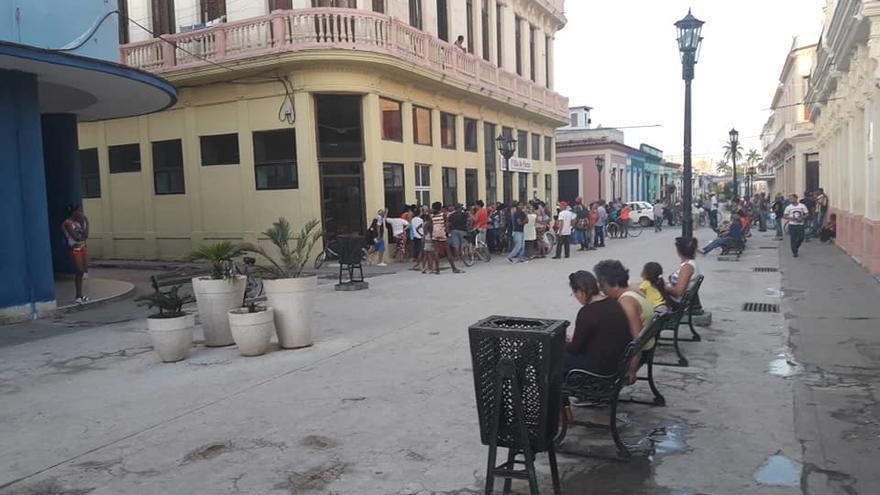
A crowd outside a market hoping to find some cooking oil in Sagua la Grande. (Maykel González Vivero)

14ymedio bigger14ymedio, Marcelo Hernández, Havana, March 1, 2019 — Polling places for the referendum last Sunday never achieved the snapshot of a long, full line, stretching  around the corner. The great winner of the day was without a doubt vegetable oil for cooking, a product that has been missing, capturing people’s interest and worry in many parts of the national territory. That “candidate” did manage to convene multitudes.

The shortage of food has been worsening in recent weeks until now it is the turn of cooking oil, a basic ingredient in the domestic kitchen. The scarcity has provoked scenes like the one in this photo, in Sagua la Grande, Villa Clara, where residents crowded together for hours in front of a store to buy the product. The image has been repeated all over the Island and is sparking fears of the return of the so-called Special Period, the economic crisis sparked by the end of the Soviet Union’s subsidies to Cuba.

With a culinary tradition in which fried foods, the wide use of animal fats, and vegetable oils abound, for the majority of Cuban families the lack of these ingredients turns into a grave problem. Almost three decades ago, after the fall of the Berlin Wall and the end of the Soviet Union, tricks to substitute oil for frying foods proliferated. continue reading

People learned to recycle the oil they used again and again, something that specialists advise against for its negative effects on health, but they also substituted the product with that of a mineral origin, taken fundamentally from pharmacies, where it is used for the preparation of various compounds. Now, many Cubans fear having to return to those practices and try to stick up on liters of the scarce merchandise.

“If you see oil somewhere, buy me some because I’m preparing for what comes,” one resident was yelling to another from a balcony in Old Havana. “I can do without everything, coffee, chicken, and even bread, but without oil I get depressed right away,” she added. “Right away I remember the year ’91 and everything that came after.”

Translated by: Sheilagh Carey

_________________________________

The 14ymedio team is committed to serious journalism that reflects the reality of deep Cuba. Thank you for joining us on this long road. We invite you to continue supporting us, but this time by becoming a member of 14ymedio. Together we can continue to transform journalism in Cuba.

Cuba Will Lack Dental Amalgam Until Mid-March

According to testimonies collected by this newspaper, dental amalgam is lacking in several cities of the Island. (14ymedio)

14ymedio bigger14ymedio, Havana, 28 February 2019 — Karla’s mother has been looking for a solution for her daughter’s tooth for days. After visiting three offices, without success, she has turned to the black market to buy dental amalgam to be used this Thursday to fill the gap in her daughter’s mouth. The material, an imported product, is missing in Havana and several cities of the Island, according to sources confirmed to this newspaper by the Ministry of Public Health.

“The amalgam is an imported product and we have problems these days because we have not received a new supply,” a worker at the 19 de Abril Polyclinic explained to this newspaper. “What we are doing at the moment is putting a temporary patch on patients who have already had part of the dental work done, to prevent food from getting into the hole.”

In several calls and visits made by 14ymedio to other dental offices in different Havana municipalities, the same situation is repeated. “We are not putting in fillings, until further notice,” explained an employee of a San Miguel del Padrón Polyclinic. “We have been told that the supply should begin to be restored by mid-March and that we must avoid starting new treatments until then.” continue reading

In the premises of dentists in the cities of Santa Clara, Camagüey and Sancti Spíritus the problem is repeated, according to several testimonies collected by this newspaper. “Here they have told us that there is no money to buy that kind of product outside and that we have to wait because the country is going through a hard time,” explains Yuraimis, a resident of the Sancti Spiritus capital city.

“There isn’t any in the offices but if you go to the street they sell it to you,” Karla’s mother tells 14ymedio. “She couldn’t go on this way because they’ve changed the patch three times and she’s in pain.”  The woman is anxious to avoid her daughter “losing the tooth.”

“I paid 10 CUC for a little bit of amalgam, which is enough to fill the tooth,” she explains. She will go back to the same clinic on Thursday, bringing the amalgam and “asking the dentist to put it in,” a common practice in the Cuban health system, where patients often buy supplies in the informal market, ranging from gauze to even blood transfusions to guarantee treatment.

In Cuba, in most dentistry treatments amalgam is used, not resin or porcelain for dental restoration processes. Amalgam is a mixture of mercury, silver, tin and copper. Although it is considered stronger and more durable than resin, for aesthetic reasons many prefer the latter which is better matched to the color of the tooth.

The amalgam has also been highly criticized for its toxicity to the patient, to the professionals who handle it and to the environment. Due to the extensive cremation of corpses, mercury gases may often end up in the atmosphere.

In Cuba almost all dental treatment is in the hands of the State; private services are only provided by dentists who graduated before 1959, of which there are very few active due to their advanced age. Those who maintain private offices must import their products and raw materials in personal luggage or through family and friends.

At the end of last year, the Minister of Finance and Planning, Lina Peraza, announced that in 2019 expenses in Public Health and Education will represent 51% of the national budget; 38,711 million pesos are allocated to these areas, a growth of 2% compared to 2018.

___________________________

The 14ymedio team is committed to serious journalism that reflects the reality of deep Cuba. Thank you for joining us on this long road. We invite you to continue supporting us, but this time by becoming a member of 14ymedio. Together we can continue to transform journalism in Cuba.

Between Innocence and Hypocrisy

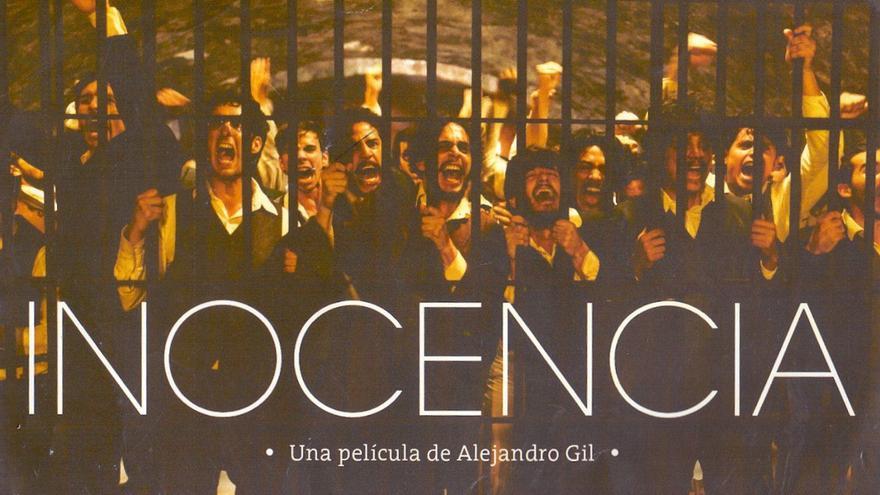
Alejandro Gil’s film won the audience award at the Havana Film Festival.

14ymedio bigger14ymedio, Reinaldo Escobar, Desde Aqui, Havana, 28 February 2019 — On the same day that the constitutional referendum was held, the busiest circuit of Havana cinemas announced the film “Innocence,” by the Cuban director Alejandro Gil. In the last edition of the Havana Film Festival, it received the award given by the public.

In those same movie theaters, 28 years ago, while the Fourth Congress of the Communist Party was getting underway in Santiago de Cuba, appearing on the marquees was the disturbing title “Last Images of the Shipwreck,” written and directed by Eliseo Subiela, which received the Gran Coral Award in 1999.

Superstition and symbolism aside, the titles of these films substitutes in the opposition’s imagination for the absence of protest posters which have been gagged by censorship. A subjective reading of an (unintended) subliminal message. continue reading

The capricious hand of chance warned in 1991 of the presumed collapse that awaited us in the Special Period and now, this 24th of February 2019, it stressed that peculiarity of human behavior that justifies the commission of errors and facilitates the work of the victimizers.

Shortly after exercising his right to vote, Mr. Miguel Diaz-Canel, president of the Councils of State and of Ministers, offered statements to the press. When asked what he thought the results of the referendum would be, he replied: “I am optimistic, more than optimistic I am sure (…) People cannot be so hypocritical, so many good people cannot be wrong…”

He could have said that people cannot be so ignorant, or so right-wing or so blind. But he chose hypocrisy because that was his hidden fear; that all those public demonstrations of unrestricted support that he had observed in his travels around the country were the result of the double standard that feeds on opportunism, of the fakery that engenders fear.

Looking at the results of the referendum, the official ones, because there are no others, this humble editor is surprised by how many people can be so hypocritical and stick to Yes while wanting to say No. Because one thing is known, there are many who pretend to agree with “this” but, with the exception of the odd infiltrator, among the unhappy no one feigns his political position. All hypocrites are on the same side.

If anyone needs an example of this categorical affirmation it is enough to remember that in the referendum that put the 1976 Constitution into effect only a little more than 50,000 voters marked No on their ballot, and four years later, during the stampede of the Mariel Boatlift, more than 120,000 Cubans decided to physically abandon the national project proclaimed by that Constitution. It is true that in that exodus there were minors, too young to have voted, as it is also true that not all those who refused to approve the Constitution were among those who climbed aboard a ship.

A pending issue of social research, a piece of data that may never be known with certainty, is how many hypocrites voted Yes in February of 1976, especially since the 1980 Mariel exodus was followed by the 1994 rafters crisis, and more recently by the migratory flood of Cubans who crossed Central America heading north.

Academics find it difficult when they introduce the variable that, in addition to faking it, there have been conversions, and in that case it must be noted that these only occur in one direction, the one that passes from a belief in utopia to disappointment.

Among the more than 700,000 who voted No and the million who abstained, surely there are no hypocrites, although there must be many converts. It would be unfair and also inaccurate to believe that the more than 6,800,000 who ratified the new Constitution are a party of fakers.

There remains innocence, mixing the folly of those who do not want their arms twisted with the naivete of those who lack information or opinions other than those that come from official sources. Those who never heard an argument to reject the new Constitution suffer from a serious political stroke. They are innocent.

Hopefully, the story will not be repeated, hopefully there will not be another migratory hemorrhage as a result of the new “revolutionary consolidation” expressed in the institutionalization of the dictatorship.

Hopefully we do not have to look deeply for the subliminal messages hinted at by the films that are being announced in the first-run theaters.

___________________________

The 14ymedio team is committed to serious journalism that reflects the reality of deep Cuba. Thank you for joining us on this long road. We invite you to continue supporting us, but this time by becoming a member of 14ymedio. Together we can continue to transform journalism in Cuba.

Cuba Will Welcome Home Doctors Who Remained In Brazil After the End of the Mais Medicos Program

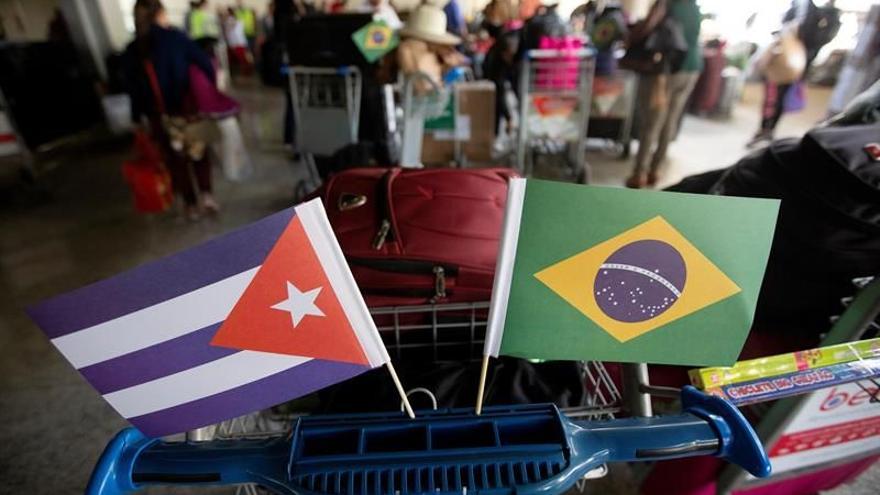
Cuban doctors who were part of the Mais Médicos program left Brazil via Presidente Juscelino Kubitschek International Airport in Brasilia. (EFE / File)

14ymedio biggerEFE, via 14ymedio, 13 February 2019 —  Cuba is willing to let Cuban doctors who decided to stay in Brazil after the end of the Mais Medicos program come home again. Cuban authorities withdrew from the program at the end of last year, telling doctors who decided to stay in Brazil that they would not be allowed to visit the island for eight years.

Cuba’s Ministry of Public Health (MINSAP) affirmed that it is in a position to receive Cuban doctors, “including those who decided not to return at the conclusion of their mission” in Brazil and to offer them employment in the national health system, according to a statement disclosed by state media.

“Our Embassy and consulates in Brazil are ready to support their return, providing them with the required documentation and assisting them in whatever they need,” he said. continue reading

Minsap said that it recently became known that the Mais Médicos program was definitively canceled by the government of Brazilian President Jair Bolsonaro.

In this regard, it says that Brazil has not fulfilled its promise to offer employment to Cuban doctors who chose not to return to Cuba at the end of their mission, as well as some others who formed families with Brazilian citizens and who “honorably fulfilled” their commitment to Cuban public health and to the Brazilian people.

The statement also accuses the “historical adversaries of the Cuban Revolution and the enemies of its public health system” of taking advantage of this situation and of lobbying in the United States to resuscitate “old programs of brain theft,” such as the Parole Program that allowed Cuban health professionals to leave international postings and easily emigrate to the United States.

The declaration also notes that on December 14 it was announced that Cuban health workers would not continue participating in the Mais Médicos program in Brazil.

That decision took place as a result of statements by Brazilian President Jair Bolsonaro, who described the island’s professionals as “slaves” of a “dictatorship,” and he also questioned their qualifications.

The Cuban Ministry of Public Health then explained that it decided to withdraw its doctors due to the “threatening and derogatory” statements of Bolsonaro, who proposed “unacceptable” modifications to the program that went beyond the agreements with the collaborators, established through the Pan American Health Organization.

Cuban President Miguel Diaz-Canel said last December that when his government decided not to continue with the Mais Médicos program, 8,471 collaborators were in Brazil, of whom 7,635 had completed their mission, and 836 doctors had not yet returned to the island.

The participation of Cuban doctors in the Mais Médicos project began in 2013 under the mandate of then Brazilian President Dilma Rousseff, of the Workers’ Party (PT), with the aim of guaranteeing health care to isolated communities in the Amazon, in the urban favelas and in other poor areas of the South American country.

According to Minsap data, in the five years of work in the program, nearly 20,000 Cuban employees provided care to more than 113,350 million patients in more than 3,600 municipalities and Cubans constituted 80% of all doctors participating in the initiative.

______________________

The 14ymedio team is committed to serious journalism that reflects the reality of deep Cuba. Thank you for joining us on this long road. We invite you to continue supporting us, but this time by becoming a member of 14ymedio. Together we can continue to transform journalism in Cuba.

With Lie Detectors Instead Of Ballot Boxes, It Would Be Very Different Story

A group of people waiting to vote on the constitutional referendum. (14ymedio)

14ymedio bigger14ymedio, Ariel Hidalgo, Miami, 27 February 2019 — Almost two and a half million Cubans refused to support a constitutional project that perpetuates the condition of the country as a private fiefdom of group that has ruled its people with an iron fist for six decades. And there would have been many more, if the police had not repressed the opposition campaigning for a NO vote, if they had not exercised intimidation over the voters and over volunteer observers who had the courage to watch the vote counting, and, finally, if they had not delayed, without any justification and very suspiciously, the announcement of the results.

However, despite all these irregularities, this number of citizens who did not approve the proposal, and that the oppressors could not hide, clearly shows, in my opinion, two things: the existence of a not insignificant share of the population that disagrees with the current situation in the country, which, even if it is a minority, because of its sheer size cannot be ignored, not only by the rest of the population, but also by world public opinion, and it is a share whose rights must be respected. And, on the other hand, it shows a growing advance in awareness, not so much in all the people, as in a generation born when this sexagenarian dictatorship had already entrenched itself in power. continue reading

They can no longer say, speaking categorically, that the people of Cuba support what they call “Revolution,” as they did up until now, when their support at the polls exceeded 90%. The ‘others’ whom they labeled “anti-patriotic,” now make up almost a third of the people. Starting now, if they want to be precise, they would have to recognize, consistent with official data provided by themselves, that part of the people do not support them.

And this story does not end yet; later we will see who are the people who are truly “anti-patriotic.” Because if we talk about the majority who did support them by marking YES, they did so out of fear, because of that psychotic condition they’ve been infected with from above: the incoherence between thinking, speaking and acting.

Because if there were lie detectors in the polling places instead of ballot boxes, it would be a whole different story. The main chains around the people, they carry inside themselves. It is necessary to break them. What is missing among almost everyone in this electorate who voted Yes, is not an awareness of the illegitimacy and fateful operation of this regime – which almost everyone is already convinced of – but the willingness to change.

If, under a dictatorship, the citizens cease to idolize the rulers, if they stop believing in the invincibility of the oppressors, if they believe they can reach a better future, if they stop fearing that the power will excommunicate and repress them, if they perceive that they could prosper a lot better than they do from receiving the gifts of the oppressors, and if they become aware of their rights and perceive themselves as free people, that single conviction will set them free, because they will begin to act as such, and then there will be no tanks or armed squads that can stop them.

The governed have the ability to make the rulers change their way of ruling, because those who rule need those who obey and no one governs without the consent of the governed. If they stop obeying, they stop ruling. If the ruler is on one road and the governed are on another, governability is lost and the ruler is forced to rectify the course.

Who doesn’t remember when, despite the fact that paladares (private restaurants) and the US dollar were prohibited during the Special Period, there was a paladar in every neighborhood and a great share of the people had dollars, and the government was forced to legalize them? But if the rulers cling to their whims, the response will be non-compliance, and just like there are not enough prisons to arrest millions of people, the ruler no longer rules and the ruled become the ruler.

Thus, the oppressed can conquer freedom without hatred or violence. Because “the powerless,” united, are more powerful than the power.

_____________________________

The 14ymedio team is committed to serious journalism that reflects the reality of deep Cuba. Thank you for joining us on this long road. We invite you to continue supporting us, but this time by becoming a member of 14ymedio. Together we can continue to transform journalism in Cuba.

Military Aircraft Crashes Near Guira de Melena

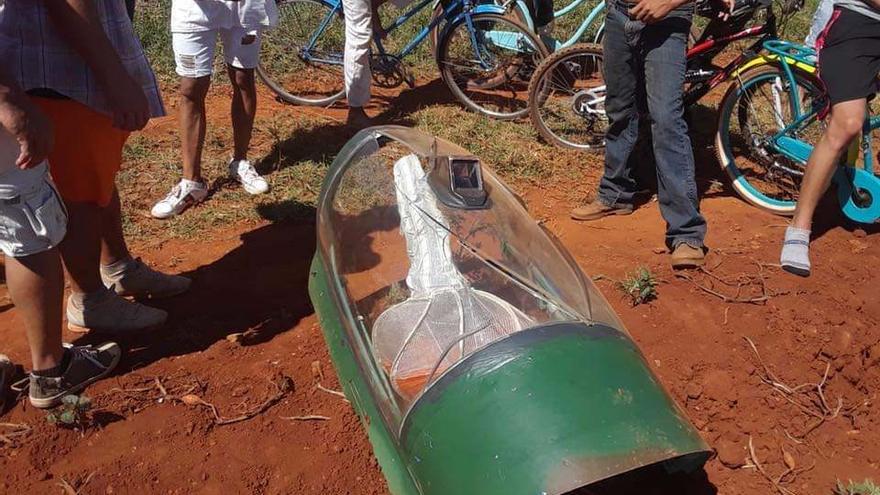
14ymedio bigger14ymedio, Havana, February 26th, 2019 — Residents from the Güira de Melena municipality, Artemisa Province, witnessed a “mid-air explosion” on Tuesday morning, according to the information posted on Facebook by Artemisa’s newspaper. “Around 11 am, there were reports of sightings of an aircraft on fire and two pilots ejecting from it with parachutes.”

Witnesses said “there were no casualties or injured.” However, there is no information available about the two crewmen.

An official source from the area, contacted via telephone, told us the aircraft involved was a MiG-23 and confirmed it crashed near the town “La Cachimba.” continue reading

In April 2017, in the same province, an AN-26 air force plane crashed against La Pimienta Hill, in the Candelaria Municipality, leaving military crewmen dead.

https://youtu.be/xP9Og7KnZUo

A video posted by the YouTube channel Conexion Cubanos shows the moment when a group of farmers working in the area and some neighbors run towards a smoke column. On the ground the remains of an aircraft on fire can be clearly seen, and the moment when the firefighters arrive and start to put the flames out with water hoses. The model/type of aircraft cannot be clearly seen. Seconds after, a chopper circling around brings in 3 armed soldiers. Before the video ends, a voice can be heard yelling:”If I see any cell phone on, I will confiscate it.”

The images show the aircraft crashed right next to the structure of an abandoned warehouse without a roof, in what used to be a state managed farming operation. These types of derelict structures are frequently seen in the valley of Güira de Melena, an agricultural area where, in the past, the government also tried to develop cattle and poultry operations.

Last year, a commercial aircraft operated by Cubana de Aviación crashed shortly after take off at José Martí International Airport in Havana. One hundred and twelve died in the crash, including the entire crew. The official report with the causes of the crash of the plane, leased from the Mexican company Global Air, have not been yet published

At the end of 2018, Russia announced a loan of more than 38 million euros to Cuba, earmarked to purchase military equipment. After a meeting between Miguel Díaz-Canel and Vladímir Putin in Moscow, the Kremlin said it was planning to award a loan to Havana to acquire airplanes, helicopters and armored vehicles, among other things.

During the midday newscast, that airs between 1 – 2 pm on the main official TV channel, there was no mention of the incident.

Translated by: Mailyn S. Cappuccio

_____________________________________

The 14ymedio team is committed to serious journalism that reflects the reality of deep Cuba. Thank you for joining us on this long road. We invite you to continue supporting us, but this time by becoming a member of 14ymedio. Together we can continue to transform journalism in Cuba.