
Economic Minister Gil on Accommodating Cuba’s Import Mentality

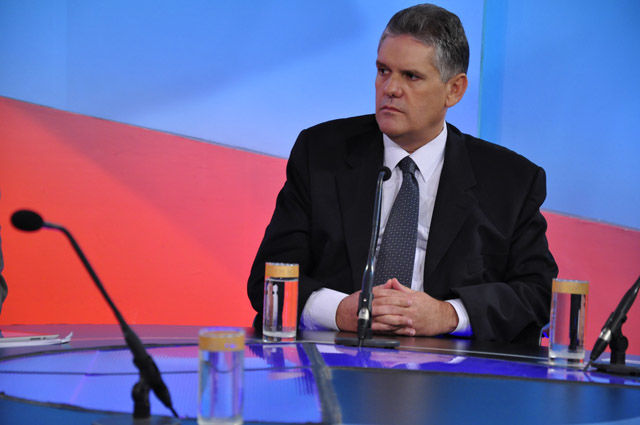
14ymedio biggerElías Amor Bravo, Economist, June 13, 2019 — It seems the Castro regime has appointed an economics minister, Alejandro Gil Fernandez, who is actually funny. I don’t know if it was done with good intentions or in an effort to further confuse the situation, but during during a conference at the Eighth Congress of the National Association of Economists and Accountants of Cuba he said that “the import mentality accommodates and restrains initiative and creativity.”

Well, turn out the lights and let’s go! And if you are the last person to leave, make sure you close the door.

Is Mr. Gil really in a position to assume the responsibilities of his new position if he thinks this way? I have serious doubts. Let me explain why. continue reading

The regime’s obsession for what it calls “putting resources into production and taking them out of imports” represents an autocratic approach to the economy more typical of the mid-20th century than an era of globalization and internationalization.

Even in the old days, countries that imported equipment, technology and business know-how used these resources to overcome their economic backwardness, eventually becoming advanced nations. Some European countries such as Spain, as well as the Asian tigers decades later, benefited from this development model in which imports were essential to getting ahead.

The question is: How do you finance these imports when you are poor — very poor — and do not have the resources to do it? Carefully. Cuba has never done this. Before 1959, pre-financing the sugar harvest and signing trade agreements with the United States provided the country with adequate resources to finance its imports.

In this regard Cuba was at the international forefront and its economy was solvent. Under the guidance of the Central Bank of Cuba the peso and the US dollar were at parity. Cuban gold reserves were held in safekeeping by the Federal Reserve Bank in Washington. It now seems unbelievable that Cuba could been in such a position but that is in fact the reality.

The poverty preventing Minister Gill from importing equipment, raw materials, and foreign technology is the direct result of the communist model itself, which is based on a centrally planned economy and the absence of property rights.

For the past sixty years the communist regime has been unable to develop industries and activities capable of producing the goods and technologies the country needs to progress economically. The only solution is a complete change of direction. Neither quick fixes to the economic structure, or to its supply chains, nor efforts on the part of workers — no matter how much my colleagues on the island might promote them — will resolve the backwardness and inability of the Cuban economy to finance what it needs from abroad to move forward.

I do not understand why the Castro regime has adopted such an autocratic, Stalinistic approach to managing an economy that is unable to feed its people. This doctrine — more appropriate for pre-WWII fascist and communist regimes — holds to the belief that many goods can be produced domestically, thus avoiding an eventual “accommodation” of imports, or something like that, at least as it is explained in the Communist Party newspaper Granma.

Minister Gil is wrong in his assessment on the role of imports in an economy such as Cuba’s. First, he is wrong to claim that “imports prevent industry from developing.”

Just the opposite. Industry needs support from oversees to modernize its equipment and to be more competitive. It needs to bring in the latest technologies, or least technologies that are becoming somewhat obsolete in the most advanced countries. Industries need intermediate goods, such as raw material and fuel, and capital equipment from abroad. Without importing these things, industry falls behind, deteriorates and ultimately disappears.

The minister is also mistaken when he says that “the debt burden is greater than the economy can support”. The origins of Cuba’s foreign debt are many. The minister knows this. For example, there is one type of debt that has its origin in the superfluous expenditures squandered each fiscal year to sustain unprofitable state-owned companies that must be sudsidized to remain in operation. There are also the outlays for the “basket of goods,” subsidized consumer essentials which are distributed to the public little by little. This type of indebtedness is a heavy burden that grows and grows uncontrollably to the point of exhaustion.

In essence, since this type of debt does not generate wealth, it does not add value to the gross domestic product. However, if foreign debt is used to modernize a country’s business technology, communications, water supplies and electricity, then there will always be financing available. The problem is that the Castro regime long ago lost its credibility as a borrower and no lenders want to see their money being misspent. This is something you should consider, Mr. Gil.

You know the solution. The economy is broken and doors have to be opened so that private business initiatives come in and take control of various sectors of the economy. It is pointless to talk over and over about “quality supply chains” because economic development and modernization in the 21st century is global and international, and cannot be conceived in local and territorial terms, much less in autocratic terms. That is all part of the past.

And one more bit of advice: the economy is not a “battlefield” and does not require some “frontline” or soldiers taking up arms. You have to forget all that. An economy is the art of efficiently committing resources, which are sometimes scarce, to achieve a wide ranging set of goals. And to achieve this objective and promote economic prosperity and sustainability, the only thing you really need is the desire to do things right and not recklessly obsess over a script that no one is following anywhere else in the world.

You only have to look at what is happening in China or Vietnam. They have managed their debt really well and the results speak for themselves. Even when Vietnam was a net importer, the population frequently suffered from famine. Since adopting its policy of Doi Moi,* not only is rice no longer an issue, but Vietnam now exports it to other Asian countries. You know what the solution for Cuba is: Doi Moi and private ownership of land.

Mr. Gil should be made aware that that economics teaches us that a country does not have to produce everything it needs, only things in which it specializes and which are cost competitive internationally. Specialization creates the income needed to buy what you need from the global marketplace, and makes structural transformation and economic development possible.

Cuba once followed that model, which was a real success prior to 1959. I do not know if it will come back but something must be done. And the longer it takes, Mr. Minister, the worse it will be.

*Translator’s note: a set of reforms adopted in 1986 by the communist government to create a market-oriented socialist economy.

______________________

The 14ymedio team is committed to serious journalism that reflects the reality of deep Cuba. Thank you for joining us on this long road. We invite you to continue supporting us, but this time by becoming a member of 14ymedio. Together we can continue to transform journalism in Cuba.

Trivago Sued for "Trafficking" in Confiscated Properties in Cuba

A lawsuit has been filed against Trivago, a German transnational specializing in accommodation search services. (Trivago Business Blog)

14ymedio bigger

14ymedio, Havana, 19 June 2019 —  This Tuesday, the law firm Rivero Mestre LLP, based in Coral Gables, Miami, filed a lawsuit against Trivago, a German transnational specializing in hotel and lodging search services, for “trafficking” with properties confiscated by Fidel Castro’s regime at the beginning of the 1960s.

The lawsuit, under the provisions of Title III of the Helms-Burton Act, gave notice of the interests of the law firm’s clients to companies that include Expedia Inc., Booking Holdings, Inc. and their respective subsidiaries and affiliates threatened litigation if those companies “do not cease trafficking and compensate the plaintiffs within thirty days of the notification.” Expedia Inc. and Booking Holdings, Inc. have their legal headquarters in the United States.

On May 2 of this year, the Administration of President Donald Trump decided to end the suspension of the application of Title III of the Helms-Burton Act, in retaliation for the alleged interference of the Cuban government in Venezuela. continue reading

Under this law, naturalized Cubans in the United States and Cuban-Americans can sue companies who engage in business using properties that were confiscated by the Castro Revolution.

Trivago, based in Dusseldorf, Germany, reported an approximate profit of 1.2 billion dollars last year and the Expedia group, based in Washington, earned some 11.2 billion, according to John S. Kavulich, president of the United States-Cuba Economic and Trade Council, based in New York.

Since the activation of Title III, several lawsuits have been filed against entities of the Cuban State that exploit the confiscated properties in association with foreign companies. The first was presented by the heirs of the previous owners of the ports of Santiago de Cuba and Havana against the US Carnival Cruise Company.

Exxon Mobile sued the Cuban corporation Cimex and the Cuba Petroleum Union, while the Cuban-American Mata family sued the Gran Caribe Hotel Group, the Cubanacán SA International Trade and Tourism Corporation, the Gaviota SA Tourism Group, and the Cimex SA Corporation, among others.

Although Meliá, the foreign company that manages the largest number of hotels in Cuba, was not originally included in the lawsuit, it was notified that according to the law, should it not pay compensation or within 30 days end its operations that involve “trafficking with stolen goods,” it will be sued for up to three times the current value of the property.

Cuba does not recognize the legal standing of the Helms-Burton Act and guaranteed investors the full support of the State, although it is not clear how they can defend the companies before the courts of the United States. The European Union, for its part, has promised the government of the island — where it is the main foreign investor — that it will stop the sanctions issued by US courts against companies from the old continent.

____________________________________

The 14ymedio team is committed to serious journalism that reflects the reality of deep Cuba. Thank you for joining us on this long road. We invite you to continue supporting us, but this time by becoming a member of 14ymedio. Together we can continue to transform journalism in Cuba.
Two Literary Awards Announced for Cuban Authors

Manuel Moreno Fraginals is the Cuban historian who gives his name prize from the INSTAR institute.

14ymedio bigger14ymedio, Havana, 19 June 2019 — Literature lovers have a double opportunity with the announcement of two new awards for Cuban authors.

The Hannah Arendt  Institute of Artivism (INSTAR), directed by independent artist Tania Bruguera, has announced the first edition of the Manuel Moreno Fraginals award, which will be awarded to a critical essay on the Revolution.

The objective of the award is “to generate written works and public dialogues about this period, which interpolate, answer and present an alternative to the official history.” continue reading

All Cubans over 18 years old and resident of the island can compete for the prize, endowed with 5,000 CUC and the publication the winning submission in eBook format, by submitting a text of at least 250 pages.

The deadline for the submission of the texts, which can be sent as of Tuesday, will be October 17, 2019. The jury, composed of historians Abel Sierra Madero, Lillian Guerra and Rafael Rojas, will announce the winner in February 2020.

On the other hand, Verbum Publishers has also announced a call for submissions for the for the Myths and Legends of Europe Children and Youth Literature Award, directed, in this case to any author, Spanish or Latin American, who submits with a work written in Castilian.

The submissions should be stories of a length between 4 and 7 pages and aimed at readers between 8 and 12 years of age, addressing historical and/or fantasy curiosities inspired by European myths and legends.

Manuscripts can be sent by email to the publisher, beginning Tuesday and ending on 31 July 2019. The decision will be announced in September and the prize consists of the publication of the story in the anthology to be published Verbum Publishers late of 2019.

The publisher will give a copy of the book to each award-winning author at a presentation in November.

______________________

The 14ymedio team is committed to serious journalism that reflects the reality of deep Cuba. Thank you for joining us on this long road. We invite you to continue supporting us, but this time by becoming a member of 14ymedio. Together we can continue to transform journalism in Cuba.
Cuban Authorities Forbid Journalist Henry Constantin to Travel Outside Cuba

The refusal to allow Henry Constantín to travel is added to those received last month by several collaborators of ’La Hora de Cuba’, when they tried to attend different international events. (14ymedio)

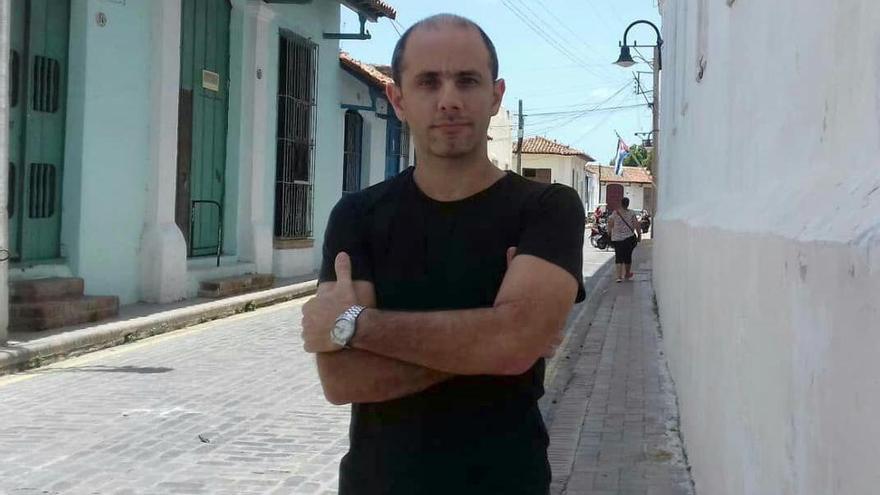
14ymedio bigger14ymedio, Havana, 19 June 2019 — The authorities again prevented the independent journalist Henry Constantín from leaving the country, as he prepared to attend the next General Assembly of the Organization of American States (OAS), in Colombia. The director of La Hora de Cuba will not be able to participate in the event because he is “regulated” — Cuban State Security’s preferred euphemism — and can not travel outside the country, according to Constantín himself speaking to 14ymedio.

Before buying the ticket for the trip, the reporter visited the Identity Card offices in Camagüey on Tuesday where he was informed that there is an exit ban in force against him. On this occasion the reporter did not even arrive at the airport where the officers of the Directorate of Identification, Immigration and Foreigners (DIIE) denies exit to those who are “regulated.”

“It had been little more than three months that I had not been ’regulated’, since March 8,” the reporter told this newspaper. “I returned from my last trip a week ago and they are forbidding me to leave again.” The refusal to allow Henry Constantín to travel is added to those received last month by several collaborators of ’La Hora de Cuba’, when they tried to attend different international events. continue reading

“The repressive wave, which started in 2016 against La Hora de Cuba, has had periods of greater and lesser intensity, but the vigilance over the most active members of the team, the prohibitions on leaving the country or moving freely within our own borders have been maintained, depending on the most important events and our publications,” he explains.

Constantín explains that there is “a succession of acts” against his family and the collaborators of the publication he directs that have “intensified” since the last half of last year. “The harassment has gone from death threats, and attacks on social networks to prohibitions on leaving the country,” he added.

As has happened in previous situations with other civil society activists and independent journalists, the immigration authorities did not provide details on what procedures a person has to perform to appeal the travel ban.

Previously the authorities prevented three of the Camagüey magazine’s collaborators — Inalkis Rodríguez, Iris Mariño and Sol García — from taking a flight to Trinidad and Tobago where they had been invited by the Simone de Beauvoir Leadership Institute to an event on the participation of women in society.

The Cuban Commission for Human Rights and National Reconciliation, based in Havana, has repeatedly denounced the use of travel restrictions as a repressive measure against government opponents and activists.

_______________________

The 14ymedio team is committed to serious journalism that reflects the reality of deep Cuba. Thank you for joining us on this long road. We invite you to continue supporting us, but this time by becoming a member of 14ymedio. Together we can continue to transform journalism in Cuba.
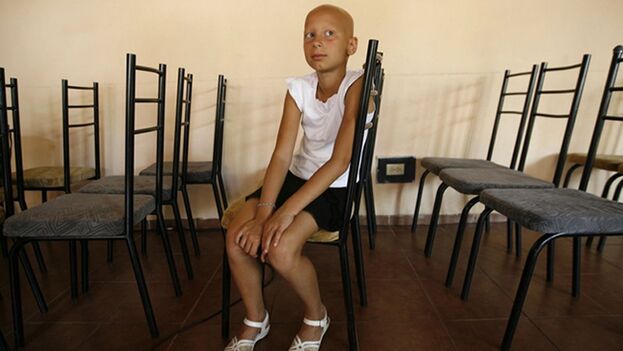
The Many Faces of Tarara

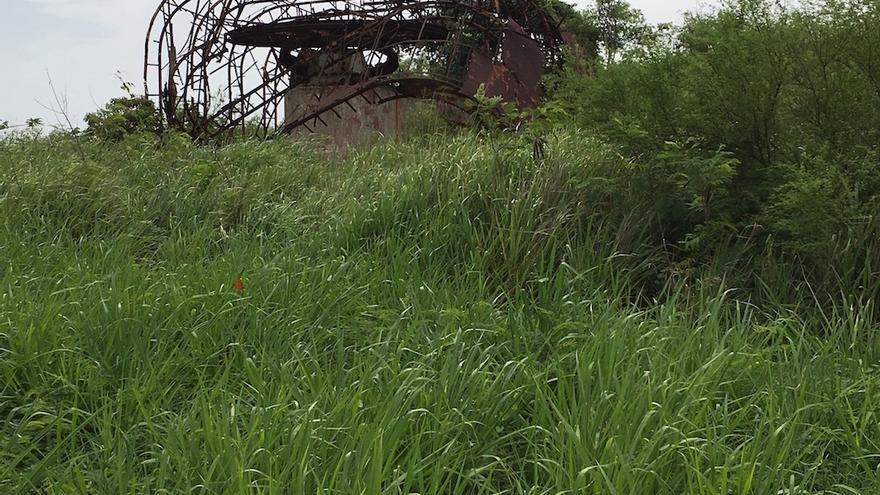
All that’s left of Tarará’s funicular is a tangle of iron (14ymedio)

14ymedio bigger14ymedio, Luz Escobar, Havana, 19 June 2019 — Few Cuban neighborhoods have changed as much over time as Tarará, east of Havana. It went from being a glamorous condominium to a children’s pioneer camp, then it became a hospital for children affected by the Chernobyl nuclear accident and later in a Spanish school for Chinese students. Everyone who is asked has different memories of the site.

The popularity in Cuba of the series Chernobyl, produced by the American HBO network and spread on the island through the ’weekly packeta semi-underground compendium of non-official entertainment sold on flash drives and other media — have put a spotlight on Tarará. The official media have attacked the script of the American series, which they accuse of being biased and of not showing the medical attention that many affected children received in Tarará in the years after 1986.

Yanet, 45, spent several weeks during primary school at the José Martí Pioneers Camp in this neighborhood. For her, memory has other tints more related to teaching activities and the student organization. “From first to sixth grade I went almost every year to Tarará, where we had classes and did recreational activities in the afternoon,” she recalls. continue reading

“I liked to go because it was fun but I also missed my family. The beach is very nice and there was also one of the best amusement parks in all of Havana but it got spoiled with time and there is nothing left,” she says. The City of the Pioneers, as it was also known, was inaugurated in July 1975 by Fidel Castro.

“That was a typical Robin Hood gesture,” reproaches Yanet. “It was like saying they took the houses away from the rich people who left Cuba and gave them to the children and families that used to be poor, but over time they also took them from us.” The huge chalets, the condominiums with French windows and large terraces, still recall their bourgeois past.

In the 525 houses of this small paradise only 17 families remain of those who originally lived in Tarará in the ’50s. The rest emigrated or lost their property after the arrival of Fidel Castro to power.

In the 80s, coinciding with the boom of the Soviet subsidy, the huge complex came to have a cultural center, seven dining rooms, five teaching blocks, a hospital, an amusement park and even an attractive cable car that crossed between two hills over the Tarará river; all that remains of it today is jumble of rusted iron.

Now, the village is preparing to undergo a new reconversion, as the arrival of a group of 50 Ukrainian children, descendants of those affected by the Chernobyl nuclear disaster, has been announced.

Another of the changes in Tarará, and one that has raised the most complaints, is the closure of the Celia Sánchez Manduley School for Asthmatics and Diabetics, a boarding school in which the teaching hours were combined with the specific training to manage these diseases. Asthma affects 92.6 Cubans of every 1,000 inhabitants of all ages, according to data from the National Asthma Commission and the Cuban Society of Allergy, Asthma and Clinical Immunology.

Although one year has passed since the closure, the center’s alumni and their families are still waiting for a response from the Education authorities.

Tarará became a hospital for children affected by the Chernobyl nuclear accident. (Enrique de la Osa)

Luis Alejandro, the fictitious name of one of the students, remembers the five years he spent there between 2008 and 2013 pleasantly. “That school had no relationship to the rest of the country, there were excellent professionals, everything was great,” he recalls. The students spent the whole school week in the boarding school, they arrived on Sunday at six in the afternoon and left on Fridays, after lunch in a bus from the school itself.

“We had a routine. Like all those in boarding schools we got up at 6:00. The first thing we did before washing was to take the medication,” he says. Despite the fact that in the rest of the country’s schools the concept of snack was eradicated years ago, Luis Alejandro and the other asthmatic patients received three daily snacks in addition to the meals.

But the most important thing was the treatment for his illness. “The time there helped me a lot and there was never a lack of medicines, we got used to doing breathing exercises and learned to live with the disease.” Diabetic students were also taught to inject insulin themselves and to measure their blood sugar.

But one day everything ended. “The closing came without anyone expecting it, the first thing that happened was that the Ministry of Public Health ordered that the hospital be converted into one to serve tourists, in the style of La Pradera (a center for healthcare for tourists). This experiment did not work and they closed it, that’s when the problem started, because without a nearby hospital to deal with all the conditions [affecting the students], the school could not stay,” he recalls.

“The first step they took was to close registration [for new students], then they waited to graduate to the last year of ninth grade and then they closed it in June of that last year,” explains Luis Alejandro. The place still belongs to the Ministry of Education but the property is suffering from lack of use and maintenance.

Since the school was created in 1985 and until 2013 (the last year for which data are available) there were more than 5,000 asthmatic children and around 500 diabetics who attended there. The installation was close to the beach and that pure air was very beneficial for asthmatics.

On June 29 of the last year, the same day of the closing of the school, Carlos Javier Acosta, one of the students, lamented the situation on Facebook. “Today really was a sad day for me, it was the last day of a school that saw part of my childhood and adolescence, the school where I learned to live with my illness, where I knew friendship, where I was trained as a good person, where I learned to be independent because I was a boarding school student.”

For others, the saddest day was when they said goodbye not only to Tarará but also to the country. “My father had bought a piece of land in the place and built a nice two-story house with an ocean view,” recalls Gerardo Ponce, a Cuban exile whose family left the island with only what they could “carry in their suitcases,” he recalls. His father had set up a small pharmacy business that was confiscated in the early 1960s.

“I don’t want to go back because it is not what it used to be and I do not want to spoil my memories,” he says.

_______________________________________

The 14ymedio team is committed to serious journalism that reflects the reality of deep Cuba. Thank you for joining us on this long road. We invite you to continue supporting us, but this time by becoming a member of 14ymedio. Together we can continue to transform journalism in Cuba.
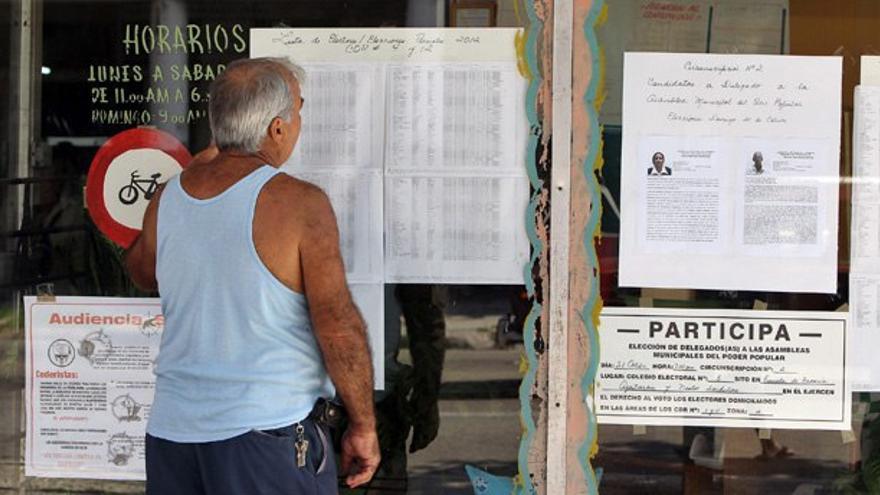
Cuba’s New Electoral law Consolidates the Monopoly of the Communist Party

Under to the draft electoral law, voters will still not know what the candidates think. (EFE)

14ymedio bigger14ymedio, Reinaldo Escober, Havana, 20 June 2019 — The draft Electoral Law, published in the official media on Thursday, confirms the most adverse predictions about the official rejection of any political reform.

The text, which the deputies of the National Assembly of People’s Power will no doubt approve, maintains, with a new wording, the “ethical foundation” of the old law in affirming that the Electoral System “highlights the capacity, values, merits and prestige of the candidates as the only elements to take into account by the voters to cast their vote, to which end their biographies are publicized in public places well in advance of the day of the elections.”

To make it even more clear, the following subsection excludes “all types of individual electoral propaganda and any other action aimed at tipping the voters’ decision in favor or against a candidate.”

That a law dictates the “only elements” that voters can take into account to cast their vote is, in addition to humiliating, absurd because in the privacy of the ballot box each voter will take into account whatever he or she wants. continue reading

What they may not be aware of is the candidates’ opinions. That is going to occupy the Candidate Commissions, the other monster that the new Law inherits from the previous one.

Title VII deals with describing the composition and functions of these commissions, which are basically responsible for preparing and presenting the lists of candidacies for the municipal and provincial assemblies, as well as that of deputies to the National Assembly of People’s Power. These lists consist, in number, to the number of positions to be filled, so that there is no possibility to choose between one or another candidate, only to approve a candidate or not.

In the specific case of the National Commission, it also carries out the candidacy project to fill the positions of President and Vice President of the Republic, as well as the President, Vice President and Secretary of the National Assembly of People’s Power and the members of the Council of State. These positions, however, are voted only by the Members of Parliament.

The members of the all-powerful commission are representatives of the official institutions that exert political control in all sectors of society: the Workers’ Confederation of Cuba, the Committees for the Defense of the Revolution, the Federation of Cuban Women, the National Association of Small Farmers, the University Student Federation and the Federation of Secondary Students. Its designation is a power of the respective national, provincial and municipal top leadership of these organizations.

As is known, the top leaders of these so-called mass organizations are part of the Central Committee of the Communist Party, and some of them sit on the Politburo. The statutes of these entities all contain a condition that ensures anyone filling these positions is loyal to the Party and the Revolution.

Before preparing their respective proposals, these commissions are entitled to “consult the opinion of as many institutions, mass and social organizations and work centers as they deem pertinent,” which obviously includes the opinion of the organs of State Security.

With this neatly tied package it is naive to consider that the creation of a National Electoral Commission (CEN) as a permanent organ is a significant step forward, nor is the reduction in the number of deputies, which from now on will number 474 instead of the current 605.

Different opposition organizations have drafted proposals for a new electoral law that would allow for a multiparty system and competition among the candidates. None of those approaches has been taken into account.

The project that is now being debated consolidates the power monopoly of the Communist Party and gives continuity to ideological exclusion and discrimination for political reasons. If a reformer manages to sneak into the next Parliament or the new Council of State, he or she will necessarily have to be a skilled simulator.

Cubans residing abroad continue to be excluded from the electoral process, and, despite their prominence (via their remittances) in the family economy, will remain isolated from the possibility of electing local representatives and deputies to Parliament. Meanwhile active military, permitted to vote but not to run for office in many democratic nations, will continue to be candidates here.

Despite the “nicely tied package” represented by the electoral path in this new legislation, it is not armored against the corrosive acid of the opportunists: Those who wear masks for years, applaud, nod, show themselves as trustworthy beings for the party apparatus and, the moment they feel they do not risk their necks or their positions, change their position. And even those who, eager to maintain the system, promote reforms that end up breaking it.

______________________

The 14ymedio team is committed to serious journalism that reflects the reality of deep Cuba. Thank you for joining us on this long road. We invite you to continue supporting us, but this time by becoming a member of 14ymedio. Together we can continue to transform journalism in Cuba.
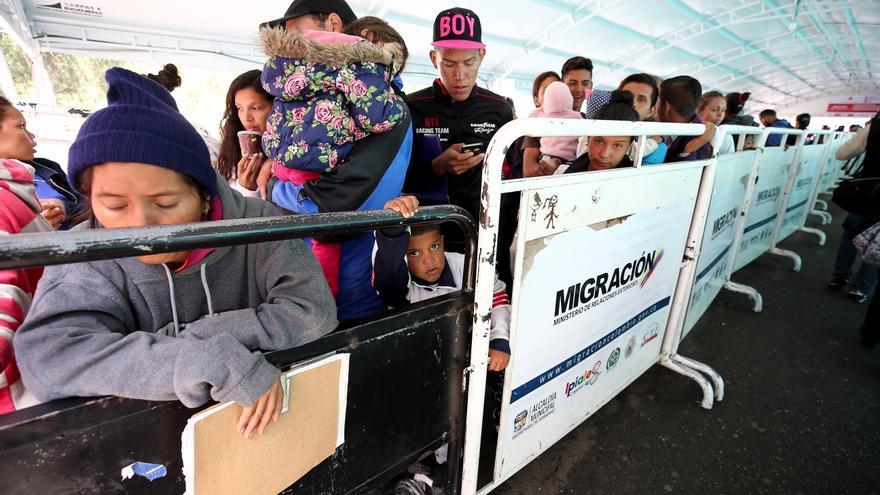
Venezuelans in Ecuador, X-ray of the Hunger Emigrating All Over Latin America

Caption: Lines of Venezuelan migrants trying to cross the border between Colombia and Ecuador. (EFE)

14ymedio bigger14ymedio, June 16, 2019 — An emaciated man with soot-colored clothing and tattered shoes walks alone with a firm step and carrying a bedroll in the direction of the Rumichaca bridge between Ecuador and Colombia; it is one of those doors of hope for the Venezuelans fleeing hunger and poverty.

With two crevices on both sides of the face, which draw the outline of his jaw and skin burnt by the sun and inclemencies of the Andes, this Venezuelan named Fredy Ramón Castillo, 60, has covered more than 2,000 kilometers from Valencia, in the state of Carabobo, to the main entrance to Ecuador and has spent eight days walking.

“My salary wasn’t enough to buy medicine and I decided to leave Venezuela to help my mom,” he says before breaking into tears over his situation, shared by some 2,000-3,000 compatriots, up to 5,000 on critical days, who cross this border. continue reading

It’s a border that in 2018 alone was crossed by more than a million Venezuelans, of whom more than 220,000 did not register their exit from the country through official points, according to official data.

Venezuela, in the last five years, has faced a grave economic crisis, aggravated by shortages in food, medicine, basic products, and services like electricity or potable water, insecurity, which has led more than four million to leave their country and swell the biggest and fastest movement of people in recent history in Latin America.

Ecuador is the fourth largest recipient of Venezuelans in Latin America after Colombia, Peru, and Chile, and has an estimated population of more than 300,000 Venezuelans, a figure that could approach half a million by the end of the year, according to predictions by its Ministry of Foreign Affairs.

It is also the country in the region that receives the most emigrants in proportion to its size and number of inhabitants.

Every day about twenty buses arrive at the border with Ecuador from Colombia, where the exodus to the South American region begins, although many individuals alone or in groups make the trip on foot. That’s the case for half a dozen men and women in their twenties, who arrive almost in a faint at the territorial border with two babies, and their lives in barely two suitcases on wheels and several bundles they have taken turns carrying on their long journey.

“We started 19 days ago,” Edison Mendoza, from the state of Lara, tells Efe, with his one-and-a-half-year-old daughter asleep on his lap.

His goal is also to get to the Peruvian capital, where he has family members, after having ruled out Ecuador, “because not having anything to eat has motivated us to travel all this way, and what we don’t have.”

According to a recent report tracking the flow of the Venezuelan population in Ecuador by the International Organization (OIM), 54.4% of the Venezuelans began their journey between one and seven days before arriving at the main entry ports, with their average cost being between $100 and $500.

Also, 46.3% travel alone, 42.9% with family members, and 10.6% with non-family groups, and 33.8% of those surveyed at the border expressed their desire to remain in the country, 52.3% plan to settle in Peru, and 12.4% in Chile.

With a dollarized economy and a regular delivery of remittances to Venezuela averaging $20, Ecuador has become, for many, an option to start from nothing.

The profile of those currently entering this country is changing in relation to recent years, as international bodies emphasize, with an increase in women (44.7%), and the vast plurality with only a high school diploma (43.6%), while in previous years the number of college graduates was greater.

“We can say that in the first stage of the movement were the heads of families, and now since a year ago they had their economic resources and can manage a family reunification,” Vladimir Velasco points out to Efe. Velasco is the district director of the Ecuadorian Ministry of Social Inclusion (MIES) in the border city of Tulcán, adjacent to Rumichaca.

A few meters from the international bridge, at the common divide, a bus chartered by OIM makes its last stop on the trip from Colombia and on its steps, a worker from the organization tells the Venezuelan passengers descending to separate into groups of those staying in Ecuador and those who will continue on to Peru, which since Saturday has required a humanitarian visa.

Near the group of recent arrivals, three young Venezuelan porters hope to get a few coins by helping the migrants carry their belongings to the area where they must go to sort out their documentation.

They receive pesos and dollars of the new kind from emigrant passengers, that they throw to them, “some days we come, others no,” says Lewis Cuello, from Caracas. If they are lucky they can even send something to family in Venezuela, the so-called Bolivarian Republic.

On both sides of the crossing several buildings of international organizations like Acnur, Unicef, International Red Cross, World Food Program, ONG, local governments, and ministries have become for many of the travelers a stop and boarding house on their journey.

Children use play spaces and older people charge their cellphones at an authorized point, get their health checked, or simply receive food during a wait that can last several hours. The majority of the travelers who cross the Ecuadorian border do it with identity cards and passports, although 2.5% do not have documents, especially minors, the responsible entities state.

Between the beginning of February and the end of March of 2019, the Ecuadorian government demanded that Venezuelans entering the country present their stamped criminal records, a measure suspended by the law.

Despite leading regional forces to confront the phenomenon, advocating for flexibility and “open arms” policies toward the vulnerable population, Ecuador’s president, Lenín Moreno, has announced that a humanitarian visa will be required, following the Peruvian example.

From Rumichaca each day between four and eight humanitarian buses, depending on the demand, depart for Huaquillas, on the border with Peru, a flow that could slow down once the provision adopted by Lima goes into effect.

A small square that hosts the humanitarian installations at the crossing with Colombia has become a big waiting area where Venezuelan families crowd with their belongings.

Génesis Camacho, 24 and a native of Zulia, waits her turn to be able to feed her small son thanks to the Food Bank. She traveled with her husband by bus and is thinking of settling in Ecuador where her entire family is already. “We were the last,” she says.

There are more and more cases of mothers migrating with their children, the elderly, and disabled people who, at an earlier stage, did not consider it.

A “growing” tendency, according to the deputy high commissioner of the UN for Refugees (Acnur), Kelly Clements, who in her first visit to the Andean country told Efe that the majority of the Venezuelans on the move throughout the region need “international protection.”

The massive exodus of Venezuelans was accelerated starting in 2016, and has increased in the last two years, in parallel with the power struggle between the Chavista leader Nicolás Maduro and Juan Guaidó of the opposition, who is recognized as interim president by more than 50 countries.

As almost everywhere on the continent, many begin at a crossroads with a sign that pleads: “I’m Venezuelan, I’m hungry, please help me.”

Translated by: Sheilagh Herrera

______________________

The 14ymedio team is committed to serious journalism that reflects the reality of deep Cuba. Thank you for joining us on this long road. We invite you to continue supporting us, but this time by becoming a member of 14ymedio. Together we can continue to transform journalism in Cuba.
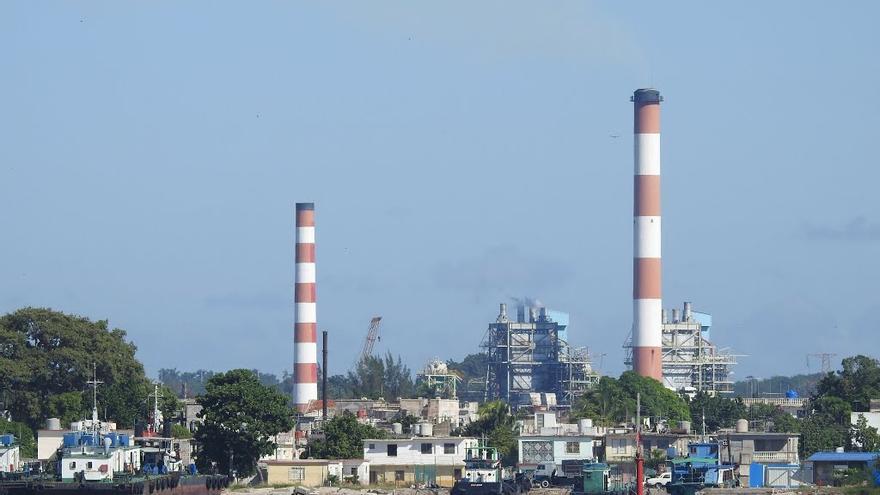
The Latest ’Timonazo’*

On the horizon, the Cienfuegos thermoelectric plant. (Gustavo Rumbaut Martinez)

14ymedio bigger14ymedio, Reinaldo Escobar, Havana, 18 June 2019 —  Cuban president Miguel Díaz-Canel’s recent speech at the Congress of Cuban economists recalls that old perestroika joke that showed Mikhail Gorbachev driving the car of Soviet socialism. Each time the taillights indicated that it would turn to the left it ended up turning to the right.

Popular political terminology uses the term ‘timonazo’* to describe that sudden and surprising act of changing course. In this case, the sudden turn of events focuses on the idea that “you have to jump to a new moment and know that the plan will not come from above.”

The president himself described the measure as “bold and very revolutionary” and added that it demanded “objectivity, realism and conscience.” continue reading

Those who have patience to study the final documents of the last Communist Party Congress, in particular the conceptualization of the Model, the Guidelines and the 2030 Development Plan, will find that socialist planning is defined in all of them as “the fundamental component of the system of management of economic and social development” that must combine “its centralized nature with the decentralization and autonomy required in the intermediate and grassroots instances.”

This tongue twister is supposed to be the master key that opens all doors and, as established in the verse with which Fidel Castro defined the concept of revolution, it is about making sense of the historical moment to change everything that must be changed.

Since Raul Castro rehearsed, in companies led by the military, what was ultimately called “the improvement of the business system” the attempt has been made to extend the experiment to the rest of the economy, which means granting new powers to the directors of the ’productive entities’. But it had to be done step by step, gradually and “defining the limits with precision in order to achieve companies with greater autonomy.”

The idea that the plan will not come from above can mean taking a stand in the most critical (and masked) internal discussion of the socialist system: How to define the degree of representativeness of the State as an intermediary between the workers and the ownership of the means of production. Half a century ago, a discussion just like that one ended the tanks of the Warsaw Pact rolling into Prague.

It was Alejandro Gil, Minister of Economy and Planning, who announced in the Congress of Economists the good news that starting next year, in order “to propitiate with objectivity and intentionality, as far as possible,” it will be “the workers who design the plans of their companies.”

What no one has explained is how a measure of this nature, which according to Díaz-Canel has been “demanded for years by the workers,” can match its final results with the ambitious forecasts of the 2030 Development Plan, designed with brutal verticality from the top of Olympus.

Maybe we are in the presence of a new version of what in the 90s was baptized as a Special Period in Times of Peace. At that time it was argued that the basic laws of socialism would be put on hold and that, for a time, the market would be partially liberated to save the conquest of the Revolution. Officially, this provisionality has not been terminated, among other things because the Soviet Union has not been resurrected and because they have not wanted to renounce the irreversibility of the system.

At first glance, the solution that is now publicly proposed is to give workers the power they have never had. Paradoxically “the criminal action of imperialism” with the resurgence of economic restrictions may have influenced these ’revolutionary solutions’ with no clarification regarding whether they are provisional or final.

The most pessimistic think that this ‘timonazo’ is another misleading ignition of false indicators to once again make us believe that “now we are going to build socialism,” but which, in reality, only underlie the purpose of staying in power.

The question is whether there is room for optimism.

*Translator’s note: “Timon” means tiller or steering wheel. “Azo” is a word ending that suggests a ‘hit’ or a ‘blow’. 

_________________________________

The 14ymedio team is committed to serious journalism that reflects the reality of deep Cuba. Thank you for joining us on this long road. We invite you to continue supporting us, but this time by becoming a member of 14ymedio. Together we can continue to transform journalism in Cuba.
Central Planning of the Economy, What For?

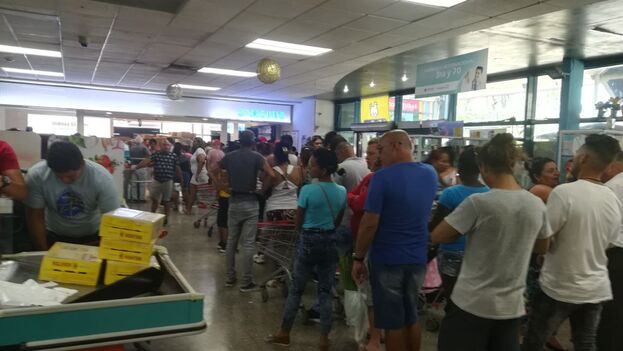
Cubans wait in line to buy milk powder. (14ymedio)

14ymedio bigger14ymedio, Elías Amor Bravo, Economist, June 3, 2019 — The Castrist regime announces the beginning of the process of drawing up the economic plan for 2020, the main instrument to intervene in the state economy. The information in the newspaper “Workers” speaks of the beginning of the analysis meetings with workers for the economic plan preparation and the budget corresponding to the next year. An initiative that claims to make a more participatory and flexible plan, in accordance with the desires of the Minister of Economy and Planning.

The question, paraphrasing Fidel Castro in reference to elections, is: What For? Confidence in the economic planning over six decades is directly responsible for the backwardness and general impoverishment of the Castroist economy. And now, undeterred, they have embarked upon what they call “indentifying internal reserves and strengths in each territory and company, exploiting the potential of productive linking, and exporting more, without limiting productive growth.” Hopefully they achieve it, but I see it as complicated. continue reading

Communism introduced central planning of the economy as an alternative to the market in the allocation of resources that were always scarce for alternative purposes. By substituting the mechanism of supply and demand, and price adjusting, with decisions by planning bureaucrats almost always remote from reality and tangled in dubious calculations of calories, weights, and other evils, the Cuban economic system was turned upside down in a matter of years.

From the first moment, the economists still holding their positions at the head of the companies that had not yet been confiscated to become property of the state, realized that the model was on its way to disaster. And thus it has been. Castroist economic planning has the merit of not having been right in even a single year in its forecasts, and in particular, since 2006, with the opening of small spaces to private activity, the results are even worse.

Why does this happen? Why, despite the insistence of the authorities and the efforts made in its preparation by the administrative management and the workers to improve the results of the planning, are the results worse and worse? Are we facing a demand for real change in the Castroist economy?

One can think what one likes, but in my understanding, yes. On the one hand, the bureaucrats continue buried in their calculations and estimations that never seem to end, with an increasing volume of norms, regulations, and provisions. Before it was easy to “plan,” by listening to a long and boring speech by Fidel Castro, it was already known how the accounts would have to be squared. Now the matter is worse.

For one thing, one has to read a panoply of documents so boring as to be useless, like the new Constitution, or the so-called Conceptualization of the Cuban Economic and Social Model of Socialist Development; even the most optimistic must read the Foundations of the National Plan for Economic and Social Development until 2030, and finally if one still has the desire, the so-called Guidelines for the Economic and Social Policy of the Party and the Revolution for the 2016-2021 period.

As they say in Workers, “to these documents must be added speeches, interventions, directions, and articles referred to the topic, which would serve as a basis to develop proposals with ’all the tools,’ with clear definitions and a strategic character.” With so much reading, and so much iron, economic decisions lose that spontaneity and richness that the market offers them when the objective is to satisfy the consumer.

In the end, the planning is a game that ends in a bad result. Because even if on the one hand they want everyone to participate, and I have my doubts that that would be easy to achieve, on the other hand, from the ministry (previously the communist Junta Central de Planificación [JUCEPLAN], or Central Planning Board) nothing is left to improvisation, and the premises are being established for the plan, so that no one leaves out even a single comma from the framework that really concerns the ruling leadership. This is what we have. Unfortunately the priority of customer service is replaced with some undefined “potentialities to contribute more to the strategies and priorities of the economy,” and end up the same way.

The truly worrying thing is that they are committed to playing this dangerous game, just as things are. The Cuban economy no longer works, and it has exhausted its tail engines, for what will have to be thought about changing on the fly. There have already been several scares like the absence of products in markets, but worse times will come. One doesn’t have to be a strategist to know that things are going to get worse, and that the year 2020 will be characterized by a situation of a lack of cash flow, of unbearable foreign debt that will asphyxiate the impoverished Cuban economy even more, without anyone moving a single finger.

The design of the plan, if they insist on this communist nonsense, would have to be oriented toward promoting to the maximum amount what is working in the Cuban economy, but the ideological priorities and the historical complexes prevent the regime’s authorities from adopting the fundamental decisions to place Cuba on an even plane with the rest of the surrounding countries. That would mean more markets, more property rights, more economic freedoms, more private business sector. A plan that allows the private sector to assume the global operation of the economy, concentrating the largest percentage of resources, and driven by an accelerated privatization of the productive and business capital of the country.

Studies confirm that gains in productivity and creation of value in the Cuban economy are centered in small business deals by self-employed people and entrepreneurial initiatives. It makes no sense to continue restraining these economic agents for the benefit of loss-making state-owned companies and a budgeted sector that is drowning the country. Central planning of the economy must be removed to let the market take its place.

It’s no use to establish priorities like “increasing production or services bound for export and satisfying the demands of export entities; achieving the maximum use of existing capacities, and assuring the processes aimed at satisfying the demands of the internal economy, fundamentally of food, transport, computerization of society, housing, construction materials, renewable energy resources, medicine, and tourism,” if the economic agents involved in them are not capable of driving these objectives and find themselves so limited and conditioned in their operation, that they can barely survive.

Translated by: Sheilagh Herrera

_______________________________________

The 14ymedio team is committed to serious journalism that reflects the reality of deep Cuba. Thank you for joining us on this long road. We invite you to continue supporting us, but this time by becoming a member of 14ymedio. Together we can continue to transform journalism in Cuba.

City of Miami Approves Resolution Against Cultural Exchange with Cuba

The City of Miami mayor asserts that the decision is a moral one, although it also has its detractors in Miami. (Mario J. Pentón)

14ymedio biggerEFE/14ymedio, Mario J. Penton, Miami, 14 June 2019 — The City of Miami approved on Thursday 13 June a resolution by its mayor, Francis Suárez, and commissioner Manolo Reyes, which seeks to prohibit cultural exchanges with artists from Cuba, according to the local press.

“This resolution urges the federal government to end cultural exchange [with Cuba]  and invests us with all potential powers so that we, as the local government, can prevent artists from the Island utilizing [the city’s] public resources,” said Suárez.

“We are very proud to have the support of so many important persons, artists and community activists supporting this effort,” he added. continue reading

The mayor showed a video in which artists such as Willy Chirino, Los Tres de La Habana, Amaury Gutiérrez, and politicians such as former Congressma Lincoln Díaz-Balart voice their support for the measure.

“City of Miami facilities should not be lent for these artists to come here and mock us, make money here, and then return to Cuba to utilize those funds against their own people while denigrating the liberties that allowed them to be here,” Suárez added.

The resolution declares that the prohibition will remain in force “until freedom of expression is reestablished for all Cubans, and not only for certain favorite artists.”

Commissioner Manolo Reyes considered it unjust that artists sponsored by the Cuban government should come to Miami “and fill their pockets with money that they then take back to Cuba,” while anti-Castro artists on the Island cannot do the same.

The Miami newspaper El Nuevo Herald spoke with the Miami businessman and activist Hugo Cancio — who in 2000, following a complaint, obtained a reversal of an ordinance that prevented local groups from using public funds for activities for Cuba-related activities — and on this occasion was again critical of the city’s initiative.

“It seems to me that the reasons they give are absurd and obsolete. They criticize the Cuban government because it supposedly restricts, limits, and prohibits it citizens — and they are doing exactly the same: preventing people from enjoying culture for the simple fact that they are in disagreement with the artists or with their political positions,” he argued.

The newspaper also spoke with Juan E. Shamizo, founder of Vedado Social Club, who considers the decision to be an electioneering action. “What they want to cut off is not only Cuban artists coming to Miami, but also North American artists going to Cuba and interacting with the people,” he said.

“Cuba and the United States are neighbors, we have much in common, thousands of people who yearn for those who they left behind. When the doors are shut to exchange, they are closing off the connection between our people and the possibilities we have of enriching each other,” he added.

In Cuba, Ambassador  José Ramón Cabañas mocked the decision on his Twitter account: “The United States has 35,000 recognized cities and towns. The authorities in Miami decided that their citizens will visit 34,999 other places to legally enjoy the music of Cuba. And they have decided this in the name of Freedom of Expression (probably a new definition),” he wrote.

Under the current administration of President Donald Trump, the US has hardened its policies toward Cuba and, in a surprising decision this month, the government cancelled travel to Cuba — a reversal of the reestablishment of relations advanced by his predecessor, Barack Obama.

Translated by: Alicia Barraqué Ellison

_____________________

The 14ymedio team is committed to serious journalism that reflects the reality of deep Cuba. Thank you for joining us on this long road. We invite you to continue supporting us, but this time by becoming a member of 14ymedio. Together we can continue to transform journalism in Cuba.
Returning Cuban Doctors Treated Badly / Juan Juan Almeida

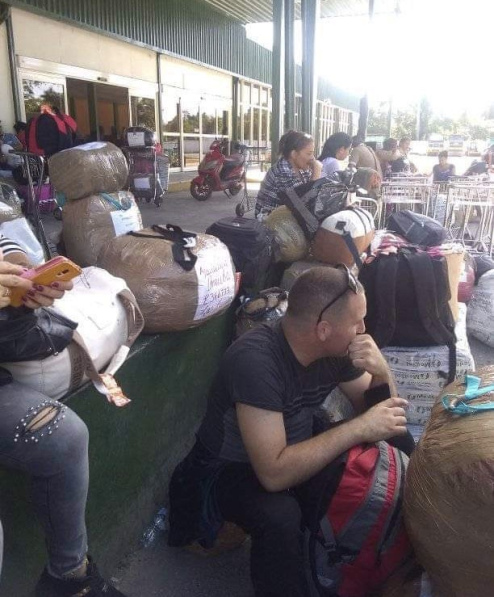
Cuban doctors returning from Venezuela wait to be processed on their return to Havana.

Juan Juan Almeida, 8 June 2019 — A large number of Cuban workers, who had completed a mission in Venezuela, were treated like nobodies when they returned to the island.

What happened last Friday, June 7th, was no less important just because it was habitual. These people, mostly health workers, having finished their task, and returned to the island, waited over 3 hours, completely ignored, outside the terminal, because, not being a priority for the Ministry of Health, nobody was there to receive them.

“Now, in accordance with the usual procedure, we should have been in epidemiological monitoring; but, it didn’t happen. They forgot about us, and some of us have to think how to get home, using our own savings. They were incapable of guaranteeing us a comfortable and safe return. Obviously, as we had finished our work, and were of no further use to them, they treat us like non-reusable surgical materials,” one of the Cuban professionals who arrived on the flight told Juan Juan Al Medio. continue reading

The plane landed around mid-day at Terminal 5 (Wajay) at Jose Marti Airport in Havana. That’s where they receive and see off the workers’ flights, carry out their detailed inspections, well away from the normal passenger flow, and out of sight of the rest of the tourists and travellers visiting the country.

Doctor Raiza Planells, a graduate in oral medicine and dentistry from the Holguin University of Medical Science, and a  member of the abandoned group, told us about their uncomfortable situation:

“This is what makes us angry. Workers, just come back from the end of the mission, and some from vacation, waited around for over 3 hours, without any transport to get us to quarantine. There was nobody from support staff or from the airport to give us an explanation for this neglect. How much longer???”, she wrote in her Facebook profile.

Translated by GH

A Cuban Family Sues Melia for 10 Million Euros

Melia is the foreign company that manages the most hotels in Cuba with some 34 properties.  (Flickr/Andrew O.)

14ymedio bigger14ymedio, Havana, 12 June 2019 — The descendants of businessman Rafael Lucas Sanchez Hill on June 3 filed a lawsuit against the Spanish hotel group Melia, under Title III of the Helms-Burton law, the suspension of which was ended in May by the Donald Trump administration.

The Sanchez Hills, who live in the United States, seek as compensation about 10 million Euros for the lands, located in the current province of Holguin, which were expropriated from them by Fidel Castro in 1960 and from which Melia benefits by managing several hotels that the Cuban military built on them.

According to a report in The Confidential, it is the first lawsuit filed in Spain against companies of that country for managing expropriated properties in Cuba.  The Helms-Burton law allows the owners of properties confiscated with Fidel Castro’s arrival to power to sue those who “traffic” in those properties. continue reading

Previously the Sanchez Hills had negotiated with Melia and were close to an agreement for five million Euros, but seeing the chance of Title III’s activiation as remote, the Spanish company reduced the compensation to 3,000, and there was no agreement.

The Sanchez Hill family fled Cuba after the Santa Lucia LC headquarters and more than 40,000 hectares of surrounding lands were expropriated.  The patriarch of the family had built the headquarters in 1857 after moving to Holguin from Matanzas, but Law 890 of 1960 signed by then-president Osvaldo Dorticos left them with nothing.

In recent decades the military built the hotels Melia Sol Rio de Luna y Mares, Paradisus Rio de Oro, Costa Verde, and Playa Costa Verde, among others, on the expropriated lands.

The family demands in a Palma de Mallorca court that the company compensate them for an amount equal to the benefits the hotels have obtained in the last five years, explains El Confidencial. They also reproach the company for its attitude toward the claims of the owners.

“The illicit character of said confiscation is known by Melia, who for the last 20 years has ignored claims by those companies and families at whose expense it has profited,” says the lawsuit, according to the Spanish newspaper.

Melia is the foreign company that manages the most hotels in Cuba with some 34 properties.  Iberostar is next with 20 properties.  These companies have been heavily criticized by human rights groups and opponents of the regime in Havana for the conditions in which they make their investments on the island.  Until 2008 Cubans were prohibited from staying in the same hotels as foreigners, and the wages of the workers in the international hotels are barely some tens of dollars a month.

“In these 31 years we have made it very clear:  the commitment to Cuba is unconditional.  We believe that it is totally unjust, all these measures,” Gabriel Escarrer, executive vice-president and CEO of Melia Hotels International, said to Cuban state television about the activation of Helms-Burton’s Title III.

“Faced with that, we continue with our road map:  we will continue to collaborate closely with the Cuban authorities to develop the tourist industry of this country, which I believe is exemplary in every way,” he added.  By 2020 the company projects it will have 38 hotels and more than 15,000 rooms in the country.

Escarrer visited the island with the Spanish Minister of Industry, Commerce and Tourism, Reyes Maroto, who tried to issue a calming message to Spanish investors in the island.  “Our will is to continue investing in Cuba and for our companies to have the will to contribute to the development of the island,” said the minister, who lashed out at the U.S. executive and asked for Cubans to pay a debt of 300 million to the entrepreneurs.

Translated by Mary Lou Keel

____________________

The 14ymedio team is committed to serious journalism that reflects the reality of deep Cuba. Thank you for joining us on this long road. We invite you to continue supporting us, but this time by becoming a member of 14ymedio. Together we can continue to transform journalism in Cuba.
Cuban Investors, Yes, but Only if They Live Overseas

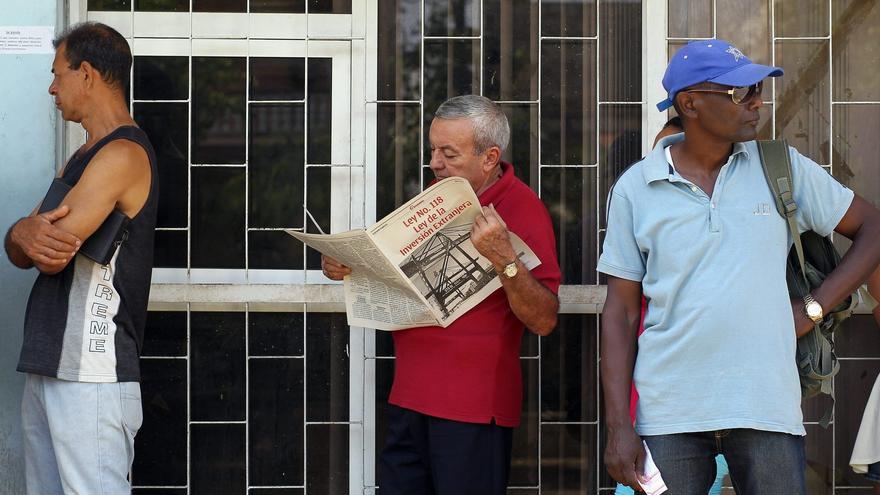
A man consults the Law of Foreign Investment in Havana. (EFE)

14ymedio bigger14ymedio, Mario J. Penton, Miami 8 June 2019 — The country’s official news outlets reported on Friday that “there is no impediment” to investing on the island for those living in the diaspora. Quite true, under the Foreign Investment Act, but not for Cuban nationals.

In an article in the digital news site Cubadebate, Ministry of Foreign Trade official Deborah Rivas stated that the Foreign Investment Act, adopted by the Cuban parliament in 2014, “sets no restrictions on the origin of capital.”

In the same article she noted that the Minister of Foreign Trade, Rodrigo Malmierca, had tweeted the previous week that citizens “of Cuban origin” can invest in the island. continue reading

The statements come at a time of heightened concern over the finances of the government, which owes more than 1.5 billion dollars to food suppliers according to the economics minister. The government is also facing implementation by the Trump Administration of Title III of the Helms-Burton Act. Under this law US-born and naturalized Cuban citizens and can sue companies that invest in properties expropriated by Fidel Castro in the 1960s.

In the article Rivas states, “Nowhere does the Foreign Investment Act mention citizenship or place of birth but it is quite clear that the investor’s place of residence and capital should be outside of Cuba.”

“Our regulations do not stipulate a minimum amount of foreign investment capital required for approval. In each case a comprehensive analysis of the proposed project is carried out and the amount of capital to be spent corresponds to the investment to be made,” she adds.

Her statements contrast with those made by Chancellor Bruno Rodriguez at a gathering of Americans for Engagement, an organization of Cuban-Americans and US citizens which seeks improved relations between the United States and Cuba. In a 2012 meeting with Cuban-Americans interested in participating in Cuban investment projects, Rodriguez acknowledged that, while there is “a legal basis for Cuban emigres to invest, the Cuban government is not interested in investments of 100,000, 200,000 or 300,000 dollars.”

“Cuba is looking for investments of a magnitude that, as a rule, do not come from the emigre community,” he added.

According to official figures, the island needs to attract 2.5 billion dollars of foreign capital for development and has targeted several key sectors, including manufacturing, agro-business, tourism, mining, biotechnology, petroleum and renewable energy. Though every year the government publishes a business portfolio which includes hundreds of projects valued at more than ten billion dollars, they fail to attract many investors.

According to the economist Omar Everleny Perez, the main problem with foreign investments on the Island is excessive red tape, which makes the pace of business approvals “slow and bureaucratic.”

Among the problems affecting foreign investment are the dual currency system and the inability of employers to hire their own workers. Currently, the state acts as intermediary, hiring workers and retaining most of their paychecks. In response, some companies have opted to bring in foreign workers and pay them directly, guaranteeing the companies more effective quality control.

Deborah Rivas’ statements have generated a strong response on social media, especially among Cubans on the island, who lament the exclusionary nature of a law which allows expatriates to invest in companies, industries and other sectors of the economy but prevents those who live in the country from doing the same.

According to baritone and Opera de la Calle director Ulises Aquino it does not make sense to discriminate against those who remained in Cuba, “against those who did not leave, who have struggled their whole lives.” In a post on his Facebook account he defends the right “of all Cuban business people” to be respected whether they are inside or outside the country.

A computer technician, Norges Rodriguez, joined the fray when he tweeted a question: What would happen if a Cuban living abroad makes an investment on the island and then decides to move back to Cuba? “What happens to his investment?” he asks in a message linked to the Twitter account of the Cuban ambassador to the United States.

Even during the brief thaw that began during the Obama administration, some American investment projects on the island were sidelined because of conditions imposed by the Cuban side. One such case involved Cleber LLC, which wanted to assemble tractors in the so-called Mariel Special Development Zone.

In spite of receiving widespread media coverage for being the first project to be completely funded with US capital since 1959, Cuban authorities rejected the company’s proposal because of its owner, Cuban-American businessman Saul Berenthal.

Rejection of the proposed project, which had been applauded by Obama himself during his 2016 visit to the island, stemmed from Berenthal’s having obtained permanent resident status in Cuba. The repatriation process restored his rights as a citizen but at the same time prevented him from investing on the island as a foreign businessman.

“Can individuals living in the country participate in foreign investment projects? No. The law is aimed at attracting foreign investors, or Cubans living abroad whose assets are also abroad, who can provide financing, advanced technologies, markets for our products and new revenue,” explains a study on the Foreign Investment Act.

Individuals in Cuba’s budding private business sector are subject to many restrictions such as the inability to set up corporations, or to import and export. Meanwhile, the government still relies on unproductive “socialist state enterprises” as its primary means of support.

Recently, the European Union’s ambassador to Havana, Alberto Navarro, called on Cuba to allow “more commercial openness” in response to the implementation of Title III of Helms-Burton. Foreign trade minister Rivas responded to the ambassador in the official media, saying that Cuba was planning to create a “special window for foreign investment” to reduce the time spent waiting for approval of investment projects.

_____________________

The 14ymedio team is committed to serious journalism that reflects the reality of deep Cuba. Thank you for joining us on this long road. We invite you to continue supporting us, but this time by becoming a member of 14ymedio. Together we can continue to transform journalism in Cuba.
Mute Candidates and Deaf Voters, Cuba’s New Electoral Law

If the future law works as it appears it will, voters will go to the polls without know how their representatives think. (14ymedio)

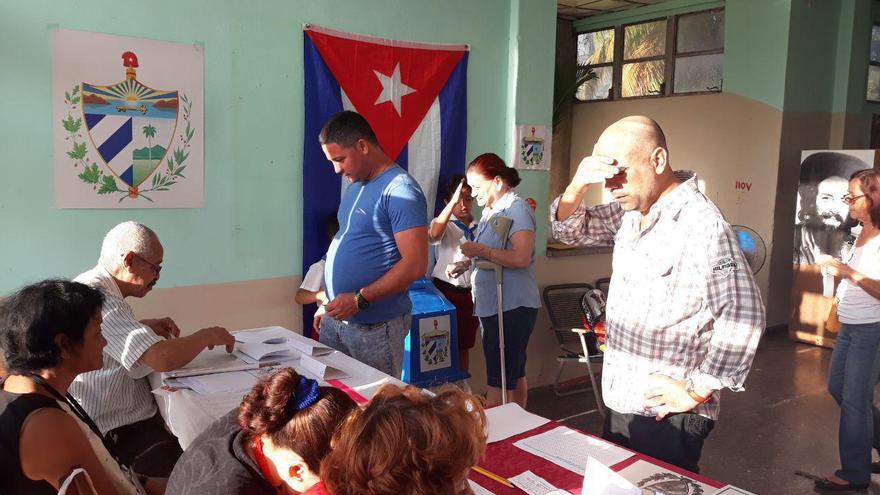
14ymedio bigger14ymedio, Reinaldo Escobar, Havana, 14 June 2019 — With no political campaigns, no diversity in platforms and no secret votes at the beginning of the process, Cubans could begin electing their representatives under the new Electoral Law that must be approved no later than October.

Thursday, the newspaper Granma published an interview with Orisell Richards Martínez, professor at the Faculty of Law of the University of Havana, speaking about what kind of roadmap the future rules would have to offer for the legislators to follow. Some of these changes are related to the election of the new positions of president and vice president of the Republic, members of the National Electoral Council, governors and provincial vice-governors.

Last April 10th, when the new Constitution of the Republic went into force, the countdown began for the “six-month span” within which the National Assembly of People’s Power (ANPP) has to approve the new Electoral law. By this coming July the deputies will probably have a first draft or, in its absences, form a commission to draft one. continue reading

In a marathon year of resolutions, laws and regulations to begin to adjust the current body of laws to the Constitution, the Electoral Law arouses speculation because it is the one that could influence the political direction of the country still more. A small change in one of its articles could mean the arrival of reformists in Parliament or greater orthodoxy among the assembly members.

The most significant aspect of the interview with Richards is the absence of forecasts of major transformations. Something that reinforces the widespread impression that it is better not to have illusions about democratic reforms in the new text. Everything points to the fact that proposals will be maintained with a show of hands in the base and the candidacy commissions, without allowing candidates to campaign or propose platforms.

Although these are the opinions and proposals of an academic who is not even a deputy, the fact that her words have been published in a prominent place in the official organ of the Communist Party, underlines its character of “official truth,” unlike the predictions of a specialist in the field. Hence, Richards’ words should be read as a preview of things to come.

For example, Richards suggests maintaining “the essence of elections at the municipal level,” which begins with a meeting in the areas of each constituency in which voters propose those who should appear on the ballot as candidates for delegates of the Municipal Assembly. In the sight of all and without the right to secret vote, the residents must enunciate the name of the possible delegate.

In the last meetings of this type carried out in 2018 several acts of repudiation and arrests of independent candidates took place, a true campaign of intimidation that meant that none of them managed to pass the test of the vote by show of hands, before the fear or the rejection of a citizenship influenced by threats and defamation campaigns.

Inertia extends to another of the most controversial aspects of the current Electoral Law: the existence of Candidacy Commissions that make up the list of candidates for deputies. This relationship, of about 600 names, corresponds to an equal number of seats in Parliament, so that the voter can only approve their election to the Assembly, but cannot choose among candidates.

The most audacious thing that the professor proposes is that the work of these commissions must be more transparent: “It is a question of expanding, from this normative disposition, in how the selection of pre-candidates is developed, based on what principles, what control mechanisms exist for it, in pursuit of the selection of the best proposals and information to the people.”

The demand that the presence of independent observers should be allowed in the elections will reduce, according to the forecasts published in Granma, the participation of supervisors and collaborators in the electoral processes, “without ignoring the principles for their incorporation, as well as their training.”

Obviously, the Law will maintain the right to participate in periodic elections, plebiscites and popular referendums among all citizens with legal capacity to do so. The vote will be free, equal, direct and secret, and each voter will be entitled to one vote, but Cubans who are abroad temporarily or as permanent residents will continue to be excluded.

When the principle of a single political party is enshrined in the Constitution, it is elementary that the new electoral law will not allow competition between candidates who offer different alternatives. As a result, the main obstacle to exercising the political will of citizens will be maintained.

The voters will go to the polls ignoring how the candidates think, because they will only be allowed to look at a photo and read an excerpt from their biography.

Neither the homosexual nor the homophobic will know in advance how each candidate will vote on a possible law that approves equal marriage. Both the private entrepreneur and the manager of a state-owned company won’t know the intentions of the candidates towards approving or rejecting the opening of small and medium-sized companies. The elderly worker about to retire and the young person who is beginning their working life will not know how the candidates will act when they have to vote on laws that balance pension expenses with taxes.

Silent candidates and deaf voters will continue to be the protagonists of these electoral pantomimes.

_______________

The 14ymedio team is committed to serious journalism that reflects the reality of deep Cuba. Thank you for joining us on this long road. We invite you to continue supporting us, but this time by becoming a member of 14ymedio. Together we can continue to transform journalism in Cuba.
Cuban President Diaz-Canel and Ice Cream Arrive in Camaguey Together

If the future law turns out as expected, voters will go to the polls without knowing how their representatives think. (14ymedio)

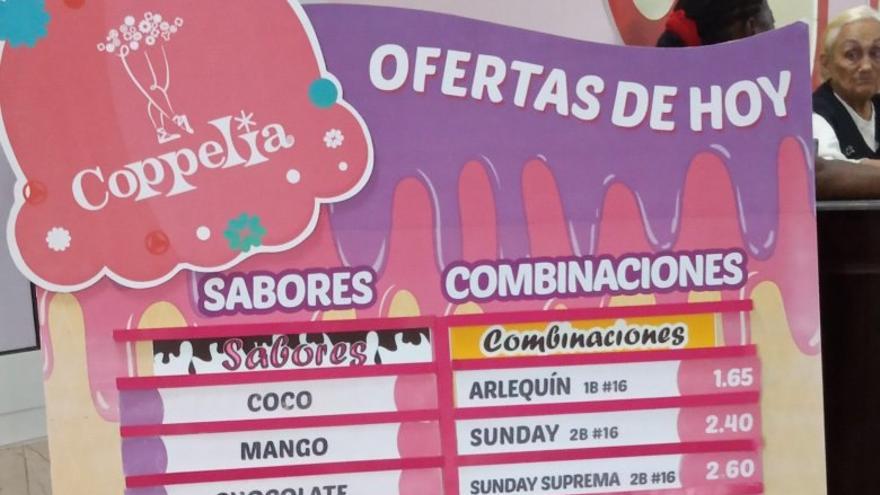
14ymedio bigger14ymedio, Marcelo Hernandez, Havana, 14 June 2019 — Preparing the stage for the visit of a high official, putting the makeup on the place expecting a minister, or a quick remodel of a work before a Party leader arrives, have been common practices for decades. This week, the custom repeats itself with a visit from Miguel Díaz-Canel to the city of Camagüey, where even the Coppelia ice cream parlor has experienced an assortment of flavors that its customers haven’t seen for decades.

The creamery, located in the historic center and remodeled last year, has of surprising quantity of its six flavors of ice cream and the same number of possible combination, some of them with sweets included, a complete novelty for the customers, which rarely see a menu announcing more than two or three options.

“All we need is for Miguel Díaz-Canel to come to Camagüey more often,” a surprised customer noted sarcastically on social networks, having taken advantage of the chocolate-coconut combo that, according to him, his palate “had forgotten what it tasted like.” Other residents of the city took photos of the menu to immortalize the moment or to show the image to some skeptical friend who wouldn’t believe it if they didn’t see it.

For the two days of the governmental visit, there was not only an abundance in the flavors of ice cream, but also police officials in the streets and, especially, outside the homes of opponents and independent journalists. The latter was not “pure props” like Coppelia, but barely differed from reality, an augmentation of the permanent control activists and dissidents must live under everywhere in the country 365 days a year.

__________________

The 14ymedio team is committed to serious journalism that reflects the reality of deep Cuba. Thank you for joining us on this long road. We invite you to continue supporting us, but this time by becoming a member of 14ymedio. Together we can continue to transform journalism in Cuba.