Surveillance at the ISDI Ruins Arrives Late: Doors and Windows Have Already Been Removed

The remains of the building are sold among the neighbors of the area

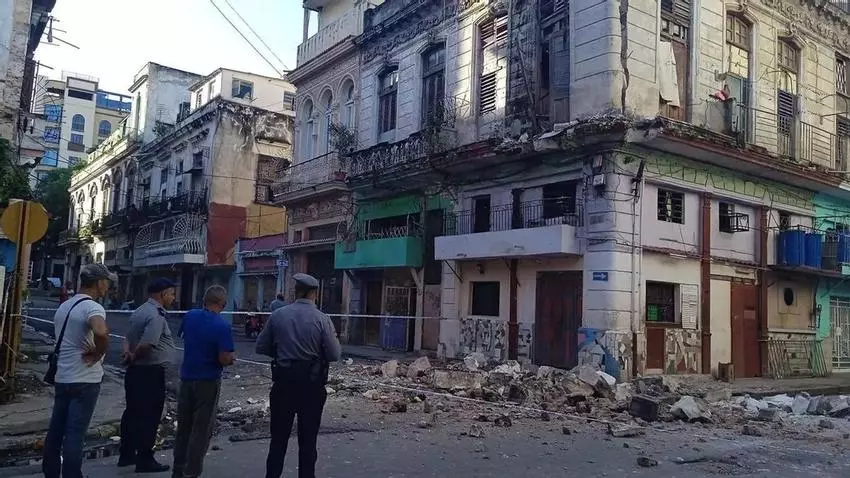
The Higher Institute of Industrial Design (ISDi), this Thursday. / 14ymedio

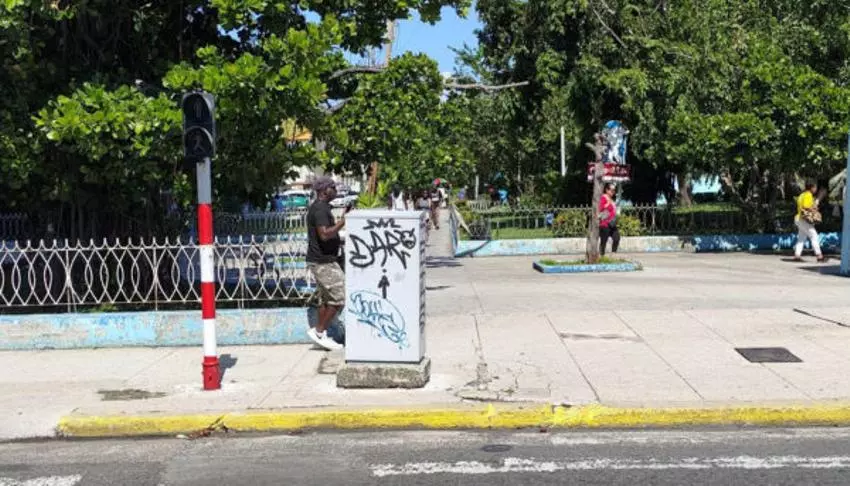
14ymedio bigger14ymedio, Havana, 3 October 2025 / The Higher Institute of Industrial Design (ISDi), in the heart of Centro Habana, was under guard on all four sides by plainclothes officers on Thursday. The security came late, and just after graphic designer Esteban Aquino, in a message on social media illustrtaed  with photos, reported that numerous documents from the institution — including theses, books, and catalogs — were scattered in the nearby Carlos J. Finlay Park.

“These archives were, and are, the historical and technical reference for the academic training of students. The work of those who are today excellent exponents of design, professors, tutors, authors, and great personalities is coming to an end,” lamented Aquino, himself an ISDi graduate. Sadly, he exclaimed: “The truth is, I don’t know who is inside that building, nor do I know what they do, much less what the fate of the building will be, but I believe that being ignorant does not mean being insensitive. Not knowing is not synonymous with disrespect.” And he asked: “What is the motivation that drives these people who, supposedly, were educated with principles based on respect for social property, education, and culture? What values ​​are we talking about?”

What the undercover police are now guarding, in any case, is nothing more than a place being slowly “cannibalized,” as one neighbor told 14ymedio. “The scavengers were going to demolish the entire building,” says the woman, who watched day after day as people crept in through the gap left at the back by one of the building’s partial collapses. “They had already taken the windows and were taking the doors. If you let them, they’ll end up taking the bricks one by one.”

“I’ve been offered doors, toilets, blinds, and even bars.”

Another neighbor, who lives a few meters from the nearby bus stop, has also witnessed the building’s dismantling. “I’ve been offered doors, toilets, blinds, and even bars,” she tells this newspaper, referring to the informal market that has been fueled by ISDI spoils in recent months. “There are houses here that look like a small school inside because they’ve been built with whatever came out of there,” she says, pointing to what remains of the structure. continue reading

For decades, neighborhoods where an official institution or state building is falling into disrepair have been nourished by its remains or construction materials. “I have a neighbor who reinforced her bed frame with a slate board, and in this same tenement there are now several doors of the same color, all taken from there.”

The most deteriorated wood has also yielded benefits. “The other night, when we had a very long power outage, the neighbors around the corner built a bonfire in the street to cook on with some ISDI planks.” Despite the momentary benefit, the woman fears that the ruin will end up becoming a huge dump, and “this whole neighborhood will look even dirtier than it is.”

The building, which was originally a military hotel and officers’ club for the Spanish Army, later served as the headquarters of the Cadet School (1874-1878), the Widows and Orphans’ Asylum, the General Staff headquarters during the First American Occupation, and even the Ministry of Health before the Revolution.

Rear of the ISDI, with fences blocking access. / 14ymedio

In 1982, it was transformed into the headquarters of the Polytechnic Institute of Industrial Design, the precursor to ISDI, and, despite its great architectural, historical, and educational value, it was left to die over decades of neglect, poor renovations, and lack of maintenance.

In March 2022, the building was closed after an “architectural flaw” was discovered that endangered students and workers. “The Revolution founded the universities and always stood by them,” the official statement read, as if words alone were enough to sustain the cracked columns.

That narrative literally collapsed in July 2024, when part of the interior facade collapsed. And in January 2025, another partial collapse left an elderly woman injured and four families without access to their homes. Despite no fatalities, the symbolic impact was profound: not just a building, but a promise, an institution, and an era, had collapsed.

Even more accurate were the words of architect Lourdes Martí, founding rector of ISDi until 1988, who in 2022 had issued a public denunciation: “What happened during these last 33 years? Was it never maintained again? What architectural flaw is this that prevents the building, or part of it, from being restored? Is the goal being to destroy the building or eliminate the training of Industrial and Information Designers? Are we witnessing the end of the country’s industrial development?”

____________

COLLABORATE WITH OUR WORK: The 14ymedio team is committed to practicing serious journalism that reflects Cuba’s reality in all its depth. Thank you for joining us on this long journey. We invite you to continue supporting us by becoming a member of 14ymedio now. Together we can continue transforming journalism in Cuba.

“What the Agencies Are Doing to Tourists in Cuba is a Scam”

Twenty years after an idyllic first trip to the island, Marina from Spain discovers a destroyed country and deplorable service in five-star hotels.

The outdoor cafeteria of the Iberostar Selection Havana hotel, in the so-called K Tower, is empty. / 14ymedio

14ymedio bigger14ymedio, Yaiza Santos, Madrid, 1 October 2025 — Mountains of garbage on street corners, power outages, expensive hotels with insufficient food,  towels with holes, mosquito infestations, beggars, sad streets, and people everywhere with only one plan: to leave Cuba. The island Marina visited this summer with her family bears little resemblance to the one she saw in 2004.

With that idyllic memory in mind, last August she booked a trip that included Havana and Cayo Santa María (Villa Clara) through an agency in her hometown in Andalusia, which she prefers to withhold. The experience, however, was so disastrous that the group filed a complaint with the tour operator upon their return.

To begin with, they were greeted at José Martí International Airport by a power outage , something she hadn’t expected to experience in the terminal itself and something that was unthinkable twenty years ago. Once in the capital, they were surprised by the uncollected trash everywhere. “The stench it transmits is unbearable,” she told 14ymedio. “And it’s a hotbed of disease, really.”

The palpable hunger also cconfused her, specifically the line of elderly people, women and children at the doors of El Asturianito

The palpable hunger also confused her, specifically the line of elderly people, women, and children outside El Asturianito, waiting for the employees of the popular restaurant, located across from the Capitol, to distribute the customers’ leftovers. “We didn’t see that the other time, we didn’t see that.”

Marina never imagined that in two decades, the historic center had not only not improved, but had worsened to the point of complete disrepair. Nor that the city would continue reading

no longer be that place where old-fashioned Cuban music flowed from every corner: “Havana was filled with live musicians playing everywhere all day long, and now we could only enjoy that at Floridita and La Bodeguita del Medio, and that’s it.” Nor did she imagine they would barely encounter any foreign visitors.

“We asked what was happening, why everything was so abandoned, and they told us that tourism was run directly by the Armed Forces, and since the Armed Forces started managing it, it has been deteriorating a lot,” says Marina, without knowing for sure that, in 2016, the military had indeed taken over the most successful companies from Habaguanex — a subsidiary of the Historian’s Office then headed by Eusebio Leal — and placed them under the umbrella of the Business Administration Group (Gaesa).

Marina found the absence of tourists even more striking at the Hotel Nacional, where they stayed overnight, just as she had the first time she visited Cuba, at a time when Cubans were banned from these establishments. The lack of international guests contrasted with the number of Havana residents “who came to have a drink, listen to music, and also quite a few who went to the pool.” What the guides told them was that these occasional hotel guests “are rather sympathetic to the government.”

Not everyone can afford the 6,000 pesos per person (almost $14 at the informal exchange rate) entrance fee to the National Stadium pool — 4,000 of which is for compulsory food service — when the average monthly salary doesn’t reach 7,000.

“We felt the weight of the State there. Everyone was silent. We tried to talk to people, but they were secretive.”

Dollarization is something that also shocked Marina, who says that money changers approached them inside the hotel. “People came up to us and said, ‘If you want to change, I’ll give you the exact amount,’” she explains. And that “exchange” coincided with the information reported daily by El Toque. How is it possible that a state-run establishment offers to buy foreign currency on the cheap? Marina explains that she saw the situation as “delicate”: “We felt the weight of the state there; everyone was silent. We tried to talk to people, and they were secretive.” That said, she says, was like 20 years ago.

Very different from ordinary Cubans, who, unlike in 2004, dare to talk about everything. “They knew exactly what was happening in Spain, because everyone wants to come here, and they ranted about how it’s impossible to stay there anymore, that it’s terrible.”

“Every now and then you’d find someone who’d say, ‘I’m going to Spain on such and such a date,’ or ‘I already have a flight, I’m going to Huelva, my wife is waiting for me, she’s been there for two months, and my daughter is already at school,’ or ‘I got a job as a glazier thanks to some friends I have there,’” Marina continues, highlighting the exodus taking place because of the Democratic Memory Law, which grants Spanish nationality to descendants of emigrants and whose application period expires this month. “They were very overwhelmed because they had to expedite all the paperwork, because it ends in October.”

The stories of the people she encountered gave meaning to something she observed on the plane to and from Madrid: “There were far more Cubans than there were tourists.”

“We were eating yogurts that were warm and ice creams that were completely melted.”

There were no blackouts in Havana, she says, something the hotel staff had already assured her: “They told us their power outages were minimal because they had their own generators, something others did not. In fact, on the second day we saw the NH [the Capri] completely dark, it was about 9 p.m. I imagine the people there would be affected by that situation.”

Regarding the hotel’s conditions, she says among the friends in the group everyone was saying, “Look, we paid so much, and this is like a three- or four-star hotel, because of course, the maintenance is good, but not what it should be.” They couldn’t have imagined that the worst was yet to come, in Cayo Santa María, where they stayed not in just any hotel, but in one that bills itself as five-star: Iberostar Selection Ensenachos. “The Nacional is ultra-luxurious in comparison!” she asserts.

“We were very surprised by the total neglect of maintenance,” says Marina. She lists: “The gardens with green puddles, with millions of mosquitoes swarming and biting like crazy, the blue crabs from the mangroves invading everything, taking over the complex, some tiny black birds that look like little crows [totíes] on the tables taking food…”

Being a Spanish hotel, the woman denounces, “European standards are not being met there.” The contrast with the first time she stayed at the same establishment was glaring. “Back then, everything seemed quite clean, very, very proper. Not now: they cover your plate with a piece of plastic wrap . It doesn’t have the required refrigeration. We were eating hot yogurts and completely melted ice cream.” The fact that the presentation of the dishes was crumbly and there was no one there to fix it was the least of the problems.

“They don’t have any staff. They’re maintained by four people who are already bitter and have no desire.”

There wasn’t even enough food at the all-you-can-eat buffet. “When we arrived and went to the restaurant, they told us: ‘Everything’s gone, all we have left are two sausages and two hamburgers.’” There were six people in the group. Every day, they saw that there was always the same food: hamburger, sausage, and chicken; at most, some fish. “What was happening? The sauces changed, the colors changed, but it was always the same. It was junk food,” she says. “One day I ordered a salad, and I think they took the salad from the trash can and put it on my plate, because it was so horrible.” The group’s biggest fear was getting gastroenteritis or, worse, dengue fever.

Marina continues with the grim anecdotes: “Everywhere, so dirty. The towels had holes in them. In the bathroom, a tiny little soap, not even wrapped. In a five-star hotel!” In a way, she saw the logic behind what was happening, “because they don’t have staff. It’s maintained by four people who are already bitter and have no desire.”

On the second day, they began to think about leaving, and on the third, they spoke with their agency in Spain about moving their departure a day earlier. They paid for the night they were supposed to spend in Ensenachos, according to their package, out of pocket at the Nacional, back in Havana. More than 200 euros.

“We’ve demanded that our travel agency at least refund us the money for the night we didn’t stay in the Keys,” she laments. “And we’ve also told them that what happened to us, what they’re doing to the tourists, is scamming.” A small agency, she continues, can’t afford to send people to places without information. “Why do tour operators continue selling travel packages knowing that the power is out, that not enough food is arriving, that the hotel complexes are abandoned?”

Abandoned “like ghost ships,” she says, giving as an example the Iberostar Selection Havana , which occupies the tallest building in the city, the controversial Torre K. “They told us that it was paid for with government money, that it cost I don’t know how many millions of dollars, and that they’ve given it to Iberostar to manage. But from the outside it looked like it was closed, we didn’t see much movement,” asserts Marina, who adds: “But I would never go there in my life, because it scares me, it’s a horrible place.”

The woman confesses that she had read in the press that things in Cuba were bad, “but not that bad.” The testimony she gives to 14ymedio, in any case, illustrates firsthand the official figures that, month by month, account for the dwindling tourism . Between January and August of this year, Cuba received a total of 1,259,972 international visitors, 21.64% fewer than the same period in 2024, while in the boom years, between 2015 and 2019, more than double that number arrived.

What she said also illustrates the difficult situation facing Spanish hotel chains on the island, notably Meliá and Iberostar, about which Cinco Días published a harsh article last month. For this financial daily, these tourism giants, who, despite all odds against them, “continue to redouble their commitment to maintaining and growing in Cuba,” had been hit by a “perfect storm.” There’s no way they can make ends meet on the island.

Thus, the Barceló group, also Spanish, awarded a trip to Cuba this past September to a total of 400 of its travel agents from Spain and Portugal as a reward for having promoted sales to the island since the beginning of the year. This news may answer Marina’s questions about the tour operators’ practices.

Despite everything, she maintains that she will return. “Because I love it, because nature is a luxury, because that is the future of Cuba,” she explains. “But of course, I will return when I am no longer being ripped off.”

____________

COLLABORATE WITH OUR WORK: The 14ymedio team is committed to practicing serious journalism that reflects Cuba’s reality in all its depth. Thank you for joining us on this long journey. We invite you to continue supporting us by becoming a member of 14ymedio now. Together we can continue transforming journalism in Cuba.
Peruvian Mandarins Return a Lost Flavor to Cubans

The price is 1,300 pesos a pound, almost half of a monthly pension

When the seller told her the prices of the imported products, which also included California onions, the woman’s face became a grimace. / 14ymedio

14ymedio bigger14ymedio, Juan Diego Rodríguez, Havana, October 2, 2025 — First was the garlic from the US, then came the beans from Mexico, and the mandarins and oranges from Peru have now landed in Cuba . This Thursday, a street vendor near Central Park in Havana offered his glossy merchandise with the new sticker that points to the origin and the company responsible for its trade. For 1,300 pesos a pound, almost half of a monthly pension, the client could take that piece of flavor home that was lost for ages to Cubans.

“I don’t think I’ve seen a mandarin in more than five years,” said a sweet old lady who came up. When the seller told her the prices of the imported products, which also included California onions, the woman’s face became a grimace. A young man, who appeared to be more financially solvent, also approached the cart and ended up buying two pounds of mandarins. “I’ve really missed these, I don’t remember the last time I saw them,” he explained, justifying the expense.

Street vendor in Havana selling imported fruits and vegetables / 14ymedio

The steep fall in domestic agricultural production and the high prices of food, together with the attractive foreign fruit that is often cleaner and more carefully presented, have pushed diners to prefer imported fruits and vegetables, even though they cost more. Citrus fruits, which were once the pride of official propaganda, are among the most affected in recent decades by pests, hurricanes, the loss of international markets and State inefficiency.

I don’t know whether to eat them or hunt them,” the young man joked with his bag of freshly bought mandarins. “My mom tells me that when continue reading

she was a child she ate a lot of them and always had that smell on her hands, so I bought them to surprise her.” From the Murcott variety, often called Mandarina Gold, the fruits that are sold these days in the Cuban capital are much appreciated for their juicy pulp, their sweet and intense flavor, their reddish orange skin and the fact that they are easy to peel and have few seeds.

Marketed by the company Inkagold, it is unlikely that, at the time of their collection, the agricultural workers who tore them from the branches imagined that those mandarins would end up in Cuban homes. The image of the Island is associated not only with sun, beaches and catchy music, but also with citrus fruits, like the lemon used in the mojito or the oranges enjoyed at the the seashore. But this idyllic tourist postcard is far from a reality where mandarins make everyone who passes in front of a truck driver raise their eyebrows, emit sounds of amazement and salivate profusely.

Translated by Regina Anavy

____________

COLLABORATE WITH OUR WORK: The 14ymedio team is committed to practicing serious journalism that reflects Cuba’s reality in all its depth. Thank you for joining us on this long journey. We invite you to continue supporting us by becoming a member of 14ymedio now. Together we can continue transforming journalism in Cuba.

In September, Cuba Received the Largest Amount of Venezuelan Crude Oil of the Year, in Addition to Oil From Russia

Despite the 52,000 barrels per day received from Pdvsa, the Island still suffers a fuel deficit

Caracas has problems taking on the volume of exports due to the shortage of ships. / Pdvsa

14ymedio bigger14ymedio, Madrid, October 2, 2025 — Venezuela exported 52,000 barrels per day (bpd) to Cuba this September, the largest known quantity so far this year and coinciding with the record of exports of the Venezuelan state oil since February 2020, which exceeded one million bpd by far. This is, to date, the only month in which the Island has received an amount close to what was agreed between the two countries in 2000. In March it was almost 50,000 bpd, but low amounts have dominated the first nine months of the year, meaning that Caracas will again have broken the pact between Hugo Chavez and Fidel Castro.

This, at least, comes from the data available and provided monthly by the Reuters agency, although it doesn’t rule out the possibility that Havana is receiving fuel from Pdvsa outside of official channels, according to an alleged secret plan mentioned by President Miguel Díaz-Canel and Energy Minister Vicente de la O Levy. In addition, last week the Akademik Gubkin arrived in Cuba with 740,000 barrels of Russian oil.

Despite the escalation of hostilities between the regime of Nicolás Maduro and the Administration of Donald Trump, the results for the oil industry are going full steam ahead for Venezuela

Cuba has suffered this September from huge shortages of electricity, although in the last days of the month a slight relief has been noted, according to reports from different provinces. De la O Levy said weeks ago that the biggest problem this time has been the shortage of lubricants rather than that of fuel.

Despite the escalation of hostilities between the regime of Nicolas Maduro and the Administration of Donald Trump, the results of the oil industry are in full swing for Venezuela. Sales to the US have also continue reading

reached considerable volumes: in September it received 108,000 bpd from Pdvsa, well above the 60,000 bpd that it imported the previous month but still far from the 294,000 that it bought in January 2025, a record to date.

That month, shortly after the inauguration of the US president, the White House announced the end of the license that the administration of Joe Biden had granted to the company Chevron to operate in Venezuela. The first date set for the extinction of the document was April 3, but it was later agreed to extend it until May 27.

A few days before the deadline, the American press announced that the Government had negotiated a new “minimum activity license” under which “essential maintenance operations” could be carried out, but no new investments and no oil exports.

At the end of July, the new concession came to fruition. Nothing has been known about the details, other than the alleged intention that a significant part of the money from the sale of oil cannot be transferred in any way to the Government of Nicolás Maduro or deposited in frozen accounts outside of Venezuela. Last week, several specialized media published that one of the conditions imposed by the US consists of a cap on the volume of sales, which cannot exceed 50% of what Chevron extracts from its wells.

Last week, several specialized media published that one of the conditions imposed by the US consists of a cap on the volume of sales, which cannot exceed 50% of what Chevron extracts from its wells

In total, exports from Venezuela reached 1,093,667 bpd, even more than in May, when it reached 1.06 million. The quantity sold this September is 13% more than in August and 39% more when compared to September 2024, which shows that the sanctions have not affected the situation of Pdvsa.

The main buyer, once again, has been China, which took 84% of Venezuelan oil exports, either directly or indirectly, because, recalls Reuters, these exchanges are carried out through “little-known intermediaries” trading in crude oil to circumvent sanctions.

During that second quarter, Pdvsa accumulated a good amount of oil in the Orinoco Belt, the country’s main producing region, which it is now exporting, says Reuters. Meanwhile, it has been importing from Russia and China naphtha and light crude oil, which are essential to dilute the extra heavy oil that Venezuela produces. The latter is reflected in total imports of diluents, which rose from 99,000 bpd in August to 41,000 bpd in September.

Translated by Regina Anavy

____________

COLLABORATE WITH OUR WORK: The 14ymedio team is committed to practicing serious journalism that reflects Cuba’s reality in all its depth. Thank you for joining us on this long journey. We invite you to continue supporting us by becoming a member of 14ymedio now. Together we can continue transforming journalism in Cuba.

Parish and Pharmacy: The Catholic Church Tries to Alleviate the Medication Shortage in Sancti Spíritus

“I don’t even go to state pharmacies because I know there’s nothing like that.”

Outside the Major Parish Church of the Holy Spirit, patients and family members of chronically ill people gather every Saturday. / 14ymedio

14ymedio bigger14ymedio, Mercedes García, Sancti Spíritus, September 7, 2025 — Some have gray hair while others are young, united by their need for some of the medications in short supply at government-run pharmacies. Outside Holy Spirit Church, patients and relatives of the chronically ill gather every Saturday looking for drugs to treat fevers, diabetes, or asthma. These medications are distributed free of charge here upon presentation of a medical prescription.

At the corner of Boulevard and Honorato del Castillo Park, Belkis is one of the more than 2.5 million Cubans with hypertension waiting in line. “I came to see if they have enalapril or some other medication that will help me control my blood pressure because right now I have good days and others with very dangerous spikes.” The 66-year-old Sancti Spiritus resident has been coming here for months in search of the pills she needs.

“I have a card but, since the beginning of this year, I haven’t been able to buy all the medicines I need at the pharmacy. Sometimes they have them and some times they don’t,” she says. Cuba’s drug shortage primarily continue reading

affects products manufactured on the island, which accounts for 80% of the basic supply. “To say that this situation will be resolved in the next few days would be irresponsible,” Health Minister José Ángel Portal Miranda admitted last year. The situation has only worsened since then.

Caption — Medical accessories and devices to alleviate the pain of bedridden patients are also distributed at the facility / 14ymedio

For Belkis, the service provided by the city’s Catholic Church has made the difference between “ending up in a hospital emergency room every week or leading a more or less normal life.” The facility also distributes medical supplies and devices for bedridden patients. “I came for some disposable diapers for my grandmother, who has been bedridden for over a year,” explains a young man who has received gauze, cotton and cream to alleviate the elderly woman’s bedsores. “I don’t even bother with the government’s pharmacies because I know they don’t have any of those things.”

Other religious communities, such as the growing number of evangelical groups, also offer medications, vitamins, nutritional supplements and supplies for hospital patients. While the black market offers a wide array of pharmaceuticals and healthcare products, public health officials warn of the dangers of buying these items there. “I feel safer coming here than looking for them on the street,” admits Belkis as she waits her turn in line at the small parish dispensary. If she can get some enalapril this Saturday, she will have a few worry-free days ,” she claims.
____________

COLLABORATE WITH OUR WORK: The 14ymedio team is committed to practicing serious journalism that reflects Cuba’s reality in all its depth. Thank you for joining us on this long journey. We invite you to continue supporting us by becoming a member of 14ymedio now. Together we can continue transforming journalism in Cuba.


The US Issues a Travel Alert for Cuba Because of the Increase of Chikungunya

In addition to infants, those over 65 and those with diabetes or heart disease are at high risk

Matanzas polyclinic, which a few days ago issued a health alert because of the increase of Chighungunya, dengue and oropouche / 14ymedio

14ymedio bigger14ymedio, Havana, September 30, 2025 — This Tuesday, the US Embassy in Havana issued a health alert for anyone who wants to travel to Cuba due to the outbreak of Chikungunya throughout the entire island. The risk is determined at Level 2, which requires “extra precautions.”

In its statement, issued in English and Spanish, the diplomatic headquarters warns that this virus is transmitted by mosquitoes, and that symptoms, mainly fever and joint pain, appear between three and seven days after the bite.

Other symptoms, they indicate, may be headaches or rashes. “Most people recover within a week; however, some may experience severe joint pain for months or years after such an acute illness.” There is no specific treatment for Chikungunya, and, although death from this disease is rare, newborns infected at the time of delivery are at risk of suffering a more serious illness. Therefore, pregnant women are asked to “reconsider” traveling to the Island.

continue reading

The media of that province added to this risk another one that the Washington Embassy does not mention: dengue fever

In addition to infants, people over 65 and those with diabetes or heart disease are also at risk. 

The US Embassy publishes this alert days after the Matanzas press issued its own for the territory, because of “the high incidence of chikungunya.” The media of that province added to this risk another one that the Washington Embassy does not mention: dengue fever. Both viruses are caused from bites by mosquitoes of the genus Aedes Aegypti.

Then, Andrés Lamas Acevedo, director of the Provincial Center for Hygiene and Epidemiology in Matanzas, denied that there was a mysterious disease in Cárdenas, after weeks of reports by communities that were decimated by a condition that those sickened described as “very debilitating” and that “causes joint inflammation, high fever and general discomfort.”

The official specified that the viruses recorded were dengue (serotypes 3 and 4), Chikungunya and, to a lesser extent, Oropouche. However, the lack of reagents in crowded polyclinics means that many patients go through the disease without knowing for sure what they have. Washington’s focus on Chikungunya sheds light.

Translated  by Regina Anavy

____________

COLLABORATE WITH OUR WORK: The 14ymedio team is committed to practicing serious journalism that reflects Cuba’s reality in all its depth. Thank you for joining us on this long journey. We invite you to continue supporting us by becoming a member of 14ymedio now. Together we can continue transforming journalism in Cuba.

Capping Prices in Agro-Markets in Havana Is a New Attempt ‘To Regulate Marketing’

“When they say they’re going to lower prices, the products disappear,” complains the population

The measure is announced just one day after the end of the Island-wide illegality control exercise. / 14ymedio

14ymedio bigger14ymedio, Havana, September 30, 2025 — After closing the fourth exercise of control of illegalities last Sunday, the government of Havana announced on Monday a new price cap on various foods. This is the umpteenth “effort to regulate the marketing of agricultural products and ensure greater equity,” a strategy that has so far yielded few results.

Signed by the governor of Havana, Yanet Hernández Pérez, the resolution, whose date of entry into force is unclear, repeals all previous rules in this regard and imposes a new system of maximum prices for the retail sale of 29 products marketed at agricultural fairs. Among the most prominent are yucca, sweet potato, frying plantain and fruit plantain, as well as pumpkin, which may not exceed 25 pesos per pound. Guava was estimated at 20, while pineapples and a pound of plantain was estimated at 35.

For the rest of the products, prices go up: rice to 155, charcoal to 800, malanga can be sold for 55 or 75 pesos depending on the variety, and beans, if inputs were delivered to the producer, are at 196 pesos. Otherwise, they will be sold at a maximum of 285 per pound.

In these cases there were 19 products with higher maximum prices

Maximum retail prices were also imposed on truck drivers, tradespeople, non-agricultural cooperatives and “supply and demand markets managed by Acopio.” In these cases, 19 products had higher maximum prices. continue reading

A pound of cassava, for example, can be sold at 45 pesos, almost twice what is required for agricultural fairs. Other products follow the same trend: frying and fruit plantain, cucumber and guava at 40 pesos; malanga at 75 or 110 and plantain at 50. However, others like rice, beans and some vegetables have the same price.

Price lists are established on the basis of three types of marketing: purchase from the producer, wholesale and retail. For example, the farmer must sell a pound of yuca for 20 pesos to the wholesaler, who will market it for 24 pesos, while the retailer will offer it for 30 pesos.

The list also includes sweet potato, frying and fruit plantain, in addition to pumpkin, which all have the same price cap as cassava. The rest varies between 25 and 250 pesos depending on the product and from which entity it is purchased.

The new price caps will take effect in all municipalities of the capital, adds the resolution, which insists that its purpose is to “improve transparency in the marketing of food, protect consumers and strengthen State control over prices in a challenging economic context exacerbated by the intensification of the blockade.”

“If instead of capping prices, they made it easier for farmers…”

It is no accident that prices are being controlled just after the State deployed its inspectors throughout the country for a whole week. According to the results published by the official press upon the closure of the exercise against illegalities, one of the violations most frequently found was precisely the sale of food at “abusive prices.”

However, the residents of Havana already see the disappearance of the regulated products and their sale on the black market, as happens every time the State announces a price cap. “When they say they’re going to lower prices, the products disappear. The private stores have all the goods, and the State ones have nothing and also sell at high prices. We can give the example of the potato: they only gave it to us once in the so-called basic basket. The rest was sold by street vendors at high prices. Here we hardly trust anything, we only have to wait and see,” said a reader in the comments section of the Tribuna de La Habana page on Facebook.

“If instead of capping the price, they should make it easier for the farmers to grow crops; for example, giving them fuel to prepare the land, fumigation products and fertilizers, and facilitating the movement of goods to the city. They can talk about lowering prices, but this is what makes farmers leave and do something else,” criticized another from the point of view of the farmers. They, like many sellers, have complained many times that prices do not cover the investment needed to plant or buy food.

However, the State seems to be more focused on imposing standards than on solving the problem at its root, and, in the long run, the fines collected for price violations bring in millions of pesos.

Last week alone, 7,500 fines were imposed throughout the Island as part of the illegal activity control exercise resulting from more than 12,000 inspections. The sanctions amount to almost 24 million pesos collected, to which are added seizures of all types of products that go to the State companies responsible for marketing them.

Translated by Regina Anavy

____________

COLLABORATE WITH OUR WORK: The 14ymedio team is committed to practicing serious journalism that reflects Cuba’s reality in all its depth. Thank you for joining us on this long journey. We invite you to continue supporting us by becoming a member of 14ymedio now. Together we can continue transforming journalism in Cuba.

In Placetas, a Woman Is Killed by Her Husband, Who Then Takes His Own Life

The killer of a young man in Ciego de Ávila had a previous relationship with the victim’s partner.

The bodies were discovered by a neice in their home, near Tabaquería Reloba. /Facebook

14ymedio bigger14ymedio, Havana, August 25, 2025 (delayed translation) — The murder of Rosa Delia Morales and the subsequent suicide of her husband and assailant in Placetas, Villa Clara, has not yet been reported in the official press. However, the Alas Tensas Observatory confirmed the crime, which took place on 22 August. Also, as usual, friends and relatives shared their grief on social media. One of her friends, Diamara Bosch, corroborated the facts to 14ymedio.

“She was an excellent person and very special,” said the woman in a private message. According to reports on Facebook, it was a niece who discovered the bodies in the couple’s home, located on Calle 4 del Norte, between 4 and 5 del Oeste, near the Tabaquería Reloba, according to a neighbour. Morales’ throat was slit and the scene was “Dantesque”, according to other witnesses.

The victim was a native of the town of Villaclare and worked at the Chiquitico Fabregat sugar mill.

“A noble and good person who did not deserve this”, said Milagros Núñez Martínez, who explained she was a friend of hers from when they were at school together in the Lidia Doce camp in Remedios. The victim was a native of that town in Villaclare and worked at the Chiquitico Fabregat sugar mill.

Regarding the partner, Rubén Caña, nicknamed El Caña, he is said to have worked in the Ministry of Sugar, both in the transport base and in the administration of a camp site, and he is from Placetas itself.

One of the pages that reported the news criticised the “authorities’ inadequate response” after the tragedy: “The police arrived late, without mortuary boxes or adequate transport to lift the bodies, which made people angrier and frustrated”. It continued: “This poor response not only shows a lack of resources, but also the absence of proper procedures for dealing with this kind of emergency, leaving the victims and their families even more helpless”. continue reading

Yisan Arrechea, 32, received “multiple stab wounds”.

Another crime involving partners, but with a man as the victim, was committed in Lugones , in Ciego de Ávila. According to a report on the Crímenes y Desaparecidos en Cuba website, Yisan Arrechea, 32, was “stabbed multiple times” and then had his throat slit by two men, one of them a former prisoner who had had a previous relationship with his victim’s partner.

The assailants are on the run, according to the sources who reported the incident, which has also not been mentioned by the official media .

Translated by GH

____________

COLLABORATE WITH OUR WORK: The 14ymedio team is committed to practicing serious journalism that reflects Cuba’s reality in all its depth. Thank you for joining us on this long journey. We invite you to continue supporting us by becoming a member of 14ymedio now. Together we can continue transforming journalism in Cuba.

Three New Femicides Reported, Two in Holguín and One in Matanzas

Damaris Ricardo, 48 years old was “violently attacked” by her parrtner, who then killed himself.

In August, seven femicides were reported on the island. / YoSíTeCreo en Cuba

14ymedio bigger14ymedio, Havana, September 3, 2025 (delayed translation) — Three new femicides recorded during the last month in Cuba. The Observatorio de Género Alas Tensas reported the killing of Damaris Ricardo Martínez, Dayli Villa Ortiz and Yolennis Rojas Rojas. Two of the attacks happened in August and the third one in July.

According to the NGO, last August 28th, Damaris Ricardo, 48 years old, “was violently attacked by her partner, who took his own life afterwards. The woman’s body was found by the police in the Cueto municipality, in Holguín.

The second reported case was in Matanzas. Dayli Villa Ortiz, 24 years old, died at the hands of her partner in their home in Carlos Rojas, Matanzas. “Sadly this terrible act took place in front of one of Dayli’s daughters, who, hopefully will receive the specialised support she needs” said Alas Tensas.

Finally, there was a case reported last July 29th. This was Yolennis Rojas Rojas, 32 years old, stabbed to death by her husband in the Rafael Freyre municipality in Holguín. This occurrence “underlines the urgent need for specialised protection systems to support women fleeing violent homes. Yolennis tried to do it and was helped by her father, who was injured and nearly died”, added the organisation. The woman leaves two small children. continue reading

The aggression “underlines the urgent need for specialised protection systems to support women fleeing violent homes”

With these three new cases confirmed by the observatory, this brings the total number up to 28 femicides so far this year, according to 14ymedio’s calculation.

In August, the number of such violent attacks reached an alarming level, with seven murders. The first was Mailenis Blanco Amor, 47 years of age, on August 4th in Piareña district of Puerta de Golpe, in Consolación del Sur Municipality.

One day later, on August 5th, there was another one in Holguín city. 56 year old Milagros Batista Estévez died at the hands of her ex-partner, in her home in Alex Urquiola.

The third victim in August was Bárbara Elena Tejería Magdaleno. also 56 years of age, living in Calabazar, Boyeros, in Havana. She was attacked on August 11th with a machete by her partner, who denied having seen her. Bárbara’s body was found three days after in some waste land in Las Cañas slum. The attacker killed himself shortly after.

Another case confirmed by the ONG was Ledisvannielis Acosta Echavarría, 19 years old, on August 12th. Her body was found in the bath in her home, in calle Amistad between San José and Barcelona, in Central Havana.

The last instance reported by the observatory was August 25th. Rosa Delia Morales, between 61 and 62 years old. She was attacked in her house in Placetas, Villa Clara, August 22nd, by her partner, who later killed himself.

Translated by GH

____________

COLLABORATE WITH OUR WORK: The 14ymedio team is committed to practicing serious journalism that reflects Cuba’s reality in all its depth. Thank you for joining us on this long journey. We invite you to continue supporting us by becoming a member of 14ymedio now. Together we can continue transforming journalism in Cuba.

Cuba’s Second Fish Hatchery is in Crisis Due to Lack of Energy, Fuel and Water

Of the 14.8 million fry planned for 2025, only 5.4 million have been produced so far this year

This year, the energy crisis has struck the fish hatchery / Granma

14ymedio bigger 14ymedio, Havana, September 30, 2025 — The largest fish breeding station in Granma province and the second largest in Cuba, the René Ramos Latour Basic Business Unit (UEB), in the municipality of Bartolomé Masó, is experiencing a production crisis. Of the 14.8 million fry planned for 2025, only 5.4 million have been produced so far this year. At best, the figure could exceed 6 million, still far from what was expected.

According to an article published on Tuesday in the official daily Granma, the production debacle dates back at least to 2023 and has different causes. Two years ago there was a shortage of feed. However, this year it is the energy crisis that has taken its toll on the hatchery.

Specific conditions are required for fish to breed: “They don’t reproduce by themselves, alone in ponds,” explained Alejandro Socarrás Parra, the company technician. The cyprinids [family of freshwater fish], including white and spotted tench, common carp, wild carp and catfish, come from large rivers in Asia and Europe. “There the male goes behind the female and gently pats her abdomen until she releases the eggs and he immediately fertilizes them,” added the worker. Therefore, he said, they need a constant stream of water, because the eggs need pressure to hatch. “Otherwise, they are most likely to be born deformed or not at all.”

This year, the energy crisis has hit the nursery

Although on-site incubators are prepared to imitate this process with mechanisms that generate a current, the lack of electricity does not allow them to operate. Before this, the company installed an internal combustion engine that “has been a relief,” but not totally, because “you have to throw in more than 700 liters [185 gallons] of fuel, and often you don’t have it.” At most, it is done twice a month, Socarrás Peña said. continue reading

Another factor has been the water shortage, which has affected the entire country in recent months. In February, when the production was going according to plan, the level in the ponds dropped, causing the fry to lack oxygen and die. “They completely disappeared,” said the technician.

Despite having “20 concrete ponds,” few are in use. Catfish inhabit three of them but don’t represent large populations. The others are empty, “full of weeds or ashy concrete from so much sunlight.” Of those that contain water, none is full. “It takes a whole day of current to fill,” said the company director, Rudisnel Santos.

As there is barely electricity for three hours a day, they only fill those that are already in use

As there is barely electricity for three hours a day, they only fill those that are already in use, because the combustion engine “does not work. The pumps are huge. You need a lot of current to get them working,” remarked the official.

“A few weeks ago we made a proposal to have 12 hours of power on a daily basis for at least 10 days. With that we could fill at least four ponds. The point is that, in order to give power to this station, it must also be given to half of Masó. And that, in these times,  would be like bragging about what we have while others are in need,” said Yuniesky Rosabal Rosa, director of General Services, with an air of resignation. 

Another problem is the presence of “predators of all kinds. With more than 50 hectares [124 acres] of fish, up to 10 or 12 people can enter in one night.”

Although there are places available to integrate security guards, no one will take the job. “What happens with these positions is that people have already run the numbers,” said Rudisnel Santos. They pay 2,300 pesos a month for this work. “That has demotivated the troops: they don’t get money in their pockets. Political work can be adopted for it one day, but… what about food? It’s complicated. It takes sacrifice. It takes stamina,” he added.

“Political work can be adopted for it one day, but… what about food? It’s complicated. It takes sacrifice.”

Granma’s report is only a sample of the crisis in the country’s fisheries. It was also reflected in the largest reservoir of Cuba, in Sancti Spíritus. The frenetic fishing that started last year in Zaza, due to the drought, caused the cooperatives to go out and fish as much as they could.

One year later, the fish became feral, scarce and afraid to surface, which has impacted the campaign planned for this year. From 914 tons of fish that was programmed for the first four months, they barely managed to catch 658 tons.

Translated by Regina Anavy

____________

COLLABORATE WITH OUR WORK: The 14ymedio team is committed to practicing serious journalism that reflects Cuba’s reality in all its depth. Thank you for joining us on this long journey. We invite you to continue supporting us by becoming a member of 14ymedio now. Together we can continue transforming journalism in Cuba.
 

The Havana Night Is Filled With ‘Cacerolazos’ Because of the Blackouts

The energy crisis that afflicts the Island comes to the surrounding areas of the Casino Deportivo, where villas with gardens are plentiful

The areas surroundings the Casino Deportivo, in the municipality of Cerro, Havana, this Monday / 14ymedio

14ymedio bigger14ymedio, Havana, Darío Hernández, September 30, 2025 — The areas surrounding the Casino Deportivo, in the municipality of Cerro, were pitch black on Monday night. Dark, but not at all silent. In streets like Primelles and Santa Catalina the cacerolazos (street demonstrations with people banging on pots) were forceful. “The schedule isn’t working; people can’t sleep,” a neighbor reports to this newspaper, saying that in recent days they have had 12 hours of blackout daily.

Yesterday, the Havana Electric Company reported that a break in two circuits lefts some substations in operable: Melones and Tallapiedra, in addition to the only Turkish patana (floating power plant) that remains in Havana, in Regla. Old Havana, Centro Habana and part of San Miguel del Padrón and Diez de Octubre were left without light. On Tuesday morning, the State-owned company announced that six blocks in the capital were “affected” and “the schedule could not be met.”

According to today’s report from the Electric Union of Cuba (UNE), an allocation of 1,798 megawatts (MW) was reached on Monday at peak demand time. On Tuesday it is expected to be even worse. For peak time, the estimated demand is 3,550 MW and and the estimated availability is 1,780 MW, resulting in a deficit of 1,770 MW. The actual impact, however, is estimated at 1,840 MW.

“Now everyone is banging on a pot, something that was unthinkable a year ago”

Although what Havana experiences is far from the power cuts of the provinces, where blackouts have lasted 26 hours in recent weeks, its residents are becoming fed up. “Now everyone is banging on a pot, something that was unthinkable a year ago,” says a resident of the Casino Deportivo neighborhood. continue reading

The neighborhood, with an image of a well-to-do area in Havana where families with better economic status live, used to appear in the classified ads for homes as an area where “the lights stay on.” However, the energy crisis that afflicts the Island has also knocked on the door of the villas with gardens and spacious salons that abound in its perimeter.

Arbitrary prison sentences for some of those who have gone out to protest the energy crisis by beating on pots are an effective deterrent, but the mood is getting angrier. This Monday, despair, mainly due to the lack of water but also of light, led a group of mothers to close Monte street with their children in their arms, hoisting empty buckets.

Police officers tried to break up the protest by shoving and cursing, although moments later a water truck appeared on the scene, guarded by a patrol car, to appease the crowd.

Translated by Regina Anavy
____________

COLLABORATE WITH OUR WORK: The 14ymedio team is committed to practicing serious journalism that reflects Cuba’s reality in all its depth. Thank you for joining us on this long journey. We invite you to continue supporting us by becoming a member of 14ymedio now. Together we can continue transforming journalism in Cuba.

Fighting for Water in Havana, Mothers Block a Street With Buckets and Neighbors Attack a Water Truck With Machetes

The state-owned company admits it faces difficulties in repairing the 78-inch pipeline for the Cuenca Sur water supply.

Moments later, a truck arrived on Monte Street, guarded by the Police / 14ymedio

14ymedio bigger14ymedio, Juan Diego Rodríguez, Havana, 29 September 2025 —  Women taking to the streets with their children and men with machetes forcing a truck driver to hand over part of his load: these two scenes reflect the desperation of Havana residents seeking water after several days without a supply. This Monday, police officers tried to dissuade a group of mothers from blocking Monte Street by grabbing their buckets and pushing them away, a few meters from Fraternidad Park.

Leading the demonstration was Magalys Anglada Mena, daughter of US-based activist Ariadna Mena Rubio. Moments later, a truck arrived at the scene, guarded by the police.

The protest, similar to one staged almost two years ago by other mothers nearby for the same reason, highlights the critical water supply situation in the capital, which has worsened in recent weeks and affects almost every municipality.

In El Vedado, a resident says, several men with machetes stood in front of a water tanker truck to block its path until it delivered water to them as well. “It’s not clear if it was privately paid for or if it was one of the few state-run trucks that come and deliver a little water and then leave,” the man says.

In many Havana neighborhoods, the sight of police officers guarding supply trucks is a common sight. And every morning, people are seen leaving their homes carrying empty buckets. “I don’t know where they get their water,” says an elderly woman from Old Havana. “I imagine they go to get it from a workplace or from the house of someone who has a cistern.”

https://www.facebook.com/14ymedio/videos/1148978397090066/?t=10

“People are desperate because they don’t have water to drink, to wash, or anything,” laments Mary, a resident of Luyanó. “There are places that haven’t had water for ten days, others that have been without service for twelve days. We haven’t had water since last Monday. And I called today, and they told me they were going to pump it but didn’t know when.” There are numerous Facebook posts from Havana residents lamenting having to wear dirty clothes because they can’t even run a washing machine.

By the end of August, Mary says, there was trouble. “In my sister’s apartment building, a crowd of people forced the driver of a water truck that another neighbor had spent her money on to give them water as well. They wouldn’t let him go until the man did.” continue reading

In early September, official media acknowledged the city’s “complex water situation,” with a deficit of 2,500 liters per second, which was affecting “on a daily average” some 150,000 residents. Some interviewees said they had been without water for “at least three months,” and authorities mobilized 90 vehicles to deliver water to homes.

On the Aguas de La Habana Telegram channel, the few messages early Monday morning reporting the restoration of pumping in some locations gave way to a larger arsenal of communications about service interruptions. This Saturday, after several days of water outages to repair the system known as Cuenca Sur, the pipeline broke down again.

The following day, the state-owned company explained, “the final phase of replacing 250 meters of 78-inch pipeline at the Cuenca Sur water supply source was completed.” However, the company faced another problem: “When service was restored, a section of the same pipeline, upstream, which was also significantly weakened, collapsed.”

“When they installed them, they had a factory nearby to make them, but these communists shut it down because they said it was old technology.”

The statement asserts that this situation was “foreseeable,” but that a “thorough inspection of the well field could not be carried out because it would have required shutting down service to the entire system, which would have further impacted municipalities already experiencing supply difficulties. It was decided to move forward with repairs to minimize the initial inconvenience.”

The company remained optimistic and added that it views this as an opportunity to further strengthen the system, identifying another critical point. “In addition to replacing the pipeline, we are taking advantage of this opportunity to carry out another key action: the interconnection between wells 1 and 2. This interconnection will improve service to the municipalities in the central system,” the communication added.

However, a longtime Havana Water Works worker attributes the problems of the collapse of the Cuenca Sur pipeline, which was originally “built by the capitalists”—that is, before January 1959—to another issue. “The original pipes are made of cement-coated iron. When they were installed, they had a factory nearby to make them, but these communists closed it down because they said it was outdated technology,” he says.

And he continues: “Last week, they announced on the radio, television, and the internet that Cuenca Sur would be shutting down for three days to replace 50 meters of pipeline. They put out tremendous propaganda. Well, on Friday, they started the pipeline, and everything they had built broke down.”

A colleague of his elaborates: “The original pipe was 90 centimeters long. To bring it to the required diameter, they added two 45-centimeter PVC pipes. They made an iron nozzle on the sides at each joint and screwed them in, but it broke again because they have to use suction cups to prevent the water pressure from bursting the pipe again.”

Technically, it is possible to connect two 45-centimeter pipes to a 90-centimeter pipe for water supply, provided that appropriate fittings and components, such as flexible hoses and couplings, are used. Velocity, flow rate, and pressure drop must be properly calculated to ensure that the transition from two smaller-diameter pipes to a larger one does not generate excessive turbulence or a loss of hydraulic efficiency.

Something went wrong in Cuenca Sur, something Aguas de La Habana hasn’t reported. The state-owned company’s workers, in any case, “are mobilized,” the workers assert. “And in August, the DTI [Intelligence Directorate] installed a listening and monitoring center at the company,” one of them adds. Supplying the capital is now a matter of national security.

____________

COLLABORATE WITH OUR WORK: The 14ymedio team is committed to practicing serious journalism that reflects Cuba’s reality in all its depth. Thank you for joining us on this long journey. We invite you to continue supporting us by becoming a member of 14ymedio now. Together we can continue transforming journalism in Cuba.
A Mexican Ferry Arrives in Cuba To Serve the Isla de la Juventud

The V2V Empress will replace the catamaran Perseverancia, which needs extensive maintenance

The V2V Empress arrived in Cuba this Saturday and will start operating on Monday / Facebook]

14ymedio bigger14ymedio, Havana, September 28, 2025 — Finally there will be some rest for the ferry Perseverancia, overused in recent months, which covered the circuit of Batabanó-Nueva Gerona-Cayo Largo del Sur. The catamaran V2V Empress, with the flag of Belize and coming from Yucatán, arrived in Cuba this Saturday to take Perseverancia’s place. No details were given on the type of contract signed with the Mexican owner of the ship, the company Naviyuc, which is already present in Cuba and has participated in numerous maritime projects of the oil company Pemex.

The Minister of Transport, Eduardo Rodríguez Dávila, made the announcement through his social networks. In his message, the official said that the new vessel “marks a change in the operation of this vital crossing for the connection between La Isla de la Juventud and the western region of the country.”

According to Rodríguez Dávila, the commissioning of the V2V Empress is linked to the “scheduled departure for maintenance” of the Perseverancia, which “will have a necessary pause to renew itself with a full maintenance. This replacement promises to keep the vital connection between the two islands alive.” continue reading

According to Rodríguez Dávila, the commissioning of the V2V Empress is linked to the “scheduled departure for maintenance” of the Perseverancia

The new catamaran, meanwhile, will follow a schedule of daily routes starting next Monday, and will alternate between Batabanó and Cayo Largo, “including one day a week dedicated to the maintenance of the boat to ensure safety standards.”

The V2V Empress, before arriving in Batabanó, left on September 25 from the port of Yukalpetén (Progreso), in Yucatán, according to the Vessel Tracker platform. It is owned by Naviyuc, a “100% Mexican private capital firm” based in Mérida, the capital of Yucatán, which acquired the ferry from a Canadian company in January 2023.

This company is no stranger to Cuba. It has had maintenance and repair contracts since 1999 with the Asticar shipyard, in Havana. In addition, in October 2022, it announced the development in Cuba of “the first multimodal port for rolling cargo, passengers and cruises in the province of Pinar del Río, in the Gulf of Guanahacabibes, the point closest to Mexico,” along with “the 100% Cuban-owned commercial company, Coral Marítima S.A.”

The information was announced during the International Transport and Logistics Fair, held in Havana that year. Without going into detail, it was also indicated that it would seek to encourage the development of tourism and the creation of a cruise port, which could be inserted in the Cozumel-Mahahual-Cuba triangle. At that event, on the last day, Minister Rodríguez Dávila was present.

This company is no stranger to the Island. It has had maintenance and repair contracts since 1999 with the Asticar shipyard

Despite the fact that the company has a website and a contact phone in the records of the Secretariat of Communications and Transport of Mexico, it is not possible to contact them to find details of the agreements with Havana, because their website does not work and their phone is out of service.

As for the history of the V2V Empress, Naviyuc has already licensed it to other governments, although it is unknown whether this is the type of deal that it made with Havana or if it is a donation or purchase. Months after acquiring it, in October 2023, the company signed a contract with the Administration of the Caribbean island of Montserrat to provide a passenger ferry service between Montserrat and Antigua beginning in November of that year.

The agreement stipulated that the term was for five months, until March 31, 2024. It operated five days a week during the period of low demand and six days during the periods of high demand, between December 2023 and March 2024. “The schedule will also include several day trips to Antigua and Nevis, with the option of traveling from Antigua to Nevis or from Nevis to Antigua, with a short stopover in Montserrat,” it added.

As for the history of the V2V Empress, Naviyuc has already licensed it to other governments

The contract was signed by Daphne Cassell, permanent secretary of the Office of the Prime Minister of the Government of Montserrat, and the representative of Naviyuc, Roberto Chami Lizárraga. However, the gamble lasted for a shorter time than expected, as despite the promised renewal of the contract for another year, the end of the agreement was announced in May last year.

The vessel, built in 1995, was designed as a high-end service vessel. Its history began in 2017, when it launched a premium cruise service in British Columbia, Canada. It connected the city of Vancouver with Victoria, the provincial capital; however, this was not successful. The company that operated it announced in 2020 – before the COVID pandemic began – that it would shut down operations. The catamaran with 242 seats “remained practically abandoned for almost three years,” until the sale to Naviyuc.

Translated by Regina Anavy

____________

COLLABORATE WITH OUR WORK: The 14ymedio team is committed to practicing serious journalism that reflects Cuba’s reality in all its depth. Thank you for joining us on this long journey. We invite you to continue supporting us by becoming a member of 14ymedio now. Together we can continue transforming journalism in Cuba.

“Instead of Looking for Oil, Cuba Should Bet on Biomass and Import Liquefied Gas”

Expert Jorge Piñón believes that the support of China and Russia will not be enough to rescue the national electricity system

The biomass plant of Ciego de Ávila, with Chinese technology, was opened in 2020. / Granma

14ymedio bigger14ymedio, Madrid, September 29, 2025 — The Cuban government’s strategy to recover the national electricity system (SEN) is completely wrong, explains University of Texas researcher Jorge Piñón in an interview published on Monday by Bloomberg Linea. The expert is clear that, in the short term, it is impossible to have a solution by betting on a radical change through the use of liquefied natural gas and biomass – the latter especially, because it would regenerate, in parallel, the sugar industry.

“If you say to me tomorrow: ‘Hey, here’s a $20 bill, where are you going to invest it?’ I will tell you in biomass, because it gives me sugar, electricity and ethanol, which, as fuel, can reduce the need to import gasoline,” Piñón tells the economic media. In his opinion, the Island has a huge potential in sugar as an energy generator, a model that follows Brazil. However, the condition of the sugar mills and an ever shrinking sugar harvest act against it. “I would forget drilling for oil and bet on the Cuban countryside to repair the sugar mills and increase cane production.”

In the face of the usual announcements by the Cuban authorities, above all about the small solar installations, which generate only 21 megawatts (MW) each, the specialist rejects the national source of crude oil as energy, due to its high sulphur content, which has contributed to the deterioration of the currently declining thermoelectric plants due to overuse. Pìñón qualifies the national crude oil as “harmful, very harmful” for the thermoelectric plants. “It is a vicious circle: they repair the plants, but they break again because of the crude oil used for fuel.” continue reading

“It is a vicious circle: they repair the plants, but they break again because of the crude oil used for fuel”

Piñón admits that the U.S. sanctions weigh on the “recapitalization” of the Cuban system, but denies that they are the main cause of the SEN’s deterioration. “There are several projects that Cuba could not complete, such as a wind farm in La Herradura, Las Tunas, a project 100% financed by China. Another example is Ciro Redondo, a biomass plant that cost 186 million dollars, also financed by China, to generate 62 MW, which is inactive due to the lack of sugarcane biomass,” he states.

Other foreign actors cited by the specialist are the companies Total (France) and Siemens (Germany), which in 2018 were considering the construction of a power plant in Cuba with natural gas, without success. “It was going to take three to five years and there was no money to build it, nor financing,” he says, recalling that neither the Cubans with their pesos, nor the bankrupt State can pay, nor are there international organizations that can or want to loan money to the Island. “As you can see, the only thing is for the Russians and the Chinese to give Cuba new power generation plants. I don’t envision a solution in the short term,” he admits.

Piñón also refers to the contribution of China with solar energy, which, in his opinion, cannot be the only solution, especially with the small installations, which generate only 21 MW each. “I support renewable energies, such as solar, wind and biomass that this plan includes, but you can’t put all the eggs in one basket,” he says. The lack of batteries, which do not store the energy generated, is a burden at the moment, he adds, and gives as an example a park that has just been built in Texas – where he lives – by a French company that provides 720 MW with 225 MW storage.

The expert is also very skeptical about the support of China and Russia and believes that, beyond political support, in practice it is not the Island that interests Beijing and Moscow. “Cuba is like a chess pawn, a small piece. For Russia and China, Venezuela and Guyana are more important. They want to show their political support for Cuba, but not an economic support that guarantees a long-term income,” he argues.

“Cuba is like a chess pawn, a small piece. For Russia and China, Venezuela and Guyana are more important. They want to show their political support for Cuba, but not an economic support that guarantees a long-term income”

Among the errors of the Cuban strategy, Piñón points out again and again, is that the national oil is a hindrance. Distributed generation, which he describes as a “carbon copy of the thermoelectric plants,” requires very expensive maintenance, which Cuba cannot afford, as happened with the floating power plants from Turkey. “The Island leased all the equipment but also had to supply the fuel, and since it did not have cash available to pay the rent, only two remain out of the eight that they originally had. The others have gone to Ecuador, Guyana and the Dominican Republic.”

In the midst of this desolate panorama and the certainty that solving the problem of the moribund thermoelectric plants requires years and huge amounts of money that do not exist – “starting from the generation of 60% energy with plants using 100% natural gas, which would require between $8 billion and $10 billion and three to five years of work” – the expert is blunt.

“We applaud the target of 37% renewable energy, but what about the rest? It should be liquefied natural gas, following in the footsteps of the Dominican Republic, Puerto Rico and Panama. Liquefied natural gas can be brought from Trinidad and Tobago, from a future Venezuela, from Angola, from countless markets, to supply the thermoelectric plants instead of using oil with high sulphur content,” he concludes.

Translated by Regina Anavy

____________

COLLABORATE WITH OUR WORK: The 14ymedio team is committed to practicing serious journalism that reflects Cuba’s reality in all its depth. Thank you for joining us on this long journey. We invite you to continue supporting us by becoming a member of 14ymedio now. Together we can continue transforming journalism in Cuba.

Tropical Storm Imelda Leaves One Dead and 18,000 Displaced in Eastern Cuba

Classes are suspended in Santiago de Cuba and Guantánamo this Monday, when lighter rains are expected

Landslides in Santiago de Cuba this weekend / Santiago press office

14ymedio bigger14ymedio, Madrid, September 29, 2025 — The intense rains that tropical storm Imelda left in Santiago de Cuba have resulted in one fatality: Luis Mario Pérez Coiterio, a 60-year-old man whose house collapsed early in the morning while he was sleeping, due to a landslide.

The house was located on a hillside of the Veguita de Galo division, in Santiago de Cuba, and according to the official version published by TV Santiago, it was not a suitable place to live. “Close relatives present at the site informed the authorities that while he was living with them, Luis Mario was happy and had a safe home but unfortunately decided to return. They even asked him to stay with them during the storm because his home wasn’t safe,” said the report.

From the hundreds of comments that followed the publication, it is clear that the deceased was a vulnerable person. “What painful news. Great person, he was my neighbor. A person who because of his physical situation was able to go out day by day to fight like a warrior, selling mops, brooms, look for wood to cook his food, how sad. Rest in peace, my friend. May God hold you in glory, fly very high,” wrote one user.

The official information highlighted that the body was recovered by rescue teams, but the deceased’s sister posted several messages in the comments thanking everyone for the condolences but asking to tell “the truth” and denying that Beatriz Johnson Urrutia, first Party secretary in the province, was present on the spot. “From 1:00 am my brother was under the rubble, continue reading

and a neighbor warned us at 1:00 pm. My eldest son along with neighbors took him out; before the firefighters arrived they had already taken him out,” said Nivia Pérez, who also pointed out that her brother was not married, contrary to what the publication claimed.

“Don’t write lies, respect the pain of others. My brother lived alone in that house in bad condition,” she said.

https://www.facebook.com/TurquinoTeVe/posts/1363430218902042?ref=embed_post

A neighbor also referred to the insecurity of the area. “My mom has a ceiba tree next to her house; these rains knocked down a wall and nobody does anything. As much as the need for pruning was reported, they didn’t say anything except that have no gas or no crane that can get there. It’s always something. And the life and integrity of the home is at risk. It rains inside the house because a wall has collapsed and is open, and the ceiba stands as the new wall, and in Santiago there is no one to respond. They wait for the worst to happen to act,” she lamented.

The force of the rain has also caused significant structural damage to the Cañizo bridge in the municipality of Guamá. “The weather phenomenon undermined one of the corners of the infrastructure, leaving exposed the concrete base that supports the passage.”

“Currently, the only visible and functional part of the bridge is the top slab, which poses a potential risk to vehicles and pedestrians. Any additional weight on the structure could compromise its stability, so extreme caution is required when transiting through the area,” official sources have noted.

The Cañizo bridge connects several rural communities with the center of the municipality and is used daily by residents, trucks and basic services, the report indicates. However, the road has not been completely cut off, although there are calls for “traffic limitations and safety measures to prevent accidents.”

Another damaged infrastructure has been the already weakened electricity grid. The provincial manager, Javier Calero Román, indicated that there are fallen poles and faults in distribution lines, especially in the area of Guamá and the capital city of Santiago. The general manager of the Provincial Electric Company stated that the main incidents are due to fallen poles and the deterioration of distribution lines.

“We are giving priority to circuits that feed vital centers such as hospitals, pumping stations and areas of high population concentration. Coordination with the Provincial Temporary Working Group has been key to organizing response actions and ensuring access to affected areas,” said Calero Román. The damage is not great, he says, but recovery also depends on how the storm develops.

Imelda has left more than 18,000 evacuees in Guantánamo. According to the latest report of the Institute of Meteorology (INSMET), it is expected that the rains will continue to be strong, at least in the south and the mountainous areas of the east. The center may suffer some showers, while in the western area, which will be cloudy, isolated rains are expected.

Given the current situation, local authorities have suspended classes at all levels of education in Santiago and Guantanámo, although childcare centers will be open.

The hydraulic company of Santiago de Cuba said that 8.2 million cubic meters [2,166.2 million liquid gallons] have currently been collected in the province’s 16 reservoirs, which until now suffered from a long drought.

Translated by Regina Anavy

____________

COLLABORATE WITH OUR WORK: The 14ymedio team is committed to practicing serious journalism that reflects Cuba’s reality in all its depth. Thank you for joining us on this long journey. We invite you to continue supporting us by becoming a member of 14ymedio now. Together we can continue transforming journalism in Cuba.