Mexico Sends 80,000 Barrels of Fuel to Cuba, Without Saying Whether It Is a Sale or a Donation

President Claudia Sheinbaum insists that Gasolinas Bienestar, a private subsidiary of the state-owned Pemex, “was not created solely” to send oil to the island.


The Liberian-flagged tanker Eugenia Gas is about to arrive at the port of Moa, in Holguín. / Marine Traffic

14ymedio bigger14ymedio, Mexico City, December 19, 2025 — A total of 80,000 barrels of fuel will arrive in Cuba in the coming days, loaded onto two ships from Mexico, at a time when power cuts are lasting more than 20 hours a day and Venezuelan crude oil donations are compromised by the US military deployment in the Caribbean. The calculations are by specialist Jorge Piñón of the University of Texas (USA), based on the capacity of the tankers, the Eugenia Gas and the Ocean Mariner, both flying the Liberian flag.

The first is already in the Gulf of Mexico, en route to Moa (Holguín), after loading at the Pemex refinery in Pajaritos, Coatzacoalcos, Veracruz, as can be seen on the ship geolocation pages. The second remains in the same Mexican port, waiting to depart for the island.

The shipments are taking place in the midst of a worsening energy crisis. The electricity deficit, as reported daily by the Electric Union, rarely falls below 2,000 megawatts (MW), which is almost always more than half of the country’s demand. Fuel is vital for distributed generation, which has a daily deficit of around 1,000 MW.

Meanwhile, the operation deployed in the Caribbean by Donald Trump’s government against Nicolás Maduro’s regime is jeopardising oil shipments to Cuba from Venezuela, Cuba’s main fuel supplier for more than a quarter of a century. Last Wednesday, the US seized continue reading

the tanker Skipper, which was heading to Cuba, in what was the first direct seizure of a ship carrying Venezuelan crude oil since Washington imposed sanctions in 2019.

The fact that it is private exempts Pemex from providing information on the contracts that Gasolinas Bienestar has with the island.

The operation revealed something that was already suspected: that the Cuban regime resells part of the crude oil it receives in order to obtain foreign currency. According to details published by The New York Times, for example, the number of barrels transferred by the Skipper to the Neptune 6 tanker bound for Matanzas was 50,000, although Reuters had initially reported 200,000. The rest of the cargo, 1.9 million barrels according to Venezuela’s state-owned oil company PDVSA, went to Asia, more specifically to China, Caracas’ main customer in the oil sector.

Although shipments have fallen this year, Havana continues to receive an average of 27,000 barrels per day from its Bolivarian ally, making Mexico’s intervention providential. This has sparked intense controversy in the North American country.

Last Tuesday, a journalist asked Mexican President Claudia Sheinbaum, during her regular morning press conference, why a private company, Gasolinas Bienestar, was established as a subsidiary of Pemex, with public money, to export oil to Cuba. The fact that it is private (S.A. de C.V., a variable capital limited company), the reporter explained, is what exempts Pemex from providing information on its contracts with the island, in accordance with the transparency law.

These contracts, the journalist explained, “are not held by Pemex, nor by the Ministry of Energy, nor by anyone else,” except for Gasolinas Bienestar, a company “created by former President Andrés Manuel López Obrador in 2022-2023 exclusively to sell oil to Cuba.” Pending the release of data for 2024, this subsidiary reported exports to the island in the last quarter of 2023 totalling some 6.5 billion pesos (more than 360 million dollars).

The subsidiary reported exports to Cuba in the last quarter of 2023 totalling some 6.5 billion pesos (more than 360 million dollars).

“How does a private company operate with public money and public officials, but is not required to disclose information about the resources it obtains?” asked the reporter, after pointing out that Pemex owns 99% of the subsidiary, even though it is private, and another subsidiary of the state oil company owns the remaining 1%. “You’re wrong,” Sheinbaum snapped at the journalist. “It’s not that a private company was created solely for this purpose, but rather that they are part of subsidiaries that have been created within Pemex that have specific objectives.”

In the case of Gasolinas Bienestar, she explained that service would be provided to indigenous communities through the so-called Gasolineras del Bienestar (Welfare Petrol Stations). The president did not mention, however, that some of these service stations – located in Guelatao de Juárez (Oaxaca), Calakmul (Campeche), Cuetzalan del Progreso (Puebla) and other communities in Hidalgo – have been denounced by the local press for offering fuel that is more expensive than Pemex’s own.

“It is not something strange that President López Obrador has created, that is outside the law,” he insisted, without answering the specific question asked by the reporter. To this end, he called on the Secretary of Energy, Luz Elena González Escobar, and the director of Pemex, Víctor Rodríguez Padilla, “so that they can explain it.” And he repeated: “There is nothing that should be hidden in any way.”

In addition, the president recalled that part of the fuel sent to Cuba is “contracts” and another part is “humanitarian aid,” without specifying the amount in each of these categories.

In any case, the 80,000 barrels supplied by Pemex – currently the world’s most indebted oil company – do not go very far. The country needs around 110,000 barrels to meet its basic energy requirements, of which around 40,000 come from domestic production.

Translated by GH

____________

COLLABORATE WITH OUR WORK: The 14ymedio team is committed to practicing serious journalism that reflects Cuba’s reality in all its depth. Thank you for joining us on this long journey. We invite you to continue supporting us by becoming a member of 14ymedio now. Together we can continue transforming journalism in Cuba.
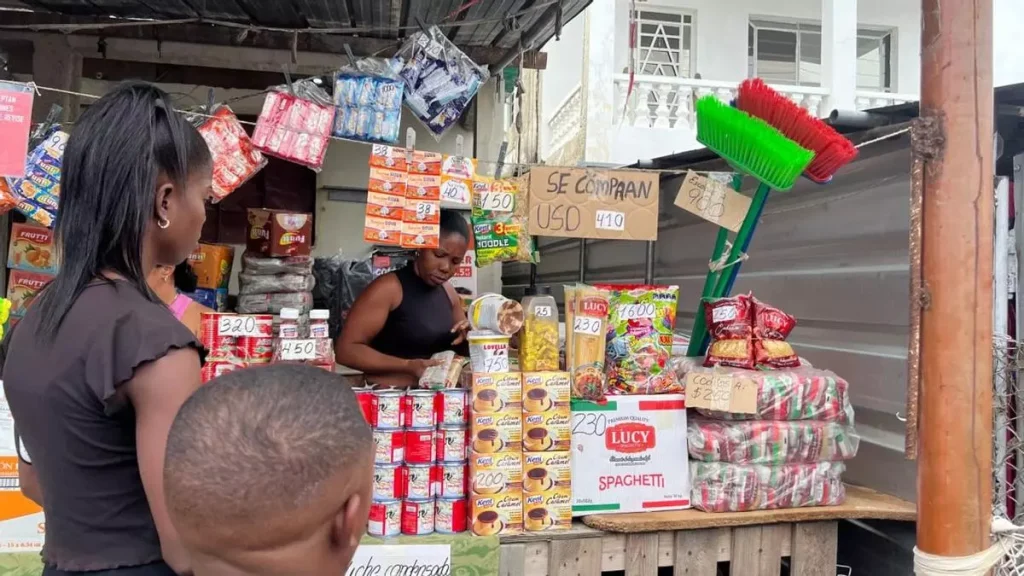
Even the Least Critical Economists Describe Cuba’s Coexistence of Several Exchange Rates as a ‘Very Serious Error’

In ‘La Joven Cuba’, Omar Everleny Pérez Villanueva, Ricardo González Águila, Carlos Enrique González and Arturo López-Levy fear the failure of foreign-exchange market regulations

Informal currency buying stand at the La Cuevita market in San Miguel del Padrón, Havana. / 14ymedio

14ymedio bigger14ymedio, Havana, December 19, 2025 — Confusion has been a constant on the first day of life of the floating exchange rate for the Cuban peso. “The banks in Regla are without power, so they’re closed. But they did tell me they’re already buying dollars,” says Alfredo, a Havana resident who had gone -unsuccessfully- to inquire about the service at Cadeca, a currency exchange house. For now, the exchange offices are not buying foreign currencies, and bank branches are the only option for selling US dollars, which in its first two days is at 410 pesos per dollar.

“In the morning it was packed, but that was just to withdraw the 3,000 pesos a day allowed on the card,” says Alfredo. He had to keep walking in search of an official dollar buyer.

It was to be expected that the value of the new rate would initially be set at a high level, though perhaps not so close to that of El Toque, after its demonization by the official press. It stands at 440 both yesterday and this Friday, only 7% more than the exchange rate of the Central Bank of Cuba (BCC).

“We recognize that the new rate announced will not be low; perhaps it is not what many expected, but it is the one that will allow the exchange market to work”

“We recognize that the new rate announced will not be low; perhaps it is not what many expected, but it is the one that will allow the exchange market to work,” the BCC’s macroeconomic policy director, Ian Pedro, told the press, echoing comments made weeks earlier by officials. Although they have endeavored to explain the many benefits the new rate will bring — for the population, the private sector and, ultimately, for the State — few economists agree. continue reading

There is no need to turn to the most critical voices, such as Pedro Monreal, Mauricio de Miranda Parrondo or Pavel Vidal, who have already left eloquent analyses. Criticism comes from closer quarters as well, beginning with Omar Everleny Pérez Villanueva, who has commented in La Joven Cuba with unusual force. “The existence of multiple rates is a very serious error in economic policy, because segmented markets will persist, and that is the same distortion that is intended to be eliminated. It has been announced that it is gradual, but in Cuba this term is terrifying, because prior experiences have not been successful,” he argues.

One problem, he notes, is linked to the $100-per-person purchase cap, “which will necessarily keep the informal market alive and likely push the rate higher.” Pérez Villanueva, who laments the lack of transparency on how 410 pesos per dollar was reached as a starting point, is categorical: “The real economy will prove that those intentions of a third rate will not lead to the results expected by the Government. The measures that are missing should focus on removing obstacles to the production of goods and services, and especially on resolving the issue of food production.”

It is something “extremely complicated in a declining economy with important macroeconomic imbalances”

Carlos Enrique González expands on the idea and underlines that this implementation is “extremely complicated in a declining economy with important macroeconomic imbalances.” He says setting it below the informal rate is a defect. “It is, at the very least, reckless, and it limits the ability to capture those fluctuations.”

Another element introduced by the expert is the low confidence that Cubans have in the BCC, although he does see something positive: “the possibility that exporting companies sell part of the foreign currencies they retain under closed financing schemes at the new exchange rate. It is very beneficial for them, and one can start talking about import substitution as a serious possibility rather than an exhortation.”

Ricardo González Águila, who also spoke to media close to officialdom but slightly critical, considers that allowing exporters to sell foreign currency at a higher exchange rate is “bold and necessary” although it has major risks. Among them is the BCC buying expensive dollars and selling them cheaply to State-owned enterprises, “with implications for macroeconomic balances.” The expert believes that if this announcement is not accompanied by a micro-economic reform that gives companies autonomy to set prices, wages and investments, the failure will continue.

Arturo López-Levy, for his part, welcomes the long-overdue recognition of the real value of foreign currency compared to the “administrative fiction” maintained until now, but he believes that a floating rate requires productive capacity and reserves that Cuba does not currently have. “Without a truly mixed economy, where the private and State sectors are integrated; without clear property rights; without a modern, redistributive, regulatory and developmental State; without orderly privatizations and credible competitive rules, Cuba will remain trapped in precariousness,” he notes.

The list includes the coexistence of multiple exchange rates, which creates a lack of transparency and makes it difficult to measure the real profitability of companies

These considerations do not differ much from those made by Pavel Vidal, who authors a new article for the Cuban Monetary and Financial Observatory (OMFi), in which he draws attention to how close the BCC rate is to what his team of experts has calculated. There are positive assessments in the article, notably the inclusion of private actors and individuals in this new market, the exclusion of State-owned companies — which limits the risk of imbalances — and the application of the rate to current accounts and not just cash.

However, it also contains many criticisms. The list includes the coexistence of multiple exchange rates, which creates a lack of transparency and makes it difficult to measure the real profitability of companies. In addition, the BCC recognizes a “managed float” based on discretionary criteria rather than supply and demand — an issue complicated by the fact that the military conglomerate Gaesa holds international reserves in secret accounts outside the country. Operational limits, coupled with the inability of branches to operate well due to technical and energy problems and the lack of confidence in the banking system do not help either.

“To the extent that the population and the private sector fail to fully satisfy their demand for foreign currency in the official floating market, a willingness to pay a spread or premium may be observed in the informal market in exchange for immediate and unrestricted access to foreign currency. As a result, it is expected that the informal market exchange rate will remain above the official floating rate, at least during the initial phase,” concludes the article.

Mauricio De Miranda Parrondo, for his part, has exploded on social networks with a long, hypercritical post about the measure, which, in short, he calls “new nonsense. The most sensible decision — and I will repeat it ad nauseum — is a unified exchange rate, starting from defining which exchange rate regime will be used. Do you peg the national currency to the dollar? to the euro? to a basket of currencies?” he asks. He insists that partial dollarization “will not improve living conditions and will deepen social differences.”

Translated by Regina Anavy

____________

COLLABORATE WITH OUR WORK: The 14ymedio team is committed to practicing serious journalism that reflects Cuba’s reality in all its depth. Thank you for joining us on this long journey. We invite you to continue supporting us by becoming a member of 14ymedio now. Together we can continue transforming journalism in Cuba.
‘It’s a Matter of Life and Death’: Transport Collapse Affects Haemodialysis Patients in Holguín, Cuba

Patients throughout the province are left without transport to receive treatment, while costs, pain and the risk of fatal complications increase.

Haemodialysis is an invasive, painful and exhausting process. / Facebook / Holguín Surgical Clinical Hospital

14ymedio bigger14ymedio, Miguel García, Holguín, December 21, 2025 — The suspension of transport for haemodialysis patients in Holguín province has alarmed family members, patients and healthcare personnel, who describe the current situation as “unsustainable” and “cruel”. Several people affected have told 14ymedio that for two weeks, the transport service managed by the Public Health Department has been paralysed due to a lack of fuel. The measure particularly affects those who live outside the provincial capital and must travel long distances to receive treatment that cannot be delayed or interrupted.

Until the suspension was announced, state buses picked up patients in different municipalities and took them to hospitals in Holguín where the sessions are held: the Lucía Íñiguez Landín Surgical Clinic and the Vladimir Ilich Lenin University General Hospital. But with the buses stopped, transport is now left to the patients and their families. The result is devastating: trips that cost thousands of pesos, journeys lasting over two hours in private vehicles and very difficult situations for patients in a delicate condition, some of whom are recovering from dengue or chikungunya.

“For me it’s a matter of life and death, it’s not something I can put off or leave for another day,” a 30-year-old woman who has been receiving haemodialysis for 12 years told this newspaper. On Saturday, she travelled from Rafael Freyre to Holguín, paying for the journey out of her own pocket. “I have to come three times a week. The transport alone is impossible for me to afford,” she says. The journey from her municipality, in a car with minimal conditions for a patient who leaves treatment in pain, costs more than 3,000 pesos per day with a family member. “I have to come accompanied because I leave with practically no strength. It’s crazy,” continue reading

she adds.

An electric tricycle to your doorstep inside the city is from 1,000 to 1,500 pesos a person.

Haemodialysis is an invasive, painful and exhausting process. It involves hours of connection to machines that replace kidney function and leave the patient in a state of extreme exhaustion. What’s more, many have other common conditions: diabetes, high blood pressure, chronic anaemia or infections. For those who live in the city of Holguín, the situation is not easy either.
Although the distances are shorter, an electric tricycle to your house door is from 1,000 to 1,500 pesos a person. If the patient needs three trips a week, the monthly expense is easily over 12,000 pesos for a single person, and more than 20,000 if you are with a companion.

“You feel completely abandoned,” says another patient who attends the Clínico, a centre that is treating fewer and fewer patients due to the deterioration of equipment at Lenin Hospital. “Many machines are broken, and those that work are practically never given a rest. So when there is also no transport, the whole process collapses.” In Holguín, it is estimated that over a hundred people need regular haemodialysis, according to calculations shared by patients’ relatives.

But fuel is not the only problem. The young woman from Rafael Freyre reports that medical supplies are also scarce and that “almost everything has to be bought outside.” “From needles to gauze and solutions, whatever we can’t find here we have to look for on Calle 13,” she says, referring to a street market in the city of Holguín where there are lots of informal medical supplies sellers.

Many machines are broken, and those that work are practically never given a break.

The most alarming detail concerns the use of haemodialysis needles: according to several reports collected by this newspaper, healthcare workers have had to reuse some needles up to five times per patient due to a lack of supplies. “This is dangerous because it can cause infections and is very painful because the needle is no longer in as good condition as it was the first time,” the woman explained. In a process as critical as haemodialysis, where any inadequate disinfection can lead to serious complications, this information is deeply worrying for patients and their families.

The crisis worsened during December, when hundreds of vehicles weren’t running due to a general fuel shortage in the region. People going to the municipal public health authorities are just told “there is no fuel at the moment” and that the service will restart “when possible”. According to patients, there is no specific date for when it will restart.

“Some people have had to suspend sessions because they have no way of travelling, and that can be fatal, it’s very dangerous,” warns a nursing technician who preferred not to give her name for fear of reprisals. Every session missed increases the risk of complications: poisoning of the body, heart failure, brain damage and even death. “This type of treatment cannot be interrupted, not even for a few days,” she explains.

“There are people selling furniture, clothes, phones, anything they can to pay for the car.”

In some municipalities, such as Mayarí and Banes, several family members are organising group trips in rented cars to share costs, but the financial burden remains enormous. “If it was difficult before, now it’s almost impossible,” summed up the son of a 64-year-old patient who requires three weekly sessions at the Lucía Íñiguez hospital. “My father leaves shaking after each haemodialysis session; he can’t go in just any car. It has to be decent transport that drops him off at home. And that costs money we don’t have.”

Although health authorities have not issued an official statement, medical sources confirmed to this newspaper that “alternatives are being sought” to transfer patients, without specifying when they might be available.

Meanwhile, families live in distress and debt. “There are people selling furniture, clothes, phones, anything they can to pay for the car,” says the young patient. “I don’t know how long people will be able to hold out.”

Translated by GH

____________

COLLABORATE WITH OUR WORK: The 14ymedio team is committed to practicing serious journalism that reflects Cuba’s reality in all its depth. Thank you for joining us on this long journey. We invite you to continue supporting us by becoming a member of 14ymedio now. Together we can continue transforming journalism in Cuba.
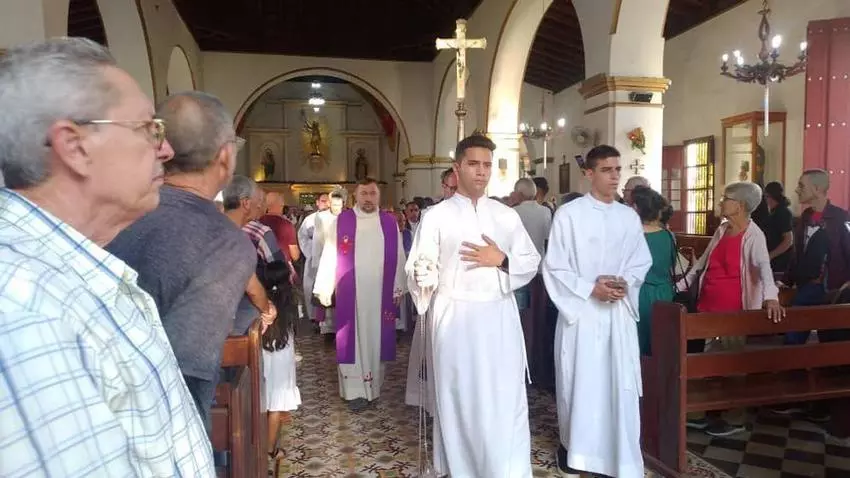
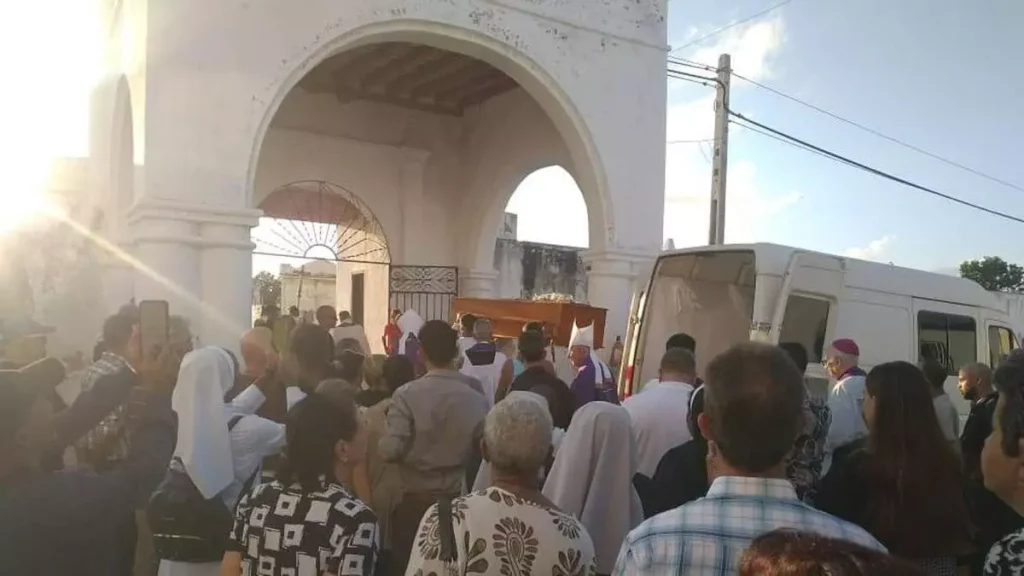
When the Last Bishop in Cuba Says Adiós

What were so many police officers doing there, at every street corner from the Cathedral to the cemetery, and so many motorcycles and police cars?

We still have much to discuss about the Cuba of our dreams, “with everyone and for the good of all.” / Courtesy of the author

14ymedio bigger14ymedio, Ghabriel Pérez, Holguín, 19 December 2025 — Héctor Luis Lucas Peña Gómez, Bishop Emeritus of Holguín and a central figure in the Cuban episcopate for decades, passed away in the early hours of December 18, 2025, at the age of 96. He was one of the signatories of the pastoral letter El amor todo lo espera [Love endures all things], one of the most significant documents of the Church in Cuba. His funeral Mass was held at the Cathedral of San Isidoro, presided over by the Archbishop of Santiago de Cuba, Monsignor Dionisio García Ibáñez.

It was September 1993. Cuba was experiencing years of great uncertainty when the bishops released those pages, which were read with devotion from church to church. And then, passed from hand to hand, they were read by everyone. Immediately, the regime condemned them, hurling every imaginable insult at our bishops and accusing them of calling for a “bloodbath.” Nevertheless, the pastoral guidance of the wise bishops continued to strengthen the Christian community.

In the early years of the 21st century, the courage of our bishop allowed the existence of the Bifronte Magazine , a literary project that triggered alarms in the Ministry of the Interior, and all the Holguin writers of the Hermanos Saíz Association were summoned to the police units as if continue reading

we were criminals.

In 2010, Monsignor Peña invited me to his home in the Peralta neighborhood for a conversation he wished to have with me, expressing his admiration after reading several of my articles published in Cocuyo, our diocesan magazine. It was the opportunity to leave him the twelve questions for an interview that I lost when I was putting together the magazine Pirámide, which mysteriously and digitally disappeared one day.

Clearly, my dearest Peña, you stirred the springs of a faith rooted in pure rebellion. / Courtesy of the author

That February night in 2010, my farewell embrace was interrupted by a television voice when, on the porch of the bishop’s mansion, we heard the voice of the National Television News, and Peña pulled me by the arm and sat me in a rocking chair. And so we were confronted with one of the most horrendous farces of official Cuban journalism: Gladys Rubio, speaking off-camera, was echoing the smear campaign surrounding the case of Orlando Zapata Tamayo, the prisoner from Banes who died after 85 days on hunger strike. The pro-government journalist didn’t hesitate to disrespect even the pain of this mother, Reina Luisa Tamayo, by broadcasting her voice, recorded with a hidden camera, as Reina “thanked” the medical staff for her son’s care at the hospital.

I share this anecdote because it was the beautiful time I saw tears in my bishop’s eyes, tears like those of a crucified Jesus, and because I have decided not to worry about those who claim that my writings, whatever they touch on, carry the burden of dissent, for I am indeed a dissident, and moreover, from my Roman Catholic perspective. Nothing is more dissident than the Christian faith, whomever doesn’t see it this way doesn’t know what it means to honor Christ. I am as much a dissident as the very soul of Monsignor Héctor Luis Lucas Peña Gómez and all the Cuban bishops, from the celebrated Félix Varela and Enrique Pérez Serantes to the one who these days, evangelically cries out for our suffering people.

So, I must mention in this farewell my annoyance at seeing so many police officers at every street corner from the Cathedral to the cemetery, and so many motorcycles and police cars—protecting what? Just a few weeks ago, a similar procession took place following the death of Father José Necuse, and there wasn’t a single police officer on duty.

Clearly, my dearest Peña, you stirred the springs of a faith with a purely rebellious root. Truly, I couldn’t have imagined this day any other way, even though today, unlike the time when Cuba bid farewell to Pedro Meurice, our Church is more infiltrated than ever, and 90% of our faithful have gone into exile.

The 96-year-old bishop, declared the longest-serving member of our episcopate, bids farewell. / Courtesy of the author

To make matters worse, you leave on days when the Cuban environment offers the image and reality of compatriots with a loss of mobility not seen since Cuba has been on the maps and the mouths of our people barely have breakfast and barely have the strength to sing or shout.

Nevertheless, we went to Mass for you, we went to your final resting place for you, a new “Father Las Casas” (the Holguín native knows!). And I say that your farewell doesn’t surprise me, but it does distress me. Many of our conversations were left unfinished, like that day when I discovered on a page from the 1950s that your town of Velasco was called “the breadbasket of the Antilles,” and you were surprised because it was much more than just the breadbasket of Cuba.

We still had much to talk about regarding the Cuba of our dreams, “with everyone and for the good of all,” and that conversation about Reinaldo Arenas that we never finished…

The 96-year-old bishop, declared the longest-serving member of our episcopate, bids farewell. And when the last bishop says goodbye, one cycle closes and another opens, one that implies a powerful interpretation for this Cuba of forbidden church bells, of the imprisonment of innocent voices, of a thirst for justice, and of an uncertainty similar to that denounced in the classic Cuban pastoral letters, which offered their early and first warning to the “new revolutionary government” on January 3, 1959, in a Santiago de Cuba plaza.

Your people, Monsignor, thank you and honor you and are honored to have had you as their pastor and celebrate you, as an evangelical spirit that will continue to guide the mysteries of the secular city, from your body deposited in the very center of the Chapel of the Merciful Christ of the Necropolis of Luz y Caballero.

____________

COLLABORATE WITH OUR WORK: The 14ymedio team is committed to practicing serious journalism that reflects Cuba’s reality in all its depth. Thank you for joining us on this long journey. We invite you to continue supporting us by becoming a member of 14ymedio now. Together we can continue transforming journalism in Cuba.

The Number of Tourists Visiting Cuba This Year Will Be Under Two Million.

The sector’s revenue will reach $917.4 million, almost 25% less than expected.

Tourism is fundamental to the Cuban government’s economic recovery plans. / 14ymedio

14ymedio bigger14ymedio/EFE, Havana, 18 December 2025 — On Thursday, the Cuban government acknowledged that the tourism sector is facing a complex situation and that it will not meet its forecasts for revenue and international visitors by around 25 percentage points in each case.

The Minister of Economy and Planning, Joaquín Alonso, took stock of the situation of the former engine of the national economy when he addressed the plenary session of the National Assembly of People’s Power. According to his department’s calculations, the sector’s revenue will reach US$917.4 million, 75.8% of the forecast, and the number of visitors will be around 1.9 million, 73.1% of the state estimate for the whole year.

If confirmed, this number of travellers would be the worst annual record for the Cuban tourism sector since 2003, not counting the three years most affected by COVID-19. By comparison, the island attracted some 4.6 and 4.7 million visitors in 2017 and 2018, respectively.

This would be the worst annual record for the Cuban tourism sector since 2003.

The State Office for Statistics and Information recently reported that between January and October, the country received a total of 1,477,892 international visitors, 19.9 per cent fewer than in the same period in 2024.

The weakness of Cuba’s tourism sector, which has been the island’s economic engine for years, is mainly due to the serious economic and energy crisis affecting continue reading

the country – which has an impact on services and the visitor experience – the reduction in air routes and US sanctions.

Tourism is fundamental to the Cuban government’s economic recovery plans, due to its contribution to gross domestic product and the foreign currency it brings in, which is usually among the most important sources of income, along with professional services and remittances.

Tourism is fundamental to the Cuban government’s economic recovery plans.

Currently, the situation of tourism in Cuba contrasts with that of similar destinations in the Caribbean, such as Punta Cana in the Dominican Republic and Cancún in Mexico, which are recording record numbers of visitors following the pandemic.

In this context, the crisis in Cuban tourism coincides with a broader political, economic and social deterioration, marked by prolonged power cuts, shortages of basic services and internal tensions.

In recent weeks, several countries have also issued health warnings that directly affect travel to the island. The Spanish Ministry of Foreign Affairs warned of a serious epidemic with simultaneous outbreaks of dengue and chikungunya, recommending that people refrain from travelling unless they have been properly vaccinated.

Russia, one of the main source markets for Cuba in recent years, issued a similar warning through its Foreign Ministry, advising extreme caution and even reconsidering travel, amid growing concern reflected in the press and by tourists already in the country.

____________

COLLABORATE WITH OUR WORK: The 14ymedio team is committed to practicing serious journalism that reflects Cuba’s reality in all its depth. Thank you for joining us on this long journey. We invite you to continue supporting us by becoming a member of 14ymedio now. Together we can continue transforming journalism in Cuba.

The Cuban Government Denies It Is Negotiating Maduro’s Departure With Washington

With these “blatant lies,” the “warmongering sectors” seek “pretexts to justify their aggression” against Venezuela, says the Foreign Ministry.

Nicolás Maduro surrounded by Venezuelan military personnel trained by members of Cuban intelligence. / VTV

14ymedio bigger14ymedio, Madrid, 9 December 2025 — The Cuban Foreign Ministry has described as “blatant lies” the information published by Reuters this weekend according to which the island’s regime is holding talks with the US to assess possible scenarios in the event of Nicolás Maduro’s departure from power in Venezuela. In a statement, the news is attributed to an attempt to “break the unity of the Venezuelan government and people against external aggression, as well as to involve Cuba in the construction of falsehoods and pretexts to justify its aggression”.

The text was published on Monday on the Foreign Ministry’s website under the title Statements by Deputy Foreign Minister Josefina Vidal Ferreiro, although according to the US news agency Associated Press, it is a response to its request for information regarding the Reuters report. The British agency cited two sources on the matter who said that “some members of the Cuban regime” discussed with their US counterparts what “a world without the Maduro regime” would look like.

“Cuba rejects as absurd and false the press reports claiming alleged contacts between Cuban officials and the United States Government to address internal matters that are solely the responsibility of the Venezuelan Government,” Josefina Vidal emphasises. According to her statements, these are “warmongering sectors” acting in the context of “aggression and threats of war” against continue reading

the “sister” Republic.

“Cuba rejects as absurd and false press reports alleging contacts between Cuban officials and the United States Government to discuss internal matters that are solely the responsibility of the Venezuelan Government.”

The statement also takes the opportunity to refute “attempts to tarnish its clean record of fighting for peace in Latin America and the Caribbean and against drug trafficking”. Without mentioning it, it is clear that it refers to the testimony of Hugo El Pollo Carvajal, the former head of Venezuelan intelligence currently imprisoned in the United States, who in a letter written last week accused the Cuban regime of being involved in a drug trafficking strategy against the United States.

“Specialised US agencies know first-hand how effective Cuba is in combating drug trafficking, as they benefited directly from this until Secretary of State Marco Rubio instructed them to unilaterally cut off dialogue and cooperation on migration and law enforcement,” argues Vidal.

Since Washington and Havana resumed bilateral relations in 2015 during the presidencies of Barack Obama and Raúl Castro, the parties began bilateral talks on drug trafficking, which continued during the first terms of Donald Trump and Joe Biden. This was preceded by the Coast Guard Liaison Office at the United States Interests Section in Havana in June 1999, when cooperation began. Despite disagreements and breakdowns in other areas, exchanges continued until just a year ago, in December 2024.

In his letter addressed to Donald Trump himself, Carvajal accused Chavismo of having organised, together with Havana, decades of narco-terrorism operations, cooperation with guerrilla groups and electoral manipulation, going so far as to claim that the plan “was suggested by the Cuban regime to Chávez in the mid-2000s”. He also claimed that Cuba was key in the creation of the so-called Soles cartel – whose existence Venezuela denies – and said that the island has provided strategic advice, including in the creation of criminal groups such as the Tren de Aragua.

Carvajal fled Venezuela in 2017 and spent several years in Spain, from where he was extradited to face justice in the United States, where he stands accused of four criminal charges that he has admitted to, including narco-terrorism.

As soon as the content of his accusations became known, officials from the Ministry of the Interior and Justice appeared at a press conference before the international media last Thursday to deny any involvement. “Cuba is not a producer or transit country for drugs,” they said, without referring to Carvajal’s letter.

Juan Carlos Poey, head of the Interior Ministry’s anti-drug agency, described the US military presence in the area as “a serious threat to Cuba’s security and sovereignty” and accused the neighbouring country of being responsible for “the synthetic drugs circulating today” on the island.

In a calmer tone, the deputy commander of the Border Guard recalled the years of cooperation between the governments on both sides of the strait. “We exchange information in real time with the US Coast Guard. We give them the position, course and characteristics of the drug-smuggling vessels,” he said.

In this case, the retired general adds nothing new about Cuba, merely stating that its intelligence services have trained Maduro and influenced his activities.

Now, another former Venezuelan military officer imprisoned in the US for drug trafficking, Cliver Antonio Alcalá Cordones, has written a second letter giving his version of events. In this case, the retired general adds nothing new about Cuba, merely stating that its intelligence services have trained Maduro and influenced his activities.

Alcalá Cordones, who in 2024 was sentenced to 260 months in prison for providing material support to the Colombian FARC guerrilla group in connection with arms trafficking and the protection of cocaine shipments, claims that siblings Delcy and Jorge Rodríguez, vice-president and president of the National Assembly, respectively, are the real masterminds behind the Soles cartel.

He adds that conversations and negotiations took place in Venezuelan prisons between senior officials of the regime and gang members, including those from the Tren de Aragua gang. Links with the Lebanese terrorist group Hezbollah, illegal mining to launder drug money, and electoral manipulation are also mentioned in the letter.

The Foreign Ministry’s statement now reinforces what was said at that press conference, which took place in a context of maximum pressure from Washington on Caracas. “Any attempt to use the current situation against the Bolivarian Revolution to cast doubt on the unwavering and firm support of our people and Government in these dangerous circumstances for Latin America and the Caribbean will be futile,” the text concludes.

Translated by GH

____________

COLLABORATE WITH OUR WORK: The 14ymedio team is committed to practicing serious journalism that reflects Cuba’s reality in all its depth. Thank you for joining us on this long journey. We invite you to continue supporting us by becoming a member of 14ymedio now. Together we can continue transforming journalism in Cuba.

Cuba’s Central Bank Sets the Floating Exchange Rate at 410 Pesos Per Dollar

In addition to the rates of 24 pesos to the dollar for state-owned enterprises and 120 for tourism, the Government creates a floating rate with the aim of capturing foreign currency from the informal market

On the same day as the official announcement, the independent media outlet ‘El Toque’ reported that its website had been blocked on the island following a cyberattack. / 14ymedio

14ymedio biggerThe Cuban economy awoke this December 18th to a long-announced development, carefully wrapped in the language of “graduality”: the Central Bank of Cuba (BCC) launched a third official exchange rate, a floating one, which began at 410 pesos per dollar and joins the existing rates of 24 pesos to the dollar for state-owned enterprises and 120 for tourism. The government presents the measure as the beginning of a transformation of the exchange market aimed at “organizing” the economy and moving toward future monetary unification. In practice, the country is entering an even more complex stage of exchange rate segmentation, amidst the worst economic crisis in recent decades

The president of the Central Bank of Cuba (BCC), Juana Lilia Delgado Portal, defended the decision in a special appearance broadcast on state television and reported by Cubadebate. She explained that the coexistence of multiple exchange rates has generated distortions, encouraged informality, and hindered banking and tax traceability. Recognizing a third segment, she admitted, responds to an objective reality that can no longer be ignored: the enormous gap between official rates and the real value of the dollar in an informal market that currently hovers around 440 pesos.

The government presents the measure as the beginning of a transformation of the foreign exchange market aimed at “bringing order” to the economy. / Cubadebate

The new system divides the foreign exchange market into three segments. The first, at 1×24, will remain reserved for centralized state allocations for goods and services considered essential, such as fuel, medicine, electricity, public transportation, and basic necessities. The second, at 1×120, will be maintained for certain entities with the capacity to generate foreign currency, particularly in the tourism sector. The third, which is new, introduces a floating rate that will be published daily by the Central Bank of Cuba (BCC) and will apply to individuals and non-state management entities.

The government insists that this is not improvisation, but a “responsible” strategy. An immediate unification, it argues, would cause a sharp devaluation of the peso, with even more severe inflationary effects than those currently being experienced and a further loss of purchasing power for wages. International experience, authorities reiterate, supports transitional schemes with multiple segments in economies continue reading

with accumulated imbalances.

Pedro Carbonell assured that the new floating rate will be based on “real transactions” and not on speculative expectations as, according to him, occurs in the informal market.

However, recent Cuban experience gives cause for skepticism. Since the failed Economic Reorganization Task [or as commonly known the Tarea Ordenamiento (“Ordering Task“)], launched in January 2021 with similar promises of rationality and stability, the Cuban peso has done nothing but lose value, while inflation has skyrocketed and real wages have plummeted. Four years later, the country has not only failed to achieve a currency that would “organize” the economy, but has also deepened partial dollarization and normalized an informal market that now sets the real price benchmarks.

The Director of Macroeconomic Policy at the Central Bank of Cuba (BCC), Ian Pedro Carbonell, asserted that the new floating exchange rate will be based on “real transactions” and not on speculative expectations, as he claims occurs in the informal market. The stated objective is to channel foreign currency flows through the financial system, provide a legal and transparent framework for buying and selling foreign currency, and reduce the risks currently faced by households and businesses.

On paper, the benefits seem clear. Exporters and foreign exchange earners will be able to sell part of their income at a more favorable rate than the one currently used in their accounting, obtaining more pesos to pay salaries, invest, and cover internal expenses. Non-state management entities will, for the first time, have legal access to purchasing foreign currency through their bank accounts, with a limit equivalent to 50% of their average gross income from the last quarter. And the public will be able to sell their dollars and euros at banks and Cadeca (exchange bureaus) at an “attractive” rate, without resorting to the informal market.

But the very design of the scheme reveals its limitations. The floating market will only sell the foreign currency it manages to buy. It will lack the backing of state reserves or a financial buffer to guarantee stability. In a country with a chronically insufficient supply of foreign currency, exports at historic lows, and tourism in freefall, the central question is not how will the rate be set, but how many dollars will actually be available.

On the same day as the official announcement, the independent media outlet El Toque reported that its website had been blocked on the island following a cyberattack.

The government admits that the informal market will not disappear immediately. In fact, the gap between the new rate and the street price will be the true measure of its effectiveness. If the floating rate falls far below the real value of the dollar, the incentive to operate outside the system will persist. If it gets too close, inflationary pressures will be inevitable.

Adding to this scenario is a revealing political context. On the same day as the official announcement, the independent media outlet El Toque reported that its website had been blocked on the island following a cyberattack. For weeks, official media and government officials have accused this project of “economic terrorism” for publishing the informal exchange rate. The government seems to be fighting the symptom—the inconvenient reference point—while being forced to acknowledge the disease: a national currency that lacks credibility.

The Central Bank of Cuba’s (BCC) strategy also includes a promise to stabilize and strengthen accounts in freely convertible currency (MLC), a dollar-based virtual currency that the state itself introduced and then effectively devalued. Restoring its functionality in businesses is now presented as part of the new exchange system, although for many Cubans, the MLC remains a stark reminder of inequality and exclusion.

Authorities speak of transparency and continuous information in the coming days. But recent history weighs heavily. Without profound structural reforms, without a real increase in production and exports, and without confidence in the rules of the game, no exchange rate—fixed or floating—can be sustained. The new exchange rate architecture attempts to bring order to a fractured system, but it does not solve the underlying problem: a Cuban peso that remains adrift in an exhausted economy.

____________

COLLABORATE WITH OUR WORK: The 14ymedio team is committed to practicing serious journalism that reflects Cuba’s reality in all its depth. Thank you for joining us on this long journey. We invite you to continue supporting us by becoming a member of 14ymedio now. Together we can continue transforming journalism in Cuba.
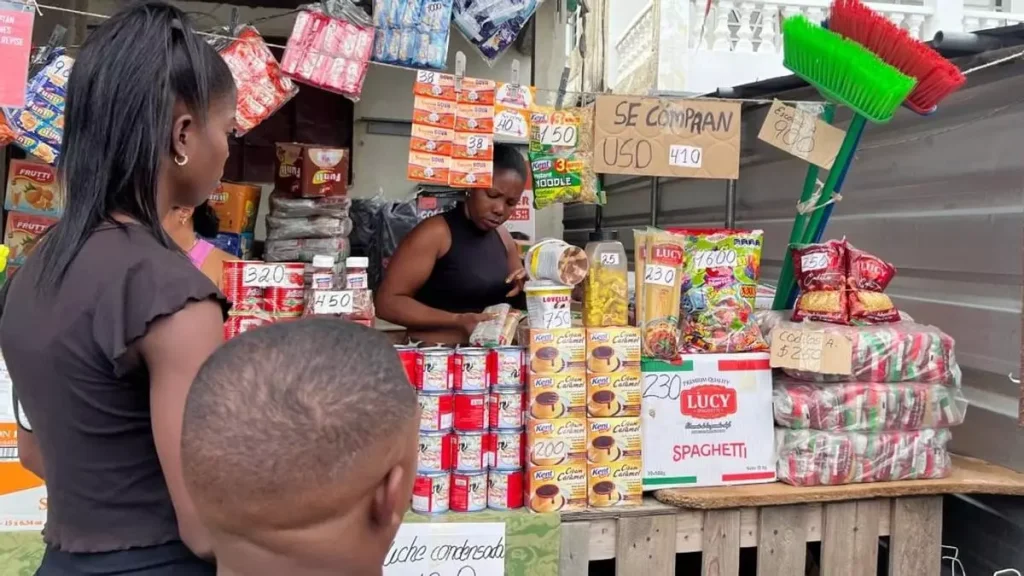
Pérez-Oliva, Fidel Castro’s Grandnephew, Is Already a Member of Parliament and Will Be Eligible To Run for the Presidency of the Republic

  • Rubén Remigio Ferro, president of the Supreme Court that tried former minister Alejandro Gil, is dismissed
  • “The outlook for the economy is one of decline,” says Manuel Marrero in his speech to Parliament.
Session of the National Assembly of People’s Power this Thursday. / Granma

14ymedio bigger14ymedio, Havana, December 18, 2025 –The main news from Thursday’s session of the National Assembly of People’s Power (ANPP) is the appointment of Óscar Pérez-Oliva Fraga, Raúl and Fidel Castro’s grandnephew, as a deputy, which makes him eligible to run for the Presidency of the Republic. The decision was to be expected, after the government announced his appointment as Deputy Prime Minister of the Republic on 18 October.

The announcement was made by Esteban Lazo, President of Parliament, as part of the election of vacant seats. He also reported the resignation requests of Homero Acosta, Secretary of the ANPP and the Council of State, and Ulises Guilarte, former Secretary General of the Cuban Workers’ Central Union. With the new deputies, there are now 464, leaving six vacant seats to be filled.

It was, moreover, President Miguel Díaz-Canel who announced the “release” of Rubén Remigio Ferro as president of the People’s Supreme Court, which recently tried former minister Alejandro Gil for espionage and corruption. He will be replaced by Oscar Manuel Silvera Martínez, Minister of Justice, who in turn will be replaced by the first deputy minister of that portfolio, Rosabel Gamón Verde.

Otherwise, the meeting, attended by Raúl Castro via videoconference, focused on the country’s serious systemic crisis, the plan to reverse it, and the difficult outlook for the coming year.

In his lengthy speech, Prime Minister Manuel Marrero reviewed all the measures taken to rectify the situation and made clear the “challenges” ahead. The main one is attracting foreign currency. “The outlook for the economy is one of decline,” continue reading

he acknowledged.

He repeatedly emphasised that the measures are being implemented “under adverse conditions: lack of foreign currency, energy instability, inflation and organisational constraints”.

Nothing he said was new, including the establishment of a new floating exchange rate on Wednesday night, the third to be implemented in the country, aimed at “transforming the foreign exchange market”. Marrero recalled that the government has set 106 “specific objectives” and that of the 90 “directions associated with the 10 general objectives, 51 have been achieved and the rest are in progress”.

He repeatedly emphasised that the measures are being implemented “under adverse conditions: lack of foreign currency, energy instability, inflation and organisational constraints”. And, of course, he framed his words in the global context of “moderate economic growth” and a “regional scenario marked by US policy, the Monroe Doctrine and actions against Venezuela”. The island faces, he excused with the same old argument, “the cumulative impact of US economic, trade and financial policy, with reinforced sanctions and extraterritorial effects”.

Although some indicators improved, such as the budget deficit, he said, “difficulties persist in stabilising the currency and purchasing power”. Inflation, for example, is still above 14.95%, and tourism, the country’s third largest source of income, remains in a “complex situation”.

His assessment was a little misleading. The Minister of Economy and Planning, Joaquín Alonso, when taking stock of the situation in the sector, said that the number of international travellers will be around 1.9 million people, almost 30% less than expected, as will the revenue that will be achieved: 917.4 million dollars. If confirmed, this number of travellers would be the worst annual record for the Cuban tourism sector since 2003, not counting the years corresponding to the COVID-19 pandemic. In 2018, the island attracted 4.7 million visitors.

Alonso also estimated “modest” economic growth of 1% for 2026, the same as was projected for this year and which will not be achieved. The country’s president, Miguel Díaz-Canel, acknowledged this weekend that in the first three quarters of the year the economy had contracted by more than 4%, although he did not provide further details.

Marrero asserted that, “amid complex financial conditions,” $1.15 billion has been invested in energy.

The modest improvement in the outlook is due, the minister argued, to a more optimistic forecast for the tourism and foreign sectors, led by sales of services abroad (mainly in the medical sector).

As for inflation, the minister indicated that the forecast is for a 10% rise in prices in the formal market (the informal market is experiencing higher increases), which would be about five percentage points below the year-on-year rate recorded in recent months.

The productive outlook is also dire, although no new data was provided. Agriculture, industry, and the sugar sector continue to be a mess. The only thing growing, albeit at a slow pace, is the number of small private enterprises. With 816 new MSMEs, there are now a total of 11,866 in the country.

Regarding another pillar of the serious crisis, energy, Marrero claimed that, “amid complex financial conditions,” 1.15 billion dollars have been invested in increasing electrical capacity. Among the “recovered” capacity are the 778 megawatts (MW) provided by the 41 photovoltaic solar parks synchronised to the system, “which manage to produce more than 30% of the country’s total generation during peak hours of irradiation”, i.e. only during the day.

The Prime Minister promised to end the year with an additional 1,000 MW of “renewable capacity”.

The Prime Minister promised to end the year with an additional 1,000 MW of “renewable capacity”, although he acknowledged the 2,000 MW deficit reached in recent weeks, “which is causing 24-hour service disruptions, exacerbating public discontent and damaging the economy”.

The regular end-of-year session, which normally brings together MPs in Havana for two or three days, is being held in a reduced format and by videoconference due to the deep crisis in which the island finds itself.

The country is in a “critical” situation, Cuban President Miguel Díaz-Canel acknowledged on Saturday in his speech to the plenary session of the Central Committee of the Communist Party of Cuba (PCC).

The Parliament’s agenda includes, first and foremost, a review of the implementation of the Government Programme to Correct Distortions and Revitalise the Economy, the Cuban Executive’s anti-crisis plan, consisting of budget cuts, reforms and measures to increase state foreign currency earnings.

In addition, the country’s macroeconomic performance will be reviewed, which between 2020 and 2024 lost 11% of its GDP and will also close this year in negative territory due to the collapse of agricultural and industrial production, the lack of supplies and prolonged daily power cuts of 20 or more hours in large areas of the country.

“Yes, there is a huge material shortage in Cuba,” Díaz-Canel acknowledged before the plenary session of the PCC Central Committee, where he recognised that despite the “fatigue”, “uncertainty” and “irritation in social sectors”, “there are no easy or quick solutions” to the multiple crises afflicting the country.

Translated by GH

Two Cubans Trying To Enter Brazil Die in a Traffic Accident

Seven migrants from the island were injured in the accident that occurred on Monday afternoon in the state of Roraima.

The police reported that the accident occurred in an attempted illegal immigration to Brazil. / Brazilian Federal Highway Police

14ymedio bigger14ymedio, Miami, December 17, 2025 — A serious traffic accident on Monday afternoon in the state of Roraima, in northern Brazil, left two Cuban migrants dead and seven injured, including children, as they tried to enter the South American country illegally, according to the Federal Highway Police (PRF).

It happened on the BR-401 highway, near the municipality of Bonfim, on the border with Guyana, when a PRF patrol detected a Chevrolet Prisma vehicle with ten occupants — nine Cubans and one Brazilian — heading towards Boa Vista. When he saw the police, the driver made a U-turn and drove off at high speed down the road. 

According to the official report, the chase included dangerous manoeuvres and reckless overtaking, as well as driving along the hard shoulder of the road. The vehicle finally turned onto a dirt road, where it lost control and overturned, ending up on its roof. When the police arrived at the scene, they found two of the Cuban migrants dead and the others seriously injured, including two children aged 3 and 8, as well as one person with minor injuries.

The authorities have not revealed the identities of the people killed, but media reports indicate that they are a 26-year-old woman and a 16-year-old boy.

The authorities have not yet revealed the identities of the people killed, but local media reports indicate that they are a 26-year-old woman and a 16-year-old boy. Most of the injured were taken to nearby medical centres, where they are receiving treatment. One of the occupants told the PRF that each Cuban paid $500 to enter Brazilian territory illegally.

The police reported that the accident occurred in an attempted illegal immigration to Brazil. There have been more of these in recent years on the country’s northern border, especially in Roraima, with the increasing number of migrants from different countries in Latin America and the Caribbean.

Although historically the migration crisis in the region has been mainly to do with Venezuelan refugees, the COVID-19 pandemic, the closure of legal border crossings, and difficulties in obtaining documents have led migrants to attempt to enter via informal routes through trails near Bonfim and Pacaraima. Often they use clandestine transport networks, exposing themselves to dangerous conditions.

Many Cubans choose irregular routes in the hope of reaching other regions of the country in search of job opportunities and better living conditions.

Brazil does not have a formal programme for Cuban migrants, unlike its one for Venezuelan citizens, except for certain exceptional naturalisation or reception mechanisms, so many Cubans choose irregular routes in the hope of reaching other regions of the country in search of job opportunities and better living conditions.

Migrant and human rights organisations have highlighted the vulnerability of those who cross Brazilian borders without legal protection and the need for humanitarian mechanisms to reduce exposure to dangers such as the one that claimed the lives of the two Cubans on Monday.

Translated by GH

____________

COLLABORATE WITH OUR WORK: The 14ymedio team is committed to practicing serious journalism that reflects Cuba’s reality in all its depth. Thank you for joining us on this long journey. We invite you to continue supporting us by becoming a member of 14ymedio now. Together we can continue transforming journalism in Cuba.

Democratic Congressman Denounces Cuban Interference With Florida Radio Stations Using “Harmful Communist Propaganda”

Darren Soto introduces a bill to help those stations block signals coming from the island “for hours every night”

Congressman Darren Soto says many small stations lack the resources to block those signals / Facebook

14ymedio bigger14ymedio, Miami, December 16, 2025 — U.S. Congressman Darren Soto announced this Tuesday the introduction of a bill aimed at stopping signal interference coming from Cuba on Florida radio stations in order to “spread communist propaganda.”

The Democrat said that Cuba’s official radio “broadcasts communist propaganda for several hours every night and affects the transmission of local stations,” especially on the AM band.

The initiative was promoted by Congressman Soto, from central Florida, who warned about the alleged impact these interferences are having on stations with limited resources and—according to him—on the communities they serve.

A local radio station in central Florida regularly sees its signal interfered with by Cuban state radio

“At this moment, a local radio station in central Florida sees its signal regularly interfered with by Cuban state radio, which for hours every night broadcasts harmful communist propaganda to Floridians,” the lawmaker stated.

Soto also underscored the economic difficulties faced by the affected stations.

“Many small AM radio stations in Florida and Alaska do not have the financial resources necessary to block these signals,” he said.

The bill, called the Stop Communist Radio Act, seeks to instruct the Federal Communications Commission (FCC) to establish a grant program to support stations suffering harmful interference from foreign signals originating in communist countries such as Cuba, Russia, and North Korea.

Translated by Regina Anavy

____________

COLLABORATE WITH OUR WORK: The 14ymedio team is committed to practicing serious journalism that reflects Cuba’s reality in all its depth. Thank you for joining us on this long journey. We invite you to continue supporting us by becoming a member of 14ymedio now. Together we can continue transforming journalism in Cuba.
Cuba Disguised Aid for the Chikungunya Epidemic in a Request for Help With Hurricane Melissa

The order included mosquito repellent products during the peak of the crisis

The government has not formally declared any type of health emergency. / EFE

14ymedio biggerEFE (via 14ymedio), Havana, December 17, 2025 — The Cuban government included supplies to fight the chikungunya and dengue epidemic affecting the island in an international appeal for aid following the devastation of Hurricane Melissa, but without specifying its true purpose, according to documents obtained by EFE.

The Ministry of Public Health sent a list to some embassies and United Nations agencies on the island that included large quantities of chemicals to combat mosquitoes, the vector for the transmission of both diseases.

That list for Melissa is dated October 27 — right in the peak week of the epidemic, according to official statistics released weeks later — even though the Cuban government would take 17 more days to first classify the outbreak as an “epidemic.”

In fact, the government has not formally declared any kind of health emergency, despite the evident strain on the hospital system. The number of cases registered in the epidemic has already surpassed 70,000, and the death toll has reached continue reading

47—mostly minors—according to the Ministry of Public Health itself.

Most of the deaths have occurred among minors

The list, titled “Major Needs for the National Health Service’s Response to Hurricane Melissa,” is a four-page table that includes multiple health-related chapters.

Under the heading of “Hygiene and Epidemiology,” the Ministry listed 200 tons of the larvicide Abate at 1%, and 40 tons of the insecticide cypermethrin at 25%. Both chemicals are particularly effective in combating mosquito infestations.

Independent experts consulted by EFE – both Cuban and foreign, from the academic and business worlds – agree that these amounts are very high and seem more intended for a national campaign than to contain possible mosquito breeding grounds after a hurricane.

They point out that for indoor fumigation with bazookas, the most common method in Cuba, between 5 and 10 milliliters of cypermethrin are used per liter of diesel. Consequently, the requested amount would be enough for between 666,000 and 1,333,000 bazookas.

In the case of Abate, the usual dosages vary between 5 and 50 kilos per hectare depending on the depth and contamination of the water. At an average of 20 kilos per hectare, the requested amount would be enough to treat 100 square kilometers of relatively deep water with organic matter.

The government has acknowledged that the crisis the country is suffering has affected the fumigation campaigns.

The Cuban government has acknowledged in recent weeks that the crisis the country is suffering has affected traditional fumigation campaigns and that the country has had problems with supplies and personnel to carry them out.

EFE contacted the Cuban government to inquire about the list, but has not yet received a response. The media also requested an interview with an official from the Ministry of Public Health, but this request has also gone unanswered.

To date, no country or multilateral agency appears to have responded to the Cuban request on this specific point.

____________

COLLABORATE WITH OUR WORK: The 14ymedio team is committed to practicing serious journalism that reflects Cuba’s reality in all its depth. Thank you for joining us on this long journey. We invite you to continue supporting us by becoming a member of 14ymedio now. Together we can continue transforming journalism in Cuba.

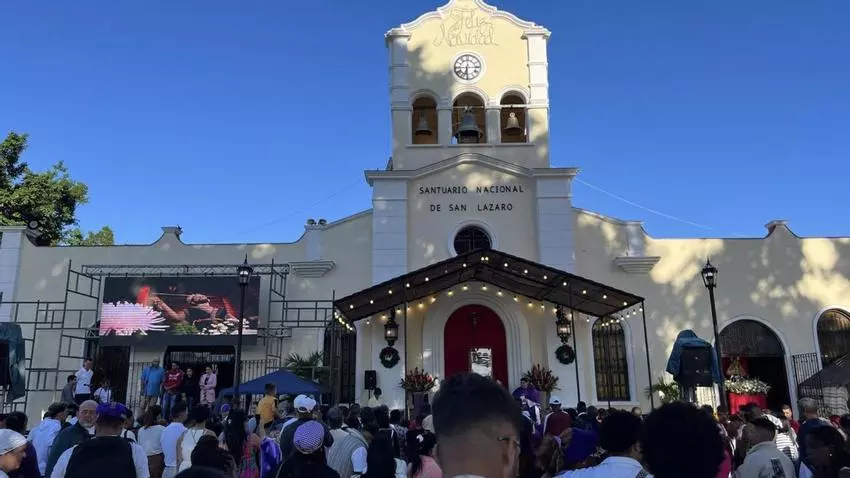
Despite Epidemics and the Economic Crisis, Cuban Devotees of Saint Lazarus Flock to El Rincón.

From the sanctuary and dressed in purple, the head of the US Embassy, ​​Mike Hammer, calls for the freedom of Cubans.

Residents of the La Jata neighborhood in Guanabacoa celebrated Saint Lazarus early on the eve of his feast day. / 14ymedio

14ymedio bigger14ymedio, Dario Hernandez, Havana, December 17 2025 —  As they have done every year since 2001, residents of the La Jata neighborhood in Guanabacoa celebrated Saint Lazarus early on the eve of his feast day. On Tuesday afternoon, neighbors gathered in the streets and walked, tapping their hands, until they reached the home of the legendary Enriquito, a renowned babalao (priest) who founded the Cuban Association of the Sons of Saint Lazarus in 1957 and led this tradition until his health failed him in 2016, shortly before his death.

Some of the faithful walked barefoot, and many others on their knees. / 14ymedio

A few hours later, at dawn on Wednesday, people of all ages began arriving at the El Rincón sanctuary. Some residents told 14ymedio that in previous years the pilgrimage was much larger. Despite the lack of public transportation, people were able to travel in shared taxis from Fraternity Park to the Cupet gas station in Santiago de las Vegas, from where a five-kilometer procession with hundreds of pilgrims began. Some of the faithful walked barefoot, and many others on their knees.

As always, and despite the deep crisis gripping the country, the road was lined with vendors selling religious images, flowers, and candles. Candle prices varied depending on size, ranging from 100 to 200 pesos, while flowers started at 500 pesos. As in previous years, the police presence was noticeable, with at least one officer on every corner. People were also seen drinking alcohol.

Thousands of Cubans flocked to the National Shrine of Saint Lazarus in El Rincón this Wednesday / 14ymedio

Once at the sanctuary, the Mass officiated by the Archbishop of Havana, Juan de la Caridad García, was considerably delayed. Every five minutes, people crawled in, mainly women, most of them barefoot mothers accompanied by dogs. Lighting candles was not permitted until the Mass had concluded.

“Every devotee of Saint Lazarus knows that promises must be kept,” Osmara told this newspaper, while, dressed in purple, she begged for coins from everyone who passed by.

After the Sanctuary of Our Lady of Charity of El Cobre, El Rincón is the second most important pilgrimage site in Cuba. Its church is dedicated to Saint Lazarus, a Catholic figure syncretized with Babalú Ayé, an orisha of the Yoruba pantheon to whom the healing of illnesses, particularly skin diseases, is attributed. This devotion has developed over time within Cuban popular religiosity.

The temple was founded over a spring of water considered to have healing properties. Even today, many worshippers bathe in this water or take away small blessed bottles as part of their vows. A few meters away is the former Royal Hospital of San Lázaro, which began as a leper colony and still functions today as a hospital specializing in dermatology.

After the Sanctuary of Our Lady of Charity of El Cobre, El Rincón is the second most important pilgrimage center in Cuba. / 14ymedio

The celebration of Saint Lazarus is undoubtedly part of Cuba’s deepest cultural and spiritual fabric, where Catholicism, Afro-Cuban religious practices, and expressions of popular faith coexist. For this reason, the head of mission of the United States Embassy, ​​Mike Hammer, was present, never missing an opportunity to connect with Cubans on the street and share videos expressing his support for freedom: “On this significant day, I wanted to reiterate my call for freedom and respect for the fundamental rights of all Cubans.”

Beyond the island, among the diaspora, the tradition has also taken root. On the other side of the Gulf, in Hialeah, the large Cuban community has built its own shrine inspired by El Rincón. Every December, hundreds of emigrants flock there to give thanks for favors received and fulfill promises to the saint, replicating a tradition that, even far from Cuba, continues to define Cuban faith and identity.

In Miami, 66-year-old Lourdes sent candles and purple clothing in advance so her family, who live in San Miguel del Padrón, could make the pilgrimage to El Rincón. The migrant, who has been in the United States for three years, having arrived across the border, asked her relatives to pray for her before the image of Saint Lazarus. Her plea to the saint was brief and direct: “that they don’t deport me and that they finally grant me residency.”

____________

COLLABORATE WITH OUR WORK: The 14ymedio team is committed to practicing serious journalism that reflects Cuba’s reality in all its depth. Thank you for joining us on this long journey. We invite you to continue supporting us by becoming a member of 14ymedio now. Together we can continue transforming journalism in Cuba.

New Cases of Dengue and Chikungunya Fall by 20%, but Cuba Remains “In the Epidemic Zone”

The government has not released case numbers, although the EFE news agency estimates 1,480 new cases of dengue this week based on available data.

Problems carrying out effective fumigation have influenced the epidemic. / Girón

14ymedio bigger14ymedio (via EFE), Havana, December 16, 2025 –- The Cuban government said this Monday that the chikungunya and dengue outbreak in Cuba is moving “toward better control,” although “the curve” on the graph of new cases “is still in the epidemic zone.”

Deputy Minister of Public Health Carilda Peña made these statements on state television, where she noted—without providing absolute figures—that new cases of nonspecific febrile syndrome (high fever is the first symptom of both arboviral diseases) have been reduced by 21% compared to the previous week.

With regard to dengue, she acknowledged that the incidence rate last week rose to 15.25 infections per 100,000 inhabitants. This, over a total population of 9.7 million people—according to the National Office of Statistics and Information (ONEI)—would amount to 1,480 new infections.

With regard to dengue, she acknowledged that the incidence rate last week rose to 15.25 infections per 100,000 inhabitants

The Pan American Health Organization (PAHO), which compiles official Cuban figures, indicated last week that from the beginning of the year through the end of November, the total number of infections in Cuba in 2025 from this disease had reached 25,995. continue reading

Regarding chikungunya, Peña also did not provide figures on new or total cases, but stated that the number of new infections has been reduced by 20%. On Friday, official figures spoke of 44,604 infections.

The deputy minister also made no reference to the number of deaths from the epidemic, which on Friday had risen to 47, according to official figures. Two-thirds of them were minors.

The Ministry of Public Health’s (Minsap) attention is focused on “newborns, infants, pregnant women, and young people,” Peña said.

The number of patients in intensive care fell to 42, of whom 12 are in critical condition (mostly minors). “The trend continues to be downward,” the deputy minister added.

EFE has contacted the Cuban government to gain access to more data on the epidemic, but so far has received no response.

EFE has contacted the Cuban government to gain access to more data on the epidemic, but so far has received no response

Health authorities have reiterated that the number of infected people is underreported, because many patients do not go to medical centers, mainly due to the deterioration of public services on the island.

The Cuban government first acknowledged on November 12 that the country was suffering an epidemic of chikungunya and dengue, despite the fact that the first cases were diagnosed in July and that infections had surged in September and October.

The epidemic has found fertile ground in Cuba due to the severe economic and energy crisis the country is experiencing, which has led to a notable deterioration of public services.

Control measures like mass fumigation against mosquitoes and systematic garbage collection limit prevention, and patient care is affected by the lack of tests to confirm the type of illness, medications and other medical supplies.

Translated by Regina Anavy

____________

COLLABORATE WITH OUR WORK: The 14ymedio team is committed to practicing serious journalism that reflects Cuba’s reality in all its depth. Thank you for joining us on this long journey. We invite you to continue supporting us by becoming a member of 14ymedio now. Together we can continue transforming journalism in Cuba.

In Cuba, Stealing 25 Liters of Gasoline Is More Serious Than Diverting Millions of Barrels of Oil

In the face of the U.S. military deployment in the Caribbean, five tankers from Russia’s shadow fleet turn around

The Boltaris—in the image under its former name—turned back while heading to Venezuela with Russian naphtha. / Ivan Zelepukhin

14ymedio biggerMadrid, December 16, 2025 –The commission of a minor crime has cost two workers at the Matanzas Fuel Trading Company a public humiliation that includes the dissemination of their faces and full names as if they were two dangerous criminals. That is just the appetizer, because the harsher punishment is still to come if, at the trial awaiting them, they are charged with sabotage—one of the most serious crimes in the penal code—carrying sentences of between four and ten years in prison.

The news was spread this Monday by the pro-government account Con todos la victoria [With all of us the victory], dedicated to showcasing small police “successes” in the province of Matanzas, which labeled the incident a “totally shameful act.” In the post—accompanied by photographs of the alleged thieves—it is reported that authorities surprised the shift supervisor and a security guard from the company “with their hands in the gasoline.”

The workers had siphoned from one of the tanks “25 liters of gasoline carefully packed in nylon bags, a product in high demand and in short supply among the population these days,” when “their mission was precisely to protect those resources destined for the economy and the well-being of the population.” For this reason, they say, “they earned themselves a judicial process.”

They were luckier than a driver for the state company Transcupet, who was caught “milking” fuel on the national highway near Jagüey Grande.

They were luckier than a driver for the state company Transcupet, who was caught “milking” fuel on the national highway near Jagüey Grande. In his case, although his first and last names were also released, there was no photo showing his face—despite the fact that he was extracting 100 liters of diesel continue reading

from the tank. The account once again seeks to teach a lesson: “The move, which seemed clever, ended in a setback, a lesson that makes it clear that, no matter what tricks are invented, what belongs to others remains off-limits.”

It cannot be denied, judging by the comments on both posts, that there are voices calling for a heavy hand against those who “steal from everyone,” but the staunch defense of the three individuals is the general tone. “In Cuba people live off theft in all the companies, because the salary is not worthy of any human being,” one comment said. References to unlivable wages are repeated ad nauseam, and there is no shortage of those who consider corruption inherent in everyday life in Cuba. “In Cuba everything is illegal; from the moment you get out of bed you’re thinking about how to survive.”

Fuel theft has battered the island for many years, and the authorities do not know how to put a stop to it: neither exemplary trials nor increasingly harsh sentences have managed to reduce the number of such thefts. A few months ago, on a program by Humberto López on Cuban Television devoted to this crime, it was stated that in the country there were perfectly oiled systems— involving operators, brigade chiefs, executives, and guards—through which “as much as 20,000 or 30,000 liters of fuel” were lost every day.

Under current conditions, when the Electric Union reports a daily deficit of about 1,000 megawatts due solely to the lack of distributed generation—most of it because of fuel shortages—pointing the finger at someone who takes 25 liters cannot hide the fact that the Cuban government itself diverts millions of barrels of oil sent by Venezuela to the Chinese market, instead of using them to produce electricity to reduce the 24-hour blackouts.

This Monday the island again experienced a scandalous generation deficit, with 2,007 MW at peak hour. Despite the fact that during the best hour of sun the photovoltaic parks delivered 523 MW, the morning’s generation was only 1,330 MW for a demand of 2,300 MW. Things logically worsened in the late afternoon and evening, when only 1,257 MW were being produced for a demand of 3,089 MW—more than 930 MW of the deficit due to lack of fuel.

The situation could become more complicated given the direction things are taking at the state oil company PDVSA. To the data made public this Monday about buyers demanding discounts—seeing that their purchases could be seized by the United States after what happened with the confiscation of the Skipper—new information is added. According to Reuters, an oil tanker carrying Russian naphtha—used to refine heavy Venezuelan crude—and four large tankers have turned around since that vessel was seized.

The first of these is the Boltaris, flying the flag of Benin, which was carrying some 300,000 barrels of Russian naphtha to Venezuela and turned back over the weekend.

The first of these is the Boltaris, flying the flag of Benin, which was carrying some 300,000 barrels of Russian naphtha to Venezuela and turned back over the weekend. It is now, the agency reports, heading to Europe without having unloaded. The other four vessels, scheduled to load in Venezuelan ports in the coming weeks, have also turned back, leaving many of the country’s exports paralyzed, with the exception of those shipped by Chevron, the U.S. company authorized to operate in Venezuela.

This Monday, the PDVSA stated that it had been the victim of a cyberattack that halted its administrative and operational systems, including oil deliveries.

The sanctions imposed on hydrocarbons during Donald Trump’s first term caused a 99% drop in foreign-currency revenues between 2014 and 2020, and the economy stopped generating $642 billion.

In January of this year, crude production surpassed one million barrels per day (bpd) for the first time since June 2019, with the pumping 1,031,000 bpd. The amount increased to 1,142,000 bpd in November, although in 1998—one year before Chavismo came to power—Venezuela produced 3.1 million bpd, according to a report by the Organization of the Petroleum Exporting Countries (OPEC). Two years later, Chávez and Castro signed the agreement that ensured Cuba a stable supply, which sustained it for decades, even as production declined, especially since 2017, but now things are taking an even worse turn.

Translated by Regina Anavy

____________

COLLABORATE WITH OUR WORK: The 14ymedio team is committed to practicing serious journalism that reflects Cuba’s reality in all its depth. Thank you for joining us on this long journey. We invite you to continue supporting us by becoming a member of 14ymedio now. Together we can continue transforming journalism in Cuba.
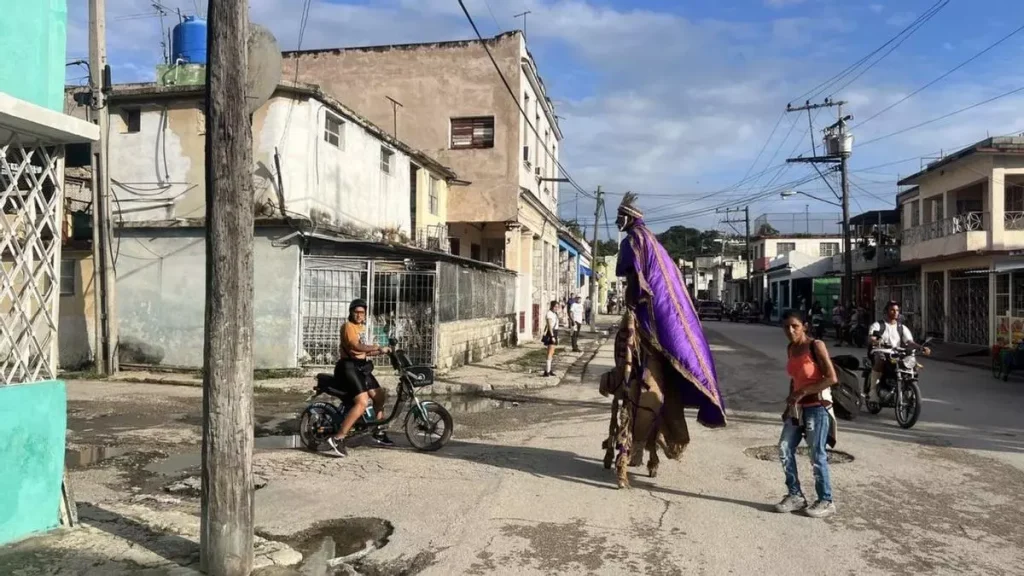
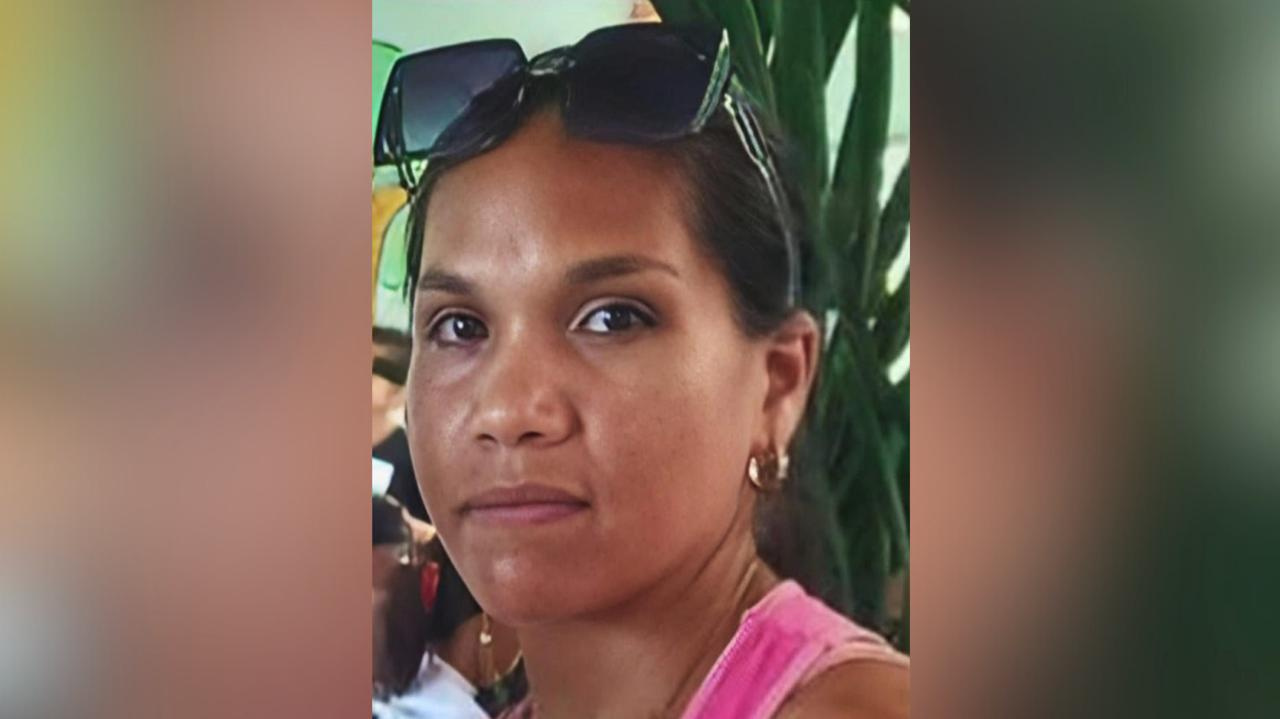
Recent Femicide in Cienfuegos Raises the Total Number of Gender-Based Murders in Cuba This Year to 19

Photo of Carrasco taken from social media./ Facebook

14ymedio bigger14ymedio, Havana, 27 July 2025 [delayed translation]- The independent platforms Yo Sí Te Creo in Cuba and Alas Tensas confirmed on Saturday a new femicide on the island, that of Yailín Carrasco, 29, who was murdered by her partner in the city of Cienfuegos this past July 22nd. With this case, the number of sexist killings in Cuba raises to 19 so far in 2025, according to the records of 14ymedio.

According to witnesses, the crime occurred “in front of at least one of her 3 surviving young girls.”

At the same time, the platforms revealed the identity of the woman that was recently murdered in Holguín whose details, due to the secrecy of the official outlets which reported the news, were not known. They concern Yailín Requejo, 41, who was murdered on July 13th on a public street in the capital city of Holguín province. The alleged attacker was detained on Tuesday, state media outlets confirmed, which described the victim as a “young wife” and added that the attack also resulted in serious injury to her youngest daughter.

“The citizen that killed his young wife with a knife in the middle of a public street, in the Cruce del Coco neighborhood of the province of Holguín, was captured thanks to a joint operation between the forces of the Ministry of the Interior of this territory, with the support of operators from Camagüey and the cooperation of the population,” Cubadebate explained.

Days earlier the femicide of Leysi Liettis Cascaret Casero, 22-year-old Medical Sciences student, was reported.

Days earlier the femicide of Leysi Liettis Cascaret Casero, 22-year-old Medical Sciences student, was reported, whose murder was confirmed recently in the observatory Alas Tensas. The young woman was attacked by her partner in the town of El Manguito, municipality of La Maya, in Santiago de Cuba.

According to recently released data by the state Observatory of Cuba on Gender Equality, in 2023 and 2024 the country tried a total number of 76 femicides, in which the victims were more than 15 years old.

In Cuba there is not yet a Comprehensive Law against gender violence and the information surrounding femicides is scarce in official sources. Nevertheless, recently the Attorney General’s Office, the Ministry of the Interior, the Supreme Court of the People and other institutions announced the creation of an official joint record to compile data about these crimes. However, they also clarified that the stated record will not be publicly accessible.

Translated by Logan Cates

  • Note to Logan Cates: We have a new “translating app” — please email us at translatingcuba@gmail.com to get connected to it. THANK YOU!!!!