The Murder of a Teacher From Guantánamo and Her Husband, a New Case of Gender-Based Violence in Cuba.

Yinet Labañino Acosta was murdered on Monday, 8 December, in her own home.

“Violence leaves marks, ignoring them leaves femicides.” New murder brings the number of cases of gender-based violence in Cuba to 42. / YoSíTeCreo en Cuba

14ymedio bigger14ymedio, Havana, 12 December 2025 — A new femicide was added on Thursday to the wave of gender-based murders in recent weeks, bringing the total to 42 in 2025, according to the independent count carried out by 14ymedio, in the absence of official information. On this occasion, according to confirmation from the feminist platforms Yo Sí Te Creo en Cuba and the Alas Tensas Gender Observatory, the victim is a 40-year-old teacher, Yinet Labañino Acosta, who was murdered on Monday, 8 December, in her own home, located in the town of Cabacú, municipality of Baracoa, in the province of Guantánamo.

According to both organisations, the alleged perpetrator not only took Labañino’s life, but also that of her husband, in an incident they classify as “gender-based murder of a man”, motivated by “issues related to machismo and misogyny”. The crime leaves two minor daughters orphaned of both their mother and father.

This is the third gender-based murder confirmed in the country so far this month. On 5 December, teenager Heidi García Orozco was stabbed to death by her boyfriend at her home in Jovellanos, Matanzas.

This was followed on 7 December by the death of Elianne Reyes Gómez, 26, mother of a young girl, who was murdered by her partner in her own home in Madruga, Mayabeque. continue reading

Yinet Labañino’s is the third gender-based murder confirmed in the country so far this month.

The previous weeks were also marked by violence. On 30 November, 46-year-old Rosa Idania Ferrer Pérez was murdered by her partner in the province of Cienfuegos. At the end of that same month, Niyu del Carmen López Morales was admitted to a hospital in Havana after being assaulted by her ex-partner.

Cuba is currently among the countries with the highest rates of femicide in Latin America, according to studies, with 1.4 murders per 100,000 women.

The seriousness of the situation has led organisations and activists to insist on the need for a comprehensive law on gender-based violence, as well as shelters for women at risk, effective protection protocols and transparency from the state regarding its statistics. They have also called for a state of emergency to be declared due to gender-based violence in Cuba.

For the time being, according to specialists, the effective implementation of the Victims’ Care Act could offer clearer tools for the protection, support and redress of those facing situations of serious violence on the island, although feminicide is not classified as a crime in the Cuban Penal Code.

Organisations and activists insist on the need for a comprehensive law on gender-based violence
An office to advise victims of gender-based violence was recently opened in Havana, created by the National Organisation of Collective Law Firms with the support of the Canadian Embassy and the United Nations Population Fund.

A national registration and monitoring system was also approved and an official prevention campaign was announced. However, activists and relatives of victims consider these measures to be insufficient in the face of the sustained increase in cases.

Translated by GH
____________

COLLABORATE WITH OUR WORK: The 14ymedio team is committed to practicing serious journalism that reflects Cuba’s reality in all its depth. Thank you for joining us on this long journey. We invite you to continue supporting us by becoming a member of 14ymedio now. Together we can continue transforming journalism in Cuba.


Before Being Seized by the US, the ‘Skipper’ Oil Tanker Transferred 200,000 Barrels to a Ship Bound for Cuba

Trump threatens Colombia, and Petro responds: “My government has seized 2,700 tons of cocaine so far. (…) It’s the largest seizure in the history of the world.”

Screenshot from the video released by the White House of the tanker seizure. / WH

14ymedio bigger14ymedio/EFE, Washington/Caracas/Bogotá, December 11, 2025 — The United States increased pressure on Venezuela on Wednesday by intercepting and seizing an oil tanker off the coast of the South American country, as part of the naval and military deployment that Washington has maintained in the Caribbean since last August. The ship, according to the British news agency Reuters, had already unloaded 200,000 barrels of oil destined for Cuba.

The tanker, named Skipper and sailing under a false Guyanese flag, departed the Venezuelan oil port of José between December 4 and 5, after loading approximately 1.8 million barrels of Merey heavy crude. According to satellite data and information from the state oil company PDVSA, 200,000 barrels were transferred near Curaçao to the Neptuno 6 — flying the Panamanian flag — whose final destination was Cuba.

The data clarifies the confusion generated by reports from Washington that pointed to Havana as an intermediary or recipient of the crude oil. A source told The Washington Post that the ship was headed to Cuba, although the newspaper made it clear that the information could not be confirmed. Axios also suggested the possibility that the oil was going to the island, though it based this on the usual cooperation, without providing more concrete details. CNN, meanwhile, argued that the tanker was headed to Cuba but with its final destination being Asia, “after being negotiated through Cuban vendors.” The news outlet attributed the information to a U.S. official.

The announcement was made by Trump himself: “We just seized an oil tanker off the coast of Venezuela, a big, very big oil tanker, the biggest ever seized, actually continue reading

,” declared US President Donald Trump at the start of a roundtable discussion with business leaders at the White House.

According to The New York Times, the Skipper was seized by order of a US judge for its previous links to the smuggling of Iranian oil, sanctioned by Washington, although on this occasion it was transporting Venezuelan crude.

The Venezuelan government described the confiscation of the oil tanker as a “blatant robbery” and warned that it would appeal to international bodies to denounce this “serious international crime.”

In a statement, the Foreign Ministry said that this “act of piracy” seeks to distract attention and “cover up the resounding failure” of what it called a ” political show staged today in Oslo,” where the Nobel Peace Prize ceremony was held for Venezuelan opposition leader María Corina Machado.

Speaking during a session of the People’s Assembly for Sovereignty and Peace, Executive Vice President Delcy Rodríguez stated that the Nobel Peace Prize awarded to Machado is a “prize stained with blood.”

For his part, Venezuelan President Nicolás Maduro expressed his gratitude for the marches that took place in Oslo against the award given to the former congresswoman.

Maduro, in a speech to hundreds of supporters, demanded on Wednesday the “cessation of illegal and brutal interventionism,” as Trump warned his Colombian counterpart, Gustavo Petro, that he would be “next,” alluding to the pressure his government is exerting on Venezuela.

“From Venezuela we demand an end to regime change policies, coups d’état, and invasions around the world.”

“From Venezuela we demand, enough of regime change policies, coups d’état and invasions in the world,” said the Chavista leader at the close of a peasant march through the streets of Caracas, on the occasion of the 166th anniversary of the Battle of Santa Inés.

The president asserted that times of unity with Colombia are coming to carry out the “true Bolivarian revolution” and indicated that “sooner rather than later” Gran Colombia, a state formed by both South American nations between 1819 and 1831, must be refounded for the “emancipation of all South America.”

Trump, who has maintained a military deployment in the Caribbean since last August, under the pretext of combating drug trafficking and which Caracas calls a “threat,” warned Petro that he will be “next” and ruled out speaking soon with the Colombian president, who has criticized him on several occasions for his actions against Venezuela.

“He has been quite hostile toward the United States,” Trump responded when asked about his Colombian counterpart, whom he warned saying “he’s going to have big problems if he doesn’t realize” that Colombia is “producing a lot of drugs.”

Petro, for his part, responded to the American in a televised message. “Trump is very misinformed about Colombia. It’s a shame, because he dismisses the country that knows the most about cocaine trafficking. It seems his interlocutors are completely deceiving him,” Petro said, reading from a text he said he would publish in X during a televised Cabinet meeting.

Petro highlighted that during his administration, which began on August 7, 2022, there have been “1,446 ground battles against the mafias” and “13 bombings trying to locate their leaders, many of these battles with shared military intelligence.”

“That’s 2,700 tons of cocaine seized by my government so far. The 2025 seizures are almost over, and we still have months left in 2026, so we’re going to approach 4,000 tons,” said the Colombian president, who stated that this is “the largest seizure in the history of the world.”

He also stated that he has never been “hostile to the United States that fights for freedom and democracy,” but that he does not accept “impositions, and even less so those based on the misinformation of people who take advice from Colombian politicians allied with the mafias or from former military personnel who are responsible for major actions of destruction against human rights and businesses.”

In September, Trump removed Colombia from the list of countries that cooperate in the fight against drugs and subsequently sanctioned Petro, whom he accused of being a “leader in drug trafficking.”

With today’s message, the US president puts Colombia in the crosshairs of Operation Southern Spear, which he ordered under the pretext of combating drug trafficking in Latin America.

Since September, the U.S. Armed Forces have destroyed more than 20 vessels allegedly carrying drugs in the Caribbean and the Pacific, near Venezuela and Colombia, killing more than 80 crew members.

In this regard, Petro, who is a critic of that operation, stated that “it is not true that missiles on speedboats are being used to fight narco-terrorists.”

____________

COLLABORATE WITH OUR WORK: The 14ymedio team is committed to practicing serious journalism that reflects Cuba’s reality in all its depth. Thank you for joining us on this long journey. We invite you to continue supporting us by becoming a member of 14ymedio now. Together we can continue transforming journalism in Cuba.

Young Mother, Second Femicide So Far in December

Elianne Reyes was murdered by her partner at her home in Mayabeque

Cuba is among the countries with the highest rates of femicide in the region. / 14ymedio

14ymedio bigger14ymedio, December 11, 2025 — Elianne Reyes Gómez, 26, mother of a the young daughter, was murdered on 7 December in Madruga, Mayabeque, by her partner. The crime took place inside her own home. The news, which initially circulated among neighbours and local media, was confirmed on Wednesday by the platforms Yo Sí Te Creo en Cuba and the Gender Observatory of Alas Tensas magazine.

According to the independent count by 14ymedio – maintained in the absence of reliable official data – this would be the 41st femicide of the year, following the murder on 5 December of a teenager in Jovellanos, Matanzas.

In the same context, there was a recent attempt to murder Niyu del Carmen López Morales, who was hospitalised in Havana after being beaten and attacked with acid by her ex-partner. The attack took place in a building in the La Virgen del Camino area, where neighbours heard her screams and called the police, who managed continue reading

to rescue her. The victim confirmed that she suffered serious injuries and that the attacker remains in custody.

The cases recorded in recent weeks have caused concern.

The cases reported in recent weeks have caused concern in various communities, where family members and residents point to the lack of resources and effective means of care to respond to risky situations and prevent further episodes of violence.

Comparative studies on gender violence place Cuba among the countries with the highest rates of femicide in the region, with a ratio of 1.4 murders per 100,000 women, a level higher than that of other countries with greater public visibility on this issue, such as Mexico, Argentina, Ecuador, and Chile. This is despite the fact that in the Cuban case, the available figures do not come from official statistics, but from independent records kept by organisations that do not have access to all the information handled confidentially by the authorities.

Studies place Cuba among the countries with the highest rates of femicide

The persistence of these incidents once again highlights the need to effectively implement the Victims’ Care Act, a legal framework that, according to experts and organisations, could provide clearer tools for the protection, support and redress of those facing situations of serious violence in the country.

The recent opening in Havana of an office specialising in assisting victims of gender-based violence, created by the National Organisation of Collective Law Firms with the support of the Canadian Embassy and the United Nations Population Fund, is part of this same scenario.

Translated by GH

____________

COLLABORATE WITH OUR WORK: The 14ymedio team is committed to practicing serious journalism that reflects Cuba’s reality in all its depth. Thank you for joining us on this long journey. We invite you to continue supporting us by becoming a member of 14ymedio now. Together we can continue transforming journalism in Cuba.

Mexican Priest Who Rang Church Bells During a Protest Expelled From Cuba

At the La Milagrosa church in Santos Suárez, José Ramírez provided food to a group of senior citizens and other social services.

Interior of the Church of La Milagrosa, in the Havana neighborhood of Santos Suárez. / Caritas Cuba

14ymedio bigger14ymedio, Havana, December 11, 2025 / The Cuban government has expelled Mexican priest José Ramírez, a member of the Congregation of the Mission, for ringing the bells of the Parish of Our Lady of the Miraculous Medal –- known as La Milagrosa –- in the Havana neighborhood of Santos Suárez, during a pot-banging protest against the incessant blackouts on December 9.

Church sources confirmed to Martí Noticias that the Government decided not to renew the priest’s temporary stay permit and urged him to leave the Island this Thursday.

Activist Adelth Bonne, a neighbor of the church, denounced in a Facebook video that this situation has caused alarm and shock in the neighborhood, where the parish priest led one of the most active social projects in the capital.

According to Bonne’s testimony, several people confirmed that police officers went to the church after the pot-banging protest. Some internal sources told parishioners that it was all a “misunderstanding,” but the order to leave suggests continue reading

it was a direct punishment for the bell incident.

Church of Our Lady of the Miraculous Medal, in Santos Suárez, Havana. / Facebook/The Church in Cuba

The expulsion has generated concern among hundreds of residents who depend daily on the social services provided by La Milagrosa. The church maintains a senior citizens’ group that offers breakfast, lunch, and dinner; makes home visits to bedridden individuals; distributes school supplies; and runs a free school for children with Down syndrome, which operates using its own resources. Many of these programs were coordinated by the parish priest, who is now forced to leave the island.

“It would be one of the greatest injustices of the year,” said Bonne, who has documented the church’s impact on neighborhood life for decades. “If they close or limit that work, many elderly people will have no way to survive.”

The incident involving the priest took place amidst a wave of demonstrations that erupted Monday night and into Tuesday morning — among the largest in recent months — in Havana and other provinces affected by power outages lasting between 12 and more than 20 hours. According to the government, the ringing of the church bells was interpreted as direct participation in a popular protest.

So far, neither the Archdiocese of Havana nor the Conference of Catholic Bishops of Cuba has issued a public statement on the departure of the priest, who is already in Mexico.

This is not the first time that friction between the regime and the Church has led to expulsion, as happened in 2022 with the Dominican Jesuit priest David Pantaleón. Now, José Ramírez’s forced departure comes at a time of growing tension between the Cuban government and members of the Catholic Church who have taken critical stances on the crisis in the country.

____________

COLLABORATE WITH OUR WORK: The 14ymedio team is committed to practicing serious journalism that reflects Cuba’s reality in all its depth. Thank you for joining us on this long journey. We invite you to continue supporting us by becoming a member of 14ymedio now. Together we can continue transforming journalism in Cuba.

To Attract More Dollars, the Cuban Government Authorises Foreign Currency Transactions in the Private Sector

Micro, small, and medium-sized enterprises (MSMEs) and self-employed workers will be able to use these resources to import raw materials and must deliver 20% of the balance to the Central Bank at the official exchange rate.

Private trade in the city of Cienfuegos. / 14ymedio

14ymedio bigger14ymedio, Madrid, 11 December 2025 — For the first time, the Cuban government will allow private individuals to hold foreign currency accounts and conduct business with them, a measure the sector has long called for, but which will be limited by the amount they must hand over to the state. The regulation establishes a clear difference between foreign investors and national companies, which are subject to an 80% retention coefficient — the amount of foreign currency income that can be retained, while the rest is sold to the Central Bank at the official exchange rate — compared to 100% for the former.

The decision is part of a legislative package published on Thursday in the Official Gazette, through which Cuba is implementing a partial dollarisation, “until economic conditions allow and the Cuban peso is reinstated as the only legal tender in the country”. In total, there are four regulations – a decree-law and three resolutions – that establish “a new mechanism for the management, control and allocation of foreign currency, with the aim of increasing foreign currency revenues and achieving a more efficient use of them.”

The decision is part of a legislative package published on Thursday in the Official Gazette, through which Cuba is shaping a dollarisation that it is reconsidering as partial.

The measures affect all economic actors regardless of whether they are state-owned, private or cooperative, foreign or domestic, but there are some differences between them. One of the most important is continue reading

the aforementioned retention coefficient. There are special circumstances for state-owned companies, as many of them already had approved foreign currency financing schemes, but in the case of private companies there is a special circumstance.

The 80% rate will apply to income from exports, e-commerce with payments from abroad, sales of goods and services to users and concessionaires of the Mariel Special Development Zone (ZEDM), foreign investment modalities, and entities authorised to trade in foreign currency. For all other cases listed in Article 5 of the regulation (dedicated to possible legal sources of foreign currency), 100% may be retained.

According to the government, retained foreign currency can be sold on the foreign exchange market or used for authorised payments, promoting productive linkages and import substitution.

The measure provides a solution to the demands of private individuals, who had been calling for years for a legal currency market in which to operate: its absence prevented them from legally importing the supplies that are so scarce in Cuba, encouraging the parallel market and leaving them exposed to the risk of losing their licences, among other penalties, if they were inspected. Also, if the measure is successful, the state will be able to regain access to foreign currency that was operating illegally and therefore beyond its control. This, in turn, made it difficult for the government to make the payments it needs to finance its own expenses and pay its foreign suppliers, including the essential fuel without which the economy cannot move forward.

The regulations also govern foreign currency bank accounts, authorising private individuals to hold them for the first time, which in turn allows them to pay for imports without having to exchange currency. This also paves the way for payments between different economic actors, facilitating the much-discussed “chain reactions”.

This also paves the way for payments between different economic actors, facilitating the much-discussed “linkages”.

Another element established by the legislation is the so-called ACAD, a purchase authorisation that the Government, through the Minister of Economy and Planning, will grant to companies to purchase foreign currency from the Central Bank. To obtain it, the applicant must have the national currency available. The permit is also non-transferable.

Domestic transactions – internal, as defined by the resolution – will preferably be made in pesos, except when they occur between operators in the Mariel Special Development Zone (ZEDM), between wholesalers and shops (retailers) in foreign currency, and other exceptional cases that may be approved. Exporters and those operating in e-commerce may pay their domestic suppliers in foreign currency provided that this is mutually agreed, a new development that will facilitate the flow of currency without intermediaries.

As for other economic actors, the law states that foreign investors collect and pay in foreign currency and can operate domestically with both currencies. Private individuals must, as a rule, trade in pesos, but if the customer pays in foreign currency, the business owner can receive payment in that same currency, although they may choose to convert it into pesos. Agricultural producers, for their part, will receive income in their foreign currency accounts if they are recognised as exporters or import substitutes.

Translated by GH

____________

COLLABORATE WITH OUR WORK: The 14ymedio team is committed to practicing serious journalism that reflects Cuba’s reality in all its depth. Thank you for joining us on this long journey. We invite you to continue supporting us by becoming a member of 14ymedio now. Together we can continue transforming journalism in Cuba.

The Incidence Rate of Arboviruses Has Doubled in One Week in Cuba

The increase in cases is overwhelming the response capacity amid shortages and official underreporting

So far, authorities have confirmed 44 deaths. / 14ymedio

14ymedio bigger14ymedio, Havana, December 10, 2025 — This Wednesday, Cuba’s Ministry of Public Health warned that cases of dengue and chikungunya on the island have increased by more than 71% in just seven days. Deputy Minister of Public Health Carilda Peña García reported on state television that the incidence rate rose from 3.81 to 6.52 per 100,000 inhabitants compared to the same day last week.

With a population of 9.7 million, this represents an estimated jump from 369 to 632 daily infections in just one week. The Pan American Health Organization reported a cumulative total of 25,995 cases in the country as of the end of November.

Although the deputy minister indicated that some indicators show stability compared to the previous day, professionals in the sector point out that this apparent improvement does not necessarily correspond to a real reduction in infections. The insufficient number of diagnostic tests, the shortage of PCR reagents, and the limited hospital capacity all directly influence the number of cases detected and reported.

This apparent improvement does not necessarily correspond to a real reduction in infections.

So far, authorities have confirmed 44 deaths associated with dengue and chikungunya. However, the lack of complete information and the underreporting of cases prevent an objective picture of the situation. This lack of clarity continues to generate public concern at a time when hospitals and funeral homes are operating under unsustainable pressure.

The epidemic is spreading in a context exacerbated by the economic crisis, which limits mass fumigation, diagnostic confirmation, and clinical care. Shortages of insecticides, fuel, medications, and specialized personnel have continue reading

facilitated the spread of these arboviruses, with a particular impact on children and pregnant women, who depend on an increasingly overburdened healthcare system. The deputy minister acknowledged that the majority of patients currently in critical condition are under 18 years of age.

In some cases, there are even reports of children being infected during gestation, as is the case of Maylom Martínez Abreu, a baby who contracted chikungunya in his mother’s womb and who, after spending 46 days intubated at the Jose Ramón López Tabrane Gynecological-Obstetrical Hospital, was finally discharged on December 9.

Another case, reported to 14ymedio, which raises questions about whether the regime is hiding or concealing data, involves Cubans living abroad who recently visited the island and tested positive for West Nile virus, a highly dangerous arbovirus due to its high mortality rate. Although on November 20, Francisco Durán, director of the National Institute of Epidemiology at the Ministry of Health, denied that the virus was circulating in Cuba, data published by the Pedro Kouri Institute of Tropical Medicine has confirmed that there is scientific evidence to determine the possible presence of the virus on the island, as is the case in other Caribbean regions.

____________

COLLABORATE WITH OUR WORK: The 14ymedio team is committed to practicing serious journalism that reflects Cuba’s reality in all its depth. Thank you for joining us on this long journey. We invite you to continue supporting us by becoming a member of 14ymedio now. Together we can continue transforming journalism in Cuba.

Aniette González García Released From Prison After Serving a Three-Year Sentence in Appalling Conditions

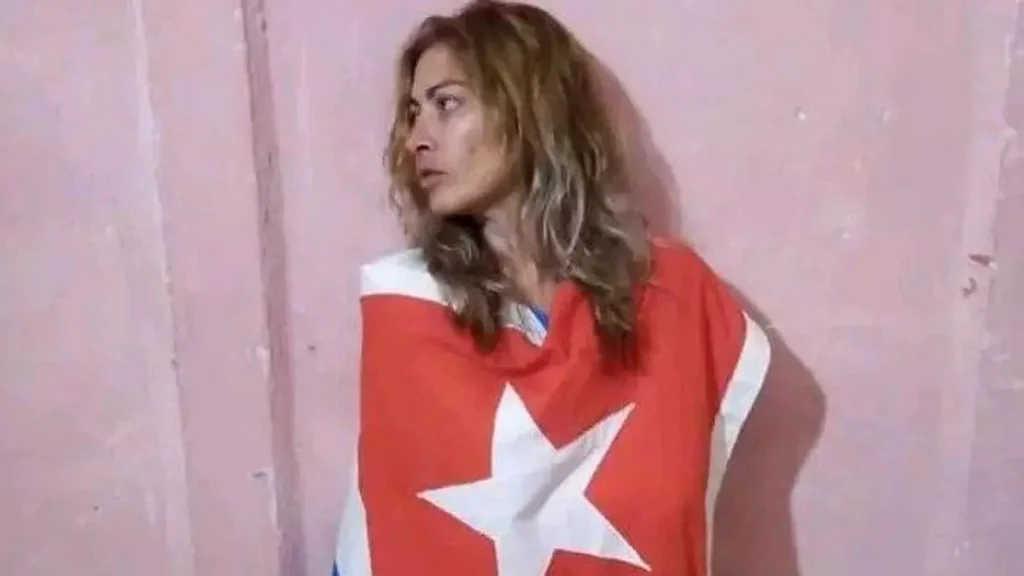
Her crime consisted of publishing photos of herself wrapped in the Cuban flag to demand the release of the artist Luis Manuel Otero Alcántara.

Aniette González was imprisoned in the Kilo 5 women’s prison in Camagüey for almost a year awaiting trial / Facebook

14ymedio bigger14ymedio, 8 December 2025 — Camagüeyan activist Aniette González García was released from prison on Saturday after serving her full three-year sentence for the crime of “insulting national symbols.” Her release was announced by journalist José Luis Tan Estrada at an event held in Mexico in support of María Corina Machado, Venezuelan opposition leader and Nobel Peace Prize laureate.

González García was arrested in March 2023 for posting photos on Facebook of herself wrapped in the Cuban flag in support of a campaign for the release of artist Luis Manuel Otero Alcántara, leader of the San Isidro Movement, who is also imprisoned for, among other things, the same crime as her. The activist was held in the Kilo 5 women’s prison in Camagüey for almost a year awaiting trial, until her sentence was handed down in February 2024.

In the ruling, she not only received a three-year prison sentence, but was also stripped of her right to vote. Furthermore, as a formality, she was barred from holding any positions in entities related to the Cuban economy and politics during her imprisonment, and will be considered a repeat offender before being granted any benefits or mitigating circumstances.

She will be considered a “repeat offender” before being granted any benefits or mitigating circumstances.

Following the conviction—the prosecution had originally sought up to four years in prison—various legal appeals were filed, all of which were rejected continue reading

by the court. Her family filed a petition for habeas corpus, an appeal, a motion to revoke the pretrial detention order, a motion to recuse the prosecutor, and an appeal of the verdict, but all were unsuccessful.

Following her release, several organizations celebrated the news and criticized the harshness of the authorities’ actions. “Her case exemplifies the criminalization of dissent and the use of the penal system to punish expressions protected by the right to freedom of thought and expression,” stated the Cuban Institute for Freedom of Expression and the Press (ICLEP), which also condemned “the arbitrary nature of her detention and the harassment she suffered in prison.”

The Cuban Observatory for Human Rights, based in Madrid, indicated that González’s case “remains a clear example of how the regime uses the penal system to punish peaceful expressions and repress any critical gesture,” and added that her release “does not erase the injustice committed nor the conditions in which she was detained, denounced even by international organizations.”

Her release “does not erase the injustice committed nor the conditions in which she was detained”

The irregularities in the process led the Inter-American Commission on Human Rights (IACHR) to address the case in May of last year, issuing precautionary measures in favor of the activist. In its resolution, the IACHR considered it “especially serious” that Aniette González lacked access to medical services “for the diagnosis of the bleeding she suffers,” and warned of the “serious and urgent situation, given that her rights to life, personal integrity, and health face a risk of irreparable harm.”

She also denounced the mistreatment she suffered at the hands of prison authorities and State Security, including insults, being confined in a cell “flooded with water, damp, with little light and ventilation,” preventing her from resting by taking away “the necessary elements for it,” controlling her clothing, giving her little food and in poor condition, or interrogating her in rooms “with low temperatures, at any time of day.”

According to the most recent report by Prisoners Defenders (PD), there are a total of 1,179 political prisoners on the island, 35 of whom are minors—the minimum age of criminal responsibility in Cuba is 16. Of these, 29 are serving sentences and six are being prosecuted under “precautionary measures without any judicial oversight.”

____________

COLLABORATE WITH OUR WORK: The 14ymedio team is committed to practicing serious journalism that reflects Cuba’s reality in all its depth. Thank you for joining us on this long journey. We invite you to continue supporting us by becoming a member of 14ymedio now. Together we can continue transforming journalism in Cuba.

One More Year, the Cuban Regime Marks Human Rights Day With a Police Deployment

Patrols and State Security agents surround opposition members in their homes

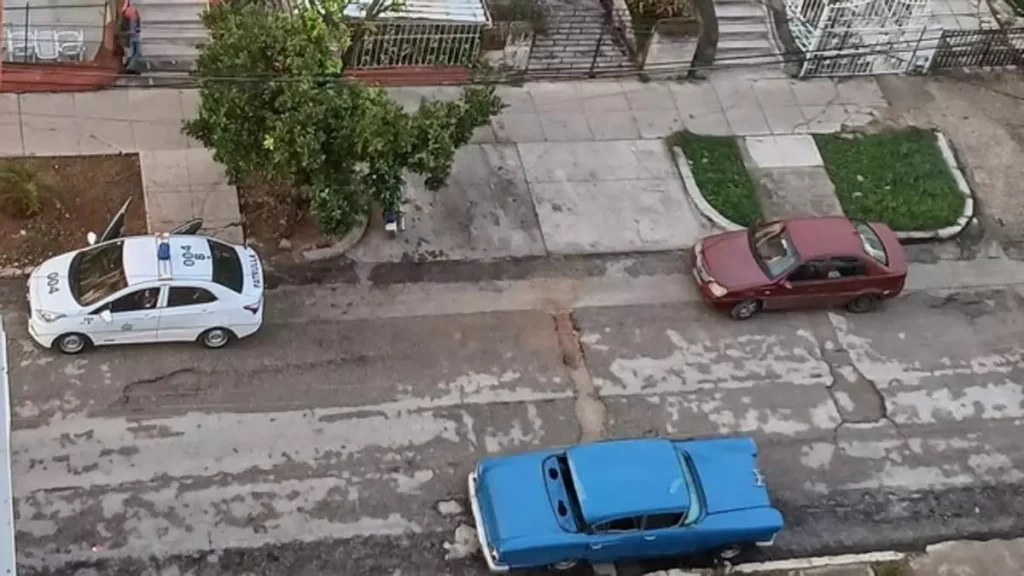
Police patrol in front of the home of Boris González Arenas, in Havana, this Wednesday. / Facebook

14ymedio bigger14ymedio Havana, December 10, 2025 –- As every year, Cuba spent this Wednesday’s International Human Rights Day with police operations, internet cuts, and house arrests imposed on activists and independent journalists. The regime once again deployed its ability to silence any civic gesture.

The 14ymedio newsroom in Havana woke up without web browsing service and with a police operation at the entrance of the building where it is located in the Nuevo Vedado neighborhood. The repression has also extended to other journalists, such as Boris González Arenas, held in his home under the watch of State Security. “This Government only has energy to repress the people it is starving to death,” denounced Juliette Fernández Estrada on Facebook.

Activist Yamilka Lafita, known as Lara Crofs, reported that a man who introduced himself as “chief of the combatants, Eduardo,” accompanied by two police officers, arrived at her home to warn her that she could not go out. “They say it’s ‘for the reason I know,’” she wrote on her social media. “My door may be watched, but they won’t silence my voice,” she said, dedicating the day to the Cuban people, the political prisoners, and their families.

Cuba spent International Human Rights Day with police operations, internet cuts, and house arrests against activists and independent journalists

Wilber Aguilar, father of political prisoner Walnier Aguilar, also denounced a police cordon in front of his home. “Patrol car 241 is parked here. I can’t leave; I can’t move from my house,” he reported. “Everyone in my house came down with the virus, practically dying, and not a single doctor showed up, but today the State Security agents do come.” Bitterly, the father of the continue reading

young man imprisoned for participating in the Island-wide 2021 July 11 protests summed it up: “We live in a country where human rights don’t exist, nor humans with rights.”

In the Havana municipality of Lawton, the leader of the Ladies in White, Berta Soler, warned of heavy surveillance against her and her husband, Ángel Moya Acosta, as well as against the headquarters of the movement. She explained that neighbors have reported several patrols surrounding the area. The operation is located at the corner of Martínez and D streets. “State Security repressors started early with their repressive deployment,” she
denounced.

The human rights crisis on the Island, recall the members of the Cuba X Cuba project, is not limited to political prisoners or those facing arbitrary proceedings. “It also affects millions of people condemned to live in degrading conditions,” they stated. “Twenty-hour blackouts, lack of medicines, food shortages, collapsed basic services, growing insecurity, and a health crisis form a landscape where surviving is an act of resistance.” On this Human Rights Day, the organization renewed its commitment “to dignity and freedom, to those still imprisoned, to those waiting for a nonexistent medicine or surviving in darkness, or watching their neighborhood, their school, their hospital, and their future deteriorate.”

Cubans abroad called marches and protests around the world to make visible the precarious human rights situation on the Island

Cubans abroad used the date to call marches and protests around the world with the aim of making visible the precarious human rights situation on the Island. Opposition leader José Daniel Ferrer García called for a global day for human rights and freedom in Cuba.

Various actions were organized in at least 13 cities, including protests, walks, gatherings, and symbolic acts, in countries such as Spain, Canada, Germany, Sweden, Chile, France, and the United States.

In Berlin, a group of members of Cuban civil society was received by German government authorities “for the first time in history,” explained activist Tania Tasé on her profile Las Taniadas. “We will do the best we can, for all Cubans,” she said moments before the meeting.

In Barcelona, a group of emigrants gathered in the streets to denounce the Cuban dictatorship. Videos posted on the page of the Coalition of Women for a Free Cuba show participants speaking on issues such as the severe health and food crisis in the country, political prisoners, and the total lack of rights faced by Cubans.

In Madrid, the protest of exiles took place in front of the Cuban embassy and was broadcast by the Council for the Transition in Cuba and the magazine Alas Tensas.

Translated by Regina Anavy

____________

COLLABORATE WITH OUR WORK: The 14ymedio team is committed to practicing serious journalism that reflects Cuba’s reality in all its depth. Thank you for joining us on this long journey. We invite you to continue supporting us by becoming a member of 14ymedio now. Together we can continue transforming journalism in Cuba.

More Night-Time Protests Against Power Cuts Lasting More Than 12 Hours in Cuba

In Marianao, rubbish is set alight to block a street; demonstrations in San Miguel del Padrón, Diez de Octubre, Alamar and Regla, as well as Las Tunas and Baracoa, in the east of the country.

The regime claims that peope are just expressing concern about the supply problem and that this is not a protest against the government. / Facebook

14ymedio bigger14ymedio, Havana, 9 December 2025 — On Monday, the streets of Marianao, in Havana, were crowded with people angry about more than 12 hours of power cuts. A dozen videos have shown unhappy and tired people yesterday facing yet another night of “insufficient generation capacity”, as journalist Bernardo Espinosa described the 61% shortfall in national electricity production for the night (more than 2,000 megawatts for a demand of 3,300 MW).

Omar Ramírez Mendoza, an engineer at Unión Eléctrica, explained on Noticiero Estelar that three of the four largest units in the national electricity system (SEN) were “out of base generation” and a total of ten, which were damaged or under maintenance, were also out of service. Added to this is the unavailability of some 1,000 MW in distributed generation. This situation has been developing on the island for months, but it is affecting the capital, which is especially prone to outages, more than ever before.

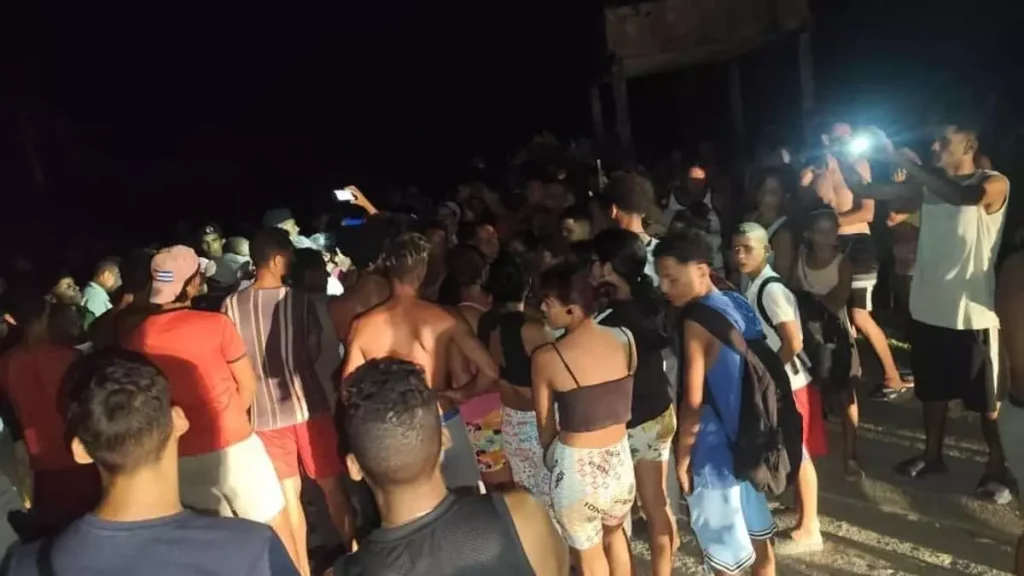
The worst situation was in Zamora, one of the poorest neighbourhoods in Marianao, where not only were they hitting pots and pans, but lighting bonfires in the middle of the street, rubbish bins were being knocked over and people were shouting that they were fed up. The police quickly arrived at the scene of the protests, and although there were no clashes or arrests at first, many assumed that arrests would follow later. continue reading

The worst situation was in Zamora, one of the poorest neighbourhoods in Marianao, where not only were they banging on pots and pans, but lighting bonfires in the middle of the street.

“As normal, the same vicious circle: now they catch three or four ringleaders, [because] the neighbourhoods are full of security forces, and the blackout gives money to the regime, which saves thousands of dollars with the power cuts, and also to the gossipers on social media, shameless people who are profiting from the misfortunes of the poor Cuban people,” wrote one user on social media.

Some videos show how, in the course of the protests, the power eventually comes back on in the area. “It worked,” writes one user who shared images of the moment. “It didn’t work. They know how to keep the slaves happy. Give them a couple of hours of power,” replied another.

The protests spread to other municipalities, including San Miguel del Padrón, Diez de Octubre, Alamar and Regla, where people were also shouting about how nobody cares because not only
was there no electricity, but also no water or sanitation.

People are getting more upset at a time when, not far away, the El Vedado Film Festival is on, where they are trying to keep things normal. Havana residents are unhappy at seeing the lights on in the event’s cinemas while their homes are in a permanent blackout. “In El Vedado there are lights, music, screens. In my house, I can’t even charge my phone,” one resident told this newspaper over the weekend. In reality, it is just an illusion. More than one screening has been cut short by a sudden blackout.

With things as bad as they were in the capital, the east of the country was in an even worse situation. From Bayamo, a social media user claimed that there had been no electricity for more than 20 hours, encouraging theft and the spread of viruses, with mosquitoes everywhere in the darkness. “It should be the whole country, this out and out abuse of the people is too much,” she cried.

The protests also reached Baracoa, in Guantánamo, where it was a pro-government account that gave the most coverage to the event, claiming it was a spontaneous gathering “to express concerns related to water supply and electricity service, both affected by known and objective causes”.

The account claims that the authorities engaged in dialogue with the population, who did not utter “any offensive slogans” and that, afterwards, the residents withdrew “peacefully”.

The information, put out by the Primera Trinchera account, argues that this is not a protest against the government, as “some media outlets and profiles linked to anti-Cuban propaganda have spread” in order to “sow mistrust, foment disorder and create an image of chaos that does not correspond to reality”. The account maintains that the authorities engaged in dialogue with the population, who did not shout “any offensive slogans” and that, afterwards, the residents withdrew “peacefully”. “The people of Baracoa, known for their civic-mindedness and attachment to the Revolution, are not swayed by these smear campaigns or by those who thrive on discrediting others and spreading lies,” they wrote.

In Las Tunas, residents of the El Marañón neighbourhood in Yarigua took to the streets on Saturday, banging pots and pans and shouting, “Electricity schedule! Respect the people!” Those affected, who walked along the Carretera Central, partially blocking the road, said that in the last week they had been getting an average of 25 minutes of electricity per day.

The promises made by the Minister of Energy and Mines for a year in which no great improvement is expected, and Qatar’s recent announcement that it will contribute four and a half million dollars through the United Nations Development Programme (UNDP) to help the situation, come too late for an exhausted population. If they arrive at all.

Translated by GH

____________

COLLABORATE WITH OUR WORK: The 14ymedio team is committed to practicing serious journalism that reflects Cuba’s reality in all its depth. Thank you for joining us on this long journey. We invite you to continue supporting us by becoming a member of 14ymedio now. Together we can continue transforming journalism in Cuba.

Why Did the Cuban Regime Need To Bury Economy Minister Alejandro Gil?

A public trial would have been a cluster bomb against the elite itself.

Miguel Díaz-Canel and Alejandro Gil, then Minister of Economy, in a 2019 photo. / Cubadebate

14ymedio bigger14ymedio, Jorge Luis León, Miami, December 9, 2025 –  I don’t write from the comfort of an absolute truth, but from the moral obligation to think aloud. The case of Alejandro Gil is not a simple legal matter; it is a broken mirror reflecting the deepest fissures of Cuban power. What is officially presented to us as “justice” seems, in reality, to be a carefully measured combination of real punishment and political theater.

From the outset, the process was shrouded in secrecy unbecoming even by Cuban standards. There was no transparency, no verifiable accounts, no real access to technical details. Only a closed narrative: serious corruption and, as a dramatic finale, espionage for the CIA. That last accusation, rather than convincing, arouses suspicion. Too convenient, too functional, too comfortable.

I don’t deny the possibility of corruption. It would be naive to do so. In a system where political power manages resources without independent audits, without a free press, and without real checks and balances, corruption is not the exception: it is the structural norm. However, what I find impossible to believe is that Alejandro Gil was a moral anomaly within a healthy system. No. If there was corruption—and it is likely there was—it wasn’t an isolated incident, but an integral part of a mechanism that has functioned this way for decades.

Then why him? Why life imprisonment ? Why the charge of espionage?

The most coherent answer is not legal, it is political.

Alejandro Gil proved to be the perfect candidate for sacrifice. A recognizable face. A visible name. A technician with a public profile.

The country is experiencing its worst economic crisis since the 1990s. The Economic Reorganization Plan—one of the government’s main initiatives to restructure the economy—has failed spectacularly. Runaway inflation, decimated wages, destruction of purchasing power, and chronic continue reading

shortages. This plan wasn’t the brainchild of a single individual: it was approved by the top brass, backed by the Party, and celebrated by the propaganda machine. And yet, someone had to take the blame for the disaster.

Alejandro Gil proved to be perfect for the sacrifice. A recognizable face. A visible name. A techie with public exposure. Making him the “culprit” for the debacle allowed them to salvage the central narrative: the problem isn’t the system, it is a man who betrayed, who stole, who conspired.

Here the second level of the case emerges: internal fear. When a high-ranking official falls from grace, it is not just about what they stole or did, but about what they know. Gil wasn’t a minor bureaucrat; he was at the heart of economic decisions, he knew the real circuits of power, the informal networks, the double standards, the privileges that are never written into law. A public trial, with real airtime, would have been a cluster bomb against the elite itself.

That is why the secrecy. That is why the summary nature. That is why the extreme severity.

The label “spy” serves a precise function: to shut down all discussion. Espionage is not debated, not nuanced, not relativized. It is treason. Period. With that word, the process was shielded, the doors were closed, and the maximum punishment was justified.

There is one detail I can’t ignore: the president’s own political ineptitude. In the midst of this turmoil, we saw him publicly congratulate Gil on his work. A gesture that, far from strengthening the image of power, brutally weakened it. Because it revealed something essential: the real strings of power don’t pass through his hands. The president was, in this episode, a secondary player, either ill-informed or deliberately excluded. This reveals not only a lack of coordination, but also the existence of a hard core that makes decisions without consulting, that executes without explaining.

We are not dealing with justice, we are dealing with an administration of fear.

The message is twofold: to the public, “we punish corruption”; to the rank and file, “no one is safe, no one is indispensable.” Life imprisonment is not just a punishment, it is a symbol. It is not about reforming the system, it is about preserving the power structure.

It wasn’t just Alejandro Gil’s actions that were judged; his downfall was used to redefine blame, clean up the facade, and protect the regime’s intact structure. They didn’t want justice: they needed a political scapegoat.

And that, in my opinion, is the key to this whole episode. They weren’t trying to fix the system. They were trying to save it.

____________

COLLABORATE WITH OUR WORK: The 14ymedio team is committed to practicing serious journalism that reflects Cuba’s reality in all its depth. Thank you for joining us on this long journey. We invite you to continue supporting us by becoming a member of 14ymedio now. Together we can continue transforming journalism in Cuba.

Cubans With I-220A Visas Are Among the 75,000 Migrants With No Criminal Record Detained This Year

Data published by NBC News refutes the official version that only “murderers, rapists and gang members” are deported.

ICE detains migrants with no criminal record. / @CBP

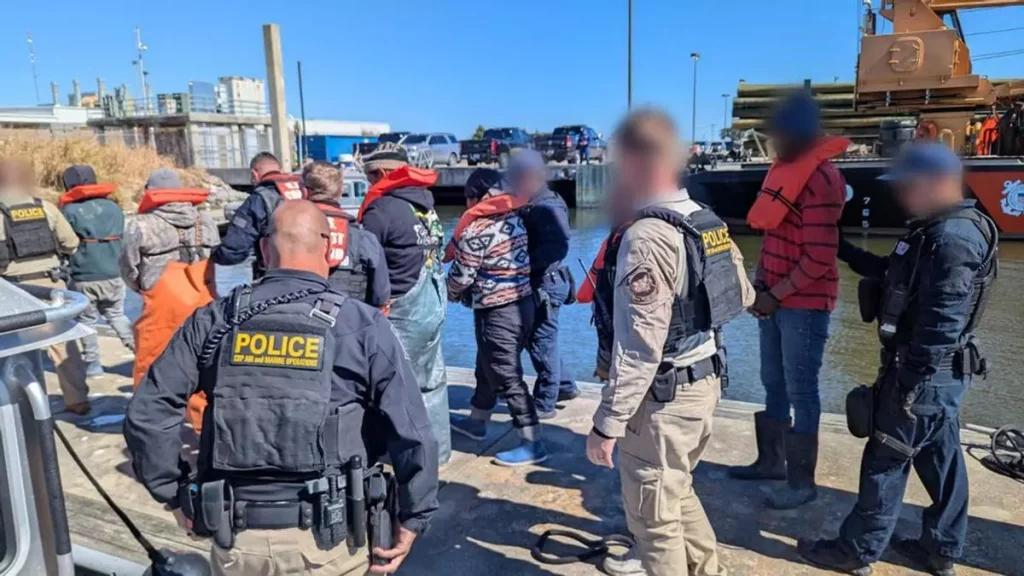
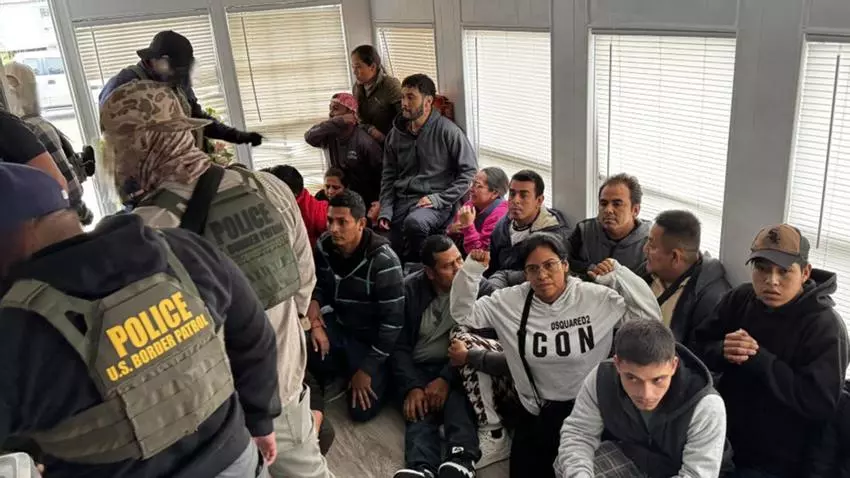
14ymedio bigger14ymedio, Havana, December 8, 2025 / More than 75,000 migrants with no criminal record, including several Cubans, have been detained by Immigration and Customs Enforcement (ICE) in the first nine months of the Trump administration. The figure, published Sunday by NBC News, refutes the official claim that the government is detaining and deporting “murderers, rapists, and gang members.”

Among the Cubans without criminal records is Cuban nurse Iván García Pérez, who has an I-220A form (Order of Release on Recognizance). ICE detained him on November 7th due to his immigration status and transferred him to the Alligator Alcatraz immigration detention center, where he has been pressured to accept self-deportation. His case remains unresolved.

Another case is that of Giovanys Vidiaux Revé. His wife, Marielys Gómez, reported his arrest on November 4th after his scheduled appointment in Houston, Texas. ICE detained him despite his having “complied with all his immigration and legal obligations” and “having no record, not even a traffic ticket,” she emphasized.

Last November in Miami, immigration attorney Willy Allen warned in an interview with América TeVé that Cubans with I-220A status face a growing risk of detention and deportation. “Deportations are being reported under this category. There is enormous danger. Eventually, the I-220A status could be recognized as parole, but there could be victims along the way,” he stated.

Migrants detained by the US Border Patrol. / @CBP

Analyst Ariel Ruiz Soto, from the Migration Policy Institute, said that Trump’s immigration policy exhibits a scenario of greater vulnerability for those living under immigration supervision, alternatives to detention, or pending legal proceedings. continue reading

The figures published by NBC News are the result of the Deportation Data Project at the University of California, Berkeley, and do not include operations carried out by the Border Patrol, which, from cities such as Chicago, Los Angeles, Charlotte, and New Orleans, has intensified its efforts to locate and detain migrants within the country.

“The Border Patrol is a black box about which we know nothing,” warned Ruiz Soto. “We don’t know how many arrests they make, how many end in deportations, or under what conditions.” The specialist noted that Customs and Border Protection (CBP) and ICE operate under the Department of Homeland Security but with different missions: “The lack of transparency in CBP reports leaves a critical gap.”

In mid-May, then-White House Deputy Chief of Staff Stephen Miller threatened to fire top ICE officials if they didn’t reach a minimum of 3,000 arrests per day. However, the actual figures, according to NBC News , reflect an average of 824 arrests per day—a considerable number, but still far from the target. Even so, it represents more than double the average during Joe Biden’s administration in 2014, when 312 arrests were recorded daily.

Ninety percent of those arrested were men, mostly of Mexican origin (85,000), followed by Guatemalans (31,000) and Hondurans (24,000). More than 60 percent were between 25 and 45 years old, a key generation for the workforce.

George Carrillo, executive director of the Hispanic Construction Council, warned that these arrests are already directly impacting industries that rely on migrant workers. “Even the most conservative Republicans are noticing. This is affecting their businesses,” he said.

Although the data does not specify how many of those arrested were deported, it does indicate that 22,959 cases are listed as “voluntary departures.” In addition, ICE currently holds 65,000 people in detention centers across the country.

____________

COLLABORATE WITH OUR WORK: The 14ymedio team is committed to practicing serious journalism that reflects Cuba’s reality in all its depth. Thank you for joining us on this long journey. We invite you to continue supporting us by becoming a member of 14ymedio now. Together we can continue transforming journalism in Cuba.

Maria Corina Machado’s Press Conference at the Nobel Institute in Oslo Has Been Cancelled

Diosdado Cabello lashed out against the award and called it an “auction” given “to the highest bidder”

File photo of Venezuelan opposition leader María Corina Machado. / EFE/ Ronald Peña R

14ymedio biggerEFE (via 14ymedio), Oslo / Caracas / December 9, 2025 – The press conference Venezuelan opposition leader María Corona Machado was scheduled to give this Tuesday at the Nobel Institute in Oslo, the day before receiving the Peace Prize, has been canceled and it is not possible at this time to predict how and when the former deputy will arrive in the Norwegian capital, the organization said.

The press conference “will not take place today,” said Erik Aasheim, spokesman for the Norwegian Nobel Institute.

“María Corina Machado herself has stated in interviews how complicated the trip to Oslo will be. Therefore, at this time we cannot provide any further information on when and how she will arrive for the Nobel Peace Prize ceremony,” which will be celebrated this Wednesday.

“We cannot provide any further information on when and how she will arrive for the Nobel Peace Prize ceremony.”

The press conference, initially scheduled for 12:00 GMT this Tuesday, was first postponed indefinitely. Finally, due to the opposition leader’s difficulties in reaching the Norwegian capital, the event has been cancelled.

Machado herself, who lives in an unknown location in Venezuela, had confirmed a few days ago to the Nobel Institute that she would travel to the Norwegian capital to receive the prize.

This Tuesday, her sister, Clara Machado Parisca, said in an interview from Oslo with the Colombian radio station Blu Radio that the Nobel laureate intends to be there and that they are waiting for her “with faith that she will arrive very soon.”

“Her wish is to be here and collect the award. That’s all I can tell you at this time. I don’t know anything else,” she added.

Her mother, Corina Parisca, her sister, and her daughter, Ana Corina Sosa, are already in Oslo and will be accompanied at the ceremony by her two sons, Ricardo Sosa Machado and Henrique Sosa Machado. “We are here for her, because of her, and with the full conviction that she will arrive and will be here to receive the award,” her sister added.

It is unknown how and when the opposition leader will leave Venezuela, amid the air connectivity crisis that Caracas is experiencing, without international connections due to the cancellations of several airlines that withdrew their flights because of warnings from US authorities about the danger of flying over the region, following Washington’s military continue reading

deployment in the Caribbean.

In addition to her family circle, representatives of the Latin American right are also traveling to Oslo to support the opposition leader.

The whereabouts of the Venezuelan opposition leader, who has been living in hiding in her country since the beginning of this year, remain unknown, and her appearance in Oslo would be her first in public since January 2025.

Argentine President Javier Milei took off yesterday on a special flight, while his Paraguayan counterpart, Santiago Peña, will arrive in the Norwegian capital on Wednesday for the official award ceremony.

Panamanian President José Raúl Mulino is already in Oslo, where he met with Machado’s family.

Also expected to attend tomorrow’s ceremony at Oslo City Hall is the Venezuelan opposition leader Edmundo González Urrutia, exiled in Spain. He ran against Nicolás Maduro in the July 2024 elections when Machado was barred from running.

The secretary general of Venezuela’s ruling United Socialist Party (PSUV), Diosdado Cabello, lashed out on Monday against the award, calling it an “auction” given “to the highest bidder”: “With respect to Oslo, I don’t know. We know nothing about that, we didn’t participate in that auction,” he affirmed yesterday.

Cabello preferred to focus on the pressure exerted by the United States with its unprecedented military deployment in the Caribbean and denounced the fact that the International Criminal Court has not ruled on Washington’s attacks against boats allegedly linked to drug trafficking in the Caribbean and the Pacific.

“The International Criminal Court is rude; its silence on massacres in different parts of the world is gross,” he added.

The opposition team conducted a detailed analysis of the Venezuelan Army and concluded that only a “limited” purge would be necessary, since only 20% of the officers are “irredeemable.”

He also rejected Panama’s offer to mediate between Caracas and Washington amid tensions between the two countries over the Panamanian government’s support for the Venezuelan opposition. “What the United States says goes,” he stated.

Amid these tensions, the Washington Post revealed that the Trump Administration reviewed the plans of Machado and her team in the event of Maduro’s departure from power, a plan that proposes creating forces to stabilize the country within the first 100 hours and 100 days after the current president’s exit and holding elections during the first year.

According to the newspaper, the opposition team conducted a detailed analysis of the Venezuelan Army and concluded that only a “limited” purge would be necessary, since only 20% of the officers are “irredeemable” and the rest are either opposed to Maduro or apolitical.

This information adds to Trump’s comments that he could soon begin ground attacks against Venezuela, fueling doubts about the scope of a possible Washington intervention under the guise of combating drug trafficking.

____________

COLLABORATE WITH OUR WORK: The 14ymedio team is committed to practicing serious journalism that reflects Cuba’s reality in all its depth. Thank you for joining us on this long journey. We invite you to continue supporting us by becoming a member of 14ymedio now. Together we can continue transforming journalism in Cuba.

Cuba Closes November With a Record 1,192 Political Prisoners

Prisoners Defenders and the Cuban Observatory of Human Rights denounce the increase in repression in November

Prisoners in a Cuban prison / EFE

14ymedio bigger14ymedio, Havana, December 9, 2025 – Cuba closed November with 1,192 political prisoners, the highest figure ever recorded by Prisoners Defenders. In its report published this Tuesday, December 9, the organization denounces that repression is the only policy used by the Cuban regime to survive amid the country’s economic, social, and humanitarian collapse.

The NGO, founded in Madrid to protect human rights on the Island and in other totalitarian regimes, documents 19 new arbitrary detentions that occurred that same month with recurring patterns. Arrests without warrants, forced disappearances, incommunicado detention, and criminal charges as vague as “disobedience,” “contempt,” or “public disorder”—used to punish opinions expressed on social media, verbal statements, or protests over the lack of basic services and food—confirm a form of “State terrorism” aimed at silencing any gesture of dissent.

Repression remains the policy used by the Cuban regime to survive amid the country’s collapse

Among the new cases is that of Dr. Pedro Bauta Gómez, a well-known psychiatrist from Holguín, who was arrested after saying publicly that there is no transportation for the sick but there is for the Party. Since then, his whereabouts are unknown, and he has been denied legal counsel and contact with his family.

Also notable is the case of William Sosa Marrero, detained for critical Facebook posts and accused of “pre-criminal penal disobedience,” a provision in the new Penal Code that replaces the former concept of “social dangerousness” while preserving preventive persecution against citizens who have committed no crime.

The organization denounces the criminalization of simple neighbors in Las Tunas detained for shouting slogans or painting critical graffiti, or of protesters in Bayamo arrested for peacefully protesting the lack of governmental response, while families live in terror and do not even dare to complain for fear of reprisals. continue reading

Among the most alarming issues are incarcerated minors. The report notes that 33 adolescents have been convicted for political reasons between 2021 and 2025—10 of them confined in adult prisons or penitentiary centers called “schools,” and 23 under police surveillance and constant threats. Many were arrested during the social uprising of 11 July 2021, tortured, and subjected to extreme overcrowding and violence, in direct violation of the Convention on the Rights of the Child.

July 11 remains the most significant moment of repression; 409 protesters are still imprisoned

In 2025 this pattern continues, with cases such as Eliane Martín, detained at age 16 while pregnant, with no information available on her location or health status; or Leroy Hernández Escalona, imprisoned after participating in a peaceful protest, whom relatives say is being held in a “torture center” in Las Tunas. These cases show that neither childhood nor pregnancy acts as a limit to political punishment in Cuba.

The 11th of July 2021 (11J) remains the most important moment of repression. Since then, 409 protesters continue to be imprisoned, and 334 are serving sentences outside prison under threats. Even those who are no longer behind bars live under a regime of harassment and fear, as illustrated by numerous cases included in the report.

In total, 743 Cubans continue to be punished for that day, which marked the largest citizen protest in more than six decades, among them 13 women—mothers and workers—who are being punished with particular cruelty in order to suppress independent female leadership. Among them are Lizandra Góngora, imprisoned in Los Colonos prison and separated from her five children by a 14-year sentence for demanding basic freedoms; and María Cristina Garrido, a poet imprisoned and subjected to constant harassment for having raised her voice against the Government.

The regime also targets artists. Eleven remain in prison and together face more than 137 years in sentences for making music, poetry, or critical art. Among them are the rapper Maykel Castillo Osorbo, two-time Latin Grammy winner for Patria y Vida, who has endured numerous solitary confinement cells and threats of transfer far from his family; and the visual artist Luis Manuel Otero Alcántara, held in Guanajay prison, where he has suffered chikungunya fever and diarrhea without medical care. He recently began a voluntary hunger strike to demand the freedom of all prisoners of conscience.

The country’s health crisis—worsened inside the prisons—makes the situation even more severe. Currently, 461 political prisoners suffer from serious illnesses without treatment, and 41 have mental disorders without psychiatric care, figures that show that physical and psychological deterioration is a deliberate component of the repression.

Meanwhile, the Cuban Observatory of Human Rights (OCDH) reported at least 225 repressive actions on the island in the month of November, of which 18 were arbitrary arrests and 207 were other abuses.

Among the most common violations committed by the Cuban regime last month were illegal home detentions, abuses against political prisoners, threats, and police summonses. Most of these repressive actions occurred in the provinces of Havana, Holguín, Guantánamo, and Sancti Spíritus.

The country’s health crisis—exacerbated inside prisons—continues to worsen the situation of political detainees

“The regime maintains repression in a context of a deepening social crisis, without medicines or food to alleviate the health situation caused by several simultaneous epidemics. The authorities offer no solutions and, at the same time, continue repressing any political or civic initiative,” the OCDH stated in its report published Monday.

Repression in November once again extended beyond the island’s borders, as the government directly threatened—by name—18 journalists and contributors to the digital media outlet El Toque, located outside the country.

“We are deeply concerned by the increasing use of blacklists to threaten exiled activists in various countries. We hold the Cuban regime responsible for any situation these individuals may face,” added the OCDH.

So far this year, at least 2,883 repressive actions have been recorded, including 651 illegal home detentions and 508 arbitrary arrests.

Prisoners Defenders also highlighted other shameful records for Cuba in 2025: the island became the number one country in the world for cases of arbitrary detention, according to the UN Working Group on Arbitrary Detention; the second worldwide in terms of penal population; and fourth globally in the number of urgent actions issued by the UN Committee on Enforced Disappearances.

Translated by Regina Anavy

____________

COLLABORATE WITH OUR WORK: The 14ymedio team is committed to practicing serious journalism that reflects Cuba’s reality in all its depth. Thank you for joining us on this long journey. We invite you to continue supporting us by becoming a member of 14ymedio now. Together we can continue transforming journalism in Cuba.

Why Are Communist Regimes Unsustainable?

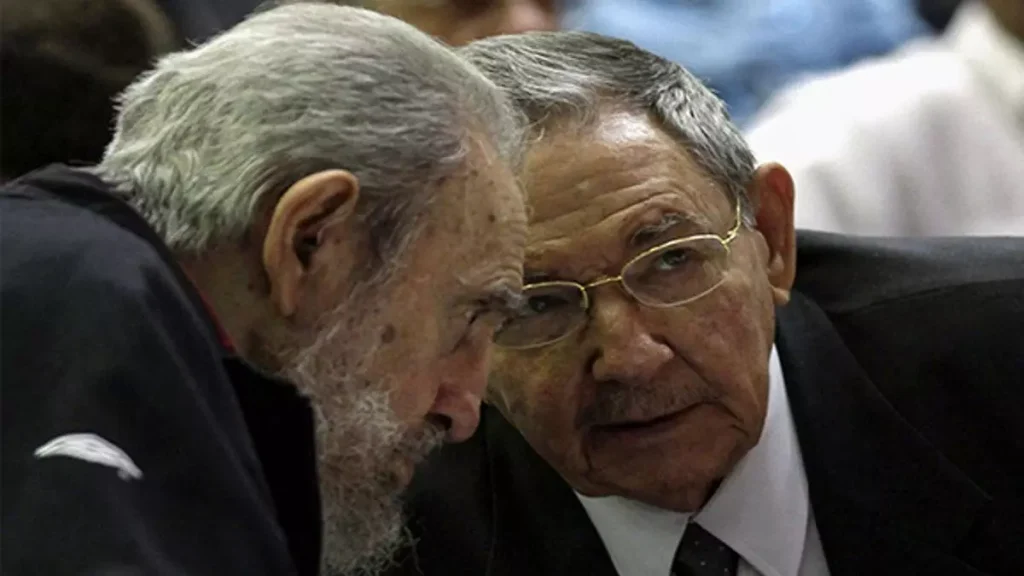
Fidel Castro, shortly before his death, confessed to a journalist that “the Cuban model doesn’t even work for Cubans.”

The system led to a small group rising to the top as the elite of a party / ‘Cubadebate’

14ymedio bigger14ymedio, Ariel Hidalgo, Miami, November 30, 2025  — I’m not talking, of course, about the society idealized by Marx, where the State would supposedly dissolve and all the means of production would pass directly into the hands of the workers—something never actually achieved in any country. Socialism supposedly referred to a system that would benefit all of society, because back then workers labored long hours for meager wages that was barely enough to survive and they lived in tenements in the poorest slums, so the whole family—women and children—had to join in that hard work as well.

Marx and Engels labeled all the socialists who came before them as utopian. And yet, paradoxically, Marx turned out to be the most utopian of them all. His proposal for a workers’ State that would expropriate capitalists and landowners, and would transform that state into a new, gigantic, and absolute monopoly that would no longer represent the workers and, therefore, would not stop in its voraciousness, dispossessing even the people themselves, anyone who possessed any means of subsistence, however modest. Thus, even self-employed workers would be subjected to administrators appointed by the State itself, giving rise to a colossal bureaucracy, a new social class above the entire population. And at the top would be established a small group as the elite of a party, the only one legally permitted, supposedly the vanguard of the entire proletariat. continue reading

This “socialism” that was not socialism, created by “communists” who were not communists, was what became known as state socialism.

This “socialism” that wasn’t socialism, created by “communists” who weren’t communists, was what became known as state socialism or “real socialism,” which most people would later simply call “communism.” But state socialism isn’t socialism; it’s statism.

Why did all those Eastern European governments implode without coups, wars, insurrections, or assassinations—not even Romania, erroneously presented as an exception? (Communism continued after Ceausescu’s death with Iliescu, who was worse than him until his peaceful defeat in 1996 by a democratic coalition.)

Why did China and Vietnam have to make radical changes, introducing capitalist elements into their regimes? Why did Cambodia end in a genocide of over 1.5 million people? Why does Cuba always require an external ally to subsidize it and must resort to mass exoduses every fourteen or fifteen years to alleviate tensions? Why is it now facing a humanitarian tragedy of prolonged blackouts, famines, and epidemics, the true number of deaths of which is still unknown?

All these questions have one answer: an economically unsustainable system. Why unsustainable? Because it suffers from what I call, for clarity, degenerative pathogens — contradictions of interest among large groups of people that negatively affect the production process in different socio-economic formations. In these systems, one party lacks productive interest, thus requiring extra expenditure to pay foremen or supervisors, and in the case of slavery, overseers, who are responsible not only for the smooth operation of the work but also for ensuring it doesn’t stop, since neither the slave nor the day laborer owns what they produce.

A clear example is reflected in a parable of Jesus: “The good shepherd lays down his life for the sheep. The hired hand, who does not own the sheep, sees the wolf coming and runs away because he is a hired hand and cares nothing for the sheep.” (John 10:12).

Even those pathogens can lead to collapse, in the case of capitalism, to productive units such as several US airlines

Even those pathogens can lead to collapse, in the case of capitalism, to productive units such as several US airlines at the end of the 20th century, three of which closed permanently due to strikes by their employees demanding wage increases.

However, when another airline, United Airlines, ran into crisis for the same reasons, and an eminent man, Robert Reich, President Clinton’s Secretary of Labor, mediated between them, the employers argued that they could not grant wage increases without the company being affected by fierce competition. Reich suggested granting them company stock instead. This was done, and the workers called off their strike. Later, having become owners themselves, they not only relinquished the wage increase but, on the contrary, agreed to reduce it. What Reich had done, in this case, was simply to eliminate the degenerative factor.

In all socio-economic formations, the number of people with a real interest in productivity, such as slave owners, feudal lords, and capitalists, is a minority, because they have been the ones who appropriated most of the value produced, and these degenerative pathogens have caused great human tragedies throughout history, such as the tens of thousands of slaves killed in the first century BC during the Spartacus rebellion, and the more than one hundred thousand in 1525 among the feudal peasants who rose up against the Holy Roman Empire.

What happens to communist regimes? They suffer from two degenerative pathogens, twice as many as the capitalist system. On the one hand, there are the workers, who have no incentive because their wages don’t cover all their needs and they can’t demand better conditions from a single owner who simultaneously makes the laws, judges, and enforces them by force. On the other hand, there are the thousands of administrative bureaucrats controlling means of production that they don’t own, but which they exploit as if they did. Hence, there are two conflicts: labor and administrative.

Neither the workers nor the administrators have a real interest in productivity; only an elite, incapable of exercising effective control over those thousands of bureaucrats, does. As this author wrote 44 years ago in the manuscript that earned him an eight-year prison sentence: the revolutionary leadership, like Dr. Frankenstein, created a monster that it was then unable to restrain.

Fidel Castro, shortly before his death, confessed to a group of students that the “Revolution” could be overthrown from within.

That is why Fidel Castro, shortly before his death, confessed to a group of students that the “Revolution” could be overthrown from within, and told a journalist that “the Cuban model is not even good for Cubans.”

The late intellectual Carlos Alberto Montaner demonstrated, from a liberal perspective, the superiority of capitalism over communism, arguing that while in the former there were hundreds or thousands of people – the capitalists – with a genuine interest in productivity, in the latter that interest only existed in twenty or thirty people of the Political Bureau of the single Party and the Council of Ministers.

This is true in the sense that while capitalism has only one degenerative seed, communism has two. So, taking Montaner’s reasoning to its logical conclusion, we could ask ourselves: What would the situation be like when that interest is shared not just by the twenty or thirty in communism, nor by the hundreds or thousands in capitalism, but by millions? In other words, what would a society without any degenerative seed be like? It would be a country with unprecedented prosperity.

In the Cuban case, this could only be possible through a profound change in the structures of society, which is what defines a revolution. If in the 1959-68 revolution almost all private property was nationalized, now it would be the State itself that should be nationalized, giving workers in all those centers and companies a share of the profits they themselves generate and dissolving all the monopolies created by that State.

If during the period from 1959 to 1968 almost all private properties were seized, now it would be the State itself that should be seized.

Most of those who theorize about democratization processes in Cuba see the return of confiscated properties to their former owners as one of the first steps, without considering the changes that have occurred over more than six decades; many have even disappeared. Those owners, except for the many who have already passed away, would very likely prefer compensation. But in the early years of this transition, the country would not be in a position to pay such compensation due to all the devastation caused by that regime. What is most urgent, beyond ideologies, is a pragmatic policy to incentivize all productive sectors.

If Martí said that “the monopoly was an implacable giant at the door of all the poor,” it is time for those poor to hold the most gigantic of all accountable, to intervene against the great intervener.

____________

COLLABORATE WITH OUR WORK: The 14ymedio team is committed to practicing serious journalism that reflects Cuba’s reality in all its depth. Thank you for joining us on this long journey. We invite you to continue supporting us by becoming a member of 14ymedio now. Together we can continue transforming journalism in Cuba.


Former Cuban Economy Minister Alejandro Gil Sentenced to Life in Prison for Espionage

In a second trial for bribery, influence peddling, and tax evasion, he received an additional sentence of 20 years in prison

Gil, according to the Court, acted in a “corrupt and deceptive manner,” and “deceived the country’s leadership and the people.” / ANPP

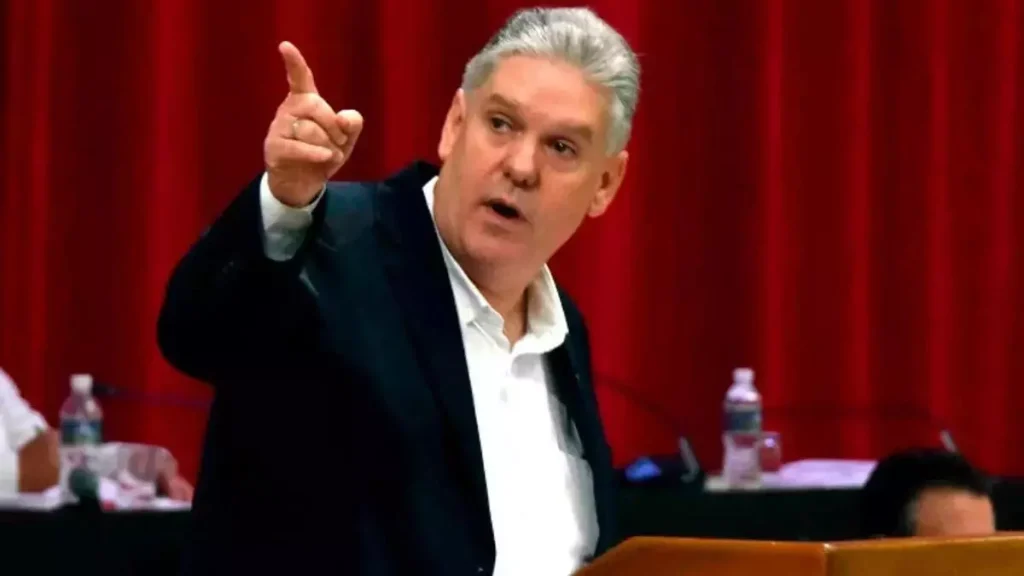
14ymedio bigger14ymedio, Havana, December 8, 2025 — The People’s Supreme Court has issued a ruling against Alejandro Gil Fernández, former Minister of Economy and Planning and one of the officials most heavily promoted by official propaganda until his abrupt dismissal in 2024. In language filled with references to “treason against the homeland” and a supposed “ethical, moral, and political degradation,” the ruling sentences him to life imprisonment for espionage and an additional 20-year prison term in a second trial for economic and administrative crimes.

The oral hearings, held in two phases between November 11 and 29, 2025, proceeded — according to the Court — “under full respect for procedural guarantees.” However, as is common in high-profile political trials, there were no independent observers, public access to the sessions, or verifiable details about the evidence presented. Even the daughter of the former deputy prime minister, Laura María Gil González, was not allowed to attend the espionage trial. The Government has limited itself to publishing a summary of the events that reads less like a legal document and more like a political narrative meant to reinforce the image of an internal enemy infiltrated within the State structure.

In the first criminal case, Gil was found guilty of espionage, bribery, theft and destruction of documents under official custody, violation of seals, and repeated infringement of classified information protection regulations. According to statements made by his sister, María Victoria Gil, the authorities linked him to the U.S. Central Intelligence Agency. The official description claims that the former minister removed and “made available to enemy services” confidential economic documents. Based on that accusation, the Court imposed a life sentence.

In the second case, the ruling included ongoing crimes of bribery, forgery of public documents, influence peddling, and tax evasion. For these, he received an additional 20-year sentence, although the Court clarified that once appeals are resolved, a single joint sentence will be formed, as established under the current Criminal Code.

Gil, according to the Court, acted in a “corrupt and deceitful” manner, deceived “the country’s leadership and the people,” received money from foreign companies, bribed officials, and caused “damage to the economy”

The additional sanctions include confiscation of assets, a permanent ban on managing public resources, and the loss of several civil rights. The ruling states that the assessment complies with Article 147 of the Constitution and Articles 29 and 71.1 of the Penal Code, which refer to the “social harmfulness” of the acts.

The official narrative does not spare adjectives. Gil, the Court says, acted in a “corrupt and deceitful manner,” deceived “the country’s leadership and the people,” received money from foreign companies, bribed officials, and caused “damage to the economy.” The document cites continue reading

Article 4 of the Constitution, recalling that treason against the homeland is the gravest crime and is punished with the harshest penalties.

But the political emphasis does not hide an obvious contradiction: the same Government that for years promoted Gil as the architect of monetary reform, a champion of “economic resistance,” and a fresh face in the Cabinet, now portrays him as an infiltrated enemy. It is a familiar script in recent Cuban history, where high-ranking officials shift from hero to villain in a matter of months, without any acknowledgment of failures in the selection process or internal Party oversight.

As in other high-profile cases — such as corruption trials against party leaders — the authorities have offered no concrete details about the alleged espionage: neither what information was taken, nor when, nor how it supposedly reached “enemy intelligence services.”

The speed of the process is also striking. In less than a year since his removal from office, Gil went from being a central figure in economic policy to receiving one of the harshest sentences given to a civilian in decades. According to analysts cited in previous reports, the rush could reflect the Government’s urgency to suppress debate over the failure of the “reorganization” plan and the economic collapse of recent years.

This time, the target is the man who for years publicly defended, across all official platforms, the same policies that now leave the country facing its worst economic situation in decades

Alejandro Gil was one of the figures most publicly supported by President Miguel Díaz-Canel. Presented as a modern technocrat, he spearheaded the Ordering Task — a project that in practice triggered inflation and severely eroded purchasing power — and defended every measure that deepened the economic crisis. Even after his dismissal, the president continued praising him on the social platform X, offering congratulations, embraces, and birthday messages.

His downfall, announced in February 2024, was followed by an unusual official silence. Only later — and slowly — did references begin to appear regarding “serious misconduct” and “incompatible behavior.” The sentence now confirms the type of narrative the regime tends to construct to convert structural failures into individual blame.

The Court notes that both the defendant and the Prosecutor’s Office have ten days to file the corresponding appeals. In the case of the life sentence, even if no appeal is filed, an appeal will be automatically processed as a “guarantee” for the accused — a formality that, within the Cuban judicial system, is unlikely to alter the political course of the process.

The statement concludes by noting that both Gil and his lawyers acknowledged that procedural guarantees were respected. This is a standard declaration in cases of this type and cannot be independently verified.

This time, the chosen target is the man who for years defended, in every official forum, the very policies that now keep the country in its worst economic situation in decades. The sentence against Gil says much about him — but says even more about the model that elevated him, used him, and now buries him under the label of “traitor.”

Translated by Regina Anavy

____________

COLLABORATE WITH OUR WORK: The 14ymedio team is committed to practicing serious journalism that reflects Cuba’s reality in all its depth. Thank you for joining us on this long journey. We invite you to continue supporting us by becoming a member of 14ymedio now. Together we can continue transforming journalism in Cuba.