Violent Incidents with Cuban Migrants Increase in Mexico

This Wednesday 145 Cubans traveling in two buses were arrested by Migration. (INM)

14ymedio bigger14ymedio, Havana, 13 October 2022 — The Cuban Marylín Almaguer Hidalgo was injured by the police in Córdoba, Veracruz, this Wednesday, when the coyote who was transporting her along with 25 other Cuban nationals tried to flee from the agents.

They arrested the migrants after the driver lost control of the van in which they were travelling and hit four parked vehicles.

According to local media, the driver was pursued by National Guard soldiers after he passed through a toll booth located in the Cuitláhuac area. The PMC-12 patrol joined the soldiers for support, and a policeman shot several times at the van.

A bullet hit Almaguer Hidalgo, 37, in the left buttocks, and she was hospitalized at the General Hospital of Córdoba, where she was reported out of danger.

The rest of the Cubans were handed over to Migration, which  transferred them to the Acayucan migration station, where 50 Cubans refused to be taken this Wednesday for fear of being deported. continue reading

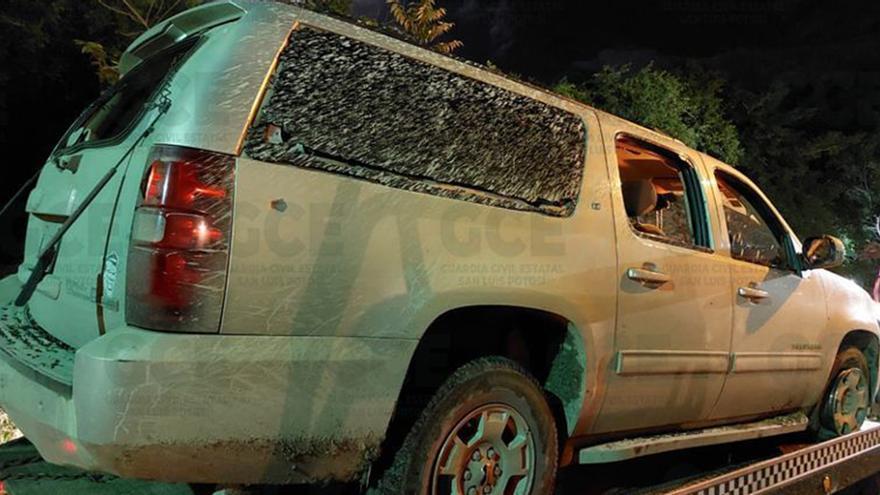
Also on Wednesday, 14 other Cubans were arrested in the common land of Tampaya (San Luis Potosí). There, while the agents of the State Civil Guard were on a routine tour, they detected several vans with polarized glass and armed civilians. They shot at the officers, who repelled the aggression.

One of the vans served as a shield so that the rest of the convoy could escape. From the van metal spikes were thrown to stop the police vehicles. A little later, the coyotes abandoned 14 Cubans, two women and 12 men, who tried unsuccessfully to evade the military by hiding in the undergrowth.

Criminal groups linked to the Gulf Cartel transport Cubans in vans with polarized glass. (State Civil Guard)

The military seized, in addition to the truck, two firearms, three magazines, 19 cartridges, 39 bags of drugs and 24 explosives. The Cubans were handed over to Migration to determine their situation.

Similarly, on the same day, Migration reported the detention of 165 migrants, including 145 Cubans, in the town of San Francisco Kobén Campeche, who were traveling on board two buses.

Asked about all these arrests, a ministerial agent who identifies himself as Guillermo told 14ymedio that, in their attempt to reach the United States, Cubans are increasingly turning to coyotes and groups linked to organized crime to transit through Mexico.

“These criminals are taking the central and Gulf routes for transfers in vans,” says the agent, who adds: “What happened in Ciudad Valles, San Luis Potosí is linked to criminal cells that work for the Gulf Cartel; they are in charge of transporting the illegals and bringing them closer to Matamoros, Reynosa or Nuevo Laredo to cross the Río Bravo.

Each Cuban is charged between 4,000 and 6,800 dollars for the transfer, “depending on the passage through the river and the means of transport, which goes from one van to several vehicles,” says Guillermo. “We have found that they are charged for alleged temporary permits, protections and even legal advice, but everything is false.”

Translated by Regina Anavy

____________

COLLABORATE WITH OUR WORKThe 14ymedio team is committed to practicing serious journalism that reflects Cuba’s reality in all its depth. Thank you for joining us on this long journey. We invite you to continue supporting us by becoming a member of 14ymedio now. Together we can continue transforming journalism in Cuba.

The Protests Extend to the Zapata Swamp, Showcase of the Cuban Revolution

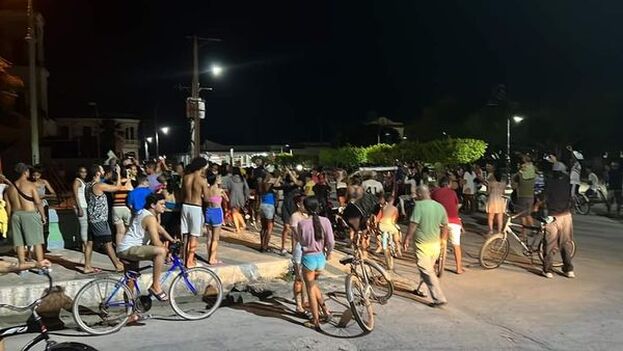
On Wednesday night there were demonstrations in Matanzas, Holguín and Santiago de Cuba, among other places. (Facebook)

14ymedio bigger 14ymedio, Havana, 13 October 2022 — La Ciénaga de Zapata [the Zapata Swamp] in Matanzas, considered one of the showcases of the Cuban regime, which considers the place an example of its achievements, starred in one of the noisiest protests on Wednesday night.

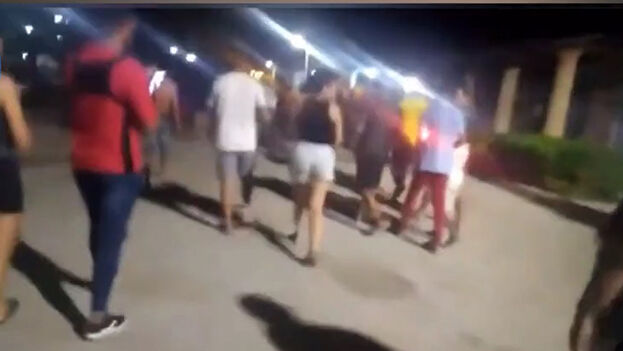
“Put on the light, dickhead, put on the light, fuckers!” they shouted in Playa Larga to the rhythm of banging on pots and pans in the middle of the streets, illuminated only by the flashlights of the phones.

In the videos shared on social networks, women and children are seen participating in the demonstration, in which the most projected cry was “freedom.” In several places they chanted “the people united will never be defeated,” while banging on pots and pans with sticks and spoons.

Residents in the Altamira neighborhood, in Santiago de Cuba, also went out to protest. There, people “are throwing themselves into the street, making noise and shouting at the Government to turn on the current,” a resident of the place told this newspaper. The man explained that the caceralozo [banging on pots and pans] began minutes after the electricity service was cut off, and that State Security agents and special troops arrived at the scene. continue reading

User Echezabal JD shared on Facebook several videos of protesters in the neighborhood, one of the poorest areas of Santiago de Cuba and the most besieged by the police. The headquarters of the Patriotic Union of Cuba (UNPACU) is located there, whose leader, José Daniel Ferrer, in prison without trial since July 11, 2021, announced on Tuesday a new hunger strike “until the final consequences.”

Also, the inhabitants of Velasco, in the province of Holguín, went out to demonstrate “strongly against the regime,” Eduardo Cardet, a resident of that town and coordinator of the opposition Christian Liberation Movement (MCL) reported to Radio Martí. “The protest grew by travelling along the main avenue, congregating in the park, and then continued advancing along the avenue to the Casa de la Cultura [House of Culture]. Then the reverse route was taken,” he said.

For Cardet, the demonstration in Velasco was “to demand the changes we need” because, he continued, “it’s time for this totalitarian regime to end.”

Users on social networks said that they also took to the streets in Colón (Matanzas).

Project Inventory reported that in San Andrés, Holguín, the inhabitants took to the streets and shouted “yes we can” and “freedom.”

The organization, which is compiling the places where there have been protests in response to the long power outages, registered, on Wednesday alone, seven of them.

Up to 153 demonstrations have been registered by Project Inventory throughout the Island since last July 14. However, they have become more numerous, and almost daily, since Hurricane Ian hit western Cuba and, for reasons not yet fully clarified, the National Electricity System collapsed.

Translated by Regina Anavy

____________

COLLABORATE WITH OUR WORKThe 14ymedio team is committed to practicing serious journalism that reflects Cuba’s reality in all its depth. Thank you for joining us on this long journey. We invite you to continue supporting us by becoming a member of 14ymedio now. Together we can continue transforming journalism in Cuba.

Cuba is Trying to Capture More Resources by Relaunching Medical Tourism

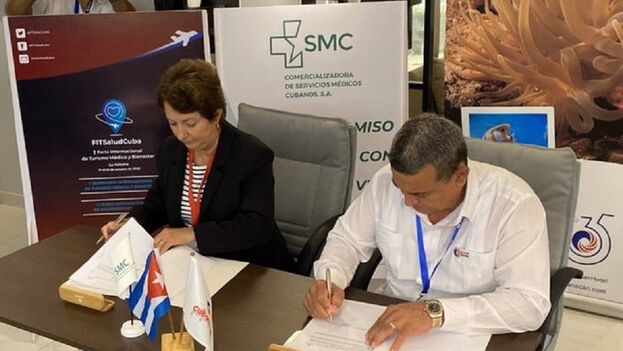
The CSM intends to launch an offensive to the international market by grouping the two most lucrative economic sectors of the Island: tourism and medical services. (Cubadebate)

14ymedio bigger14ymedio, Havana, 13 October 2022 — “A well-oiled infrastructure,” is how Prensa Latina describes the work of the Marketing of Cuban Medical Services (CSM), protagonist of the First Medical Tourism and Welfare Fair that will be held at the Pabexpo venue, from October 17 to 21, in Havana.

The company is a health conglomerate that offers all kinds of services: assistance to foreigners (operations, treatments, therapies), training of students from other countries, and export of medical contingents.

In a post-pandemic global scenario, the CSM intends to launch an offensive to the international market by grouping the two most lucrative economic sectors of the Island: tourism and medical services. The goal is to offer an attractive “product portfolio” for tourists.

The First Medical Tourism and Welfare Fair will be part of the IV International Cuba-Health Convention 2022, which the Government will take advantage of to seduce the 1,500 foreign delegates with the CSM proposals. continue reading

Dr. Armando Garrido, director of Medicuba, explained that it was an expected moment “in which a group of actions will be realized: signing a significant number of contracts with international suppliers and letters of intent for new businesses.”

Since the last International Tourism Fair in May of this year, the CSM has achieved several contracts with the hotel companies that operate on the Island, so that vacationers could access dialysis services in Havana and Varadero and have “long-stay” plans in the Ciénaga de Zapata.

In this plan, the “immunization strategy” against COVID-19 through Cuban vaccines plays a fundamental role, “among many other benefits of this type,” says Prensa Latina. The official agency doesn’t clarify, however, that most countries have already vaccinated the population free of charge, so traveling to Cuba to immunize is, at the very least, unnecessary.

The official agency interviewed economist Miguel Alejandro Figueras, who stated that “many tourists in the world wonder where they should go for a future vacation. Where will I find personal safety, health and humane treatment?” The answer, he said, “is Cuba.”

To support his opinion, Figueras added that health tourism is “a fast road to growth,” which contributed $2 billion to several countries. It’s the only way to achieve “the economic recovery of the nation.”

The tourist who intends to access Cuban medical services must fill out a form and present it upon entry into the country, along with his medical visa. One can also purchase a Tourist Card if the treatment will be carried out in less than thirty days.

The agency doesn’t accept payments in cash or dollars, but online or by bank transfer. The company itself processes the admission to hospitals and clinics, and if the treatment allows it, in the “hotel of your choice.”

If the patient wants a surgical intervention, he must remain for an indeterminate period of time in the country even if he is discharged. Also in that case, the CSM will be able to go to the hotel and care for the patient there, who will have options for the accommodation of relatives thanks to the company’s alliances with the hotel chains.

Those who wish to opt for a “comprehensive cancer treatment” can do so at the National Institute of Oncology and Radiobiology, which will include the use of the Cuban drug Heberferon, indicated for those who suffer from “basocellular carcinomas, in lesions of any size and location, including areas of high risk, the H area of the face, or in locally advanced areas that are difficult to treat due to proximity to the eyes or the brain.”

The CSM reminds its potential customers that the country is “a very safe destination” and recommends being treated in Havana, where “most of the medical tourism offer is located,” but customers can go to its premises in any province.

The so-called Wellness and Health Centers — for which the agency intends to attract foreign investment during the Fair — are located throughout the national territory. The San Vicente Thermal Centre, Pinar del Río, for example, is part of an old therapeutic bath inaugurated in 1901, with medicinal mineral waters that the CMS presents as “chosen by celebrities such as the novelist Ernest Hemingway” for relaxation.

Another thermal bath, located in Corralillo, Villa Clara, provides the same service of medicinal mud and “hyperthermal waters between 36 and 48 degrees Celsius.” It also mentions that the centre “has gained fame for achieving the healing of multiple circulatory, rheumatic, somatic, neurological and respiratory conditions, which don’t find a solution with other conventional treatments.”

In addition, in the hotel facilities that have signed contracts with the company, “bioenergetic, naturist, therapeutic-rehabilitating and aesthetic medicine will also be available.”

The countries that frequent Cuba as a tourist destination, such as Canada, have been the most enthusiastic investors in medical projects. The Canadian embassy in Havana notified on its Twitter account that $1.12 million in medical supplies would be delivered “to support the people of Cuba.” Other nations, such as Mexico, Japan and several members of the European Union have sent similar donations to the Island.

Translated by Regina Anavy

____________

COLLABORATE WITH OUR WORKThe 14ymedio team is committed to practicing serious journalism that reflects Cuba’s reality in all its depth. Thank you for joining us on this long journey. We invite you to continue supporting us by becoming a member of 14ymedio now. Together we can continue transforming journalism in Cuba.

‘The Best Thing is For the Russians to Come’ to Save the Colossus of Jatibonico

The Uruguay sugar mill, in Jatibonico, Sancti Spíritus, was built in 1905. (Escambray)

14ymedio bigger14ymedio, Madrid, 10 October 2022 — Four months after 14ymedio reported the closure of the ’Uruguay’ sugar mill, located in Jatibonico (Sancti Spíritus), the news was confirmed by the provincial newspaper Escambray on Monday. According to the note published today, “technological obsolescence and lack of investment have become, together with the shortage of cane, dangerous threats to the continuity of the industry.”

The hope, for hundreds of workers who right now see their jobs in danger of the plant cannot be restarted, is in Moscow. According to the newspaper, a Russian delegation visited Jatibonico during the last harvest and intends to create a joint venture that would save the dying plant and other plants whose names are not known.

“We are among the nine mills in the country chosen for these businesses,” reveals Eddy Gil Pérez, director of the Uruguayan Agroindustrial Sugar Company.

“The best medicine for the ’Uruguay’ plant is for the Russians to come, because it would be new technology, costs would be cheaper. But if the Joint Venture does not come to pass, we have to continue with the current equipment; I trust that the mill will whistle again because we have human capital, which is what sustains us, knowledge, good practices and desire”, adds Vladimir Gómez Morales, director of the industry. continue reading

The last sugar harvest, which left disastrous global figures in Cuba (barely 473,720 tons of the 911,000 expected were produced, insufficient even for domestic demand), Uruguay, formerly known as Coloso de Jatibonico, milled at 32% of its capacity, although this was not the only drama. The note details that, in addition, it delivered part of its cane to the Melanio Hernández sugar mill (former Tuinucú), production decreased, “the crude oil separated from the parameters of exportable quality” and therefore the harvest was inefficient and left great losses. Despite this, it manufactured more sugar than four provinces.

The directors explain that the decision to stop this year is fundamentally due to the bad data from the last harvest, but that the lack of cane has also contributed. “Someone forgot to put money into the plant, many good harvests have been made and a lot of money that Uruguay plant has given, but no financing was put in, I’m not talking about paying for repairs, but about technology; they left us because it produced sugar, but there comes a time when the factory does not give more. That it not do the harvest, it seems to me a well-made decision, because if there is no cane, why start, be inefficient and incur in a waste of resources for pleasure; it is up to us learn the lesson and move on”, says Pedro Pérez García, head of the boiler area.

Of the 424 workers at the plant, attempts have been made to relocate as many as possible, with relative success. 192 of them undertake repair work to improve the industry in this year of paralysis, and 102 joined other “eight labor groups with payment systems adjusted to activities that generate income for them and the company.” These areas range from the carpentry to the paint, sheet metal or ice factory, all of them dependent on the central.

In addition, there are 124 who requested leave without pay and others were placed in food production farms, sugar cane production units and workshops. Four found different jobs through the Municipal Labor Directorate. Managers speak of a painful process, particularly since many of the workers have been grinding sugar all their lives. “We cannot pay a salary without productive support, but there is no unemployment in the Uruguay plant,” he says, despite the fact that there are dozens of people looking for a life in the private sector.

The text addresses the possibility that the investment in repairing the plant is unproductive and the lock must be permanently locked, but the management initially denies it. The business plan foresees grinding in December 2023, even producing 3,000 tons of sugar that same month, since the projection is to have 400,000 tons of cane. In that harvest they have projected to cut only 49%, leaving some 5,000 hectares of saplings. “Although the availability of fuel for planting does not improve, we are going to have more cane than this year because there will be a better composition of strains,” the director believes.

In addition, they have another factor that the authorities consider infallible: the heart. “We are making the repairs with quality and with love, as if the plant were going to grind now,” says Adalberto Rodríguez García, shift manager at the mill during the harvest and a mechanic now during the repairs, who has 47 years of work at the mill.

That labor force and the cane will be capital, along with the Russians, according to the directors. “When we have that amount of raw material, the whole world is going to turn to Jatibonico because it will already have cane to grind. If we gather that level of raw material that can give us a not inconsiderable sugar production, we take care of the industrial strength and repair the factory , we can guarantee the future and Uruguay is not leaving the map,” they affirm.

The article reviews part of the history of the plant and quotes Fidel Castro on several occasions, in addition to insisting on the pain of the closure.

On June 23, 14ymedio brought forward the end of operations at the Uruguay mill due to constant mechanical failures. The mill, which began grinding in 1905, has been transformed and repaired many times, but in recent years the stoppages due to failures and maintenance have multiplied. After a shutdown in 2021, the plant started up again in December of that year, leaving behind the dire harvest already known.

In a meeting with representatives of AzCuba, when those responsible for the mill were informed of the closure, they were notified of the capital repair that would come. “Faults are constantly occurring. I assume they are going to get their hands on everything, but without resources we will see how they botche it up,” a specialized source told this newspaper.

According to his testimony, the constant shutdowns are carried out because the maintenance cannot be carried out properly without the tools and conditions. Sometimes, simply because a cable is not sealed well, it will leak and that can end up causing a general shutdown,” he said.

The financing could come from Russia if the plan announced this Monday by Escambray materializes, although in 2020 the Russians suspended a multitude of projects reached with the Island Government due to lack of financing, defaults and lack of interest on the Cuban side. The war in Ukraine, which has left Moscow isolated, can change things and Russia is encouraged to engage in diplomacy in the Caribbean through these investments. Time will tell.

____________

COLLABORATE WITH OUR WORKThe 14ymedio team is committed to practicing serious journalism that reflects Cuba’s reality in all its depth. Thank you for joining us on this long journey. We invite you to continue supporting us by becoming a member of 14ymedio now. Together we can continue transforming journalism in Cuba.

The Cuban Economy is Not Growing… and is Getting Worse and Worse

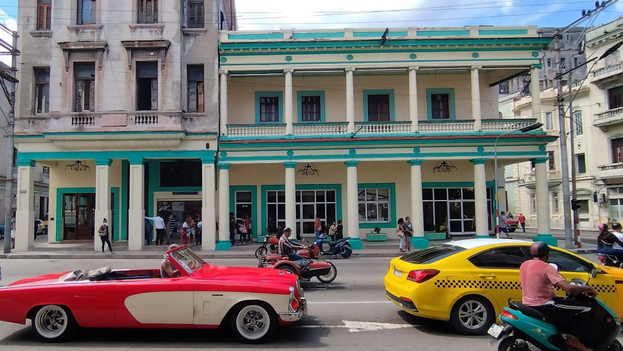
Tourists in Havana. (14ymedio)

14ymedio bigger14ymedio, Elías Amor Bravo, Economist, 13 October 2022 — Along with the inflation of the CPI in Cuba last August, the other data that have come to cast dark shadows on the nation’s economic landscape is the growth in GDP recorded in the second quarter of the year.

Economists must be attentive to these intense changes that occur in the Island’s economy, and in particular, the GDP deserves special attention.

Specifically, the GDP of the second quarter of 2022 has grown by only 1.7%, a rate that reflects two things: the economy remains weak this year, and it’s struggling to overcome the shock caused by the COVID-19 pandemic. On the other hand, without growth, underlying problems such as inflation, lack of control of public accounts, and peso exchange rates tend to worsen, so that once again, the authorities show their inability to lead the economy to a more balanced scenario, which introduces numerous questions for the coming months.

Of the 19 branches of activity that the ONEI breaks down for the GDP component, it should be noted that in the second quarter, a total of 13 have registered negative signs in their evolution compared to the same period of the previous year, while 6 have registered positive signs. continue reading

Among the first, the intense decreases in the sugar Industry stand out, -43.8% (a real national disaster, after the very intense decreases in previous years), Fisheries -33.2% (which means less export income), and a decrease of -15% in the Manufacturing Industry or the Electricity Sector (there is the origin of the blackouts). The GDP of agricultural production fell by -7.4%, and, more seriously, every quarter since 2021 it has been decreasing. This means that since the beginning of 2021, food production in Cuba has decreased by -67%, pointing to the failure of the 63 agricultural measures decreed by the regime.

Among the activities that grew their GDP, Hotels and Restaurants stand out, at 42.1%,  which still doesn’t reach the GDP levels prior to the crisis. It is followed by Education, a social expenditure encouraged by the return to normality in schools. However, in Public Health, GDP has decreased by -13.9%, possibly to adjust the accounts of the state budget and avoid their lack of control.

The data cited for the second quarter of GDP, 1.7%, should be seen in relation to that for the same period of the previous year, when there was an increase of 8.9%, but it’s more significant to do so with the GDP of the first quarter of 2021, which grew by 10.9%. The contrast between the two indicates a real slowdown in the growth of the economy reflected by the accounts, in which the components linked to public spending, except for Education, have entered into negative territory. For example, Public Administration, falls by -0.3%; Science and Innovation, -1.4%; Health, the -13.8% cited above, and Other Social and Communal Services, -2.9%.

The behavior of the Cuban economy indicates that the regime hasn’t been able, perhaps because it has no plans, to modify the “engines” of the economy by making them pass from the state to the non-state, productive sector (in a way, an extension of the state). Hence, the economy slows its growth when these state activities do and increases otherwise. It’s more of the same, in a failed economic and political model that ranks the Cuban economy as one of the most backward in overcoming the COVID-19 crisis.

The intense change of situation in the second quarter of 2022 is not good news for the coming months. If the patterns of previous years are maintained, the third quarter, which has now ended, will not mean an improvement compared to the second, which will contribute to lower economic growth.

Only the last quarter of the year remains, which entails doubts about an eventual recovery of tourism in the high season. The evolution in the form of the cachumbambé [see-saw] of the Cuban economy since the first quarter of 2021 is a good example of the regime’s failure to achieve more stability and ensure a certain credibility of national accounts. The poor relationship between the productive, state, and non-state sectors, the reduced flexibility of economic activity and the obstacles of the communist model take care of the rest. Cubans will not experience an improvement in the economic situation in 2022.

Translated by Regina Anavy

____________

COLLABORATE WITH OUR WORKThe 14ymedio team is committed to practicing serious journalism that reflects Cuba’s reality in all its depth. Thank you for joining us on this long journey. We invite you to continue supporting us by becoming a member of 14ymedio now. Together we can continue transforming journalism in Cuba.

Havana’s Fanciest Dessert Shop Charges 200 Pesos to the Dollar

Located at 24 Infanta Street, between San Lazaro and Concordia, El Biky is part of a larger dining operation in the building.

14ymedio bigger14ymedio, Juan Diego Rodriguez, Havana, 12 October 2022 — Exclusive, expensive and accessible only to those with the patience to wait in line, El Biky is immune to crisis.

Located at 24 Infanta Street, between San Lazaro and Concordia, the Havana bakery El Biky is part of a larger dining operation that includes a cafe, bar and restaurant. Its large display cases, filled with cakes and pastries, attract those who can afford its high prices. It is simply the most chic dessert shop in Central Havana.

“It’s always been a place for the well-to-do,” says Pablo, a customer who attributes the establishment’s constant supply of products to its relationship with the politically powerful.

It opened in 2014 under the inelegant moniker “non-agricultural cooperative.” Its four partners — none of whom share the establishment’s name — began remodeling an old Havana office building that takes up a large chunk of its Infanta Street block. The “comprehensive renovation” took a year and is documented with photographs which the investors proudly use to illustrate the change from dilapidated building to pastry shop.

“Everything about El Biky is high-end,” says Pablo. “All the equipment is new, brand-name and industrial-scale. No one knows how they managed to import it.” continue reading

But even more shocking, he says, are the prices and method of payment. “Pastries were always expensive but, since currency unification, the change has been brutal.” In spite of being a state-approved cooperative, El Biky sets its prices based on the unofficial exchange rate of “freely convertible currency” (MLC). Currently, that rate is 200 pesos to 1 MLC. This inconsistency further raises suspicions that there are, among its backers, private interests linked to the regime.

That means a lemon pie for 10 MLC costs a customer 2,000 pesos. A coconut tart at 5.75 MLC costs 1,150 pesos. A chocolate peanut tart costs 1,800. The same rate applies to smaller sweets, such a 0.95 MLC chocolate éclair, 0.35 centavo marquesitas, and the 1 MLC coconut cake and cupcake slices.

In spite of being a state-approved cooperative, El Biky sets its prices based on the unofficial exchange rate of “freely convertible currency” (MLC).

“They have the nerve to put the two prices in the same display case,” complains Pablo. A telling detail regarding how El Biky manipulates currency value is that purchases are processed through a mobile money transfer app.

“If they used a POS,” he says, referring to an electronic credit card payment terminal, “they would have to charge the [lower] MLC exchange rate set by the state. But that doesn’t suit them.”

El Biky also supplies smaller businesses that sell pastries. “A little while ago one  man walked out with six cakes that he’ll sell at his restaurant,” Pablo observes. The bakery is also the dessert supplier to Havana’s elites.

“People come here in cars and motorcycles with private plates, the latest models. You can tell they’re rich by the way they’re dressed. Foreigners and high-ranking military officials also come here,” he explains. “It’s not the lowlife crowd waiting in line, like the one for chicken. It’s the Cuban bourgeoisie. They sometimes buy in large quantities.”

Such opulence contrasts with the food insecurity of most Cubans, who are subject to unending shortages and do not have access to sugar, flour, cooking oil or many the other products necessary for making high-quality desserts.

____________

COLLABORATE WITH OUR WORKThe 14ymedio team is committed to practicing serious journalism that reflects Cuba’s reality in all its depth. Thank you for joining us on this long journey. We invite you to continue supporting us by becoming a member of 14ymedio now. Together we can continue transforming journalism in Cuba.

Cuba: The ‘Stockholm Letter’

Photo of the protest in Caibarién, Villa Clara on Monday. (Capture)

14ymedio bigger14ymedio, Yunior García Aguilera, Madrid, 12 October 2022 — On August 23, 1973, in the Swedish city of Stockholm, Jan-Erik Olsson attempted to rob a bank. His four hostages, despite the violence and threats to their lives, ended up protecting their captor and demonstrating vehement empathy toward him. Upon seeing this strange reaction of the victims, psychiatrist Nils Bejerot coined the term “Stockholm syndrome.”

The letter signed by a group of artists and intellectuals, denying the repression and praising the administration of the worst government Cuba has experienced in all its history, seems written by the hostages of that bank. The signatories not only displayed a cynical attitude, but rather, a sick one.

How can they deny the repression in a country where the little dictator gave the combat order on national television? How can they close their eyes to what occurred on our streets, to the hordes armed with clubs exiting the trucks to beat protesters? How can they pretend that in Cuba there aren’t more than a thousand young people in jail for yelling that they have had enough of the darkness and misery? Don’t those who subscribed to that letter realize that their signature is as culpable as the blow of a henchman, or the bullet that entered Diubis Laurencio’s back?

It is not the first time something like this happens. In 2003, a group of well-recognized Cuban intellectuals signed a the Mensaje para los amigos que están lejos [A message to our friends who are far away], supporting the imprisonment of 75 dissidents and the execution of three young men. If that was called the Black Spring, this has been the Black Autumn, as somber as the blackouts, as dark as the present and future of an entire country. Some of those who placed their signature there have, with time, regretted it and have refused to make the same mistake. But others repeat it. And new names are added to the infamy. continue reading

I saw the signatures of certain people who I considered “my friends”. But in signing that letter they are backing all the terror my family suffered. It is as if they themselves were the ones who threw me onto the garbage truck on July 11th, the same ones who decapitated doves at my door, and threatened to put me in jail for 27 years, and surrounded my house on November 14th, the same ones who launched me into exile.  They are not my friends. They are the courtiers of a despotic regime, the accomplices of those who hold on to power by force and have Cuba buried in disgrace.

I don’t know what they gain by “acting like Swedes.” I don’t know if, for them, it is worth smearing their names with mud forever to keep their positions, publish a little book, come out with an album or gain some sad privilege. By signing “the Stockholm Letter” they’ve reached the limit of subservience.

There were always people like this in Cuba, willing to applaud the horror. Today, almost no one dares to admit they supported the parameterization or that they were the architects of the Five Grey Years. But none of those horrible chapters would have happened without counting on the acolytes, slime balls, and applauders. Each sinister phase of history has its side kicks, fixers, co-authors.  And the signers of that letter have made a pact with the mafia that gets fat at our expense.

Returning to Stockholm syndrome, there is an important detail that deserves attention. One year after the bank robbery which gave rise to that psychological reaction, another important event occurred. Patricia Hearst, the granddaughter of a magnate, was kidnapped in California by the Symbionese Liberation Army. Shortly thereafter, the victim herself joined the kidnappers and helped them rob a bank. Patricia, who had been sexually abused by her captors, changed her name to Tania, just like the guerrilla fighter who accompanied Che Guevara. The cameras at the bank recorded her holding a rifle and actively participating in the robbery. Although her lawyers tried to defend her, alleging she suffered from the syndrome, the jury convicted her anyway.

Don’t believe, signers of the infamous letter, that history will absolve you. Lately, you have experienced a massive rejection by most Cubans. And abroad, those hypocritical letters no longer have much of an effect. The world has already seen the repression in Cuba. And the world has seen you buckle, as shameless opportunists, under a perishing dictatorship.

Translated by: Silvia Suárez

____________

COLLABORATE WITH OUR WORKThe 14ymedio team is committed to practicing serious journalism that reflects Cuba’s reality in all its depth. Thank you for joining us on this long journey. We invite you to continue supporting us by becoming a member of 14ymedio now. Together we can continue transforming journalism in Cuba.

A Former Cuban Deputy and LGBTI Activist Arrives in the United States

In his message he thanked several people, including his mother, his boyfriend “and everyone who somehow helped me, encouraged and gave me his blessing in such an important decision.” (Facebook)

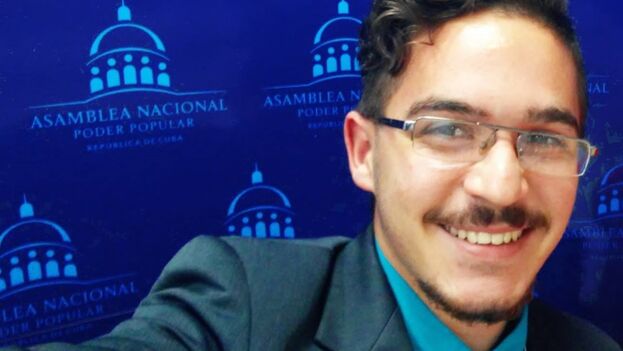
14ymedio bigger14ymedio, Havana, 12 October 2022 — The former Cuban deputy to the National Assembly of People’s Power, Luis Ángel Adán Roble, emigrated to the United States, as confirmed by the young man himself on his social networks. “Meta completed in 72 hours,” he wrote on Facebook on Wednesday along with several symbols that suggest he flew from Cuba to Mexico and crossed the US border

In his message he thanked several people, including his mother, his boyfriend “and everyone who somehow helped me, encouraged me and gave me their blessing in such an important decision.” He also said he was “happy not only to have arrived, but to so many displays of affection. Now, let’s go forward.”

Roble, who was the first openly gay Cuban deputy and LGBTI+ rights activist, left his profession as a doctor at the beginning of 2022, after claiming that his job didn’t provide him with “a decent salary.”

A year earlier he revealed that State Security tried to recruit him and that he had also “been regulated*” by the Ministry of the Interior because they considered him a “person of public interest,” which is why he couldn’t travel outside the country. continue reading

In November 2019, Roble posted on his Facebook profile: “At the Extraordinary Meeting of the Municipal Assembly of Centro Habana, Havana, I was granted the release from the position of Municipal Delegate and in turn of Deputy of the National Assembly.”

The text was published a few weeks after the deputy denounced that he couldn’t travel to an international conference in Colombia because the National Centre for Sex Education (CENESEX), led by Raul Castro’s daughter Mariela Castro Espín, denied him its support.

“It’s a little more of the same thing, delayed procedures, playing around or ’I just don’t have the go-ahead’,” he wrote then in a post in which he included several photos with Mariela.

The International Association of Lesbians, Gays, Bisexuals, Trans and Intersex for Latin America and the Caribbean (ILGALAC) was then holding its eighth conference in Colombia, and Roble waited for the authorization of the dean of his faculty but also needed a letter issued by CENESEX, a member of ILGALAC.

“When talking to the Deputy Director of this Institution [CENESEX] I received the answer that they cannot accredit me as an activist to any community social network (although on my previous trip to Colombia in May, they did issue a letter),” Roble said.

The friction with CENESEX began when Roble said that the LGBTI march of May 2019 had not been organized from outside the Island, as Mariela Castro claimed. “It’s a mistake to politicize it and say that it was orchestrated from abroad, nothing farther from the truth, because they are young workers, students, revolutionaries, many of them acquaintances and friends, who made the call,” he stressed.

Shortly after, he amended his statement and ventured that some activists participating in the march received “payments to hold this type of event.”

*Translator’s note: ’Regulated’ is the term applied to individuals by the Cuban government meaning that they are not allowed to leave the country. 

Translated by Regina Anavy

____________

COLLABORATE WITH OUR WORKThe 14ymedio team is committed to practicing serious journalism that reflects Cuba’s reality in all its depth. Thank you for joining us on this long journey. We invite you to continue supporting us by becoming a member of 14ymedio now. Together we can continue transforming journalism in Cuba.

The UN Presents a 42 Million Dollar Plan to Help Thousands of Cubans After Hurricane Ian

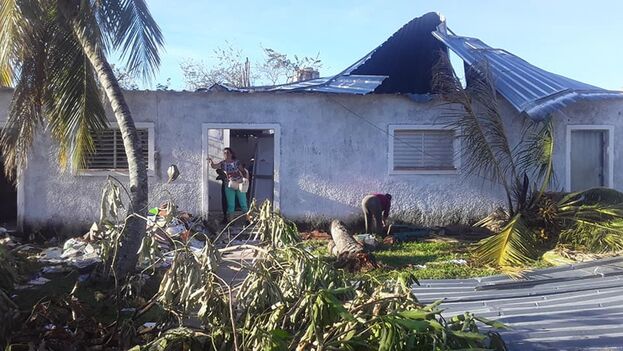
A house in Pinar del Río affected by the passage of Hurricane Ian. (Tele Pinar)

14ymedio bigger EFE/14ymedio, United Nations, Havana, 12 October 2022 — On Tuesday, the United Nations presented an action plan of 42 million dollars with which it hopes to support almost 800,000 people in Cuba affected by Hurricane Ian, both in the short term with emergency aid, and in the medium term to repair damage.

According to spokesperson Stéphane Dujarric, with this initiative the United Nations seeks to support the work of the Cuban authorities to respond to the needs of citizens after the passage of Ian, which  devastated the western end of the Island at the end of September.

The UN explained that the plan will support the response in areas such as housing, health, education, food security and access to drinking water and electricity.

In total, the UN expects about 798,000 people to benefit, mainly in the provinces of Pinar del Río and Artemisa, the areas most affected by the hurricane.

To finance the plan, the United Nations has already allocated $7.8 million from its Central Emergency Response Fund and $3.7 million from the budget allocated to its team in Cuba. continue reading

Last week it was known that the European Union will contribute 1 million euros to help those affected by Hurricane Ian on the Island, according to the diplomatic representation of Brussels in Havana.

“Hurricane Ian has had a devastating impact on Cuba, and it’s estimated that 100,000 households have been affected,” the community bloc delegation on the Island added on Twitter.

#Ian, the first hurricane that has reached Cuba in the current hurricane season in the Atlantic, left five dead and much material damage; for example, damaging almost half of the homes in the province of Pinar del Río and forcing thousands of people to evacuate.

Translated by Regina Anavy

____________

COLLABORATE WITH OUR WORKThe 14ymedio team is committed to practicing serious journalism that reflects Cuba’s reality in all its depth. Thank you for joining us on this long journey. We invite you to continue supporting us by becoming a member of 14ymedio now. Together we can continue transforming journalism in Cuba.

‘Marilyn de Armas’ is Currently What’s ‘In’ in Cuba’

The fictionalized version of the life of Marilyn Monroe, as played by the Cuban actress Ana de Armas, seems to have ignited a frenzy for the “blonde bombshell.” (14ymedio)

14ymedio bigger14ymedio, Juan Diego Rodríguez, Havana, 11 October 2022 – There were lines outside the Yara and Chaplin cinemas in Havana last weekend as people waited to see (on the cinema screen, as opposed to via Netflix streaming, which is how the rest of the world has viewed it) Andrew Dominik’s movie, Blonde.

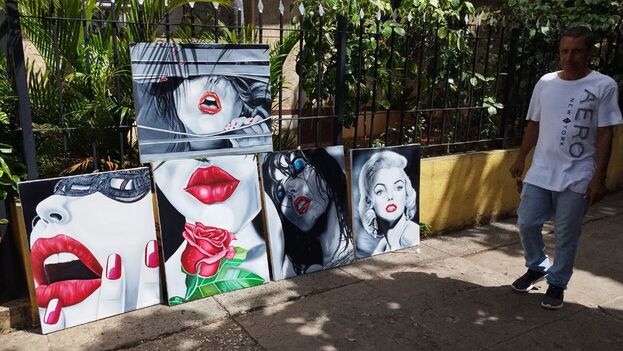
The fictionalized version of the life of Marilyn Monroe, played in the movie by the Cuban actress Ana de Armas, seems to have ignited a frenzy for the “blonde bombshell,” which is now even being replicated in the more tourist-orientated markets, such as the one at No. 23 Calle F, in El Vedado.

A few years ago, in place of the American actress’s portrait, all of the local craft fairs were full of images of Chaplin’s tramp, or of the facade of the Bodeguita del Medio bar, or of brightly colored palm trees on the sea shore. Images of Che Guevara, or austere profiles of Fidel Castro also appeared here and there, for the purpose of pleasing the tourists.

Today, people no longer want to show ideological loyalty by putting up pictures of guerillas or commanders in their living rooms, instead the youthful face of Chicuelo has proliferated so much as to have become a cliché. But the blonde with the pouting lips and the sensual eyes has not been as commonly seen in Cuba as in other countries. Ideological excess, official anti-imperialism and other prudishnesses have kept her somewhat distanced for decades from the paintbrushes and the living room walls. continue reading

To have Monroe’s image in the home might have been seen, only a short while ago, as a mere ideological amusement, but these days it fits perfectly with the universal identity crisis that all Cubans are feeling. It is as if people are reinstating part of a history which was almost unknown on the island until very recently — a country where Michael Jackson never performed, a country where people practically only began to listen to The Beatles once they had already broken up.

Given the choice between an olive green beret and a head of golden locks, many people now prefer to wake  up and look at “Marilyn de Armas.”

Translated by Ricardo Recluso

____________

COLLABORATE WITH OUR WORKThe 14ymedio team is committed to practicing serious journalism that reflects Cuba’s reality in all its depth. Thank you for joining us on this long journey. We invite you to continue supporting us by becoming a member of 14ymedio now. Together we can continue transforming journalism in Cuba.

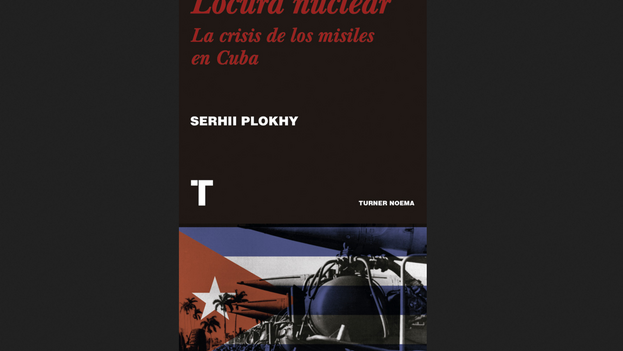
Castro Wanted a Nuclear Attack on the U.S., Even if It Meant the End of Cuba

Cover of the book “Nuclear Folly” by Serhii Plokhy

14ymedio bigger14ymedio, Madrid, October 11, 2022 — Turner, a Spanish-Mexican publishing house, has just released the first Spanish-language edition of “Nuclear Folly: The Cuban Missile Crisis” by the Ukrainian historian Sarhii Plokhy, director of the Harvard Ukrainian Research Institute. It was described by The Wall Street Journal as “one of the most important books ever written on the missile crisis and international relations of the 20th century.”

According to a review published on Tuesday in the Spanish newspaper El Confidencial, the book contains many revelations, two of which stand out. One involves the extremely dangerous ways John Kennedy and Nikita Khrushchev handled the situation, threatening each other and exchanging reckless and confusing words. In another, the author reveals that “Castro really wanted a nuclear attack on the United States to put an end to the empire once and for all, even if that meant the end of Cuba.”

“Khrushchev was not going to start a nuclear war but what he had in mind was a risky, extremely dangerous nuclear operation,” writes Plokhy, explaining that the Soviets decided to place nuclear missiles in Cuba to avoid a repeat of the 1961 Bay of Pigs invasion. Moscow calculated that missiles so close to, and aimed directly at, the continental United States would have a deterrent effect on Washington.

The review likens the book’s tone to that of a thriller, especially in describing   how the weapons were hidden in Soviet boats, shipped to Cuba and assembled on the island by workers who were unaccustomed to the rigors of the stifling Caribbean heat or the endemic diseases to which they succumbed. Though we know how the story ends, the tone is still one of terror as messages between the Soviet and American presidential teams cross paths, leading to the brink of apocalypse. continue reading

“They made almost every conceivable mistake and took every conceivable step,” writes the author. Though war was ultimately averted, the loser — in moral terms at least— was Khrushchev. He had initiated a reckless operation that he had to call off. Nevertheless, as Plokhy notes, “The truth is that he also achieved some of his objectives: Cuba was not invaded and remained communist despite the fact that Castro would always angrily regret that he had been sidelined in all the negotiations.”

The text is “a masterpiece of historical reconstruction, ably explaining how chance, miscommunication, stubbornness and human error conspired to lead us to the brink of catastrophe”, the book jacket states. The author brings the subject into the present, reminding readers that Putin is now in command of a nuclear arsenal whose possible use has become a pressing issue in recent days.

“Read this splendid book to see what happened and to understand how much luck it took to prevent a much worse outcome. Let’s hope we are so lucky today,” it concludes.

____________

COLLABORATE WITH OUR WORKThe 14ymedio team is committed to practicing serious journalism that reflects Cuba’s reality in all its depth. Thank you for joining us on this long journey. We invite you to continue supporting us by becoming a member of 14ymedio now. Together we can continue transforming journalism in Cuba.

The Wave of Protests Against Blackouts and for Freedom Continues to Grow in Cuba

“People started banging on pots from their houses with the blackout; then more people joined, and we all met in front of the Party.” (Captura)

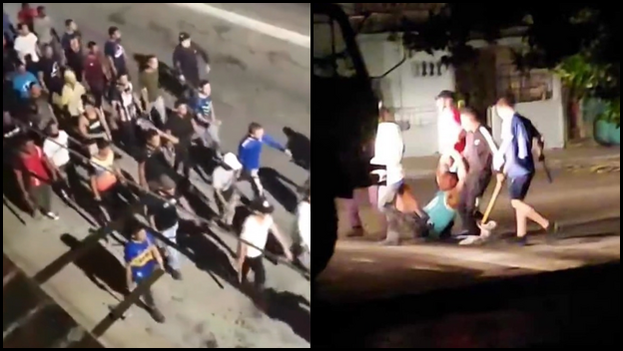
14ymedio bigger14ymedio, Juan Diego Rodríguez, Havana, 11 October 2022 — The leaders of the Communist Party in Bejucal had to endure the shouts of “Freedom in Bejucal,” “The people united will never be defeated” and “Let them leave,” which served as the rallying cry for the protests this Monday night in that municipality of Mayabeque.

“They’ve done too much to us,” said Magalys, who took to the streets with her small son. “People started banging on pots from their houses with the blackout; then more people joined, and we all met in front of the Party,” she says.

The women marched in house coats; the men, without a shirt or with a sweater used as a mask, to avoid identification. All caution is taken when it comes to protecting faces: several videos show police agents, cell phones in hand, recording protesters from afar.

“They didn’t attack us last night because today they will review the videos and go looking for the people they recognize,” explains Magalys. “It’s the new strategy.”

The woman explains that the town is divided into two electrical circuits and that the blackouts, in turns, are nine hours. “They turned off the current at nine in the morning and put it on around six,” she says, a situation to which the population, although dissatisfied, has become accustomed. However, two hours later they suspended electrical service again.

“The justification is that the Electric Company received instructions from the Government to schedule another power outage, after two or three hours, because the current deficit is too large in the country,” she says. continue reading

“The shouts were not only ’turn on the current!’ but also ’freedom, freedom, freedom!’ and ’Let them go!’ says Magalys. “In our area, where the Party is, they turned on the current right away.”

“They immediately cut off the Internet connection, of course,” she adds. The most disappointing thing, Magalys explains, is that half of Bejucal — which already had electricity — stared at the protest as if it had nothing to do with them. “There would have been hundreds of people, but I expected more massiveness. A lot of people were standing in their doorways.”

It all ended around 10:00 p.m., without repression, but with a thorough record of the events by the Ministry of the Interior.

At that same time, in Caibarién, Villa Clara, a man shouted “the day of freedom can be today!” while recording, with difficulty the demonstration with his cell phone. Women, parents with children on their shoulders, elderly people, bike-taxi drivers and electric motorcycles advanced through the streets of this municipality of Villa Clara.

“Come on, join us, Caibarién!” and “Cuba, get out here!” were the shouts of the protest, which extended to La Libertad park, where the headquarters of the municipal government is located. “Yes, we can!” shouted the residents as they reached the most central point in town.

The person who filmed the demonstration clarified again and again that it was a peaceful march. “The violence is from them,” he said, referring to the beatings of the police and the “rapid response brigades” to repress those who take to the streets.

Several protests like these took place on October 10, a significant date because it’s the day that marks the start, in the 1800s, of the wars of independence on the Island, throughout the national territory. Although there are reports of demonstrations and cacerolazos* in other municipalities of Mayabeque such as San José de las Lajas, Güines, Nueva Paz and Jaruco, as well as in Camagüey, Las Tunas, Holguín and Santiago de Cuba, the information available is very fragmentary.

*Translator’s note: Cacerolazos [from ’cacerola’ – saucepan — and the source of ’casserole’ in English] is the word for beating on pots and pans in a protest demonstration.

Translated by Regina Anavy

____________

COLLABORATE WITH OUR WORKThe 14ymedio team is committed to practicing serious journalism that reflects Cuba’s reality in all its depth. Thank you for joining us on this long journey. We invite you to continue supporting us by becoming a member of 14ymedio now. Together we can continue transforming journalism in Cuba.

Prisoners Defenders Registers 36 New Political Detentions in Cuba in September

Rapid Response Brigades activated by the regime to suppress the protests in Havana between September 29 and October 2, 2022. (Collage)

14ymedio biggerEFE (via 14ymedio), Madrid, 11 October 2022 — The Spanish organization Prisoners Defenders (PD) registered 36 new political arrests in Cuba in September, according to its latest report released on Monday.

The list prepared by the NGO — as of September 30 — states that in Cuba there are “a total of 1,026 political and prisoners of conscience suffering judicial convictions or provisions of limitation of liberty by prosecutors without any judicial supervision.”

It also considers that those 1,026 prisoners are related to “an activism or evident public expression of opposition to government policies and in defense of the fundamental rights of human beings.”

In its most recent count, PD reports that among the last 36 cases there are more than 20 people who were arrested during the protests linked to the prolonged power cuts in recent days, exacerbated after the passage of Hurricane Ian through the western end of the country.

The statement says that there were 442 prisoners at the beginning of October 2021, and in the last twelve months another 819 have been added: a total of 1,261. continue reading

It adds that 234 prisoners have been released from prison in this same period, 26 of them during this month, mostly after full completion of the sanction imposed.

The organization specifies that 181 protesters are included in its list who have been convicted of sedition, and that at least 171 have been sentenced to an average of 10 years and two months of imprisonment.

It also reports that among the 1,026 there are 34 minors, 24 serving sentences and ten being prosecuted.

According to their classification, there are currently 766 prisoners of conscience deprived of liberty, 231 with limited freedom and 29 cases of other political prisoners in Cuban prisons.

The report also details that 739 prisoners of conscience have been sentenced with sentences of up to 30 years, 17 have sentences of 30 years in prison or life imprisonment, and at least 117 women (including transgender women) still remain with political and conscience orders and convictions.

Translated by Regina Anavy

____________

COLLABORATE WITH OUR WORKThe 14ymedio team is committed to practicing serious journalism that reflects Cuba’s reality in all its depth. Thank you for joining us on this long journey. We invite you to continue supporting us by becoming a member of 14ymedio now. Together we can continue transforming journalism in Cuba.

Cuban Baseball Leaders Punish Four Official Journalists

Sports journalists who were critics of the Elite League were not invited to the press conference this Monday. (Cubadebate)

14ymedio bigger14ymedio, Madrid, 11 October 2022 — Whether it  was appropriate, in the midst of Cuba’s economic crisis, to spend money on 5,400 uniforms for a new baseball tournament, is a matter for a long debate; but that the creation of the Elite League will take its toll on the authorities seems beyond doubt. On this occasion, it was the sports leaders who applied information censorship… to their own press.

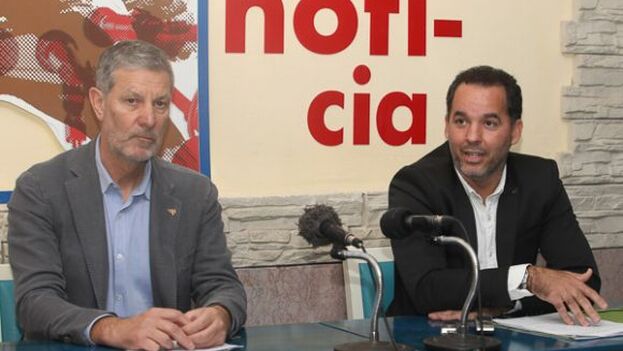
The sports journalists Boris Luis Cabrera Acosta, Joel García, Norland Rosendo González and Jhonah Díaz González weren’t invited this Monday to the press conference of the National Baseball Commission, in which the president of the firm Teammate, based in San Marino, gave explanations personally — after flying from Italy — for the delay in the arrival of the uniforms that caused the postponement of the competition.

They are not just any reporters. These are the journalists of Juventud Rebelde, Cubadebate, Trabajadores and Prensa Latina: the main media of the ruling party at the state level. They all had something in common: they had criticized the Elite League from the pages of their newspapers, which is probably why they were excluded from the press conference.

“This morning an exchange took place in the Adolfo Luque Hall of the Latin American stadium among the directors of the company Teammate and several ’chosen’ journalists, to explain the reason for the delay in uniforms and other sports equipment, which has made it impossible to begin the so-called Elite League,” Boris Luis Cabrera Acosta wrote. continue reading

The Cubadebate journalist is the only one who has explicitly alluded to his exclusion, although, in a much more cryptic way, so did Jhonah Díaz González, who, quoting his other colleagues on his Facebook account, published an image that reads: “Great idea: divide and you will conquer.” Although he refuses to explain himself further, there are those who understand it well, such as the former Granma photojournalist Ricardo López Hevia, who answers him: “The method is historic… If you criticize, you don’t ride.” To which the editor of Prensa Latina responds: “The ironic thing — at least in my case — is that right now I’m set up. They may notify me and make me the subject of a trend: ’you’re not going’.”

The users who have commented on Boris Luis Cabrera’s publication are much more numerous: more than 500 people are surprised, outraged or reproachful for what the sports columnist explains as a “bread and circus show. The hand-picked journalists take care of their trips by tooth and nail. Every day they move further away from the truth,” writes a commentator. Another, with a firmly revolutionary speech, doesn’t hesitate to turn to Castro to show the exit door to the sports authorities if they don’t want to expose themselves to a lack of confidence from “above.”

“If I stand by Fidel’s words, this official is now superfluous in his position: ’Revolution is never to lie or violate ethical principles; it’s a deep conviction that there is no force in the world capable of crushing the force of truth and ideas.’ Someone from “above” has to read this and take action on the matter or you lose all faith in…,” he says, leaving the end of the sentence for someone who gets it to fill in.

The date of the first Elite League is still up in the air, because, with or without the press, what the authorities weren’t able to offer was a new date. Alessandro Tommasi, the director of Teammate, who was able to arrive in time to face the charge against his company, considered it “very important” with his trip to Cuba “to talk about the delay of the League.” Rafael Llames said that Lantia Marítima was committed to transporting the cargo, with September 28 as the arrival date.

“We thought that everything was coming; the Federation couldn’t really check what we had there because of the hurricane. The warehouses were closed, and this couldn’t be verified until several days later. Then came the clothes for the referees and other items such as pants, backpacks, briefcases, etc.” It wasn’t very clear what is missing, apparently a package, but  it’s true that Llames said: “We don’t want to predict when the League could start until everything is reviewed. We can assure you that we’re working intensively on this matter.”

Then came the speeches and how happy Teammate is to work with Cuba, the country that makes them happiest, they said. But the controversy hasn’t stopped, and there are still many who don’t quite understand the reason for ordering such a quantity of garments from a foreign company, rather than being able to manufacture the uniforms on the Island, favouring its fabric production and saving on imports. “Let them do a review, and if they didn’t make an offer within our country, let them throw it all away,” proposed a follower when the postponement of the tournament was announced last Thursday due to the absence of the imported clothes.

The four castigated journalists had been very critical of the championship for different reasons, although ultimately they all ended up at the same point. Neither the background nor the shape of the Elite League convinced them, nor did they like the names of the teams. The fans aren’t filling stadiums, and the Cuban sport can’t manage to keep its best athletes on the Island to stimulate a public, which in turn is unmotivated.

Now to the chain of events is added not only the uncertainty about when the uniforms will arrive and what the calendar of the competition will be, but whether the authorities are lying. “I only want to remember that on September 22, six days before the arrival of that first shipment and seven days before his appearance on the Roundtable show, national commissioner Juan Reinaldo Pérez Pardo had assured me that everything was in the country, as I published that day on my Facebook profile,” says Cabrera Acosta.

Translated by Regina Anavy

____________

COLLABORATE WITH OUR WORKThe 14ymedio team is committed to practicing serious journalism that reflects Cuba’s reality in all its depth. Thank you for joining us on this long journey. We invite you to continue supporting us by becoming a member of 14ymedio now. Together we can continue transforming journalism in Cuba.

A Digital Archive in the Diaspora Will Preserve Cuban Cinema

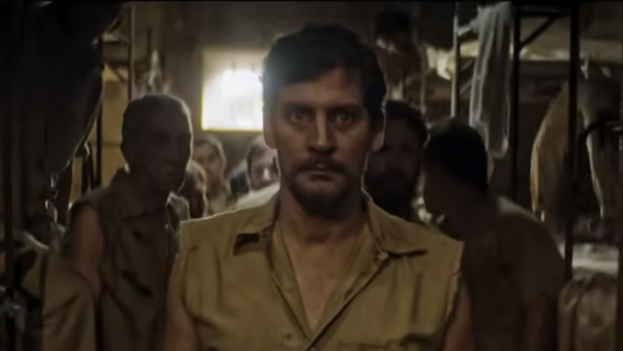
Frame of Plantados [Planted], by Lilo Vilaplana. (Screen capture)

14ymedio bigger 14ymedio, Havana, 11 October 2022 — Classics of Cuban exile cinema such as Conducta impropio [Improper Conduct] (1983), La ciudad perdida [The Lost City] (2005) and Plantados [Planted] (2021) will be collected on October 20 in the Archive of Cuban Diáspora Cinema, a project co-directed by academic Santiago Juan-Navarro and filmmaker Eliécer Jiménez-Almeida.

This initiative seeks to organize in the public repository the formidable creative collection of the filmmakers who left the Island in recent decades, and whose work addresses the issues of alienation, politics, resistance and Cuban history from 1959.

A press release from the organizers announces the launch of the project at the American Museum of the Cuban Diaspora, in Miami,at 7:00 p.m on October 20, the day in which Cuban culture is celebrated.

During the ceremony, the Cuban Diaspora Film Archive prize will be awarded to filmmaker Orlando Jiménez Leal, known, among other things, for having filmed together with Sabá Cabrera the short documentary PM, whose censorship initiated the cultural policy controversies of the Revolution. That same night, the film Improper Conduct will also be shown, by the director himself.

“By collecting and archiving materials related to these filmmakers, the project seeks to lay the foundations for a new history of Cuban cinema that includes the extensive audiovisual production done outside Cuba,” says the statement, which presents the character of the Archive as a “research project.” continue reading

The Archive will integrate five projects. The first, Filmmaker, groups the data of Cuban filmmakers in exile and, for the moment, has names such as Néstor Almendros, Nicolás Guillén Landrián, Gustavo Pérez and Lilo Vilaplana.

With Forum, a biennial symposium, and FESTin, a traveling exhibition, the Archive will enrich its film collection. Cubafile will take care of the cinema that takes place on the Island, and the total progress of the initiative will be recorded by CDfAReview, a magazine specialized in Cuban cinema.

In addition, awards and diplomas will be awarded on an annual basis, which will motivate new creation and establish the trajectory of notable filmmakers.

The Archive has the support of the International University of Florida (FIU), the Provost Office, the Wolfsonian Laboratory for Public Humanities, the Department of Modern Languages of the FIU, the Cuban Research Institute (CRI), the Kimberly Green Centre for Latin American and Caribbean Studies (LACC) and the CasaCuba cultural space.

“For years there’s  been a complaint that the universities don’t do enough to publicize Cuban reality,” say Juan-Navarro and Jiménez-Almeida. “The Cuban Diaspora Film Archive is committed to changing that situation.”

In addition to an extraordinary conservation project, the Archive of Cuban Diaphanous Cinema becomes the only academic initiative, inside and outside the Island, that challenges the unilateral discourse of the Cuban Institute of Cinematographic Art and Industry (ICAIC).

This organization systematically censured and cancelled the films of several filmmakers, who today make up the staff of the Archive. From its origin, ICAIC was one of the most severe ideological bastions of the Revolution, under the command of its president, Alfredo Guevara.

Juan-Navarro and Jiménez-Almeida are reacting against that ideological and archival monopoly by focusing on their project to rescue and systematize the Cuban visual legacy in exile.

Translated by Regina Anavy

____________

COLLABORATE WITH OUR WORKThe 14ymedio team is committed to practicing serious journalism that reflects Cuba’s reality in all its depth. Thank you for joining us on this long journey. We invite you to continue supporting us by becoming a member of 14ymedio now. Together we can continue transforming journalism in Cuba.