With 35,000 followers on Facebook and 50,000 on Instagram, the creators of El4tico appeal to a generation raised amid scarcity, censorship, and a lack of prospects.
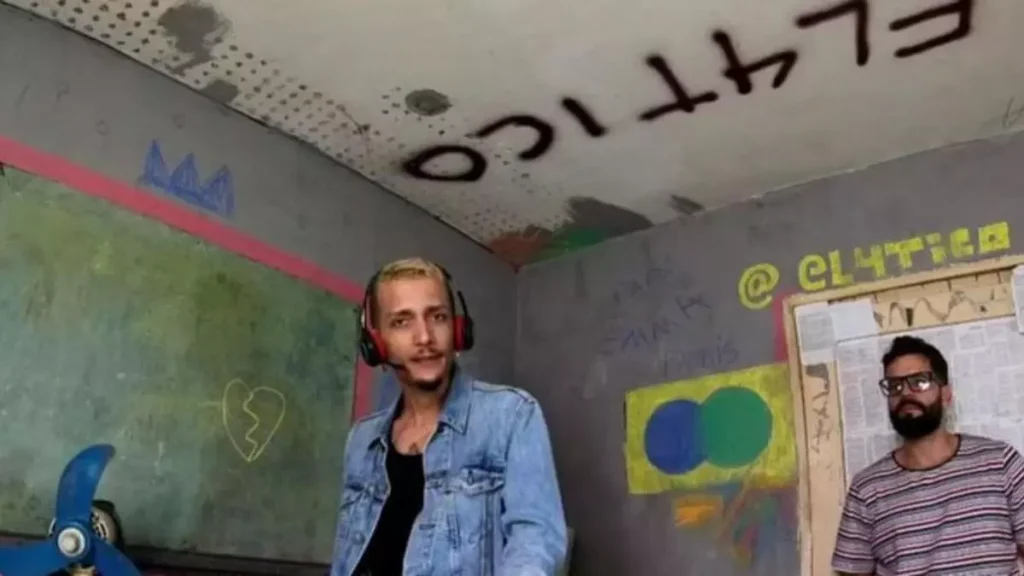
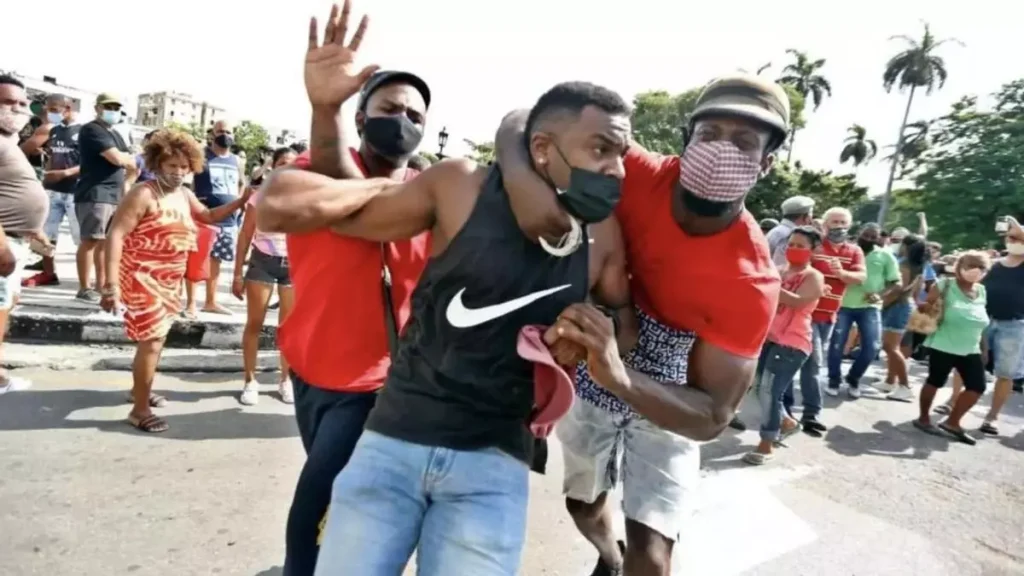
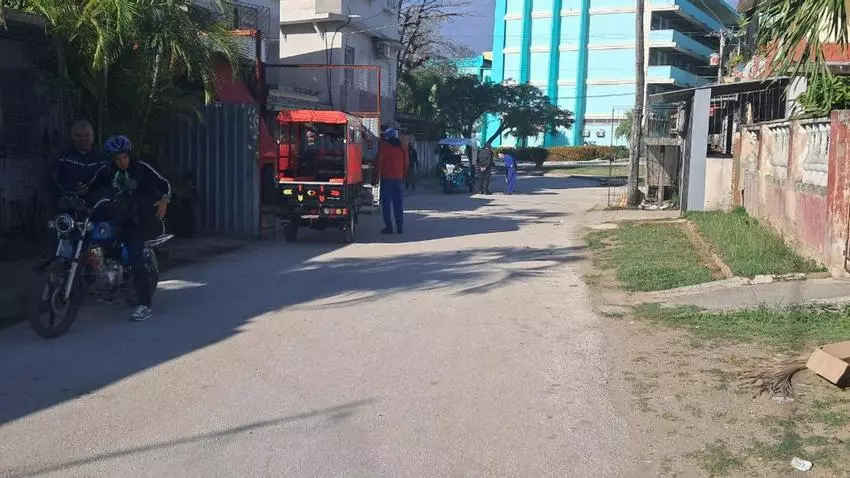
 14ymedio, Havana, February 6, 2026 – This Friday in Holguín, police and State Security detained Ernesto Medina and Kamil Zayas, members of the El4tico project, during an operation that included surrounding a home in the Piedra Blanca neighborhood. From 6:33 a.m., neighbors confirmed the presence of two patrol cars and a police truck. The deployment looked like a raid against armed and dangerous criminals, although the young residents’ “crime” is something else: publicly expressing what they think.
They are members of an independent space for audiovisual creation and political opinion with a strong presence on social media. The harassment by repressive forces was recorded and shared by the communicators themselves on their digital stories. The action confirms a hardening of police pressure against a group that has gained visibility for its critical and direct discourse against the Cuban regime.
In the video, just a few minutes long, several agents—at least one in uniform and others in plain clothes—are seen stationed at the entrance of the home. The officers display their usual arrogance, though this time they are aware they are being watched by a phone camera broadcasting live. From inside the house, the project’s members repeatedly ask about the legal basis for the operation, even though they know that in Cuba, State institutions act under directives from the single party and its control apparatus. continue reading
The detainees were taken to the Criminal Investigation headquarters in the city of Holguín, popularly known as “Everybody Sings”
According to sources close to El4tico’s members, Medina was detained and taken away in handcuffs. During the operation, agents confiscated his electronic devices. Doris Santiesteban, who also lives in the house, remained there, though cut off from communication. Zayas, another member of the project, was arrested at his own home, where authorities likewise seized his work equipment.
The detainees were transferred to the Criminal Investigation headquarters in Holguín, popularly known as “Everybody Sings,” an allusion to the methods used during interrogations.
El4tico was launched by these young people from Holguín who decided to turn a room in their home into an improvised studio to produce videos for social media. From there they publish political messages, civic analyses, and calls for citizen responsibility. Their style is blunt, without metaphors or euphemisms, and speaks directly to a generation raised amid scarcity, censorship, and a lack of expectations.
Unlike the image of a grateful youth the regime tries to project, the project’s members escape the applauding, submissive, or silent mass the authorities aspire to. Their content lays bare the moral degradation of the system from within, doing so with a transparent, raw aesthetic, without affectation. That combination has allowed them to amass more than 35,000 followers on Facebook and surpass 50,000 on Instagram, in addition to a growing audience on platforms such as TikTok and YouTube.
This is not the first time El4tico’s protagonists have faced harassment by the authorities. In recent months they have reported verbal summons, informal warnings, and repeated police visits. According to their accounts, the aim is not to investigate a specific crime, but to intimidate, wear them down, and force silence, a practice widely documented against activists, independent journalists, and content creators who are inconvenient for those in power.
They have understood that documenting the harassment and making it public is both a form of protection and a denunciation
The episode comes just one day after President Miguel Díaz-Canel, at a press conference reserved for friendly media, repeated the word “youth” 28 times to underscore the role of new generations. Judging by the facts, the young people of El4tico are not among those whom the president asked to be treated “as the important people they are within our society,” nor among those who “continue to have confidence because they know that life projects are more possible here than elsewhere.”
The problem for the regime is that these young people belong to a generation that no longer waits for permission to speak and is not easily intimidated by the uniform. They have understood that documenting harassment and making it public is, at once, a form of protection and a denunciation.
Since the capture of Nicolás Maduro in Caracas, a tightening of repression has been recorded in Cuba. In January alone, the Cuban Observatory of Human Rights (OCDH) documented more than 400 repressive actions nationwide, including police summons,, arbitrary detentions, acts of repudiation, and threats against activists, journalists, and content creators. In that context, a recent report by the Foundation for Human Rights in Cuba notes the direct participation of Communist Party and Young Communist League cadres in acts of intimidation, including those directed against the U.S. chargé d’affaires on the Island, Mike Hammer.
By recording and sharing the scene, El4tico’s members move the conflict from the private sphere to the public digital space, where the State loses control of the narrative. The camera exposes what power prefers to happen in silence and shows the world the hypocrisy of a regime that casts itself as a victim of threats from a foreign power while harassing, besieging, and repressing its own dissenting citizens.
Translated by Regina Anavy
____________
COLLABORATE WITH OUR WORK: The 14ymedio team is committed to practicing serious journalism that reflects Cuba’s reality in all its depth. Thank you for joining us on this long journey. We invite you to continue supporting us by becoming a member of 14ymedio now. Together we can continue transforming journalism in Cuba.