Some 46.5% of those surveyed by the NGO stated that they suffered direct interference with their communications in messaging applications
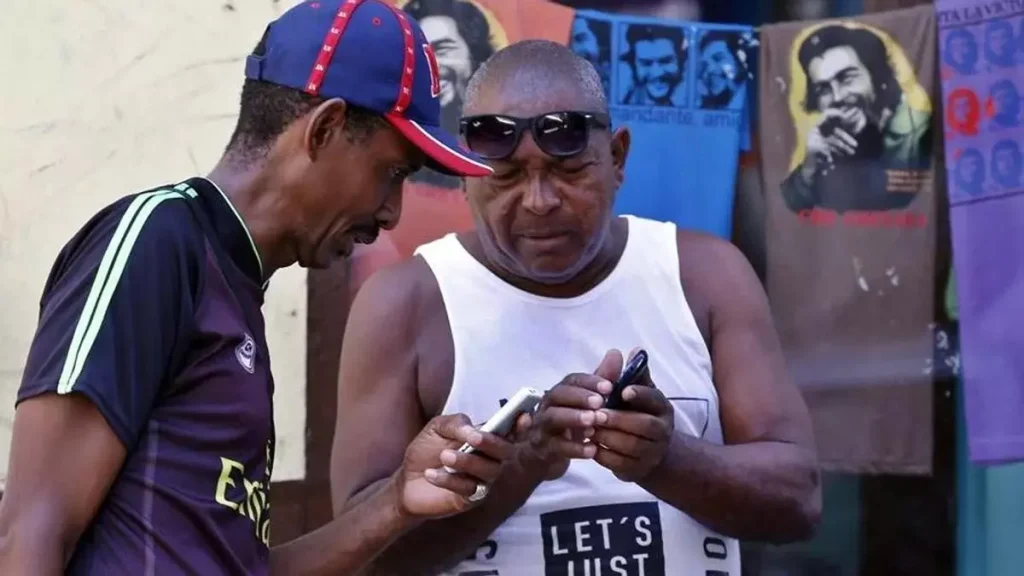
 EFE (via 14ymedio), Madrid, 20 January 2026 — Cuba has consolidated a digital surveillance system designed to “neutralize dissent” based on “punitive” laws, spyware and other means of technological intrusion, according to the First Comprehensive Report on Digital Surveillance in Cuba by the organization Prisoners Defenders.
In the document, based on 200 testimonies from victims inside and outside the country, the NGO accuses the Cuban government of operating under a “Big Brother” logic – referring to the all-powerful character in George Orwell’s novel 1984 – in order to dismantle “independent social, civic and political networks, as a form of subjugation.”
During the presentation of the report, held this Tuesday remotely, the president of Prisoners Defenders, Javier Larrondo, lamented the level of “self-censorship” that the cyber-surveillance system has caused on the Island.
“The level of self-censorship is tremendous, the terror among the population of posting on social media or even talking on WhatsApp.”
“The level of self-censorship is tremendous, the terror among the population about posting on social media or even talking on WhatsApp,” he denounced.
The report highlights that 46.5% of respondents stated that they suffered direct interception of their communications on messaging applications, such as WhatsApp, and that the content of their conversations was mentioned by the police during interrogations or arrests without warrants.
“It is not a temporary technical phenomenon, but a central component of a political control model,” the text emphasizes.
Along those lines, the report documents that virtually all respondents (98.5%) have suffered “sanctions or threats” because of the content of their digital conversations or publications.
Among the 200 testimonies, the presence of activists (51%), relatives of political prisoners (33.5%) and independent journalists (15%) stands out.
The NGO’s investigation identified 10 surveillance patterns, including “cyber-patrolling” (systematic observation of publications and communications), selective internet shutdowns, and “coercive digital intrusion.”
“These practices eliminate any reasonable expectation of privacy”
This last practice consists of forcing victims to unlock their phones without a court order, an action that affected 65.5% of the sample.
Once access is obtained, according to the report, the authorities not only review the information, but also intercept private communications on messaging applications (reported by 46.50% of respondents).
After the intrusion, it is common for victims to detect sessions opened from unknown locations (49.5%).
Another key finding in the text is the blocking of internet access, a phenomenon experienced by 77.5% of respondents. These outages mostly coincided with events such as protests or symbolic dates, such as the anniversary of the Island-wide anti-government protests of 11 July 2021.
“These practices eliminate any reasonable expectation of privacy. This pattern demonstrates that private communications are not protected in Cuba. Surveillance operates without controls, without judicial authorization, and without clear limits, directly violating the right to privacy, intimacy, and freedom of expression,” criticized Caren Herrera, legal director of the organization.
On the other hand, the NGO also criticized the “instrumentalization of the law,” pointing to regulations such as Decree-Law 370 and the new Penal Code. These laws, it stated, allow for the imposition of hefty fines and the confiscation of equipment for disseminating information contrary to “the public interest,” a term the organization describes as “vague and discretionary.”
____________
COLLABORATE WITH OUR WORK: The 14ymedio team is committed to practicing serious journalism that reflects Cuba’s reality in all its depth. Thank you for joining us on this long journey. We invite you to continue supporting us by becoming a member of 14ymedio now. Together we can continue transforming journalism in Cuba.