The numerical disproportion between those who cling to the current model and those who want political openness is overwhelmingly in favor of the latter.
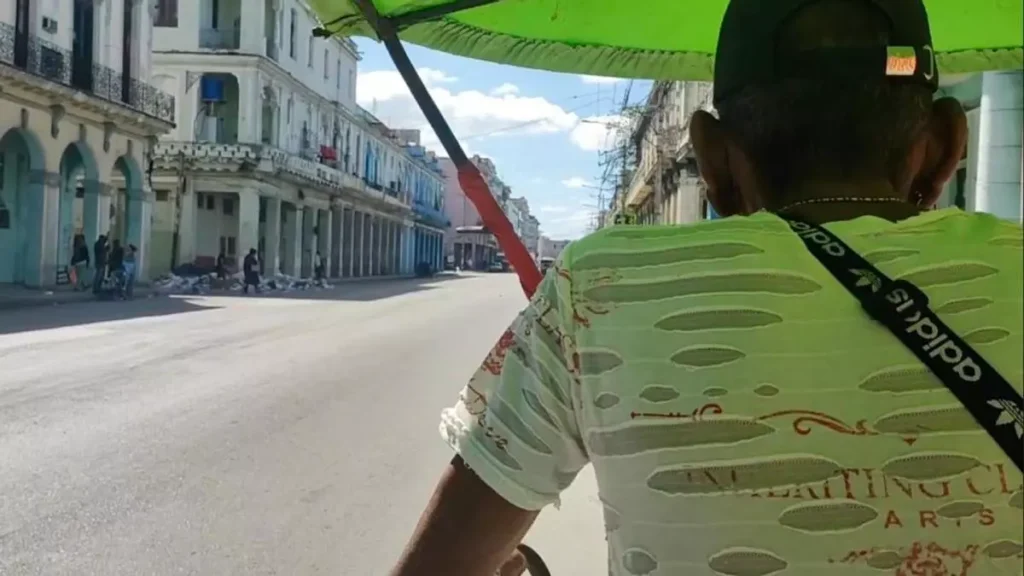
 14ymedio, Yoani Sánchez, Generation Y, Havana, 11 February 2026 — Next to me in the shared taxi, a young man is listening to a YouTube video at full volume on his cell phone. The video harshly describes Alejandro Castro Espín, mentions the word “dictatorship” several times, and denounces the repression of the Cuban regime. No one bats an eye. No one tells him to turn off the device. No one confronts him ideologically. A few minutes later, in a long line outside an office of the Etecsa monopoly, a woman is listening to a song by Los Aldeanos that criticizes Castroism. The state employees aren’t even bothered, and some people in line are even singing along to the chorus
When I get home, a neighbor who for years has been an obvious informant for the political police approaches me to say that “something has to happen, because this can’t go on.” On the stairs to the 14th floor, without electricity and with the elevators out of service, another neighbor jokes that the fictional character Cuco Mendieta, a Cuban supposedly a member of the U.S. Delta Force who participated in the capture of Nicolás Maduro, is about to arrive in Havana on a mission very similar to the one in Caracas. We laugh, and the climb becomes easier.
Never before has the Cuban government been criticized so openly. I don’t recall a single moment in our recent history when criticism of the Communist Party was so widespread, so corrosive, or so loud. “Gusanear,” that verb borrowed from official insults, is the daily practice of millions of people on this island. They “gusanear” at bus stops, at workplaces, and in lines to deposit a few dollars onto that Clásica card that allows them to buy what little gasoline remains in the country. They “gusanear” at the rationed bodega, at school meetings where they announce the suspension of in-person classes, and on the bus terminal platform, empty of vehicles and hope.
‘Gusanear’, that verb taken from official insults, is the daily practice of millions of people on this Island.
Defenders of the system are at a significant disadvantage in Cuba. Nothing remains of the ideological fervor they once displayed. Many are silent, scanning the horizon for the change that is inevitably approaching, while othershave joined the ranks of the critics at a surprising speed. Masks are falling away, medals are being hidden, and patting the neighborhood opposition member on the back is a way of making one’s position clear. The numerical disparity between those clinging to the current model and those who want political opening is overwhelmingly in favor of the latter. We are, in the end, the majority, and “they” know it.
In the face of this panorama, Cuban President Miguel Díaz-Canel should think twice before asking for sacrifices and calling for “creative resistance.” His ability to rally support is at an all-time low, the Party he leads is experiencing a period of extremely limited backing, and those who until yesterday were preparing for the front lines will no longer answer the call to self-sacrifice. Not only has fear shifted sides, given the regime’s dwindling numbers, but the hope that this difficult moment will give way to “a free Cuba” has taken root in the collective consciousness. “It won’t be long now,” another neighbor tells me from her balcony. “We’ll get rid of them this time,” she adds before hanging up the sheet she washed by hand, amidst the blackout.
____________
COLLABORATE WITH OUR WORK: The 14ymedio team is committed to practicing serious journalism that reflects Cuba’s reality in all its depth. Thank you for joining us on this long journey. We invite you to continue supporting us by becoming a member of 14ymedio now. Together we can continue transforming journalism in Cuba.