
Poverty in Cuba Surpasses the Worst Moment of the ‘Special Period’

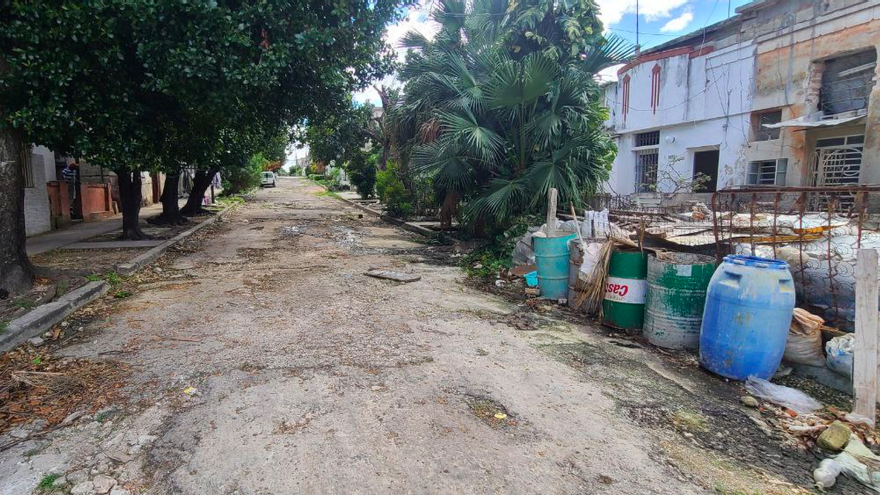
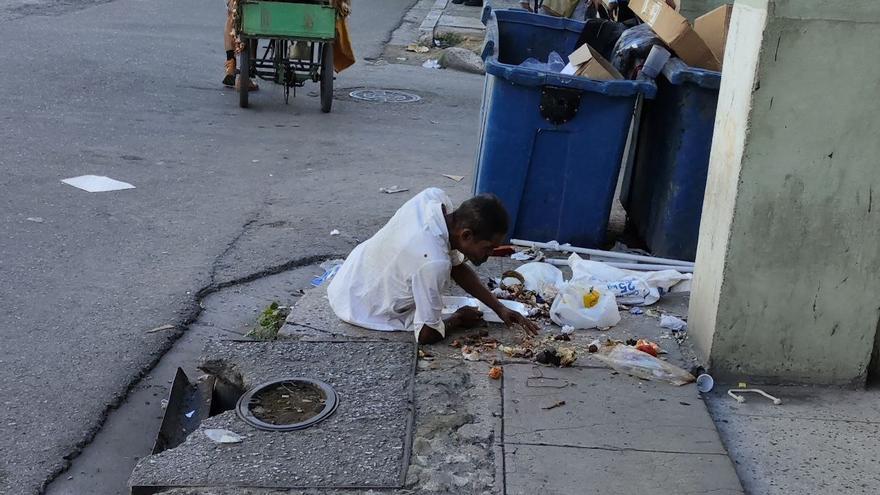
Poverty has increased considerably in Cuba in recent years, with inflation, the decline in the quality of assistance and the loss of currency value, among other things. (14ymedio)

14ymedio bigger14ymedio, Madrid, February 12, 2024 — Cuba has fallen thirty places in the Human Development Index (HDI) prepared by the United Nations in just 15 years and is at risk of moving from the group of States at a high level to a medium level, which would mean a severe blow for the Government, which for years has displayed this indicator – which, along with income, takes into account the life expectancy and literacy of the population – as one of its great successes. The data is even more worrying if one observes that in 1995, in the middle of the Special Period*, the Island was 13 positions higher than it is today.

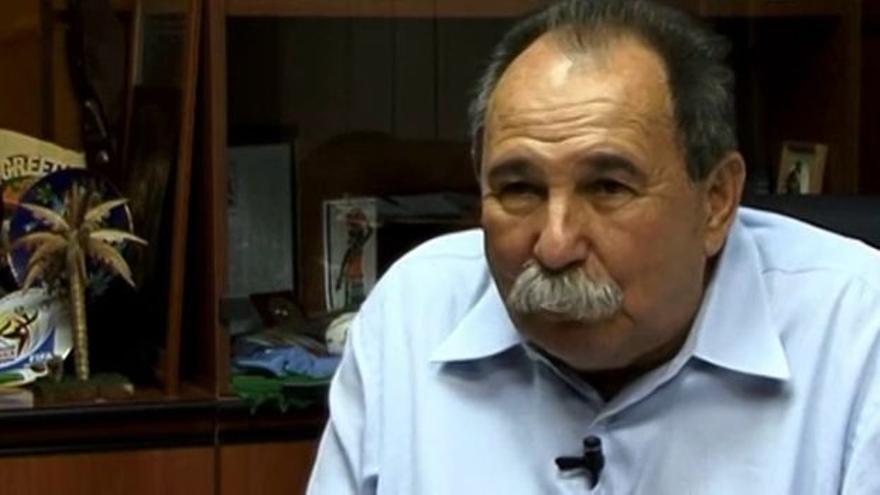
The figure appears in an article published this Monday by the left-wing anti-capitalist media Kaosenlared entitled Cuba, Poverty and Data, signed by the economist, former spy and retired journalist Manuel David Orrio del Rosario, author of several recent articles very critical of the government policy. It cites several indicators about the worsening living conditions of Cubans, drawing attention to the two pillars on which the Revolution built its international myth, Education and Health, measures historically favored by the regime.

The HDI divides countries into four groups: very high (current index greater than 0.8), high (from 0.7), medium (more than 0.55) and low (all others). In 1990, Cuba was ranked 53rd in the world (with 0.68, which was then its highest score) and in 1995, during the Special Period, it fell to 70th place. However, coinciding with the beginning of the Venezuelan subsidy, Cuba recovered lost ground and climbed to position 55 (in 2007). In 2018, a decline began, later aggravated by the pandemic, which has taken it to 83rd place in the world ranking, with a score of 0.764. continue reading

As the article presents it: “The numbers are relentless: according to the economist and demographer Dr. Juan Carlos Albizu-Campos et. al., in recent years the largest of the Antilles is declining in its life expectancy at birth, its access to education and work and income, all of which would explain its drop of 30 places in the Human Development Index and would create the possibility that it would cease to be a country of High Human Development and become one of average.”

Another of the devastating data that appears in the text is the Gini coefficient, which has gone from 0.22 in 1989 to more than 0.45 in 2022. The number measures the inequality of the population in a figure that goes from 0 to 1 and makes it clear how the Island, although it achieves a good number compared to the rest of the continent, has doubled its rate of social differences.

The note makes it clear that the word poverty “is beginning to become common among academics, more than is desirable” and, although it “alerts” about the influence of the US “blockade” on Cuba, it places on the same level the “serious problems of the economic model, policy and performance, marked by virtual stagnation of the Gross Domestic Product (GDP) since more or less 2013.”

In addition, the author reproaches that the Government is hiding many other data that it neither publishes nor updates, among them the population and housing census

In addition, the author  reproaches that the Government is hiding many other data that it neither publishes or updates, including the population and housing census, which should have been carried out in 2022 and has already been delayed twice, allegedly due to economic problems. “How can there be governability without information? Are the deficiencies – basically fuel, according to reports – really so serious? (…) What is missing: resources or priorities?”

Orrio del Rosario also resorts to one of the data that raises the most eyebrows among the population, the excessive investment in tourism. For this he takes a graph prepared by the independent economist Pedro Monreal in which the percentages of public money allocated to business and real estate services, hotels and restaurants and investment in agriculture appear. The 47.6% allocated to tourism in 2020, the year of the pandemic and border closure, stands out, when in the same year 5.9% was dedicated to food.

“This policy is causing, from the beginning, a severe deficit in the supply of food and subsequent inflation, this deficit being recognized as the first cause of the galloping rise in prices, without prejudice to the impacts caused in other sectors and the effects on the value real wages and pensions, which have long been below 1989!” says the author.

Another of the factors to which the economist attributes the increase in poverty is the poor management of the reforms, which he considers very necessary but extraordinarily late. He notes, for example, that agricultural cooperatives were proposed in 1985, while MSMEs [Micro, Small and Medium Enterprises] arrived 21 years after the first mentions of their need. Nor does there exist, he reproaches, a business law, despite the insistence on saying that the state company is the main economic actor.

Another of the factors to which the economist attributes the increase in poverty is the poor management of the reforms, which he considers very necessary but extraordinarily late

The note addresses two other issues responsible for the increase in the crisis. One is the late, “poorly carried out and even counterproductive” monetary and exchange unification, whose purpose was to convert the peso into a sovereign currency and which has led to the circulation of three currencies and two units of accounts. As a consequence Cuba is facing inflation and the fall of salaries and pensions. According to some estimates, the nominal salary of 3,854 pesos in 2021 was equivalent to a real salary of 1,117 pesos in 1989, making things worse today after two years of rampant inflation.

Finally, he mentions an increasingly deficient attention to social policies, which is deteriorating the services that previously led Cuba to regional leadership in areas such as health and education, among others, “all of which are key factors in the decline of the HDI.”

“The four factors, plus others, come together in a kind of explosive cocktail that is attacking the credibility of the Cuban socialist project; none is directly related to the external factors mentioned above; they are internal political problems. Period,” the author concludes.

The article closes by asking the Government to explain what “errors and distortions” it intends to correct – according to its own announcements – and why these occurred, in addition to how it plans to stop once and for all the inflationary spiral that threatens Cubans with increasing poverty.

*Translator’s note: In addition to the articles linked to, more about the “Special Period in the Time of Peace” can be read here.
____________

COLLABORATE WITH OUR WORKThe 14ymedio team is committed to practicing serious journalism that reflects Cuba’s reality in all its depth. Thank you for joining us on this long journey. We invite you to continue supporting us by becoming a member of 14ymedio now. Together we can continue transforming journalism in Cuba.

A Russian Flight is Delayed 18 Hours in Cuba Due to Lack of Fuel

Russian tourists protest at Jardines del Rey International Airport. (Mash/Capture/Telegram)

14ymedio bigger14ymedio, Havana, February 11, 2024 — A group of Russian visitors were victims of the poor service provided by the Cuban tourism industry and decided to protest at Cayo Coco airport after an 18-hour delay in the fuel supply to the aircraft that was leaving for Moscow.

According to the Russian portal Bel, the flight was delayed due to a breakdown of the tanker truck that was transporting the fuel to the airport, while the tourism site Tourdom reported that the company in charge of the connection, Nordwind Airlines, stated that the reason for the delay was because “there was not enough fuel” in the Island terminal “to refuel the aircraft.”

The lack of fuel was known while the plane was preparing for takeoff, and the passengers were temporarily accommodated in a hotel

The lack of fuel was known while the plane was preparing for takeoff, and the passengers were temporarily accommodated in a hotel. A video of the protest was posted on Russian media. The  tourists, angry and complaining, were not informed of what happened. One man stated that “they didn’t give us water for a long time. At three in the morning we checked into the hotel, and at seven they told us to get back on the bus.” They finally arrived at the airport for their flight to the Moscow-Sheremetievo International Airport. continue reading

Nordwind had planned to fly from Cayo Coco (Jardines del Rey International Airport) to Moscow on February 8 at six in the evening, but it left a day later and arrived in the Russian capital this Saturday.

Currently, Nordwind is the only airline that operates direct flights between Moscow and Cayo Coco.

The terrible services offered by the Island in the tourism sector are not exclusive to airports. On January 3, 14ymedio published the story of Maidelys, a Cuban woman who suffered a tortuous trip on a Viazul bus between Ciego de Ávila and Havana.

Three hours stranded on the highway due to the breakdown of the vehicle made several passengers, including foreigners and Cubans living abroad, miss their return flights.

After the reopening of borders that were closed due to COVID-19, the official Cuban press began to sell the Jardines del Rey as a safe destination despite the epidemiological complexities. The airport of the same name began to receive up to 35 flights per week.

On December 24 of last year, the Russian state airline Rossiya, a subsidiary of Aeroflot, resumed its direct flights between Moscow and Havana

In 2021, during the coronavirus crisis, Russia positioned itself as the first country to send tourists to Cuba. However, in September 2023, it was in third position with 120,065 tourists, behind Canada (709,555) and the United States (126,600).

On December 24 of last year, the Russian state airline Rossiya, a subsidiary of Aeroflot, resumed its direct flights between Moscow and Havana. This link between the two capitals had been suspended since March 2022, as a result of the sanctions imposed by the European Union on Russia for its invasion of Ukraine. As a consequence, flights from Moscow had to travel over the North Pole to reach Cuba.

According to Russian Deputy Prime Minister Dmitri Chernishenko, between January and October 2023, tourism to Havana increased by 3.5 times, and by last November 164,197 Russian tourists had arrived on the Island.

Translated by Regina Anavy

____________

COLLABORATE WITH OUR WORKThe 14ymedio team is committed to practicing serious journalism that reflects Cuba’s reality in all its depth. Thank you for joining us on this long journey. We invite you to continue supporting us by becoming a member of 14ymedio now. Together we can continue transforming journalism in Cuba.
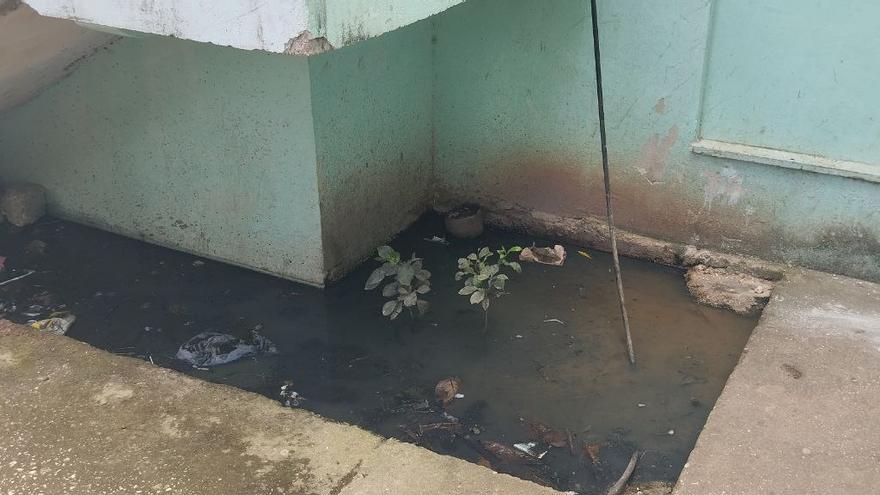
Bad Smells and Feces Floating at the Entrance Force the Closure of a Doctor’s Office in Holguin, Cuba

“Between the bad smells and the feces floating at the entrance, maintaining hygiene is impossible.” (14ymedio)

14ymedio bigger14ymedio, Miguel García, Holguín, February 10, 2024 — “I don’t know what’s worse, the plague or the lack of attention,” says Clara, a few feet from Office 24 of the Pedro del Toro Saad health clinic in the city of Holguín. On the outskirts of the premises, located on the road to the Mirador de Mayabe, a fetid liquid springs up from the sewer pipes and accumulates at the entrance. The spillage began last December, less than six months after the property was subjected to a “capital repair.”

“Just when we were under the illusion of being able to have higher quality care, we began noticing how the entrance was filled with sewage,” explains Clara, a diabetic with high blood pressure who lives nearby. “The doctor and nurse immediately reported the problem, but there’s no way they can work there because it’s a health hazard. Between the bad smells and the feces floating at the entrance, maintaining hygiene is impossible.”

The spillage began last December, less than six months after the office was subjected to a “capital repair”. (14ymedio)

The Hilda Torres neighborhood clinic serves 1,032 patients in the area, including two pregnant women. After closing the premises, the health authorities referred the patients to Office 25, which is some 650 feet away, but the congestion in the consultation rooms and the excessive number of patients are detriments to the care that they can receive. “It’s not worth going there; it can’t cope with all the patients. You spend hours for nothing and have to go back home.” continue reading

A week ago, after many criticisms and complaints, a vehicle specialized in evacuating the contents of the septic tank arrived at Office 24. “It should have come several times because of the large volume of waste, but it only came once because there is no fuel,” complains another resident. “Everyone knows this; we have repeatedly called the Polyclinic, Hygiene and Epidemiology, and nothing happens.”

The Hilda Torres neighborhood clinic serves 1,032 patients in the area, including two pregnant women

With an aging population, the Hilda Torres neighborhood also has a rough topography. “People who are in a wheelchair, the elderly with walkers and all of us who suffer from a locomotion problem find it very difficult to get to the other office because there is a steep hill,” adds the neighbor. “But once you arrive, you have to arm yourself with patience because it is always full of people. I calculate that in total there are more than 2,000 people who are now served there.”

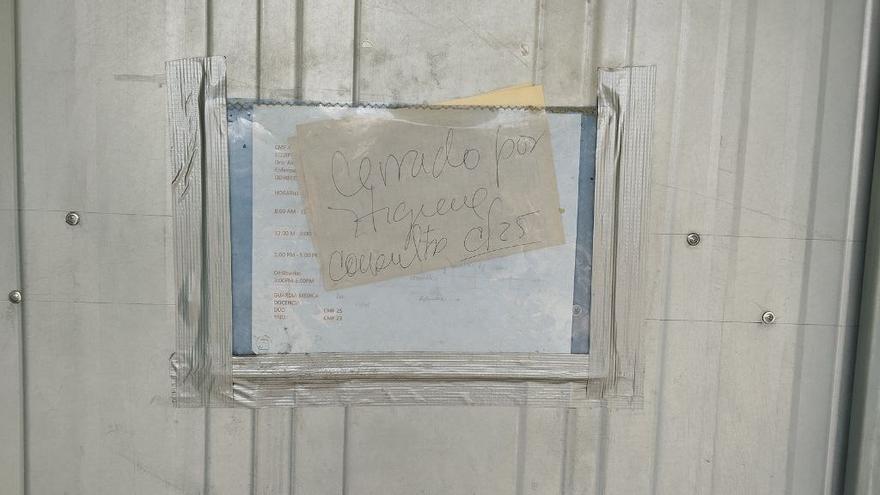
“Closed for hygiene.” What was one of the health pillars of the Island is going through difficult times due to lack of investments and the loss of qualified personnel. (14ymedio)

The Family Doctor program in Cuba, which was originally designed for each office to provide care to between 600 and 700 patients, has been deteriorating with the exodus of professionals, the departure of others on official missions abroad and infrastructure problems. What was one of the health pillars of the Island is going through difficult times due to lack of investments and the loss of qualified personnel.

On the road to the Mirador de Mayabe, the panorama could not be more emblematic of what is happening along the entire Island: a closed office, the sewer waters covering part of its entrance and the logo of a rod with a coiled snake still hanging on the facade of the installation. The reptile seems to be lying in wait for the moment when the waste extraction vehicle comes back and patients can return to the benches, stretchers and blood pressure monitors.

Translated by Regina Anavy 

____________

COLLABORATE WITH OUR WORKThe 14ymedio team is committed to practicing serious journalism that reflects Cuba’s reality in all its depth. Thank you for joining us on this long journey. We invite you to continue supporting us by becoming a member of 14ymedio now. Together we can continue transforming journalism in Cuba.
A Family From Matanzas Denounces the Indifference of the Mexican Authorities to Their Request for Refuge

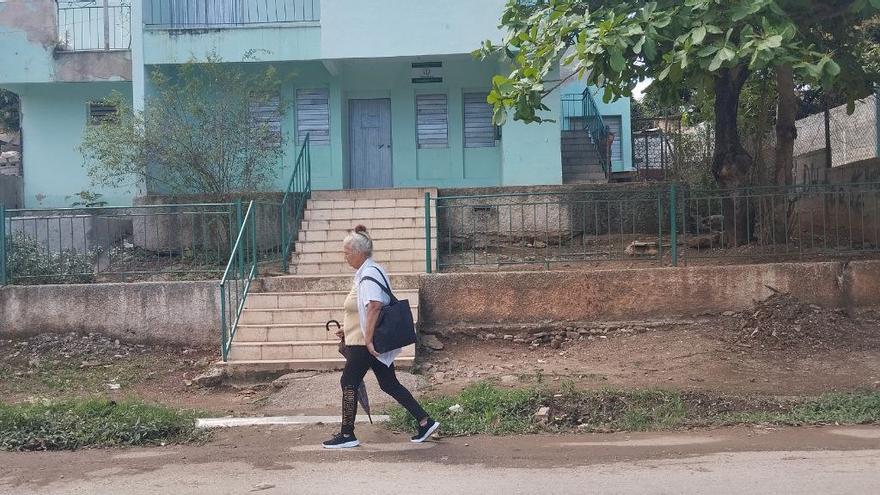
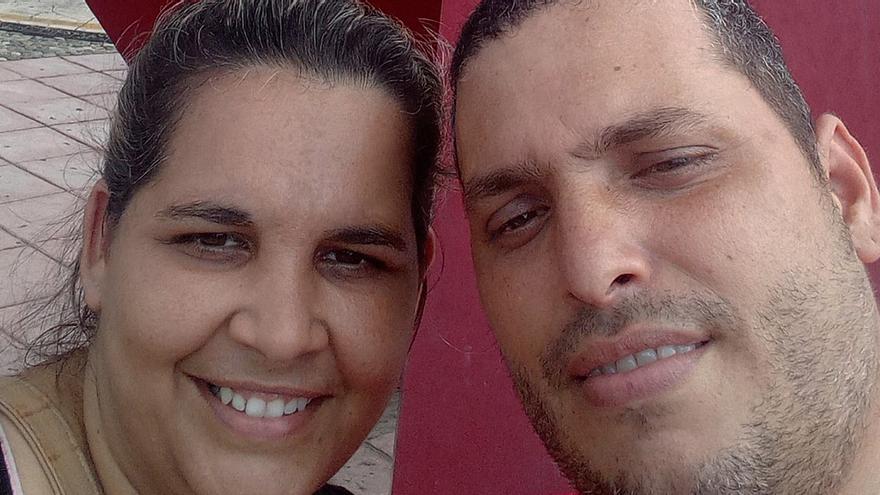
Yadira San Martín and William Rodríguez have been stranded along with their daughters in Tapachula (Chiapas) since August 2023. (Facebook)

14ymedio bigger14ymedio, Ángel Salinas, Mexico, 9 February 2024 — The fear of being imprisoned for expressing their dissatisfaction with the regime led Yadira San Martín Grillo, her husband William Rodríguez Acosta and their daughters, Yisel Esthefany and Yinelis Chantal, to leave the Island last year. This family, originally from Matanzas, arrived in Tapachula (Chiapas) on August 15, 2023, with the intention of processing their residence, but the Migration offices collapsed due to the flow of irregular migrants and suspended administrative procedures.

In an attempt to stay in Mexico, they went to the headquarters of the Mexican Refugee Aid Commission (Comar). After several days outside the facilities, they were helped and filled out an application. “We went on the indicated date and told a woman the reasons that led us to leave Cuba and the repression we suffered,” San Martín tells 14ymedio. “We can’t return because the regime doesn’t give work to those who flee. We want to settle in this country; we are hardworking people.” continue reading

According to the organization Sin Fronteras [Without Borders], those who ask for refuge in Mexico face different obstacles to obtain humanitarian status

On January 9, Comar informed them that their request was rejected. Its reason was that they had not “managed to prove a well-founded fear (credible fear).”

According to the NGO Sin Fronteras [Without Borders], those who ask for refuge in Mexico face different obstacles to obtain humanitarian status. Migrants “do not have access to an adequate interview to determine if they can obtain the condition.” In addition, “accompaniment is also not provided to people with disabilities or needs for psychological care.” Sin Fronteras indicated that only one in 10 applicants received a favorable response.

Comar assisted 2,352 Cubans last January, behind the 3,213 Hondurans who are requesting asylum in Mexico.

Lawyer José Luis Pérez, in charge of processing an amparo (protection order) for this family, denounces the incongruity of Article 11 of the Mexican Constitution, which indicates that “every person has the right to seek and receive asylum” but doesn’t explain how to do it “when the National Institute of Migration denies these people any procedure to obtain a humanitarian visa or permanent residence.”

The lawyer filed an appeal in the second district court of Tapachula, so that the family can travel to Mexico City and try to “reverse” Comar’s response at the capital headquarters. In case of obtaining the humanitarian visa or permanent residence, they will opt for the Multiple Immigration Form, which gives them the right to legally stay in Mexico for a certain time.

“There are arguments from the family to support the repression they suffered in Cuba,” the lawyer tells 14ymedio. Article 13 of the Refugee Law is clear, he emphasizes, and refugee status is recognized for every foreigner whose “life, security and freedom have been threatened by widespread violence in his country of origin.”

Translated by Regina Anavy

____________

COLLABORATE WITH OUR WORKThe 14ymedio team is committed to practicing serious journalism that reflects Cuba’s reality in all its depth. Thank you for joining us on this long journey. We invite you to continue supporting us by becoming a member of 14ymedio now. Together we can continue transforming journalism in Cuba.
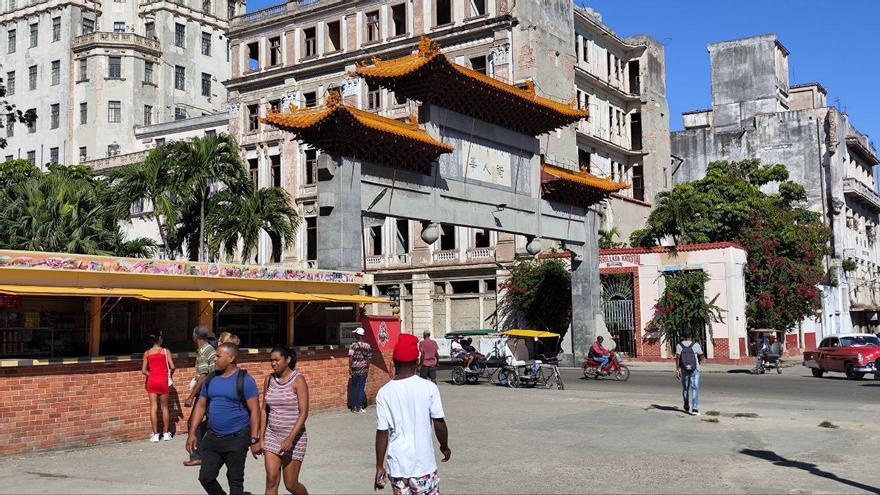
Crumbling like the Rest of Cuba, Havana’s Chinatown Reluctantly Ushers in the Year of the Dragon

These days there is little of anything Chinese in what used to be one of the world’s most important Asian enclaves. (14ymedio)

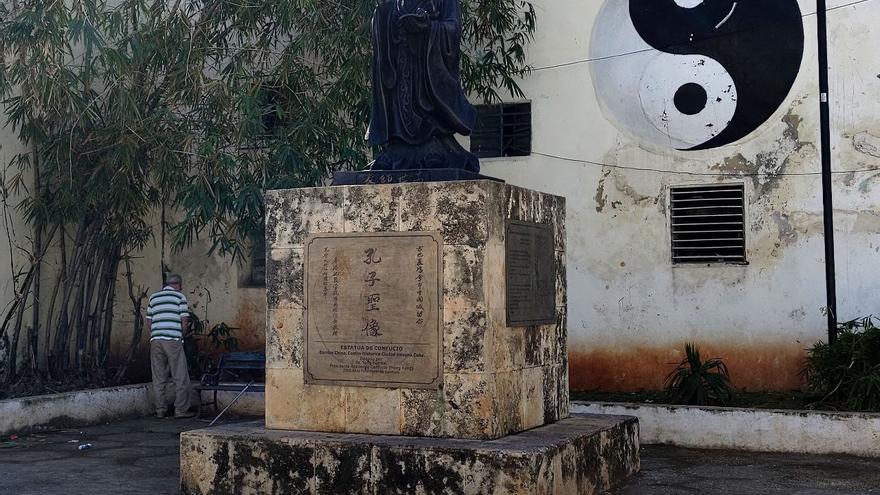
14ymedio bigger14ymedio, Juan Diego Rodríguez, Havana, 10 February 2024 — The Confucius statue in Havana’s Chinatown did not start off the Year of the Dragon on the right foot. Sitting this Saturday morning on benches in a park dedicated to the wise man were a beggar, a woman trying to get past the glitches in the phone company’s wifi network in order to connect to the “great beyond,” and a drunken man who – perhaps out of a certain sense of respect – peed on a random wall rather than than at the philosopher’s pedestal.

Once a place of legend and mystery, little of anything Chinese remains in what used to be one of the world’s most important Asian enclaves. In a neighborhood that used to be known as one of the best places to eat in Havana, everything now appears to be on the verge of collapse, marked for years — like the entire city —  by faded walls and urban decay.

The restaurants are now empty. Their employees reluctantly try to lure in potential customers with little success. The general rule is an empty establishment with a buzzing fly and little to offer.

Confucius Park, which sits in the heart of the neighborhood, attracts some “undesirable” guests. (14ymedio)

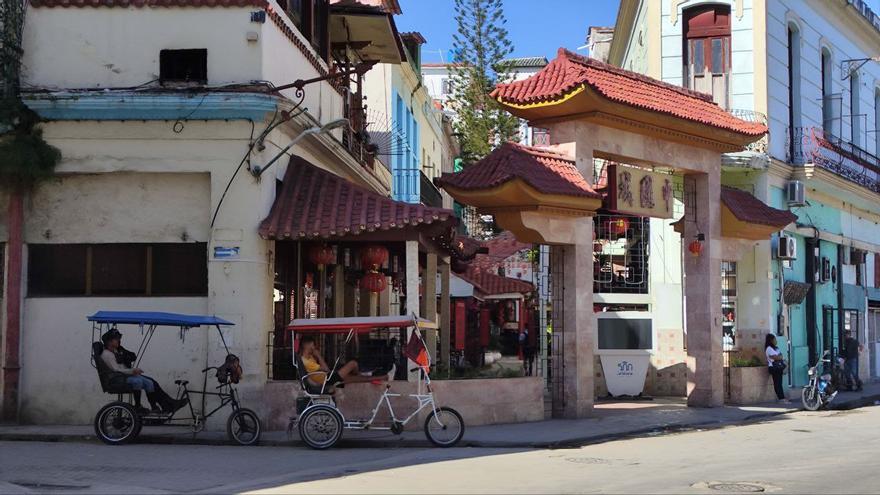
Havana’s Chinatown was the focus of some attention on the part of the city’s Office of the Historian,* which never managed to return it to its former glory. There are vestiges of often haphazard projects and restorations such as a peeling yin-yang emblem painted on a wall and traditional red lanterns hanging from some eaves.

Amid the ever-present reggaeton and foul smells, the voice of one salesman stands out: “We have to reinvent ourselves!” The Chinatown vendors agree. Instead of spring rolls and lacquered duck, there are dried vegetables, birdseed, and a place that doesn’t have what its neon sign advertises: “Delicious chicken!”

With Havana’s Chinatown showing few signs of life, much less of festivity, those hoping to find Year of the Dragon celebrations in Cuba will have to look elsewhere. At an event hosted this week by Cuban diplomats in China, the island’s big tobacco company, Habanos S.A., debuted its very expensive Montecristo Brillantes cigars. Packaged in a luxurious red case designed to appeal to Chinese millionaires, the cigar of the moment will not be smoked in Havana’s humble Chinatown.

With Havana’s Chinatown showing few signs of life, much less of festivity, those hoping to find Year of the Dragon celebrations in Cuba will have to look elsewhere.  (14ymedio)

*Translator’s note: A government agency headed by the late Eusebio Leal, whose most prominent project was the restoration of Central Havana, the city’s historic city center.

____________

COLLABORATE WITH OUR WORKThe 14ymedio team is committed to practicing serious journalism that reflects Cuba’s reality in all its depth. Thank you for joining us on this long journey. We invite you to continue supporting us by becoming a member of 14ymedio now. Together we can continue transforming journalism in Cuba.
The Cuban Consul Who Assaulted Activists in Milan Is on the Blacklist of ‘Repressors’

Ajuria Domínguez, third Cuban consul in Milan, in the video released by the activists. (Collage)

14ymedio bigger14ymedio, Havana, February 10, 2024 — On Friday, the Foundation for Human Rights in Cuba included on its list of Cuban Repressors the Cuban diplomat Fidel Ajuria Domínguez, third consul of the Island in Milan (Italy), for assaulting the activist Avana de la Torre. The event, recorded in a video, occurred on February 7, during a protest in front of Cuba’s display at the International Tourism Fair of that city.

Ajuria, says a press release from the Foundation, “physically and verbally” assaulted De la Torre, who was with activists Yuliet Suárez and Leidis Peñalver denouncing “the hardships experienced by the population of the Island and the privileges of the elite.”

The three demonstrators deployed a 26-foot banner with images of the poverty in Cuba and “were attacked by supporters of the regime,” the statement says, “in the style of the Rapid Response Brigades.” In the tumult, De la Torre suffered “a dislocation in her wrist” when Ajuria tried to snatch the banner away, so the activist filed a complaint. continue reading

The three demonstrators deployed a 26-foot banner with images of the poverty in Cuba and “were attacked by supporters of the regime”

The statement also emphasizes that “an apparent security guard at the Fair,” who had the obligation to prevent violence within the enclosure, stood idly by while the incident was taking place.

Speaking to Martí Noticias, De la Torre said that she and her colleagues had attended the Milan Fair “peacefully, to teach the reality of Cuba, which is not an egalitarian or equitable country.”

Although the main attacker, explains the Foundation’s text, was Ajuria – along with his wife, Anabel Díaz – the activist pointed out that the aggressors followed the orders of Marcos Hernández Sosa, consul general of Cuba in Milan. De la Torre shared the complaint on her Facebook page, where she also explained that a Cuban resident in Italy, whom she identified by the name of Ada Galano, uttered “serious slander.” Although the activist did not specify about what or whom, she said that she had also denounced her before Italian law.

It is not the first time that De la Torre has been the victim of aggression by the Cuban diplomatic corps. In June 2022, she was attacked by Yahima Martínez Millán, consul general of Cuba in Galicia (Spain), when she was preparing to place flowers in front of a bust of José Martí in Santiago de Compostela.

The Foundation also mentions in its statement the beatings given to the exiled doctors, Lucio Hernández Nodarse and Emilio Arteaga Pérez, in May 2023, for shouting anti-castrist slogans in the Galileo Galilei room in Madrid, during a concert of the duo Buena Fe.

The Cuban Repressors project, managed by the Foundation, aims to “stop, reduce and eradicate violence and arbitrariness for political, economic, social, cultural, creed, race or sexual orientation reasons and thus contribute to facilitating coexistence in a future Cuba.”

Translated by Regina Anavy

____________

COLLABORATE WITH OUR WORKThe 14ymedio team is committed to practicing serious journalism that reflects Cuba’s reality in all its depth. Thank you for joining us on this long journey. We invite you to continue supporting us by becoming a member of 14ymedio now. Together we can continue transforming journalism in Cuba.
The Dollar Reaches 300 Pesos in the Cuban Informal Market and Ties With the Euro

The rise comes after a season of serious financial changes, which included the dismissal of Economy Minister Alejandro Gil. (EFE)

14ymedio bigger14ymedio, Havana, February 10, 2024 — The dollar reached the barrier of 300 Cuban pesos this Saturday and was on par with the euro in the informal currency market, according to the independent media El Toque. The accelerated degradation of the national currency is due to the increase in uncertainty created by the swings of the paquetazo [a ’package’ of economic reforms] and the Government’s inability to modify the economic model that is leading the country to disaster.

The increase suggests a greater demand for the dollar than for the euro among Cubans, despite the fact that the European currency is quoted at 1.08 dollars in international financial markets.

The collapse of the peso occurs less than two weeks after the dismissal of the Minister of Economy, Alejandro Gil, and the announcement of an imminent “intervention” of the informal market about which he did not offer details.

However, after Gil’s departure and the suspension of part of the measures included in the paquetazo, the regime’s financial “macrostabilization” plan came to nothing and the “distortions” that the minister attributed to the informal exchange market remain in force. continue reading

Another aspect of the problem is the instability of the remittances that Cubans residing abroad send to their relatives on the Island

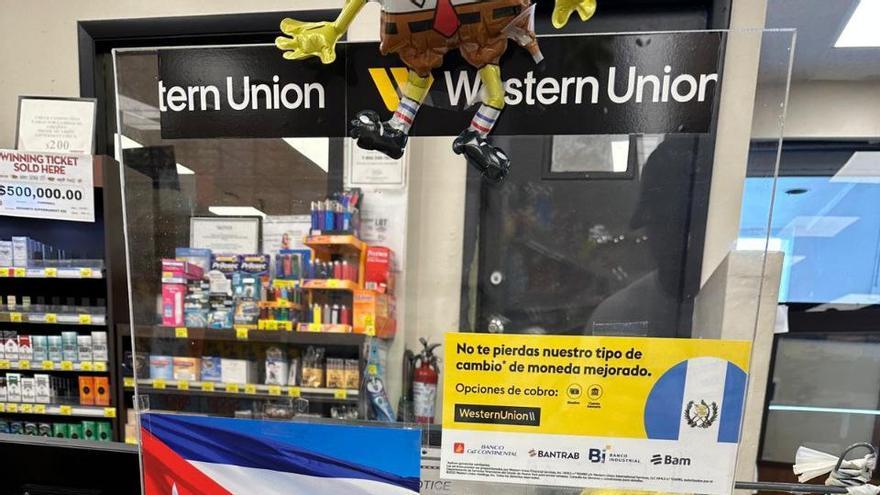
Another aspect of the problem is the instability of the remittances that Cubans residing abroad send to their relatives. relatives on the Island. For 11 days, the American financial company Western Union has been trying to resume its operations “as soon as possible,” which remain suspended as of today. The company’s Director of Communications, Brad Jones, assured 14ymedio that his company “is trying to contact customers affected by the interruption of service to propose the return of their transfers.”

“Western Union is experiencing technical difficulties in the processing portion of our operations that have caused a temporary suspension of services between the US and Cuba. The company is supporting its counterpart [the Cuban financial company Orbit] to resume services between the two countries as soon as possible,” he added.

The problems with making transfers from abroad, exclusively to the Island, were not only occurring from the United States, but from other countries, and not only with Western Union, but with other platforms, such as Cuballama or Cubatel.

On Wednesday, January 31, one day before the main economic measures agreed by the Government last December came into force, the authorities decided to cancel them, citing “a cybersecurity incident.”

The next day, without mentioning this “incident” or the remittances, Banco Metropolitano released a statement in which it warned that it was having “technical difficulties” that affected “branch services and those associated with technological payment channels.”

____________

COLLABORATE WITH OUR WORKThe 14ymedio team is committed to practicing serious journalism that reflects Cuba’s reality in all its depth. Thank you for joining us on this long journey. We invite you to continue supporting us by becoming a member of 14ymedio now. Together we can continue transforming journalism in Cuba.
Mirtza Ocana, a Cuban Mule, Received up to $2,500 To Withdraw Foreign Currency From Cuba, but Whose Money Was It?

14ymedio bigger14ymedio, Madrid, 9 February 2024 — Mirtza Ocaña, the Cuban mule detained in Tampa with $100,000 in her clothes and luggage, charged between $1,000 and $2,500 for moving money between the United States and Cuba, according to the complaint against her, to which el Nuevo Herald had access. The judge handling the case ordered her to be release on probation, with an electronic device, after hearing her statement on Tuesday and ordered her to seek employment and “psychiatric” treatment, in addition to handing over her passport.

However, nothing is known at the moment about the origin of the funds. It is surprising, however, that a ’mule’ could travel so often to Havana and take out enormous amounts of dollars without the Cuban authorities noticing, since controls are strict at the airport and the law prohibits exporting more than 5,000 dollars outside the Island without authorization from the Central Bank.

The experts consulted by ’el Nuevo Herald’ believe that the cash may come from private ’MSMEs’, which need to send money outside the country to pay their suppliers abroad

It is worth remembering the regrets from several spokespersons for the regime who have complained bitterly on many occasions that the US “blockade” supposedly prevented them from placing the dollars of their Central Bank in the international financial system and that the situation forced them to look for more onerous alternative means. continue reading

Experts consulted by el Nuevo Herald believe that the cash could be from private MSMEs (micro, small and medium sized enterprises), which need to send money outside the country to pay their suppliers abroad, or money from the sales of their homes that individual Cubans want to deposit in foreign bank accounts.

Ocaña, 38, is currently unemployed and does not speak English, but last September she created the company Ocana & Paradise, LLC. The publications she made about herself on her social networks, announcing air and sea shipments of food and medicine to Cuba, show that she acted as a ’mule’.

Last Sunday, Ocaña arrived at the Tampa International Airport from the Island when, in a supposedly routine search, $10,000 was found in three packages inside her suitcase, the maximum authorized without having to present a statement to the authorities.

Ocaña stated that she did not have any more cash, but in the body search that the customs agents carried out when they found the money, they revealed that she had 70,000 dollars stuffed in her clothes, which can results in everything from seizure and an administrative fine to criminal charges for the crime of smuggling, punishable by up to five years in prison in the United States.

The euro reached 302 Cuban pesos this Friday and the dollar, about to touch the 300 barrier, holds at 298

The Cuban woman then admitted that she had traveled to the island at least two or three times a month from May 2023, up to a total of 45 flights, according to airport records. The document drawn up by the agents states that she was aware that she was committing an illegal activity and that “they paid her between $1,000 and $2,500 per trip.”

Neither the Tampa Public Defender’s Office nor the U.S. Attorney’s office in that area would comment to the press.

Meanwhile, in the informal currency market, the exchange rate continues unstoppable. According to El Toque records, the euro reached 302 Cuban pesos this Friday and the dollar, about to touch the 300 barrier, remains at 298, well above double the official exchange rate for the general population (120×1) and more than twelve times that established for companies (24×1).
____________

COLLABORATE WITH OUR WORKThe 14ymedio team is committed to practicing serious journalism that reflects Cuba’s reality in all its depth. Thank you for joining us on this long journey. We invite you to continue supporting us by becoming a member of 14ymedio now. Together we can continue transforming journalism in Cuba.
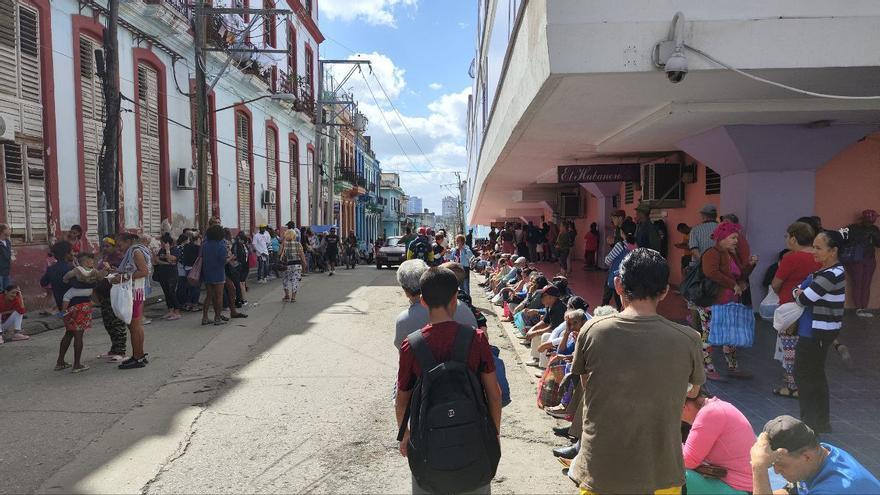
Massive Line for a Miserable ‘Combo’ Priced at 311 Cuban Pesos, Just Over 1 Dollar

The immense line was not surprising, spread between the two sidewalks of the entire block in Carlos III. (14ymedio)

14ymedio bigger14ymedio, Juan Diego Rodríguez, Havana, 9 February 2024 — Customers who have to shop in Plaza de Carlos III, in the only store in the shopping center that sells in Cuban pesos, are in luck. The monthly module or combo, which they provide through the ration book in state stores, restricted by bodegas (ration stores) for almost two years, arrived this “generous” Friday: two packages of sausages, two of minced meat, one liquid detergent, two small powder detergents and a bottle of oil, all for 311 pesos.

Thus, it was not surprising that there was an immense line, spread between the two sidewalks down thw side street of the Plaza – as people sought to protect themselves from the sun – some standing and others, the lucky among the lucky, sitting.

“Wow, how good the combo is,” an old woman exclaimed when she saw the little board. But another was disappointed: “That’s how hungry we are, girl, because no one can eat that minced meat.” continue reading

In the midst of the endless shortages, those 400 gram tubes from the Richmeat brand – a Mexican brand that has a factory in the Mariel free zone – are the hope for the most disadvantaged

In the midst of the endless shortages, those 400 gram tubes from the Richmeat brand – a Mexican brand that has a factory in the Mariel free zone – are the hope for the most disadvantaged, especially the elderly. A food, however, whose amount of fat and preservatives can make them sick. “I try to eat them, both mincemeat and sausages, but they hurt my gallbladder. When I can’t find anything else, I cook it by boiling it a lot, but there is never a time I try it that it doesn’t swell my gallbladder,” explains one neighbor of Centro Habana, who acquired the module to share it with her daughter and grandchildren.

Others in line were ecstatic. “There is so much need that it seems like it’s on purpose. They keep us hungry and hungrier and then they take out a little bit of something so that people say ’Wow, how good they are,’” observed a young, critical man.

Flanking the crowd in Carlos III were young guards in uniform, ensuring that the discussions did not go off course. (14ymedio)

Despite everything, the situation is more favorable than that of other customers, for example those who shop at the Amistad market, in San Lázaro and Infanta, where the combo arrived reduced: only minced meat, washing powder and oil. “Before, it came with chicken, sausage, minced meat, detergent and oil,” explains another woman, who is in charge of that store in Central Havana, referring to those products that Havana residents jokingly call “the five heroes,” “but little by little it has been getting worse.”

And she lists: “First the sausage disappeared, then the chicken disappeared. The minced meat, the detergent and the oil remained. Now, from time to time sausage comes, but not with the combo, and out of date, and they have to offer a ’recovery’, as they call it, the opportunity to pick it up another day, which can be up to a month later.”

The situation is worse at the Melones Street market in Luyanó, where items come separately, forcing residents to line up almost every week. “And they have to force their way into the line, because maybe they won’t have anything to eat otherwise. Nothing is coming into the bodegas,” says a neighbor from the neighborhood.

“Wow, how good the combo is,” an old woman exclaimed when she saw the little board. But another was disappointed: “That’s how hungry we are, girl.” (14ymedio)

Flanking the crowd in Carlos III, this Friday, young guards in uniform were observed, ensuring that the discussions do not get out of hand. “There are always people who complain that if the employee who collects the ration books said that she took one but there were two, to pass to a friend, the other shouts that that is a lie, that this user is a troublemaker,” says one man of about 50, resigned. “That’s what it is: hunger, lines, misery and need.”

____________

COLLABORATE WITH OUR WORKThe 14ymedio team is committed to practicing serious journalism that reflects Cuba’s reality in all its depth. Thank you for joining us on this long journey. We invite you to continue supporting us by becoming a member of 14ymedio now. Together we can continue transforming journalism in Cuba.

The Cuban Cigar Monopoly Wins a Judgment in Spain Against a Nicaraguan Manufacturer

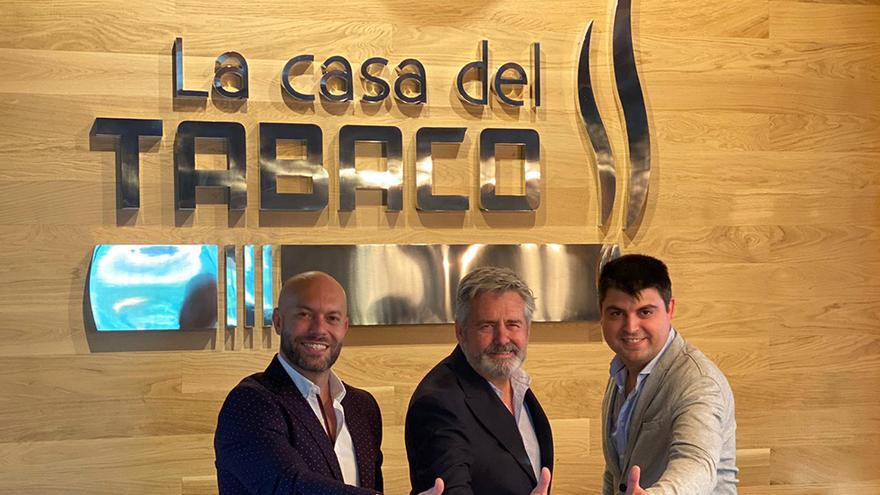
Directors of Gesinta and La Casa del Tabaco, the two companies sued by Habanos S.A. (Gesinta)

14ymedio bigger14ymedio, Havana, 10 February 2024 — The Supreme Court of Spain condemned two companies in the city of Valencia – Gesinta Invest Company and La Casa del Tabaco – for marketing the F series of the Nicaraguan brand of cigars from Condega, which imitates the design of the Cuban Partagás. The cigar monopoly on the Island, the Habanos S.A. corporation, celebrated the “unfair competition” verdict.

The corporation had filed a lawsuit against both Valencian distributors in 2018 for the “almost identical presentation” to that of Partagás with which they sold the Condega cigars, which “blatantly infringed” upon Spain’s agreements with Havana. The ruling, which ratified a previous ruling of the Provincial Court of Valencia and was handed down at the end of January, illustrates the tension between Cuba and Nicaragua in the world of cigars.

Politically allied, both countries are fierce rivals when it comes to cigar production. However, the Island, which has the prestige of producing the best quality leaf, has lost ground among international consumers – especially those from the United States, who cannot legally buy Cuban cigars – and Nicaraguan tobacco seems of similar quality for a lower price. continue reading

Nicaragua has been able to take advantage not only of Cuba’s technical knowledge but also its fame and imagery

Nicaragua, where many producers from the Island emigrated after 1959, has been able to take advantage not only of Cuba’s technical knowledge but also its fame and imagery. At the core of the lawsuit in Valencia, which now prohibits Gesinta and La Casa del Tabaco from selling Condega cigars, is the similarity of colors in the rings of the Nicaraguan brand and those of the D series of Partagás.

Both rings are identical in almost everything except the name of the cigar: two golden bands below and above the name, also in gold. This ring has been “very characteristic” of Partagás since the 1930s, Habanos S.A. claims, and has contributed to the brand “always being in the top positions” on the lists of premium cigars.

This Thursday, the members of the Cigar Club of Madrid – one of the landmarks of Cuban cigars in Spain – received a communication about the Supreme Court’s ruling, and the Condegas were unambiguously qualified as mere Nicaraguan “copies” of Partagás.

“The Condega Serie F are cigars whose Central American origin has nothing to do with those that are rolled in the Cuban factories, which have the worldwide D.O.P. certification. (Protected Designation of Origin),” he clarified.

In addition, the Club defended the primacy of Cuban cigars: “We do not let ourselves be fooled by something that pretends to be what it is not, either for its rings, formats and even boxes, because in Cuba there are twenty-seven brands of cigars, which are the most smoked and appreciated premium cigars by fans around the world,” he said.

With a relatively recent cigar tradition, Estelí has become Cuba’s strongest competitor in the international market

The Condega brand, founded in 1997 by the Hispanic-Cuban businessman Eduardo Fernández Pujals – one of the former owners of the Spanish company Telepizza – has its operating base in the municipality of Estelí, in the western part of Nicaragua.

With a relatively recent cigar tradition, Estelí has become Cuba’s strongest competitor in the international market. “Estelí’s great irony is that it is full of American and Cuban-American anti-Castros who became billionaires with cigars in the 1960s,” a source in the Nicaraguan municipality tells 14ymedio.

“The Plascencia and the Padrón, two Cuban-American families, are among the strongest. They have plantations in Estelí, Condega and Jalapa. Cuban-Americans have caused a notable increase in the price of properties – even more expensive than much of Managua – because they pay without hesitation what people ask for their lands and houses,” he adds.

The Cuban regime has also settled in Estelí, as attested to by the Nicaragua Investiga media last November. At least nine farms in the town, local producers said, were being managed by alleged Cuban businessmen. The most widespread suspicion among Estelí’s cigar makers, he added, is that these businessmen are Cubans who have just arrived in Nicaragua as “front men.”

The small farmers are sure that Cuban investors, some associated with Cubatabaco – the company that controls cigars on the Island – arrived “from the hand” of the Government of Daniel Ortega and have been located on farms bought from other businessmen or that were abandoned after the State’s intervention.

Rocky Patel is building a megafacory in Estelí. (Halfwheel)

Estelí is about to inaugurate a cigar megafactory by American businessman Rakesh Rocky Patel. Considered an up-and-comer in the world of cigars, Patel – who amassed a fortune working as a lawyer for Hollywood actors – founded the company Tabaco Villa Cuba S.A (Tavicusa) in Nicaragua in 2008.

Although Patel is proud of not having Cuban “roots” or “family,” in order to dethrone Cuban cigars, he recruited in 2015 one of the best cigar merchants in Havana, Hamlet Paredes. With the advice of Paredes, Patel – who took the pulse of the competition during the 2016 Cigar Festival – managed to position his cigars at the top of the lists of the best in the world.

Although Paredes broke with Patel in 2022 to accept a job in a cigar shop in Ireland, the American’s plans are going at full speed in Estelí. At the end of January, the Nicaraguan newspaper La Prensa detailed Patel’s megafactory project. In addition to producing 60,000 cigars a day, the company will have facilities to prepare the leaf and carry out other processes.

Last year Patel achieved an income of 400 million dollars from the marketing of his cigars – 85% of them to the United States – a figure that is quite close to the annual income of Habanos S.A., which in 2022 obtained 545 million dollars. The turnover figure in 2023 for the Cuban monopoly should be known on February 26, with the beginning of the XXIV Cigar Festival, an event that the regime takes advantage of to oxygenate its coffers with the sale of its star product and remind millionaires from all countries that it still holds the crown as the best tobacco producer in the world.

Translated by Regina Anavy

____________

COLLABORATE WITH OUR WORKThe 14ymedio team is committed to practicing serious journalism that reflects Cuba’s reality in all its depth. Thank you for joining us on this long journey. We invite you to continue supporting us by becoming a member of 14ymedio now. Together we can continue transforming journalism in Cuba.

Western Union Helps Its Counterpart in Cuba To Resume Remittances ‘As Soon as Possible’

Western Union attributes the confusion to the fact that “someone from the customer service department” gave “incorrect information.” (14ymedio)

14ymedio bigger14ymedio, Madrid, 9 February 2024 — Western Union, which has not been able to make transfers to Cuba for more than ten days, has clarified that “although the services are temporarily suspended, we are working to resume operations as soon as possible.” In a message sent by email to 14ymedio this Friday, the company states that the date of April 1 for the restoration of remittances, provided to this newspaper by employees of two offices in the United States, is “not correct”.

The director of Communications, Brad Jones, says that his company “is trying to contact the customers affected by the service interruption to propose the return of their transfers.”

After apologizing for the confusion, which they attribute to the fact that “someone from the customer service department” gave “incorrect information,” the firm asks for its official statement to be disseminated: “Western Union is experiencing technical difficulties in the processing of operations that has caused a temporary suspension of services between the United States and Cuba. The company is supporting its counterpart [the Cuban financier Orbit] to resume services between the two countries as soon as possible.” continue reading

The company says that the date of April 1 for the restoration of remittances, provided to this newspaper by employees of two offices in the United States, is not correct

On February 1, after the complaints of several customers in Florida who weren’t able to send remittances to their relatives on the Island, Western Union employees told 14ymedio, in several telephone calls, that “at the moment shipments to Cuba are not available until further notice,” without further details.

The problems of making transfers from abroad, exclusively to the Island, were not only occurring from the United States but also from other countries, and not only with Western Union, but with other platforms, such as Cuballama and Cubatel.

On Wednesday 31, a day before the main economic measures agreed by the Government last December came into force, the authorities decided to cancel them, citing “a cybersecurity incident.”

The next day, without mentioning this “incident” or the remittances, the Metropolitan Bank issued a statement in which it warned that it was having “technical difficulties” that affected “branch services and those associated with payment technology channels.”

If you have questions specifically related to transaction processing in Cuba, contact Orbit directly”

The widespread suspicion about the hacking, which, according to official sources, had affected the marketing system of Cimex, a corporation belonging to the Gaesa military conglomerate, increased among Cubans when the Minister of Economy, Alejandro Gil Fernández, was dismissed last Friday.

By telephone, Fincimex has not given a date for the solution of the problems. “We are still working on the breakdown, but there is nothing yet,” an employee told this newspaper last Wednesday.

Western Union suspended remittances to Cuba in November 2020, due to the sanctions of the Trump Administration on Fincimex and AIS (American International Services), because they are managed by the Cuban military. In January 2023, services resumed, this time with a different intermediary: the “non-banking” financial institution Orbit S.A., approved by the Central Bank of Cuba a year earlier.

Western Union mentions Orbit in one of its responses to 14ymedio this Friday: “If you have questions specifically related to the processing of transactions in Cuba, contact Orbit directly, since they are more qualified to discuss the matter. We are relying on Orbit to help us resume operations as soon as possible.”

Translated by Regina Anavy

____________

COLLABORATE WITH OUR WORKThe 14ymedio team is committed to practicing serious journalism that reflects Cuba’s reality in all its depth. Thank you for joining us on this long journey. We invite you to continue supporting us by becoming a member of 14ymedio now. Together we can continue transforming journalism in Cuba.

The Arrival of a British Cruise Ship Revives Old Havana for a Few Hours

The police stopped traffic so that tourists could comfortably leave the Customs building. (14ymedio)

14ymedio bigger14ymedio, Natalia López Moya, Havana, 9 February 2024 — The British cruise ship Marella Explorer 2 returned to Havana this Friday, and, as often happens, its passengers, who bring foreign currency, have preference. A patrol guarded the area closest to the pier, and the police even stopped traffic so that the tourists could comfortably leave the Customs building, some of them carrying suitcases.

Although there were some travelers who stayed on the ship, many went for a walk and others went by bus to the nearby historic center of the Cuban capital or to other tourist places.

From land, you could glimpse the ship’s splendor, the giant screen at the edge of the pool and the huge satellite antenna. Several spas, a club-casino, bars and restaurants are some of the services offered by the cruise, which is only for adults and belongs to TUI Group of  the UK and Germany. continue reading

Marella Explorer 2 will dock at four ports to link passengers to the Island’s recreational offers.

The British cruise ship is part of the fleet of TUI Group, a leading company in tourist travel. (14ymedio)

The cruise is part of the fleet of TUI Group, a leading company in tourist travel (United Kingdom-Germany). It only allows adults and includes spa services, a club-casino, bars and restaurants.

In Old Havana, the merchants rubbed their hands together. On Obispo Street they offered an exchange rate “at a good price” – 280 pesos per dollar (the informal rate reported by El Toque for this Friday is 298). The children in the area rehearsed some phrases in English asking for “money,” and the streets near the bay again experienced the frenzy that once characterized them.

When the sun goes down, everything will be over. The tourists will return to their ship, the children of the neighborhood will return to their quarters, and the illusion of a dynamic city will have vanished. There will still be, of course, the silhouette of the Marella Explorer 2 with its swimming pools, its luxury areas and its broadband internet.

In Old Havana, the merchants rubbed their hands together after the arrival of the cruise ship. (14ymedio)

Translated by Regina Anavy

____________

COLLABORATE WITH OUR WORKThe 14ymedio team is committed to practicing serious journalism that reflects Cuba’s reality in all its depth. Thank you for joining us on this long journey. We invite you to continue supporting us by becoming a member of 14ymedio now. Together we can continue transforming journalism in Cuba.

Lifescozul Says It Gets Scorpion Venom Without Help From the Cuban Government

The company says that it has at least two “producers” in its service on the Island. (Invasor)

14ymedio bigger 14ymedio, Havana, February 8, 2024 — Thirteen years ago, Cuban biologist Ariel Portal, expelled from the state-owned Labiofam and a fervent defender of the healing properties of blue scorpion venom, emigrated to Ecuador and founded his own company, Lifescozul. With a private investment of three million dollars in the last seven years and a team of “renegade” Cuban scientists, the company insists – against scientific consensus – that the toxins of Rhopalurus junceus can cure cancer, and it dedicates its resources to procuring it.

Concerned that he will be linked to the Cuban regime after reading this newspaper’s recent articles about Lifescozul, Portal answers several questions. The most disturbing: how does a group of researchers, who supposedly broke all ties with their country of origin, get the venom of a scorpion that is endemic to Cuba?

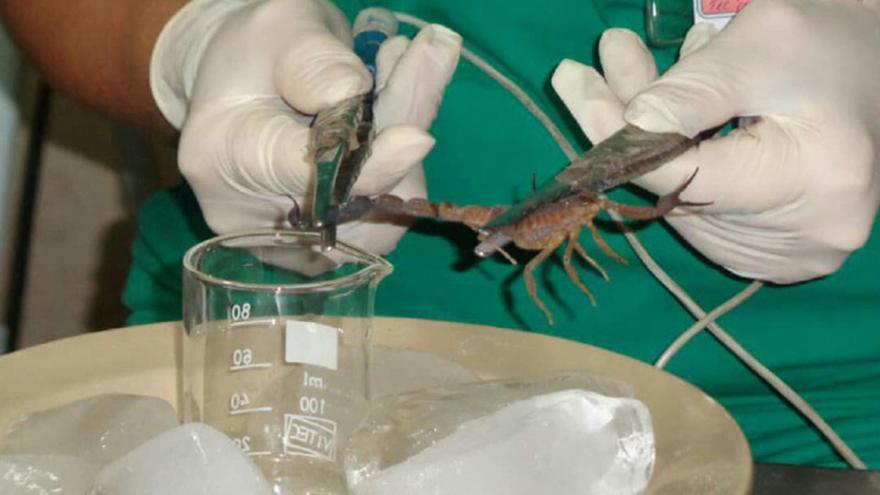
Through “at least” two independent producers who live on the Island, Portal replies. They are the ones who “capture and milk the scorpions,” and then “someone” from the company travels to Cuba to pick up the bottles with the substance. Once abroad, the bottles are sent to the Lifescozul laboratories in Mexico and Chile to check that the substance is not adulterated. “Each venom has its own unique footprint,” Portal clarifies.

According to the biologist, the collection process is carried out without help – or permits – from the Cuban State. In fact, independent scorpion hunters are one of the headaches of Labiofam, the State company, which also manufactures a homeopathic substance based on scorpion venom, Vidatox, whose effectiveness against cancer is denied by Portal. continue reading

Lifescozul began as a “service company,” says the scientist, but now considers itself a “pharmaceutical development” company, with allies such as Pharmometrica, a Mexican laboratory that, according to Portal, “analyzes each sample (of venom) and certifies it for our studies.”

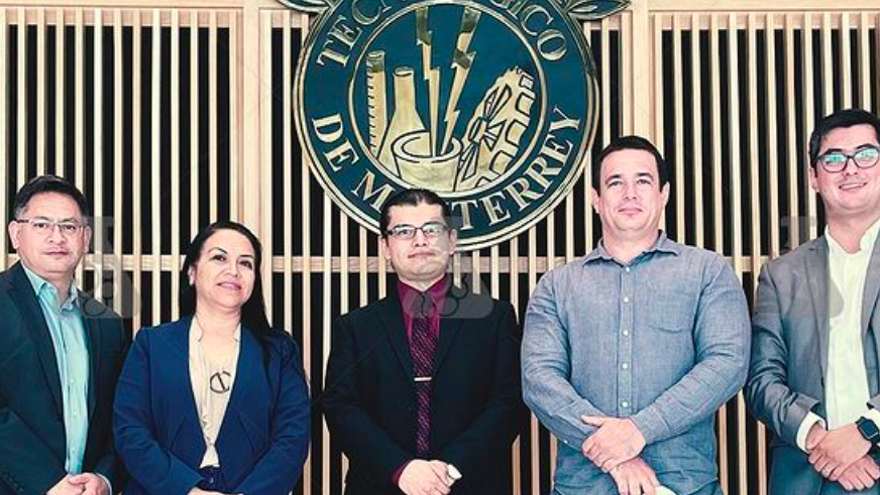
Portal, second from right, with a group of directors of the Tecnológico de Monterrey. (Instagram/Lifescozul)

The company is now asking its private investors for another 11 million dollars to enter a phase of clinical trials of its product, Escozul. For the company, Portal assures, having private capital “especially in the last five years” has been decisive.

The current structure of Lifescozul – which also works on another kind of products, such as nutritional supplements and vitamins – includes a scientific department, led by microbiologist Alexis Díaz, the “maximum authority” in the venom of the Cuban scorpion; a clinical trials department, headed by Dr. Mariela Guevara; and other marketing, medical care and follow-up teams.

They have a factory in Colombia, a research center in Mexico, and the financing of the project is managed in the United States. The headquarters is located in Ecuador, where Portal founded the “parent company” of Lifescozul in 2009.

Behind each of the people in charge of the company – all former Labiofam scientists – there is a story. Portal himself was dismissed from his position in the state pharmaceutical company in 2006, when he confronted its former director, José Antonio Fraga Castro, Fidel Castro’s nephew. Vidatox, the product manufactured by Labiofam – and one of Escozul’s competitors in the international market – was “a whim of Fraga Castro,” says Portal.

In 2000, scorpion venom as a cure for cancer was one of the obsessions of both the uncle and the nephew, says Portal. “Many patients went to Cuba to look for it because the BBC and CNN reported on its potential.” The pioneer of the studies was Dr. Misael Bordier, a biologist from Guantánamo, who “was never able to publish anything that supported the venom’s properties.”

José Antonio Fraga Castro. (Photogram from Vimeo)

“Fraga Castro saw the potential, and since he was Fidel’s nephew, he literally took the project away from Bordier, who died in 2005.” Bordier had formed an analysis group including Portal and Alexis Díaz.

The year after Bordier’s death, his colleagues gave Fraga Castro two pieces of news. The good one: that the team had found “evidence” that “inside the poison there are components capable of inhibiting malignant cell growth.” The bad one: that it would take ten years to have a concrete result. At a minimum.

The director of Labiofam was angry, Portal recalls. “The country needs foreign currency now,” was his argument when accepting the proposal of Dr. Fabio Linares, a doctor specializing in homeopathy, who assured that a compound could be sold “as if it were the established final product of the blue scorpion poison.” This is how Vidatox was born.

However, Portal, Díaz and Bordier’s other disciples studied the formula. The conclusion of the analysis, says the biologist, was worrying. “We tested Vidatox on malignant cell lines, resulting in the fact that not only did it have no effect on cancer, but it also accelerates it, and to top it off there was no trace of venom inside the formulation, since it was extremely diluted.” The conclusion, however, has a contradictory aspect: if Vidatox does not contain a trace of the toxin, which of its components “accelerates” the disease?

When they presented the report to Fraga Castro, he was offended. “He accused us of many things. I accused him of being corrupt, and the argument got out of hand. I ended up expelled.” Portal says that, from there, everything was an odyssey for him. He worked cleaning offices at the Cuban Institute of Art and Film Industry until he was given authorization to leave the country. Then he emigrated to Ecuador.

In the case of Alexis Díaz, whom Labiofam refused to free until several years later, he also left Cuba in 2018, to carry out a postdoctorate in Chile. “Díaz was not expelled but was subject to control for a few years,” Portal explains. As for Guevara, who now resides in the Dominican Republic, he is the one who advises Lifescozul in relation to clinical trials.

In 2014, Lifescozul also had a contact in Havana, José Luis Monzón, who raised scorpions, as Portal revealed to Martí Noticias at the time. Monzón died a year after that interview, and now “his daughters continue his work in Jagüey Grande (Matanzas),” says the biologist, who does not offer more details about his work on the Island. However, a 14ymedio reporter discovered that the address provided by Portal to Martí Noticias did not exist. There is also the Bellavista building on 35th Street between 52 and 54, in the municipality of Playa, and no neighbor has heard of Monzón.

A reporter from ’14ymedio’ discovered that the address provided by Portal to Martí Noticias did not exist. (14ymedio)

“Since 2018, we haven’t had any of our patients traveling to Cuba,” he insists. If anyone requests to go, Lifescozul puts him in contact with Monzón’s daughters in Matanzas. “Misael Bordier’s relatives extract the venom” in Guantánamo, but Portal does not clarify if they have links with the company there.

Portal admits that, as this newspaper pointed out, Lifescozul has indicated to patients that the Cuban Government offers treatments – very expensive – with scorpion venom. However, he says that he has not done so with the intention that they will be treated at the Cira García hospital in the La Pradera hospital for foreigners, founded by Fidel Castro in 1996. “In 13 years of existence we have never sent any patient to those centers. Explaining the costs (more than 1,200 dollars) is enough for them to give up going to Cuba.”

The prestigious cancer research center Memorial Sloan Kettering, founded in 1884 in the United States, has explained that there are no scientific arguments to prove that scorpion venom cures cancer, and the benefits attributed to Escozul or Vidatox “are mostly based on anecdotes, testimonies and experiments that may not have been executed correctly.”

Lifescozul promises to have the papers in order so that, before the end of 2024, they will be allowed to do a clinical trial

Portal does not agree. “We are about to file several patents with an impact on three types of cancer,” he alleges. “We also work on the identification of active ingredients that act on the mechanisms of pain in people with cancer and on inflammation. ” Lifescozul promises to have the papers in order so that, before the end of 2024, they will be allowed to do a clinical trial.

After two decades spent studying Rhopalurus junceus, Portal insists on its “enormous potential” and argues that he knows of more than a thousand cases where the improved product seems to have helped people. However, it is a reality that Escozul, Vidatox and their counterfeits circulate widely on the black market of several countries, and that several “healers” sell them – very expensively – with the promise of healing.

It was the case of Carlos Miguel Castro Ochoa, a “naturopathic doctor” from Mexico, who charged $1,000 for several bottles of Escozul to a patient who ended up dying. Portal emphasizes that his company had nothing to do with it and that, in fact, it collaborates with the authorities to identify illegal merchants who “sell water.”

They are also not involved, he says, with the Cuban health system, which he, Díaz and other scientists from Lifescozul left – not always on good terms. “I don’t work in Cuba and I don’t plan to. Personally, I don’t think they want me there either.”

Translated by Regina Anavy

____________

COLLABORATE WITH OUR WORKThe 14ymedio team is committed to practicing serious journalism that reflects Cuba’s reality in all its depth. Thank you for joining us on this long journey. We invite you to continue supporting us by becoming a member of 14ymedio now. Together we can continue transforming journalism in Cuba.
A State Company Blames Cuban Farmers for Their ‘Inferior’ Production in Camaguey

Only 0.03% of the tomato requested arrived. (Camagüey Citizen’s Portal)

14ymedio bigger14ymedio, Havana, 8 February 2024 — With a deficit of 784 tons compared to 2022, and barely 55% of productivity achieved, the performance of the Canned Food and Vegetable Company of Camagüey in 2023 was described as “inferior” by the industry managers themselves. A devastating article published this Wednesday in the official newspaper Adelante points to a clear culprit: the producers hired by the company, who did not meet the targets for last year’s deliveries.

The lack of “quality” in the hiring process, the “lack of discipline” and the scarce “training” of the staff have left the company’s productions at rock bottom. With the arrival of tomatoes, papayas, mangos, peppers, onions, cabbages, cucumbers, corn and guava, only the latter fulfilled the plan, with 102% of the delivery, according to the newspaper.

Due to non-compliance by the farmers, only 29% of the raw material was received – initially calculated at 4,453 tons – with a particular deficit of ripe tomato, “of which barely 0.03% reached the industry,” or 2,447 tons less than agreed. continue reading

Other indicators, such as the delivery of 75% of mangos and 59% of peppers, were not as abysmal as that of fruit

Other indicators, such as the delivery of 75% of mangos and 59% of peppers, were not as abysmal as that of fruit, but they did not meet the industry’s expectations. “In a simple summary, seven of the eleven items contracted contributed absolutely nothing to the two factories: El Mambí, and the other one in Camalote,” says Adelante.

The production aimed at tourism also collapsed, coming in at 280 tons below what was agreed. With those “extremely low” numbers, the company resorted to a modification of the prices of its products, although the authorities did not clarify whether it was an increase or a decrease.

Inexplicably, the media says that the sale to the population, without precise numbers and despite the obvious failures of production, had “positive results.”

With all the variables against it, this year the company proposed to reach 1,535 tons in processed products, a contribution greater than that obtained in 2023. The director, Dalia Fuentes Navarro, explained that they are already working on controlling the deficient contracting process that has been the cause of the factory’s poor performance in recent months.

Fuentes Navarro even predicts that the tomato ’campaign’ in 2024 will be better than estimated, since special care has been taken to hire producers who will honor the contract, and this will also benefit the manufacturing of sauces for pizza, seasonings, juices and ketchup.

“It is clear that in the current period they must face a reorganization of the workforce, improve payment systems, especially in bottle washing, and increase the training of their staff, especially the foremen,” adds Adelante, with less optimism than the director.

Blaming the “informality” of producers for the collapse in state industries has become a common claim in the official press

Blaming the “informality” of producers for the collapse in state industries has become a common statement in the official press, which, although recognizing the poor conditions of contracts with the State, insists that there is no justification for non-compliance.

Something similar happened this January in Sancti Spíritus, when the local newspaper, Escambray, complained that dairy farmers sell their milk for 150 pesos on the informal market before selling it to the State – usually a bad payer – for a few pesos.

Other producers have not stayed on the sidelines either. This Monday, a farmer from Sancti Spíritus, in a video shared on social networks, complained about about how unprofitable it is to negotiate with the regime. With milk at 20 pesos – the official payment – “I have to sell 4.5 gallons to make a dollar,” he said, while stating that in no country in the world is milk bought at such a “humiliating” price.

Translated by Regina Anavy

____________

COLLABORATE WITH OUR WORKThe 14ymedio team is committed to practicing serious journalism that reflects Cuba’s reality in all its depth. Thank you for joining us on this long journey. We invite you to continue supporting us by becoming a member of 14ymedio now. Together we can continue transforming journalism in Cuba.
Cuban, Haitian and Venezuelan Migrants Are Offered Jobs in Mexico

The Mexican Refugee Aid Commission assisted 18,386 Cubans in 2023. (EFE)

14ymedio bigger14ymedio, Ángel Salinas Cortés, Mexico, 8 February 2024 — Fifty companies have joined the Tent organization to help migrants and refugees find work in Mexico. Through this project, presented this Wednesday, Cubans, Haitians and Venezuelans will be able to work for such prestigious firms as AT&T, Coca-Cola, Microsoft and PepsiCo.

The NGO Tent, founded in 2016 by the Turkish tycoon and Greek yogurt manufacturer in the United States Hamdi Ulukaya, is currently present in 12 countries and has a total of 350 associated companies

In Colombia, its work was implemented through the Bancamía project, which granted loans and insurance products to 200 Venezuelan entrepreneurs to help boost the growth of small businesses in that country. In Germany, it helped more than a million refugees, many of them Syrians.

The objective, according to a statement by Tent, is to “facilitate” the labor integration of refugees and migrants, in this case in Mexico, a country that “in recent years has welcomed more than 600,000 displaced persons” from Cuba, Haiti and Venezuela. In addition, this work fills the one and a half million vacancies that the Employers’ Confederation of the Mexican Republic has reported. continue reading

In 2023, the Government of Mexico recorded the presence of 700,000 foreigners in the country without authorization. Of these, the Mexican Refugee Assistance Commission assisted 18,386 Cubans, 44,239 Haitians and 5,517 Venezuelans.

In 2023, the Government of Mexico recorded the presence of 700,000 foreigners in the country without authorization. Of these, the Mexican Refugee Aid Commission served 18,386 Cubans, 44,239 Haitians  and 5,517 Venezuelans

According to a study carried out by the Tent organization, consumers in Mexico support companies that hire refugees. “Seventy-four percent of respondents are more likely to buy from companies with these initiatives.” Tent proclaims that “this percentage is higher than any of the other eight markets where it has carried out similar research,” including Germany, Spain and the United States.

José Antonio Fernández Carbajal, president of the board of directors and general director of Femsa, the largest Coca-Cola bottler in the world, said that the hiring of refugees and migrants “has had a tremendous impact on the company and on the collaborators.”

None of the parties gave details about the type of jobs and salaries that migrants will be able to receive.

“Incorporating these people into the workforce represents an act of community commitment, global solidarity and social responsibility,” said Mexican Foreign Minister Alicia Bárcena.

The strategy is different from the jobs granted by some companies in 2021 to irregular migrants. The state authorities of Sonora opened occasional places for cleaning, loading and unloading services in warehouses and assistants in restaurants. At that time, 13 Cubans benefited, receiving salaries of $200 per month.

Translated by Regina Anavy

____________

COLLABORATE WITH OUR WORKThe 14ymedio team is committed to practicing serious journalism that reflects Cuba’s reality in all its depth. Thank you for joining us on this long journey. We invite you to continue supporting us by becoming a member of 14ymedio now. Together we can continue transforming journalism in Cuba.