
Cuba Has No Bread, but ‘You Can Drown in All the Flour’

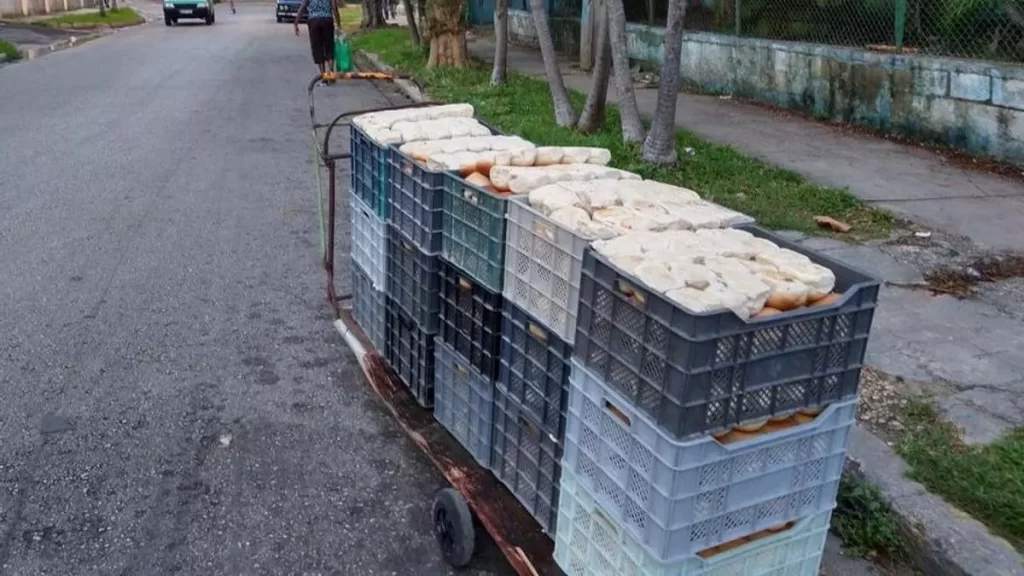
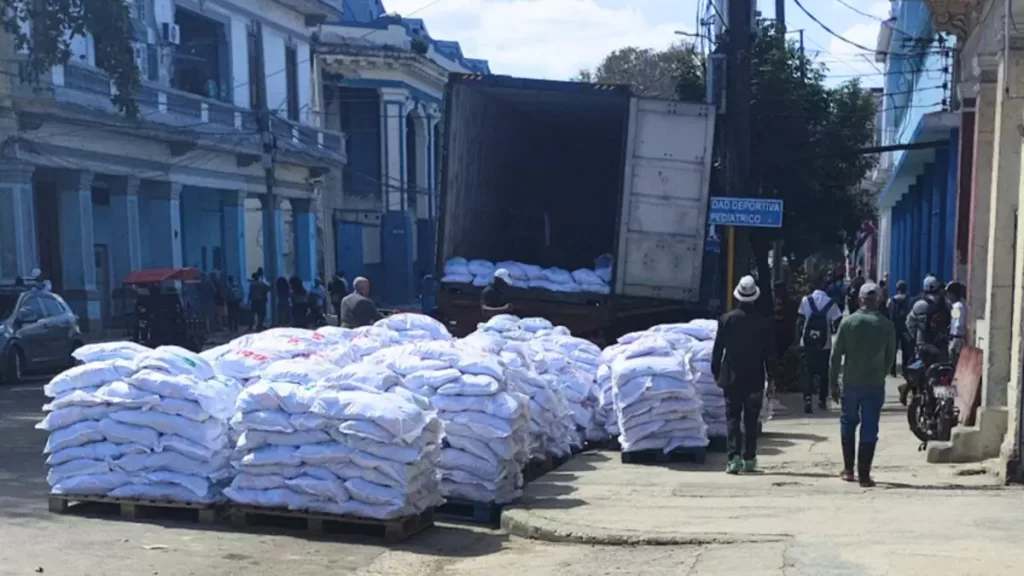
Once it arrives on the Island, the product is unloaded in full view of the population, as happened this Wednesday on Ayestarán Street, in Havana / 14ymedio

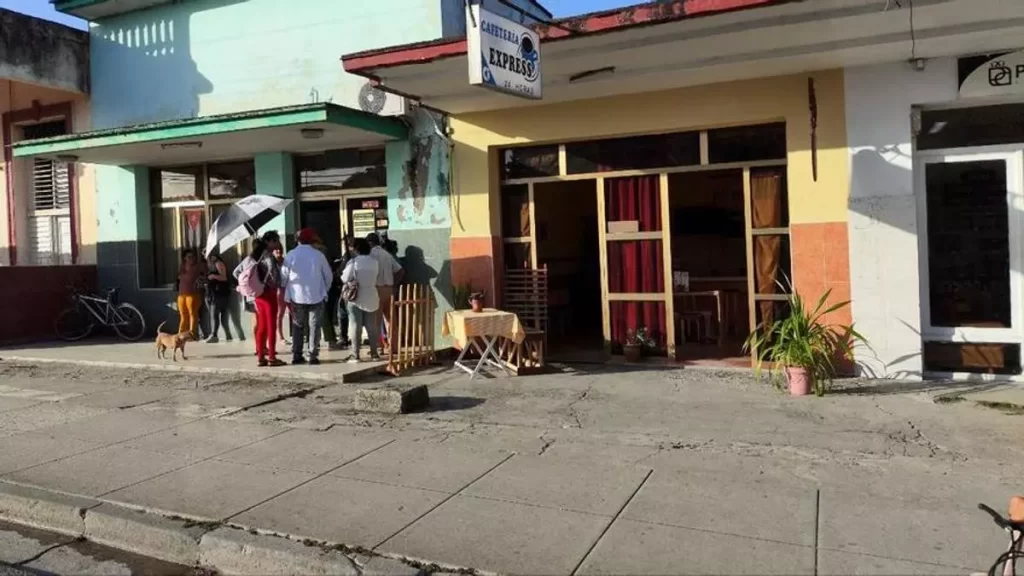
14ymedio bigger14ymedio, Madrid, February 29, 2024 — “In Cuba there is enough flour to drown in, but the State doesn’t have any.” Everyone knows it, and María confirms it. She spends the morning sending messages to several contacts – found through social networks –  to buy the raw material, with which she makes bread, pizzas, cakes and all kinds of sweets. The offers are so overwhelming that she only has to find the best one, economically and logistically, to be able to continue supplying her business.

Emerio González Lorenzo, president of the Food Industry Business Group, admitted over the weekend that the “complex situation” – a concept applicable to transport, fuel, electricity, chicken and everything that goes wrong in the country – will produce “affectations” in the basic basket that began to be “reflected” this Saturday, according to the official, even in tourist establishments.

Although Cubans have been struggling more than a year to find anything other than small, hard and tasteless bread, the news has made them tremble. Several provinces have announced changes in distribution, from Pinar del Río, where bread has been reserved for children up to 14 years old, to Sancti Spíritus, where sources of this newspaper report that it will be available only on Tuesdays, Thursdays and Saturdays. continue reading

The Government says that the “financial restrictions basically due to the intensified blockade” are to blame

The Government says that “financial restrictions, due basically to the intensified blockade and the logistical limitations that Cuba suffers to bring wheat from distant markets” are to blame, and its efforts to circumvent them do not work. Sources in the import sector tell 14ymedio that the State uses mipymes that are connected to the Regime to get the product without restrictions, even if the amount isn’t enough to feed the population.

“Here is a large private MSME [Micro Small Medium Enterprise], which has several gastronomic businesses: a paladar [privately run restaurant], two candy stores…,” says the source, who asks to protect his identity and location, but has documentation that supports what he says. “They rented a place and are setting up another bakery. They are supposedly “private,” but when you look at the import papers and trace the funding, you realize that there is money that comes out of State accounts,” he says.

The State uses them, he continues, to import goods under the cover of private companies, which act legally and comply with the rules and tariffs on all imports. At the end of 2023, the Government announced the increase in import tariffs for final products and a decrease in those for raw materials, in order to encourage the manufacture of consumer goods in the country.

To date, only alcohol and tobacco have suffered the tax increase, because the authorities specified that it would be necessary to define precisely when a product is final and another intermediate. The example of flour was the one used by the Minister of Finance and Prices, Vladimir Regueiro Ale, who showed how it would depend on whether payment is for a direct sale to the consumer or to a food processing business.

Be that as it may, and while the Official Gazette publishes the set price, the MSMEs continue to buy flour from Ukraine, Russia, Spain, Colombia and, above all, from Turkey. The informal market is overflowing with offers.

“Bags of flour of 55 pounds each are available. The container has 960 bags, at 9,000 pesos or $30.50 in US dollars. The complete container is sold,” says a seller. “Russian flour. Payment in dollars or euros by transfer abroad and a percentage in dollars in cash,” specifies another that delivers to the warehouses for Havana, Cienfuegos and other provinces. In this case, the cost is $1,200 per ton, and the commission is $100 more.

The payment methods are very diverse, but most of them require a deposit of a good part of the amount in dollars or even in banks outside Cuba. It is also not uncommon to ask for an amount in cash, pesos in that case, to ensure the day-to-day on an Island devoid of liquidity and where the ATMs work only when they want.

“To say they can import anything they want without the State intervening is a lie”

Those ads, on pages and social networks, mostly talk about contracts and documentation, but when contact is made in private, the transparency is diluted, despite the fact that, according to the source, it is almost impossible to get the merchandise into the country illegally. “To say they can import anything they want without the State intervening is a lie,” he says emphatically.

“The State places the order through an importer, either CubaExport or Alimport. Those MSMEs that are combined, half-private, half-State, which are actually fronts for the Regime, have direct contact with the Government, which is behind the business.”

The private businesses do more work because they find their own suppliers and take care of the whole process, before going to the Government and delivering all the information for import authorization. 

“It is mandatory to contact an inspection agency, either Intermar or Cubacontrol, to be able to bring in the merchandise, but they still have to contract with the health services, with the whole Health network,” he explains. Once it arrives on the Island, the product is unloaded in plain sight of the population, as happened this Wednesday on Ayestarán Street, in Havana.

In Santiago de Cuba, subsidized bread in the ration book has been suspended until the end of March

“The MSMEs, in fact, are overflowing with flour, and there is bread at 20 and 100 pesos, whatever you want,” says a neighbor from Santiago de Cuba, where the subsidized bread in the ration book has been suspended until the end of March. The problem, rather, is the blackouts, which prevent the ovens from working well.

When it arrives, nothing gets in the way of a Cuban and his bread. Except for a minor issue: no money. “Guarantee your monthly bread with payments from the outside. Offers for 30 days for your family to have their daily bread,” says a Havana MSME, which sells 2.8-ounce hamburger buns for $0.19, 28.2-ounce sliced bread for $1.50 and even combos of 10 hamburger buns a day plus a package of cookies for 86 dollars.

Nor do they lack the product in a candy store in El Vedado. “Right now we are fine with flour because there are many offers. We got ten bags at 20,500 pesos each, which a MSME that can import sold us. As we need to have all the paperwork and records for the inspectors, we prefer to buy like this and not on the street,” says the owner, who already talks about a similar situation for another product, sugar, for which an alarming shortage is feared, especially if one takes into account the catastrophic sugar harvest that looms over the country.

“The flour they sold me is Turkish and expires in June of this year; it is multipurpose flour, and the bags weigh 110 pounds. With that same MSME we got a sugar that is very good from the Caña Brava brand, Peruvian, which cost 24,000 pesos a bag.”

Translated by Regina Anavy

____________

COLLABORATE WITH OUR WORKThe 14ymedio team is committed to practicing serious journalism that reflects Cuba’s reality in all its depth. Thank you for joining us on this long journey. We invite you to continue supporting us by becoming a member of 14ymedio now. Together we can continue transforming journalism in Cuba.
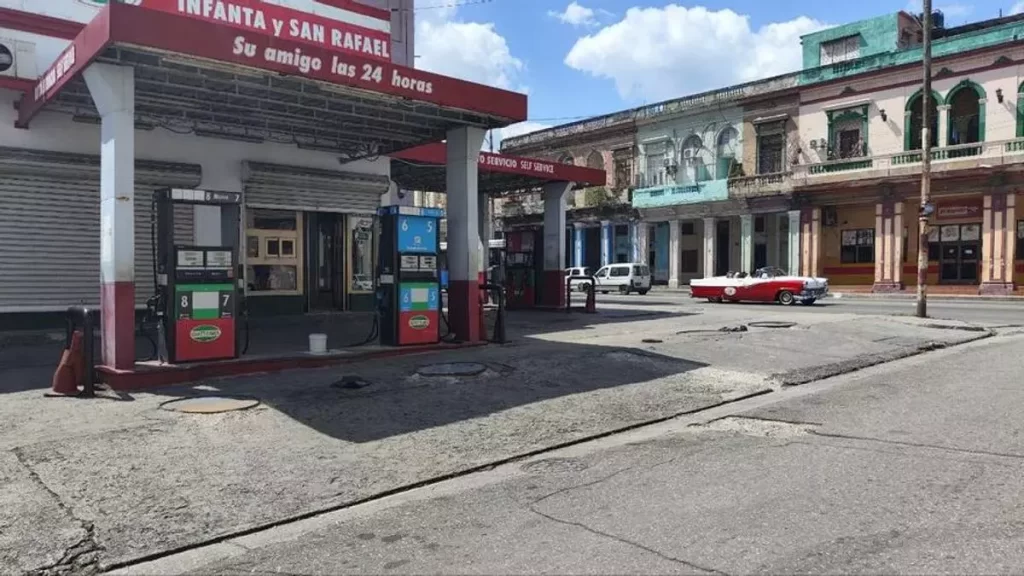
Gas Stations Closed and Others With Long Lines Before the New Prices of March 1

The San Rafael and Infanta gas station was closed in this photo taken this Wednesday, February 28 after the announcement of the price increase / 14ymedio

14ymedio bigger14ymedio, Havana, 28 February 2024 After being postponed due to an alleged cyber attack on the state financial company Cimex, two days before the dismissal of the Minister of Economy, Alejandro Gil Fernández, the new fuel prices, public transport and electricity rates will go into effect on March 1. Havana residents were trying to refuel this Wednesday but several gas stations were closed and a few others had long lines.

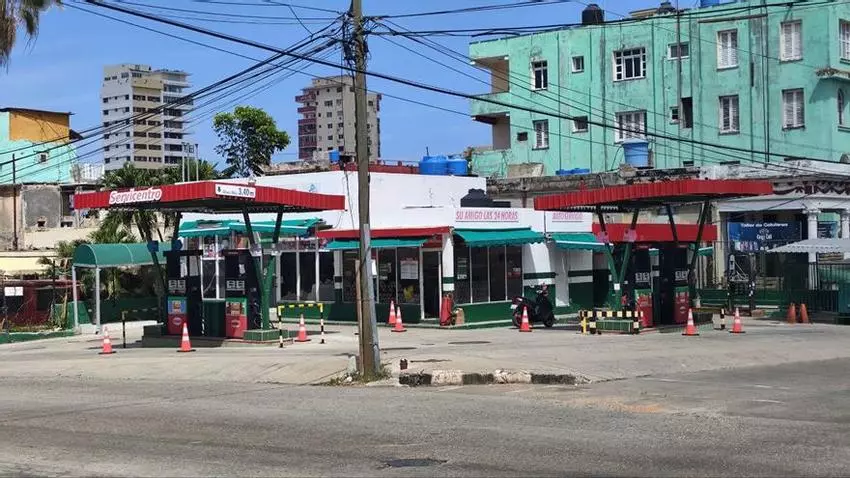
The service centers on 17 and L, in the municipality of Plaza de la Revolución, and San Rafael and Infanta, in Centro Habana, are not even dispensing fuel. The one in Tángana, also in Plaza de la Revolución, only had one dispenser working to serve the customers they have listed on a list of buyers.

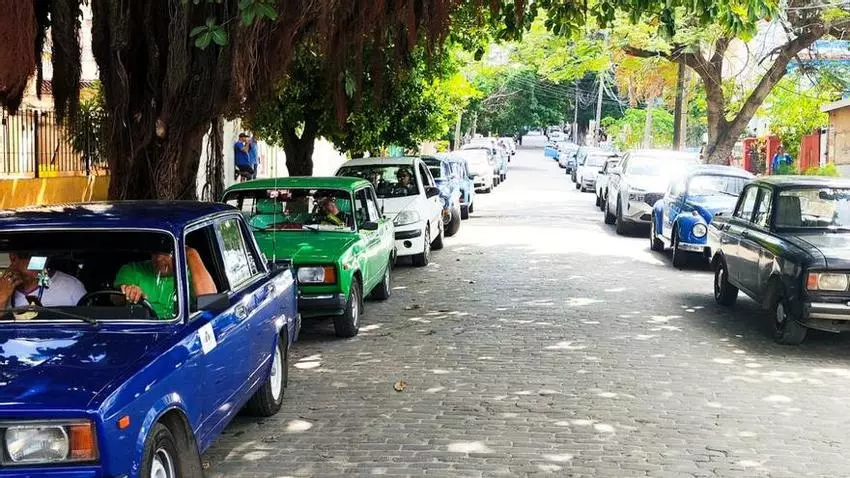
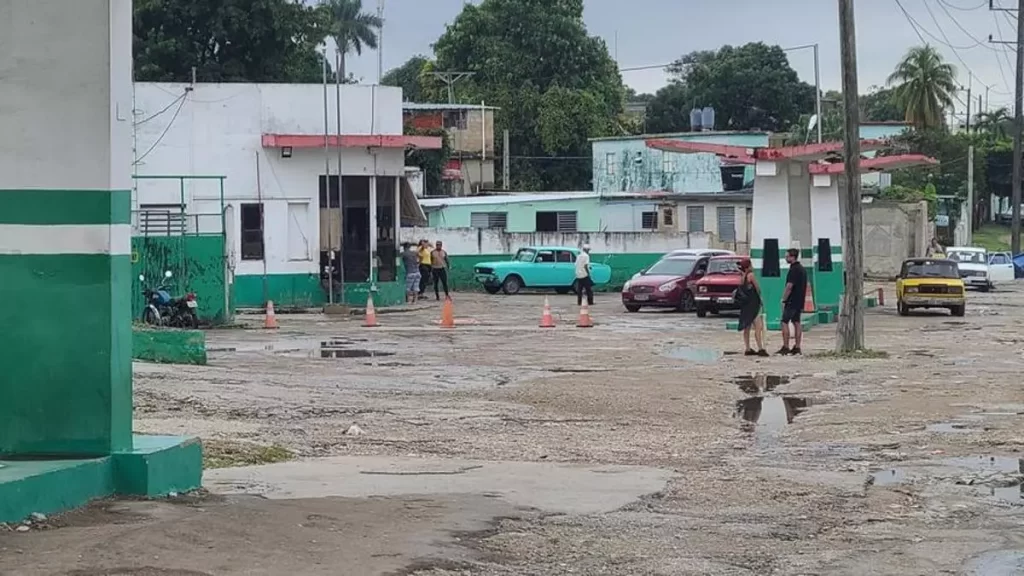
Of the gas stations that this newspaper was able to visit in Havana, only the one on 25th and G was selling fuel and the drivers were milling around in a long line. On the outskirts of the capital, the person in charge of the Los Paraguas de Guanabacoa service center reported on her Telegram account that “the 8 thousand liter regular supply truck,” which should have arrived at 10:30 pm on Tuesday, ultimately did not arrive.

The ministers of Finance and Prices, Energy and Mines, the vice minister of Economy and Planning and the vice president of Cimex appeared before the official press this Wednesday to announce that the new prices will apply only to fuel sold retail: 156 pesos or 1.30 dollars per liter for special gasoline instead of 30 pesos; regular and diesel at 132 or 1.10 and engine at 114 pesos or 0.95 dollars (instead of 25 and 20 pesos, respectively). As wholesale rates remain intact, private transportation prices should not increase, they stressed. continue reading

At the service center on 17 and L, in the municipality of Plaza de la Revolución, they are not providing service this Wednesday / 14ymedio

“In the case of liquefied gas, the application of price increases is postponed,” Cubadebate explained in an article that summarized the statements.

According to Mildred Granadillo, Vice Minister of Finance and Prices, the Government chose the date of March 1 after Cimex managed, during the last month, to restore “the affected computer systems.”

For his part, the head of the same portfolio, Vladimir Regueiro Ale, assured that the Government is aware “of the impact that (the new rates) have” and admitted that they will affect “the entire economy.”

“To date, prices do not recognize the real costs the country incurs. They were outdated prices and generated subsidies for the State Budget. We know that this has consequences on the costs of production processes. The measure in itself has an inflationary impact,” the minister admitted, adding that “there is a group of decisions that mitigate its impact,” although he did not explain which ones.

These “corrections” were also mentioned by the Cuban economist Pedro Monreal, who, following the announcement, criticized the measures on his social networks. “A distortion is ‘corrected’ – energy prices misaligned with the real cost – that would have transversal effects, increasing the distortion of salaries misaligned with the cost of living. Whatever they say, the ‘corrections’ impoverish the citizen,” he stated.

At the gas station on 25th and G, where they were delivering, the line of vehicles occupied several blocks. / 14ymedio

The intervention of the Minister of Energy and Mines, Vicente de la O Levy, was, for his part, a string of justifications about the State’s need to increase prices. “This measure is not to raise money, nor does it eliminate subsidies,” he assured, adding that “it is an issue that seeks savings,” while explaining that the way to guarantee the “resupply” of gas stations is to establish “a small chain of service centers in dollars for tourists and foreigners and eliminate the subsidy for foreigners.”

Fuel shortages, however, remain the main problem for the portfolio. “Cuba had these demands assured by international agreements, but import volumes have decreased for different reasons,” said De la O Levy. According to state data that were taken up by the minister during the conference, the Island needs about 8 million tons of different fuels annually, of which about three million are produced in national refineries, the rest is imported.

A critical case is that of gasoline, the import of which has been increasing in recent years – 126,000 tons of gasoline imported in 2021, 192,000 tons in 2022 and about 203,000 in 2023 – but it cannot cover the annual demand, which amounts to 360,000 tons.

In turn, this fuel is the one most demanded by the private sector, which consumes 71.5% of the 21,700 tons that were imported on average each month during the past year. Another need “impossible to cover” for the State. Diesel imports, with greater state consumption, have also fallen, “and that is felt in the economy,” declared Cubadebate.

Regarding the increase in the electricity rate for “high consumers,” the 25% increase is maintained for those who consume more than 500 kilowatt hours, said the minister.

Translated by Regina Anavy
____________

COLLABORATE WITH OUR WORKThe 14ymedio team is committed to practicing serious journalism that reflects Cuba’s reality in all its depth. Thank you for joining us on this long journey. We invite you to continue supporting us by becoming a member of 14ymedio now. Together we can continue transforming journalism in Cuba.
At a Gas Station in Havana, Esther’s Fans Support Her in Her Criticism of the New Fuel Regulations

At dawn, Los Paraguas received a tanker with 6,500 liters of regular gasoline and when the morning shift started, only 2,000 liters remained. / 14ymedio

14ymedio bigger14ymedio, Havana, February 27, 2024 — Esther Pérez Trujillo, who is entrusted by the government of Guanabacoa with the organization of the lines at the gas stations of that Havana municipality, does not like the new rules for the distribution of fuel. And she doesn’t hide it. This Tuesday, in one of the Telegram groups that she administers, she called for the “opinion of the people” in order to send it to the Municipal Board of Directors.

In a message sent early in the morning, Esther explained why she did not summon the buyers on her list  to the Cupet Los Paraguas gas station. According to her, the service center received 1,717 gallons of regular gasoline at 2:41 in the morning, and at the beginning of the morning shift, there were only 528 gallons left. There was also an “unconvened” line.

Accompanying the text with emoticons of disgust, she added: “That is, between the time of rest and the change of shift, 1,189 gallons were sold,” and “the next call will be when another fuel truck arrives.”

“Public opinions. Group open,” the text ended, inviting a conversation. The comments did not take long to arrive, almost all in favor of the work of Esther and her subordinates. “It shouldn’t happen with the good work that you and your team are doing. It’s true that they shouldn’t save the fuel, but at that time of day people don’t deserve it,” said Roiber Danger Salazar. continue reading

“This is the most organized system and you have done a good job”

According to Mijail Fernández, “I am of the opinion that your system should be extended to all gas stations, and they should not be sending fuel to Cupet at such early hours of the morning.”

“This is the most organized system and you have done a good job, but if it is not widespread it will fail, because sometimes disorganization suits some,” said José Luis Castillo, as did Izzet: “I don’t understand why, if you and your team do such good work to avoid coleros [people others pay to ‘stand in line’ for them] and the resellers from hoarding fuel, they do that. It’s true that the gas stations can’t refuse to sell, but what they did showed a lack of respect toward you, who have worked so hard, and the people who wait their turn in a disciplined manner.”

The same user asks them to “take measures,” and as an example mentions the Cupet El Tángana, in El Vedado, where “they do not retain fuel but there is a schedule so that someone who can’t come at the time of his turn can go later.” And he ends by encouraging Esther: “We continue to ride, with you as the leader of the troop.”

“Congratulations, don’t give up, let the dogs bark, I support you”

Many of the comments allude to the danger of having to refuel late at night. “For those of us who have motorcycles, early morning shifts have become somewhat dangerous,” explained Alberto Borrego. More clearly, Abdel Pérez, also a motorcyclist, said that “early morning calls are VERY DANGEROUS, as we know there is crime and violence on the street.”

For her part, Zayda Suárez questioned that given the time at which the fuel arrived, “they should have waited for dawn and called those of us who are on the list. The fuel doesn’t usually arrive that early, and the administration of the service center should respect the established order.”

Until a little less than a month ago, the gas stations organized by Esther seemed to have the privilege of receiving more fuel than others in the capital. Esther and her two subordinates managed “the lists” of customers through Telegram with an iron hand. However, last week the boss of Guanabacoa informed her followers that the rules of the game had changed. By orders “from above,” gasoline would not be saved for those who did not come when it was their turn, and, if someone who was not registered on the list arrived at the service center, they would have the possibility of refueling.

During these days, Esther has continued with discipline, coordinating users via Telegram without any protest.The arrival of the fuel in the early hours of the morning, out of turn, with the consequent disappointment of the buyers, seems to have tried her patience.

Of course, it is clear that the customers are with her: “Congratulations, don’t give up, let the dogs bark,* I support you.”

*Translator’s note: A quotation from the novel Don Quixote, by Miguel de Cervantes. 

Translated by Regina Anavy

____________

COLLABORATE WITH OUR WORKThe 14ymedio team is committed to practicing serious journalism that reflects Cuba’s reality in all its depth. Thank you for joining us on this long journey. We invite you to continue supporting us by becoming a member of 14ymedio now. Together we can continue transforming journalism in Cuba.
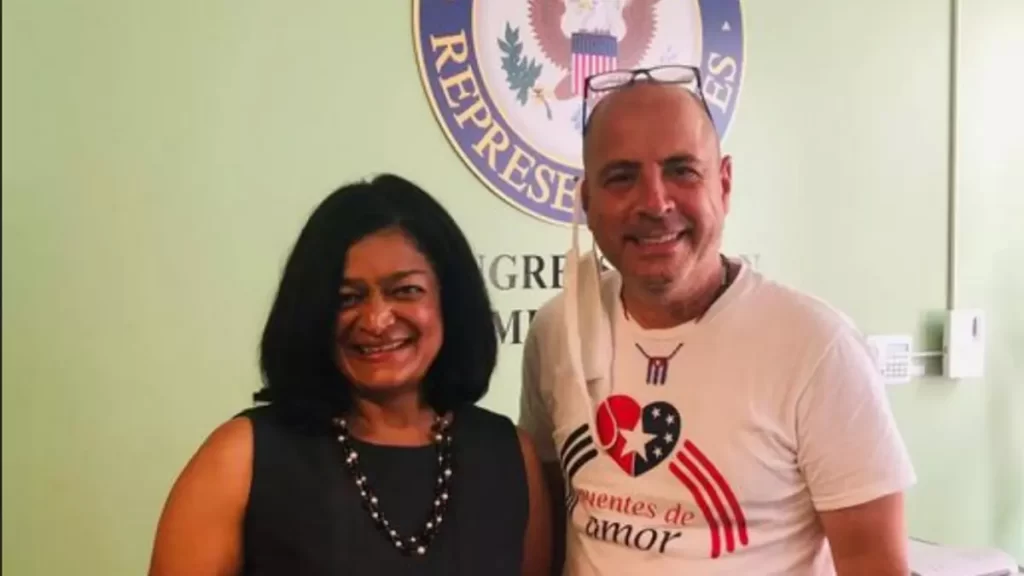
Discreet Visit to Cuba by a Delegation of the U.S. Progressive Caucus

Congresswoman Pramila Jayapal, leader of the progressive ‘caucus’ of the Democratic party, with the leader of Puentes de Amor, Carlos Lazo. / Pramila Jayapal/

14ymedio bigger14ymedio, Madrid, February 28, 2024 — Two Democratic congresswomen, Pramila Jayapal and Ilhan Omar, led a delegation of members of the progressive caucus of the U.S. House of Representatives to Cuba last week, according to el Nuevo Herald. They were joined, according to sources in the Miami newspaper, by the congressional representative for California, Barbara Lee.

The information, which has not been disseminated in any Cuban media, was confirmed by the progressive caucus, which contains more than 100 legislators. Jayapal, from the state of Washington, is the president of the caucus.

“Representatives Jayapal and Omar traveled to Cuba last week, where they met with people from Cuban civil society and government officials to discuss human rights and the bilateral relationship between the U.S. and Cuba,” said a spokeswoman for the group. continue reading

“Representatives Jayapal and Omar traveled to Cuba last week, where they met with people from Cuban civil society and government officials”

The offices of the three congresswomen, for their part, refused to comment.

The trip took place on an unspecified date, but el Nuevo Herald places it at the beginning of last week, and the group was made up of a dozen people, although only the names of the two congresswomen were given. Both are critical of the U.S. embargo on Cuba.

Both Jayapal and Omar, a representative for Minnesota, have supported bills to normalize relations with the Government of Cuba. This January, Jayapal, on her X account,  requested that Cuba be removed from the list of countries that sponsor terrorism. “Today marks three years since Cuba was included on the list, a Trump-era policy that has devastated the Cuban economy and made the life of its population more difficult. It’s time for Biden to eliminate that designation, lift sanctions and reopen relations with Cuba.”

“Being on this list has made it almost impossible for Cuba to do international business, which has caused an economic crisis that has led residents to flee the country,” she added.

In November 2021, the U.S. Congress approved a symbolic resolution in support of the 11J protesters and “the immediate release of arbitrarily detained Cuban citizens.” Likewise, the regime of Havana was urged to allow the march called for that month by the Archipelago collective. Previous repression ended up leading to the exile of its visible leader, the playwright Yunior García Aguilera.

That text was supported by 382 votes in favor and 40 against, among which were those of the two congresswomen. Although none expressly detailed at that time the reason for her vote against, the representative for Massachusetts, Jim McGovern, did so, arguing that the document did not recognize “the role played by the U.S. when it comes to contributing to the suffering of ordinary Cubans.”

In mid-January, there was a meeting between American and Cuban officials in Havana. The meeting was confirmed by the White House, which indicated that representatives of the Justice and National Security departments were going to participate in the Dialogue between the United States and Cuba on Law Enforcement. In that forum, they will address “topics of bilateral interest” and will seek “greater international cooperation in law enforcement,” a spokesman for the federal government previously said.

Jim McGovern, argued that the document did not recognize “the role played by the U.S. when it comes to contributing to the suffering of ordinary Cubans”

Just a week ago, the Deputy Undersecretary of Public Diplomacy, Politics, Planning and Coordination of the State Department also visited Havana. Kerri Hannan met with members of Cuban civil society, black activists, human rights defenders and independent private businessmen, as confirmed by the U.S. Embassy in Havana. The official also spoke with members of the Government of Cuba and, as she explained, “pressed for the release of the political prisoners.”

At the beginning of February, the Special Advisor of the State Department on International Rights of Persons with Disabilities, Sara Minkara, was on the Island. During her stay, she held meetings with “representatives of the Government of Cuba, independent Cuban businessmen, former students of programs sponsored by the Embassy and students of educational institutions in Havana,” said the diplomatic headquarters.

The meeting of the members of the progressive caucus, on the other hand, has not been disclosed by any of the parties, at least until the news was released, at which time they  confirmed it. Neither the Cuban Government nor the official press, very active in reporting on this type of event, has pronounced itself.

On February 19, approximately the same date that el Nuevo Herald places the trip of the progressive caucus to Cuba, Miguel Díaz-Canel met in Havana with a delegation of American farmers, on their first visit to the Island, organized by the National Association of Departments of Agriculture of the United States. “If it were not for the blockade, we would have many mutual opportunities for work, to move forward for the benefit of both peoples,” said the president.

Translated by Regina Anavy

____________

COLLABORATE WITH OUR WORKThe 14ymedio team is committed to practicing serious journalism that reflects Cuba’s reality in all its depth. Thank you for joining us on this long journey. We invite you to continue supporting us by becoming a member of 14ymedio now. Together we can continue transforming journalism in Cuba.
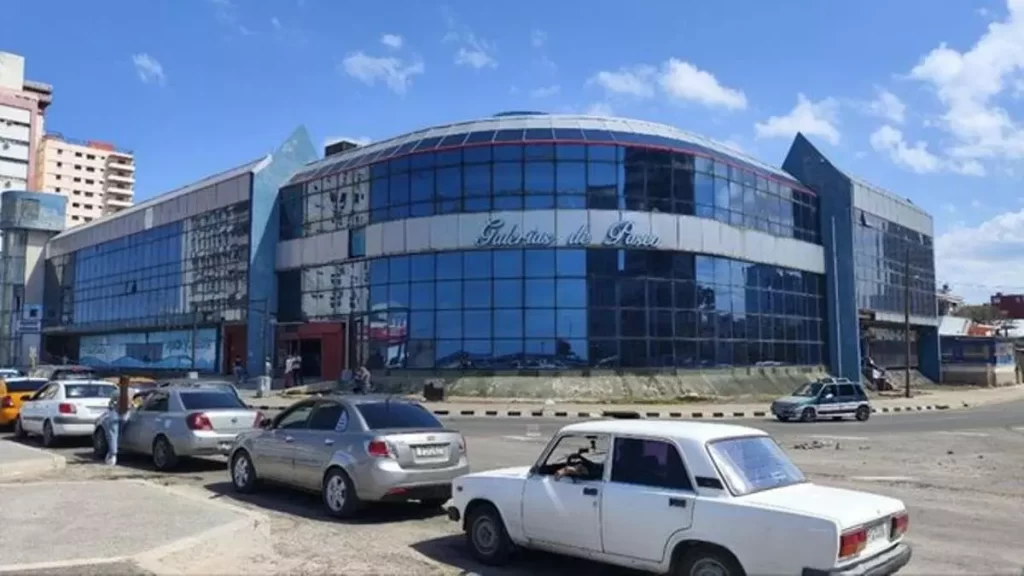
Paseo Galleries in Havana, a Palace of Consumption Turned into Ruins

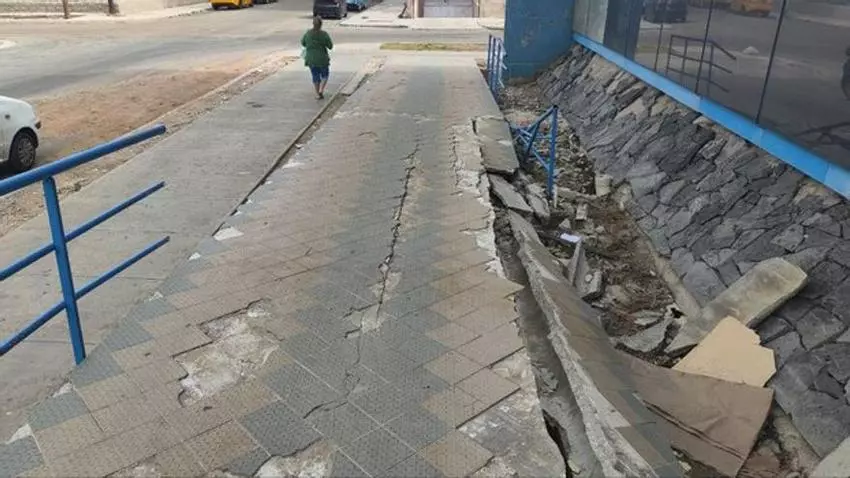
The store that was a symbol of opulence now displays dirt and destruction everywhere / 14ymedio

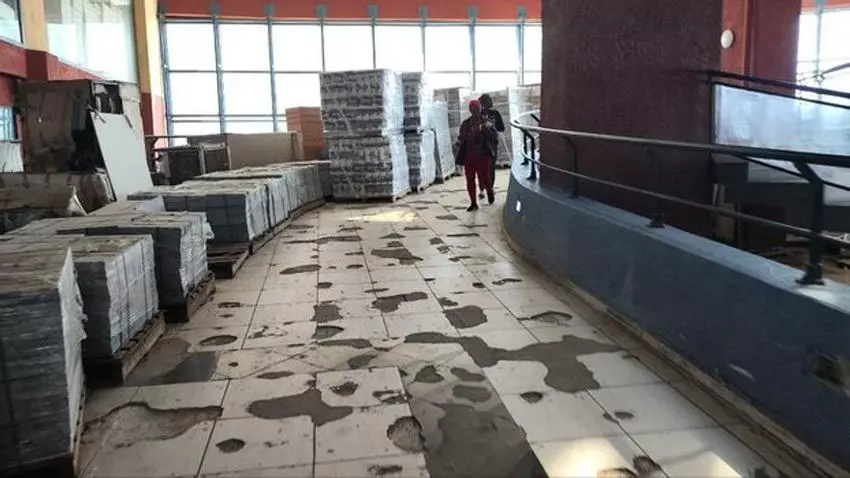
14ymedio bigger14ymedio, Natalia López Moya, Havana, 24 February 2024 — Careful!” a woman managed to say this Friday to a child who was rushing along the entrance ramp of the Paseo Galleries, in Havana’s Vedado district. The floor slabs, full of holes, forced customers going to the market, located on the first floor, to walk gently to avoid falling or spraining an ankle. The deterioration of what was one of the consumer palaces of the Cuban capital in the 90’s seems to know no limit.

Everywhere you look you will only find destruction, grime and peeling paint. With barely any lighting at its entrance, the cloudy day was of little help for those who entered the three-story establishment, located right across from the luxurious Cohiba Hotel and a few meters from the ocean-front wall of the Malecón. Most of those who arrived went to the market — which requires payment in freely convertible currency (MLC) — on the first floor, managed by the Cadena Caribe of Cuba’s GAESA* military conglomerate.

Access to the place through the exterior ramp is the prelude to the extreme deterioration that is exhibited inside / 14ymedio

Inside the store, the floor is in better condition and at least the lamps have most of their bulbs working, but the presentation of products is more reminiscent of a warehouse than a store. “Everything is piled up, in order to find a price sometimes you have to go among the mountains of bags or cans,” complained a customer who came in search of powdered milk. In the back, the meat sales area had a small line.

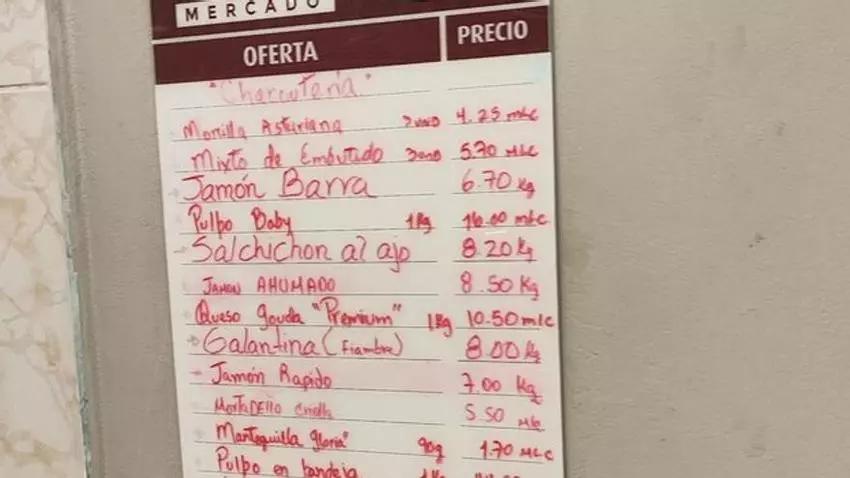
“This place sucks, but it’s what I have closest to my house and I came here to buy butter,” commented Moraima speaking to 14ymedio; she is a retiree who receives remittances on her MLC card from her son, who resides in continue reading

Sweden. “This small bar [90 grams] costs 1.70 MLC,” the woman criticized. Behind her, the price board announced “baby octopus” at 16 MLC per kilogram; seven units of Asturian blood sausage for 4.25, and 200 grams of smoked salmon for 35.

“Everything is very expensive and the place is depressing. They charge in foreign currency and abuse in Cuban pesos,” said Moraima. “This cart with oil, peas, a package of chickpeas, tomato sauce, flour, butter and a little ham is already costing me more than 50 MLC,” she explained to this newspaper. “With this, I’m spending more than half of what my son sends me monthly; he has to work very hard to send me 100 MLC.”

Access to the place through the exterior ramp is the prelude to the extreme deterioration that is exhibited inside / 14ymedio

“All this is in this condition because they know that even if it is a dark cave, people are going to have to continue coming here to buy,” another customer said out loud while waiting for an employee to appear to open a bag with packages of children’s candy. “They say that until they read the barcode, they can’t tell me how much it costs,” he was losing his patience.

“They don’t sell anything fresh and there is a disgusting smell in the market, it smells like rotten fish, I don’t know how they can be open like this,” questioned another buyer. “I used to come here, I even bought a Spanish pressure cooker years ago that turned out to be very good, but this place doesn’t even look like that anymore, this is in total decline.”

For those who do not want to risk their lives going down or up the access ramp to the supermarket, there is still the risk of taking the stairs with several broken steps on their edges and which has not seen a broom come by in months, perhaps years.

The Jazz Café, located on a mezzanine with a stunning ocean view, now resembles a haunted house, full of dust and cobwebs. “It closed a little before the pandemic and never reopened, a shame because this was always full and it was a unique place in Havana,” lamented a worker who was trying to push a cart full of goods being careful so the wheels wouldn’t fall into the ramp’s potholes.

A meeting place for musicians, national and foreign clients looking for company, the Jazz Café charged about ten convertible pesos (CUC), in the days when the CUC was still in circulation, which included a basic dinner and a musical show. The place remained full past midnight, especially on weekends, and the access staircase became an improvised catwalk of young girls showing themselves to the tourists.

With a careful design and sculptures that imitated jazz players in full improvisation, the Jazz Café became a unique space in the Havana night. “The proximity of the Cohiba Hotel guaranteed that this would be full, but right now there is little tourism and those who come asking if the club is open what they find is this, an abandoned place,” acknowledged a taxi driver who charged 2,000 pesos for a ride to the nearest municipalities to those who left the supermarket this Friday.

For the most empowered customers, Galerías Paseosreserves its boutique shopping area for dresses that exceed 200 MLC and sneakers from famous brands. But even those places of supposed glitz do not escape the dirt and crisis of the environment. Thus, Adidas shoes alternate with stained glass, expensive perfumes with cracked floors, and leather purses with stained walls.

Access to the place through the exterior ramp is the prelude to the extreme deterioration that is exhibited inside / 14ymedio

At least three of those businesses were closed this Friday without explanation. With the lights off inside, the stores, located on the third floor, gave the impression of having been abandoned with the merchandise inside, and no employee of the complex could attest as to when they would reopen. “Come by on Tuesday or Wednesday to see if they are selling again”, a custodian suggested to a teenager who inquired about the shoe shops.

The workers’ faces are also streaked with apathy. What was once a very attractive place to work has ceased to generate interest. “Everything is paid by card, customers almost never leave tips, and when they do, it is in pesos,” acknowledges an employee who this Friday helped a couple carry their purchases to the car.

“Many people have also left because they received their parole visa or left by way of the volcano route,” the man acknowledged. When foreign currency stores opened for Cuban customers in the 90s, working in one of those stores was, automatically, the beginning of starting to be part of a wealthier social class, but now the situation is very different.

“Inspections, hard work and little encouragement,” the employee summarized the situation of the Galerías Paseo workforce. “This has gotten really bad, I’m looking for a job in one of those MSMEs that pay better and where there isn’t as much drama as here, because I might as well have to stay until the next day for an audit than to put up with complaints from a client who is absolutely right, because what they should do with this place is to shut it down, it cannot continue operating in these conditions.”

In the bathroom on the top floor, only the one for women was open, which had three cubicles and at least one of them was out of service. A cardboard over the bowl with a bucket on top prevented the use of the toilet and the smell that came from inside made some of the urgent customers who came to that area give up. There was also no water supply for hand washing or flushing toilets.

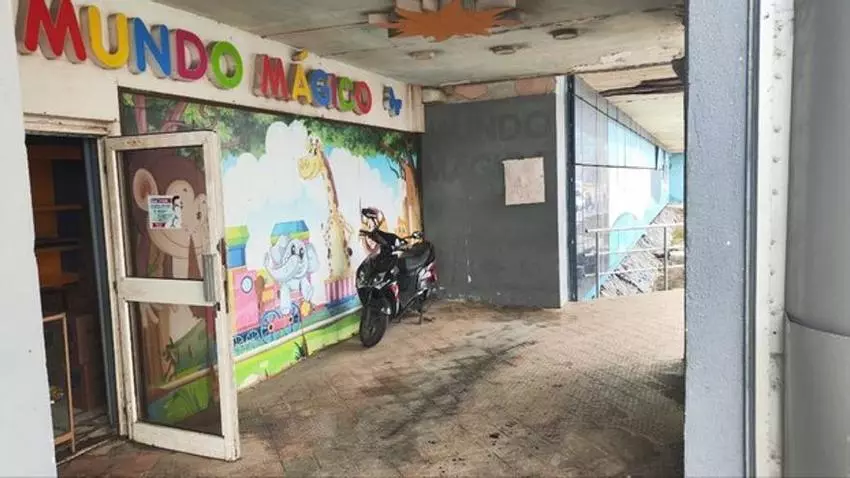
The magical world looks faded and opaque / 14ymedio

But the best “surprise” was at the exit. A colorful sign welcomed Mundo Mágico, a place that a few years ago was the children’s store. “No, we no longer sell toys here, now we only sell the ‘basic products module’ [from the rationing system] for the people of this area,” an employee responded grumpily to a clueless customer who was looking for some dolls.

Above the worker’s head, blue, red and yellow letters recalled that period when Galerías Paseo was the consumer palace of a Havana that could afford to go shopping and enjoy the journey.

*Translator’s note: Grupo de Administración Empresarial S.A. (GAESA) is a Cuban military-controlled umbrella enterprise with interests in the tourism, financial investment, import/export, and remittance sectors of Cuba’s economy.

Translated by Norma Whiting
____________

COLLABORATE WITH OUR WORKThe 14ymedio team is committed to practicing serious journalism that reflects Cuba’s reality in all its depth. Thank you for joining us on this long journey. We invite you to continue supporting us by becoming a member of 14ymedio now. Together we can continue transforming journalism in Cuba.
An ‘Almendrovich’ — A Taxi With a Unique History — Tours Havana

The Chaika has an adaptation that allows it to carry up to six passengers, in addition to the driver / 14ymedio

14ymedio bigger14ymedio, Natalia López Moya, Havana, 21 February 2024 — It was one of the fleet of GAZ 14 Chaika cars that Leonid Brezhnev gave to Fidel Castro in the 1970s. Now, it serves as a collective taxi like any old almendrón* and travels the route between the Parque de la Fraternidad and Santiago de las Vegas, in Havana. “Since there is no tourism and we have to put food on the table, the Cubataxi company has us picking up the fares,” says the driver this Wednesday, while transporting five customers on a cold Havana morning.

With a glossy black body and an intimidating length, the Chaika has an adaptation that allows it to carry up to six passengers, in addition to the driver. Where there used to be ample space for travelers to stretch their legs, an improvised seat has been placed such that it requires them to raise their knees.

But even these transgressions do not tarnish its stately bearing and the historical value of the vehicle, a symbol of a time when the Kremlin’s wallet seemed bottomless when it came to propping up the Cuban regime. “This was one of the ones used for Fidel Castro’s bodyguards, that’s why it’s not armored,” adds the driver when asked by a client.

“This was one of those used for Fidel Castro’s bodyguards, that’s why it is not armored”

According to another Cubataxi employee, “Fidel never really liked the Chaikas. He used them for a short time and switched to other capitalist-made cars, which were the ones he preferred,” he says. Of those 15 GAZ cars continue reading

that the general secretary of the CPSU sent to the island, “there are only about five left circulating on the streets and they are dedicated to tourism, but now almost no foreigners are arriving and we are working with Cubans.”

The so-called Soviet limousines were widely used at the time as protocol vehicles to transport important visitors arriving to the Island. Presidents, high diplomats and political allies traveled in those cars that demonstrated the proximity between the Kremlin and Revolution Square. When they began to provide services to tourism, travelers went crazy to take pictures with those fossils from the Cold War.

The enthusiasm was not shared by Castro. “The first cars he had in 1959 were Oldsmobiles for him and his entourage, then the Alfa Romeos arrived. He rode in the Chaikas for very little time just to please the bolos, the gossipers, and finally he opted for the Mercedes-Benz, “adds this employee who, before Cubataxi, worked in the protocol service of the Council of State.

“Most of the people who get into these Chaikas now don’t know anything about their history, they think they are old cars like any other. But nothing like that, this is as tough as a Chevrolet but it is exclusive because there are very few left and everyone who sat in those seats was a minister or higher,” he says. “People, when they find out where a car like this comes from, scoff and say it’s an almendrovich*, but this is a piece of history, a museum piece with wheels.”

*Translator’s note: Classic American cars are called ‘almendrones‘ in Cuba, a reference to their ‘almond’ shape’, and are used largely as shared taxis. ‘Almendrovich‘ is an additional play on words for these ‘Russian’ almendrones.

____________

COLLABORATE WITH OUR WORKThe 14ymedio team is committed to practicing serious journalism that reflects Cuba’s reality in all its depth. Thank you for joining us on this long journey. We invite you to continue supporting us by becoming a member of 14ymedio now. Together we can continue transforming journalism in Cuba.
Yasmany Gonzalez Admitted to Being the Author of Anti-Government and Anti-Communist Party Posters

The activist Yasmany González and his wife, Ilsa Ramos. (Facebook/Ilsa Ramos)

14ymedio bigger14ymedio, Havana, 14 February 2024 – Ten months after Yasmany González Valdés’s detention – for creating graffiti opposing the government and the Communist Party – this Tuesday saw the conclusion of the trial in which he was charged with the crime of enemy propaganda. The prosecution requested six years imprisonment, two less than the maximum provided for in this offence.

His wife Ilsa Ramos told Martí Noticias that his lawyer tried to get the sentence lowered – by three years – pleading his collaboration during the investigation. “He says that Yasmany shouldn’t have to have a sentence so near to the maximum for this offence, which is eight years, because he admitted to putting up the posters and cooperated in the handwriting checks. Now we have wait for the final sentencing, which could take more than another month”, she explained.

At the trial – which was held at the Tenth of October Municipal Tribunal in Havana – only close family members were permitted to attend: his parents and his wife

At the trial – which was held at the Tenth of October Municipal Tribunal in Havana – only close family members were permitted to attend: his parents and his wife. “It started very late because they didn’t bring in the prisoners (him, and another younger man, also from the Combinado del Este) – both of them charged with “enemy propaganda”, although not part of the same case. The trial scheduled for 9am finally started at 11am”, Ramos added. continue reading

His wife also added that the attorney intervened during the trial in order to add aggravating circumstances, among others propaganda sent via his mobile phone, and incitement to attend demonstrations. “The lawyer defended him, arguing that Yasmany was being judged only for the posters”, she said.

González Valdés, known on social media as Libre Libre, was called in at the beginning of April 2023 by the police, who linked him to the clandestine group known as El Nuevo Directorio (END) – The New Directory – which were named on social media as being responsible for the posters that the activist was accused of. He attended an interrogation, where they conducted graphological tests and they tried to retain him, unsuccessfully, for non payment of fines unrelated to the case.

On 20 and 23 March, two enormous graffitis had been created, saying “No to the PCC” – one of them at the Faculty of Physics and the other in Aguirre Park. But it was the two following ones – on 17 April, at the university stadium and at 7 Calle Humboldt – which provoked a “violent search” of his house by 15 police officers who confiscated a paintbrush, overalls and a phone.

After this operation he was driven to Villa Marista, the headquarters of State Security, and interrogated for a month, after which he was moved to the Combinado del Este

After this operation he was driven to Villa Marista, the headquarters of State Security, and interrogated for a month, after which he was moved to the Combinado del Este.

During his time in prison his family denounced the fact that the activist was subjected to harassment from other prisoners, exposed to infections and accused of trying to form an “opposition movement” inside the prison, for which he spent lengthy periods in a punishment cell.

According to his wife, during the trial the prosecutor reminded the court that the crime for which he was indicted – enemy propaganda – is categorised in “the penal code which has been in force since 2022 and which was approved by more than 79% of the population”. However, this law has not, in fact, been put to any referendum, and neither of the two previous actual referendums – for approving the 2019 Constitution and the 2022 Family Code law – received anywhere near this level of support.

Translated by Ricardo Recluso

____________

COLLABORATE WITH OUR WORKThe 14ymedio team is committed to practicing serious journalism that reflects Cuba’s reality in all its depth. Thank you for joining us on this long journey. We invite you to continue supporting us by becoming a member of 14ymedio now. Together we can continue transforming journalism in Cuba.
A Violin and a Bicycle in the Streets of Havana

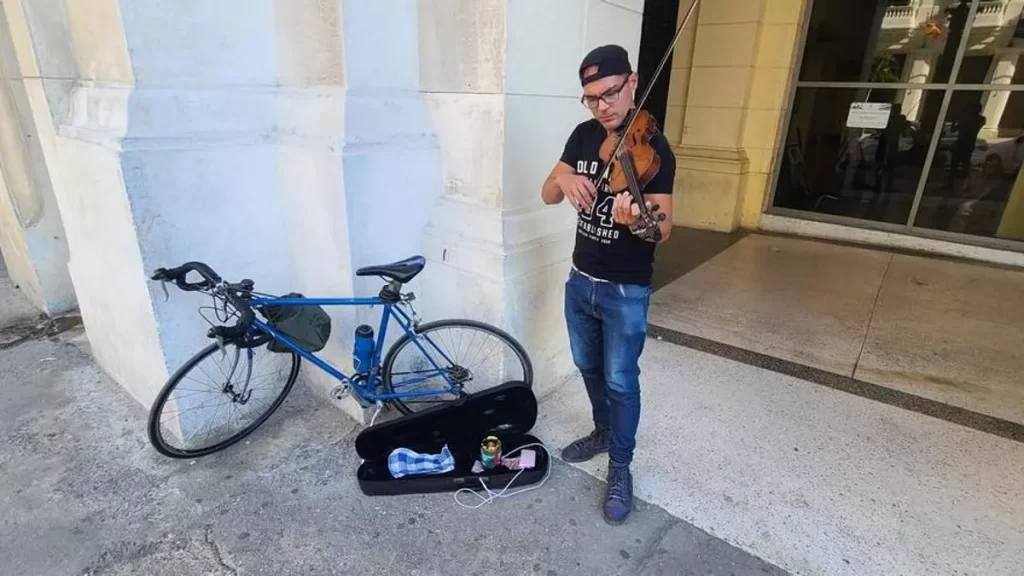
Reniel travels long distances on his bicycle to play in the streets of Havana /14ymedio

14ymedio bigger14ymedio, Pedro Espinosa, 27 February 2024– Of everything that Reniel carries with him, on his miles-long bicycle trips through Havana, there is nothing more important than his violin. With the case open and the bow taut, the young man of 30 from Havana performs in all kinds of improvised settings in the capital: squares, parks, boulevards and roadways. There is only one place, however, that he resists — Old Havana, where only those with a “special permit” from the Office of the Historian can perform.

The old town, where Eusebio Leal injected multimillion-dollar sums, continues to function under the commandments of the late Historian, glossed in the city’s Master Plan, and violating those rules has consequences. “If they catch you playing without a permit in the historic center, the fine can be up to 4,000 pesos,” says Reniel, who aspires to bring joy to passersby with his music within the limits of the old wall, on Mercaderes Street or in the area around the Cathedral.

“I have tried to request that permit and I am in the process of applying for it, but first I need to have the papers from the Onat (National Tax Administration Office), present my work project and, if they accept it, then I can work there,” he explains. the musician. As he remembers, they have “talked him down” several times, but this time he hopes the response will be positive.

Meanwhile, the rest of Havana’s streets are a free map in which Reniel can play his violin and earn some money to help his mother, a job that he combines with a more stable job, such that he can only do it in his free time. continue reading

This Monday, in the portal of the old building of the Museum of Fine Arts, in front of the Gran Hotel Manzana Kempinski, the young musician played for passers-by, who from time to time dared to leave some bills in his case. A few steps to the right, a man with a statue of Saint Lazarus asking for offerings and another with a saxophone were competing with Reniel for the attention of the Havana residents.

Reniel, who accompanies his violin with the music from a speaker connected to his phone, cares little about the competition because, as he explains, the museum portal is just the temporary stage that he must share with other street or needy artists, and it is not even the fixed site for his performances.

A man with a saxophone competing with Reniel for the attention of the people of Havana / 14ymedio

“I work in different places, I don’t always play here,” says the musician, who insists that he has never performed with orchestras or played the instrument professionally. “When I was about 14 years old I had the opportunity to have a violin, and since then I learned music self-taught and with private lessons,” he says. State music schools, he adds, “are difficult to access at the age I was. Children start playing from the age of seven and if you don’t enter at that age it is very difficult to be admitted later on, ”he says.

For about five years he managed to get several restaurants and bars in Havana to hire him to offer live music to customers. “I have played the violin at the Los Mercaderes restaurant, at the La Makina bar, which is closed now, at the La Cocina de Esteban restaurant in El Vedado, and at the Iranian food restaurant, Topoly,” he lists.

Playing on the street, despite having to travel by bicycle from Boyeros to different parts of the city, became a means for Reniel to earn extra money for his home. This time, however, the meager loot was not just for the musician. An old woman, not far from the museum, asked him for “10 pesos to eat.” He couldn’t say no.

____________

COLLABORATE WITH OUR WORKThe 14ymedio team is committed to practicing serious journalism that reflects Cuba’s reality in all its depth. Thank you for joining us on this long journey. We invite you to continue supporting us by becoming a member of 14ymedio now. Together we can continue transforming journalism in Cuba.
Jamaica and the Cayman Islands Deport Irregular Migrants to Cuba, Totaling 257 in 2024

In 2023, Cuba received back a total of 5,253 nationals, mostly from the United States. / EFE/File

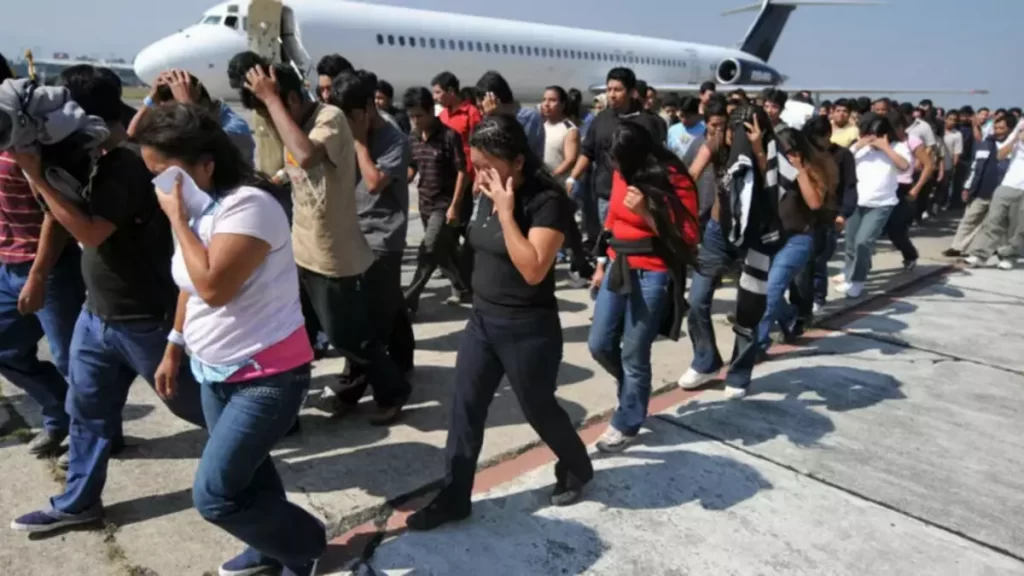
14ymedio bigger14ymedio(EFE), Panama, February 26, 2024 — Jamaica returned 10 irregular migrants to Cuba, and the Cayman Islands returned another 4, along with  257 citizens of the Island deported from several countries in the region so far in 2024, according to official media reported this Sunday.

The group of Cuban migrants returned by the Jamaican authorities on a flight that arrived this Saturday in the eastern city of Santiago de Cuba had left illegally by sea, according to a report from the Ministry of the Interior.

This week, the United States also reported the deportation of two groups of Cuban migrants. One was made up of 16 men, eight women and a minor, delivered on Wednesday by the U.S. Coast Guard Service, and another 51 were deported by air on Thursday. continue reading

This week, the United States also reported the deportation of two groups of Cuban migrants

To date, in 2024 there have been 21 returns with 257 irregular migrants, according to the Ministry’s report.

In 2023, Cuba received a total of 5,253 nationals, returned mostly from the United States but also from Mexico, the Bahamas, Belize, the Cayman Islands and the Dominican Republic.

Cuba is experiencing an unprecedented migratory wave, due to the serious economic crisis on the Island, with a great shortage of basic products (food, medicines and fuel), a galloping inflation, frequent power outages and a partial dollarization of the economy.

The 2022 estimates indicate that around 4% of the Cuban population left the country, and last year’s figures could be similar according to the accumulated recorded.

This Sunday, Panamanian authorities warned of the great increase in migrant crossings through the Darién jungle, the dangerous border between Panama and Colombia. More than 68,400 migrants have crossed it so far in 2024, about 22,673 more than in the same period last year.

The increase in migrants through the Darién on their way to the United States or Canada in search of better living conditions has been progressive since 2021

The increase in migrants through the Darién on their way to the United States or Canada in search of better living conditions has been progressive since 2021, reaching the record number of more than 520,000 last year.

For this year, an increase in migrants in transit on that dangerous route of up to 20% is expected. Faced with this, Minister Pino has previously warned that in order to “counter this action,” Panama’s security agencies have reinforced a campaign – which began in December 2023 and extends until next July – with more “land, naval and air assets, to create a greater blockade on the border with Colombia.”

Panama’s immigration authorities have also warned that they will continue deporting migrants who “have a criminal record.”

The route through the Darién is plagued with dangers such as attacks by wild animals, snake bites, floods due to torrential rains, robberies and rapes.

On February 14, at least five Afghan and 22 Venezuelan migrants, including a minor, died when their boat sank in the Caribbean. They were trying to avoid crossing the Darién. The rescuers found their bodies “stuck” in a rocky area.

The Panamanian authorities said that the precarious wooden boat was recklessly sailed by criminals, during bad weather in a very complex area for navigation “due to the strong waves.”

According to figures from the Ministry of Security of Panama, illegal migration is a “business” of organized crime, which last year made a profit of 820 million dollars by moving migrants through the Darien Jungle.

Translated by Regina Anavy
____________

COLLABORATE WITH OUR WORKThe 14ymedio team is committed to practicing serious journalism that reflects Cuba’s reality in all its depth. Thank you for joining us on this long journey. We invite you to continue supporting us by becoming a member of 14ymedio now. Together we can continue transforming journalism in Cuba.
Prison Sentences of 2 to 22 Years for Corruption for 203 State Employees in Cuba

“This phenomenon created shortages in consumer offerings and undue enrichment,” according to the article in ‘Granma’ /14ymedio

14ymedio bigger14ymedio, Madrid, February 26, 2024 — A total of 203 workers of Commerce and Gastronomy companies have been tried for crimes related to corruption, including embezzlement, bribery, falsification of documents, theft and damage of documents or other objects in official custody and violation of official seals. The sanctions imposed cover a wide range of years, from two to 22, depending on the severity.

The data appear at the end of a long article published this Monday in the official newspaper Granma, which is preceded by an extensive moral reproach against all those involved, along with their superiors for negligence, superficiality, and lack of transparency, supervision and ethics. In total, 383 disciplinary measures have been applied for administrative responsibilities, 95% of them firings – “final demotions from the position (9.6%), final separations from the entity (42%) and final separations from the sector (44%),” says the article.

The balance is huge, taking into account that it is the result of audits carried out only in the provincial companies of Food Processing, Gastronomy of Havana and its basic units of La Lisa, Playa, Plaza de la Revolución, Habana del Este, Cerro, San Miguel del Padrón, Centro Habana; and of those subordinate to the Food Business Group, Wholesaler to the Parallel Market and Cigars, Cigarettes and Matches. continue reading

In total, 383 disciplinary measures have been applied for administrative responsibilities, 95% dismissals

The article adds that two audits have been concluded “recently” in the Provincial Commerce Company of Havana and its subsidiary of the municipality of Plaza de la Revolución, with results that, although not detailed, are equally catastrophic since “they show the repetition of the same ways of operating, which allowed the appropriation of large sums of money by the commercial units subordinate to the basic business units of Puentes Grandes, Rampa and El Vedado, through the falsification of bank slips not issued by the bank to mask the theft of financial resources from the sales, which include those corresponding to the marketing of products released at differentiated prices to the population, which the Government allocated to complement, in part, the regulated family basket.”

In this case, also, it is expected that there will be administrative and criminal sanctions.

The article also explains the way of operating of some of the workers involved, from the aforementioned falsification of bank documents to declaring false sales to meet the targets of the plans but without being able to deposit the corresponding money, because they balanced the accounts “through totally arbitrary accounting adjustments.”

The article also highlights the serious inconveniences generated by these cases of corruption because, in addition to economic appropriation, they occur in an area where there are great deficiencies. “That phenomenon created shortages in consumer offerings and undue enrichment,” it reproaches.

According to Granma, the situation reveals “the superficiality and lack of investigations in the selection process of those who occupy key positions in management,” although it is well known that there is a shortage of workers on the Island due to an exodus, aggravated since 2021, reaching 4% of the population according to some calculations.

The official press claims the role of the officers and officials who have intervened in the detection of the problem and considers that a “resolved confrontation” has been made, although it is difficult to believe, due to the high number of people involved, that these events have gone unnoticed during the long period in which, presumably, they have occurred.

The article considers that there is a visible “lack of effectiveness of the measures contained in the Risk Prevention Plan” and that the controls are not applied properly

The article considers that there is a visible “lack of effectiveness of the measures contained in the Risk Prevention Plan” and that the controls are not applied properly. In addition, it attributes the beginning of the audits to the complaints of the population, which indicates an evident lack of internal surveillance, if not connivance.

Miguel Díaz-Canel asked for “zero tolerance” of corruption last week in a meeting with Cuban prosecutors, whom he urged to face these facts that “delay social development, growth and economic development.” “Corruption can be so devastating that it can lead a country to poverty, moral poverty and material poverty. Corruption can destroy a country,” he said.

His words came a few days after the theft of at least 133 tons of chicken from a state company.

This Monday’s Granma article does not skimp on scolding and speaks of an emerging “loss of ethical and moral values of managers, specialists and workers involved, who appropriated resources from the people to obtain personal benefits or for third parties, on the basis of deception and disloyalty.”

Translated by Regina Anavy

____________

COLLABORATE WITH OUR WORKThe 14ymedio team is committed to practicing serious journalism that reflects Cuba’s reality in all its depth. Thank you for joining us on this long journey. We invite you to continue supporting us by becoming a member of 14ymedio now. Together we can continue transforming journalism in Cuba.
Lobster and Bread Are ‘Affected,’ the Formula To Tell Tourists in Cuba ‘We Don’t Have Any’

Although it is targeted at tourists, La Imprenta suffers from the same shortcomings as other state-managed establishments / 14ymedio

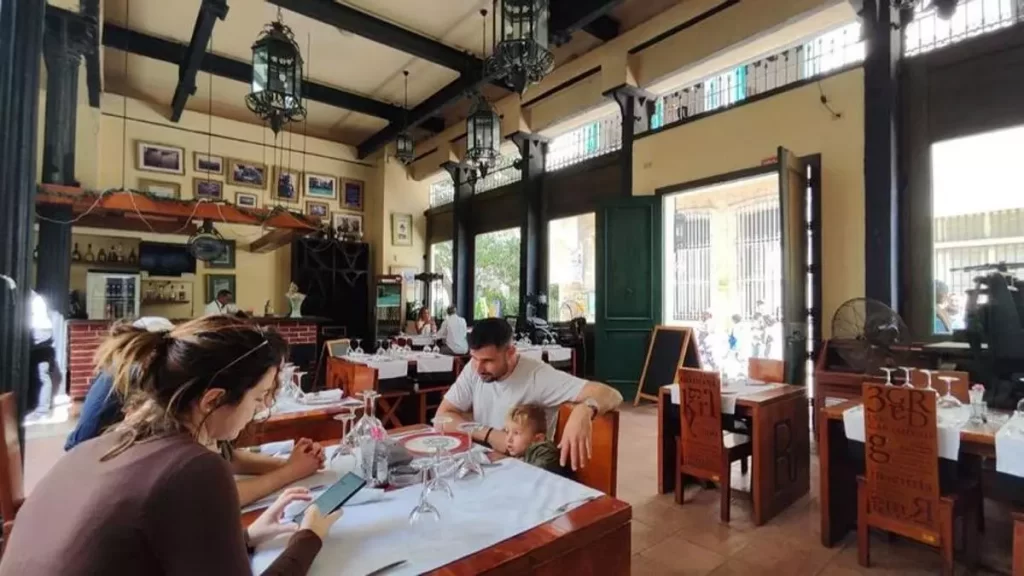
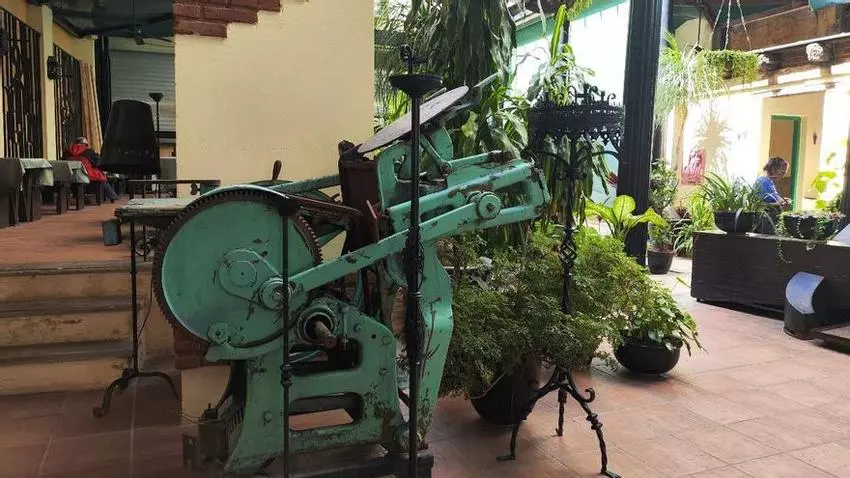
14ymedio bigger14ymedio, Juan Diego Rodríguez, Havana, February 22, 2024, Juan Diego Rodríguez  — Old newspaper presses, paper cutters, cast iron poles and typographical motifs on the walls in the La Imprenta (The Printing Press) restaurant located at Mercaderes 208 in Old Havana, show the stamp of the late Eusebio Leal. The Historian of the City did not spare  any expense to turn a demolished 19th century workshop into a place that, at the height of his career, strived to emulate the Floridita and the Bodeguita del Medio.

The waitresses still have the same delicacy with foreign clients that Leal demanded, and they now use a resounding euphemism: lobster and bread are not lacking but are “affected”. Although aimed at tourism, La Imprenta suffers from the same shortcomings as other state-managed premises, and diners soon realize it.

The smartest take a quick look at the menu by the door, and, before it’s too late, make a decision. “Are you going?” one of the employees asks an Italian tourist who disappeared up Mercaderes. 

In a hurry to leave, those who eat lunch almost never pay attention to the machines at La Imprenta / 14ymedio

Those who stayed for lunch this Wednesday can order a glass of juice stuffed with ice, a tuna tower with vegetables and some dishes that the habaneros have started calling “gourmet,” not because of their quality but because of their small size. The chairs of La Imprenta have different type faces on the back and the names – such as Bodoni or Garamond – of their inventors. continue reading

The tablecloths have patches,” noted a Cuban diner, avoiding resting his elbows on the stains of the fabric. A group of Canadians occupied a table near the window and asked for some starters. The waitress brought flakes of discolored ham and cheese, but they were denied the bread. “It’s ‘affected’,” she said.

Other dishes began to parade around the table. Potato puree with sweet potato flavor, yellow rice with a kind of ham and very little salt, a minimum portion of ropa vieja*, fish. “Any wine?” the Canadians ask. With pedagogy and some English, the waitress explains: “In Cuba there are no wines; the ones we have are Spanish.”

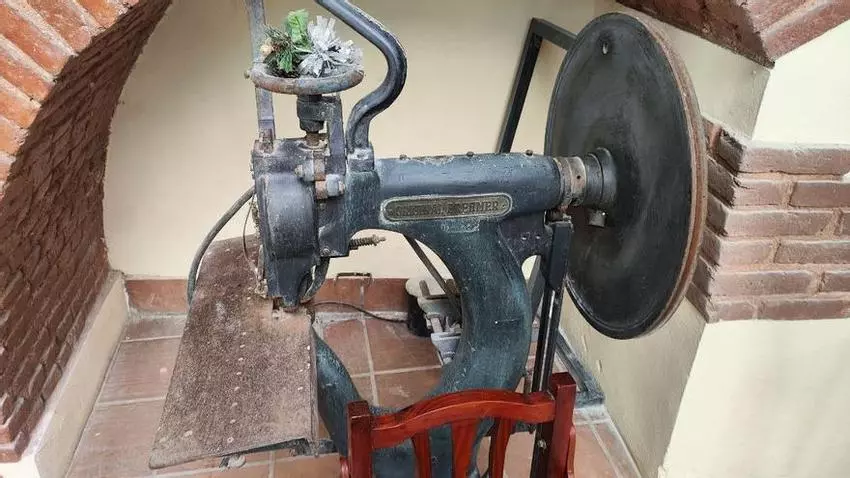
Artifacts from the early 20th century, from the Oswego and Brehmen brands, the restored presses pay tribute to a trade that already belongs to another era / 14ymedio

At the end of the meal, they wait for the dessert, fried ice cream. “The ice cream is delayed,” the employee warns once again, “and the fryer does not want to fry. It’s done working.” Canadians, of course, look at each other without understanding. “The bill, mi amor?” says the waitress, concluding the banquet.

The total is more than 5,000 pesos and brings a new dilemma. As soon as one of the diners draws a colorful Canadian bill from his wallet, the waitress grimaces and calls her boss. “Only euros or green [U.S. dollars]; we can’t accept Canadian dollars,” he explains. Resigned, the customers pay in Cuban pesos.

In a hurry to leave, those who eat lunch almost never notice La Imprenta’s machines. Artifacts from the beginning of the twentieth century, the restored presses of the Oswego and Brehmen brands pay tribute to a craft that now belongs to another era, and whose mythology Leal hoped to translate into foreign currency.

In 2010, the Historian’s Office mobilized a team of architects, joiners, blacksmiths and artists to remodel the old printing establishment, La Habanera, active from the 19th century until the triumph of Fidel Castro in 1959. The painter Juan Carlos Botello and his assistant Yailín Pérez Zamora were in charge of creating an immense mural on the main wall of the restaurant, and two lieutenants from Leal’s investment department – Loreta Alemañy and Yaumara Fernández – gave the go-ahead to the project.

Professional cooks and baristas were also hired to create a “thematic and emblematic” cocktail, in the style of the mojito or the daiquiri, that would characterize La Imprenta and make it internationally famous. To this day, the restaurant with the “affected” products has not found its brand or a particular flavor, and the Historian who created it no longer roams the streets of Havana.

*Translator’s note: Ropa vieja means “old clothes” but the dish is shredded beef.

Translated by Regina Ananvy
____________

COLLABORATE WITH OUR WORKThe 14ymedio team is committed to practicing serious journalism that reflects Cuba’s reality in all its depth. Thank you for joining us on this long journey. We invite you to continue supporting us by becoming a member of 14ymedio now. Together we can continue transforming journalism in Cuba.

Fabian Pena, the Cuban Artist Who Works With Flies and Cockroaches

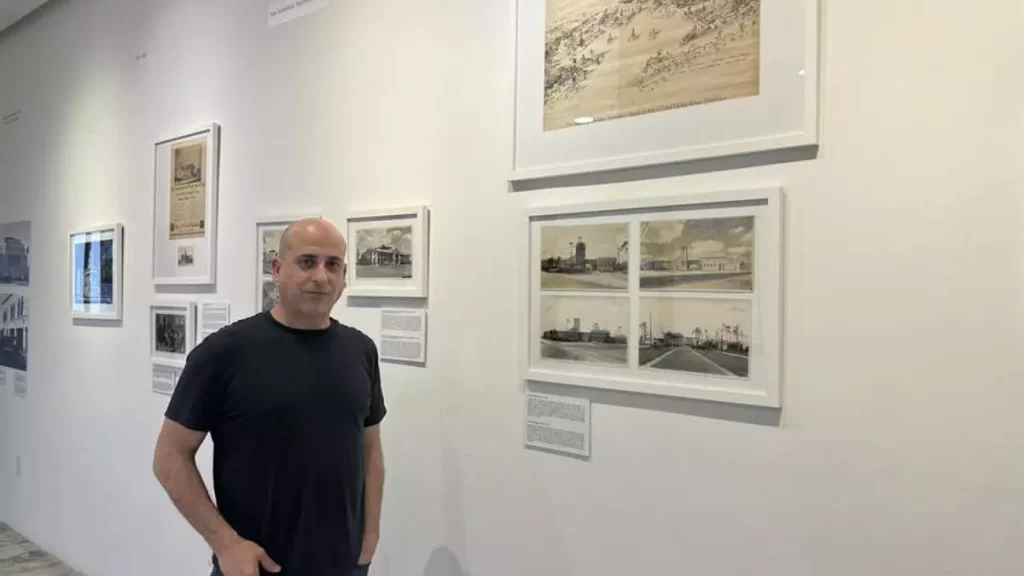
The artist Fabián Peña, at the Coral Gables Museum, during the interview with this newspaper / 14ymedio

14ymedio bigger14ymedio, Clara Riveros, Miami, 25 February 2024 —  “In Cuba we didn’t have air conditioning. Flies and cockroaches are everywhere. My grandfather had a hobby of rolling up the Granma newspaper to catch flies, we competed, I was a child, that entertained me.”

The Havana artist Fabián Peña recently won a scholarship from the Cintas de Miami Foundation, an institution that for several decades has supported and promoted Cuban artists and creatives or those of Cuban descent in various artistic branches.

He won the $20,000 visual arts scholarship and these resources are above all a premium in terms of time. The artist will be able to dedicate the time needed to create his proposal and which he plans to complete towards the end of the year. “There will be 20 monochrome portraits of 20 negative characters from the 20th century. The list includes dictators, Stalin, Castro, Hitler, serial killers, terrorists and characters who have defined the history of the 20th century in a negative sense, but they will be represented when they were “children, between 9 and 12 years old. Their faces will be displayed on a canvas, like the paintings, but they will be paintings with cockroaches. They are not exactly paintings, they are collages of cockroaches, of the mosaic type, displayed in a wall installation,” he said in conversation with 14ymedio .

In 20 years working with cockroaches and flies, Peña has been perfecting his technique with these peculiar materials which he speaks about with propriety and expertise.

In 20 years working with cockroaches and flies, Peña has been perfecting his technique with these peculiar materials which he speaks about with propriety and expertise. And what we usually discard and reject as terrifying, repulsive and unpleasant, has been reinvented and resignified by the artist. “It is a very artisanal work and, still, without a defined name,” he says regarding the project on which he is working.

“Cockroaches are our undesirable pets, like flies. Cockroaches are in the darkness, they have a particular light, they are very curious, prehistoric. They create an ethical/aesthetic conflict. They have very particular tones, colors, they are a mysterious universe and with a lot of potential, talking about these as material and color. Here I use them for that red tone that is reminiscent of blood, like the characters that are going to be represented.” continue reading

Peña’s other major project this 2024, for the Puerto Rico Biennial, to be held this coming April 18, is his proposal Por ti yo muero [For You I Die], which outlines an almost religious meaning. The concept of paper in his work suggests that, being a carrier of ideas and ideologies, it becomes a fossil. The Marxist-Leninist ideas and aesthetic references put on paper that were present in the artist’s training process and, now, that same paper transformed in his hands acquires a new meaning, that of obituary material as an implacable metaphor of an outdated ideology already used not only for indoctrination and instruction, but also for destruction.

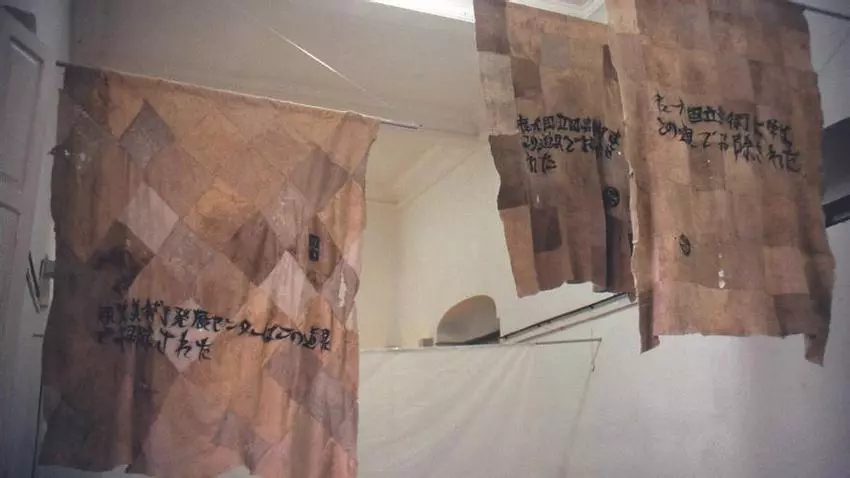
“We gave solemnity to the banners, it looked like something symbolic, sacred, it was a way of taking dirt to a sublime state” / Courtesy

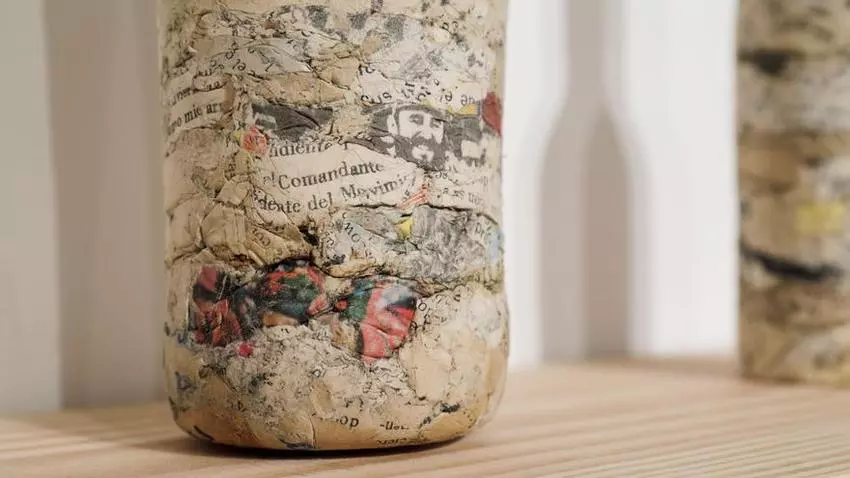
The artistic commitment for the Puerto Rico Biennial evokes the process of his Embotellados [Bottled] series, exhibited in 2016. “On this occasion the bottles contain 10 fundamental books, including fundamentalist ones, carriers of outdated ideologies and approaches that may well lead to destruction, both on a political and religious level, but there is also a place here for some literary pieces that have managed to earn a place in History.”

Fabian Peña was born in Havana, in 1976. Graduating from the Higher Institute of Art, his artistically inclined training spanned 12 years. A year after graduating, in 2004, he left Cuba for the first time, an exit with no return. “I was born in El Vedado but I grew up in El Cerro, which is a very sui generis place. My neighborhood was not a marginal neighborhood as such, but it was very close. Very poor, but the people, the neighbors, were very cool at that time. That part is greatly missed. I had the privilege of having artist friends close to me, for example Lázaro Saavedra, who was a friend and teacher of mine and lived almost next door to my parents’ house, and Roberto Favelo, Adrián Soca. I felt very motivated by having artists and people from another generation related to art and artistic creation nearby. We would talk about projects and we would end up at a party. All this towards the end of the 90s.”

“We had the office there, that’s what we called it, we were the Enema Collective. We did performances like La Morcilla: 13 of us took blood and made a blood sausage. We also did an intervention at Lázaro’s house, who was in the United States for a scholarship and extended his stay, so we paid him a tribute in absentia because we didn’t know what had happened to him. That place is very symbolic of that time for its energy and as a meeting point.”

That was a fundamental stage, very productive. Later it was not like that, as an immigrant the priority is to earn a living

“Did you have the option of professional development in Cuba?” he was asked. “In a short time of professional life in Cuba we developed many projects and initiatives. There was hunger, difficulties, censorship, but we wanted to take on the world. My work, our work, gained visibility, generated interest and that gave us opportunities that perhaps others did not have so early, because there were many curators who were interested in what we did. Everyone went to the Havana Biennial and we were there. That was a fundamental stage, very productive. Afterwards it was not like that, as an immigrant the priority is to earn a living. Being an immigrant made me see the reality of how it works.”

“The regime has played the cultural card and its bet has helped make the Cuban cultural scene relevant throughout the world. Wasn’t your art intended to transgress the system? Why did your work have greater possibilities than those of other artists?” 14ymedio asked the artist.

“We spoke in metaphorical terms about things that were happening and that allows for many interpretations. If it was done in a very obvious way they would censor it. We did a performance, for example, cleaning floors of cultural institutions in Cuba, with floor rags, and this would wear them out and they would take on shapes. In the so-called Special Period, in some places those rages were cooked like steaks and given to people, deceiving them, of course.”

“After cleaning the floors with those rags, we made banners with that material; we used about 50 rags for each space. At that time we were immersed in Eastern philosophy, we made a kind of abstract painting with those rags, we wrote with shoe ink in Japanese the explanation of the work: “With these rags the Plaza of the Revolution in Cuba was cleaned.” We gave solemnity to the banners, it looked like something symbolic, sacred, it was a way of taking dirt to a sublime state. This work was even taken to the Guadalajara International Book Fair (FIL) in 2002, which had Cuba as the guest of honor. The work, they say, generated strangeness because people were used to seeing another staging, another concept of Cuban art, not to seeing the ‘grime’ of cultural institutions, presented in such a solemn way.” Solemnizing the filth? “It worked very well in that context.”

One of the works from the ‘Bottled’ series, by Fabián Peña / Courtesy

Peña has been busy imagining, producing and creating, guided by intuition. “I like that the result of the work exceeds what I initially thought.” But he has not taken care to keep enough records for posterity to attest to the genius of these performances and creations. When presenting this situation to him, he notes that the initial work was poorly documented, much was lost in Cuba or the photographs that were taken were very poor and with devices that do not reflect the quality of the work in all its expression. Some of what exists was documented by Cuban art historian and curator, professor at the Art Institute of Chicago, Rachel Weiss. But in the United States, Peña has not recovered the memories of all of his work either.

His art left Cuba before him, considering that the installation of the banners was taken to Guadalajara in 2002. A year later, Peña went to Mérida. “Many curators from the United States went to Cuba and bought works. We had some money, not to get rich, but to live with what was necessary and continue producing and living off of art.”

And why did he leave? “Because not having had serious problems with the regime does not mean that we were not going to have them. Or that later it would become impossible to leave. There was an opportunity and we had to take it. Furthermore, the situation between Mexico and Cuba had deteriorated at the level political and diplomatic between Fidel Castro and presidents Ernesto Zedillo and Vicente Fox. We had many friends and contacts in Mexico, that is, the entire platform to stay for a while, but we decided to embark on the adventure to the United States. On that journey a lot of the work was also lost, because they were installations and performances that you will never do again. Mexico was a rewarding and successful experience, artistically speaking, the first time I left Cuba.

He left without saying goodbye. He didn’t tell anyone, not even his parents. His mother’s tears were premonitory of the imminent reality. More than five years passed before Peña saw her again.

“The Cuban artist from Cuba is sexier than from Miami. It is more interesting for the foreigner what the person there says”

The escape was planned from Cuba, always in secret. He left his sister as a teenager and found her in the fall of 2011, dancing ballet at the Guggenheim in New York. She is still in Cuba.

What is it like to be an immigrant? “It is in some way like living a double life. Being an artist. Producing and creating. But in parallel it has also been learning other trades to survive. I have been a social worker, I have worked on golf courses, in stores, in offices, but never “have I given up on art, never have I given up on creating. My work in itself takes a long time to think about, create, produce. It is a very long process.”

After a brief period in Houston, Peña was already working with a gallery here in Miami. In addition to doing performances at Florida International University and in different places, he always interacts with the public. “Miami was the target because we had people here, acquaintances, art historians, curators and colleagues from the cultural and artistic world that we had met in Cuba. People who had noticed, by the way, since the 90s, that contemporary art in Cuba was taking place despite the lack of information and news from the outside world and that it had nothing that detracted from what artists were doing in the 90s in New York,” he notes, while observing the works of Rubén Torres Llorca and José Bedia and touring the Coral Gables Museum to which he is professionally involved part-time. And he points out that it is striking that the regime had not accused the exponents of Cuban contemporary art of “ideological diversionism,” as was usual.

Also from the outside there has been or was the perception that “the Cuban artist from Cuba is sexier than one from Miami. It is more interesting for the foreigner what the person who is there says.” He has seen it there and has lived it here.

In 2007, at Art Basel, five minutes after the fair that was taking place at the Miami Beach Convention Center opened, his work was sold. The buyer, Lance Armstrong, had paid $21,000, according to local media. It doesn’t seem like a bad start on American soil.

Peña continued doing something he had started in Cuba: collages with crushed flies and also cockroaches. With flies, one of his favorite creations is Frozen Flight from 2008, a flag made with hundreds of fly wings that formed a unique fabric like lace or semi-transparent fabric. The work hanging from the ceiling maintained a certain natural rotating movement, which intensified with the proximity of the public. It is a work of a fragile and at the same time resiliant nature.

In 2017 he released Frozen Capital, made with compressed paper of the famous work of Karl Marx, covered in flies and glass. Similar to a popsicle covered in chocolate and nuts. “In 2017 I did the last exhibition with flies. I presented it here at the David Castillo Gallery, Frozen Capital, it represents Marx’s Frozen Capital. I compressed the pages and made a popsicle, an ice cream, the cover was not chocolate, but flies and the nuts were the glass of the bottles with which I compressed Marx’s book.”

____________

COLLABORATE WITH OUR WORKThe 14ymedio team is committed to practicing serious journalism that reflects Cuba’s reality in all its depth. Thank you for joining us on this long journey. We invite you to continue supporting us by becoming a member of 14ymedio now. Together we can continue transforming journalism in Cuba.

Cubans and Tourists Are Without Bread Until the End of March, Despite a Donation of Russian Wheat

The “extension products” added to bread – such as cassava, pumpkin or rice – are not a solution, since they make up only 15% of the total necessary to make it / 14ymedio

14ymedio bigger14ymedio, Havana, 25 February 2024 — Once again, there is no bread in Cuba due to a lack of flour. The “complex situation,” as defined by the official press, will last until the end of March, according to Emerio González Lorenzo, president of the Food Industry Business Group.

Although the state media say that the “affects” to the basic basket began to “be reflected” this Saturday, it is something that consumers have noticed every day for months, even in establishments targeted to tourists.

Similarly, the report on national television indicates that the last shipments of raw material arrived at the end of January “and ensured the activity of mills and bakeries for most of February.” At no time does it mention that in the middle of last month, 25,000 tons of wheat donated by the Russian Government arrived.

That amount exceeds the 20,000 tons that, the authorities reported this Saturday, are necessary to cover the “standard basic basket” for a month. If this is the case, the shipment of Russian wheat should have been enough to supply the warehouses for the rest of this month and the next. continue reading

The Government, as usual, blamed the situation on the “financial restrictions basically due to the intensified blockade and the logistical limitations that Cuba suffers to bring wheat from distant markets.” However, the president of the Food Industry himself said that of the five mills that the Island has, only one, that of Cienfuegos, is operating, and it cannot produce more than 250 tons per day, of the 700 demanded by the rationed market.

The “extending products” added to bread – such as cassava, pumpkin and rice – are not a solution, since they make up only 15% of the total needed to make the food, the official media reports. Nor can they buy bread from private individuals, although the report says that “the purchase of imported flour by non-state forms of management is negotiated.” This contribution means only 3,000 tons per month, and, as González Lorenzo says, “the tons that arrive at the port will not cover the needs.”

It is not the first time that flour and, consequently, bread have been lacking on the Island. At the end of last year, the regime justified this shortage by saying that the war between Russia and Ukraine had made wheat imports more expensive, something that was denied by economists such as Pedro Monreal. Based on data from the Business Insider website, the expert claimed that the price of of the grain was at its lowest point since 2020.

Translated by Regina Anavy
____________

COLLABORATE WITH OUR WORKThe 14ymedio team is committed to practicing serious journalism that reflects Cuba’s reality in all its depth. Thank you for joining us on this long journey. We invite you to continue supporting us by becoming a member of 14ymedio now. Together we can continue transforming journalism in Cuba.
Large Crowd Attends Dockworkers’ Funeral in Santiago de Cuba

People accompanied the hearse on the way to the Santa Ifigenia cemetery / Screen capture

The procession was led by several motorized police officers and a patrol car
14ymedio bigger14ymedio, Havana, 23 February 2024 — Between the sounds of sobs and conga, a crowd accompanied the funeral procession on Thursday afternoon of the three dockworkers who died on Wednesday in the cargo port of Santiago de Cuba, after inhaling toxic gases: Raicol Calzado Kindelán, Yosbani Paaterson Duany and Roibel Bejerano Hernández. The young men were buried in the Santa Ifigenia cemetery, one of the best known on the Island and the largest in the East.

In the absence of information from the official press, the information about the funeral has been offered by an independent journalist living in Washington, Yosmany Mayeta. A video shared by the reporter shows a massive walk along Martí Avenue, on the way to Patria Avenue, where one of the entrances to Santa Ifigenia is located, as the journalist explained.

Port staff were also allowed to attend the procession

The hearses were led by several motorized police officers and a patrol car. According to Mayeta, port staff were also allowed to attend the procession.

“Some family members have written to me because they do not feel ‘convinced’ after hearing the explanation offered by the Party and the port authorities,” the reporter said in a post on his social networks, and affirmed that he will interview port workers, as well as relatives of the three dockworkers. continue reading

As reported yesterday by the General Director of the Eastern Port Services Company, José Antonio Olivarez Díaz, during the process of unloading rice from a ship, the deceased entered a sealed and fumigated warehouse, not intended for unloading, where they inhaled a “ toxic gas.” Both the first aid teams and their colleagues tried to help them to no avail, the official press stated. Their bodies were then transferred to the Doctor Joaquín Castillo Duany military hospital.

Both the first aid teams and their colleagues tried to help them to no avail.

Mayeta also provided more information about the young people on his social networks. In the case of Calzado Kindelán, he had two children, one of whom lived with him and his wife. The young man, age 29, lived in the José Martí District.

Yosbani Patterson Duany, age 28, lived in Reparto Los Olmos, near Parque Los Muñequitos. No further details are known about Rudi Bejerano Hernández – a resident of the El Castillito neighborhood.

This Wednesday, the official newspaper Sierra Maestra announced a huge operational deployment for the arrival at several ports on the Island of a “large ship with 30,000 tons of rice,” whose destination was 12 warehouses spread across different provinces.

The cargo ship first arrived in Havana, where it unloaded part of the contents, and later headed to Nuevitas, in Camagüey, to leave 11,000 tons of rice. Her next move was to Santiago de Cuba, where the plan was to deliver 10,000 tons for the province and its neighbor Guantánamo.

This morning, the Asela , with the Panamanian flag, is the only cargo ship that appears docked in the port of Santiago, so it is potentially this ship that the deceased dockworkers were going to unload.

____________

COLLABORATE WITH OUR WORKThe 14ymedio team is committed to practicing serious journalism that reflects Cuba’s reality in all its depth. Thank you for joining us on this long journey. We invite you to continue supporting us by becoming a member of 14ymedio now. Together we can continue transforming journalism in Cuba.
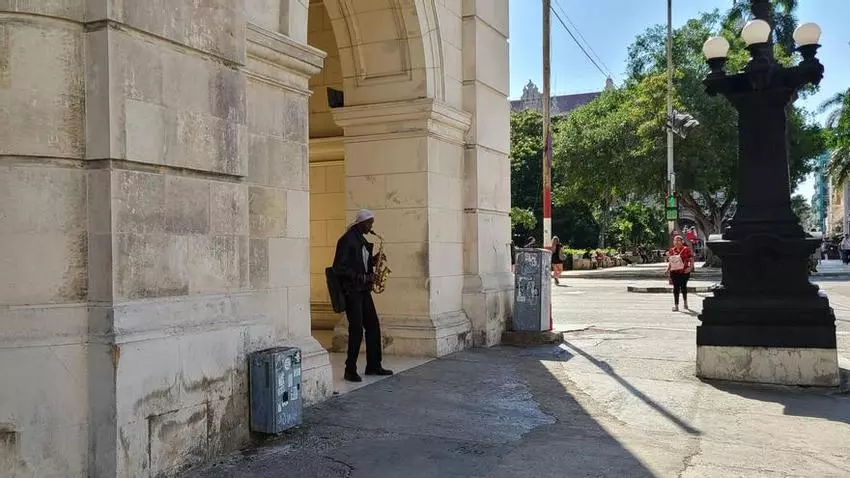
The “Young Man with the Placard” Receives His First Pass After More Than Three Years in a Cuban Prison

Luis Robles Elizástigui (2nd from left) being received by his family members this Friday (Photo: Courtesy)

14ymedio bigger14ymedio, Havana, 23 February 2024 — Luis Robles, the “young man with the placard,” received, on Friday, his first pass since he was sentenced to five years in prison in December 2020 for requesting the release of rapper Denis Solís.

His mother, Yindra Elizastigui, published a photograph of Robles, shaved and dressed in civilian clothes, during the reunion with his family in Havana.

“My black man at home on his first pass,” Elizastigui wrote on Facebook, the platform on which she has constantly denounced the regime’s abuses against her son. “Today is one of those days like when I was a child and they gave me a new toy,” the woman celebrated, also surrounded by several family members.

At the end of January, Robles obtained relief from his prison conditions and was transferred on February 7 from the Combinado del Este maximum security prison, in Havana, to a less severe regime in the area known as “El 18,” from Prison 1580, according to Landy Fernández Elizastigui, Robles’ brother,  speaking to Cubanet. continue reading

Fernández also explained that the family hoped that the passes would continue and that “Luis’s complete release will soon be, since he has been unjustly in prison during these three years, two months and some days.”

The former nurse and former political prisoner Pedro Ariel García, resident in Havana, also commented on Robles’ brief pass from prison in a direct broadcast. “I wish you a good three days,” he said. “I hope that you achieve the main objective, which is freedom, yours and that of all the political prisoners in Cuba. Thank you for standing firm. Only you and I are witnesses of the things we went through there, in the Combinado del Este.”

“I hope that you achieve the main objective, which is freedom, yours and that of all the political prisoners in Cuba”

At the end of January, when the family hoped for better conditions for the young man, his mother said: “I hope they approve his transfer, because Luis is in there for them, who purposely imprisoned him. What he [Robles] did is his right, which is in the Constitution. His imprisonment is unjust,” she said.

Elizastigui also hoped that her son’s process would progress at a good pace until he was granted conditional release. “We must take into account his health (…), which has worsened due to the injustices that have been committed,” she said then.

“He has had good behavior,” she added, “and this has been reported to me by the prison authorities themselves and by Gerardo, the Security agent who is seeing to his case. So let’s hope that [the measure] is complied with.”

Luis Robles, 30, has suffered several health problems since entering prison, which have been reported by his mother, in addition to abuse, and ophthalmological and gastric complications. He has also been denied appropriate medical assistance.

Luis Robles Elizastigui was arrested on December 4, 2020 for protesting with a cardboard sign on San Rafael Boulevard in Havana.(Screen Capture)

____________

COLLABORATE WITH OUR WORKThe 14ymedio team is committed to practicing serious journalism that reflects Cuba’s reality in all its depth. Thank you for joining us on this long journey. We invite you to continue supporting us by becoming a member of 14ymedio now. Together we can continue transforming journalism in Cuba.