The collapse of the National Electric Power System adds to months of endless blackouts that have forced residents to reorganize their lives around darkness.

 14ymedio, Matanzas, Julio César Contreras, March 5, 2026 – The blackout came again without warning, like a visitor who no longer even needs to knock on the door. This Wednesday, a new disconnection of the National Electric Power System (SEN) left much of the country without electricity and once again pushed Matanzas into the gloom in which it has learned to live for months. However, during the first hours, many residents did not even notice that it was a general collapse of the system. In this city accustomed to long blackouts, darkness has become part of the landscape.
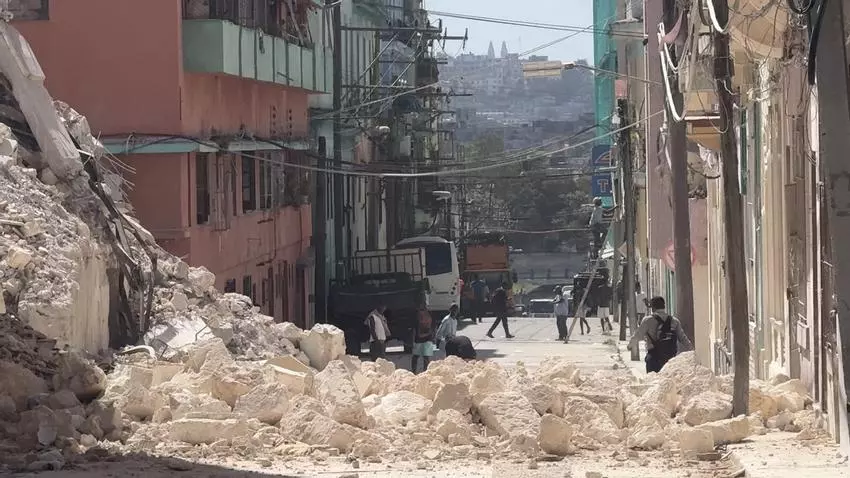
On San Ignacio Street, in the Pueblo Nuevo neighborhood, several people remain sitting in the doorways of their homes as if time had stopped. A woman repeatedly checks her phone, waiting for the data signal that also disappeared with the electrical collapse to return. On the sidewalk a thin stream of dirty water runs out of a house and disappears into the drain. No one seems to be in a hurry. When electricity disappears for so many hours, daily life slows down until it is almost suspended.
“How long is this going to last!” shouts Adriana from the doorway of her house so the whole neighborhood can hear her. The single mother has gone two days without being able to give her youngest child a hot meal. “There isn’t even enough time to cook the rice. Between the times they cut it off and turn it back on, we don’t even get an hour with electricity,” she laments. The little food she had in the refrigerator ended up stored in a neighbor’s freezer to keep it from spoiling.
“There isn’t even enough time to cook the rice. Between the times they cut it off and turn it back on, we don’t even get an hour with electricity.”
In recent weeks, blackouts in Matanzas have exceeded 30 continuous hours. People go out to sleep in their doorways, on balconies, or in the entrances of their homes to take advantage of the cool early-morning air, an image many believed had been buried with the hardest years of the Special Period. But now it returns like a collective déjà vu. continue reading
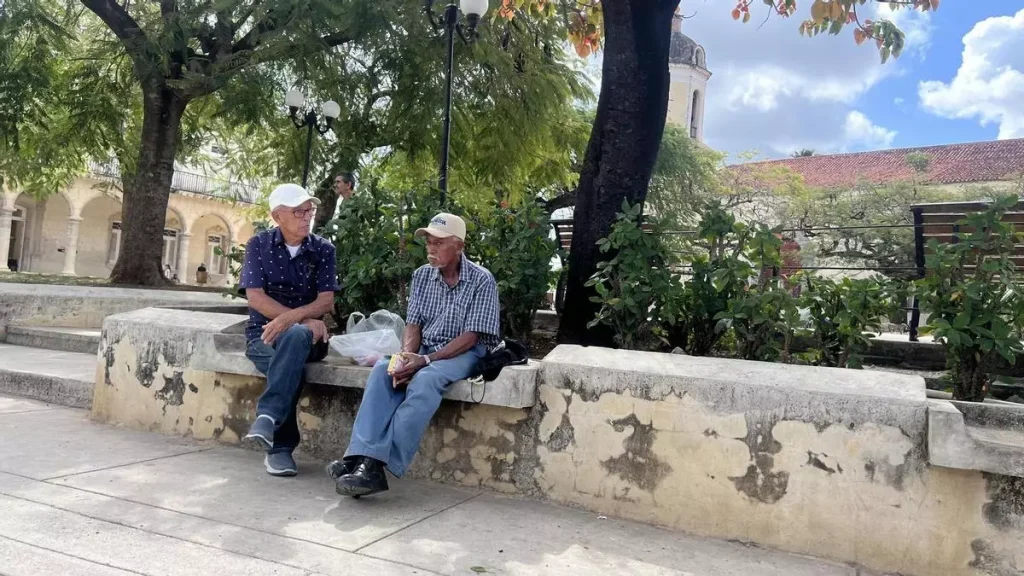
On a nearby block, two neighbors talk while sitting in front of a peeling facade. The man, wearing yellow shorts and flip-flops, wipes the sweat from his face while trying to guess when the electricity will return. Next to him, a woman holds a warm can of soda. Neither speaks about the blackout as something extraordinary. In Matanzas, losing electricity no longer causes surprise, only resignation.
The same thing happens a few houses away, where an elderly man sits in the doorway of his home with a bag beside him. He looks toward the almost empty street while waiting for time to pass. Without television, without a fan, and without radio, the hours become longer. The only distraction is watching the few pedestrians who cross the sidewalk under the sun.
The collapse of the SEN also left much of the mobile connectivity out of service. Hilda, a retiree who lives near Plaza de la Vigía, suddenly lost the video call she was having with her grandson in Spain. “Etecsa raised its rates, but it hasn’t been able to buy new batteries for its towers,” the woman complains. Many times she has to walk almost a kilometer to the square to find a signal.
“But I’m already retired and I don’t qualify for any of those solar panels they say they’re handing out.”
“I’m a teacher by profession, with more than 30 years of experience,” she says. “But I’m already retired and I don’t qualify for any of those solar panels they say they’re handing out,” she explains, referring to the modules that are sold on installment plans to outstanding professionals in their sector. In her home she also does not know when electricity will return or how long it will last once it does.
The instability of voltage in recent weeks has further punished household appliances. “My daughter in Cárdenas had a freezer burn out,” Hilda explains. “In half an hour they turned the power off and on five times. No appliance can withstand that.”
For Ricardo, a machinist who has a small private workshop in Pueblo Nuevo, the national outage means another day without income. “I thought today I might be able to catch up on some of the delayed orders, because lately they turn the power on for a little while in the afternoon,” he explains. But with the total shutdown of the system he cannot do anything at all.
He also hasn’t slept well for days. “My wife and I can’t get any sleep. When the power comes on in the early morning we jump out of bed to cook, run the washing machine, or charge the phones.” Then morning arrives and the exhaustion follows them like a shadow.
“My wife and I can’t get any sleep. When the power comes on in the early morning we jump out of bed to cook, run the washing machine, or charge the phones.”
In Matanzas, that scene repeats itself in hundreds of homes: families who get up at two or three in the morning when they hear the hum of the refrigerator or the sudden start of a fan. In that brief interval of electricity, food is cooked, laundry is washed, phones are charged, and any pending household task is rushed.
Meanwhile, on San Ignacio Street the silence slowly settles in. Without phone coverage or clear news, neighbors inform themselves by asking from doorway to doorway. No one knows when the power will return.
After more than a day without electricity, some have even stopped waiting. Sitting on improvised chairs or on the edge of the sidewalk, they let time pass.
“You have to stay grounded,” says Ricardo, shrugging his shoulders. “Because if you start thinking too much about this, you go crazy.”
Translated by Regina Anavy
______________________
COLLABORATE WITH OUR WORK: The 14ymedio team is committed to practicing serious journalism that reflects Cuba’s reality in all its depth. Thank you for joining us on this long journey. We invite you to continue supporting us by becoming a member of 14ymedio now. Together we can continue transforming journalism in Cuba.