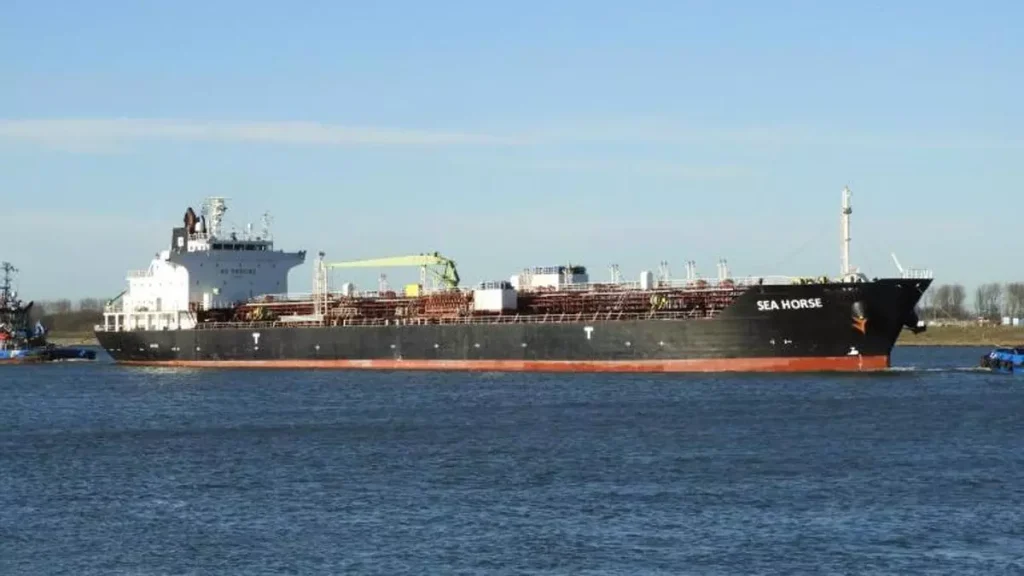
• Faced with this ban, the Sea Horse has changed course and is now looking for another port in the Caribbean to sell its cargo
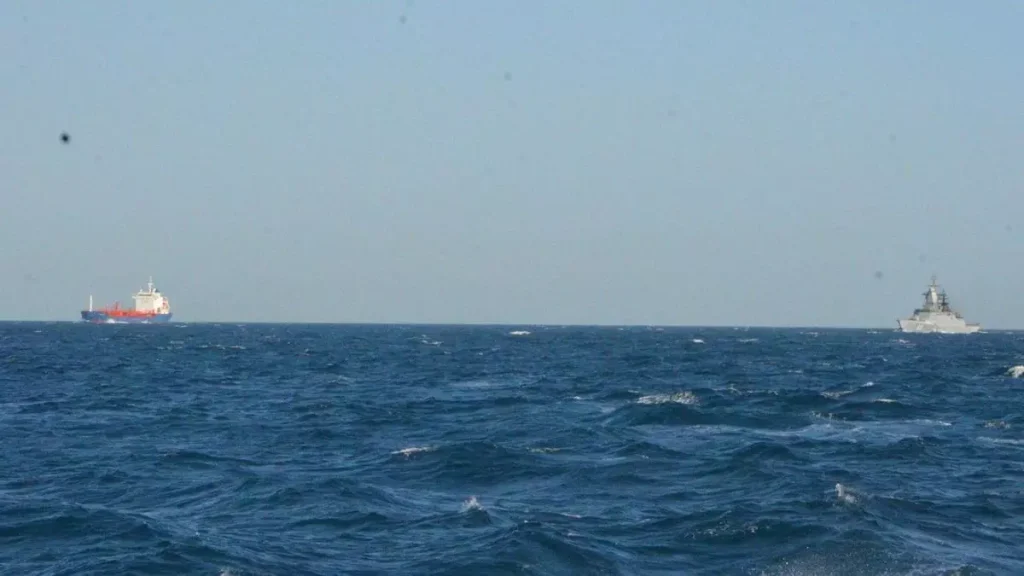
• The Anatoly Kolodkin, sanctioned by Washington, is continuing on its route and had a Russian Navy escort at the start of its voyage
 The United States suddenly banned the sale of Russian crude to Cuba this Thursday. The Treasury Department, which on March 12 had issued a license authorizing the sale of Russian crude until April 11, added a new paragraph on Thursday listing countries where the transaction remains prohibited: Cuba, Iran, North Korea, and Russian-occupied Ukrainian territories.
In this way, the exception that had been agreed to try to ease the oil shortage caused by the closure of the Strait of Hormuz and the war in Iran does not apply to the Island—and the first consequences may already be playing out.
The tanker Sea Horse, flying the Hong Kong (China) flag, which until yesterday was heading to Cuba with 200,000 barrels of Russian diesel, has turned around and is now sailing toward Trinidad and Tobago. The vessel’s location—at 3:11 a.m. this Friday—was identified by New York Times (NYT) journalist Christiaan Triebert, a specialist in visual data investigations, who reports in the New York paper on the uncertain future that may also await the Anatoly Kolodkin, carrying around 730,000 barrels of Urals crude and expected to reach the port of Matanzas at the end of March.
The @RoyalNavy, which observed the vessels with HMS MERSEY and a Wildcat helicopter, said Russia stopped escorting the tanker once it entered the Atlantic. Russia said it's ready to provide Cuba with “all possible assistance” during “suffocating embargo.” https://t.co/S7zvhD7ED0 pic.twitter.com/a8EDB1nYKx
— Christiaan Triebert (@trbrtc) March 19, 2026
Triebert questions the version put forward by Windward—reported Thursday by 14ymedio—and believes it’s not possible that the Sea Horse reached Cuba and delivered an initial cargo in early March. According to that maritime intelligence firm, the ship—having departed from the Baltic bound for the Island—carried out a deceptive maneuver between mid and late February to force other vessels to give way. With that trick, it allegedly managed to reach Cuba with 190,000 barrels of Russian diesel.
This newspaper contacted University of Texas expert Jorge Piñón, who cast doubt on that maneuver. “Anything is possible, but tracking services, Reuters, and Bloomberg don’t show it,” he continue reading
Still, the tanker had been spotted again heading toward Cuba with a very similar cargo. “Our calculations indicate it would take approximately five days to reach Cuba’s north coast, 1,146 nautical miles away,” the specialist told 14ymedio on Thursday.
The NYT maintains—along the same lines as Reuters and Bloomberg—that Windward’s analysis doesn’t seem credible. “Analysts were puzzled when the tanker spent three weeks drifting in the Atlantic. Some claimed it manipulated its signal and secretly docked in Cuba; we don’t believe that’s true. It stopped because its owners feared retaliation from the United States,” Triebert argued on social media Thursday.
“According to Marine Traffic, the Sea Horse has changed course and moved away from Cuba, heading somewhere else in the Caribbean in search of a buyer for its nearly 200,000 barrels of diesel. (It has also been at sea for weeks; it needs to dock somewhere),” he added. Hours later, he confirmed the rerouting noted by the same platform, which flagged: “Automatic Identification System (AIS) destination changed.”
The question now is what will happen to the Anatoly Kolodkin. The tanker, owned by the Russian government, left the port of Primorsk in the Baltic Sea on March 9 and was initially traveling escorted by the Soobrazitelniy, a Russian Navy vessel, according to a British military source.
The tanker passed through the English Channel this week and is now heading across the Atlantic, after listing the port of Atlantida (US) as its destination in what looks like a pretty obvious ruse.
Both the Anatoly Kolodkin and its owner—the state shipping company Sovcomflot—have been under US sanctions since 2024, so that destination can basically be ruled out. Kpler says its real destination is Matanzas, citing an industry expert.
The expert explained that the 730,000 barrels of crude—if they make it—would be used to produce diesel, gasoline, and jet fuel, as well as generate electricity. But first it would have to be refined, and in any case it would only be a temporary fix, giving Cuba breathing room for “no more than 30 days.”
The NYT also spoke with Jorge Piñón for its Thursday report. The expert reiterated that the crude would serve to produce fuels and electricity, but would require refining and would only provide short-term relief—again, “no more than 30 days.”
Still, it wouldn’t be the first time the US Coast Guard has forced a Russian tanker to change course despite having a naval escort. At the beginning of January, US forces began tracking the Bella-1 (later renamed Marinera), used to transport hydrocarbons from Russia, Iran, and Venezuela, which was heading to the latter. After two weeks under surveillance—and despite being accompanied by a submarine sent by Moscow—the vessel and its crew were detained, although the sailors were later released following an agreement between Trump and Putin.
Although the fleet operating in the Caribbean since the summer of 2025—when Washington stepped up pressure on Nicolás Maduro—has shrunk to support deployments in the Middle East, Coast Guard sources told the NYT there is “a continuous presence in the Florida Strait and the Caribbean.”
In that context, the head of Southern Command, Francis Donovan, told Congress on Thursday that the US military is not preparing for any takeover of Cuba, and added that he is unaware of any plan by the Trump administration to support Cuban opposition groups in exile in order to overthrow the government in Havana.
Translated by GH
______________________
COLLABORATE WITH OUR WORK: The 14ymedio team is committed to practicing serious journalism that reflects Cuba’s reality in all its depth. Thank you for joining us on this long journey. We invite you to continue supporting us by becoming a member of 14ymedio now. Together we can continue transforming journalism in Cuba.