Diaz was sent to a men’s prison where she spent four years, for protesting during 11J
Díaz is aware that her case has made her a symbol. / EFE
EFE (via 14ymedio), Güira de Melena (Artemisa), 26 January 2025 — When she learned that she would be released, Brenda Díaz, a Cuban trans woman sentenced to more than 14 years in prison after participating in the anti-government demonstrations on 11 July 2021 (11J), she could not pick up the phone to call her mother. Díaz, one of the beneficiaries of the release process recently announced by the Cuban government, was in “shock” when the prison management gave her the news. She had spent almost four of her 30 years in a men’s module and suffered all kinds of “physical and verbal abuse,” she claims in an interview with EFE.
“It was incredible. I couldn’t believe that after three years and seven months in prison, without being able to see the light of the street, without being able to be free, as I have always been, I was going to find everything again. She (her mother) was crying and so was I. I didn’t sleep that night. I made a thousand inventions to sleep and I couldn’t,” she says while holding the hand of her mother, Ana Mary García.
At 6:00 a.m. on January 18, Díaz was reunited with her mother outside the prison. “Today I am a different person. I am not the Brenda I used to be, I feel it inside me,” she says with a serious expression and a look she focuses, from time to time, on the ground.
“I was with eighty men. I was never treated (by the guards) as a trans person”
Diaz sadly reviews, in a withered tone, the list of humiliations she experienced: “I was with eighty men. I was never treated (by the guards) as a trans person, they treated me like ’the inmate, the prisoner’. I said I was a trans woman and they said no: ’You’re a man’. They shaved my head. They didn’t leave a single hair on my head. Not one. And that shocked me greatly. After so much time of being with my feminine image, seeing myself like continue reading
that… that devastated me,” she says. She was also not allowed to wear women’s underwear, she says.
García, who led a media campaign for the freedom of her daughter, as well as the rest of the prisoners of the 2021 protests, sheds a few tears when she remembers the moment she received the call from Díaz. The entire neighborhood, she says, was scared when they heard her cries of emotion. “The neighbors came thinking that something had happened to me. It was the most emotional moment of my life because I couldn’t see the day when she would be free,” she explains.
García killed a pig to prepare a meal for all the people who came to celebrate her daughter’s release
Since then, reunions with friends, family and acquaintances have not stopped. García killed a pig they had at home to prepare a meal with all the people who came to celebrate her daughter’s release. She also took advantage of the opportunity to indulge in all those little treats and details that she couldn’t do in prison. Like getting her nails done, long and well painted, as she always had them before her incarceration.
She is aware that her case has made her a symbol for a group that believes it continues to be discriminated against in its own country, despite the approval in 2022 of the Family Code, a package of measures that legalized, among other things, marriage and adoption for same-sex couples. “That (the media coverage of her case on and off the Island) has given me more strength. I think that, in those places, each person should be treated as they are and as they want. That term (trans) is not respected. If I am a trans person, treat me as such,” she says.
____________
COLLABORATE WITH OUR WORK: The 14ymedio team is committed to practicing serious journalism that reflects Cuba’s reality in all its depth. Thank you for joining us on this long journey. We invite you to continue supporting us by becoming a member of 14ymedio now. Together we can continue transforming journalism in Cuba.
Thieves steal the cables and pumps from the water supply panels
The crimes occur in isolated communities / Granma
14ymedio, Havana, 26 January 2025– So much enthusiasm over the installation of photovoltaic parks, which the press mentions as the solution to all the energy ills of the Island, has made the Cuban authorities look for a pretext to wash their hands of the project if it fails, like so many other projects have. The thefts of panels and electrical components that, according to the government, destroy photovoltaic parks, have become the perfect excuse.
The main objective is the solar panels that guarantee the supply of water in “isolated communities of the nation” and the perpetrators are “unscrupulous people who steal electrical installations and even solar panels, in order to obtain certain economic gains, without stopping to think about the damage they cause to the residents of those sites,” reports Granma, the official organ of the Communist Party.
The State newspaper adds that, just in Holguín, “at least three pumping systems have been affected by robberies. One occurred in the town of Pedernales, near the city of Holguín, where solar panels were stolen on two occasions.” continue reading
The authorities have concluded that “the rate of acts against the equipment of photovoltaic pumping installations has been increasing”
The “inquiries” of the authorities have concluded that “the rate of acts against the equipment of photovoltaic pumping facilities has been increasing. These are technologies that are not in large parks, but in isolated places, in the vicinity of communities, which makes them vulnerable to harassment by unscrupulous people, who try to profit from collective goods,” said Alexander Valdespino, president of Cubasolar, which promotes the use of renewable energies.
The company is especially involved because it is their equipment – donated or financed many times by foreign governments and entities – that ends up in the hands of thieves. The managers no longer know what to do about the criminals, and the list of robberies continues to grow, Valdespino claims.
“In Manantialito, belonging to the community of Rejondones de Báguanos, they installed one of those pumping systems, but after a while, they stole the cables,” says Granma quoting the manager. The same happened in Tacámara Cuatro, where the thieves took “two pumps and the cables,” and in Playa Girón, where they looted a pump and “other components.”
In Desembarco del Granma, in Banes, the thugs were not so lucky: “They were close to taking the pump, but when they were detected, they withdrew in a hurry with the cables,” said the media, which attributed to the thieves the failure of the “extraordinary effort made by Cuba to improve the quality of life of the population.”
In recent years Cuba has installed dozens of solar parks financed by China, Russia and the European Union
In recent years, Cuba has installed dozens of solar parks financed by China, Russia, the European Union and even international institutions such as the United Nations. During that time, the propaganda about the benefits of the use of clean energy has not stopped in the official press, which forgets that despite the installation of the equipment, the Island has been reporting an energy deficit of around 1,000 megawatts per day for months.
However, the thefts that have occurred reveal that Cubans have an interest in the panels that is far from the wishes of the Government, and it is not the first time that Granma has tried to defend the Government by alleging “crimes.” In December, the newspaper published information that revealed that the panels installed four months earlier to supply energy to a multitude of pumping stations in Las Tunas had already suffered “eight criminal acts, specifically theft.”
A few days earlier, a fire in the Alcalde Mayor solar park in Abreus alarmed the Cienfuegos Electric Company. The fire originated in an area where some solar panels were stacked, waiting to be installed, but “no other equipment was affected,” Granma reported at the time.
Translated by Regina Anavy
____________
COLLABORATE WITH OUR WORK: The 14ymedio team is committed to practicing serious journalism that reflects Cuba’s reality in all its depth. Thank you for joining us on this long journey. We invite you to continue supporting us by becoming a member of 14ymedio now. Together we can continue transforming journalism in Cuba.
It is sad, but also evident, that 66 years later there are plenty of idiots who continue to yearn for the regime’s scraps.
To clarify, I’m not talking about the nostalgia for Cuba felt by Cubans, an open wound for many of us. I am writing about the people who defend the sinister Cuban government / 14ymedio
14ymedio, Pedro Corzo, Miami, 26 January 2025 — Many years ago, at the dawn of Castro’s tyranny, people in Cuba often heard about those described as “useful fools” or “fellow travelers,” for defending Marxist proposals and their spokespersons, without being part of that horde that has done so much damage to humanity.
I met several of those people, including family members, men and women of good faith who believed all the stories of Castroism for a period of time and then joined the armed struggle against the regime. There were also those who, without any good faith, lent themselves to the dictatorship’s game until they feared being burned themselves and decided to emigrate.
Some of these, despite being abroad, never stopped serving Castroism, either by spying for it or by simply white-washing the face of the regime and organizing, in other countries, particularly from the United States and Puerto Rico, trips and conferences to Cuba. continue reading
Others created institutions with the aim of making totalitarianism palatable to foreigners willing to fulfill the role of useful idiots in favor of Castroism, a function in which the intelligence and diplomatic services of Cuba have played an important role by providing resources to those who have served them from abroad.
There were also those who, without any good faith, lent themselves to the dictatorship’s game until they feared being burned themselves and decided to emigrate
Castroism, to expand that influence, founded the Institute of Friendship with the Peoples (ICAP), an entity that is dedicated to attracting politicians, social leaders, intellectuals and anyone who, as a result of their frustration, is willing to serve in hell. The ICAP and La Casa de Las Americas (House of the Americas) were instruments that provided great services to the Cuban dictatorship, because they could cover up its subversion and its spying.
The Castro leadership quickly realized that it wasn’t only Cubans who supported dysfunctional and tyrannical governments. They became aware that, in all countries, including the most advanced in law, there are useful idiots and fellow travelers ready to serve them over the years.
A few weeks ago, my friend Luis Rolle, a retired captain of the United States Army, told me that he was convinced that the Biden Government was preparing to take measures in favor of the Cuban regime. I listened to his comment very carefully, so it was not surprising that Cuban totalitarianism, an eternal threat to the security of the United States, was once again favored by those who some consider the continuation of Barack Hussein Obama’s policy towards Cuba.
It is incomprehensible that those who promote policies favorable to regimes of force, despite the accumulation of failures of those autocracies, still enjoy public favor and can continue to provide violators of civil rights with coverage that favors them, which, at the least, makes them “fellow travelers.”
The Castro leadership quickly realized that it wasn’t only Cubans who supported dysfunctional and tyrannical governments
Unfortunately, we find many personalities who enjoy being fellow travelers of autocrats. We see them in the entertainment industry, academia, powerful corporations and in US politics, as demonstrated by the exclusion of the Cuban regime from the list of terrorist states, fortunately reinstated with that designation by President Donald Trump the same day he assumed the leadership of the country.
It is painful, but also evident, that 66 years later there are plenty of idiots who, despite having abandoned Cuba, continue to long for scraps from the regime, letting themselves be manipulated in different ways by the Castro authorities, always ready to fish in their troubled waters in order to make money, even if it is stained with the blood of their compatriots.
Let me clarify, I’m not talking about the nostalgia for Cuba felt by Cubans, an open wound for many of us. I am writing about people who, despite having made the decision to leave their country, defend the leaders of the nefarious Government that forced them to leave. I suggest that both terms, “useful fools and fellow travelers,” be summarized in “useful idiots,” because after so much devastation, we should be more categorical in these qualifications, which show that thousands of years of evolution do not prevent some human beings from still having the genes of rats.
Translated by Regina Anavy
____________
COLLABORATE WITH OUR WORK: The 14ymedio team is committed to practicing serious journalism that reflects Cuba’s reality in all its depth. Thank you for joining us on this long journey. We invite you to continue supporting us by becoming a member of 14ymedio now. Together we can continue transforming journalism in Cuba.
Construction on Herradura 1 began in late 2018 with financial backing from China.
14ymedio, Havana, 16 January 2024 — When construction began six years ago on the Herradura 1 wind farm in Las Tunas, it was supposed to be completed within a few months. On Wednesday, however, the Cuban communist party newspaper Granma announced with great fanfare that, though the facility “is soon to be finished,” it will still not be complete. Of the 34 wind turbines that the facility was supposed to have ready, only 22 will be put into operation.
“The only thing left to do is to certify that certain items such as the electrical substation —the facility that will handle electricity generated by the complex — as well as the maintenance and operations center are ready,” Granma quotes Carlos Arias Sobrino, general director of Las Tunas Electric Company, as saying.
Herradura 2 — its sister complex, which is also located near the coastal township of Jesús Menéndez — will have twenty generators providing 50 megawatts (MW) to the National Electrical System (SEN). Granma did not indicate when it will begin operations.
However, it did report that a 5 MW photovoltaic solar farm is under construction in the township of Puerto Padre. Together with two others already in operation in Manatí, it should provide 16 MW. continue reading
A 5 MW photovoltaic solar farm is under construction in the township of Puerto Padre. Together with two others already in operation in Manatí, it should provide 16 MW
“With the completion of these two projects, the province will generate almost 50 MW of renewable energy, a step forward in its goal of meeting regional demand and contributing to the national electrical grid,” Granma said. This ignores the fact that the amount of power to be generated by these facilities is insignificant compared to the country’s overall demand for electricity.
Construction on Herradura 1 began in late 2018 with financial backing from China. However, the project soon ran into several obstacles that delayed its completion. Chinese turbine manufacturer Goldwind, German shipping company BBC Chartering and Danish logistics company DSV Panalpina were sued under the Helms-Burton Act in 2020 by North American Sugar, the company that owned Puerto Carúpano before it was expropriated in the 1960s.
The sugar company claimed that these firms owed $291 million for using its confiscated property. In the suit, it is seeking $97 million for use of the plus interest and court costs. Also named in the suit were several U.S. subsidiaries of the European companies. These include DSV Air & Sea, BBC Chartering USA and BBC Chartering Singapore.
Despite the obstacles and the Cuban government’s frequent failure to abide by contractual agreements, China continues to finance the installation of renewable energy generators in Cuba. It is also providing a shipment of spare parts to repair SEN generator sets.
“The Chinese government’s Equipment and Spare Parts for Distributed Electric Generators for Cuba is the result of the consensus reached between Miguel Díaz-Canel Bermúdez, First Secretary of the Communist Party of Cuba and President of the Republic of Cuba and the leader of the Asian giant, Xi Jinping and includes multi-sector cooperation,” state media reported at the time.
The minister of Energy and Mines, Vicente de la O Levy, also announced two contracts with Chinese companies in March of 2024
The minister of Energy and Mines, Vicente de la O Levy, also announced two contracts with Chinese companies in March of 2024 to “gradually” provide SEN with more than 2,000 MW from the construction of 92 solar farms on the island, with approximately three in each province.
The aim of the agreement is to save the country 750 tons of imported fuel, a drop in the bucket given that the country buys about three million tons a year from abroad. The problem is deadlines. The first one must be completed by May of this year and the second, in May of 2028.
While the press claims, as it did on Wednesday, that the construction of these projects is moving forward, Cubans still face ongoing blackouts like the one the Electric Union scheduled for Thursday. According to the state-owned company’s daily briefing, a 1,300 MW shortage is expected during peak hours, a third of the national demand.
____________
COLLABORATE WITH OUR WORK: The 14ymedio team is committed to practicing serious journalism that reflects Cuba’s reality in all its depth. Thank you for joining us on this long journey. We invite you to continue supporting us by becoming a member of 14ymedio now. Together we can continue transforming journalism in Cuba.
The exhibition includes “unpublished pieces that reveal a more intimate and visually striking side of the author, reinforcing his ability to combine art with political activism,” according to the organizers.
Artist Luis Manuel Otero Alcántara, leader of the San Isidro Movement, is currently serving a five-year prison sentence in the maximum security prison of Guanajay, after being accused of insulting national symbols, contempt and public disorder.
____________
COLLABORATE WITH OUR WORK: The 14ymedio team is committed to practicing serious journalism that reflects Cuba’s reality in all its depth. Thank you for joining us on this long journey. We invite you to continue supporting us by becoming a member of 14ymedio now. Together we can continue transforming journalism in Cuba.
The stress test for the these appliances is the coffee sold at ration stores / 14ymedio
14ymedio, Mercedes García, Sancti Spíritus, 24 January 2025 — Like a fisherman in a rushing river, Suanny thrives in an environment that is frightening to others. He specializes in repairing Italian-style coffee makers — both electric or stovetop — that have exploded or become clogged.
“These days I’m constantly busy because the coffee sold at local stores is dangerous,” says the 32-year-old from Sancti Spiritus resident. “I clean them, change their filters, replace the tops and even add new wiring and bases.”
When he first opened his shop in the city’s Kilo 12 neighborhood, Suanny was repairing rice and pressure cookers. He later worked on rechargeable lamps, the kind used to provide some light during the country’s frequent power outages. Now he focuses on coffee makers.”I always have work to do because, for better or worse, a little bit of the stuff sneaks into every house in the city every day.” Some customers show up with models that are “more than 50 years old,” notes the repairman, who is skilled at figuring out when something can be fixed and when it is time to get rid of it altogether.
“I replace the handles, the knob on the lid and the rubber seals. I’ll even polish the outside if the owner wants that”
“I replace the handles, the knob on the lid and the rubber seals. I’ll even polish the outside if the owner wants that,” he says. “A lot of people who come in have heated the coffee maker over wood or charcoal, which melts the handle and turns the whole thing black.” continue reading
In recent years, however, electronic models have become popular. “They are very convenient. You don’t have to worry about whether the coffee has finished brewing or not because, when it’s is ready, the machine automatically shuts off. They also keep the coffee hot and are safer.”
The real test, however, is the coffee sold in ration stores. “They were out of it for months. Then it suddenly reappeared in January, in a white plastic envelope that doesn’t let you see what’s inside,” he says. Apparently, the mixture has a more compact texture, which expands as it’s heated and clogs the coffee maker’s filter. “Explosions happen all the time,” says Suanny. “It’s rare that I don’t get one or two coffee makers with this problem every day.”
Just this Wednesday, the handyman found himself helping a distraught customer. “I poured some coffee out of the package, but not very much because I had already been warned that it would clog the machine,” says the woman. “My son told me to leave the kitchen while he brewed it. We were in the living room when we heard the explosion. It was all over the kitchen. The ceiling was stained and the top of the coffee maker broke in half,” she explains. The machine — an electric model with a top made of heat-resistant plastic — did not survive the explosion, which occurred when the dark powder came into contact with the boiling water.
“What can I do? I have to drink it because be good coffee is 1,400 pesos for a tiny package”
“What can I do? I have to drink it because good coffee is 1,400 pesos for a tiny package,” the woman complains. Suanny explains to her the risks of these crudely made packages and their unpredictable contents. “Normally, they mix it with peas but now it seems that they have increased the proportion of grain. I have even seen pieces of toasted wheat inside,” he adds. “My advice is, if you are going to drink this, you have to make it using a strainer or a sock like the ones our grandparents used. Italian coffee makers are not designed to handle this stuff. Nobody really knows what’s in it.”
In a show of dexterity, Suanny quickly changes out the rubber gasket, swaps the top of the coffee maker for another one he has in his tiny workshop, replaces the cable damaged in the explosion and cleans the base of the device, which was covered in a sticky liquid that smelled like burnt peas. The final bill for the repairs comes to more than 3,000 Cuban pesos. In the choppy waters of Cuban coffee, there are always those who manage to make a catch.
____________
COLLABORATE WITH OUR WORK: The 14ymedio team is committed to practicing serious journalism that reflects Cuba’s reality in all its depth. Thank you for joining us on this long journey. We invite you to continue supporting us by becoming a member of 14ymedio now. Together we can continue transforming journalism in Cuba.
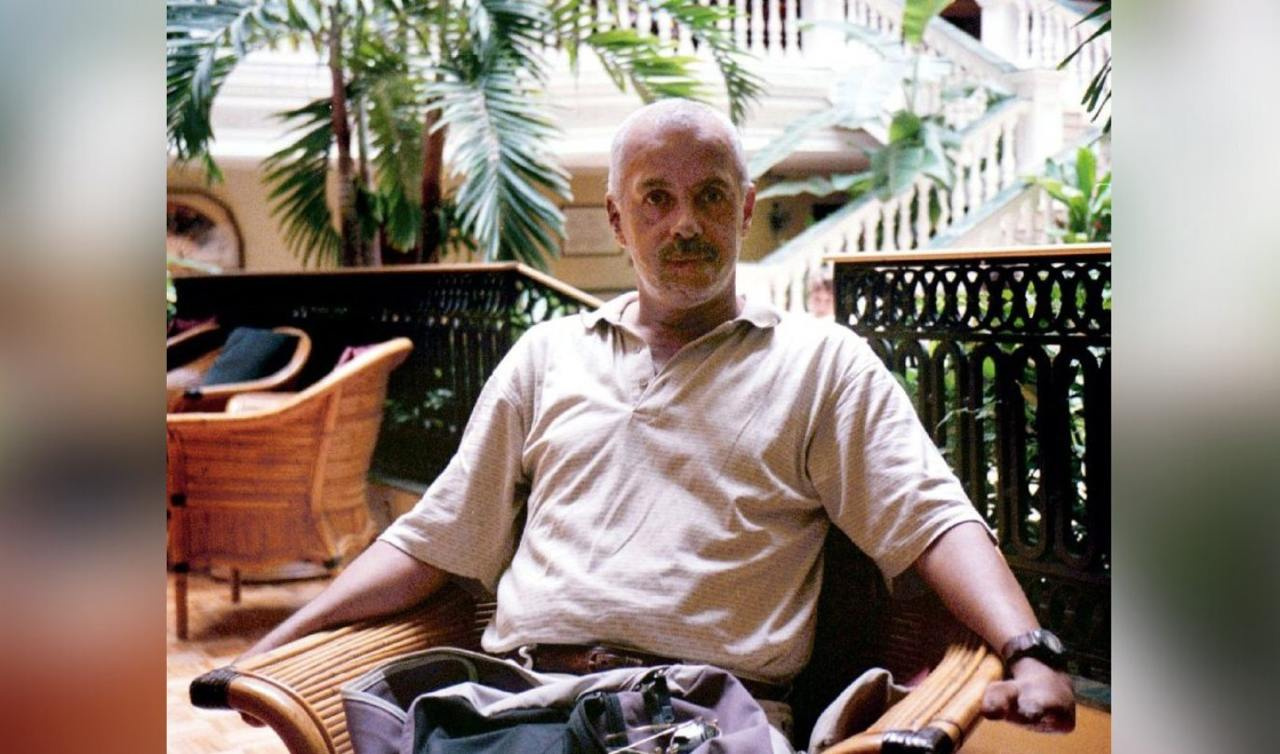
Born in New York in 1950, Morales was arrested in 1979 for possession of explosives / latinamericanstudies.org
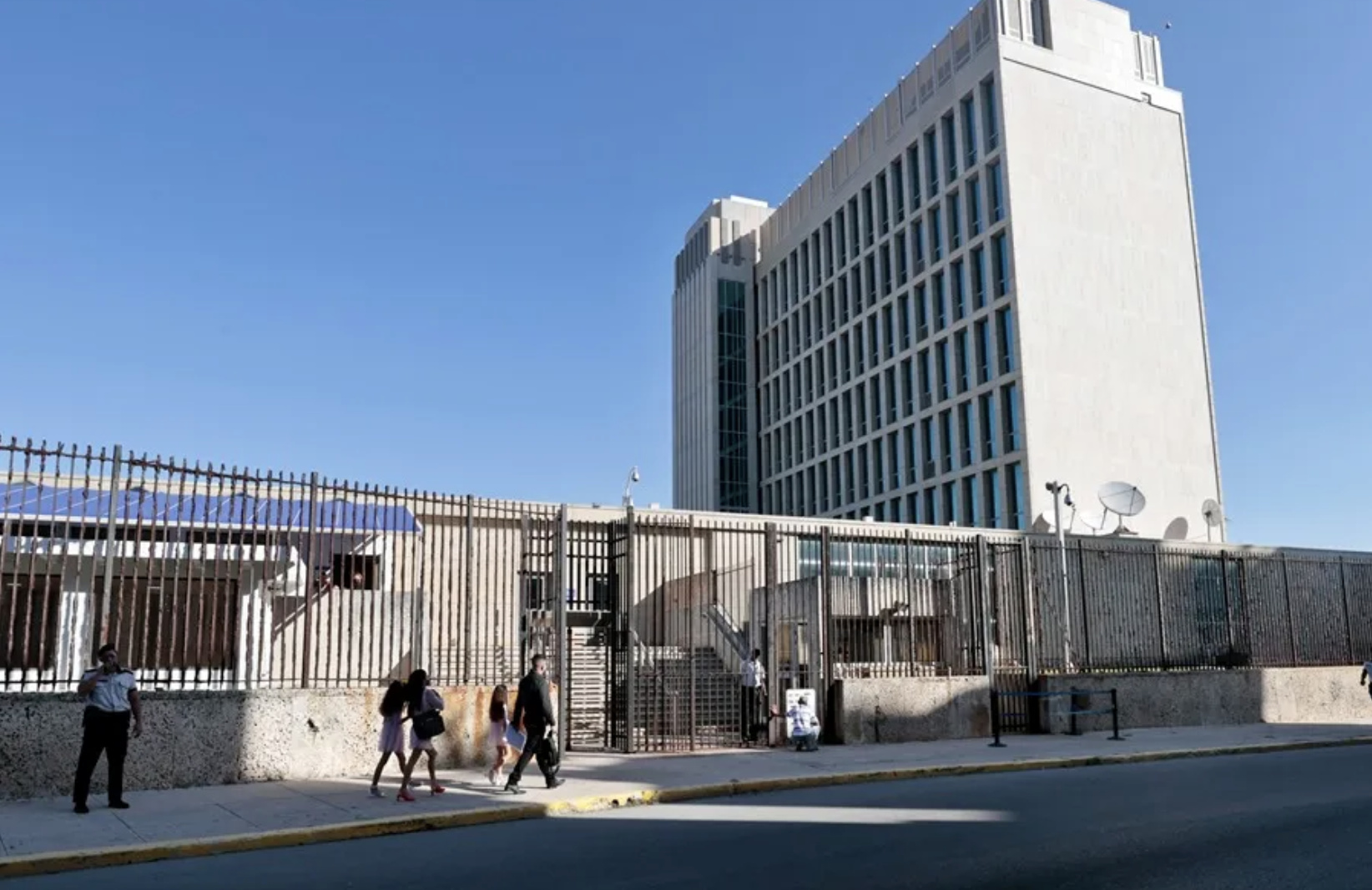
14ymedio, Havana, 25 January 2025 — Those responsible for an attack perpetrated 50 years ago by a Puerto Rican terrorist organization in the historic Fraunces Tavern in New York still live in Cuba. This Friday, several US authorities – including Secretary of State Marco Rubio and the US Embassy in Havana – demanded that the regime hand over the fugitives.
On January 24, 1975, members of the Puerto Rican Armed Forces of National Liberation (FALN) detonated a bomb in what is now a museum and restaurant. The explosion left more than 50 injured and caused the death of four people: Alejandro Berger, Frank Connor, James Gezork and Harold Sherburne.
Rubio recalled the names of the victims in an official statement on the 50th anniversary of the attack and said that “to this day,” the regime protects those responsible, in addition to other “fugitives and terrorists” wanted by the United States. The Secretary of State points in particular to William Morales, leader of the terrorist group for whom “dictator Fidel Castro provided a safe haven,” in 1988.
Rubio recalled the names of the victims in an official statement on the 50th anniversary of the attack / CC
“Today, we remember the lives lost on that tragic day,” Rubio said. “We must also commit once again to demanding that the fugitives wanted by the US and under the protection of the Cuban regime be brought to justice. We owe the victims and the American people our unrestricted commitment to holding the Cuban regime accountable.” continue reading
The 1975 attack on the Fraunces tavern, he added, is a reminder of the “devastating impact of terrorism and the pain it inflicts on families and communities.” The US Embassy in Havana endorsed and reproduced Rubio’s message.
Last May, when the Biden Administration decided to remove Cuba from the list of countries that sponsor terrorism, Joe Connor, the son of one of the victims, asked the government to reconsider this decision. “My father was murdered by terrorists sponsored by Cuba,” he wrote to the Secretary of State, Antony Blinken.
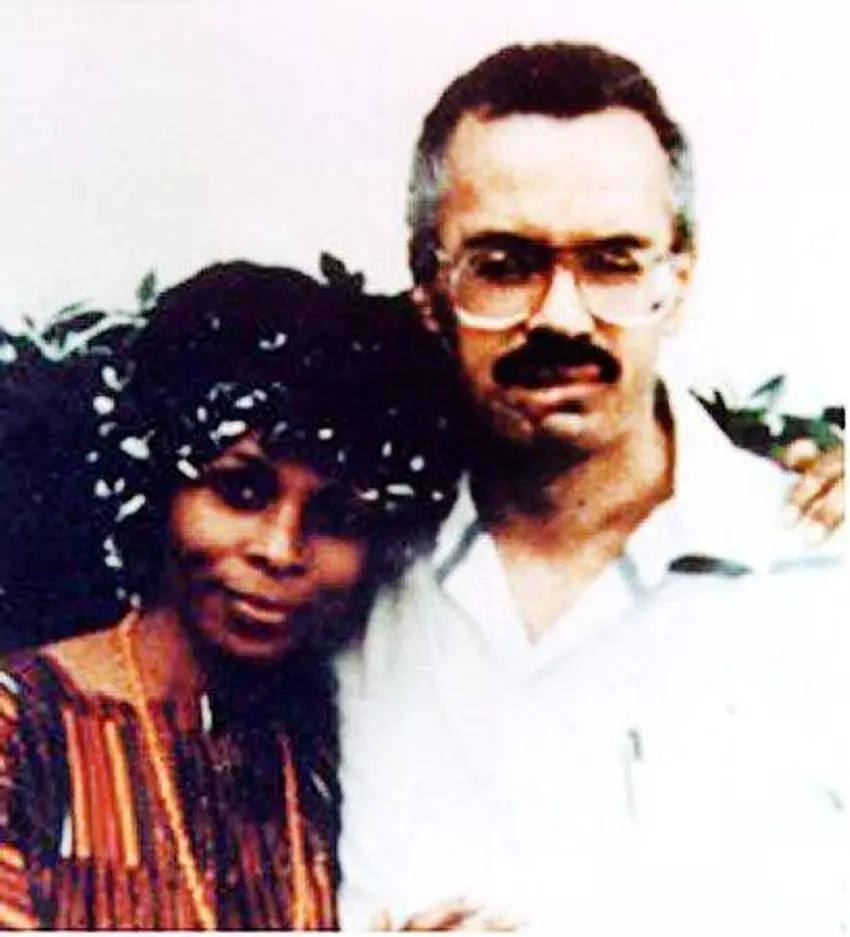
Morales with the terrorist Assata Shakur, former member of the Black Liberation Army, who was also given asylum in Havana / latinamericanstudies.org
“I bring this matter to your attention so that the United States Government will take the necessary measures to return this convicted terrorist to a US prison to serve out his sentence. I thank my government in advance for Morales’ return,” he said. The extradition “would provide a certain closure to this open wound that our family has suffered all these years,” he added.
Just before leaving the White House, Biden removed Cuba from the list of countries that sponsor terrorism. Reversing that decision was one of the first executive orders of President Donald Trump.
Connor, along with the children of the other victims, participated this Friday in a tribute in New York. There, Connor recalled that the place chosen for the attack was not just by chance: that was where the banquet was held after General George Washington negotiated peace with the British after the War of Independence, in 1776.
The FBI is offering 100,000 dollars to anyone who provides information leading to his capture / latinamericanstudies.org
“There the hero also offered a banquet for his soldiers, ‘sons of freedom’. This is the kind of symbolism that the FALN could not tolerate,” added Connor, again demanding a negotiation for the capture of Morales.
Born in New York in 1950, Morales was arrested in 1979 for possession of explosives and managed to escape, first to Mexico, then to Cuba. He is credited with making all the bombs that the FALN used during its activity. In fact, he lost an eye and nine fingers during the unintentional detonation of a bomb in his own home. He was sentenced to 89 years in prison, but he escaped thanks to a doctor who was a member of a communist organization.
The FBI and other agencies, Rubio recalled, tried in vain to find the terrorist, who had been involved in other attacks during the 1970s. When they tried to arrest him in Puebla (Mexico) before his escape to Havana, two policemen died. In the Cuban capital he married and had children, although no more details are known about his current life.
The Clinton Administration denied him amnesty in 1997, and he did not return to the United States after the restoration of diplomatic relations between Havana and Washington, when several media predicted that both he and the terrorist Assata Shakur – former member of the Black Liberation Army – would be handed over by Cuba.
The FBI is offering $100,000 to anyone who provides information that leads to Morales’ capture.
Translated by Regina Anavy
____________
COLLABORATE WITH OUR WORK: The 14ymedio team is committed to practicing serious journalism that reflects Cuba’s reality in all its depth. Thank you for joining us on this long journey. We invite you to continue supporting us by becoming a member of 14ymedio now. Together we can continue transforming journalism in Cuba.
“Those children were ordered to be killed because the correct thing to do is to evacuate immediately” in the face of the risk of explosion
A still from a documentary for Russian television about the underground facilities of the Armed Forces. / Screenshot/Zvezda
14ymedio, Miguel García, Holguin, 25 January 2025 — Of the Cuban Army arsenal that exploded in Melones, Holguin, on January 7, only a few structures remain standing. The shock wave and the fire consumed everything, from the barracks to the war material whose detonation caused the death of 13 soldiers, nine of them young recruits. The conclusion is clear: “Protocols were violated there.”
Speaking is a retired captain of the Armed Forces, interviewed on condition of anonymity by 14ymedio. His assessment of the case, as a former officer and in charge of weaponry in an Eastern Army unit, is that Melones is one of the most costly recent episodes of negligence for the Cuban people.
“The officers who lost their lives there knew the risk they were running; the soldiers did not,” the military man assures, categorically. “They knew what kind of military equipment was in there and how highly explosive it was.”
When the captain refers to “in there,” he refers to the labyrinth of underground tunnels that the arsenal consisted of. Cubans, accustomed to suspecting that “the mountains are hollow” due to the work and grace of the Army, cannot imagine the attention and resources that have been devoted to the construction of those warehouses, always adjacent to military units, which this newspaper’s source now describes in great detail. continue reading
The door of the Melones tunnels, and those of all the magazines in Cuba, are huge
“The door of the Melones tunnels, and those of all the magazines in Cuba, are huge,” he says. “It’s a big cement arch, an entrance where you can fit up to two war tanks, side by side. The doors are made of a special material, a mixture of lead, sand, iron and concrete.”
In Cuban military jargon, this combination of construction materials has a name that is reminiscent of the most thrilling years of the Cold War: the “anti-atomic league.”
The Melones tragedy took place in this scenario. Explosions screams, commands – negligent and carelessly issued in the heat of the moment, the captain says – and the recruits operating without understanding the caliber of the equipment. “Those kids were ordered to die,” he insists. “The correct protocol is immediate evacuation.”
“The Armed Forces have specialists in weaponry and explosives control, they even have technical forces trained in firefighting. They are what people call ’FAR firefighters,’” he explains. “People were not supposed to go in there, and the order that should have been given was to evacuate the facility and notify the right authorities.”
“Those tunnels were hermetically sealed. When there is a fire, if you open the mouth of the tunnel, you are oxygenating the fire.”
The military staff did just the opposite. “Those tunnels were hermetically sealed. When there is a fire, if you open the mouth of the tunnel – that huge, heavy door – you are oxygenating the fire. They opened the mouth of the tunnel and went in carelessly.” According to some of his former colleagues who were aware of other details of the explosion, with whom he has discussed the case, toxic gases were already coming out of the Melones tunnel.
“They went in there and then the oxygen fueled the flames,” he continues. “There were two soldiers who tried to get in. One came out coughing, asphyxiated by the fumes and smoke. The other was the one who didn’t want to go in and said he would rather go to prison than die. A few minutes later, the tunnels exploded”.
The case is reminiscent of the 2020 explosion in the military unit of La Púa, in the town of Velasco -just 50 kilometers from Melones. What exploded then was also an ammunition warehouse “in poor condition.” Silos with bullets, rifles, various types of machinery. The mushroom of yellowish smoke that rose over the arsenal, photographed by the villagers, was almost identical to that of Melones.
The big difference, the former officer stresses, was that in La Púa the 1,245 inhabitants of the village were evacuated quickly and that, as the official note on the explosion stated, “there was no loss of human lives.” Besides, “that unit had less explosive material than the magazine of Melones.”
The Ministry of the Armed Forces will keep secret how much equipment exploded in Melones and what operation was being carried out there
There are other recent cases, all similar, that point to the obsoleteness of the equipment stored in the subway magazines of the Armed Forces. Almost everything dates back to the Soviet era when Fidel Castro intended to arm the country to the teeth. In 2017, a silo exploded in Songo-La Maya, Santiago de Cuba; in 2011, an ammunition depot exploded in Boyeros, Havana; in 2000, another warehouse blew up 20 kilometers from Matanzas.
Cubans know that, despite the death of the 13 soldiers, the Ministry of the Armed Forces will keep secret how much equipment exploded in Melones and exactly what operation was being carried out in the unit before the incident. “There are still sporadic explosions there,” confirms the former captain interviewed by 14ymedio.
“The government will never admit it, but there was negligence,” he insists. “There would have been material damage, of course, but all those lives could have been saved. Not one would have been lost.”
Translated by LAR
____________
COLLABORATE WITH OUR WORK: The 14ymedio team is committed to practicing serious journalism that reflects Cuba’s reality in all its depth. Thank you for joining us on this long journey. We invite you to continue supporting us by becoming a member of 14ymedio now. Together we can continue transforming journalism in Cuba.
There has not been a pact, but a commitment by Díaz-Canel, at least that the Pope has promised him that he will not be punished for his sins
Image taken during a meeting between the Pope and Díaz-Canel in 2023. / Miguel Díaz-Canel/X
14ymedio, Reinaldo Escobar, Desde Aquí, Havana, 26 January 2025 — A young book designer, who is not a specialist in statistics or political mediation, made this comment about the releases from prison promised by the Cuban dictatorship in 2025, the year of the jubilee: “If they announced that they would release 553 inmates from prison, it must have been because a list of names was agreed upon, because if it were a commitment with numbers we would be talking about 500 or perhaps 725, which are the years that have passed since the first jubilee, but 553 is not a number that plays with any Kabbalah.”
In the letter that Miguel Díaz-Canel sent to Pope Francis at the beginning of January, he was informed that on the occasion of the Jubilee of Hope 2025, the decision had been taken to “benefit 553 people convicted in due process of various crimes contemplated by law by granting freedom.”
In the tenth point of the Bull of Invocation for the Jubilee Year 2025, Francis proposed to the governments of the world that “in the Jubilee Year initiatives be undertaken that restore hope; forms of amnesty or forgiveness of punishment aimed at helping people to regain confidence in themselves and in society.”
Seen in this way, it could be said that there was no pact, but rather a unilateral commitment by Díaz-Canel, unless the Pope promised the Cuban dictator that he would not be punished for his sins. But as far as we know, there are only eternal pacts with the devil, and those in literature. continue reading
For it to have been something like a pact we would have had to have a third party, in this case President Joe Biden.
For it to have been something like a pact, we would have had to have a third party, in this case President Joe Biden, in the event that he had made a quasi-parallel commitment, also unilateral, to “free” the Cuban government from the sanction that comes with appearing on the list of countries that sponsor terrorism.
To take this hypothesis to its extreme, the Pope would then be the intermediary between the two parties, but there is no letter from Biden to Francis nor any allusion to the fact that the withdrawal of this country from the list was due to the celebration of the jubilee year.
One person here vaguely promising one thing under the non-explicit condition that the other person promises the other thing can be described as anything but a pact, where there are supposed to be guarantees. This perhaps explains why there is no public list of names.
That is why Trump was able to put Cuba’s name back on the list and why the dictatorship was able to freeze the release of those who were so unjustly condemned for political reasons. With such a lack of transparency, the regime also had the door open to appeal to the maneuver of adding common prisoners to the list: people who “in the spirit of the Jubilee” will be able to regain confidence in themselves and in society.
The aforementioned Bull of Invocation to the Jubilee speaks of hope and also of patience. Hopefully, we will not have to wait for Francis to close the Holy Door of the papal Basilica of St. Peter in the Vatican on January 6, 2026, the moment in which the Jubilee concludes and which would in some way be the deadline to fulfill this supposed unilateral commitment.
____________
COLLABORATE WITH OUR WORK: The 14ymedio team is committed to practicing serious journalism that reflects Cuba’s reality in all its depth. Thank you for joining us on this long journey. We invite you to continue supporting us by becoming a member of 14ymedio now. Together we can continue transforming journalism in Cuba.
“Every time we go there, with my husband and my daughter, the bill comes to 18,000 pesos”
A special feature of these restaurants is their cocktails and signature cuisine. / 14ymedio
14ymedio, José Lassa. Havana, 26 January 2025 — Garbán, Sfornabontà, Malecón 663, ChaChaChá, Ecléctico, Fangio, Yarini, Antojo, VistaMar are some of the new luxurious and expensive places in Havana where a plate of food costs the equivalent of a Cuban worker’s monthly salary. The proliferation of these establishments, each one more expensive than the last, occurs while the country is going through its worst socioeconomic crisis in history.
Sfornabontà by Amalfi opened its doors just a month ago. The owners, Italians, emphasize that they are the first store selling products from this country in Cuba. Several white-painted wooden tables are occupied almost entirely by older foreigners smoking thin cigarettes or cigars. Located in Miramar on 1st Street, between 44th and 42nd, in front of the Copacabana Hotel, the place offers pizza, pasta and ice cream, as well as sweets and drinks rarely seen before in Cuba.
“The first time I went I just ordered takeout because it was packed. I ordered a cornetto, filled with Iberian ham and cheese, super delicious, and it wasn’t that expensive, 500 pesos. The second time I went, two weeks later, they had raised the price to 750 pesos,” says Amalia Rodríguez, who says she finds out about these places almost always through Instagram, where she and her friends share their visits to chic establishments. “I liked the place, but both times I went they had problems with the electronic payment transfer. Too much coincidence. I don’t think they accept it.” Although the law doesn’t allow it, many of these businesses prefer cash in dollars.
Parked in front of the premises are modern cars and the occasional electric motorbike, as the prices are not for everyone, with pizzas or main dishes ranging from 1,800 to 6,000 pesos.
Sfornabontà by Amalfi opened its doors just a month ago. / 14ymedio
Just one block further along, on the same 1st street, is what YouTubers Javi and Zami have called “the most expensive restaurant in Cuba,” Garbán. The cheapest thing is the soft drinks at 990 pesos, and a bottle of water or a portion of rice can cost up to 2,000 pesos, a portion of continue reading
five croquettes is close to 4,000 pesos, and main dishes are between 4,000 and 9,200 pesos.
Garbán is located just above Gelato, an ice cream shop and confectionery established more than 10 years ago. Both belong to the same owners, Cuban Yanetsi Azahares and her Italian husband.
A special feature of these restaurants is their cocktails and signature cuisine, along with the originality of their decor. Some may be modernist, others minimalist, classic and bohemian or more contemporary, as in the case of Malecón 663, owned by Frenchwoman Sandra Expósito.
“The decor is original. All the chairs are different at the same table, things from the menu are written on the wall. The employees are dressed strangely, with colorful shorts and bare feet,” says Analay Cuello, who, together with her husband, owns a small business selling motorcycles. “Despite it being a strange place, I had a good time.”
Modern and expensive cars are parked in front of these premises. / 14ymedio
“The food is also strange. The pork tenderloins had chocolate sauce. I told him to put the sauce on the side just in case. We didn’t like it. All the dishes had something distinctive about them. The names of the rooms were Gozando en La Habana [Enjoying in Havana], El cuarto de Tula [Tula’s Room], each with a different decor.”
Analay and her husband rented a room, as the Malecón 663 is not only a bar-restaurant but also a boutique hotel. The price per night is $110, with a bottle of cider and breakfast included.
“I didn’t think it was expensive. I’ve been to places that were much more expensive than that, like Chucha’s Tapas Bar, for example. The bills, with my husband and my daughter, every time we go there for her to play, since it has an amusement park, are 18,000 pesos, and what we eat is a dish and a starter for each of us, with a drink, no dessert or anything, and thank goodness we don’t drink alcohol. A lemonade at Chucha’s costs you 1,200 pesos.”
“When I arrived, all I saw were foreigners,” Analay continues. “The manager told us that, indeed, only foreigners or young bohemian Cubans came to listen to jazz and have a few drinks. People like us rarely went.”
Most of these sites have a good presence on social media like Instagram, due to strategies that include collaborations with fashion influencers and artists.
Going to these places is a sign of status. / 14ymedio
Las Noches de Fangio is a well-known weekly event held at the Fangio Havana restaurant, where artists such as Alaín Pérez, Ernán and Ruy López Nussa, Raúl Paz, Frank Delgado, the Abreu Brothers, among others, have performed. Most of these artists could fill a theater, but playing in these places brings them more economic benefits, since 1,000 pesos is the minimum cover charge . Other places that have this duality of restaurant/concert are Yarini, owned by Cuban actor Jorge Perugorría, and Ecléctico, to mention a few.
Going to these places is a sign of status. Posting on social media that you are going to places where the Havana showbiz and foreigners go, who are not the ones who go to all-inclusives, but who stay in luxury hotels and eat lunch and dinner in places where they spend 100 dollars per meal.
One thing is obvious: almost all of the owners of these sites are foreigners or Cubans directly linked to a foreigner.
“It’s something I’ve seen in almost all the places we go to,” Analay continues. “The owners are foreigners. They have their trusted people, the managers, as they call them, and they take care of their business when they are not there, which is most of the time.” “They are all the same. Cubans can’t go anywhere anymore, because they are all expensive. New ones open and they are more expensive,” she concludes.
There are more examples. Color Café, owned by Loypa Izaguirre, a Cuban married to a Frenchman; Plan H, a Cuban owner married to a German; Hotel Boutique Tribe Caribe, owned by two foreigners, one of them the Venezuelan producer Andrés Levin and the other, a mysterious Anglo-Saxon investor, although the shadow of Raúl Castro’s daughter, Mariela, is persistently pointed out.
Most of these sites were recently reviewed by Montreal’s ‘La Presse’ newspaper. / 14ymedio
Most of these sites were recently profiled by Montreal’s La Presse in a series of three surprisingly dithyrambic articles entitled La Havane chic. The author, Canadian photographer Martin Chamberland, describes a new facet of Havana, “more upmarket, even more nutritious for the taste buds and more dazzling for the eyes.”
One of the “experts” he interviewed is Canadian photographer Heidi Hollinger, who says that “this city has the assets to become one of the most outstanding places on the planet and a first-rate gastronomic capital.”
Beyond the stupor provoked by the description of this parallel reality, many questions arise: Did they only see that Havana where foreigners and that very small sector of Cubans with resources congregate? When they moved from one chic place to another, did they not see the other one, invaded by garbage, with buildings in ruins and widespread poverty?
“Cuba is increasingly out of reach for the Cuban people,” says one user in the comments to one of the videos by YouTubers Javi and Zami. Cubans are the last to learn that Havana has become “a gastronomic capital.”
In addition to being a bar-restaurant, the Malecón 663 is also a boutique hotel. / 14ymedio
There are cars that come with three tanks in the trunk, because they know the pump attendant , and they fill up to 300 liters to resell later.
A long line was waiting for a great spectacle: buying fuel in Cuba. / 14ymedio
14ymedio, José Lassa, Havana, 11 December 2024 — The nearby Riviera movie theater, in the middle of the Havana Film Festival, was deserted on Tuesday. The real buzz in that area of El Vedado was not to see a movie premiere or to meet a famous actor. It was at the gas station on the corner of G Street and 25th Street, where a long line was waiting for a great spectacle: buying fuel in Cuba. It is enough to get close to feel the tension.
The vehicles occupy the paths closest to the sidewalk in the vicinity of the gas station. There are people crowded at the entrance of the state-owned company Cuba Petróleo (Cupet) and the drivers gesticulate, shout and get annoyed at the slow progress of the line and the possibility that some profiteers might slip in. The biggest fear: that gasoline will run out before it is their turn.
“There’s been nothing here for three days and there are people who have been sleeping in line all that time. Today, at noon, a tanker came, a small one,” a young man tells 14ymedio, sitting in the driver’s seat of a silver-gray Geely, fanning himself while keeping an eye on what was happening at the fuel pumps. “My brother brought me something for lunch but I think he’s going to have to bring tomorrow’s food and breakfast as well because this isn’t going anywhere.” continue reading
The delay is not only down to the days without supply but also to the fact that four queues have converged on the premises
The delay is not only down to the days without supply but also to the fact that four queues have converged on the premises. “Nothing has arrived yet at El Tángana, nor the Cupet at L and 17 -which, only between the two, totaled one thousand tickets-, nor to the one at 23 and Malecón”, adds the young man, pointing out that “drivers have come here from those places”.
Most of them are waiting for their virtual turn, from the lists kept by a handful of reliable officials through the Telegram app., who warned, before dawn, of the arrival of 26,000 liters of gasoline. Customers at 25 and G, El Tángana and L and 17, who had signed up on the virtual list the day before, were summoned from 7 a.m. at the last two. For the less early risers, from 2 o’clock the service moved to 25 and G.
The mechanism put into practice this Tuesday is nothing short of bizarre. “Since 12:00 pm they began to pump gas. They alternate one from each queue. Now it’s 4:00 pm and it has hardly moved,” a customer waiting his turn told 14ymedio. To take in all the lines, an equally complex mechanism has been implemented.
“The two pumps that are working are now divided and so are the queues, so that in one of them they are supplying people who were in the queue of El Tángana and in this other one those who were in L and 17, alternating with those of 23 and with those of us who are registered in this Cupet”. The merging is slow: “This is going to take a long time, this is going to take a long time”, admits a man whose forearms are already reddened by the December sun, although not as strong as in other months of the year.
They all have similar tired faces, dry mouths due to lack of water, although you can see some whose family gives them something to drink or takes turns with them in the queue.
“The drivers who are in line have already been summoned by the organised virtual list” says another driver.
All gasoline is limited to 40 liters maximum for cars and motorcycles according to their capacity. / 14ymedio
“With this system they want to put an end to the fuel resellers, they even ask for ID cards to prevent the resellers from getting in, but in a troubled river the fishermen profit. Look how many are there managing, this sucks,” complains the man referring to the system in place at the gas station where there are only two pumps working.
In addition to organizing the queue by Telegram for those who were in line yesterday, they were given their tickets to buy today. “I have number 34,” said a customer who arrived at the gas station in an old dark blue Lada and who four and a half hours after the start of the sale was playing with his son quietly in park G. “With each customer the employees take forever, you have to check the data, check them against what appears on the Telegram list, swipe the magnetic card that sometimes produces an error and you have to do it several times,” he explains.
“Look at how many people there are managing over there, not many working and lots of bosses, so completely inefficient,” he adds. The man doesn’t hold out much hope. “I don’t think this gas will last beyond 7 o’clock tonight, or maybe a little longer” he thinks. But he intends to stay put nevertheless.
“The lines are endless. I’ve been here since Monday night at 11,” said a man standing in line at the Cupet in Acapulco. Special gasoline costs 156 pesos a liter, regular, 132; and motor gasoline, 114, all limited to 40 liters maximum for cars and motorcycles according to their capacity. “Some have 15 liters, mine for example has 5,” the customer points out. “Obviously, people carry their hidden containers to refill them. There are cars that sneak in and come with three tanks in the trunk because they know the assistant, and they fill up to 300 liters to resell later. Gasoline runs out quickly,” he complains.
“They collect the cards, but the pump attendants themselves let people in by “the back door” plus the people who try to sneak in. The people in charge don’t say anything, and the queue doesn’t move until the fuel runs out. I myself filmed a Moskvitch getting between 300 and 400 litres”.
The Acapulco queue started at 26th Avenue, went all the way up Kohly, reached the divider and turned around, and ended back at 26th. “Outside, the litre is 550 or 600. “In the queue they told us that people were coming from Mayabeque, because there they get it for between 900 and 1,500 a litre”.
“In the queue they told us that people were coming from Mayabeque, because there they get it for between 900 and 1,500 a litre”.
On both sidewalks on 25th Street, from F to H, there is no room for another car either. The queues criss-cross at various points, go down G, and at a certain point you simply lose track of them.
Every three or four cars there are groups of tense drivers, watching with their eyes for each new car that approaches: “Here they have caught a few coleros [people others pay to wait in line for them] and they are taking them to Zapata [police station]. Not just anyone can turn up either. The other day they asked for the car’s licence and registration”, says a customer at the 25 and G queue.
On Telegram, the groups are still buzzing. They announce the arrival of a pump for 17 and L in the early hours of Wednesday morning and officials explain that “due to Cimex guidelines” it is not possible to arrange things for the morning and the petrol will be dispatched as soon as it arrives. Numbers 1 to 457 of 25 and G started to be dispatched from 9pm, the last 50 were scheduled to be dispatched at 5am on Wednesday. Meanwhile, the messages keep coming in: “Those who asked for special petrol are kept pending until it arrives at one of the service centres”, “tomorrow 11.12.24 at 9 a.m., we will open the group to sign up” or “if you try to use the same car plate more than once, the system will invalidate it”.
A pointy-hatted Father Christmas seems to watch the scene from the sidewalk in front of the gas station, safely behind the perimeter wall of a luxurious private restaurant. Some passing tourists notice the people waiting and ask what is going on, but the drivers don’t even feel like answering.
Translated by GH
____________
COLLABORATE WITH OUR WORK: The 14ymedio team is committed to practicing serious journalism that reflects Cuba’s reality in all its depth. Thank you for joining us on this long journey. We invite you to continue supporting us by becoming a member of 14ymedio now. Together we can continue transforming journalism in Cuba.
The US Embassy on the Island provides several programs and scholarships to train Cubans / EFE
14ymedio, Havana, 25 January 2025 — The United States Department of State froze almost all funds for aid programs abroad, with immediate effect and as a result of an executive order signed by President Donald Trump. According to several US media, the Secretary of State, Marco Rubio, sent a memorandum to all embassies and diplomatic offices ordering the suspension of the delivery of funds and the granting of new aid.
In Cuba, many independent organizations that benefited from these funds could suddenly be deprived of the aid granted by the US government in favor of human rights, free enterprise and freedom of expression.
In principle, the order puts the brakes on all projects financed by the Office of Democracy, Human Rights and Labor (DRL); the Office of International Affairs for Narcotics and Law Enforcement (INL); the International Development Agency (USAID) and the Office of Humanitarian Aid (BHA), as confirmed to 14ymedio by a European employee of an organization that supports several groups in Cuba.
The US Embassy on the Island organizes several programs and scholarships to train Cubans in human rights, diplomacy and languages, which could also stop.
The measure puts at risk the projects that depend on the millions of dollars given by the State Department and USAID
The measure also puts at risk international projects that depend on the millions of dollars given by the State Department and USAID, although it makes an exception for emergency food assistance and military financing in favor of Israel and Egypt. continue reading
The memo was sent after Trump signed an executive order on Monday that freezes those contributions for a period of 90 days, because the “foreign aid and bureaucracy of the United States are not aligned with US interests and, in many cases, are the antithesis” of US values.
CNN quotes statements from an unidentified government official who acknowledged that, although they foresaw some cuts, they did not expect such a “wide and immediate” pause. The official said that humanitarian needs around the world are acute, and freezing assistance from the United States, which is the world’s largest humanitarian donor, “could be harmful.”
“The Trump Administration is threatening the lives and future of communities in crisis and abandoning the United States’ long-standing bipartisan approach to foreign assistance, which supports people according to their needs, regardless of politics,” said Abby Maxman, president of Oxfam, an organization that fights against inequality and poverty.
According to the news source Politico, the suspension of foreign aid could also deprive Ukraine of military and financial aid
According to the news source Politico, the suspension of foreign aid could also deprive Ukraine of military and financial aid. However, among the exceptions provided for in the order are military assistance for Egypt and Israel, which allows emergency food aid, and “legitimate expenses incurred before the date of this” guidance” in accordance with existing awards.”
Another State Department official, in addition to two former officials of the Biden Administration, said that the pause also seems to affect Jordan and Taiwan.
In addition, Politico adds, “the guide could expose the United States government to civil liability, since lawsuits could be filed for unfulfilled contracts if it is considered that the terms have been violated.”
Translated by Regina Anavy
____________
COLLABORATE WITH OUR WORK: The 14ymedio team is committed to practicing serious journalism that reflects Cuba’s reality in all its depth. Thank you for joining us on this long journey. We invite you to continue supporting us by becoming a member of 14ymedio now. Together we can continue transforming journalism in Cuba.
Migrants remain stranded in the border town of El Chaparral, in Tijuana / EFE
14ymedio, Sergio Castro Bibriesca, Mexico City, 21 January 2025 — “It was heartbreaking to hear that he fulfilled the threat,” says Gabriela Hernández, director of Casa Tochan, a shelter for migrants in Mexico City, about the cancellation this Monday of the CBP One mobile application, which allowed migrants of any nationality to enter the United States through Mexican “ports of entry.” In that same executive order, President Donald Trump cancelled the Humanitarian Parole Program, which allowed the arrival in the United States of 531,690 immigrants, including 110,240 Cubans in two years.
The cancellation disrupts the plans of thousands of applicants, who have been stranded in different Mexican states, mainly at border points, waiting for a new plan to continue their journey. For the migrants in Mexico City, “the first thing they had to do was cancel their flights to the border. They had planned to leave this week for their appointments,” says Hernández.
For the migrants in Mexico City, the first thing they had to do was cancel their flights
However, the hardest thing for those who hoped to enter US territory legally is to see their life plan change in the blink of an eye. “We tell the kids to stay calm. They lost a battle, but not the war. There were tears. It’s very sad to see a child cry, but it was more shocking to see adult men cry. You cry and then move on,” adds the director of the shelter, which has space for only 50 people but today serves more than 150, because, “thanks to the solidarity of many people,” they managed to rent three nearby apartments to accommodate more migrants. continue reading
This scene is replicated in the north, in Tijuana, on the border with San Diego: the shelters are full. There are 3,500 people stranded who would have requested the CBP One, and 10% already had an appointment to apply for asylum in the United States. This was reported on Monday by José Luis Pérez Canchola, who was head of the Municipal Directorate of Migrant Attention until Tuesday morning. He was dismissed, he said, for demanding effective coordination of the three levels of government (federal, state and municipal) to address the migration crisis.
At the international crossing of El Chaparral, about 200 migrants who already had an appointment were transferred to a shelter, although this Tuesday some returned to the crossing with more hope than certainty. Aylin, a Venezuelan migrant, tells 14ymedio that the announcement took her by surprise. “We didn’t think that by the time we got here the appointments would be eliminated.” When she arrived at the Tijuana airport, the authorities asked her to show that she had an appointment. “They saw the application and it was working, but by the time we got here the appointments had already been cancelled.”
“They saw the application and it was working, but by the time we got here the appointments had already been canceled”
She arrived in Mexico from Maracaibo, on a trip that was quite an odyssey. First she went through Colombia. From there she left with a coyote and crossed the Darién jungle with her five-year-old daughter. After five days she reached Central America, but when she arrived in Guatemala, the authorities took all her money. Then she went to the Mexican border city of Tapachula and walked north with a caravan.
In Chiapas, the news fell like a bucket of cold water, although the migrants who remained in the area knew that the cancellation of the application was inevitable once Trump came to power. “We had been giving up CBP One for dead for weeks, but we were hoping that they would keep the appointments of those who were already registered since last year,” says Emilio, a 48-year-old Cuban from Alquízar, in Artemisa.
On Monday, the Mexican authorities alerted the migrants in Tapachula about the end of the program. According to the EFE agency, a federal agent announced with a megaphone that they would only attend to those who had appointments until January 30.
On Monday, the Mexican authorities alerted the migrants in Tapachula about the end of the program
“As you know, as of today (Monday) we still do not have enough reliable and truthful information to be able to attend to future dates. If the program continues, you will be informed through the National Institute of Migration,” explained the official.
For Emilio, the cancellation of that migratory path opens the door to new questions, but he recognizes that “something will come out of this. What we are clear about is that there is no return to Cuba.”
Although he is the only one in his family who undertook the migratory route through Central America to Tapachula, in the Mexican town he has woven new bonds of friendship and collaboration. “There are eight of us who watch each other’s backs and help each other, and we have rented an apartment together,” he explains.
Emilio has been in Mexico for more than a year and has found a job as a welder, an occupation he learned in a Cuban company where he worked for a couple of years. “In Alquízar, the welding gave me some pesos and was my main source of income,” he recalls. Now his skills as a welder in a vehicle workshop allow him to “pay the rent, build a pigsty, and eat and send something to my family,” who suffered great damage to their home with the passage of Hurricane Rafael last November. “There is no more life there. I can’t go back, not even to take a break,” he says.
“I think this will improve things for those of us in Mexico. Maybe they will give us credit “
Despite the cancellation of the CBP One, through which he had an appointment for the end of January, Emilio is hopeful. “I think this will improve things for those of us in Mexico. Maybe they will give us credit to start our own business, facilities to settle here and some financial aid to bring part of our family,” he speculates.
The end of the CBP One application has left about 270,000 people stranded, according to an estimate by the American network CBS.
Launched by the Joe Biden Government, the application started working in January 2023 and has helped more than 930,000 people to submit their cases.
Mexico faces two complex scenarios. On one hand, there are the thousands who have remained at the borders, many of them without resources, and on the other, there will also be those who will be deported by the new Trump Administration. On Tuesday, Mexican President Claudia Sheinbaum promised, at a press conference, that Mexico will provide “humanitarian care” to migrants from other countries, although we will seek to return them to their places of origin.”
“If possible, repatriation to their countries will be sought and, if not, reintegration into Mexico”
“If possible, repatriation to their countries will be sought and, if not, reintegration into Mexico, but there are fewer cases,” she said. “If these people are on Mexican territory, we will take care of them for humanitarian reasons, but being foreigners, we will seek their return, within the framework of our migration policy,” she stressed.
At the press conference, Sheinbaum was asked who would pay for those trips. To this question the president replied: “That’s what we’re going to talk about with the United States Government.”
Regarding the support for the population to stay in Mexico, the president, however, did not give further details. In this regard, the director of Casa Tochan questioned that there was talk of support for migrants, because there is a lack of resources, “especially when sometimes the Government itself does not even give a letter to asylum seekers because there is no paper.”
Translated by Regina Anavy
____________
COLLABORATE WITH OUR WORK: The 14ymedio team is committed to practicing serious journalism that reflects Cuba’s reality in all its depth. Thank you for joining us on this long journey. We invite you to continue supporting us by becoming a member of 14ymedio now. Together we can continue transforming journalism in Cuba.
The US Coast Guard rescues an overcrowded boat near Cayo Rodríguez /(EFE/USCG Southeast)
14ymedio, Havana, 24 January 2025 — A Cuban woman, Domínguez-Nieves, pled guilty to the crime of “conspiring to smuggle immigrants” to the United States. The woman, living in Sebring, Florida, will be sentenced in the federal court of Miami on April 11, where she could receive five years to life in a federal prison, according to the WPLG Local 10 station.
Domínguez-Nieves, 26, was arrested in 2024 and accused of causing the death in 2022 of at least 16 rafters; four bodies were recovered on the high seas. There were 10 charges against her related to illegal immigration, detailed by the Key West Coast Guard, the U.S. Border Patrol, the Monroe County Medical Office of the Coroner and the Highlands County Sheriff’s Office.
The US authorities specified that Domínguez-Nieves charged the families of the victims 11,500 dollars and promised to bring them from Cuba to the United States. According to the investigations, the accused sent the money to an unidentified accomplice in Havana, who was in charge of organizing the trip.
US authorities specified that Domínguez-Nieves charged the families of the victims 11,500 dollars and promised to bring them from Cuba to the United States
On November 16, 2022, the boat sank 30 miles from Cuba. In the reconstruction of the facts, it was confirmed that 18 migrants were crossing in the fishing boat, which had a capacity of eight people. In addition, according to a survivor, “many of the victims were children between 9 months and 7 years of age and two 16-year-olds.” continue reading
The autopsies performed on the four recovered bodies determined that the cause of their death was “drowning.” Arturo Verdecia, father of one of the rafters, told Telemundo last June that Domínguez-Nieves asked him for “6,000 dollars to contribute to the fuel.”
Verdecia said that his son boarded the boat named El Alba and set sail from Playa Jaimanitas, but “not with six people, as he had been told.” Three days after the shipwreck, investigators told him they had found his son’s body.
In his story he identified the survivor as Alexander Piloto, who was rescued by a second boat. According to the Coast Guard, the survivors reported having seen four people “drown immediately.”
The lifeless bodies were transferred to the Monroe County medical examiner’s office in the Florida keys. Another five bodies were later found by the U.S. Coast Guard. The survivor, Alexander Piloto, was returned to Cuba.
Translated by Regina Anavy
____________
COLLABORATE WITH OUR WORK: The 14ymedio team is committed to practicing serious journalism that reflects Cuba’s reality in all its depth. Thank you for joining us on this long journey. We invite you to continue supporting us by becoming a member of 14ymedio now. Together we can continue transforming journalism in Cuba.
Much of the exterior wall of the building, in Centro Habana, collapsed towards San Carlos Street
Partial collapse of the ISDi, this Friday in Havana / Facebook / Yosvelito Danielito
14ymedio, Havana, 24 January 2025 — The building of the Higher Institute of Design (ISDi) in Central Havana suffered another collapse this Friday, this time of the exterior. The news was posted on Facebook by Yosvelito Danielito, a neighbor, who published images of the accident, which occurred shortly after two in the afternoon. Subsequently, it was picked up by the official journalist Lázaro Manuel Alonso.
Although “no victims are reported,” Alonso says that “a 78-year-old lady” had to be evacuated. In addition, he specified that four families do not have access to their homes after the collapse. “Construction companies are working on site to remove approximately 800 cubic meters of debris,” he posted.
In the images shared on social networks, much of the exterior wall of the building can be seen falling toward San Carlos Street, in addition to Belascoaín, Maloja and Enrique Barnet Streets. That road had been closed to vehicles for some time precisely because of the bad state of the ISDi, not only interrupting the traffic but also affecting the families, who had to walk through a narrow passage to get to the sidewalk.
Likewise, in videos shared on social networks, one can see how the debris expands to the building across the street, so that its residents now cannot leave their homes.
This collapse is added to others that the building had already suffered before, in the back area and inside. The latter happened last July. Then, with a few days to go to finish the ISDi classes, the authorities suspended them and informed that from now on they would be given at a distance. continue reading
Since mid-2022, an area of the center’s headquarters was propped up and closed, but this Tuesday it couldn’t take it anymore. Access to the building was prohibited “until further notice.”
In March 2022, the institution explained in a statement the problems that existed with the headquarters. “The property has a complicated architectural fault. Teaching activities have been developed in other spaces of the UH (University of Havana) momentarily. The training of Cuban designers has not stopped,” he said.
“Uncertainty is overshadowing trust. The Revolution founded the universities and always stood by them. The country’s management maintains its commitment and recognition for our ISDi, the design school in Cuba that gives and contributes so much. We must fight and trust. The lack of a physical place should not overshadow our creative will,” said the statement issued then, in which it was announced that classrooms would reopen in “solidarity spaces of different faculties of the University of Havana.”
Among the comments to that announcement stood out the extensive text left by the architect Lourdes Martí, who was, together with Iván Espín, the creator of the ISDi and its rector until mid-1989. In it, he told how the center was founded in a house in Miramar and a year later, in 1985, he moved to the current building, in Belascoaín between Estrella and Maloja. “A remodeling was started in the area where the workshops would be located on the first floor, and a general repair. Although it was not really in such bad condition, its completion took a long time,” he said, while regretting the lack of interest of the authorities.
“What happened during those last 33 years? Was it never been maintained again? What architectural flaw is there that does not allow the recovery of the building or part of the building? Do you want to destroy the building and eliminate the training of Industrial and Information Designers? Are we witnessing the end of the country’s industrial development?” he asked.
A user then thanked the school’s clarification with a simple: “Thank you, maybe it will end up as a hotel.” The ISDi itself responded by stating that they were trying to “recover that great building,” but the truth is that, according to the students, only a few areas were open, and they were prohibited from entering most of them.
The area where the building is located, far from the historic center of the Cuban capital, which has more tourists, and the modern neighborhood of El Vedado, with hotels and ministries, is suffering a profound process of deterioration in its buildings. Decades of lack of maintenance and erosion, a product of the proximity of the sea, hurricanes and overcrowding, have turned that area into a sequence of broken balconies, cracked columns and collapsed old buildings. Walking through the neighborhood has become a danger for pedestrians.
Translated by Regina Anavy
____________
COLLABORATE WITH OUR WORK: The 14ymedio team is committed to practicing serious journalism that reflects Cuba’s reality in all its depth. Thank you for joining us on this long journey. We invite you to continue supporting us by becoming a member of 14ymedio now. Together we can continue transforming journalism in Cuba.

 EFE (via 14ymedio), Güira de Melena (Artemisa), 26 January 2025 — When she learned that she would be released, Brenda Díaz, a Cuban trans woman sentenced to more than 14 years in prison after participating in the anti-government demonstrations on 11 July 2021 (11J), she could not pick up the phone to call her mother. Díaz, one of the beneficiaries of the release process recently announced by the Cuban government, was in “shock” when the prison management gave her the news. She had spent almost four of her 30 years in a men’s module and suffered all kinds of “physical and verbal abuse,” she claims in an interview with EFE.