Healing / Regina Coyula

cuindusindexBy nature a fan of Havana’s Industriales baseball team, I love the initiative promoted by a group from the United States to reunite retired players in Florida. I have few details because the Cuban press looks the other way, but to me it seems like an outstanding idea.

Hopefully, in other sectors they will pick up the gauntlet and come to terms with the “Cubanness” that unites us, far beyond faded political nuances.

250px-Dayron_Robles_Doha_2010-2Hopefully, the reaction won’t be as lamentable as that of Alberto Juantorena, who as a functionary of INDER (Cuban National Institute of Sports and Recreation) and in the most rancid tradition of the rulers, passed up a precious opportunity, a few days ago, to remain silent about the case of Dayron Robles.

Hopefully the retired players could play on the fields of the University of Miami where, as I’m given to understand, they cannot do so thanks to political overtones. Extremists flourish on both sides.

Play, talk, get drunk, laugh and cry together. Healing is very important.

13 August 2013

CDR: The Number of Spies is Not Rationed / Tania Diaz Castro

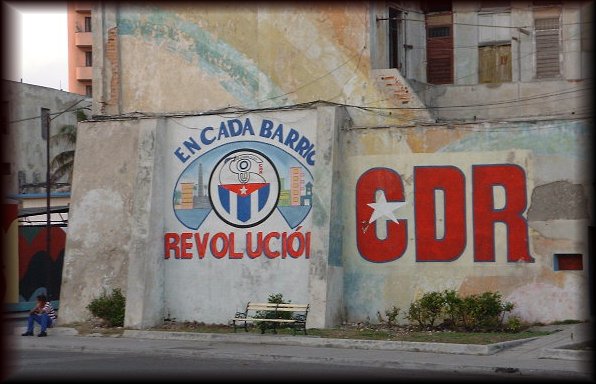
In Every Neighborhood, Revolution

HAVANA, Cuba, July, www.cubanet.org. Cubans know that Fidel Castro’s government, since its inception, violated citizens’ right to privacy of. On September 28, 1960 he founded the Committees for the Defense of the Revolution (CDR), an organization with fascist roots, whose program is “Everyone spies on each other.”

I know — because I worked as a young woman in that organization for four years — that even Raul Castro himself did not like the idea of the CDR.

This organization not only served to divide the people, but also to systematically violate the privacy of everyone, to end the right of each individual to his or her own privacy.

Perhaps Mr. Edward Snowden, fugitive ex-CIA agent, as they say here, for trying to alert Americans about government wiretapping, does not know much about the history of our dictatorship, nor is he interested to know. But what is incomprehensible is that it is definitely the Cuban government and its unconditional friends of ALBA, who are the most ardent supporters of this man, who supposedly fights to defend the right of individuals to privacy.

The history of the CDR has left a bitter taste in Cuban society. Gossip, slander, envy, lies and hatred all proliferated.

From the 1980s, the phones of those of us who are in the peaceful opposition, along with those of hundreds of thousands of citizens who do not support the Castro regime, were tapped through a listening center of the Interior Ministry, a program widely criticized by civil rights advocates, in clear violation of the Constitution.

I remember in 1987, my little girl picked up our home phone and heard a man say he was going to crush me with his car, because I was a counterrevolutionary cockroach — as Fidel Castro publicly called those who opposed him. My daughter, crying, could barely repeat the words of that person who was complying with an order from State Security.

Then there were no more threats. The phone service that I had since long before the Revolution was suspended, along with that of all those who belonged to the Human Rights Movement in Havana. And to make us feel watched, a video camera operated 24 hours a day in front of our houses.

This organization of tips or snitches even has its museum, Fidel Castro’s idea, for anyone who wants to know its entrails. It is located on busy Obispo Street, at number 310, in Havana. Exhibited there are historical documents which reflect the spying of some CDRs, with multiple complaints to neighbors, humble people, so-called internal enemies of the Revolution.

This ancient and valuable building on the capital boulevard today represents one of the most unfortunate and unsuccessful stories of Castro, in which a good part of the people served as volunteer protagonists, to police one another, in order to prop up a bankrupt regime.

The significance of this organization in times of structural changes, occurring now under the Raul Castro regime, remains to be seen. The neighbors are no longer the “eyes and ears” of the Revolution, the fundamental element for detecting the unhappy. Today almost everyone is unhappy. So the question is who spies on whom, if everyone sees that Fidelista socialism is dissolving, like a handful of salt in a toilet bowl.

Monday, July 29, 2013 | By Tania Diaz Castro

From Cubanet

12 August 2013

Prison Diary XLVI: Let Him Sleep / Angel Santiesteban

Today, during the count, Lieutenant Fermin was told that an inmate who had been operated on for several malignant cysts in the testes, to whom they’d given cytostatic drugs and a hundred medications plus a bladder catheter, had a high fever and could not get out of bed.

“Let him sleep,” he answered.

“He’s awake,” a prisoner told him.

“Never mind,” insisted the officer, “leave him be.”

The barracks were silent for several minutes, no one could believe what we’d heard, being treated like a human being.

Like it or not, we have to accept that in Cuban cells there are no human beings, we’re not even in the category of animals, who are cared for and protected in the cattle ranches and pigsties. We are nothing more than “public enemies,” according to the official nomenclature, we are “nothing,” something suspended in time and space, which is neither seen nor does it materialize. There are no rights for prisoners, save the sick and dying.

Meanwhile, the young prisoner becomes delirious, his twenty-something years justifying his crying for his mother. Only silence answered him in the barracks.

Ángel Santiesteban-Prats
Prison 1580, July 2013

Translator’s note: This entry was written before Angel was transferred out of Prison 1580, but was first published today, 12 August 2013.

Alcoholism, Corruption and other Demons / Miriam Celaya

miriam alcoholclip_image001[2][Translator’s note: A longer version of this article, which appeared on Cubanet, was subsequently posted on Miriam’s own blog and is translated here.]

The surprising disclosure in the official media of something that has quietly taken place in the past (ethanol poisoning), could be due to several interrelated factors: suitability to meet the Government’s angle to provide informative coverage about the “fight against corruption”, interest in offering an image of a government sensitive to what happens in society, showing the purported effectiveness of health institutions and of the internal agenda in facing such adversities and taking advantage of the events making a point as a moral lesson, among other motives that I’m sure escape me.

Of course, news like this will always be disclosed in the press, in addition to second or third intentions relating to policy junctures and strategies of the government, only that it would be much more effective to delve into the essence of the matter and not only in its external and immediate effect, because what is at stake here is not simply a case of unscrupulous people who peddle toxic substances for the consumption of certain groups of individuals from disadvantaged sectors of society, but from the combination of many evils of the Cuban reality, expressed in a situation in which authorities and official media are also jointly responsible.

The event that took place in a Havana neighborhood places us at the tip of the iceberg of the widespread crisis of an economic downturn, the failure of our utopia, hopelessness, loss of values and the absence of perspective. The overall decaying of the system is authenticated in all areas and levels of national life, and it far exceeds the government’s ability to address the crisis. It is the metastasis of the terminally ill “model”, unable to cure the nation’s moral damage.

This time, there was the combination of rampant corruption, widespread alcohol addiction and low purchasing power of the poorest sectors of the population, all factors that contribute to the trafficking of various toxic substances, as well as other commodities, just as bad or even more macabre, such as the well-known case a few months ago of trafficking in human fat tissue stolen from corpses at the Guanabacoa Crematorium, marketed as edible fat in the illegal market, or of the sale of the meat of stolen lab animals, carriers of various diseases. Only Cuba’s deteriorated conditions, or in societies as distorted as ours could similar events take place.

The illegal trade of alcohol is widespread in the Island’s capital. Almost all neighborhoods have one or several of these dealers, from both clandestine stills and from theft of the legal networks of stores and warehouses. Cuban wit has dubbed these concoctions with different names which, in the way of the marginal language, translate into the effects of their ingestion: mofuco, tiger’s laughter, man and earth, train’s spark and the like. Though Trafficking and consumption have always existed, they have proliferated since the 1990s’ crisis, when even the ration card, unable to keep up the hefty subsidies of the previous years, guaranteed a monthly quota of rum for each family nucleus.

Alcohol affects memory
That’s why few Cubans remember the weekly meetings of the leaders of the Communist Party and the Popular Power, televised every Tuesday, which the people dubbed “Meeting of the Fatsos” because of the participants’ glowing looks, in contrast to those of the hungry and emaciated population. In one of the reunions the then First Secretary of the Provincial Committee of the Cuban Communist Party, Jorge Lezcano, cynically stated that what the population could not lack was rum. Alcohol consumption was, therefore, an official policy aimed at dulling people’s thinking: alcohol to forget our frustrations in the midst of the worst shortages in the last century of Cuban history.

Social expectations have not improved with the passing of the years, and alcohol consumption has increased at the same time as the average age for its consumption has  significantly decreased.  In a country where there are more frustrations than expectations, it is not surprising that alcoholism has reached truly alarming levels

For now, the case of La Lisa drunks is already out of the media, and it will soon be forgotten among ethyl vapors and other essentials. We don’t know if the cuckolds and abused ones du jour will be the surviving victims and, as such, will be charged with the crime of receiving. It may be that workers who stole methyl alcohol from a warehouse owned by the State and those responsible for the management and administration thereof will be the scapegoats more severely punished this time.  Responsibility will be refined only to a reasonable level.  At any rate, everyone will again drink whatever they can and the saga of unlawfulness will continue its unstoppable march, while the chief culprits of such disastrous events will go on, unpunished.

Translated by Norma Whiting

Translated from Cubanet

12 August 2013

The Suicide of Haydee Santamaria / Tania Diaz Castro

HAVANA, Cuba, August, www.cubanet.org -The suicide of Haydee Santamaria Cuadrado continues to be a problem for Fidel Castro.  The tragic event, which happened July 26, 1980, doesn’t appear in the 2007 chronology edited by the government. The official media almost never reviews the tragic incident.

The so-called “Heroine of Moncada” not only choose this very significant date to shoot herself in the mouth with a 45 caliber bullet, but it also coincides with certain events that had occurred days before, which perhaps could have been influential.

From April 6-9, her Revolution suffered a blow which had no precedent in history: more than 10,000 people penetrated the Peruvian embassy of Havana with the aim of fleeing Cuba, and only a few days later, another 125,000 left the port of Mariel, in boats heading to Florida, during a continuous 5-month exodus.

Did Haydee know that Fidel Castro himself gave the order to carry out “acts of repudiation” against those immigrants, that he offended their dignity by calling them scum, or that two boats, the Olo Yumi and the Veinte Aniversario, were rammed and fired-upon by military forces, to the North of Mariel and Canimar River, where 50 men, women, and children were killed trying to reach the shores of the United States?

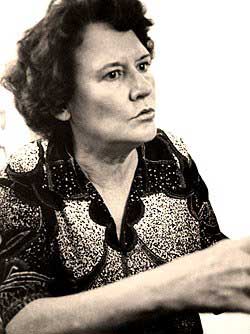
I knew Haydee in the sixties. I heard her talking many times, she facilitated meetings with Cuban intellectuals and foreigners. She was a tremendously unassuming and humble woman, with only a 6th grade education in a small rural school.

Far from being a truly bossy type, such as Margaret Thatcher, it was evident that it didn’t matter much to her to have climbed the steep heights of Cuban politics: she was a member of the Central Committee of the Cuban Communist Party and Advisory Council of the State, as director of Casa de las Americas.

In no way was her manner that of an important woman.  She dressed like any other small town woman and assumed without vanity the title “Great Heroine of the Revolution” which was awarded her for having transported a couple of suitcases with firearms to Santiago de Cuba and for having completed six months of jail in 1953.  Also for contributing to the assault on the Moncada Barracks.

Someone told me that at times she cried in her office, when her son, Abel Enrique, confessed that he had hated Fidel Castro from he was young, because when she had promised to take him for an outing she had to cancel because of a meeting with Fidel.

This past July 28, sixty years since that bloody traitorous terrorist act, carried out in the early hours of the morning while the soldiers slept, Fidel Castro himself confessed that it wasn’t a rational act, “….given the low accumulated experience it would have been much more realistic and secure to start that battle in the mountains.”

Perhaps Haydee had noticed that the attack on Moncada was a crazy idea on the part of Fidel, for whose cause she had lost her boyfriend* and Abel*, the brother she loved most dearly?

Maybe the day of her death she felt remorse to think of the young soldiers in the army who, friendly and gentleman-like, helped her step down from the train with her heavy suitcases full of firearms, who perhaps were also killed by her friends dressed as soldiers?

Bibliography:
Letter from Fidel Castro to the foreign leaders who visited the country, July 28 2013, Juventude Rebelde.
The “strange” suitcases of Haydee and Melba, June 30 2013, Juventud Rebelde.
– Cuba Chronology, Editorial Ciencias Sociales, 2007.

*Translator’s note: They both died at Moncada, reportedly tortured to death in the immediate aftermath of the attack.

ABOUT THE AUTHOR

Tania Díaz Castro
Tania Díaz, Villa Clara, 1939. Founder of the National Writers and Artists Union of Cuba. Poet. She has published five books. Worked as a reporter for 23 years on several magazines in the country. Spent a year and a half in prison in the mid-eighties for her activities in the Human Rights Party. Since 1998, writes for CubaNet.

Wednesday, August 7, 2013 | By Tania Díaz Castro for Cubanet

Black Market is Profitable for Doctors / Julio Cesar Alvarez

HAVANA, Cuba, August www.cubanet.org. A good part of the staff in the network of Havana pharmacies, in collusion with doctors in medical offices, clinics and hospitals, sell the medications from these establishments at a premium price, as if they were private businesses.

The lines in doctors’ offices, hospitals or hospital outpatient services, coupled with the lack of doctors, who are serving on “missions” in other countries*, contribute to turning any kind of pain into a difficult problem. To get a prescription for a painkiller can be half a day’s work.

To resolve this problem, many staff at the pharmacies offer an alternative but illegal service: They sell drugs without proper prescriptions. Thus, patients avoid having to go through the doctor’s office. All they have to do is buy the medicine at a higher price.

The client

Jose Manuel, self-employed in the municipality of October 10, woke up a few days  ago with pain in the neck. Neither he nor his neighbor had any painkillers. He went to the family doctor’s office, but the doctor was “on a mission” in Venezuela. The nurse told him the new doctor hadn’t come to work. At another doctor’s office they told him they only saw pregnant women. Then he went to the pharmacy to try to negotiate for some painkillers. The clerk said that without a prescription he couldn’t supply them; however, as he knew he was a regular customer, he said he had a solution for him.

The solution for José Manuel was to pay four times the price of the drug. The blister-pack of 10 tablets of pain medication that would cost 0.70 cents in local currency with a prescription, could be had now without prescription for 5 pesos.

The clerk

According to a source who works in a Havana pharmacy (who declined to be identified), she can earn more than 150 pesos, national currency, in one day**, selling drugs without prescriptions. “The thing is not so complicated. We have doctors who supply our prescriptions. They charge us 1 Cuban currency for each prescription. That way we can sell ’under the table’ all the medicine we want, because they are backed by a medical prescription.”

She further claims that most of the clerks take the prescriptions home for family and friends to fill them out. Thus, they avoid that these documents show the handwriting of the pharmacy workers. They also try to find different doctors who sell prescriptions, so as not to repeat too much the stamp of the same doctor. Although among the doctors who engage in this activity they exchange prescription pads, so that their identity does not appear too often in the same pharmacy.

The source added that to avoid getting caught, each clerk serves a known clientele. The rest of the medicine they take home and give them to third parties to sell. A pack of 150 grams of cotton can cost $2 on the black market. A tube of Micocilén powder, $1. Creams and ointments, 10 pesos a tube. The Meprobamate blister-pack with ten pills, 10 pesos.

Another opinion

Dr. Silvia recognizes that there are patients who need medications, and find it difficult to access a prescription, for one reason or another, but she considers that the majority of consumers who access medicine in this way are those who self medicate: “There people who need to have a kit with the full range of potential drugs, and not just because they think they will be unavailable, but because today they take Duralgina for one pain, and tomorrow Ibuprofen or Paracetamol because they believe that Duralgina no longer has any effect. Some people take Meprobamate, then say they can not sleep, and there are an endless number of examples like this.”

But whatever the reasons that patients take the medications, the fact is that this market in Cuba is profitable for the white coats.

CLICK IMAGE FOR SLIDE SHOW

Translator’s notes
*Doctors on missions: A main source of income to the Cuban State is the money charged for doctors and other medical personnel who are sent abroad “on missions.” The State collects many times what it pays each doctor.
**150 Cuban pesos is roughly $6.25 US, which is more than a week’s average salary in Cuba.

About the author

Julio César Álvarez López (b. 1968) Graduated in 1990 from the Hermanos Martinez Tamayo School of Counterintelligence. Arrested in 1992 for collaborating with Human Rights Groups and sentenced by a military court to 19 years, of which he served 16, seven of them in the Maximum Severity Prison of Camaguey. He was paroled in April 2008 and studied computing and digital photography at St. John Bosco church. He speaks English and is currently studying German. He lives in Havana.

From Cubanet

5 August 2013

Choosing a Book, or the Reader’s Betrayal / Yoani Sanchez

I scan the shelves, dusting off my memory for books over these last decades, in search of the titles that I must keep, at all costs, from the fire of oblivion. It’s not an easy task. Every author, every text chosen… is an act of betrayal toward the rest. Making a list of the essential becomes something as personal as choosing your child’s name or selecting who is with us in the most private moments. Because the good works, end up being — once read — like beings we want to share the rest of our lives with. We have given them a prominent place in our recollections, because they carry a part of ourselves, our doubts, passions, disappointments and hopes. If we try  to assemble a decalogue of the best books of the last few decades, we’ll more likely come up with a inventory of those that affected us and those that took our breath away. An enumeration of those that changed us, profoundly and irreversibly.

Here are mine:

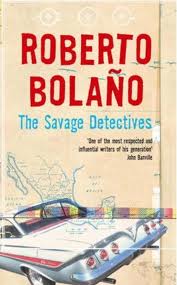
savdetindexThe Savage Detectives (1998) by Roberto Bolaño

In the footsteps of the writer Cesárea Tinajero, Ulises Lima and Arturo Belano follow an inquiry that will last twenty years. Superimposed on these investigations that center on the search for a poet who is an exponent of visceral realism, but that goes far beyond that to probe the limits of literature, politics and ideals. Redefining and mocking art itself, The Savage Detectives does not come off as a rehash of the noir that runs through Bolaño’s work, but also takes hold of certain structures of the historic novel and, with a good dose of tragedy — in more of the classical style —   leads its characters to a fatalism that the reader can predict from the first pages. Dissatisfaction, lies, ideals that blow up, weave a tough story, sacrilegious and irreverent. A mockery, like a sneer; a smile like a scream.

dogsindexThe Man Who Loved Dogs (2009) by Leonardo Padura

In its pages is laid out a complete historical investigation of the last years of the life of Lev Davidovich Bronstein, alias Trotsky. Jumping back and forth from the present to various points in the past, the test also describes the decline of of two revolutions, the Russian and Cuban. The axis is the story of Ramón Mercader, who assassinated Trotsky in Mexico and later found refuge in the Havana of Fidel Castro. Leonardo Padura places part of the narrative in the voice of Iván Cárdenas, a Cuban sunk in the hardships of the Special Period with its housing crisis, food shortages and lack of expectations. It is this man who hears from the mouth of Mercader himself — masked behind a false identity — the details of the homicide and the context in which it occurred. A devastating book, sweeping through all these story so exalted by an officialdom as full of pathological lies as it was dangerous, erected in the USSR and able to make Cuban officialdom disciples of its vices and habits.

soldiersimagesSoldiers of Salamina (2001) by Javier Cercas

The testimony of Antonio Miralles finishes this novel by Javier Cercas on the turbulent and contradictory era of Spanish Civil War. Just as national troops are advancing towards Catalonia, Rafael Sánchez Mazas, writer and ideologue of the Spanish Falange, manages to escape from a collective execution. A Republican soldier gives him up, but ends up forgiving him and letting him flee with his life. Heroism like betrayal, or a deep attachment the pull of compassion disrupted in the act that opens the path to barbarism. The hero cannot be considered one, as he acts from almost irrational outbursts and against every rule. The anonymous man who lets his inner voice prevail and whom the war placed in situations where kindness and commiseration won out.

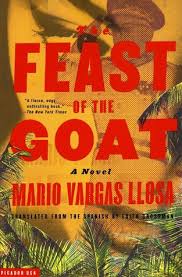
feastindexThe Feast of the Goat (2000) by Mario Vargas Llosa

Published in 2000, this novel proved prescient for the later history of Latin America. In what most literary critics now consider the ultimate in the literature on the dictatorship, Mario Llosa Vargas returns to the figure of the Dominican satrap, Rafael Leónidas Trujillo. Shortly after the new authoritarianism installed on our continent, we would reflect whether The Feast of the Goat was a novel of past events or current realities. With an enviable dramatic tension, the book reconstructs a man enjoying an almost absolute power and expressing it in eccentricity, droit de seigneur, whims, a taste for humiliating those around him … a condensation of the worst satraps that have plagued our lands. The plot has three story lines which come together and precipitate the end. On one side, the return of Urania Cabral to the Dominican Republic after years of exile, on another the story of the men who planned the assassination of Trujillo, and finally the man himself on the last day of his life. With masterly writing Mario Vargas Llosa is enshrined as a versatile novelist, sharp and diligent in his research, and he would be awarded the Nobel Prize for Literature in 2010.

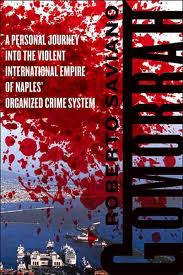
gomorrahindexGomorrah (2008) by Roberto Saviano

A combination of the genres halfway between investigative journalism and literature. A true story, raw, into the depths of the Neapolitan Camorra criminal enterprise. The consumption and the merchandise marking the tempo of the plot. Things like motives of pleasure and suffering. The most elaborate luxury supported in the mud of crime and illegality. Saviano also manages to follow the path to toxic waste, much of which ends up in the Italian countryside dirtying the environment even of those trafficking in the waste. An extremely well documented and disturbing book that changed its author’s life and placed him in the sights of one of the most dangerous criminal organizations in the world.

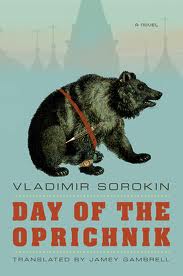
oprichnikindexDay of the Oprichnik: A Novel (2006) by Vladimir Sorokin

Imaginary Russia in 2027 is the setting in which this futuristic novel unfolds. But its true roots are in the past, in the era of Ivan the Terrible when he created the Oprichnik, his personal guard. The protagonist is called Andréy Komyaga and the reader will follow on his heels for one day of his fierce life. A scathing and intelligent critique of authoritarian societies, particularly a Russia that cannot shake its Tsarist past, which returns again and again in the figure of a Stalin or a Putin. A novel of brutality, of the blood during the slaughter, the description of which horrifies the reader. With Orwellian tones where the individual becomes simply a piece which power handles at will. The extermination of the opposition, including the looting of their riches and the violation of their widows, complete the analogy of what has been the attitude toward political opponents for much of Russian history from the past and present. A novel that takes hold of the future, simply as a trick to tranquilize us with the present.

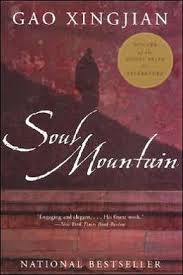
soulmtnindexSoul Mountain (1990) Gao Xingjiang

A trip through rural China in search of the legendary mountain Lingshan, leads the author of this book through the threads that weave the identity of this vast country. After being misdiagnosed with lung cancer, Xingjiang travels his homeland and on the way compiles legends, stories, testimonies, poems of the people he bumps into along the way, creating the amazing kaleidoscope of life, hope and pain he presents the reader in this book. A polyphonic work, blending elements of an epic novel, but also lyricism and intimacy. Its author, with a vast reference and culture, lets his consciousness flow freely in the more than 700 pages of text. The critiques of the Chinese system and its cultural policy are scathing and devastating. Xingjian himself experienced firsthand the pressure of censorship and publishing ostracism. Hence, Soul Mountain transcends history to also become a memorial to a contradictory and huge nation. In 2000 Gao Xingjiang won the Nobel Prize for Literature, receiving the news in a modest suburb of Paris where he has lived in exile since 1987.

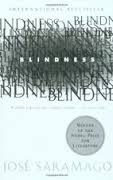
blindnessindexBlindness (1995) by Jorge Saramago

Sitting at a traffic light, a man starts to lose his sight and from him a rare epidemic of blindness spreads across the entire country. The first measure is to quarantine the affected but the number grows and there are ever fewer people who can see. The lowest passions erupt, the most primitive instincts, and the fight for survival is out of control. A direct metaphor for the alienation and ruthless attitudes generated by modern societies. However, some characters retain the ability to see and at that point we are urged to think about the responsibility of having your eyes open when so many others have theirs closed. A novel that calls on us to regain lucidity and awareness. The author does nothing to make it easy to read, ignoring the names of the characters, structuring very long sentences with little punctuation. “Blindness” is upsetting from the first page, thus fulfilling the objective of shaking us up and disturbing us. No wonder that three years after the publication of this book, Saramago would receive the Nobel Prize for Literature.

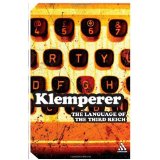
51PfQZ0FmEL._AA160_Language of the Third Reich: LTI: Lingua Tertii Imperii (1947, reissued in 2001) by Victor Klemperer

Although first published more than half a century ago, this book has had a second birth in the eyes of thousands of readers. Klemperer proposes a thorough guide on how not only Nazism expressed itself verbally, but also the school of oratory and semantics it left for later totalitarianisms. The constant adulteration of terms and the ability to distort concepts, were some of the methods of subjugation employed by the Third Reich. The appropriation of ideas like heroism, falsified and adjusted to its convenience, helped Nazi propaganda become ordinary to millions of Germans. A verbal scaffolding constantly falling on the ears and permeating every area of social, academic, artistic, entrepreneurial and informative life. It was not necessary to create new formulas or concepts, simply to appropriate them and to empty them of all their previous significance. The excessiveness of this kind of discourse and its constant boastfulness permeated that of many other leaders who subsequently tried to subject, from the platform, their own people. After reading The Language of the Third Reich and can not again hear the chatter of a leader or the excesses of official propaganda, without calling forth the specter of fascism.

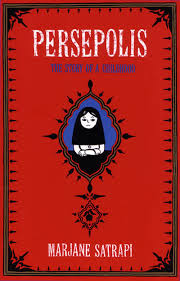
imagesPersepolis (2000) by Marjane Satrapi

A graphic novel, lately these books with “little figures” seem simple amusements. However, Persepolis makes us drop this predisposition from the first page. It compels us to share the anguish of a young girl, becoming a teenager and young woman under the Islamic fundamentalist regime. The story begins in 1979 when Iran is the scene of a profound political change that puts an end to half a century of control by the Shah of Persia and begins the so-called Islamic republic. From the eyes of this little girl educated in a progressive family, the reader watches the transmutation of a social ideal into authoritarian fundamentalism. The road ahead is exile, which Marjane Satrapi leaves for, convinced that she no longer fits into a society with its overly excessive bans and punishments. Expressed through writing and cartoons, her biography sheds light on the situation faced by millions of people in Iran. A book full of tenderness, narrated by a child’s voice who also talks to God, who created a prophet able to follow the path of Mohammed or Jesus, but she discovers that on earth, unlike in those celestial paradises, pain and fear abound.

So much for my exercise of treason. No one will forgive me, neither the books included nor those discarded. Compose a list of these essential texts from recent decades, leaves a worst taste in my mouth than when I started.

9 August 2013

We Are Still Olive Green* / Yusimi Rodriguez Lopez

On Saturday July 20, as I was getting ready to go out with my niece, among the TV news items I heard was a piece about a town that was going to celebrate the provincial commemoration of — at this point I assumed it would be Children’s Day, which was to take place on the following day, Sunday the 21st, but I was mistaken — July 26, the Day of National Rebellion.

This year is the sixtieth anniversary of this sad event which, since I was a child, has been seen as a occasion for celebration. I remember that the Committee for the Defense of the Revolution (CDR) had a party. The state provided some things and I believe money was collected from neighbors. It was a party similar to that of September 28. Over time the state stopped subsidizing the food, which was sold at modest prices, that allowed every CDR to celebrate the anniversary. I imagine that people also were no longer able or willing to donate money.

I do not know if the newspaper Tribuna de La Habana, the Party or UPEC (the Union of Cuban Journalists) will continue supplying workers with a basket of pork, cooking oil, rice, beans, cookies, a dessert and a bottle of rum. The one from UPEC used to come with chicken, if I remember correctly, and a package of sausages along with a bottle of brand-name rum, but that was only for the journalists on staff.

I think that in this country there is so much eagerness to celebrate, to enjoy the holidays, so much need for something extra that will stretch people’s monthly food budget, that it does not matter what the reason is for celebrating.

The fact is we are celebrating a bloody event that, even if it had not been a defeat from a military point of view, even if the assailants had managed to reduce dictator Fulgencio Batista’s troop strength, would have been paid for in a river of blood. We are celebrating the death of many young men, people who left behind parents, siblings, girlfriends, wives and perhaps children.

“Let us go marching towards an ideal.” But which one? We will never know. I suppose they died to achieve what we have today, which I have been told since I was little, but undoubtedly I will never know. They will never be able to say in their own voices if it was for this, for today’s Cuba, that they died.

Not long ago there was talk on televsion about one of these martyrs. He once had a family and a job, but sacrificed a large part of his income and sold his household possessions for the cause. Later they said he was one of the first to fall in battle. At the time it seemed so sad to me. And so ridiculous.

I later felt that this showed a lack of respect for those young men, who did what they felt they had to do at the time. It required a high degree of courage, of commitment, the willingness to die for a cause. The awful thing is that those who are willing to die in combat are also willing to kill. We often hear our soldiers say they are willing to die (and of course to kill) to defend us, the people. But are they willing to defend the people even if they are no longer in agreement with their leaders? Does a person cease to be one of the people if he or she becomes a dissident or even an opponent?

Those young men, to whom the country has paid homage for many years, saw no other alternative but to overturn a dictatorship through violent struggle. Even Nelson Mandela, whom I deeply admire, was convinced that armed struggle was the only way to overturn apartheid in South Africa.

But I ask myself if in this country where — according to what I have been told — a free press existed even during the Batista dictatorship, there was not some other way to overturn the dictator and restore the constitution of 1940. Was restoring this constitution not specifically one of the goals of those who attacked the Moncada Barracks? Yet it never again became this country’s constitution.

Perhaps not. Perhaps there was no means other than violence to overturn the dictatorship.

I, however, prefer the methods of Ghandi, of Martin Luther King. I prefer that innocent blood not be shed. Or guilty blood. I am sure that what is obtained through violence can only be maintained through violence, through making the defeated fearful.

There is a quote in a letter from José Martí to Manuel Mercado which has remained in the minds of Cubans for years . It was even the title of a successful television series in the 1980s called In Silence It Had to Be. I prefer to think “without violence it must be.”

Nevertheless, this society has exalted and continues to exalt violence. Those who left the country after January 1, 1959 were its victims. Those involved in peaceful opposition to the government are its victims as are those with no intention of assaulting a military barracks of any kind.

Yusimí Rodríguez López | Havana | July 26, 2013

 From Diario de Cuba

*Translator’s note: A reference to the color of the combat fatigues worn for years by Cuba’s top echelon of leaders.

The Teaching of Zero in the Pre-school Years / Dora Leonor Mesa

By Karen Garcia

Zero symbolizes nothing.  It presents itself as the cornerstone of mathematics, mute protagonist of our arithmetical system.

The idea of zero developed in India starting in the 5th century B.C.  There various religions accepted the creation of the world starting from nothing.  The Hindus demonstrated that when you add it to any number it’s unchanged, while if you combine it using multiplication, the result is null.  Later they tried to use it as a divisor and the admired the appearance of infinity.  The Arabs transmitted this mathematical wisdom to Europe with the expansion of Islam.  The Jews also incorporated it into the Cabala, their mystical tradition, to create numerology.[1]

In the Cuban school, a child acquires the notion of the concept of zero in first grade. From a young age he knows how to recite the numbers up to great quantities but the concept of quantity and cardinal notion is usually acquired during the early years of primary school.  So the concept of zero appears in the resolution of concrete operations of addition and subtraction where the same represents the absence “of what one is going to share;” eg: I have a box of 5 candies and Pedro ate 5.  How many are left?[2]

In the mathematics textbook of first grade (Edited by Pueblo and Educacion.  8th edition, Cuba 2010) the natural numbers from 1-10 appear on page 11.  Starting from page 54, the number 0 appears on the number line.

During the teaching of preschool, an activity that could be used to introduce the concept of zero is to give each little one a small box of objects.  Mention to them that they are going to start with zero and ask them to signal the quantity, that is to say, that they take all the objects out of the box. It is recommended to write on the board the number 0, at the same time reminding that them that we start from this number and in this way constructing learning.  Instead of saying 1, 2, 3, 4,…once the toddler knows the abstract concept of number, it’s time to teach him to count: 0, 1, 2, 3, 4…. This way of teaching facilitates the concept of the number line that will be used later in the first grade of elementary school.

[1] Loria, Gino, Historia Sucinta de la Matematica, 1932

[2] Monaco Nancy I., El número cero ¿la nada matematica?, Buenos Aires, 2009

8 August 2013

Interview with Dimas Castellanos

Dimas is second from right.

Dimas is second from right.

Interview with Dimas Castellanos Marti, historian and journalist.

From Havana, Felix Sautie Mederos

Por Esto! asks:

“Unravel the causes of the crisis our society finds itself in (…) The concept of race as a group of hereditary characteristics seems to lack foundation, as a social construction it has a damaging effect on human dignity (…) In 1959, the democratic, popular Revolution inflicted the hardest blow in the history of Cuban racism  (…) Then, racism, expelled by law, took refuge in the mind waiting for better times (…)” A pending challenge…

Dimas Cecilio Castellanos Marti is a name that’s repeated in digital spaces, on account of his articles which refer to current problems that impede the development of Cuba and the quest for historical clues that have influenced its emergence and evolution.  Like all people who write and publish their ideas, he has won friends and also detractors.  There are even some who discredit and try to silence him, considering him in the camp of the enemy.  These dogmatic perceptions have been caused by many divisions of Cubans, including between those in favor of social justice and distributive equality.  These are practices we have to eradicate and give a real 180 turn to these narrow minds that contribute little to the development and future and become a very significant indicator of the necessity to achieve the changing of minds that President Raul Castro has reiterated so often.  Perhaps it is because they don’t dare to debate with him about his opinions or because they opt for the easiest way to stay out of problems with what one could call “the established.”

It’s precisely in honor of this change of mind that I’m interviewing friend Dimas, with the goal of making explicit his life and his opinions without exception of any kind; I believe it interesting to express the thoughts of this author who, despite being excluded by some, stays strong in his progressive opinions in favor of peace, liberty, distributive equity and social justice.  I have had the opportunity to know him closely, we have been together in Christian efforts and in theological and Bible study.  I am a witness to his exceptional, unwavering closeness to Christianity.

I consider his research, his origin and his intellectual development worthy of divulging, even more so because of the significance that they have acquired due to the motive of the recent debate over the article published by the Cuban intellectual Roberto Zurbano in The New York Times with the controversial title, “For Blacks in Cuba, the Revolution hasn’t Begun,” which, according to its author, was a distortion of the original title he sent to the New York paper: “For Blacks in Cuba, the Revolution hasn’t Ended.”

Felix Sautie: I understand that you were a member of the Socialist Youth in the former province of Oriente and that you participated in the 8th Assembly of the Popular Socialist Party at the triumph of the Revolution.  Is that true?

Dimas Castellanos:  Yes, that happened.  I served in the Socialist Youth (JS), the youth organization of the Popular Socialist Party (PSP).  I was Secretary of my Base Committee, President of this organization in the municipality of Bayamo and Delegate at its last congress.  In 1960 I entered the ranks of the PSP, where I served until its dissolution in 1962.  It’s true that I participated in the 8th Assembly of PSP, celebrated in August of 1960, but not as a Delegate.  It just so happened that when this event was celebrated I was in the PSP National School for Leaders and it was decided that the students would participate in some sessions that were being celebrated in the Comodoro Hotel, very near where the school was located. In this Assembly, which was the last of the PSP, they approved the thesis: “Defend the Revolution and advance it,” which meant propel the democratic, popular revolution to socialism and communism, which were the objectives of the Communist Party of that time.

FS: How did you happen to join this Communist militancy and what has been your evolution since then up till now?

Dimas Castellanos: My joining the communist militancy had family and class roots.  My father, a tobacconist, was a member of the PSP.  He worked in our house along with 7 or 8 other cigar rollers.  From a young age I heard conversations about politics, culture, science and other subjects; something characteristic of this trade that permits talk and debate without interrupting production, which explains the high cultural training that workers in this sector had.  Also, though with less intensity, this happened in the typography trade, in which I worked as an apprentice in various print shops that existed in Bayamo.  In this cultural environment, along with the civics education from public school, my socialist ideas of liberty and social justice hatched and my vocation for politics, history and pedagogy developed. continue reading

As for my evolution I can tell you that in 1956, when the landing of the yacht Granma happened, I was only 14 years old, but I already had a considerable political consciousness.  For that reason I linked with the Socialist Youth and joined the PSP.  Later, in October of 1960, when the JS, together with the youth organizations of the Revolutionary Directorate March 13 and the Movement July 26, integrated into the Association of Rebel Youth (AJR), I was designated as president in Bayamo.  Following that, I held various positions in various municipalities and in the provincial management, both in AJR and in the Union of Communist Youth (UJC), until July of 1962.

From that moment until today, my ideas have evolved from the constant incorporation of new knowledge, from an open mind, from the busy political responsibilities, from participation in conferences and other events, from events I experiences around Real Socialism during my stay in Russia, from my studies in Political Science, from my participation in the Youth Centennial Column in the Cuban Military Mission in Ethiopia.  All of that, along with my constant reading has permitted me to develop a critical analysis of the progress of the revolutionary process.  Even though my socialist ideas (social justice and liberty) are the same, I understood the impossibility of constructing a socialist society on the back of civil liberties. For me, socialism cannot exist unless it’s democratic, which is impossible given the total control of the State over society.

FS: You were a worker starting from a young age, I believe a welder and you had many jobs, but currently you’re at the university level, you have been a university professor and you have a very active intellectual life. Do you want to explain to our readers of Por Esto! this cultural evolution, what are you doing now?

Dimas Castellanos: I started working as a boy, first helping my mother in the selling of clothes in rural areas, in being a distributor of fresh milk, in a workshop that made fine-cut tobacco, selling sweets and eggs in the streets, etc. Later, from age 11 on I worked in various shops as an apprentice of typography, blacksmiths, and welding, which was my final trade.  Precisely because I was a welder, when I left work in the management in UJC, the Commander Joel Iglesas, Secretary General of this organization with whom I had a magnificent relationship, started me in a work position in the construction of the Renté Thermoelectric plant.  Later I moved, within the same position, to the construction of buildings in the Jose Marti District, also in Santiago de Cuba.

Due to my working life, during my childhood I studied irregularly until the 5th grade of  education.  Being in Renté, now 21 years of age, I took an educational test in which I scored as 4th grade and from that level I restarted my studies, always on the night shift.  With the help of a private teacher (Ana Parodi Dominguez) I reached the 6th grade in 2 months and in 1964 I enrolled in Secundaria Obrera (Secondary Adult Basic Education)–one year in duration– and I entered into the Facultad Obrera Campesina (Higher Level Adult Basic Education) that functioned as an annex  of the University of Oriente, where in two and a half years I reached a level “equivalent” to a pre-college student.  In 1967 I was selected to study metallurgy in Russia, since at that time the Government of Cuba had the goal of converting the Island into a metallurgy power.  I stayed for 2 years in that country, but my basic accelerated training turned out to be insufficient to complete the studies: I had spent less that four years from 4th grade to 12th grade.  On my return to Cuba I spent six months in the Youth Centennial Column and in 1971 I enrolled in Political Science, where I was second in my class and I graduated with a Bachelor’s degree.  While waiting for my diploma, because of my condition as Student Aid in Social Psychology, I was allowed to simultaneously take various courses in the School of Psychology at the University of Havana, which helped me develop a much more holistic formation.

Once I graduated I started to work as a professor of Marxist Philosophy in the Agricultural Department of the University of Havana (which became the Superior Institute of Agriculture and Livestock of Havana in 1976), where, for not circumscribing myself to the schematism that was demanded in the teaching of this subject and for not being a member of the Communist Party, I was fired from teaching, despite the excellent evaluations I had obtained.  Following that I relocated as a technician of Information Science, I enrolled in various post-graduate courses and joined my philosophical knowledge with this activity, which they told me was “the philosophy of information.” In 1992 because of my socialist democrat ideas, I was excluded from the Ministry of Higher Education.

Currently, as an amateur historian, I dedicate myself to researching and writing about the relations between the Cuban predicament of today and the preceding history.  I publish the results in El Blog de Dimas and in various alternative digital publications.  I occupy myself with this activity, now that I consider that after having participated in the revolutionary process, having evolved culturally and politically and having an understanding of the role of history in the unfolding of social processes, I can’t do anything but help, from inside my country, to unravel the causes of the crisis which our society finds itself in.

FS: The disciplines that you have studied include Biblical studies and theology. What concepts do you have of spirituality and religious faith?  How do you place yourself in these dimensions of life?

Dimas Castellanos: In the year 2001, 26 years after finishing my bachelor’s degree in Political Science, I enrolled in the Institute of Biblical Studies and Theology (ISEBIT), where I graduated in 2006.  My interest in the study of theology came from lived spiritual experiences that didn’t have an explanation within the Marxist Theory.  I was baptized and joined the Movement of Christian Workers.  Once I familiarized myself with the essence of the Christian ideas I understood their relation with social justice, liberties and politics, which because of their impact on the destiny of people and people could not be far from Christ.  For this reason, I incorporated spirituality and religious faith into my world view.  If one of the manifestations of politics is the fulfillment of needs, or as some like to express it, the art of making the necessary possible, without a doubt Jesus practiced politics.  The debate then moves to explaining the peculiar form in which he did it.  If Jesus was, or was not, a revolutionary.

Revolution is one way to change reality, which overflows with social injustices, but always independent of the form it which it arises, it consists of an intent at an extreme solution which becomes active when legal and/or moderate attempts fail and imposes a radical modification of the existing situation.  The fact is that, by the use of violence, in revolutions it is always imposed on the most capable at work, as irrefutable demonstrated in universal history.

This form of fighting for justice is different from the teachings of Jesus, for whom forgiveness was a cornerstone.  Thus, between the revolutionary form of hoping to reach a “shining world” and the ways employed by Jesus Christ to reach the Kingdom of God, they only agree on the declared objective in favor of justice and the happiness of human beings.  From there they move apart, since forgiveness, love, peace and conviction are the characteristic foundations of the Christian doctrine.  So Jesus was not a stranger to the political dimension in which I placed my life.  More precisely, my adhesion to Christian ideas of ethics and social justice along with my vocation for history has considerably influenced the study of the founders of the Cuban nationality, starting with the Father Felix Varela.

FS: Then what importance do you give studies of history and their use in political and economic analysis?

Dimas Castellanos: All presents have their keys in the past, history becomes an indispensable source and an essential tool for the understanding of social phenomenon.  Men can accelerate or retard the progress of history, but they cannot stop it.  In Cuba, after 1959, they tried to attribute an eternal character to a temporary event, which drove the postponement of the constant transformations that all societies demand. Today, in breaking the stagnation for diverse causes, the country is seeing the obligation to correct the wrong path.  A task which surpasses any man, group, party, or institution and requires, therefore, the participation of everyone and a structural, systemic focus in tune with the crisis in which we are immersed, where historiography–analysis and interpretation of historical events–has a hugely important role to play; since it becomes very difficult, if not impossible, to find viable ways out of our problems without taking into account the ideas contained in the civic, political, economic, cultural and scientific thinking of illustrious Cubans who came before us.  This passion for history is reflected in each opinion I present and in all the articles and essays that I write.

FS: I have had the opportunity to read some of your work on the problem of blacks in Cuba and we have sometimes discussed that subject.  In this line of thinking, I’d like to ask you some questions that I consider to be important.  

First of all: Really after everything the Revolution of 1959 has achieved to this date, are there still racial problems that affect the life and social development of the Cuban black and mulatto population?  And if this is true, could you give a brief outline on the subject?  

Dimas Castellanos: Yes, racial problems continue.  The concept of race as a group of hereditary characteristics lacks foundation, as a social construction it has a damaging effect on human dignity.  In Cuba it’s about a complex phenomenon intertwined with our economic, sociological, and cultural history which is reproduced in time.  In this sense I advance in the form of a thesis, some of the aspects and key moments:

Black Africans appeared on the Cuban scene in the beginning of the 16th century, but it was towards the end of the 18th century that their massive entrance transformed the ethnic composition of the population, the geography, the history, the culture and the social structure of the country.

Not being the owners of their own bodies and subjected to inhumane living conditions, blacks responded by rebelling: the cimarronería [1], the apalencamientos [2], and staged uprisings. Through these rebellions blacks almost single-handedly wrote a chapter of our national history.

Faced with total inequality with respect to whites, blacks became creole, but in a different way from white creoles, which, to paraphrase Jorge Manach, precluded their a putting common goal above of their distinguishing features.

During the 10 Years’ War, begun in 1868, land-owning whites aspired to economic and political liberty while blacks aspired to the abolition of slavery. The simultaneous existence of these goals — independence and abolition — constituted the starting point for the formation of a national consciousness in a context where inequality and racial discrimination acted in opposing directions. This war, though it ended without fully achieving its objective, dealt a blow to the institution of slavery by liberating slaves who had participated in battle during the war and legally endorsed some liberties (contained in the Zanjon Convention), which gave birth to Cuban civil society.

In the interim between the 10 Years’ War and the start of the War of 1895, Juan Gualberto Gomez — supported by the colonial resolutions that limited exclusion from service due to race — introduced various principles similar to those that Martin Luther King would use six decades later in the civil rights struggle of American blacks and founded the Directorio Central de Sociedades de Color. From his position as a social activist he mobilized thousands of blacks to resistance. Facing arduous incidents while adhering to the law, he won access to spaces and facilities such as balcony and orchestra seats in theaters as well as to public classrooms, which until then had been limited to white children.

At the re-initiation of the war of independence, when slavery had already been abolished, blacks were newly incorporated, this time with an agenda of social equality. As before, due to their expertise in the use of machetes and living in the jungle, equality and solidarity between black and white fighters overcame racial prejudice.

With the coming of the Republic, where these skills were useless, a sociological program aimed at reducing the economic and cultural gap between whites and blacks was lacking. That lack was reflected in public office, in commerce, banks, insurance agencies, communications, transportation, tobacco stores and even the armed forces, which replaced the Liberation Army was made up mostly of whites, in a country where the 60% of the fighters for independence had been black.

The constant frustrations in the early republican years led to the founding of the Independent Party of Color in 1908 and the armed uprising of its members in May 1912. This last action ended with the most horrible crime committed in our history, because in addition to the thousands of blacks who were killed, killing happened between white-skinned Cubans against black-skinned Cubans, once again hindering the unfinished process of a common identity and destiny.

In the 1930s, various press organs, radio stations and leading figures in Cuban politics and culture engaged in a public debate against racism, thereby aiding the integration and social and cultural development of blacks, and as a result, strengthening the awareness of a common destiny. One of the results was the inclusion, in the 1940 Constitution, of a legal principle essential to the promotion of equality between blacks and whites, that stated, “all discrimination on the basis of race, color or class or any other cause harmful to human dignity is illegal and punishable.” However, this beginning was left incomplete in the never enacted complementary criminal law against discrimination.

In 1959, the Democratic and Popular Revolution dealt the most serious blow to Cuban racism throughout its history. However, with the dismantling of the existing civil society, in addition to its benefits also lost were the civic instruments and spaces that had contributed to the progress made so far. The mistake was to believe that racial discrimination existed as a result of social classes, so that once these were eliminated, they proceeded to announce its end in Cuba. Such a significant “achievement” led to the decision to remove the subject from public debate. Thus, racism, expelled by law, took refuge in people’s minds, waiting for better times.

Nevertheless the equality of rights among blacks and whites proclaimed by law had a weak spot: inequality that had been inherited and left unresolved. In other words the starting point, seemingly the same for both blacks and whites, put the former at a serious disadvantage. This explains why universities that had been primarily black and mulatto re-acquired their previous racial profile over time. Why was this? Among the reasons were that black families, with rare exceptions, could not give their descendents’ studies the importance they required given their own backgrounds. (I remember my father, the grandson of a slave, telling my mother, “Leave him be! He will study when he is big.”) In other words the familial support so necessary to success was missing, which facilitated a return to the former status quo.

Even during the very real crisis Cuban socialism experienced in 1989, blacks did not emigrate for well-known historical reasons and missed out on the much-anticipated cash remittances from relatives overseas. Evidence of this can be seen in the re-appearance of social inequities, in the high proportion of blacks in prison, in their significant presence during the mass exodus of 1994, in their concentration in poor, marginalized neighborhoods and subsequently in the re-emergence of discrimination.

In short, throughout our history racism was not treated in the comprehensive way that such a complex phenomenon requires, as consequence it continues into the present in our society, through half a century of revolutionary power. The most recent proof of the debate is about the black intellectual Roberto Zurbano, director of the Editorial Fund of Casa de las Americas, suspended from this responsibility because of his article which The New York Times published under the headline “For Black in Cuba, the Revolution Hasn’t Begun,” even though in an interview, he clarified that the original title was really that the revolution “hadn’t ended,” but reaffirmed his ideas that “on racism there is still much to discuss.”

In this polemic there are two distinguishing aspects: one, whether racism is present in Cuba or no; the other, the treatment of the subject given by Zurbano’s critics.

Regarding the former, exactly related to the theories presented, I will only refer to the two basic questions posed by Zurbano:

The economic difference created two contrasting realities that persist today.  The first is that of the white Cubans, who have mobilized their resources to enter into a new economy driven by the market and to reap the benefits of a kind of socialism that is supposedly more open.  The other is the plurality of the blacks, which is witness to the death of utopian socialism.

This statement confirms the similarity between the situation between the blacks higher up in the Republic, lacking economic means and instruction, and the lack of positioning today, to participate under conditions of equality when faced with the measures of economic liberty that are being dictated.  One fact that reveals the reproduction of the causes, one of the sources of Cuban’s participation are foreign shipments, before which blacks are at a total disadvantage.  Therefore, dark-skinned Cubans continue to be unequal from the start.

Racism has been hidden and has been reinforced in Cuba in part because it is not talked about.  The Government has not permitted racial prejudices to be debated or confronted either politically or culturally.  Instead, they frequently pretend that it doesn’t exist.

Here lies another key to the continuation of racism.  They suspended debate on the subject and now, 54 years later, it’s not only uncomfortable to accept it, but a few of the intellectuals who have attacked Zurbano even go so far as to deny its existence.

Regarding the second aspect, referring to the treatment given the subject by Zurbano’s critics, what jumps out is an additional difficulty in the eradication of racial discrimination in Cuba: the absence of cultural dialogue and debate that has essentially nullified the social sciences.

In Cuba it’s not possible to have a basic, objective dialogue without transgressing the limits imposed by the dominant ideology.  This is a sufficient obstacle to destroy the effectiveness of debate over solutions to social problems.  In this sense the statement of Guillermo Rodriguez Rivera: The Cuban Revolution not only began the struggle against racism and discrimination but nor can one can say that this struggle had never been so deep as in this moment of our history, it’s a proposal that completely lacks foundation.

In another part Rodriguez Rivera noted that Zurbano should investigate the subject with his elders.  This and other proposals of Zurbano’s critics reveal the limits established by the powers-that-be which comply in part with intellectuality; a behavior which tends to paralyze thought and debate, at the same time classifying within the absurd and worn down categories of friends and enemies those who think differently from what is permitted.

Without failing to recognize the role played by some emerging spaces for debate, the complexity of the subject of race in Cuba makes necessary public debate, where, paraphrasing Victor Fowler, all points of view participate.

Racial discrimination is and continues to be a serious obstacle towards sharing a common destiny among all Cubans.  For all of these reasons, the controversy provoked by Zurbano’s article should be converted into a road towards reaching a consensus among all possible solutions to the unresolved subject of racial discrimination.

FS: My second question is about the problems of persistent racism is: from your point of view what could be the essential lines of a solution?

Dimas Castellanos: I believe the essential lines towards a solution should emerge from research, political debate and consensus.  No one holds the truth in his hands, but we can shape it among all of us.  What is clear, as history has shown us, is that eradication does not only depend on the proclamation of laws, which is what has been done since the birth of the Republic until today, but also from a multidisciplinary analysis of its origin, development and treatment.

FS: And my third question on the subject: What relations might these problems have with the definition, evolution and development of our national identity?

Dimas Castellanos: If we understand that a nation–from the sociological point of view–is the fusion of principle social factors that make up a country, resulting from a long process of closeness and social, cultural and economic integration that gradually drives unity across difference, in a moment of history and in a determined territory, then the relation of the subject of racial discrimination is determined by the evolution and development of our national identity, since sharing a common destiny is impossible in conditions of inequality.  This is the remaining challenge.

FS: Finally, I should tell you that this is the first time we are interviewing you; perhaps in the future we will have to come back to these subjects, but before we finish I want to ask you if you have something you’d like to add to this publication.

Dimas Castellanos: The Conviction that the situation in Cuba will not find a viable exit, until both liberties and rights are permitted, first of all, the reconstruction of the concept of citizenship, today absent, and from there confronting the many challenges that Cuban society has in front of itself, to be able to insert itself into the age of globalization, information and new communication technology which has its starting point in the total incorporation of Cuba into the international agreements on human rights.

fsautie@yahoo.com

Notes:

[1] Cimarrones are runaway slaves: slaves fleeing their masters who lived solitary lives in the hills.

[2] Apalencados, stable communities of runaway salves, were located in areas difficult for their persecutors to access, such as shantytowns. Made up of a series huts, they were characterized by economic self-sufficiency.

[3] T. FERNANDEZ ROBAINA. Black in Cuba 1902-1958, p. 144

Unicorn, Sunday June 16, 2013

From Por Esto!

24 July 2013

Luis Pavon Tamayo: Symphony in Grey Minor / Norge Espinosa

Nicolás Guillén, Alfredo Guevara and Luis Pavón Tamayo at the funeral of Bola de Nieve.

It took five minutes of broadcast television for his brief resurrection to send a shudder to Havana. In January 2007, the first broadcast of Impronta (Imprint), a space that sought to the highlight relevant names of Cuban culture, generated amazement and protests. Those who saw this very short program couldn’t get over their shock or indignation, because as the initial figure the producers chose was Luis Pavón Tamayo himself, not so remembered for his flimsy poetry, but for his role of censor and extremist during the time he presided over the National Council of Culture, between 1971 and 1976.

Those dates are enough of an encrypted signal for many, etched in the memories of more than a few, and in the official amnesia, of the infamous Five Grey Years. Five years, ten years, a dead time, in which from these offices, Luis Pavón and others of no less fatal memory, like Armando Quesada, who were determined to make a painful reality from the arguments of the proceedings of the First Congress of Education and Culture, relying on them to expunge from the artistic world those who, in several cases were undisputed leaders in letters, drama, dance and many other expressions.

Mediocrity that was imposed under those orders still operates as trauma, and no doubt along with those who now rejoice at the news of the grim profile to Luis Pavón, there are some who still see him return like a ghost to follow them robbing the peace from their dreams. Because in his last days Luis Pavón was already a ghost, and not even that attempt on Cuban television could transform him, as perhaps was intended, in the palpable body within the culture to which he himself railed so much and that he’d already begun to forget. continue reading

That old man we saw in those quick minutes on Impronta was about to die. His unusual reappearance in that program unleashed the little email war, which, in the way it usually happens in Cuba, started as a surprise and ended as a hangover. Several Cuban intellectuals, direct victims or not of his leadership, sent emails to denounce the ghost, to demand the exhumation of the buried corpse, and why not, to demand apologies that never came. These messages attest to the trauma: those more restful, or concentrated on disclosing rarely aired data, along with those that linked spasms and pathos, and a badly silenced thirst for delayed revenge.

Cuban television then fell apart in internal gibberish that lasted some weeks, without knowing how to fix the mess, while the emails went pack and forth piling up in that wave in which, like we hadn’t seen much, their voices and demands united Cuban artists living on and off the island, without getting official responses.

UNEAC, which had little to do with the failed revival, published a note that clarified less, and figured it would be better silent about it, under pretexts as petty an not wanting to torment people with possibly irrelevant clarifications, while the “naivete” committed was blamed on the youth of some of the members of the Impronta team.

Doubtful naiveté, considering that Armando Quesada was walking through the halls of ICRT until shortly before the program aired, and was trying to conceal the silent battle that was going on at the institute itself blaming not the veterans who saw the furry ear of parameterization* up close, but those who never explained to them the hidden truth behind that bitter concept.

The results of all this were motley, but without doubt the most enduring was the lecture series organized by Desiderio Navarro from the Centro Teórico Cultural Criterios, in order to reorganize part of the undigested memory of that time of terror and Pavón, and that ran through spaces as diverse as the Casa de las Américas, the Instituto Superior de Arte and the ICAIC (Cuban Institute of Cinematographic Art and Industry).

A book with several of these conferences was published and quickly sold out. The expected edition that would add to these texts the remaining pieces about rock, Cuban cinema, and theater (a theme I assumed given the reticence of several specialists who doubted the challenge), was never consummated. By the time I delivered my lecture, “The masks of grayness, theater, silence and cultural politics in the Cuba of the ‘70s,” it was already January 2009. In those two years the fervor, the demand, the flare ups of the first moment, had been melted into the great Cuban forgetting, that keeps us coming back over and over to the same ghosts, because in reality, we never completely exorcise them. Or they don’t let us carry the exorcism to its ultimate conclusion.

Neither weight nor name nor work

Luis Pavón was born in 1930 in Holguin, and just died in Havana, perhaps in his house in Playa, or in some hospital. He was a member of the Cuban Writers and Artists Union (UNEAC) and became known as a poet, shall we say “modest,” from the time of the triumph of the Revolution with notebooks as Discovery, and Time and its flags flying, titles charged with the scent of slogans.

He was a lawyer, and when the CNC was closed to make way for the Ministry of Culture, he became rector of the School of the Cuban Communist Party (CCP). Urban legend transforms jim into Leopoldo Avila, the specter who attacked with martial prose, from the pages of the armed forces’ magazine “Olive Green,” Virgilio Piñera, René Ariza, Anton Arrufat and other “deviants”, persisting in the theater of the absurd, in works too ambiguous in personalities too inappropriate.

The rants also reached out for Guillermo Cabrera Infante, Heberto Padilla and playwright José Milian, branding as pornography his work “The Taking of Havana by the English,” released in 1970 by Teatro Estudio, very shortly before the First Congress of Education (and later of Culture, at the suggestion of Fidel Castro during one of his speeches), granted him almost total power which he used to erase names such as these.

Whether he was really Leopoldo Avila is something that Pavon is carried to the grave, at a time when we have also reported the death of Alfredo Guevara and Jaime Crombet. Everyone has taken their secrets, like faces in a large album that is never opened. It will be some time before some of these truths are aired, and national memory becomes a bit more rich.

He had an old age, but greyish and far from the glare of attention that he himself managed, neither cleaning up or softening his past. In Impronta he wanted to represent himself, manipulating a phrase from Che, which it wasn’t really, rather a dedication that the Argentine had stamped on a copy of his book about his journeys as a guerrilla.

If the idea of the program was to launder his image, resurrect himself from the effigy of an innocuous and quiet gentleman, the reaction sparked by such an endeavor prevented the maneuver being repeated by others with  their own history. Buried alive,  this mock tribute only served to throw a few more shovels of dirt over his head.

His poetry is now unreadable and unmentionable, though perhaps it sounds more dignified translated into Slavic, if we remember that among his decorations, Pavón held the Order of Saints Cyril and Methodius, awarded to him by Bulgaria. His articles in the press, an invitation to the worst oblivion, stand as examples of the worst intolerance that prevailed in our press for a long time, leaving sequels that are seen even today, from time to time.

In an anthology prepared by Luis Suardíaz, David Chericián and Eduardo Lopez Morales, his face is found sandwiched between the verses of Roberto Fernandez Retamar and José Martínez Matos, in the same volume where some of his victims emerged once again as part of a generation that never actually was one.

I remember another picture of him, where he appears next to Alfredo Guevara at the funeral of Bola de Nieve, who had died suddenly in Mexico. It was 1971 and Pavón was beginning to enjoy his power at the CNC. Functionary and undertaker, he must have felt profound relief before the body of the scandalous Piano man. One down, he would have said, at the front of that literally funeral procession.

I spoke with Luis Pavón Tamayo, as I recall, only once. By phone. I had already given my lecture, and the materials that supported it, I realized I had to go deeper into the subject. There’s a book, I thought, in all this, I am still mulling over these testimonies of those who experienced first hand the grayness of that time.

I wanted, however, to hear as many voices as possible before entering into such an undertaking. And as I spoke to and interviewed Ramiro Guerra, Ingrid González, Antón Arrufat, Armando Suárez del Villar, José Milián, Iván Tenorio and many others, I wondered what Luis Pavón could tell me about that time.

I got his number, I called him. They had already warned him. He repeated through the wire the pantomime that the TV program wanted us to believe. He appealed to his old age, his infirmity, to delicately refuse me an interview. He was not, like Julie Davalos has done, reveal to me to the other sides of the matter.

Perhaps, while we spoke, he would have shrunk into his chair, to more credibly plat the part of the elderly martyr. A panicked old man, like those imagined by Virgilio Piñera in a work that presaged the silence and terror of his final days.

Thus, there was no interview. I don’t think I would have gotten much out of it. But to be fair, I felt I had to at least try. Archives disappear, ashes blow away, diaries and pages — dictated by others from the dark side of the mirrors that saw what we would, perhaps, like to know — are erased, and so a certain side of History is dismantled.

Some of the personalities of this other work die, and with them some nuance, chiaroscuro, an index of truth, is thus corrupted,  it escapes us in the effort to rebuild the keys to a mistake. What I would have revealed given news that pushes me these lines, for example, by Suarez del Villar himself, disappeared almost a year ago. To imagine that answer, I will persist in the chapters of my book.

Luis Pavón died, and Havana said goodbye to him under a drizzle. At this point, I find no news of his death in the national press news. I will be interested to see if they remember him and how. In what way they say goodbye to a person who no longer has weight, nor work, nor name.

Some of his old colleagues: those other gray and barely surviving commissars, measuring the time they have left in this world from the disappearance of one who was such an energetic soldier in fulfilling his fatal mission, to whom they might dedicate a moment of silence. Probably less than a minute: the time in a downpour between one lightning flash and the next.

Norge Espinosa Mendoza | La Habana | 28 May 2013

Translator’s note:

*Parameterization/ parametración: From the word “parameters.” Parameterization is a process of establishing parameters and declaring anyone who falls outside them (the parametrados) to be what is commonly translated as “misfits” or “marginalized.” This is a process much harsher than implied by these terms in English. The process is akin to the McCarthy witch hunts and black lists and is used, for example, to purge the ranks of teachers, or even to imprison people.