Another Bastion / Regina Coyula

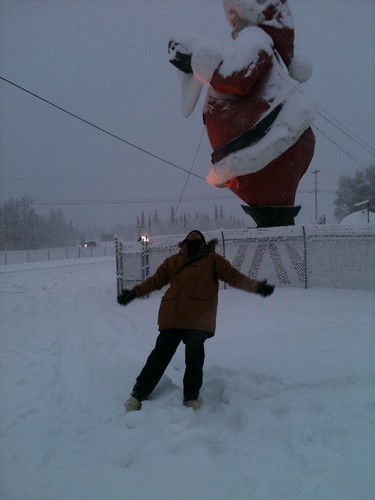
For speaking so much about peace, being at an economic crossroads, and having announced moderation in the use of resources, the government spared nothing on its Bastion 2013 strategic exercise, and the entire country came out to prepare against an illusionary enemy. That is, if we believe what we read in the media; my son experienced it a different way.

A call was made by the University during the normal class schedule, and attendance was guaranteed since not attending amounted to an unexcused absence. Male students in Economy, Finance, Cybernetics, Tourism, and Geography were gathered in the university stadium. Noisy and disorganized, the students gathered in the center of the field into something vaguely resembling formation. In front, a stranger in civilian clothes, tried to bring them to order; for their part, the professors spread among the students tried to do the same.

Before the general disorder with microphone in hand, the stranger in front shouted in a booming voice “Attention!” Failure. Mockery broke out among the students and the man with the microphone had to resort to conciliatory patriotism without much success. However, he did manage a general laugh after haranguing them with his diatribe when he put “At ease!” students who had never been in any other position. Troublemakers in the group yelled at him to shut up and there was spontaneous applause for problems with the sound.

The only moment of silence came during the hymn; an even bigger silence if you keep in mind that the students weren’t singing; a silence broken only by a cell phone that rang twice. Later, a girl read the requisite communication from a Lieutenant Colonel who spoke of compromise, country, the enemy, and such things. The activity ended with the students moving to the theatre of the School of Psychology to see the movie Caravana, Kangamba, or some other bellicose audiovisual presentation. Failure. With attendance now taken, most students found better things to do.

A television camera witnessed what happened at the University stadium: perhaps with good editing of the material, something has come out of these days of victorious exercise to guarantee “our military invulnerability”.

 Translated by: M. Ouellette

25 November 2013

Impartiality / Cuban Law Association

Wilfredo Vallín Almeida

Last month marked the second anniversary of the death of Laura Pollan, spokeswoman for one of Cuba’s most renowned dissident groups, the Ladies in White.

On that day, we gradually learned, many people in different parts of the country were detained, apparently because of official concern about demonstrations commemorating the anniversary.

Some of those detentions lasted for two to three days, as we learned directly from those affected.

Many of these people came to the Law Society seeking help in bringing charges against their captors for the way they had been treated.

In many countries a situation exists that has no place in Cuba: the independence of the judiciary in relation to the other branches of government.

In Cuba the police, both political and regular, belong to the executive branch, in other words to the state power. The Prosecutor’s Office (military or civilian) also belongs to the apparatus of the state (the government). The same applies to the courts.

Bringing a complaint to the Military Prosecutor to be presented before the court against the military that belongs to the same ministry, and that is also subordinate to government authority, does not seem to have much chance of success, especially when it comes to political issues.

The impartiality spoken of in Article 10 of the Universal Declaration of Human Rights, namely:

Everyone is entitled in full equality to a fair and public hearing by an independent and impartial tribunal, in the determination of their rights and obligations and of any criminal charge against them.

It requires, as you can read in the underlined portion, that the court be independent and impartial; in Cuba neither of these two things exist.

We continue to use that proposition in advising those who come to us, but we must lay out the truth, even if we don’t like it.

It is not likely that these allegations will have any result because the ideological obedience of the state institutions does not allow anything else, much less the punishment of its own members for actions “against the class enemy,” that is, those who don’t think like they do.

In a perfect justice system, every citizen should have the right that we are analyzing. But a critical element does not even exist in our national courts: their impartiality.

Translated by: Tomás A.

25 November 2013

I Have Not “Stayed” in the USA… / Orlando Luis Pardo Lazo

Having spent eight months traveling in the US, I’m starting to make Cuban State Security nervous, just as I’m making the island’s dissidents nervous, since the two entities are sometimes so similar that you can barely tell them apart.

Several state police agents went to intimidate my neighbors on the corner of Fonts and Beales in Havana’s Lawton neighborhood, and threatened the friend who took me to José Martí International Airport on March 5. They accused him of illegally loaning me his vehicle, which is untrue. They spread the rumor that I had applied for political asylum in the US and was conspiring against the Cuban government as part of an organization, which is also untrue. They made sure that my 78-year-old mother was shaken up when she realized what was going on, although they didn’t interrogate her this time.

They have also pressured friends of mine on the island who are not linked to pro-democratic social activism, getting them to communicate with me by email and “extract” information on my activities in the US. They forced one of my friends to visit my mother and place a hidden microphone in my house, even though I wasn’t there at the time. They interrogated another friend about my sexual orientation, and practically forced him to testify that I was having clandestine homosexual relationships (under Castroism homophobia is criminal).

I have also received messages from supposed activist colleagues in Cuba, urging me to come back immediately. Apparently there’s no one on the island who can take over my work. One of them even called me from Havana, despite the fact that I’ve never given my cell number to anyone in Cuba. To top it all off, the independent journalist Julio Aleaga went so far as to spread lies about me on a Cuban protest site, suggesting that I was an “economic migrant”: A term with which the Castroist government makes a mockery of the always political nature of Cuban exile.

If my foreign residence permit is valid for two years, why is there such anxiety over my presence here from everyone in Cuba? Forget about OLPL for a little while, I beg you. Then—and only then—will I give you a surprise that the people will never forget. Thank you.

From Sampsonia Way

26 November 2013

Leaving Home Coming Home / Yoani Sanchez

From the New York Times: Turning Points | Identity

Leaving Home Coming Home

By YOANI SÁNCHEZ
Published: November 27, 2013

Organizing one’s address book is always a thankless task. Every year, from my home in Havana, I attack the job of reviewing, page by page, all the names and data that make up my network of personal and professional relationships. Like a tapestry in which I am barely one strand, I review every thread that remains and each thread that was lost. And I find myself facing the alarming evidence of how many people I must subtract.

Read the rest of the article in the New York Times here.

Lezama Lima vs. Moscow / Francis Sanchez

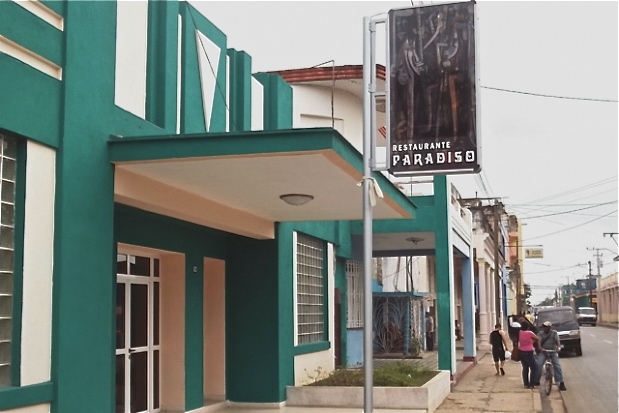
Almost thirty years after the fall of the communist bloc, the Cuban writer José Lezama Lima is still dealing with “Moscow” through the ongoing influence of the Soviet Union, to which he himself fell victim, dying after having been ostracized after the principles of dialectical materialism were brought to bear on him. Though long dead and gone, he still divides opinions in Ciego de Ávila, a town in the country’s interior whose residents never really knew of the obese author, sometimes referred to as “the immobile traveler.” A popular restaurant here, which until not long ago was known as Moscú (Moscow in English), has reopened its doors to the surprise and confusion of many. It is now known as Paradiso.*

The name change can only be attributed to an interest in reducing the complexities of a writer and his work into a tourist plaque. It is a longstanding practice that can be seen in Dublin with James Joyce, and in Cuba and elsewhere with Ernest Hemingway. Curiously, if in the end Lezama seemed more exotic, more odd than “normal” for a sophisticated poet in a Caribbean environment plagued by the cliches of political propoganda, it was because of the social isolation he suffered after the importation of a system marked by the socialist excesses of Soviet five-year plans, utopian visions and repressive methodologies.

We already know what “links” Lezama with the city of the Kremlin. We also know how that city’s infuence spread throughout Cuba, reaching into even the most remote corners and psyches of multiple generations. What is more difficult to understand is how the city of Ciego de Ávila chose to associate itself with the poet it chose to honor, considering he could not stand to spend so much as one provincial night in a room in Santa Clara. Yet at a point very near the Central Highway there is now a state-run restaurant — recently opened, spacious, elegant, full of mirrors — named for his novel, which censors prevented from being released in Cuba when it was first published.

Nothing in the building recalls its “Moscovite” past. Nor is there any evidence that the writer, who looked like a corpulent mollusk, ever lived at 162 Trocadero. It amounts to a simple name change and an announcement that invites any passersby to spend some time on the corner of Maceo Street. “Gallery-restaurant” appears to be the new term for this transformation, a metaphorical acronym for a food-service business, as though the association were not apparent.

Very quickly the debates started, and they were not about the menu possibilities but rather about the settling of scores, which in Cuba historically involves culture, daily life and even geological strata.

In Invasor, a provincial Communist Party newspaper, a reporter mentions the resurrection resulting Lezama’s current popularization, noting that “he was silenced in this country during the bleak period of the cultural five-year plan.” The writer adds enthusiastically, “A name of such reknown as Paradiso will undoubtedly serve as a moral challenge to Cuban culture through gastronomy.”

But in the same publication another columnist laments tossing the corpse of the beloved former superpower out with the trash. “I would not dream of trying to erase the name of the restaurant because… it is the iconic representation of what the Soviet Union was, a state… which held out its hand to feed us.” And though the writer acknowledges Lezama’s right to compensation now that the poet has once again been returned to the national pantheon after having lived like a lost soul for whom no one lit candles, he quietly adds, “it is good that we pay homage to Lezama and his legacy, which we did not always do, but there is no need to get carried away.”

A quarrel over the super-deceased. The sublime fat man and the Soviet superpower. It could be called “The Tragedy of the Century,” except now it is being replayed in a minor key as a municipal farce.

To know the final result means waiting to see how the people of Ciego de Ávila choose to call the establishment from now on, by the old name or the new one. There is nothing to guarantee that invoking the title of a novel destined for perpetuity will prevent a restaurant from succumbing to sudden collapse or gradual neglect, a common characteristic of Cuba’s state-run economy. There is also the challenge of maintaining a satisfactory relationship with the world of Paradiso. Running from the stove and refrigerator to the the tables and counters increases the risk of fatigue.

Some customers may recoil in terror if they are forced to swallow the size of this project along with a bowl of broth. It is enough to make one fear the suggestion by one of the aforementioned journalists: “It might be worthwhile for the restaurant’s workers to at least be familiar with the novel’s plot summary so that they might be able to share this information with those who dine there.”

Diario de Cuba, November 21, 2013

*Translator’s note: The restaurant bears the same name as a 1966 novel by Lezama Lima. The novel figures prominently in the plot of the 1994 movie Strawberry and Chocolate.

Attorneys in Service to Castroism / Ernesto Garcia Diaz

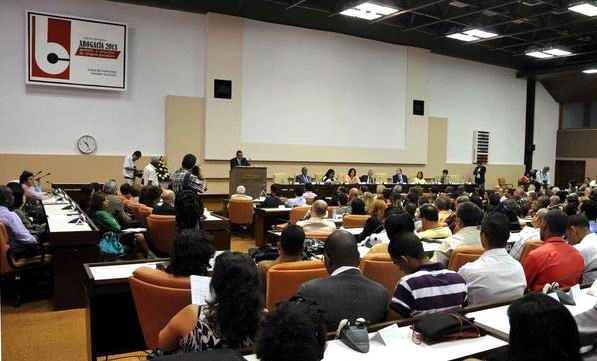
Havana, Cuba, November, www.cubanet.org — Last November 21 the “2013 International Advocacy Congress” concluded in Havana.  The event was sponsored by the National Organization of Collective Law Firms of Cuba (ONBC). At its opening, Homero Acosta, secretary of the State Counsel, was present, and doctors Joao Maria Moureira de Sousa and Hermenegildo Cachimbombo, Attorney General and president of the Order of Attorneys of the Republic of Angola.  According to the official press, the conclave included the participation of 400 Cuban delegates and 17 foreign countries.

In the event, the Attorney General of Angola, holder of a professor’s chair in Law, gave a keynote lecture about “The importance of ethics and professional conduct of lawyers,” noting that “The attorney is considered by some as a defender of the bad and by others as a professional essential to the full development of the State and society. . . He must comport himself ethically, cultivate moral values and principals.”  So it seems that this professional came with the purpose of teaching habits, skills of courage and ethical values that Cuban lawyers have lost in the exercise of trial defense or in the representation of their clients.

Obviously, the Angolan Prosecutor, coming from the emergent third power of the African continent, rich in petroleum, diamonds, gold and other natural resources, was not interested in the binding central theme of “the economic rights of those who lost a family member and the sick or mutilated veterans of the international war of Angola.”

The president of the ONBC, Ariel Mantecon, did likewise. True to the Castro pattern, he said that his organizations focuses “On the Cuban juridical context in considering access to defense as a constitutional right, making possible the immediate presence of this in the criminal process.”  Deceptive words when, precisely this year, and in the month of October, the opposition Cuban Commission on Human Rights and National Reconciliation (CCDHRN), reported about the 909 arbitrary detentions, the highest number in 18 months; and his organization does not make fair use of Habeas Corpus against the Detentions by the Castro Regime.

Even if Advocacy 2013 focused its topics on core aspects of modern societies, this group servile to the Castro regime has done little in the face of complaints that the Inter-American Commission of Human Rights makes which sent letters to the Cuban government in order to have an opinion on this part, in cases that take place constantly and are not responded to by the Cuban communist regime and sometimes even, the answers come in empty envelopes, according to the said Commission, or official answers arrive that far from answering the cases that are exposed to them, they oppose:  “You all do not have authority or any jurisdiction to inquire about the cases for which you solicit us.”

Likewise Rene Gonzales, ex-convict for the crime of espionage against the United States, who took part in the event in order to get to know the attendees as they are “his brothers” and to teach them ethical norms of loyalty to the regime, and not his confrontation over the factual limitation of individual liberties in Cuba.  He should have told them that Cuban ex-agents are treated respectfully and enjoy good health and feeding.  In contrast with those that are prisoners in Cuba for fighting for individual freedoms and respect for human rights. Maybe Rene is not familiar with Cuban fighters like the Ladies in White who are detained and left deprived of resources in areas and towns far from their homes as a new punishment practice of Castros?

In summary, the Congress served to raise funds on which the regime feeds: it strengthened the control structure between the executives and the member lawyers of the guild; just as it ratified the servile role of the ONBC supervised by the Ministry of Justice and watched by the Department of Organization of the Central Committee of the Communist Party, without really being an “autonomous national institution and of social interest.”

By Ernesto Garcia Diaz

Cubanet, November 26, 2013.

Translated by mlk

Warning to Investors (2) / Miriam Celaya

Foreign Investment
Foreign Investment

HAVANA, Cuba, November, 2013, www.cubanet.org.- The present and the immediate future does not look very encouraging for the Cuban government. The socio-political and economic instability in Venezuela after 14 years of populism, the death of the partner leader and the arrival to power in that country of a president of proven ineptitude, signal a dramatic conclusion to the romance between Caracas and Havana. In fact, oil subsidies have declined because of the economic crisis in the South American nation, and collaborative programs with Cuba have also suffered significant cuts.

Castro II has failed at his attempt to implement economic reforms without the slightest change in the political system and without surrendering one iota of power and control. In fact, he has strengthened the ruling military class by granting it extraordinary economic powers, and by placing his most senior, loyally proven members on the forefront of all strategic development sectors.

The regime’s great deficiency, however, is the capital to finance a sustainable dictatorship, so that the ace up the sleeve of the General-President is to once more attract foreign investments. Hence the ZEDM and new legislation to “legalize” the satchels of capitalism in a system that declares itself as Marxist, to have unsuspecting investors feel a mirage of legal safety.

Legality and transparency

But, what kinds of guarantees could investments hold in a country that not only has repeatedly seized property and finances, but whose government also dictates and repeals laws and is, at the same time, partner in the investment, judge, and a piece of the business? Thus, what today is allowed could be eliminated whenever the government decides, according to its own interests and in the interest of international situations, whether or not they are favorable to the regime.

And when it comes to legality and transparency, potential investors should consider that conducting business in Cuba today also implies the violation of relevant international laws that condemn the working conditions of Cuban workers in those companies.

On the other hand, in an authoritarian system, and in the absence of rights for Cubans, investments are not only an important financial risk and a moral commitment to a military dictatorship, but reflect deep contempt toward Cubans and the genuine hope for change of large sectors of Cubans of all shores, who remain excluded from both, participation and the economic benefits of such investments, even though the émigrés capital supports Cuban families and yields permanent revenue to the government’s coffers, a factor that should be considered by foreign entrepreneurs seeking a long and prosperous stay on the Island.

Translated by Norma Whiting
Cubanet, 25 November 2013

Teaching with Humor / Yoani Sanchez

Espabilao, the latest offering from the Quimbumbia team

I had a long discussion with a friend about the genius or lack of same of a certain political personage. He insisted that the power to quote extensive passages of text and to remember dates and the names of historic figures, was evidence of his brilliance. But, I pointed out to him, I’ve never heard him make a joke, nor deliver a well constructed irony. He lacks humor, I concluded, and humor is evidence that a person has a superior intellect. I have always believed that bringing a smile to others is more difficult than generating fanaticism in a multitude. Not only in the case of public figures, but also in education. To teach in a fun way can foster better connections with students. We tend to remember better what we have learned while entertained, versus through weary predictability.

This is the case with the knowledge of computer security that comes to us through the new videogame game Espabilao. Quimbumbia, its group of Cuban developers, has made this incredibly instructive amusement available to the citizens of the Island. It is the story of Pix, a robot, who must protect the personal data that his naive owner, Ale, has left scattered around the Internet. The protagonist’s tasks focus on improving the strength of passwords, detecting, in time, websites that could capture private information, and eliminating navigational hazards. A story told with humor and cleverness, but also with years of knowledge accumulated by internauts, digital activists and cyberspace users. Learning through cunning and seemingly playful challenges, but deriving much needed and serious results.

After coming to know the Quimbumbia project and Espabilao, its latest offering, I now have another element to convince my skeptical friend. “You see,” I will tell him, “sharpness doesn’t have to be so boringly serious, nor does teaching have to make you want to yawn.” Probably he will carry on with his examples of pompous orators and statistics that overwhelm the statisticians. I, however, prefer the approach practiced by Pix… the laughter that accompanies it teaches us and leaves what we learn indelibly etched in our memory. Humor, I continue to believe, is the most complete display of human genius… which is why the mediocre and the authoritarian are so bad at it.

The post Enseñar con humor appeared first on Generación Y – Yoani Sánchez.

26 November 2013

My Dear Lovers, Parents and Grandparents / Orlando Luis Pardo Lazo

Like every self-respecting homeland, ours is a cruel cemetery.  One by one we go diminishing the men and women who marked history, those who really shone in Cuba’s history with an intensely personal light, a history of the heart that hurts and hardly forgets: the intimate history of the soul of what a nation has lived, a whispering and secret dream.  Not that other shouted demagogue, half combative and half mini-populist, that’s even accented with “Revolution” for a mafia-like elite, an amazing alloy of barbaric foundational peasants and last-minute upstart bourgeoisists.

Like every self-respecting totalitarianism, we had strict schedules, which would still be retained throughout the country if not for the fact that socialism had the late decency to kill itself, never to sprout again.  At least not in Cuba.  And one of those schedules involved the dawns of the saddest Sundays in the world, Sundays lost forever on an Island that now only exists in our imagination which fades them out one at a time.  You know, I’m talking about the Silent Comedy, by Armando Calderón.

Never said better, because the Silent Comedy didn’t even remotely match the longevity of Charlot of the 1910s with the First National, the Keystone Comedy Film or the Mutual Film Corporation.  Nor the classics of Buster Keaton, nor much less El Gordo y el Flaco, among other silent geniuses still anonymous in my infantile ignorance which never grew up.  The Silent Comedy we attended, marveling, in that disappeared Cuba, on our soviet TVs with horrendous quality, was a work and a grace of its unique author, a man in suit and tie named Armando Calderón, sometimes with a primitive digital watch puncturing his side.

The “man of 1000 voices” really had many more than a thousand.  His vocal range, of a scarce phonic shade, was incredibly endless.  With his unique bipolar register of damsel in distress or a freed thug, this old man never narrated with the same voice twice in one episode, which he edited almost randomly, manipulating the tapes that were rotting in the archives of a system that had the money to make a soldier babble in heaven, but not to take care of the treasure that is universal patrimony.

To top talent when compared to today, where no Cuban speaker is able to speak a phrase without reading it in an overacting way (the worst example of which would be the simian Serrano hired by NTV), Armando Calderón recorded his madness live, the jeering at merengues and old cars among the neighbors of the Calle de la Paz, the languid art-nouveau girlfriends, the rascals and policemen, all an anachronistic chronicle of that utopia called the United States of America, nothing less than a little despotic country where single-party communism sanctions you forever if “you maintain correspondence with family abroad” and you don’t confess it in every professional or academic interrogation.

Every Sunday, like in the song by Carlos Varela, the sun rose in another city.  A poverty-stricken city like once-ruralized Havana, but where even the sense of film adventure allowed us to breathe.  Our gods, like in another song by the same folk singer, were Charles, Cara de Globo, Soplete, Barrilito and Barrilón, the fat Matasiete, Pellejito, the Conde de la Luz Brillante and the inevitable charleston.

Armando Calderón wasted himself away before our eyes and we didn’t realize it. He howled, rattled tin plates and bottles, blew his harmonica and sometimes only the air of a siren, rattled fences that had collected in some project, shot gang-gang shots, feigned breaths of orgasms before anyone in his pipsqueak audience had had one, clicked his practiced tongue at all kinds of trades of republican capitalism, while his everlasting suit wore itself out and his tie hung like a bad hangman’s noose.

Our Renaissance gentleman who made himself a ringbolt on camera, lacked the British funding for the future series The Storyteller, but nevertheless, in terms of creative motivation, he had nothing to crave.  Still, the most mediocre and repressive of the Cuban cultural institutions, one which, from the beginning, put its antennas in the hands of the Chief Hegemon of our History, gave itself the luxury of sanctioning him more than once, perhaps so he would finally mummify himself and depart to grieve in silence, which this dumb magician was responsible for.

His era had technically ended: color transmission in Cuba was beginning, after a humiliating delay for the #2 nationwide television program in America.  Being dumb teenagers, we could no longer tolerate another second of even the best film photography.

Whether it was the alcoholifan at the bar or cancer in his vocal cords after decades of force, we simply did not realize his metamorphosis.  The owner of our local divine Comedy watered himself down to one of his dead characters throughout almost a century, but life then was eternal for my generation, and the destiny of the early Sunday morning wasn’t important to us, not a shred to his beloved lovers.

Listen to the silence of the bugle.

18 November 2013