Due to the Risk of Collapse, the Cienfuegos Train Station Closes After Investing 5.3 Million Pesos

The cancellation of itineraries and the closure of the terminal have left travelers and employees without options / 14ymedio

14ymedio bigger14ymedio, Julio César Contreras, Cienfuegos, 6 March 2025 — “No entry, danger of collapse,” warned the sign that on February 28 closed the Cienfuegos train terminal indefinitely. For the passengers who arrived at the station and found the doors and windows closed, the notice glued to the wall was an unfortunate surprise. However, Marta, who has worked there for years, believes that the closure is not really news.

The woman clearly remembers when the terminal was closed in 2019, due to serious roof problems. The City Conservator’s Office hired the private design group Redema for the repairs. Three years and 5.3 million pesos later, according to the official press, the terminal reopened its doors, but the result was disappointing.

“When it reopened and the workers returned, I realized that it didn’t have the quality that was so advertised”

“I remember that time very well, because while the repairs lasted I had to look for other work. When they reopened and the workers returned, I realized that it did not have the quality that was so advertised. The roof and plumbing problems continued, to the point that it was now impossible to maintain cleanliness. There was also a lack of implements to ensure the hygiene of the premises,” the worker explains to 14ymedio.

Many people there agree with Marta, some of them cited by the local newspaper, 5 de Septiembre. “Not even two weeks had passed since the work was completed, and leaks were already appearing in the center of the facility when the first downpours arrived,” a resident of the municipality of Palmira told the newspaper.

The repairs initiated in 2019 included replacing the roof tiles, restoring the woodwork, the floors, the platforms, the ticket office and the bathrooms. The benches in the waiting room were also replaced by metal seats. However, “the roof was already falling apart, and from the outside you could see broken tiles, as if absolutely nothing had changed,” says Marta. continue reading

The benches in the waiting room were also replaced by metal seats / 14ymedio

Marta explains that the all-wood construction is now rotten, and the building – founded in 1913 – threatens to collapse at any point. “It is obvious that they didn’t do the work that was needed.”

The 5 de Septiembre report ventures one step further and even asks the authorities to take action on the matter. “The population has no doubt that ’the badly done’ will only get worse, as long as time continues to pass without a committed entity under the tutelage of the UEB Ferrocarriles Cienfuegos getting involved in the matter. There needs to be a decent, definitive epilogue to a heritage building that deserves it, and which currently continues to experience a fatal scheme of hit-and-run repairs.”

Meanwhile, the trains continue to arrive at the closed station, but they are as unstable as the future of the building. “The train bound for Santo Domingo, which originally went six times a week, has been canceling trips due to breakdowns and lack of fuel,” explains the terminal worker.

Another hard blow was suffered by the dozens of people who were traveling in hired vehicles, which were taking travelers on their way to the municipality of Aguada. Many of the travelers had this cheaper way to go from one place to another in Cienfuegos. “The possibility of recovering the train route to Sancti Spíritus had already been lost, and the instability of the vehicle services going to Santa Clara presaged this collapse,” the woman laments.

The cancellation of itineraries, as well as the closure of the terminal, have left travelers without options

The cancellation of itineraries, as well as the closure of the terminal, have left travelers and employees who depended to a lesser or greater extent on the operation of the facility without options. “Obviously, I can’t stay with my arms crossed in my house indefinitely, without earning a centavo, until another new capital repair can be made. The leaders always ask that we develop initiatives to guarantee the maintenance of the premises, but very little can be done when the repair itself is a disaster,” says Marta.

“So right now I am unemployed,” says the woman, who has taken advantage of the moment to give another direction to her life. “The salary of 2,500 pesos was not enough at all, and there is always a risk that with the closure they will fire some of the workers,” she analyzes. The closure, for her, has closed more than one door: “I don’t think I will work for the State again.”

Translated by Regina Anavy

____________

COLLABORATE WITH OUR WORK: The 14ymedio team is committed to practicing serious journalism that reflects Cuba’s reality in all its depth. Thank you for joining us on this long journey. We invite you to continue supporting us by becoming a member of 14ymedio now. Together we can continue transforming journalism in Cuba.

In Its Annual Report, Sherritt Points Out the Risks of Operating in Cuba

  • The Canadian company is losing money, according to expert William Pitt, and he fears an intervention by Gaesa in mining management
  • Blackouts, fuel shortages, natural disasters and the loss of 2,100 workers affect the financial results
Sherritt has bet everything on the expansion of its plant in Moa, Holguín / Sherritt.com

14ymedio bigger14ymedio, Havana, 9 March 2025 — The Canadian company Sherritt International has just corrected an omission by the Cuban authorities, who published a balance sheet in February of the country’s mining activities without disclosing the production data for 2024. Now, thanks to the annual report of the multinational, we know that the extraction of nickel and cobalt was, respectively, 30,331 and 2,206 tons.

Although the figures for 2024 were, on paper, better than those of the previous year – 28,672 tons of nickel and 2,876 tons of cobalt – the company has nothing to celebrate. This was explained to 14ymedio by businessman William Pitt, who knows the ins and outs of the mining giant, which he criticizes, along with its Cuban partner, for not presenting its data “in an adequate and precise way.”

To understand why Sherritt had a terrible year, says Pitt, we must take into account that the volume of metal extracted in Cuba is not necessarily processed in its entirety in the company’s plants in Canada or sold, since “the decrease in global demand” must be taken into account. In addition, profitability has been affected by “the cost of power cuts, hurricanes, sick leave and many other reasons.” continue reading

Despite the fact that the amounts extracted in 2024 were higher, Sherritt received 109.9 million dollars, 29% less than in 2023, Pitt summarizes

Despite the fact that the amounts extracted in 2024 were greater, Sherritt received 109.9 million dollars. Aware of these figures, the Ministry of Energy and Mines admitted only to having gone through “an austerity process that slowed down its growth a little.” However, Sherritt’s report spares no negative comments in the description of its activities on the Island. Damages, natural disasters, lack of fuel and basic supplies… the description shows that the word “austerity” falls short in the face of the outlook.

The Altman scale, an index to measure the “future” of the company this year, rated its expected performance at -2.85. “It’s like saying that Sherritt has great opportunities to go bankrupt in the next two years,” Pitt says.

The future is in Moa, according to the report. Sherritt has bet everything on the expansion of its plant in Holguìn and calculates 25 more years of useful life for the deposits. By the end of 2025, it expects to have extracted between 31,000 and 33,000 tons of nickel and 3,300 of cobalt. The extracted metal is transported to Sherritt refineries in Alberta, Canada, and from there it is sold mainly to countries in Europe and Asia, the company explains.

In Moa, Sherritt aspires to produce mixed hydroxide precipitate, an indispensable compound for the electric car industry, especially in the United States. The constant clashes between the Administration of Donald Trump and the Government of Justin Trudeau, immersed in tariff tension, complicate those hopes.

“Nor will Tesla – the company run by Elon Musk, one of Trump’s favorites – use minerals from Cuba in its batteries,” says Pitt. “In addition, the batteries will not use as much cobalt and nickel as lithium.”

An agreement with the Cobalt Exchange allows Sherritt to exploit Cuban mines as compensation for a million-dollar debt, which in 2023 earned the company more than 2,000 tons. Cuba had to split its delivery in the fourth quarter of 2024: it paid $23.7 million in foreign currency and 223 tons in cobalt.

For once, Pitt says, Sherritt “played the game well”: despite the division, it managed to sell 50 of the tons delivered by Cuba and earned almost a million dollars.

The decrease in the price of cobalt in the international market, on the other hand, has been remarkable

“It is impossible to know why there was that fractionation because neither Sherritt nor Cuba has given information about the case; but the logical thing is to assume that it is because Cuba did not have enough foreign currency to make the full payment,” speculates the businessman. The decrease in the price of cobalt in the international market, on the other hand, has been remarkable since it exceeded $90,000 per ton in 2022. A ton is now quoted at just $24,300, a figure that had not decreased to that level since 2016.

One section of the report assures that the company has thoroughly investigated the accidents that caused the death of two of its workers in Moa in 2023. Since that time, it has implemented new security strategies. The result, they say, is that no incident was recorded last year.

However, Pitt says, the exodus of workers has been unstoppable. Sherritt has lost 2,100 workers in Cuba and has had to employ students “without any mining experience” in the workforce.

Two chapters discuss the risks of operating in Cuba: the exchange rate fluctuations of currencies and the growing inflation. In addition, Sherritt accuses the United States of intensifying the embargo and of having laid the foundations for the current economic crisis.

It admits, however, that the economic ups and downs of the Government, the obstacles to extract foreign currency from Cuba, the incidence of hurricanes and the blackouts – whose end they do not foresee – are factors that will affect the development of its activities in the country, as already happened in 2024. “These are changes that are beyond our control,” the report indicates.

There is another variable in the mining equation on the Island: the intervention of Cuba’s military conglomerate Gaesa, which Pitt sees as imminent. The fact that the Cuban regime is once again in the crosshairs of Washington’s sanctions, with Trump’s entry into the White House, has mainly harmed the hierarchy of the Armed Forces, who have lost the million-dollar business of remittances and are looking for new sources from which to “silently extract” money.

Operating in the shadows, Gaesa has placed sectors of the Cuban economy that were the responsibility of the civil government in military hands

Operating in the shadows, Gaesa has placed sectors of the Cuban economy that were the responsibility of the civil government in military hands. This happened with the Cimex corporation and with Cupet (Union Cuba Petróleo), argues Pitt, in addition to Gaviota, the Almest real estate group, the International Financial Bank and many other agencies.

“Sugar and coffee are no longer important,” Pitt points out. In tobacco – which brought more than 400 million dollars into the state coffers (total sales were 827 million, but half went to the Spanish shareholder of Habanos S.A.) – other powerful partners intervene, who will not easily give up their share. Mining is what remains, concludes the businessman. “And not just any mining, only nickel and cobalt mining, because iron, copper and manganese have failed to establish efficient production.”

“An intervention by Gaesa will cost Sherritt a lot,” says Pitt, “because its shares are already at depressing levels, and they will lose all their attraction even for the most adventurous shareholders.” As for the report of the mining giant, enthusiastic even when describimg a disaster, it is a mere “fairy tale” when there is an unquestionable truth: “Sherritt continues to lose money on the Island.”

Translated by Regina Anavy

____________

COLLABORATE WITH OUR WORK: The 14ymedio team is committed to practicing serious journalism that reflects Cuba’s reality in all its depth. Thank you for joining us on this long journey. We invite you to continue supporting us by becoming a member of 14ymedio now. Together we can continue transforming journalism in Cuba.

In the Hands of Jorge Dalton, ‘Lichi’ Diego Moves Miami

 The filmmaker uses the conversation with his friend as an excuse to create one of the most moving portraits of Havana ever made.

Jorge Dalton and Eliseo Alberto Diego, in a photograph from the director’s personal archive.

14ymedio bigger 14ymedio, Federico Hernandez Aguilar, San Salvador, 8 March 2025 — On February 27th there were tears at Miami Dade College’s Koubek Center. As part of the Cuban film series of the Miami Film Festival, there was a screening of En un rincón del alma [In One Corner of the Soul], a documentary that allows us to recover, in the final stages of his life, the endearing words of the talented writer Eliseo ’Lichi’ Alberto Diego, in the house in Mexico City where he died on 31 July 2011, at the age of 59.

The large audience erupted in applause and moans, victims of the same emotional impact that the film causes wherever it is shown. Why? Because Jorge Dalton, the director, also the son of a great poet, makes the conversation with his friend Lichi a wonderful excuse to create one of the most moving portraits ever made of Havana, that luminous melting pot of ambiguities and wonders, lyricism and contradictions, which make it unique as a city and as a human experience.

The Salvadoran writer Jorge Ávalos, one of the most penetrating art critics in Central America, has written that En un rincón del alma “is constructed as an elegy in two voices: two friends meet and talk about the Cuba they knew and, in doing so, allow us to witness a hard-won wisdom.”

Nothing more and nothing less could be expected from Eliseo Alberto, born in 1951 into a family of artists and writers founded by the prodigious Eliseo Diego (1920-1994), his father, and the discreet editor Bella García-Marruz (1921-2006), Fina’s sister. Both belonging to the Orígenes group, perhaps the best artistic collective of the last century in Cuba, their son Lichi not only kept beautiful memories of his famous family, but also evoked a literary and cultural environment that, apart from ceasing to exist, has never been able to be emulated. continue reading

The friendship between Lichi and Jorge began at that time. Although they were not from the same generation, they quickly became friends.

“My film begins,” says Jorge Dalton, the youngest son of the Salvadoran poet Roque Dalton (1935-1975), “with a sequence shot that exactly reproduces my entrance into that wonderful house and into the world that each of its inhabitants represented. Eliseo, dad, was like an English lord, an extraordinary man with a monumental body of work. Someone for whom I placed two red roses inside his coffin when he died in Mexico. I seem to be seeing him when he said to me: “Speedy González, pour me another whiskey before it’s too late.”

The friendship between Lichi and Jorge began at that time. Although they were not from the same generation, they quickly bonded without any pretentiousness, as they shared a penchant for wandering and easy laughter.

“I even had the privilege,” Dalton says, “of living with him for a while in Mexico, when he lived in an apartment on Pacifico Street in Coyoacán. Despite coming from a refined literary background, Lichi was also a man who loved the streets and good wine; he had a sketchy profile, he loved the night as much as he loved women, just like my father, whom I define as a cat on the roof. Lichi also had a great sense of humor, and was at the same time sad, melancholic, like all lovers, with a heart always on the verge of bursting. I think that all the Diegos suffered from that melancholy, like a dagger ready to kill them. My film colleague, Ernesto Fundora, says that Eliseo Alberto knew how to balance high culture and popular culture very well.”

In December 2009, Jorge Dalton and his wife Susy Caula were on a trip to Mexico and visited Lichi. During the conversation, the novelist asked his friend to film him, as he wanted to make a documentary with the title of one of his famous books: Informe contra mí mismo [Report Against Myself]. Taken by surprise, Jorge, who only had a small home camera with him, asked for time to write a formal proposal. But one thing led to another and on the very last day of that year they spent the whole time recording Lichi, whose anecdotes and reflections make the film come together from beginning to end.

Back in San Salvador, Jorge and Susy received a call from their friend telling them that he was suffering from kidney failure. “Then,” says Dalton, “at the end of 2010 we visited him again and I was shocked to see him so deteriorated. Even so, he wanted to continue talking in front of the camera, aware of his imminent departure from this world. I filmed him a little, but I refused to let him appear in that physical state. A few months later he died. Then Susy convinced me to discard the idea of ​​donating that long conversation with Lichi to a cultural entity and that we should do something with it instead.”

“But I do not rule out,” says Jorge Dalton, “that one day it could be exhibited there, as it should be.”

This is how, in 2016, En un rincón del alma was completed , classified by international critics as one of the most outstanding documentaries made about Cuba in the last half century. At the same time, of course, it is among the 200 Cuban films that are banned on the island.

“But I do not rule out,” says Jorge Dalton, “that one day it may be exhibited there, as it should be. Not only because Eliseo Alberto deserves it, but because Cubans should get to know better this writer who loved his country so much. He has been one of the most beloved people born on the island, a unique being whose tender friendship was one of the best gifts that life has given me. I still have not been able to recover from his loss.”

For now, Lichi Diego and Jorge Dalton have received their ovation in Miami, where many share with them that nostalgia — painful and poetic at the same time — for the fascinating Cuba of bustling and joyful culture, of literary exuberance without boundaries. But the day of reunion will come. The time of embrace will come.

Note: The documentary is available online and, in small format, below.

____________

COLLABORATE WITH OUR WORK: The 14ymedio team is committed to practicing serious journalism that reflects Cuba’s reality in all its depth. Thank you for joining us on this long journey. We invite you to continue supporting us by becoming a member of 14ymedio now. Together we can continue transforming journalism in Cuba.

Artemisa Rolls Out the Red Carpet for Vietnam’s Envoy and Its Investment Projects in Cuba

Hanoi has seven companies in the Mariel free zone and proposes to get involved in agricultural development, fishing and energy

Vietnam has signed several agreements with the Island to invest in rice planting / Granma

14ymedio bigger14ymedio, Havana, 7 March 2025 — It is not clear what Vietnam is looking for on the Island, but the failure of its largest agricultural project, due to Cuban mismanagement, has not slowed down its intention to do business there. Last Thursday, Le Quang Long, the Vietnamese ambassador to Cuba, was received by Artemisa Province authorities. He expressed Vietnam’s desire to participate in Cuba’s development in agriculture, fishing, tourism and renewable energies.

The authorities of the province rolled out “the red carpet” and said they were willing to “receive Vietnamese investors and companies,” said the VietnamPlus newspaper, paraphrasing the governor of the territory Ricardo Concepción Rodríguez.

Vietnam’s intentions, in addition to the usual incursions into cultivations of rice, corn, soybean and aquaculture crops, are also to invest in other more lucrative businesses: mining and the construction of solar parks, which until now has been controlled by China, Cuba’s largest partner.

The Vietnamese ambassador “promised support for cooperation between the Cuban province of Artemisa and Vietnamese localities,” especially the province of Binh Duong, the country’s media highlighted. Likewise, the diplomat urged his country’s companies that are installed in Cuba, such as AgriVMA, Viglacera and the fertilizer producer Anh Kiet, to expand “collaboration and investments in the province of Artemisa.” continue reading

The Vietnamese ambassador “promised support for cooperation between the Cuban province of Artemisa and Vietnamese localities”

In September 2024, the President of Vietnam, To Lam, visited the Mariel Special Development Zone, where seven companies from his country are located. It is the second largest number of companies of a single nation in that free zone, VietnamPlus said at the time, which highlighted the interest of the country in having a presence in the enclave.

In the case of AgriVMA, three months ago an experimental rice planting program began in the municipality of Los Palacios, in Pinar del Río, which this month gave its first results. The harvest of the first 16 hectares, of 1,000 planted with the CT16 grain variety, was valued by VietnamPlus as a sample of “efficient cooperation between Vietnam and Cuba in agriculture.”

Indeed, the plantation had a yield of 7.2 tons of rice per hectare, more than the Vietnamese had predicted. To achieve this, AgriVMA deployed a whole project to support Cuban farmers with training, supplies, fertilizers, pesticides, seeds and agricultural machinery. All this was in order to comply, as the president of the company told the ambassador on a visit to the fields, with the aid agreement signed by both Governments in 2024.

The gain for Hanoi, once again, was not clear, but the project has increased its goals for this coming May. “It is expected that 1,100 hectares of rice grown by the company itself will produce more than 10 tons of grain per hectare in the May harvest, higher than the figure of three tons recorded in most Cuban fields that do not yet have Vietnamese varieties and techniques,” said Vietnam’s media.

“We will carry out an exchange on the techniques applied in the field, and we will provide technical attention to ensure success”

A Vietnamese company, whose name was not disclosed, was also the first foreign entity since 1959 to receive land in usufruct from the Cuban State. It is, initially, the concession of 308 hectares to plant rice on a farm in the south of the province of Pinar del Río, and the official press reported that the experience is unprecedented.

Thanks to AgriVMA, Havana also managed to recover the planting of rice in La Sierpe, in Sancti Spíritus, which had been abandoned after 20 years of disappointments by technicians from Vietnam. The firm arrived in Cuba with an initial investment of 21 million dollars at the beginning of 2023, and – although its business is mainly focused on animal feed and livestock – it expanded to the rice sector.

“We will carry out an exchange on the techniques applied in the field, and we will provide technical attention to ensure success,” said a manager, who assured that the company’s intention is to continue later with the usual seed, planting 15,000 hectares throughout the Island from November, when the cold-weather campaign begins. “This harvest, like the previous one, will be donated to the Cuban homeland,” she added.

This Wednesday, Cambodia presented itself as another partner for Cuba in the matter of rice. Both countries signed a memorandum of understanding for the experiment of planting short-cycle varieties of the grain.

Translated by Regina Anavy

____________

COLLABORATE WITH OUR WORK: The 14ymedio team is committed to practicing serious journalism that reflects Cuba’s reality in all its depth. Thank you for joining us on this long journey. We invite you to continue supporting us by becoming a member of 14ymedio now. Together we can continue transforming journalism in Cuba.

Protected by a Strong Police Presence, the Authorities of Río Cauto, Cuba, Are Trying To Calm Things Down

The PCC reminds residents overwhelmed by blackouts and hunger that “it was the Revolution that gave them electricity”

The residents were surrounded by agents from the Ministry of the Interior and police with batons, as well as plainclothes police officers. / CNC TV Granma

14ymedio bigger14ymedio, Havana, 8 March 2025 — Shortly after hundreds of residents began protesting in Río Cauto in Granma province on Friday, authorities arrived in the town of Guamo to restore order and address what they considered to be mere “dissatisfaction and complaints about real situations that affect everyday life.” The demonstration, which began by calling for the release of a resident – ​​Mayelín Carrasco Álvarez – who was arrested for protesting alone, ended, according to the official press, as an “exchange with the authorities,” protected by a large deployment of uniformed officers.

According to local media , the residents went to the municipal government headquarters to “exchange with the authorities in search of solutions.” The “dialogue” was achieved when the first secretary of the Communist Party in the province, Yudelkis Ortiz, showed up and focused on delays in the delivery of rationed food, non-payment of salaries, problems with water supply, milk sales, transportation and power outages.

“The Revolution is not going to take away anything that it has given you. The Revolution was the one that gave you electricity. What was Río Cauto before the triumph of the Revolution? […] There was hardly anything here. Everything that has been built here is thanks to the Revolution,” the official told the neighbors, who listened to her in silence, according to a video shared by profiles close to the government.

https://www.facebook.com/michelcarlos.santiesteban/videos/946015207521115/?ref=embed_video&t=30

Surrounded by Interior Ministry agents and police with batons – as well as plainclothes security guards – the leader also spoke of the “tireless work of the authorities” and the “intensified blockade” and that was it, with the promise of “to the extent possible, finding solutions,” according to a post on social media by the local channel CNC TV Granma. continue reading

The press, which played down the protest by presenting it as a meeting between concerned civilians and the authorities, did not say a word about the arrest of Carrasco Álvarez last Wednesday, which triggered the demonstration on Friday afternoon. The neighbors began the protest by banging pots and shouting “We want Mayelín!”, a mother of three children who came out to denounce the hunger and state neglect that is experienced in the area.

“Where is the Revolution?” the 47-year-old woman then asked, adding that “there is no Revolution because everything has collapsed,” as seen in a video released by the leader of the Patriotic Union of Cuba, José Daniel Ferrer. Shortly afterward, two men interrupted the protest and forcibly took Carrasco Álvarez away. Since then, her family has reported that she has been incommunicado and that they have not been able to see her.

“Where is the Revolution?” the 47-year-old woman then asked, adding that “there is no Revolution because everything has collapsed.”

Witnesses to the protest shouted “let her go!” “shameless!” “let her speak!” and other phrases of support. Ferrer explained on his social networks that Carrasco Álvarez had also previously publicly protested against hunger.

This Friday, the citizen demonstration also attracted a strong operation. “Recent videos show patrol cars heading to the protest site, with the apparent intention of repressing the peaceful demonstration,” the organization Justicia 11J warned on its X account.

In images posted on social media, police can be seen blocking the way for dozens of people trying to join the protest, while several local residents can be heard saying “Let’s go along the (train) line!”, heading towards the area where the protesters are gathering.

____________

COLLABORATE WITH OUR WORK: The 14ymedio team is committed to practicing serious journalism that reflects Cuba’s reality in all its depth. Thank you for joining us on this long journey. We invite you to continue supporting us by becoming a member of 14ymedio now. Together we can continue transforming journalism in Cuba.

Residents of Río Cauto Take to the Streets To Demand the Release of a Mother Arrested for Denouncing Hunger

“We want Mayelín!” shouted the protesters who also banged on pots and pans for the woman

Residents demanding freedom for Carrasco Álvarez on the streets of Guamo on Friday. / Collage

14ymedio bigger14ymedio, Havana, 7 March 2025 — Hundreds of residents demanded freedom for Mayelín Carrasco Álvarez on Friday in the streets of Guamo, a town in Río Cauto, in Granma province. “We want Mayelín!” shouted the protesters who also banged on pots and pans for the mother of three children who was arrested this week after denouncing the hunger and state neglect that the area is experiencing.

Carrasco Álvarez, 47, climbed onto the platform in Plaza de Río Cauto last Wednesday and shouted her complaints from there. “Where is the Revolution?” she asked, adding that “There is no Revolution because everything has fallen,” according to a video released by the leader of the Patriotic Union of Cuba, José Daniel Ferrer. Shortly afterward, two men interrupted the protest and forcibly took the woman away. Since then, her family has reported that she has been incommunicado and that they have not been able to see her.

Witnesses to the protest shouted “Let her go!” “Shameless!” “Let her speak!” and other phrases of support. Ferrer explained on his social networks that Carrasco Álvarez had also previously publicly protested against hunger.

This Friday, the citizen demonstration also attracted a strong police operation. “Recent videos show patrol cars heading to the protest site, with the apparent intention of repressing the peaceful demonstration,” the organization Justicia 11J warned on its X account. “We call on the international community, human rights organizations and civil society to remain attentive to the situation in Guamo Viejo, Río Cauto.” continue reading

The organization also urged the Cuban regime to respect “the right to peaceful protest and to immediately release Mayelín Carrasco Álvarez, who has been arbitrarily detained for exercising her freedom of expression.”

In another video posted on social media, police are seen blocking the way of dozens of people trying to join the protest. Several uniformed officers line up to prevent them from passing, but several residents of the town are heard saying “Let’s go along the (train) line!” in the direction of the area where the protesters are gathering.

The repression of popular protests has been a constant in Cuba in recent years, especially after the historic Island-wide demonstrations of 11 July 2021. Protests and barricades closing streets and avenues have also been frequent due to the deterioration in the quality of life, long blackouts, social insecurity and inflation.

In March of last year, thousands of people from Santiago took to the streets shouting “electricity and food,” “freedom,” “patria y vida” [homeland and life] and “we are hungry,” after several days of long blackouts and weeks of delays in the distribution of basic food products.

____________

COLLABORATE WITH OUR WORK: The 14ymedio team is committed to practicing serious journalism that reflects Cuba’s reality in all its depth. Thank you for joining us on this long journey. We invite you to continue supporting us by becoming a member of 14ymedio now. Together we can continue transforming journalism in Cuba.

Cuban Communist Party (PCC) Demands Severe Measures Against the Cadres Who ‘Facilitate’ Crime in Las Tunas

The principal authorities of the police, the Communist Party and the provincial government of Las Tunas / Periódico 26

14ymedio bigger14ymedio, Havana, 5 March 2025 –The collusion – by work or omission – of officials and leaders has contributed to the criminal panorama, which has reached an unprecedented “complexity” in Las Tunas, according to the police on Tuesday. The authorities registered 300 crimes last week, mostly “felonies against state entities,” in which several local authorities were involved.

“Policemen are not enough,” was the slogan with which Walter Simón Noris, the first secretary of the Communist Party in Las Tunas, illustrated during a meeting with the provincial government and the police the need for all local leaders to get involved in surveillance and denunciation, especially of multiple “negligent” cadres.

This is well exemplified by the “repeated” robbery of ration stores and state warehouses, especially in the facilities of the Cuban Bread Company in the municipality of Colombia. Noris called for “more energetic measures” against those who allow the theft of resources, such as the administrator of a ration store in Manatí who – according to the police – “facilitated a robbery.”

Las Tunas is not alone. “Officials in analogous administrative jurisdictions are under investigation for similar situations,” she explained. continue reading

The governor of the province, Yelenis Tornet, said she was concerned “about the weak punitive measures” against the leaders

The governor of the province, Yelenis Tornet, said she was concerned “about the weak punitive measures” against the leaders. Some, she reported, ignore their subordinates when they commit a crime and allege “communication problems” to justify being “on the sidelines.”

The theft of cables – which has caused at least one death in Cuba, according to the Unión Eléctrica (UNE) – is “another front that generates attention,” according to the executives. Thieves do not only target UNE facilities, such as transformers or, more recently, photovoltaic parks, but also steal equipment from schools and workplaces.

“An administrative process was opened against a worker at the Las Tunas Psychopedagogical Center for trying to steal funds from the property. Others are being investigated for stealing the generator of the Mártires de Las Tunas pediatric hospital,” Tornet reported.

The communications monopoly Etecsa has also denounced the “vandalism” of its facilities. In 2024, 19 events of this type occurred in the province. “The evildoers have increasingly set their eyes on the basic fixed telephone network that reaches homes,” it says. In addition, other elements are stolen, such as the perimeter fences of their offices.

There is an increase in the consumption of ’el químico’ [the chemical] compared to 2024, the leaders categorically said, without offering data

Drugs – and in particular the omnipresent “chemical” – are “a priority,” and it is no wonder. There is an increase in consumption compared to 2024, the leaders categorically said, without offering data. There is “a diversification of the substances used and an increase in consumption among unemployed young people.”

A report from the beginning of February gives an idea of the situation. Of the more than 500 consultations made last year by Toxicology in the province, 80% were for drug abuse. The most frequent ages were between 13 and 17 years old, although the case of a child who started consumption at only eight years old is known.

The leaders alluded to a “recent operation” carried out on February 26, which ended with the arrest of seven citizens in Peoples’ Council 1 of the main municipality. Cocaine, marijuana and the “chemical” were confiscated from the sellers, and they were transferred to the Investigation Unit in the province, accused of drug trafficking. The investigation is continuing, they warned.

Some 40% of the reported crimes have to do with the livestock sector. Because of hunger, bad practices and the illegal butchers, Las Tunas lost 25,000 cows last year, according to the official press. There are just over 200,000 animals left, and the infrastructure for their care is on the verge of collapse. “At the rate of so many losses, cattle breeding is in danger of disappearing,” the same newspaper admitted at the beginning of February.

The Cuban Prosecutor’s Office has promised “severity” for thieves of all types of goods

The Cuban Prosecutor’s Office has promised “severity” for thieves of all types of goods, given the crisis that Cuba has been experiencing for months. However, the Ministry of the Interior recognizes that it is not able to arrest criminals and asks, according to the official press, that “each organization structure the protection of its resources.” No one knows how this can be done.

On the threshold of the East and traditionally neglected by Havana, Las Tunas has been demanding resources and solutions from the Government for years. Two crises occurred in the province at the beginning of 2024, concerning the water supply and Communal Services, which were aggravated by the national energy debacle and the increase in the number of cattle rustlers in the countryside.

Now, Las Tunas Province, once called the “balcony of the East,” has become a powerful enclave for the sale of “the chemical.” Local leaders, in the words of Periódico 26, have already become accustomed to seeing “glimpses of illegality” in almost any sector.

Translated by Regina Anavy

____________

COLLABORATE WITH OUR WORK: The 14ymedio team is committed to practicing serious journalism that reflects Cuba’s reality in all its depth. Thank you for joining us on this long journey. We invite you to continue supporting us by becoming a member of 14ymedio now. Together we can continue transforming journalism in Cuba.
The Mother of Political Prisoner Sissi Abascal Denounces the Deterioration of Food in Prison

 Authorities prevent Sonia Álvarez, the ’Lady in White’ and wife of Félix Navarro, from visiting her daughter Sayli in prison, because she was wearing white

Sissi Abascal was sentenced to six years in prison after demonstrating with her family in Carlos Rojas, a town in the municipality of Jovellanos, in Matanzas. / Facebook

14ymedio bigger14ymedio, Havana, 6 March 2025 — The situation in Cuban prisons continues to deteriorate. In addition to overcrowding and poor medical coverage, the food ration has been reduced in recent months. “I am very worried about my daughter, she can practically only eat a full plate every 15 days when she has a visitor,” Annia Zamora, mother of the political prisoner Sissi Abascal, told 14ymedio this Wednesday, after visiting her daughter in La Bellotex prison, in Matanzas.

“I found her in good health, but the food situation was very bad. They are not giving them bread for breakfast,” the mother details. “For us relatives it is very difficult to bring anything to the prison because we live in a place where there are very few options to buy, here there it has been more than a week since there has been any bread,” says Zamorra, speaking about the town of Carlos Rojas where they live.

Activist Sayli Navarro is also in La Bellotex prison and, like Abascal, was convicted after demonstrating on 11 July 2021. The daughter of former political prisoner Félix Navarro was sentenced to eight years of deprivation of liberty for attack and public disorder, while Abascal is serving a six-year sentence.

“It’s a little bit of rice that they give them when there is any, the rest is a watery broth. This week they are giving them some tomato jam that Sissi says is very bad, so that you can hardly eat it”

“It’s a little rice that they give them when there is and, the other is a watery broth. This week they are giving them some tomato jam that Sissi says is very bad, so that you can hardly eat it,” Zamora complains. “You can end up with anemia, because what you get from food is not enough to stay healthy.” continue reading

Zamora has no news that either Abascal nor Navarro will benefit from the prisoner releases agreed to between the Cuban regime and the Vatican, a process that resumed last Thursday after being stopped for several weeks. “Nothing is said, no one gives information in prison about that,” she laments.

Last January, the Cuban regime denied, for the fourth time, to both political prisoners the benefits to which they are entitled. Both Abascal and Navarro — who is the daughter of the opponent Félix Navarro who was released from prison last January – were taken to the prison management, where they were informed that their request to “pass to a regime of less severity” was rejected, so they remain under “severe regime.”

This Tuesday, Navarro’s parents travelled from the municipality of Perico to visit her in prison, but the guards prevented the entry of her mother, Sonia Álvarez, Lady in White. “Officer Fernando introduced himself and asked to talk to us on the outskirts of the prison, before allowing the relatives to enter for the visit,” Félix Navarro explained to this newspaper. The uniformed man said he was not going to allow “Sonia, dressed in white” to enter, although she had been able to do so on other occasions.

Only Navarro was able to meet his daughter. “She is very firm and told me that she is focused on the year 2030, because she does not expect her release before that date.” That same afternoon, Navarro, a former prisoner of the Black Spring, went to the Military Prosecutor’s Office of Matanzas to complain about what happened. “There I was attended by Major Bárzaga, whom I know from previous visits to the place. His initial response was that prison officials are the ones who define what is related to the wardrobe.”

Navarro replied to the officer that in the regulation “nothing about the color of the wardrobe appears.” A few minutes later, Bárzaga returned and informed him that the answer to his complaint would be received from the Prosecutor’s Office, after interrogating the officers who had denied Álvarez’s entry into prison.

Translated by Regina Anavy

____________

COLLABORATE WITH OUR WORK: The 14ymedio team is committed to practicing serious journalism that reflects Cuba’s reality in all its depth. Thank you for joining us on this long journey. We invite you to continue supporting us by becoming a member of 14ymedio now. Together we can continue transforming journalism in Cuba.

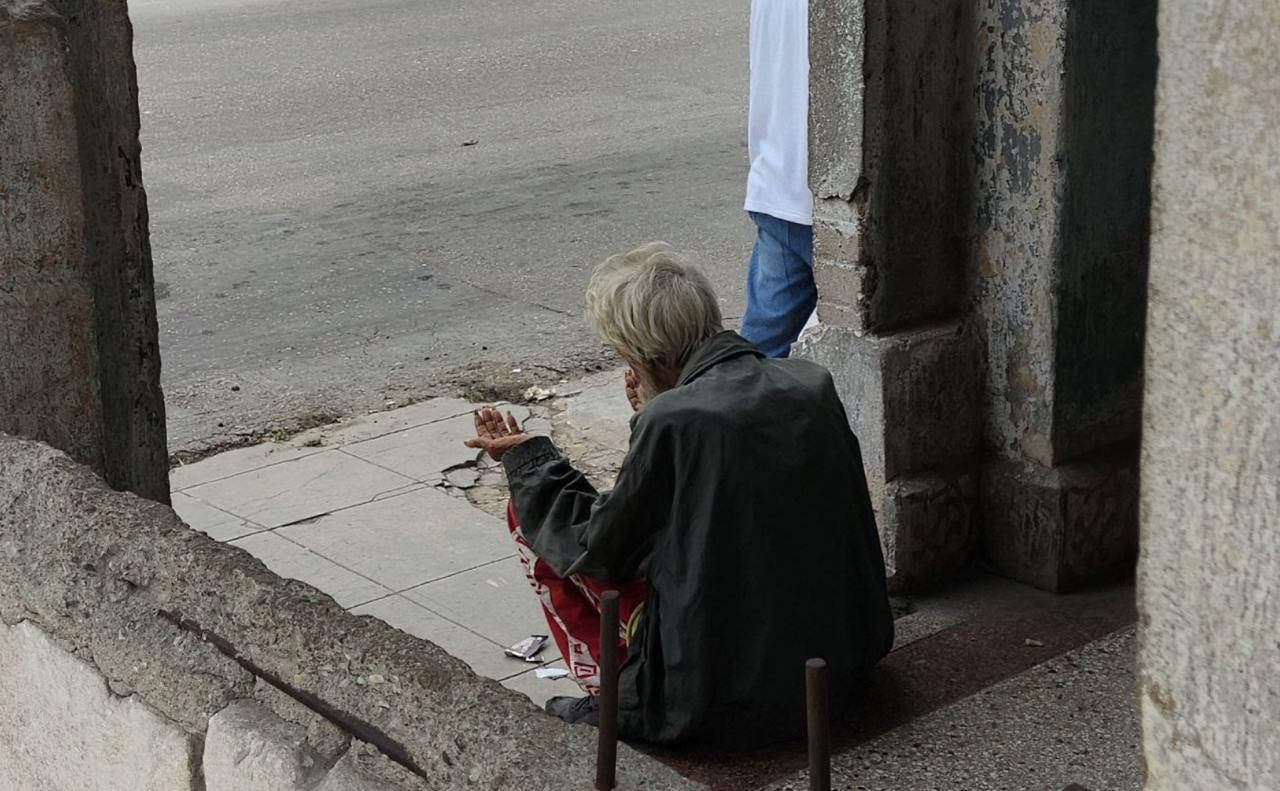
Cuba’s Supreme Court Suggests Solving Begging With Fines and Jail

The Penal Code punishes those who incite others to beg, and the penalty increases if they are children or disabled people.

Image of a homeless man begging for alms in Havana. / 14ymedio

14ymedio bigger14ymedio, Havana, 6 March 2025- A Supreme Court judge laid her cards on the table on Wednesday in an article in the State newspaper Granma, on how the government plans to handle a growing phenomenon in Cuba: begging. Without mincing words, the official defines begging as “harmful behavior,” and asserts, right from the title of the article, that it is a practice that “is not compatible with the Cuban social project” or with the Constitution, and that it must be “eradicated.”

Isabel Acosta Sánchez elaborates on the legal dimension of the phenomenon and, specifically, the penalties for anyone who “induces or uses a person under 18 years of age to engage in begging.” In addition to prison, which is aggravated if the minor has parental responsibility – which would mean up to eight years in prison – Article 404 of the Penal Code provides for a fine of 500 to 1,000 ’shares’, or both sanctions.

If the minor is a girl or a disabled person, and the companion “takes advantage” of such condition, the sentence may increase.

Also prosecuted will be those who promote, organize, incite, recruit and shelter people “using threats, violence, deception or bribery, taking advantage of the victim’s vulnerable situation or gender, with the aim of subduing them.” Those involved can be tried for human trafficking and receive sentences of up to 15 years of imprisonment, which with aggravating circumstances can add up to 30 more years, or become life imprisonment.

Acosta reminds the island’s authorities that there is a Penal Code and a Code for Children and Youth that penalizes with jail and fines those “unscrupulous” people who take advantage of minors and “vulnerable” people to profit from what they collect by begging. continue reading

Until now, begging in Cuba has been a “tolerated activity,” but it is an example of the existence of “inequality” and “poverty” in society.

Until now, begging in Cuba has been a “tolerated activity,” but it is an example of the existence of “inequality” and “poverty” in society, two inconceivable “scourges,” the judge believes, that the country “has strived to eliminate since the triumph of the revolution, creating opportunities for decent work for all.”

The official ignores the situation of those who cannot work and support themselves, and who receive very limited – or in some cases, no – assistance from the Government. Instead, she limits herself to dealing with it from a criminal point of view: “We see the presence, in public places, of people of different ages, even adults accompanied by minors or people with disabilities, asking for money, food and other goods, images we were not used to, practices that violate established legal norms.”

Although Acosta admits that begging involves “all the institutions of the prevention and social care system,” she places the main responsibility for avoiding these cases in the hands of families. Those who do not comply with “the legal obligation to provide food may give rise to the promotion of lawsuits before the Family Section of the competent Municipal People’s Court,” she concludes.

Only if the family is unable to assume this responsibility, or the vulnerable person has no relatives, does the state step in. However, the authorities themselves have acknowledged their inability to cope with the growing number of homeless people.

According to data provided by Cubadebate at the beginning of last year, between 2014 and September 2023, the authorities identified 3,690 people “with wandering behavior.” Of those still residing in state centers, 60% sold their home and do not have the resources to join society, 86% are men, 30% have some disability – including 25% with psychiatric disorders – 31% “have high alcohol consumption patterns” and 39% are under 60 years of age.

Only if the family cannot assume this responsibility, or the vulnerable person has no relatives, does the State intervene.

The figures, devastating in every sense, represent only the “privileged” group that has managed to enter nursing homes and institutions that care for vulnerable people.

“The vulnerable population is growing every day and there are few social workers. And caring for these types of people takes a lot of dedication and time, but social problems are increasing and we can no longer cope. We are simple mediators and we do not have the resources to solve problems,” the directors of one of these centers lamented at the time.

The rest of the homeless, if they are lucky, can occasionally be “picked up” for a bath and some food, as happens in Havana. A report in this newspaper, published in 2023, describes the adventures of a Transmetro bus through the capital picking up the needy, who were not always willing to accept the “ride.”

Those who resisted were forced to board by police officers and taken to the Social Protection Center in El Cotorro, known as Las Guásimas, where they were cleaned and given some second-hand clothes. Afterwards, the beggars, most of them elderly, were returned to the streets of the capital.

____________

COLLABORATE WITH OUR WORK: The 14ymedio team is committed to practicing serious journalism that reflects Cuba’s reality in all its depth. Thank you for joining us on this long journey. We invite you to continue supporting us by becoming a member of 14ymedio now. Together we can continue transforming journalism in Cuba.

Only Four Venezuelan Entities, and No Cuban, Survive Trump’s Cuts

The National Endowment for Democracy turns to court to unfreeze its funds as independent press seeks alternative funding

Damon Wilson, President and CEO of the National Endowment for Democracy / NED

14ymedio bigger14ymedio, Madrid, 6 March 2025 — Of the 95 programs that the International Republican Institute used to support democracy in countries such as Cuba, Venezuela and Nicaragua, only four remain after the Trump Administration canceled subsidies from the United States International Development Agency (USAID). Sources of the newspaper El Nuevo Herald, based in Miami, say that the only survivors were four entities linked to “Venezuelan groups.”

Added to this is the paralysis of another 80 programs of the Institute around the world, which depend on funds that Congress allocates to the National Endowment for Democracy (NED), a bipartisan organization created in 1983 under the Reagan Administration. Specifically, 18 of the programs were operating in Latin America, and the freezing of funds puts them in a state of suspension. The malaise has led the NED to make the decision to resort to the courts to recover, at least, the funds that had already been committed to it.

On Wednesday, “the National Foundation for Democracy filed a lawsuit in the United States District Court against agencies and officials of the Executive Branch for illegally withholding funds allocated by Congress, which are essential to comply with NED’s legal mandate to promote democracy worldwide,” the agency announced in a statement. continue reading

“They have jeopardized its ability to support democratic organizations that resist authoritarian regimes”

According to the text, the Government has “unfairly” denied 167 million dollars that were already allocated and refuses to deliver the 72 million that, additionally, Congress gave it by direct mandate. “These actions have seriously disrupted the NED’s operations, have affected its workforce and have endangered its ability to support democratic organizations that resist authoritarian regimes.”

Peter Roskam, director of the Endowment, says that 83% of its resources are used to “support people who fight for freedom of expression, thought and religion” in authoritarian contexts. “The sudden retention of our funds harms our mission and its indirect benefits for the national interest of the United States. The security, prosperity and global leadership of the United States benefit when the world is freer and more prosperous.”

The text also includes the words of the current president and executive director of the NED, Damon Wilson, who says that the organization has always been on the sidelines of partisan interests and has enjoyed a good relationship with US administrations of both parties. “We are looking forward to solving this problem so that our beneficiaries can continue their essential work of defending fundamental freedoms against authoritarian excesses,” he adds.

The statement insists that the claim is not linked to the decision to suspend funds from USAID, which is part of an Executive Order from Donald Trump, but to the amounts that the legislature approves and which, therefore, cannot be subject to the unilateral decisions of another power of the State.

The statement insists that the claim is not linked to the decision to suspend USAID funds

The NED also claims for the years dedicated to promoting democracy. It makes express mention of Cuba, China and Iran, and includes groups from Hong Kong, the Uyghurs and Tibetans, among other minorities. The claim also argues that NED contributes to improving the lives of people in their respective countries, thereby minimizing forced emigration.

In Florida there is concern, according to El Nuevo Herald, which reports that its source says the State Department indicated to the International Republican Institute, after review, that the contracts “were not aligned” with its priorities and were not “of national interest,” despite the fact that the organization itself is linked to the Republican Party .

In any case, the same thing occurs with the National Democratic Institute, which has 100 similar programs. Only one, also focused on Venezuela, is still active. The Florida newspaper tried to obtain a version directly from the State Department, which did not answer its questions, a disconcerting extreme among the Cuban and Venezuelan exile sectors, which had high hopes placed in Marco Rubio.

Employees of the two institutes affected, the NED and most organizations with programs supported by these funds, have lost their jobs or are still waiting for a favorable resolution of their situations. The independent Cuban press is among these groups, as well as some unofficial associations that supported the rights of prisoners, women and other groups.

Several media, such as Cubanet, Diario de Cuba and El Toque, have started fundraising campaigns among their readers

Several media, such as Cubanet, Diario de Cuba and El Toque, have started fundraising campaigns among their readers. In an interview with Diario de Cuba, the director of Cubanet, Roberto Hechavarría, said that the suspension of those funds is “good news” for the regime. “The regime will take advantage of this to impose and intensify its propaganda within Cuba and towards the Cuban-American community in South Florida,” he said.

His newspaper, the oldest Cuban independent media, created in 1994 and based in Miami, received the notification last week that the US government had canceled a $1.8 million, three-year grant from USAID, which ends this coming September.

This Wednesday, Florida Senator Rick Scott justified the situation in a hearing, pointing out that all the USAID money has not served to end the dictatorial regimes of the continent. “The Castro regime still controls Cuba; Venezuela has just stolen another election, and Ortega is getting stronger in Nicaragua,” he said. His comments echo the opinions expressed by billionaire Elon Musk and taken up by the Trump Administration, which have mocked, among many others, subsidies to “rebuild the ecosystem of the Cuban media.”

The President of the International Republican Institute, Daniel Twining, said – according to El Nuevo Herald – that the situation is extreme, and at least 40 groups in the region have had to close. In addition, he warned that these cuts not only benefit authoritarian regimes but also put at risk those who work in the field and who have been prepared for years to contribute to democracy.

“I will continue to fight to restore these funds that protect dissidents, attack censorship and provide hope”

Another of the newspaper’s sources said that there are still Republicans pushing for the Government to yield and for Congress to approve funds, although they will have to reach agreements with the Democrats for other votes in which they need their support. This conflict comes from the fact that democratic policies promote support for environmental groups, feminists, LGBTI+ and other groups that the new Administration rejects.

Some Republicans and, above all, Democrats, have expressed their annoyance at the blockades to funds that have an impact on programs to promote democracy in Cuba, Venezuela and Nicaragua.

“It is unthinkable that the Republicans of the House of Representatives will stand idly by while Trump destroys decades of investments in Cuban and Venezuelan democracy programs,” said Democratic Congresswoman Debbie Wasserman Schultz.

“I have fought my whole career to promote human rights and hold these brutal regimes accountable. I will continue to fight to restore these funds that protect dissidents, attack censorship and provide hope.”

This Wednesday, the Supreme Court ordered the Government to pay part of the funds withheld to USAID for work already done, although, according to the Herald, it will be a problem to repair what was destroyed, since there are hundreds of canceled contracts and dismissed staff.

Translated by Regina Anavy

____________

COLLABORATE WITH OUR WORK: The 14ymedio team is committed to practicing serious journalism that reflects Cuba’s reality in all its depth. Thank you for joining us on this long journey. We invite you to continue supporting us by becoming a member of 14ymedio now. Together we can continue transforming journalism in Cuba.

The Search Continues for a Minor Swept Away by a Strong Wave on Havana’s Malecon

Divers are preparing to continue this Friday, when the sea is expected to be calmer.

Rescue teams searched unsuccessfully for the body of the minor who disappeared on Thursday. / Municipal Assembly of People’s Power, Central Havana

14ymedio bigger14ymedio, Havana, 7 March 2025 — Rescue teams searched unsuccessfully on Thursday for the body of a teenager who drowned on Havana’s Malecón. The boy, aged around 16, was swimming in the area when he was swept away by strong waves.

“From the moment of the warning, rescue experts entered the water to conduct a broad search from the surface of the sea and inland, but the boy was not found,” the Municipal Assembly of People’s Power of Centro Habana reported on social media.

The situation forced a request for help from other teams, such as the divers of the border guards, but the sea conditions prevented progress, in the face of the strong winds of the cold front that has settled in the west of the islands. The authorities have assured that the search will continue on Friday at dawn.

The Meteorological Institute (Insmet) has predicted a decrease in waves for today, although it will be the afternoon before it calms down. In addition, a sharp drop in temperatures is expected for this morning, with values continue reading

​​between 52 and 57 degrees, which in some places could drop to 50.

“It is not a suitable place for swimming and the weather conditions created violent waves that overflowed the seawall.”

“It is regrettable that such events occur, taking into account that this is a place with restrictions and is not an appropriate place for swimming and the weather conditions created violent waves that overflowed the seawall,” the authorities of Centro Habana stated on their Facebook account, encouraging comments that pointed out the young people’s recklessness.

Social media has been filled with reactions in this regard, highlighting how dangerous it is to swim in the Malecón area, the lack of options for young people to have fun and the recklessness due to this lack of alternatives and lack of awareness of the risk. “It has nothing to do,” says one user, “with the boy swallowed by the sewer” ten days ago.

The death of Jonathan Oliva, the 12-year-old boy who died during the torrential rains of Monday, February 24, is too recent. The minor, who lived in Luyanó, was sucked into a sewer that was presumably uncovered and hidden from view by the accumulations of water that occurred that day. The poor sanitation of the streets of the capital caused countless sewers to collapse, causing flooding almost three feet deep in some places.

On that occasion, divers also had to search for the child in Havana Bay, finding the body about 24 hours after the tragic event.

______________

COLLABORATE WITH OUR WORK: The 14ymedio team is committed to practicing serious journalism that reflects Cuba’s reality in all its depth. Thank you for joining us on this long journey. We invite you to continue supporting us by becoming a member of 14ymedio now. Together we can continue transforming journalism in Cuba.

US To Ban Visas for Foreign Officials Who Facilitate Irregular Migration

The decision extends a 2024 policy implemented by the then Biden administration

File image of migrants in front of the Costa Rican consulate in Managua, Nicaragua. / EFE/Jorge Torres

14ymedio biggerEFE/14ymedio, Washington/Madrid, 5 March 2025 — The Trump administration announced on Wednesday that it will ban visas for officials from other countries who, in its opinion, facilitate irregular migration flows to the United States. “Countries along migration routes must do their part to prevent and deter the transit of aliens seeking to illegally enter the United States,” Secretary of State Marco Rubio said in a statement.

According to the head of US diplomacy, the visa restrictions will apply to foreign government officials, including immigration and customs officials, airport and port authorities and other individuals believed to be responsible for deliberately facilitating illegal immigration.

“These measures will remain in place until these officials assume responsibility for ensuring that policies are established and current laws are enforced to prevent the transit of these individuals,” he said. continue reading

“These measures will remain in place until these officials assume responsibility and the laws in force are applied to prevent the transit of these people.”

Rubio’s decision expands a 2022 policy implemented by the then-Biden administration restricting visas for officials of airlines and other private transportation companies that facilitate the movement of undocumented migrants seeking to reach the United States.

Following that announcement , several airlines that connected Cuba with Nicaragua, such as Air Century, Sky High or Aruba Airlines, suspended their charter flights, but others continued.

Under the measure, for example, visa restrictions were imposed last September on the owners of a European charter flight company for considering that it facilitated irregular migration through Nicaragua. At that time the sanctioned company was not identified, but the only two companies that fit the description were the Romanian Legend Airlines and the German Universal Sky Carrier, involved in previous scandals related to the transport of migrants.

Other companies operating charter flights to Nicaragua were the Dominican companies Sky High Aviation Services and Air Century; Aruba Airlines, with Venezuelan capital; the Egyptian company Alexandria and the Libyan company Ghadames Airlines, linked to Vladimir Putin and whose director was sanctioned in June by the US and later arrested in Libya for promoting illegal migration.

____________

COLLABORATE WITH OUR WORK: The 14ymedio team is committed to practicing serious journalism that reflects Cuba’s reality in all its depth. Thank you for joining us on this long journey. We invite you to continue supporting us by becoming a member of 14ymedio now. Together we can continue transforming journalism in Cuba.

Cubans’ Obsession With Potatoes Takes Over Luyanó Amid Blackout

In Havana it is a major event, while in the countryside “they have it at hand”

The truck that transports them stands between the people in line and the potatoes. / 14ymedio

14ymedio bigger14ymedio, Juan Diego Rodríguez, Havana, 6 March 2025 — Potatoes have just arrived at the rationed markets in Havana and Cubans do not need a town crier to alert them. With bags on their shoulders or carts in hand, the members of the line closed ranks this Thursday in front of the Arango and Lugo grocery store, in the Luyanó neighborhood.

“They will give three pounds a head,” predicts a woman. The comment fuels the excitement of those present, who already see the coveted tuber prepared in all possible ways: fried, but there is no oil; with sauce, but there is no tomato; with meat, but the cows have disappeared; with minced meat, but the Cuban pig is just as elusive.

The eternal dilemma of not having the right ingredients is a realist’s challenge that those waiting in line in Luyanó are not willing to accept – at least for now. “The important thing is to get there,” repeats a gray-haired Havana resident. The line, he explains, distracts him from the blackout that has fallen on Luyanó since morning and the lack of internet, the umpteenth “collateral damage” of the energy crisis.

“There has always been an obsession with potatoes here,” says a housewife, impassive but without leaving her place in the line. “This doesn’t happen in the countryside: of course, they don’t ’swing’ it so much because they have it at hand, but we…” She is not wrong. This week, several provincial newspapers announced the distribution of potatoes in their markets.

In some provinces, the arrival of the potato – right at the beginning of Lent – ​​took on messianic overtones: The State company Acopio distributed 5,000 tons of the tuber in Ciego de Ávila coinciding with the visit of Gerardo Hernández, the former spy for the regime in the US who ended up becoming president of the Committees for the Defense of the Revolution, a synchronicity that Invasor celebrated .

The truck that transports the potatos stands between the line and the object of their desire. Unloading is slow and the message has not yet reached all homes, says one of the customers, for whom the line – which moves from one side of the street to the other, fleeing the sun and dodging cars – is still not very long.

The unloading is slow and the notification has not yet reached all homes. / 14ymedio

For several months now, there has been “potatoes on the street,” a phrase that describes the availability of the product in the informal market. At 350 pesos per pound, a cart driver or street vendor can provide families in Havana with the coveted tuber. “It’s not much, maybe three medium-sized potatoes, or nine small potatoes, but from what you can see on the truck, they’re not very big,” says another woman, already hopeless.

“Potato! The news of the day!” exclaims one of the bodega’s neighbors from the doorway of his house. As if it were the Vatican, until the last sack is shipped, there will be no talk in his neighborhood of anything other than potatoes.

___________

COLLABORATE WITH OUR WORK: The 14ymedio team is committed to practicing serious journalism that reflects Cuba’s reality in all its depth. Thank you for joining us on this long journey. We invite you to continue supporting us by becoming a member of 14ymedio now. Together we can continue transforming journalism in Cuba.
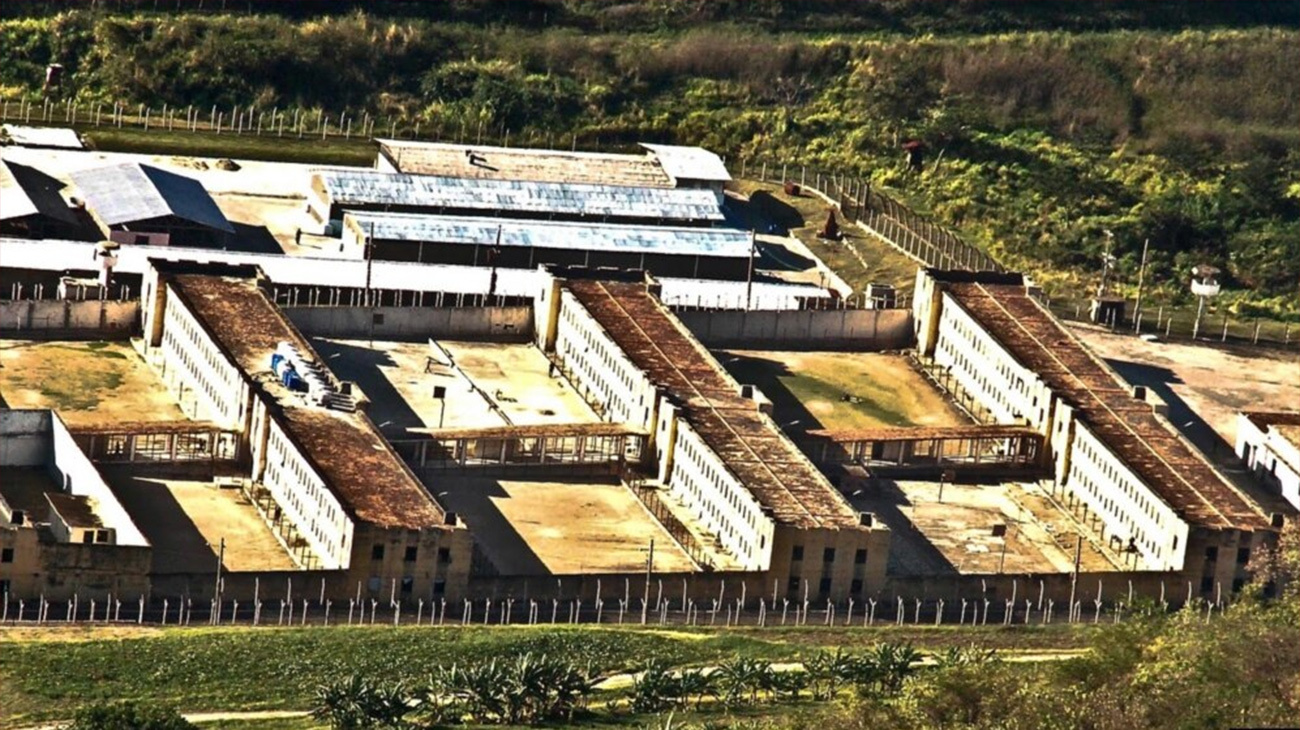
Eight Prisoners Have Died of Hunger and Tuberculosis in Cuba’s Boniato Prison in Two Months

In less than three months, the death of several inmates has been recorded in Cuba’s Boniato prison / Ena Columbié / Gaspar, El Lugareño

14ymedio bigger14ymedio, Havana, 5 March 2025 — The legal organization Cubalex denounced the death of the prisoners Giovanis Ferrer Verdecia, alias El Menor, and Israel Cabrera, in the Boniato prison, in Santiago de Cuba, both of which occurred on Saturday, March 1. With these, there have been eight deaths in the same prison this year alone.

Ferrer Verdecia, 46, who was detained in detachment number 16, died of tuberculosis and kidney failure. According to data provided by Cubalex, the inmate “remained hospitalized for several days before his death and was buried last Sunday morning.” He was originally from the town of Ramón de Guaninao, in the municipality of Palma Soriano.

Cabrera was in Block 2, where inmates with low weight are imprisoned. According to Cubalex, “the exact circumstances of his death are unknown.”

The NGO says that Boniato is a detention center where “abandonment, unhealthiness and lack of medical care continue to claim lives.” One of the reasons for the deaths of prisoners is tuberculosis. This is how Osbety Girón continue reading

Matos, 51, died in mid-February. The inmate was in Block 13, section 4, and he “died after being hospitalized for several days in the prisoners’ ward of the local hospital,” the organization said.

The NGO says that Boniato is a detention center where “abandonment, unhealthiness and lack of medical care continue to claim lives”

The prison authorities have quarantined the block to prevent the spread of the disease among the penal population, with little success.

“The overcrowding, lack of medical care, malnutrition and unsanitary conditions continue to put the lives of prisoners at serious risk and facilitate the spread of deadly diseases,” adds Cubalex.

The Boniato prison has been denounced by relatives of inmates for the alarming conditions in which they are kept, in addition to subjecting them to a regime of maximum severity. “The food is insufficient and inadequate. Currently they receive only rice soup or a burro banana, without regular access to a main course, which is provided to them sporadically,” the NGO stressed.

On February 1, Iraqi Nieto died from malnutrition. He was in Block 2, where the inmates with low weight were kept.

For his part, the lack of food led Giovanis Reyes Ortega to commit suicide. According to Cubalex, the conscript “had been fainting daily for almost a month due to lack of food and medical assistance. His state of extreme malnutrition led him to take his own life.”

Last December, José Daniel Ferrer, leader of the Patriotic Union of Cuba (Unpacu), denounced the bad conditions of the Boniato prison. The opponent was informed by other prisoners of the painful situation of hunger and illness they experienced there. In 2024, 22 deaths were recorded.

Another case in Boniato was that of the inmate Oscar Leiva Caballero, who died on February 1 from a heart attack

Another case in Boniato was that of inmate Oscar Leiva Caballero, who died on February 1 from a heart attack. He was serving a 15-year sentence for a common crime and suffered a first heart attack on January 31. “Other details about the circumstances of his death and whether he received timely medical assistance are unknown,” the NGO said.

The death of Juan Antonio Singüenza Sánchez was announced on March 3. Cuban opposition leader José Daniel Ferrer denounced the horrors experienced by the 56-year-old prisoner in the dungeons. He was released in December in an alarming state of malnutrition and full of scabies from head to toe, reported La Tijera. Days later he died in Santiago de Cuba.

Between January 2022 and January 2024, at least 56 people died under state custody in Cuba, according to data documented by Cubalex. Of these cases, 34 correspond to inmates in prisons, and the main cause of death was the denial of medical care, with 19 cases registered.

Translated by Regina Anavy

____________

COLLABORATE WITH OUR WORK: The 14ymedio team is committed to practicing serious journalism that reflects Cuba’s reality in all its depth. Thank you for joining us on this long journey. We invite you to continue supporting us by becoming a member of 14ymedio now. Together we can continue transforming journalism in Cuba.
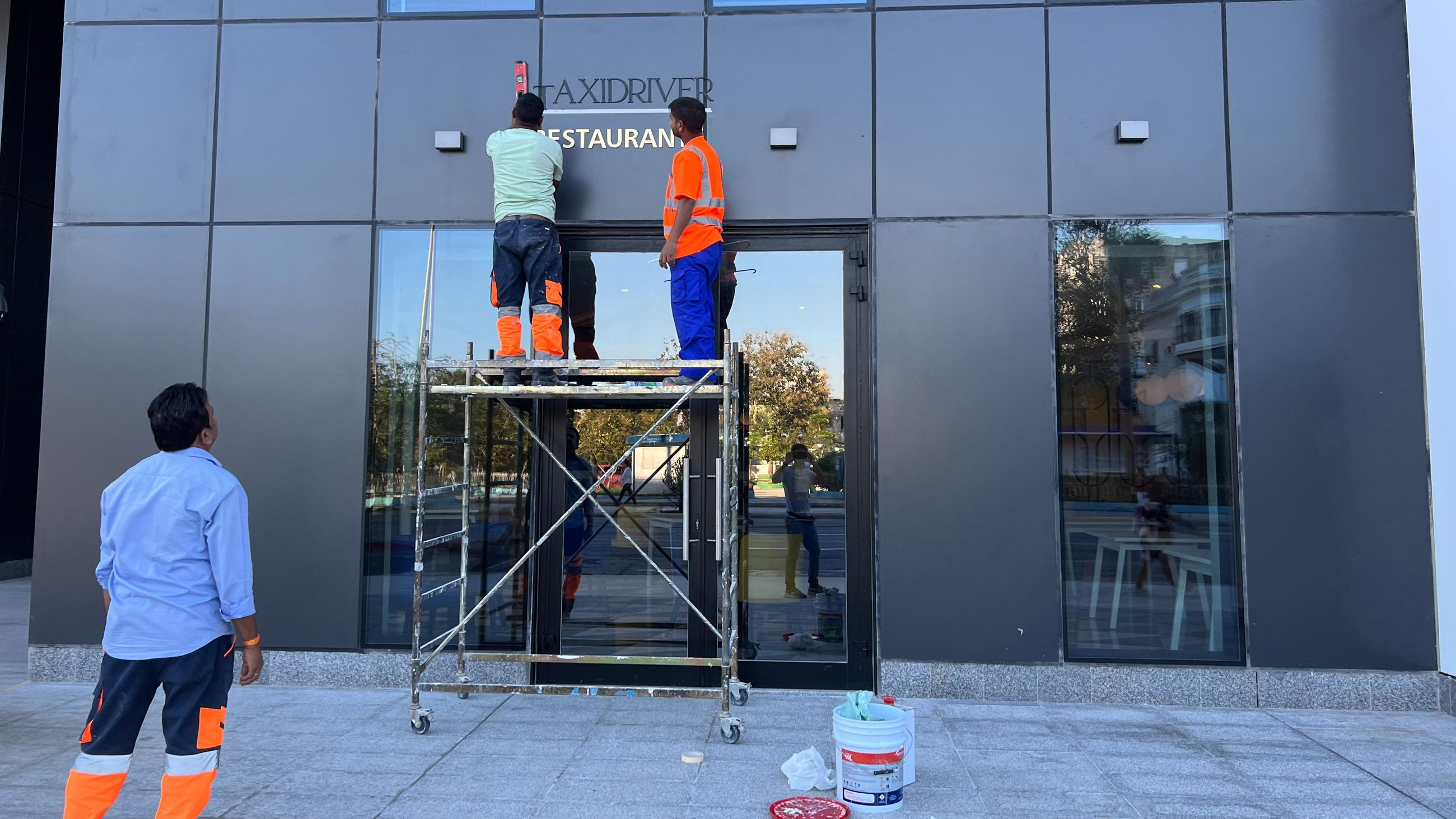
Despite Claims That It Is Open, the Hotel in Havana’s Tower K Is Not Taking Reservations

The few guests who were there, visitors to the Habanos Festival, made their reservations “through discreet channels”

Indian workers putting finishing touches on the building’s facade. /14ymedio

14ymedio bigger14ymedio, José Lassa, Havana, 28 February 2025 — No, Havana’s Iberostar Selection Hotel is not open to the public. The Spanish company which operates the hotel — located on several floors of the controversial Tower K highrise on downtown Havana’s 23rd Street — insisted on Wednesday that it was effectively open for business. Though anyone can walk through its front doors and uniformed staff stand ready to assist guests, its lobbies and hallways, as of today, remain completely empty.

Outside, several Indian workers are still putting finishing touches on the facade. The building’s cafe has also yet to open. “Perhaps this afternoon,” says a security guard vaguely.

When asked about the rooftop amenities, hotel receptionists explain that, “for now, they are only for guests.” Would-be customers, however, cannot make room reservations through the hotel’s web portal.

Customers still cannot make room reservations on the hotel’s website. / 14ymedio

“The reservations we currently have were made by the company itself,” claims an Iberostar source who prefers to remain anonymous, adding that the guests are company executives, sales representatives and other employees of the Spanish hotel chain.

“There are two tables in the lobby with two public relations people, two reception desks and various people milling about,” remarked one curious passerby who had wandered into the hotel to check it out. “They look a bit confused, like they don’t know quite what to do,” he noted upon leaving the premises.

According to the previously mentioned Iberostar source, the personnel assigned to work at this hotel come primarily from the luxurious Manzana Kempinski. “They chose the best people for Tower K but there are others from several old and new hotels. They’ve put a lot of good people in here.”

According to a company source, the personel assigned to work at the hotel come primarily from the luxurious Manzana Kempinski. / 14ymedio

The opening of the new luxury hotel has already been delayed several times. Havanatur initially claimed that it would open on January 15, which did not happen. Days later, the company began taking reservations for February 1 but it was not ready on that date either.

The hotel’s opening now comes at a time when the country’s ongoing energy crisis is getting worse. On any given day, Cuba faces 1,500-megawatt energy shortage, with Tower K being one of the city’s largest consumers of continue reading

electricity.

Tower K has been a focus of controversy since its inception in 2018, when locals began calling it “López-Calleja Tower” after the late head of the military-run business conglomerate GAESA, which owns of the facility through a subsidiary, the Gaviota Group. It has been widely regarded as a waste of resources that an impoverished Cuba can ill afford.

“There are two chairs in the lobby with two public relations people, two reception desks and various people milling about. They look a bit confused, like they don’t know quite what to do.” / 14ymedio

Just as construction began — a time when tourism was at a record low — the project came under criticism from technical specialists. Several architects pointed out the project’s shortcomings,” including its “pompous enormity,” It was also criticized for its use of reflective, insulated glass, which produces glare and generates heat when exposed to the tropical sun. Also criticized was its poor solar orientation, which provided no views to the north, the best direction for a building to face if the goal is to for avoid excessive solar heat gain, which can drastically increase energy and cooling costs in a Caribbean climate.

The most recent controversy stems from a mysterious public works project on Boyeros Avenue which began several weeks ago without any official announcement. This construction activity is moving towards the neighborhood where the new luxury hotel is located. When it was finally reported in state media, it was described as a new water main that would “replace an aging network of pipes that has been plagued by ongoing ruptures and leaks affecting roughly 72,250 residents in the Cerro and Plaza of the Revolution districts.”

Without mentioning the Tower K directly — something that readers did mention in the comments posted below the article — Cubadebate acknowledged the “population increase in the area” on “an already weakened system,” increasing the need for drinking water: “The hotel development planned for the area poses a challenge by further increasing demand.”

____________

COLLABORATE WITH OUR WORK: The 14ymedio team is committed to practicing serious journalism that reflects Cuba’s reality in all its depth. Thank you for joining us on this long journey. We invite you to continue supporting us by becoming a member of 14ymedio now. Together we can continue transforming journalism in Cuba.