Poetry That Does Not Reject Words / Luis Felipe Rojas

I’m fed up with poetry that doesn’t speak, that doesn’t shake you up, that doesn’t give you that punch in the face that we expect from every book. In the end this is the literature of a kind of sado-masochism to which we’ve been accustomed. However, Joaquín Gálvez showed up on December 6 at the regular group at Cafe Demetrio in Coral Gables, with a handful of poems which are a benediction.

I’m talking about the verses woven on Gálvez’s personal blog in his Hábitad (Neo Club Press, 2013) right now. This book is written as though fleeing from the finish line and the applause and it seems to me to be one of the primary resources. “Thief and police: they imprison you, punish you, kill you… / and in the end/ you show them that playing is the only triumph.” The passages flowing with the poetic impulses in Gálvez’s work, cleanse and light the way for those we left behind: perhaps readers. continue reading

I imagine that Hábitad undertakes the difficult course of the empty shelves, the book facing the child with his nose pressed to the glass, but it is fortunate that the time is now. Poetry is a very strong antidote for sentimental and lost souls, those who imagine that cannot live without poetry.

Joaquín Gálvez has thrown himself into the vacuum with this new book, has screamed obscenities in the midst of the concert and that is laudable. To write: “I had enemies because of the light with which I could do good,” is an act of magic in poetry itself. This tightrope of words plays with everything to weave the meaning of his life, of our lives, and is bringing light to everyone, facing the gate where we go to throw stones like on condemned to death. For this he has written his Hábitad.

4 December 2013

New Years in Havana / Ivan Garcia

Fin-de-año-en-La-HabanaThe State brigade arrived in Vibora’s Red Plaza and in no time at all erected a slapdash wood and metal platform. On the nights of December 31 and January 1, a crowd fueled by cheap rum and bad beer will see in 2014 dancing to a Cuban timba orchestra.

The guys who set up the stage, ex-prisoners and amateur carpenters, under the blazing sun, had a good time drinking rum and tossing out rude compliments to the neighborhood women who do their shopping in nearby stores.

“It’s not easy working when almost everyone is celebrating, raising their elbows,” says Yaison, who have serving five years in prison for butchering cows, and not having too many job offers, enrolled in a People’s Power Brigade charged with looking after the equipment for the various political and musical activities. continue reading

In each of the 15 municipalities of the capital will be celebrations to commemorate the 55th anniversary of the Revolution on January 1. Joshua, 16, a student, reviews the cultural scene. He thinks about going to a concert where Buena Fe or Descemer Bueno will perform, his favorite artists.

“The last thing we are celebrating is the anniversary of the Revolution. For young people, talking about Revolution is talking about the past. Something that no longer exists. Today, the reality is a badly managed country, with an economy in the tank, and a ton of young people who want to leave Cuba. I go to these concerts because I have no other options. Going to a good nightclub costs 10 CUC and my parents can’t give it to me,” says Josué.

Raudel, 19, dressed like a reggaetoner, with retro wave glasses and a body-fitting shirt, plays dominoes and drinks Havana Club out of plastic cups with three friends in a doorway in 10 de Octubre Street. Meanwhile, they listen to reggaeton at full volume on a small battery powered radio.

“We’ll greet the New Year with Alexander, El Micha or Los Desiguales, playing in Alamar or Marianao. It’s the only chance we fans with little money have to dance to our reggaeton idols without paying a dime,” says Raudel.

Apart from the economic crisis, the question mark of a future and the high cost of living, the refrain of ordinary Cubans is: bad weather, a good face.

On Carmen Street, a stone’s throw from Red Square in Vibora, thanks to private businesses or remittances from Miami, three families are repairing their homes. Due to the disbursement of hard currency , they will see in the new year modestly with chicharrones, fried plantains, beer, rum or red wine.” I’ve spent 3000 chavitos (CUC ) and I still have covered only half of the arrangements. I have to prioritize the repair of the house,” says Diana.

These days, thousands people search through the city’s farmers markets looking for pork, cassava, tomatoes, lettuce or cabbage, to prepare the traditional dinner: roast pork, white rice, black beans, yucca and salad. And, if all goes well, a couple Spanish nougats.

In 21st century Havana few talk about the Castros’ Revolution. Some, when they do so, it is to criticize the state of things. Daniel, 35, feels that he has no power to change the system so he lives in the present and enjoys whatever he can.

“The Revolution and its leaders are no longer the brilliant heroes they were three decades ago. They’ve faded. We see them as nostalgic old men clinging to power. In the era of the Internet and globalization, we deserve modern leaders. Many of those who celebrate the coming of 2014 in activities organized by the Party, if given the opportunity to emigrate, would do it without a second’s thought, they wouldn’t think twice,” Daniel affirms.

With two and a half million inhabitants, Havana is the heart of the island. In its streets, parks and corners, this New Year, people prefer to talk about telenovelas; the good showing by the Industriales in the  National Baseball Championships; whether Messi will soon rejoin Barca; or if Cristiano Ronaldo or win the Ballon d’Or.

Even the cash-strapped see in the new year with a dinner. This is the case for Renato, an old man beset by ailments who sells plastic bags at the entrance to a bakery.

“We are four friends and we each bring something. Then, on an old Russian radio, we listen to traditional boleros and sons. What we have in common is that our relatives have forgotten about us,” confesses Renato in a weak voice, muffled by the noise of the cars on a filthy Havana street.

Iván García

Photo: Buying pork in a specially authorized booth in Havana. From independent journalist Víctor Manuel Domínguez, for Cubanet.

3 January 2014

A Literature Against the Gallows / Luis Felipe Rojas

Newspaper accounts written by different independent groups of the private sector in Cuba do not supply the images that emerge from the histories, essays and poems produced by the experience of being imprisoned under the Castro dictatorship in the 54 years that it has been in power. From José Martí to Carlos Montenegro; from Pablo de la Torriente Brau to Ernesto Díaz and Huber Matos, there exists a testimonial chain that’s hard to break.

Rafael Saumell provides continuity to Cuba’s imprisonment history and narrates the process in an essay which maps out what it means to be behind bars, inside the moats and the horrors of imprisonment in the island, seen through the eyes of extraordinary authors who wrote about their own personal experiences. From Manzano, Martí, De la Torriente, Montenegro, Díaz…to the present day.

How much of your own experience is there in “La cárcel letrada” (Betania, 2013), how much of your own frayed skin can we find in the book and what did you get out of writing it?

There are several references in the book’s introduction as to how much of me there is in La cárcel letrada.  If you read through those first few pages you will find that the main idea was to intellectualize my experience as a political prisoner within the context of national culture: who preceded me, how they expressed their experiences, what they said and what they denounced. I chose authors and writings that I felt were meaningful, considering that they were representative of different historical eras, several political regimes and varied literary styles.

I did not exclude the common prisoner because I was a witness to it in the prisons of Guanajay and in Combinado del Este. I did not live together with them, but I met a lot of inmates who were part of that sector of the prison system. In that aspect, I followed the examples offered by Carlos Montenegro and Pablo de la Torriente Brau. continue reading

At the same time, I researched, read and analyzed their writings and learned many concepts related to certain literary theories and philosophical principles. I adapted them to the study of each work and author while maintaining a dialogue with my ancestors in slavery and imprisonment.  In this fashion, I tried to carry out a catharsis using the academic essay as a tool and linked the continuity of our political tragedy from the colonial era, the time of the Cuban Republic and the period after 1959.

In addition to being locked up, driven into exile and death, the Castro dictatorship has produced a sub-genre which has been denominated ‘prison literature’. Do you think it will transcend as a style and why?

Prison literature (poetry, story, novel, theater, film, documentary if we refer to Conducta Impropia and Nadie escuchaba, for example), exists although it does not reach the majority of its natural audience (the Cubans who reside in the island) for reasons we all know.  Those of us who write about these matters know we are writing for the future, that is, any fate that our work will meet will be tied to the intensity and the quality of the political changes that may come.

Meanwhile, in the areas of publishing and academia, lectures and conference circles we are part of the “immense minority” as Juan Ramón Jimenez would say.  For that reason, the work we do will continue to amass and gather dust in the bookshelves until its time comes.  I see it as a sort of unearthing, an illumination of shadows, a hullabaloo and the airing of clean and dirty laundry coming out of the closet, every voice free and liberated.

The declassification and the opening of police files, the judicial archives and prison files will be necessary and inevitable.  Moreover, for those events to take place, we first have to uncork the bottle, there has to be a real opening …otherwise the pot and pan will be half covered, only lukewarm. A half truth is a total lie.

What inspires you to keep writing?

What inspires me are: the literary vocation I discovered in my youth; the personal, mental and physiological need that forces me to read a private journal, or sit at a computer in order to thread the ideas that emanate from me; the opinions that I want to share with others; the emotional zeal that I have for literature in general and from which I continue and will continue to learn. I write because I have no other choice but to obey my nature and do what it dictates to me.

Besides, it does not compel me to commit crimes, unless someone ironically says about my work: “he committed a triple crime by writing an essay, a story and a novel.”  Since May 9, 1988 when I left (and I did not abandon) my country, I have all the freedom in the world to write, without fear of censure or fear from a reader who could report and denounce my “counter-revolutionary” writings to the police.

I do not depend on any business or institutional subsidy. I am financially independent and therefore I have earned my intellectual freedom to write what I want and as I see fit.  I am solely responsible for the failures or recognitions of my profession.

What is your connection with Cuba, with Cubans, with the current Cuban literature?

I still have very good contact with Cubans and Cuban literature writers in the four corners of the planet.  I read Tyrians and Trojans alike; I don’t discriminate against authors because they have political beliefs different from mine.  If I took to read only those who agree with my point of view, I would probably only read what I myself wrote and that, of course, is narcissism, egocentricity; it is anti-democratic and unjust, naturally.

I read other Cuban authors because it is my vocation, my duty and because real charity begins at home.  Furthermore, as far as arts and literature, we are at a much higher level and quality of life, we are so much more advanced than the country governed by the “revolutionary government.”

Any advance on what you are cooking up for the future?

As far as any advances, here is what I am planning: a play, a collection of exchange letters and memoires of the entertainment world when I worked as scriptwriter for radio and T.V. programs.  Unless my health fails, I will be very busy with those projects, in addition to the education of my children and grandchildren, the unending nurturing of my relationship with my wife, with my family, with my friends.  Of minor importance is the fact that the economic base for those plans is rooted in my job as Spanish Professor in a Texan university: “I have earned my keep/let there be poetry.”

25 November 2013

Who Can Buy a New Car in Cuba? / Ivan Garcia

coches_cubaWalter had his doubts. He was vacillating between a US-made Willys Jeep from the ’50s, with a Toyoto diesel engine, German air brakes, recently painted and restores, for 32,000 convertible pesos (about $35,000), or wait until January 3, to see if the State would sell the jeep more cheaply.

“I don’t think they’re going to sell a Cherokee or a Hummer, because of the blockade (embargo), but perhaps the government will offer something French- or British-made. I’m thinking perhaps I would like to use it as a taxi. And with the bad state of the roads on the island, I don’t think the modern jeeps can stand up to it like the suspensions of the American cars from the ’40s and ’50s, which are true war tanks,” says Walter.

The official announcement of the marketing of cars by the government still has not led to a substantial lowering of prices in the private market where 95% of the cars sold are used. Aurelio, after showing his 1957 Chevrolet which he maintains like a jewel, says “I won’t sell it for less than 35,000 chavitos (convertible pesos or CUCs).” continue reading

If you check on the capital’s car market, you’ll see that any antique out of Detroit from six decades ago, right now costs between $12,000 and $30,000, depending on how well it’s preserved.

If it’s one like Aurelio, which still has its factory engine and the original upholstery, you’ll have to pay at least $40,000. On on-line sites like Revolico.com, new or second-hand, fluctuate between 25,000 and 50,000 CUC.

In Havana, it’s common for an old car to cost more than a new two-bedroom apartment. The prohibition against selling cars, except those made before 1959, raised the prices in an absurd way.

Between 1970-80, the authorities sold Russian cars at 4,500 pesos, less than 200 CUC in current values. These same Ladas or uncomfortable Moskovich today cost between 10,000 and 15,000, depending on their technical state. Then they couldn’t change hands. Their owners couldn’t sell them. In the case of death, the child or other family member inherited the car, and they could not sell it either.

Of course, in the underground Cuban economy Ladas and Moskoviches were sold and even tractors were sold by the piece. In 2011 the regime understood that so many misguided prohibitions contributed to feeding the exaggerated prices.

And they authorized the sale of cars. But established a bureaucratic hurdle: you could only buy and sell old cars, US- or Russian-made. New and second-hand cars could only be acquired through a letter granted by an official.

Which is what happened. On no few occasions, the letters cost more than the vehicle you were going to buy at a state agency. A colossal web of corruption emerged. To put the brakes on the dance of notes under the table, as of 3 January 2014 the regime will involve itself in the business.

According to the official notice, the government will open agencies at current market prices in Cuba. Daniel, a self-employed worker who wants to buy “an economical little South Korean car, nothing spectacular,” put his hands to his head when a friend tells him that a model that costs no more than $3,000 in the U.S. or Brazil, sells in Havana for 9,000 CUC, almost $10,000.

The pretext of the regime for maintaining inflated prices is that the earnings will be dedicated to buying buses. In 55 years of “revolution,” the country has never had decent but service. It could seem like a good idea to subsidize public transport through the sale of cars.

Suppose the regime will undertake some market research. Perhaps 200,000 Cubans can buy new cars costing between 9,000 and 30,000 CUC. Let us assume that 200,000 citizens can  purchase at an average of 10,000 CUC. That would be a net sale of 2 billion CUC.

Excluding the purchase and freight, the profit would be a billion dollars. With this money we could acquire 10,000 articulated buses at 100,000 dollars each. It would seem to be a magic solution; a handful of people, let’s call them the middle class, would provide the public transport that for 55 years of the Castro regime has always been a disaster.

Will they also allocate money to repair and expand the worn out roads. But we live in an autocracy that answers to no one. And to demand transparency from its institutions is synonymous with “counterrevolution.” So we will never know how they are going to invest the earnings that come from the sale of cars.

Walter was one of the first to tour the places where they are displaying the different car models. When he saw the prices, it was clear: he will by the restored Willys jeep for 32,000 convertible pesos (CUC).

Iván García

Photo: Cubans look in one of the parking lots in Havana turned in to retail auto lots. the cheapest sold the first day was a 1997 BMW at 14,457.60 CUC, and the most expensive, a 2010 Hyundai minibus at 110,000 CUC .

 Official price list

2013 PEUGEOT for sale in convertible pesos (CUC)

  • PEUGEOT EXPERT TEPEE 2013 ………………… 212,940.00
  • PEUGEOT 4008 2013 …………………………………  239,250.00
  • PANEL PEUGEOT PARTNER TEPEE 2013…..  145,612.50
  • PEUGEOT 206+ 2013 ………………………………..     91,113.00
  • PEUGEOT 301 2013 …………………………………..   108,084.00
  • PEUGEOT 301 2013 …………………………………..   109,684.00
  • PEUGEOT 301 2013 …………………………………..   109,699.00
  • PEUGEOT 5008 2013 ……………………………….    232,193.50
  • PEUGEOT 508 2013 …………………………………    263,185.50

Other NEW VEHICLES for sale in convertible pesos (CUC)

  • GEELY CK T/A 2010 …………………….  26,550.00
  • GEELY CK T/M 2009 ……………………. 25,950.00
  • GEELY FC 2009 ……………………………. 37,500.00
  • GEELY MK 2009 …………………………… 30,000.00
  • HYUNDAI ACCENT T/A 2011 ………… 45,000.00
  • HYUNDAI ACCENT T/A 2009-2010.. 37,500.00
  • HYUNDAI ATOS 2009 …………………… 21,450.00
  • HYUNDAI 110 T/A 2009 ……………….  29,250.00
  • HYUNDAI 110 T/A 2009 ……………….  31,500.00
  • HYUNDAI 110 T/M 2009 ………………  25,000.00
  • HYUNDAI 110 T/M 2009 ………………  28,500.00
  • KIA RIO 2011 ……………………………….  42,000.00
  • SEAT ALTEA 2008 ……………………..   45,000.00
  • VW JETTA 2010 ………………………….   51,000.00

USED VEHICLES for sale in convertible pesos (CUC)

  • MICROBUS HYUNDAI TQ12 2009-2010 ……. 110,000.00
  • JEEP HYUNDAI SANTA FE 2009-2010 …….    90,000.00
  • JEEP SUZUKI JIMNY 2008 ……………………..    69,195.00
  • JEEP SUZUKI JIMNY 2008 ……………………..    30,000.00
  • AUDI A4 2000 ………………………………………..    45,000.00
  • BMW SMOD 1997 …………………………………….   14,457.60
  • CITROEN C3 2008 ………………………………….    46,025.10
  • CITROEN SAXO 2003 ……………………………..    26,431.65
  • CHANA-ALSV ALSVANA 2010 ………………….   31,950.00
  • DAIHATSU GRAND MOVE 2000 ……………..    22,000.00
  • FIAT PUNTO 2008 ………………………………….    28,950.00
  • FIAT UNO 2002 ………………………………………    18,000.00
  • GEELY CK 2010 ………………………………………    26,149.95
  • GEELY CK 2010 ………………………………………    26,150.10
  • HYUNDAI ACCENT T/M 2007 …………………    35,000.00
  • HYUNDAI ACCENT T/A 2011 ………………….     45,000.00
  • HYUNDAI ACCENT T/A 2009-2010 ………..     37,500.00
  • HYUNDAI ACCENT T/M 2011 ………………..     45,000.00
  • HYUNDAI ATOS 2007-2009 ………………….      21,450.00
  • HYUNDAI AZERA 2009 ………………………..      75,000.00
  • HYUNDAI GETZ 2009 …………………………..      32,250.00
  • HYUNDAI SONATA 2009-2010 ……………..      60,000.00
  • KIA PICANTO 2011 ………………………………..      38,285.40
  • KIA PICANTO 2011 ……………………………….      40,854.60
  • KIA PICANTO 2011 ……………………………….      41,486.40
  • KIA PICANTO 2011 ……………………………….      37,189.80
  • KIA PICANTO 2011 ……………………………….      37,782.45
  • KIA PICANTO 2011 ……………………………….      35,000.00
  • KIA PICANTO 2008 ………………………………      28,000.00
  • KIA PICANTO 2011 ……………………………….      42,000.00
  • KIA PICANTO 2009 ………………………………      35,000.00
  • MERCEDES BENZ 2006 ……………………….       60,000.00
  • MITSUBISHI LANCER 1997 ………………….       20,000.00
  • PEUGEOT 406 1999 ……………………………..       28,000.00
  • PEUGEOT 106 2003 ……………………………..       16,222.95
  • PEUGEOT 206 2008 ……………………………        85,227.60
  • PEUGEOT 206 2004 ……………………………        30,000.00
  • PEUGEOT 407 2004 ……………………………        30,000.00
  • PEUGEOT PARTNER 2008 …………………        25,600.00
  • RENAULT CLIO 2005 ………………………..         25,000.00
  • RENAULT SM3 2008 ………………………..         46,116.30
  • RENAULT SM3 2008 ………………………..         30,000.00
  • RENAULT SM3 2008 ………………………..         31,500.00
  • RENAULT SM7 2008 ………………………..         90,000.00
  • SEAT ALTEA 2008 …………………………..         45,000.00
  • SEAT CORDOVA 2008 ……………………..         31,500.00
  • TOYOTA COROLA 2006 ……………………         39,224.80
  • TOYOTA YARIS 2003 ……………………….         25,000.00
  • TOYOTA YARIS 2002 ……………………….         25,000.00
  • VW JETTA 2010 ……………………………….         51,000.00
  • VW PASSAT 2008 …………………………….         54,000.00
  • VW PASSAT 2010 …………………………….         67,500.00
  • VW POLO 2007 ……………………………….         25,000.00
  • VW POLO 2007 ……………………………….         25,000.00

4 January 2014

A Common Platform / Fernando Damaso

Photo: Rebeca

The year 2014, complicated for the authorities, is no less so for the peaceful opposition. If the government is forced to deepen, widen and accelerate its reforms, faced with demands from citizens who are worried about the present and tired of waiting for a bright future that never comes and always seems further and further away, the opposition, without trying to achieve unity, must agree on a common platform where at least some of the nation’s immediate interests are addressed in a way that will make possible the passage from the totalitarian regime to democracy.

Among these could be: economic restructuring and, in addition to state ownership, recognizing private property with all its rights and duties, freeing the productive forces, both in the countryside and in the towns and cities; the formation of political parties and organizations that truly represent the variety of Cuban society, rejecting the absurd, obsolete and unnatural concept of a single party; the restoration of all civil liberties, first of all the right of expression, assembly and the press; the dismantling of the repressive apparatus and reduction of armed forces to the minimum necessary for the tasks assigned to them, so that they are no longer a burden to the country; and the revision and adaptation of the judicial system to the new conditions. Although these are not all, they could be used to start, adding to them later, according to how events unfold. continue reading

For this platform, to become a viable project for all Cubans, it must provide for participation in its realization of the peaceful opposition inside and outside the country, as well as that of citizens who have for years served within agencies and government institutions, with honesty, responsibility and professionalism. Solving national problems is a difficult and daunting task and will require the participation of all Cubans who desire the best for Cuba, beyond political and ideological criteria, without any exceptions whatsoever.

Although this will be a complex task, thanks to the too many years of division, on the base of accumulated experiences, it is possible: we just have to take firm steps in this direction.

4 January 2014

Raul Warns of Capitalist Digital Avalanche Targeting Cuban Youth

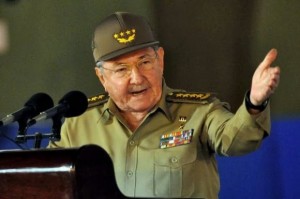
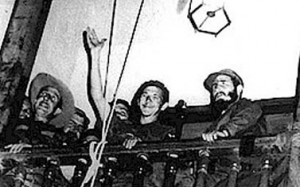
raul-castro-santiago-de-cuba-ain-580x385-300x199In Carlos Manuel de Cespedes Plaza, in Santiago, decorated with giant photos of Fidel age 33, and a young Raul, age 28, the 82-year-old Raul Castro, often tongue tied and clearly grumpy, let out a cry of alarm against the powerful forces “inside and outside” the Island who are trying to undermine the Communist system among young people.

Raul was presented not as the head of the government, but as commander of the Second Front, which fought against the troops of Fulgencio Batista.

Plaza-Santiago-de-Cuba-discurso-de-Raúl-2014In his desperate harangue from the same balcony in Santiago de Cuba from which his brother Fidel proclaimed the Revolution 55 years ago on New Year’s Day, the old former guerrilla warned: “The challenge is greater now.”

On an island where the government tries to control what you read, watch on TV or hear on the radio, the avalanche of digital information distributed from house to house constitutes the most serious threat to the totalitarian regime. continue reading

Raul-Fidel-en-1959-300x187In olive-green, with his commander’s epaulet and its four stars, Cuba’s foreman stressed, “There is an ongoing campaign of subversion” directed at the young. “We see attempts to subtly introduce neoliberal and capitalist ways of thinking, to dismantle socialism in Cuba from within.”

Raul said, “Let there be no mistake, the new ideas are driven by powerful forces inside and outside” of Cuba, and have created “a pessimism with respect to the future.”

Fidel Castro, now 87, has not attended the New Year celebrations since he officially ceded power after undergoing emergency surgery in 2006, and formally handed it over in 2008.

Before three thousand guests, the speakers preceding Raúl focused on praising the gains of the healthcare and educational systems of the island in the 55 years since the Revolution brought down Batista.

The younger Castro recalled that the U.S. attacks against the Cuban government left more than 3,000 dead, and thanked the former Soviet Union for its strong support.

In his speech of about 20 minutes, Raúl received only five rounds of applause, including one when he mentioned his brother Fidel.

From Cubanet
2 January 2014

Speaking of Resolutions / Yoani Sanchez

To climb to the sky… you need a big ladder and a little one. Photo: Silvia Corbelle

Any day is a good day to start a project, to realize a dream. However, at the beginning of each year we repeat the ritual of setting goals for the coming twelve months. Some of them will be met, others will remain unfinished and added to the agenda for the following January. There are those that address personal matters, like having more time for family, playing sports, making that postponed visit to the dentist… but the list can also be tilted toward professional aspirations such as changing jobs, finishing some research, getting a degree in a new subject.

I’ve asked some friends and acquaintances what their desires are for 2014 and the answers are a kaleidoscope of intentions.From “get strong in the neighborhood gym,” “sell the biketaxi to buy a motorcycle,” “fix the roof”… to “finish my university degree,” “reunite the whole family in Miami,” “make a video,” or “open my own snack bar.” Visas to emigrate remain among the commonly shared desires, particularly for young people. To the point that many professional plans are primarily aimed at accumulating resources so as to be able to leave the country. Nearly six years after they were begun, the so-called “Raul reforms” have not managed to significantly improve our individual standard of living or the national economy. continue reading

Personally, after a 2013 that changed my life, my sequence of projects is so diverse as to be impossible to complete in its full scope. I will continue offering courses to teach people how to use the new technologies. This year my dream of an independent digital media will finally see the light, a project that has had me running all over the place the last few weeks. Like all births it will bring rupture, pain, joys and anxieties. In the coming weeks I will publish the schedule for the “birth.” Stay tuned.

In my room there is a mountain of books that I would like to read for the first — or the umpteenth — time. How deluded am I  to believe I will have the free time to do it?! I want to return to the pages of the masterful Kapuscinski, reconnect with Truman Capote, and find some texts of Javier Cercas that are missing in my library. I will continue to devour magazines about apps, gadgets, software… because, I confess, every year I am little geekier.

Friends and readers have an important place in my annual plans. Hopefully I can pamper you a little more, spending time in good conversation with a coffee in front of us. To those who are far away, I only hope that “the gods of technology” will take pity on me and give me greater access to the Internet so that I can answer your emails. But you already know, Olympus is capricious and Zeus does not release the lightning bolt of connectivity.

My house, my little family, my plants and animals, which complicate my life and make it happy, are also among the priorities. I can’t complain, really, because they don’t ask for much and they give me everything. I hope to review with my son his first lessons in philosophy, and to bring Reinaldo to that “dirty piece of sea” we made ours twenty years ago. I will focus on them. Because in times of increasing pressure, they have been the people I love who have helped me to keep smiling.

The center of all my plans is my country. Without it I would have neither home, nor family, nor friends, nor things to write about, not plans to make… nor even a potted yagruma to care for. Although I know that home can be anywhere, mine, I have decided — for good or ill — is located on this Island. I stay, despite so many acquaintances having departed and the continued blocking of the great national potential by an outdated and intolerant power. I stay, also, to help create, through journalism and information, a free, democratic, prosperous and inclusive Cuba.

As you can see, I have in hand the list of resolutions for 2014. I will have to cross some out along the way. Which? I don’t know. But for now I like to think that all of them are possible.

2 January 2013


End-of-Year Matinee and Outing / Rebeca Monzo

My friend emigrated 20 years ago. “She left without saying goodbye,” as the lyrics of a popular song go, but I understood. She was always saying to me, “This country is being swallowed up by laziness.”

Much to my surprise, the telephone rang on the night of the 25th. It was her sister, who said to me, “Guess who I have here that wants to speak with you?” Immediately, her name rolled off my tongue. I was truly shocked.

Yesterday, the 31st of December, we arranged to meet at a private restaurant in Vedado, one of the few open that day. My friend is very absent-minded and left me waiting for over two hours. During that time a terrible, ominous downpour fell from the north, not the one I wanted but from the north nonetheless. Much heat, rain and then a wonderful breeze.

To get to the restaurant, we passed the ruins of what was once the historic and iconic Hotel Trotcha, where Generalissimo Máximo Gómez stayed before settling in the Quinta de los Molinos. There I took photos of my friend and said, “You see, for the price of a ticket to Havana you can feel like you made a stop in Greece to visit ancient ruins.” continue reading

Since the only private restaurant open is charming but very expensive, we had a very frugal lunch. I was careful with my friend’s money; she is not a “millionaire,” as many people from here assume of people from there. All I ordered was an appetizer, a soft drink and an ice cream. She followed my example and did the same.

A longing for the good times led our steps towards the Hotel Riviera. We were both very impressed at its current state. Our excitement did not allow us to see details that we noticed upon leaving: leaks, stains and peeling furniture. There was no one in the lobby or in the cafe. It looked like a beautiful desert, with only a few people enjoying the pool. This hotel is managed by the Cuban company Gran Caribe.

From there we went to the Melía Cohiba. It was then that I told her, “This hotel was built to highlight the architectural beauty of the Riviera.” The Melía was busy and cheerful. All the fountains in the lobby were busy, a good number of tourists were coming and going, and a huge Christmas tree was there to welcome you. The differences were striking, a result of good maintenance. It is managed by the Spanish hotel chain, which keeps it in top condition.

We continued our walk to Linea Street so my friend could catch a cab, a very difficult task since all the “tarecones” from Playa are usually full. Finally, one stopped.

“I will take you but you have to give me a ’fula’ (normally ten pesos),” the driver said.

“O.K.” she said and we took our leave, giving each other one last hug. I crossed the busy and crowded street, and managed to catch the #27 bus (it almost never passes by), which was practically empty. I arrived home with my feet aching but happy to have had this strange but wonderful matinée and end-of-year outing.

1 January 2014

I Will Continue Fighting Until the Dictatorship Leaves Power / Angel Santiesteban

Position of Principle

I have learned that some people outside the country who are interested in the details of my ordeal in prison had the misconception that I had agreed to perform the forced labor that other prisoners are required to do.

I want to clarify that since my arrival in this place [Lawton Prison Settlement] last August 2nd (those sentenced to less than five years are not to be held in maximum-security prisons, according to the Penal Code), I stated that I would not cooperate with “re-education” because I believe that until you commit a crime you should not be imprisoned, nor, for the same reason, re-educated. After the first pressures to give in (they tried to convince me by saying that if I worked I would get a pass every month, and if I didn’t, every two months, an option that I accepted immediately) they never brought the subject up again.

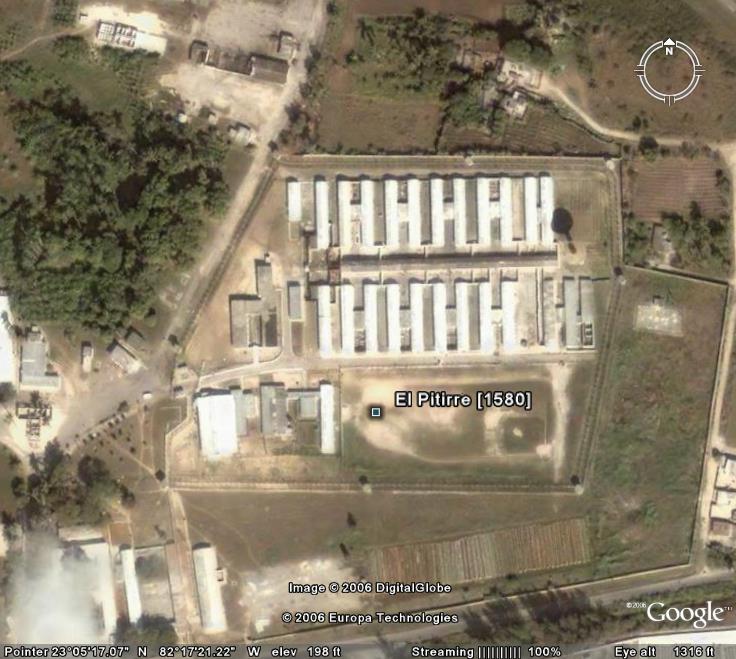
Keep in mind that my transfer to a maximum-security prison on April 9 was because I refused to report to a hospital for a hastily arranged “health check,” knowing that the real goal was to hide me from the committee of foreign journalists who would visit several prisons that day, including “La Lima,” the place where I was incarcerated. This refusal led to my placement into “1580,” a prison created for violating their rules, a place where they do all the dirty work of Havana province. There they informed me that I would be secluded for six months. continue reading

“Twenty days before the UN visit, a Cuban dissident disappeared”
Angel Santiesteban was transferred unexpectedly from his prison and his whereabouts are unknown. At the same time, Castro’s government opened several Havana prisons to the international press, as a prelude to the arrival of the human rights commission on May 1.”

I also want to point out that since I entered prison on February 28 I have not eaten food provided by the prisons, nor have I agreed to wear inmate clothing, nor accept the toiletries or the boots that they sometimes hand out. Perhaps the constant fatigue that I suffered in “1580″ was reported to the prison authorities and they decided to remove me after four months, two months before the completion of the six months punishment to which I had been sentenced.

El Pitirre Prison [“1580”]

In those four months I had two meals a day: at noon I breakfasted on milk and crackers, and that also passed for lunch; at six p.m. I made a soup from packets imported from China, which are sold in the national chain stores, so I lost forty pounds and my taste for food has disappeared.

I suppose that the move here was an attempt to keep me from being an eyewitness to the daily abuses and violations committed in those other prisons, which allowed me to maintain a very high level of denunciation in my blog The Children Nobody Wanted. Two months ago, at this prison, an officer tried to turn off the TV so I couldn’t hear the news, resulting in a direct confrontation. A few days later the re-educator told the prisoners, behind my back, that he was going to “put me in a box” because, he said, I was not a political prisoner. Two days later the chief of CETEM came, wanting to make a deal and threatening to cut off my benefits.

[photo caption] “Eduardito saying goodbye to his father Ángel in the patrol car when he was transferred to Grande Valle Prison on February 28, 2013. Kenia Rodriguez [Ángel’s ex-wife] had testified that her son was terrified of his father because of the beatings he had inflicted on him.”

I want to re-affirm my patriotic desire and need to be a prisoner rather than leaving the country. I rejected the opportunity to leave the island and reach the streets of Miami, which was offered before my incarceration, because I did not want to feel like a fugitive, fleeing the terrible persecution to show my opposition to totalitarianism. And I will keep on fighting until the dictatorship leaves power and allows participatory democracy to guide the paths of the nation.

Ángel Santiesteban-Prats

Lawton Settlement Prison. December 2013

 Translated by Tomás A.

2 January 2014

Detentions and Beatings for Dissidents in Guantanamo / Luis Felipe Rojas

Last December 24, as a reverse Christmas gift, officials of the National Revolutionary Police (PNR) arrested human rights activists Yordis Garcia Fournier (Youth Movement for Democracy) and Yobel Sevila Martinez (Eastern Democratic Alliance – ADO) in the city of Guantanamo.

They told reporters from Palenque Vision that they there were brutally beaten and harassed in the presence of a high official of the so-called State Security.  I personally know Yordis as well as Yobel, I know of their humility and bravery, of the commitment they have to Cuban freedom.  In the case of Garcia Fournier, he finished a one-year and some months sentence for a supposed “insult” to authorities in 2008.  Sevila Martinez, like several members of the ADO, has an enormous string of arrests and beatings, ordered precisely by those who say “take care of the public order.”

Translated by mlk.

Note: this video is in Spanish:

27 December 2013

On the Bad Death of a Good Man / Orlando Luis Pardo Lazo

PLASTIC TEARS

Orlando Luis Pardo Lazo

In the Boniato jail, in Santiago de Cuba, a physically impaired man, a common prisoner (for me no prisoner is common), Norge Cervantes, blind, said in farewell to Antonio Villarreal, one of the 75 prisoners of the Black Spring with which Fidel Castro reacted to the Varela Project:  ”The tears that run down my cheeks are from the heart, because I have plastic eyes.”

Antonio Villareal was found dead in Miami last Saturday December 28.  Day of the Innocents, may this noble child of sixty-something years who was tortured to the hilt in Cuba rest in peace. Even losing control in stages over his more basic reflexes, like controlling his urination. And his tears. He spoke with many crying inside and out of Cuba by telephone or on camera, but his olive green tormentors never managed to break him. That is why they savaged him.

Of course, nothing like that will happen to us. We are healthy and in control. We triumph, as Miami already triumphed and very soon Havana will triumph. Miami, a city largely shaped from Havana, in order to complete its historic role that after 2014 will rush to it: saving the Castro Revolution, managing a future enterprise for its militarized white collar mafioso. Putinism unaided. continue reading

There is nothing that the Cuban government does that is not marked by death (hence its true power in perpetuity). The liberation of the 75, for example, already drags with it with several deaths, including that of Laura Pollan, who would still be with us if those “liberations” had not occurred, because she alone knew how to defend herself much better from the assassin plot that took her life from behind and cremated her in order to leave no evidence.

Cardinal Jaime Ortega is architect of all these forced deportations and complicit in the string of crimes to which he in person is giving the consummatum est.  The Castros just supply the labor.

It is speculated that it was a suicide and soon the press will pardon him because Antonio Villareal had “mental problems” or “was sick in his nerves.”  Killing oneself is not a symptom of mental illness, but of spiritual strength: It is a blow to the arrogance of God or the senselessness of Nothingness. If he killed himself, it is because Miami deserved it. But, in any case, there exists not the least evidence that it was a suicide. Menaced or sick, what is a fact is that we Cubans had abandoned him, even from Havana.

We Cubans are all like that blind prisoner, but in reverse. Our tears are plastic, like the eyes with which we look without seeing.

Translated by mlk.
Note: The following video is in Spanish.

30 December 2013

Letter of Damages 2014 / Orlando Luis Pardo Lazo

What if the light or freedom doesn’t reach us in time.

What it Evil prevails over our bodies and our exhausted demand for freedom.

What if Fidel and Raul Castro don’t die, as they threaten.

What if the surname Castro remains a cruel scar after Raul and Fidel.

What if Cuba falls into the hands of or never emerges from the Latin American debacle.

What if the United States doesn’t remember our nation any more.

What if free Europe never stops betraying us.

What if the truth is too true.

What if it’s too late to revive the broken soul of our people.

What if the Cuban exile never returns, as it already never returned.

What if even more violence lies ahead for us.

What if death, always death, looks us in the eye and undermines the love that remains in our heart.

What if memory degrades our will to love.

What if we are not.

What if we weren’t.

Cuba, nobody would have love you more than you and me.

31 December 2013

December Tells Me / Orlando Luis Pardo Lazo

December starts in New York.

The people don’t notice it, because they are not Cubans. But December is the month of death and of hope. The end of a year. We are still here. Another year begins. We don’t know if it will be our final date. Beauty and liberty surround us leaving us no alternative to sadness. We miss some love.

That’s Manhattan. The place where with each new life we miss the same old love. Although people don’t notice, because they aren’t Cubans, and December just appears to be another excellent commercial opportunity.

My name is Orlando Luis. I was born on the 10th of this month in 1971. I will turn 42 outside Cuba. Pardon the ambivalence. Maybe outside of Cuba I will turn 42. Perhaps it has been 42 years since my homeland deported me.

Whatever the statistics of the Revolutionary State say and their comparisons with other emigrants, there is not one Cuban outside of Cuba who has not been deported. The dreams demonstrate it, although they are not enough to take the Castro brothers to an international court. continue reading

Those recurrent nightmares of exile bring us together around the evil axis of what Castroism has meant for our bodies. We know that the Cuban people is a fascist invention from before independence. But our bodies suddenly collimated by the same sovereign dreams still permit us to recognise ourselves as a nation.

We are Cubans because we dream the same terror, because our land terrifies us so that nobody who is really Cuban really wants to return.

We are Cubans because our heads sway in communion during the mornings of sweat, tremors, sleepwalking, funny faces, halitosis, frog in the throat, pills, snoring, apnea, and awakening with tears, while we imagine we are in Havana, but what perversely persists outside is now New York.

December in Manhattan is the most desolate and uncomfortable season of the year.

We remember, also, our cadavers abandoned with the prosaic haste of the party. Well, I have bad news recently arrived from our island: in the Cuban cemeteries there is a dismal sacrilegious fraud going on. Many bones have been looted by the negruno pantheon. Others have been captured by the political police to osteoporosisize the history of their crimes and, in passing, to sabotage any future homage to their victims. Still others are in the hands of apprentice doctors and also artisans working for CUC (Cuban convertible currency) making tortoiseshell jewellery.

The rest is a mixing up of common graves with family ones. Neither Martí nor Ché nor any of the remnants of our despotic heritage are what it says on the label. The marble tells lies. Neither grandmother nor aunt nor your love are waiting for you there. Cuban cemeteries are a puzzle which our own flight has left without a code to decipher.

I repeat it but not without pain: it’s very late already, we won’t go back there where no-one is left.

The diffused December nation waits for the first snows and celebrations summing up the year. The Cubitas diaspora thickens little by little, according to the Cuban exile it disappeared. We are a will-o-the-wisp, juggling lights, an optical error of refraction.

We breathe. We swallow the free air of New York. We recognise ourselves as strange beings in front of the shop windows of almost mournful luxury. To be the phantom mannequins on this side. Not mixing with anything, because we will always be with one half of our soul on each side of the glass, violently Cuban shadows whose memory is fragile but very well fermented. We are not simply at the moment, but we are indeed half New York and half Havana.

I put up my coat collar. Stick my hands in my pockets. I look like someone out of a crime thriller, half way between private detective and serial killer. I cough. The New York cough of Cubans without a Cuba is also a lingering symptom. We cough out of sheer stubbornness. We worry about our lungs, about the rheumatic rhythm of our breathing, but in practice we hardly ever get ill unless it’s to die.

By then, by the time we suffer a New York December, we will be destroyed, consumed.  People will not notice, because they will not be Cubans. But December will again be the month of the death of hope. Another year which will not have put an end to everything. Still we will not be so many here. Another year which never stops starting, since no date would be able to finish us off.

The sadness which surrounds us makes us free and beautiful with that brilliance which is wonderful and has no alternative, implying complete truth. We do of course miss some love.

 Translated by GH

2 December 2013

A Very Bad Bet / Fernando Damaso

During 2013, despite delivering appeasing speeches in international forums, primarily for foreign consumption, Cuban authorities maintained and increased the repression against peaceful opponents, in most cases culminating with the use of physical violence by their agents and employees.

All indications are that this will continue and possibly worsen in 2014. Those who exercise absolute power for too long consider themselves above the law, and act according to their personal interests and not in the national interest. So they denigrate and persecute those who do not share their views and have the courage to speak out. They organize rowdy concerts in front of opponents’ homes. They use school children, without their parents’ permission, for acts of repudiation where profanity and physical attacks are common. Law enforcement officers, rather than maintaining order, act as henchmen (in one case an official photographer, caught up in the surrounding frenzy, began kicking a dissenter). In the same way they insult and assault the Ladies in White. In the provinces the situation is even worse, where they exploit the information isolation that exists there, where everything remains between the Party, the People’s Power, and State Security.

The authorities, making a mistake once again, have made a very bad bet, choosing the worst way to try to quell the increasing rebellion of responsible Cubans who have lost their fear. What this does is unite them in opposition. If they would listen to the clamor of the people who, disgusted by ineffective political clashes, demand real solutions to their problems without so many absurd delays, and would hear the different opinions of those who just want the best for Cuba, all could be improved in a civilized and participatory environment.

But as they perpetuate the dogmas and the orthodoxy, and continue defending at all costs the failed ideas that have brought us only pain and misery, they conspire against the peaceful settlement of the profound national crisis.

Translated by Tomás A.

31 December 2013

Cuba, Dignified (?!), Custodian of UN Human Rights Teaches Its Citizens The Art (?!) Of Repression / Angel Santiesteban


The Cuban musicians who sell their soul to the dictatorship

What was always everyday, the times of freedom reject. This happens in the country’s culture. A great share of Cuban artists have always allowed themselves to be used for political purposes. They never asked why or for what. They only agreed to hold their concerts, regardless what the real purpose of the alleged cultural activity would be.

Until the 90s or so, when they were interviewed (it also happened with athletes), they made clear their support for and gratefulness “to the Revolution,” but above all “to the Maximum Leader Fidel Castro.” The discourse of the creators was changing, and they no longer expressed such recognition, and dedicated their achievements to “the Cuban people and my family.”

The money they earned in the international market, which until then it was heresy to save it, even in a bank account abroad, they failed to surrender to government coffers, not to say, to confiscate, as they did with every right they seized. Then cynicism made its way into cultural society: it began to take on one side and the other no matter where it came from. The important thing was to survive. continue reading

Despite the freedoms, today they continue to exercise their artistic functions in the same way. They do not mind being used and programmed in the discredited “anti-imperialist Plaza,” “Plaza of the Revolution”, and whatever political act they perform in. The important thing is to be on the official list and are allowed to exercise their art, keep their savings earned on their trips and buy luxury cars (the blackmail of the famous letters (the permission to buy cars) signed by the Ministry of Culture).

On 10 December, the world’s day of celebrating Human Rights, in this case the group Arnaldo y su Talisman, was summoned to a podium in front of the house of the dissident Antonio Rodiles, where an International Meeting on culture and free opinions was going to take place where they would exchange experiences in the totalitarian system. The great horror was the use of Young Pioneers, children who witnessed the repression exercised by the regime’s henchmen.

I think that after the many reasons for the musicians to refuse, this use of children was a strong motive to refuse to be used as the court jester. We know that the artist, having been turned into a small business owner, who has opened private restaurants, and like the popular phrase says, “without the rope, you won’t enjoy the pleasures.”

The truth is that now, with good reason, the invitation to take place these days is questioned on American soil. You can not be part of the oppression and sit down to eat with the opposition. This cynicism as a national sport is intolerable. Honestly, it’s better to play music for the family or starve to death, than to be, in addition to being false, a lapdog for the dictatorship.

Ángel Santiesteban-Prats

Lawton Prison settlement. December 2013

Translated by: Shane J. Cassidy

26 December 2013