Havana’s foreign policy toward the Middle East does not save the life of a single Palestinian, but it impoverishes and isolates millions of Cubans.
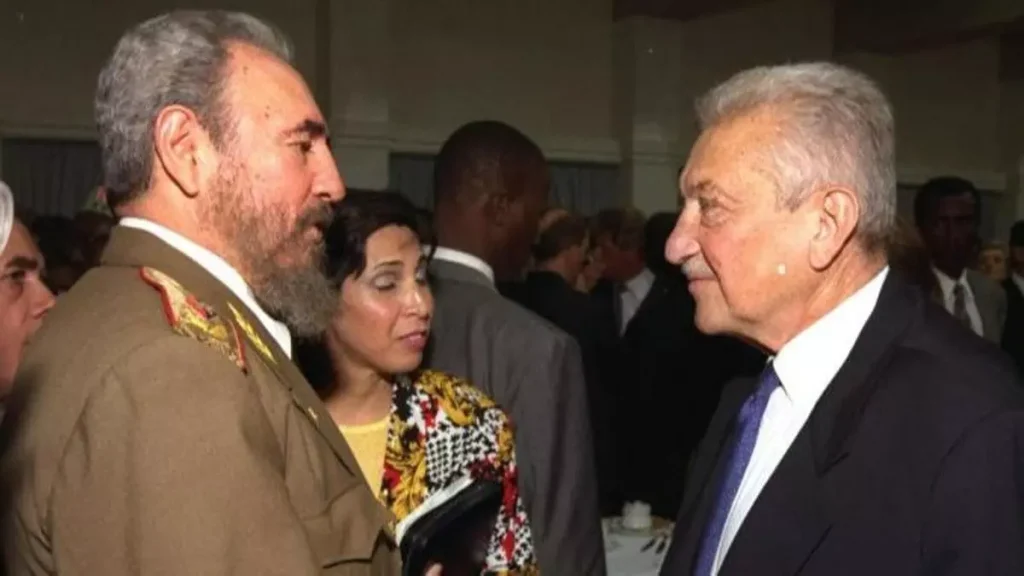
 14ymedio, Rolando Gallardo, Alicante (Spain), July 26, 2026 / Havana’s foreign policy toward the Middle East does not save the life of a single Palestinian, but it impoverishes and isolates millions of Cubans.
A nation’s foreign policy is, in its purest expression, a State’s principal tool for guaranteeing its survival, fostering its development, and protecting its citizens on the global stage. However, when it is hijacked by ideological proselytizing and false moralism, diplomacy ceases to be an instrument of State and becomes a mere exercise in political theater. In the inventory of Havana’s international failures over the last six decades, no anomaly better illustrates this dysfunction than the prolonged and absurd break in diplomatic relations with the State of Israel.
To understand the magnitude of this folly, it is essential to return to the origin of the error. During the summit of the Non-Aligned Movement in Algiers, held from September 5 to 9, 1973, Fidel Castro unilaterally announced the total break in relations with Jerusalem. Weeks later, Cuban interference moved from rhetoric to direct armed aggression: Havana dispatched troops and tank brigades to the Golan Heights to fight on the Syrian side during the Yom Kippur War.
Half a century later, the shortsightedness of that maneuver is unsustainable. The very Arab actors who were protagonists of that conflict – Egypt in 1979 and Jordan in 1994 – understood that the perpetuation of war was a dead end, signed peace, and today maintain embassies, trade, and close cooperation with Israel. They have recently been joined by nations such as the United Arab Emirates and Morocco. While Israel’s former enemies today share agricultural, military, and desalination technology with Jerusalem to benefit their populations, Cuba remains anchored in the trenches of a war that the belligerents themselves have already declared over.
A rigorous analysis of Cuban geopolitics reveals that this stance is not driven by ethics, but by a calculated media maneuver
The official justification for maintaining this diplomatic paralysis has been an alleged “unwavering and unbreakable support” for the Palestinian cause. However, a rigorous analysis of Cuban geopolitics reveals that this stance is not driven by ethics, but by a calculated media maneuver. Defending the Palestinian cause serves the regime by whitewashing its international image and reaping automatic sympathy in global left-wing circles, projecting a humanist face that conceals a deep and systemic double standard.
If Cuban foreign policy were truly governed by a rejection of crimes against humanity and State violence, its embassies would be closed in half a dozen allied capitals. The hypocrisy is mathematically demonstrable. Cuba did not hesitate to diplomatically shield the ayatollahs’ regime in Iran while it massacred its own people; Havana’s silence was absolute in the face of the more than 1,500 civilians killed in the “Bloody November” of 2019, and complicit in the face of the January 2026 crackdown, whose figures remain disputed but which organizations such as Hrana and outlets such as The Sunday Times and CBS News place in a range from around 6,000 confirmed dead to more than 20,000 according to activist and local medical sources – far above the “several thousand” the regime itself has acknowledged.
Similarly, Cuba’s Ministry of Foreign Affairs never considered breaking ties with Saudi Arabia, despite the fact that the Saudi intervention in the Yemen war triggered the worst humanitarian crisis of the century: according to an estimate by the United Nations Development Programme published in November 2021, the conflict had caused some 377,000 deaths from direct and indirect causes – bombings, famine, and preventable disease – by the end of that year, a figure that humanitarian organizations agree has only continued to grow since then. And, of course, Havana maintains a strategic embrace with Vladimir Putin’s Russia, justifying a war of aggression in Ukraine that has razed entire cities such as Mariupol, massacred tens of thousands of civilians, and caused Europe’s largest refugee crisis since 1945.
By refusing to establish relations with Israel, the Cuban government sacrifices its citizens’ plate of food on the altar of an empty revolutionary aesthetic
War crimes, violations of international law, and abuses against the civilian population are absolutely condemnable and must be denounced in the appropriate forums. But diplomatic relations between States transcend local conflicts. As the classic doctrine set out in Satow’s Diplomatic Practice, an academic reference point for modern diplomacy, holds, the establishment and maintenance of relations rests on mutual consent between States and constitutes the indispensable channel for managing any bilateral relationship, beyond substantive differences. Cutting that line of communication in the name of supposed ideological purity does not punish the adversary; it punishes the nation itself, isolating it from opportunities and real influence.
On this point, international relations doctrine is unforgiving of Cuba’s conduct. The father of political realism, Hans Morgenthau, held that national interest – not abstract moralism or legalism – should guide the foreign policy decisions of any State seeking to defend its citizens. By refusing to establish relations with Israel – a world giant in agricultural technology that could reverse the island’s chronic food crisis – the Cuban government sacrifices its citizens’ plate of food on the altar of an empty revolutionary aesthetic.
Nations with unquestionable geopolitical and diplomatic weight, such as France, the United Kingdom, and even powers adversarial to the West such as Russia or China, understand this premise perfectly. All of these countries have repeatedly raised their voices in the UN Security Council to condemn the military disproportion in Gaza, criticize Hamas’s actions, or declare the settlements in the West Bank illegal. However, none of them has considered that the logical response to these conflicts should be a break in diplomatic relations with the State of Israel. They keep their embassies open because they understand that influencing a crisis requires having a seat at the table, and because their citizens’ commercial, technological, and security interests take precedence over third-party frictions.
Former Canadian diplomat Daryl Copeland, in his work Guerrilla Diplomacy, argues that much of contemporary diplomacy has lost effectiveness by being reduced to messages aimed at public opinion rather than seeking genuine engagement between States. Havana’s foreign policy toward the Middle East fits that diagnosis: sterile public relations that do not save the life of a single Palestinian, but that impoverish and isolate millions of Cubans.
It was Cuba that promoted resolutions for decades to equate Zionism with racism at the United Nations. Consequently, it is the island’s responsibility to initiate the thaw
The unavoidable question on the threshold of a democratic transition is: who should take the first step to normalize bilateral relations? Diplomacy and common sense dictate that the party who threw the first stone is the one who should extend the olive branch. It was Cuba that unilaterally broke the tie in 1973. It was Cuba that sent tanks to the Golan to shed blood in a conflict not its own. It was Cuba that promoted resolutions for decades to equate Zionism with racism at the United Nations. Consequently, it is the island’s responsibility to initiate the thaw.
The restoration of relations with Israel is Cuban foreign policy’s great unfinished business, not only because of the incalculable value of the bilateral cooperation it would unlock, but because of what that act would symbolize. It would mean the end of the era of diplomatic hypocrisy. It would mark the moment when Cuba stops using human rights as a convenient pretext and recovers a mature, pragmatic foreign policy focused, at last, on the well-being, prosperity, and future of its own people.
Translated by GH
______________________
COLLABORATE WITH OUR WORK: The 14ymedio team is committed to practicing serious journalism that reflects Cuba’s reality in all its depth. Thank you for joining us on this long journey. We invite you to continue supporting us by becoming a member of 14ymedio now. Together we can continue transforming journalism in Cuba.