On Nicaragua, the organization denounces that there continues to be “structural censorship and systematic persecution of independent journalism”
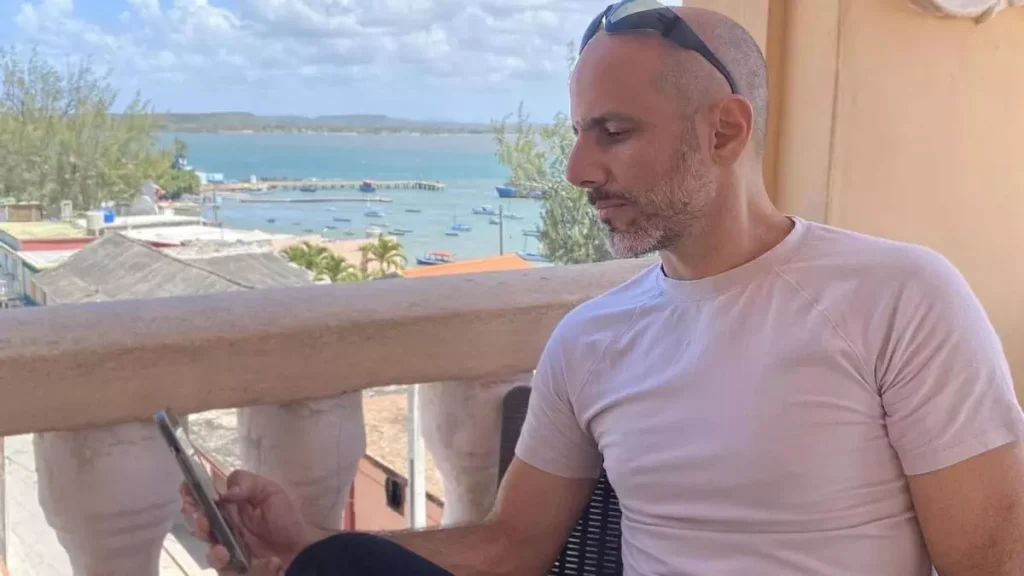
 14ymedio, Havana, October 26, 2026 / The Inter American Press Association (IAPA) has once again included Cuba in the alerts it issued following its annual assembly, held this time in Bogotá (Colombia) this Sunday. In its report, the organization refers expressly to the case of Henry Constantín, director of La Hora de Cuba and regional vice president for the island of the IAPA’s own Commission on Freedom of the Press and Information, whose pretrial detention it considers to be “especially serious.”
As the organization recalls, Constantín “remains held in the Kilo 7 prison, accused of disobedience, after a court rejected a habeas corpus petition filed on his behalf.” It therefore demands his release “and full respect for his judicial guarantees and his right to a defense.”
In its recitals, the IAPA states that in Cuba “the use of police and judicial mechanisms against independent journalists, content creators and activists who report on matters of public interest has intensified, through arrests, summonses, surveillance, restrictions on movement and criminal proceedings,” and that “independent journalists continue to face restrictions on leaving the country, while the independent press lacks legal recognition and the State maintains control over the main media outlets, telecommunications and other activities essential to the production and dissemination of information.”
“The application of broad-reaching criminal offenses persists in cases linked to freedom of expression, as well as the lack of information on investigations”
According to the organization, Decree 160/2026 – which since last July has opened several activities to the private sector – actually reinforces control, “by limiting the possibility of formalizing independent media and keeping activities related to journalism, media publishing, news agencies and broadcasting under state control, in a context aggravated by blackouts and connectivity deficiencies.”
It also states that “the application of broad-reaching criminal offenses persists in cases linked to freedom of expression, as well as the lack of information on investigations or sanctions against those responsible for acts of harassment and repression.” In its statement, the IAPA cites the Declaration of Chapultepec, which establishes that “there are no free people or societies without freedom of expression and of the press” and that its exercise “is not a concession by the authorities; it is an inalienable right of the people.”
Thus, in addition to Constantín’s release, the organization urges the regime “to guarantee the recognition and functioning of independent media and to eliminate the rules and practices that restrict the exercise of press freedom.”
Likewise, it resolved “to condemn the harassment, surveillance, arrests and criminal proceedings against journalists, content creators and citizens for exercising their right to inform and to express themselves,” as well as “to demand an end to the arbitrary restrictions on movement and the bans on leaving the country imposed on journalists.”
“The decrease in physical attacks on the street does not reflect an improvement in guarantees, but rather the virtual disappearance of field journalism within the country”
At its 82nd General Assembly, the IAPA also referred to Nicaragua, attesting that the Government of spouses and co-presidents Daniel Ortega and Rosario Murillo maintains “structural censorship and systematic persecution of independent journalism” in that country.
“The decrease in physical attacks on the street does not reflect an improvement in guarantees, but rather the virtual disappearance of field journalism within the country, where those who continue to report must do so clandestinely or under constant surveillance,” the IAPA warned in the report approved after the meeting in Bogotá.
The organization cites a study by the Foundation for Freedom of Expression and Democracy (Fled), which has documented that since 2018 more than 300 journalists and media workers have gone into exile, while in 2025 at least 58 communicators left the profession due to economic precariousness, unemployment, the closure of news outlets and the risk of repression.
As a consequence, Fled identifies 11 departments (provinces) – 65% of the national territory – as “zones of informational silence,” although the efforts of media outlets and journalists in exile continue to keep the population informed.
In Nicaragua, moreover, there are currently no printed newspapers in circulation, it warned.
The IAPA indicated that, with street journalism having all but disappeared, state pressure has shifted to the digital sphere and to administrative and legal mechanisms
The IAPA indicated that, with street journalism having all but disappeared, state pressure has shifted to the digital sphere and to administrative and legal mechanisms.
In this regard, it said that in April 2025 the Government, through the state-run National University of Engineering (UNI), eliminated the .com.ni domains of outlets such as La Prensa, Onda Local and 100% Noticias.
A month later, the state-run Nicaraguan Institute of Telecommunications and Postal Services (Telcor) ordered the closure of Radio Stereo Romance and confiscated its equipment, alleging technical non-compliance.
Between April and June of last year, Fled recorded 28 digital attacks, including smear campaigns, the disclosure of personal data and threats against journalists and their families, driven by networks of trolls and profiles sympathetic to the ruling party.
The IAPA also warned that the legal framework continues to be used as an instrument of intimidation and mentioned the reforms to the Special Law on Cybercrimes and to the Penal Code, which incorporated ambiguous concepts linked to “national security,” “sovereignty” and “stability of the State” that allow the dissemination of information deemed unauthorized to be restricted.
In addition, it noted that in 2026 a constitutional reform was also pushed through to raise to constitutional rank restrictions applicable to persons officially labeled as “coup plotters” or “traitors to the homeland,” labels that have been used against journalists.
Similarly, the inter-American organization stated that the right of access to public information remains practically inoperative for independent journalists.
Furthermore, Fled also documented attempts to recruit journalists as state informants. The National Police and other state agents are identified as those chiefly responsible for these practices, which include being followed, restrictions on mobility, confiscation of devices and interrogations, according to the report.
Translated by GH.
______________________
COLLABORATE WITH OUR WORK: The 14ymedio team is committed to practicing serious journalism that reflects Cuba’s reality in all its depth. Thank you for joining us on this long journey. We invite you to continue supporting us by becoming a member of 14ymedio now. Together we can continue transforming journalism in Cuba.