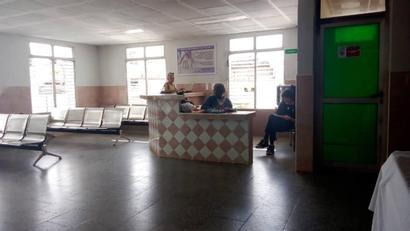
Cuban Students Will Work for Energy and Mines for Minimum Wage and Without Guarantees of Employment

Although the project is “initially” restricted to the seven careers that are related to the Ministry, it is possible that it will extend to other faculties


Although the State newspaper Granma does not mention it, Cuban universities have been sending students to work for years, at the expense of their own free time and regardless of conditions / Cujae

14ymedio bigger14ymedio, Havana, 21 November 2024 — Students of seven technical careers in several Cuban universities will be sent – it is not clear whether en masse or voluntarily – to work in the energy-mining sector while they study. What began as an emergency measure to remedy the personnel crisis will become a common practice in Cuba, but with almost no benefits: they will earn the minimum, and nothing guarantees that they can keep their jobs after graduation.

On Tuesday, the State newspaper Granma praised the “new model of work-based training,” an idea that it attributes to Fidel Castro at a distant date – 1968 – which predicts success for the 44 companies where students will work. Juan Ruiz, general director of Mining of the Ministry of Energy and Mines, reported that third-year students from Electrical, Mechanical, Automatic, Chemical Engineering, Geology, Mines and Metallurgical will be called to respond “to the needs of the sector and the country.”

The model is already practiced by the Ministry of Public Health with university hospitals, Ruiz explained, and has begun to be implemented in the universities of Pinar del Río, Havana, Matanzas, Cienfuegos, Villa Clara, Camagüey, Granma, Holguín and Santiago de Cuba. Although the project is “initially” restricted to the seven careers that are “linked to the Ministry,” it is possible that it will extend to other faculties, the manager said. continue reading

The model is already practiced by the Ministry of Public Health with university hospitals, Ruiz explained

“Only third- and fourth-year students will be considered, since it is at these levels that they can begin to apply the knowledge acquired in a real environment. For first- and second-year students, the focus will be on the acquisition of fundamental knowledge such as chemistry, physics and mathematics,” he said.

According to Ruiz, some 84 entities were evaluated before implementing the measure, but only half met the requirements. Of these, 19 are electrical institutions; 11 are in oil; seven in mining; five in nickel; one is a salt mine; and the Institute of Geology and Paleontology is included. “Quality is not negotiable,” he said, alluding to the possibility that – due to inexperience – young people might do a bad job.

They will earn a minimum wage; they will be part of the staff as long as the “model” lasts; they will be paid for “fundamental specific projects”; but the Ministry cannot – according to Ruiz – guarantee that they will have a permanent position when they finish their training. The manager took no responsibility for the granting of places, saying that it was up to the Ministry of Labor and Social Security, “depending on the country’s priorities, although in some cases changes can be made legally.

Other education officials – the vice-rectors of the Central University of Las Villas (UCLV) and the Technological University of Havana (Cujae) – said that the measure implies a correction of “historical deficiencies” in the articulation of teaching and work in Cuba. “We want students to be more connected with the work environment,” they explained.

“We want students to be more connected with the work environment”

Although Granma does not mention it, Cuban universities have been sending students to work for years – at the expense of their own free time and without basic conditions of transport and food – in centers that need workers. Under the concept of “pre-professional practice,” the Ministry of Higher Education sends pre-university and first-year technical school students to work.

Jorge, a graduate of English Language at UCLV, remembers that every day he and his classmates had to go to the neighboring Lázaro Cárdenas polytechnic school to teach all kinds of subjects, as decided by the management of the center. “Lázaro Cárdenas is one of the worst schools in Santa Clara. No one wants to teach there, and they are always looking for teachers because no one lasts long,” he explains.

From his faculty to the polytechnic he had to walk almost half a mile along the edge of the road, which has a highly dangerous curve for pedestrians. “Trucks and buses go around at full speed, but it’s the only way to get to school.” Originally a Salesian school and expropriated by Castro, the current Lázaro Cárdenas school is a massive building in Girón style.*

“The worst part is not the students, who are stigmatized even in their own families for not having been able to opt for the pre-university, but the faculty and managers,” says Jorge. Those who had been there for several years looked “menacingly” at the “intruders,” because they had to give a report on their experience at the end of the semester.

“Everyone was dumped on the Lázaro Cárdenas. Neither those who went to the Ipvce (the pre-university of sciences) nor those who had to attend other pre-universities in Santa Clara complained in that way,” he explains. In the long run, the collaboration between the two institutions cooled, and those who continued going could have the luxury of attending the first weeks and then drifting out of the classroom. “It was enough to return in the final stretch of the course,” he says. “From the ’work-based training models’ there is no longer anyone who tells stories to Cuban students.”

*Unlike the ornamental style preceding the Revolution, this modern “brutalist” apartment complex was built in 1967 to house the workers of the Girón Bus plant.

Translated by Regina Anavy

____________

COLLABORATE WITH OUR WORKThe 14ymedio team is committed to practicing serious journalism that reflects Cuba’s reality in all its depth. Thank you for joining us on this long journey. We invite you to continue supporting us by becoming a member of 14ymedio now. Together we can continue transforming journalism in Cuba.

Journalist José Gabriel Barrenechea Is Transferred to a Prison in Santa Clara

His admission to La Pendiente prison “represents a serious risk to his life,” warns an NGO

Independent journalist José Gabriel Barrenechea / Facebook

14ymedio bigger14ymedio, Havana, 20 November 2024 — Independent journalist José Gabriel Barrenechea was transferred on Monday to La Pendiente prison, in Santa Clara. The 14ymedio collaborator had been arrested on November 8 for his alleged participation in the popular protests that took place a day earlier, in the municipality of Encrucijada, Villa Clara, after more than 48 hours without electricity.

The penitentiary center where Barrenechea is currently located is “known for its conditions of extreme overcrowding and for housing prisoners of all kinds,” warns the Denunciation Center of the Foundation for Pan American Democracy (FDP). His stay in La Pendiente “represents a serious risk to his life,” the entity emphasizes in a statement.

Barrenechea was transferred from the Santa Clara Police Instruction Unit where he was being interrogated for allegedly having joined the demonstrations of November 7 in Encrucijada, the Villa Clara community where he lives. According to the legal organization Cubalex, three days after his arrest his family had no news about his situation.

While in the Unit, the reporter remained incommunicado. “Now, in La Pendiente, he is surrounded by common prisoners, some of whom are used by the regime to carry out dirty work in exchange for benefits such as passes, visits or changes in their sentences,” FDP emphasizes. “In this hostile environment, the physical integrity and life of Barrenechea are in imminent danger.” continue reading

This week a letter signed by more than 200 journalists, activists, intellectuals and academics was released demanding his immediate release. The letter emphasized that the reporter was “arrested for political reasons,” which constitutes a “frank violation of his rights.”

The text, which was signed by journalists Boris González Arenas, Camila Acosta Rodríguez and Yoe Suárez; playwright Luis Enrique Valdés Duarte; the coordinator of the Patmos Institute, Mario Félix Lleonart; analyst Juan Antonio Blanco; political scientist Armando Chaguaceda and academic Alina Bárbara López, among others, exposes the “concern for the news related” to Barrenechea’s lack of legal defense.

The signatories of the document join in a unanimous statement: “We demand the immediate release of the writer and activist and, by extension, of all political prisoners in Cuba.”

Barrenechea has been in the crosshairs of the Cuban political police for years for his collaborations with several independent media such as Árbol Invertido, Cuba Encuentro and 14ymedio. Since 2019 he has been subject to harassment and persecution by the regime, which has “regulated” him, preventing him from leaving the country.

His arrest is part of a series of arrests linked to the protests that took place after the passage of Hurricane Rafael and the consequent new collapse of the national electricity system. The organization Justicia 11J recorded the arrest of at least 23 people in Cuba since last October 18, when the national electricity system collapsed for the first time this year. Since that day, there have been 68 protests.

Translated by Regina Anavy

____________

COLLABORATE WITH OUR WORKThe 14ymedio team is committed to practicing serious journalism that reflects Cuba’s reality in all its depth. Thank you for joining us on this long journey. We invite you to continue supporting us by becoming a member of 14ymedio now. Together we can continue transforming journalism in Cuba.

José Daniel Ferrer Is Hospitalized After Being Assaulted in Prison, Say His Relatives

The opponent’s sister confirmed the news through a prisoner in Boniato, the Santiago de Cuba prison with a hospital to which he was allegedly transferred

José Daniel Ferrer, leader of the Patriotic Union of Cuba (UNPACU), during an online event organized by Cuba Decide before his last admission to prison / Screen capture

14ymedio bigger14ymedio, Havana, November 21, 2024 — The activist and leader of the Patriotic Union of Cuba (Unpacu), José Daniel Ferrer, is admitted to the hospital of the Boniato prison, in Santiago de Cuba, after having suffered an attack in the Mar Verde prison, where he has been serving a sentence since the island-wide protests of 11 July 2021.

The opponent’s sister, Ana Belkis Ferrer, posted the news on her social networks this Wednesday, 24 hours after receiving the information, the source of which she did not specify.

“Yesterday afternoon, Tuesday, November 19, 2024, we were informed from Cuba that José Daniel Ferrer Garcia had been brutally beaten and taken out of the Mar Verde prison. Today, a political prisoner confined in Boniato prison told a relative that José Daniel has been admitted to the prison hospital,” explained Ferrer’s sister, also an activist.

The sister demanded that the leadership of the regime provide information about her brother’s condition. “We demand that Raúl Castro, Díaz-Canel and all the members of the criminal dictatorship give signs of Ferrer’s life immediately. We hold them responsible for his physical and psychological integrity, and we demand his freedom and that of all political prisoners,” she added.

Early this Thursday, the Council for the Democratic Transition in Cuba (CTDC) released an identical statement, condemning what it has “been denouncing for years, along with other actors of civil society.” continue reading

The organization “deplores and condemns this act of violence, which shows the systematic dehumanization of conditions in Cuban prisons

The organization “deplores and condemns this act of violence, which shows the systematic dehumanization of conditions in Cuban prisons. Nothing in the prison regulations authorizes prison agents to inflict permanent physical punishment on those who, like José Daniel Ferrer, do not bow to injustice and humiliation for the exercise of their rights .”

The CTDC, which calls José Daniel Ferrer “a courageous pro-democratic fighter,” is forceful, “making it clear that the Cuban Government is solely responsible for the consequences, whatever they are” on the health of the opponent. The organization also sends its “support and solidarity” to the family of the UNPACU leader, as well as to his friends and members of that organization.

“The international community must urgently speak out against this abuse that many Cuban prisoners suffer,” the statement concludes.

The last time Ferrer’s family had news from Mar Verde prison was on November 4, when, for the umpteenth time, they were denied the right to visit him. They have been denied access for 20 consecutive months,
according to his sister.

They have been denied access to that right for 20 consecutive months, according to his sister

Ana Belkis Ferrer, who currently resides in the United States, told Martí Noticias that he is also denied the right to receive “phone calls.” The leader of UNPACU has been in prison since 2021, and his family was barely able to see him on 11 occasions, although nine marital visits were allowed, all under strict control.

“March 2023 was the last time he had visits and was able to talk to his wife and his son, Daniel José,” said his sister, adding that Ferrer suffers from mistreatment and isolation in a punishment cell with little lighting.

The Archbishop of Santiago de Cuba, Dionisio García Ibáñez, and the priest Camilo de la Paz, in charge of the Pastoral Penitentiary of the diocese, visited Ferrer on September 7, said his wife, Nelva Ortega Tamayo. She was glad at least that “after so long, a “person of God” was able to visit her husband and offer him “encouragement.”

That meeting revealed that his state of health was not entirely good, with heartburn, stomach pains and a “practically useless” arm. However, he was mentally “stable” and firm about remaining in prison despite the regime’s offers.

“They have maintained their harassment, repression and threats. They remind him that he could spend his whole life in prison if he doesn’t decide to leave the country, and he has made it very clear that he prefers to die inside rather than leave,” Ortega stressed. Her husband is considered a prisoner of conscience by Amnesty International and other organizations.

Translated by Regina Anavy

____________

COLLABORATE WITH OUR WORKThe 14ymedio team is committed to practicing serious journalism that reflects Cuba’s reality in all its depth. Thank you for joining us on this long journey. We invite you to continue supporting us by becoming a member of 14ymedio now. Together we can continue transforming journalism in Cuba.

Homes Built by “Self-Effort” in Pilón Are the Most Affected After the October Earthquakes in Cuba

A group of architects from other provinces detected “vulnerabilities” in the buildings

Architects evaluate the crack in the wall of a house / Granma

14ymedio bigger14ymedio, Havana, 21 November 2024 — The two earthquakes of last October 10 in Granma province left some 8,170 damaged buildings. In Pilón, where the tremors were felt most strongly, the affected buildings are, for the most part, private homes in which the “specialists,” sent from several provinces in the country, have found “vulnerabilities,” which, they allege, resulted in “130 total collapses, more than 700 partial collapses and damage to thousands of roofs, walls and floors” in that municipality.

A team of “architects, designers, technicians and specialists in Housing and Construction, together with colleagues from other provinces, are going inch by inch through the affected areas.” They have found the cause of the collapses, explains the State newspaper Granma in an article published this Wednesday.

“We have been going house by house, and we have detected a group of violations that threatened the security of these homes in the face of this phenomenon. For example, we found many masonry houses that lacked connections between the wall and the columns or did not have the number of columns that the house needed, which resulted in the collapse of the walls or caused cracks in them,” says architect Javier Jorge Castro Cabrera.

Although he clarifies that “the magnitude of the earthquakes cannot be minimized, because they were strong events that would inevitably cause damage,” the professional suggests that, if the houses had been built correctly, the consequences would have been minor. The architect is right. The problem is that, when it comes to building homes, most of it is done by “self-effort,” the Regime’s euphemism for properties built by the owners themselves. continue reading

On the Island, building a house by “self-effort” translates into buying materials that are often not available

On the Island, building a house by “self-effort” translates into buying materials that are often not available or, if found, are usually adulterated. It also implies hiring bricklayers and individuals working on their own, without guarantees of being able to claim for a poorly executed job, and with only the sporadic assistance of the community architect. This is without taking into account how many years it can take from the moment the first blocks are placed to when the house is finished, which means that the oldest parts of the structure have spent a lot of time outdoors and can be weakened.

Even so, without alluding to the difficulties in building a house by oneself, the authorities insist on pointing out the defects that “increased the negative impact” of the quakes. According to architect Liana María Sosa Hernández, several houses had walls of blocks or bricks that were not properly anchored to the wooden structure of the building. “Those are two incompatible materials, and the columns have to be made to provide security,” she explained. For the same reason, many roofs, especially those made of fiber cement, ended up collapsing.

“The soil in seismic areas is also very important. The first thing that moves is the soil, and one of the recurring mistakes that we found is floors that lift or sink because the soil wasn’t compacted correctly during the construction process,” says Sosa.

The architect adds that, “in contrast,” many buildings “that were well executed” are still “intact.” Sosa does not exempt the State sector from construction irregularities: those that “did not have an adequate constructive sequence, because modifications were made or levels were added to them, also show effects.”

“Due to the magnitude of the earthquakes, damage has also been recorded in structures that were well executed (although to a lesser extent), which demonstrates the need to build according to the construction and earthquake codes,” says Granma.

Even the professionals were surprised by the impact of the quakes

In the end, even the professionals were surprised by the impact of the quakes. “It was really very shocking to get to places in Pilón where the earthquakes threw entire houses to the ground, and in others where they cracked walls, lifted floors, tore off plaster and split columns in two, and all in just a few seconds. I’ve never seen anything like this,” Castro Cabrera said.

Although revealing in some aspects, the article of the Communist Party’s official media focuses especially on the “solidarity” of the technicians and specialists who came to the municipality to assess the damage. Their presence, it says, “constitutes a significant incentive for the affected inhabitants.”

“We have been evaluating, diagnosing and calculating based on whether the Government can make decisions and use the most convenient resources for recovery. At the same time we have provided technical advice to residents, explaining the conditions of their homes as well as possible solutions, and people have thanked us for that,” continues Cabrera. He recognizes, however, that “people are still afraid and are worried about the continuing aftershocks.”

The architect maintains that “people are much calmer after we visit their homes and explain, for example, how they can secure their wall, because there are some that are cracked but don’t have to be knocked down. They can still use them, like the roofs that were blown off but can be disassembled and reused with metal beams from the State.”

If so far it had not been possible to evaluate the damage, it is because the province did not have the staff

Sosa had a similar perception of the residents’ fear. “Our presence in those affected places helped to reassure people, because some see the cracks in their homes and think they’re going to collapse, and it doesn’t necessarily have to be like that,” she said.

As for the victims, “the neighborhoods that are below sea level have been identified for future relocation to safer areas, while temporary facilities are being created for people who suffered total house collapses. Alternatives are being sought on the premises of state entities, to adapt them and use them as housing,” says the media.

However, regarding the reconstruction of homes, the authorities do not promise anything: “We plan to initially solve the minor affectations, which take fewer resources, and the others depending on what we receive.”

So far it has not been possible to evaluate and quantify the damage precisely, because the province did not have the staff to do so and had to wait for specialists to arrive from other areas, said Dailín Pérez Castillo, deputy director of Housing. In one sentence, the official summarizes, despite the press’s attempts to minimize the situation, the complex damage scenario after the earthquakes: “They didn’t give us enough people to quantify it.”

Translated by Regina Anavy

____________

COLLABORATE WITH OUR WORKThe 14ymedio team is committed to practicing serious journalism that reflects Cuba’s reality in all its depth. Thank you for joining us on this long journey. We invite you to continue supporting us by becoming a member of 14ymedio now. Together we can continue transforming journalism in Cuba.

A Group of 154 Migrants, Including Cubans, Arrested for Illegally Entering the United States

The authorities said that six of them from Afghanistan are “of special interest” 

A group of 154 immigrants were arrested in Texas last Sunday / X

14ymedio bigger14ymedio, Havana, November 20, 2024 — Despite the legal mechanisms to enter the United States (primarily humanitarian parole), the existing violence in the region and the tightening of laws in some border states, there are still numerous illegal crossings from Mexico. Last Sunday, for example, a group of 154 immigrants was captured in Texas, including Cubans, although it was not specified how many.

The Texas Department of Public Security (DPS) reported, through its spokesman, Chris Olivarez, that in addition to Cubans, there were “illegal immigrants from Ecuador, Honduras, Guatemala, Brazil, Nicaragua, Venezuela and the Dominican Republic, who illegally crossed between the ports of entry in Eagle Pass.” The authorities pointed out that there were six immigrants of “special interest” from Afghanistan.

Although they can seek to enter the United States legally with humanitarian parole and the CBP One application, the search for a better life has forced many Cubans to take routes that put their lives at risk. At least 4,865 migrants have died on the southern border of the United States in the last 10 years, between November 3, 2014 and November 3, 2024, according to the open data portal of the International Organization for Migration (IOM). Most drowned in the Rio Bravo or Grande, the route used by the latter group. continue reading

But to get to that point, in many cases those people must cross all of Mexico from its southern border. According to IOM, 2,247 migrant deaths have been recorded in that country, 250 of which were violent.

In addition to the Cubans, there were illegal immigrants from Ecuador, Honduras, Guatemala, Brazil, Nicaragua, Venezuela and the Dominican Republic

If undocumented immigrants manage to reach northern Mexico, they must face other difficulties. Some U.S. border states have implemented new restrictive laws against illegal migration. One of them is Proposal 314 in Arizona, approved in the November 5 elections , which grants local police departments the power to arrest undocumented immigrants and issue deportation orders. In Texas there is Senate Bill 4 (SB4), which makes it a state crime to cross the border illegally from Mexico.

Republican Governor Greg Abbott has been on a crusade against illegal migration for years. In 2021 he launched Operation Lone Star to stop illegal crossings. Since its implementation, 517,900 undocumented immigrants have been detained, and more than 46,000 arrests have been made on criminal charges, according to a statement by the Texas governor last August.

In the last four years, there has been an unprecedented migratory exodus in Cuba due to the serious economic crisis – which has a lacerating impact on the shortage of food, medicine and fuel – as well as the prolonged power cuts. This has caused the departure of more than 860,000 Cuban migrants to the United States in that period alone, according to data from the Office of Customs and Border Protection (CBP). In fact, it is estimated that the population of Cuba fell by 18% between 2022 and 2023, mainly due to migration, according to a study by Cuban economist and demographer Juan Carlos Albizu-Campos.

With the new Trump Administration in the United States, beginning January 20, 2025, it is expected that humanitarian parole will be eliminated. It currently benefits, in addition to Cubans, citizens of Venezuela, Nicaragua and Haiti. The program has reduced migrant encounters outside official entry points by 98%, according to figures from the Department of Homeland Security. The extinction of the project would force a massive search by migrants for other, riskier ways to reach the United States.

Translated by Regina Anavy

____________

COLLABORATE WITH OUR WORKThe 14ymedio team is committed to practicing serious journalism that reflects Cuba’s reality in all its depth. Thank you for joining us on this long journey. We invite you to continue supporting us by becoming a member of 14ymedio now. Together we can continue transforming journalism in Cuba.

Cuba and Argentina Have a Bitter Exchange of Disqualifications

The Cuenca Summit closes without an official declaration due to lack of consensus

Plenary session of the XXIX Ibero-American Summit this Friday, at the Pumapungo museum in Cuenca (Ecuador)  / EFE/José Jácom

14ymedio biggerEFE (via 14ymedio), Cuenca (Ecuador), 16 November 2024 — The XXIX Ibero-American Summit, held in the Ecuadorian city of Cuenca, closed this Friday without an official statement due to the lack of consensus among the 19 participating countries, of the 22 that make up the Spanish and Portuguese-speaking group, in which there has also been no representation of Mexico, Venezuela and Nicaragua.

All countries, except Argentina, agreed to support a document that would include support for the United Nations Sustainable Development Goals (SDGs), public policies on gender equity and the fight against climate change, among other issues, according to EFE sources.

Meanwhile, the Cuban delegation opposed approving a statement that did not contain an explicit condemnation of the United States embargo, as the representative of Argentina intended.

The representative of President Javier Milei, Ambassador Eduardo Acevedo, expressed the refusal of the Argentine Government to subscribe to these articles and, in return, proposed that the 19 countries sign a document that collected only the matters mutually agreed, something that Cuba and the rest of the countries opposed. continue reading

According to Acevedo, Argentina was willing to approve 71 of the 72 paragraphs of the (failed) Declaration of Cuenca and 17 of the 24 special communiqués.

The difficulties in signing a consensus document prolonged the discussions of the first day of the summit, when the foreign ministers met behind closed doors to prepare the document that the Heads of State and Government had to sign on the second and last day of the summit, reserved in principle only for the leaders of the countries, but which on this occasion had to be opened to lower-ranking representatives, due to the absence of practically all Latin American presidents except the host.

Finally, the conflicting positions of Argentina and Cuba prevented an official declaration by the 19 countries attending the summit.

Cuban representative Rodolfo Benítez accused Argentina of “coming to ruin the summit” while the Argentine Eduardo Acevedo denounced Cuba’s violations of human rights

Both delegations starred this Friday in a bitter exchange of disqualifications during the plenary session of the meeting.

Cuban representative Rodolfo Benítez accused Javier Milei’s Executive of “coming to ruin the summit,” while the Argentine ambassador, Eduardo Acevedo, denounced Cuba’s violations of human rights.

The Cuban representative accused Argentina of trying to make the summit fail by denying climate change and the rights of women and indigenous peoples, but warned that it failed by isolating itself from a declaration signed by the rest of the participants except the government of the ultra-liberal Milei.

Meanwhile, the Argentine delegate stated that his country “cannot and will not remain indifferent to violations of the rule of law and human rights. ” He pointed out that, “in the opinion of the Argentine Government, Cuba must restore democracy and respect the human rights and freedoms of its inhabitants.”

This harsh exchange occurred after the two countries clashed in the adoption of an official declaration to conclude this Ibero-American Summit, because Argentina opposed a consensus to advance in the Sustainable Development Goals (SDGs) of the United Nations, in terms of gender equity and the fight against climate change, among other issues, according to EFE sources.

Meanwhile, the Cuban delegation opposed approving a statement that did not contain a condemnation of the United States embargo on the Island.

“They did everything possible to prevent pronouncements” in favor of the aforementioned proposals, denounced the Cuban representative, who attributed to the Argentine delegation the use of “hate speech” and an “absolute submission to Washington in defending the blockade against Cuba.”

Acevedo wondered what actions the Ibero-American community is taking against the serious human rights violations in Cuba

However, according to Rodolfo Benítez, Argentina ended up failing, because “they have not received the support of anyone,” in reference to its exclusion from the joint statement that replaces the official statement and “shows the historical positions of the Ibero-American nations.”

“Ladran, Sancho, sign so we can get going,” Acevedo said to the Cuban delegation in his reply during the altercation in the plenary session of the summit. The ambassador also replied that Argentina was willing to approve 71 of the 72 paragraphs of the (failed) Cuenca Declaration and 17 of the 24 special communiqués.

“The real reason why Cuba is carrying out this new attack has to do with the underlying situation that my delegation mentioned,” he said, in reference to the first intervention of the Argentine representative before the plenary, in which he was very critical of the governments of Cuba, Nicaragua and Venezuela.

In that first statement, Acevedo wondered what actions the Ibero-American community, made up of 22 countries, is taking “against the serious violations of human rights in Cuba, which continue after more than half a century of authoritarian and repressive government.”

“How is it possible that we are silent in the face of this serious situation? How is it possible that we sit at the same table debating calendars and statements without mentioning the siege that continues in Nicaragua on the independent press, the deprivation of nationality of political opponents and the persecution of civil society organizations?”

“Our position is very clear: Cuba must restore democracy and respect human rights and individual freedoms”

“Our position is very clear: Cuba must restore democracy and respect human rights and individual freedoms. It is essential that it does not promote totalitarian policies in the region and that it focuses on improving the quality of life of its population through respect for freedom and providing well-being to all its citizens,” he emphasized.

To refute Acevedo’s arguments, the Cuban representative said: “Argentina can give consider Washington’s order to attack against Cuba fulfilled, but it stands alone.”

The Cuban delegate pointed out that the Ibero-American summit “cannot become hostage to isolationist positions that seek to set back the work achieved for more than three decades.”

“The future relevance and existence of this forum is put at risk,” said Benítez, who demanded that “the historical heritage we have built be respected, always overcoming our differences.”

And he went on to say that Argentina cannot give lessons in democracy to Cuba when the Milei government “mistreats retirees and opposes the rights of indigenous peoples and women.”

Benítez recalled that, during his speech in the plenary, he defended the historical claim of Argentine sovereignty over the Falkland Islands, because “the friendship of the Argentine and Cuban people – he stressed – surpasses any political ideology and the whims of any government.”

Translated by Regina Anavy

____________

COLLABORATE WITH OUR WORKThe 14ymedio team is committed to practicing serious journalism that reflects Cuba’s reality in all its depth. Thank you for joining us on this long journey. We invite you to continue supporting us by becoming a member of 14ymedio now. Together we can continue transforming journalism in Cuba.

Cuban State Security Prevented Historian Miryorly García’s Monthly Protest for the Political Prisoners

“What’s the point of dedicating fuel to a patrol car and several policemen to repress me?”

Photo published by the activist in which you can see the patrol car hiding at the end of the street / Facebook / Miryorly García

14ymedio bigger14ymedio, Havana, November 19, 2024 — Art historian and political activist Miryorly García was arrested and questioned this Monday by State Security when she left her home on the 18th, the date chosen every month by Professor Alina Bárbara López Hernández to demonstrate for a peaceful transition in Cuba and the freedom of political prisoners. García, who lives in Havana and has protested in support of her colleague on previous occasions, was taken to a police station and returned home after being given a warning.

According to the activist, it is common for the regime to monitor her home on the 18th of each month to prevent her from going to a park with a bust of José Martí. “I looked out my door and didn’t see any motorcycles or agents watching my house from the doctor’s office. Since they sometimes no longer have enough material and human resources, I told myself that it was the 18th and there was no surveillance. I thought that this time I could leave my house,” she explains in a Facebook post denouncing the arrest.

However, after leaving her home, García was intercepted by two agents, one who identified himself as Fernando and a policewoman who did not give her name. “It didn’t occur to me to look a little more towards the corner, where the patrol was hiding behind the garbage containers,” explains the historian, who says that the police surveillance has become a “joke” for the neighbors, who wonder “how in a country with so many shortcomings, so many human and material resources are spent, especially the precious fuel, on watching and repressing me.”

The agent warned García that she could not leave her home, to which the activist replied that she was going to work. “They immediately signaled the patrol car. The woman kept telling me continue reading

to stop and another policewoman got out, and both told me to get in the car,” she says. “As usual, I didn’t resist and got in.”

The agent warned García that she could not leave her home, to which the activist replied that she was going to work

In the station to which García was transferred, “there was no electricity.” During the “dialogue,” the historian defended her right to leave her house. “I always spoke out loud so that everyone would hear – those who were outside the office too. I told them their work is shameful, illegal, arbitrary, reprehensible, and that those women dishonor the name of Mariana Grajales,” she added, referring to the police women’s brigades that bear that name.

The opponent explained that she had left her mother alone, for whom she had to prepare lunch. “The State Security agent pretended to be worried, like a blackmailing mafia, and asked me if my mother had her medicines. I replied that they were almost never in the pharmacy and that’s what they should be taking care of,” she says. Faced with the officer’s proposal to get her the medicine, García refused.

“I don’t want to be repressed with polite phrases. I don’t want any favors, even if it’s a medicine for my mother. I don’t accept that they use the patrol car as if it were a taxi and proposed to take me to the Galería where I work, wait for me and then take me home,” she says.

García, who reflected on the attitude of the political police officers, called on them to “also serve to protect citizens and feel proud of what they do. You are the ones who choose to be my repressors; don’t wait for me to bow my head or lower my voice,” she said.

“They are talking softly so that my neighbors don’t see them arrest me, hiding the patrol car behind the garbage containers, away from my house, fleeing from the photos. Yes, they are already aware of lying, hiding, masking themselves, pretending to have good intentions. That is, they are aware that what they do is wrong. But for many, like the ones I saw today, there is no shame for what they do. I know that one day, sooner rather than later, they will feel ashamed,” she said.

The detention lasted less than half an hour, and the activist was returned home

The detention lasted less than half an hour, and the activist was returned home. Hours later, García published another post on social networks from the park that she intended to reach in solidarity with Alina Bárbara López. “In a dirty park full of grass, I met Martí on November 18. There I sat with him to think about the point of dedicating the fuel of a patrol car and the work of several policemen and State Security agents to restrict me from leaving the house,” she posted.

On Monday, other activists and opponents who, like García, tried to support López’s peaceful protest for the freedom of political prisoners were also prevented from taking to the streets. The teacher explained on social networks that journalist Jorge Fernandez Era was also being watched by a patrol.

However, López, who on other occasions has been arrested, forced to stay at home and even faced a trial for her public statements of disagreement with the regime, was not disturbed this time. “Today I carried out the peaceful protest of every 18th in the Freedom Park without being disturbed. On this occasion I was accompanied by Mario Amílcar Quesada Zamora, a young man who, like so many compatriots, wishes for a civic and democratic transformation where we don’t spend our lives feeling hopeless. Madelyn Sardiñas Padrón in Camagüey and Mabel Melo in Artemisa were not harassed either,” she summarized.

Translated by Regina Anavy

____________

COLLABORATE WITH OUR WORKThe 14ymedio team is committed to practicing serious journalism that reflects Cuba’s reality in all its depth. Thank you for joining us on this long journey. We invite you to continue supporting us by becoming a member of 14ymedio now. Together we can continue transforming journalism in Cuba.

Isla Libre Promotes ‘A Practical Guide Focused on Helping the Cuban People’ in the Search for Freedom

The authors call on citizens to “wake up and act” through peaceful civil resistance

The ’Manual’ is aimed at Cubans burdened by daily concerns / EFE

14ymedio bigger14ymedio, Havana, November 17, 2024 — The concept of a living book, which “grows and evolves” with time and collaborations, inspires the newly created Manual of the Isla Libre project. Created as a kind of civic encyclopedia, with the possibility of its readers sending new reflections and entries, the document aims to be “a practical guide focused on helping the Cuban people” in the peaceful search for freedom.

In its introduction, the Manual is aimed at Cubans burdened by daily worries, blackouts and shortages, and at young people and adolescents who “are already thinking about emigrating before finishing their studies.” Open to dialogue, the declared objective of Isla Libre is to “decipher why Cuba is in ruins, understand what we Cubans want and what to do to achieve it.”

On the other hand, the book is also addressed to the rulers and institutional actors of the regime, calling on them to reflect on their ethical situation, and to the police and the Armed Forces, who are not fulfilling their commitment to protect Cubans. “You see firsthand how poverty generates crime, how our children and adolescents form gangs and steal to be able to eat, how despair turns honest people into criminals,” it says.

“Wake up and act” are the two keys that, according to Isla Libre, mark the text. Without a personal effort for liberation, they add, it is useless to wait for international help. “How do we expect the world to reach out to us when year after year we show it the image of a people that apparently supports its oppressors?” they argue. continue reading

Cuba faces the consequences of 65 years of dictatorship, a word that Isla Libre uses without dissembling

Cuba faces the consequences of 65 years of dictatorship, a word that Isla Libre uses without dissembling to define the “invisible chain that binds the hands of the Cuban people.” A system, they say, that has been perfecting its control mechanism for decades, adapted to each historical stage, and that seeks – and has achieved – perpetuity in power. Making Cubans feel that being born on the Island is a “historical fatalism” is part of the machinery, the text points out: it restricts every attempt to challenge power.

Through concise tables and lists – the Manual does not waste time and underlines its interest in “getting to the point” of the Cuban panorama – the document presents the Cuban reality and its differences in political, legislative, social and economic terms, compared to any functional democracy. The contrast is summarized in one sentence: “While the modern world debates about what kind of progress is better, in Cuba we simply fight to survive.”

Solutions? Isla Libre proposes that they be radical: restoring individual freedoms, establishing the separation of powers, promoting an open economy and guaranteeing human rights. Aware that change will not come alone, the book proposes concrete strategies to achieve it despite the obstacles imposed by the dictatorship.

Several of these strategies are oriented not only to citizen resistance, but to another way of fighting the dictatorship: improving – as much as possible and with the multiple obstacles involved in living on the Island – the quality of life.

Against the inhospitable panorama that the Government has generated, living according to certain principles of optimization and savings is not playing into the hands of the authorities, they argue, but demonstrating that you can live with dignity even if the dictatorship insists on erasing it.

Isla Libre recommends the breeding of small animals – laying hens, especially – efficient cooking and if possible communally, the use of fuel, the use of homemade products, maintaining bottles of ice and recycling. In addition, they promote barter networks – both for products and skills – between trusted groups, useful information exchange groups and child and elder care systems.

They also advise the creation of community libraries – not subject to censorship by state institutions – and study circles. “We need to document and communicate reality to counter official propaganda and show the world what is really happening.”

To those who demand a more radical action against the regime, Isla Libre responds that its goal “is not to create martyrs”

To those who demand a more radical action against the regime, Isla Libre responds that its goal “is not to create martyrs, but to achieve the change that Cuba needs.” However, they recognize that violent repression continues to be – especially after the Island-wide protests of 11 July 2021 – a “systematic and brutal” response from the Government.

Faced with this type of scenario, the project provides a detailed manual of techniques and advice, which include – before a possible arrest – being prepared for the usual tactics of State Security, such as sleep deprivation, threats to the family, using “false confessions” of a friend or colleague, and temporary disorientation. In addition, they invite Cubans to “learn to detect” certain objects and people, such as a car parked in an unusual place or some unknown person who appears repeatedly.

They also warn about the misinformation that the regime spreads on social networks and the role that rumors plays in this process. They recommend the use of the Signal messaging application, “the most secure by default.”

“In this Cuba where scarcity wears us out and repression drowns our voices, there is a truth that we still do not understand well: real power has always been in our hands. Not in rifles or decrees, but in our ability to unite and act as one,” summarizes Isla Libre.

The project also includes a contact page, and its managers are interested in collaboration with writers, visual designers and digital specialists.

Translated by Regina Anavy

____________

COLLABORATE WITH OUR WORKThe 14ymedio team is committed to practicing serious journalism that reflects Cuba’s reality in all its depth. Thank you for joining us on this long journey. We invite you to continue supporting us by becoming a member of 14ymedio now. Together we can continue transforming journalism in Cuba.

Cupet Authorizes the Purchase of 20 Liters for Generators at the Plaza de la Revolución Gas Stations in Havana

The company imposes a series of measures on gas stations, which will not be adopted in the unlikely event that there is enough fuel

Photo of the La Rampa gas station / 14ymedio

14ymedio bigger14ymedio, Havana, 17 November 2024 — Following the experience of the Tángana gas station, located in El Vedado (Havana), the financial company Cimex, Cuba Petróleo (Cupet), the police and other local authorities have decided to extend the form of management to the rest of the gas stations in Havana’s Plaza de la Revolución municipality. The measures are taken “based on the denunciations, complaints and dissatisfaction of the population” and contemplate the purchase of fuel for private generators, provided that the client presents a letter of authorization from the municipal mayor.

Of the group of service stations in the municipality, it is “particularly those of Rampa” that have generated the most discomfort among buyers. This is argued by Esther Pérez Trujillo, the boss and organizer of the lines in the Guanabacoa gas stations, who shared this Saturday the announcement in the Telegram group through which she manages everything that happens in the Cupet premises in the municipality.

All in capital letters and alluding to “two meetings with the authorities,” Esther reviews the rules: Only 40 liters (10.6 gallons) of fuel will be sold “for each vehicle” and, “in the case of motorcycles, enough to fill the tank.” In case it has not been clear, she states that customers will not be allowed to bring “additional bottles or other ’tanks’,” which she refers to as “innovations” of the drivers. In the case of electric generators, with prior authorization, only 20 liters (5.3 gallons) will be sold per customer.

Esther adds an exception to the measures, which will not be adopted “if there is fuel availability,” a situation that rarely occurs in the Havana gas stations that don’t charge in foreign currency. The manager is clear, adding, “Let’s remember that today there is a deficit, which we all know, in the import of hydrocarbons. Today the country prioritizes the supply for electricity generation.” continue reading

Only 40 liters (10.6 gallons) of fuel will be sold “for each vehicle” and, “in the case of motorcycles, enough to fill the tank”

The manager of the Guanabacoa gas stations also recognizes that the “availability of more ’guns’ or pumps” is a frequent complaint from those who come to refuel at the Cupet facilities. The problem, however, will not be solved in the near future. “We are informed that there is no possibility [of adding new equipment], and there are currently negotiations about restoring the existing ones, a situation that will not be resolved immediately,” he says, repeating the canonical phrase, “due to the economic situation that we all know.”

The statement, which reminds customers of where to recharge the cards which Cubans must use to pay for the fuel, also explains that Cimex, which controls payments, transactions and commercial operations, will be responsible for the service at gas stations. To do this, the Computer Union of the province will ensure that the payment system remains “fluid and functional.” Complaints about the “failure of the system” and “cards that don’t work” have been frequent since the government announced that payments can only be made in that way.

The order of the lines and “the implementation of the most appropriate forms, which guarantee better organization and control,” is controlled by the Popular Council of La Rampa.

Despite the arrival of several fuel tankers in recent weeks, the Island shows no signs of improvement in its energy crisis. Even with the drop in temperatures that the country is experiencing this weekend, the deficit reported by the Unión Eléctrica for the peak hour is 1,421 megawatts, 40% of national consumption.

The PVT Clara oil tanker arrived in Havana Bay on November 14, under the flag of Panama and owned by the PetroVietnam Transport Corporation. The tanker’s cargo, which will arrive this Monday in Santiago de Cuba, was declared as “vegetable oil,” but the fact that food is stored in tanks used for fuel makes experts doubt that statement. In addition, the ship left Kaliningrad on September 14, near the location of the oil wells from which the Russian Urals crude oil is extracted, and it has been off the Cuban coast since October 2.

The tanker PVT Clara under the flag of Panama arrived in Havana Bay on November 14

Likewise, on November 11, the Elandra Redwood, coming from Amsterdam with fuel, docked in Havana Bay, and the Eco Merlin, with liquefied gas, has been off the Cuban coast for days.

At the end of October, Mexican President Claudia Sheinbaum announced that she would send “humanitarian” donations of fuel to Cuba to alleviate the damage to the energy system after Hurricane Oscar. Coinciding with the statement, the tanker Vilma delivered a cargo in Cienfuegos at the beginning of November and, after returning to the port of Pajaritos-Coatzacoalcos, returned to the Island this Saturday.

The Ocean Mariner, which docked in Santiago de Cuba before the impact of Hurricane Rafael, is also heading back to that port from the Ciudad Madero refinery in Tampico. Its arrival is scheduled for November 20, according to maritime tracking applications.

The regime has also received help from Venezuela. The Alicia arrived in Matanzas in the first days of this month and is now in Havana after reloading in the port of José.

Finally, Russia gave a loan of 60 million dollars to the Island to acquire 80,000 tons of fuel. Cuba seems to have created the conditions to keep the electrical system afloat for at least a few weeks, but the authorities continue to schedule blackouts, reporting deficits of almost half the power generation and ensuring, like Esther, that there is no fuel.

Translated by Regina Anavy

____________

COLLABORATE WITH OUR WORKThe 14ymedio team is committed to practicing serious journalism that reflects Cuba’s reality in all its depth. Thank you for joining us on this long journey. We invite you to continue supporting us by becoming a member of 14ymedio now. Together we can continue transforming journalism in Cuba.

With the Supply Suspended, a State Truck Distributes Two Bottles of Water per Person in Luyanó, Cuba

A vehicle from Aguas de La Habana supplies residents in Luyanó / 14ymedio

14ymedio bigger14ymedio, Juan Diego Rodríguez, Havana, 18 November 2024 — It’s been ten days since Hurricane Rafael passed through Cuba leaving a lot of water on the streets but little in family cisterns. In Havana alone, more than 200,000 people are still without water service. Despite its “limited resources,” the Government has begun to send sporadic trucks to supply the people of Havana.

In the neighborhood of Luyanó, residents have been waiting for days for the arrival of “the blessed vehicle” that, unlike the classic “pipas” – which are loaded with a large metal tank -has four or five plastic tanks on its trailer, which goes from one side of the city to the other. Some water spills out, an almost inevitable waste – especially in the current shortage – because of the number of potholes in the streets.

“For more than ten days, since before the hurricane, we couldn’t get water in this neighborhood. The explanation they gave is that this is an elevated area and the pumping is deficient. I have very little left in the tanks in my yard,” Marta told this newspaper. This Saturday she finally saw the vehicle arrive at her door. Relieved, she began to gather pots, buckets, pails and even washbasins, but the indications “from above” do not allow the truck to distribute more than “two buckets per head.”

The trucks pass sporadically / 14ymedio

Marta joined the disappointed line of neighbors who, with containers in hand, waited to fill theirs with a dirty hose. “In the end we got four buckets, two for my husband and two for me. If they don’t pass by every day, what am I supposed to do with so little water?” she asks the woman, who predicts that the small amount of water will go for cooking and drinking. continue reading

In Nuevo Vedado the situation is not so critical, but for Alina, the acquisition of water is not going well. “I live on the top floor of a building and, although they bring the water every two or three days, little comes in and benefits the neighbors below first. The upper floors barely have a few brief minutes with the supply when it comes,” she explains.

“To top it off, we have a tank connected to the pipes, but the pipe broke in the hurricane, and until we fix it, we have to depend on what arrives in the building,” says Alina. But she adds: “We are not the worst off. The building on the corner of Boyeros and Conill has 26 floors, and those people don’t even have a terrace where they can place tanks, hang clothes or calm themselves down with this mess,” she says.

Complaints have also been posted on social networks, especially at the bottom of the Aguas de La Habana page. “We don’t need explanations, we need water, and not just a truck with a hose, because we are over 60 years old and can’t carry water to the fourth floor,” claimed a user. Others, with more sense of humor or more resigned, are convinced that the Government is forcing them to “pass a course in going thirsty.”

Translated by Regina Anavy

____________

COLLABORATE WITH OUR WORKThe 14ymedio team is committed to practicing serious journalism that reflects Cuba’s reality in all its depth. Thank you for joining us on this long journey. We invite you to continue supporting us by becoming a member of 14ymedio now. Together we can continue transforming journalism in Cuba.

Santiago de Cuba Shuts Down: Four Hours of Electricity a Day and Hospitals Disconnected From the Network

The province is approaching zero energy generation and receives one-tenth of what it needs

Eastern Cuban is the area most punished by the blackouts / X

14ymedio bigger14ymedio, Havana, November 18, 2024 — The population of Santiago de Cuba requests help in the face of a more dramatic energy crisis than in the rest of the country. The province, the second most populous of the Island, is currently suffering the worst situation due to lack of electricity, with a daily demand of 200 megawatts (MW) and a generation of between 20 and 30, according to the Electric Union (UNE), which yesterday announced radical measures that include stopping the rotation plan and only supplying between three and four hours of power to homes.

In order to give that ridiculously low amount of electricity to the residential sector, it will be necessary to turn off the prioritized circuits, including in hospitals, which will work with generators. The information, in addition to the UNE report and the local press, was provided by the managers of the “key sectors of the economy” to the “community agencies and the population of several localities” of the province “in an effort to bring truthful and updated information.”

“The sustained and high deficit causes an adjustment of the electricity service. Among other measures, the prioritized circuits in which the hospitals are located (they work with generators) are temporarily turned off in order to benefit the residential sector with four hours of electricity,” says a note published in the newspaper Sierra Maestra. continue reading

“The sustained and high deficit causes an adjustment of the electrical service; among other measures, the prioritized circuits are temporarily turned off”

The information specifies that there are nine thermal plants out of service in the country, leaving Santiago with a deficit of between 160 and 170 MW at peak time, and a generation of 20 to 30 MW, “which is equivalent to the demand of the prioritized circuits and part of the water supply.”

The national report issued this Sunday by the UNE placed the expected deficit at the national level at 1,421 MW, an amount lower than the 1,510 announced the previous day, culminating in a week in which more than 1,000 MW were missing every day despite the fact that the temperatures were not particularly warm. Part of western Cuba was disconnected from the National Electric System (SEN) until Tuesday.

Yesterday, the situation of casualties in the Cuban electricity network was catastrophic. Out of service due to breakdown are unit 5 of the Mariel thermoelectric plant, unit 6 of the Nuevitas, unit 2 of the Felton and units 3 and 6 of Renté. The latter, located in Santiago de Cuba, also has unit 5 down for maintenance, which leaves half of its six blocks without generation. In addition, the Erin Sultan Turkish floating power plant (patana) located in the province, with a capacity of 130 MW, is not running due to fuel shortages, which leaves the east of the Island in a situation of extreme precariousness.

Unit 2 of the thermal power plant of Santa Cruz del Norte and units 3 and 4 of Cienfuegos are also out of the SEN for maintenance, as are 49 distributed generation power plants – due to the lack of fuel – that provide 287 MW, and the Regla patana (54 MW) and the Moa Diesel Power Plant (150 MW), for a total of 558 MW. During peak hours the entry of unit 6 of Nuevitas, the engines of Moa, two others from the patanas of Melones and Regla (both in Havana) was expected.

Although Holguín, Guantánamo and Granma are also suffering long power cuts, the demand – due to its population – is much higher in Santiago, leaving the province in a situation very close to zero power generation, since it receives one-tenth of its need. Given this, the authorities have asked provincial leaders to keep the population informed on a daily basis in order to “organize life around the new electrical allocation schedule.”

The report has not received any comment, contrary to the barrage of angry responses that Beatriz Johnson Urrutia, first secretary of the Communist Party in Santiago, received after reporting the situation on her Facebook account with a message asking for “much solidarity and empathy.”

The report has not received any comment, unlike the barrage of angry responses received by Beatriz Johnson Urrutia, first secretary of the Communist Party in Santiago

“How long will this abuse last? If you can’t solve the problems of the people, resign your positions and ask any international country for help. You are forcing Cubans to emigrate. This is not the Cuba for which so many people died. José Martí said that when the people emigrate their leaders are superfluous,” wrote a man in Santiago.

Although there is apparent understanding, with some thanking the authorities for the information to be able to organize themselves, those who claim for the umpteenth time the inequality between the Island’s East and West in the distribution of power did not take long to arrive. “Why ask for empathy when we don’t all suffer in the same way. Why does Havana, which consumes the most electricity in the country, have cuts for only two hours in the morning? Aren’t we the same? Aren’t we Cubans? What we are not is equitable. Check for yourselves,” he reproaches.

More than 300 comments crowd the official’s page. Some ask for explanations of what happens to the oil that arrives or why, definitively, the country does not surrender to any foreign power. “It’s not enough for anything. That’s not an achievement, it’s a backwardness and a big one. And the ships that came from Mexico: where are they, for God’s sake? Let this country be taken over by Russia or the United States. All I know is that this doesn’t work anymore,” another lamented.

“There were also the ships that came from Mexico; where are they, for God’s sake? Let this country be taken over by Russia or the United States”

Santiago de Cuba, one of the provinces least prone to protest – “the cradle of the Revolution” – writes a user who demands respect for the territory. The city has taken to the streets on several occasions in the last two years due to the lack of power. In 2022, in the Luis Dagnes neighborhood, in the Altamira Popular Council, a group of demonstrators raised their voices against the Government for a situation similar to the current one, with four hours of electricity daily, causing the intervention of Johnson and, later, of the police.

The same thing happened at the end of October in the San Pedrito neighborhood, when several neighbors took to the streets to ask for the power to be restored after the island-wide breakdown of the SEN that occurred a month ago today. The passage of Hurricane Rafael, on November 6 with a category 3 through the west of the Island, left the second total collapse of the system in just 15 days.

The shortage of fuel – despite the fleets of ships from friendly countries – and the catastrophic conditions of the thermoelectric plants, which are now well past their useful lives, keep the energy situation in a state of extraordinary fragility. This was recognized by the Minister of Energy and Mines himself, Vicente de la O Levy, just 18 days ago. “The system is weak; there is a very large generation deficit,” he summarized, to no one’s surprise.

Translated by Regina Anavy

____________

COLLABORATE WITH OUR WORKThe 14ymedio team is committed to practicing serious journalism that reflects Cuba’s reality in all its depth. Thank you for joining us on this long journey. We invite you to continue supporting us by becoming a member of 14ymedio now. Together we can continue transforming journalism in Cuba.

Despite the Data, the Cuban Government Insists That Tourism Must Be ‘The Locomotive of the Cuban Economy’

The presence of “18 foreign chains” and a plan to renovate hotel rooms stand out

One of the hotels in Cayo Cruz of Blue Diamond, the hotel chain that plans to expand on the Island / Blue Diamond

14ymedio bigger14ymedio, Madrid, November 18, 2024 — The official newspaper Granma opens today with an article entitled “The recovery of housing infrastructure is a priority for the country,” in which the Minister of Economy and Planning, Joaquín Alonso Vázquez, explains that “recovery plans are already underway, which depend largely on the availability of resources.” The plans include, he adds, solutions for those affected by “the hurricanes Oscar and Rafael and the earthquakes” and those affected by “previous events that have not yet had a definitive solution,” a key detail that reveals the low priority.

The reader has to get to page five to find where the eyes of the Government really go, which, coincidentally, is always to the same place. “The tourist facilities in Cuba that suffered some kind of effects after the latest natural events – hurricanes Rafael and Oscar, and the earthquakes – have a schedule for their recovery to be ready for the 2024-2025 high season,” explains the Minister of Tourism, Juan Carlos García Granda. The owner of the chain emphasizes, in case there are still doubts, that “it is essential to have a good high season; the country and the Cuban economy need it.”

García Granda knows that he is very close to chalking up his umpteenth defeat. Since he took office in December 2019, succeeding current Prime Minister Manuel Marrero, Cuban tourism has been on an unending downward slope, and with it one of the main sources of foreign currency for the regime, discounting remittances and the so-called “international missions.” continue reading

The owner of the hotel chain emphasizes, in case there were doubts, that “it is essential to have a good high season; the country and the Cuban economy need it”

It has been the current tourism minister’s turn to deal with an unprecedented pandemic that caused a closure of global borders, but while most of his competitors – both in the region and internationally – have been recovering their numbers prior to COVID-19, the Island now has, in 2024, worse tourism results than in 2023. Specifically, in September, the drop was 5.2%, leaving out the October figure, which is expected to be disastrous, as will be that of November. Tourism has been affected not only by the two hurricanes and the two earthquakes, but also by the two total failures of the National Electric System that keep Cuba on the edge of the energy abyss every morning.

Despite this, all the chips are still bet on the same color. García Granda indicated that the sector has a plan to renovate more than 80,000 hotel rooms, 75% of them in four- and five-star hotels, and to have 18 internationally recognized foreign hotel chains.”

The authorities predicted a target of 3.2 million tourists this year (lower than the target of 3.5 for 2023, a year when only 2.4 million arrived). In September, aspirations were reduced to 2.7 million international visitors, but there is still one million left to reach the goal. Perhaps forgetting the reduction, García Granda says today in Granma that the figure will not reach three million but insists that it must change. “Therefore, we have taken all possible measures to improve the indicators, while creating companies to supply wholesale tourism, some with 100% foreign capital, so we will have a better position than in last year’s high season,” he remarked.

The minister spoke about two new products from the Canadian hotel chain Blue Diamond – Resonance Blue and Resonance Musique – and others that will happen. The news comes just as the Sunwing Vacation travel agency in Canada has removed 26 Cuban hotels from its catalog, without specifying which ones.

The news comes just as the Sunwing Vacation travel agency in Canada has removed 26 Cuban hotels from its catalog, without specifying which ones

Samantha Taylor, the company’s marketing director, said in an interview that the hotels were withdrawn due to the drop in quality. “We didn’t feel that the hotels lived up to the expectations of the guests,” she said. The “noble” efforts made by the facilities to meet the needs of customers have been insufficient in their opinion, and there is a shortage of food, as well as failures in the air conditioning equipment.

Taylor unlinked the decision from the two recent total failures of the National Energy System (SEN), but she did make it clear that, although “there are incredible places to go in Cuba,” customers are “a little uncomfortable,” and it is the agency’s obligation to recommend other alternatives.

PAX magazine, which collects these statements, adds that the director of the Cuban Tourist Office in Toronto, Lessner Gómez, indicated a few days ago that the ministry led by García Granda has prepared to offer “better services, uninterrupted supplies, improved experiences at airports” and more new vehicles for the high season, as well as ensuring that 100% will have electricity. The efforts are remarkable, but in vain. The Canadian Government has already maintained, for a year, a precautionary alert when traveling to Cuba due to the shortage of food, fuel and medicine, and in August of this year the presence of dengue was added to the list.

Up to September, there is a decrease of 2% compared to the same period for 2023, while other tourism numbers increase, highlighting the Russian, which grows by 12%

In these circumstances, and with the proliferation of cases of failed vacations narrated by Canadians, travelers from this country remain in the lead as has been historical custom, but in retreat. Up to September, there is a decrease of 2% compared to the same period as the previous year, while other tourism numbers increase, highlighting the Russian, which grows by 12% but will not reach the expected amount either.

García Granda points out that there are already brigades working “hard” in Cayo Largo del Sur so that it is ready before November 30, including the Marea del Portillo hotel in Pilón (Granma province), damaged by the earthquake but which should be ready on December 15.

“Osniel and Zaily are two brothers aged 17 and 19 who live alone in Pilón,” wrote Yudelkis Ortiz Barceló, first secretary of the Party in Granma on his social networks. “Today we are going to see them and offer them all the help they need to recover,” he adds. But for them there is no schedule or set date.

Translated by Regina Anavy

____________

COLLABORATE WITH OUR WORKThe 14ymedio team is committed to practicing serious journalism that reflects Cuba’s reality in all its depth. Thank you for joining us on this long journey. We invite you to continue supporting us by becoming a member of 14ymedio now. Together we can continue transforming journalism in Cuba.

Eggplant, a Food That Evokes Memories and Completes the Dish

In just one year, eggplant, little liked on the Island, has doubled in price

Eggplant for sale at a vegetable stand in Havana / 14ymedio

14ymedio bigger14ymedio, Natalia López Moya, Havana, 17 November 2024 — A few years ago, eggplant was one of the few crops that did not have to be protected from thieves. While the farmers, with machetes hanging from their belts, guarded the garlic crops, the bananas and the furrows loaded with bean pods, the eggplant, with its smooth purple skin, was not in the sights of the vandals who devastated the plantations on the Island. But that has changed.

A large fruit, with a firm and soft whitish interior with numerous edible seeds, eggplant can be consumed in many ways. Among Cubans it is mainly roasted, sliced and fried, baked, sautéed or added to a broth. Less known on home tables but increasingly present in the kitchens of private restaurants, when made with cream it serves as an accompaniment in numerous combinations.

“I have a special affection for eggplant but in my house no one eats it, only me,” Damaris, a 48-year-old resident of Marianao, tells 14ymedio. “I spent the hardest years of the Special Period as a pre-university scholarship student in Güira de Melena. Among the local crops was eggplant, and we worked in the fields weeding and harvesting it.”

In the women’s dorm, the students tried to relieve the roar of hunger that came out of their stomachs

In the women’s dorm, the students tried to relieve the roar of hunger that came out of their stomachs. “We made all kinds of preparations with corn, continue reading

condensed milk and anything that appeared, but as we ran out of ingredients we began to take what we found in the fields so as not to go to bed with empty stomachs.”

Thus was born a dish that Damaris adores: grilled eggplant. “We had one of those old clothes irons that weighs a lot. We cut the eggplant into slices, put them on the top of a locker and ironed them, pressing hard so that they were very golden.” A preparation of “lemon, cilantro and salt” pressed on top with the hot iron made a dish “that tasted like glory.”

Culinary preferences are greatly influenced by memories: the smell of the red bean stew in the corridor of the quarters when returning from school, the funny tentacles of the squid that peeked out on the children’s plate, and that malanga cream that grandmother made by crushing the food with a fork and adding some milk. Memory shapes the palate and defines the dishes that make us salivate.

But millions of Cubans do not share Damaris’s appetizing memory of the eggplant. “My children can’t even look at it and my husband doesn’t like it, so I hardly buy any because they are big, and for one person it’s not worth it. I cut a piece, cook it, and the rest almost always spoils because I’m the only one eating it.” The family of the once-scholarship holder belongs to that majority of Cubans who see this food as “something that tastes like nothing and absorbs a lot of oil, a real food for fools.”

In September of last year, a pound of eggplant cost 200 Cuban pesos in the 19th and B market / 14ymedio

However, not even that generalized impression of the fruit, which has a high percentage of water and a great versatility for combining with other foods, has put the eggplant on the sidelines of inflation. If in September of last year a pound of the product cost 200 Cuban pesos in El Vedado’s 19th and B market, by this November it had already doubled in price.

“It serves to complete a dish, and if it is prepared with enough garlic, onion and lemon it replaces meat, which is so expensive,” said Catalina, an elderly woman who approached the platform of a cart driver in the Cerro neighborhood. “I dip it in a good Creole mojo, bread it and cool it, and my grandchildren ask me where I got the steaks,” the woman says in a mischievous tone. “I also put it on rice, and that’s how I make it stretch.

“A few days ago, a friend taught me how to make eggplant lasagna. It tastes delicious; the problem is that cheese is very expensive. Not to mention that tomato and now eggplant are both more expensive, so it’s not a cheap recipe either.” At least, she says, she has a good oven with the so-called “street” gas, one of the few services that still has some stability in the Cuban capital. Catalina will not have to use an iron to brown each spongy slice of tiny seeds.

Translated by Regina Anavy

____________

COLLABORATE WITH OUR WORKThe 14ymedio team is committed to practicing serious journalism that reflects Cuba’s reality in all its depth. Thank you for joining us on this long journey. We invite you to continue supporting us by becoming a member of 14ymedio now. Together we can continue transforming journalism in Cuba.

The United States Appoints Mike Hammer As the New Head of Its Diplomatic Mission in Havana

The diplomat, with more than three decades of career, has been in several countries in Latin America and Africa

Hammer was the spokesman for the National Security Council from 2009 to 2011 / X / United States Embassy in Havana

14ymedio bigger 14ymedio, Havana, November 16, 2024 — Mike Hammer, with 35 years of diplomatic career in countries such as Chile and Congo, is the new head of the US diplomatic mission in Havana. The announcement this Friday indicated that Hammer, in addition to having experience in the State Department and the White House, “speaks fluent Spanish” – in addition to French and Icelandic – and ” grew up” in Latin America.

Hammer, 60, replaces Benjamin Ziff as Chargé d’Affaires – Havana does not have an ambassador – who held the position for two years and left the Island last month. The new head of mission has lived in Honduras, El Salvador, Bolivia, Colombia and Venezuela – countries with a complex situation and relevant to the geopolitical board on which the regime moves.

In addition, he was US special envoy to the Horn of Africa and spokesman for the National Security Council from 2009 to 2011. He held different positions in Norway, Iceland and Denmark, and will travel to Havana with his wife, Margret Bjorgulfsdottir, and their three children.

Born in 1963, Hammer studied Foreign Service at Georgetown University and has master’s degrees in Law and Diplomacy from several American continue reading

institutions. He was special assistant to the Undersecretary of State for Political Affairs, Marc Grossman, whom he advised as head of Latin American affairs.

President Barack Obama appointed him ambassador to Chile in 2013.

President Barack Obama appointed him ambassador to Chile in 2013, and several years later, in 2018, Donald Trump – during his first term – sent him to Congo. Hammer has been actively involved in conflict resolution in Africa. An example of this was his mediation, in 2022, between Ethiopia and the Tigray People’s Liberation Front – a nationalist leftist paramilitary group – to end the Tigray War.

In early 2023, he was involved in the Sudan conflict and held several meetings with diplomats from Kenya, Ethiopia and the African Union

Hammer arrives in Cuba at a time of maximum tension in Havana, with the imminent return of Trump to the White House and a Cabinet in which old enemies of the regime stand out, such as Senator Marco Rubio, who will serve as Secretary of State. In addition, his arrival occurs in the midst of a systemic crisis in the country, after the passage of two hurricanes, episodes of total blackout and unprecedented shortages.

The new Chargé d’Affaires will also have to continue with the agenda of his predecessor to improve diplomatic facilities, enable immigration procedures, support the private sector of the Island and – as Ziff said in his farewell statement – support the search for a “freer and more democratic future” for Cuba.

Translated by Regina Anavy

____________

COLLABORATE WITH OUR WORKThe 14ymedio team is committed to practicing serious journalism that reflects Cuba’s reality in all its depth. Thank you for joining us on this long journey. We invite you to continue supporting us by becoming a member of 14ymedio now. Together we can continue transforming journalism in Cuba.
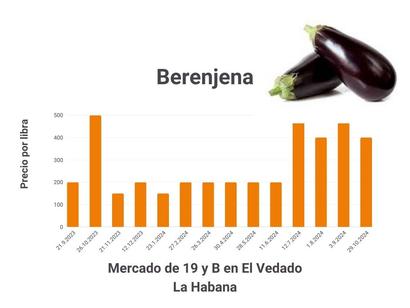
In the Public Health Centers in Cienfuegos ‘There Is Nothing and No One’ To Attend to the Sick

The José Luis Chaviano polyclinic is located a few meters from the Embarcadero del Muelle Real / 14ymedio

14ymedio bigger14ymedio, Julio César Contreras, Cienfuegos, 16 November 2024 — The deterioration of Public Health facilities, in the eyes of the residents of Cienfuegos, looks critical. From the small offices of family doctors that are scattered throughout the city, to the hospitals, the shortage of professionals and supplies is an obvious reality that worsens with the months.

Many of the offices that were built between the 80s and 90s of the last century were equipped with several rooms (waiting, consultation and checkups, in addition to a bathroom) and two homes for a doctor and a nurse to be permanently installed with their families. Over time, the houses passed to their descendants, regardless of whether they gave consultations. Today, many of these properties are closed; not only have the families emigrated but the shortage of professionals makes it impossible to keep all the centers active.

The “desolate” situation described by the residents of Cienfuegos is not as dramatic as in the small towns and isolated communities. At least in the provincial capitals some doctors make rounds and visit the office once a week. However, the premises hardly serve as “a reason to miss work, get a prescription or, if the doctor brings his own equipment, have your blood pressure taken.” continue reading

The reception is almost always empty, without even a custodian nearby / 14ymedio

On the next level are the polyclinics, which are not in better condition. In the José Luis Chaviano, “just looking at the facade you can already guess what awaits you inside,” says Vilma, a neighbor of Pueblo Nuevo, where the health center is located. “I have no choice but to come and inject myself twice a day. Sometimes I wait for the nurse, who went to her house or to solve some personal problem. The reception is almost always empty, without even a custodian nearby. And, in addition, I have to bring a syringe, needle, ampule and cotton,” says the retiree.

The woman, who also suffers from asthma, explains that until a while ago you could at least go to the polyclinic for an aerosol spray. However, there are no longer enough oxygen tanks for all the patients who arrive requesting that treatment, although a truck unloading them is observed with some frequency. “I am not aware that they are doing illicit business with such a delicate matter, but it is very suspicious that the supplies are unloaded and then disappear. If they got here, where are they going to end up then?” she asks.

Located a few meters from the Muelle Real embarcadero, the polyclinic has the category of University, although it rarely receives medical and nursing students, increasingly scarce on the Island. On the contrary, it is not uncommon to find “a single doctor on duty, whose specialty is writing certificates for work absences and prescriptions for missing medicines,” says Vilma. “The sick now go directly to the hospital, because they know that there they will not find what they are looking for,” she adds.

External consultations have practically disappeared because of the huge deficit of doctors / 14ymedio

Interviewed by 14ymedio, a receptionist at José Luis Chaviano says that outpatient consultations have practically disappeared “because there is a huge deficit of doctors in all specialties, and the few that remain were sent to the Provincial Hospital.” She doesn’t know for sure the state of other polyclinics, but since hers is “so central,” it’s logical that the rest are “the same or worse. Specifically in this area of health there is a very great lack, both in equipment and in personnel. The walls even have mold and the floors are dirty, because it is difficult for someone to accept work as a cleaning assistant for such a low salary. As a result, there is nothing and no one.”

Even the anti-vector fight, compares the employee, which attracted many students and fumigators to the surroundings of the polyclinic, to eradicate mainly the aedes aegypti mosquito, “ceased to be done a long time ago.”

Gabriel, a Cienfuegos man who has been “following the dentists” of the Provincial Hospital for months to have a procedure done, does not have a good opinion of this center, the most important in the city. “My daughter-in-law works in a private clinic and told me that she is going to help me get a prosthesis, but I first need the Provincial to analyze my case and indicate the treatment so that she can help me,” he summarizes.

“The problem is that they don’t have equipment or specialists for anything, and they are only doing extractions,” continues Gabriel. According to him, his daughter-in-law spent part of her internship as a student in the hospital itself, and even then “there was not enough water for her to wash her hands. She was gradually disappointed by all that,” he says, “and in the end she left before they pointed her out as hostile for her continuous complaints.”

Translated by Regina Anavy

____________

COLLABORATE WITH OUR WORKThe 14ymedio team is committed to practicing serious journalism that reflects Cuba’s reality in all its depth. Thank you for joining us on this long journey. We invite you to continue supporting us by becoming a member of 14ymedio now. Together we can continue transforming journalism in Cuba.