A Kafkaesque Tale / Esperanza Rodriguez Bernal #Cuba

21-kafkiano

espeby Esperanza Rodríguez Bernal, Attorney at Law

Many people come to see us about the fines imposed on them by the Port Captain.

The great majority of them have been notified after more than two months have passed from the time they committed the act, making the judicial process ineffective by not fulfilling the established formalities, in this case, the term for the application of the law. continue reading

This violates Decree-Law 99/87, which provides the following in Chapter V.:

Article 39: Violations shall be punished immediately, as soon as they are known at the moment of commission, or when their effects have continued to survive at the moment of verification.

In this way the Port Captain, protected by Decree Law No. 194/99, has imposed the aforementioned fines in violation of Decree Law 99, “Personal Contraventions” of December 25, 1987.

People who in one form or another have been affected, have requested our advice, among other things because the same Decree Law 194 in Chapter II, Article 2.1, Subsections a, b and c establishes fines from 500 to 2,000 pesos.

These people, for the most part, have tried to leave the country on flimsy rafts, risking their lives, indicating that they do it because of fundamentally economic problems.

This begs the question: How can a person who lives in Cuba, where the average salary is approximately 340 pesos in national money, pay such a high fine?

The migratory accords signed by Cuba and the United States establish among other things that Cubans apprehended leaving the country in rafts should be returned with the condition that no reprisals will be taken against them.

Furthermore, the concept of “embarkation” used by the Port Captain is absurd. For them, anything that floats constitutes an embarkation, whether it’s a surf board or a camera truck. In addition, the fact that the sanction has to be appealed before the same people who apply it converts this into a kind of Kafkaesque tale and not into a serious and responsible resolution of a state entity that legislates on such an important problem for the citizens.

 Translated by Regina Anavy

January 23 2013

For Shame! / Angel Santiesteban #Cuba

By Amir Valle

Ángel Santiesteban is a writer.

It’s a truth so absolute that it can make whoever reads this think, “Amir Valle still doesn’t know what he’s going to write.” And he would be right. Because I could have begun by saying directly what I mean:

“Ángel Santiesteban is a writer, but they want to disguise him as a criminal.”

And now that’s very different. Still more if we see ourselves obliged to remember that Ángel Santiesteban lives in a country that spends its time “crowing” everywhere that Cubans “live in the best of worlds that exist today”; that is to say, almost in a paradise on earth, and that the accusations made by enemies — who in all cases are called “mercenaries of imperialism” — that human rights are not respected in Cuba are false.

Ángel Santiesteban is a writer, and he has told about a Cuba that the government doesn’t want to show; a Cuba that refuses to accept many honest beings of this world who once pinned their hopes on what the Cuban Revolution meant in those beautiful and, I repeat, encouraging, years of the Seventies. But the saddest thing is that Ángel Santiesteban has written, persists in writing and speaking about a Cuba that certain intellectuals of the Left strive to hide.

I have spoken with some of these colleagues, and it has called my attention to discovering that, determined in their personal war against “the evils of imperialism,” against “the genocide that capitalism is causing in the present world,” against the “dangerous and growing loss of liberties and human rights that the United States and the rich countries of the First World are carrying with them wherever they plant their boots,” they don’t want to understand (and even search for thousands of justifications, among others, Ahh! The North American blockade!) that on a more reduced but also criminal scale, the Cuban government has converted “Cuba, the beacon of the Americas and the world” into an absurd marabuzal (convoluted mess) of economic, social and moral evils.

They don’t want to recognize (and even try to find forced explanations) that because of the failed economic experiments and the “war mongering internationalism” of Fidel Castro and his minions, the Cuban people have suffered a true genocide that already numbers more dead than all the deaths that have occurred on the island since the beginning of the 20th century up to today (just trying to escape Cuba for the United States on makeshift rafts to reach “the capitalist hell,” around 30,000 Cubans have perished); and above all, those intellectual colleagues of the Left lose themselves in labyrinths of slogans from the epoch of the Cold War when they try to defend a government that shows its true dictatorial face eliminating freedoms and human rights for all its citizens, enraging itself especially with those who dare to think with their own minds, to say and write what they think.

It’s a shameful position, without doubt. But more shameful is the silence in response. And it’s in the face of evidence of the total disaster that today is the political and governmental “system” imposed on Cubans (and the quotation marks are because more than a system, it’s a desperate experiment to gain time in power to prepare the way for the “sons of the Castro Clan and their acolytes” to assume that power). Faced with the impossibility of defending such a debacle with solid arguments, they now count on changing the subject, and when they see themselves obliged “to fulfill their honorable professional careers” to face the stubborn truth of the facts, they respond with a theatrical “I didn’t know” (at least this happens with the majority of those I know).

But there is even something more embarrassing. A good part of those intellectuals personally knew Ángel Santiesteban when he still hadn’t decided to say out loud and to write journalistically to Cubans and the world what he thought about the harsh reality of his country. At that time he was limiting himself to writing only short stories, which were hard, critical, not at all complacent. But even so he was then considered a prestigious voice in the concert of Cuban narrative. The official critics, many of them cultural functionaries in important political posts, categorized him as “the best storyteller of his generation.”

But none of those critics, none of those functionaries, could ever explain why, while the Latin American Literary Agency (that represents and manages internationally the literary works of the resident writers on the island) placed in good, mid-range and even unknown publishers abroad works that were “not conflictive” (many of them of lesser quality than the books of Ángel), the Agency never managed to place one single one of the much-praised books of Ángel Santiesteban.

We heard the unofficial response from the mouth of a Cuban editor, then the director of one of the most prestigious publishing houses on the island, at a party in the Pablo de la Torriente Brau Cultural Center. And perhaps that explosion of sincerity had something to do with the several plastic cups of rum and cola that the editor had drunk. Now we know, because life has shown us: children and drunks tend to be implacably sincere. Later I knew that the weight of conscience bothered that poor man, the guilt of not having been able to overcome the fear that obliged him to leave his ethical principles to one side and convert himself into the worst of intellectual marionettes: a censor.

“Some day many things I did will come out into the open…the many masks I had to put on…to save you from the hell that I had to go through…to defend the right of writing with freedom, believe me, I did a lot…a lot….,” he said, with a nasal voice.

“I saved your ass when you wrote the true Manuscritos…and now I can tell you that was a great book….,” he told me, pointing at me with a trembling finger.

“And you, for your book of stories about Pinos Nuevos,” he told Alejandro Aguiar, who I didn’t think was really listening because he was talking with Alberto Guerra, who now also had ears as red as Mandinga from the alcohol.

“And just now I came from a meeting where a bastard from the Agency, whose name I won’t mention, said clearly, clearly, that he is not promoting outside Cuba “gusano books” — the books of worms — like those of Ángel Santiesteban.

That I remember. Of course with all the repetitions, all the babbling and all that comic slurring of words that drunks usually do. Even tears, especially when he complained that it hurt him to be seen as a censor by colleagues like us.

The period of time, and above all the secrets that some writer friends told us under their breath who also were functionaries “of confidence” would allow us to prove that that behavior was not an aberration of one particular censor. It was a clear political tactic: books that showed the island in a way that was “not convenient” to the official image that Cuba projected were shelved and the authors were always told that “we don’t know what’s happening, but we are not able to place your books…it’s difficult, the international market is very hard.”

And when they placed some of those books it was strictly for propaganda purposes, well calculated. One writer who protested too much had to shut up (and was then published by a very small house of almost no distribution, so that the book didn’t circulate except for guaranteeing a few samples for the author who boasted of being published abroad) or had to show that it was a lie that Cuba censured him, for which they flocked to false or blandly “conflictive” books of writers who clearly adhered to the Regime, most notably the “critical” novel “The Flight of the Cat,” by Abel Prieto.

Nothing of that, of course, do they accept, those foreign intellectuals who then came to Cuba and were astonished at the “fabulous narrative capacity of Ángel Santiesteban,” as some told me personally in those years. I even dare to assert that some, if they are asked, upon receiving the official version (in which, I am also sure, they don’t believe) have decided to make like ostriches and hide their heads in the sand.

None of them, even where it is known in the intellectual milieus of the island and exile, has interceded for this writer they praised so much when he was unknown by “the enemy press, mercenary of imperialism”; none of them, in their numerous trips to Havana, has demanded that the right of Ángel Santiesteban to say what he thinks, to publish what he thinks inside and outside Cuba be respected, not even with 0.5 percent of the rage with which they defend a phony like Julian Assange (who presents himself as a paradigm of free expression of the press but runs to seek refuge under the wings of a government that is a paradigm in the world of repression of a free press).

None of those who verified with their own eyes that Ángel Santiesteban is, above all things, a sincere writer, with a literary career that has persevered since its very beginning in offering a critical look at the Cuban reality, none of them, I repeat, has pronounced publicly, like they should, to simply defend the right of Ángel Santiesteban to be considered thus, a writer.

Berlin, November 9, 2012

Translated by Regina Anavy

End of Service! / Regina Coyula

On Monday, my son is thinking about enrolling as a university student. These are his first two weeks as a “civvie” after one year of military service. This was a year wasted, because except for the roughly six initial weeks of service known as “The Trial”, during which he ran, jumped, fired guns, pushed paperwork and, above all, marched a lot, he spent the rest of his time earning money by working with the private transport trucks around San Antonio de los Baños and becoming an expert at clearing scrubland with his bare hands.

According to the stories I’ve heard about the dismal experiences people have had on their military service, my son had a pretty good time of it, made loads of new friends with whom he spends his brief holidays at the beach, or at concerts or playing pool. They all bring up anecdotes and, smiling, remember the brutes they had for superiors. This is probably the memory that most sticks out for them during that time.

Translated by Christopher Andrew Smith

August 24 2012

Letter From a Young Man Who Has Left / Ivan Lopez Monreal

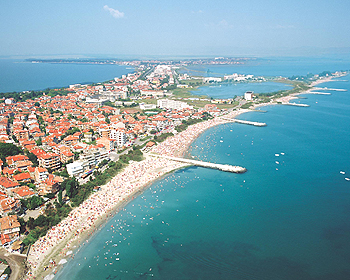
Pomerie, Blugaria. Source: landisbg.com

Site manager’s note: This letter is not from one of our regular bloggers. It is from a young Cuban who has emigrated to Bulgaria, and was written in response to a post on (the now “paused”) blog “La Joven Cuba,” detailing why young people should not emigrate from Cuba. The letter is “going viral” on Cuba-related websites and we thought our readers would want to read it.

Dear Rafael Hernández:

I have read with great interest your “Letter to a young man who is leaving.” I feel it applies to me, because two years ago I left Cuba, I’m 28 years old and I live in Pomorie, a spa city situated in the east of Bulgaria. The reason why I write to you is to try to explain to you my stance as a young Cuban emigrant. Without solemnities nor absolute truths, because if leaving my country has taught me anything, it’s discovering that such truths do not exist.

Maybe some of those who have left in the last few years (there are thousands of us) are clear about the moment they decided to do it. Not me. Mine was progressive, almost without my realizing it. It began with that oh-so-Cuban resource that is the complaint. Trifling, perhaps. About what isn’t available, about what has not come, about what happens, about what doesn’t happen, about not knowing. Or not being able to.

The complaining is not serious, what’s serious is that it becomes chronic, like an illness, when nothing seems to resolve itself. And one can accept that that’s how it is, and that it’s your country for better or for worse, or move on to the next category, which is frustration. Or discover that the solution to the majority of the problems is out of your hands. Or they won’t let you do it. Or even sadder: they don’t seem to matter.

To abandon or to remain in your country is a very personal decision that should never be judged in moral terms. I chose this route because I wanted a different future from the one that I foresaw in Cuba, and I left to look for it knowing that it could go badly, but I wanted to run that risk. I’m not going to lie and say it was painful. I did not cry in the airport. On the contrary, I was happy. In fact, I freed myself.

You are right to say that my generation lacks those emotional ties that generate experiences such as the Bay of Pigs, the Missile Crisis or the Angola war. But make no mistake, I have also had my epics. At best not as epic, but certainly equally devastating. In these twenty-two years mentioned, I have watched the country for which my parents fought degrade itself. I have seen my elementary and secondary school teachers leave. I have seen families argue for the right to eat bread.

I have seen the Malecon full of nervous people screaming against the government, and even more nervous people screaming in its favor. I have seen young people building rafts to flee to who knows where, and a mob throwing cat shit against the house of a “traitor.” Rafael, I have even seen a dog eating another dog on the corner of 27 and F in Havana.

And I have also seen my father, who was in Angola, his face pale, without answers, the day a hotel custodian told him that he could not keep walking along the Jibacoa beach (across from the international camping area) because he was Cuban. I was with him. I saw it. I was ten years old, and a ten-year-old boy does not forget how his father’s dignity goes to shit. Even though he had returned from a war with three medals.

You talk to me about the social conquests of the Revolution. About education and medicine. I am going to talk to you about my education. I had good teachers, and when they left they were substituted for others less prepared who, in turn, were replaced by social workers who wrote “experience” with an S and who were incapable of pointing on a map to five capitals of Latin America (they didn’t tell me this, I lived it). My parents had to hire private tutors so that I could truly learn. My parents did not pay them; my aunt based in Toronto did.

To be honest, I owe a good part of my education to the clients of the Greek restaurant where my aunt worked. But there is more. In my older sister’s time it was extremely rare that a student receive a grade of 100%. In my time a 100% came to be something common, not because we students had become more brilliant, but because the professors lowered their requirements to cover up the school’s failure. And you know what? I was lucky, because those who came after me had a television instead of a teacher.

I have very little to say about medicine, because you live in Cuba. And except for remaining free, which I admit is still commendable, the state of the hospitals, the precariousness of badly-paid doctors and the growing corruption push the health system even more toward that third world you did so much to avoid. And the truth is that, today, a Cuban who has hard currency has more opportunities to receive better treatment (giving gifts or even paying) than one who doesn’t, even though it’s illegal. And even though the constitution says otherwise. As sad as it is to admit, Rafael, the education and medicine available to today’s Cubans are worse than those which my parents enjoyed.

You say that the country exerts a great effort, that there is an embargo. And I respond to you that there is also a government that takes fifty years to make decisions on behalf of all Cubans. And if we have reached this point, it would be healthiest to admit that it has failed, or was unable, or didn’t want to do things differently. For whatever reason. Because its failure is also full of reasons. And instead of digging in with its historical figures in the Council of State, it should give way to those who come after.

Rafael, it’s very frustrating for a young person of my age to see that 50 years have passed in Cuba without producing a generational change-over because the government has not allowed it. And I’m not talking about giving the power to me, as a 28-year-old. I am talking about those 40-, 50- or even 60-year-old Cubans who have never had the chance to decide.

Because today’s people who are of that age and who hold positions of responsibility in Cuba have not been trained to make decisions, but rather to approve them. They are not leaders, they are officials. And that includes everyone from ministers to the delegates of the national assembly. They are part of a vertical system that does not provide room so that they can exercise the autonomy that corresponds with their positions. Everything is a consultation. And contrary to the old the saying: instead of asking for pardon, everyone would rather ask for permission.

You say that in my country one can vote and be elected to a position from age 16. And that the presence of young delegates has diminished from the 80s until now. You even warn me that if we continue on like this, there will be fewer young people who vote and therefore fewer who are eligible. And I ask you: what purpose does my vote serve? What can I change? What have the delegates of the national assembly done to spark my interest in them?

Let’s be honest, Rafael, and I believe that you are in your letter, so I also want to be honest in mine, we both know that the national assembly, as it is conceived, only serves to pass laws unanimously. It is ironic to call an institution that meets one week a year an “assembly.” Three or four days in the summer and three or four days in December. And during those days it limits itself to approving the mandates from the Council of State and of its President, who is the one who decides what happens and what doesn’t happen in the country. Sadly, I cannot vote for  this president. And I’m not sure I would want to do so.

A few days ago I heard Ricardo Alarcón confess to a Spanish reporter that he doesn’t believe in Western democracy “because the citizens are only free the day they vote, the rest of the time the parties do what they want…” Even if that were the case, which it is not (at least not all the time, and not in every democracy), he would recognize that since I was born, in 1984, voters in the United States, for instance, have had seven days of freedom (one every four years) to change their president.

A few times they have done this for the better, and others for the worse. But that’s another story. A young person my age from New Jersey has already had two days of freedom to, for example, throw out Bush’s Republicans and elect Obama. Cubans have not been able to make a decision like that since 1948 (not including Batista’s elections, of course). And if you tell me that the capacity to elect a president is not relevant for a country, I insist that it is. And more relevant for a young person who needs to feel like he’s being taken into account. Even though it may be only for one day.

You probably think that we who left chose the easier route, that the more difficult one was to stay in order to solve problems. But I have to tell you that my grandparents and my parents stayed in Cuba to wrestle with those problems. To give me a country that would be more advanced, equitable, progressive. And the one they have given me is one in which the people celebrate being able to buy a car and sell a house as if it were a conquest. But that is not a conquest, it’s recovering a right that we already had before the Revolution. Is this what we’ve come to? Celebrating as a victory something so simple? How many other basic things have we lost over the years?

For my parents it’s painful to assume that failure, and they don’t want it for me. They don’t want me, at 55, to have a salary I cannot afford to live on, neither the salary nor the ration book. Because it’s not enough. And they don’t want me to survive only by turning to the black market, to corruption, to double standards, to pretending. They prefer that I be far away. At 28 years old I have become my parents’ social security — how else do you believe two people could survive on 650 pesos?

Yes, Rafael, hundreds of thousands of us Cubans have had to leave so that our country doesn’t collapse. What Cuba receives in our remittances is superior, in net value, to nearly all of its exports. Yes, the country has lost youth and talent, and instead of opening a realistic debate about how to stop the bleeding, it remains anchored to an ideological immobility that is nothing more than fear for the future. And what do I do in a country whose rulers are afraid of the future…? Wait until they die…? Wait until they change the laws out of generosity and not out of conviction? What do I do in a country that continues to reward unconditional political loyalty over talent? What do I aspire to if what I am and what I do is not enough? Do I become a cynic? Or do you motivate me to face the consequences and say what I think out loud? Some young people from my generation have already done so, and where are they?

Let’s remember Eliécer Ávila, a student of Eastern University who had the courage to ask Ricardo Alarcón why young Cubans could not travel like other people, and who was retaliated against by the system. He was not to blame for the presence of a BBC camera there, nor for the ridiculous response that Alarcón gave him (the barbarity that planes would fill the sky and crash into each other). Today Eliécer lives as an outcast for political reasons. And he is not a terrorist nor a mercenary nor an unpatriotic person, he is a humble young mullato man, an academic, who made the mistake of being honest. How sad to have a revolution that ends up condemning someone for being honest. You want me to stay for that, Rafael?

Leaving your country and your family is not an easy path. Nor is it the solution to anything, it is only a beginning. You go to another culture, you have to learn another language, you have some very bad moments. You feel alone. But at least you have the relief of knowing that with effort you can get things. My first winter in Bulgaria was very difficult, I found work as a driver and I spent four months loading and unloading washing machines to save money to be able to travel to Turkey. A dream I had when I was a young boy. And I went.

I did not have to ask permission to leave nor did my plane crash into another. I could complete Eliécer’s dream. And it made me happy to have done so. I’ve known other realities, I’ve been able to compare. I’ve discovered that the world is infinitely imperfect, and that we Cubans are not the center of anything. We are admired for some things just as we are hated for others.

I have also discovered that leaving has not changed my leftist convictions. Because the Cuban left is not the left, Rafael. Call it whatever you want, but it is not the left. I am part of those who search for social progress with equality of opportunity and without exclusions. Think what you want to think. Without sectarianism or trenches. Because that only serves to confront society and substitute dogmas for truths.

Finally, Rafael, chance wanted me to end up in a country that was also governed by one party and a single ideology. Here there was no Velvet Revolution like in Czechoslovakia, nor did they demolish a wall like in Berlin, nor did they shoot a president like in Romania. Here, as in Cuba, the people did not know their dissidents. Here there were no fissures, and nevertheless, in a week it went from being a socialist state to a parliamentary republic. And nobody protested. Nobody complained. I cannot help but ask myself: did they spend 40 years pretending?

Since then it hasn’t been a bed of roses; they have faced several crises, and the population has even come to live with poorer quality than what they had in the 80s, but curiously, the vast majority of Bulgarians do not want to go back. And the socialism they left behind was more prosperous than what we Cubans have today. But in this country they don’t think about the past, they think about the present. In bettering the economy, in resolving the inequalities (they exist here, as in Cuba), in fighting the double standard, the personalities and the corruption that the state generated for decades.

The day that this present matters in Cuba, no doubt, we will see each other in Havana.

Ivan López Monreal
Pomorie, Bulgaria

Translated by: Regina Anavy, Courtney Finkel

August 22 2012

Inventing at the Airport / Anddy Sierra Alvarez

People are preoccupied with how to pay the tariffs at the airport, especially on medicine and food.

The new restrictions for travelers increase the tension on the island. “With the tax on food, there is less coming into the country, especially to Cuban families,” said Jesús Reyes, a 42-year-old Cuban, recently arrived from Italy.

Medicines are very important, because when some medication is needed that can’t be found on the island, a family member is asked to send it from abroad. Everyone knows about the “development” of public health in Cuba, so they are limiting the amount that enters for Cuban families.

As for food, this tax already existed but was suspended in 2008 because of the emergency caused by hurricanes Gustav, Ike and Paloma. Food was allowed to come in for free.

It seems the government now has the food supply guaranteed and can satisfy popular demand or simply that harder times are coming.

Translated by Regina Anavy

July 30 2012

Cholera / Anddy Sierra Alvarez

CóleraThe outbreak of cholera in Cuba is increasing, and the capital could have 10 cases. Still, the official media have not commented about it.

A source from the Capri polyclinic says there was a meeting in his workplace to learn that in the province — Ciudad Habana — there are 10 cases of cholera in the Covadonga hospital, located in the Havana municipality of Cerro.

The outbreak started in Granma province in the municipality of Manzanillo. The government quickly suspended trips to Granma, the affected province, and didn’t publicize the news until the death of three elderly people, justifying their death by the deterioration of health they had due to their advanced age.

Because of the delayed public alert by the mass media, citizens from Havana traveled to Granma province. Suspending the trips on the part of the government was not sufficient, because not all Cubans going to the eastern provinces always use that type of transport. Some neighbor or family member with their own transport can go see their family in the country and save money that way. Also, the crisis in the water supply to homes could have provoked the outbreak now that the water tends to go bad since it’s stagnant for several days.

If the official press were more immediate, the lack of knowledge on the part of citizens would have been avoided, and thus fatalities would occur with less frequency.

Translated by Regina Anavy

July 9 2012


The Lions of the Capital / Rosa María Rodríguez Torrado

I’m not referring to the bronze lions that guard the Paseo del Prado in Havana, but rather to the team insignia of the Cuban baseball team, the Industriales, who in May won the title of sub-champion of the 51st National Series. The Tigers of Ciego de Avila were the champions. The Industriales, which have won the most championships in Cuban baseball history since 1959, unleashed a rivalry in Cuba comparable only to that which exists in the Major League in the U.S. against the New York Yankees, or perhaps worse. Because the options for recreation here are more limited than in other countries, there’s a great social frustration from 53 years of totalitarianism — that manifests itself with tension among the citizens, encapsulated by militarization — and the enthusiasm for this pastime is so ingrained that an impassioned and divided multitude masses dangerously in the stadiums.

The hubbub of fanatics present in the stadium, the seat of the inhabitants of the capital, transcends the walls and is heard in the distance, since the stadium sometimes teems with 60,000 people. It’s common that the temperature is elevated among the competitors, because Havana is the most cosmopolitan of the Cuban provinces. It doesn’t matter if Santiago de Cuba is playing against the Industriales, or if an aficionado is sitting beside someone from Villa Clara, Cienfuegos or Sancti Spiritus and lives in Havana and wants Santiago to win as well. If he’s from the eastern provinces, he will want it and will reveal it with more earnestness and bombast. They want to crush the city that welcomes all of them.

This country, under a dictatorship for 70 years by Easterners — we can count almost 7 years of Batista (1952-1959), who also was one — favored to a great extent the inhabitants of that region, with a certain partiality and arrogance that with time has been extended to other provinces of Cuba.

In the stadium of the Blue Lions, the Lationamericana, we see how the natives of the interior of the country who reside here and who visit us have been given “permission” to crush those habaneros governed by origins of other demarcations as if we were their colony. The height of the authorities’ complicit passivity and citizen incivility is at the point that they have changed the genre of the athletes of the blue team. They yell “Roar, Lions” when the Industriales are losing, not only when they compete in the interior but also on their own territory. They only need to sing “Pass us the jug” in our own house.

They even sing the song in Ciego de Avila with the same words and transmit it on national television. Up to what point and how far will they go with this sick sentiment? What will happen if the followers of the Lions in the stadium give them an eye for an eye and replicate the insults they receive about our team, the only one attacked right now?

If the baseball fans of the capital pay them back with the same contrary fanaticism and start to jeer their teams with humiliating and profane jokes – the Tigers of Ciego de Avila with the expression, “Meow, Tigers”; the Wasps of Santiago de Cuba with “Buzz, Little Bee;” the Roosters of Sancti Spiritus with “Cluck, Chicken”; or the Sorrels of Granma with “Whinny, Mare”; and so on with the rest of the national conglomerates symbolized by animals — will the authorities then take charge and call for tolerant and respectful sanity and formal education to avoid a massive altercation, something that is always a worry?

Translated by Regina Anavy

June 30 2012

Now I feel more free in my conscience: Interview with the writer Ángel Santiesteban / Ángel Santiesteban

Ángel Santiesteban

by Ernesto Santana Zaldívar

HAVANA, Cuba, June, www.cubanet.org – In the ’90s, the generation of the Novísimos (the Newest) brought to Cuban literature themes and narrative forms that marked a certain rupture with the previous generations. Angel Santiesteban, born in 1966, became one of the most emblematic creators of this time, not only for the prizes he won, but also for the acceptance he achieved with readers. The son of a businessman and a nurse in Cienfuegos, Santiesteban studied in the “Camilitos” when he decided to begin a career as Commander of Tactical Troops.

But, according to the story, “God took me violently from this path sending me to prison for having accompanied my brothers to the coast in 1984, when they left the country. I was in prison for 14 months in La Cabaña, accused of conspiracy, although I was absolved at the trial because this crime doesn’t exist among brothers. But I know that God sent me there for a reason, and I thank Him, because it made me grow up and understand the pain of people. It was there that I discovered I wanted to be a writer, that it was through writing that I could give a voice to those who suffered.”

He then started going to night school at the Faculty of Letters, but, needing money for his family, he went to work as an assistant director at ICRT (Cuban Radio and Television Institute), at the time he was completing his studies as a film director at ICAIC (Cuban Institute on Cinematographic Arts and Industry). However, the urge to write imposed itself, and he abandoned his work to dedicate himself to writing.

To his surprise, in 1989 he received an honorable mention with his third short story in the French Juan Rulfo contest. In 1990 he won the national literary workshop prize with his story, “South: Latitude 3″ and later, in 1992, he sent a book with the same title to the Casa de Las Americas contest, which he won, but immediately the political police prohibited the jury from awarding him the prize.

“In 1995,” Santiesteban said, “I submitted the same book under another title, “Dream of a Summer Day,” which, in spite of winning the UNEAC (The Union of Writers and Artists of Cuba) prize, came out three years later with the condition that I take out five stories.” In 2001 he won the Alejo Carpentier short story prize with “The Children Nobody Wanted,” and in 2006, the Casa de Las Americas prize with “Blessed are Those Who Mourn.”

CUBANET: From your first publications it was evident that your subject matter was raw, modern and controversial, and besides the reader could think that you were relating personal experiences. Why did you choose these themes?

ANGEL SANTIESTEBAN: I experienced a raw reality and my writing started to be raw. For example, the theme of Angola. As I came from a military world and aspired to be a soldier, I discovered that many feelings of the internationalist soldier coincided with those of the prisoners I knew in La Cabaña: They were far from home, their family and their environment; they were under pressure; they had profound sexual desires; they committed acts of indiscipline; they were given orders by the Army; they had to keep rigorous schedules. So behind this internationalist soldier that I describe is my experience as a prisoner.

Occasionally some veteran of these wars asks me if I was in Angola, but I tell them that I was a prisoner and that I know these feelings. In addition, I have a brother who lived that experience. Before going he was the most rational person in the family, and he always gave good advice. When he returned he was the crazy person in the family.

I never planned to write this kind of story, but it emerged from my experience. It never occurred to me to write against the system. One time a writer I respected told me my writing was unfair. In that moment I understood he was right, that it was unfair that I expose the ugly side of those men who had sacrificed so much. But later another writer told me something that helped me a lot: “Literature is not fair or unfair. It’s true or false. That’s what you should worry about.”

CN: Where do you feel most comfortable: in the short story, the novel, in your blog?

AS: I feel most comfortable with short stories. Although it seems weird to say, the truth is that when I feel like writing, a short story comes out. Then I only have to fix some words. I’m short-winded. Writing a novel requires tremendous work. I suffer a lot, I procrastinate, I don’t want to continue. Furthermore, I can’t sit still, and a novel requires me to be more stable, more concentrated, and I’m very unconcentrated. As for the blog, I’m afraid of losing the discipline because it’s like a more refined journalistic chronicle. I’m not a journalist; I’m a writer, but sometimes life takes you to unexpected places. All in all, I started to write to give a voice to those who don’t know how or can’t do it.

CN: Do you have favorite writers? Which ones have influenced your writing?

AS: I constantly read and re-read Hemingway, Rulfo, Isaac Babel, Dostoyevsky. They are the ones I follow and the ones who from the beginning brought me the most. Although I should also note that Kafka always was there, sleeping (of course, I’m preparing a book of short stories about the absurd). From Cuba, I should mention Eduardo Heras León, who was the closest thing to a maestro writer I had. And, well, the writing of Virgilio Piñera has always been fundamental for me.

CN: There’s no doubt that you were one of the most famous members of the Novísimos (the Newest). How do you see yourself with respect to your generation and, in general, with respect to present-day Cuban literature?

AS: I believe that the Novísimos were a kind of family. I don’t know if it was so important as a literary movement, but as a movement of brotherhood, yes, it was. We all took a lot of care of one another. Now we’re dispersed, which is like a puzzle that you can’t put back together. Inside Cuban literature I feel alone, separated, in internal exile. And from the time I started my blog, I was no longer tolerable. They chewed up my writing, but they didn’t swallow it, and with my blog they spat out everything I was thinking inside.

Iroel Sánchez, who was then the President of the Cuban Institute of the Book, was the Taliban who “executed” me, who ordered me to be taken out of any anthology, any presentation. And he had me by the balls. He had been in the war in Angola, and his buddies asked him how it was possible that he would agree to publish “The Children Nobody Wanted.” Also, the Association of Combatants sent him a letter complaining about the book. He told me things like, “Angel, aren’t you aware that you’re serving the enemy? Don’t you see that without wanting to you’re putting yourself in the service of the Yankees?”

CN: Do you think Cuban intellectuals are obligated ethically to be critical of the Regime?

AS: I believe they are obligated above all to follow their conscience. If you believe that you should defend Fidel Castro, defend him. If you have to defend the Revolution, defend it with your teeth. I don’t criticize that. What happens is that there is an amazing opportunism. In private there are those who are more against the Regime than I am. Extreme right. I have ended up feeling like a Leftist with these people. And later they do whatever they can to get a trip abroad. Their banner is opportunism, cynicism. They’re capable of saying in public that Cuba is the best, and later, in private and under their breath, they tell you that Fidel Castro should hurry up and die.

CN: You have lived through almost unbelievable experiences — detentions, beatings, a shooting, very grave accusations, harassment, persecution, surveillance, without, properly speaking, being a dissident or an active opponent. To what do you attribute this obstinacy on the part of the political police?

AS: I don’t even know how many political parties there are in Cuba. I don’t belong to any. I don’t go to any political meetings. I fight for the dreams of Cubans who want to live with dignity, in a democracy. This country cannot endure any more caudillismo.

CN: You reported that once an old man asked you if you thought civilization existed outside this island and then confessed to you that he was tired of throwing bottles into the sea. Do you think that once you could have said the same thing?

AS: I think Cubans who leave are the first to ignore these bottles. A large number of Cubans leave and begin buying and living what they couldn’t have before, disentangling themselves from the reality they left behind. Many say they are economic immigrants as if this didn’t make them political immigrants.

If you leave for economic reasons it’s because your country has a bad economic administration. Furthermore, it’s terrible to know that you don’t have a way back. Sometimes I wonder how many bottles have to be launched and if they will continue being thrown into the water if many of the Cubans who leave don’t even look at them. However, Facebook is for me a tremendous thing, something that almost surpasses a blog, because it’s more alive, quicker.

CN: This year is the official celebration of the centennial of the birth of Virgilio Piñera. What do you think is being done to honor him?

AS: Virgilio Piñera merits a major homage. That a man like him has passed through this island should be for us a reason for perpetual pride. The terrible thing is that those who killed his spirit, who condemned him to fear, who did him so much harm, pretend now that they didn’t have any responsibility, that they acted without wanting to. His crime was being gay without being a revolutionary, and furthermore being a great writer. I’m happy that they published the most possible of his work. He deserves it, and Cubans deserve it also, especially the generations that don’t know him. But you can’t forget all the suffering they caused him. There is nothing that can erase that.

CN: How do you see the present situation in Cuba?

AS: There’s an impasse. The rhythm we had has slowed down. I think that’s the result of the Pope’s visit. I feel that nothing is happening, that we’re lost. I don’t see an immediate way out of our situation.

CN: Why did you run in the last marathon in Havana with the image of Laura Pollán on your chest?

AS: I ran several years in the Marabana, but this time I felt very hurt by her death, for having lost her as a leader. I thought that Laura was going to be the person who would topple the government, because of her vigor, her vitality, her courage that few are capable of. Perhaps she was God. Others say that they took her out. In any event we Cubans owe her for everything she did for us, and the least I could do was to wear her image on my chest so that people who don’t know her would ask who she was. It was my way of demonstrating to her, in Heaven or wherever she is, my gratitude for what she did, and to tell her that her sacrifice was not in vain.

CN: Why do you continue living in this country when you probably could have a quieter life outside?

AS: Someone once commented in my blog that surely I was one of those who has enough pull to go to the United States. However, I’ve traveled to the United States several times and never stayed. Precisely, they have not let me leave the country since I started the blog. I’ve had to post a bond for three years because of the stupid denouncements against me.

On the other hand, leaving would be like surrendering. I believe that where you contribute, the more you are there. You can also contribute from abroad, but here you can contribute more directly. What I fear is to wear myself out in vain, now that I have sacrificed my writing. It’s been eight months without writing and that hurts me in my soul, because that’s the only justification I have for living.

CN: How would you describe your life in this precise moment?

AS: Right now I don’t know what’s going to happen with me or what I have to do. I don’t represent anything in the cultural world, which makes me feel very proud. I don’t want to interfere with them in anything, although I can’t return to publishing in Cuba.

Luckily, this month an anthology of my stories is coming out in France. I also have published another anthology in Spain, Italy and Miami. There are professors and foreign academics who contact me because my writing interests them.

As for the accusations against me, everything continues being very murky. I was with my lawyer at the public prosecutor’s office, and they told us that the file had been sent to the State District Attorney’s office. We went there, and they didn’t have it either, and finally they told us that a lieutenant colonel of Villa Marista had taken it. When we went there, they informed us that it wasn’t there either, that they didn’t know anything about it. Finally, we couldn’t learn where we could find the file.

At least they had seen that they couldn’t shut me up. Since the time I began my blog, my life has changed completely, but I can tell you that If I had known from the beginning everything that I would go through, I would have done the same thing anyway, because now I feel freer in my conscience. When my last moment arrives, I’m going to feel happy because I did it. To have renounced the pleasures that they offered me to satisfy my conscience, for assuming my civic life, it was something I had to do. To not do it would have sickened me with disgust for myself, and then it would be better to be dead.

Translated by Regina Anavy

July 4 2012

On the First Anniversary of the Declaration of Vilnius / Antunez – Jorge Luis García Pérez

June 29, 2012.

This June 30 marked exactly one year since an event that occurred in the city of Vilnius, Lithuania, something that had no precedent in more than 50 years of struggle of the Cuban people for their freedom. It was then that a unanimous resolution was passed recognizing the Orlando Zapata Tamayo National Front of Civic Resistence and Civil Disobedience as a legitimate representative of the Cuban resistence. For the first time in a constitutive body of the United Nations, it was clear that it’s the people and not the oppressors who are the only principal factor in change.

Today, one year since this transcendental event, our coalition of coalitions feels more committed in its struggle for freedom and is redoubling its efforts for the National Strike as one of our strategies to achieve change.

Thank you for so much solidarity!

Coordinators in the West:
Eriberto Liranza Romero
José Díaz Silva

Provincial Delegate in Matanzas:
Leticia Ramos Herrería

Provincial Delegate in Cienfuegos:
Ricardo Pupo Sierra

Coordinator in the center of the country:
Idania Yánez Contreras

Delegate in Ciego de Ávila:
Julio Columbie Batista

Delegate in Camaguey:
Santos Fernández Sánchez

Coordinators in the East:
Delmides Fidalgo López
Misael Valdés García

National legal advisor:
Raúl Risco Pérez

Executive Director:
Yoan David González Milanes

National Coordinator:
Rolando Rodríguez Lobaina

Secretary General:
Jorge Luis García Pérez “Antúnez”

Translated by Regina Anavy

June 29 2012

Readers of Granma in an Angry Struggle Against Retailers / Laritza Diversent

by Laritza Diversent

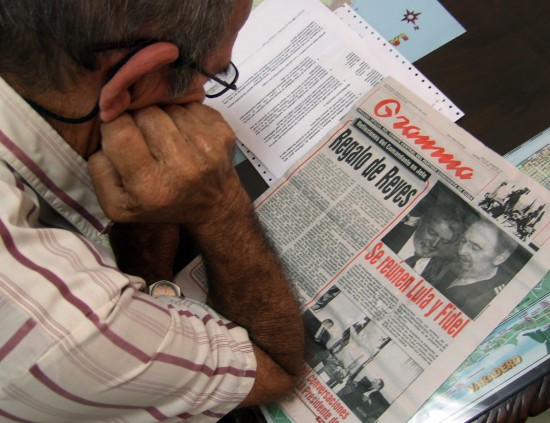
Readers of Granma, the official daily publication of the Communist Party of Cuba, are requesting real action against the sellers of various household items, one of the self-employment categories most in demand by Cubans.

J.C. Mora Reyes, this last Friday, complained about the lack of governmental action to repress it, in the Letters to the Editor section on June 8. According to the commentator, along with the denunciation, the retailers have crossed a line: “What was sneaky before and supposedly ignored, now is known.” However, he asserted that “everything stays the same, thereby encouraging transgressive tendencies as something quasi-normal.”

“I’ve read, heard, and given many opinions about the resale of articles commercialized by the State with inflated prices formed only by the law of supply and demand and the pretense of innocence by those who should and are obligated to protect the consumer,” commented J.P. Granados Tapanes, in the same section.

The weekly section in Granma, in less than one month, published around 10 opinions of readers who were against the retailers. The majority of readers think these people are not self-employed and accuse them of strangling the economy for those who are working.

According to official data, before expanding and creating flexibility in the types of self-employment in October 2010, the sector constituted approximately 87,889 people, 0.78 percent of the population. Presently there are 378,000, and it is hoped that the number will grow to 500,000 this year.

Right now the category of Contracted Workers is the one most requested by Cubans. Next comes Producer-Seller of Food, Transportation of Cargo and Passengers, and Producer-Seller of Various Household Items (retailers).

“It’s sad to see how all types of merchandise, in many cases subsidized by the State, and other things that come from outside in hard currency, are for sale publicly at inflated prices with self-employment licenses,” comments J.P. Granados Tapanes.

Legislation prohibits self-employed Cubans from selling industrial articles acquired through established state networks. It also requires them to market their own products exclusively, with the possibility of freely setting prices.

Grandos Tapanes called the self-employed cuentapropistas “workers by means of extortion” and held them responsible for “the deterioration in the ability of any employed Cuban, no matter what his economic level, to buy things with his salary, which is worth less all the time.”

The solution for these retailers is a wholesale market, where they can acquire merchandise in quantity and at lower prices than those offered to the population in retail markets, only the ones legally recognized by the authorities. This is a problem that, according to the recorded guidelines approved by the Sixth Congress of the Communist Party, will be worked out before the end of 2015.

According to Mora Reyes, public denunciation doesn’t have any effect when “there exists tolerance, procrastination, inability, expediency, or defections on the part of the authorities in the application of energetic measures” against these demonstrations.

According to the reader, to go on the offensive is not something to be taken lightly. It’s “a pressing responsibility from the moment in which you become conscious of a situation incompatible with human dignity. Acting is better than talking,” is the conclusion.

There’s no doubt that the government’s inactivity in the face of these denunciations converts this section of the only daily newspaper into a national tirade. It airs complaints and laments without giving any solution, in the style of the accountability of the municipal delegates. However, the cuentapropistas are worried about the influence that these opinions could have on the upper echelon of leadership.

Translated by Regina Anavy

June 25 2012

OMNI-ZONA FRANCA Back in Cuba After Touring the U.S. / Laritza Diversent

by Yaremis Flores

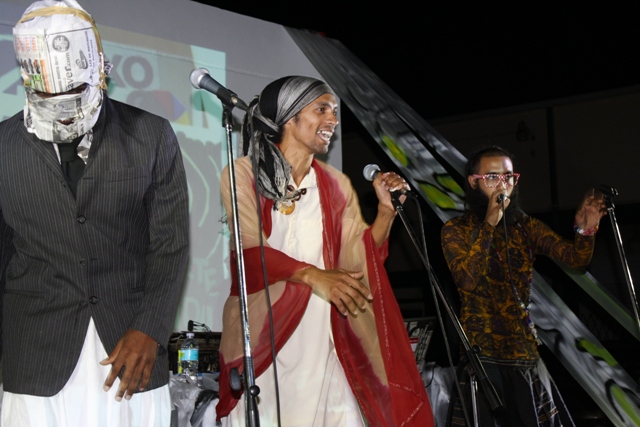
Amaury Pacheco del Monte, coordinator of the cultural project,OMNI-ZONA FRANCA, returned this Wednesday to Havana after an artistic tour that included several cities in the U.S.

Invited by the group of contemporary art, Pirate Love and Links Hall, the Center for Independent Dance and the Art of Performance, the alternative group shared its talent in festivals, concerts and universities, together with Cuban and North American artists. During their stay they were invited to local radio and television programs.

“We were on television shows and on the news on Channels 41, 51, and Radio Marti,” said Amaury, who confessed that “until this moment I didn’t understand the importance of a minute on television.”

“In the recording studios we felt at home, surrounded by Cubans almost the whole time, especially in Miami. But we also shared time with Cubans in New York, Washington, D.C., Chicago, and New Orleans. It was a fantastic experience. We were well received, and people accepted our art,” said Amaury.

One of the things that made the most impact on the leader of the project was the diversity in the U.S. “We met every type of person with different views. After this experience, today I feel changed,” he pointed out.

“I was surprised to meet Cubans who live there and their kids, who have never visited the island but have been brought up in the Cuban tradition, eating bread with guayaba. They feel they are Cuban, without being in Cuba,” he added, moved “by the separation that our people suffer.”

OMINI-ZONA FRANCA today constitutes the vanguard of alternative Cuban art. Its coordinator anticipated future projects “to continue working on Poetry without End, acknowledging ourselves through our artistic work and creating bridges among Cubans in every part of the world.”

Translated by Regina Anavy

June 25 2012

Message from Mirta Yáñez / POLEMICA: The 2007 Intellectual Debate

Dear Marilyn:

Thanks for sending me the three letters. I am completely in agreement with Desiderio and Arturo. Really, I had already begun to worry some months ago when I read the incoherent letter from Guillermo Rodríguez Rivera on the subject of “The Bridge,” which, because of the pathetic quality of some fragments, could be looked upon with scorn, and in fact I did.

In this letter he tried to justify some harmful actions of those low years, effectively, the previously mentioned “owed obedience.” And Guillermo said, darkly and someone shamefully, that one had to navigate in “these waters.” Many didn’t surrender their ethical principals nor did they agree to “navigate,” and it cost them dearly. Some of them cannot be with us (not even to feel nauseated as happened to me) like Ezequiel Vieta, for example. Yes, I think this nefarious, opportunistic and repressive thinking is still with us, and looking for every opportunity to appear.

So many shovelfuls of lime, and much was lost under them, the grains of sand still feel isolated, but they gladden the heart. Let us keep hoping that the pleasant will cover all the wounds of the unpleasant. And we will manage to live to celebrate.

Mirta Yáñez

January 10, 2007

Translated by Regina Anavy

Survey on Government Economic Measures / Eugenio Leal

The group Veritas of Psychosocial Investigations received a request from the Center of Socio-Economic and Democratic Studies (CESED) to carry out a public opinion poll about the economic measures implemented by the government. They developed the following questionnaire:

Veritas Group of Psychosocial Investigations

Volunteers carried out the survey, face to face, between January and March. There were 736 forms processed from the following provinces: Pinar del Río, Artemisa, Ciudad de La Habana, Mayabeque, Matanzas and Santiago de Cuba.

The total of general responses was considered for statistical analysis. Categories were: 15 to 34 years old, 35 to 49 years old, and more than 50 years old. Numbers were quantified by sex for the general total and by age-group categories.

Out of 736 people, 368 were female and 368 were male.

Citizen opinion about the changes in Cuba.

Age and gender

Total General

%

15 -34

%

35-50

%

+50

%

F

368

50

138

43

138

55

92

57

M

368

50

184

57

115

45

69

43

Total

736

100

322

100

253

100

161

100

Question 1: Do you think the government is carrying out all the changes that the country needs?

Total General

(736)

%

(100)

15-34

(322)

%

(100)

35-50

(253)

%

(100)

+50

(161)

%

(100)

Yes

66

9

20

6

21

8

25

16

No

382

52

138

43

139

55

105

65

Undecided

76

10

25

8

33

13

18

11

Don’t know

212

29

139

43

60

24

13

8

Question 2: Do you think it’s necessary to have self-employment?

Total General

(736)

%

(100)

15-34

(322)

%

(100)

35-50

(253)

%

(100)

+50

(161)

%

(100)

Yes

66

9

20

6

21

8

25

16

No

382

52

138

43

139

55

105

65

Undecided

76

10

25

8

33

13

18

11

Don’t know

212

29

139

43

60

24

13

8

Question 2A: Should small and medium-sized industrial and agricultural businesses be permitted?

Total General

(736)

%

(100)

15-34

(322)

%

(100)

35-50

(253)

%
(100)

+50

(161)

%

(100)

Yes

441

60

225

70

164

65

52

32

No

111

15

32

10

33

13

46

29

Undecided

77

10

25

8

32

13

20

12

Don’t know

107

15

40

12

24

9

43

27

Question 2B: Should taxes be lowered?

Total General

(736)

%

(100)

15-34 (322)

%

(100)

35-50

(253)

%

(100)

+50

(161)

%

(100)

Yes

574

78

252

78

212

84

109

68

No

65

9

16

5

23

9

27

17

Undecided

44

6

19

6

10

4

15

9

Don’t know

53

7

35

11

8

3

10

6

Question 2C: Should wholesale markets be created?

Total General

(736)

%

(100)

15-34

(322)

%

(100)

35-50

(253)

%

(100)

+50

(161)

%

(100)

Yes

464

63

194

60

152

60

118

73

No

42

6

19

6

15

6

9

6

Undecided

50

7

17

5

21

8

11

7

Don’t know

180

24

92

29

65

26

23

14

Question 2D: Should professionals be given licenses to work as self-employeds?

Total General

(736)

%

(100)

15-34

(322)

%

(100)

35-50

(253)

%

(100)

+50

(161)

%

(100)

Yes

600

82

282

87

213

84

105

65

No

39

5

6

2

12

5

21

13

Undecided

52

7

12

4

18

7

22

14

Don’t know

45

6

22

7

10

4

13

8

Question 3: Do you think the government should ratify the Declaration of Human Rights – civil, political, economic, social and cultural – that the United Nations signed in 2009?

Total General

(736)

%

(100)

15-34

(322)

%

(100)

35-50

(253)

%

(100)

+50

(161)

%

(100)

Yes

428

58

209

65

139

55

80

50

No

61

8

21

6

26

10

14

9

Undecided

85

12

45

14

23

9

17

10

Don’t know

162

22

47

15

65

26

50

31

Question No. 4.- Do you think it’s your right to exercise freedom of ….

A) Information

Total General

(736)

%

(100)

15-34

(322)

%

(100)

35-50

(253)

%

(100)

+50

(161)

%

(100)

Yes

484

66

203

63

162

64

119

74

No

63

9

47

15

12

5

4

2

Undecided

91

12

43

13

32

13

16

10

Don’t know

98

13

29

9

47

18

22

14

B) Expression

Total General

(736)

%

(100)

15-34

(322)

%

(100)

35-50

(253)

%

(100)

+50

(161)

%

(100)

Yes

642

87

263

82

228

90

151

94

No

16

2

9

3

5

2

2

1

Undecided

47

6

29

9

11

4

5

3

Don’t know

33

5

21

6

9

4

3

2

C) Association

Total General

(736)

%

(100)

15-34

(322)

%

(100)

35-50

(253)

%

(100)

+50

(161)

%

(100)

Yes

545

74

239

74

193

76

113

70

No

30

4

16

5

9

4

5

3

Undecided

60

8

21

7

20

8

19

12

Don’t know

101

14

46

14

31

12

24

15

Question No. 5.- Do you think democracy requires a multi-party system?

Total General

(736)

%

(100)

15-34

(322)

%

(100)

35-50

(253)

%

(100)

+50

(161)

%

(100)

Yes

571

78

236

73

204

81

131

81

No

64

9

47

15

12

5

5

3

Undecided

74

9

29

9

28

11

17

11

No sé

27

4

10

3

9

3

8

5

Question No. 6.- Do you think that a citizen who puts all his resources, means and effort into starting his own business has the right to associate with and receive funds from foreign investors?

Total General

(736)

%

(100)

15-34

(332)

%

(100)

35-50

(253)

%

(100)

+50

(161)

%

(100)

Yes

598

81

275

85

207

82

116

72

No

30

4

14

4

7

3

9

5

Undecided

53

7

21

7

21

8

11

7

Don’t know

55

8

12

4

18

7

25

16

Translated by Regina Anavy

June 5 2012

Interview of Cuban writer Ángel Santiesteban Prats by Amir Valle – Part 4 of 4

Public spaces

In a recent column I published an anecdote with which I’m sure you agree: our meeting in 2004, by chance, on the corner of Palacio de los Matrimonios in Vedado, after months without seeing each other, in which, very concerned about the political and cultural pressures you were under, you told me, “You’re wrong, brother, this isn’t the way. Your way and mine is to write. They have to respect us for what we write. And besides, let the politicos take charge.”

My wife, Berta, who was there, reminded me a little later, whispering, after hearing your words: “What’s happening to Angel is that he still hasn’t been shocked like you”. But I knew by our conversations that already you were disillusioned by everything you saw, the censorship, the lack of liberties, the fact that most of our group had been forced to emigrate.

But I’d like you to tell me, how did that change happen to convince you that there was a need for your voice as a social individual to be heard, as well as your writing, and when did you decide to definitively jump into the search for liberty that had been taken from us and that they’re still trying to take away from many writers in Cuba?

It was forced on me. Now I would like to tell you it’s the same, but the reality is different. First we had to prove ourselves as writers, maybe that was the idea, for them it was easier to leave us “outside the game” taking advantage of the fact that we didn’t have a tangible presence in Cuban culture. Formerly you had to earn that place, that right that literature itself grants you. So we were educated to be teachers.

Heras always told us that there was a moment where the pupil killed the Teacher. I never understood him. He said it about the literary plane and he expressed it with sadness, because at the same time he accepted that it was a part of the natural process of the ascent of the writer. I never saw that moment arrive. I always accepted him as the Teacher. But I experienced that death in part, let’s say, as a citizen, because of deviations from the social and political point of view. There I killed the Teacher. And the Teacher killed the pupil. It was an assassination on both sides, something for which I was not prepared.

In any event I jealously keep a dedication that he wrote to me a few years ago, where he assured me of his admiration, because I’ve been upright in my position, in my honesty, and I never wavered in spite of official inducements.

My need to express myself, to communicate, to say what was inside me and which I also think is an essential part of being a writer, was an unconscious motivation, like the act of writing. I never intended to be a writer, it was a bitter and necessary need that quietly arose. Perhaps it pushed me to be a communicator of my circumstances. That also happened unexpectedly. Many times I said I would be happy if I could find a little corner on the last page of any periodical where I could express my point of view, however mistaken, superficial, personal, but definitively my way of seeing life, opinions I would assume in the face of history with all the responsibility that goes along with that. Then on a trip to the Dominican Republic, certainly my last trip outside Cuba, I learned from a Cuban writer friend, Camilo Venegas, and Zilma, his ex-wife, that something called a “blog” existed. That word meant nothing to me. And they taught me what it was and it seemed to me a great invention of the 21st century. And I could read for the first time the posts of Yoani Sanchez.

I went back to Cuba wanting to have a blog, but at the same time I wasn’t naive, I knew every thing that it would open up and bring about. I had several months of conflict and internal struggle. Finally I decided to do it. And I called the Book Institute and spoke with the President, Iroel Sanchez. I told him what I intended to do, and I asked him for a national space in order to anchor myself, I was thinking Cubaliteraria. After asking me what the subject matter was, I told him that I would take a cultural and social view, something different from the usual, with the intent of driving debate and prompting opinions. He told me that he didn’t have the famous “band width” (the title of an unpublished book I have written).

Then Cubaencuentro offered me the chance to be included with them and without asking me what my blog would be about. It was the first big find. They still support my statements and writings. To appear blatantly in the Cubaencuentro magazine was unacceptable impudence for the establishment.

I remember everything they did to Antonio Jose Ponte for having been part of the editorial staff of this magazine. In one of my first posts I referred to a delegation of writers that attended a book fair in Mexico, and I talked about their having to beg for funds. That image stayed with me.

When I attended an event in Martinica with a poet who won the National Literature award, I saw him asking for pocket money and saying that we Cubans were poor and they should help us. I remember that I fled from his side. It was obvious that this poet was used to these denigrating scenes. Before leaving I warned the organizers that he was speaking on his own behalf.

I remember writers who traveled to the same Guadalajara Fair, who at the end of their days of participation, had to stay wherever someone offered because otherwise they would be out on the street. I also remember the Cuban ambassador in the Dominican Republic fleeing, aghast, from the airport because he might have to take charge of two young writers whom the organizers hadn’t gone to pick up. And a lot of other things that people talked about.

Then, when I wrote the post, it caused a scandal. They branded me as a traitor. And even those writers in the delegation, knowing I told the truth, asked me why I wasn’t afraid that the possibility of traveling outside the country would be taken away with me, although they were among the ranks of the poor.

But that rejection was a promotion. You remember that they intercepted me in plain view of the public and beat me. They fractured my arm, after warning me that “being counter-revolutionary didn’t suit” me. The latest was that petition from 15 years ago that now joined another accusation of assault.

In summarizing all these stories, they haven’t left me any other choice but to take my time with all the force and energy of my soul.

Amir, you always were precocious; in literature and politics you had more clarity than the rest. You always came in first. And that expression of mine at the time was a strategy andeventually a naivety on my part. But I’m happy that things happen, at least in my case, through my own need. That they’re natural, not provoked or hurried, least of all thought out.

And here you see me, assuming responsibility for my acts and their consequences.

One of the methods of the dictatorship that exists today in Cuba has been to introduce the virus of fear in all citizens, whatever position they’re in, whatever their origin or training, whether they live on the island or in exile. Recently in an open letter you wrote that now it didn’t matter to you to go to jail for your ideas, to die. I know, because I had to live this also in 2001, which is a hard, difficult process, but how was it in your case?

It’s been two years of waiting. Everything started like a game. I start and you continue. I resisted it for two years. Continued detentions, acts of repudiation, scorn. I continued with the game because it embarrassed me, although my conscience was clear, from those shameful accusations that still weigh on me to write them here. But the game turned serious. They started to give a serious character to the case file, an instrument of the system, and Captain Amauri Guerra Toyo, with the dirtiest violations, has created a file without proof, from top to bottom, in conspiracy with State Security and the public prosecutor’s office, where they managed to forge my signature, to change documents that my lawyer and I had seen before.

Finally, in the presence of my attorney, I signed a document and made marks with the ball point pen so they couldn’t add other words that would incriminate me, and even so, after the period I put and on top of the marks that I demanded they make, this man added a comma and a sentence that I didn’t say, according to the testimony of my lawyer. The whole file is very ambiguous, as is the Prosecutor’s petition that plays with what they don’t have or don’t know, and only a third of it is readable.

My position is to be conscious and honest, so I can continue to live. There is no way of making me change my ideas or of stopping me from making my present situation better. There is only one way out of the quagmire, and it’s that the Counter-Intelligence officials accept that they should drop the judicial proceedings. And as we know, although times are different, they don’t want to lose, above all because they fear that later other intellectuals will try the same thing. They don’t want to permit this precedent, and they will try any way they can to make an example of me.

Finally, as I put in my open letter, I’m prepared for the worst. In that case, I will resist by conviction and innocence, even go on a hunger strike.

Tell me how you yourself see something that is very delicate but very important to understand: What is happening today with Cuban writers? Is there a difference between what they think privately and what they say in public? Is it true, as Barnet and Abel Prieto say, that the immense majority of artists and writers are on the side of Fidel, Raul and the Revolution?

For me, perhaps more than anyone, writers have given me proof of their real position on the system. Sometimes, when I listen to them, they make me feel closer to the politics of the system than they are. They have two speeches, the official and the critical, which they hide from the officials. Because they want to travel, as I said before, like poor people, but they can travel, because they resolve something, besides breathing free air. But I don’t believe most of them are honest. They pretend to be “traveling companions”, it’s a cynical status that both sides accept, and they use it and take advantage of it with the goal of remaining human for some and being part of the social system for others.

Writers wave the famous little flag, at times faster than others, according to the free gifts offered, and they silence their true feelings about the system. In this way they invent the history that infallibly garners hypocrisy for each one of them.

What about the powerful Cuban culture that has been created these past five decades in exile, in many parts of the world? How do you believe it can contribute, from outside Cuba, to the need for social change on the island?

Without trying to be an analyst, a political strategist, a philosopher or a demiurge, and someone taught me to avoid subjects I know nothing about, but it’s my opinion, more as an artist who humbly offers his point of view, I am of the opinion that the intellectuals in exile should remain very attached to Cuban culture, to defend it first as art and later from their own political position. They shouldn’t forget anything, first the culture, then everything else.

I’m sure that this artistic pressure will create conscience and respect for a national dialogue that will produce a political change for the rebirth of democracy and free will for Cubans, although some of them, as usually happens, will find themselves in the minority. The sentence I like so much and that surely I don’t quote exactly because I have repeated it so much I have it inside me and have made it mine: I will die for your right to think differently from me. Therefore, continue to take advantage of the space that freedom gives you and its methods of communication with advanced technology, and you can’t be persecuted or suffer direct repression like the confiscation of computers.

In some way, creating a space for national complaints will be the voice for those who are on the island. Refining esthetic rifts, attitudes of personal convenience, in order to advance unity. The strengthening of the diaspora offers us who remain here security, we who directly demand the rights of all to live together in a future free and democratic land that opens its arms for the longed-for reunion of its children who are now dispersed throughout the world.

So yes, I don’t have any doubts that Cuban intellectuals, inside and outside, are called on to contribute profoundly to a future political transition in the country.

So much emotional disequilibrium, so much psychological pressure, so much direct repression against you, so much responsibility for your blog, “The Children Nobody Wanted,” do they allow you to write? And if so, what could we offer that is new to a writer interested in your books?

Writing is an escape; it’s a space of sanity that protects you, when it should be the opposite, since being creative is the closest thing to being demented. But reality, as has been said so many times, surpasses fiction. And that’s true. On the outside everyone seems crazy to me. They know what they are looking for but even so, they walk in other directions. People I respect and with whom I agree on the facts.

In spite of everything, I try to write. I have several unpublished books, around 10, that are waiting for their moment patiently. I’ve never been in a hurry to publish, because writing them takes away that distress of residing on the cultural plane of the country. I know that they are there; I sense that they are of an acceptable quality, strange and moderately original, as far as subject matter and form, and that gives me peace. It hurts to write from your conscience because it’s not for your time, so it can be for a future in which you won’t even be present. But it’s not important; it’s a way of discharging a debt from your time and leaving a mark.

An obvious question comes up now about an old polemic, which started when Sartre and Camus discussed the role of the writer in society. Specifically in the case of Cuba, with its singular circumstances and from your personal experience of the last years, what should the responsibility of a writer be in regard to his society, his country?

My responsibility is to assume my conscience and feelings honestly and carry this over to my acts and position in life, whatever bitterness and harm follows. In my case it means fulfilling this need to communicate, to state my opinion and that of those who don’t find the way or the form of expressing themselves.

I try to be a voice for my people, who always will be those who suffer the most, the innocent ones. I know that confronting the system carries a high price, but I don’t have a choice. I always wonder what the formula is for shutting up, to think one way and speak publicly with another. How can you accept gifts at the price of seeing your country under a dictatorship, its people in poverty, and remain silent? How can history ignore that you are a hypocrite, an ally of a manipulative system that in more than 50 years knew only how to censor, muzzle personal opinion and fill us with a degrading sacrifice, full of sadness and ravenous hunger?

To be direct, the responsibility of Cuban writers, more than ever, is to protest, to make their disagreements public. To insist on their rights as independent artists and accept the consequences. It is the artists’ responsibility to be the echo of their time, their people and their conscience. And they will then be doing enough to say they follow in the footsteps of Marti.

Translated by Regina Anavy, AnonyGY,Rafael Gomez, and William Fitzhugh

Interview was conducted in December 2011

Posted on Angel’s blog on: April 5 2012

Interview of Cuban writer Ángel Santiesteban Prats by Amir Valle – Part 3 of 4

Literary spaces

There are five moments in your literary career that I want you to talk about, trying to salvage the most important details, those details of each success that would mold you into being the writer you are now, or those other moments that made you open your eyes to the harsh reality that you are experiencing today.

A. Honorable mention for the Juan Rolfo International Short Story Prize, in 1989

A surprise. I considered myself, more than now, an experimental writer, not an accomplished one. I only entered the contest hoping to receive an opinion from a foreign jury. I wanted to know if my writing worked outside Cuba. If it would be interesting or boring, with a regional theme. It was the first time that established writers heard my name. In a certain way, I put myself on the map of the “newbies”.

B. The two times they took away your Casa de las Americas award.

Very sad, not just for me but also for the position they put the jurors in. The book’s subject was the war in Angola, where we remained for 15 years and where many lives were lost by Cubans who never understood why the hell we were there. The book was not an epic, as this war was usually treated. I was only interested in the human side, the men who were immersed in a foreign war.

I’ll never forget the face of Abilio Estevez giving me the unexplainable dissertation about the book, and that you later would write that the worst book of all won the Casa de las Americas prize that year. Abilio said that in the hotel when they were reading the works, they paged him on the PA system to come to the room. When he arrived, Security was waiting, and they told him that no one wanted to give this book an award.

They did the same thing with the Argentinian juror, Luisa Valenzuela, who later wanted to take me with her to her country because I was the same age as her daughter, and with this fact I understood how difficult it would be for me to rise in the literary world under the Regime. This was in 1992. Since then I’ve been reluctant to leave the country, and I told her I was grateful, but only God knew why I had been born here and that I wanted to stay. She never agreed, I imagine, and when the Alejo Carpentier prize was launched, I did everything possible so she could get an invitation to Cuba and be present.

Later in 1994 something similar happened, but this time State Security was more careful and tried, without success, to infiltrate the jurors. But the books survived the Tyranny and its Totalitarian Leaders. Censorship has never been able to stifle art. Once a writer told me that my book was unfair to those who had been in this war. And when I told Heras those words he told me that books weren’t fair or unfair, they were only good or bad, speaking from a literary point of view.

C. The 1995 UNEAC short story prize for Dream of a Summer Day and the publication of the book, with the censorship included, in 1998

Books catch on when one more person needs them, they are like life jackets. And this award finally gave me the possibility to be a published writer, because they knew me in the cultural milieu, but I didn’t have a book, which is definitely the calling card of a writer. It was also the genre of the short story, which is the most coveted genre in Cuba, above all for our generation. But the book was the same one that had been censored, anticipating that State Security would come back to spoil the award for me.

I changed the title (Dream of a Summer Day) and it passed through the filters and won. When they saw this book was going to be published, and that it talked about the human part, man immersed in that war, the contradictions, then the book started an emotional discussion. The book floored them. It went from one bureau to another. Occasionally they called me in to talk about my negativity in publishing it before they were able to edit it. And again I assumed the silence of Gandhi, but with the variant that I didn’t want a political scandal, what I wanted was literary. To be part of cultural news.

They even decided to call me to negotiate. They spoke to me openly, there were several stories that couldn’t see public light, above all the story The Forgotten, “It wouldn’t be published in 25 years”, the functionary told me (I managed to publish it in 2001 in the book The Children Nobody Wanted, which won the Alejo Carpentier prize).

As I told you before, I urgently needed to present a book, but I hurt myself with this book, because I accepted that it would be published without those stories. This was a betrayal, the worst of all, a betrayal of myself. But the need to publish was joined with another unexpected one: A woman was expecting my child and I didn’t have a place to live. They offered me an apartment. I thought about it a bit. I immediately saw the possibility of giving the woman and my child some stability in the next few months.

I also thought that any publisher would have the right to read the book and determine what to publish, and that the functionary was finally giving me the possibility of having a book published. And in exchange for the unpublished stories they were giving me an apartment. I felt like I was bargaining in a market in Baghdad, and at any rate, man is and always will be “a part of his circumstances”. I accepted. The book came out in the 1998 Book Fair, with a dark cover. They did it on purpose, so it looked less like a book and more like a box of detergent. Thus I achieved my goal of presenting myself to readers, and incidentally my first child was born in a dignified place.

D. The 2001 Alejo Carpentier Prize for The Children Nobody Wanted

This book has all my censored stories. That’s why I gave it this title. Furthermore, the story with the same name is included, and I felt that those scorned, censored stories were like the young people who escaped on rafts from the island. I found a similarity in both cases.

The jury’s vote was divided, of course. They all knew what they were risking by giving me the prize. The two votes in my favor were from Arzola (he had won the prize the previous year), and what decided him was a telephone call from the office of the then-President of the Cuban Book Institute, the “Taliban” Iroel Sanchez, who, as you know, is a new version of that person named Pavon who harmed Cuban culture so much.

They told me that Iroel opened his eyes as if praying to his gods, I imagined Lenin, Stalin, Hitler, Marx and Engels, and his adored Fidel Castro, for whom he felt an almost homosexual love.

But coming back to the jury, Arzola left Cuba a little time after the award, but the other juror was none other than Eduardo Heras Leon. And certainly I entered the competition even when I didn’t know who the jurors were going to be, because if I had known he was there I wouldn’t have entered since that added fuel to rumors about our friendship later. And Heras, at least until 2009 when he lost his path, hadn’t been invited to any other competition than the one convened by the Book Institute.

That was the punishment that Iroel imposed on him, who told me that the Association of Cuban Combatants had complained in a letter, demanding an explanation for the publication of the book, and on a more personal plane, he commented that his buddies who were in Angola with him criticized him for publishing such a ruthless vision of war under his position as President of the Book Institute.

I asked him if the book told lies. “That’s the problem,” he answered. “We know it was like that and worse. But Angel is the enemy who takes advantage of our weaknesses to attack us. We can’t give him the pretext.”

Later it was funny. They took me to the Book Fair in Guadalajara, as every year they did with the Carpentier award winners. And they coordinated various presentations in universities, and in charge of this were some Mexicans from a Committee of Solidarity with Cuba. When the students asked about human rights in Cuba, my companions answered trying to discredit the dissident groups and calling them”factions”, a word coined by Fidel Castro, which everyone repeated later. That bothered me so much I took the word and said that 100, 50, 10, five or one, we had the same rights to think and choose as the other millions of Cubans. And the students and cluster of professors stood up and applauded me.

Upon my return, the organizers spoke with Iroel so they could exchange me for another writer, because I wasn’t giving them the right result. That made me laugh. And they exchanged me, of course, in the way that is typical of socialism. No one says anything to you, but everyone shuns you as if you had the plague. And later I saw several times that people I knew on the bus wouldn’t greet me. Of course, I took this on myself and didn’t mind.

In the official presentation of the book at the fair, all the functionaries of Cuba were there. At my side was Jaime Sarusky, who that year had won in the novel genre. And while I was talking, I saw how his hands were sweating. I’ve never seen anyone sweat so much. Drops were falling on the paper he later would hold to read and I started to worry that it would get smudged.

I was saying, in answer to some question from the public, that I wasn’t trying to bother anyone, but yes, being honest, above all with myself, that I identified with that sector of young Cubans who didn’t find any common ground between the Revolution and our generation. That the Revolution was something from the past with which we didn’t feel a connection. And I finished by saying that the majority of young people I knew were of the same opinion.

The functionaries remained stoic. They put up with it, but many years later, Iroel reminded me of it as a disagreeable moment in his life. For my acts of honesty I always was punished. In Manzanillo I knew that they had received calls and emails from the Book Institute, from the writer Fernando Leon Jacomino, who at that time was Vice President, criticizing them for inviting me and suggesting that they substitute the writer Rogelio Riveron for me.

On another occasion they called me to make me President of the Wichy Nogueras prize, and later they didn’t advise me of the countermand. And when I arrived at the Capitolio, to know the results, they told me I no longer was part of the jury. Or what happened in the last Book Fair in which I participated: I was in the Moron Hotel and Security asked to have me removed from my room. That night I slept at the home of our taxi driver.

Now I am a phantom writer.

E. The 2006 Casa de las Americas prize for Blessed are Those Who Mourn, the hardest and most critical of your books

It’s because the book touches the knottiest fiber of human beings: prison, the prisoner immersed in the most profoundly undesirable condition for survival. I could finally use all those experiences that I lived through in La Cabana. Some friends begged me, I think with the best intention, to not do it. They didn’t want to see me harmed, banished, as they had been in the Five-Year Gray Period, I shouldn’t write it since it wouldn’t be published. And the book contains only 20 percent of that repulsive reality. Now I’m writing a novel that frightens me because I’m releasing what I’ve kept inside. I want to be empty, to not return to this subject. To get it out. Because when I write, I hurt, I rip myself up in a way that makes me feel that everything is happening again.

The book, in one of those ironies in life, was presented at the Book Fair in the Cabana. It took place in one of those cell blocks in which I was incarcerated. While the others were expressing their impression of the book, I in my imagination was walking with the prisoners from one side to the other. I had gone back in time, and the people interested in Culture were substitutes for those who had struggled to survive physically and morally, who served as characters, so that my suffering and anguish would not be in vain. That was my way of paying homage to them, offering them my gratitude in spite of their being the same people who enthusiastically had rejected the gesture by not being part of that reality that so marked us.

For having shared the experience, the book is dedicated to Jose Marti, who really is the perennial convict blessed with Cuban goodness.

Translated by Regina Anavy, AnonyGY, Rafael Gomez, and William Fitzhugh

Interview December 2011

Posted to Angel’s blog: 5 April 2012