
Eight Blocks in Line, the Price To Get End-of-Year Gasoline in Cuba

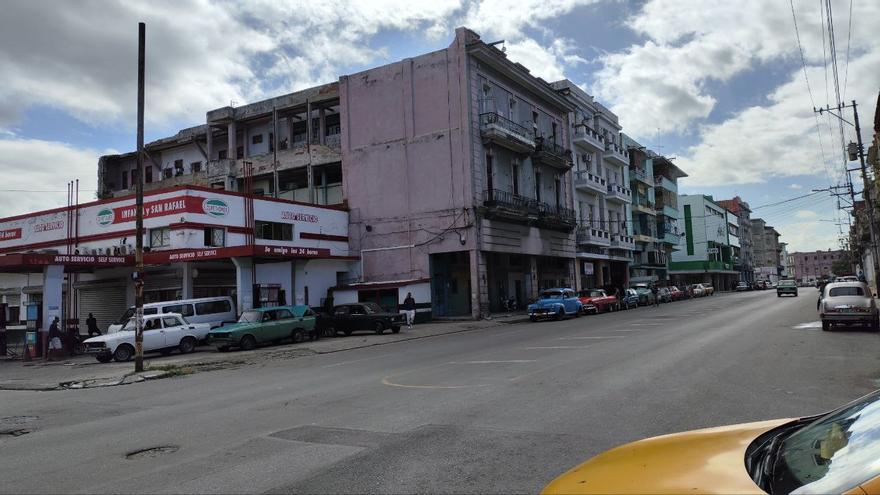
The line of cars extends for three blocks from San Rafael at Infanta and turns on Zanja to stretch for five more blocks. (14ymedio)

14ymedio bigger14ymedio, Havana, 21 December 2023 — The faces of the drivers who were waiting this Thursday morning in the line in front of the San Rafael and Infanta gas station left no room for doubt: the feeling of helplessness was widespread. “Eight blocks long!” complained the drivers who were waiting in the hope of buying a few gallons of gasoline in a line without end.

In the second block of the line, the driver of a Lada belonging to the official newspaper Juventud Rebelde empties the remains of fuel left in the tank with a hose and deposits it in an old jam or tomato puree can. “That’s to be able to fill the tank in the service center and buy as much as possible,” explains the owner of the almendrón (shared taxi), pointing out the “maneuver” of his neighbor in the line.

“We all do the same thing because there is no fuel anywhere, and these opportunities must be taken advantage of,” he explains. Others simply bring their vehicles to guarantee the purchase of fuel and resell it later if they can’t use it.

Two cars behind, a young driver tries to calm his partner through the phone. “Take it easy, the line is very long and this is going to take a while,” he counsels. continue reading

The more they advance in the line, which starts at San Rafael and Infanta, follows three blocks and turns at Zanja to stretch for five more blocks, the more sullen the drivers seem. This end of the year, they say, getting fuel has become particularly difficult.

“I’ve never seen such a thing. Having a car I have faced very long lines, sometimes in the early hours and for several hours, but this is the longest I’ve been in,” says another driver who sees several dozen vehicles ahead of him. “I’m here because I have no choice. I need gas, but at this point I don’t know how long it will take to get to the service center or if I will get fuel,” he says. Behind him, several more feet of the line wait on the corner of Zanja and Soledad.
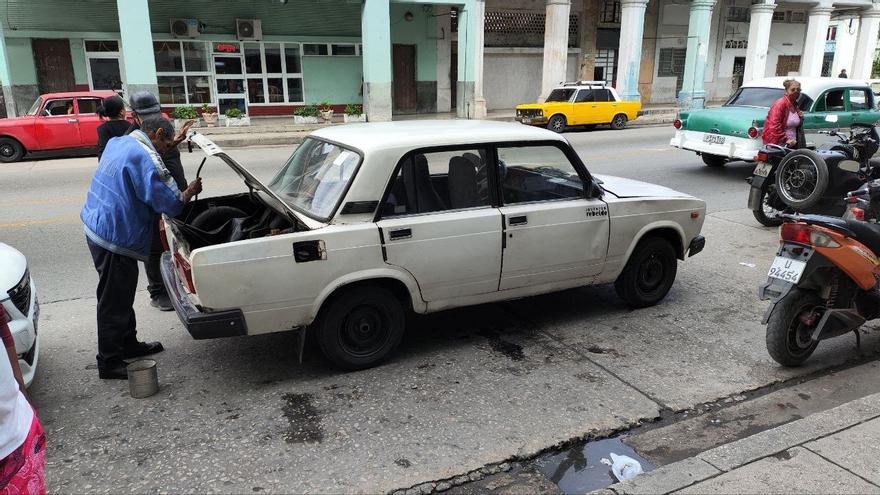
The driver of a Lada from the official newspaper ’Juventud rebelde’ uses a hose to empty the remains of fuel that remain in the tank. (14ymedio)

The scarcity of such an essential resource leaves many in a state of uncertainty. In the capital, where there are more vehicles than anywhere else in the country, the streets have seen traffic decrease in a worrying way in recent months. “There are times of the day when not even a bicycle passes along 23rd Street, which is the vital center of Havana,” says the driver.

One piece of news in particular worries drivers, who take refuge from the unexpected drizzle: the Government is going to raise the price of fuel. This was announced a few days ago in Parliament by the Island authorities, who, in the face of the economic crisis, plan to raise the price of many other products in an attempt to recover the country’s finances.

At the moment, what was discussed in the parliamentary sessions does not reveal the new price, although the leaders clarified that the fuel that is purchased by foreigners will be charged in foreign currency.

To top it off, the drivers add that every habanero knows how to read the signs of the approaching crisis: “The refinery has been shut down for days.”

Translated by Regina Anavy

____________

COLLABORATE WITH OUR WORKThe 14ymedio team is committed to practicing serious journalism that reflects Cuba’s reality in all its depth. Thank you for joining us on this long journey. We invite you to continue supporting us by becoming a member of 14ymedio now. Together we can continue transforming journalism in Cuba.
Mexicans Flee From the Cuban Abdala Vaccine and Line Up for the Pfizer

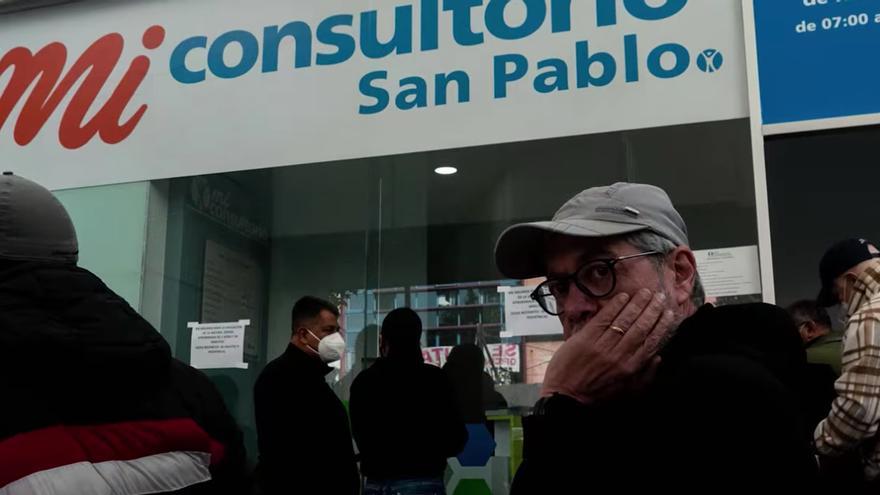
The Pfizer vaccine sold out on its first day of sale in Mexico. (Facebook/The Economist)

14ymedio bigger14ymedio, Ángel Salinas, Mexico, 21 December 2023 — “Prevention is better than death,” Raúl Noé Dorantes tells 14ymedio. This Wednesday he was one of the 4,500 people who was able to buy Pfizer’s Corminaty vaccine in the Farmacia San Pablo before it was exhausted . “At my age (78), a certified drug is preferable than than being tested, with Abdala or Sputnik, which are the ones that the Government is giving,” for free in hospitals and public health centers.

Cinthia Martínez, 67, went at 9 in the morning to one of the branches of the same pharmacy, located on Universidad Avenue but was told that she had to go to another one, over 10 miles away. “No matter the time or distance, it’s worth getting vaccinated,” she says.

Martínez says that the dose against seasonal influenza was applied in the Health Sector clinic, but she did not accept “the Abdala vaccine because it is not approved” by the World Health Organization. “When they gave me the Russian (Sputnik), I got sick, and I don’t want to go through the same thing.”

Farmacia San Pablo was the only one of the four pharmacies authorized by the Federal Commission for Protection against Health Risks that offered the dose of Pfizer against the Omicron XBB 1.5 variant, along with the Spikevax (Monovalent XBB 1.5) from Moderna, which has not yet arrived in Mexico. This Thursday, the franchise indicated that it has 16,000 doses. The pharmacy is now asking those interested in being vaccinated to call the customer service number to find the pharmacy closest to their home. continue reading

Esteban Ordorica arrived at 8:30 in the morning at the Tecamachalco branch. “They had me see the doctor, to whom I explained the doses I had and after filling out an authorization form they gave me the vaccine. It didn’t take even ten minutes to get vaccinated. It’s worth the expense of 848 pesos, and they even gave me a card with the drug’s data.”

Four pharmacies were authorized to sell vaccines against COVID-19 from Pfizer and Moderna. (Facebook/The Economist)

The director of operations of Farmacias del Ahorro, Gabriel Zavala, confirmed to 14ymedio that to the extent that the distributor delivers the vaccine to them, people will be able to buy it in one of 400 branches of the 1,800 that they have in the country. On his website he shared a list of 371 locations where one can buy the COVID-19 vaccine for less than 1,000 Mexican pesos.

Faced with the euphoria about the doses of Pfizer, the Government of Mexico City noted that between December 21, 2022 and December 4, 2023, it has applied 562,991 doses of Abdala and that they already have the Sputnik. The Cuban vaccine, he said in a statement dated December 5, is in more than 200 Health Centers to “immunize vulnerable groups: those over 60 years of age, pregnant women, girls and boys from 5 to 17 years of age and over 18 years of age with comorbidities.”

On his social networks he shared images of the venues where several people are observed, but he omitted to point out that the seasonal influenza vaccine is also being given.

President Andrés Manuel López Obrador proclaimed last Tuesday that he had fulfilled the responsibility of guaranteeing vaccines against COVID-19 and influenza. “The important thing is that there is a vaccine for the people, for everyone, for the rich and for the poor, and it costs them nothing because in accordance with article 4 of the Constitution, the right to health must be guaranteed. Health is not a privilege; it is a right of the people.”

The Undersecretary of Prevention and Health Promotion, Ruy López Ridaura, said that 3.8 million doses applied against the coronavirus have been counted since the start of the campaign last October, which represents 18% of the target contemplated. However, he specified that the campaign against influenza has an advance of 53% of the population, 35 million people, and 19 million vaccines have been administered so far.

Módulo de vacunación para aplicar dosis Abdala y contra la influenza en Aguascalientes. (Facebook/¿Que Pasa Aguascalientes?)
Vaccination site to apply Abdala doses against Covid and a vaccine against influenza in Aguascalientes. (Facebook/¿Que Pasa Aguascalientes?)

The doctor, a deputy of the National Action Party, Éctor Jaime Ramírez, insisted to this newspaper that the vaccines offered by the Government “do not work for the current variants” of the coronavirus. He regretted that López Obrador fails to comply with the obligation to “assure that older adults, people with diabetes, with cancer, have a vaccine that works.”

Jaime Ramírez said that the current Administration has 13 billion pesos earmarked for the Vaccination Program. If “that money is not used, it will go to the Maya Train, the Dos Bocas refinery, the Felipe Ángeles International Airport.” He recalled that last year “it had 14.4 billion pesos for the health sector and only used 20%.” This year, a budget of 13 billion pesos was approved for 2024.

“It is striking that they continue to pay in the dark the Government of Cuba and the Government of Russia to buy vaccines that are useless,” says the legislator opposed to López Obrador. “The same will happen with the Mexican vaccine Patria, a project in which almost 1 billion pesos have been invested and is still just a promise. The money was badly invested, because the vaccine is made based on the initial strain; it will be of no use in the face of the new variants.”

Despite the fact that López Obrador indicated in his fifth government report that only 114,008 Abdala vaccines had been applied out of the 9,000,000 that he bought from the Island, in October he acquired another 3,000,000 doses. The Government of Mexico insisted on continuing to favor its partner Cuba, regardless of the fact that thousands of doses have expired and still continue to be used.

Translated by Regina Anavy

____________

COLLABORATE WITH OUR WORKThe 14ymedio team is committed to practicing serious journalism that reflects Cuba’s reality in all its depth. Thank you for joining us on this long journey. We invite you to continue supporting us by becoming a member of 14ymedio now. Together we can continue transforming journalism in Cuba.
More Than 600 Residents of Cuba With Spanish Nationality Ask for Financial Aid From Castilla y Leon

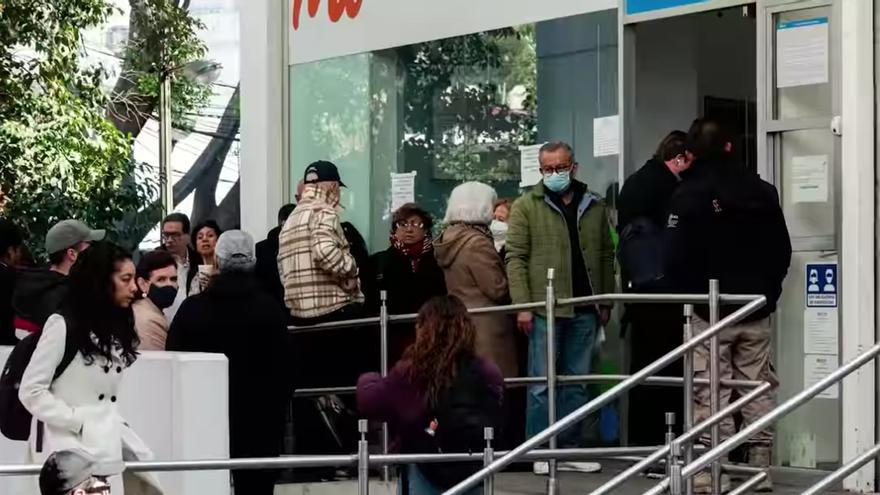
Cubans in line in front of the Spanish Consulate in Havana. (14ymedio)

14ymedio biggerEP (via 14ymedio), Valladolid, Spain, 21 December 2023 — More than 600 Cubans who are nationalized Spanish residents on the Island have received the help of the Junta de Castilla y León, in Spain, for being in a situation of special need, and 226,000 euros have been allocated to them, almost 90% more than in 2022.

The Official Bulletin of Castilla y León has published the Order of the Ministry of the Presidency by which the call for these individual grants is resolved, whose beneficiaries are people registered in a municipality of Castilla y León in the Register of Spanish Residents Abroad (PERE), and who allege a lack of sufficient resources to cover their basic subsistence needs.

The amount of aid depends on the level of income of the different family units and the members that make up these units. All the aid requested has been granted, provided that the conditions set out in the official announcement were met. continue reading

The amount of aid depends on the level of income of the different family units and the members that make up these units

All  of the aid has been allocated to Castilian and Leonese citizens or their descendants residing in Cuba. In fact, of the 816 applications received, 812 corresponded to citizens on the Island.

The amount of aid has been 360 euros per application. To assess the data, it must be taken into account that the minimum pension in Cuba stands at 1,528 pesos per month; that is, less than 60 euros, and the minimum wage at 2,100 (80 euros).

The amount of 360 euros is, therefore, the equivalent of the remuneration received by a resident in Cuba who receives the minimum pension for half a year, and the salary of a worker who receives the minimum wage for more than four months.

Of the 627 beneficiaries, 400 are women and 227 are men; 15 are under 35 years old; 164 are between 35 and 65 years old, and 448 are over 65 years old.

The most abundant profile of a person who has received this help responds, therefore, to a woman of Castilian and Leonese origin residing in Cuba, over 65 years of age and with serious survival problems.

As of January 1, 2023, according to data from the Spanish National Institute of Statistics, 9,719 Castilians and Leonese registered in the PERE reside in Cuba.

Translated by Regina Anavy

____________

COLLABORATE WITH OUR WORKThe 14ymedio team is committed to practicing serious journalism that reflects Cuba’s reality in all its depth. Thank you for joining us on this long journey. We invite you to continue supporting us by becoming a member of 14ymedio now. Together we can continue transforming journalism in Cuba.
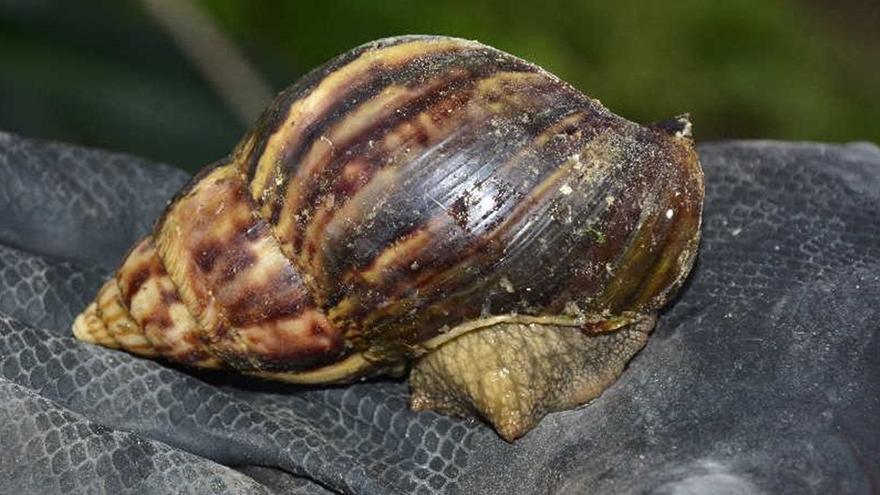
Sancti Spíritus, the Cuban Capital of the Giant African Snail

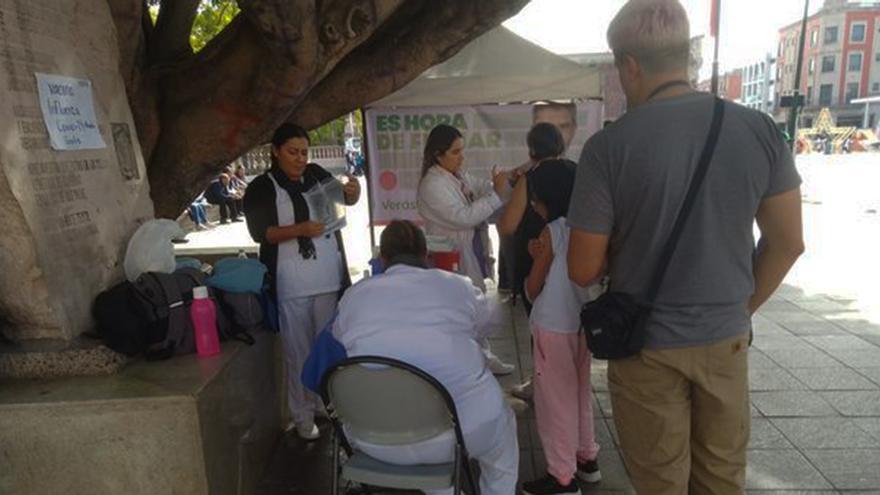
In the municipality of Taguasco, the main focus is on the crops of the Agroforestry Company. (Vicente Brito/Escambray)

14ymedio bigger14ymedio, Mercedes García, Havana, 21 December 2023 — Although the issue has ceased to appear in the official press, the presence of the giant African snail continues to spread through Cuba, and the economic crisis makes it almost impossible to combat it, due to the lack of resources and fuel. In Sancti Spíritus, the plague wreaks havoc on agriculture and homes, according to sources from the Plant Health Research Institute (INISAV).

“Many people have forgotten about this animal, but we receive reports every day,” an INSAV employee in the province, who prefers anonymity, explains to 14ymedio. In Sancti Spíritus, the municipalities most affected by this species, considered one of the hundred most invasive in the world, are Cabaiguán, Taguasco and the provincial capital.

“We received a complaint that they saw the snails in one place, but we can’t do anything because we don’t have the resources. We’re not even going to check the level of infestation because we don’t have the necessary fuel to move within the province,” the worker emphasizes.

“Right now we are focusing on the School of Medicine, in the former Faculty of Nursing, which has a vacant lot between the houses and the buildings. That area is infested with snails,” he explains. “Specimens have even been found in the lime ovens on the outskirts of the city. They are everywhere, and nothing stops them.” continue reading

We received the complaint that they saw the snails in one place, but we can’t do anything because we don’t have the resources; we’re not even going to check the level of infestation”

The expert sees a relationship between the flooding of the stream that borders the city of Sancti Spíritus and the spread of the plague. “If the water rises, the snails spread everywhere, so what seems like good news for agriculture, that there is water to plant, becomes a headache with this animal in here.”

In the municipality of Taguasco, the main focus is on the crops of the Agroforestry Company. “There they have eaten everything. It makes you want to cry because we are having a bad time with crop productivity, and on top of that this plague arrives to devour them.”

In Cabaiguán, on the other hand, it is the neighbors who suffer the ravages of the giant African snail in their own courtyards. “You can’t leave anything outside because you get up and some of them have already been eaten,” laments Cipriano, 81 years old and a resident of the town. “We had everything very beautiful, with flowers and everything, but since that bug arrived we don’t even have hibiscus.”

“We used to throw salt on them, but we no longer can afford the expense,” the farmer admits. “Now, if you come across one, you try to crush it or chop it with a machete, but for each one you see there are many more. We can’t be awake all morning waiting for them to come out.”

“They haven’t reported anything for a long time as if they had disappeared, but we continue to suffer from them,” Cipriano complains. “We don’t see anything on television; we don’t hear anything on the radio, but you just have to leave the house to see them everywhere. Right now they are big enough to carry us.”

“They haven’t reported anything for a long time as if they had disappeared, but we continue to suffer from them”

In 2019, when the presence of the snail was already confirmed in 12 provinces, the Plant Health Research Institute issued guidelines for the population to contribute to the control and elimination of the giant African snail, but the arrival of the COVID-19 pandemic, the economic crisis, the lack of fuel and inflation shifted the focus of interest to other issues of daily life.

Among the measures that INSAV suggested then was the destruction of the snail and its subsequent burial in a hermetically sealed bag. Another option was to burn it safely or immerse it in a 3% solution of salt or lime (three tablespoons 4.2 cups of water) for 24 hours and then bury it. In no case should the snails be thrown alive into rivers, plots, streets or garbage dumps.

The giant African snail can transmit diseases to crops in addition to consuming at least 250 types of plants, many of them planted for economic purposes. It also causes irreparable damage to the ecosystems it colonizes. It has a great ability to adapt to the climate and to all types of terrain. In Cuba it does not have natural predators that can put a stop to its insatiable appetite.

The first information about the arrival of this mollusc on the Island was released by this newspaper in July 2014 after a tour of the Havana municipality of Arroyo Naranjo. The text warned that “this species will test the capacity of the national public health system in Cuba to control this type of situation.” That forecast seems to have fallen short.

Translated by Regina Anavy

____________

COLLABORATE WITH OUR WORKThe 14ymedio team is committed to practicing serious journalism that reflects Cuba’s reality in all its depth. Thank you for joining us on this long journey. We invite you to continue supporting us by becoming a member of 14ymedio now. Together we can continue transforming journalism in Cuba.
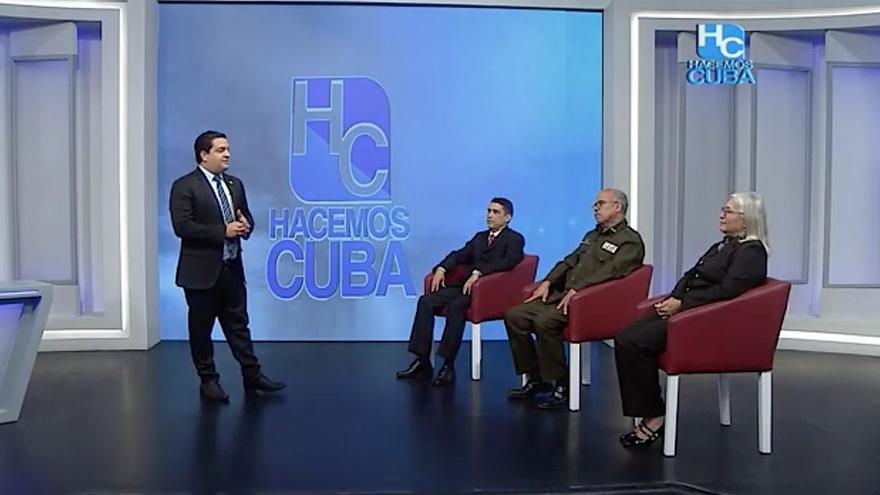
Those on the ‘List of Terrorists’ Can Face the Death Penalty, Threatens Hacemos Cuba

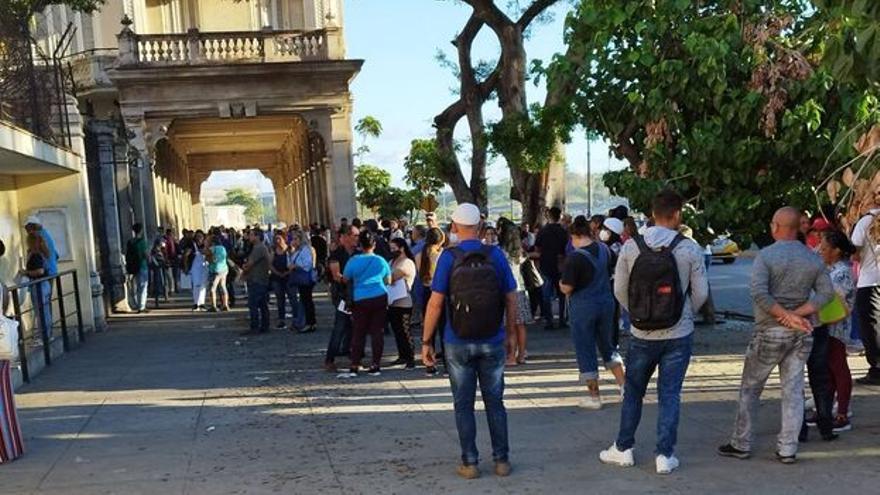
Humberto López invited Pilar Varona, Deputy Minister of Justice; Marcos Caraballo, Deputy Attorney General of the Republic, and Francisco Estrada, director of State Security. (Screen capture)

14ymedio bigger14ymedio, Havana, December 20, 2023 — “Terrorists and their accomplices seek to colonize our minds,” was one of the many exalted statements of the spokesman for the Humberto López regime during this Tuesday’s broadcast of the program Hacemos Cuba. How do we hunt and execute those “declared enemies of the Revolution“? What legal mechanisms can guarantee the extradition from the United States of “criminals” such as Alexander Otaola and Orlando Gutiérrez Boronat? Can the “list of terrorists” published on December 7 continue to grow?

To answer these questions, López invited three ideal interlocutors to the set: Pilar Varona, Deputy Minister of Justice; Marcos Caraballo, Deputy Attorney General of the Republic, and Francisco Estrada, the lieutenant colonel who heads the State Security Investigation Body.

The presenter asked the Deputy Minister of Justice to emphasize the importance of the list, published in the Gaceta Oficial. Varona answered that the text’s appearing in that publication “gives it a legal weight,” he said, which helps to accentuate the rigor. continue reading

The presenter asked the Deputy Minister of Justice to emphasize the importance of the list’s appearing in the ’Gaceta Oficial’

Estrada Portales dusted off the State Security videos about the 1999 explosions in several hotels. There is no problem that more than 20 years have passed since those events, Deputy Prosecutor Caraballo clarified: on Guillermo Novo, Pedro Crispín and José Hernández – three of the names at the top of the list – the weight of the law can fall “at any time.”

Despite validating every name on the list, López decided that many were ancient history and preferred to move forward to 2020, with the cases of Iván Leyva and Jorge Fernández, residents outside the Island accused of carrying out “sabotage of the national energy system.” “Let’s record these names,” stressed the regime’s spokesman; “we have evidence.”

López has no problem quoting himself in previous broadcasts of Hacemos Cuba, showing the televised interrogations he conducted on some “terrorists.” According to the presenter, the confessions of people who were financed by Leyva and Fernández are enough to condemn them. The images “are still shocking,” he said.

State Security has in its power material to charge numerous people, said the lieutenant colonel, both detained and outside the country.

The presenter recited with emphasis the names of Otaola, Eliécer Ávila, Gutiérrez Boronat, Jorge Ramón Batista Calero and Alain Sánchez, among others, about whom he asked the deputy prosecutor if they incurred the crime of terrorism or if they simply exercised their freedom of expression. “That right is not absolute; it has limits,” Caraballo insisted. “There is no doubt: new technologies can become a scenario for committing terrorist and violent acts.”

As for the influencer Batista Calero, known as Ultrack, López took him as an example of clear terrorist behavior, for his call to “kill the Castro leadership.” The crime, Estrada theorized, is not just in committing the act, but in “the instigation” and “participation” in groups on social networks, “replicating the incitement.” It is a straight path to “receiving financing,” sooner or later.

Are they going to be investigated even though all they have done is communicate?” López asked. The deputy prosecutor’s response was yes

“Are they going to be investigated even though all they have done is communicate?” López asked. The deputy prosecutor’s response was yes. The Constitution provides for a “wide range” of participation in crimes, “even if a concrete result does not occur.”

The phrase of the day was “international criminal assistance,” the series of mechanisms by which Cuba intends to appeal to “guarantee an effective confrontation” against “terrorists.” Several countries “have cooperated with Cuba” to send people of interest that Havana has asked for – the deputy prosecutor did not say who. Interpol “circulated with red notification” to 12 members of the list, said the representative of State Security. Those people are now in Cuba, in the middle of their legal process.

However, even if the international authorities do not listen to Cuba’s demands, the members of the list can always be “judged in absentia.” The deputy prosecutor recalled that among the punishments are life imprisonment and the death sentence. The slogan is to “persecute, repress and punish” those whom the Government considers terrorists, stressed the Deputy Minister of Justice in the last minutes of the program.

He betrayed the star spokesman of the regime, however, with a careless allusion to the “desire and imagination” of State Security when it comes to calling terrorists those who “come up again and again” in the investigations. The lieutenant colonel ignored the slip: “Those names will go on the list,” he warned.

Translated by Regina Anavy

____________

COLLABORATE WITH OUR WORKThe 14ymedio team is committed to practicing serious journalism that reflects Cuba’s reality in all its depth. Thank you for joining us on this long journey. We invite you to continue supporting us by becoming a member of 14ymedio now. Together we can continue transforming journalism in Cuba.
Lourdes Gurriel Signs for 42 Million Dollars, Below the Contracts of Other Cuban Baseball Players

’Yunito’ Gurriel extended his contract for three more years with the ’D-backs’. (Instagram)

14ymedio bigger14ymedio, Havana, 19 December 2023 — Cuban baseball player Lourdes Gurriel Jr. signed a $42 million contract for three seasons with the United States Major League Diamondbacks on Monday. According to MLB magazine, the agreement includes a renewal option with the Arizona team for $14 million in 2027, in addition to the possibility for the Cuban outfielder to respond to new offers in 2026 and, if he chooses, to leave the team.

Gurriel’s contract is significant, although it is below the agreements reached by five other Cuban players in the Major Leagues. Yordan Álvarez, recognized as one of the best in the U.S., has a six-year agreement for $115 million with the Houston Astros, which includes an annual salary of almost $20 million and a bonus of five million.

This 30-year-old player from Sancti Spíritus arrived last season at the Diamondbacks in an exchange with the Toronto Blue Jays, where he had a batting average of .285 with 68 home runs

Yasmani Grandal has a four-year contract of $73 million with the White Sox of Chicago. On the same team is Yoan Moncada, whose five-year agreement is for 70 million dollars. Jose Abreu is tied for three years to the Houston Astros for 58.5 million dollars, while Raisel Iglesias has a 58 million dollar contract with the Atlanta Braves. continue reading

The youngest of the Gurriels says that he had “a dream season both individually and collectively.” At the end of the World Series, he acknowledged that this year “he could not have asked for more” than what he had in Arizona. “I felt like we were a family there, and I am very grateful for the whole collective group.”

This 30-year-old from Sancti Spíritus arrived last season at the Diamondbacks in an exchange with the Toronto Blue Jays, where he had a batting average of .285 with 68 home runs. This year he was called up to form the roster of the Star Game with a batting average of .261 with 24 home runs and 82 runs produced.

Seven years ago, in 2016, Lourdes Gurriel, along with his brother Yulieski, were the sensation of the Cuban national team. They decided to try their luck in the United States, and the two athletes abandoned the Island team after their participation in the Caribbean Series in the Dominican Republic. The regime considered it “a frank attitude of surrender to the merchants of professional baseball — baseball-for-hire,” Cubadebate published at the time.

Yunito, as he is affectionately called, signed his first major league contract as a rookie. The Blue Jays paid him a base salary of one million dollars

Lourdes’ father, who was also a Cuban baseball legend, recalled in an interview with the Mexican newspaper Excélsior last November that it was not easy to make the decision. “The road was not easy; you could say that it might seem like everybody was leaving Cuba and becoming a star, but no, there is a lot of sacrifice and a very long adaptation process.”

Yunito, as Lourdes Gurriel is affectionately called, signed his first major league contract as a rookie. The Blue Jays paid him a base salary of one million dollars. After five seasons, the total was a bit over 15 million dollars, according to the Sportrac portal.

Translated by Regina Anavy

____________

COLLABORATE WITH OUR WORKThe 14ymedio team is committed to practicing serious journalism that reflects Cuba’s reality in all its depth. Thank you for joining us on this long journey. We invite you to continue supporting us by becoming a member of 14ymedio now. Together we can continue transforming journalism in Cuba.
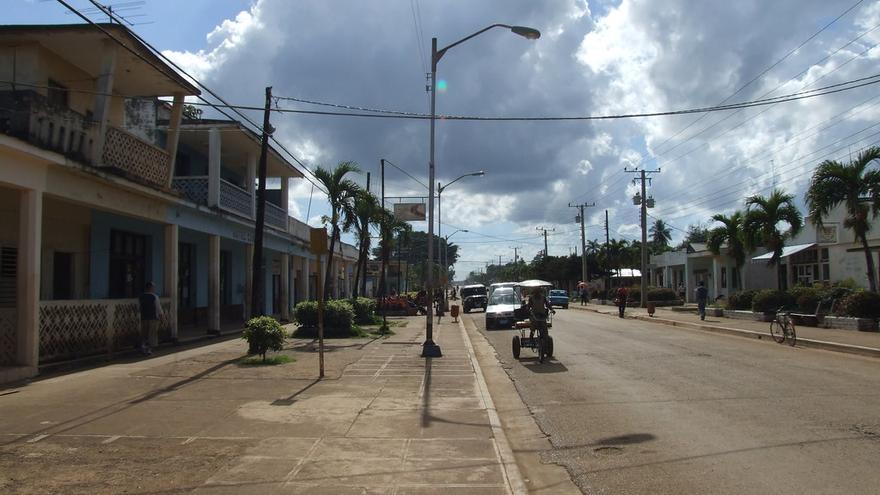
With the Death of Mayelin Rodriguez in Camaguey, the Number of Femicides in Cuba Rises to 83 in 2023

Poblado de Sola, in the municipality of Sierra de Cubitas in Camagüey. (TV Camagüey)

14ymedio bigger14ymedio, Havana, December 19, 2023 — The independent observatories Alas Tensas and Yo Sí Te Creo en Cuba (YSTC) confirmed on Tuesday a new violence against women murder, that of Mayelín Rodríguez, in Camagüey. With it, the number of femicides on the Island rises to 83 since January.

Little is known about Rodríguez’s murder. So far, the platforms revealed that the woman was murdered on December 11 in the vicinity of a penitentiary in the town of Sola, in the Camagüey municipality of Sierra de Cubitas.

The alleged murderer was her partner; no other data is known in addition to the fact that he may have committed suicide after killing the woman. The platforms also pointed out that the victim is survived by two minor children.

Other details, such as Rodríguez’s age and the motivation for the crime are also not known. Activists believe that his second surname may be “Vals.”

Alas Tensas and YSTC also verified the femicides this December of Yailén Matamoros and Melani García, which had already been reported by the independent press. continue reading

Some posts on social networks allege that the aggressor had a criminal record for which he served time and that he may have committed suicide after the crime

Matamoros, 35, was attacked last Saturday by her ex-partner in San Antonio de los Baños. She was stabbed 33 times, a resident of the neighborhood told 14ymedio. According to the source, the alleged murderer attacked her after learning that the woman had a new romantic relationship.

Some publications on social networks allege that the aggressor had a criminal record for which he had served time and that he may have committed suicide after the crime. Other stories say that a relative of the victim killed her as revenge.

The second victim, Melani García, 16, was murdered last Saturday in Havana. A post by a relative of the teenager pointed to a man whose identity responds to the initials P.J.S. as the alleged aggressor, but it did not reveal his link with the victim. Another publication pointed out that there could be two others involved in the case and that they had fled. According to the same source, García was the mother of a two-year-old boy.

The Attorney General of the Republic, Yamila Peña Ojeda, reported last Saturday that since 2020 and until the end of October 2023, 117 violent deaths of women have been reported on the Island. The provinces of Matanzas, Havana, Santiago de Cuba, Granma and Guantánamo have the highest case rates.

During the VII Plenary of the Communist Party, it was also indicated that the Cuban Observatory on Gender Equality, created in 2021, was updated with the User Manual, to facilitate web browsing. The secretary general of the ruling Federation of Cuban Women (FMC), Teresa Amarelle Boué, said that there is still no public system of statistical information on the subject.

Translated by Regina Anavy

____________

COLLABORATE WITH OUR WORKThe 14ymedio team is committed to practicing serious journalism that reflects Cuba’s reality in all its depth. Thank you for joining us on this long journey. We invite you to continue supporting us by becoming a member of 14ymedio now. Together we can continue transforming journalism in Cuba.

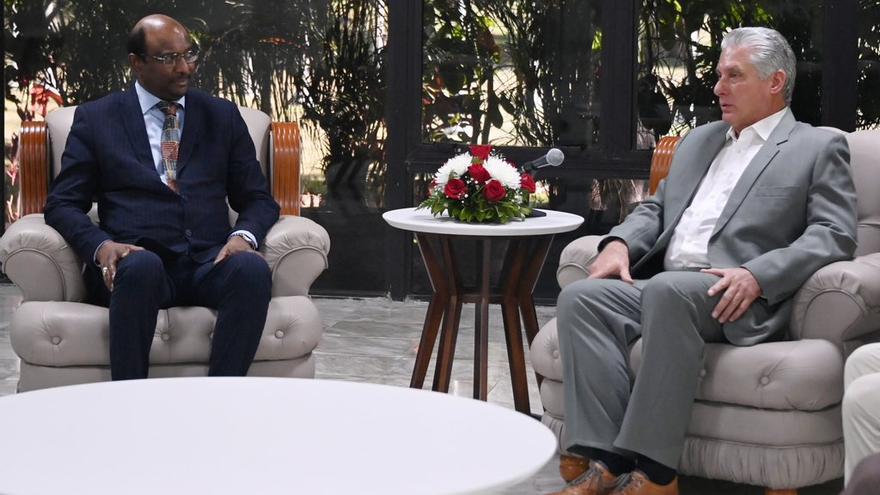
Cuban President Diaz-Canel Receives the Support of the Leader of the World Council of Churches

Meeting between Jerry Pillay and Cuban President Miguel Díaz-Canel this Monday in Havana. (@PresidenciaCuba)

14ymedio bigger14ymedio/EFE, Havana, 19 December 2023 — Cuban President Miguel Díaz-Canel held a meeting on Monday with the secretary general of the World Council of Churches (WCC), Jerry Pillay, who is visiting Havana, he said, to “strengthen the ties” with the Christian community of the Island.

During the conversation, the religious leader reaffirmed “the support of the WCC for Cuba’s fight against the (United States) blockade,” says the Cuban Presidency on the social network X (formerly Twitter). Pillay also “rejected the inclusion of the Island in the list (prepared by the United States) of countries that allegedly sponsor terrorism,” he said.

The highest representative of the CMI gave a sermon in the First Reformed Presbyterian Church of Havana

This Sunday, on the first day of his visit, the highest representative of the CMI gave a sermon in the First Reformed Presbyterian Church of Havana, the temple where the ruling Council of Churches of Cuba was founded.

In that meeting, the Reverend highlighted the “historic ties” that unite the organization with the religious community of the Island and considered that faith in the Catholic and Protestant churches is growing in the country, according to a report by state television. continue reading

Before closing his visit this Tuesday, Pillay scheduled meetings with the board of the Cuban Council of Churches, the Reformed Presbyterian Church and representatives of ecumenical movements and religious leaders. He will also give a lecture at the San Gerónimo University College in Havana.

The international religious organization – founded 75 years ago – has 352 member churches and almost 600 million Christians in 120 countries around the world.

On the Island it has relations with the Council of Churches, which groups together almost 30 of the Christian denominations related to a greater or lesser extent to the Government, including the Pentecostals, Lutherans and Presbyterians, as well as the Salvation Army and the Quakers.

The interest of the Cuban Government in earning the support of the religious institutions of the Island has led it to meet on several occasions with religious leaders to demonstrate the support of the religious communities for the State. This is what happened last June, when Díaz-Canel traveled to the Vatican to meet with Pope Francis. In the conversation, which was expected to handle sensitive issues such as the release of political prisoners on the Island, there were only words of support for the regime from the seat of Catholicism.

Last September, the Biblical Society of the Council of Churches was constituted, with a representation of Catholics and the Greek Orthodox

Last September the Biblical Society of the Council of Churches was constituted, with a representation of Catholics and the Greek Orthodox, who were not part of the group, composed mainly of Protestant churches. During the event, in which Caridad Diego – in charge of Religious Affairs of the Communist Party – was present, the representatives of the institutions sent bibles dedicated to Raúl Castro, Díaz-Canel and Esteban Lazo.

However, not all Cuban churches have expressed their support for the Cuban Government. This is the case of the Assemblies of God, a group of evangelical churches, which on Monday published a statement denouncing the misrepresentation of information about the conflict between Israel and Palestine, by the official Cuban media.

Saying “that the barbarism of that day (October 7, when Hamas launched the first attack on Israel) was perpetrated by Israel itself  exceeds the limits of rationality and the most elementary sense of justice,” they stated.

Translated by Regina Anavy 

____________

COLLABORATE WITH OUR WORKThe 14ymedio team is committed to practicing serious journalism that reflects Cuba’s reality in all its depth. Thank you for joining us on this long journey. We invite you to continue supporting us by becoming a member of 14ymedio now. Together we can continue transforming journalism in Cuba.
Faith, Health and a Better Country Are What Cubans Ask For From San Lazaro

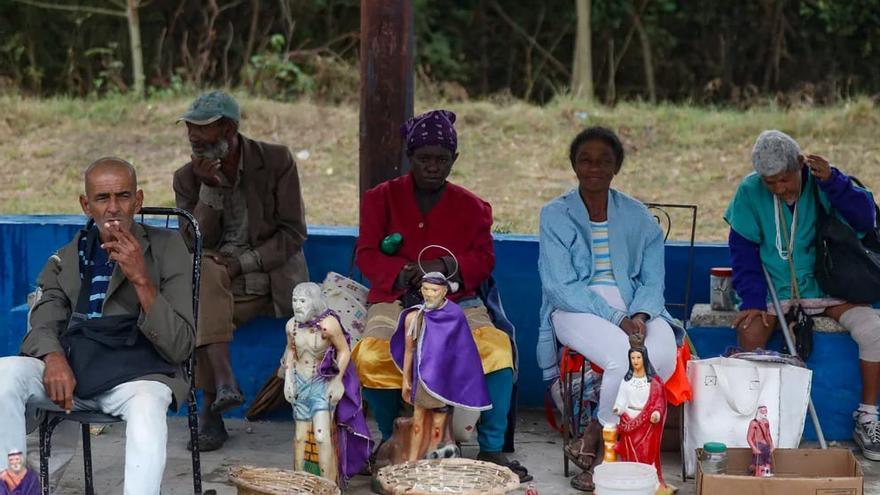
The colors purple and brown distinguish the clothing of those who venerate the saint. (EFE)

14ymedio biggerEFE (via 14ymedio), Havana, 17 December 2023 — Faith, health and a better country are the requests of many of the Cuban devotees of San Lázaro who are arriving this Sunday, after a pilgrimage that in some cases started the day before in the rain, at the sanctuary of El Rincón on the outskirts of Havana.

The road that leads to the temple, a place of worship for the Cuban patron saint of miracles, is less traveled than in previous years due to inclement weather and adverse forecasts. The difficulties in the daily lives of Cubans after three years of serious economic crisis lead them to continue the pilgrimage to the saint on his day.

The rain does not prevent people like Regla Mercedes from going “to fulfill” their promise. “I asked him for health and to take into account the Cuban people for the things we are going through,” this 52-year-old librarian told EFE while she carries a medium-sized version of San Lázaro.

The rain does not prevent people like Regla Mercedes from going “to fulfill” their promise. “I asked him for health and to take into account the Cuban people for the things we are going through”

On her way to the sanctuary, this lady regrets that “such a beautiful and human country is like this; it makes me want to cry,” in reference to the economic crisis that hits the most humble Cubans every day, who, like her, cling to their faith to “endure.” continue reading

There is a small influx of pilgrims who on foot, knees and even crawling down the street reach the temple that stands on the grounds of an old leper house.

However, the faithful who decide to take the path and fulfill their promises fill the streets dressed in purple, the color that represents this saint and also the “orisha” Babalú Aye, the Afro-Cuban deity with which San Lázaro is identified.

This is how Dariel Alejandro Ortega is dressed, wearing brown and purple clothes, carrying a basket with a very small San Lázaro, and smoking what is left of a cigar.

“I come to ask for health, but also an improvement because everything is a mess,” he explains to EFE, while asking to be “collaborated” with some money.

“I have a lot of faith in him. He is a miraculous saint and that’s what Cuba needs now: a miracle,” says the 40-year-old man.

“I have a lot of faith in him. He is a miraculous saint and that’s what Cuba needs now: a miracle”

At his side is Osmany Fuentes with his wife while he carries his little girl in his arms. He also says that he will continue to attend these pilgrimages every year to “thank the saint for keeping my family together, despite the problems.”

As is traditional, there are also those who travel several miles dragging huge stones tied to their feet, and others who walk kneeling regardless of the dirt in the road.

The pilgrimage concludes inside the sanctuary where those who finish the trip barefoot light white and purple candles and thank the miraculous saint with cigars and flowers. On Sunday, first thing in the morning, there is a Christian celebration to receive all the pilgrims.

They say that some have lost consciousness due to so much sacrifice and that they can no longer reach the altar.

Translated by Regina Anavy

____________

COLLABORATE WITH OUR WORKThe 14ymedio team is committed to practicing serious journalism that reflects Cuba’s reality in all its depth. Thank you for joining us on this long journey. We invite you to continue supporting us by becoming a member of 14ymedio now. Together we can continue transforming journalism in Cuba.
The Milei Government Confirms the Presence of Cuban and Venezuelan Agitators in Argentina

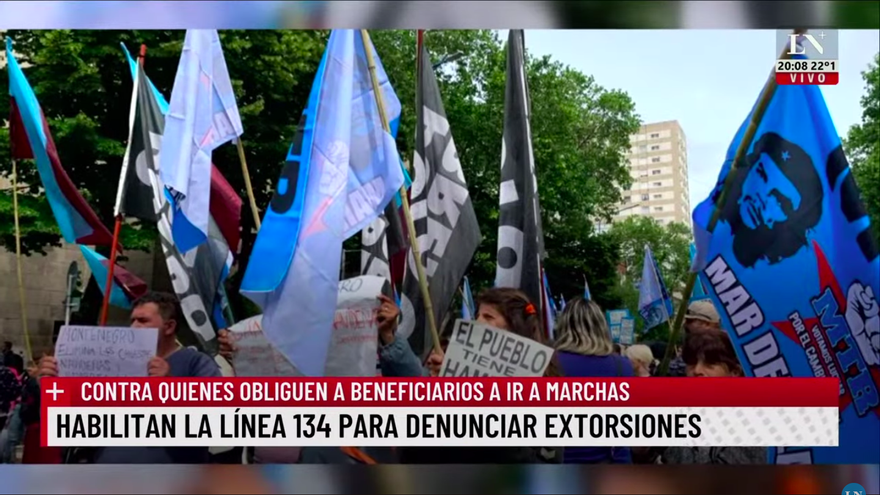
The piqueteros use flags with the image of ’Che’ Guevara during their demonstrations. (Capture)

14ymedio bigger14ymedio, Havana, 19 December 2023 — The Argentine Minister of Security, Patricia Bullrich, confirmed on Monday that the Administration of Javier Milei “is working” to identify and dismantle groups of Cuban and Venezuelan agents who have instructions to sow chaos in Argentina. During an interview on national television, the politician referred to the “protocol” that the State must follow in these “performances” but avoided offering details.

The presenter, Eduardo Feinmann, asked Bullrich on a program of the newspaper La Nación to comment on Milei’s plan against drug trafficking and crime, reported last Sunday by journalist Joaquín Morales Solá. “There are Cuban and Venezuelan agitators in the country, willing to help the local rebels in their vandalism. They plan to reproduce here the 2019 social outbursts in Chile (against the government of Sebastián Piñera),” he said, citing a government source whom he did not identify.

These groups, which in Argentina are known as piqueteros (picketers), called for new demonstrations against Milei for this Wednesday. Argentina has a special vulnerability, says Morales, because former presidents Alberto and Cristina Fernández “cleared out the security supplies” of the country, so the police have “only one water truck to dissolve eventual uprisings.” continue reading

They are not marching; they are picketing: they go, they block the street and they don’t let anyone pass,” he said. “Our decision is to put order in the streets

During his interview, Bullrich alluded to these agents as “a noisy minority,” which usually leads 8,000-10,000 protests annually. “They are not marching, they are picketing: they go, they block the street and they don’t let anyone pass,” he said. “Our decision is to put order in the streets (…). We need to work together with the country’s police. The protocol is an order to the security forces to act. It is within the legal frameworks and the Criminal Code,” the minister clarified.

Although he refused to detail the specific strategy against those who receive guidance from Havana and Caracas, Bullrich was blunt about the piqueteros: those who act as “instigators” will receive the full weight of the law.

In 2019, after the protests in Chile, the government of that country expelled 50 foreigners, including 30 Cubans and nine Venezuelans, who were involved in violent acts during the demonstrations, as reported at the time by the government of the O’Higgins region.

“Violence, without a doubt, has been the worst face of the demonstrations recently recorded in Chile, and the O’Higgins region has experienced this reality, despite the call of different sectors, including the citizenry themselves, to put a stop to these actions and promote a social agenda that meets the legitimate demands that triggered the crisis in the country,” explained an official statement.

“Out of a total of 50 foreign citizens, five were arrested and brought to justice for looting and being involved in disturbances, attacking authority and erecting barricades,” adds the government’s statement.

Cuba executes a strategy of interference in Colombia through the direction of Cubans with diplomatic coverage in social solidarity organizations   

A similar situation occurred in 2021 in Colombia, during the Administration of Iván Duque. Without specifically mentioning Cuba, the president said at the time that he would proceed to “the expulsion, in accordance with the Vienna Convention, of those who intend, in the exercise of the diplomatic function, to come to our country to try to interfere in the healthy development of the Colombian institutional course.”

Duque’s statement came in reaction to a publication in the Colombian magazine Semana about a report prepared by officials  on a plan of the Cuban Government to interfere in the Colombian elections of 2022 and “destabilize the country.”

“Cuba executes a strategy of interference in Colombia through the direction of Cubans with diplomatic coverage in solidarity organizations, the infiltration of cooperation programs with local authorities and their financing through the ELN (National Liberation Army),” he says in the document “Strategy of Cuban interference in matters of independence and sovereignty of Colombia” prepared by Colombian Government agencies.

“The authorities identified that Cuban tentacles have an interest, sympathy and a close relationship with a candidate for the Presidency,” the magazine said, with sources close to the Colombian Executive. The common factor of the groups in Chile and Colombia was their link with the Cuban Institute of Friendship with the Peoples, based in Havana, which is still under the command of former spy Fernando González Llort.

Translated by Regina Anavy 

____________

COLLABORATE WITH OUR WORKThe 14ymedio team is committed to practicing serious journalism that reflects Cuba’s reality in all its depth. Thank you for joining us on this long journey. We invite you to continue supporting us by becoming a member of 14ymedio now. Together we can continue transforming journalism in Cuba.
Ortega Is Inspired by the Cuban Model To Prevent the Entry of ‘Undesirables’ Into Nicaragua

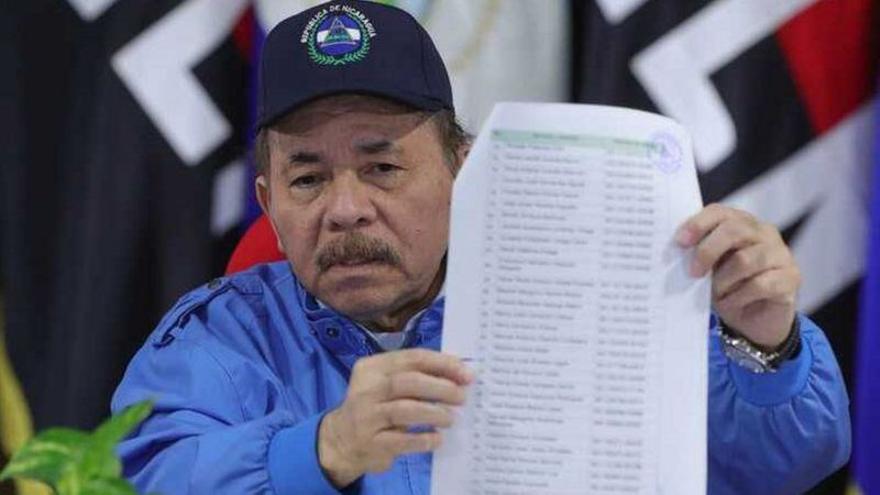
Daniel Ortega shows the list of the 222 opponents released from prison and “deported” to Washington. (EFE)

14ymedio bigger14ymedio/EFE, San José, 19 December 2023 — The NGO Collective of Human Rights Nicaragua Nunca Más [Never Again] warned on Monday about “a new method of repression” implemented by the government of Daniel Ortega against critics and opponents, which consists of prohibiting them from entering the country when they leave on a trip and seek to return.

“This Collective wants to warn of a new method of repression, a de facto statelessness, derived from the unfounded refusal not to allow Nicaraguans to enter their homeland because they are people considered traitors to the government, or for the simple fact of being relatives of people released from prison, journalists, mothers of murdered people and human rights defenders,” the organization said in a statement.

The last public case was that of Ana Salinas, sister of the exiled Nicaraguan journalist and writer Carlos Salinas Maldonado, author of a book about the vice president of Nicaragua, Rosario Murillo, who was unable to return to her country last Friday due to the refusal of the Sandinista government, according to the platform Alertas Libertad de Prensa Nicaragua, which documents cases of violations of freedom of expression and the press. continue reading

The Nicaraguan authorities for Migration and Aliens do not usually give explanations about that measure

The Nicaraguan authorities for Migration and Aliens, who are responsible for notifying airlines and land transport about the prohibition to Nicaraguan travelers, do not usually give explanations about that measure.

“To this pattern must be added those whose passport is snatched by officials and repressive forces of the regime, leaving them undocumented and without any protection,” continued the statement from the Collective, composed mostly of Nicaraguan activists exiled and based in San José.

“De facto statelessness is a new form of repression that generates serious human rights violations, forces people into exile and annuls the legal personality of those who suffer from it,” the NGO explained.

According to the statement, “even with these repeated violations, people in exile have bet on resilience as a form of resistance to the dictatorship, and new organizations, media and ventures in exile have been founded for subsistence.”

However, it noted that the banished Nicaraguans “continue to suffer obstacles to access formal sources of employment, health, education and other elements necessary to have a dignified life.”

The Collective asked the international community to “continue to take steps to demand the cessation of repression and exile”

For this reason, the Collective asked the international community to “continue to demand the cessation of repression, exile and forced displacement that destroys families and lives and subjects Nicaragua to a constant situation of serious human rights violations.”

Nicaragua has been going through a political and social crisis since April 2018, accentuated after the November 2021 elections, in which Ortega was re-elected for a fifth term, fourth in a row and second with his wife, Rosario Murillo, as vice president, with his main opponents in prison or in exile.

The method described by the NGO has also been used in Cuba to banish activists and intellectuals who openly oppose the Havana regime and have some public support. With the disappearance of opponents from the national stage, the Cuban Government intends for their activism to be diluted in exile.

The most known cases of expulsions from the country with the prohibition to return are those of the artist Tania Bruguera, who negotiated her departure in exchange for the release of a group of political prisoners; Anamely Ramos, who is prohibited from returning to the island; Hamlet Lavastida, who was taken to the airport and banished after spending three months in prison, and journalist Karla Pérez, who was denied entry into the country in 2021.

Translated by Regina Anavy

____________

COLLABORATE WITH OUR WORKThe 14ymedio team is committed to practicing serious journalism that reflects Cuba’s reality in all its depth. Thank you for joining us on this long journey. We invite you to continue supporting us by becoming a member of 14ymedio now. Together we can continue transforming journalism in Cuba.
Cuban Women Most Affected by Violence are Blacks, Mixed-Race and Those Under 35

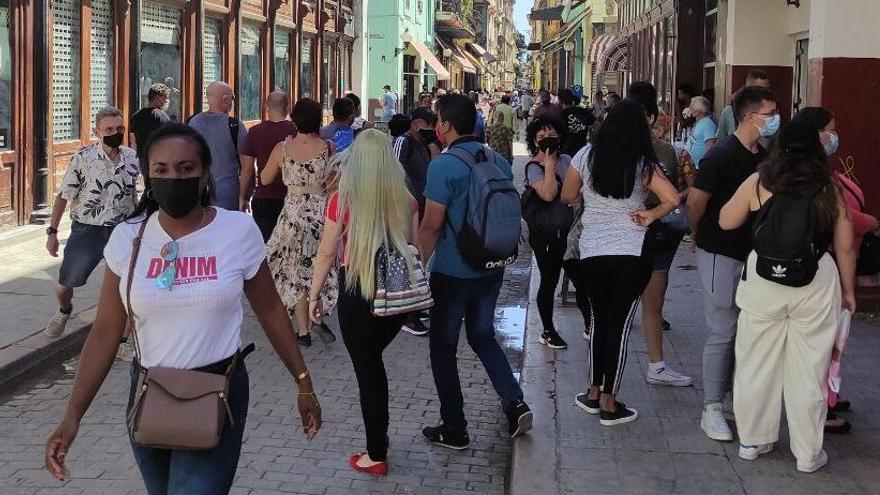
The highest rates of violence against women are reported in Matanzas, Havana, Santiago de Cuba, Granma and Guantánamo. (14ymedio)

14ymedio bigger14ymedio, Havana, 17 December 2023 — The Attorney General of the Republic, Yamila Peña Ojeda, said at the VII Plenary of the Communist Party of Cuba, held in Havana, that at the end of October 2023, 117 violent deaths of women had been reported on the Island, according to the official newspaper Granma. This figure is higher than the 81 femicides verified by independent platforms such as Alas Tensas and Yo Sí Te Creo (YSTC) in Cuba.

The provinces of Matanzas, Havana, Santiago de Cuba, Granma and Guantánamo have the highest rates of femicide, although the official press has not reported these deaths, and only the Girón newspaper published – last November – the data on seven femicides that occurred in the capital of Matanzas.

“Seventy-five percent of these acts occurred in homes shared by couples. Meanwhile, 70 children and adolescents were orphaned by a mother after her death,” said Peña Ojeda, although she avoided defining these “violent events” as femicides.

The general secretary of the official Federation of Cuban Women (FMC), Teresa Amarelle Boué, explained that the Council of Ministers approved a protocol of action for “situations of discrimination, violence and harassment in the workplace,” which she calls “a transcendental step in the attention to violence against women.” continue reading

Amarelle Boué left out important daily and social scenarios where violence against girls, adolescents, women, cis and transgender women is manifested

However, in her speech, Amarelle Boué left out other important daily and social scenarios where violence against girls, adolescents, women, cis and transgender women is manifested. The latter were not referred to in the statement by the FMC secretary nor by the Attorney General.

The analyses presented by Amarelle Boué and carried out by the Women’s Advancement Program show that, currently, 9,579 families live in a situation of violence in Cuba, including 16,116 women and girls.

Of the adolescents and women over 15 years old who are in these violent contexts, 60% are black and mulatto and under 35 years old. Their average schooling is ninth grade, and many of them are also housewives, economically dependent on their male partners.

Amarelle Boué also said that every month an evaluation is carried out to improve the statistics, which are not made public. The monthly assessment is chaired by the Communist Party and put into effect by the Supreme Court, the Attorney General’s Office and the Ministries of the Interior and Justice.

In 2021, the Cuban authorities announced the creation of a Gender Observatory that includes updated records of femicides and other expressions of sexist violence. Amarelle Boué currently presents its operation as an achievement; however, there is still no public system of statistical information on the subject.

According to the most recent Latin American Map of Femicides, disseminated within the framework of the International Day for the Elimination of Violence against Women, Cuba is the country with the largest increase in the number of femicides

The director of the Gender Observatory added that communication about gender violence in the country has increased through the media and social networks. However, the official press maintains silence when femicides are reported by independent media and platforms.

According to the most recent Latin American Map of Femicides, released within the framework of the International Day for the Elimination of Violence against Women, Cuba is the country with the largest increase in the number of femicides, going from 20 cases in the first half of 2022 to 50 in the same period of 2023, a 150% increase.

Paula Spagnoletti, one of the coordinators of the Map, in conversation with the Télam media, explained that according to YSTC and the Cuban feminist magazine, Alas Tensas, “there is an increase in verifications and not in the number of femicides, since there is no updated official figure that can serve as a baseline and reference point.”

Translated by Regina Anavy

____________

COLLABORATE WITH OUR WORKThe 14ymedio team is committed to practicing serious journalism that reflects Cuba’s reality in all its depth. Thank you for joining us on this long journey. We invite you to continue supporting us by becoming a member of 14ymedio now. Together we can continue transforming journalism in Cuba.
An Expert Denies the Effects of the International Price of Wheat on Bread in Cuba

Wheat flour imported from the José Antonio Echeverría mill. (Empresa Cubana de Molinería)

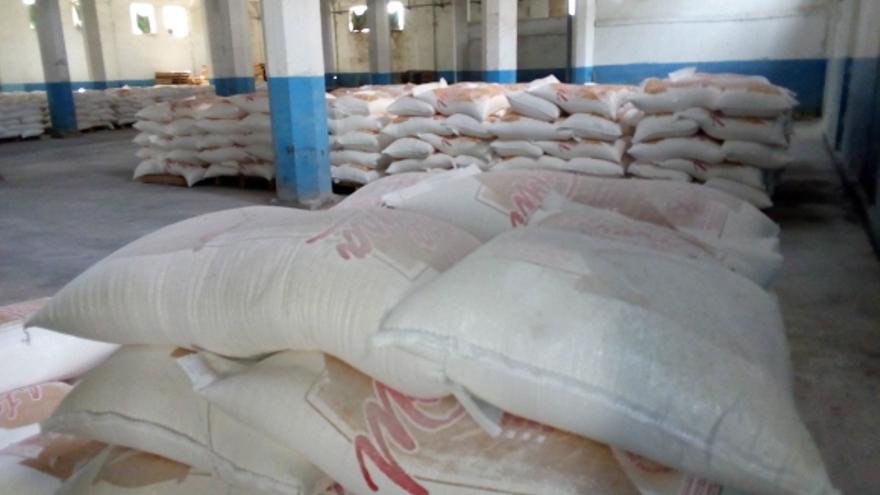
14ymedio bigger14ymedio, Madrid, December 13, 2023 — The quantity and quality of the bodega (ration store) bread has been at the center of conversations, the official press and the independent media of Cuba for months. Several provinces have recognized in the last year that they are producing less or less weight, and every ship that arrived loaded with wheat “from Europe,” which, despite the tonnage, barely lasted for a few days, has been announced with great fanfare.

The reason given by the authorities has always been the same: the war between Russia and Ukraine has made imports more expensive, but this justification will have to be better explained, since the price of wheat has fallen in international markets. According to the Cuban economist Pedro Monreal, “during 2023, the price of wheat in the international market has had an oscillating trajectory with a marked downward trend. The problem with the diminishing ’weight of the bread roll’ supplied to Cubans through the rationing system should be explained in another way. It is not due to an increase in the international price of wheat.”

The problem with the “weight of the bread roll” should be explained in another way. It is not due to an increase in the international price of wheat

The expert responded in this way to the words of Víctor Díaz Acosta, director of the Provincial Food Industry Company in Sancti Spíritus, who last week gave an interview to the official newspaper of the province, Escambray, in which he stated that the price of the raw material had tripled. continue reading

“Today Cuba buys wheat to process because it is cheaper, despite the fact that before Covid and the war between Russia and Ukraine, a shipment of this grain, which provided flour for about 12 days of national production, was purchased for 4 or 5 million pesos, while today it is around 13 million,” he said after talking about the State subsidy for the product.

“It could be that the price of wheat has tripled, but it would be a misinterpretation because the international price of wheat has fallen,” says Monreal. The economist manages the data from the Business Insider website that placed the price of grain at $234.92 per ton that day (December 8), its lowest level since September 28, 2020, when it was $239.50 per ton.

“Since the maximum reached on March 7, 2022 (446.65 dollars per ton), shortly after the start of the war in Ukraine, the international price has fallen by 47.4% up to today,” the expert continues, adding that the price increase remained for approximately one year. “It is not a question of how much was acquired before and now there’s ’a boatload’ of wheat,” emphasizes Monreal, who believes the Government should focus on giving explanations, in any case, about transport costs.

Among the answers, there are those who mention the possibility that it’s a matter of “poorly negotiated” freight expenses, which is raising prices three times higher than in 2020.

Monreal also has a debate with another user who reproaches him for not taking into account the embargo. “Although today the price of wheat may be at its lowest value, the wheat that is consumed today is at the price of at least 3 months ago. The only way to have wheat with today’s price would be to buy it in the United States, and that is difficult,” he says. Monreal replies that the product is bought from a neighboring country. In addition, he adds, “the price of wheat in the international market has fallen throughout 2023. The question is not the price of wheat ’today’ but that it is getting cheaper.”

His challenger, identified as William SC, replies that there is no currency for everything Cuba needs to buy and admits that the justifications end when Díaz-Canel makes one of his international tours. “Right there all the justifications disappear. The main cause of the quality of bread is one thing: the malfunction of the socialist state enterprise,” he says.

Right there, all the justifications disappear. The main cause of the quality of bread is one thing: the malfunction of the socialist state enterprise   

Monreal agrees on both things. “That’s what I said. To have foreign currency you have to export, and to have credit you have to have a credit rating. The “bag” of currency does not fall from the sky. It must be created with an internationally competitive economy that generates foreign exchange and saves on imports,” he argues. As far as purchasing capacity is concerned, he adds one more cause. “Apart from the business functioning and decapitalization of the Cuban industry, there is a high balance-of-payments deficit and high foreign debt service that reflect a serious problem of Cuba’s international insertion. This is not resolved with ’high-level’ visits.

The last time the authorities mentioned the arrival of a boat of wheat on the Island was in October. A similar event had not occurred since July, as they themselves acknowledged. With those 23,500 tons “from Europe,” 16,000 tons of flour can be produced, which in turn, according to 14ymedio, will provide 20 days of bread.

According to Víctor Díaz Acosta, the Sancti Spíritus company received 42 tons a month in other times, of which 28.4 went to the regulated bread and the rest to other products; currently everything has to go to bread. “This province was the first to sell something other than the bread of the regulated family basket in a bakery, but we reiterate that Alimentaria has not renounced its main social purpose: to produce bread for the bodega,” he added.

Translated by Regina Anavy

____________

COLLABORATE WITH OUR WORKThe 14ymedio team is committed to practicing serious journalism that reflects Cuba’s reality in all its depth. Thank you for joining us on this long journey. We invite you to continue supporting us by becoming a member of 14ymedio now. Together we can continue transforming journalism in Cuba.
‘When I Was at My Peak, They Gave Me Everything. Now What?’ Says a Former Cuban Boxer

Hernández says that he had several opportunities to leave the Island but decided to stay. (Trabajadores)

14ymedio bigger14ymedio, Havana, December 5, 2023 — “When I was at my peak they gave me everything. Now what?” The claim of Ariel Hernández Azcuy, a 53-year-old former boxer and two-time Olympic champion of Cuba, is nourished by his desperation. After his retirement, he says, the Cuban authorities stopped paying attention to him, and with the 7,200 pesos that they allocated to him as payment for a lifetime in the ring, he barely has enough to live.

The interview with the athlete, published in the official newspaper Trabajadores, makes clear Hernández’s disappointment with the system. “Money is not enough. Everything is very expensive. We have to meet with someone from the Government to fix it. It’s not a matter of politics but of necessity. People from the Athletes’ Attention Commission have come here, but they don’t decide anything,” he complains.

In an attempt to find this institutional abandonment logical, Hernández lists his achievements: two Olympic golds — Barcelona, 1992 and Atlanta, 1996 — two youth world titles, the first of them at just 16 years old, and, in the World Boxing Championship, two golds (1993 and 1995) and one silver (1997).

He argues that “it’s time to remind the press.” The helplessness, however, is palpable, and old age in those conditions has led him on unexpected paths. “I am a custodian in a private business. Before I worked at Finca Holbein Quesada (training center for Olympic athletes) and then here in La Lisa,” he summarizes. continue reading

“I am disgusted with the Inder [National Institute of Sports, Physical Education and Recreation]. I’ve been trying to get them to change my apartment for years. They come and take note, but I’m still at the top of the building,” he explains, alluding to the physical problems that often make it difficult for him to climb the stairs. “They give houses to people with less results,” he adds, while alleging that the situation causes him “a lot of anger.”

We have to do more for the sport. Something is wrong. The athletes are leaving, and I don’t know why

“I am the best (in the category of) 165 pounds that has gone through Cuban boxing. The results say so,” he explains, while the journalist attributes the outburst of pride to Hernández’s dissatisfaction with his career. “I was able to be a three-time Olympic champion like [Teófilo] Stevenson,” another Cuban boxer who was the second athlete in the world to hold that title. Hernández doesn’t give up and launches another attack: “Even he believed it. Even in the 179-pound (competition), I would have triumphed as a professional! It’s a shame that I didn’t get that chance.”

What the State owes him for his years in the ring – where he experienced “tension and danger” – is not limited to his additions to the Island’s medals. Every year he dedicated to sport and the aftermath that boxing left in his life should also be rewarded, says the former athlete. “Boxing took away my youth. I went from being a child to an old man,” he explains. “When you’re a child, you take it as a game, but if you get involved, you know what it costs. You have to leave family, fun, women, everything.”

The pressure of the sport, he says, also brought him bad times. “Cutting off so much of your youth leads many to throwing themselves into drinking. When they retire, they feel helpless. It’s hard,” he says, based on his own experience. “I fell into the world of drinking. I recognize it. I entered a circle of parties and music. I didn’t go that far because I reconsidered,” he adds, although he admits that not everyone can recover.

“You get into that world. You lock yourself in your house, in your mind, you are alone (…). In addition, if they don’t give you what you deserve, it’s even worse. Nobody comes to you. Not even those you thought would. It’s like they used you,” he adds. When old age arrives, he continues, the situation doesn’t improve. “The past doesn’t matter. No one remembers,” says Hernández.

The former boxer doesn’t just talk about the disenchantment of his contemporaries. The situation with young athletes, marked by escapes and widespread discontent, has also reached his ears. “We have to do more for the sport. Something is wrong. The athletes are leaving, and I don’t know why,” he emphasizes.

He himself, he says, had the opportunity to leave and seek his fortune elsewhere. “They even offered me money, but I couldn’t fail that guy” he says, referring to Julio Mena, his “trainer, father, friend and brother.” The Revolution, however, did not thank him for the sacrifice in the same way. Sometimes, he reflects, “the blows of life hurt more than those in the ring.”

Translated by Regina Anavy

COLLABORATE WITH OUR WORKThe 14ymedio team is committed to practicing serious journalism that reflects Cuba’s reality in all its depth. Thank you for joining us on this long journey. We invite you to continue supporting us by becoming a member of 14ymedio now. Together we can continue transforming journalism in Cuba.
The Mexican Film ‘Tótem’ Triumphs at the Havana International Film Festival

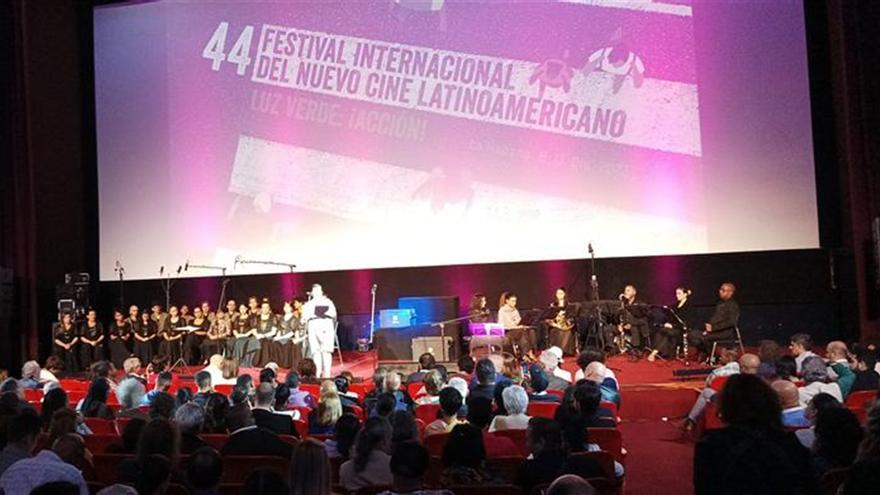
With the award ceremony, the International Festival of New Latin American Cinema concludes in Havana. (Prensa Latina)

14ymedio biggerEFE (via 14ymedio), Havana, 17 December 2023 — The Mexican film Tótem, by Lila Avilés, was the big winner at the awards gala of the International Festival of New Latin American Cinema in Havana after obtaining three awards this Friday.

The Mexican film won the Grand Coral for Best Screenplay, Best Fiction Feature Film and Best Artistic Direction on the awards night of the 44th edition of the festival. The Argentine Los delincuentes, [The Delinquents], by Rodrigo Moreno, also won three awards: Best Direction, Best Photography and Best Editing.

The award ceremony, held at the Charles Chaplin cinema, was the culmination of the festival, which, since December 8, has screened hundreds of films in the Cuban capital and officially ends on Sunday.

Among the recognitions was the victory of El mundo de Nelsito [Nelsito’s World] in the category of best poster, by the Cuban Vladimir Pérez. Also, in the second edition of the Arrecife award, for the work that best captures the reality of the LGBTIQ+ community, the award went to the Franco-Colombian Transfariana, by Joris Lachaise. continue reading

With the slogan “Lights, Camera, Action!” the event had 199 films selected for competition from a total of 19 countries – the most represented were those of Mexico, Argentina, Brazil and Chile – in categories such as fiction shorts, debuts, documentaries and animated works.

There were also tributes made to the Cuban filmmaker Tomás Gutiérrez Alea, co-director of Fresa y chocolate [Strawberry and Chocolate], the only film on the Island nominated for an Oscar, which celebrated the 30th anniversary of its premiere in 2023; the Spanish-Mexican director Luis Buñuel; the French actor and director Max Linder and the Cuban cartoonist Juan Padrón.

With the slogan “Lights, Camera, Action!” the event featured 199 films selected for competition from a total of 19 countries

Within the framework of the festival, the Center of the Cuban Film Poster was inaugurated, a place that exhibits part of the collection inscribed in May in the list of Memory of the World of the United Nations Educational, Scientific and Cultural Organization (UNESCO).

This edition of the festival was under the shadow of the clash between the film sector and the Cuban Government.

The discomfort in the guild became evident after the censorship of the documentary La Habana de Fito [Fito’s Havana], a work directed by Juan Pin Vilar – which recalls the anecdotes in the Cuban capital of the Argentine artist Fito Páez – at the beginning of the year, and the broadcast in June of a non-definitive version of that film on state television, without the authorization of its director.

These two events marked the appearance this summer of the independent Assembly of Cuban Filmmakers (ACC), which denounced the censorship of two of its films at the festival.

During the festival, at least two filmmakers complained about the situation of the guild and the attitude of the cultural authorities.

After the screening of Landrián – a documentary about the work of Nicolás Guillén Landrián, one of the pioneers of Cuban cinema, who ended up in exile – its director, Ernesto Daranas, said that censorship is exercised in Cuba “still today.”

Similarly, the director Orlando Mora Cabrera, in the presentation of his short, Brujo amor [Sorcerous Love], said the Havana festival “should be a more plural, more inclusive and more fair space. When it is censored, not only is the artist excluded but the voice of the people is also silenced.”

Translated by Regina Anavy 

____________

COLLABORATE WITH OUR WORKThe 14ymedio team is committed to practicing serious journalism that reflects Cuba’s reality in all its depth. Thank you for joining us on this long journey. We invite you to continue supporting us by becoming a member of 14ymedio now. Together we can continue transforming journalism in Cuba.