The decision by the French and German shipping companies is a consequence of new U.S. sanctions and will mainly affect trade with China
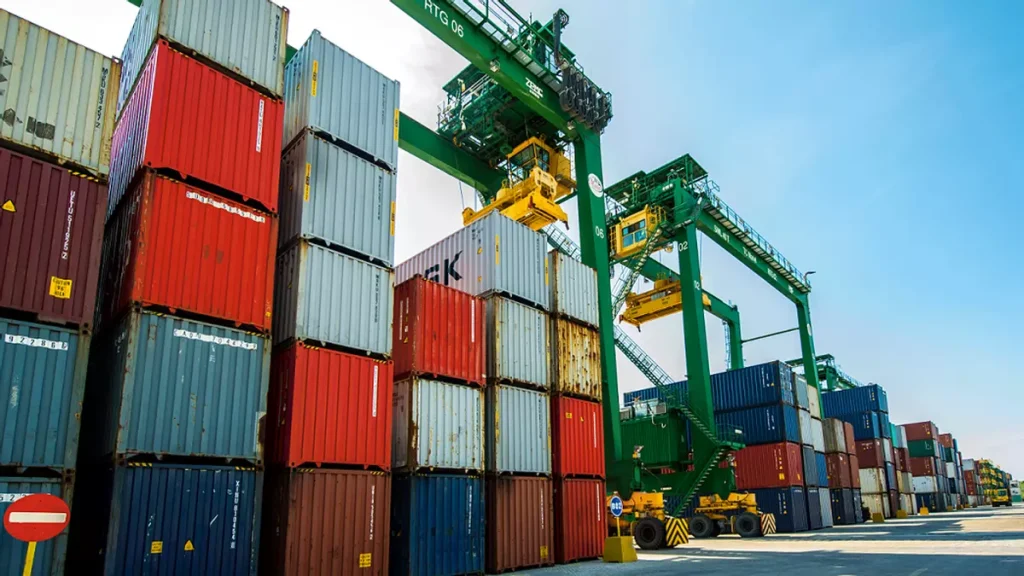
 14ymedio, Madrid, May 18, 2026 — International shipping companies CMA CGM and Hapag-Lloyd, French and German respectively, officially confirmed this Sunday the suspension of their shipments to and from Cuba. The information had unofficially emerged last Friday, when sources from both companies informed the Spanish agency EFE, and according to estimates by two experts in a Reuters report, it could mean the loss of 60% of maritime traffic for the Island.
“Following the U.S. decree issued on May 1, CMA CGM has decided to suspend its bookings to and from Cuba until further notice,” the French company said in a statement distributed by email this Sunday. The shipping company indicated that it is closely monitoring the situation and will adapt its decisions to current regulations.
The German company Hapag-Lloyd did the same, stating through a spokesperson that the suspension was due to “the compliance risks associated with the U.S. president’s May 1 decree.”
Specialists also point to Northern Europe and the Mediterranean as heavily affected by the suspension of these shipments
The transport of goods from China would be the most affected by the order, according to sources consulted by Reuters, which warned of the enormous drop in transactions. In a context of generalized shortages such as the one Cuba is experiencing, combined with the oil blockade, the risk is enormous. Specialists also point to Northern Europe and the Mediterranean as heavily affected by the suspension of these shipments, although “all global maritime transport to Cuba would be affected.” According to data from the National Office of Statistics and Information, in 2024 — the latest year with complete data — international maritime trade totaled 62.3 million tons.
The decree signed by Trump on May 1 expanded U.S. sanctions on trade with Cuba to include “any foreign person” operating in the sectors of “energy, defense and related materials, metals and mining, financial services or security of the Cuban economy, or any other sector of the Cuban economy.”
Barely a week later came the departure of the Canadian mining company Sherritt International, which had been present on the Island for the past three decades, both in nickel and copper mining operations and in Energás wells in northern Cuba. The company made the decision, which also involved the departure of three board executives, out of fear of being placed on the SDN (Specially Designated Nationals) list of the Office of Foreign Assets Control (OFAC) of the U.S. Treasury Department, a directory that includes sanctioned individuals, companies, or vessels, implying financial blocking and prohibiting Americans from doing business with them.
The sanctions will begin to be applied on June 5, which is why most companies doing business in Cuba are currently evaluating the situation. “No banking entity with a presence or interests in the United States will want to assume the risk of intermediating payments involving a designated [by the United States] party, regardless of the nationality of its client,” said Ignacio Aparicio, managing partner of the law firm Andersen and head of Cuban affairs, consulted by the newspaper El País for a report — similar to one published days earlier by ABC — evaluating the impact on Spanish companies.
According to the report, Meliá, which is under close scrutiny because of its extensive ties with the State, for which it manages 34 hotel establishments, remains silent “due to the high level of uncertainty, although they consider that their activity is not initially included within the five affected sectors.” Although the United States pointed to the specifically mentioned areas, it also refers, in any case, to any sector of the economy.
“Cuba’s Foreign Investment Law, enacted in 2014, establishes a joint venture framework that prevents unilateral withdrawal. Any divestment would in most cases require the approval of the Cuban State”
An anonymous businessman contacted for the report believes the sanctions are a clear warning to leave Cuba. “You can only do business with Gaesa [the military conglomerate that controls the country’s economy], which also has not paid its bills for some time. And now, if the United States discovers that you do business with a Gaesa company, it can fine you,” he argued. The Madrid-based newspaper estimates Spanish presence at more than 60 operations, especially in the tobacco industry, financial services, and wholesale trade, representing investments totaling 442 million euros. In addition, there are 70 hotel management contracts between Gaesa and companies such as Meliá and Iberostar, as well as Roc, Barceló, Valentín, NH, Blau, Axel, and Sirenis.
However, Aparicio warns of one thing. “Cuba’s Foreign Investment Law, enacted in 2014, establishes a joint venture framework that prevents unilateral withdrawal. Any divestment would in most cases require the approval of the Cuban State, turning the process into a prolonged and potentially costly negotiation.” In his view, the most likely outcome is “a slowdown in new investments, corporate adjustments aimed at reducing direct exposure, the search for alternative currencies to the dollar, and greater generalized caution throughout the financial chain.”
Translated by Regina Anavy
______________________
COLLABORATE WITH OUR WORK: The 14ymedio team is committed to practicing serious journalism that reflects Cuba’s reality in all its depth. Thank you for joining us on this long journey. We invite you to continue supporting us by becoming a member of 14ymedio now. Together we can continue transforming journalism in Cuba.